A blade style guide is only useful when it helps a buyer make better product decisions.
B2B buyers should evaluate blade styles by task, user, market, manufacturing tolerance, safety copy, and QC method. Drop point, straight back, clip point, trailing point, sheepsfoot, Wharncliffe, tanto, spear point, and hawkbill profiles all need different positioning and inspection plans.
Quick buyer brief:
- Answer: Do not treat blade style as a trend list. Treat each shape as a requirement decision tied to cutting task, product category, user skill, compliance review, manufacturing route, and inspection.
- Buyer context: This guide is for knife brands, outdoor brands, EDC brands, utility-tool buyers, importers, distributors, private label teams, and OEM/ODM product managers.
- Key checks: Intended use, point strength, belly shape, tip control, edge length, sharpening access, grinding method, lock or handle match, packaging claims, target-market restrictions, and QC tests.
Have a knife or multi-tool project in mind?
Send your sketch, CAD file, sample photo, or product idea. Vast State can review manufacturability, suggest materials, estimate MOQ, and prepare a quote for your OEM/ODM project.
When buyers ask for "nine blade styles and how they are used," I try to slow the conversation down. A blade name is not a product strategy. A drop point is not automatically outdoor-ready. A tanto is not automatically stronger in every design. A sheepsfoot is not automatically safer unless the handle, lock, edge, packaging, and instructions support that goal.
For OEM/ODM projects, blade style should become a clean RFQ decision. The buyer should define what the knife needs to cut, where it will be sold, who will use it, what claims will appear on packaging, and how the factory will check the finished shape. That is how a style guide becomes a sourcing tool.
Why Should Buyers Start With Tasks Instead of Blade Names?
Blade names can create false confidence. Task-based requirements create better samples.
Buyers should start with tasks because blade style only matters when it supports a specific cutting job, user group, safety expectation, product category, and manufacturing tolerance.
I Build the Blade Style From the Job
A knife is a cutting tool with a blade, handle, and edge geometry. The Britannica knife overview gives a simple general definition, but buyers need more than a definition. They need a product decision.
In a factory conversation, I do not begin with "Give me a clip point." I begin with the use case. Does the knife need a controlled point for packaging? Does it need belly for slicing? Does it need a blunter tip for safer utility work? Does it need a hooked edge for pull cutting? Does the customer need easy sharpening? Will the product sell in a market where blade length, locking action, or opening method needs review?
This approach prevents style names from becoming decoration. It also helps the supplier recommend the right grinding route and inspection method. A blade profile affects more than the outline. It affects the primary bevel, tip thickness, plunge line, edge length, sharpening angle, heat treatment distortion risk, and packaging protection.
| Buyer starting point | Better RFQ question | Output |
|---|---|---|
| I want a popular blade style | What task must the blade solve? | Use-case profile |
| I want a strong tip | What material and thickness support the point? | Tip geometry target |
| I want safer utility use | How should point, handle, lock, and instructions work together? | Safety-oriented design |
| I want outdoor use | What cutting tasks and corrosion risks matter? | Outdoor specification |
OEM/ODM RFQ Checklist
Prepare these details to help Vast State review your project and provide a more accurate quotation.
| RFQ Field | What to Prepare |
|---|---|
| Project type | OEM from drawing / ODM private label / wholesale catalog |
| Product category | Folding knife / fixed blade / multi-tool / outdoor tool |
| Design status | Idea / sketch / 2D drawing / 3D CAD / physical sample |
| Target price | Ex-factory target price or retail price range |
| MOQ expectation | 500 / 1,000 / 3,000 / 5,000+ pcs |
| Logo method | Laser engraving / etching / printing / molded logo |
| Packaging | Standard packaging / custom retail box / Amazon-ready |
| Market | USA / EU / Japan / Korea / Middle East / other |
| Compliance needs | Buyer-specified testing / documentation / labeling |
| Timeline | Sample deadline / mass production deadline |
How Should Buyers Evaluate Drop Point and Straight Back Profiles?
General-purpose styles can still fail if the buyer does not define the task.
Drop point and straight back blade profiles often fit broad utility, outdoor, and work-tool projects because they can balance tip control, usable edge length, and practical slicing geometry.
I Treat "General Purpose" as a Specification, Not a Shortcut
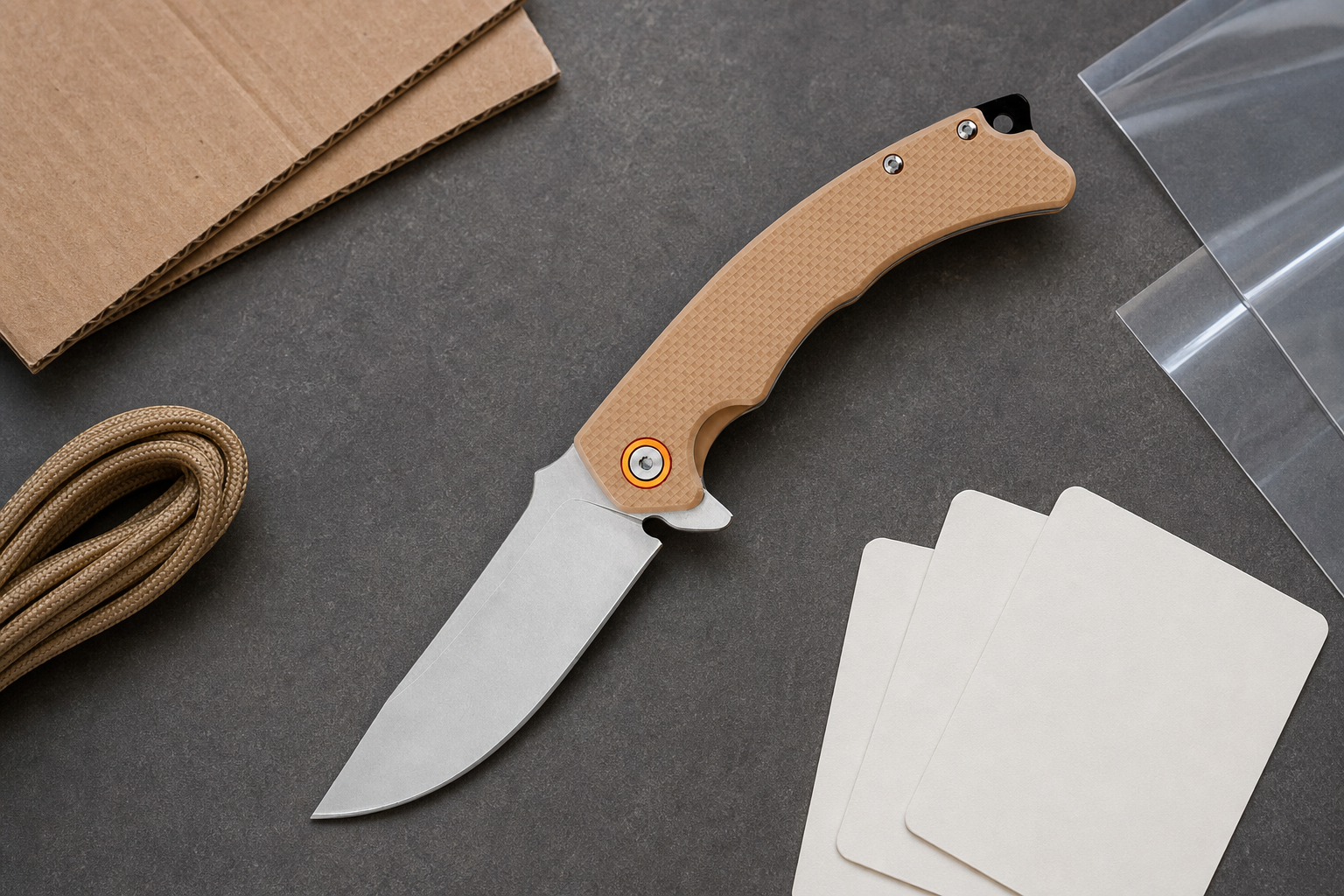
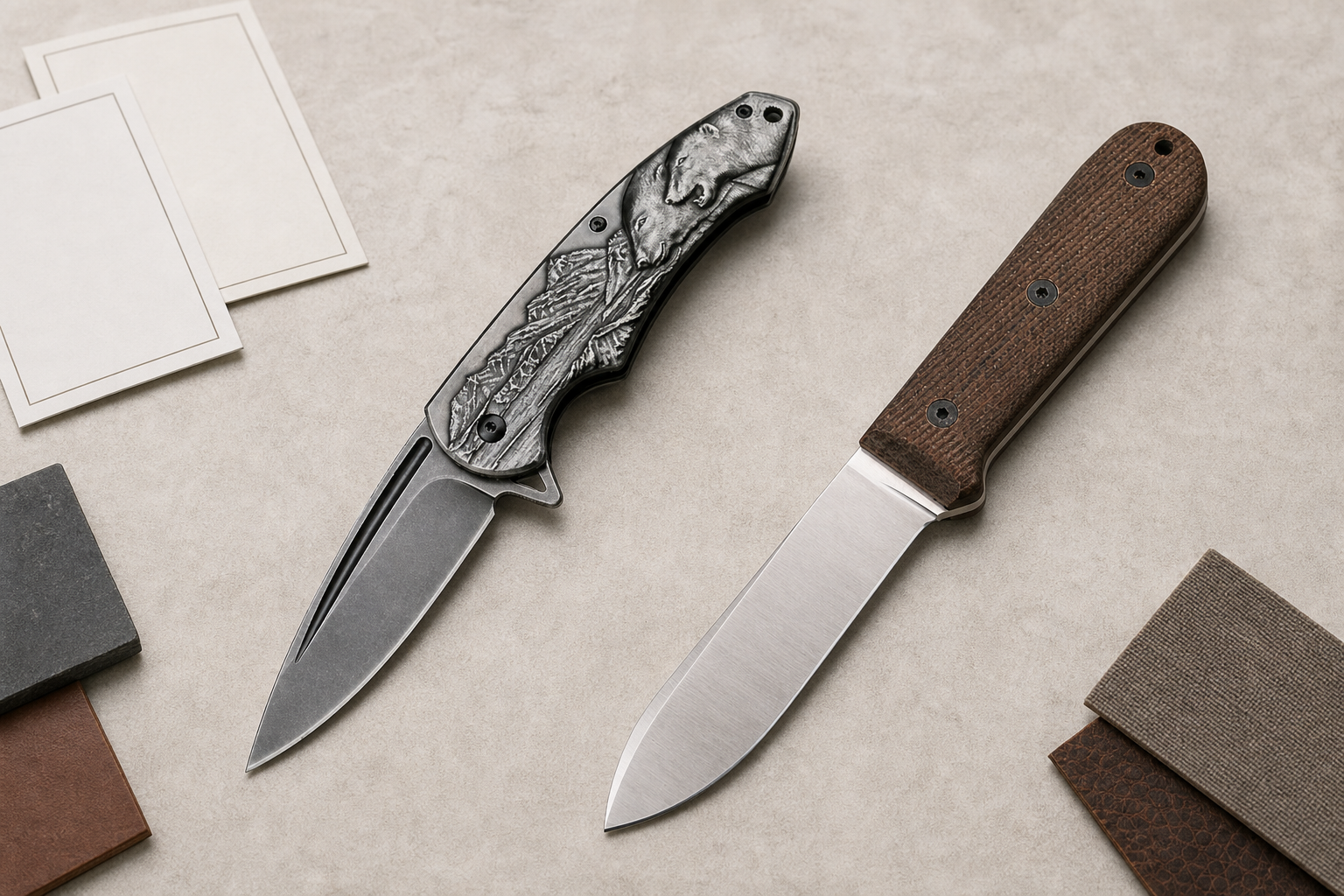
A drop point profile usually lowers the spine toward the tip and creates a controlled point with useful belly. Buyers often choose it for outdoor folders, compact fixed blades, hunting-accessory lines, and general utility knives. The value is balance. The risk is vague copy. "General purpose" should still be defined by real tasks: packaging, cord, light food prep in outdoor settings, camp repair, or retail utility.
A straight back profile has a straighter spine and a curved edge. It can give the buyer a simple, traditional outline and predictable edge length. It may fit outdoor, kitchen-style, craft, or utility products depending on size and grind. The buyer should review whether the point is too high, too thin, or too aggressive for the target user.
Both styles need manufacturing limits. The supplier should control tip thickness, edge symmetry, spine finish, blade centering for folders, and surface finish. If the product is a folding knife, the profile must also clear the handle safely when closed.
| Style | Useful positioning | Buyer watch point |
|---|---|---|
| Drop point | Balanced outdoor and utility cutting | Avoid vague "does everything" claims |
| Straight back | Simple slicing and traditional utility | Check point height and edge geometry |
| Both | Broad product-family base | Define dimensions and QC, not only style name |
When Do Clip Point and Trailing Point Profiles Make Sense?
Pointed or swept styles need careful positioning. They should not be sold with aggressive language.
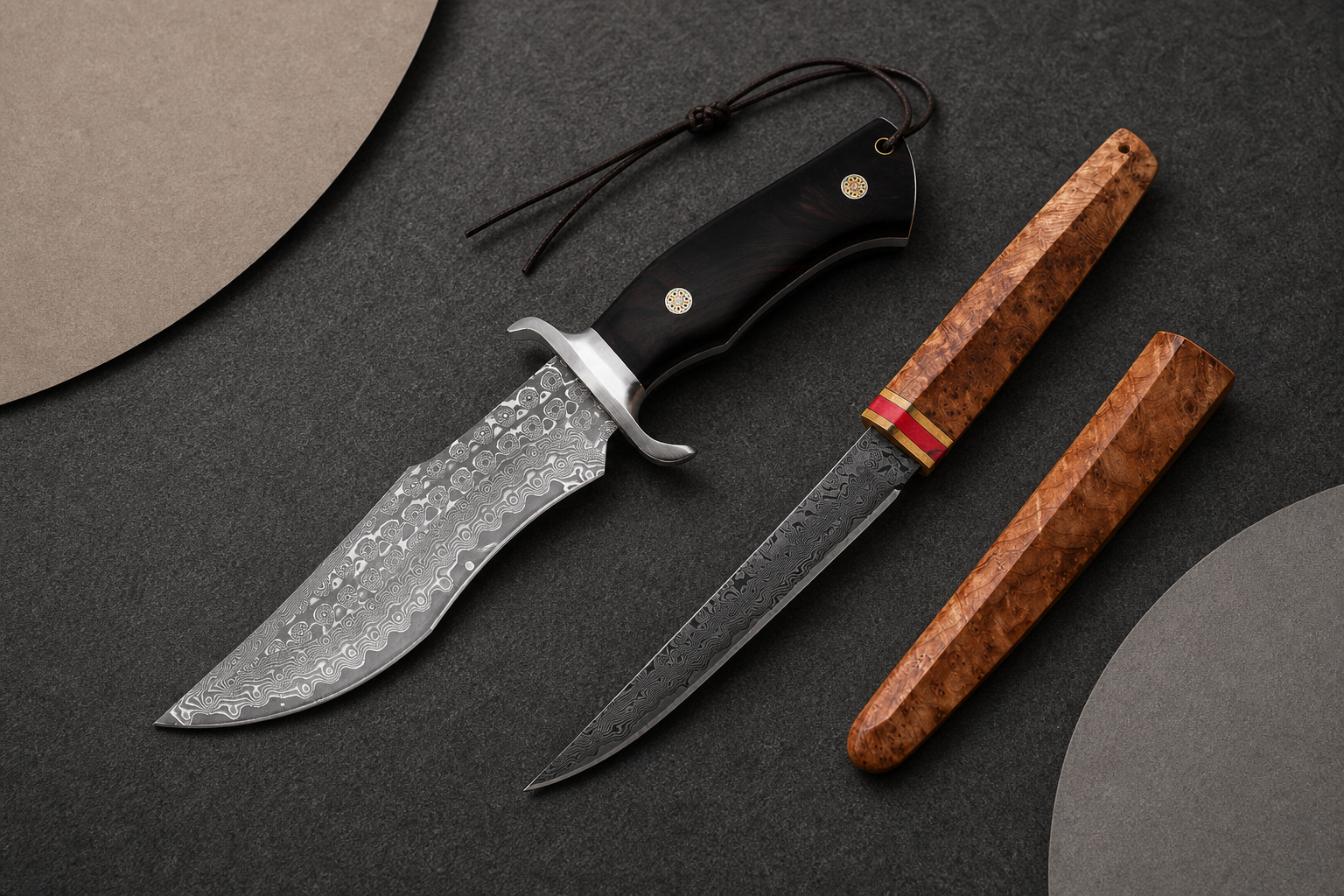
Clip point and trailing point profiles can support precise tip work, slicing belly, and outdoor or hunting-accessory designs, but buyers should review tip strength, safe-use copy, and market restrictions before approval.
I Use These Styles Only When the Product Story Stays Practical
A clip point removes or lowers part of the spine near the tip. It can create a finer point and a classic profile. That may help with controlled tip work, detail cutting, or traditional outdoor styling. The risk is a tip that becomes too thin for the expected job. If the buyer wants durability, the supplier should review stock thickness, grind, heat treatment, and point geometry.
A trailing point profile usually sweeps the point upward and gives more belly. It can support slicing tasks in outdoor, hunting-accessory, kitchen-style, or specialty lines. The risk is packaging and safety. A swept profile can be visually distinctive, but it may also require careful edge protection, sheath design, and clear user instructions.
I avoid dramatic language around either style. The product page should not talk about fighting, intimidation, or tactical superiority. The copy should explain the cutting task, such as slicing, detail work, or outdoor preparation where lawful and appropriate.
For sourcing, the buyer should ask for side-view profile drawings, tip thickness checks, edge belly radius, grinding consistency, and a boundary sample. If the supplier cannot repeat the profile, the style will look inconsistent in retail photos.
How Should Sheepsfoot and Wharncliffe Profiles Be Positioned?
Blunter-point styles can be useful, but they still need safe design and clear copy.
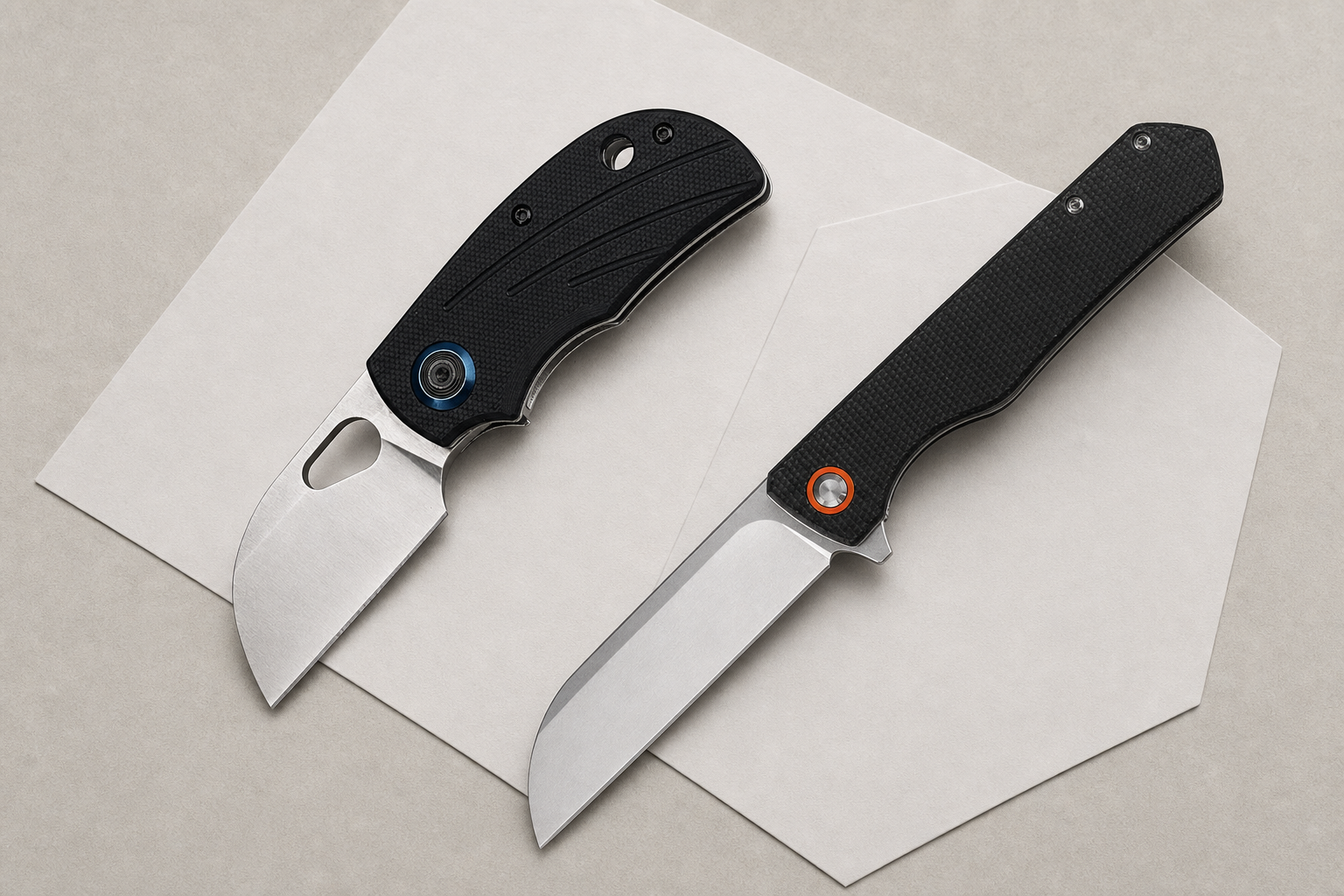
Sheepsfoot and Wharncliffe profiles are often useful for controlled utility cutting, packaging, marine-style work, warehouse tasks, and EDC tools where the buyer wants edge control and less emphasis on a piercing point.
I Do Not Claim a Blunt Tip Makes the Whole Product Safe
A sheepsfoot profile usually has a lowered tip and a relatively straight edge. It can be a strong choice for utility tasks where the user wants pull cuts, slicing against a surface, or less accidental point contact. A Wharncliffe profile also often uses a straight edge with a sloping spine toward the point, but the point may still be precise. Buyers should not treat these two as interchangeable without a drawing.
These profiles can fit packaging knives, compact work folders, rescue-adjacent utility tools, marine-style accessories, and warehouse-support SKUs. The phrase "safer tip" may be appropriate only if the design really supports it. A sheepsfoot blade is still sharp. The handle, lock, opening control, edge exposure when closed, packaging insert, and instructions all matter.
The CCOHS sharp blade safety guidance is workplace-focused, but it supports a useful principle for buyers: sharp tools need controlled use, storage, and handling. For product development, that means the blade style should be paired with safe-use instructions and a QC plan.
| Style | Possible fit | Copy boundary |
|---|---|---|
| Sheepsfoot | Utility cutting, marine-style tasks, packaging | Do not claim harmless use |
| Wharncliffe | Controlled slicing, detail cuts, work folders | Explain point control clearly |
| Both | Straight-edge utility positioning | Check edge exposure and lock function |
What Should Buyers Know About Tanto and Modified Tanto Profiles?
Tanto-style profiles are easy to overmarket. Buyers should make the claim narrow and testable.
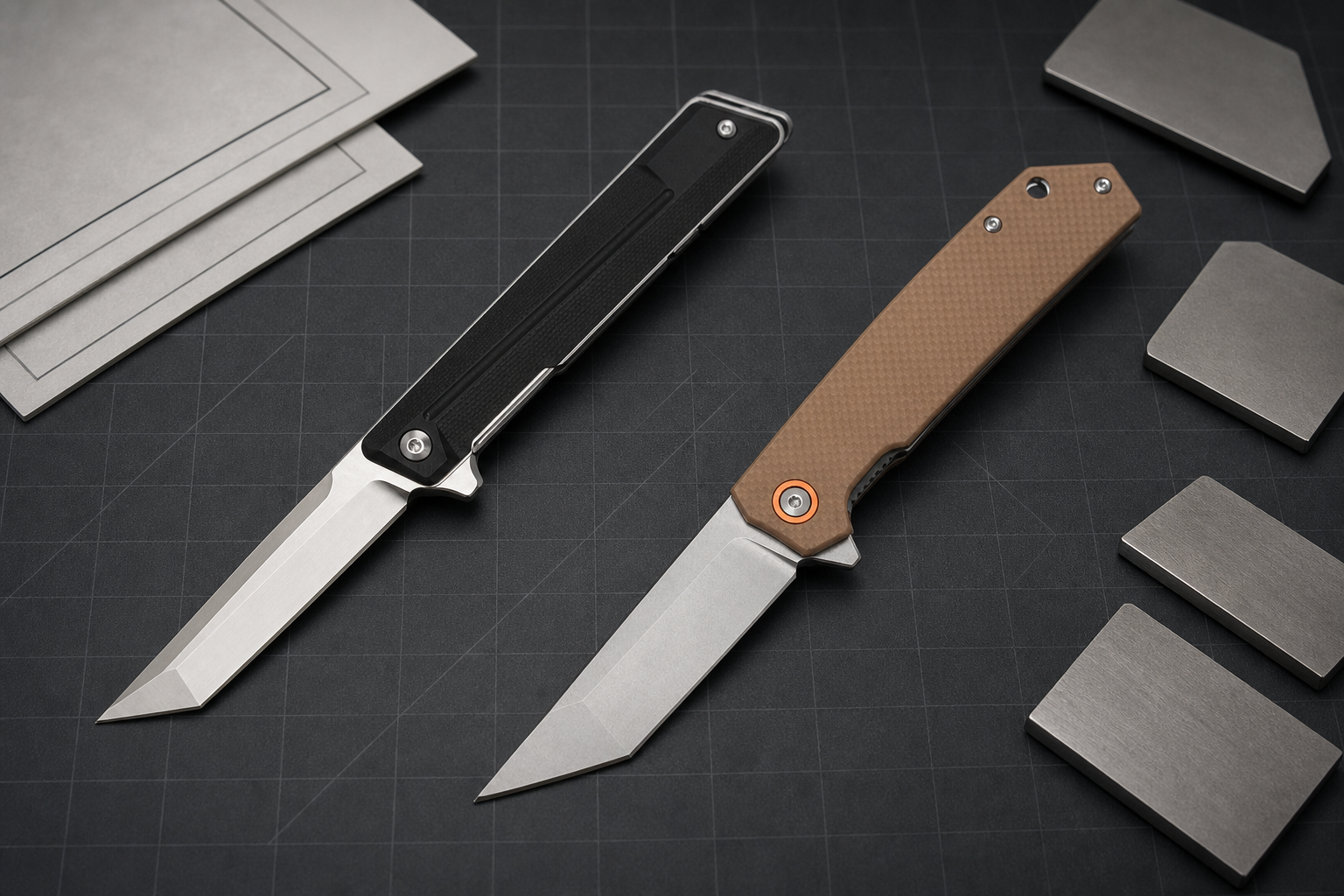
Tanto and modified tanto profiles may support reinforced-tip positioning and angular visual identity, but buyers must define tip geometry, secondary point consistency, sharpening expectations, and non-aggressive copy before production.
I Keep the Benefit Technical, Not Dramatic
A tanto-style blade usually has an angular point area and a secondary edge transition. Many buyers like the visual identity and the idea of a reinforced point. That can be useful for some utility, outdoor, or work-tool designs. But the claim must match the actual blade thickness, grind, steel, and heat treatment. A thin decorative tanto outline does not automatically create a durable tip.
The supplier should confirm whether the transition line is sharp and angular or softened as a modified tanto. That decision affects sharpening, visual consistency, and customer expectations. Some users like the angular front edge. Some users find it harder to sharpen. The buyer should decide this before tooling or grinding fixtures are finalized.
Tanto copy can quickly become too aggressive. I would not write about combat, penetration, or intimidation. I would write about reinforced point geometry, angular product styling, and specific utility tasks if the design supports those statements.
QC should include:
- Tip thickness and symmetry
- Secondary edge angle
- Transition line consistency
- Burr control at the angle change
- Coating coverage near the point
- Packaging protection for the angular tip
When Are Spear Point or Symmetric Profiles Appropriate?
Symmetry can look clean, but buyers must be careful with edge format and market rules.
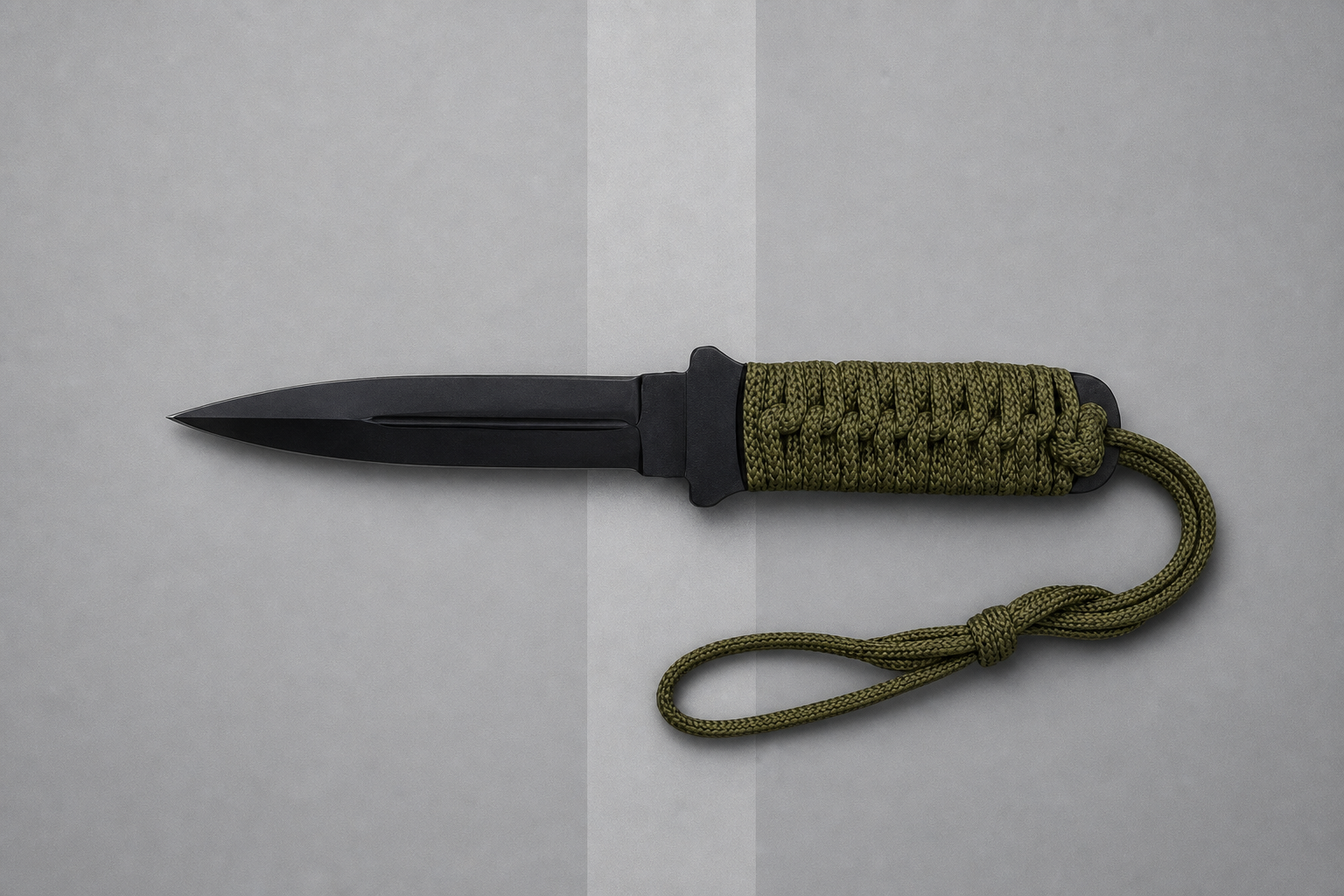
Spear point or symmetric profiles can fit certain fixed blade, outdoor, display, or specialty projects when the buyer defines whether the blade is single-edge, false-edge, or double-edge and reviews market restrictions before approval.
I Ask About Edge Format Before I Approve the Drawing
A spear point or symmetric profile can be visually balanced. It may be used in specialty outdoor knives, compact fixed blades, collectible-style products, or display-oriented SKUs. But buyers need to be precise. A single-edge symmetric profile is different from a double-edge blade. A false edge is different from a sharpened second edge. These details affect legal review, packaging, user instructions, and production inspection.
The GOV.UK knife guidance is a reminder that knife restrictions can include specific categories and definitions. The buyer should not assume that a profile accepted in one market will be acceptable in another. This is especially important for pointed or symmetric shapes.
For B2B copy, I would avoid weapon language and focus on product category fit. If the design is a single-edge outdoor tool, say that. If the profile is mainly visual, say the design has a balanced profile. If the SKU requires legal review, do that before packaging is printed.
The RFQ should state:
- Single edge, false edge, or double edge
- Blade length and overall length
- Tip thickness and point symmetry
- Sheath or handle clearance
- Warning and instruction requirements
- Target-market review status
How Do Hawkbill and Hook Profiles Fit Utility Lines?
Curved pull-cut profiles can be very useful when the task is narrow.
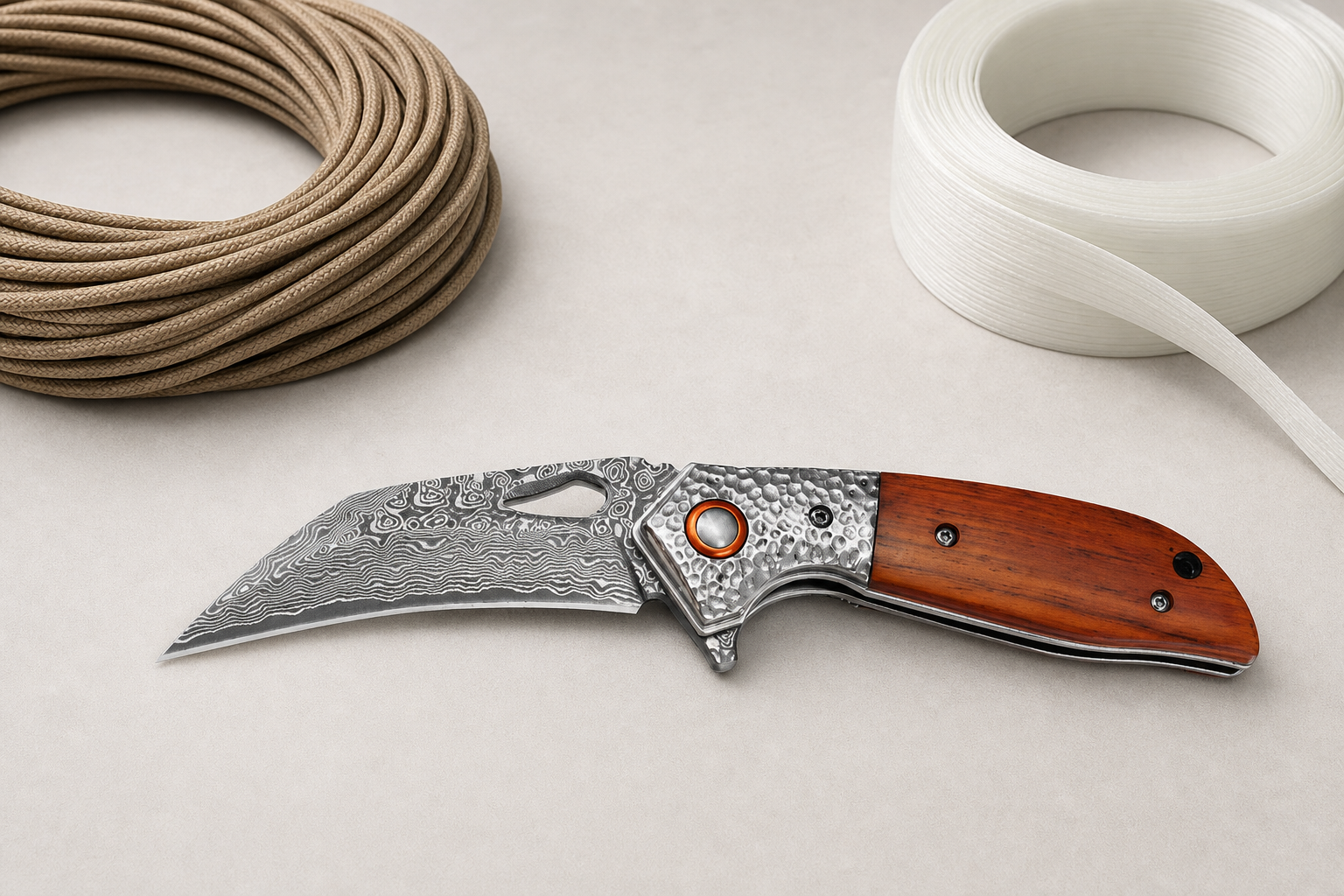
Hawkbill and hook-style profiles can support pull cutting, cord cutting, packaging, pruning-adjacent tasks, and specialty utility products, but buyers should define the material being cut and the sharpening method early.
I Use Curved Profiles for Clear Pull-Cut Problems
A hawkbill profile curves downward toward the point. A hook-style utility profile may be even more task-specific. These shapes can be useful when the cutting motion is a pull cut, such as cutting cord, packaging strap, rope, film, or certain outdoor utility materials. They are less universal than a drop point or straight back. That is not a weakness if the buyer positions the product honestly.
The buyer should define the material being cut. Nylon cord, cardboard, film, rope, and plant material do not behave the same way. Edge angle, steel, coating, serration choice, and sharpening access all change the final experience. If the product needs a serrated hawkbill, the buyer should also ask how the end user will maintain it.
Outdoor preparedness sources can support a practical tool mindset. The National Park Service Ten Essentials includes repair kit and tools as part of preparation. That does not mean every kit needs a hawkbill. It means buyers can frame task-specific cutting tools as part of a practical kit when the use case is clear.
| Profile | Good fit | Buyer risk |
|---|---|---|
| Hawkbill | Pull cutting, cord, rope, packaging strap | Less versatile for straight slicing |
| Hook style | Dedicated cutting slot or pull-cut job | Narrow use case and sharpening access |
| Serrated curve | Fibrous material | Harder maintenance and QC consistency |
What Manufacturing Details Turn Blade Style Into Repeatable Performance?
The outline is only the first layer. Manufacturing decides whether the style works.
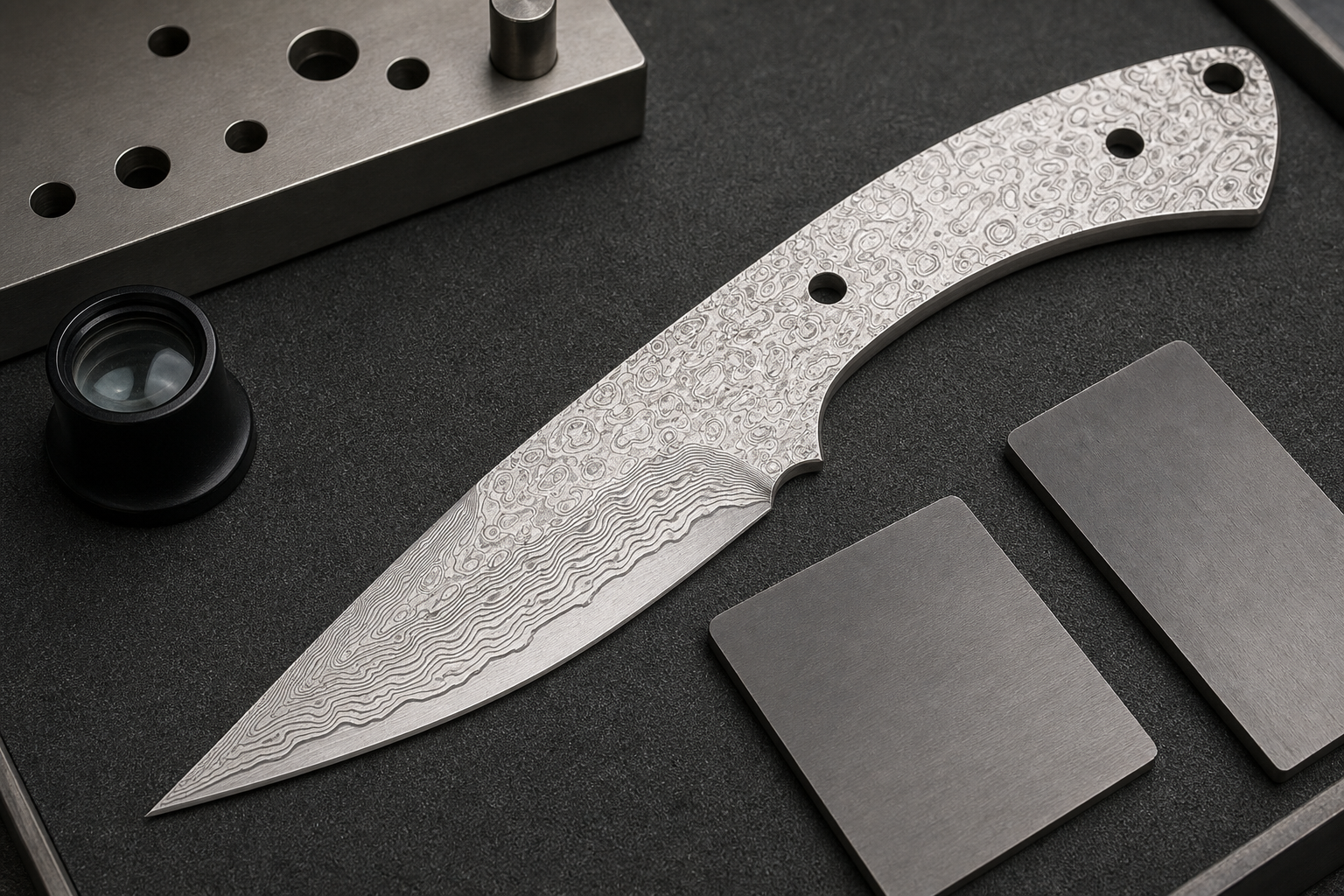
Buyers should define blade thickness, grind type, bevel angle, edge length, tip thickness, plunge line, heat treatment, surface finish, sharpening standard, and inspection method for each blade style.
I Convert Shape Language Into Inspection Language
A blade profile can look correct in a drawing and still fail in production. The tip may become too thin after grinding. The bevel may drift between left and right sides. The plunge line may look uneven. Heat treatment may warp a slender profile. Coating may build up near the tip. Folders may have blade centering or handle clearance problems.
This is where measurement matters. NIST dimensional metrology explains the importance of measurement for manufacturing improvement. For knife buyers, the practical takeaway is simple: profile, thickness, edge, and fit should be inspected with agreed methods.
The ISO 9241-11 usability standard page is also useful at a planning level because it connects usability to users, goals, and context. A blade style should be easy and effective for the intended user and task, not just visually recognizable.
| Manufacturing item | Why it matters | Buyer instruction |
|---|---|---|
| Tip thickness | Affects durability and safety | Define target and tolerance |
| Bevel symmetry | Affects cutting and appearance | Inspect both sides |
| Edge angle | Affects cutting feel and maintenance | Match to task |
| Handle clearance | Affects folding knife safety | Check closed blade exposure |
| Surface finish | Affects retail appearance | Approve boundary samples |
What Compliance, Packaging, and QC Checks Should Buyers Add?
Blade style affects more than cutting. It affects how the product is sold, labelled, shipped, and inspected.
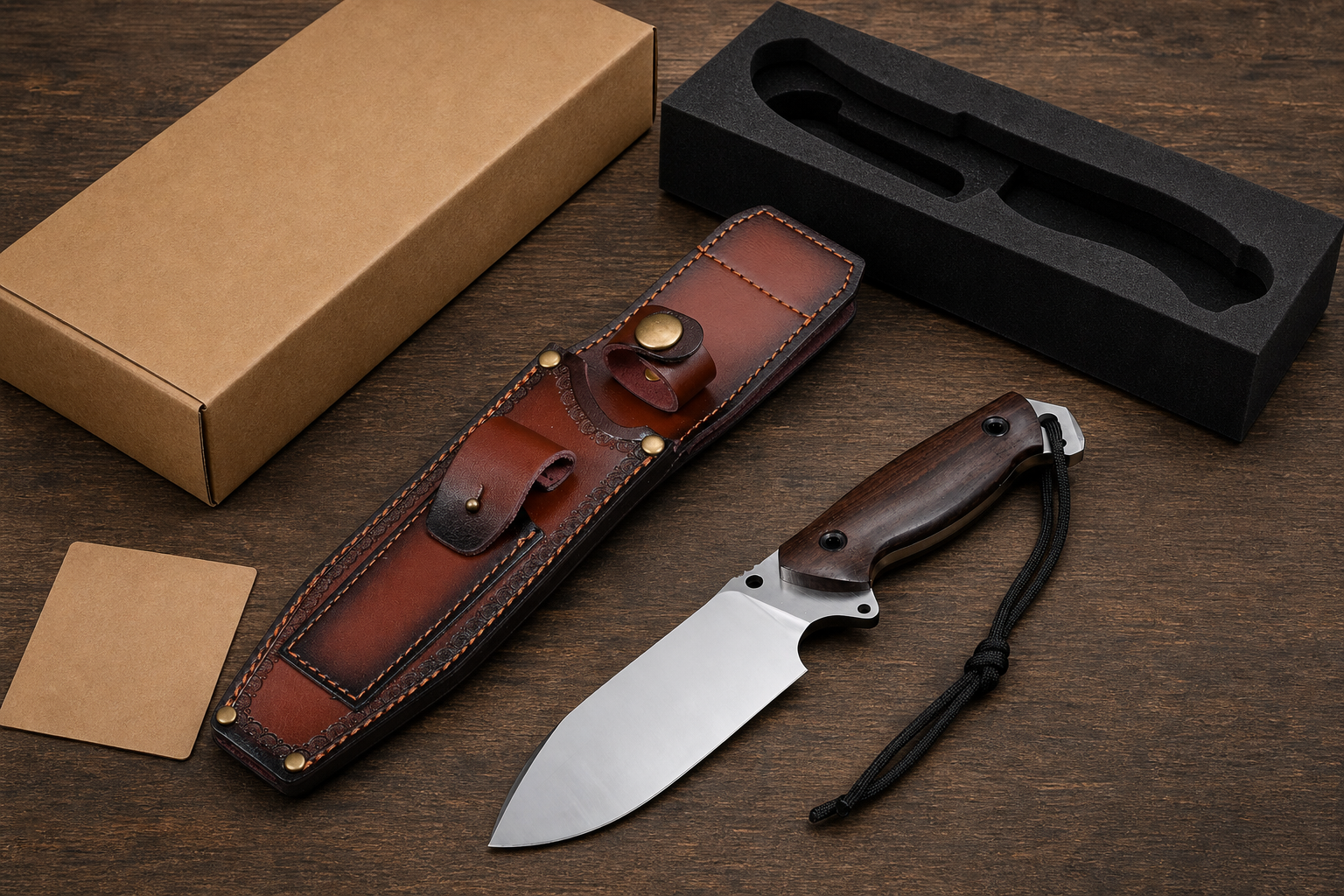
Buyers should review target-market restrictions, age requirements, marketplace policies, packaging warnings, blade protection, instruction inserts, finished-sample consistency, and whether product claims match the approved blade style.
I Check the Claim Before I Check the Carton
The OSHA hand and power tools guidance reminds businesses that tools can create hazards when they are not maintained or used properly. Product copy cannot remove every risk, but it can avoid making the risk worse. A buyer should not describe a sharp tool as harmless, legal everywhere, or suitable for all users.
Quality systems also matter. The ISO 9001 quality management systems page supports the broader idea of defined requirements, controlled processes, records, and corrective action. For blade styles, that means the buyer should not approve only a hero sample. The buyer should approve a profile drawing, a boundary sample, and a QC checklist.
For each blade style, I would include these checks:
- Profile outline against approved drawing
- Blade length and closed length
- Tip thickness and point symmetry
- Bevel symmetry and edge angle
- Sharpness and burr control
- Lockup, blade play, and centering for folders
- Sheath fit or packaging protection
- Warning and instruction insert review
- Product copy review against actual design
When packaging and QC are connected, the product looks more professional and creates fewer surprises after launch.
How Can Vast State Help Buyers Build a Blade-Style RFQ?
Vast State can help turn blade-style ideas into factory-ready requirements.
Vast State supports OEM/ODM knife buyers by translating blade style, use case, material, mechanism, packaging, compliance review, sample approval, and QC expectations into a clear RFQ before production begins.
I Make the Blade Style Specific Enough to Manufacture
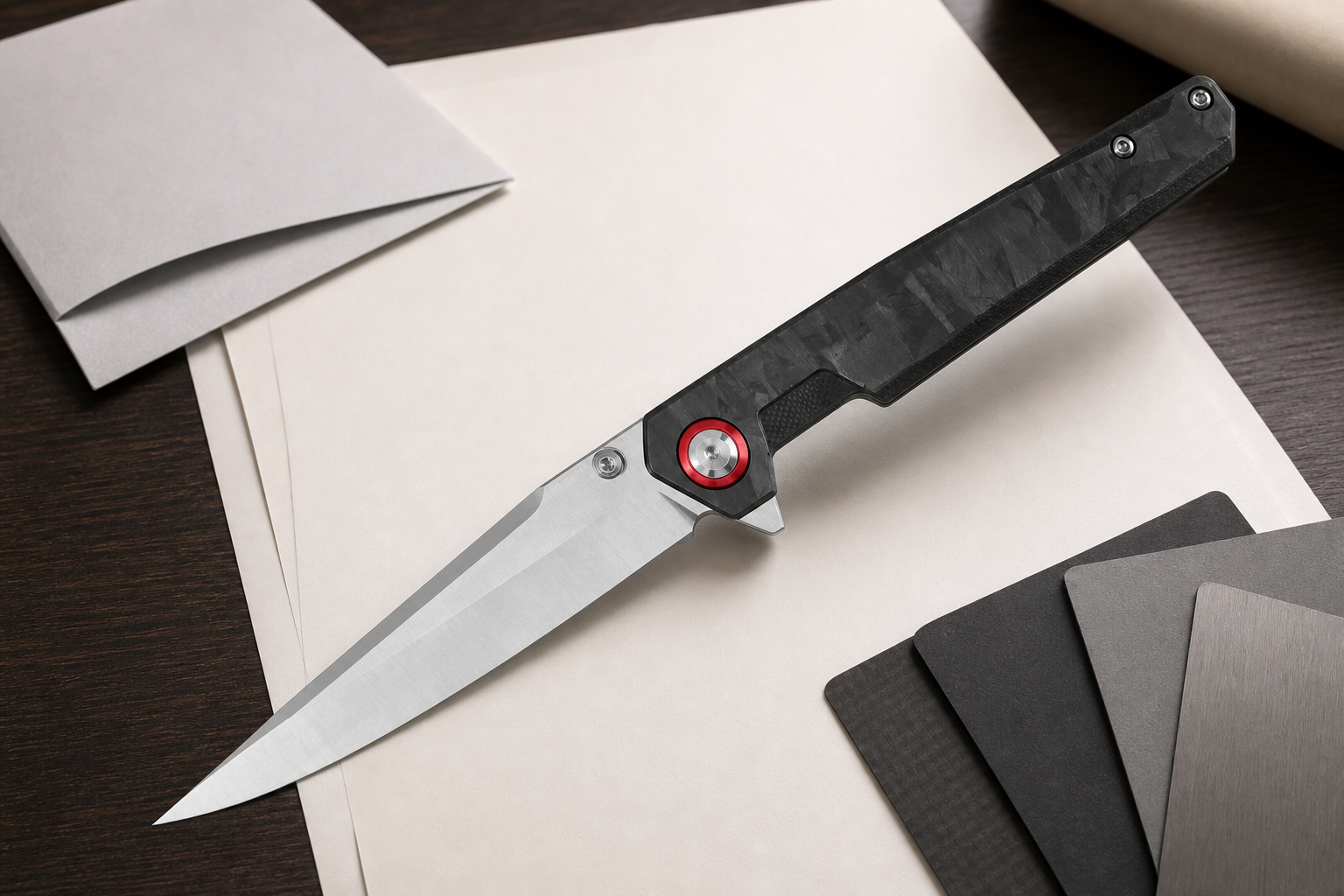
The buyer may begin with a simple request: "We need nine blade style options." Vast State can help turn that into a usable product matrix. The matrix should include blade profile, target user, use case, material, grind, point strength, opening method, lock or handle match, finish, packaging claim, and QC record.
This keeps the project practical. A drop point outdoor folder, a sheepsfoot work folder, a hawkbill cord cutter, and a tanto-style utility knife should not share the same RFQ language. They need different drawings, samples, tests, and copy boundaries.
Vast State can support:
- Blade style selection for OEM/ODM product lines
- Use-case matrix development
- Drawing and sample requirement review
- Steel, heat treatment, handle, lock, and finish alignment
- Packaging and product copy boundaries
- Compliance-aware language before launch
- QC checklist development for each profile
- Finished-sample comparison and boundary sample approval
The goal is not to make every style fit every job. The goal is to choose the right shape for the real job and make the factory repeat it.
Turn your idea into a quote-ready knife project.
Share your drawing, sample photo, target quantity, market, and packaging needs. Vast State will review manufacturability and prepare OEM/ODM options.
Conclusion
Blade style is not a ranking. It is a product decision. Buyers should connect each profile to tasks, users, manufacturing control, compliance, packaging, and QC.