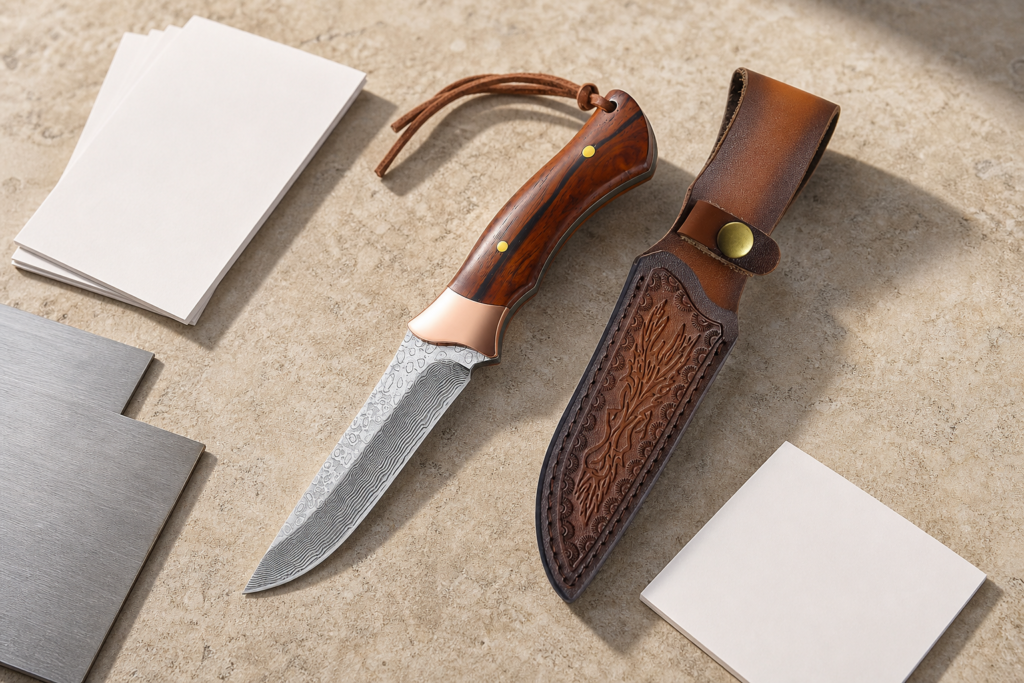
Forging can sound premium, but a forged knife is only as good as the process control behind it.
B2B buyers should manage knife forging by defining the blade use case, steel grade, forging route, heating control, forming process, normalization, heat treatment, straightening, grinding allowance, surface defect limits, hardness target, dimensional tolerances, and inspection records before mass production.
Quick buyer brief:
- Answer: Forging is a production route, not a magic quality claim. It must be matched to the knife type, target price, steel, supplier capability, and QC standard.
- Buyer context: This guide is for knife brands, outdoor brands, hunting-accessory brands, utility brands, importers, distributors, private label buyers, and OEM/ODM sourcing managers.
- Key checks: Steel source, billet size, heating range, forging method, scale and decarburization control, grain direction, straightness, heat treatment, hardness, warpage, surface cracks, grinding allowance, batch records, packaging claims, and final inspection.
Have a knife or multi-tool project in mind?
Send your sketch, CAD file, sample photo, or product idea. Vast State can review manufacturability, suggest materials, estimate MOQ, and prepare a quote for your OEM/ODM project.
When a buyer asks for forged knives, I first ask what the word forged is expected to solve. Is the buyer looking for a traditional story, stronger structure, thicker outdoor blade, material efficiency, a specific finish, or a price-positioning signal? The answer matters. Forging can be useful for some fixed blades and heavy-duty outdoor tools. It can also create extra cost, variation, scale, decarburization, warpage, and inspection work if the supplier does not control the process. A good forging project starts with requirements, not slogans.
Why Should Buyers Treat Forging as a Controlled Manufacturing Route?
Many buyers see forging as automatically better. Production teams know it is a process with variables and risks.
Buyers should treat forging as a controlled manufacturing route because quality depends on steel selection, heating, forming, cooling, heat treatment, machining, finishing, and inspection.
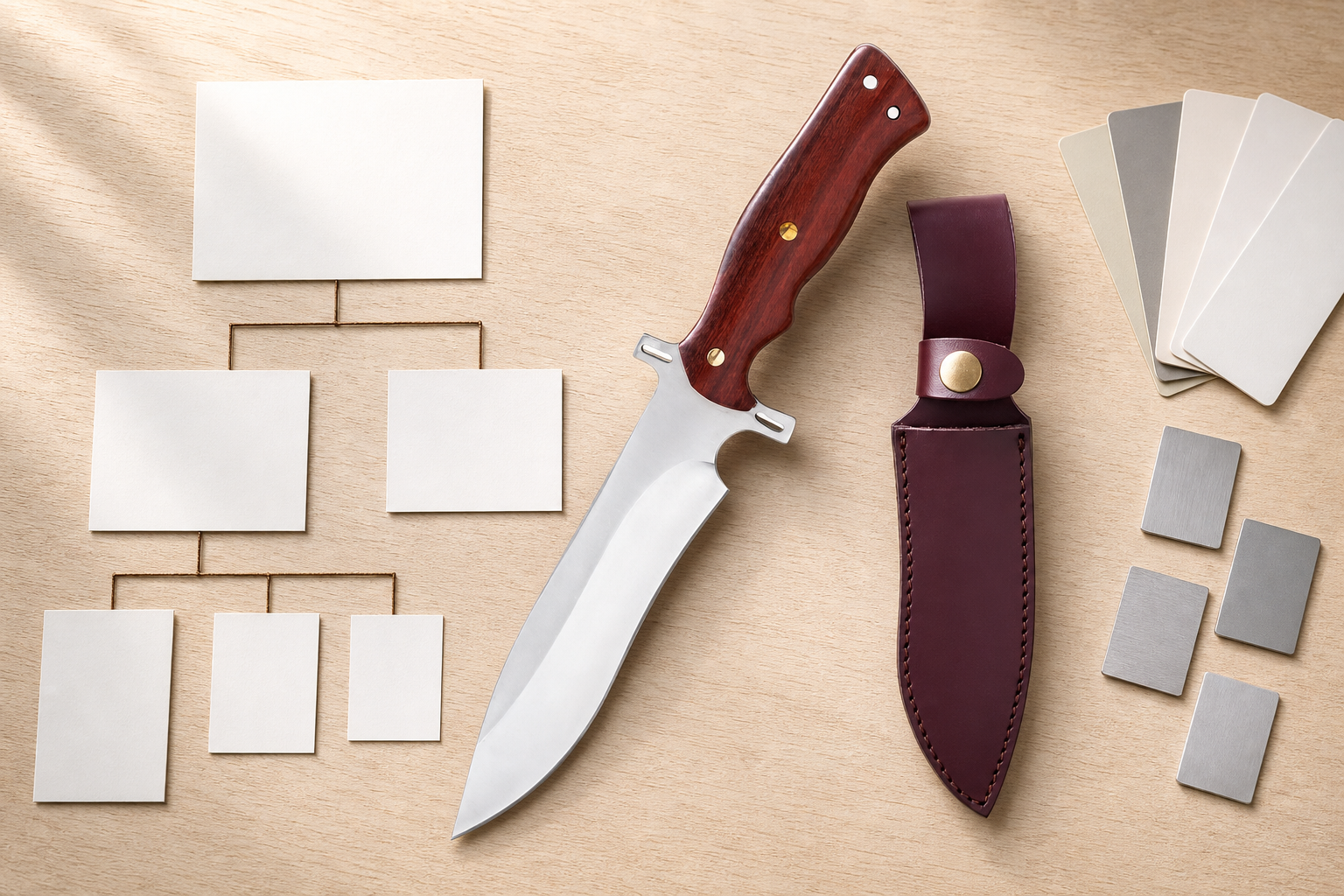
I Do Not Approve "Forged" as a Stand-Alone Claim
Forging means metal is shaped under compressive force, usually after heating. The Forging Industry Association overview describes forging as a process that shapes metal through localized compressive forces. That definition is useful, but it does not prove that every forged knife will be good.
For knife buyers, the real question is whether forging improves the product for the intended use. A forged outdoor fixed blade may support a traditional manufacturing story and allow material flow shaped closer to the final profile. A forged kitchen-style blade may support a specific bolster or geometry. A forged axe or heavy outdoor tool may fit the process well. But a thin folding blade or low-cost utility blade may be better made by stock removal, stamping, fine blanking, or machining from suitable strip or plate.
The buyer should define what success means. Is the goal strength perception, grain-flow story, efficient rough shaping, thick spine, integral bolster, lower grinding time, or craft positioning? Then the supplier should explain how the forging process supports that goal.
If the supplier cannot provide a process flow, steel control, heating control, heat-treatment plan, and inspection method, the word forged is not enough.
| Buyer question | Why it matters | RFQ output |
|---|---|---|
| Why forge this knife? | Prevents slogan-driven sourcing | Intended benefit |
| Which steel is used? | Controls heat and performance | Steel specification |
| How is heat controlled? | Controls structure and defects | Process parameters |
| How is quality verified? | Controls repeatability | Inspection plan |
OEM/ODM RFQ Checklist
Prepare these details to help Vast State review your project and provide a more accurate quotation.
| RFQ Field | What to Prepare |
|---|---|
| Project type | OEM from drawing / ODM private label / wholesale catalog |
| Product category | Folding knife / fixed blade / multi-tool / outdoor tool |
| Design status | Idea / sketch / 2D drawing / 3D CAD / physical sample |
| Target price | Ex-factory target price or retail price range |
| MOQ expectation | 500 / 1,000 / 3,000 / 5,000+ pcs |
| Logo method | Laser engraving / etching / printing / molded logo |
| Packaging | Standard packaging / custom retail box / Amazon-ready |
| Market | USA / EU / Japan / Korea / Middle East / other |
| Compliance needs | Buyer-specified testing / documentation / labeling |
| Timeline | Sample deadline / mass production deadline |
Which Forging Techniques Can Apply to Knife Production?
There is no single forging method for all knives. Each route changes cost, tooling, and repeatability.
Common knife-related forging routes can include hand forging, open-die forging, closed-die forging, drop forging, press forging, and hybrid forged-blank plus grinding processes.
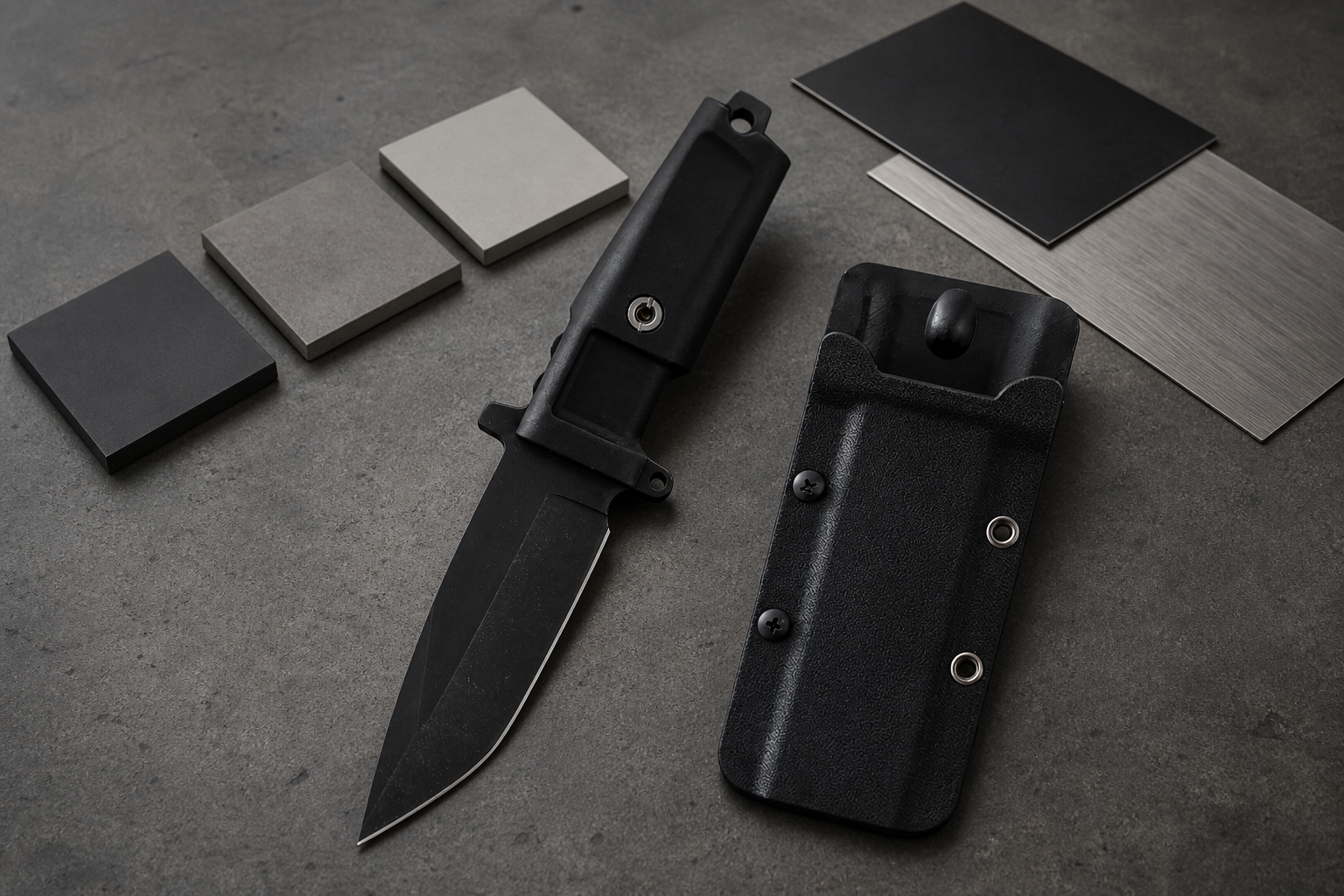
I Match the Technique to Volume and Geometry
Hand forging can support craft-oriented products, small batches, prototypes, or traditional positioning. It can also create variation, so buyers need clear boundary samples. Open-die forging can shape metal between simple dies or tools and can be useful for rough shaping larger parts. Closed-die or impression-die forging uses shaped dies and can support more repeatable geometry at higher volume when tooling cost is justified. Drop forging and press forging describe how force is delivered. The exact route depends on supplier equipment and product geometry.
For knives, forging is often only the first shaping stage. After forging, the blade still needs trimming, straightening, normalization or thermal conditioning where applicable, heat treatment, grinding, drilling, surface finishing, handle assembly, sheath fit, and final inspection. Buyers should not imagine a forged blank becomes a finished knife without many later controls.
The Forging Industry Association product design guidance is useful because it treats forging as an engineering and design process, not only a manufacturing label. Buyers should apply that mindset to knife RFQs. The forging route should be chosen around geometry, volume, tolerances, material, and end-use requirements.
| Forging route | Typical project fit | Buyer watch point |
|---|---|---|
| Hand forging | Small batch or craft positioning | Variation and documentation |
| Open-die forging | Rough shaping larger blanks | Extra machining allowance |
| Closed-die forging | Repeat volume parts | Tooling cost and die wear |
| Press or drop forging | Supplier-specific forming route | Equipment and process records |
How Should Steel Selection and Heating Be Controlled?
Forging cannot rescue the wrong steel. Heat also needs control, not guesswork.
Steel selection and heating should be controlled through grade confirmation, billet size, traceability, heating range, soak time, scale control, decarburization control, and batch separation.
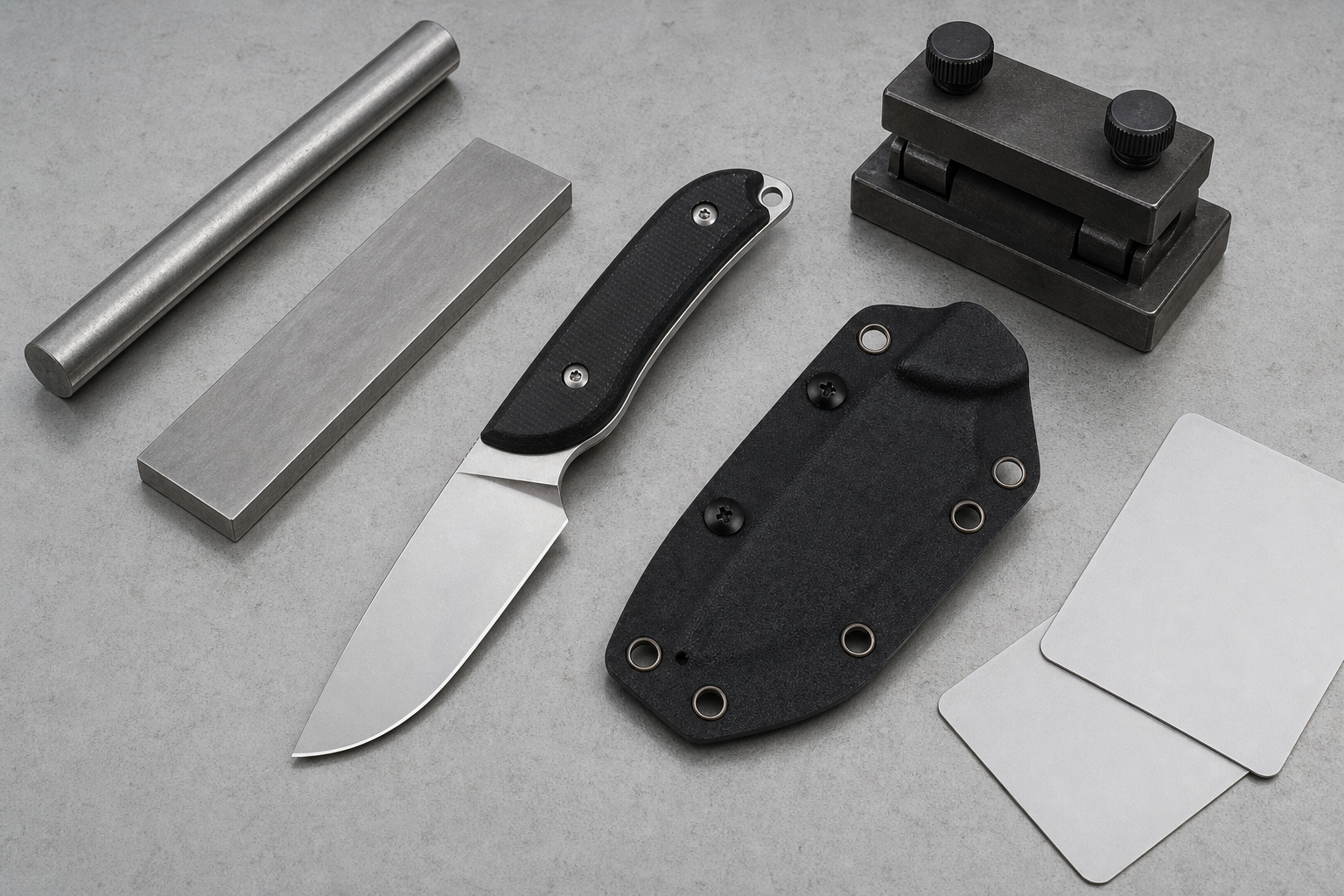
I Ask for Steel Traceability Before Process Story
The forging process begins before the hammer or press moves. It begins with steel. The buyer should define the steel grade, source expectations, size, batch traceability, and incoming inspection. If the steel is not controlled, later heat treatment and hardness results may drift.
Heating is another risk point. Too low, and forming may be difficult or uneven. Too high, and the steel can suffer excessive scale, decarburization, grain growth, or surface damage depending on grade and process. Buyers do not need to become metallurgists, but they should ask the supplier how heating is controlled and recorded.
For knife projects, scale and decarburization matter because the blade will be ground after forging. If the surface condition is poor, the supplier may need extra grinding allowance. Extra grinding can change blade geometry, edge thickness, and cost. If decarburization is not removed or controlled, surface hardness and edge performance can suffer.
The NIST publication on heat treatment and properties of iron and steel provides technical background on how heat treatment changes steel properties. It is not a knife-specific forging instruction, but it supports the larger point: heating history matters in steel performance.
| Control point | Why it matters | Buyer request |
|---|---|---|
| Steel grade | Controls heat-treatment response | Material certificate or supplier record |
| Billet size | Controls forging allowance | Approved blank size |
| Heating control | Controls forming and defects | Recorded process range |
| Scale and decarb | Affects grinding and hardness | Surface defect limit |
How Do Forming, Grain Flow, and Geometry Affect Blade Quality?
Forging can shape metal flow, but poor geometry can still create defects.
Forming quality depends on billet orientation, deformation amount, die design, forging temperature, grain-flow direction, flash control, corner radii, and enough machining allowance.
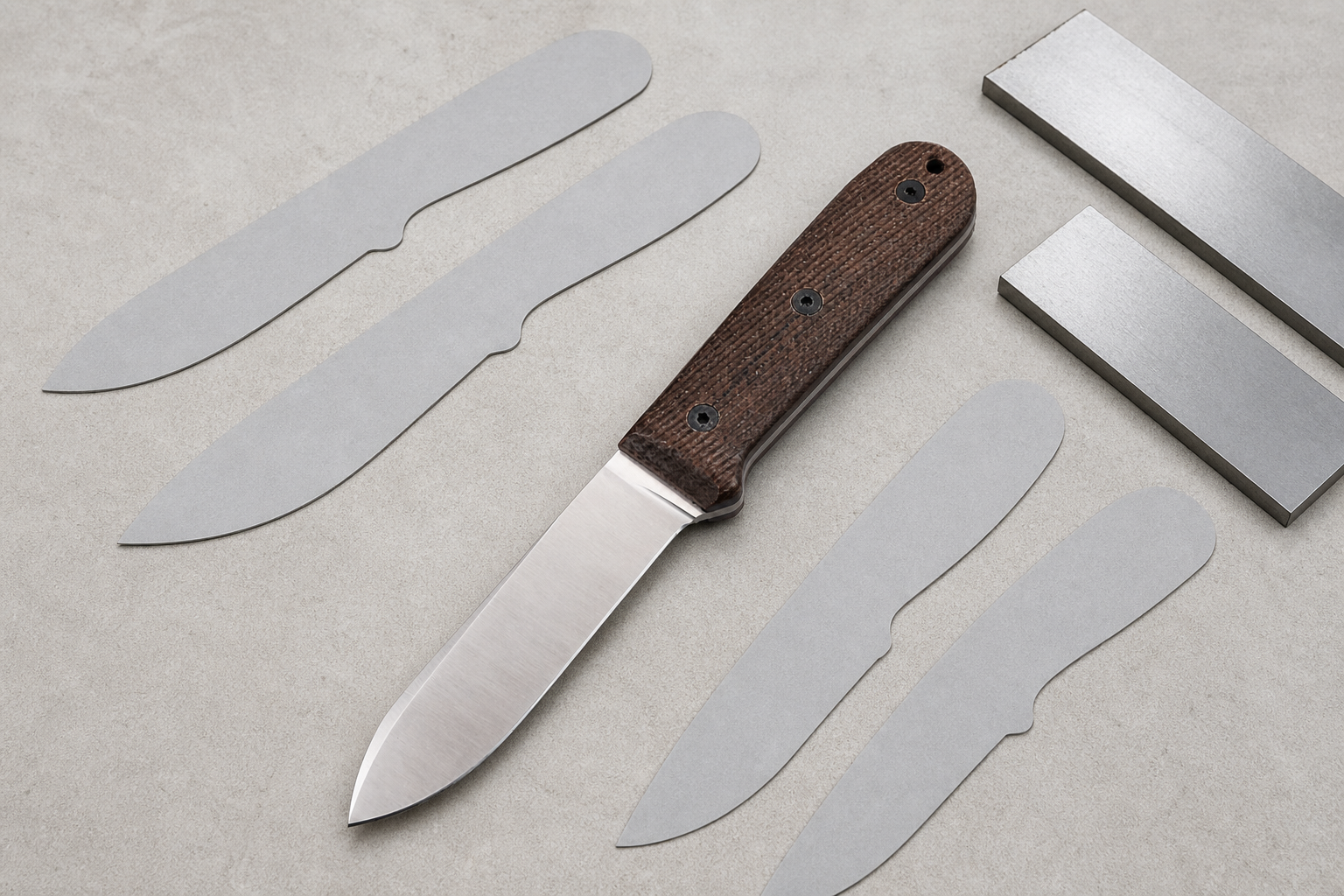
I Look for Manufacturable Shape, Not Just a Strong Story
Forging is often promoted because it can influence grain flow. That can be a real engineering advantage in many forged parts, but buyers should be careful with broad claims. A knife still needs correct steel, heat treatment, geometry, and finishing. A poorly forged blade is not better than a well-made stock-removal blade.
The buyer should review the forged blank geometry. Are the transitions too sharp? Is the tang area formed cleanly? Is the spine thickness consistent? Is there enough material left for grinding? Are there folds, laps, seams, or cracks? Does the die design create flash that must be trimmed? Can the supplier hold the blade profile within a useful tolerance before grinding?
Closed-die forging can improve repeatability when the die is designed and maintained well. It can also create tooling cost and die-wear risks. Hand or open-die forging can be flexible, but it may require more grinding and straightening. None of these options is automatically best.
For OEM/ODM buyers, the useful question is simple: can the supplier explain how the forged geometry becomes the finished blade geometry? If not, the buyer may face cost drift, inconsistent finish, or batch variation.
| Forming issue | Product risk | Buyer check |
|---|---|---|
| Sharp transitions | Stress or finishing problems | Add radii where possible |
| Too little allowance | Grinding cannot clean defects | Define grinding allowance |
| Warped blank | Extra straightening and reject risk | Inspect after forging |
| Surface laps or cracks | Structural and cosmetic defects | Define rejection criteria |
Why Is Post-Forging Heat Treatment Critical?
Forging shapes the steel. Heat treatment decides much of the final performance.
Post-forging heat treatment is critical because normalization, hardening, tempering, straightening, and hardness control affect strength, toughness, edge retention, warpage, and batch consistency.
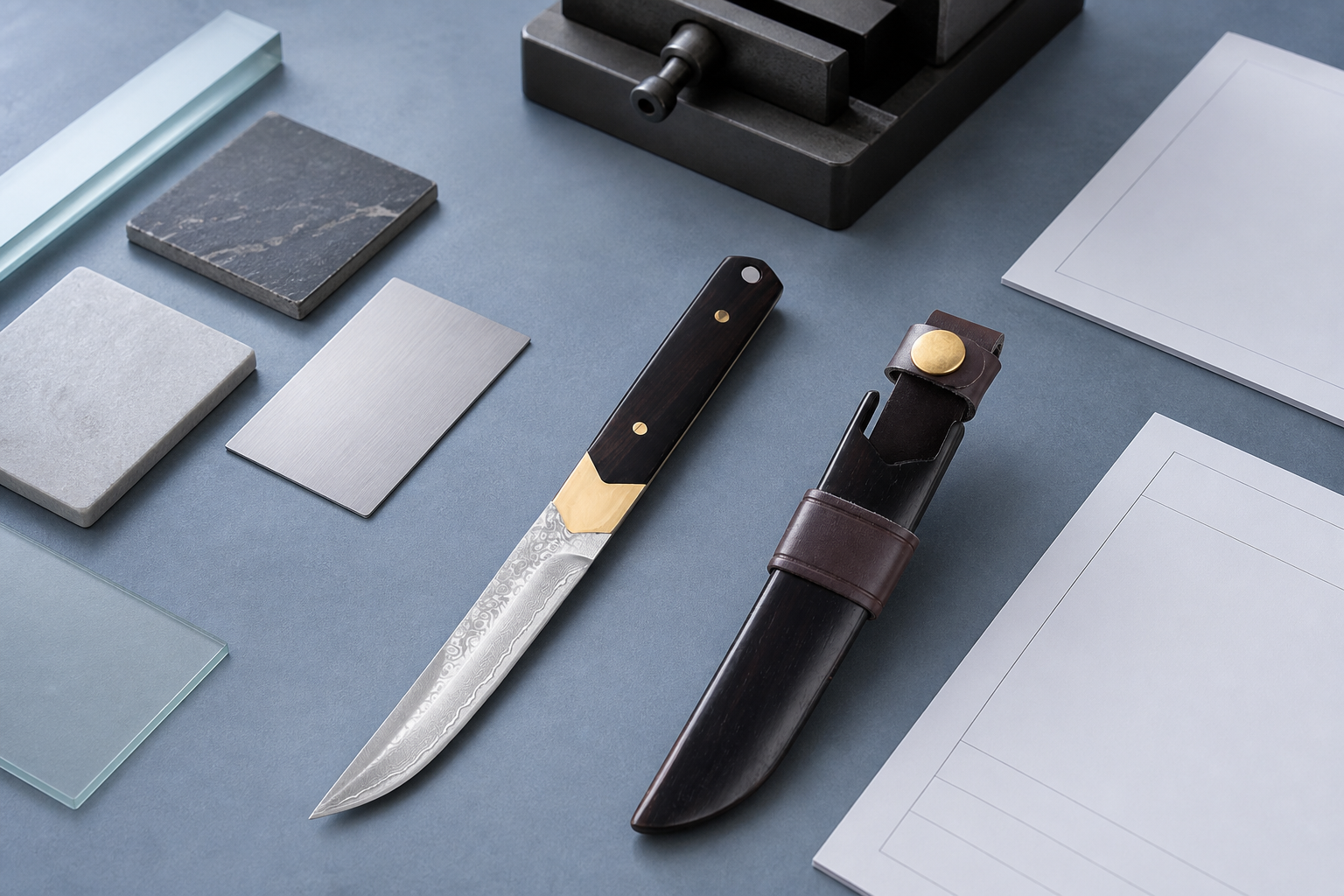
I Separate Forging Quality From Heat-Treatment Quality
Some buyers use forged as if it includes all later performance. It does not. A forged blade still needs correct heat treatment. Depending on steel and design, the process may include normalizing, annealing, hardening, quenching, tempering, cryogenic steps for some steels, straightening, and final hardness inspection. The exact route should come from the supplier's metallurgical process for the specified steel.
The buyer should define the target hardness range and intended performance balance. A harder blade may hold an edge longer but may become more brittle if the process is wrong. A tougher blade may resist impact better but may not hold an edge the same way. The correct balance depends on use case: outdoor fixed blade, hunting accessory, utility blade, kitchen-style blade, or promotional tool.
Warpage is a common concern. Forged blanks may move during heating, quenching, and grinding. The supplier should define straightening steps and rejection limits. The buyer should inspect straightness before and after major process steps where practical.
The NIST heat-treatment reference supports the general principle that steel properties are controlled through thermal processing. In sourcing terms, the buyer should ask for the heat-treatment route, hardness inspection method, batch records, and corrective action process.
| Heat-treatment item | Why it matters | Buyer request |
|---|---|---|
| Normalizing or conditioning | Helps stabilize structure | Process flow |
| Hardening and tempering | Controls performance balance | Hardness range |
| Straightening | Controls blade geometry | Straightness tolerance |
| Batch records | Supports traceability | Inspection report |
How Should Grinding, Machining, and Finishing Be Planned After Forging?
Forging does not replace precision work. It creates the blank that still needs controlled finishing.
After forging, buyers should plan trimming, straightening, grinding allowance, hole drilling, tang machining, bevel grinding, surface finishing, handle fit, and final sharpening.
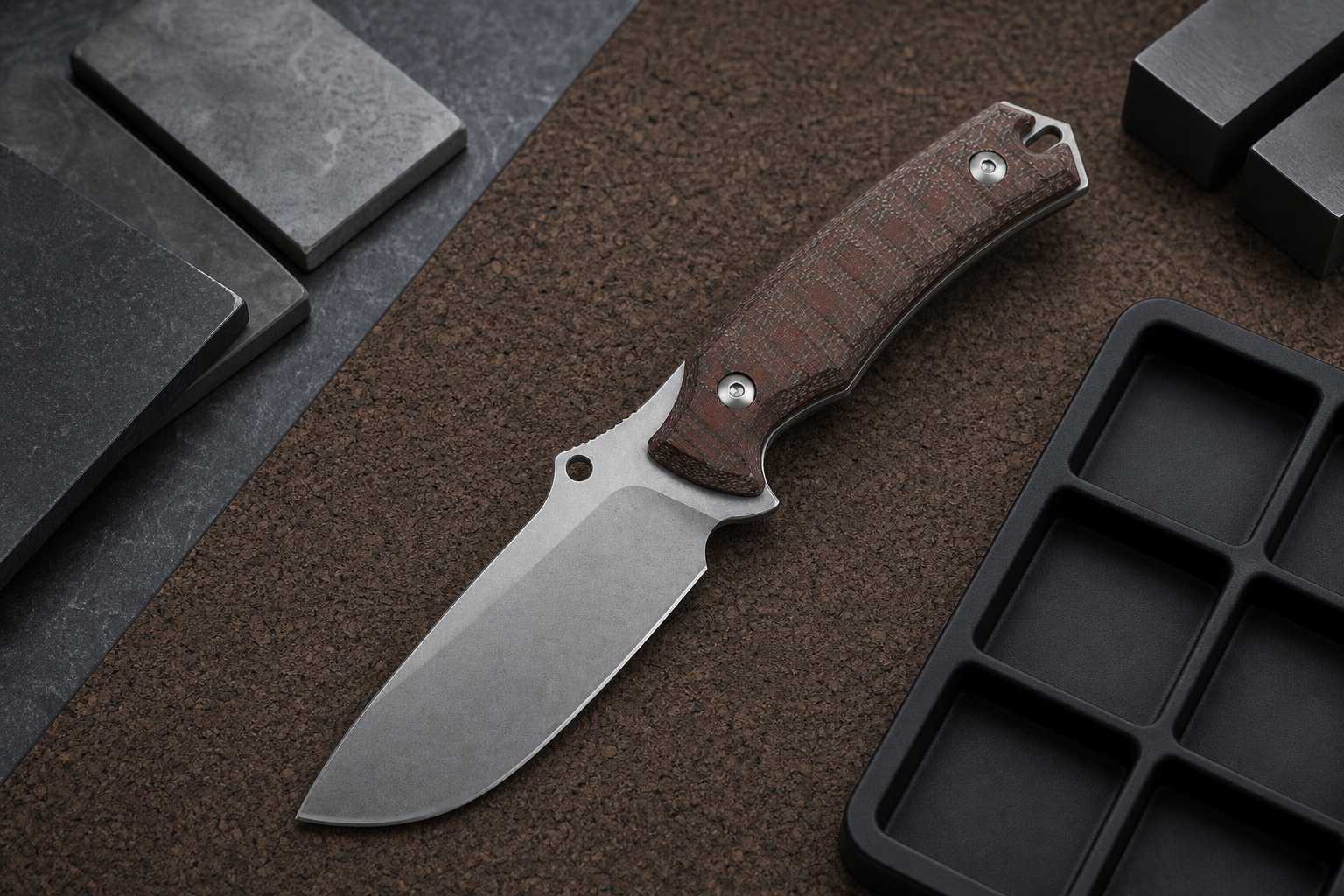
I Treat Grinding Allowance as a Cost and Quality Decision
The forged blank needs enough material for grinding and finishing. Too little allowance may leave scale marks, surface defects, or geometry variation. Too much allowance wastes material, adds grinding time, increases heat input, and raises cost. The buyer should ask the supplier how much allowance is expected and how it affects final blade thickness.
Machining matters too. Fixed blade tang holes, handle scale fit, guard shoulders, full tang edges, and sheath contact surfaces need consistency. Folding knife blades are less common as forged parts, but if forged or preformed blanks are used, pivot holes, stop pin areas, lock surfaces, and blade centering become very sensitive.
Finishing should be defined early. A forged texture can be part of the design if controlled, but random scale, pits, cracks, and rough transitions should not be accepted as "handmade character" unless the buyer has approved that standard. A satin, stonewashed, coated, polished, or blackened finish all need different surface preparation.
The buyer should approve finish boundary samples. That is especially important for forged products because variation can be higher than fully machined parts.
| Post-forging step | Buyer concern | Control method |
|---|---|---|
| Grinding allowance | Cost and defect removal | Define allowance range |
| Hole machining | Handle or mechanism fit | Dimensional inspection |
| Surface finish | Visual consistency | Boundary samples |
| Final edge | Cutting performance and safety | Edge inspection |
What Supplier Capabilities Should Buyers Verify?
Forging requires equipment, skill, safety discipline, and records. A sample alone is not enough.
Buyers should verify forging equipment, heating control, die maintenance, heat-treatment capability, hardness testing, dimensional inspection, surface defect review, safety controls, and batch documentation.
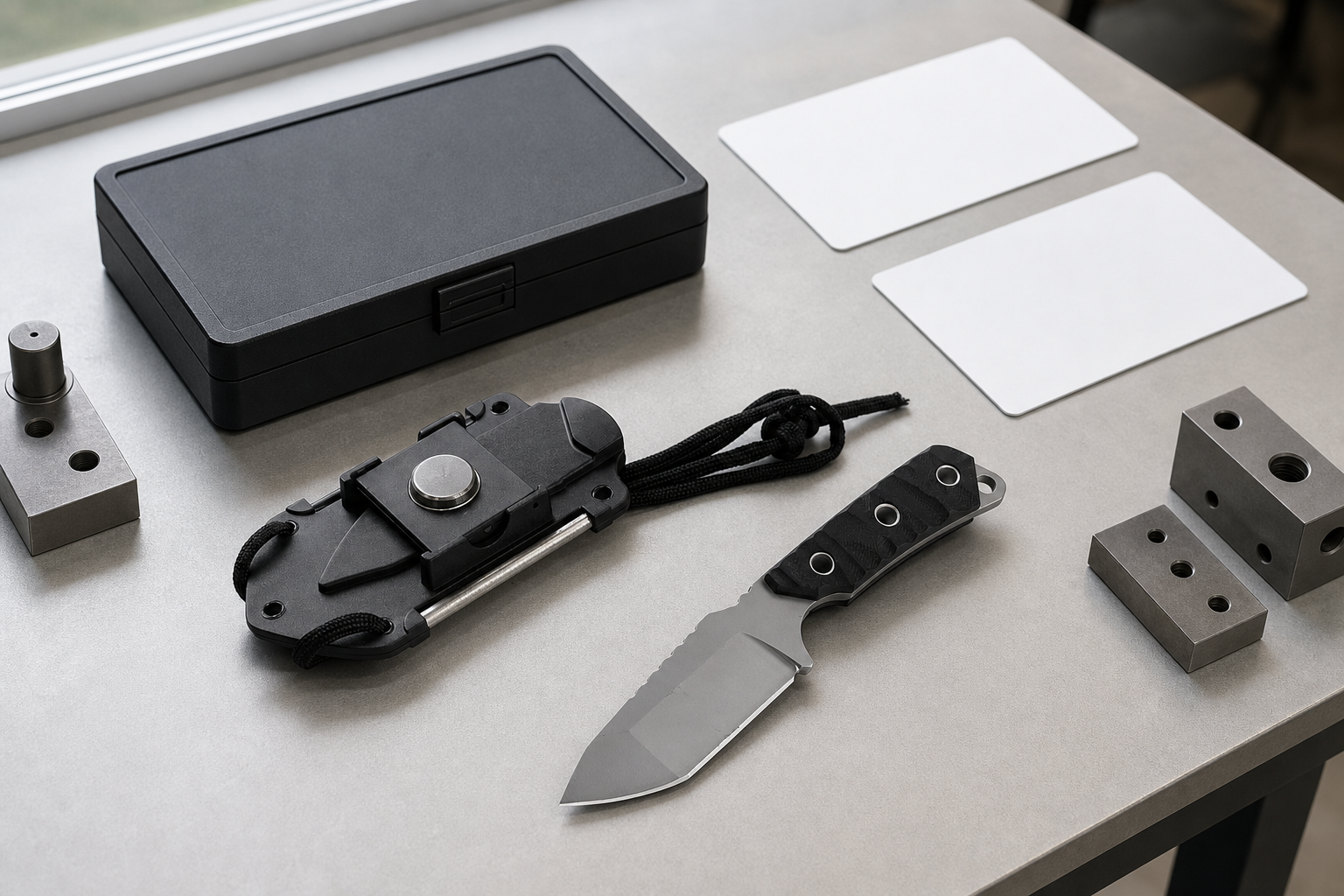
I Ask Whether the Supplier Controls the Full Route
Some suppliers forge in-house. Some outsource forging and finish blades in-house. Some buy forged blanks from another supplier. None of these is automatically wrong, but the buyer should know the route. If multiple suppliers touch the product, traceability and responsibility must be clear.
The buyer should ask who controls steel purchasing, forging, heat treatment, grinding, handle assembly, sheath production, and final inspection. If heat treatment is outsourced, the buyer should ask how batches are tracked. If dies are used, the buyer should ask how die wear is monitored. If hand forging is used, the buyer should ask how variation is limited.
Factory safety also matters. The OSHA forging machines regulation covers guarding and maintenance requirements for forging machines in a workplace context. This is not a sourcing checklist, but it reminds buyers that forging is an equipment-heavy process that should be managed with serious process and safety controls.
The buyer does not need to become the factory manager. But the buyer should request enough evidence to know that the supplier can repeat the process and control the risks.
| Capability area | Evidence to request | Why it matters |
|---|---|---|
| Forging equipment | Machine type and capacity | Matches blade geometry |
| Heat treatment | Process and hardness records | Controls performance |
| Inspection | Dimensional and defect checks | Controls repeatability |
| Traceability | Batch and subcontractor records | Controls responsibility |
What QC Checks Should Be in the Forged Knife Inspection Plan?
Forged products need inspection before finishing hides problems. Final inspection alone is not enough.
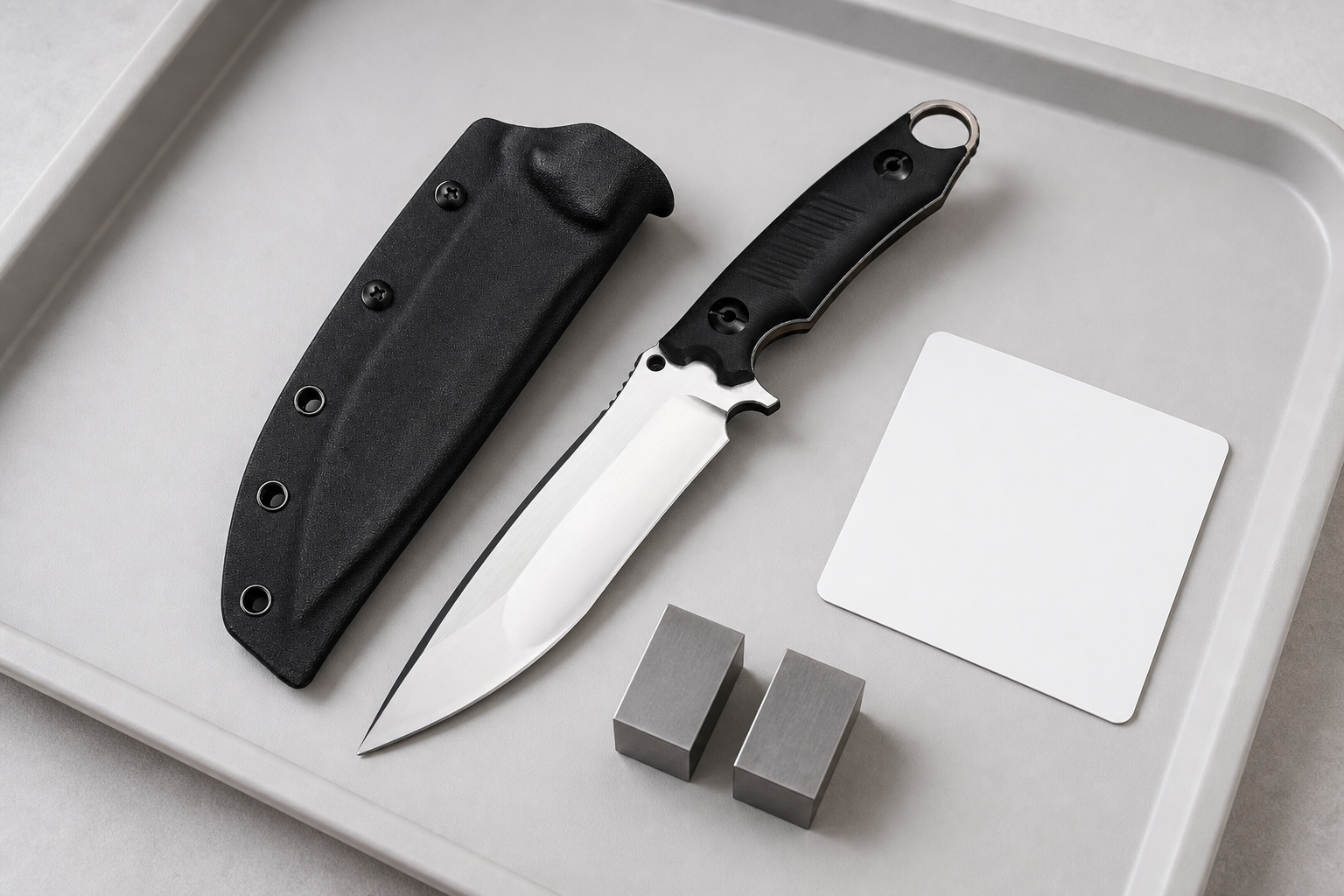
QC should check material records, forged blank dimensions, straightness, surface cracks, laps, scale, decarburization risk, hardness, warpage, grinding geometry, handle fit, sheath fit, and packaging claims.
I Inspect the Forged Blank Before the Finished Knife
If the buyer only inspects finished knives, many forging problems may already be ground away, hidden, or mixed with later process defects. The inspection plan should include checkpoints after forging, after heat treatment, after grinding, and after assembly.
The NIST dimensional metrology page supports the use of dimensional measurement to provide detailed part information and improve manufacturing. For forged knives, dimensional checks should include blank profile, spine thickness, tang thickness, hole positions, straightness, handle fit areas, and final blade geometry.
The ISO 9001 quality management page identifies ISO 9001 as a quality management system requirements standard. For a forged knife project, this supports process records, traceability, corrective action, and controlled inspection points.
Buyers should also connect QC to product copy. If the packaging says forged, the supplier should be able to show the forging route. If the copy says durable outdoor blade, the design and testing plan should support that use. If the buyer claims corrosion resistance, the steel and finish should support that claim. Copy and QC should never live in separate folders.
| QC stage | What to inspect | Why it matters |
|---|---|---|
| Incoming material | Steel grade and batch | Controls heat treatment |
| After forging | Shape, surface defects, straightness | Finds process defects early |
| After heat treatment | Hardness and warpage | Controls performance |
| After finishing | Grind, handle, sheath, packaging | Confirms final product |
How Should Packaging and Product Copy Describe Forged Knives?
Forged can be a useful claim. It should not become a vague promise of superior performance.
Packaging should describe forged construction accurately, avoid unsupported strength claims, explain intended use, include safe handling guidance, and match the actual approved production route.
I Use Forged as a Traceable Production Description
The buyer can describe a knife as forged when the production route supports that claim and records exist. Better wording may include "forged blade blank," "forged fixed blade," or "forged construction" depending on the actual process. The copy should not imply that forged means indestructible, superior in every use, or suitable for tasks beyond the product design.
The European Commission page on EU product safety and labelling reminds businesses that product safety and labelling are part of market readiness. For buyers, that means claims, warnings, and instructions should be accurate and supported by the product.
If the knife is designed for outdoor use, the packaging should include safe handling, sheath use, maintenance, and storage guidance. If the product has a forged texture or visible hammer marks, the buyer should define what variation is acceptable. Do not let "forged look" become a way to accept random defects.
The buyer should also avoid competitor-style claims. The article and product copy should stand on the buyer's own specification: steel, process, heat treatment, QC, and use case.
| Copy area | Good direction | Avoid |
|---|---|---|
| Forging claim | Traceable production route | Vague premium promise |
| Strength wording | Designed for intended use | Unbreakable claims |
| Finish wording | Approved forged texture | Defects called character |
| Safety wording | Use, store, and maintain correctly | Combat or abuse language |
How Can Vast State Help Buyers Manage Forged Knife Projects?
Forging projects need practical coordination between design, factory process, inspection, and product copy.
Vast State helps buyers manage forged knife projects by clarifying use case, steel, forging route, heat treatment, finishing, packaging, claims, and QC before production.
I Turn Forged Into a Buildable Specification
In real sourcing work, I help buyers decide whether forging is the right route. If the project needs a classic outdoor fixed blade, forged blank construction may support the product story. If the project needs a thin, low-cost folding blade, another production route may be more practical. If the buyer wants a visible forged texture, we define what is acceptable and what is a defect.
Vast State can help convert the project into a clear RFQ: steel grade, billet size, forging route, heat-treatment target, hardness range, grinding allowance, handle structure, sheath requirement, packaging, safe-use notes, and QC checkpoints. We can also help keep product copy accurate. Forged should mean something traceable, not a loose claim.
For buyers, this reduces sampling loops. The supplier knows what process to quote. The buyer knows what evidence to request. The inspector knows what to check. The final customer receives a knife that matches the product story.
The best forged knife project is not the one with the loudest claim. It is the one where material, process, heat treatment, finish, packaging, and records all line up.
| Buyer need | Vast State support | Project result |
|---|---|---|
| Decide if forging fits | Use case and cost review | Better process choice |
| Control production | Process and heat-treatment brief | More stable samples |
| Verify quality | QC checkpoints and records | Lower batch risk |
| Support marketing | Traceable claim review | More credible product copy |
Turn your idea into a quote-ready knife project.
Share your drawing, sample photo, target quantity, market, and packaging needs. Vast State will review manufacturability and prepare OEM/ODM options.
Conclusion
Forged knives succeed when buyers control steel, heat, forming, heat treatment, finishing, claims, and inspection as one connected OEM/ODM process.