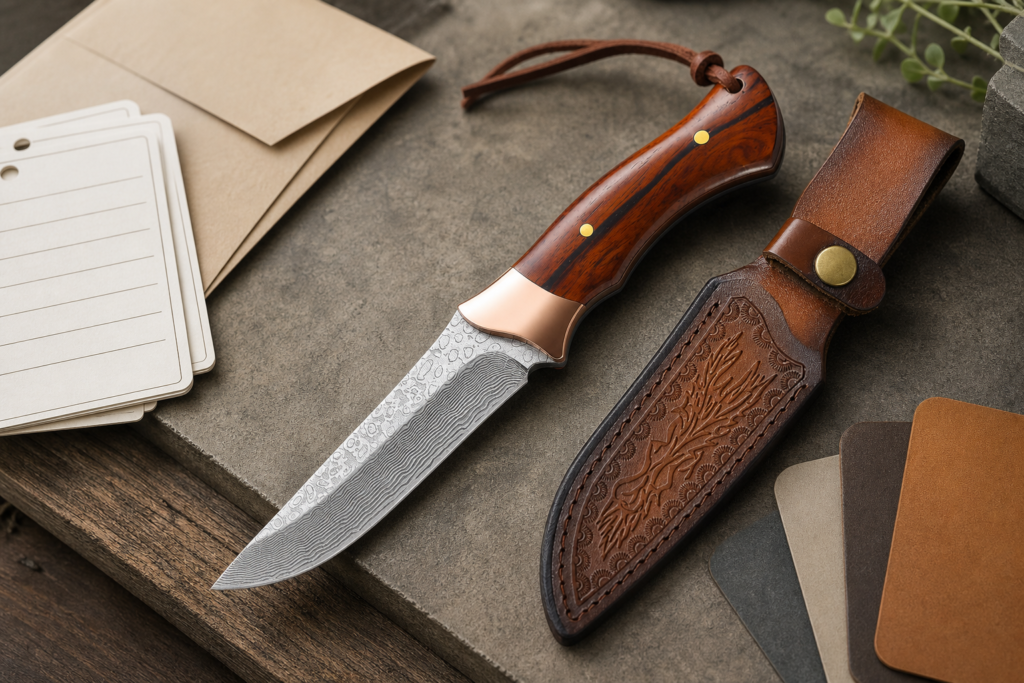
Survival knife sounds powerful, but unclear positioning creates risk. Buyers need practical outdoor use cases, not dramatic or unsafe claims.
Buyers should define survival knife use cases around responsible outdoor utility: camp food prep, cord cutting, repair tasks, light wood processing, emergency kit support, safe storage, maintenance, and packaging guidance. They should avoid self-defense, combat, abuse, and unrestricted-carry claims.
Quick buyer brief:
- Answer: A survival knife should be specified as an outdoor utility and emergency-preparedness tool, with clear use limits and inspection requirements.
- Buyer context: This guide is for outdoor brands, camping brands, hunting-accessory brands, emergency-kit brands, importers, distributors, private label buyers, and OEM/ODM sourcing managers.
- Key checks: Intended outdoor tasks, blade length, blade thickness, handle control, sheath retention, edge protection, corrosion resistance, maintenance notes, market rules, product copy, packaging warnings, and QC standards.
Planning a fixed blade or outdoor knife project?
Share your target use, blade size, steel preference, handle direction, sheath needs, quantity range, and packaging plan. Vast State can help turn it into a quote-ready specification.
When a buyer asks for a "survival knife," I always slow the conversation down. Survival can mean outdoor preparedness, camping utility, field repair, emergency kit support, or rough marketing language. Those are not the same. If the brief is too broad, the product may become heavy, expensive, legally sensitive, hard to package, and easy to misuse. A strong OEM/ODM project should define realistic tasks first. Then the blade, handle, sheath, copy, and QC plan can support those tasks.
Why Should Buyers Define Survival Knife Use Cases Before the RFQ?
Many RFQs say survival knife without explaining the actual user. That makes suppliers guess the product direction.
Buyers should define survival knife use cases before the RFQ because use case controls blade size, steel, grind, handle shape, sheath, packaging, safety wording, cost, and inspection.
I Start With the User's Real Scenario
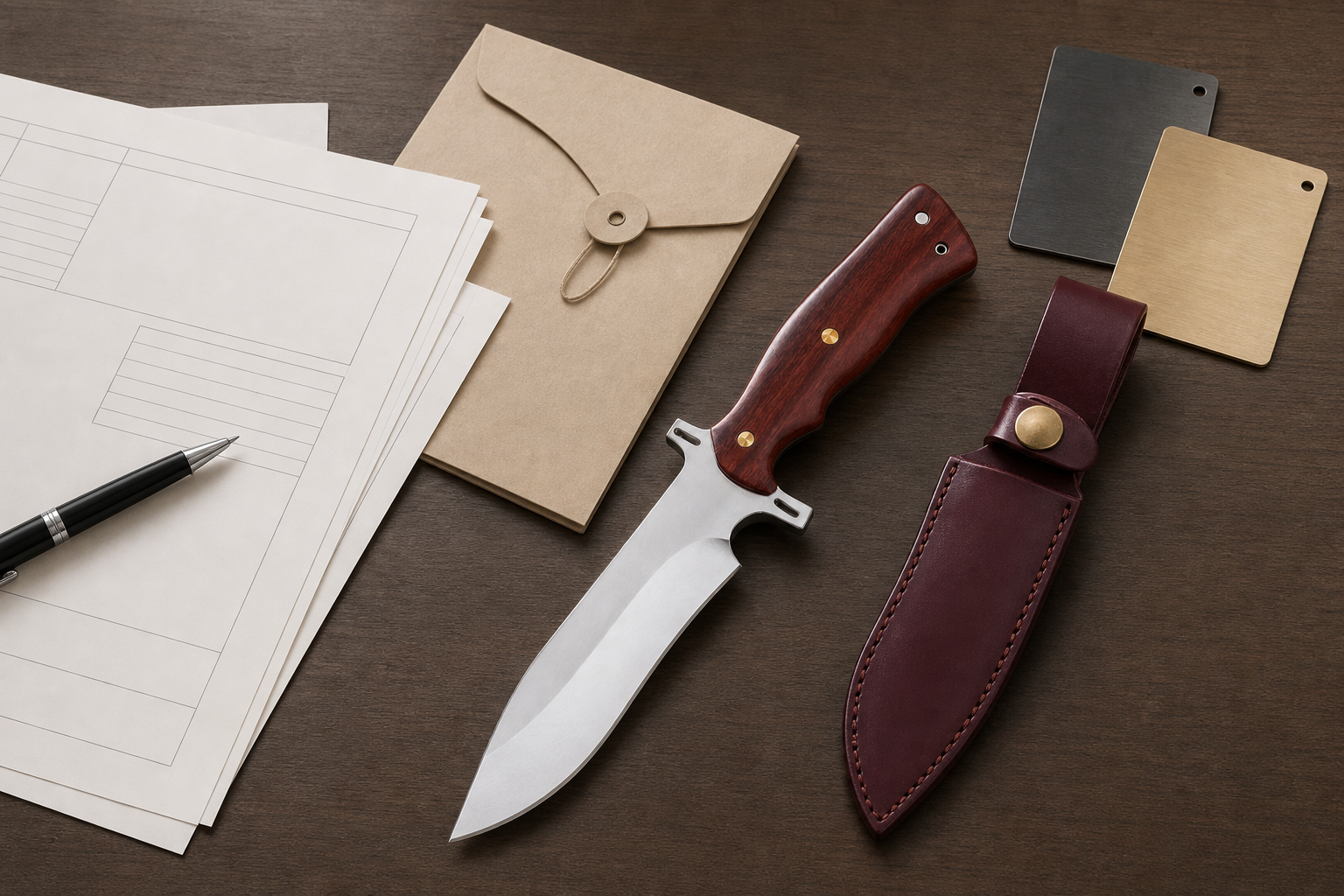
Survival knife is a broad phrase. It can mean a robust camping fixed blade, a compact knife inside an emergency kit, an outdoor repair tool, a hunting accessory, or a general-purpose field knife. If the buyer does not define the scenario, the supplier may overbuild the product or copy a style that does not fit the sales channel.
The National Park Service Ten Essentials page includes tools such as a knife in a repair kit and tools category. That is a useful framing source. It treats a knife as one part of a broader outdoor preparedness system, not as a stand-alone hero product. For OEM/ODM buyers, that matters. A survival knife should support a realistic outdoor kit and a clear task list.
The buyer should decide whether the product is for camping, hiking, emergency preparedness, outdoor retail, utility work, gift sets, or private label outdoor assortments. Each case changes the design. A compact kit knife may need lower weight and safer packaging. A camp fixed blade may need better sheath retention and handle control. A repair-oriented knife may need corrosion resistance, easy cleaning, and clear maintenance guidance.
If the buyer starts with the scenario, the RFQ becomes measurable. If the buyer starts with the word survival, the project often becomes vague.
| Buyer question | Why it matters | RFQ output |
|---|---|---|
| Who uses it? | Controls size and handle feel | Target user profile |
| Where is it carried? | Controls sheath and packaging | Carry method |
| What tasks are intended? | Controls blade and edge design | Use-case list |
| What claims are allowed? | Controls copy and channel review | Product wording limits |
OEM/ODM RFQ Checklist
Prepare these details to help Vast State review your project and provide a more accurate quotation.
| RFQ Field | What to Prepare |
|---|---|
| Project type | OEM from drawing / ODM private label / wholesale catalog |
| Product category | Folding knife / fixed blade / multi-tool / outdoor tool |
| Design status | Idea / sketch / 2D drawing / 3D CAD / physical sample |
| Target price | Ex-factory target price or retail price range |
| MOQ expectation | 500 / 1,000 / 3,000 / 5,000+ pcs |
| Logo method | Laser engraving / etching / printing / molded logo |
| Packaging | Standard packaging / custom retail box / Amazon-ready |
| Market | USA / EU / Japan / Korea / Middle East / other |
| Compliance needs | Buyer-specified testing / documentation / labeling |
| Timeline | Sample deadline / mass production deadline |
Which Practical Outdoor Tasks Can a Survival Knife Support?
Useful does not mean unlimited. Buyers should define a responsible task list.
A survival knife can support responsible outdoor tasks such as cord cutting, package opening, camp food preparation, light wood processing, repair work, tinder preparation, and emergency-kit support when designed and labelled correctly.
I Use Task Categories Instead of Hype
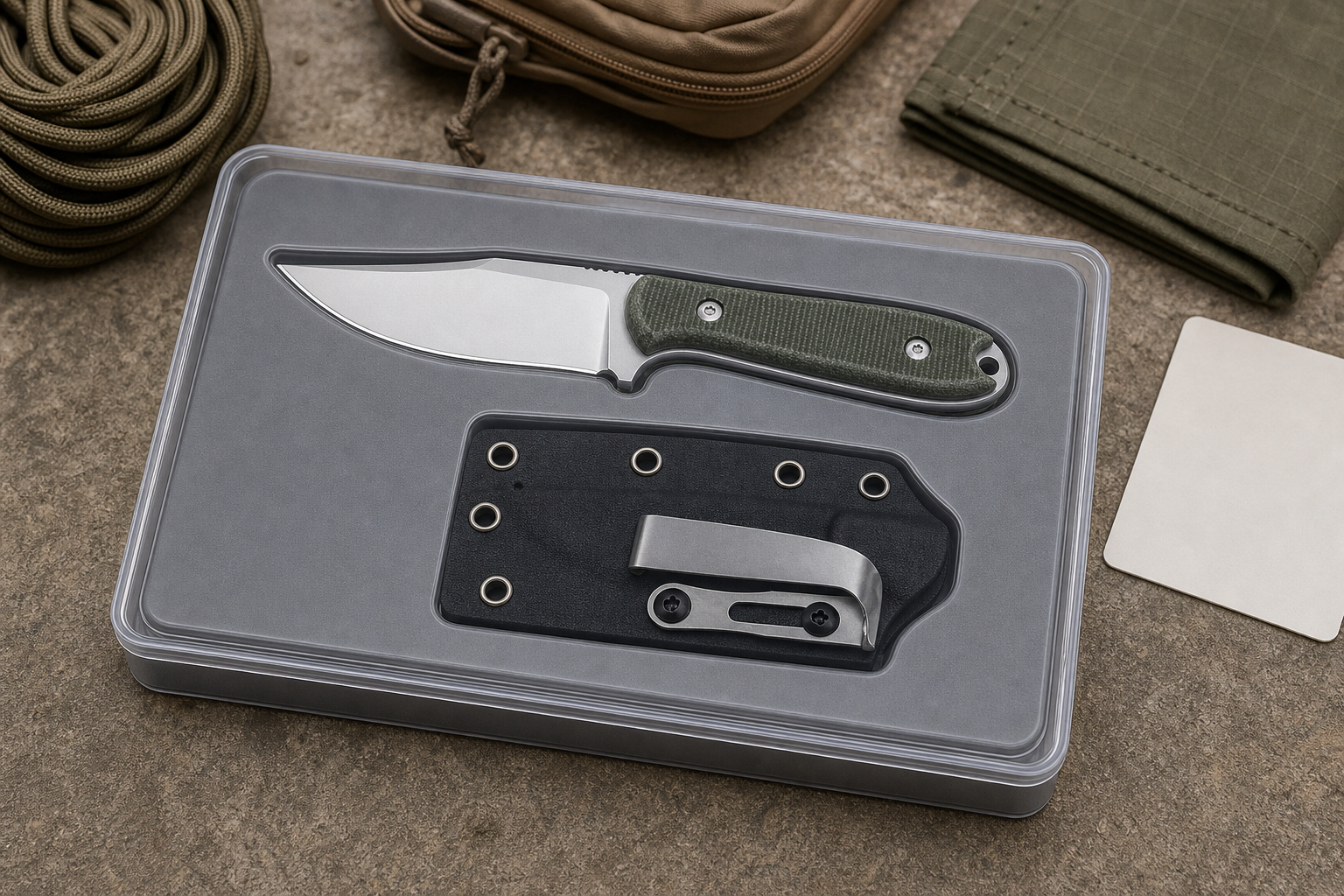
The first useful category is cutting and trimming. This includes cord, packaging, tape, light rope, and general campsite materials. This does not mean cutting unsafe materials or using the knife as a metal tool. If the buyer wants to include specific materials in copy, the supplier should review blade geometry and edge performance for those materials.
The second category is camp food preparation. A survival knife may slice simple camp food, but it is not a kitchen knife replacement unless designed for that role. Handle hygiene, cleaning, corrosion resistance, and sheath storage matter if food contact is part of the product story.
The third category is light wood processing. Buyers should be careful here. Some outdoor users expect feather sticks, kindling preparation, or light notching. But heavy chopping, batoning, prying, or splitting claims can create unrealistic expectations unless the knife is specifically designed and tested for those tasks.
The fourth category is repair and emergency kit support. A knife can help open supplies, cut cord, trim tape, or support basic field repair. The Ready.gov emergency kit guidance includes practical kit planning and reminds buyers that emergency preparedness is a system. A knife should be described as part of a kit, not as a promise that one tool solves every situation.
| Task category | Reasonable direction | Buyer caution |
|---|---|---|
| Cord and packaging | Utility cutting | Define material limits |
| Camp food prep | Simple outdoor prep | Add cleaning guidance |
| Light wood tasks | Small outdoor utility | Avoid heavy abuse claims |
| Repair kit support | Field repair assistance | Position as one tool in a kit |
What Use Claims Should Buyers Avoid?
Unsafe claims can damage the channel even if the knife itself is well made.
Buyers should avoid self-defense, combat, weapon, unrestricted carry, extreme abuse, throwing, prying, rescue guarantees, and "does everything" claims unless legally reviewed and technically supported.
I Keep the Product in Utility Territory
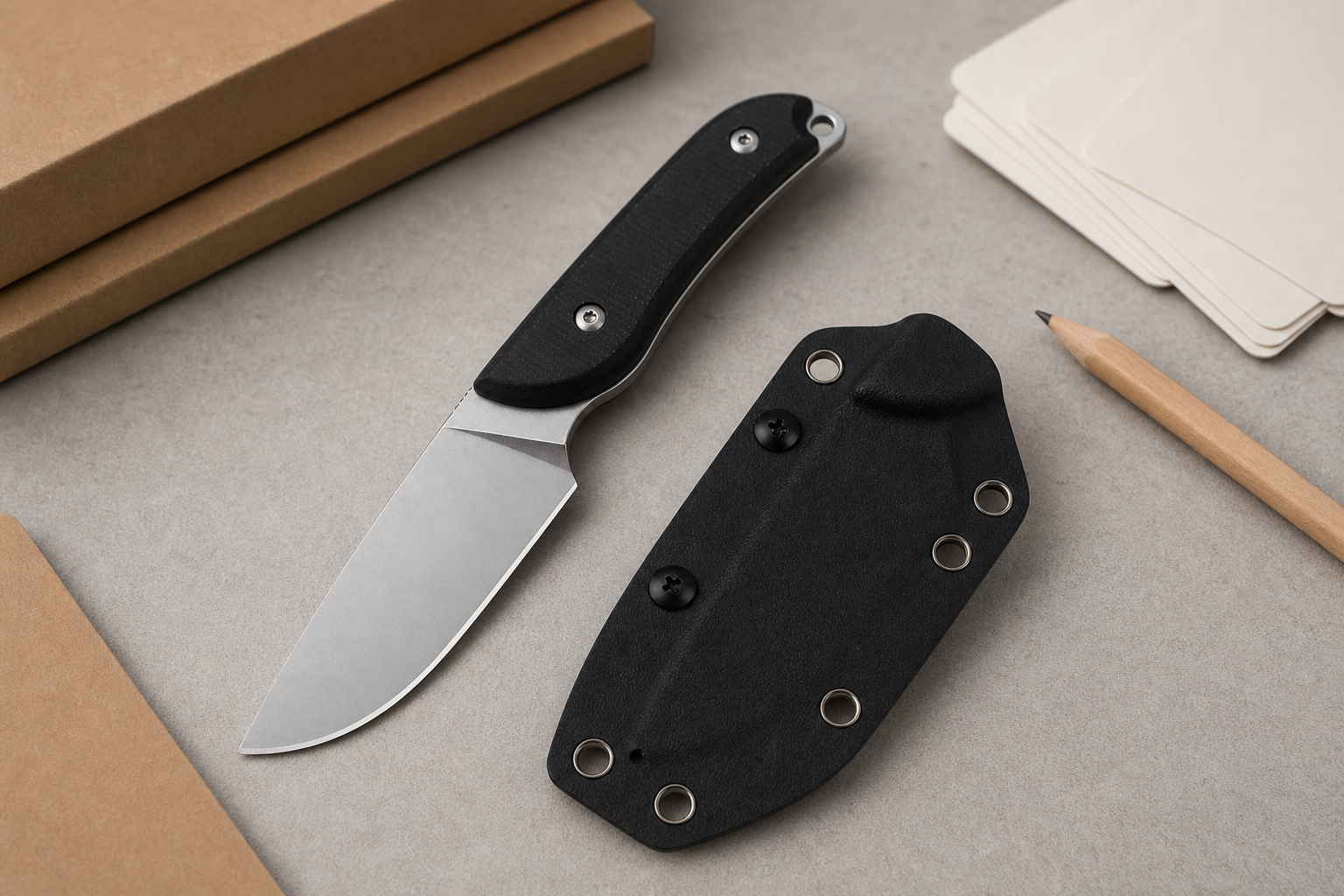
The word survival can easily drift into weapon-style marketing. That creates problems. Many retailers, marketplaces, payment processors, and advertising platforms are more comfortable with practical outdoor utility than with combat or self-defense claims. A buyer who wants a stable private label product should use calm, functional language.
A product page can say outdoor utility knife, camp knife, field repair tool, emergency kit knife, or fixed blade for camping tasks where accurate. It should not say designed for fighting, attack, defense, or unrestricted carry. It should not promise that the knife is unbreakable. It should not show or describe unsafe misuse.
The FEMA emergency kit guidance on weapons warns that weapons can create issues in emergency shelters and travel contexts. The exact context is different from retail product design, but the lesson is useful: emergency preparedness language should not become weapon positioning.
Legal certainty is another copy risk. Do not say the knife is legal everywhere, airline-safe, school-safe, or approved for all public carry. GOV.UK buying and carrying knives guidance shows how rules can distinguish categories, blade length, locking behavior, and restricted knives in one target market. Buyers need local review instead of global copy.
| Risky claim | Why it is risky | Better direction |
|---|---|---|
| Self-defense or combat | Channel and safety concern | Outdoor utility |
| Unbreakable | Unsupported expectation | Tested use limits |
| Carry anywhere | Legal overreach | Review local rules |
| Survival guarantee | Misleading promise | Emergency kit support |
How Should Blade, Handle, and Sheath Match the Use Case?
Versatility is not magic. It comes from matching structure to realistic tasks.
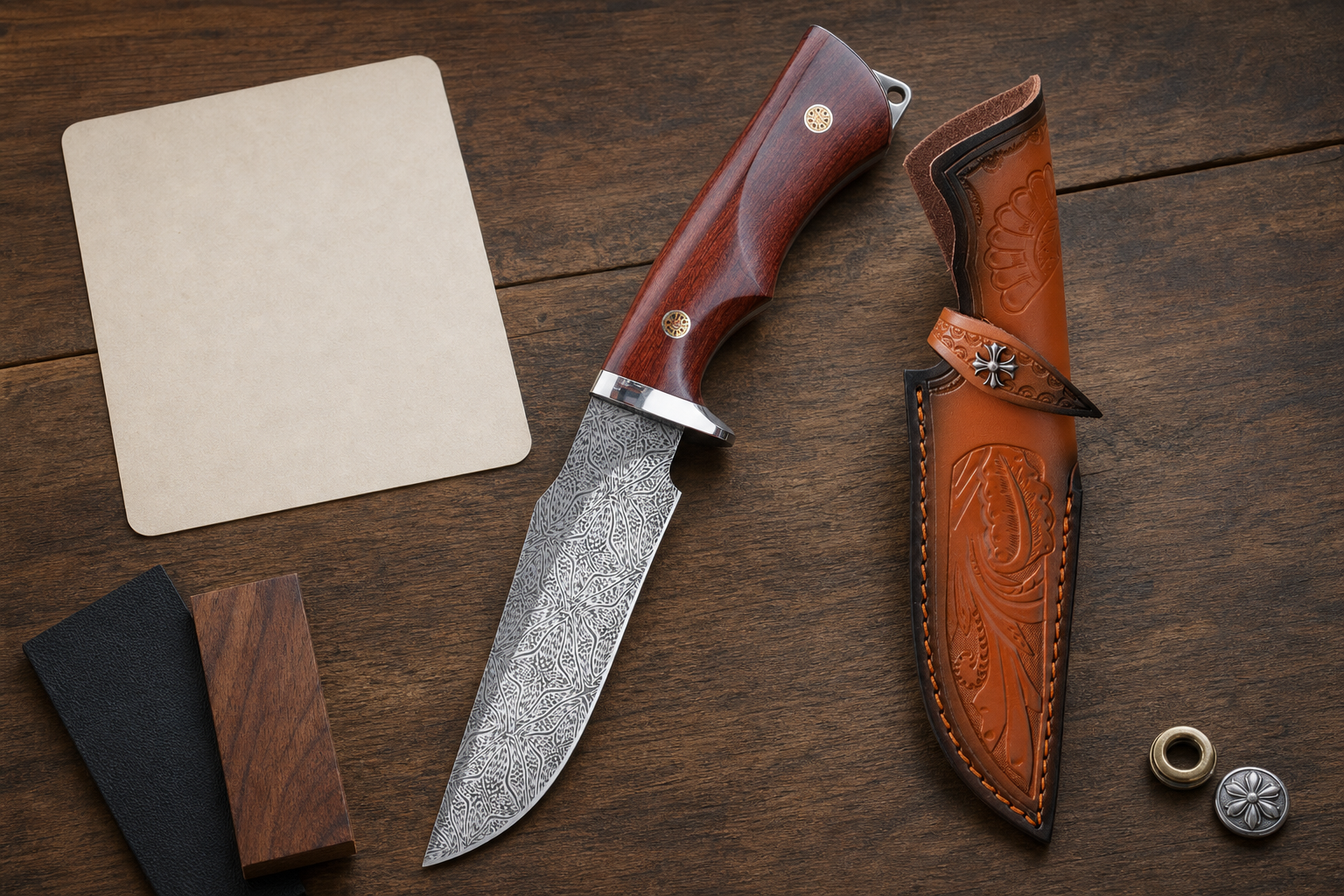
Blade, handle, and sheath should match the intended use through blade length, thickness, grind, steel, edge finish, handle texture, grip shape, sheath retention, drainage, and safe storage.
I Avoid Designing a Knife That Tries to Do Everything
A survival knife often needs a stronger structure than a small pocket knife, but strength must be defined. A thicker blade can support stronger-feeling outdoor use, but it may cut worse in food preparation and add carry weight. A thinner blade may slice better, but it may not support rough outdoor positioning. A longer blade may look capable, but it may be harder to carry, package, and sell in some channels.
Handle design is equally important. Outdoor users may hold the knife with wet hands, cold hands, gloves, or tired hands. The handle should reduce slipping through shape, texture, and edge rounding. But aggressive texture can create hotspots. The buyer should test grip comfort with real samples, not only renderings.
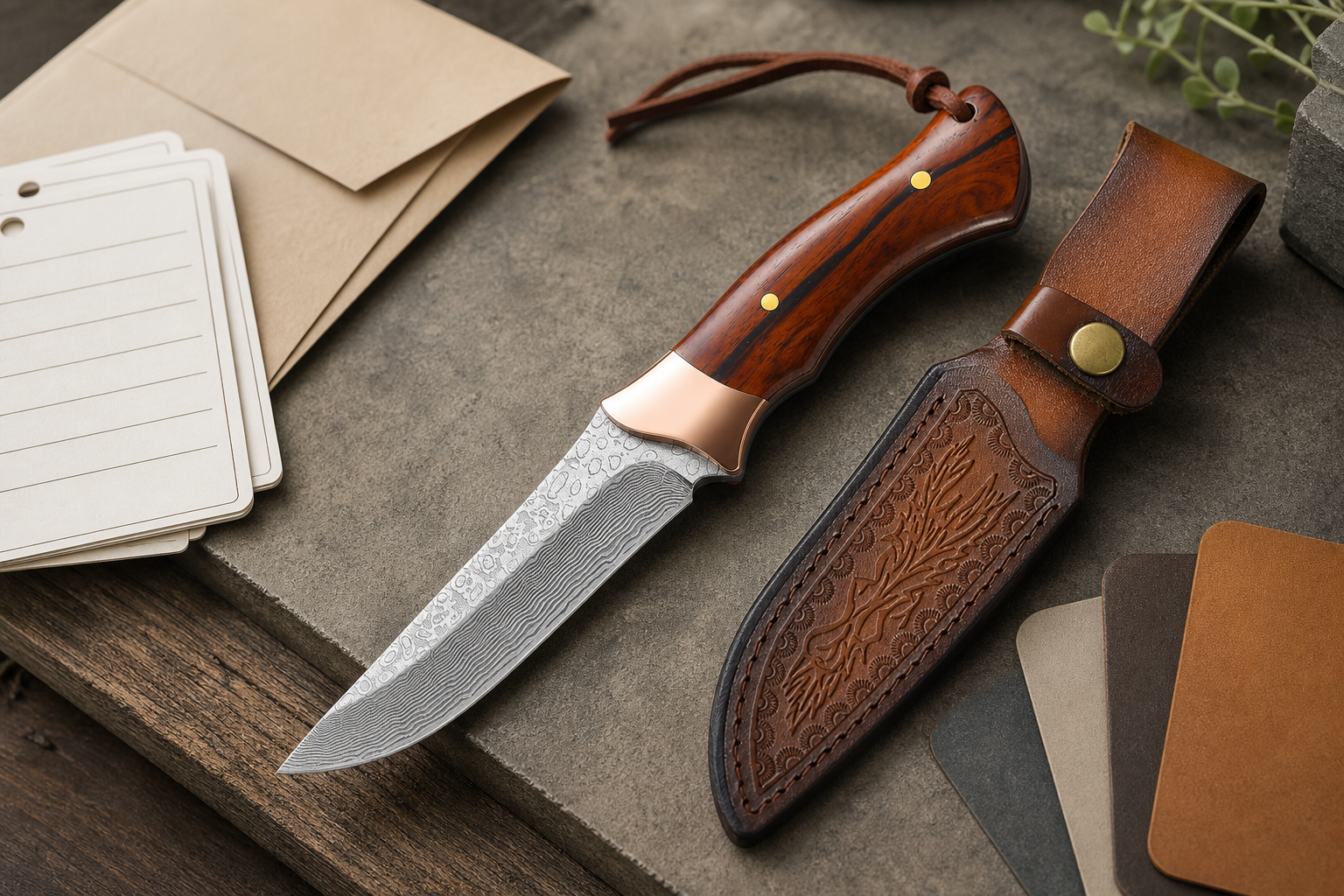
The sheath is part of the product. It should cover the edge, hold the knife securely, allow controlled removal, and protect the packed unit during shipment. If drainage, belt carry, MOLLE-style attachment, clip carry, or neck carry is requested, each carry method needs design and safety review. Do not add carry features only because they look rugged.
The CCOHS sharp blades guidance supports the idea that sharp tools need safe handling, guards or storage where applicable, and attention to sharp edges. For a fixed blade, the sheath and edge cover are not accessories. They are safety-critical parts of the product system.
| Component | Design decision | Buyer check |
|---|---|---|
| Blade | Length, thickness, grind, steel | Match real tasks |
| Handle | Shape, texture, material | Test grip comfort |
| Sheath | Retention, coverage, carry method | Inspect insertion and removal |
| Package | Edge protection and movement control | Test packed sample |
How Should Emergency Preparedness Positioning Stay Responsible?
Emergency language can be helpful, but it should not promise impossible outcomes.
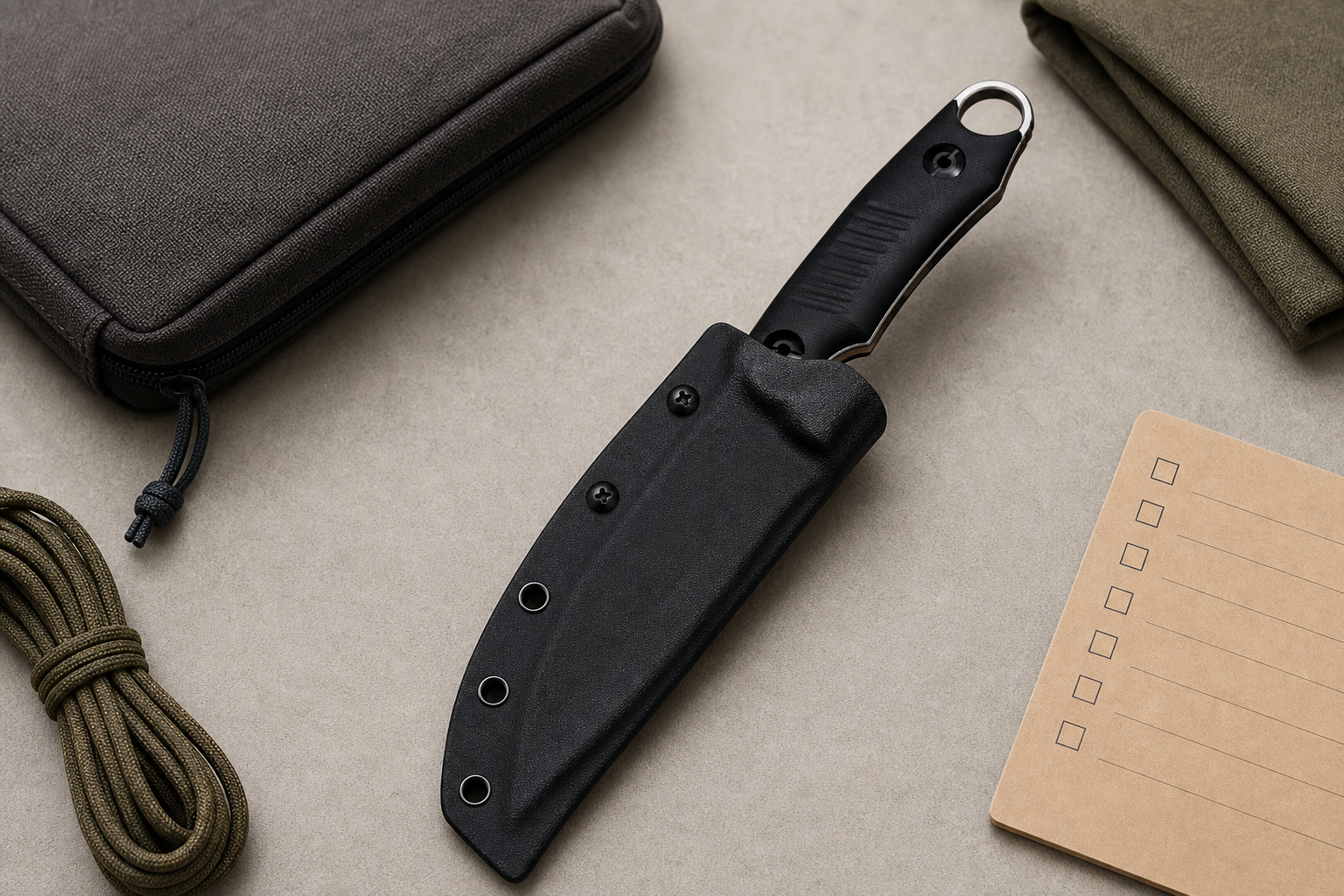
Emergency preparedness positioning should describe the knife as one support tool in a broader kit, with clear task limits, safe storage, maintenance guidance, and market-appropriate wording.
I Position the Knife as Support, Not a Promise
Emergency kits are about preparation, not drama. A knife can help cut cord, open packaging, trim repair materials, and support basic outdoor tasks. It cannot guarantee safety. It cannot replace training, judgment, shelter, water, communication, first aid, or local emergency guidance.
The Ready.gov kit guidance is useful because it frames emergency preparedness around a set of supplies. Buyers can apply that same logic to product copy. A survival knife can be described as a kit support tool. It should not be described as the single tool that makes a person safe in every situation.
If the product is sold as part of an emergency kit, the buyer should check storage conditions. Will the knife be stored for a long time? Could humidity affect the blade? Does the sheath protect the edge? Does the instruction card remind users to inspect and maintain the tool? Does the packaging keep the edge secure if the kit is dropped or moved?
If the knife is sold separately, the buyer can still use responsible emergency language. For example: "Designed for outdoor utility and emergency kit support." That is cleaner than "survive anything." The first sentence describes a practical role. The second creates a risky promise.
| Emergency positioning | Responsible wording | Avoid |
|---|---|---|
| Kit support | Part of an outdoor or emergency kit | Only tool you need |
| Repair tasks | Cut cord and trim repair materials | Unlimited rescue claims |
| Storage | Inspect and maintain before use | Store forever without care |
| Preparedness | Use with training and judgment | Guaranteed survival |
What Packaging and Safety Information Should Be Included?
The first time a customer handles the knife may be during unboxing. Packaging should guide that moment.
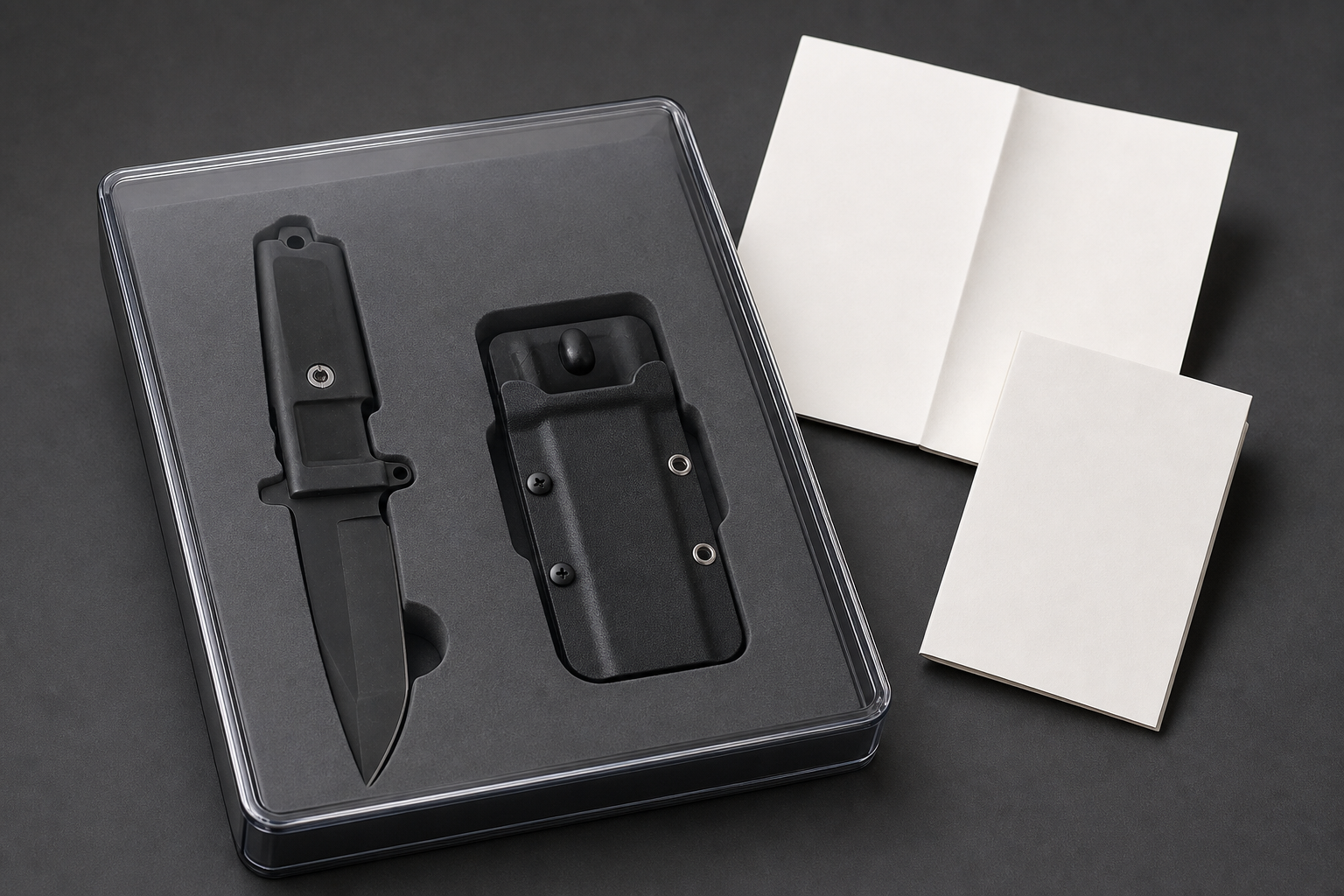
Packaging should include intended use, safe handling, sheath or cover instructions, storage guidance, maintenance notes, age or access warnings where appropriate, and target-market compliance review.
I Write Safety Notes Around the Actual Sample
A generic warning is not enough. The instruction card should match the actual product. If the knife is a fixed blade, the card should explain sheath use and storage. If the knife has a belt clip or loop, the card should explain responsible carry and local rule review. If the knife has a coated blade, wood handle, or carbon steel, the card should include material-appropriate care notes. If the knife is sold in a kit, the card should explain that it should remain sheathed or covered until needed.
The European Commission page on EU product safety and labelling reminds businesses that product safety and labelling are part of market access and customer communication. Even outside the EU, that principle is useful. Packaging should not be treated as decoration only.
For US products, the CPSC general-use products certification page explains that products subject to applicable consumer product safety rules may need certification based on testing or a reasonable testing program. This does not mean every survival knife has the same certification requirement. It means buyers should identify the applicable rules and maintain records.
The package should also physically protect the user. The blade should not move. The sheath should not split. The tip should not press through the insert. The product should arrive ready for controlled handling.
| Packaging item | Purpose | Buyer check |
|---|---|---|
| Instruction card | Safe use and storage | Match approved sample |
| Sheath or cover note | Edge protection | Check retention |
| Maintenance note | Long-term readiness | Match materials |
| Compliance note | Market readiness | Review target market |
How Should Maintenance and Storage Support Versatile Use?
An outdoor knife may sit in a kit for months. It must still be safe and usable when needed.
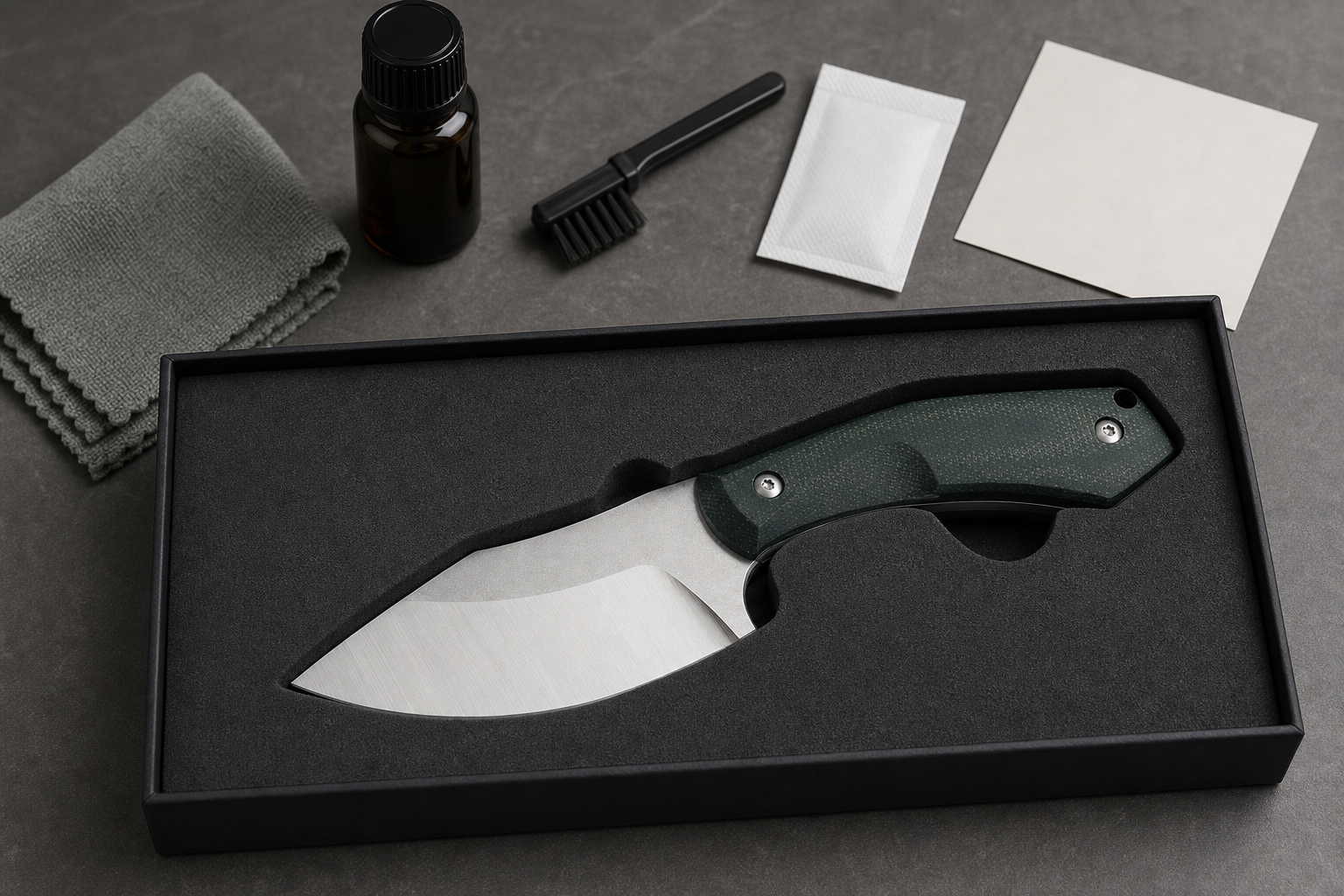
Maintenance and storage guidance should cover cleaning, drying, corrosion prevention, edge condition, sheath condition, loose parts, safe storage, and when to stop using a damaged knife.
I Treat Readiness as a Maintenance Problem
A survival knife may be stored in a vehicle kit, camping box, emergency bag, garage, warehouse, or retail display. Humidity, dust, temperature changes, and sheath materials can affect the blade and handle. If the buyer wants the product to support emergency preparedness, maintenance notes should be practical and honest.
The user should be told to clean and dry the knife after use, inspect the sheath, check for loose parts, and maintain the edge with suitable tools. If the blade is chipped, cracked, loose, badly corroded, or if the sheath no longer holds the knife securely, the user should stop carrying or using it until it is repaired or replaced.
Buyers should also define whether the product is user-serviceable. If the knife has screws, does the brand allow adjustment? If the sheath retention changes, is there a replacement path? If the handle material needs special care, is that written clearly? A simple outdoor knife can create support issues if the maintenance promise is vague.
The HSE safe use of knives in kitchens links knife safety with safe systems for use and sharpening in a workplace context. The product category is different, but the principle still helps: cutting tools require correct condition and maintenance practices.
| Maintenance area | User guidance | Buyer planning note |
|---|---|---|
| Cleaning | Clean and dry after use | Match steel and coating |
| Edge condition | Maintain with suitable tools | Avoid advanced tutorial claims |
| Sheath condition | Inspect retention and damage | Define replacement path |
| Loose or damaged parts | Stop use if unsafe | Define warranty support |
What QC Checks Prove a Survival Knife Is Ready for Production?
Versatile use claims should be supported by inspection. A strong sample is not enough.
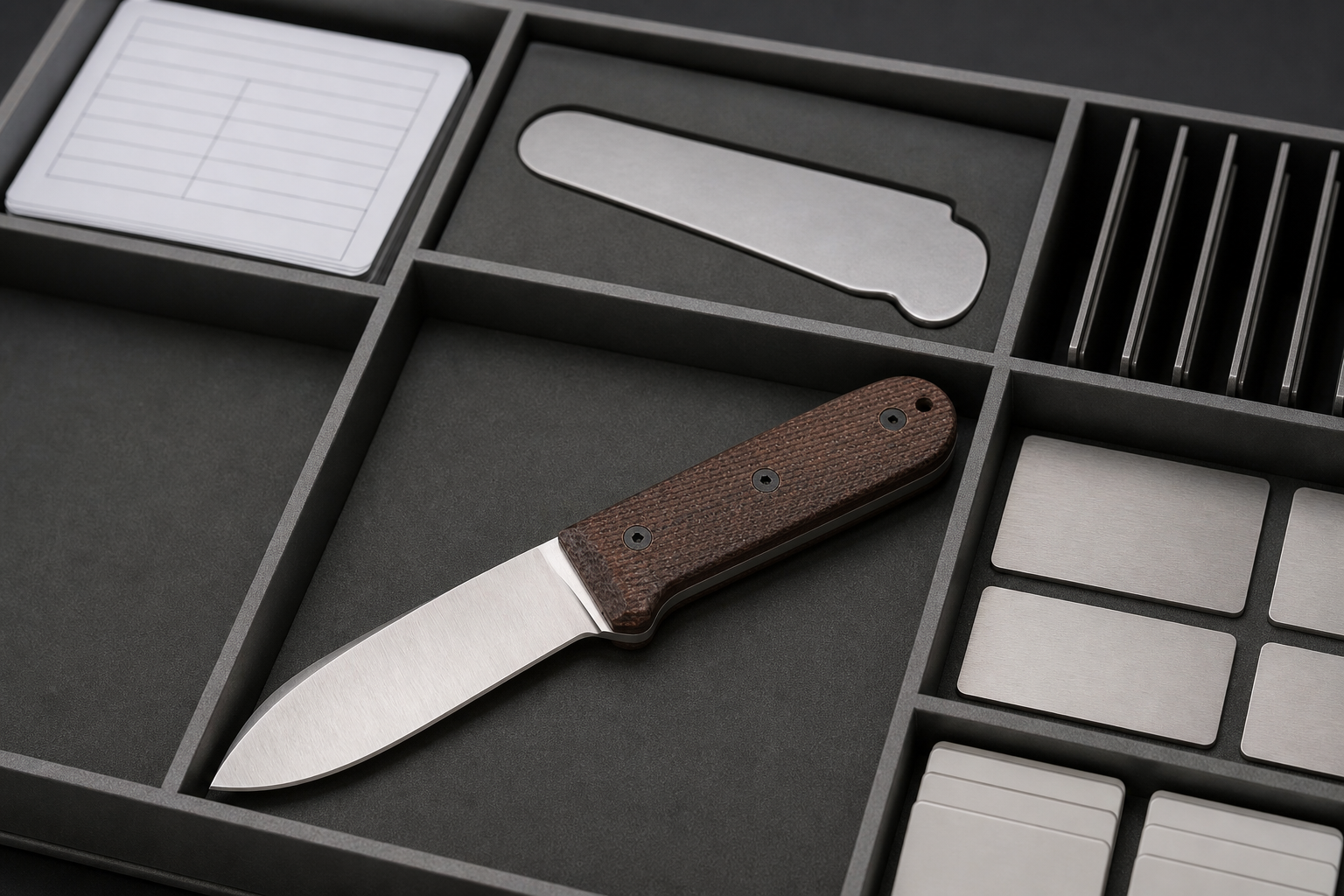
QC should verify blade dimensions, edge finish, handle grip, tang or structure, sheath retention, tip and edge coverage, corrosion-sensitive finish, packaging security, instruction accuracy, and boundary samples.
I Connect Use Claims to Inspection Points
If the product claims outdoor utility, the buyer should inspect the parts that make that claim credible. Blade length and thickness should match the approved drawing. The grind and edge finish should be consistent. The handle should be secure and comfortable. The sheath should cover the blade and hold the knife with the approved level of retention. The package should prevent movement and protect the edge. The instruction card should be present and accurate.
The ISO 9001 quality management page identifies ISO 9001 as a quality management system requirements standard. For a survival knife project, that supports a structured process: approved specifications, material checks, in-process checks, final inspection, records, and corrective action.
Boundary samples are useful. One sample can show the minimum acceptable sheath retention. Another can show the maximum acceptable handle gap. Another can show acceptable edge finish or coating variation. These samples reduce subjective arguments during production.
I also like to check product copy against the physical sample during final review. If the box says corrosion-resistant, the material and finish should support that claim. If the box says secure sheath, sheath retention should be inspected. If the product says emergency kit support, the package should be safe for storage and movement.
| QC area | What to inspect | Why it matters |
|---|---|---|
| Blade and edge | Dimensions, grind, finish | Task consistency |
| Handle and structure | Grip, attachment, gaps | User control |
| Sheath | Retention and coverage | Safe storage |
| Packaging and copy | Movement, warnings, claims | Market readiness |
How Can Vast State Help Buyers Define Responsible Survival Knife Projects?
The best survival knife project is not the loudest one. It is the clearest one.
Vast State helps buyers define responsible survival knife use cases, then turn them into blade, handle, sheath, packaging, copy, compliance, and QC requirements.
I Turn Broad Survival Language Into a Buildable Brief
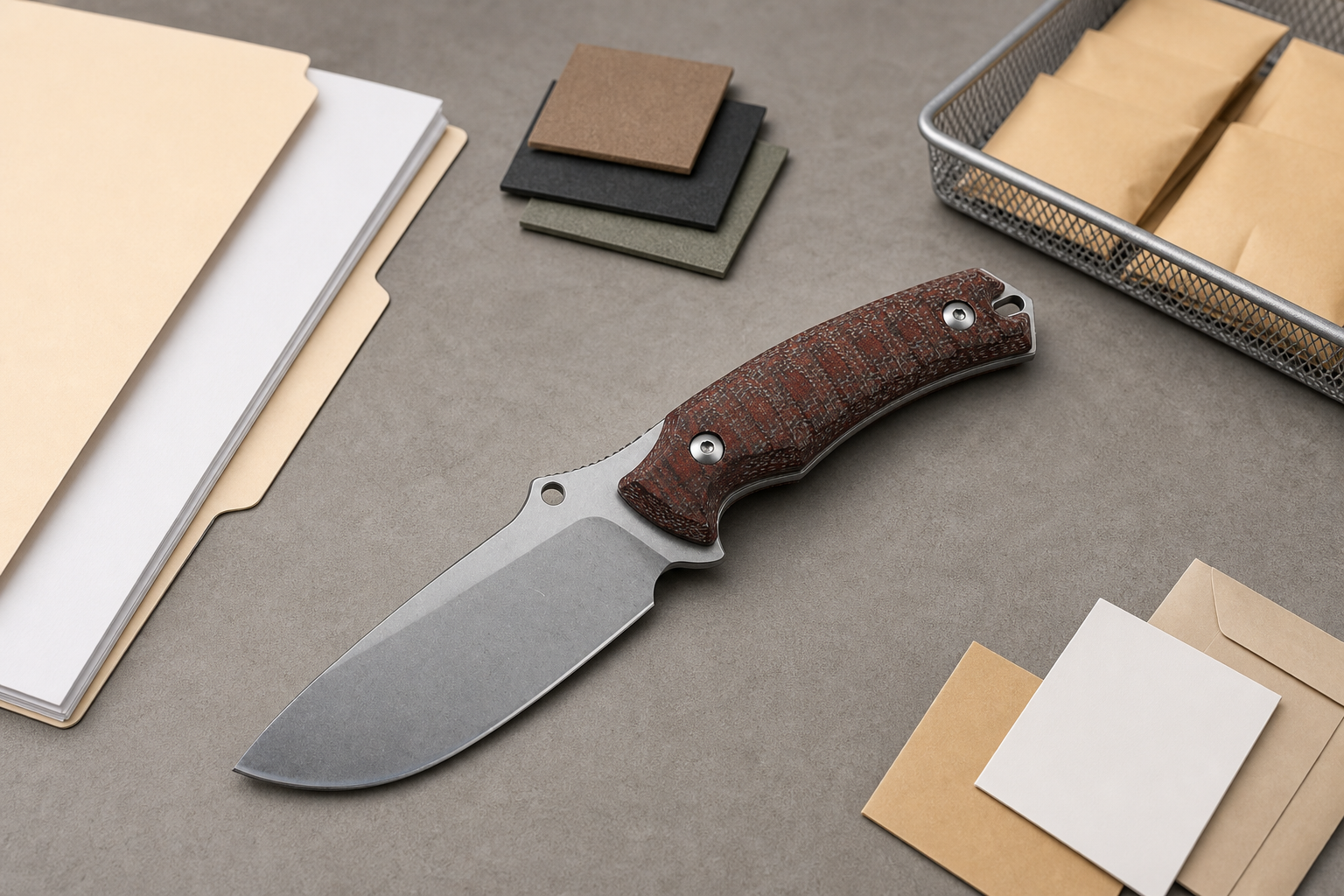
In real sourcing work, I help buyers turn "survival knife" into a practical product brief. We define the user, use case, target market, blade size, steel direction, handle material, sheath style, packaging, instruction notes, and claims to avoid. That makes the project easier for the supplier to quote and easier for the buyer to approve.
If the product is a camp fixed blade, we can prioritize handle control, edge geometry, sheath retention, and easy maintenance. If the product is part of an emergency kit, we can prioritize safe storage, corrosion control, compact packaging, and simple instructions. If the product is an outdoor retail item, we can prioritize responsible copy, target-market review, and repeatable QC.
Vast State can also help prevent overbuilt or overhyped products. A survival knife should not become a heavy fantasy object, a risky listing, or a vague promise. It should be a practical tool with clear limits, reliable construction, and responsible presentation.
That is the best commercial direction: useful enough for outdoor buyers, clear enough for retailers, and controlled enough for production.
| Buyer need | Vast State support | Project result |
|---|---|---|
| Define use case | Outdoor and emergency scenario review | Clearer RFQ |
| Choose construction | Blade, handle, sheath review | Better sample direction |
| Control wording | Product copy and compliance prompts | Lower channel risk |
| Verify production | QC and boundary samples | More consistent batches |
Turn this article into a fixed blade project.
Send your target use, blade size, steel, handle direction, sheath needs, quantity, and packaging plan. Vast State can help shape it into a quote-ready project.
Conclusion
A responsible survival knife project starts with realistic outdoor use cases, then builds blade, handle, sheath, packaging, copy, and QC around those limits.