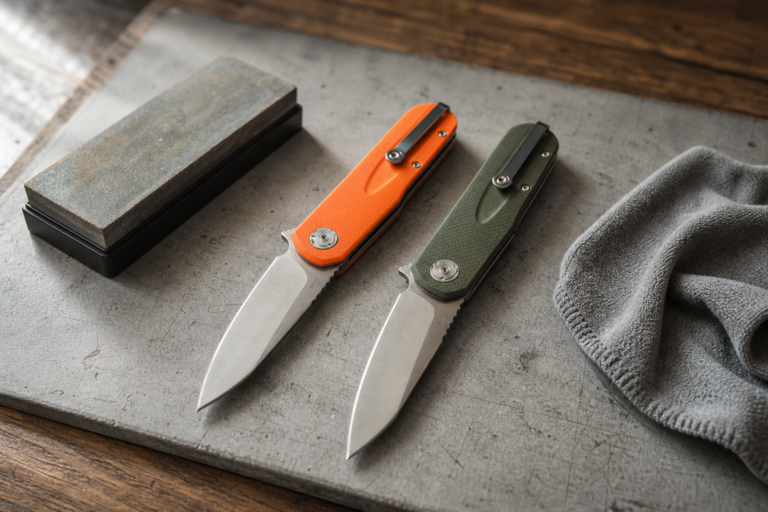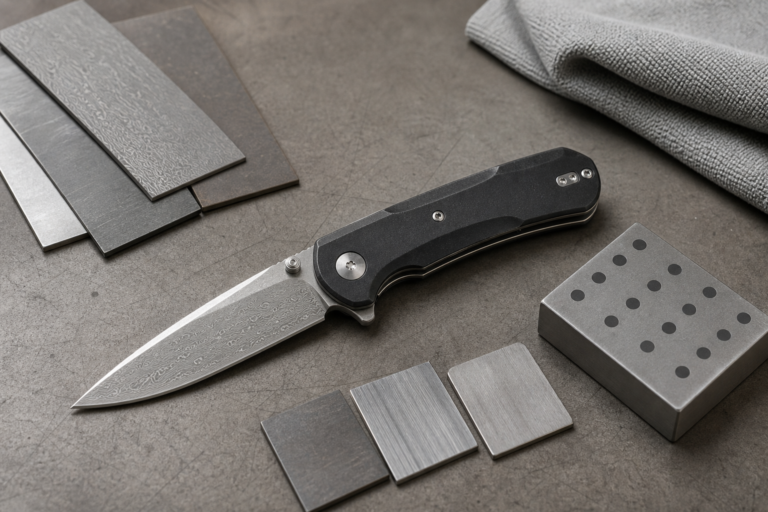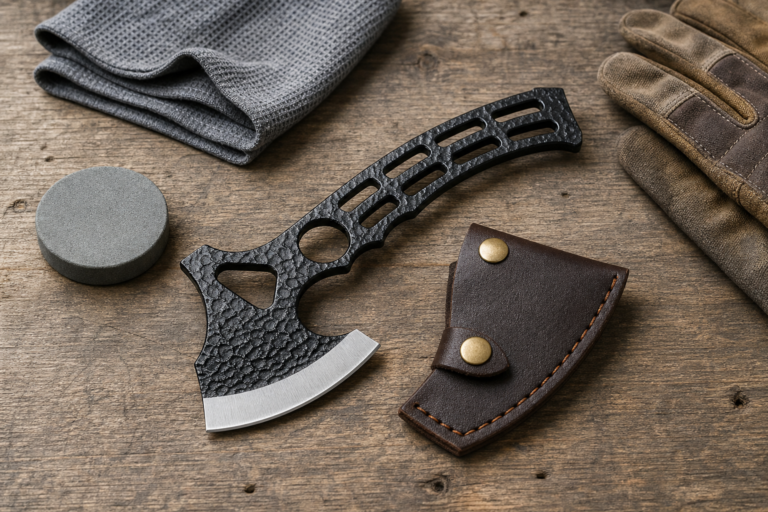
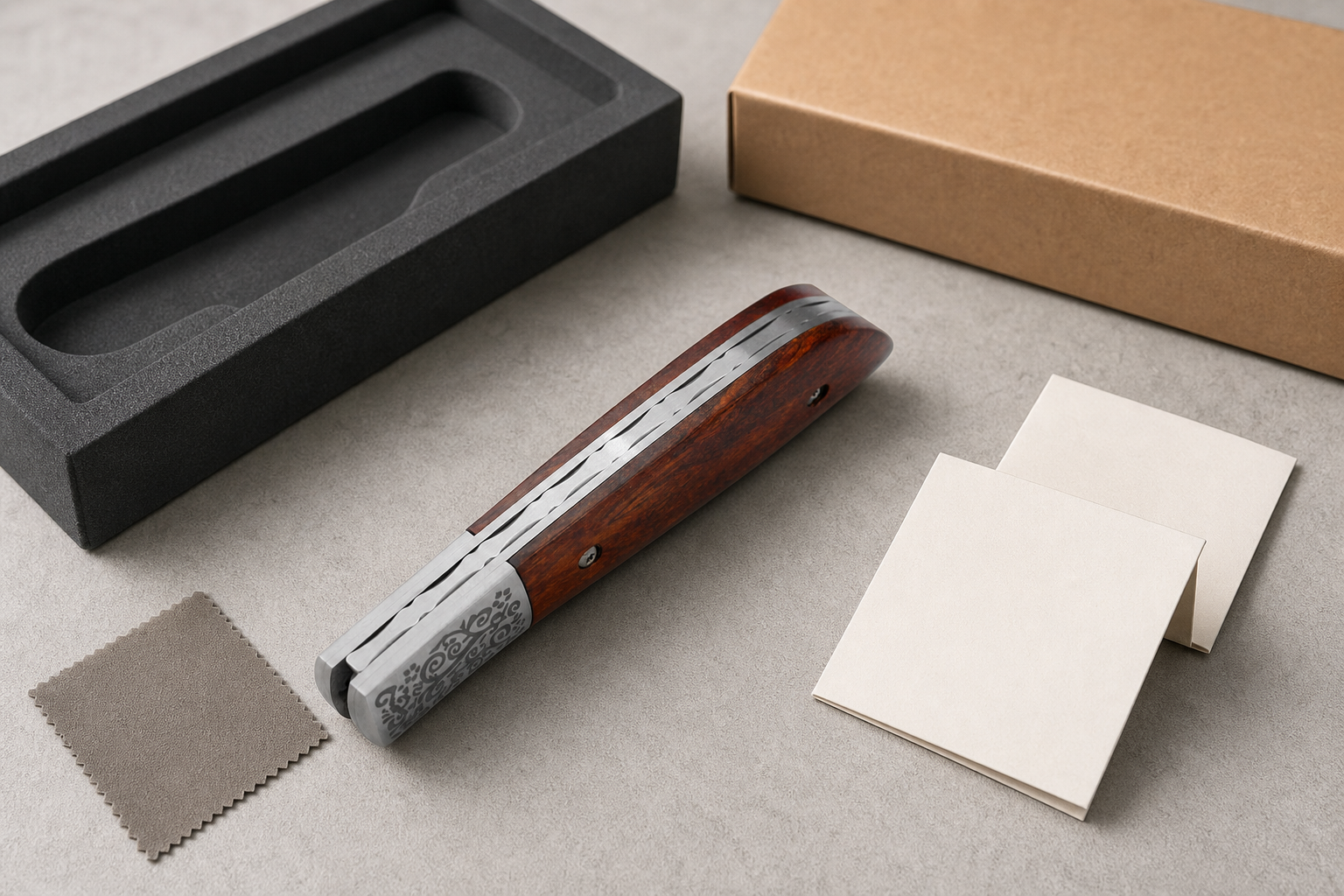
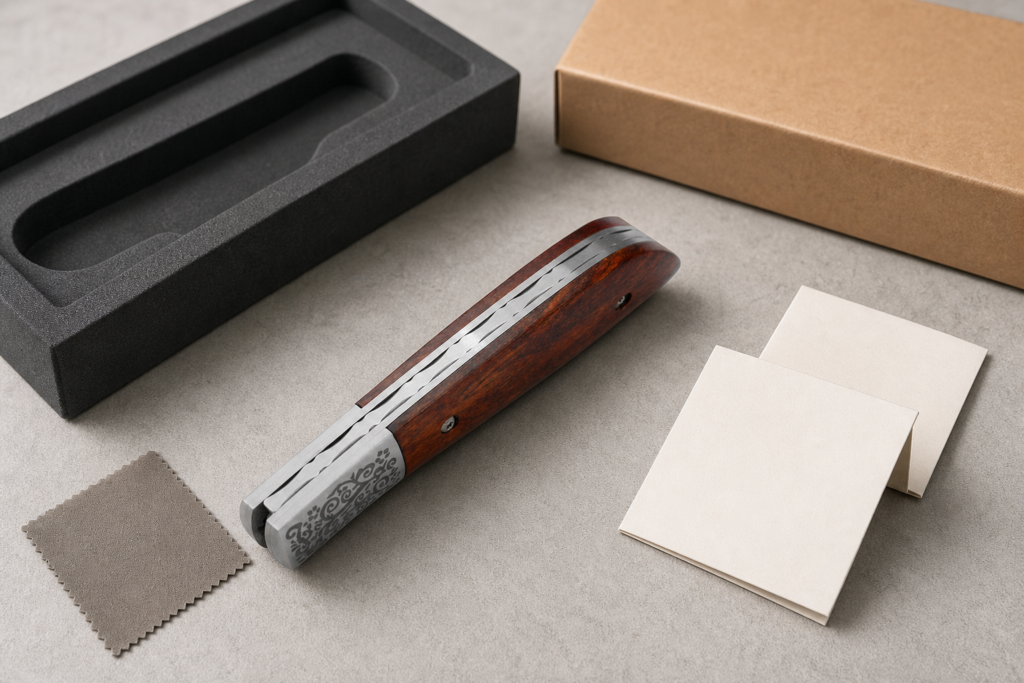
Knife handling mistakes are not only user problems. They often begin with unclear product design, weak packaging, and missing instructions.
Buyers should build knife handling safety guidance by defining the intended use, correct tool choice, opening and closing steps, grip and cutting direction, storage, sheath or clip behavior, maintenance limits, product copy, packaging warnings, and QC checks before production.
Quick buyer brief:
- Answer: Treat knife handling guidance as part of the product specification, not as a small warning card added after mass production.
- Buyer context: This guide is for EDC brands, outdoor brands, utility brands, hunting-accessory brands, importers, distributors, private label buyers, promotional buyers, and OEM/ODM sourcing managers.
- Key checks: Intended use, wrong-tool prevention, safe opening and closing, handle control, edge storage, sheath fit, clip retention, blade condition, maintenance instructions, target-market review, packaging safety, and inspection records.
Have a knife or multi-tool project in mind?
Send your sketch, CAD file, sample photo, or product idea. Vast State can review manufacturability, suggest materials, estimate MOQ, and prepare a quote for your OEM/ODM project.
When I review a knife project, I do not treat safety guidance as a last-minute paragraph. Most handling mistakes are predictable. Users choose the wrong tool. They cut toward themselves. They leave a blade open or uncovered. They use a knife as a pry bar. They ignore a loose pivot. They do not understand the lock. They carry a fixed blade in a poor sheath. Good OEM/ODM planning cannot control every user action, but it can design, label, package, and inspect the product so responsible use is easier to understand.
Why Should Handling Guidance Be Part of Product Development?
Many buyers write safety copy after the sample is finished. That is too late to fix design-level risks.
Handling guidance should be part of product development because safe use depends on the knife design, handle, mechanism, sheath, packaging, instruction card, product copy, and QC standard.
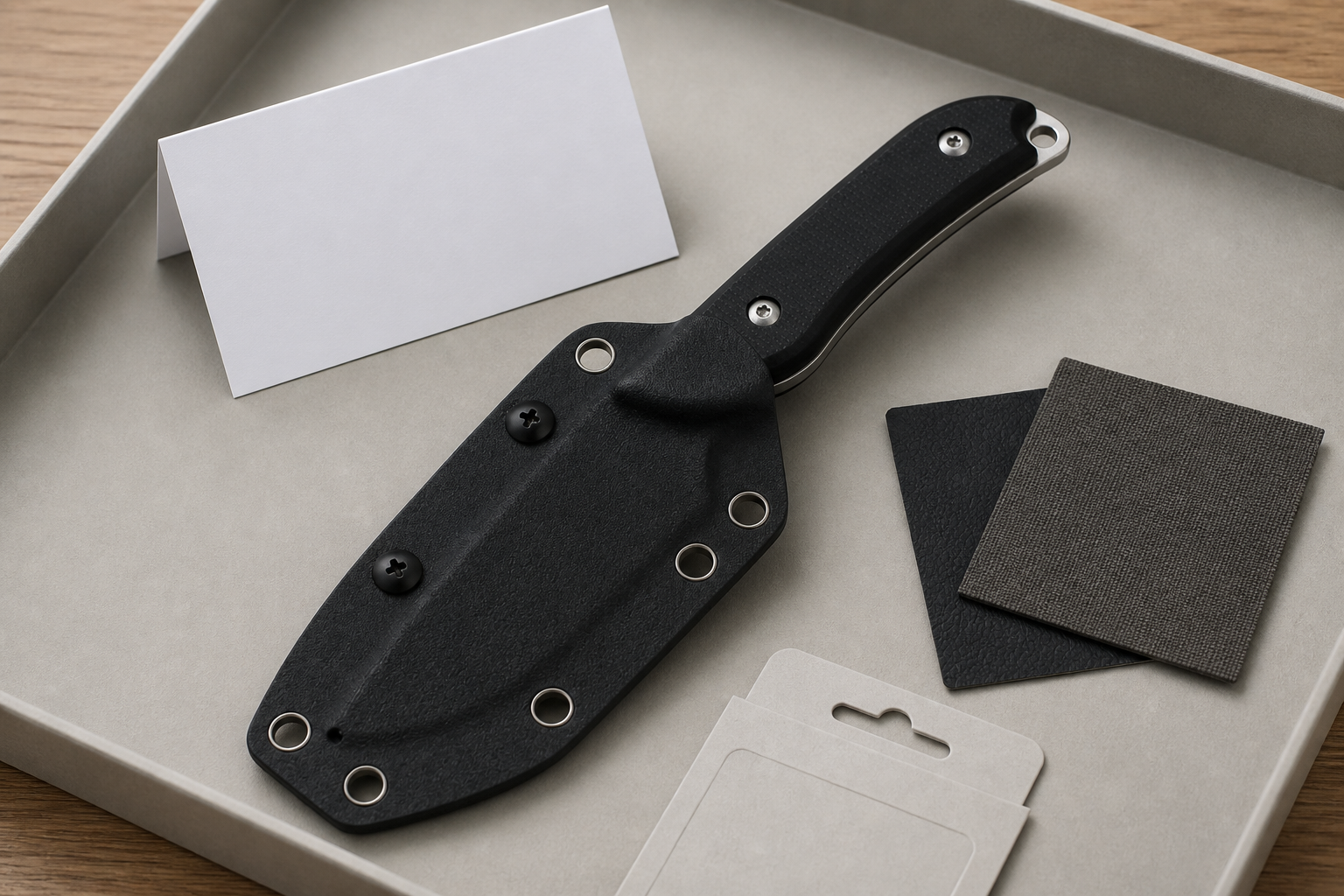
I Treat Safety Guidance as a Design Requirement
If a product requires safe handling, the buyer should not rely on a generic warning. The product itself should help the user understand correct use. A folding knife should have controlled opening, clear lock behavior if it has a lock, safe closing feel, and proper closed retention. A fixed blade should have a sheath or cover that protects the edge and holds the knife securely. A utility knife should match the cutting task and avoid encouraging prying, twisting, or scraping beyond the intended design.
The CCOHS guidance on sharp blades discusses safe use, protective equipment, sharp-edge storage, and the importance of guards or safety devices where applicable. This is workplace guidance, not a consumer product template. Still, it supports a useful sourcing principle: design, instructions, and storage should work together.
In B2B projects, handling guidance affects more than user safety. It affects packaging approval, marketplace review, retailer confidence, customer service scripts, return reasons, and importer records. If the buyer waits until packaging artwork is finished, the team may discover that the warning space is too small, the sheath does not fully cover the edge, or the copy implies unsafe use.
The safest workflow is simple. Define intended use first. Then design the product and packaging around that use. Then write instructions that match the actual approved sample. Then inspect production against those requirements.
| Development stage | Handling question | Buyer action |
|---|---|---|
| Concept | What task is this knife for? | Define intended use |
| Sampling | Can users open, grip, close, and store it safely? | Test real samples |
| Packaging | Is safe-use information visible? | Reserve instruction space |
| Production | Does every batch match the approved safety features? | Add QC checks |
OEM/ODM RFQ Checklist
Prepare these details to help Vast State review your project and provide a more accurate quotation.
| RFQ Field | What to Prepare |
|---|---|
| Project type | OEM from drawing / ODM private label / wholesale catalog |
| Product category | Folding knife / fixed blade / multi-tool / outdoor tool |
| Design status | Idea / sketch / 2D drawing / 3D CAD / physical sample |
| Target price | Ex-factory target price or retail price range |
| MOQ expectation | 500 / 1,000 / 3,000 / 5,000+ pcs |
| Logo method | Laser engraving / etching / printing / molded logo |
| Packaging | Standard packaging / custom retail box / Amazon-ready |
| Market | USA / EU / Japan / Korea / Middle East / other |
| Compliance needs | Buyer-specified testing / documentation / labeling |
| Timeline | Sample deadline / mass production deadline |
Which Handling Mistakes Should Buyers Prevent Through Product Design?
Some mistakes are caused by poor user judgment. Others are made easier by weak product planning.
Buyers should design against predictable mistakes such as wrong-tool use, poor grip, cutting toward the body, unsafe opening or closing, loose parts, uncovered edges, weak sheaths, and unclear product claims.
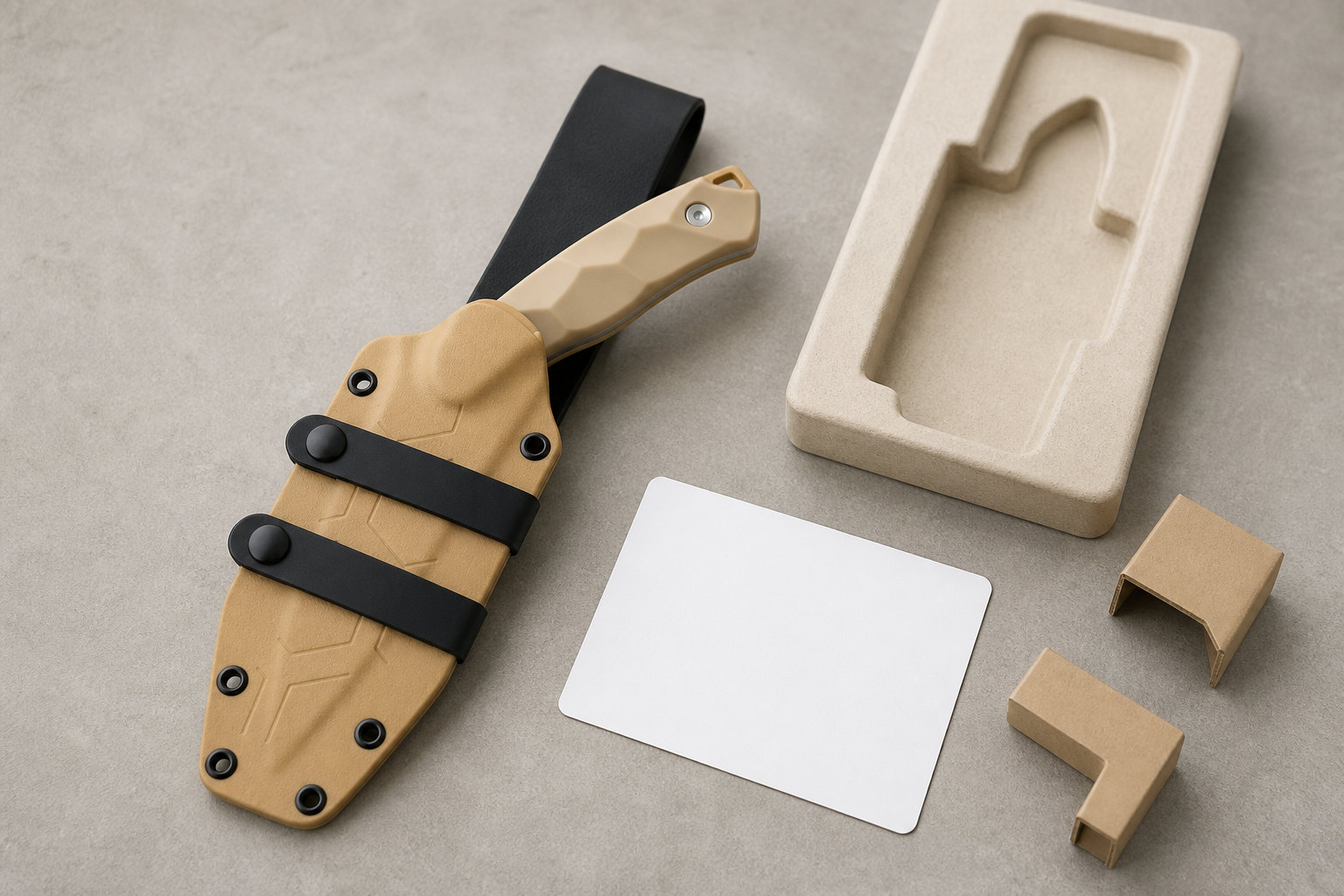
I Translate Mistakes Into Product Controls
The first mistake is using the wrong knife for the job. A small pocket knife should not be positioned as a pry tool. A thin slicing blade should not be sold as a rough chopping tool. A decorative gift knife should not imply heavy outdoor use. If the product copy creates unrealistic expectations, users may misuse the knife.
The second mistake is poor hand control. A handle that is too smooth, too thin, too short, or too angular can make users compensate with unsafe pressure. Handle texture, finger clearance, edge rounding, and balance matter because they influence how people hold the tool.
The third mistake is unclear opening and closing. A folding knife with a stiff detent, weak lock engagement, confusing closing path, or poor blade centering can lead to unsafe handling. The user should not need to guess how the knife works.
The fourth mistake is poor storage. A fixed blade without a secure sheath, a folding knife with weak closed retention, or packaging that allows the blade to shift can create avoidable risk before the product is even used.
The HSE hand knives guidance tells workplaces to specify the knives used for each task and withdraw others. That is a workplace control, but it translates well to product planning. A buyer should specify what the knife is for and avoid broad claims that invite wrong-tool use.
| Predictable mistake | Product-level control | Buyer check |
|---|---|---|
| Wrong tool for task | Clear intended-use copy | Avoid overclaiming |
| Poor grip | Handle texture and shape | Test hand comfort |
| Unsafe opening or closing | Mechanism and lock review | Inspect action consistency |
| Uncovered edge | Sheath, cover, closed retention | Test storage and packaging |
How Should Folding Knife Guidance Address Opening and Closing?
Folding knives create specific handling risks because the blade moves. The instructions should match the mechanism.
Folding knife guidance should explain manual opening, lock or slip-joint behavior, safe closing path, closed storage, blade centering checks, and when to stop using a loose or damaged knife.
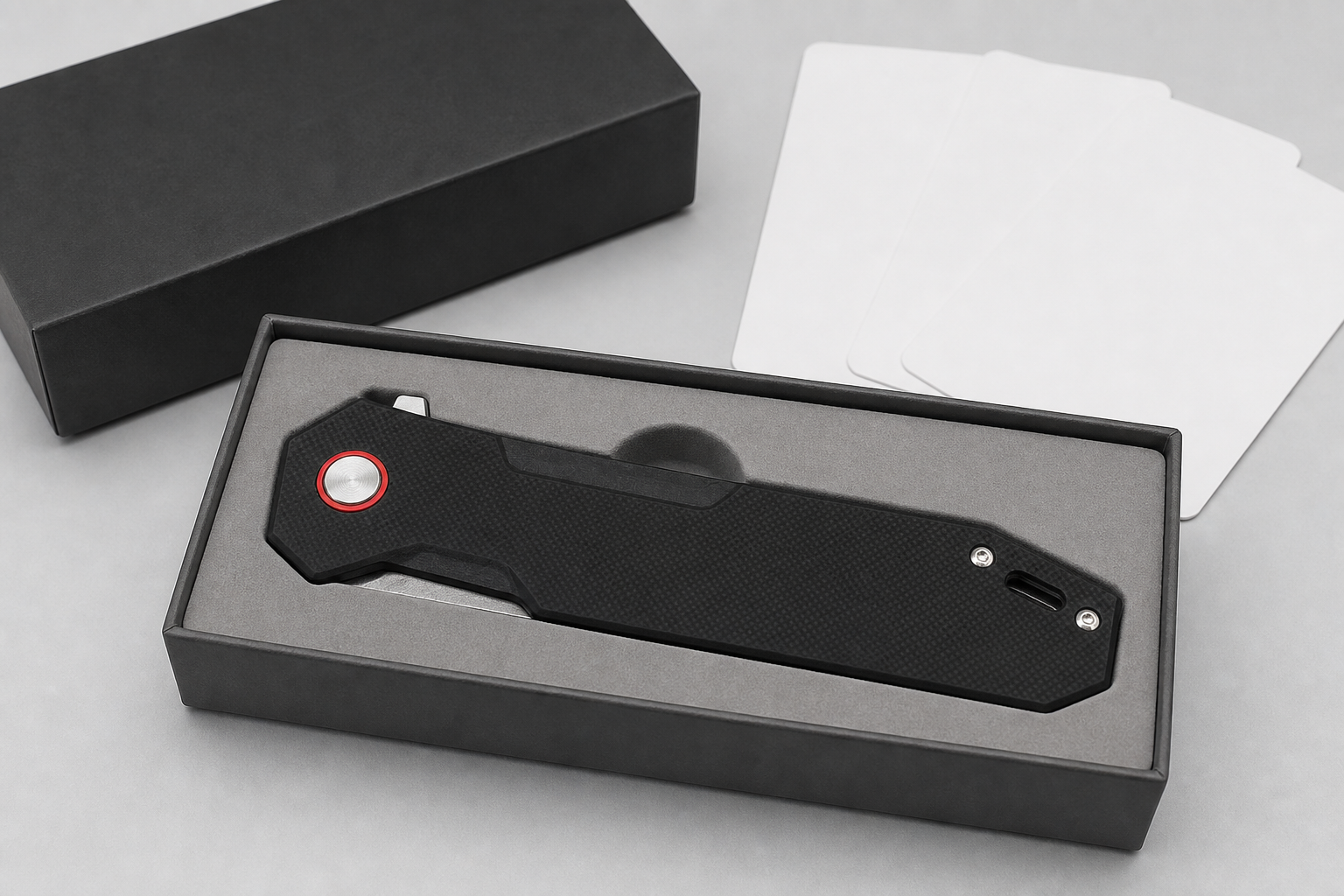
I Match the Instruction Card to the Mechanism
A nail nick folder, thumb stud folder, thumb hole folder, flipper folder, slip-joint folder, and lockback-style folder do not need the same instruction wording. The buyer should describe the actual mechanism and avoid vague or dramatic language. "Manual thumb stud opening" is clearer than "rapid deployment." "Non-locking slip-joint design" is clearer than implying hard-use lock security.
The instruction card should remind users to keep fingers away from the blade path when closing. It should also explain that the knife should be closed when not in use and stored where it cannot be accessed by children or unintended users. If the knife has a lock, the card should describe the lock release in simple, product-specific terms. If it does not lock, the card should not imply that it does.
The product itself should support the instruction. The pivot should not be loose. The lock should engage consistently where used. The blade should not rub or sit off-center in a way that signals poor assembly. Screws should be seated. The clip should not create a sharp hotspot. Closed retention should feel controlled.
The OSHA hand and power tools overview points out that hand tool hazards require special attention to reduce or eliminate hazards. This supports the buyer's responsibility to treat folding action, lock behavior, and tool condition as safety-related details, not only comfort features.
| Folding knife issue | Instruction need | QC check |
|---|---|---|
| Opening method | Explain manual opening accurately | Test access and action |
| Lock behavior | Explain release and limits | Check engagement |
| Closing path | Keep fingers clear | Test repeated cycles |
| Closed storage | Keep closed when not in use | Check retention |
How Should Fixed Blade and Sheath Guidance Be Planned?
Fixed blades do not fold, so storage and edge coverage become the main handling issues.
Fixed blade guidance should focus on sheath fit, edge coverage, handle control, carrying orientation, safe storage, cleaning before storage, and avoiding tasks beyond the knife's design.
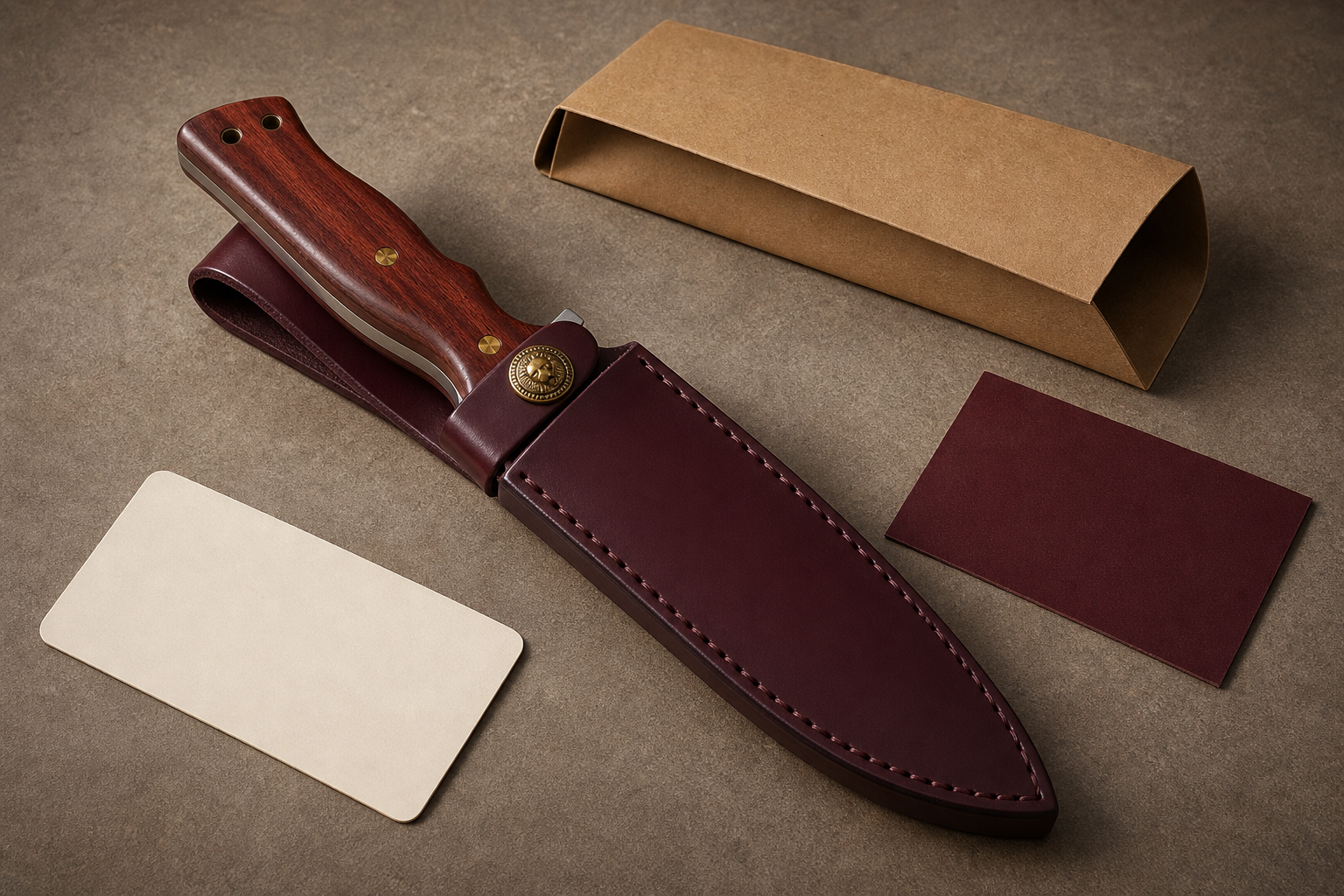
I Inspect the Sheath as Part of the Knife
A fixed blade knife is not complete without safe storage. The sheath or edge cover controls how the user carries, stores, ships, and removes the knife. If the sheath is too loose, the knife can fall out. If it is too tight, users may pull with unsafe force. If the mouth is poorly shaped, the edge can cut the sheath over time. If the belt loop or clip is weak, the carry system may fail.
The instruction card should tell users to sheath the knife when not in use and to keep the edge away from hands and other people during normal handling. It should not encourage throwing, fighting, prying, or chopping unless the product has been designed, tested, and positioned for a specific approved task. Even then, the claim should be careful.
The HSA Ireland knife guidance includes practical workplace advice such as selecting the correct knife for the work and keeping the knife action away from the body or other hand. That source is written for a workplace context, but the handling principle is useful for buyer packaging and instruction planning.
For production, I want sheath insertion and removal checked during inspection. I also want the packed product tested so the knife cannot damage the packaging or expose the edge during shipment.
| Fixed blade issue | Product control | Buyer check |
|---|---|---|
| Edge exposure | Secure sheath or cover | Inspect coverage |
| Loose retention | Better sheath fit | Shake and removal checks |
| Unsafe pull force | Proper sheath mouth and retention | Test real samples |
| Shipping risk | Package edge protection | Inspect packed product |
How Can Packaging Reduce Handling Mistakes?
Packaging is often the first safety system the customer touches. It should not be an afterthought.
Packaging can reduce handling mistakes by keeping the blade secured, protecting the edge, presenting clear warnings, explaining intended use, and preventing accidental opening or rubbing during shipment.
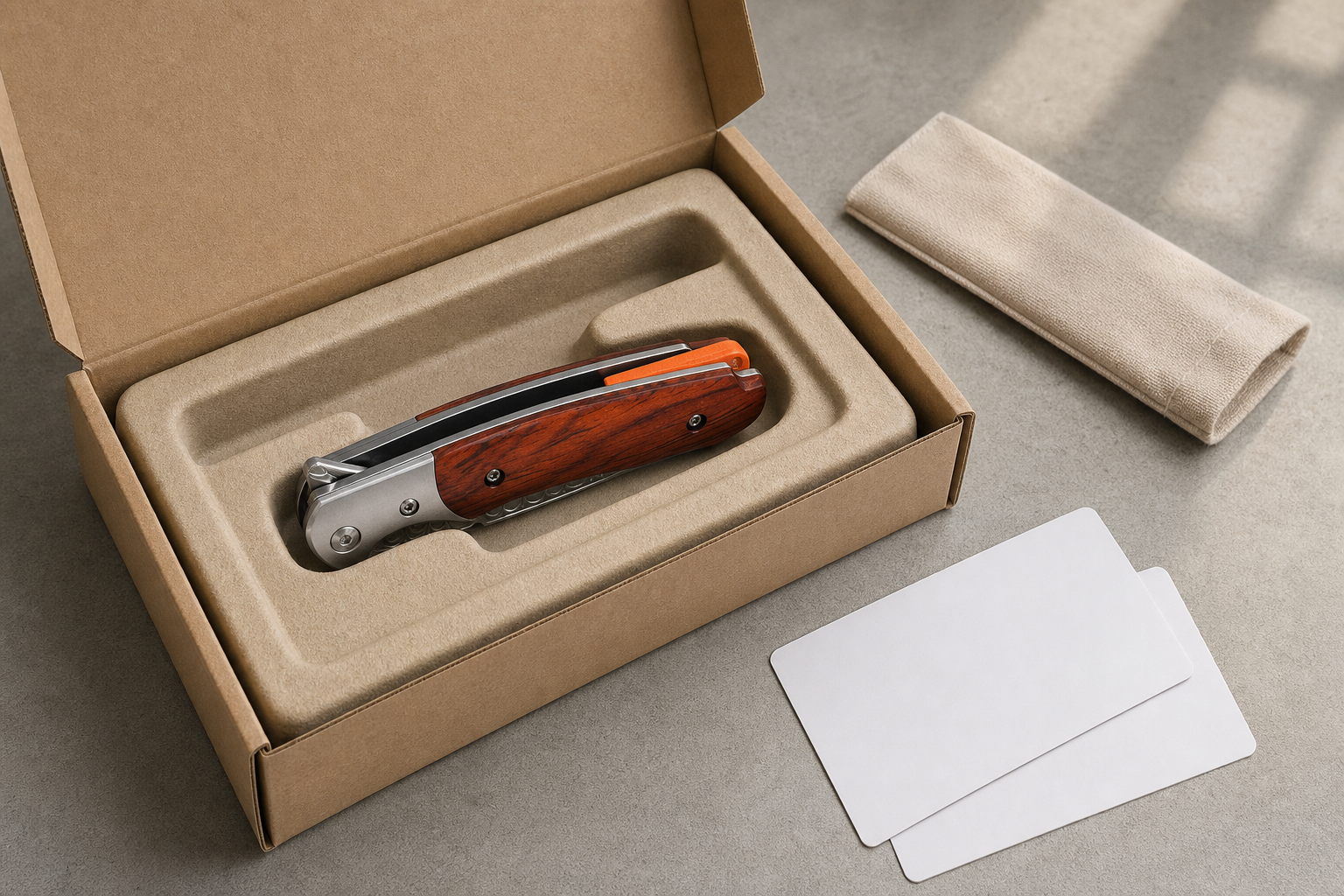
I Check the Packed Product Before I Approve the Artwork
Packaging has two jobs. It sells the product, and it controls the first handling moment. A blister, box, pouch, sheath, insert, or edge cover should prevent movement that can expose or damage the blade. A folding knife should not partly open in the package. A fixed blade should not cut through its sheath, insert, or carton. A thumb stud, flipper tab, or clip should not scratch the package or create pressure marks.
The packaging should also have enough space for simple safety information. The buyer should not wait until the final dieline to discover that warnings and instructions do not fit. The instruction card should match the actual sample: opening method, lock type, sheath use, storage, maintenance, and intended use.
The European Commission page on EU product safety and labelling points businesses toward product safety and labelling responsibilities. This is general product guidance, not a knife-specific packaging law, but it supports the idea that labelling should be planned early.
For US consumer products, the CPSC general-use product certification page explains that general-use products subject to applicable consumer product safety rules may require certification based on testing or a reasonable testing program. Not every knife project has the same requirement, but buyers should identify applicable rules and keep records.
| Packaging check | Why it matters | Buyer action |
|---|---|---|
| Blade securement | Prevents movement and exposure | Test packed samples |
| Warning space | Supports clear instructions | Reserve label area |
| Insert pressure | Prevents rubbing and partial opening | Inspect after transit simulation |
| Compliance record | Supports importer readiness | Keep artwork and test files |
What Product Copy Mistakes Should Buyers Avoid?
Bad product copy can create risk even when the knife itself is well made.
Buyers should avoid copy that promotes self-defense, combat, instant deployment, unrestricted carry, extreme abuse, child use, or tasks the knife is not designed to perform.
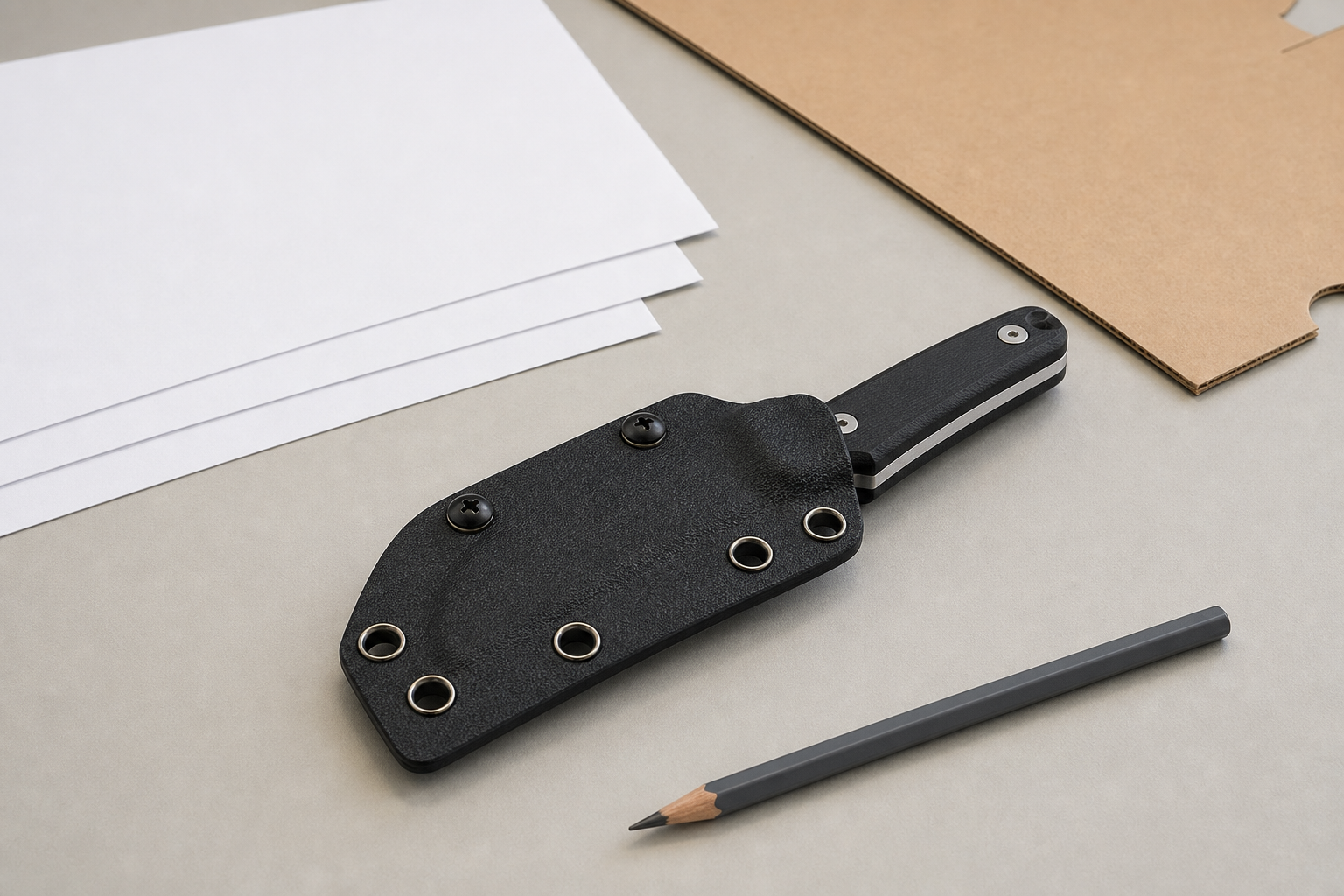
I Keep Claims Practical and Defensible
Product copy should describe what the knife is designed to do. "Everyday utility cutting," "outdoor camp tasks," "repair-kit tool," "manual folding pocket knife," or "sheathed fixed blade for outdoor use" are practical directions. Words like combat, attack, weapon, instant deployment, unstoppable, unbreakable, or carry anywhere create problems. They can also attract the wrong customer expectation.
The buyer should also avoid legal certainty in copy. Do not say a knife is legal everywhere, travel-safe, school-safe, workplace-approved, or unrestricted unless the buyer has target-market review and channel approval. Even then, wording should be carefully localized.
GOV.UK guidance on buying and carrying knives shows why local review matters. It discusses UK-specific rules around buying and carrying knives and certain folding pocket knives. A buyer should not copy UK rules into global packaging, but the source is a useful reminder that blade length, locking behavior, and category matter.
The copy should also match the physical sample. If the knife is non-locking, do not imply lock security. If the knife has a light-duty blade, do not show or describe heavy abuse. If the sheath is for storage, do not imply professional carry if it was not designed for that use.
| Copy mistake | Risk | Better direction |
|---|---|---|
| Weapon-style language | Channel and safety risk | Utility positioning |
| Overbuilt claims | Customer misuse | Define intended tasks |
| Legal certainty | Market-specific error | Say review local rules |
| Mechanism exaggeration | Restricted wording risk | Describe manual function accurately |
How Should Maintenance Guidance Reduce Handling Risk?
Maintenance is part of handling. A damaged, dirty, or loose knife can become harder to control.
Maintenance guidance should tell users to keep the knife clean, dry, properly stored, sharp enough for intended use, free from loose parts, and out of service if damaged.
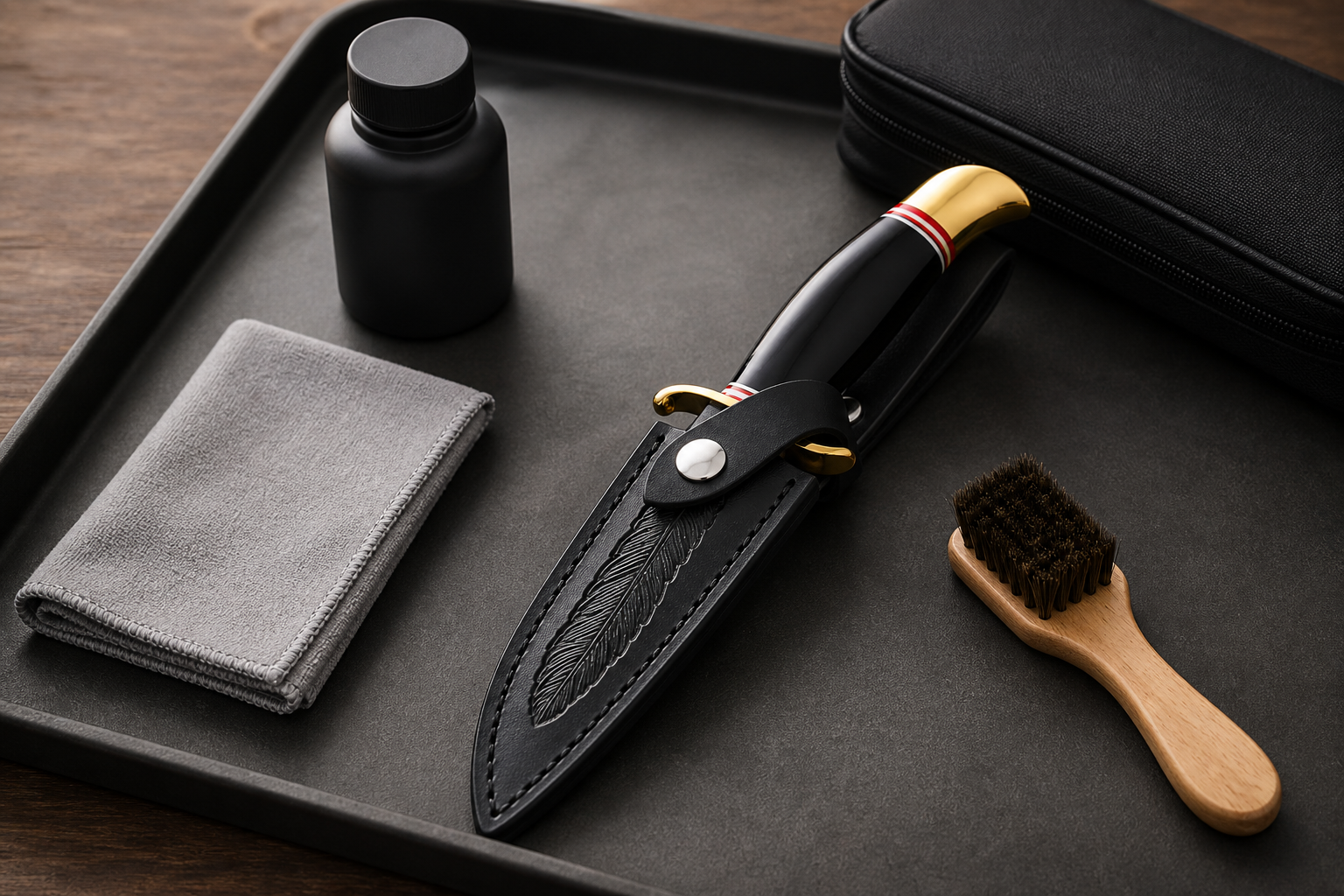
I Explain Care Without Encouraging Unsafe Repair
A knife that is dull, damaged, loose, dirty, or corroded may require more force or may behave unpredictably. The instruction card should tell users to stop using a knife if the blade is cracked, the lock is not engaging, the pivot is loose, the handle is damaged, the sheath no longer holds, or the edge is chipped beyond normal maintenance.
Sharpening guidance should be simple unless the buyer is selling a sharpening product or advanced tool kit. The card can say to maintain the edge with appropriate tools and to seek qualified sharpening help if the user is not trained. It should not turn the packaging into a complex sharpening tutorial. The buyer should also avoid telling users to modify the lock, grind the blade, or disassemble the knife unless the product is designed for user service and the brand is prepared to support that.
The HSE safe use of knives in kitchens page connects knife safety with safe working practices and includes linked safe systems for sharpening. This is a kitchen workplace context, but it supports the broader point that cutting tools require correct use and maintenance practices.
For OEM/ODM projects, maintenance guidance should also match the materials. A carbon steel blade, stainless steel blade, coated blade, wood handle, polymer handle, and bearing pivot may need different care notes. Do not copy one maintenance paragraph across every product.
| Maintenance issue | User guidance | Product planning note |
|---|---|---|
| Loose pivot or screws | Stop use and seek service | Define warranty support |
| Dull or damaged edge | Maintain with suitable tools | Avoid unsafe sharpening claims |
| Corrosion or dirt | Clean and dry after use | Match material care notes |
| Damaged sheath | Replace or stop carrying | Inspect sheath durability |
What QC Checks Make Safety Guidance Real?
Safety copy has little value if the production batch does not match it. Inspection connects words with product reality.
QC should verify edge protection, closed retention, lock or spring behavior, handle grip, hardware security, sheath fit, burr removal, packaging security, warning placement, and instruction accuracy.
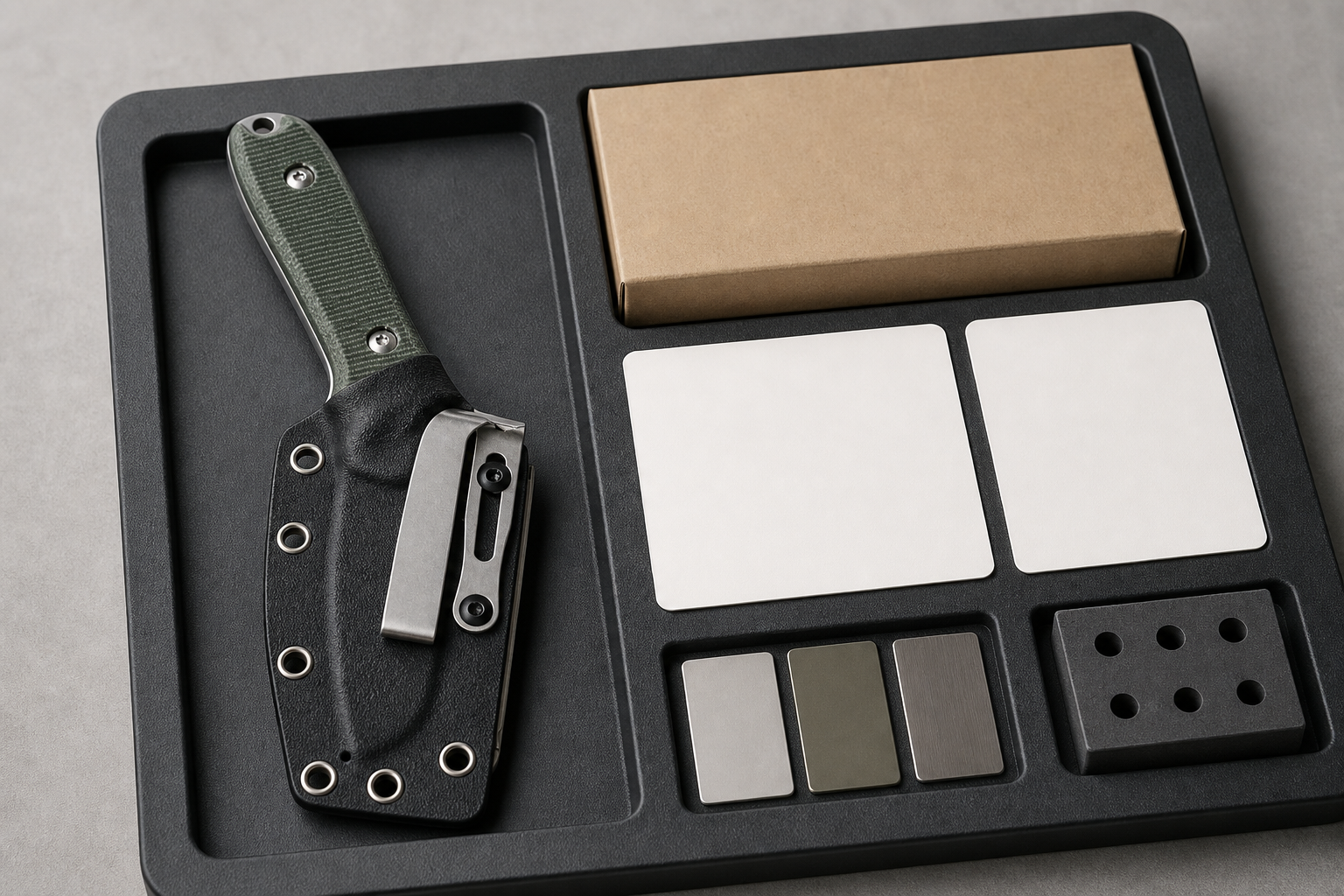
I Inspect the Product Against the Safety Claims
If the packaging says the knife has secure closed retention, the inspector should check closed retention. If the instruction says the sheath covers the edge, the inspector should check sheath coverage. If the copy says manual opening, the inspector should make sure the action and wording match the approved sample. If the product includes a lock, lock engagement should be inspected. If the knife is non-locking, product copy should not contradict that.
The ISO 9001 quality management page identifies ISO 9001 as a quality management system requirements standard. In practical terms, that supports a controlled process: approved samples, documented checks, inspection records, corrective action, and responsibility for changes.
I also like boundary samples for safety-related feel. One sample can show the minimum acceptable sheath retention. Another can show the maximum acceptable pivot looseness. Another can show the sharpest acceptable handle edge or the minimum acceptable burr removal. These examples help production and inspection teams agree on what "safe enough to ship" means.
The buyer should also inspect the package. A knife that passes loose-product inspection can still fail if the insert presses against the opening feature, if the blade rubs the sheath, or if the warning card is missing from the carton.
| QC item | What to check | Why it matters |
|---|---|---|
| Edge and burrs | Blade, handle, opening features | Touch safety and finish |
| Mechanism | Lock, spring, detent, retention | Handling control |
| Sheath or cover | Fit, coverage, removal force | Storage safety |
| Packaging | Movement, warning card, insert | First handling moment |
How Can Vast State Help Buyers Build Better Handling Guidance?
Handling guidance should fit the product, the buyer's market, and the factory's real production standard.
Vast State helps buyers turn common knife handling mistakes into product requirements, instruction cards, packaging notes, product copy boundaries, and QC checkpoints.
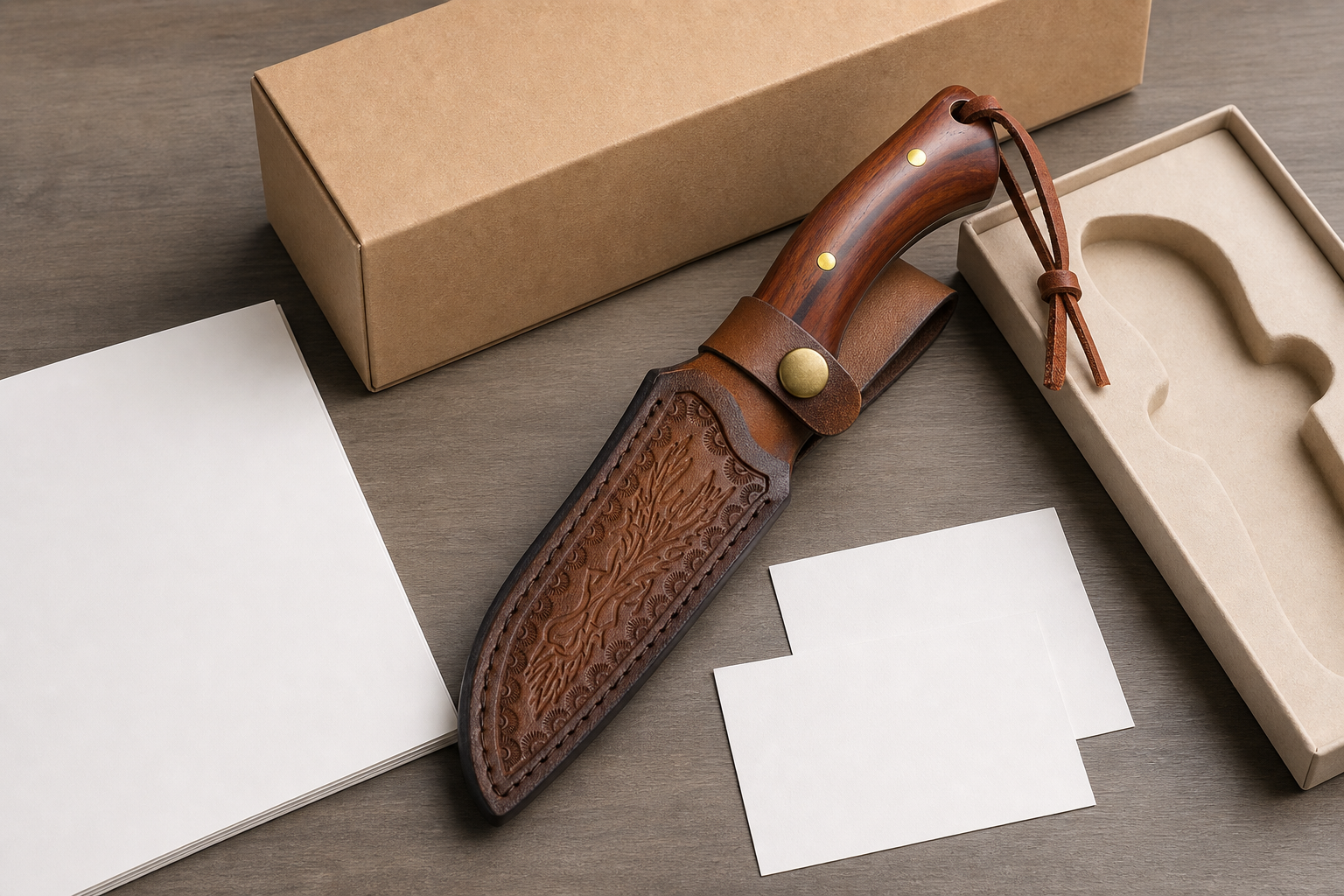
I Connect the Instruction Card With the Actual Knife
In real projects, I help buyers avoid generic warning language. A compact slip-joint pocket knife, a thumb-stud locking folder, a utility knife, a camping fixed blade, and a gift knife need different guidance. The wording should describe the actual opening method, storage method, intended task, maintenance limit, and product warning.
Vast State can help review the product concept, identify predictable misuse, improve handle and sheath details, prepare safe-use wording, avoid risky product claims, and create QC checks that match the approved sample. We can also help keep the article and product copy independent, without third-party brand comparisons or dramatic weapon positioning.
The goal is not to make the product sound dangerous. The goal is to make the product sound responsible. A buyer who plans handling guidance early can reduce confusion, improve retailer confidence, and help the final customer understand the tool.
The best safety guidance is practical, visible, and connected to production. It should tell users what the knife is for, how to store it, when not to use it, and when to stop using a damaged product.
| Buyer need | Vast State support | Project result |
|---|---|---|
| Define intended use | Product and market review | Clearer safety wording |
| Improve storage | Sheath, cover, clip, packaging review | Better first handling |
| Avoid risky copy | Product claim review | Cleaner channel fit |
| Control production | QC and boundary sample planning | More consistent batches |
Turn your idea into a quote-ready knife project.
Share your drawing, sample photo, target quantity, market, and packaging needs. Vast State will review manufacturability and prepare OEM/ODM options.
Conclusion
Knife handling safety guidance works best when buyers turn predictable mistakes into design, packaging, copy, maintenance, and QC requirements before production.