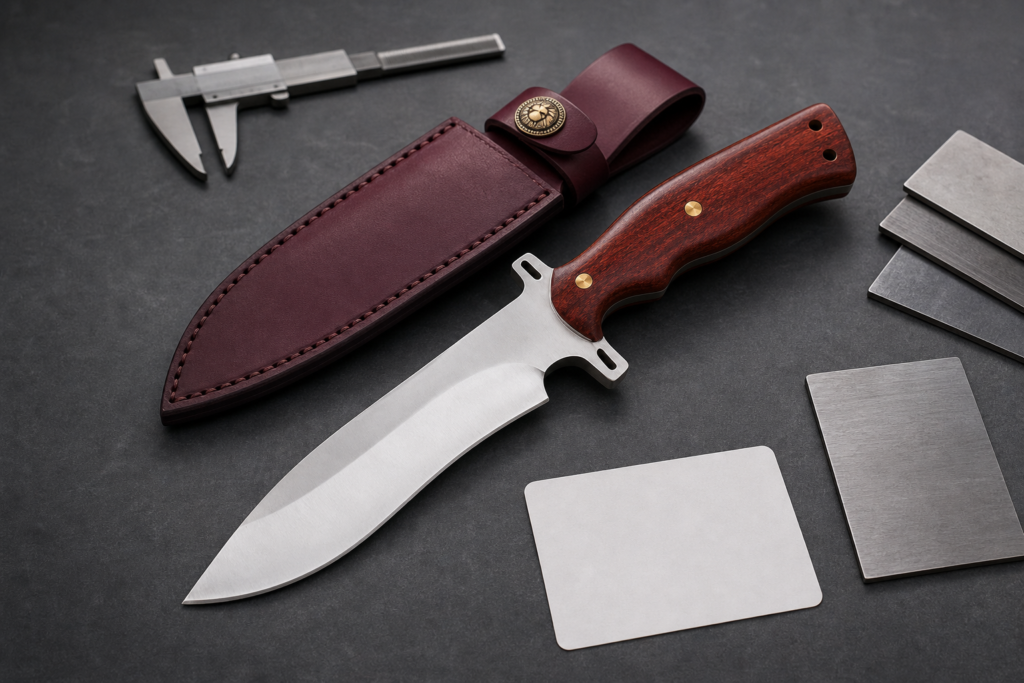
Carbon steel can be excellent for knives, but it punishes vague specifications.
Carbon steel is practical for OEM/ODM knife blades when buyers want toughness, sharpening ease, traditional positioning, and strong outdoor utility, and when they also specify heat treatment, hardness range, edge geometry, corrosion protection, care instructions, packaging, and QC records.
Quick buyer brief:
- Answer: Carbon steel is not automatically better or worse than stainless steel. It is a material route with clear strengths and clear maintenance risks.
- Buyer context: This guide is for knife brands, outdoor brands, camping brands, hunting-accessory brands, utility-tool buyers, importers, distributors, and OEM/ODM sourcing teams.
- Key checks: Steel grade, carbon range, traceability, heat treatment, hardness target, toughness target, blade geometry, corrosion risk, coating or finish, sharpening standard, care text, packaging protection, and inspection records.
Planning a knife project with this steel?
Send us your target market, MOQ, price range, and blade type. Vast State can help you choose the right steel, HRC range, finish, handle material, and QC requirements for OEM/ODM production.
When buyers ask whether carbon steel is good for knife blades, I usually answer with another question: good for which knife, which user, which market, and which maintenance expectation? Carbon steel can make a tough, easy-to-sharpen outdoor blade. It can also rust, stain, or disappoint customers if the brand sells it as care-free.
For OEM/ODM work, carbon steel should be treated as a specification, not a buzzword. The buyer needs to define the grade, heat treatment, hardness, edge geometry, coating, finish, packaging, and care instructions. Without those details, "carbon steel" is too broad to control.
What Does Carbon Steel Mean for Knife Buyers?
Carbon steel is a material family, not one single blade performance level.
For knife buyers, carbon steel usually means an iron-carbon steel selected for hardness, toughness, sharpening feel, and traditional outdoor positioning, with lower corrosion resistance than many stainless blade steels.
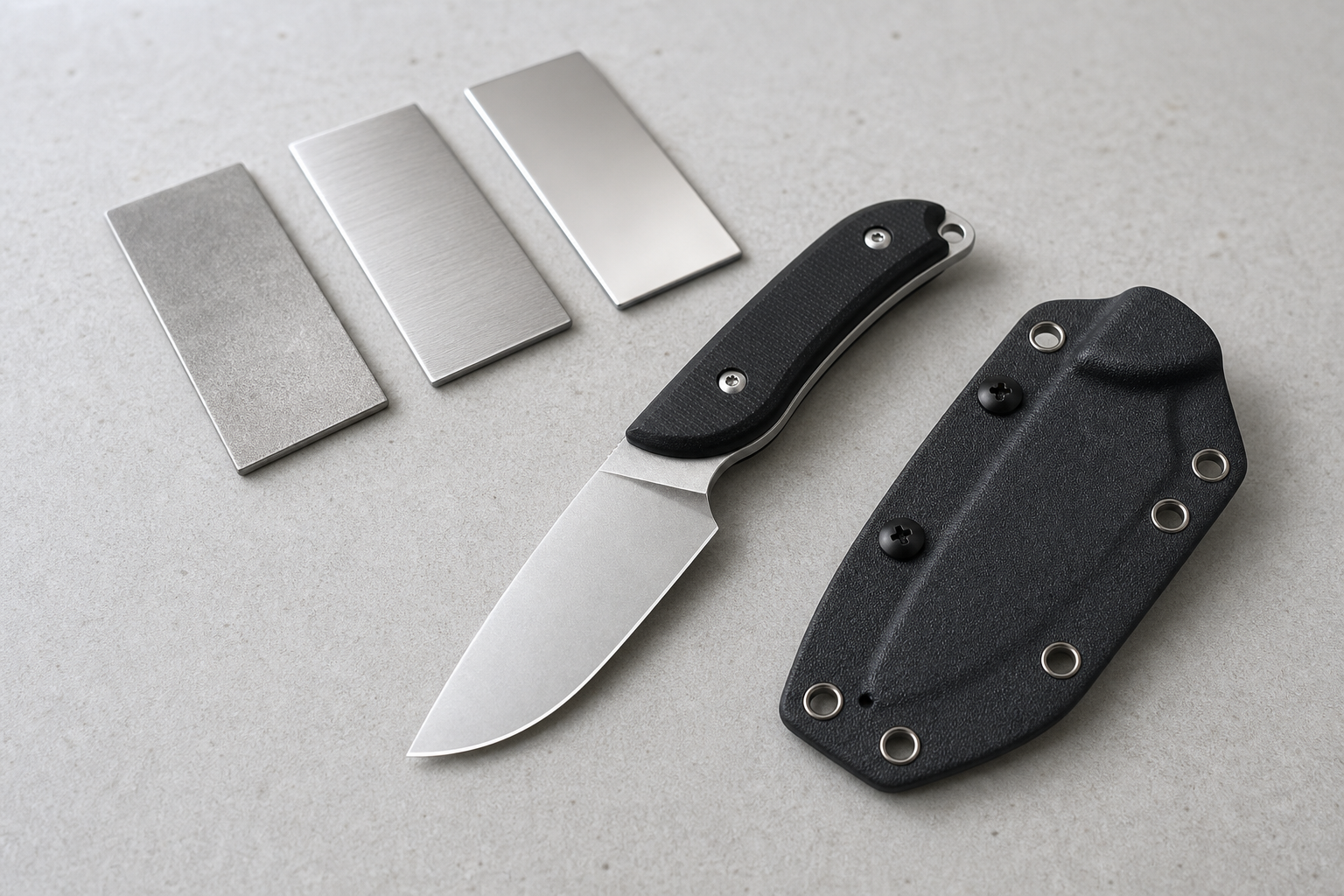
I Do Not Approve "Carbon Steel" as a Complete Specification
The Britannica carbon steel entry describes carbon steel as metal made from iron and carbon, with carbon influencing hardness and strength. That definition is useful, but it is only the starting point for buyers.
In knife sourcing, carbon steel may refer to many grades and many performance targets. A low-carbon steel is not the same as a high-carbon blade steel. A simple 10-series steel is not the same as a tool steel. A forged outdoor blade is not the same as a stamped utility insert. The buyer should not assume the factory knows what "good carbon steel" means.
The RFQ should name the steel grade or ask the supplier to recommend a grade with a clear performance target. It should also define the intended use. A camping fixed blade may prioritize toughness and field sharpening. A small utility blade may prioritize edge consistency and cost. A kitchen-style carbon blade may prioritize slicing feel and maintenance story.
| Vague request | Better RFQ language | Why it matters |
|---|---|---|
| Carbon steel blade | Specify grade or supplier-recommended equivalent | Controls material choice |
| Hard blade | Define hardness range and use case | Controls heat treatment |
| Outdoor ready | Define corrosion and care plan | Controls customer expectation |
| Easy to sharpen | Define edge geometry and steel target | Controls user experience |
Quote-ready RFQ Checklist for This Steel
To get an accurate OEM/ODM quote, prepare these details before contacting a knife manufacturer.
| RFQ Field | What to Prepare |
|---|---|
| Product type | Folding knife / fixed blade / multi-tool / kitchen knife |
| Target market | US / EU / outdoor retail / promotional / tactical / EDC |
| Steel option | 4116 / 14C28N / D2 / N690 / Nitro-V |
| Target HRC | Example: 55-57 HRC, 58-60 HRC |
| Blade finish | Satin / stonewash / black coating / bead blast |
| Handle material | G10 / micarta / aluminum / stainless steel / wood |
| Lock or structure | Liner lock / frame lock / slip joint / full tang |
| Estimated quantity | 500 / 1,000 / 3,000 / 5,000+ pcs |
| Packaging | White box / color box / blister / pouch / gift box |
| Required documents | Drawing / sample photo / logo file / packaging artwork |
Why Do Buyers Choose Carbon Steel for Knife Blades?
Carbon steel remains popular because it can support useful performance and a clear product story.
Buyers choose carbon steel for toughness, edge stability, sharpening ease, traditional outdoor appeal, value positioning, and suitability for certain fixed blade, camping, bushcraft-style, and utility products.
I Match the Advantage to the Product Category
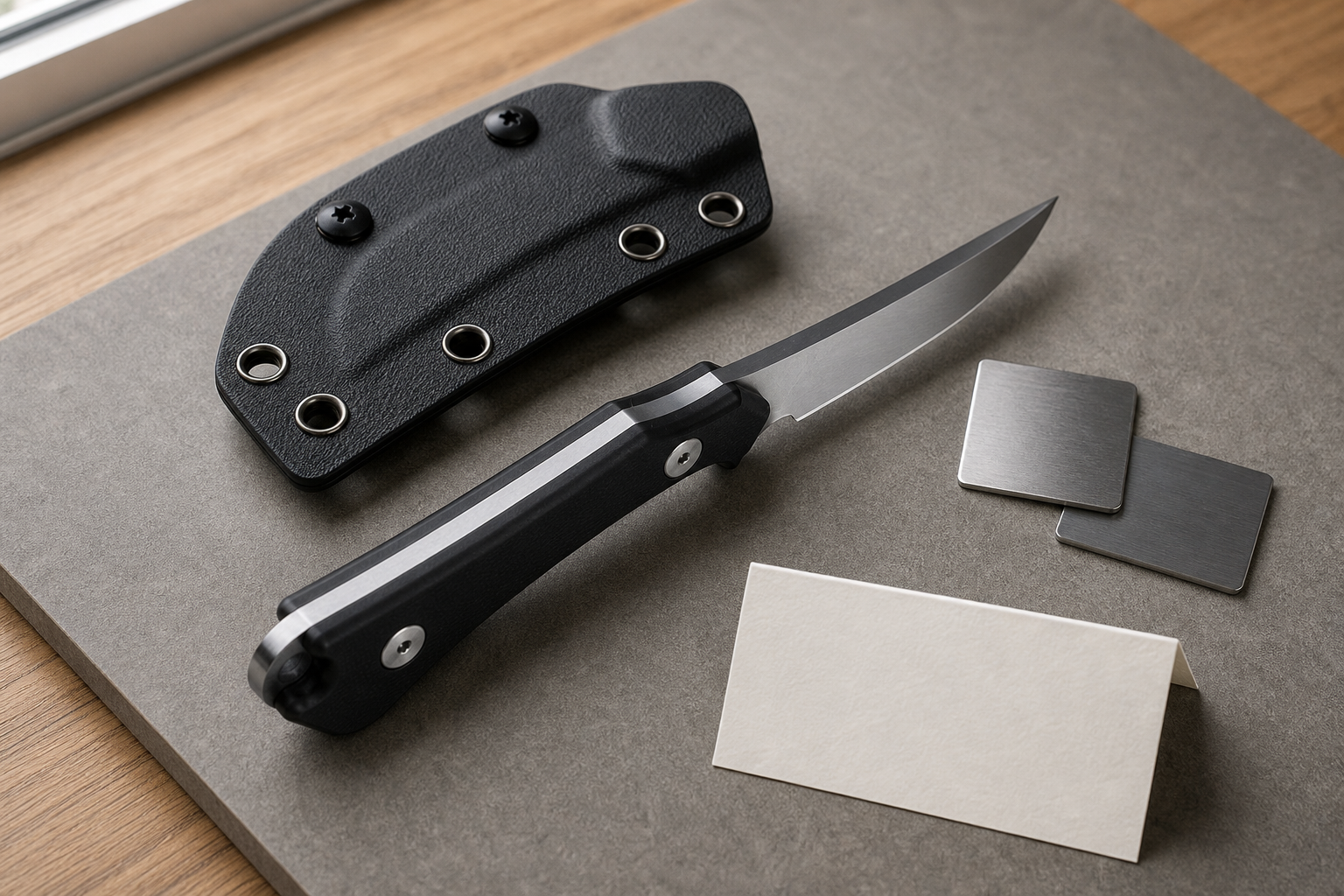
Carbon steel often makes sense when the product story is practical and maintenance-aware. Outdoor users may like that a carbon steel blade can be tough and field-serviceable. Some customers appreciate patina and traditional material identity. Some buyers use carbon steel to build a value outdoor line where the steel can perform well if heat treatment and geometry are controlled.
The advantage depends on the design. A thick carbon steel blade with poor edge geometry may feel clumsy. A thin blade with poor heat treatment may chip or bend. A coated blade with poor edge finishing may still disappoint. So the buyer should not sell carbon steel as a magic upgrade.
The best use cases usually have one thing in common: the customer understands maintenance or the brand explains it clearly. Carbon steel can fit camping knives, bushcraft-style fixed blades, carving tools, certain utility knives, and traditional outdoor collections. It may be less suitable for customers who expect low-maintenance corrosion resistance, wet storage, dishwasher-like neglect, or coastal use without care.
| Buyer goal | Carbon steel fit | Required support |
|---|---|---|
| Tough outdoor utility | Often strong fit | Heat treatment and geometry |
| Easy sharpening | Often strong fit | Edge angle and care text |
| Traditional story | Strong fit | Honest patina language |
| Low-maintenance wet use | Riskier fit | Coating, oiling, or stainless alternative |
What Are the Main Risks of Carbon Steel Blades?
The main risk is not that carbon steel is weak. The main risk is unmanaged customer expectation.
Carbon steel blade risks include rust, staining, patina, inconsistent heat treatment, edge chipping or rolling, coating wear, packaging corrosion, and customer complaints when care instructions are missing.
I Put Corrosion Risk Into the Specification
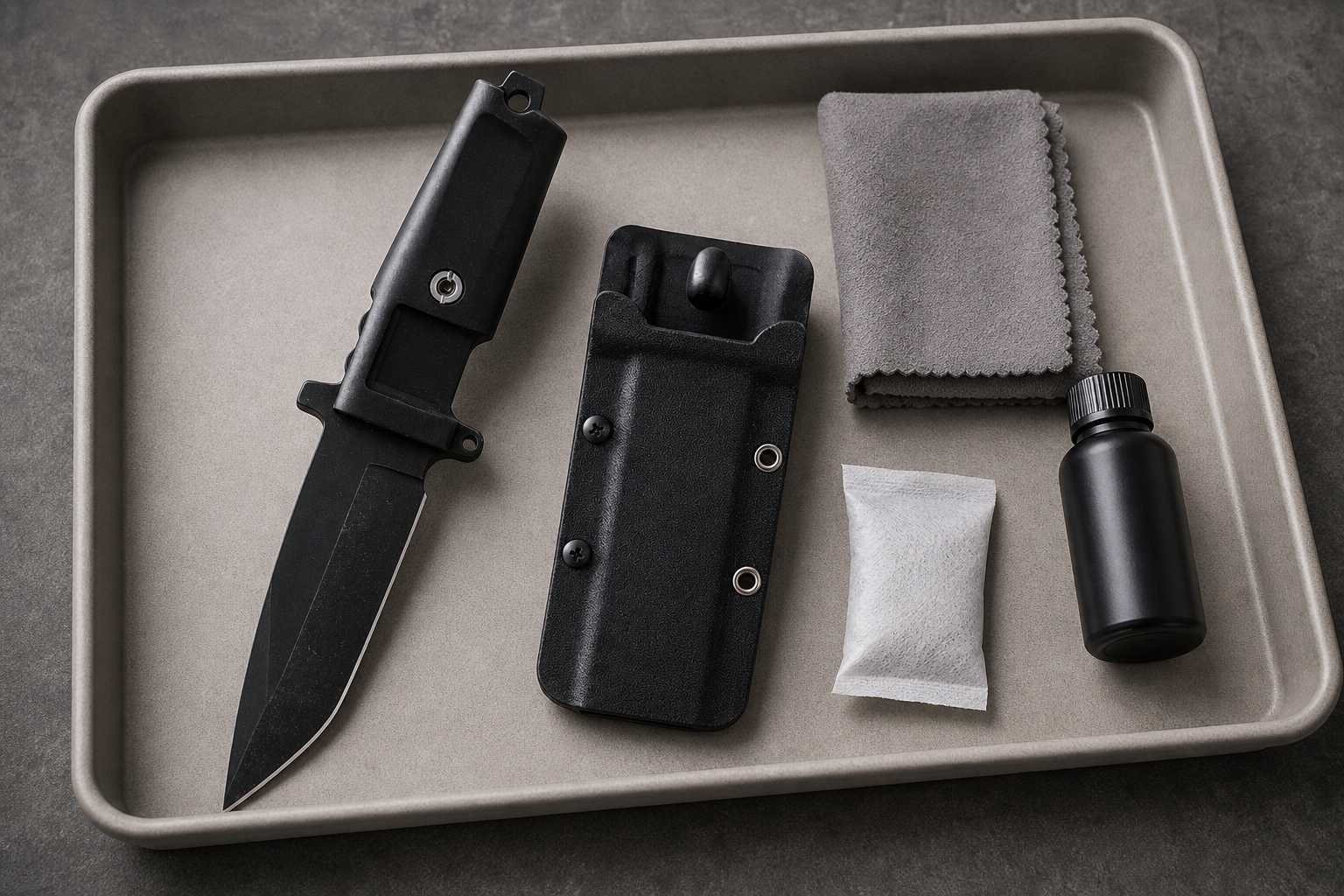
Carbon steel can rust. That should not be hidden. It should be managed. The buyer can manage it through steel choice, surface finish, coating, oiling, vapor corrosion inhibitor packaging where suitable, care instructions, and honest product copy.
Some buyers want a natural patina story. That can work when the audience understands carbon steel. Other buyers want a clean retail finish. That requires stronger packaging protection and clearer inspection. If the knife will sit in humid warehouses or ship by sea, packaging becomes part of the material plan.
The ISO 9227 salt spray test standard page describes salt spray methods for assessing corrosion resistance of metallic materials with or without protection. Buyers should be careful here. Salt spray testing is not the same as real outdoor use, but it can be part of a defined coating or finish quality plan when the requirement is clear.
The copy should be direct:
- Carbon steel may darken or develop patina.
- Clean and dry after use.
- Apply light oil or care product where appropriate.
- Do not store wet or dirty.
- Coating may wear at the edge or contact points.
This kind of honesty reduces returns more than vague "rust resistant" language.
How Should Heat Treatment and Hardness Be Specified?
Carbon steel performance depends heavily on heat treatment.
Buyers should specify heat-treatment route, hardness range, tempering target, straightness limits, batch records, hardness testing method, and corrective action rules for carbon steel knife production.
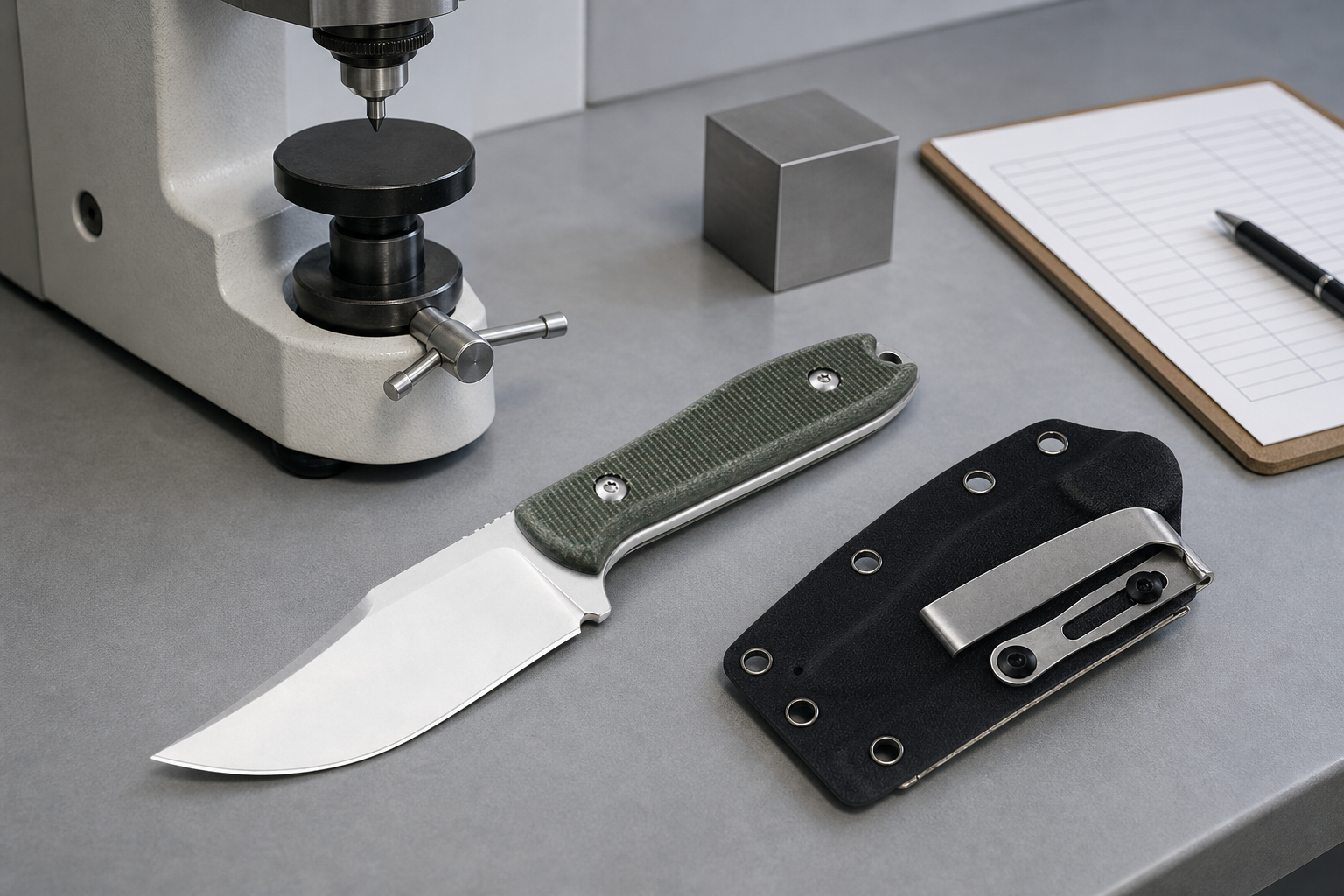
I Ask for Heat-Treatment Evidence, Not Only a Hardness Number
The NIST heat-treatment reference supports the basic point that thermal processing changes iron and steel properties. For carbon steel knives, heat treatment is where much of the product's performance is made or lost.
Hardness matters, but it is not the whole answer. A high hardness may support edge retention, but it can also increase brittleness if the steel, geometry, and tempering are not right. A lower hardness may improve toughness, but the edge may roll too easily if the product is expected to cut tougher material. The correct range depends on blade size, steel grade, edge geometry, and use case.
The ISO 6508-1 Rockwell hardness test page is relevant because Rockwell hardness is commonly used for metallic materials. For knife buyers, the key is to define the test method, test location, sample size, acceptance range, and reporting format. Do not just say "HRC 58" with no method or tolerance.
| Heat-treatment item | Buyer question | Record needed |
|---|---|---|
| Hardness range | What performance balance is needed? | HRC report |
| Tempering | How is brittleness controlled? | Process record |
| Warpage | How are blades straightened? | Straightness check |
| Batch control | How are lots separated? | Traceability record |
How Should Blade Geometry Be Matched to Carbon Steel?
A strong steel choice can still fail if the geometry is wrong.
Buyers should match carbon steel blade thickness, tip thickness, grind, edge angle, behind-edge thickness, belly, spine finish, and sharpening standard to the intended cutting task.
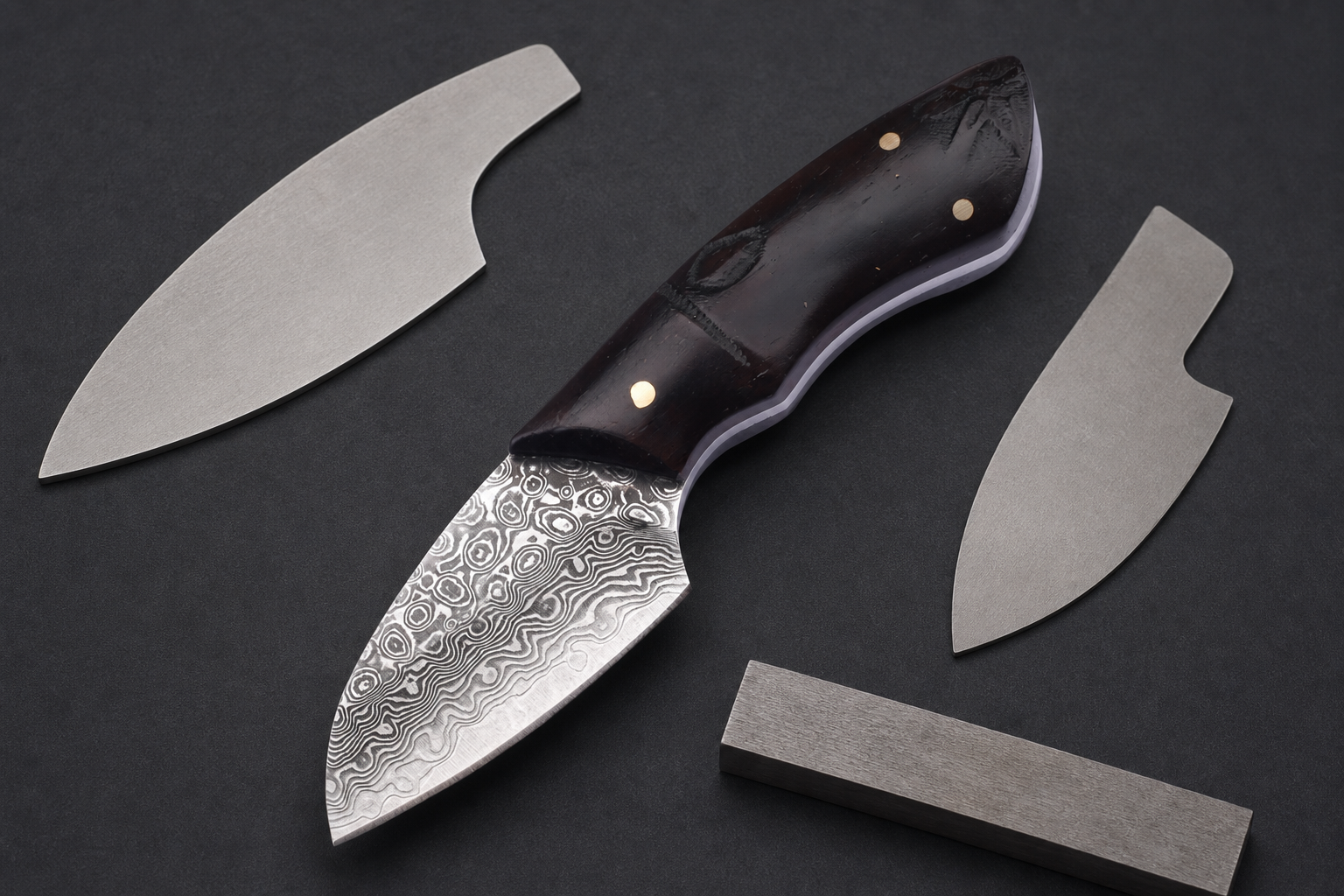
I Do Not Let Steel Carry the Whole Product
Carbon steel can be forgiving in sharpening, but geometry still decides the user's first impression. A thick outdoor knife may feel tough but cut poorly if the edge is too thick. A thin utility blade may slice well but need a controlled tip and edge angle. A bushcraft-style grind may appeal to outdoor buyers, but the user must understand how to maintain it.
The buyer should define the blade's job first. A camping knife may need toughness and controlled sharpening. A carving knife may need a thinner edge. A utility blade may need consistency and low unit cost. A hunting-accessory blade may need belly, cleaning access, and safe packaging. One carbon steel specification cannot cover all of these.
The drawing should include:
- Blade length and overall length
- Spine thickness and tip thickness
- Grind type and bevel height
- Edge angle and behind-edge thickness
- Straightness tolerance
- Spine finish and edge deburring
- Coating or finish boundary
- Sheath or handle clearance
The factory should approve geometry with physical samples, not only drawings. Carbon steel is practical when the entire blade system supports the use case.
What Surface Finish, Coating, and Care Plan Should Buyers Use?
Carbon steel needs a finish and care story that matches the customer.
Buyers should choose bare carbon steel, forced patina, black oxide, coating, oiling, packaging protection, or care accessories based on corrosion risk, price level, appearance target, and user maintenance expectations.
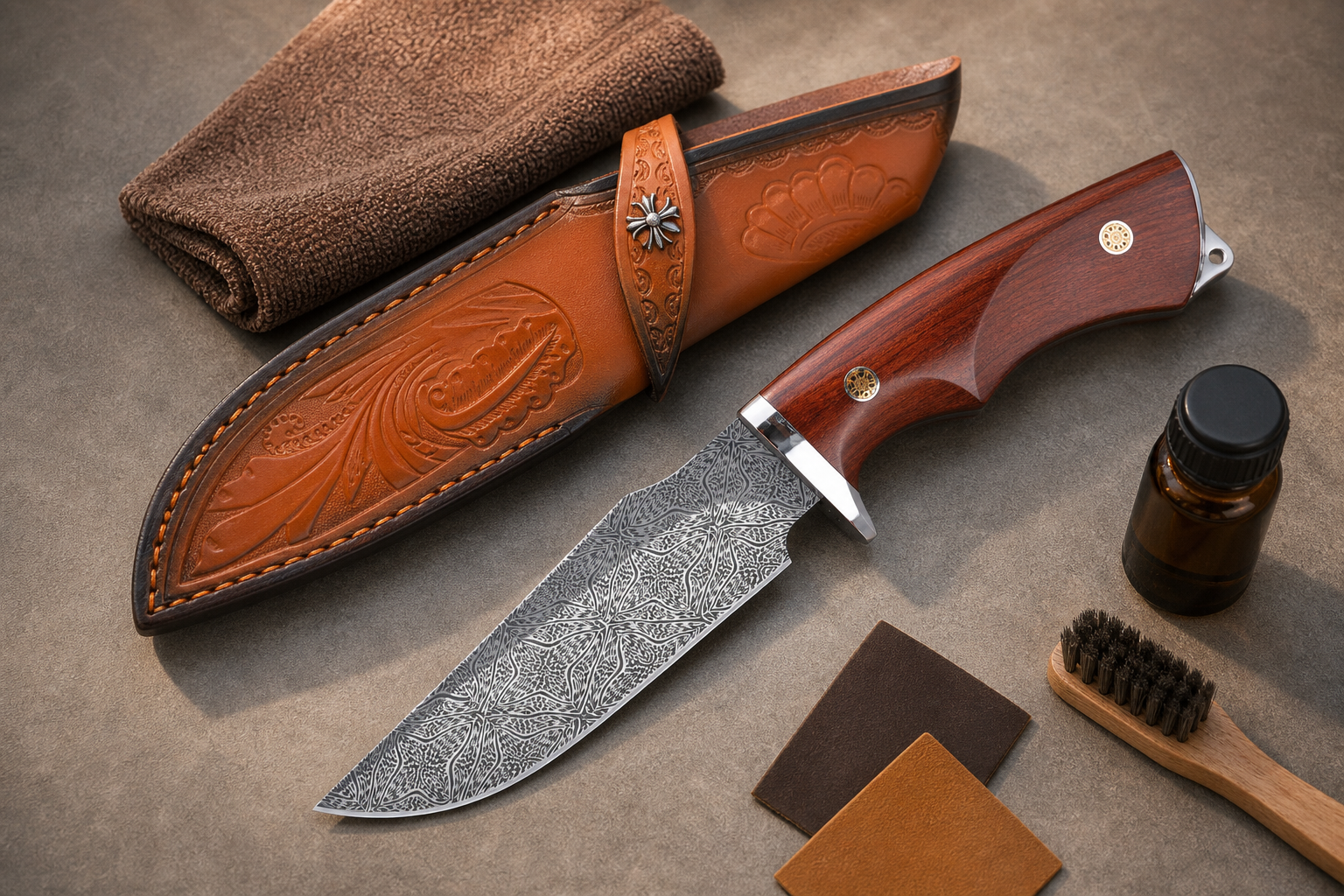
I Make Maintenance Part of the Product Experience
Bare carbon steel can develop patina. Some brands like that. Some customers do not. A forced patina can make the finish more intentional, but it still needs consistency. A coating can improve corrosion resistance, but the coating may wear along the edge, spine, sheath contact points, or high-friction areas. A black oxide or similar finish may look traditional, but the buyer should define what protection it actually provides.
Packaging matters before the customer ever opens the box. Carbon steel blades may need oiling, wrap material review, humidity control, VCI paper, sealed bags, or instructions depending on the shipping route and storage environment. If the product ships by sea or sits in a humid warehouse, the buyer should not treat packaging as an afterthought.
Care text should be short and clear. It should not scare customers. It should explain that carbon steel needs cleaning and drying, and that patina can be normal. If the blade is coated, explain that coating wear can occur with use. If the blade is food-contact-adjacent, the buyer should review material and finish claims carefully for the target market.
| Finish route | Benefit | Watch point |
|---|---|---|
| Bare carbon steel | Traditional feel and easy sharpening story | Rust and patina expectations |
| Coated blade | Better corrosion and visual consistency | Edge and sheath wear |
| Forced patina | Intentional aged look | Batch consistency |
| Oiled packaging | Short-term protection | Care text and shipping control |
What Packaging and Product Copy Should Carbon Steel Knives Use?
Carbon steel packaging should protect the blade and prepare the customer.
Packaging and copy should explain carbon steel care, corrosion risk, patina, cleaning, drying, oiling where appropriate, intended use, safe storage, local-rule reminders, and realistic performance claims.
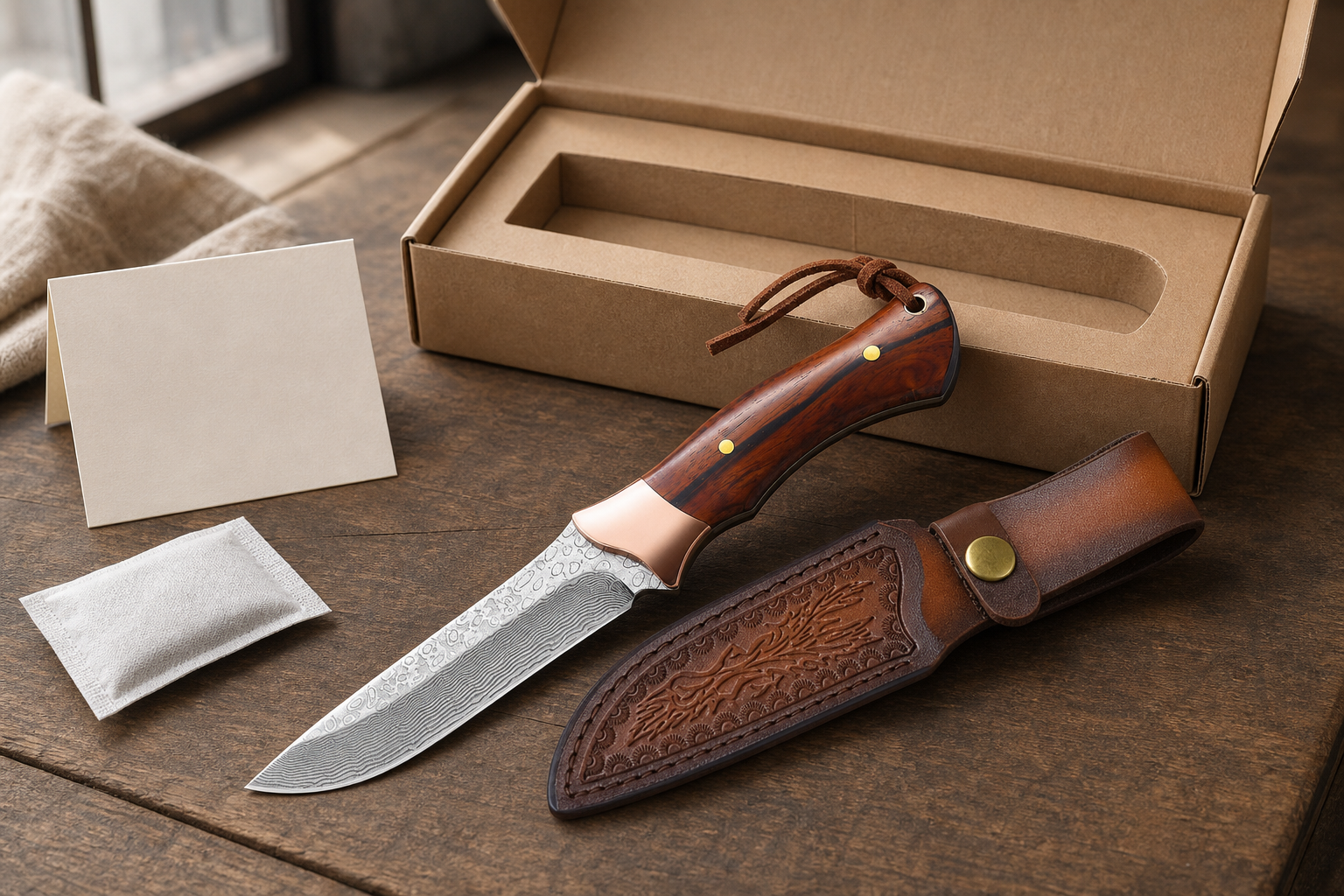
I Avoid "Maintenance-Free" Claims
The European Commission product safety and labelling page points businesses toward product safety and labelling responsibilities. For buyers, the practical lesson is that product labels and instructions should match the actual material.
Carbon steel copy should never imply stainless-like maintenance unless the finish and care plan support that claim. Instead, it should explain the value and responsibility together. For example: "Carbon steel is selected for edge feel and sharpening response. Clean and dry after use. Patina may develop over time." That statement is more trustworthy than "rust proof carbon steel."
Packaging should also avoid weapon framing. A carbon steel outdoor knife should be positioned around lawful cutting tasks, camping utility, field maintenance, or workshop use. It should not be positioned as self-defense equipment.
Useful packaging elements include:
- Care leaflet
- Light oil or care recommendation where appropriate
- Sheath or blade protection
- Corrosion-protection packaging
- Warning and safe-use text
- Material and finish disclosure
- Customer support contact or QR link for care guidance
What QC Checks Should Buyers Require for Carbon Steel Knife Blades?
Carbon steel projects need QC from material receipt through packaging.
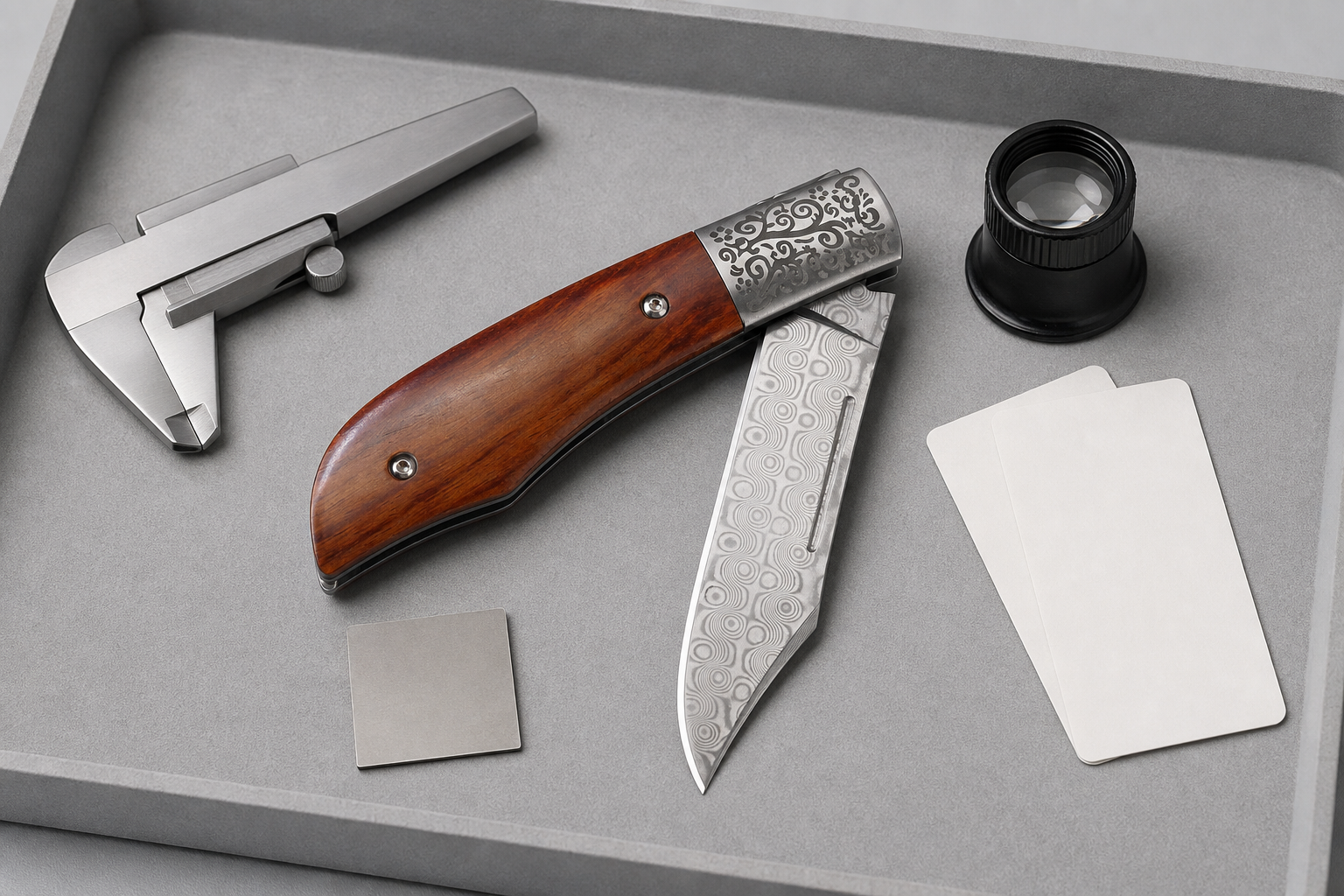
QC should verify material records, heat treatment, hardness, straightness, blade dimensions, tip thickness, bevel symmetry, edge angle, burr control, surface finish, coating, corrosion protection, packaging movement, and care insert placement.
I Check the Blade Before the Finish Hides Problems
Carbon steel blades should be inspected before and after finishing. Before finishing, the factory can check straightness, grinding marks, surface defects, and edge geometry. After finishing, the factory should check coating coverage, finish consistency, oiling, packaging contact points, and final edge quality.
NIST dimensional metrology supports the role of measurement in manufacturing improvement. ISO 9001 supports defined quality management requirements. For knife buyers, those principles become a practical inspection plan.
I would request:
- Material record or steel supplier confirmation
- Heat-treatment route and hardness report
- Blade dimensions, thickness, and straightness
- Bevel symmetry and edge-angle check
- Burr and final edge inspection
- Surface finish or coating boundary sample
- Corrosion-protection packaging review
- Care leaflet and warning placement
- Pre-shipment inspection report
The QC plan should match the sales promise. If the product says carbon steel is easy to sharpen, the edge geometry should support that. If it says outdoor ready, the corrosion plan should be visible.
How Can Vast State Help Buyers Source Carbon Steel Knife Projects?
Vast State can help buyers turn carbon steel from a broad material idea into a controlled production brief.
Vast State supports carbon steel knife projects by defining use case, steel grade, heat treatment, hardness, geometry, finish, corrosion plan, packaging, care instructions, sample approval, and QC records before mass production.
I Build the Carbon Steel Brief Around Tradeoffs
Carbon steel has tradeoffs. That is not a problem. It becomes a problem only when the buyer ignores them. A good brief states what matters most: toughness, sharpening ease, edge retention, cost, traditional look, corrosion management, or outdoor positioning. Then the supplier can recommend the steel, process, finish, and packaging that support that goal.
Vast State can help with:
- Carbon steel grade and use-case planning
- Heat-treatment and hardness requirement review
- Blade geometry, grind, and edge-angle specification
- Coating, patina, finish, and care strategy
- Packaging protection and care-instruction planning
- Sample approval and boundary sample setup
- QC checklist development for carbon steel production
- Product-copy review to avoid rust-proof or maintenance-free claims
Carbon steel can be a strong choice. It simply needs an honest specification and a factory that can control the process.
Ready to use this material in your next knife line?
Vast State can help you compare blade steels, heat treatment ranges, handle materials, finishes, packaging options, and QC requirements based on your target market and quantity.
Conclusion
Carbon steel is practical when the buyer manages its strengths and risks. Define the use case, heat treatment, geometry, corrosion plan, care copy, and QC.