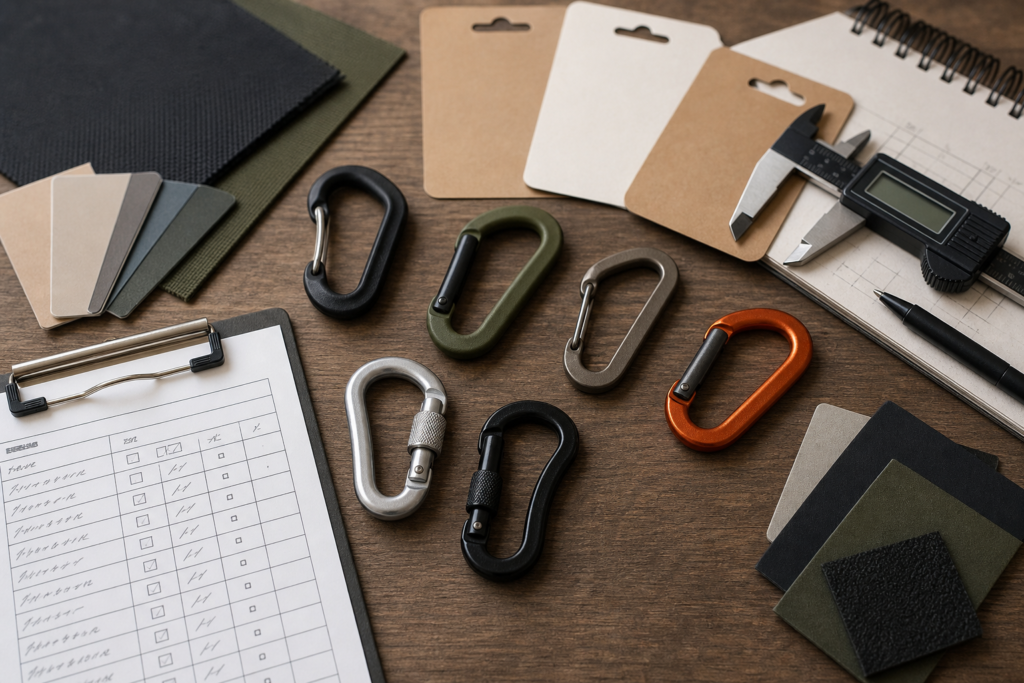
A small carabiner can look simple. But the wrong claim, material, or use case can turn a useful accessory into a sourcing risk.
Buyers should evaluate carabiners by first separating accessory use from load-rated safety use, then checking shape, gate style, material, finish, testing, packaging, market claims, and RFQ details. For life-safety, climbing, PPE, or fall-protection use, formal standards and specialist review are required.
Quick buyer brief:
- Answer: Treat carabiners as product-specific components, not generic hooks.
- Buyer context: This helps outdoor brands, knife brands, kit builders, importers, wholesalers, and private label buyers.
- Key checks: Use case, load claim, material, gate, finish, test records, packaging wording, target market, compliance path, and RFQ details.
Have a knife or multi-tool project in mind?
Send your sketch, CAD file, sample photo, or product idea. Vast State can review manufacturability, suggest materials, estimate MOQ, and prepare a quote for your OEM/ODM project.
I see carabiners differently from a retail shopper. A shopper sees a convenient clip. A sourcing manager sees use case, material, tooling, gate feel, finish consistency, packaging, label claims, and liability exposure. This article is not safety advice and it is not a certification claim. It is a B2B product-development guide. At Vast State, I would treat a normal accessory carabiner for keychains, outdoor kits, EDC pouches, small tool organization, and packaging bundles very differently from a connector used for climbing, PPE, rescue, fall protection, or any life-safety purpose.
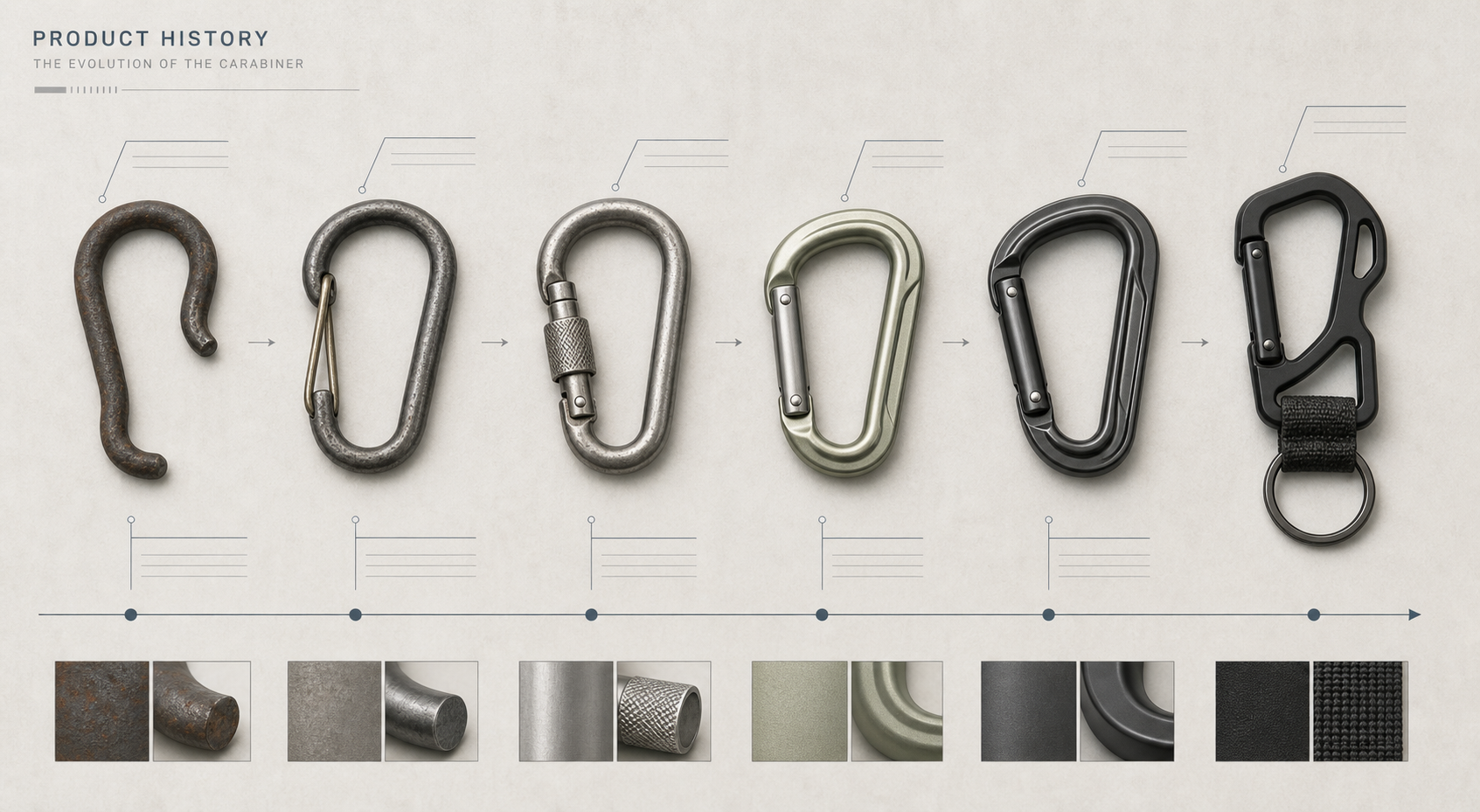
What Does the Evolution of Carabiners Mean for B2B Buyers?
Carabiners moved from technical hardware into daily products. That makes them attractive, but it also makes careless sourcing easy.
For B2B buyers, the evolution of carabiners means one shape now covers many markets. A buyer must define whether the product is a casual accessory, tool organizer, branded outdoor item, kit component, or load-rated safety connector before asking for samples.
I Start With the Product Role
The carabiner has become a universal-looking item because it is useful. It can hold keys, hang a water bottle, organize a pouch, attach packaging, connect a small tool to a lanyard, or become part of an outdoor gift set. That wide use is exactly why buyers need a clear brief. A small accessory carabiner and a certified climbing connector may look similar to a casual user, but they belong to different risk categories.
When a customer asks me about adding carabiners to a knife, outdoor tool, camping kit, or EDC bundle, I first ask what the product must do. If it only clips light accessories, the project can focus on shape, hand feel, surface finish, color, package, and cost. If the buyer wants to mention climbing, fall protection, rescue, PPE, or human support, I would stop the normal accessory discussion and move the project into a formal standards and certification path.
This is not a small wording issue. The word "carabiner" can carry different expectations in different markets. A retail customer may not read the fine print. A distributor may want test records. A customs broker may ask about product description. A marketplace may review safety claims. So the product role must be decided before sample approval.
| Product role | Typical buyer goal | Sourcing focus |
|---|---|---|
| Accessory clip | Keychain, bottle clip, light gear organization | Shape, finish, gate feel, package wording |
| Kit component | Outdoor set, knife pouch, camping bundle | Fit with other tools and packaging |
| Promotional item | Brand gift or retail add-on | Logo area, color, surface consistency |
| Safety connector | Climbing, PPE, fall protection, rescue | Formal standard, test report, certification review |
OEM/ODM RFQ Checklist
Prepare these details to help Vast State review your project and provide a more accurate quotation.
| RFQ Field | What to Prepare |
|---|---|
| Project type | OEM from drawing / ODM private label / wholesale catalog |
| Product category | Folding knife / fixed blade / multi-tool / outdoor tool |
| Design status | Idea / sketch / 2D drawing / 3D CAD / physical sample |
| Target price | Ex-factory target price or retail price range |
| MOQ expectation | 500 / 1,000 / 3,000 / 5,000+ pcs |
| Logo method | Laser engraving / etching / printing / molded logo |
| Packaging | Standard packaging / custom retail box / Amazon-ready |
| Market | USA / EU / Japan / Korea / Middle East / other |
| Compliance needs | Buyer-specified testing / documentation / labeling |
| Timeline | Sample deadline / mass production deadline |
How Should Buyers Separate Accessory Carabiners From Load-Rated Connectors?
The same outline can mislead people. A buyer should not let a product photo decide the safety category.
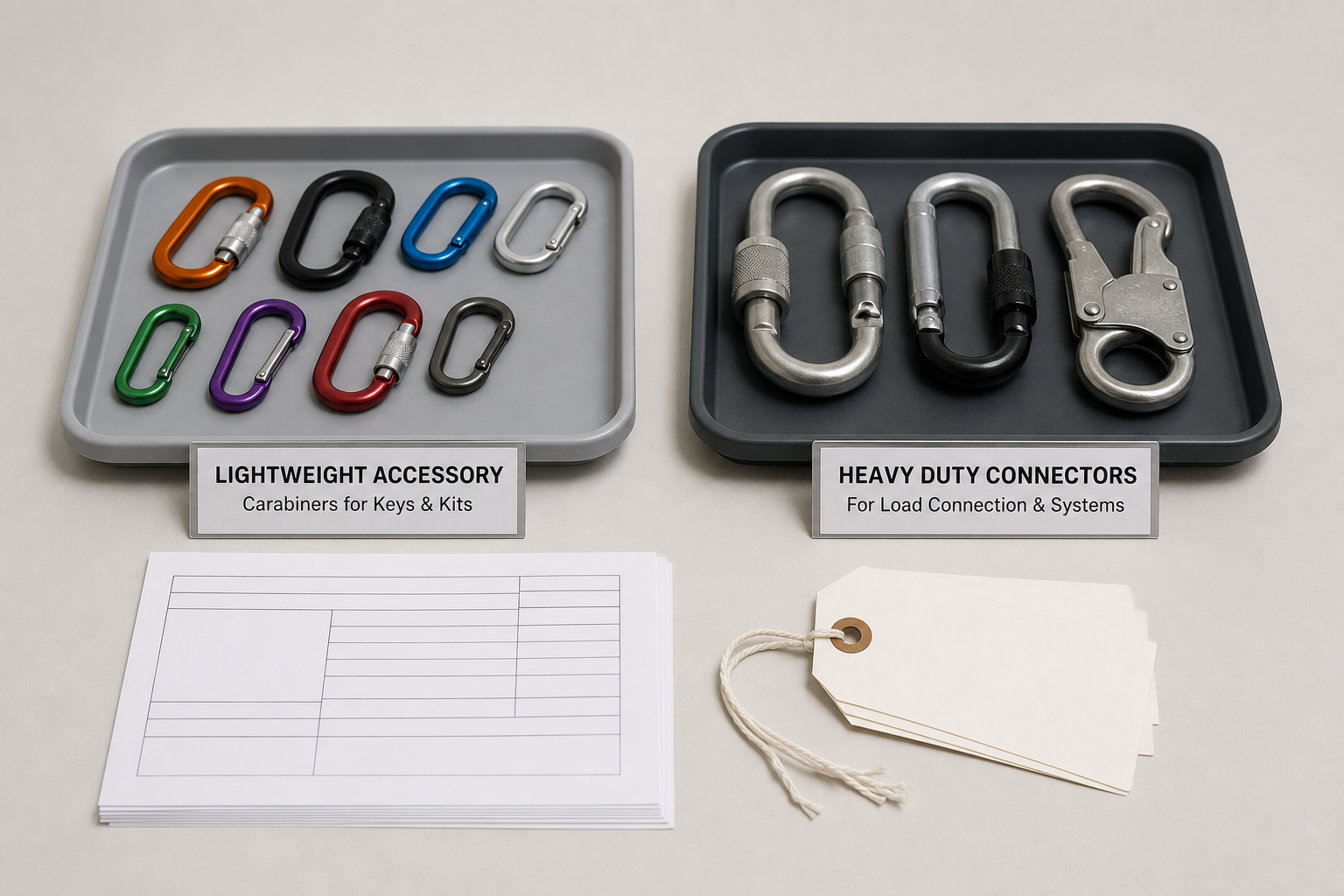
Buyers should separate accessory carabiners from load-rated connectors by use claim. If a carabiner supports people, PPE, climbing, or fall protection, it needs recognized standards, traceability, testing, user instructions, and specialist compliance review.
I Treat Safety Claims as a Different Project
The first separation is simple: can this product be used to protect a person from a fall, support a person, or connect climbing or PPE systems? If yes, the project should not be handled as a casual outdoor accessory. The UIAA 121 connector standard is one reference point for climbing and mountaineering connectors. OSHA also gives clear connector criteria in its fall protection rules, including strength and compatibility language for fall protection systems. In the EU, the European Commission explains that the PPE regulation covers design, manufacture, marketing, and compliance obligations for personal protective equipment.
These sources do not mean every carabiner must be certified. They mean the claim controls the path. If the product is an accessory clip, then the packaging should not imply climbing, suspension, life-safety, or fall-protection use. If the product is a safety connector, then the buyer needs the correct standard, test method, notified or accredited body path where required, batch traceability, marking, instructions, and legal review.
In practical OEM work, I recommend that buyers write the intended use in the RFQ. A phrase like "light accessory carabiner, not for climbing or PPE use" is clearer than a vague request for a strong carabiner. A phrase like "certified climbing connector" is also clear, but it belongs to a different supplier qualification process.
| Use category | What buyer should say | What supplier should provide |
|---|---|---|
| Light accessory | Not for climbing or human support | Material, finish, dimensions, light-use check |
| Outdoor kit clip | For attaching small accessories | Fit check, package copy, corrosion review |
| Work positioning or fall protection | PPE or fall-protection connector | Applicable standard and formal test records |
| Climbing connector | Climbing or mountaineering use | Standard, certification path, traceability |
Which Carabiner Shapes and Gate Styles Fit Different Product Lines?
A carabiner is not only a metal loop. Shape and gate design control user feel, cost, and product positioning.
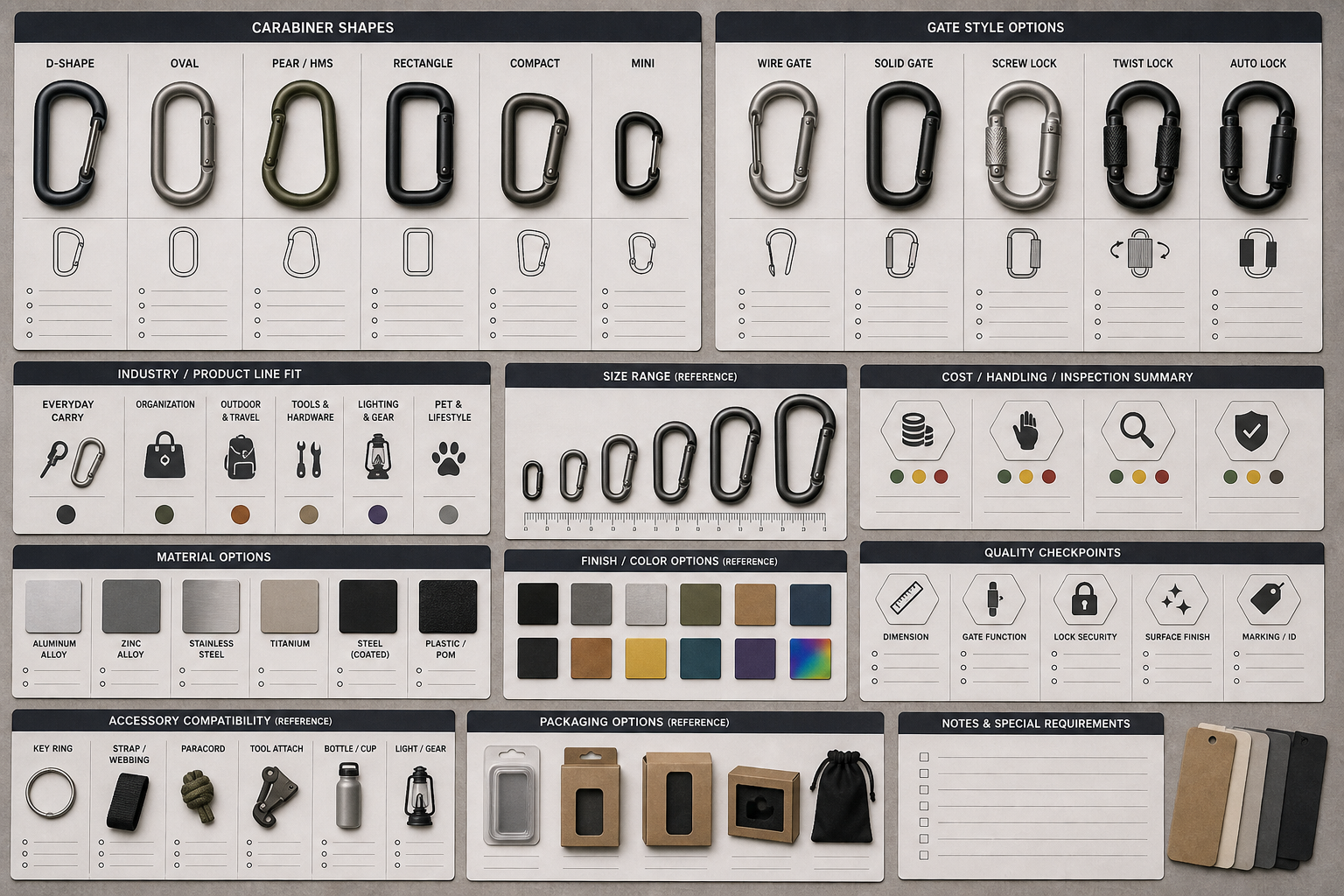
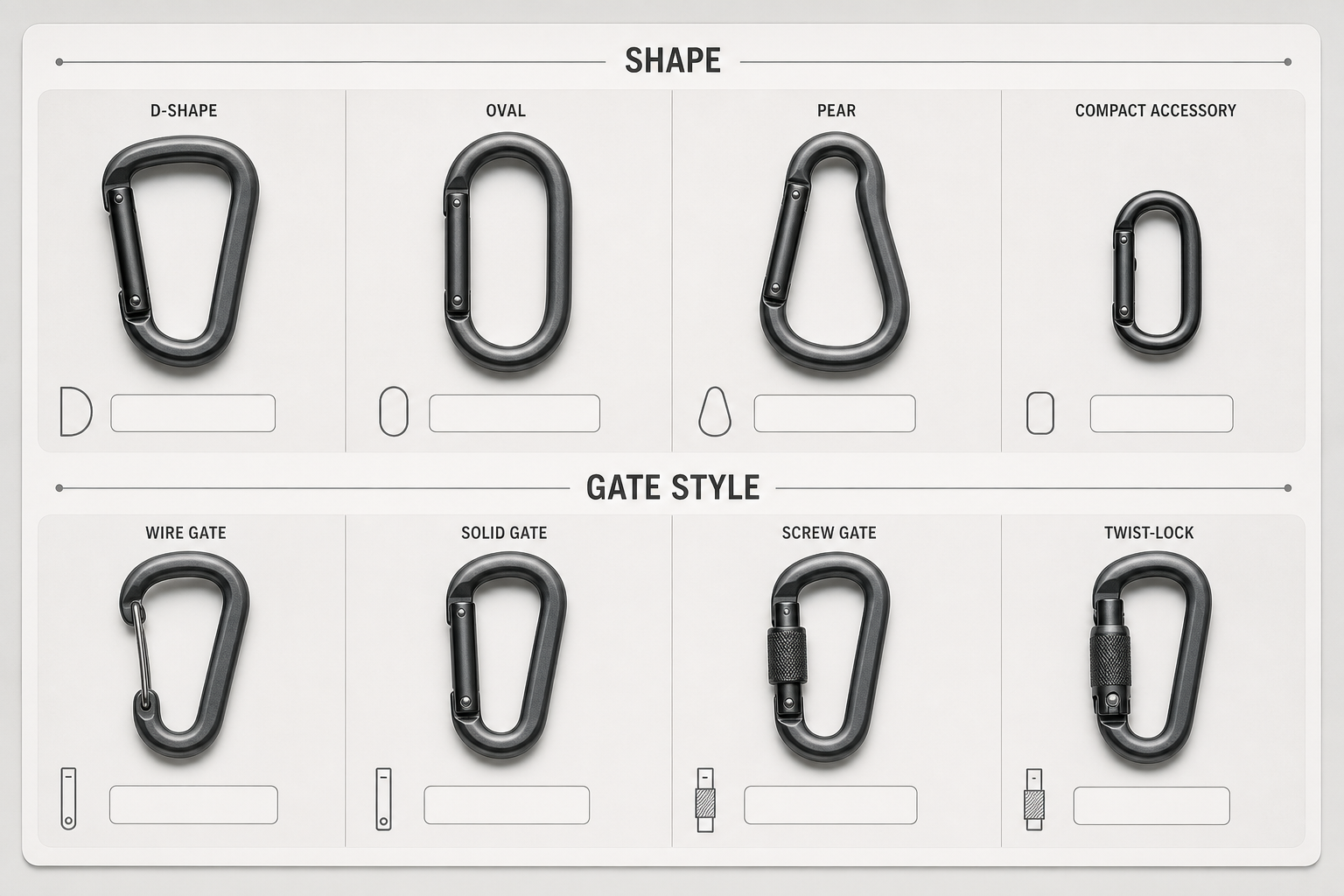
Shapes such as D, oval, pear, and compact accessory styles fit different product lines. Gate choices such as wire, solid, screw, twist, or auto-lock styles affect cost, handling, claims, and inspection needs.
I Match the Shape to the Real Carry Scenario
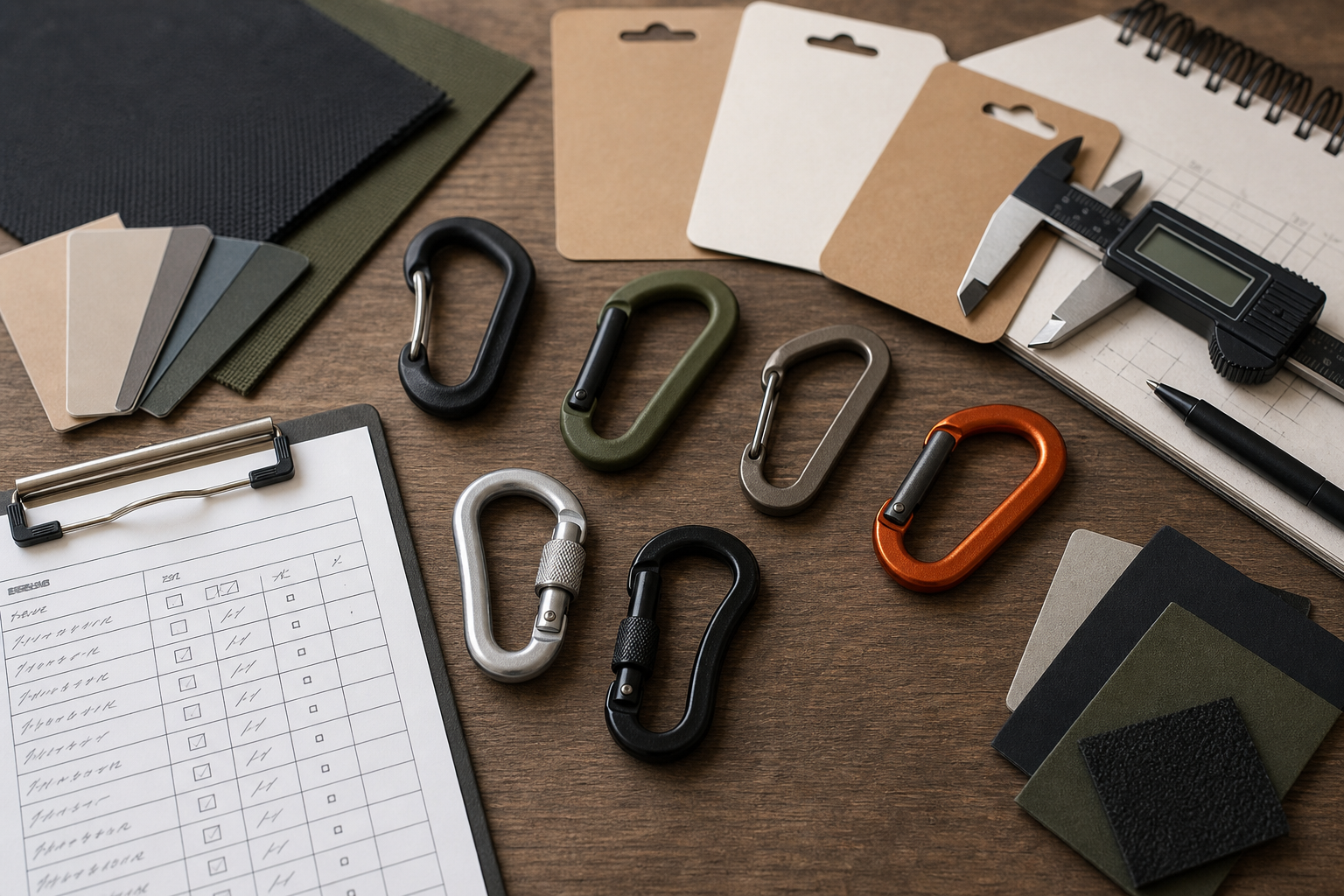
For accessory projects, I choose shape from the use case. A compact D-shape carabiner often works well for keychains, small pouches, and lightweight outdoor kits because it feels familiar and saves material. An oval shape can look balanced and can fit some packaging layouts better. A pear shape gives more opening space, but it may be too large or too technical-looking for a small EDC bundle. A flat decorative body can create more logo space, but it may reduce hand comfort or gate clearance if the design is careless.
Gate style matters just as much. A simple spring gate is common for accessory products because it is fast, affordable, and easy to understand. A wire gate can reduce weight and give an outdoor look, but it needs careful end finishing. A screw sleeve or locking gate can look more serious, but it can also create a safety impression that the product may not support. For non-safety accessory products, I would avoid gate styles that invite customers to assume climbing or fall-protection use unless the product is actually made and documented for that category.
I also check assembly. The gate should open smoothly, close reliably, and avoid sharp burrs. The body should not twist easily under normal accessory use. The finish should not chip around the nose, hinge, or gate contact point. For private label buyers, the best design is often the one that looks good, works consistently, and does not create a claim the brand cannot prove.
| Shape or gate choice | Better fit | Watch point |
|---|---|---|
| Compact D shape | EDC kits, keychains, pouches | Gate clearance and logo area |
| Oval shape | Balanced retail appearance | May use more material |
| Pear shape | Larger clipping space | Can imply technical use |
| Screw sleeve | Controlled closure feel | Avoid unsupported safety claims |
How Do Materials, Finish, and Corrosion Resistance Affect Carabiner Design?
Material choice can look like a price decision. But it also controls weight, finish, feel, and long-term appearance.
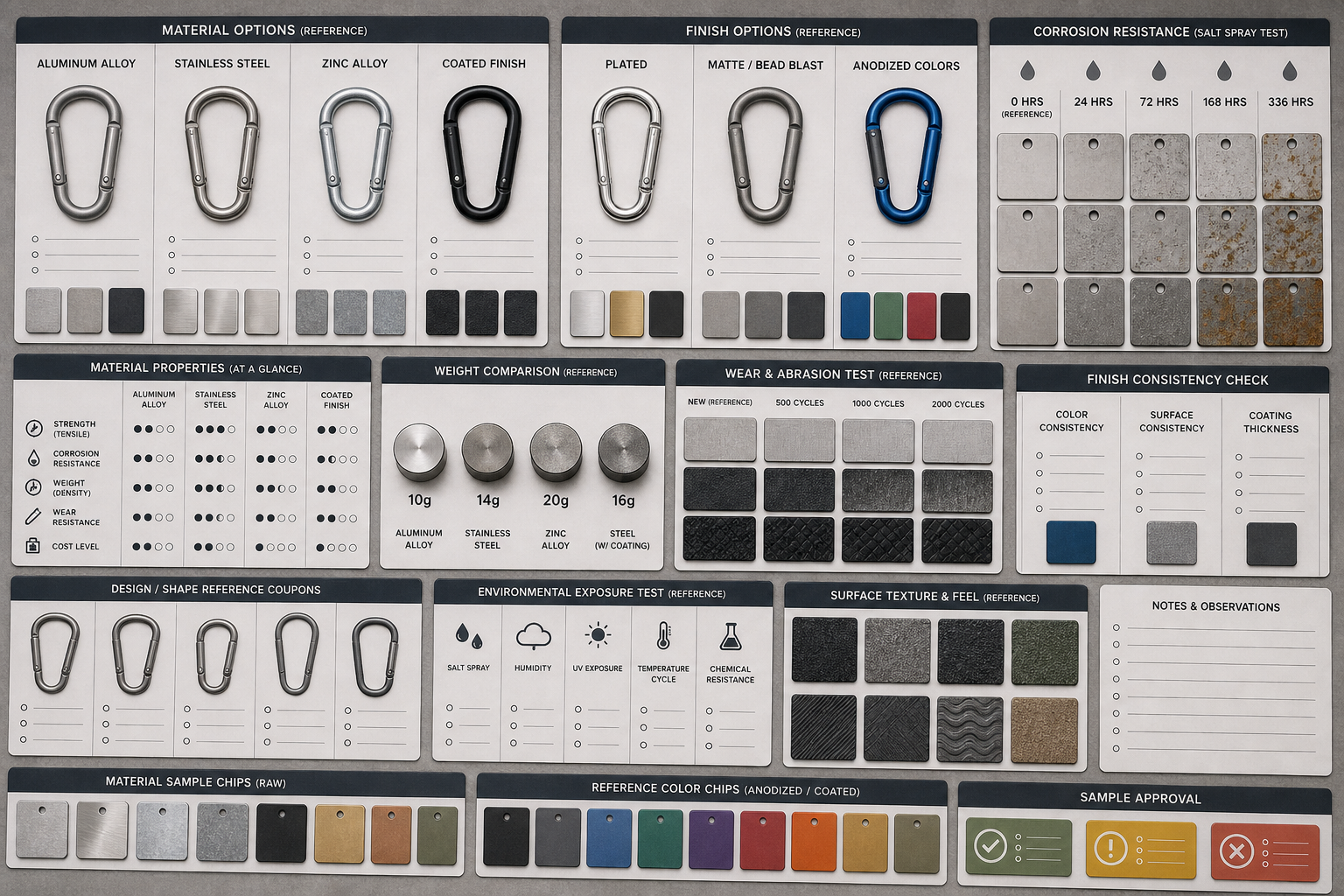
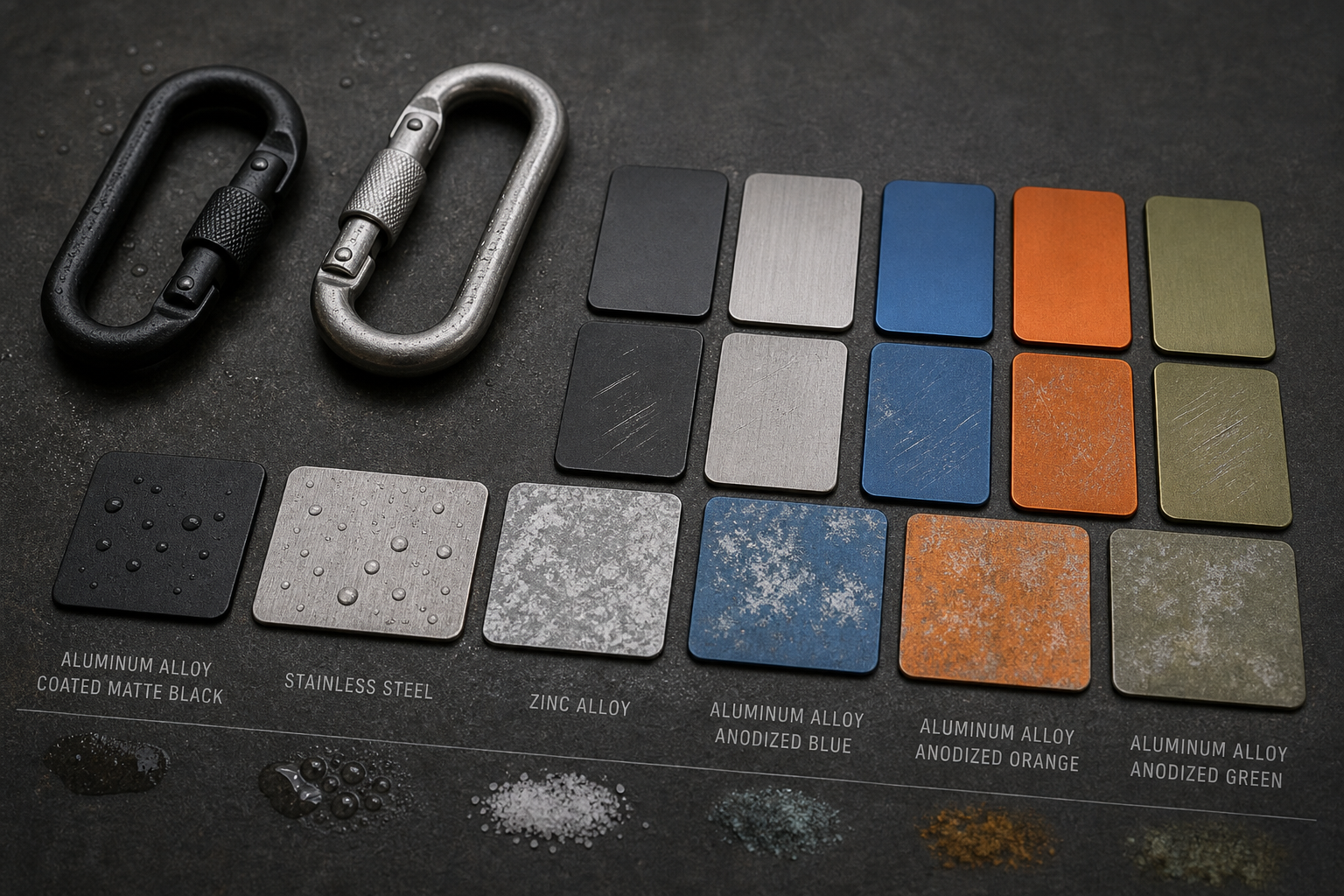
Carabiner material and finish affect strength target, weight, corrosion resistance, color options, surface wear, tooling cost, and brand positioning. Common accessory choices include aluminum alloy, stainless steel, zinc alloy, and coated or plated finishes.
I Balance Brand Feeling With Production Reality
Aluminum is popular because it is light and can take attractive anodized colors. The Aluminum Association describes aluminum as lightweight, corrosion resistant, strong, versatile, and recyclable in its aluminum overview. For accessory carabiners, that makes aluminum a useful choice when a buyer wants outdoor style, lower carry weight, and color variety. But the alloy, process, and finish still matter. Poor anodizing can look uneven. Sharp edges can show color wear. Thin sections can deform too easily.
Stainless steel gives a stronger and more solid feel for some products, but it is heavier and may raise cost. Zinc alloy can work for decorative products, but buyers should be realistic about strength expectations and surface durability. Plastic can work for very light organizer products, but it should not be dressed up as a technical connector. The material should match the honest claim.
Finish selection needs the same discipline. Anodizing, polishing, bead blasting, painting, powder coating, plating, and laser marking all affect appearance and production consistency. I prefer to ask for approved color samples, finish limits, logo method, scratch tolerance, and packaging protection before mass production. Small carabiners rub against other parts during packing and shipping. If the carton packing is careless, the finish problem appears before the buyer even sells the product.
| Material or finish | Main benefit | Production concern |
|---|---|---|
| Aluminum alloy | Light weight and color options | Alloy, anodizing, edge wear |
| Stainless steel | Solid feel and corrosion resistance | Weight, machining, cost |
| Zinc alloy | Decorative shape flexibility | Strength expectation and plating quality |
| Anodized finish | Outdoor color identity | Color match and abrasion control |
What Testing and Documentation Should Buyers Ask For?
Many buyers ask if a carabiner is strong. That question is too broad to protect a brand.
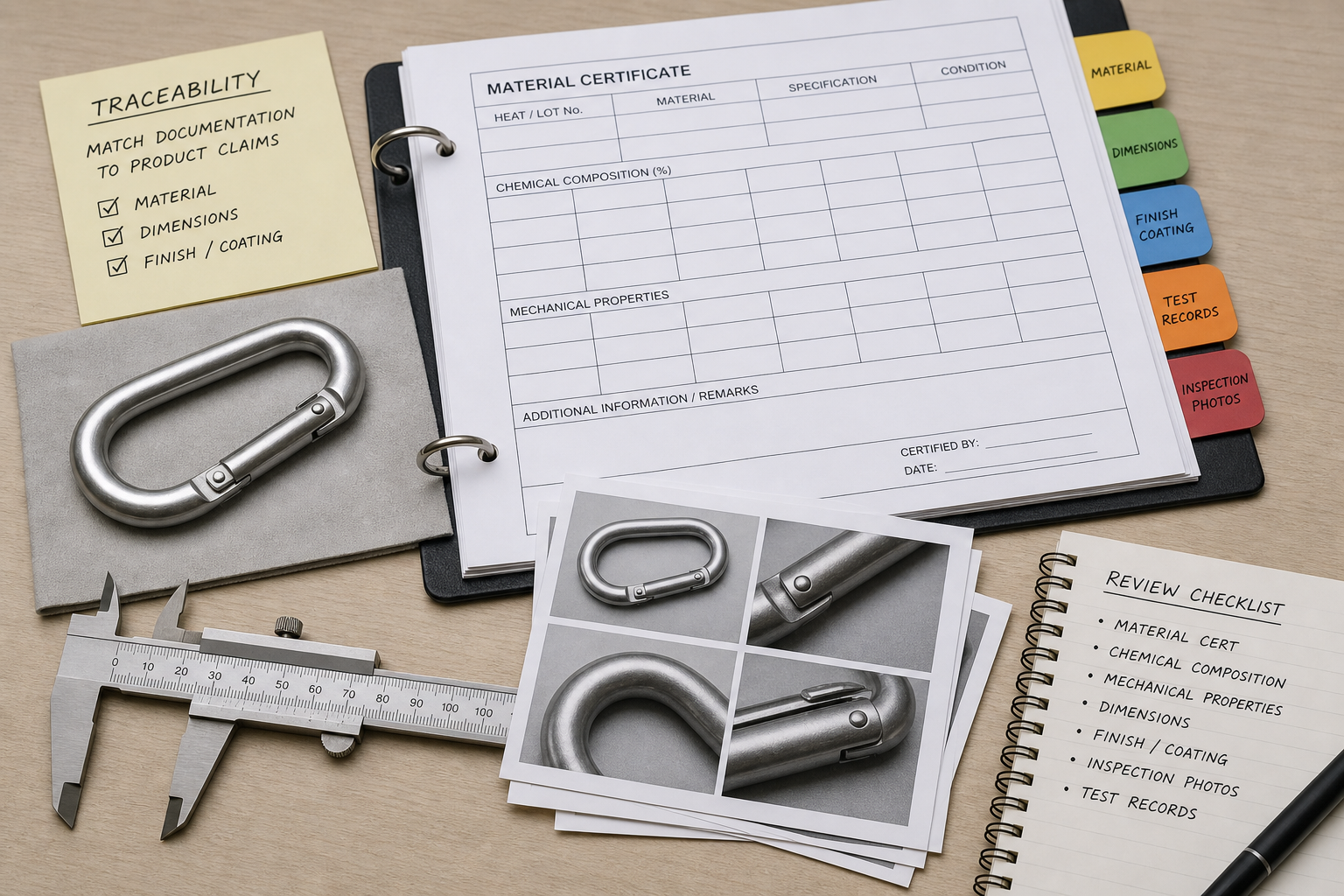
Buyers should ask for documentation that matches the claim: drawings, material records, finish standards, inspection criteria, light-use checks for accessories, and formal standard-based test reports for load-rated or safety connectors.
I Ask What the Test Is Proving
Testing should answer the claim, not decorate a sales page. For an accessory carabiner, the buyer may need dimensional checks, gate opening force checks, gate closing checks, finish adhesion review, burr inspection, corrosion-related screening, logo durability checks, and packaging abrasion checks. These are practical checks for a non-safety product. They help keep repeat orders consistent.
For a load-rated connector, the test package changes completely. OSHA's fall protection criteria include connector material, corrosion-resistant finish, smooth surfaces, tensile strength, proof-testing, compatibility, locking requirements, and inspection expectations. UIAA 121 covers connectors for climbing and mountaineering. The EU PPE framework addresses legal obligations when PPE is placed on the EU market. A buyer cannot replace those pathways with a simple factory pull test or a product photo.
I also look at supplier quality management. ISO explains in its supply chain guide that buyers should make specifications clear and decide what confidence they need in the supplier's ability to provide consistent conforming products. The ISO page on quality management principles also explains that quality management systems use structured principles to define objectives, establish processes, and manage quality. For OEM projects, that means the buyer should define the inspection method before the first order.
| Claim type | Documentation to request | Why it matters |
|---|---|---|
| Accessory use | Drawing, material, finish, inspection plan | Supports repeat production |
| Color and logo | Approved samples and artwork files | Controls visual consistency |
| Load-rated use | Standard-based test report and traceability | Supports safety category review |
| Supplier quality | QMS evidence and process controls | Reduces batch variation |
How Should Carabiners Fit Knife, Tool, and Outdoor Kits?
A good accessory can still fail as a kit component. Fit, packaging, and user flow must be checked together.
Carabiners fit knife, tool, and outdoor kits best when they match the kit weight, pouch loop, lanyard hole, packaging tray, product story, and buyer's sales channel without creating unsupported safety expectations.
I Check the Whole User Path
When a carabiner is added to a knife, multi-tool, camping tool, fishing kit, rescue-style accessory pack, or outdoor gift box, it becomes part of the user experience. It should not feel like a random add-on. The size should match the pouch loop or tool hole. The gate should open far enough for the intended attachment point. The finish should not scratch the main tool in the package. The color should match the brand line. The package should protect both the carabiner and the knife or tool next to it.
I also think about retail presentation. A carabiner can make a product look more useful, but it can also confuse the product message. If a small camping knife set includes a carabiner, is the carabiner for attaching the pouch, hanging a small accessory, or acting as a bottle clip? The package should make that clear without overpromising. If the buyer sells through online marketplaces, images should show normal organization use, not technical life-safety use.
For Vast State projects, I would connect this to the product development brief. The buyer should share the target market, product tier, expected retail price, packaging style, and accessory role. Then the carabiner can be designed as part of the whole product, not sourced at the last minute as a loose metal part.
| Kit detail | What I check | Practical result |
|---|---|---|
| Pouch or loop | Hole size, strap thickness, gate opening | Easier attachment |
| Package tray | Movement during shipping | Fewer scratches |
| Color system | Tool finish and carabiner finish | Cleaner brand look |
| User story | Light organization use | Fewer claim problems |
What Packaging, Labeling, and Market Claims Need Review?
Packaging can create risk even when the product is simple. Words can make an accessory look like safety equipment.
Packaging and labeling should clearly state intended use, avoid unsupported load or safety claims, include origin marking review, warning review when relevant, care instructions, age and marketplace policy checks, and destination-market requirements.
I Keep Claims Narrow and Verifiable
The safest packaging language is specific. It should say what the product does and avoid what it cannot prove. For a normal accessory carabiner, I would avoid words that imply climbing, PPE, rescue load, fall protection, or human support. If the product is not rated for those uses, the package should say so plainly. A small note such as "not for climbing or life-safety use" can be useful, but the buyer should have final wording reviewed for the target market.
Labels also need practical review. For U.S. imports, 19 CFR 134.11 explains that foreign-origin articles or containers generally need country-of-origin marking that is conspicuous, legible, indelible, and permanent as the nature of the article permits. For California sales, OEHHA's Proposition 65 business guidance helps businesses review whether a warning is required for listed chemical exposure. These issues should be checked before artwork approval, not after cartons are printed.
Trade terms matter too. ICC explains that Incoterms 2020 rules help define buyer and seller responsibilities, costs, and risks in goods sales. For a small accessory, that may sound boring. But if packaging, labels, or inspection points are not clear before shipment, a low-cost accessory can still create delays and rework.
| Packaging item | What to review | Why it matters |
|---|---|---|
| Intended use | Accessory, kit clip, or safety connector | Controls claim risk |
| Warning language | Not for climbing if applicable | Reduces misuse expectations |
| Origin marking | Country of origin on product or container | Supports import compliance |
| Trade terms | Delivery, cost, and risk allocation | Prevents shipping confusion |
What Should Buyers Include in a Carabiner OEM or ODM RFQ?
A vague RFQ creates vague samples. The supplier may quote a nice shape that misses the buyer's real risk.
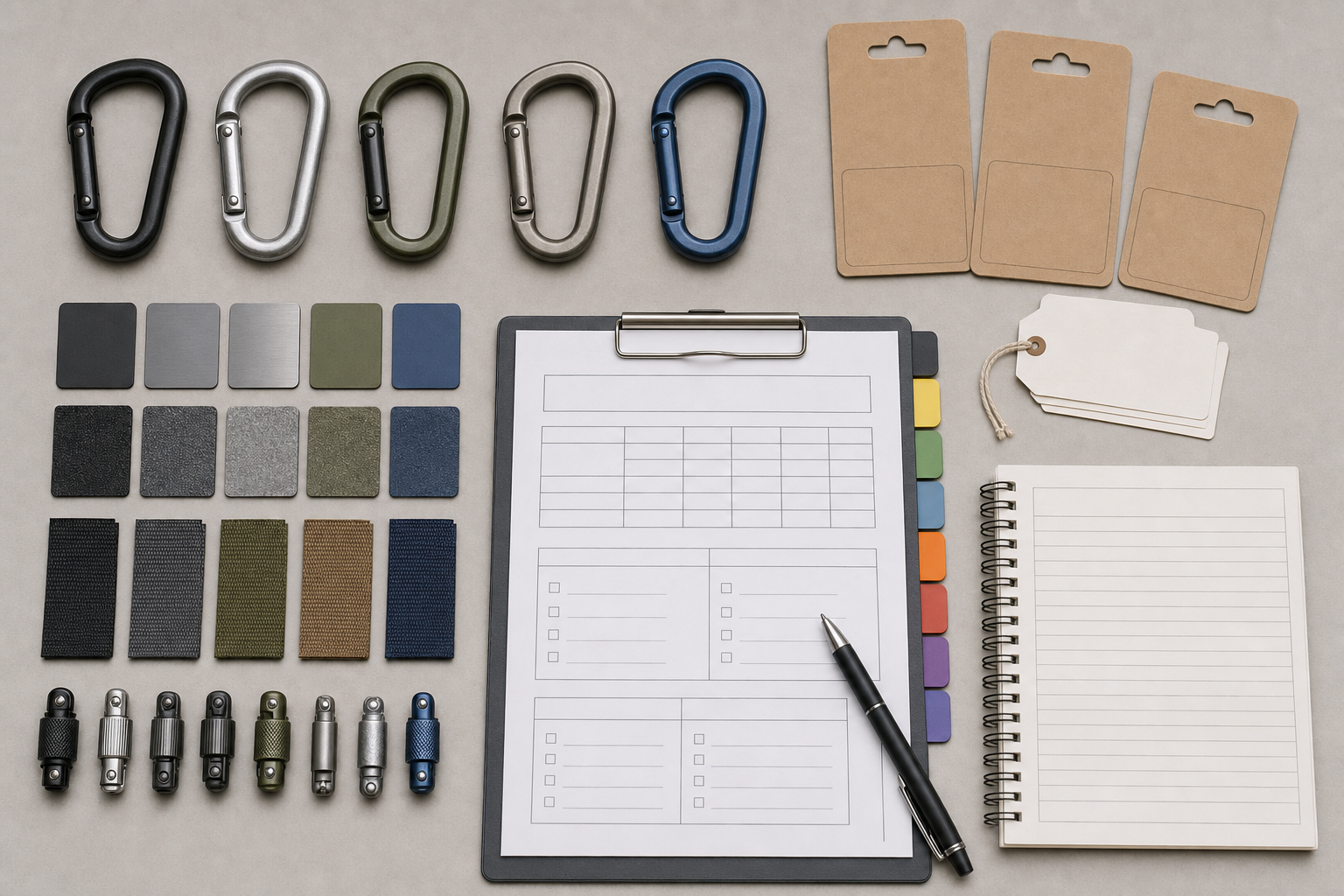
A carabiner RFQ should include intended use, safety category, material, size, gate type, finish, logo, color, packaging, inspection method, warning language, target market, MOQ, target price, delivery term, and any required standard or test report.
I Use the RFQ to Lock the Real Requirement
For a carabiner project, I want the RFQ to answer one question first: what is the intended use? After that, the rest becomes easier. If the project is a light accessory for a knife pouch or outdoor kit, the RFQ should state that it is not for climbing, PPE, fall protection, or human support. If the project is a load-rated connector, the RFQ should state the required standard, target market, test body needs, marking, traceability, and legal review path.
Then I ask for the product details. The buyer should provide target size, body shape, gate style, material, surface finish, logo method, color, packaging type, quantity, target price, and delivery term. If the carabiner must fit a pouch, tool hole, bottle loop, retail card, or gift box tray, the buyer should send those dimensions early. If the buyer wants mixed colors or private label packaging, artwork approval and color sample approval should be added to the timeline.
The RFQ should also define quality checks. For accessory products, that may include dimensions, gate action, burrs, finish, color, logo, assembly, package rub test, and carton drop handling. For safety products, that must move to formal standard-based testing and compliance documentation. I prefer this clarity because it protects both sides. The buyer gets a quote for the real product. The supplier avoids guessing. The final product has a better chance of matching the brand's market.
| RFQ field | What to specify | Why it helps |
|---|---|---|
| Intended use | Accessory or safety connector | Sets the whole project path |
| Technical details | Shape, size, gate, material, finish | Makes sampling accurate |
| Branding | Logo, color, packaging, instructions | Supports private label launch |
| Quality plan | Inspection and test requirements | Reduces reorder variation |
Turn your idea into a quote-ready knife project.
Share your drawing, sample photo, target quantity, market, and packaging needs. Vast State will review manufacturability and prepare OEM/ODM options.
Conclusion
I source carabiners by defining use first, then matching design, material, claims, testing, packaging, and RFQ details to that use.
Source Notes
- UIAA 121 supports treating climbing connectors as a formal safety category, not a normal accessory claim.
- OSHA 1926.502 supports the need for strength, compatibility, smooth surfaces, corrosion-resistant finish, and inspection in fall protection connector contexts.
- The European Commission PPE page supports the point that PPE products have design, manufacture, marketing, CE marking, and conformity obligations in the EU.
- The Aluminum Association aluminum overview supports the material discussion around light weight, corrosion resistance, strength, and recyclability.
- ISO quality management guidance and ISO's supply chain guide support clear specifications, process control, and supplier confidence checks.
- 19 CFR 134.11, OEHHA Proposition 65 guidance, and ICC Incoterms rules support packaging, warning, origin, and trade-term review.