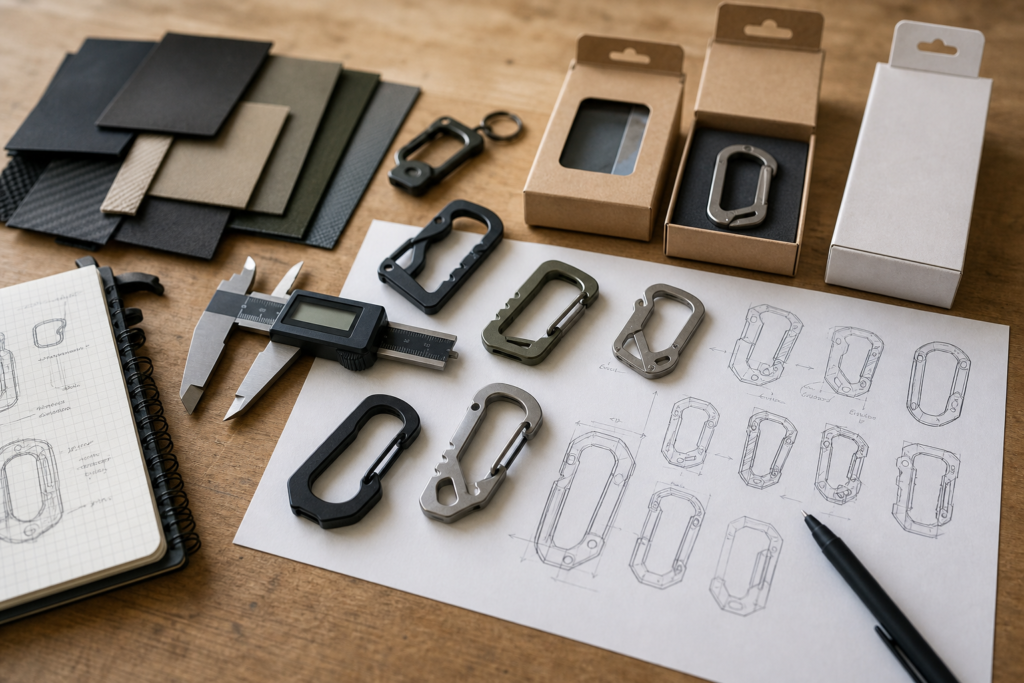
A carabiner-style multi-tool looks simple, but the wrong design can create weak function, confusing claims, or safety risk.
Buyers should develop carabiner-style and knifeless multi-tools by defining the carry role, target user, tool functions, material, gate type, size, finish, branding, packaging, safety wording, and QC checks. Accessory carabiners must not be presented as climbing or fall-protection equipment unless they meet the relevant certified requirements.
Quick buyer brief:
- Answer: A carabiner-style knifeless multi-tool is usually an EDC accessory that combines a clip shape with functions such as bottle opener, screwdriver, pry tip, wrench slot, bit holder, scissors, file, ruler, or package opener without a knife blade.
- Buyer context: This guide is for EDC brands, outdoor brands, tool brands, importers, wholesalers, distributors, private label buyers, and sourcing managers.
- Key checks: Accessory or safety-rated use, carabiner shape, gate design, material, finish, function list, knifeless definition, carry method, logo method, packaging, warnings, MOQ, target price, and inspection plan.
Planning a custom multi-tool project?
Send your function list, reference photo, target quantity, and budget range. Vast State can review materials, tooling, assembly, inspection, and packaging options.
When I work on a carabiner-style tool project, I first ask one question: is this product only an EDC accessory, or is the buyer trying to make safety equipment? Most private label EDC carabiner tools are accessories. They are useful for keys, bags, light hanging, small repairs, and daily convenience. They should not be marketed as climbing, fall protection, or load-bearing gear unless the buyer is building a certified safety product with the correct testing path.
What Does a Carabiner-Style Multi-Tool Actually Mean?
Some buyers use the word carabiner for any clip-shaped product. That can create dangerous confusion.
A carabiner-style multi-tool is usually an accessory tool with a gated clip shape and added EDC functions. It is not automatically climbing or fall-protection equipment.
I Separate Shape From Safety Category
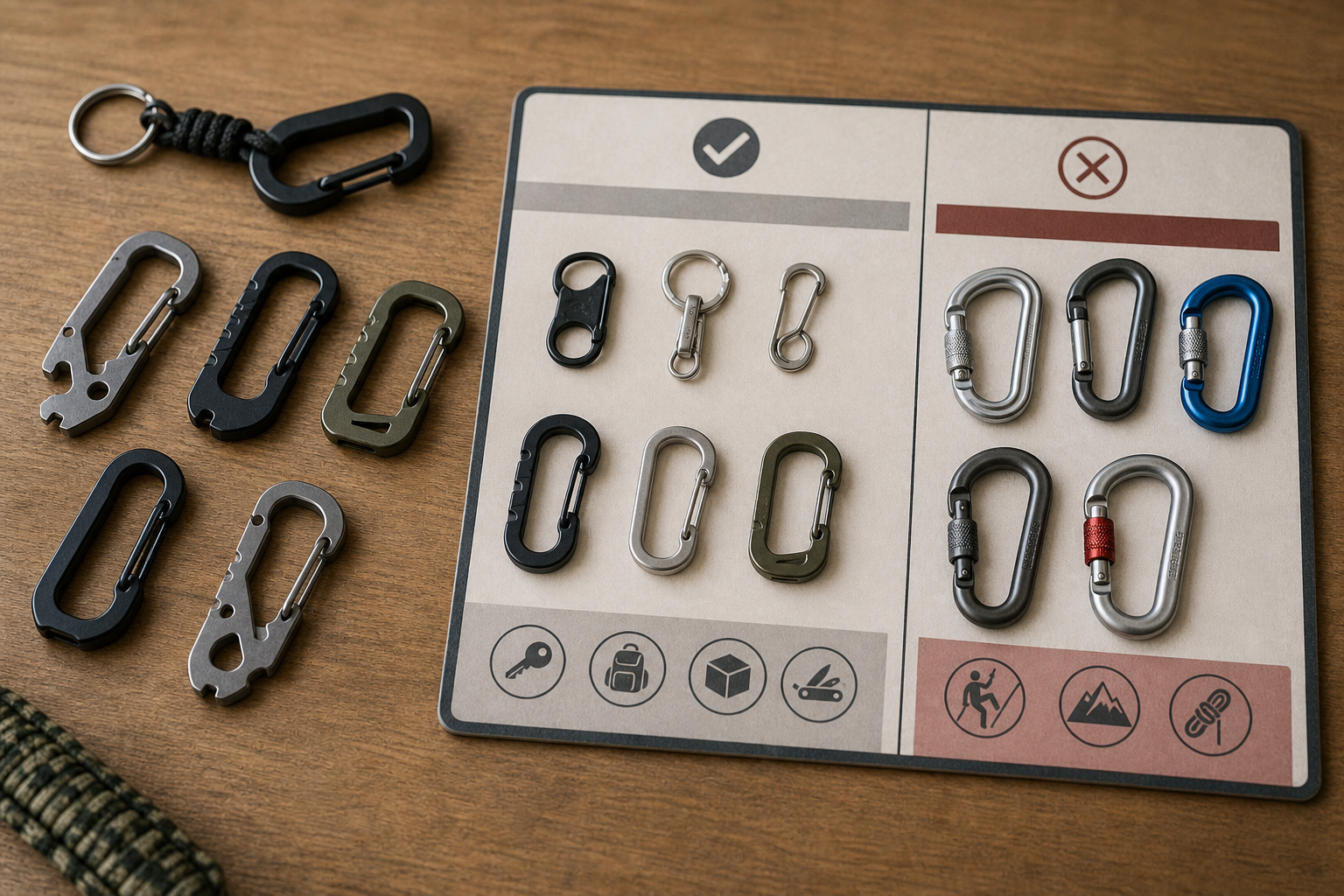
A carabiner shape can be used in many products. It can be a climbing connector, an industrial fall-protection connector, a keychain clip, a bottle opener, an EDC accessory, or a knifeless multi-tool. These products may look related, but they do not share the same requirements.
The UIAA standard for connectors or karabiners applies to climbing and mountaineering equipment. OSHA also has strict requirements for snaphooks and carabiners in personal fall protection systems, including automatic locking and strength requirements in that use context. These sources are important because they show why an accessory carabiner tool must not be casually described as load-bearing or safety-rated.
For most EDC projects, I define the product as a clip-shaped accessory tool. It can clip to keys, bags, belt loops, pouches, or gear loops for organization. It can include practical functions. But the packaging should clearly say "not for climbing" or "not for fall protection" when the product is not certified for those uses.
| Product type | Main purpose | Buyer warning |
|---|---|---|
| Accessory carabiner tool | EDC carry and small utility | Do not claim safety-rated use |
| Climbing connector | Mountaineering and climbing | Needs relevant certified path |
| Fall-protection carabiner | Workplace fall arrest systems | Must meet applicable safety rules |
| Keychain clip | Light carry organization | Avoid load-bearing claims |
OEM/ODM RFQ Checklist
Prepare these details to help Vast State review your project and provide a more accurate quotation.
| RFQ Field | What to Prepare |
|---|---|
| Project type | OEM from drawing / ODM private label / wholesale catalog |
| Product category | Folding knife / fixed blade / multi-tool / outdoor tool |
| Design status | Idea / sketch / 2D drawing / 3D CAD / physical sample |
| Target price | Ex-factory target price or retail price range |
| MOQ expectation | 500 / 1,000 / 3,000 / 5,000+ pcs |
| Logo method | Laser engraving / etching / printing / molded logo |
| Packaging | Standard packaging / custom retail box / Amazon-ready |
| Market | USA / EU / Japan / Korea / Middle East / other |
| Compliance needs | Buyer-specified testing / documentation / labeling |
| Timeline | Sample deadline / mass production deadline |
Why Do Buyers Choose Knifeless Multi-Tools?
A blade can add utility, but it can also limit channels, travel use, office use, and buyer comfort.
Buyers choose knifeless multi-tools to support daily utility without a knife blade. They can be easier to position for office, travel, promotional, and general EDC channels.
I Use Knifeless Design to Widen the Product Role
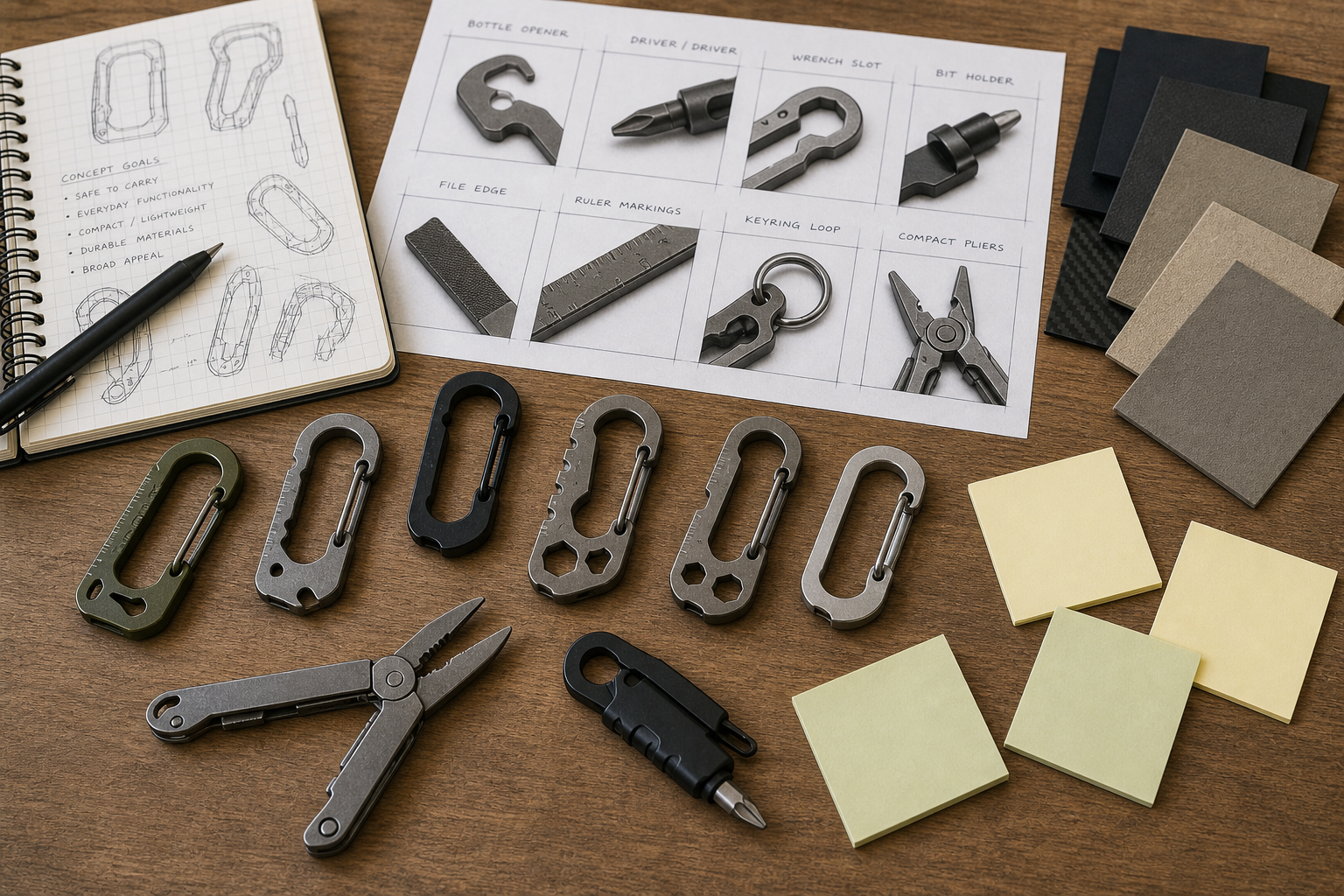
Knifeless does not mean functionless. A blade-free tool can still include a bottle opener, screwdriver, pry tip, wrench slot, bit holder, scissors, file, ruler, carabiner clip, package opener, SIM tool, or small plier function. The goal is to solve small daily problems while avoiding the product issues that come with a knife blade.
Some buyers choose knifeless tools for office channels. Some choose them for travel-related positioning. Some choose them for promotional gifts, outdoor accessories, keychain tools, or corporate merchandise. A knifeless product can look less aggressive and may be easier to explain to broad customers. However, buyers should not assume it is unrestricted everywhere. Scissors, sharp package openers, pry edges, and tools with pointed tips can still raise platform or local-market questions.
The CCOHS hand tool guidance advises choosing the right tool, using tools correctly, inspecting tools, and storing tools properly. That thinking applies to knifeless multi-tools too. The product should be positioned around proper small tasks, not as a replacement for full-size tools.
| Reason for knifeless design | Buyer benefit | Watch point |
|---|---|---|
| Office-friendly positioning | Less aggressive product image | Still needs safe-use wording |
| Travel or commute concept | Broader use story | Check channel and market rules |
| Promotional gifting | Simple value and logo space | Avoid weak functions |
| EDC accessory line | Lightweight daily carry | Keep tool count realistic |
Which Carabiner Shapes Fit EDC Accessory Projects?
The carabiner outline affects grip, gate feel, logo space, and how the tool hangs from gear.
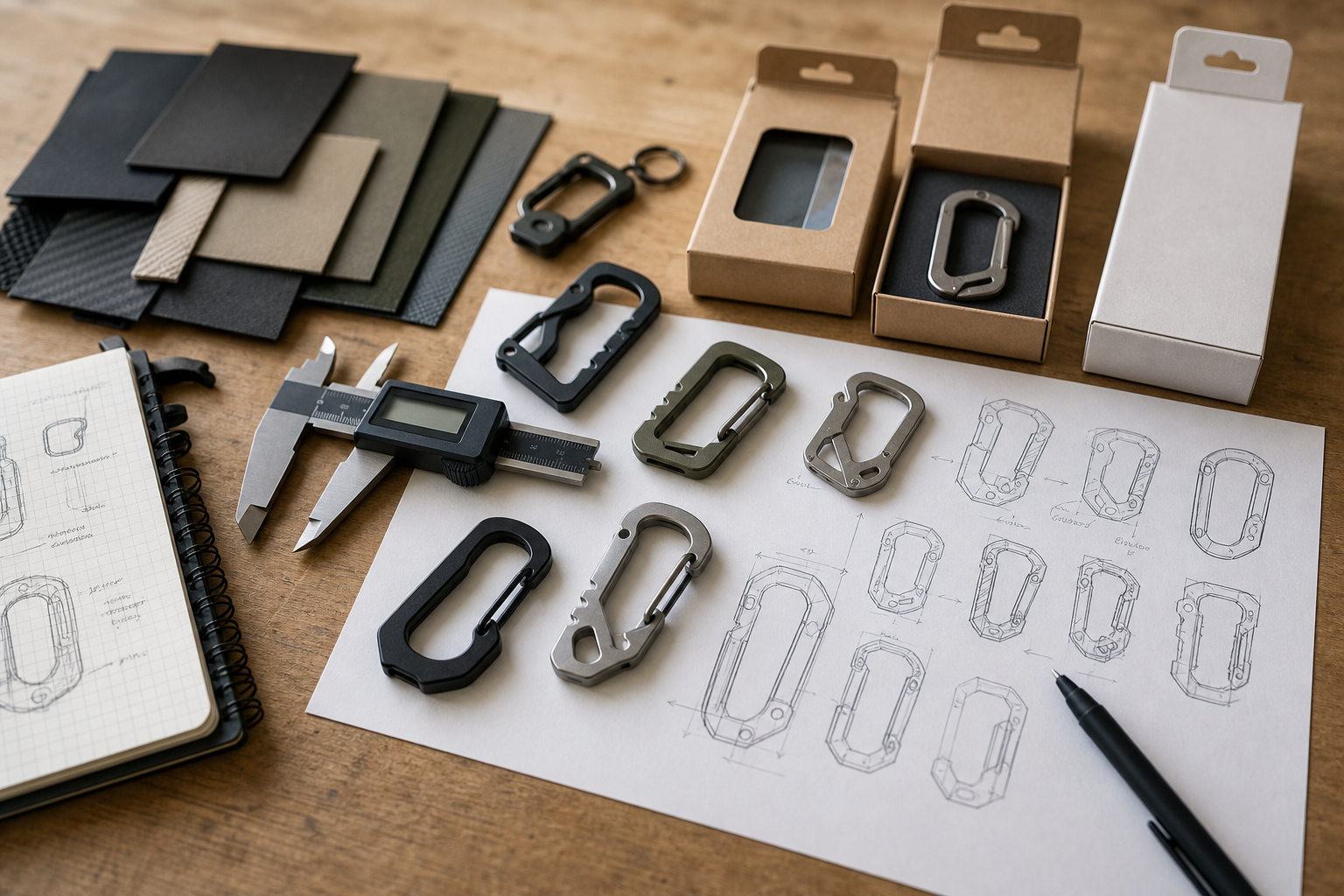
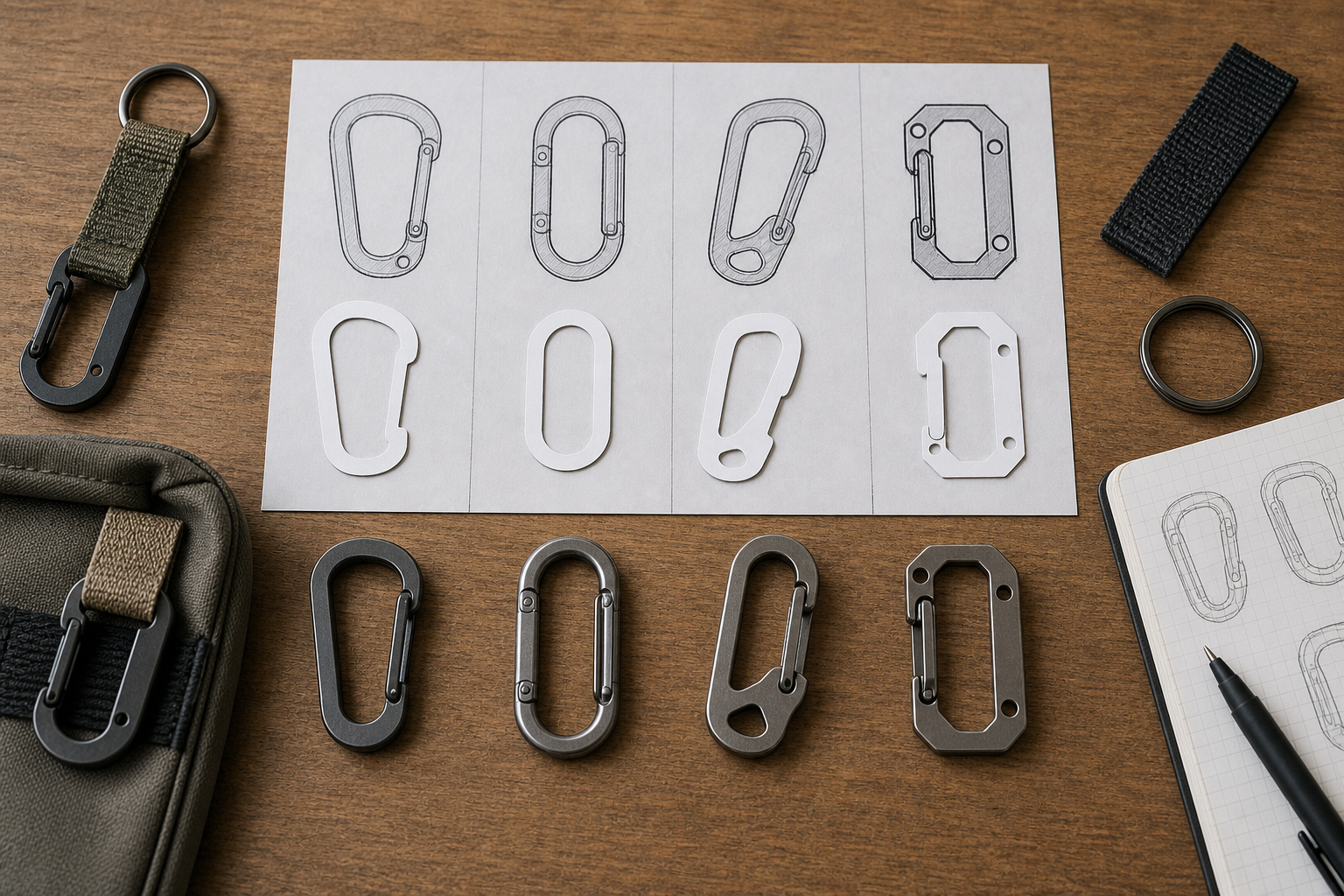
Common accessory carabiner shapes include D-shaped, oval-style, asymmetric, compact keychain, flat plate, and integrated frame designs. The right shape depends on carry role and functions.
I Choose the Shape Around Carry and Function Layout
A D-shaped accessory carabiner can feel familiar and can work well for bag or key carry. An oval-style frame may give balanced hanging. An asymmetric shape can leave more room for a tool function or logo. A flat plate carabiner can be easier to machine and can provide space for wrenches, openers, or branding. A compact keychain shape is useful when weight is the main concern.
The shape should not be chosen only by appearance. The gate opening must be useful. The tool should not twist awkwardly on a keyring. The edges should not damage straps or pockets. The frame should have enough thickness around functional cutouts. A wrench slot or bottle opener can weaken the frame if it is placed badly.
For OEM projects, I also check whether the shape can be produced consistently. A simple flat profile may suit lower MOQ or cost-sensitive projects. A more sculpted form may look better but may require more machining, finishing, or tooling work.
| Shape type | Best fit | Development concern |
|---|---|---|
| D-shaped accessory clip | Bags and key carry | Gate clearance and frame strength |
| Oval-style clip | Balanced hanging | Less logo space |
| Flat plate carabiner | Wrench, opener, branding | Edge finishing |
| Compact keychain clip | Lightweight EDC | Limited function space |
What Functions Work Best Without a Knife Blade?
Adding every small function can make the tool confusing, uncomfortable, and weak.
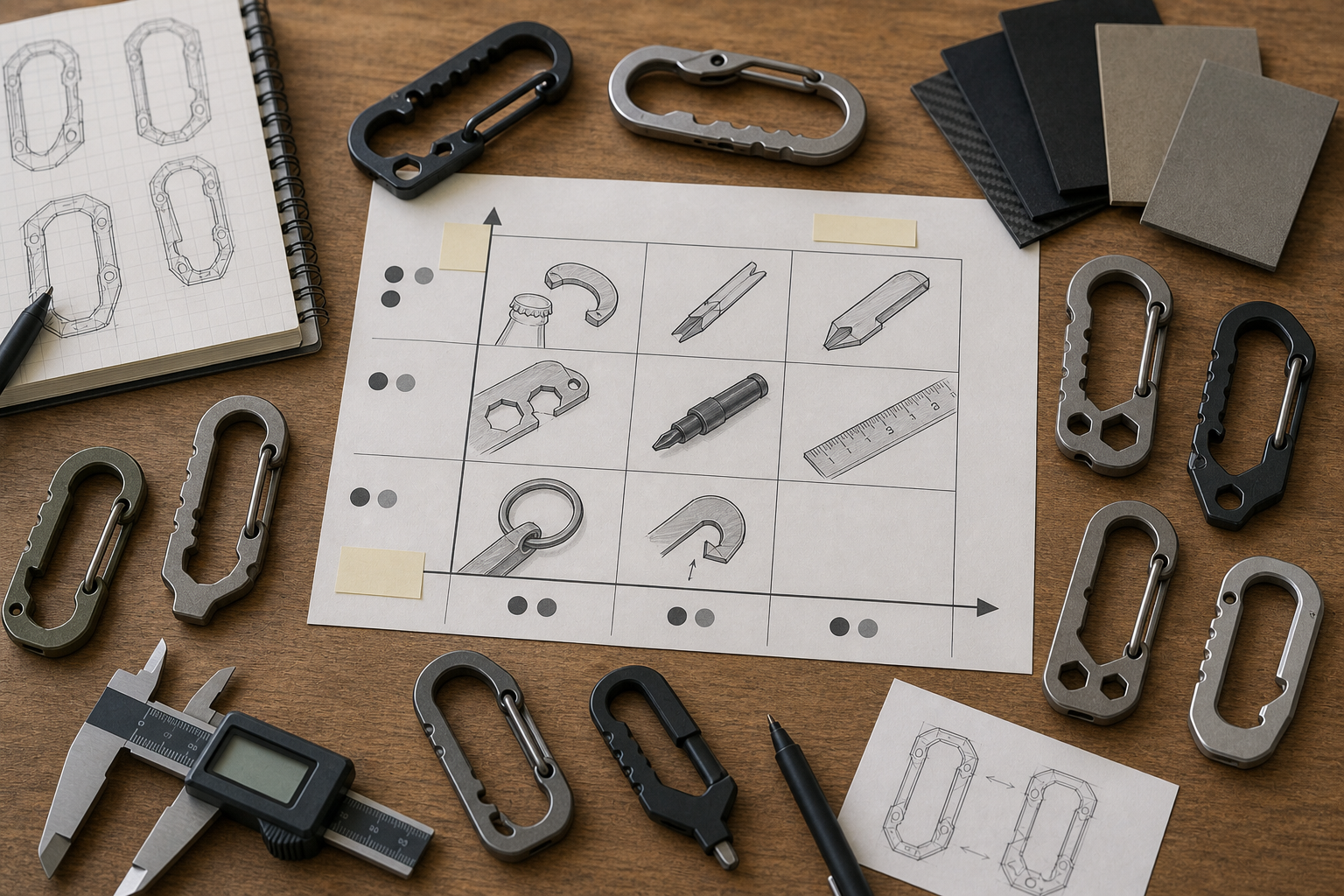
Good knifeless multi-tool functions include bottle opener, screwdriver, pry tip, wrench slots, bit holder, scissors, file, ruler, package opener, keyring, and clip functions.
I Rank Functions by Daily Use Frequency
For a knifeless carabiner tool, I like functions that are obvious, durable, and easy to explain. A bottle opener is simple and common. A flat driver can be useful if the tip shape is strong enough. A small pry tip can help with light tasks, but it should not be promoted as a heavy pry bar. Wrench slots can look useful, but they need accurate sizes and enough frame thickness. A bit holder can add flexibility, but retention must be controlled.
Scissors can be valuable in knifeless tools, but they add moving parts and need careful alignment. A file can help with small tasks, but it needs a texture that does not hurt carry comfort. A package opener can be useful, but it should be shaped and worded carefully so it is not treated like a knife blade.
I usually separate functions into core, support, and decorative. Decorative functions are risky. They make the product look busy but do not help users. A clean, durable 4-function tool may be better than a weak 12-function tool.
| Function | Practical value | Buyer check |
|---|---|---|
| Bottle opener | Easy daily utility | Edge and leverage |
| Screwdriver | Small repairs | Tip strength and reach |
| Wrench slots | Bike or gear tasks | Accurate sizing and frame strength |
| Scissors | Office or travel utility | Alignment and spring feel |
| Bit holder | Flexible repair use | Bit retention and packaging |
How Should Buyers Separate Accessory and Safety-Rated Claims?
This is the most important issue in carabiner-style products. A wrong claim can be dangerous.
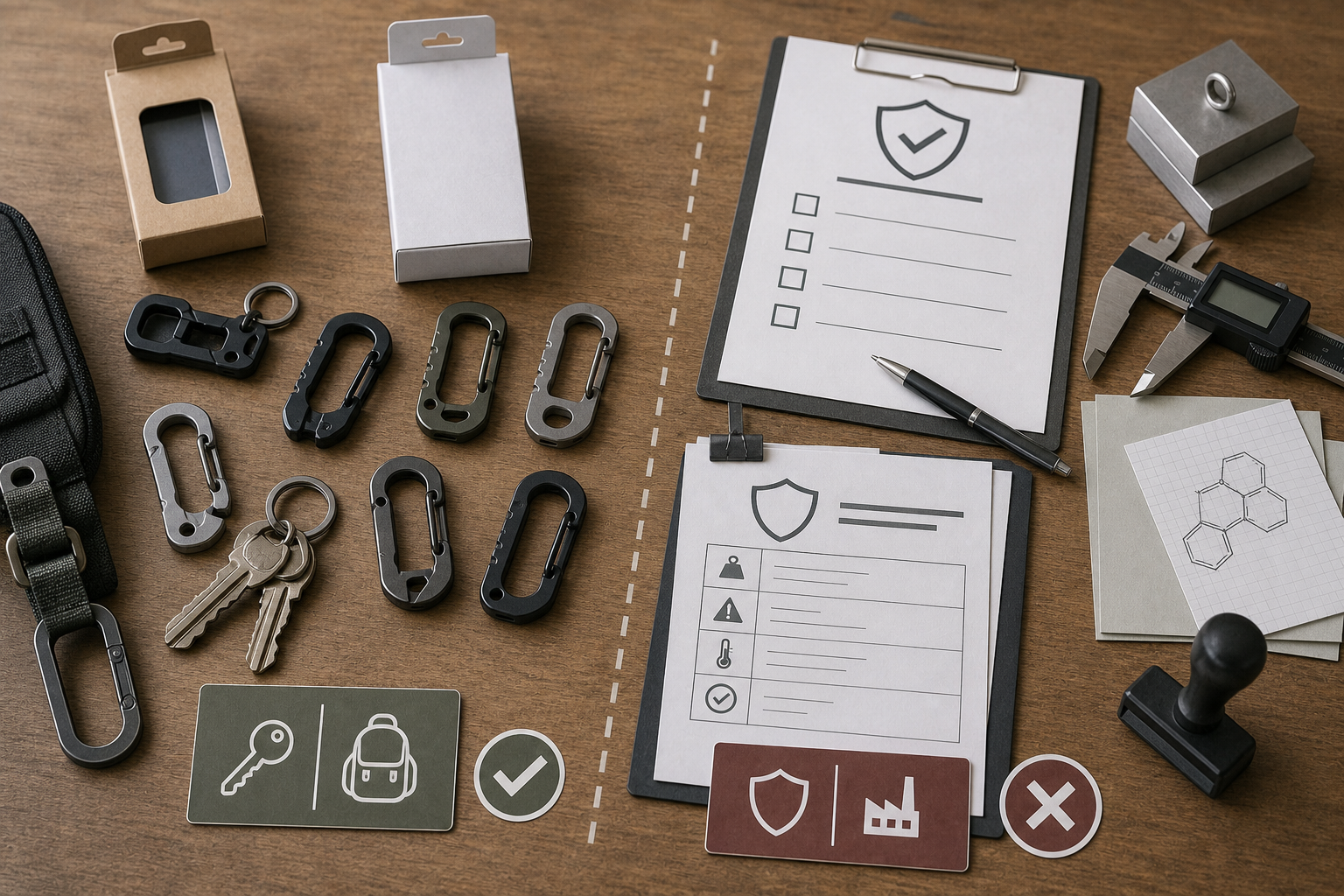
Buyers should clearly separate accessory carabiner tools from safety-rated connectors. If the product is not certified for climbing or fall protection, packaging should state that clearly.
I Put the Safety Boundary in the Product Brief
If the buyer wants an accessory carabiner tool, I treat it as an accessory from the start. That means the design, testing, packaging, and sales copy should not imply life-safety use. The product can carry keys, hold small accessories, clip to bags, and support light utility functions. It should not be used for climbing, fall arrest, towing, lifting, or human support.
If the buyer wants a climbing connector or industrial safety connector, that is a different product category. The UIAA connector standard and OSHA fall-protection requirements show how serious this category is. A safety connector may need specific materials, locking systems, strength tests, markings, traceability, and certified quality procedures. That is not the same as a promotional carabiner tool.
For most EDC and outdoor accessory buyers, the safest path is clear wording. Use phrases such as "accessory tool" and "not for climbing" when appropriate. Avoid load ratings unless the product has been tested and those ratings are relevant to the intended non-life-safety use.
| Claim type | Safe for accessory products? | Buyer action |
|---|---|---|
| Keychain or bag clip | Yes, if realistic | Keep load claims modest |
| Climbing connector | No, unless certified | Use certified design and testing |
| Fall-protection connector | No, unless compliant | Follow applicable safety standards |
| Light utility tool | Yes | Explain functions clearly |
How Do Materials and Finishes Affect Carabiner-Style Tools?
The material choice controls strength feel, weight, finish quality, cost, and user confidence.
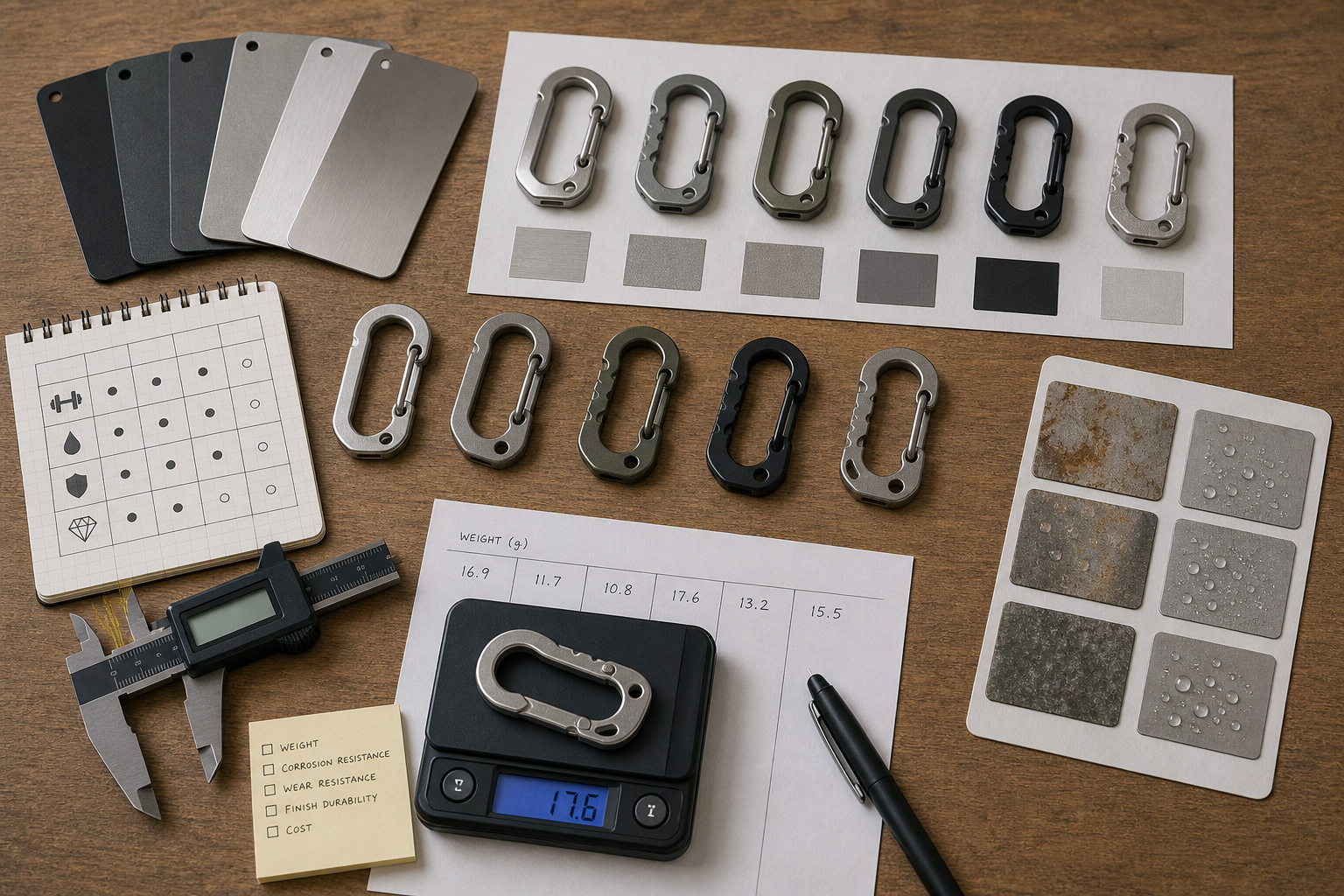
Materials and finishes should be selected by tool function, frame thickness, gate design, corrosion need, carry wear, branding method, and target price.
I Match Material to Function, Not Only Style
Stainless steel can make an accessory tool feel solid and corrosion resistant, but it can add weight. Aluminum can reduce weight and support anodized colors, but the tool edges and wear points need careful review. Some buyers ask for premium materials, but the material must match the price target and function requirement. For simple keychain tools, cost and finish stability may matter more than material prestige.
Finishes affect both appearance and carry wear. Bead blast can look clean but may show marks. Stonewash can hide small scratches. Black coatings can create a strong product look, but wear on edges and contact points should be expected. Anodizing can add color to aluminum, but color consistency needs batch control.
Logo method should be tested on the final finish. Laser marking, etching, engraving, stamping, and printed packaging all behave differently. A logo on a flat plate tool may be easy. A logo near a curved gate or functional cutout may be harder to keep clean.
| Material or finish | Benefit | Watch point |
|---|---|---|
| Stainless steel | Solid feel and corrosion resistance | Weight and edge finishing |
| Aluminum | Light carry and color options | Wear and anodizing consistency |
| Stonewash | Hides small carry marks | Match brand style |
| Black coating | Strong visual identity | Edge wear over time |
What Size, Gate, and Carry Details Matter?
A carabiner tool fails if it clips badly, pinches fingers, or hangs awkwardly.
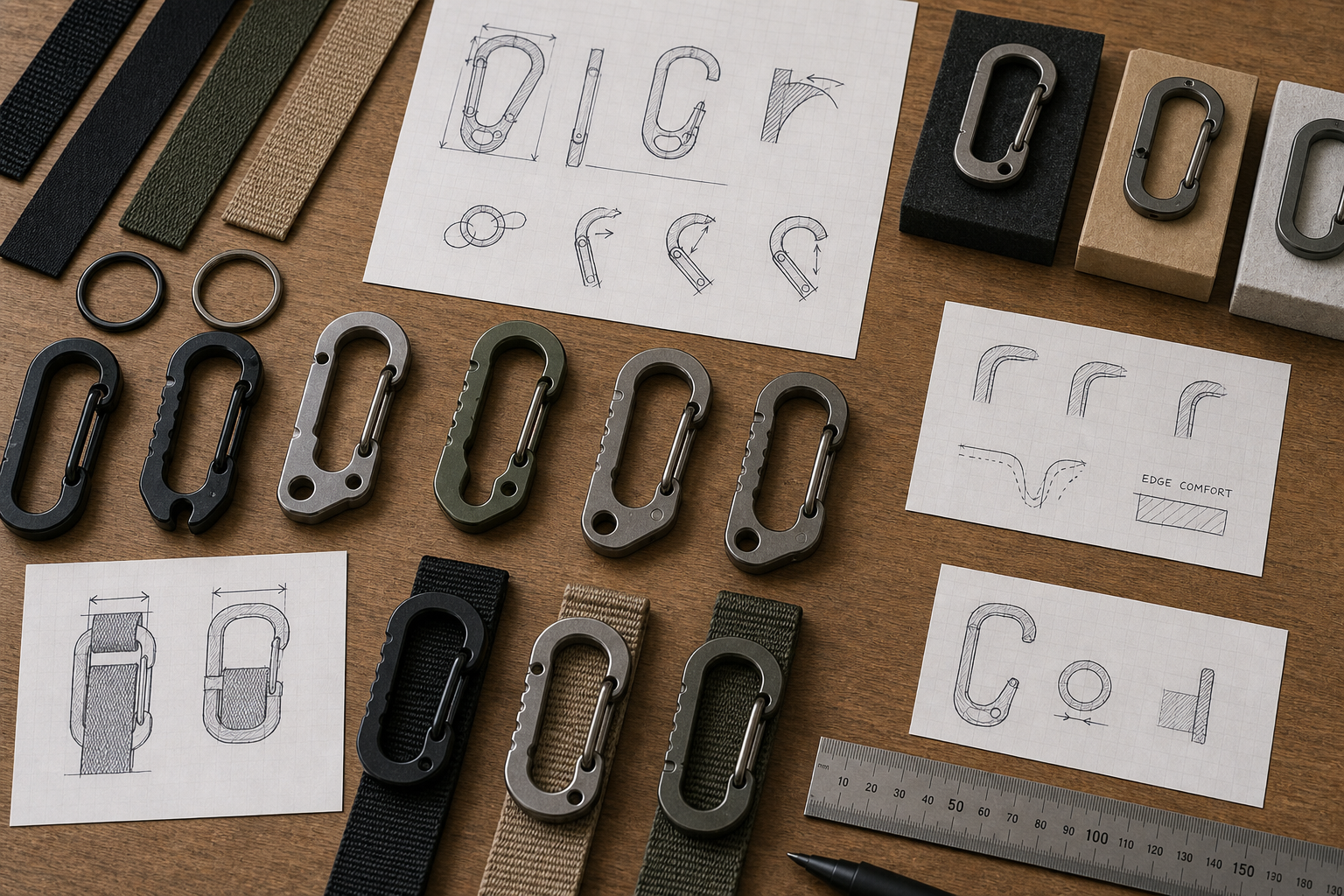
Size, gate, and carry details should be planned around hand access, clip opening, gate spring tension, keyring fit, bag attachment, edge chamfer, pocket comfort, and tool orientation.
I Test the Clip Before I Approve the Tool
The gate is the heart of a carabiner-style accessory. It should open smoothly, close reliably, and not catch too easily on fabric or straps. A very stiff gate can annoy users. A weak gate can feel cheap or unreliable. A small gate opening can make the tool hard to attach to bags or loops. A large gate opening can reduce frame space for functions.
The tool should also hang in a predictable way. If the bottle opener or screwdriver points into the user's hand during carry, it may feel uncomfortable. If a wrench cutout creates sharp edges, it can scratch gear. If a keyring hole is placed poorly, the tool can rotate awkwardly.
Carry details often decide user satisfaction. A product photo may look fine, but the real sample may feel too thick, too sharp, or too hard to clip. I always prefer checking physical samples for gate tension, edge finish, keyring movement, and hand feel.
| Detail | Why it matters | Buyer check |
|---|---|---|
| Gate tension | User confidence and ease | Open and close feel |
| Gate opening | Attachment convenience | Bag loop and keyring fit |
| Edge chamfer | Comfort and finish | Avoid sharp carry points |
| Tool orientation | Practical use | Function access while carried |
How Should Function Layout and Ergonomics Be Planned?
Small flat tools can become painful if every edge becomes a function.
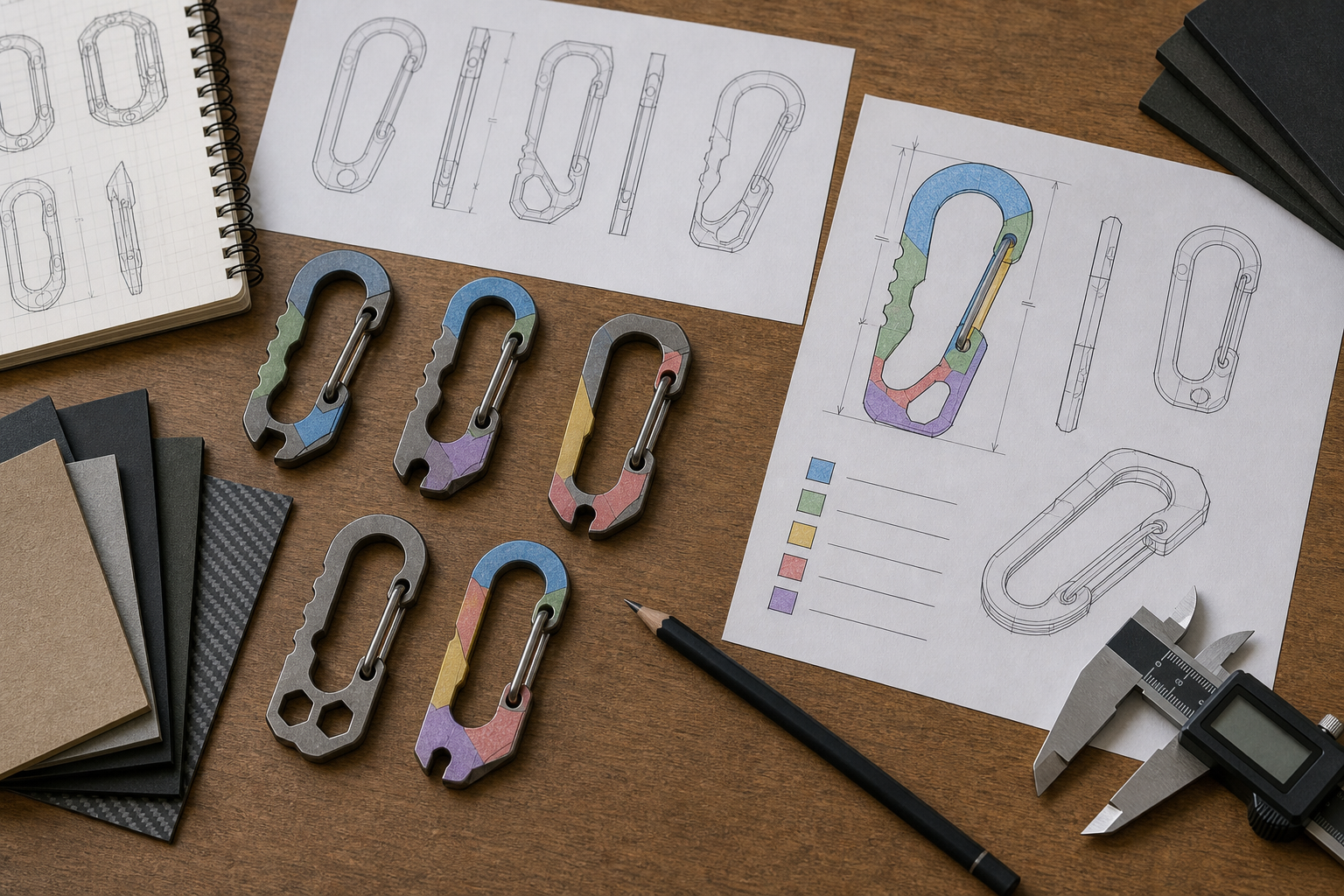
Function layout should leave enough grip area, avoid sharp pressure points, protect the gate, maintain frame strength, and keep each tool easy to identify.
I Protect the Frame From Overdesign
Every cutout removes material. A wrench slot, opener, pry area, bit holder, or screwdriver notch can weaken the frame if placed carelessly. A flat plate tool should not become a collection of holes with no structure left. I usually look for clean function zones: one area for clipping, one area for grip, one area for tool use, and one area for branding.
Ergonomics are simple but important. The user needs somewhere to press. If the bottle opener forces the user to press on a sharp edge, the product feels bad. If the screwdriver tip is too close to the gate, it may be awkward to use. If a pry tip is too thin, it may bend or break. If the tool edges are not chamfered, the product can scratch hands or pockets.
For multi-part knifeless tools, such as scissors or plier-based designs, layout becomes more complex. Springs, pivots, spacers, and stop points must all work correctly. More functions mean more inspection points and more assembly time.
| Layout issue | User result | Development action |
|---|---|---|
| Too many cutouts | Weak frame or sharp feel | Reduce functions |
| Poor grip zone | Uncomfortable use | Leave hand contact area |
| Bad function placement | Awkward tool access | Test physical samples |
| Small moving parts | Assembly variation | Add QC checkpoints |
What Safety and Market Wording Should Buyers Use?
Bad wording can turn a useful accessory into a risky product claim.
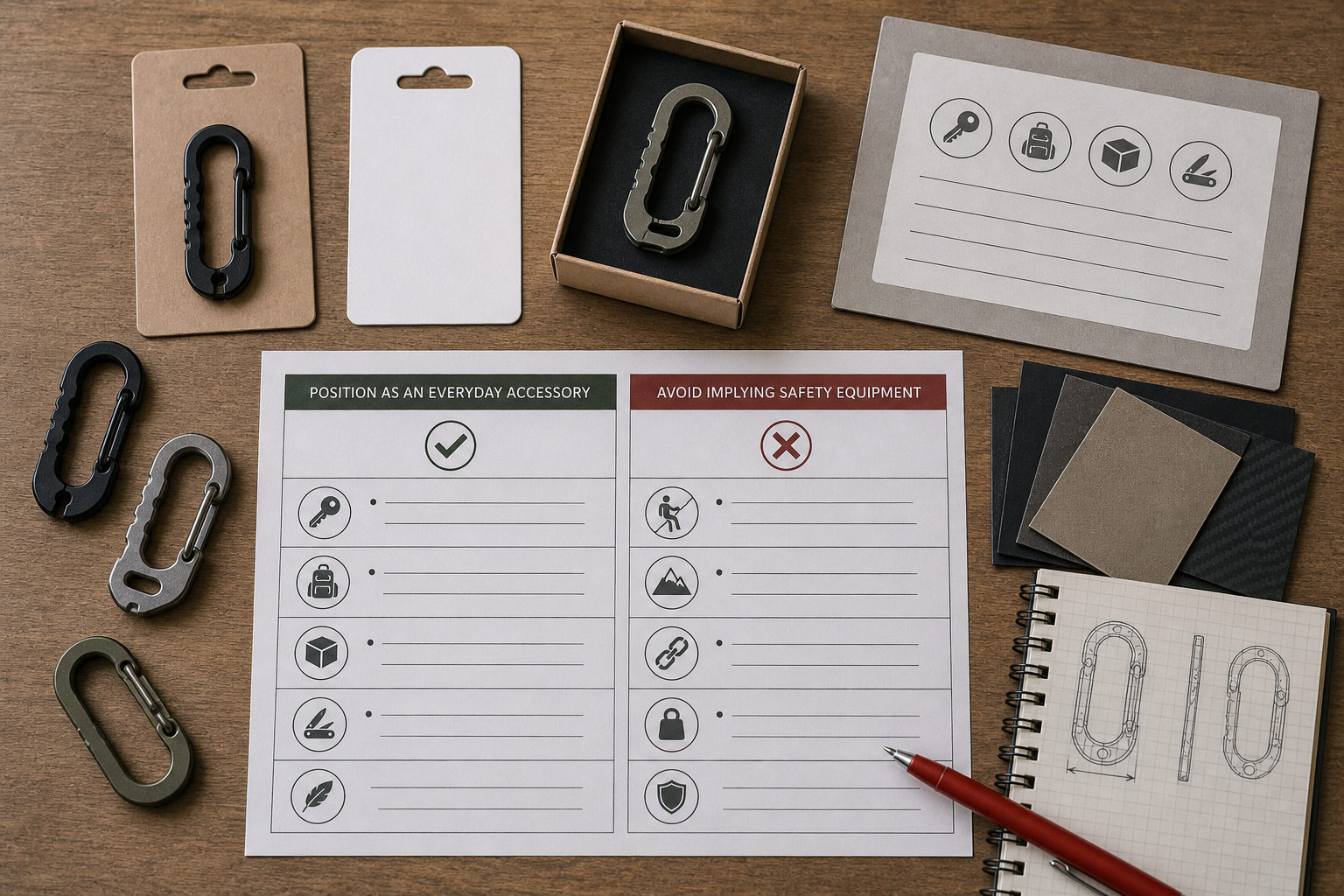
Safety and market wording should describe the tool as an accessory or utility product, explain proper use, and avoid climbing, fall-protection, lifting, weapon, or over-strength claims.
I Keep the Language Clear and Conservative
For accessory carabiner tools, I recommend plain wording. The product can be described as an EDC accessory, keychain tool, bag clip, bottle opener, screwdriver tool, or knifeless multi-tool. If it is not safety-rated, the packaging should not use climbing imagery, fall-protection language, lifting claims, or load-bearing claims. A simple "not for climbing" warning is often important for accessory products.
Knifeless wording also needs care. If the product has scissors, a package opener, pointed tool, or sharp edge, buyers should still include safe-use language. Knifeless does not mean risk-free. The user should understand storage, inspection, cleaning, and proper task limits.
Market rules can vary by country, sales platform, and channel. A no-blade tool may be easier to position in some markets, but buyers should still check local requirements. I do not treat this as legal advice. I treat it as product-development caution that should be handled early.
| Wording area | Recommended direction | Avoid |
|---|---|---|
| Product role | EDC accessory or utility tool | Climbing or fall-protection claims |
| Function claims | Light daily tasks | Heavy-duty overclaims |
| Safety note | Proper use and inspection | Silent packaging |
| Knifeless claim | No knife blade | Claiming no restrictions everywhere |
What Quality Checks Protect Carabiner and Knifeless Tool Orders?
One attractive sample does not guarantee consistent gates, clean edges, or useful functions in mass production.
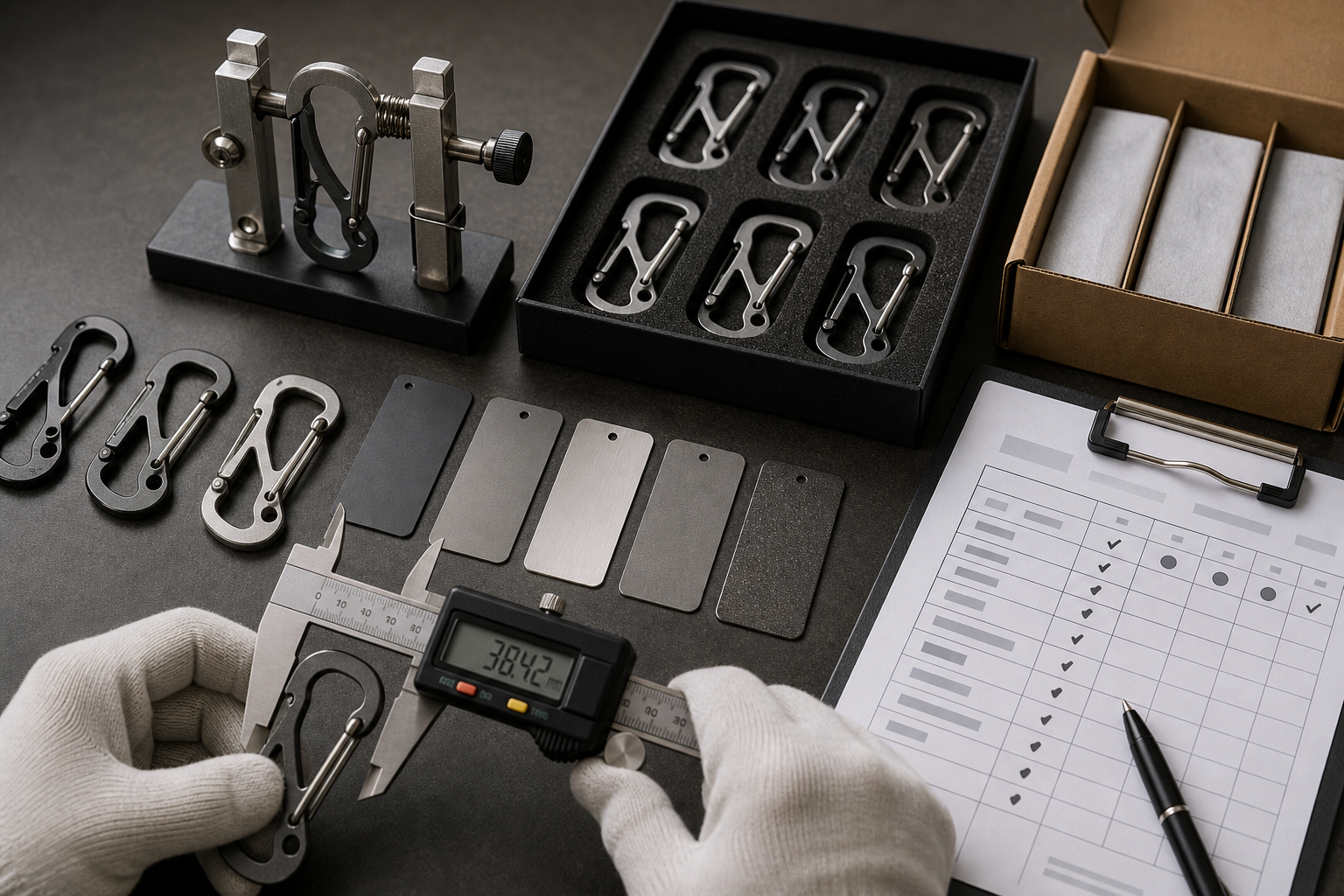
QC should check material, dimensions, gate action, spring tension, edge finish, function accuracy, surface finish, logo clarity, accessory fit, packaging completeness, and warning labels.
I Build QC Around the User Complaint List
For carabiner-style tools, users may complain that the gate feels weak, the edge is sharp, the finish scratches too easily, the opener does not work, the screwdriver bends, the wrench slot is inaccurate, the keyring hole is awkward, or the logo wears quickly. Each of these complaints should become an inspection point.
For knifeless multi-tools with moving parts, I also check pivots, scissors action, spring tension, screw security, tool play, and closed safety. The more functions a buyer adds, the more detailed the QC checklist should be.
ISO describes ISO 9001 as a quality management standard focused on customer expectations and quality management systems. I use that process mindset here. Quality should not depend only on final inspection. It should include incoming material checks, in-process checks, assembly checks, and final packing checks.
| QC stage | What to check | Why it matters |
|---|---|---|
| Incoming material | Steel, aluminum, springs, screws | Prevent weak inputs |
| In-process | Cutouts, holes, gate fit, finish | Catch defects early |
| Functional check | Gate, opener, driver, scissors | Protect user experience |
| Final check | Logo, packaging, warning label | Support sellable quality |
What Should Buyers Include in a Carabiner Multi-Tool RFQ?
A vague RFQ creates unclear pricing because accessory and safety-rated carabiners are different product categories.
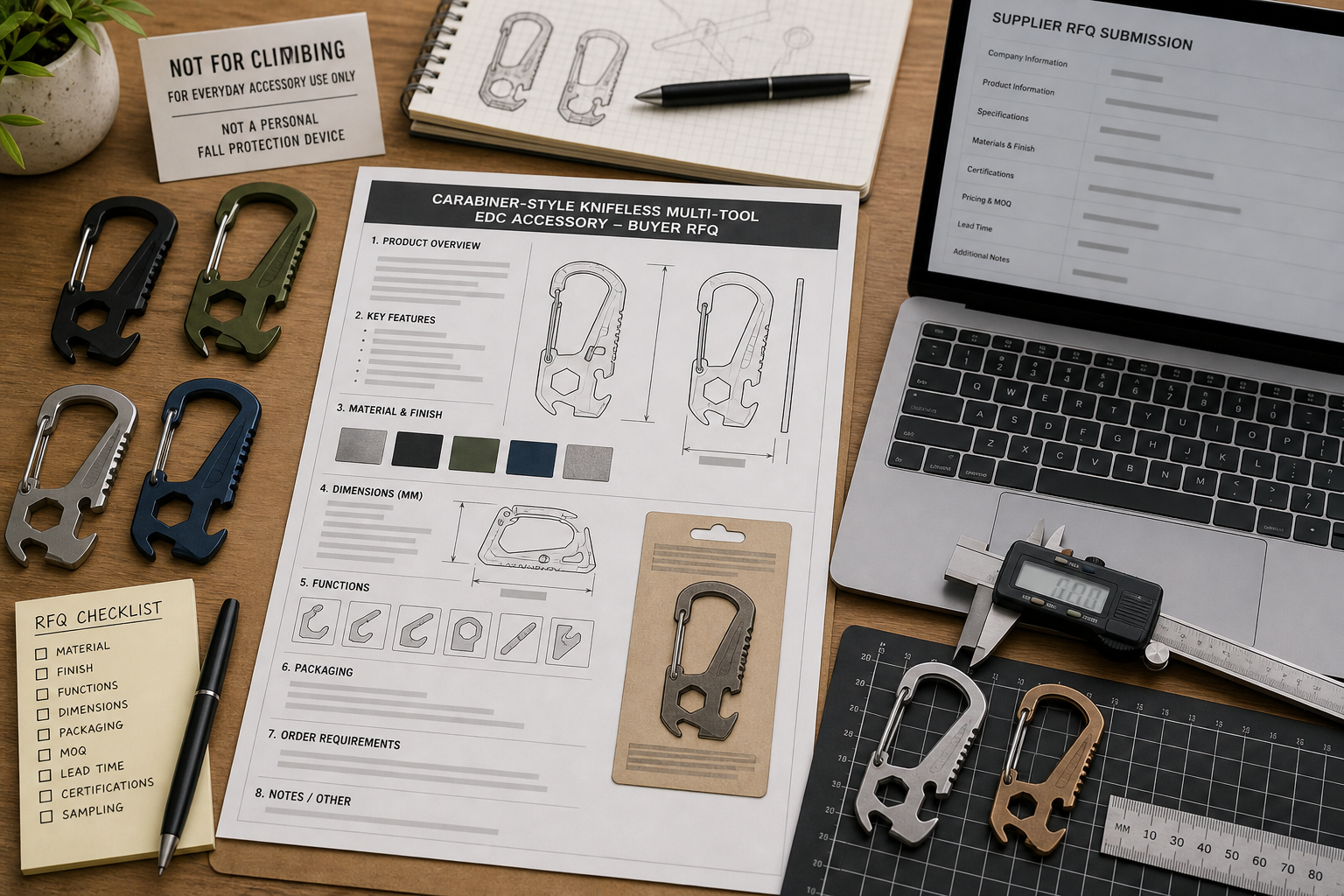
An RFQ should state accessory or safety-rated intent, target user, functions, size, material, gate type, finish, logo, packaging, warnings, MOQ, target price, and QC expectations.
I Need the Safety Category Before I Quote
The first RFQ question should be simple: is this an accessory product or certified safety equipment? If it is an accessory, the design can focus on EDC utility, carry, branding, and cost. If it is safety equipment, the project needs a completely different compliance and testing path. Most EDC brand requests are accessory projects.
For an accessory carabiner tool, the RFQ should include the target user, carry method, required functions, optional functions, material, thickness, gate type, spring requirement, finish, logo method, packaging, warning text, MOQ, target price, and sample deadline. If the buyer wants a knifeless multi-tool, the RFQ should clearly state which functions replace the blade.
Packaging details matter. A simple polybag, card, retail box, pouch, instruction card, or gift set will change the quote. If the buyer sells through a marketplace, barcode labels and warning text may also matter.
| RFQ item | Why it helps | Example |
|---|---|---|
| Product category | Prevents wrong assumptions | Accessory, not climbing |
| Function list | Defines structure and cost | Opener, driver, wrench, scissors |
| Gate and material | Controls user feel | Wire gate, solid gate, steel, aluminum |
| Packaging | Controls landed value | Card, box, pouch, instruction |
How Can Vast State Support These Projects?
Buyers often need help turning a small accessory idea into a real manufacturable product.
Vast State can support carabiner-style and knifeless multi-tool projects through concept review, function planning, material selection, prototype follow-up, branding, packaging, and QC planning.
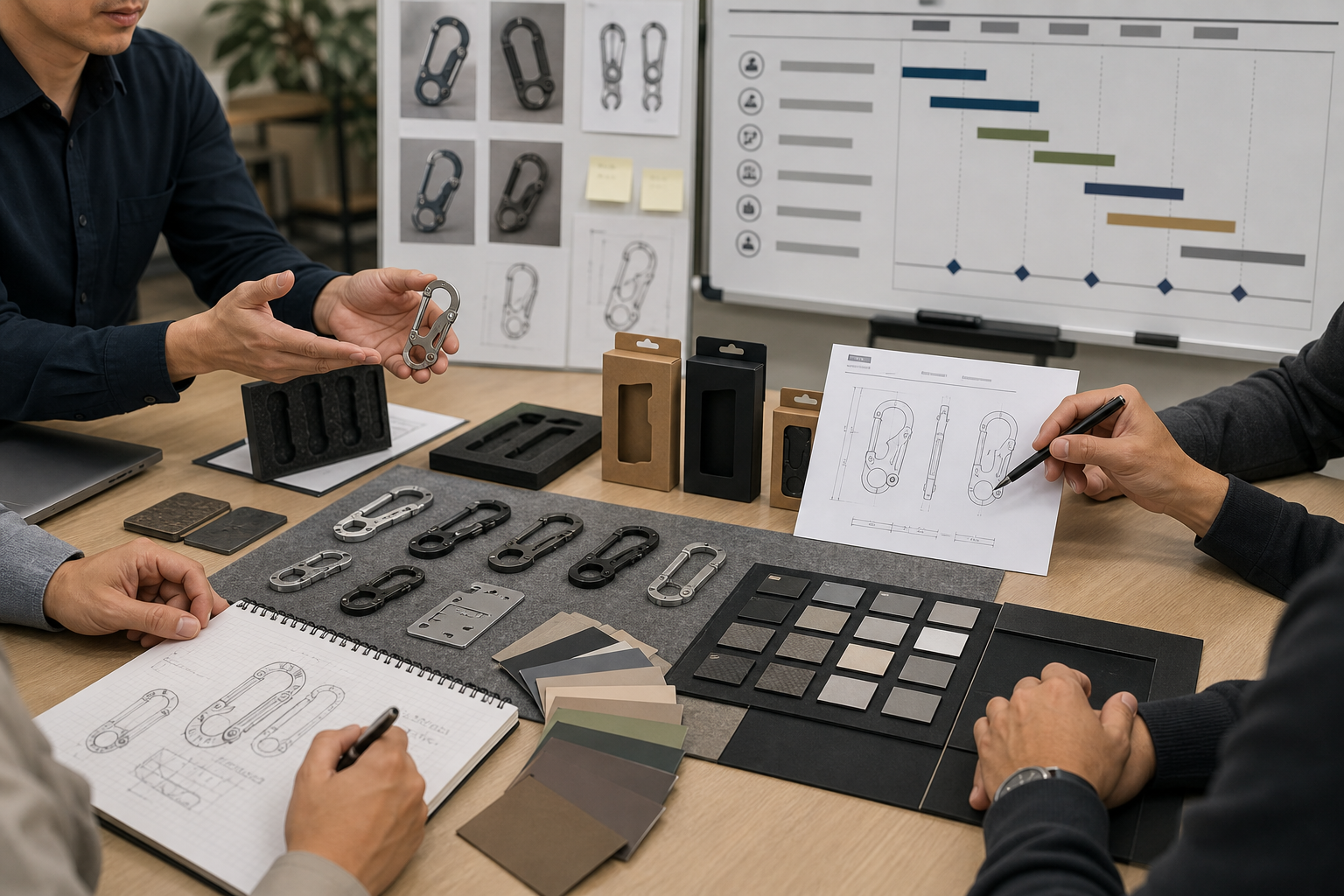
I Help Buyers Keep the Product Useful and Honest
Vast State works with international B2B customers on folding knives, fixed blade knives, pocket knives, camping tools, rescue tools, and multi-tools. For carabiner-style and knifeless multi-tool projects, I focus on practical product development. The product should be easy to carry, useful in real tasks, clear in its claims, and stable in production.
If a buyer has only a rough idea, I can help narrow the function list and shape. If a buyer already has a drawing, I can review manufacturability, frame strength, gate design, material, finish, logo placement, and packaging. If the buyer wants to avoid knife blades, I can suggest practical substitute functions that still make the product valuable.
I also help buyers avoid category confusion. An accessory carabiner tool should be marketed as an accessory. A safety-rated connector is a different project. Clear product boundaries protect the buyer's brand and help the final product fit its real market.
| Support area | What I review | Buyer benefit |
|---|---|---|
| Concept review | Accessory role and target user | Clearer product direction |
| Function planning | Useful knifeless features | Less feature overload |
| Engineering feedback | Gate, frame, material, finish | Better manufacturability |
| Packaging and QC | Warning text and inspection points | More dependable execution |
Ready to develop a custom multi-tool?
Send your function list, reference photo, target quantity, and budget range. Vast State can help turn it into a manufacturable OEM/ODM specification.
Conclusion
A good carabiner-style knifeless multi-tool is useful, honest, clearly positioned as an accessory when appropriate, and controlled carefully in production.