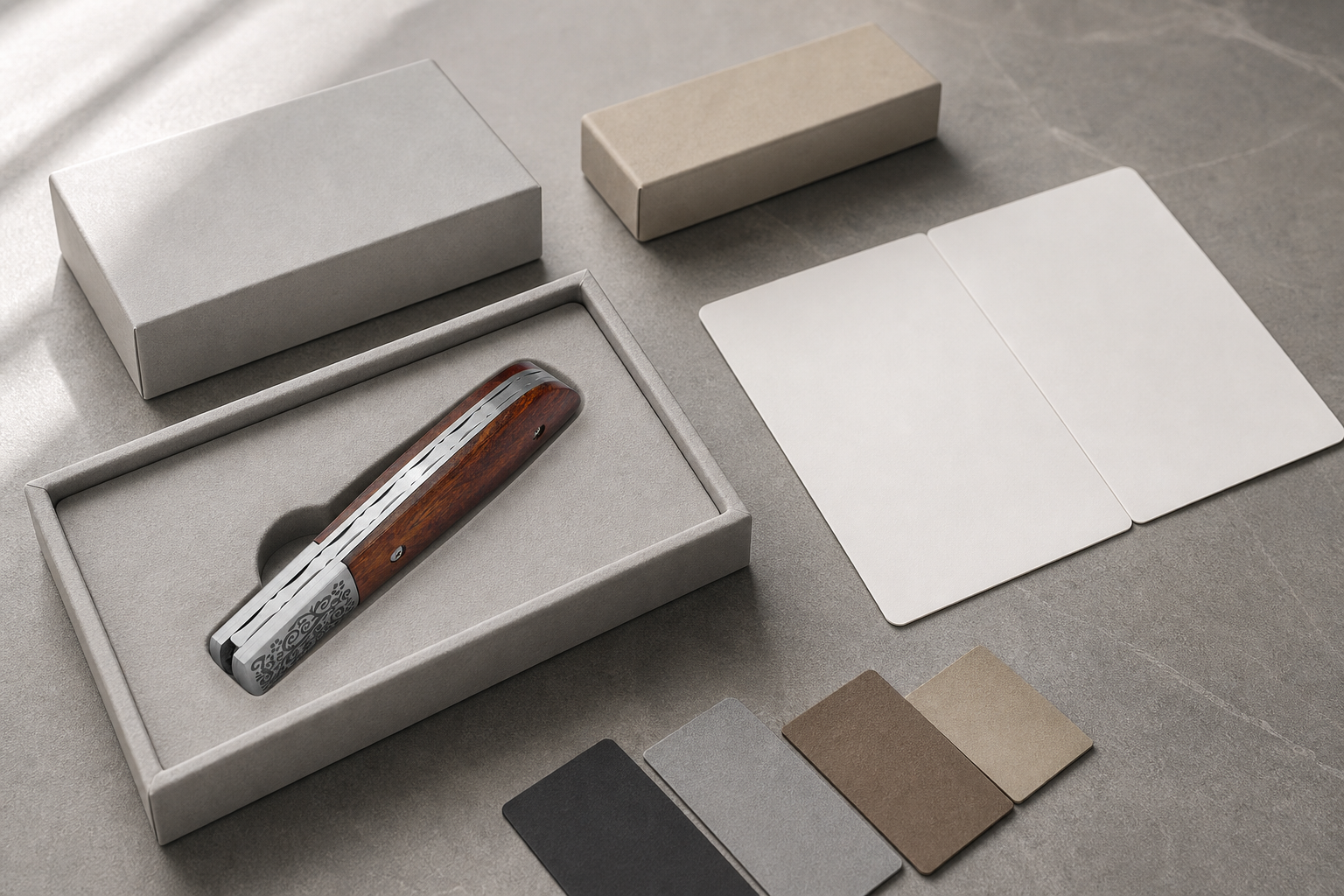
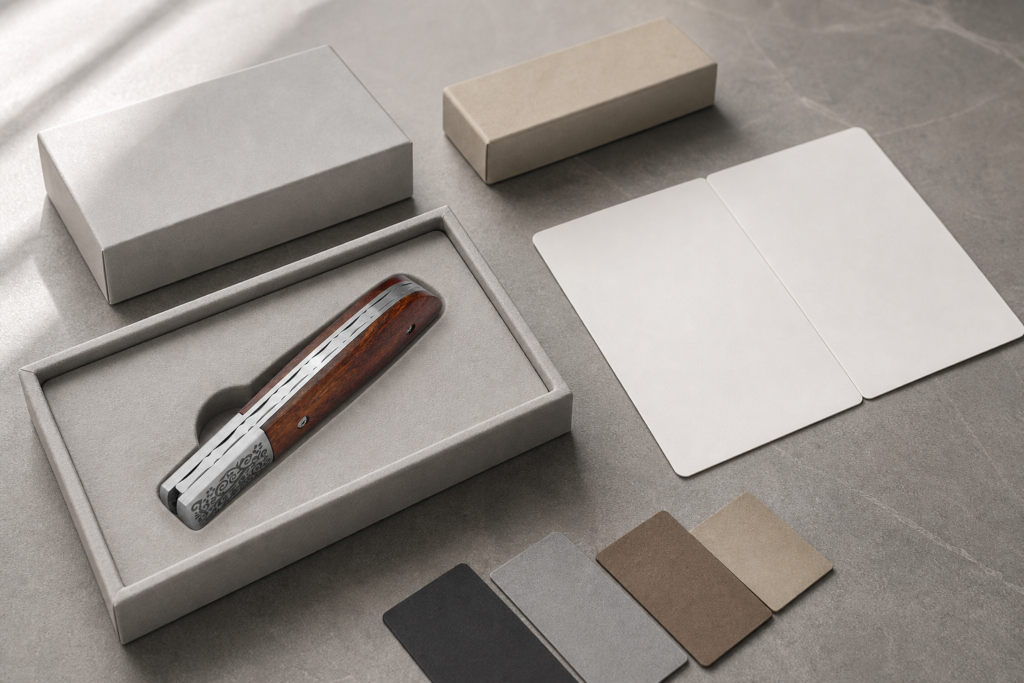
Many buyers compare folding knives and fixed blades too broadly. That can lead to the wrong product for the wrong channel.
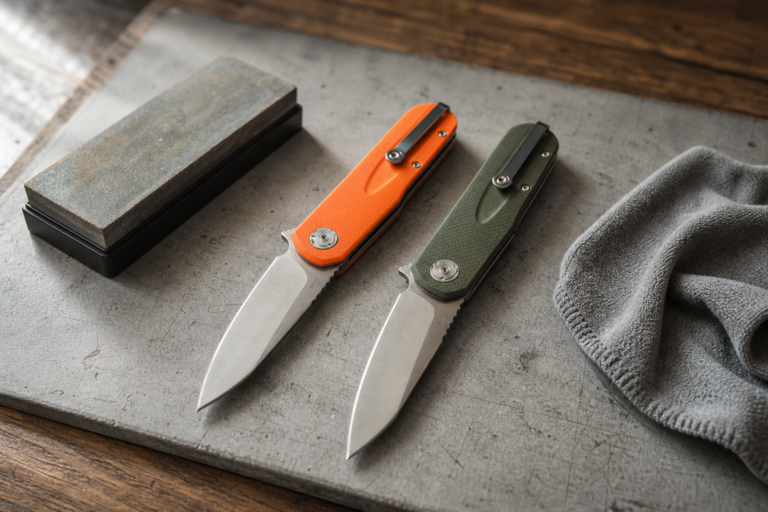
EDC folding pocket knives are often a better fit when buyers need compact carry, safe closed storage, pocket-clip convenience, everyday utility positioning, lower packing volume, and broad private label options. Fixed blades may still be better for heavy outdoor tasks, so buyers should choose by user, use case, market, and production target.
Quick buyer brief:
- Answer: EDC folding pocket knives are not universally better than fixed blade knives. They are better for many everyday carry projects because they close into the handle, carry more easily, and support compact utility positioning.
- Buyer context: This guide is for knife brands, EDC brands, outdoor gear brands, importers, wholesalers, distributors, private label buyers, and sourcing managers.
- Key checks: User scenario, carry method, blade length, lock style, opening method, closed safety, handle material, pocket clip, steel, heat treatment, finish, packaging, target price, market rules, and QC plan.
Developing a folding knife line for your brand?
Vast State supports OEM/ODM folding knife projects, including blade steel, lock structure, handle material, finish, logo method, packaging, and quality inspection planning.
When a buyer asks whether folding pocket knives are better than fixed blade knives, I usually reframe the question. Better for what user? Better for what sales channel? Better for pocket carry, outdoor work, cost control, packaging, or repeat production? Folding knives and fixed blades solve different problems. For EDC projects, the folding format often gives more daily convenience. But the final choice should still come from the product brief, not a general rule.
Why Is This Comparison Important for B2B Knife Buyers?
Choosing the wrong knife format can make a product harder to sell, harder to carry, or harder to position responsibly.
B2B buyers should compare folding knives and fixed blades because the format affects carry comfort, safety wording, packaging, user expectations, production cost, and market fit.
I Compare the Product Role First
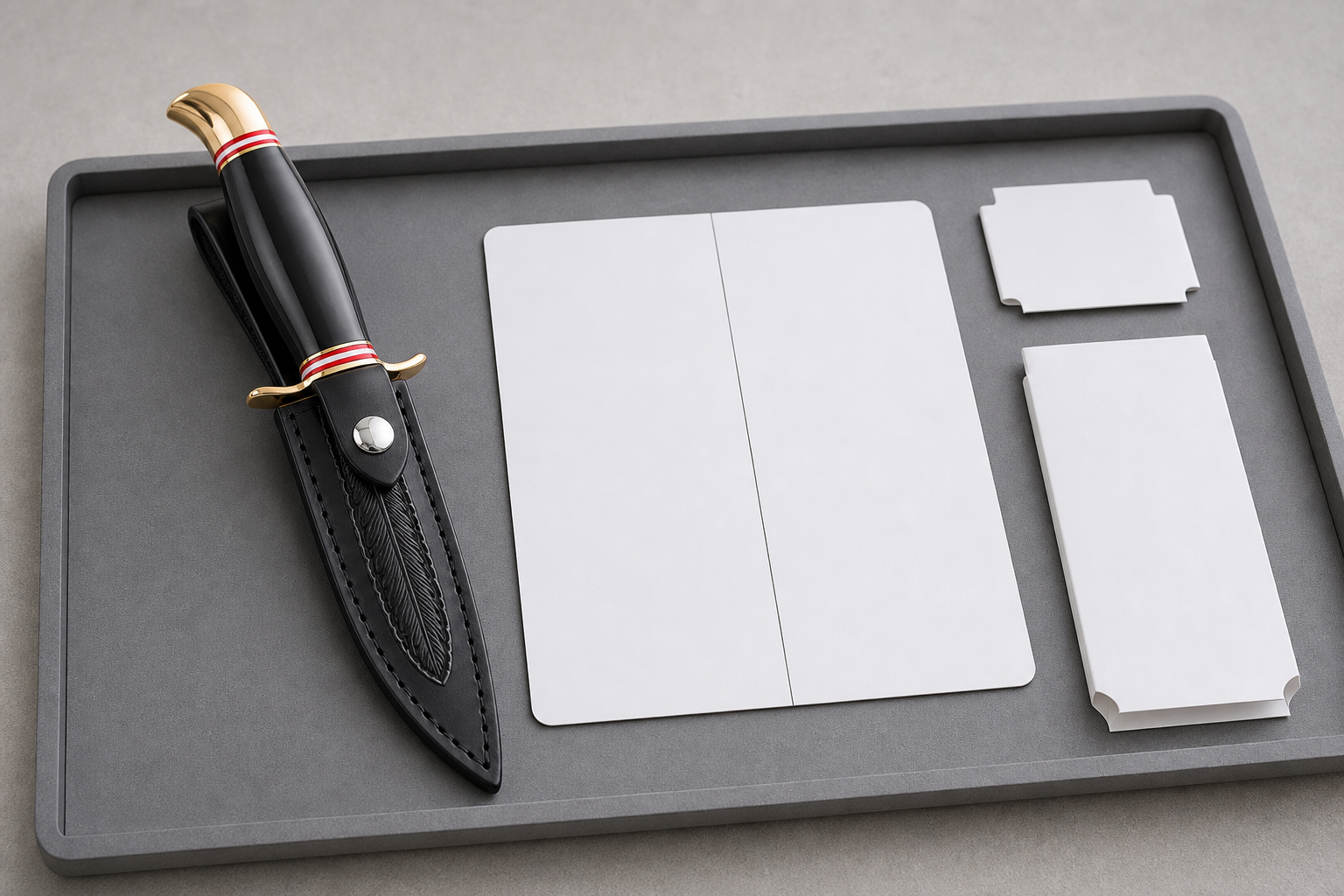
An EDC folding pocket knife and a fixed blade knife may both cut. But they create different product roles. A folding knife is designed to close into the handle. That makes it compact for pockets, pouches, bags, and retail packaging. A fixed blade has no folding mechanism, so it can be structurally simple and strong, but it normally needs a sheath and more carry space.
For OEM and ODM buyers, this choice affects more than performance. It affects shipping volume, packaging design, private label positioning, instruction wording, after-sale expectations, and even which customers feel comfortable buying the product. A folding pocket knife can feel like a compact utility product. A fixed blade often feels more outdoor-focused and task-specific.
The ISO 9241-11 usability framework connects products with users, goals, and context. I use that same thinking here. A folding knife may be better when the context is everyday pocket carry. A fixed blade may be better when the context is camp utility, food preparation, bushcraft-style outdoor tasks, or situations where easy cleaning and simple structure matter more than compact carry.
| Product format | Strong point | Buyer risk if mismatched |
|---|---|---|
| EDC folding knife | Compact carry and closed storage | Weak design if mechanism is poorly controlled |
| Fixed blade knife | Simple structure and strength | Less pocket-friendly and needs sheath planning |
| Pocket-focused line | Easy private label EDC positioning | Must keep wording responsible |
| Outdoor fixed blade line | Stronger field utility positioning | Higher carry and packaging requirements |
OEM/ODM RFQ Checklist
Prepare these details to help Vast State review your project and provide a more accurate quotation.
| RFQ Field | What to Prepare |
|---|---|
| Project type | OEM from drawing / ODM private label / wholesale catalog |
| Product category | Folding knife / fixed blade / multi-tool / outdoor tool |
| Design status | Idea / sketch / 2D drawing / 3D CAD / physical sample |
| Target price | Ex-factory target price or retail price range |
| MOQ expectation | 500 / 1,000 / 3,000 / 5,000+ pcs |
| Logo method | Laser engraving / etching / printing / molded logo |
| Packaging | Standard packaging / custom retail box / Amazon-ready |
| Market | USA / EU / Japan / Korea / Middle East / other |
| Compliance needs | Buyer-specified testing / documentation / labeling |
| Timeline | Sample deadline / mass production deadline |
When Are Folding Pocket Knives Better for Everyday Carry?
Everyday carry depends on habit. If users do not carry the knife often, the design has failed.
Folding pocket knives are often better for EDC when buyers need compact size, pocket-clip carry, covered edge storage, lower bulk, lighter packaging, and broad daily utility positioning.
I Design Folding EDC Around the Carry Decision
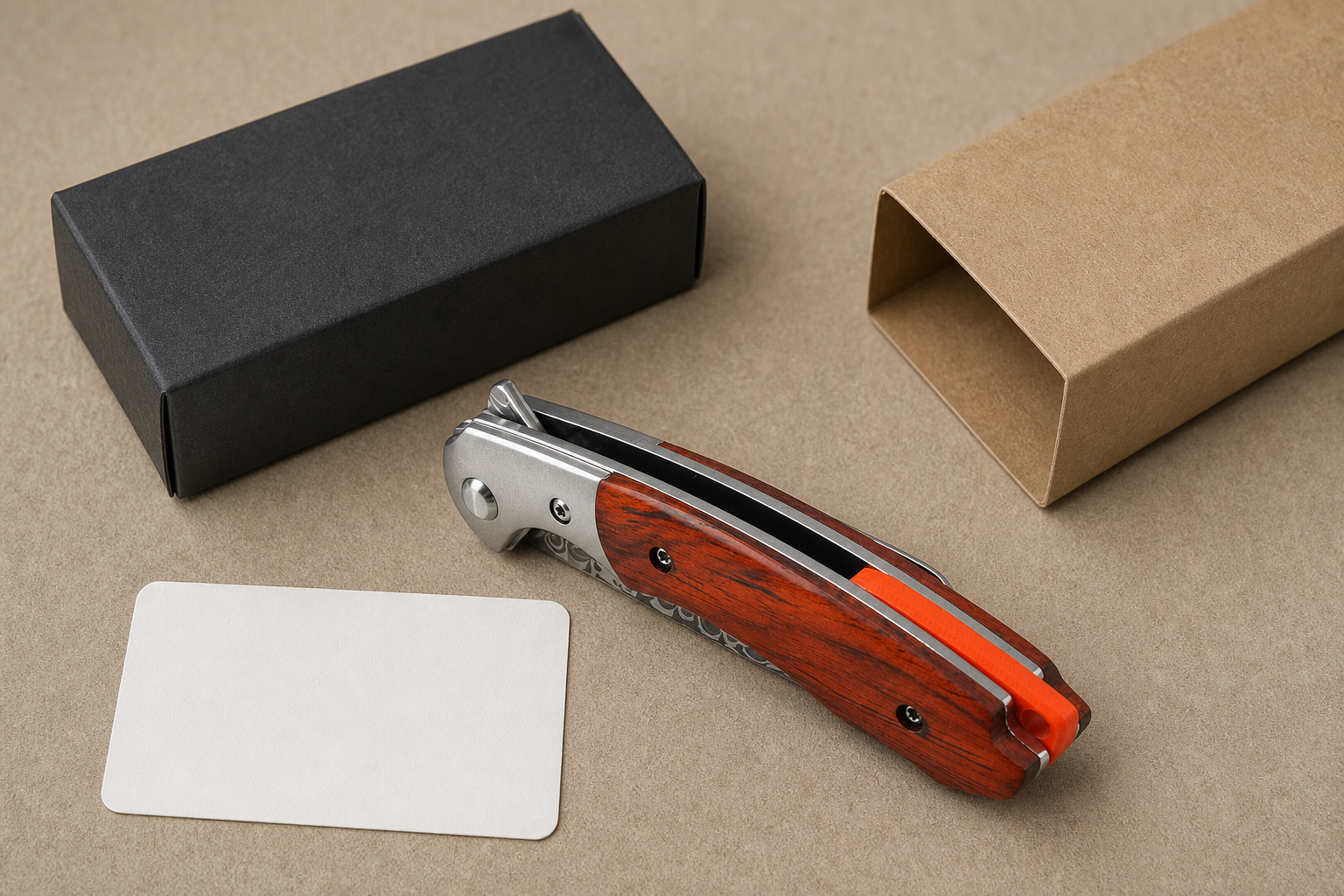
The main advantage of a folding pocket knife is not that it cuts better than a fixed blade. The advantage is that it is easier to carry in daily life. The blade folds into the handle, so the cutting edge is covered when closed. The user can place the knife in a pocket, clip it inside a pocket, carry it in a pouch, or keep it in a bag. This creates a stronger fit for urban EDC, work utility, private label gifts, and general everyday cutting tasks.
For buyers, this matters commercially. A compact folding knife can fit more retail channels than a larger fixed blade. It can also support lighter packaging and smaller carton volume. A buyer can customize blade shape, handle material, pocket clip, logo, finish, and box design to match different price levels.
However, folding knives require good mechanism control. A poor pivot, weak lockup, rough action, or blade-centering issue can hurt user trust quickly. So the folding format gives carry benefits, but it also demands better assembly discipline. Buyers should not choose folding knives only because they look convenient. They should choose them when compact carry is a true selling point.
| Folding knife advantage | Why it helps EDC | Buyer control point |
|---|---|---|
| Closed blade storage | Easier pocket carry | Tip containment and edge clearance |
| Pocket clip | Fast daily access | Clip tension and screw security |
| Compact packaging | Lower retail bulk | Box and pouch choice |
| Custom surfaces | Strong private label options | Logo and finish testing |
When Are Fixed Blade Knives Still the Better Choice?
Folding knives are not the answer to every project. Some tasks need a simpler and stronger knife structure.
Fixed blade knives are often better when buyers need stronger structure, easier cleaning, sheath-based outdoor carry, camp utility positioning, or a product built for heavier cutting tasks.
I Keep Fixed Blades in the Right Category
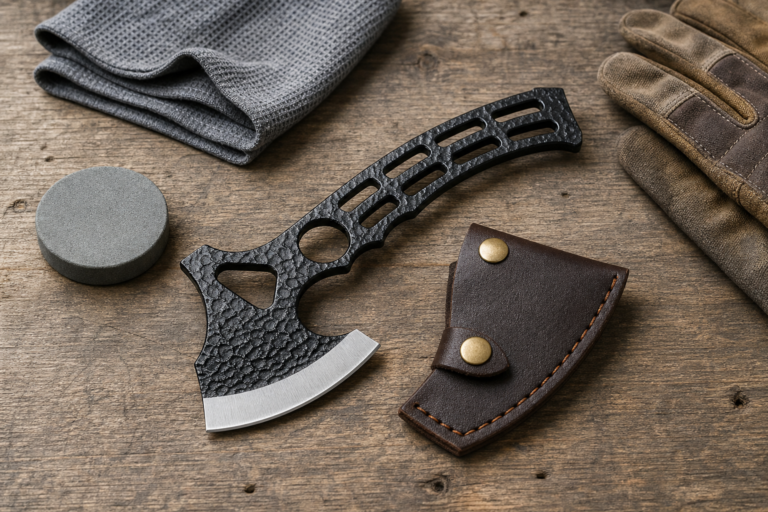
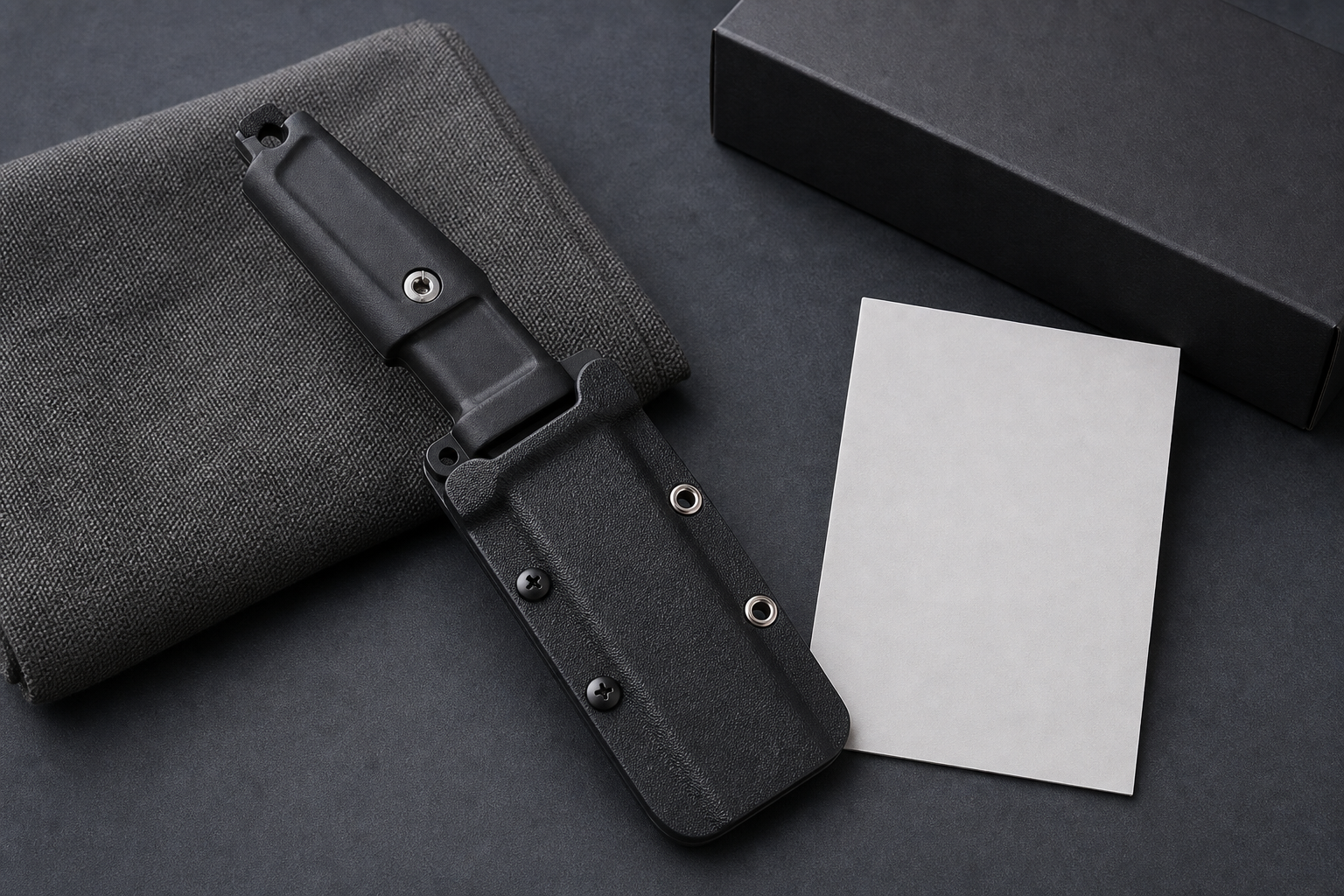
A fixed blade knife has fewer moving parts. The blade and handle structure can be simpler than a folder. This can make a fixed blade suitable for outdoor utility, camp tasks, food prep in camp settings, field work, and other situations where strength, cleaning, and simple construction matter. A fixed blade can also be easier to inspect because there is no pivot or lock mechanism hidden inside the handle.
The trade-off is carry. A fixed blade normally needs a sheath. The sheath must retain the knife safely and fit the intended carry method. This adds cost, bulk, material decisions, and packaging requirements. A fixed blade can also look more serious to some retail customers, so product language and design styling need careful planning.
I tell buyers not to treat fixed blades as worse. They are just different. If the product line is outdoor, camping, hunting-style utility, bushcraft-style, or heavy work utility, a fixed blade may be the better product. If the line is pocket EDC, urban carry, gift, or compact daily utility, a folding knife may fit better.
| Fixed blade advantage | Why it matters | Buyer control point |
|---|---|---|
| Simple structure | No pivot or lock stack | Tang, handle, and sheath fit |
| Strong utility positioning | Better for heavier outdoor tasks | Avoid exaggerated claims |
| Easy cleaning | Fewer internal spaces | Handle and sheath material |
| Sheath carry | Secure outdoor storage | Retention and attachment method |
How Should Carry Method Guide the Format Choice?
Many knife projects go wrong because the buyer chooses the blade first and the carry method last.
Carry method should guide the format choice because pocket clip, pouch, sheath, bag carry, and belt carry each create different size, safety, and user-experience requirements.
I Treat Carry as Part of the Product
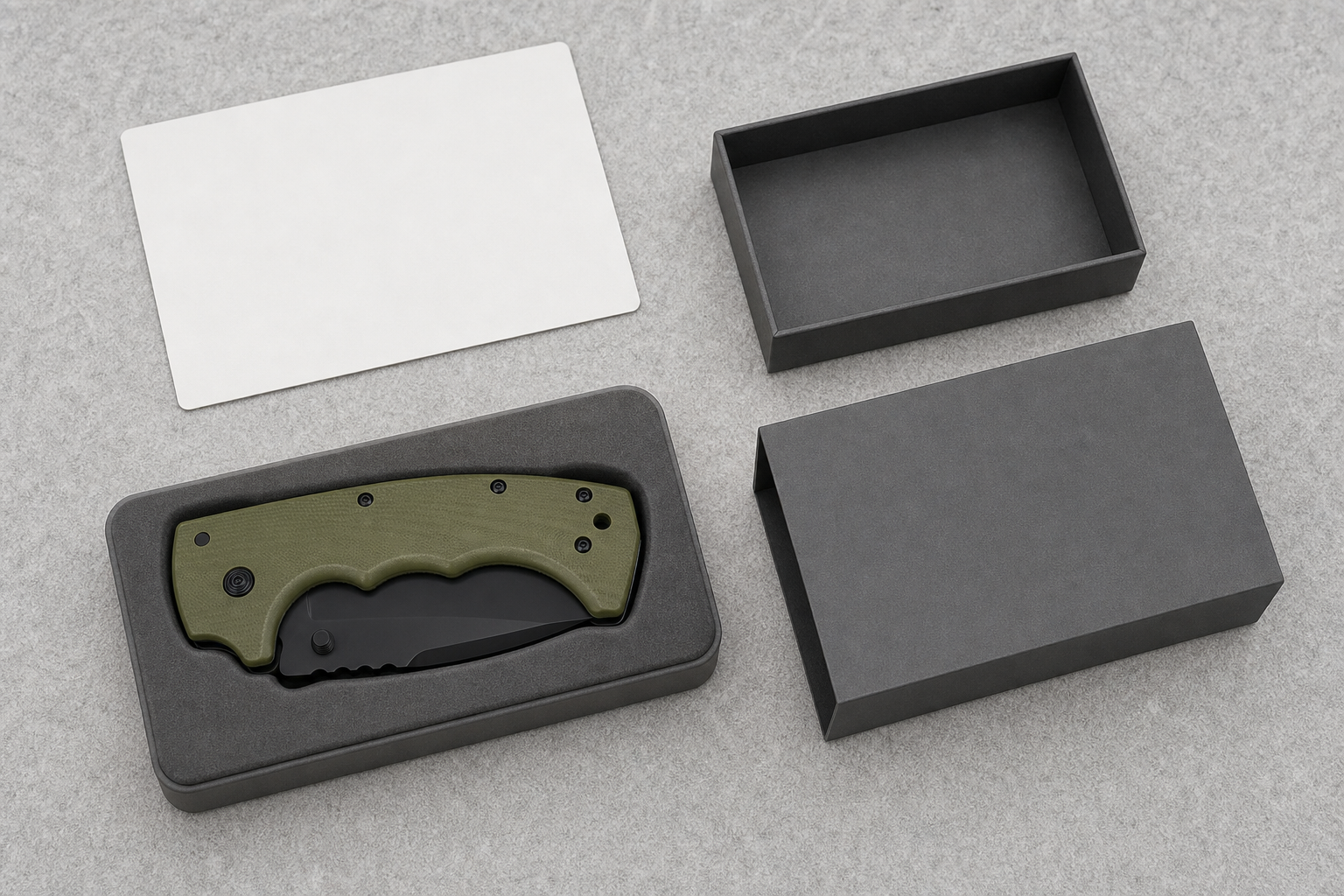
Pocket carry favors folding knives. A closed folder can be slim and easy to store. The clip can be designed for tip-up, tip-down, deep carry, or standard carry. A pouch can make a folder feel more premium or outdoor-focused. Bag carry gives more flexibility but still benefits from a closed blade.
Fixed blades need a sheath. That sheath is not an accessory afterthought. It is part of the safety system. The sheath material, retention, belt loop, clip, snap, drain hole, stitching, rivets, and packaging all affect the user experience. A good fixed blade with a poor sheath is not a finished product.
For everyday carry, the folded knife usually has the advantage because it reduces bulk and covers the cutting edge inside the handle. But for belt-based outdoor carry, a fixed blade may feel more natural. The buyer should define this before tooling, because carry method affects handle shape, clip screw placement, sheath design, carton size, and cost.
| Carry method | Better fit in many cases | Why |
|---|---|---|
| Pocket clip | Folding knife | Compact closed profile |
| Small pouch | Folding knife | Portable and protected |
| Belt sheath | Fixed blade | Stable outdoor carry |
| Vehicle or camp kit | Either format | Depends on task strength |
How Do Safety and Market Positioning Differ?
A knife can be technically good and still be difficult to sell if the positioning feels wrong.
Folding knives often support softer everyday utility positioning, while fixed blades need clearer sheath, storage, and outdoor-use wording. Both require responsible safety language.
I Avoid Aggressive Claims in Both Categories
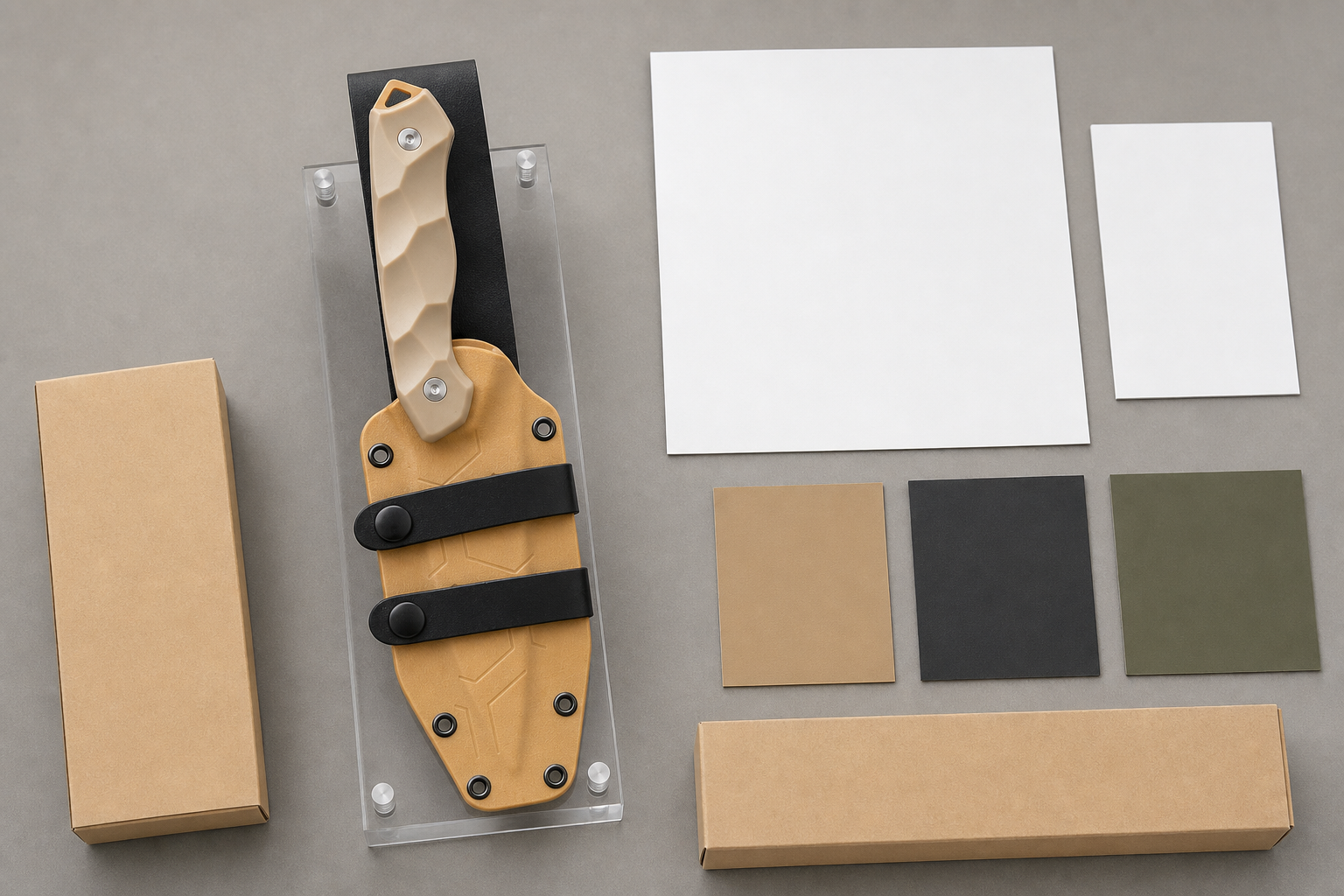
For both folding knives and fixed blades, I recommend utility-focused language. Good product wording can mention everyday cutting, package opening, outdoor utility, camping support, work tasks, proper storage, and maintenance. I avoid self-defense positioning and aggressive claims because they can create channel risk and poor user expectations.
The CCOHS page on sharp blades or edges supports careful handling, tool inspection, and the use of the right tool. That is the kind of tone buyers should use in instructions and care cards. Knife packaging should help users understand proper use, not push unsafe behavior.
Market fit can also differ. Folding knives may have restrictions around blade length, locking mechanism, and opening method. Fixed blades may have restrictions around carry method, blade length, sheath, and public carry. These rules can vary by market and sales channel. I do not give legal advice, but I do recommend checking target-market requirements early.
| Positioning area | Folding knife | Fixed blade |
|---|---|---|
| Everyday utility | Usually easier to present | Possible, but less pocket-focused |
| Safety wording | Opening, closing, lock, storage | Sheath, edge, retention, storage |
| Market check | Blade length, lock, opener | Blade length, sheath, carry method |
| Brand tone | Compact and practical | Outdoor, camp, or task-specific |
How Do Manufacturing Risks Compare?
Folding knives look compact, but their mechanism can make production more sensitive.
Folding knives carry mechanism risks such as pivot fit, lockup, blade centering, and action. Fixed blades carry risks around tang, handle bonding, grinding, sheath retention, and finish consistency.
I Control Different Failure Points
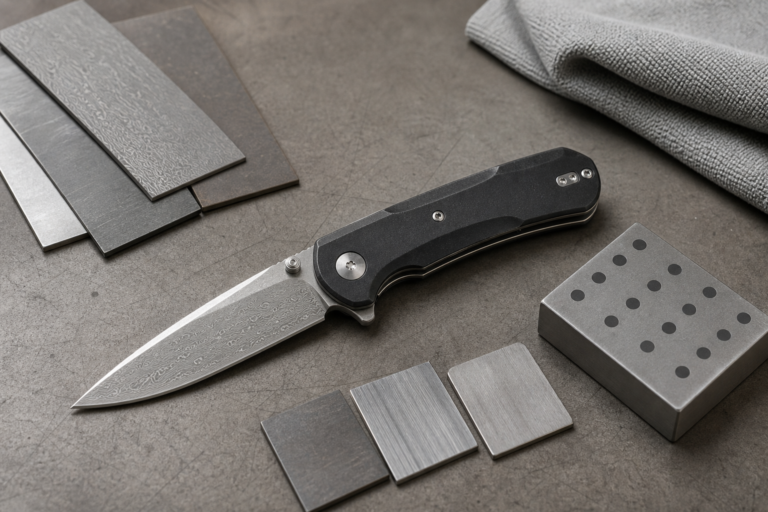
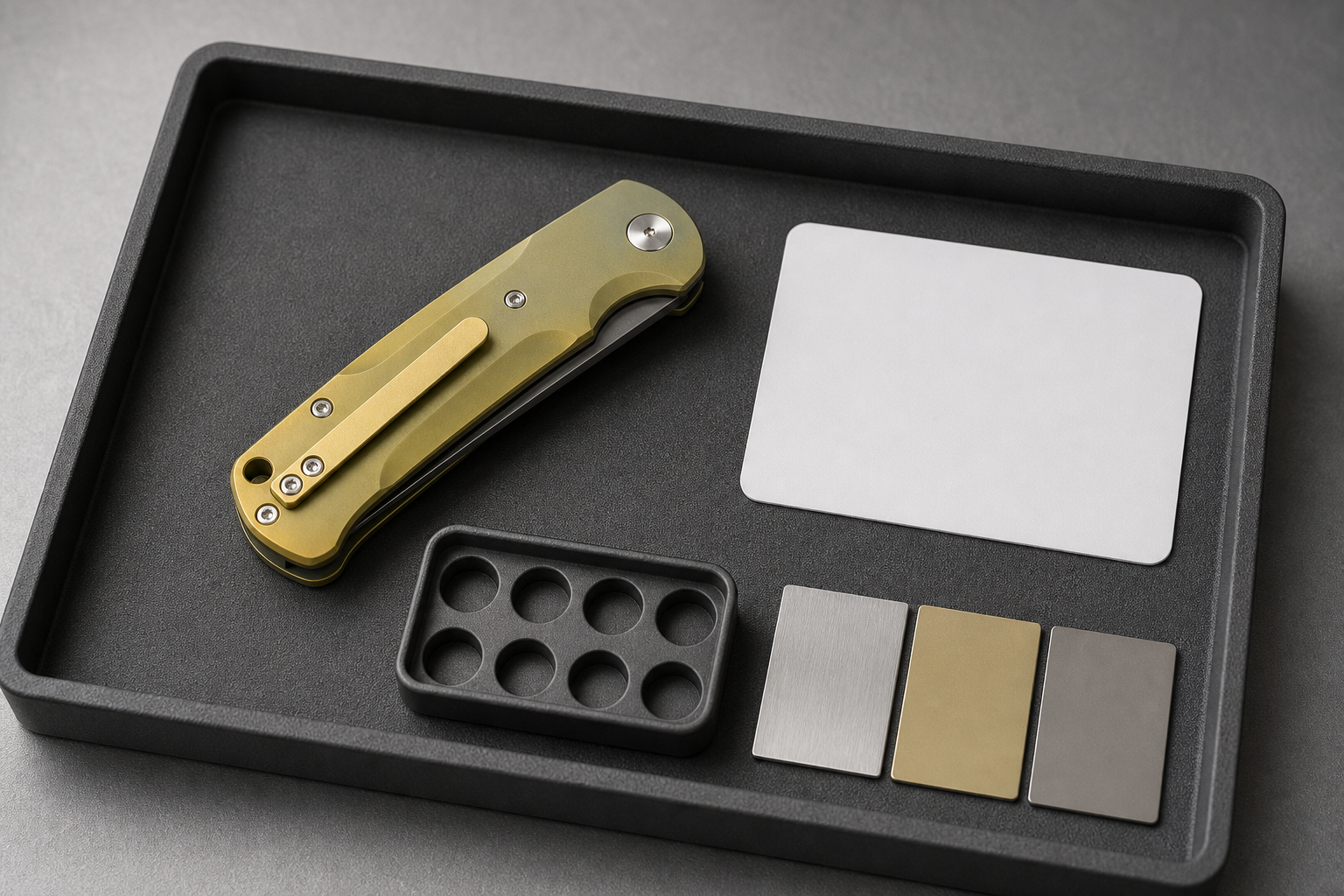
Folding knives have moving parts. The pivot hole, washers or bearings, liner, lock face, stop pin, screw tension, scale fit, and blade geometry all need to work together. Small errors can cause blade play, poor centering, lock stick, weak lockup, rough action, or unsafe closing. This is why folding knife samples need hand-feel review, not only photo approval.
Fixed blades have fewer mechanism problems, but they are not automatically simple. The blade blank, tang shape, handle fit, adhesive or fastener system, grinding, heat treatment, balance, sheath retention, and surface finish all need control. A poor sheath can damage the product experience. A poor handle fit can make the knife feel cheap or unsafe.
The NIST page on dimensional metrology describes how measurement supports manufacturing and detailed part information. In knife production, dimensional control helps both formats. For folders, it supports pivots and lock geometry. For fixed blades, it supports tang, handle, and sheath fit.
| Risk area | Folding knife | Fixed blade |
|---|---|---|
| Mechanism | Pivot, lock, centering, action | Minimal moving mechanism |
| Handle | Scale fit and screw assembly | Tang fit and bonding |
| Carry system | Clip and closed safety | Sheath retention |
| Inspection | Functional checks are critical | Fit and sheath checks are critical |
How Should Blade Steel and Heat Treatment Be Compared?
The same steel can behave differently depending on blade geometry, heat treatment, and use.
Steel and heat treatment should be compared by intended cutting task, blade thickness, edge geometry, corrosion needs, hardness range, toughness expectations, and batch consistency.
I Match Steel to the Format and Use
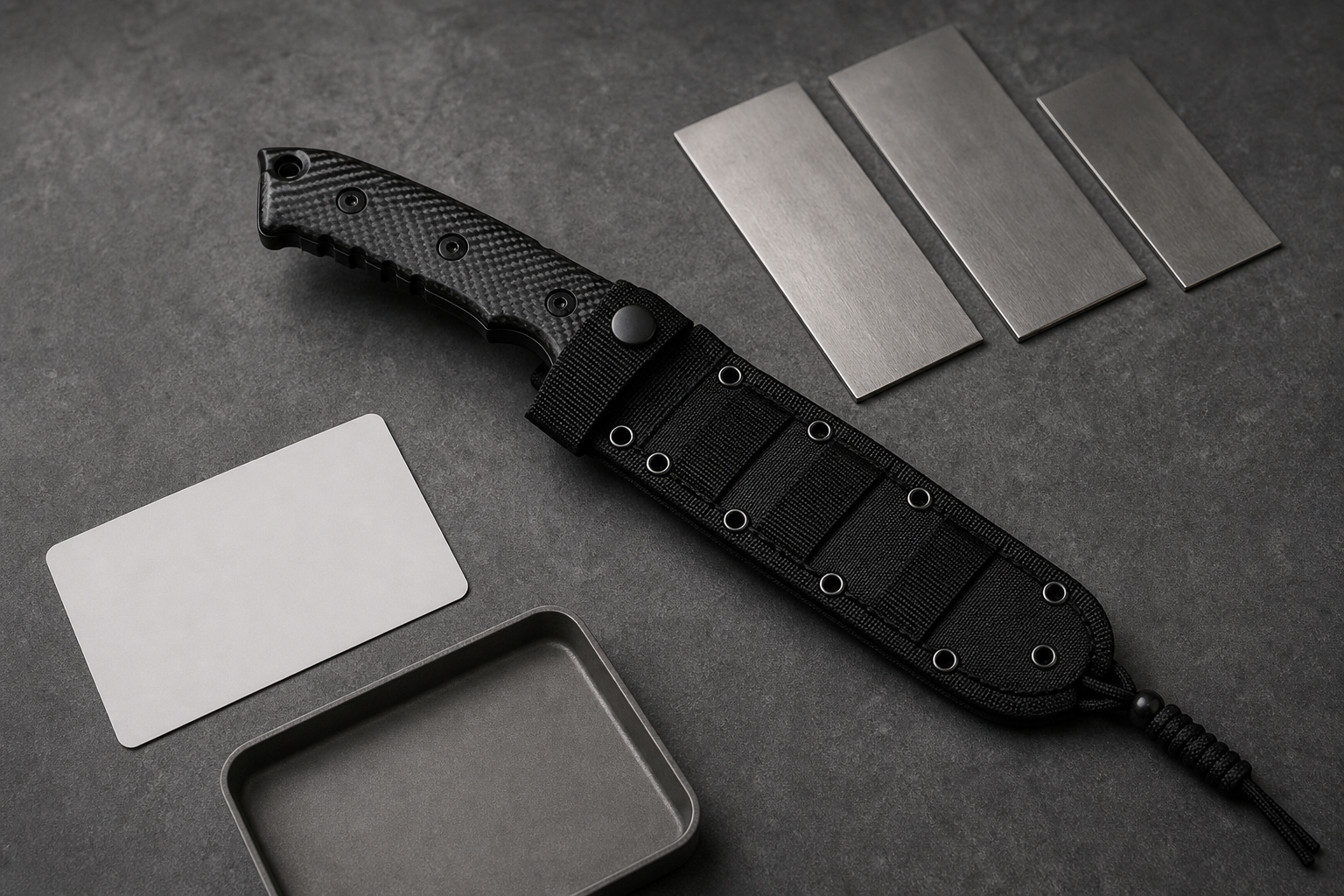
Blade steel is important for both folding knives and fixed blades. But buyers should not choose steel by name alone. A compact EDC folder may need corrosion resistance, reasonable edge holding, and easy sharpening. A fixed blade for outdoor utility may need more toughness, stable thickness, and a geometry that supports heavier tasks. The best steel choice depends on the target use and price level.
Alleima describes 14C28N knife steel as a knife steel with useful hardness, edge performance, and corrosion resistance. This kind of reference helps explain the trade-off. Buyers should connect material choice with product use, not just marketing language.
Heat treatment matters just as much as steel grade. A blade that is too soft may lose its edge too quickly. A blade that is too hard for the intended use may become more prone to chipping. For B2B production, hardness targets and batch testing should be discussed before mass production. This is especially important when the buyer wants consistency across repeat orders.
| Decision | Folding knife concern | Fixed blade concern |
|---|---|---|
| Steel grade | Corrosion, edge, cost | Toughness, edge, use level |
| Heat treatment | Consistent hardness in small blades | Balance of toughness and hardness |
| Blade thickness | Compact carry and slicing | Strength and outdoor tasks |
| Finish | Pocket wear and corrosion | Sheath wear and corrosion |
Which Format Is Better for Custom Branding and Packaging?
Branding is not only logo placement. The knife format changes the whole customer presentation.
Folding knives often support compact private label packaging and visible handle branding. Fixed blades offer more sheath and outdoor-kit branding opportunities but need larger packaging.
I Plan the Brand Around the Product Format
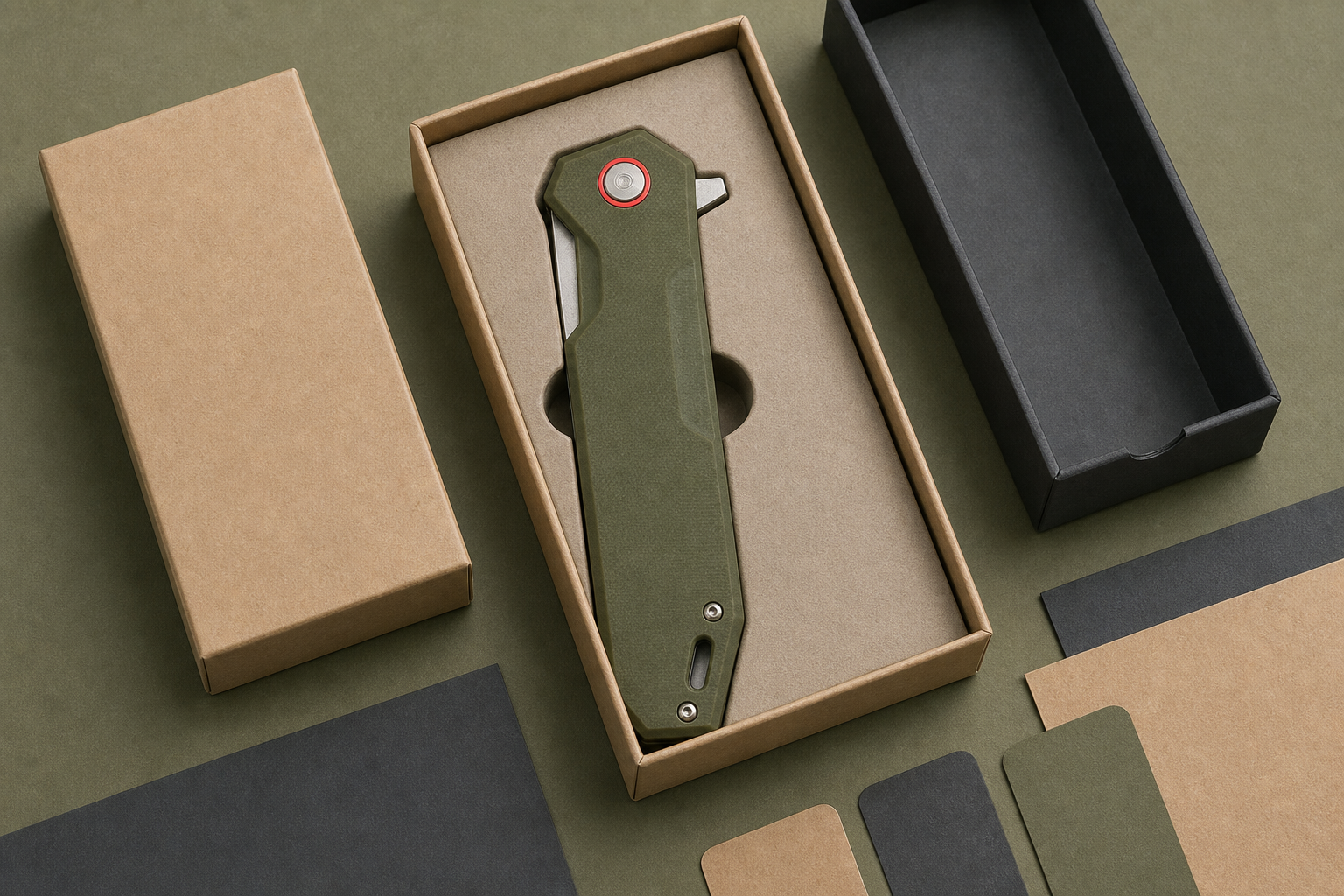
Folding knives give buyers many compact branding options. The logo can be placed on the blade, handle scale, clip, pivot collar, pouch, box, or instruction card. Because the product is smaller, packaging can be more efficient. A folding knife can also be built into a gift set, EDC kit, or private label retail line with less carton volume than many fixed blade formats.
Fixed blades offer different branding space. The sheath becomes part of the brand. Handle material, sheath color, rivets, stitching, belt attachments, and packaging all shape the product identity. A fixed blade can feel more serious and more outdoor-focused, which is useful for some brands. But the packaging usually needs more planning and more space.
For both formats, I recommend testing logo methods on real surfaces. Laser marking, etching, engraving, stamping, and printed packaging can all behave differently on satin, stonewash, coated, anodized, or textured materials. A logo that looks clean in a drawing may not be clear on the final finish.
| Branding area | Folding knife | Fixed blade |
|---|---|---|
| Tool logo | Blade, handle, clip, pivot | Blade, handle, sheath |
| Packaging | Compact retail box or pouch | Larger box and sheath display |
| Brand tone | EDC, utility, pocket carry | Outdoor, camp, field utility |
| Cost control | Smaller accessories possible | Sheath quality matters |
How Should Buyers Choose Between the Two for a Product Line?
A product line can include both formats, but each SKU needs a reason to exist.
Buyers should choose folding knives for compact EDC utility and fixed blades for stronger outdoor or task-specific utility. Product lines can include both when roles are clearly separated.
I Avoid Two Products Doing the Same Job
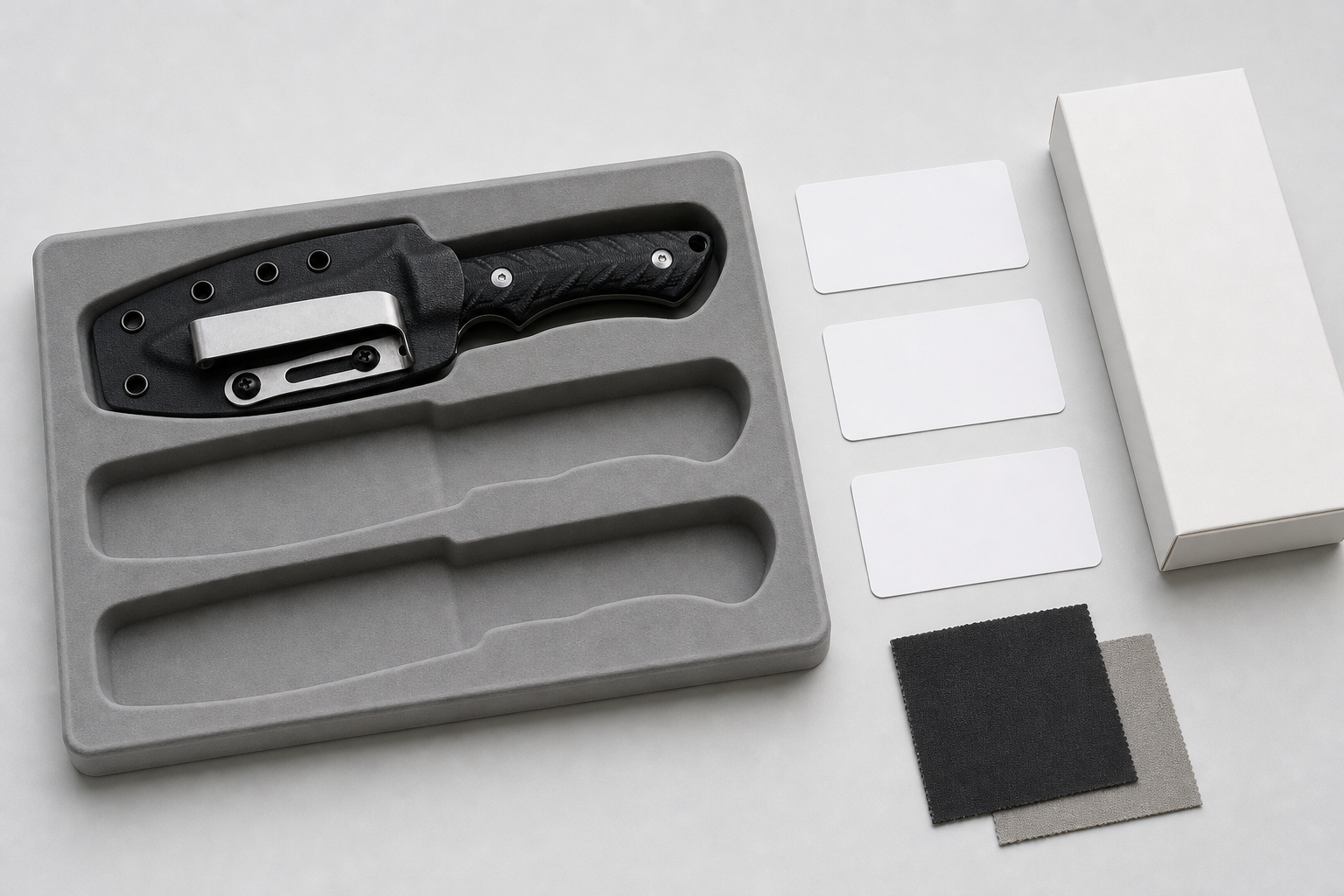
If a buyer wants both folding knives and fixed blades in one line, I suggest separating their roles. The folding knife can be the daily pocket utility product. The fixed blade can be the outdoor camp utility product. The folder can focus on slim carry, pocket clip, and everyday cutting. The fixed blade can focus on sheath carry, easier cleaning, and stronger task positioning.
This separation makes sales easier. It also helps the buyer avoid internal competition between SKUs. If both products claim the same use case, customers may not know which one to buy. If each product has a clear role, the line feels more complete.
Cost planning also becomes clearer. Folding knife cost often depends on mechanism, lock, handle materials, and assembly time. Fixed blade cost often depends on steel, blade size, handle construction, sheath, and finishing. Buyers should compare not only unit price, but also packaging cost, shipping volume, target margin, and after-sale risk.
| Product line role | Better format | Reason |
|---|---|---|
| Daily pocket utility | Folding knife | Compact and easy to carry |
| Camp outdoor utility | Fixed blade | Simple and stronger structure |
| Gift EDC item | Folding knife | Compact packaging and broad appeal |
| Outdoor kit | Either or both | Separate daily and field tasks |
What Quality Checks Protect Each Format?
Final inspection must match the knife format. A folder and a fixed blade do not fail in the same way.
Folding knife QC should focus on mechanism and closed safety. Fixed blade QC should focus on blade, handle, and sheath integrity. Both need material, hardness, finish, sharpness, and packaging checks.
I Use Different Checklists for Different Structures
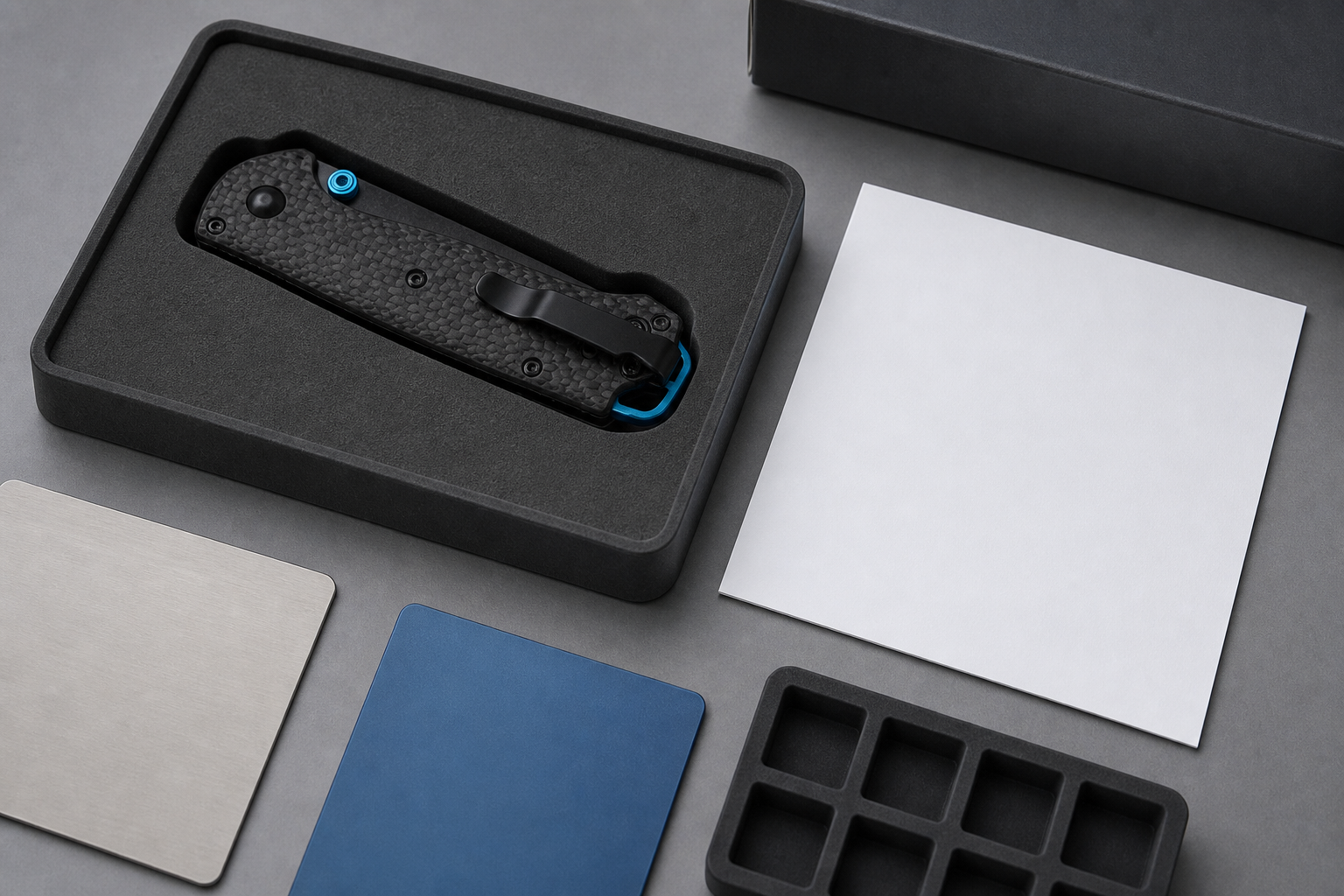
For folding knives, I check blade centering, pivot action, lock engagement, blade play, detent or spring feel, screw security, clip retention, edge sharpness, closed tip safety, and surface finish. A folder may pass appearance inspection but still fail in user experience if the action is rough or the lock feels weak.
For fixed blades, I check blade grind, handle fit, tang alignment, fastener or adhesive quality, sheath retention, sheath edge clearance, carry attachment, finish, sharpness, and packaging. A fixed blade may look strong but still fail if the sheath holds poorly or scratches the blade too easily.
ISO describes ISO 9001 as a quality management standard focused on customer expectations and quality management systems. I use that process mindset here. Quality should be controlled from incoming materials through production and final packing. One approved sample is not enough for repeat orders.
| QC focus | Folding knife | Fixed blade |
|---|---|---|
| Function | Opening, lockup, centering | Sheath retention and handle fit |
| Safety | Closed tip, edge clearance | Sheath coverage and secure storage |
| Finish | Handle, blade, clip, screws | Blade, handle, sheath |
| Packaging | Compact accessory completeness | Sheath and larger box protection |
What Should Buyers Include in an RFQ?
The factory cannot quote the right product if the buyer has not chosen the product role.
An RFQ should state whether the buyer wants a folding EDC knife, fixed blade, or both, then include user, use case, dimensions, materials, mechanism, sheath or clip, packaging, quantity, target price, and QC expectations.
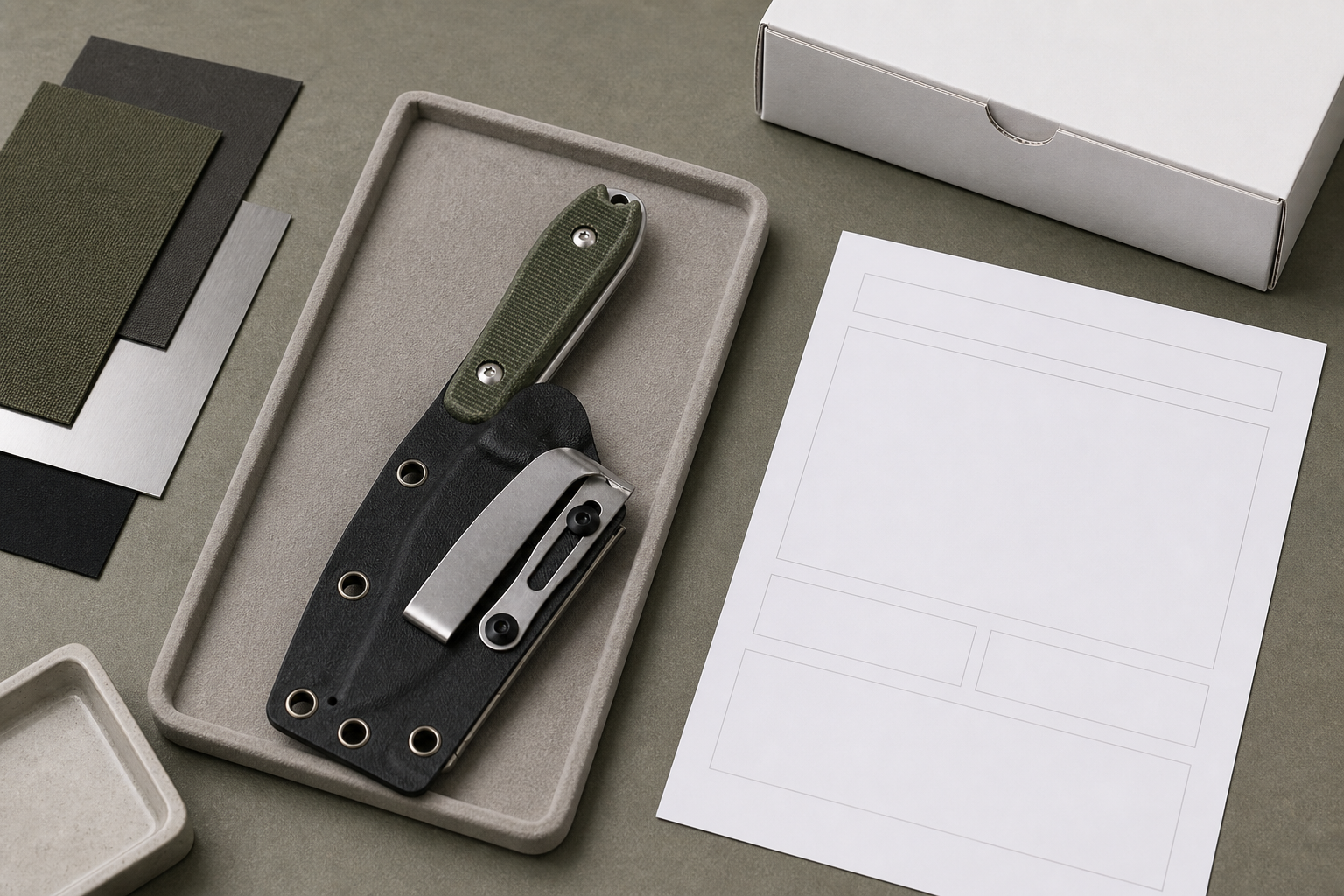
I Ask for Product Role Before Price
For OEM and ODM work, the RFQ should not begin and end with a photo. The buyer should first define the product role. Is this a daily pocket knife, outdoor camp knife, work utility knife, gift item, or product-line extension? Then the buyer should state whether a folding knife or fixed blade is preferred.
For folding knives, the RFQ should include blade length, blade shape, steel, lock type, opening method, handle material, clip requirement, finish, logo method, packaging, and target market. For fixed blades, it should include blade length, blade thickness, tang style, handle material, sheath material, sheath retention, carry attachment, finish, logo method, packaging, and target market.
Both RFQs should include MOQ, target price, sample deadline, compliance concerns, and QC expectations. If the buyer has a target retail price or margin, that is also useful. Good information helps me suggest realistic structures instead of quoting something that looks close but does not fit the business goal.
| RFQ area | Folding knife detail | Fixed blade detail |
|---|---|---|
| Structure | Lock, pivot, opener, clip | Tang, handle, sheath |
| Blade | Length, steel, shape, edge | Length, thickness, steel, edge |
| Packaging | Box, pouch, insert | Sheath, box, protection |
| Commercial | MOQ, target price, market | MOQ, target price, market |
How Can Vast State Help Buyers Decide?
Buyers often need a manufacturing view before they commit to a product format.
Vast State can help buyers compare folding knives and fixed blades by use case, structure, materials, customization, packaging, cost, sampling risk, and quality control needs.
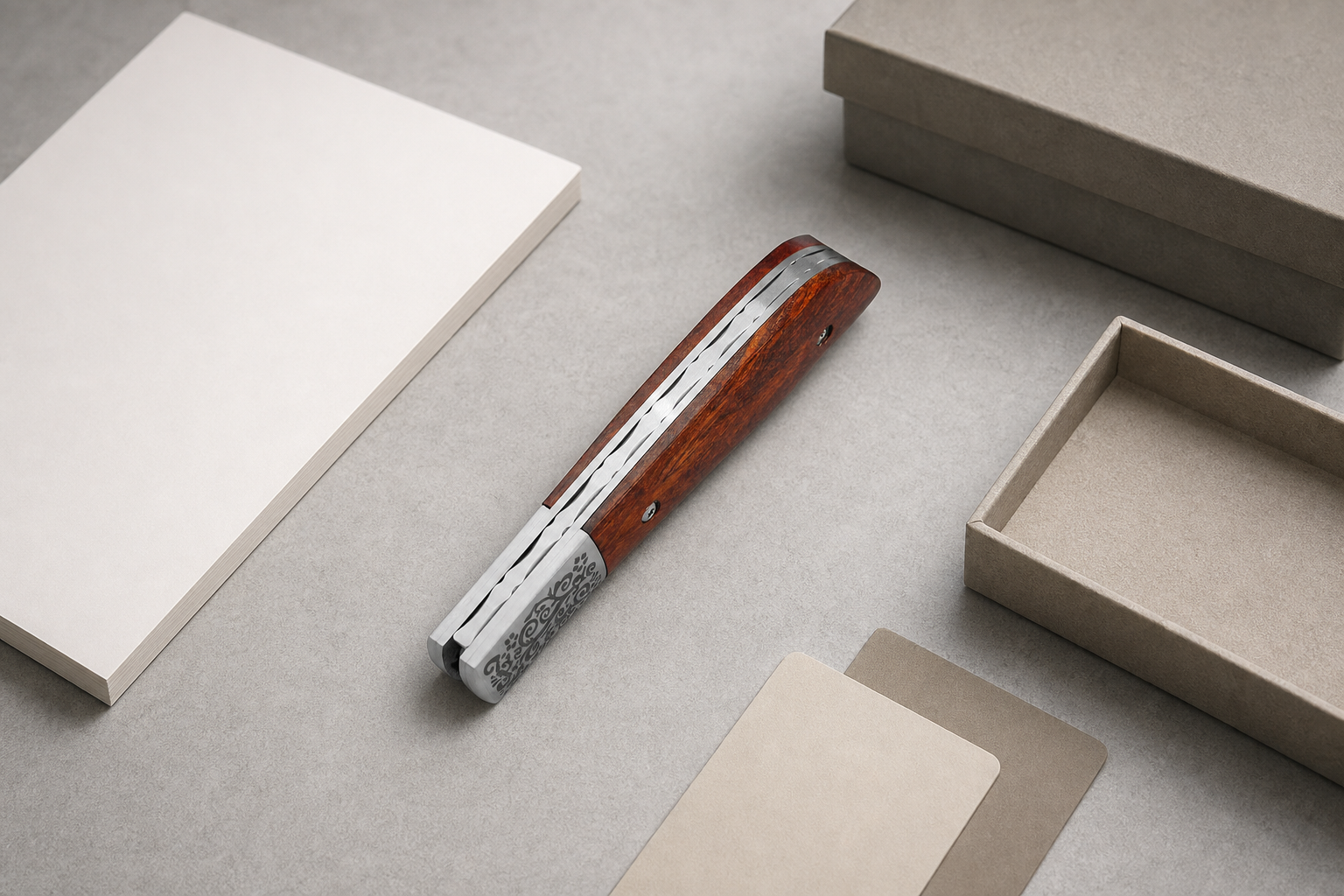
I Turn the Comparison Into a Practical Development Plan
At Vast State, I support international B2B customers with folding knives, fixed blade knives, pocket knives, camping tools, rescue tools, and multi-tools. When a buyer compares folding knives and fixed blades, I do not push one format as always better. I look at the buyer's target market, carry method, price range, brand position, packaging plan, and repeat production needs.
If the buyer wants a compact EDC product, I may suggest a folding knife with a practical blade shape, stable lock, comfortable handle, reliable clip, and simple utility wording. If the buyer wants an outdoor tool, I may suggest a fixed blade with a suitable sheath, handle grip, blade thickness, and finish. If the buyer wants a broader product line, I may help separate the roles so each SKU has a clear reason to exist.
Our goal is not only to manufacture a knife. It is to help the buyer build a product that fits the market, cost target, and brand direction. That requires practical engineering feedback, stable manufacturing, flexible customization, efficient communication, and reliable quality control.
| Support area | What I review | Buyer benefit |
|---|---|---|
| Product direction | Folder, fixed blade, or both | Clearer line planning |
| Engineering | Mechanism, tang, handle, sheath | Fewer sample surprises |
| Customization | Materials, finish, logo, packaging | Better private label fit |
| Production | QC checklist and repeat control | More dependable execution |
Turn this article into a folding knife project.
Share your blade type, lock direction, steel preference, handle material, quantity, target market, and packaging needs. Vast State can prepare OEM/ODM options.
Conclusion
EDC folding knives are better for compact daily carry, while fixed blades remain valuable for stronger outdoor tasks. The right choice depends on the buyer's project.