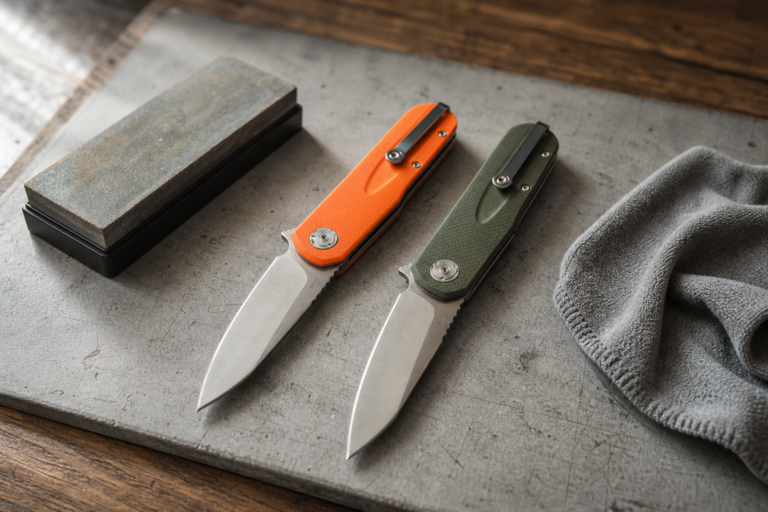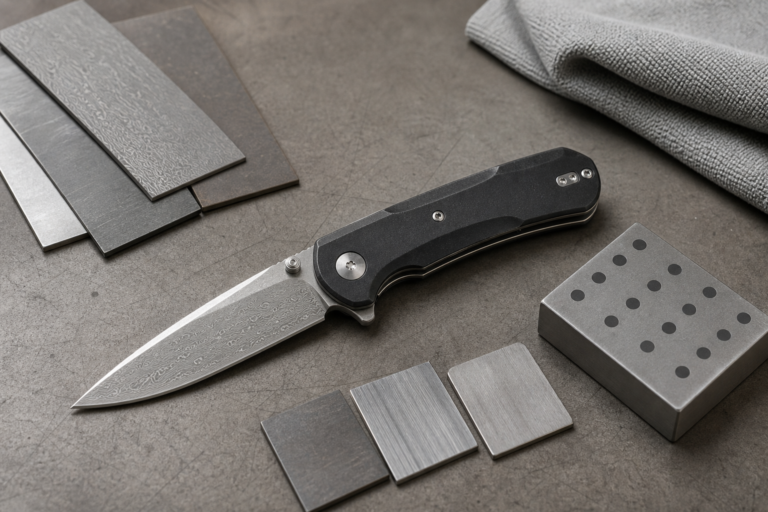
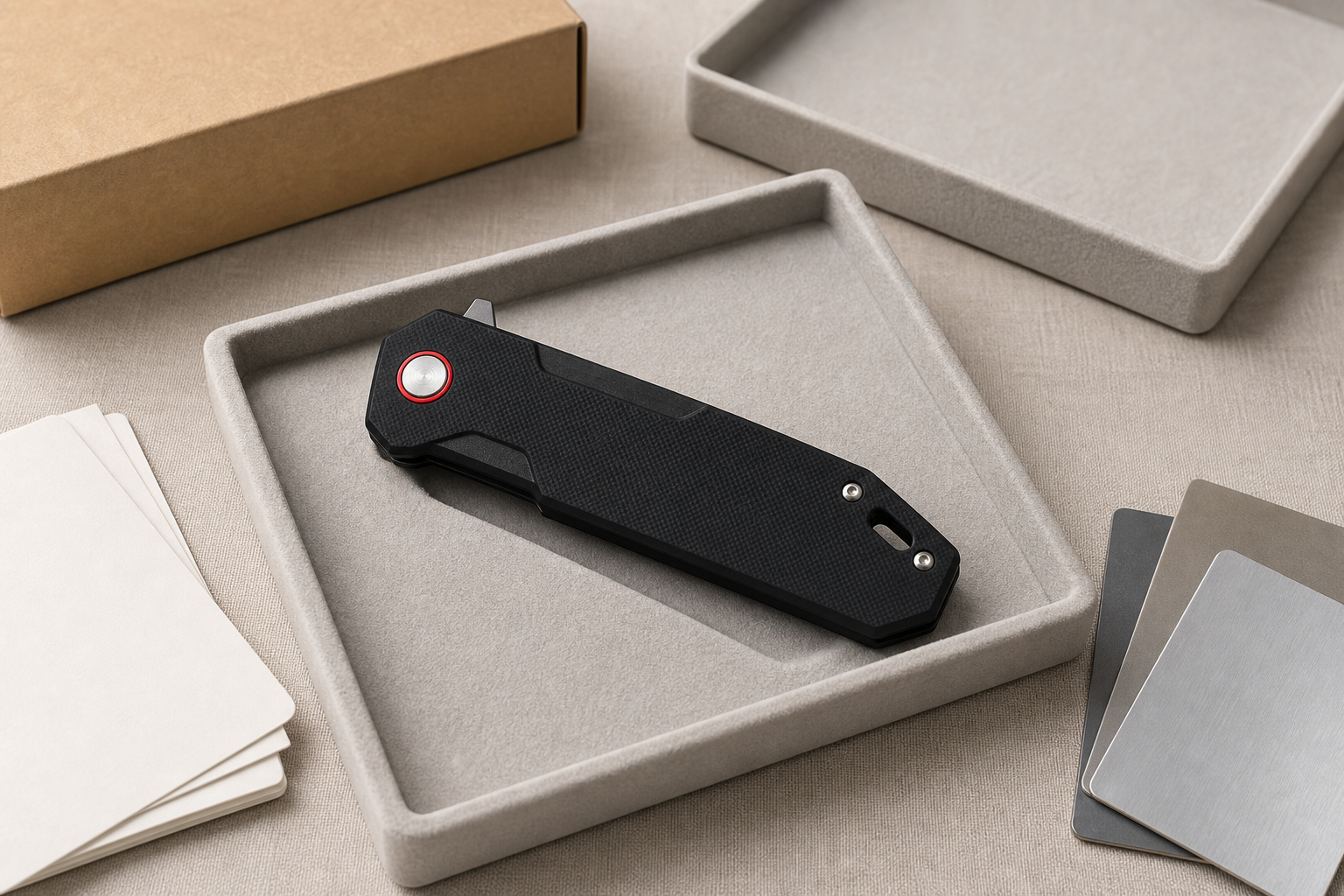
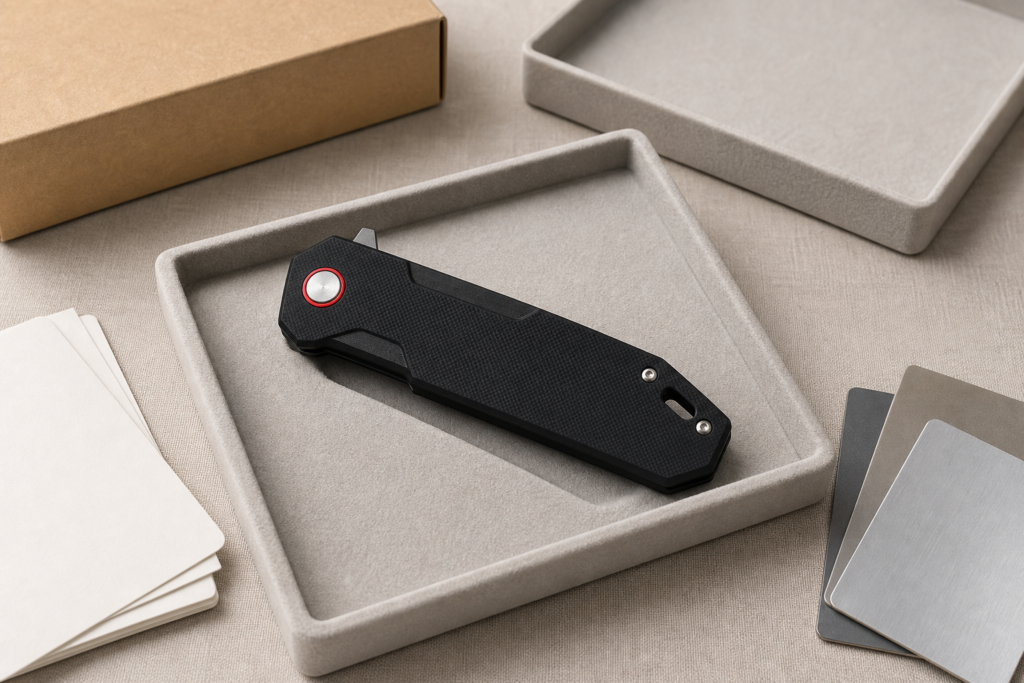
A folding knife can look simple from the outside. Inside, many small decisions must work together or the project becomes unstable.
Custom folding knife development is difficult because blade geometry, pivot tolerance, lock design, handle structure, heat treatment, surface finish, assembly feel, cost target, and QC all interact. Buyers can manage the risk by defining the product brief early, approving realistic samples, and controlling each production stage.
Quick buyer brief:
- Answer: A custom folding knife is hard to design and manufacture because it is a compact moving tool, not a static blade. The blade, lock, pivot, stop pin, handle, screws, washers, clip, finish, and packaging must all fit the target user and production plan.
- Buyer context: This guide is for knife brands, EDC brands, outdoor gear brands, importers, wholesalers, distributors, private label buyers, and sourcing managers.
- Key checks: Target user, blade shape, blade steel, hardness target, lock type, pivot system, handle material, thickness, clip, finish, logo, packaging, prototype plan, cost target, MOQ, tolerance control, and QC checklist.
Developing a folding knife line for your brand?
Vast State supports OEM/ODM folding knife projects, including blade steel, lock structure, handle material, finish, logo method, packaging, and quality inspection planning.
When I review a custom folding knife project, I do not judge only the first drawing. I look at the whole system. A beautiful blade shape can create lock problems. A premium steel can create heat treatment cost. A thin handle can create weak screw engagement. A coating can change part thickness. A tight target price can remove the process steps that made the sample feel good. This is why good folding knife development needs both design thinking and production thinking.
Why Is a Folding Knife Harder to Develop Than It Looks?
The outside shape can hide the real difficulty. Most problems appear inside the mechanism.
A folding knife is difficult because it combines a cutting blade with a moving pivot, lock, handle, stop system, hardware, clip, and close-position safety inside a compact product.
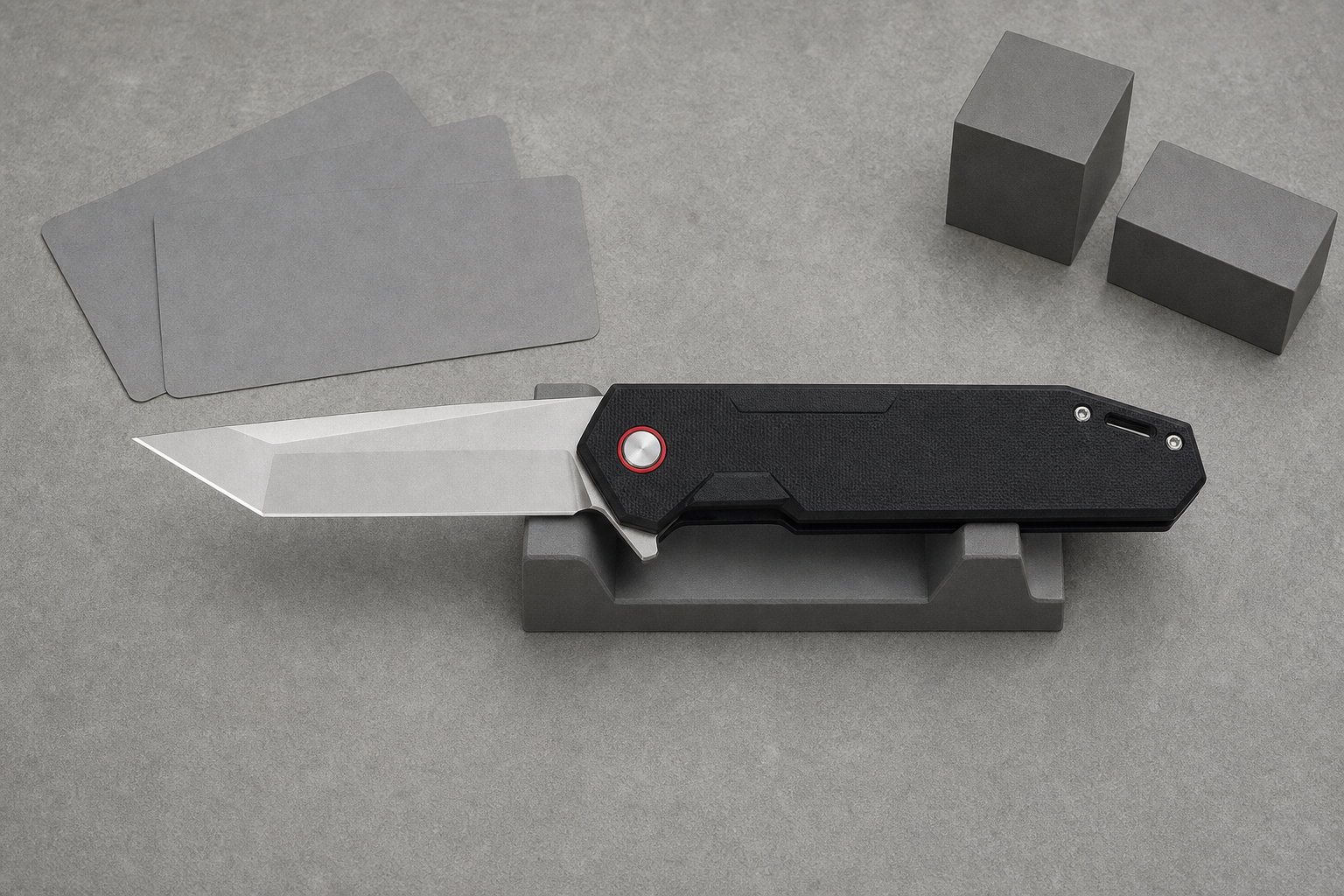
I Treat the Knife as a Compact Mechanical System
A fixed blade knife has its own difficulties, but the structure is more direct. A folding knife must open, close, lock, carry safely, and feel stable in the hand. The blade does not only cut. It also rotates around the pivot, contacts the stop pin, interacts with the lock face, centers inside the handle, and hides its edge safely when closed.
That means one small change can affect many other details. If the blade tang changes, lock engagement may change. If the handle becomes thinner, screw length and pivot support may change. If the buyer adds a thicker coating, the action may feel tighter. If the blade shape becomes more dramatic, the closed tip position may become unsafe or hard to center.
The ISO 9241-11 usability framework is useful because it connects products with users, goals, and use context. I apply that thinking to folding knives. The product is not successful only because it looks good. It is successful when the intended user can carry it, open it, use it, close it, maintain it, and understand it.
| Hidden difficulty | Why it matters | Buyer action |
|---|---|---|
| Pivot relationship | Controls action and blade play | Define tolerance targets early |
| Lock geometry | Controls safety and feel | Review physical samples |
| Closed blade position | Controls carry safety | Check tip and edge clearance |
| Handle thickness | Controls comfort and hardware fit | Balance size and strength |
OEM/ODM RFQ Checklist
Prepare these details to help Vast State review your project and provide a more accurate quotation.
| RFQ Field | What to Prepare |
|---|---|
| Project type | OEM from drawing / ODM private label / wholesale catalog |
| Product category | Folding knife / fixed blade / multi-tool / outdoor tool |
| Design status | Idea / sketch / 2D drawing / 3D CAD / physical sample |
| Target price | Ex-factory target price or retail price range |
| MOQ expectation | 500 / 1,000 / 3,000 / 5,000+ pcs |
| Logo method | Laser engraving / etching / printing / molded logo |
| Packaging | Standard packaging / custom retail box / Amazon-ready |
| Market | USA / EU / Japan / Korea / Middle East / other |
| Compliance needs | Buyer-specified testing / documentation / labeling |
| Timeline | Sample deadline / mass production deadline |
Why Does the Product Brief Decide So Much?
A vague brief can create many sample revisions. Each revision adds time and cost.
The product brief decides custom folding knife direction because target user, price range, blade size, lock type, materials, finish, packaging, and market needs guide every engineering choice.
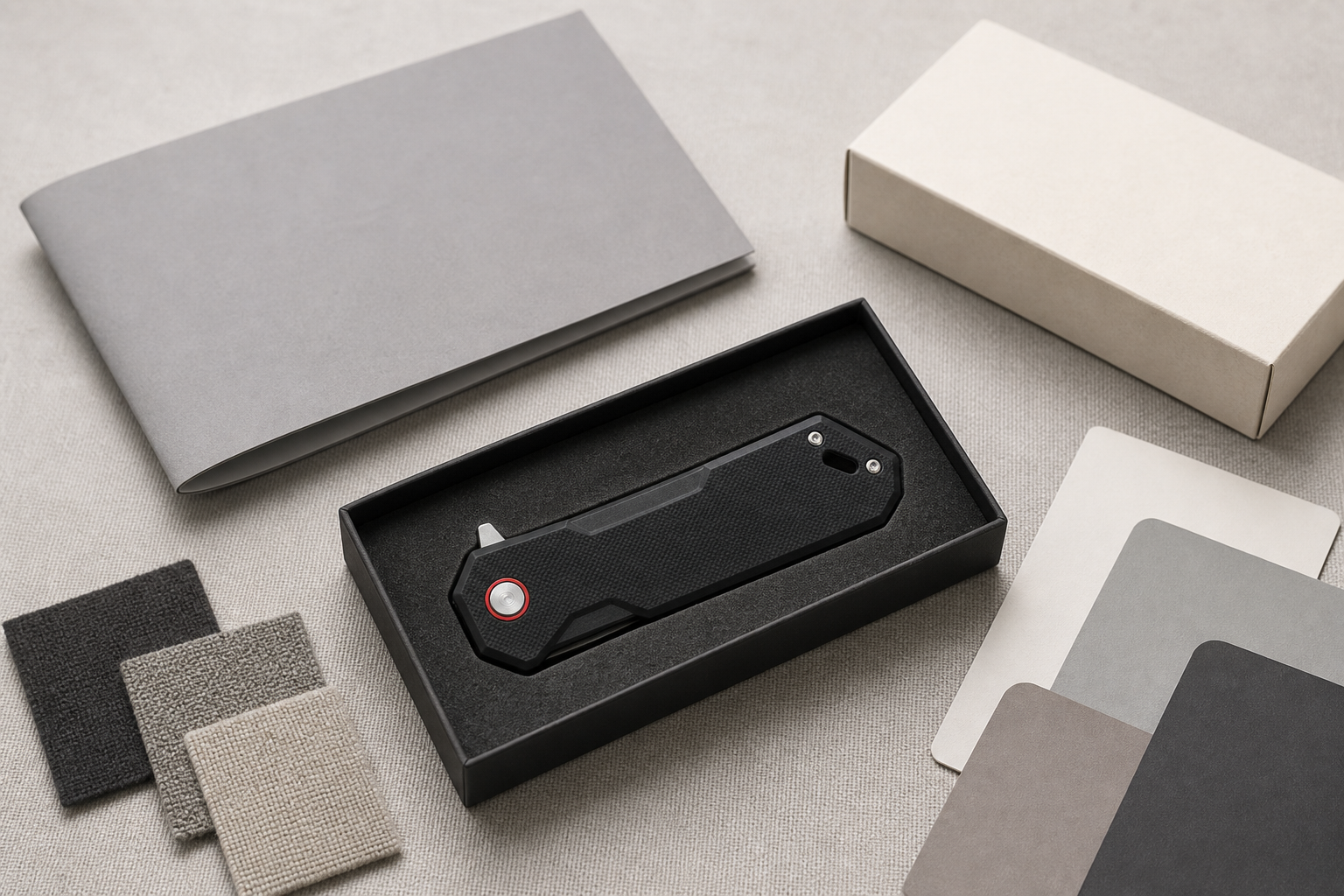
I Ask Commercial Questions Before Engineering Questions
Before I discuss the lock or steel, I ask what the buyer wants the product to become. Is it a budget EDC folder, a premium pocket knife, an outdoor utility folder, a work knife, a gift product, or a private label line extension? The answer changes almost everything.
A budget EDC folder may need a simple lock, controlled steel choice, basic finish, and efficient packaging. A premium folder may need tighter action, better surface finishing, upgraded handle materials, and more refined packaging. An outdoor folder may need more grip, corrosion resistance, and stronger clip retention. A work-focused folder may need a practical blade shape and easy maintenance.
The product brief also protects cost. Without a target price, the design can grow too expensive. Without a target user, the design can become too generic. Without a target market, the blade length, lock type, opening method, and wording may create problems later. I prefer to solve these questions before CAD work and sampling become expensive.
| Product brief item | Why it matters | Example decision |
|---|---|---|
| Target user | Defines real use | EDC, outdoor, work, gift |
| Target price | Controls material and process | Budget, mid-range, premium |
| Target market | Affects structure and wording | Blade length, lock, opening method |
| Packaging goal | Affects perceived value | Box, pouch, instruction card |
Why Are Pivot and Lock Tolerances So Sensitive?
A folder may pass a photo review but still feel loose, rough, or unsafe in the hand.
Pivot and lock tolerances are sensitive because the blade, washers, bearings, liners, stop pin, lock face, screws, and handle scales must align in a very small space.
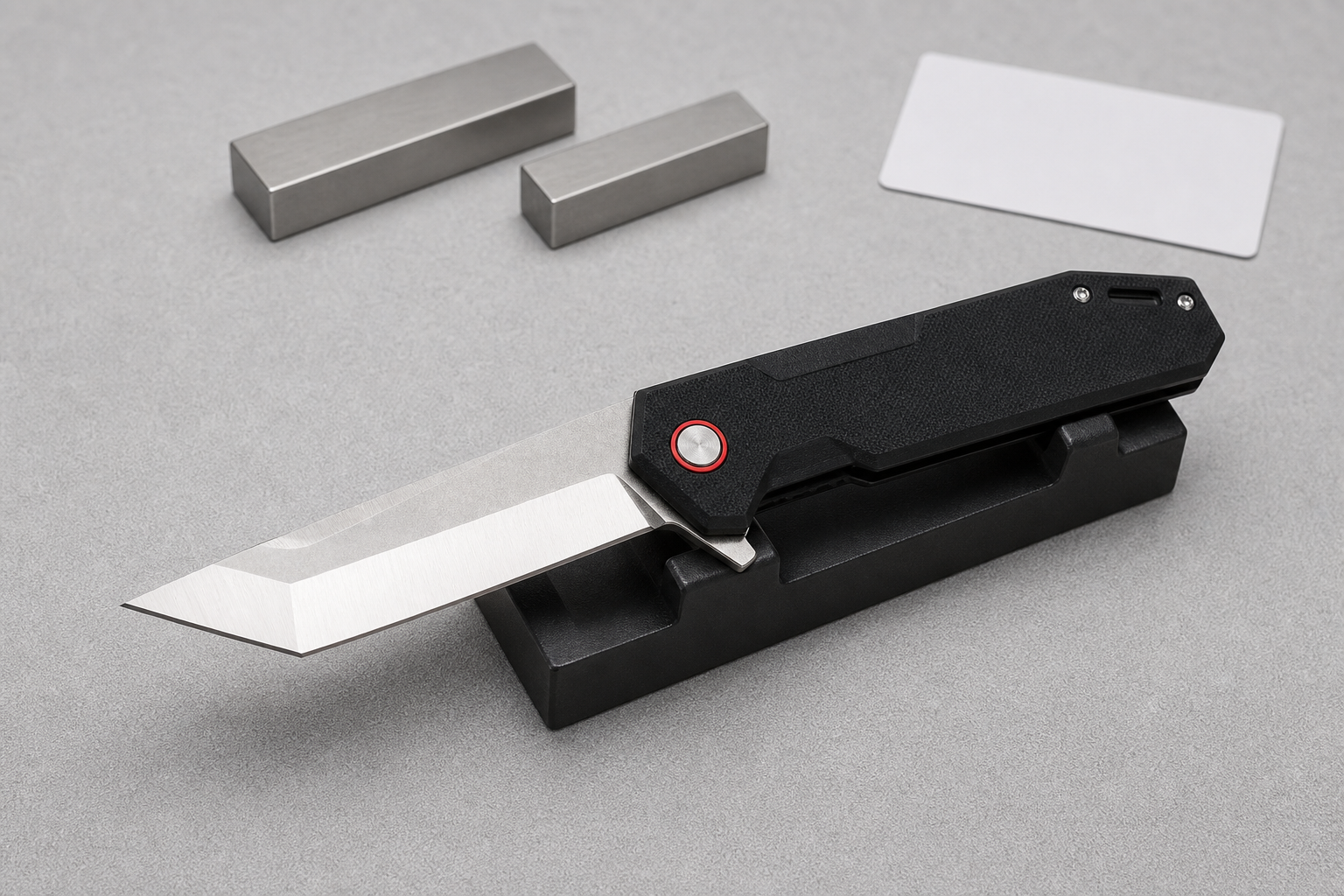
I Measure the Relationships Users Can Feel
The user may not know what a tolerance stack is, but the user can feel it. If the pivot is too loose, the blade may have side play. If it is too tight, the knife may be hard to open. If the stop pin area is inconsistent, the open position may feel different across the batch. If the lock face angle is not controlled, lockup may feel weak, sticky, or unstable.
The NIST page on dimensional metrology explains that measurement can support manufacturing process improvement and detailed part information. In folding knife production, this is very practical. Pivot hole size, blade thickness, washer thickness, liner flatness, stop pin diameter, lock surface, screw length, and handle scale fit all need control.
This is why custom designs often need more than one prototype. The first sample may prove the appearance. The second sample may tune the action. The third sample may confirm manufacturability. Buyers should plan this cycle instead of assuming one sample will solve every issue.
| Tolerance area | Possible problem | Control method |
|---|---|---|
| Pivot hole | Blade play or rough action | Hole size and alignment checks |
| Washer or bearing stack | Uneven opening feel | Thickness and flatness control |
| Lock face | Weak or sticky lockup | Geometry and contact inspection |
| Stop pin | Inconsistent open position | Diameter and seating check |
Why Does Blade Steel Create Development Risk?
Steel choice can look like a marketing decision, but it affects heat treatment, grinding, cost, and consistency.
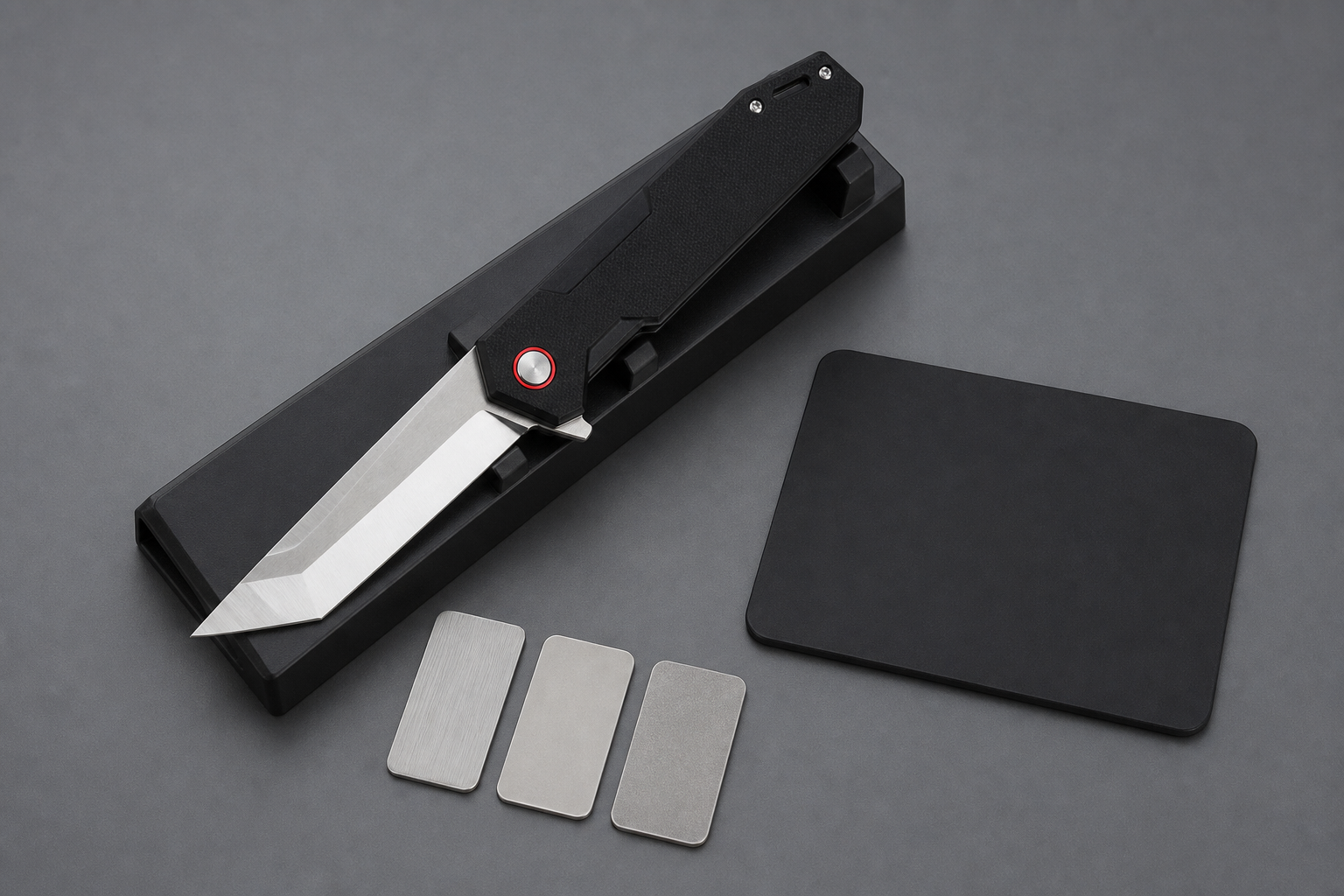
Blade steel creates development risk because each steel has different corrosion resistance, hardness potential, toughness, machining behavior, heat treatment needs, and price.
I Match Steel to Use and Price
Some buyers want a premium steel name. Some buyers want low cost. Some buyers want corrosion resistance. Some buyers want easy sharpening. Some buyers want stronger edge retention. These goals can conflict. No steel is best for every folding knife.
For example, Alleima describes 14C28N knife steel as a knife steel with useful hardness, edge performance, and corrosion resistance. This makes it a helpful reference for discussing balanced knife steel. But even a good steel must match the actual order goal. A budget folder, a work knife, and a premium EDC folder may need different choices.
Steel choice also affects production. Some steels are easier to grind. Some need tighter heat treatment control. Some may increase tool wear or lead time. Some are harder to source consistently at a target price. For B2B buyers, the right steel is the one that supports user needs, brand position, cost, and repeat production.
| Steel decision | Development impact | Buyer question |
|---|---|---|
| Corrosion resistance | Pocket and outdoor durability | Will users face moisture or sweat? |
| Hardness potential | Edge behavior | What performance level is expected? |
| Machining behavior | Cost and lead time | Can it fit the target price? |
| Availability | Repeat production | Can supply stay stable? |
Why Are Heat Treatment and Hardness Hard to Control?
A blade can look finished before heat treatment, but the steel may not yet perform as a blade.
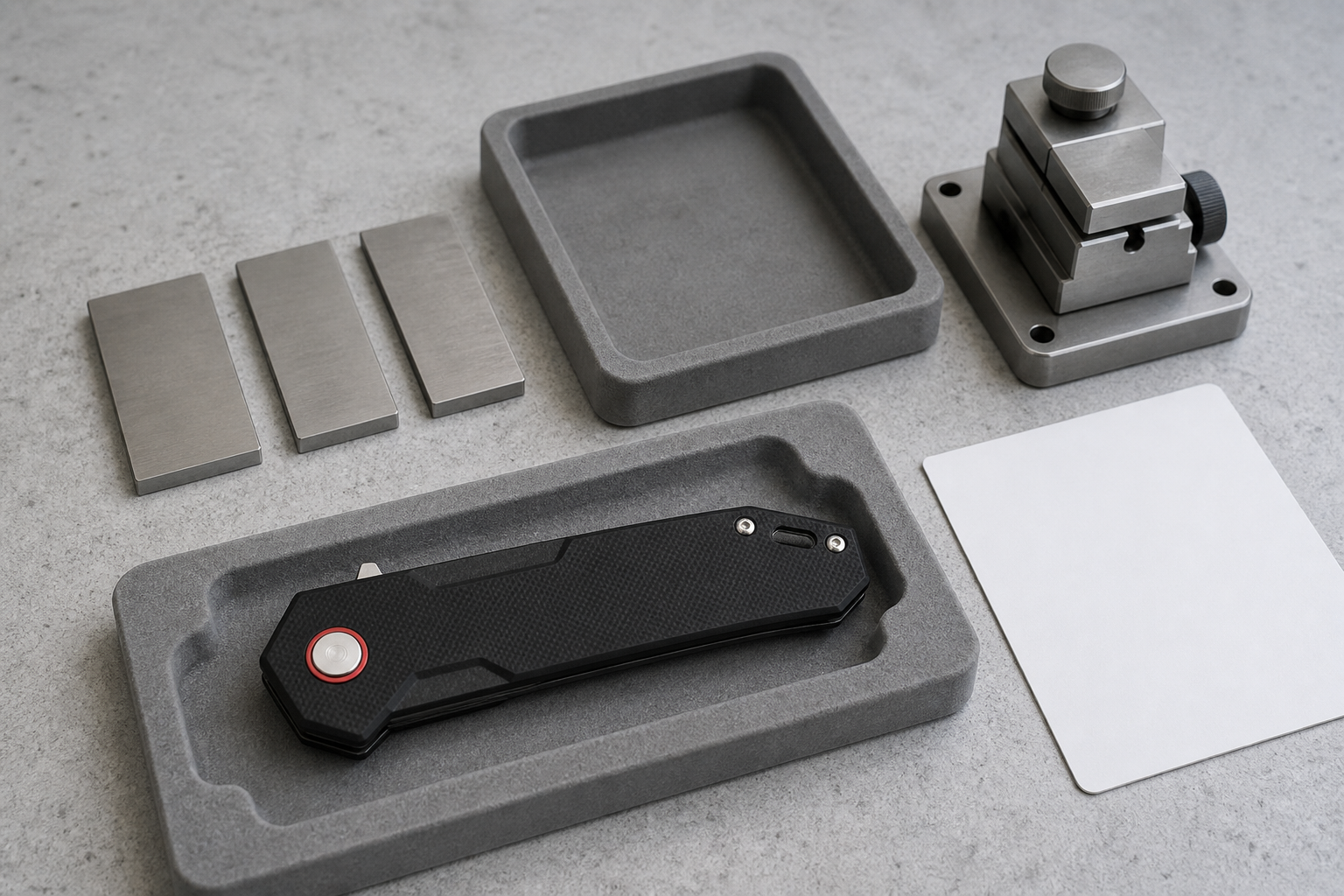
Heat treatment is difficult because hardening, quenching, tempering, blade thickness, steel grade, furnace control, and hardness testing must work together.
I See Heat Treatment as a Batch Control Problem
Heat treatment turns shaped steel into a working blade. The process must match the steel grade. Hardening temperature, hold time, quenching method, cooling speed, tempering cycle, and blade thickness all affect the final result. A blade that is too soft may lose edge performance quickly. A blade that is too hard for its geometry may chip or become too brittle.
Alleima's hardening guide explains that hardening programs for knife steels should be matched to specific steel grades. This supports a practical point: heat treatment is not one universal recipe.
Hardness testing also needs discipline. The NIST Rockwell hardness measurement guide explains that good practice helps reduce measurement errors when hardness tolerances matter. For OEM orders, this matters because a buyer does not want one batch to feel different from the next.
| Heat treatment issue | Possible result | Control point |
|---|---|---|
| Wrong cycle | Poor blade performance | Match steel and process |
| Warping | Assembly and centering issues | Fixture and inspection |
| Hardness variation | Inconsistent user experience | Batch testing |
| Poor measurement practice | Unclear acceptance | Correct hardness testing method |
Why Do Handle Materials and Surface Finishes Add Complexity?
The handle and finish create the user's first impression, but they also affect machining, assembly, and cost.
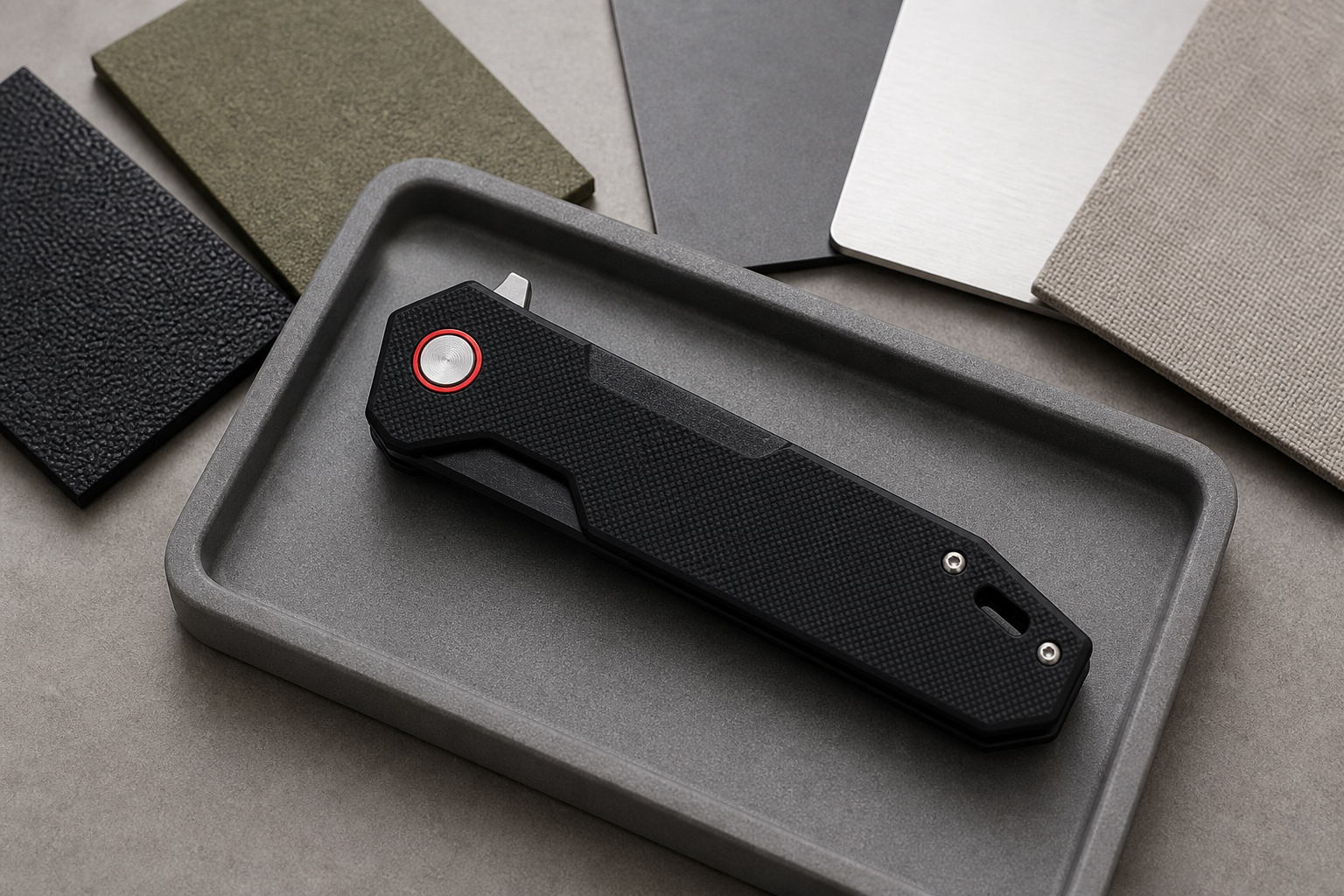
Handle materials and finishes add complexity because they change weight, grip, machining time, surface wear, color consistency, logo quality, assembly fit, and perceived value.
I Test the Material in the Real Structure
Handle material affects more than appearance. G10 can give grip and stable color, but machining and dust control matter. Aluminum can reduce weight and support anodized color, but surface wear must be considered. Stainless steel can feel strong but adds weight. Micarta and wood can create a warmer look, but natural variation and moisture behavior need review.
Finishes create similar trade-offs. Satin can look clean but may show scratches. Stonewash can hide carry marks. Bead blast can create a technical look but may show fingerprints or corrosion behavior depending on material. Black coatings can look strong, but edge wear should be expected. Anodizing can create color options, but color matching across batches needs control.
Logo method should also be tested on the final finish. Laser marking may look different on stonewash, coating, satin, or anodized surfaces. A logo that looks clear on a flat test plate may not look the same on a curved handle or clip.
| Material or finish | Benefit | Risk |
|---|---|---|
| G10 | Grip and color stability | Machining and edge finish |
| Aluminum | Lightweight and modern | Anodizing and wear |
| Stainless steel | Strong feel | Weight and scratches |
| Stonewash | Hides small marks | Batch consistency |
Why Does Prototype Development Take More Than One Round?
Buyers often expect one perfect sample. Custom folding knives rarely work that way.
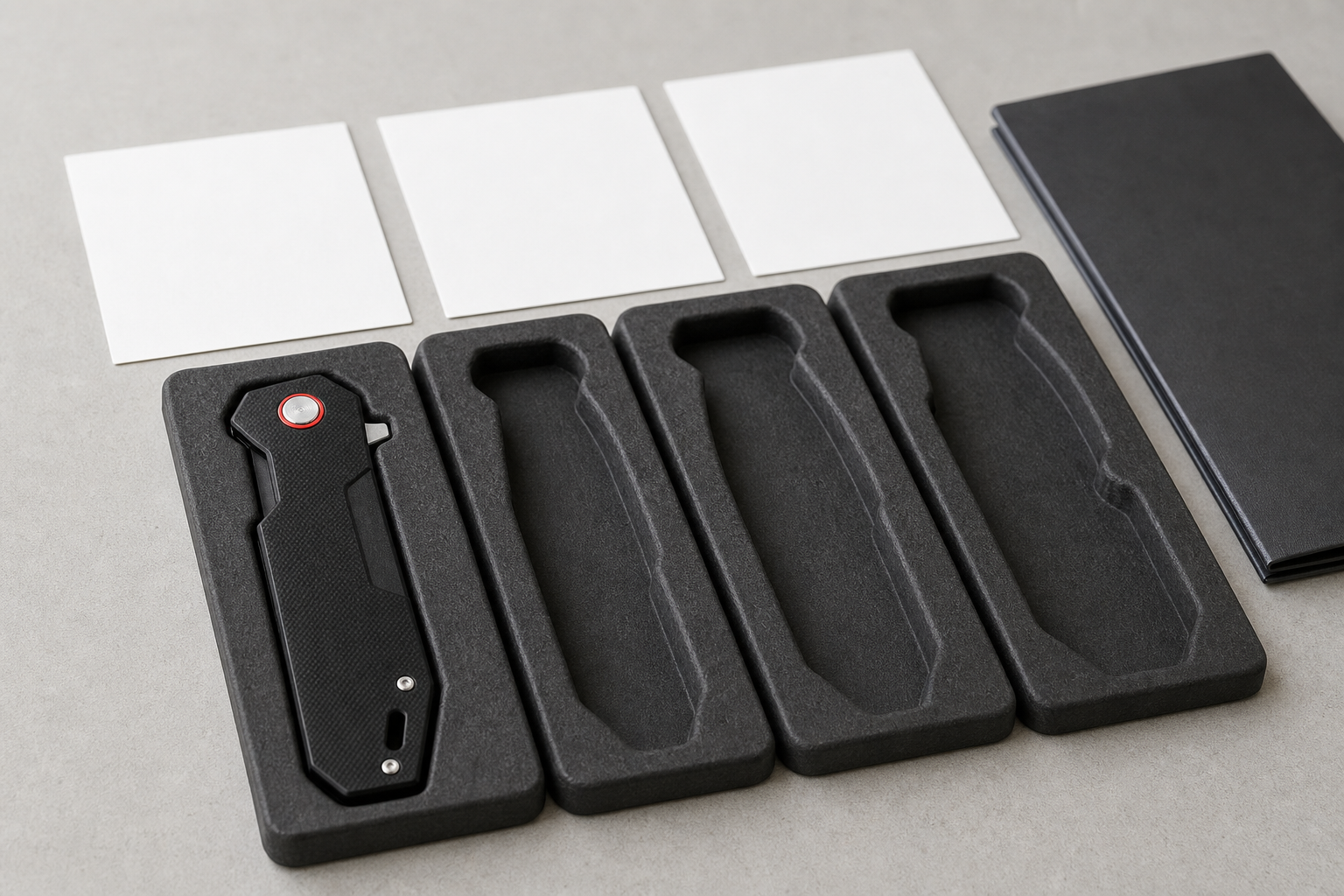
Prototype development takes multiple rounds because appearance, mechanism feel, lockup, blade centering, handle comfort, finish, packaging, and manufacturability all need separate confirmation.
I Use Samples to Answer Different Questions
The first prototype may answer whether the shape and size are correct. It may not fully prove the lock feel or mass production stability. A second prototype may tune the lock, pivot, handle thickness, or clip. A third sample may confirm finish, logo, packaging, and QC boundary samples. This is normal when the product is custom.
Prototype rounds also help buyers avoid expensive mistakes. A CAD drawing cannot fully show hand feel. A photo cannot show lock release. A render cannot show pivot smoothness. A finish sample may look different under factory lighting, office lighting, and retail lighting. A package mockup may feel too large or too weak when the real knife is placed inside.
I recommend buyers treat samples as decision tools. Each sample should answer specific questions. Is the size right? Is the lock acceptable? Is the blade centered? Is the clip comfortable? Is the finish right? Is the packaging suitable? This keeps the sample process controlled instead of emotional.
| Prototype round | Main purpose | Buyer decision |
|---|---|---|
| Concept sample | Shape and size | Confirm direction |
| Engineering sample | Action and lock | Tune mechanism |
| Finish sample | Surface and logo | Approve appearance |
| Pre-production sample | Full package and QC | Confirm mass production |
Why Do Cost and MOQ Become Difficult in Custom Projects?
Customization is not free. Each special part can change tooling, labor, material, and inspection needs.
Cost and MOQ become difficult because custom blades, handles, locks, finishes, logos, packaging, and hardware may require separate tooling, setup, sourcing, and QC work.
I Connect Customization to Real Production Effort
Many buyers ask for custom shape, custom steel, custom handle, custom color, custom screws, custom logo, custom clip, custom packaging, and a low MOQ. Each request may be possible, but together they can make the project harder and more expensive.
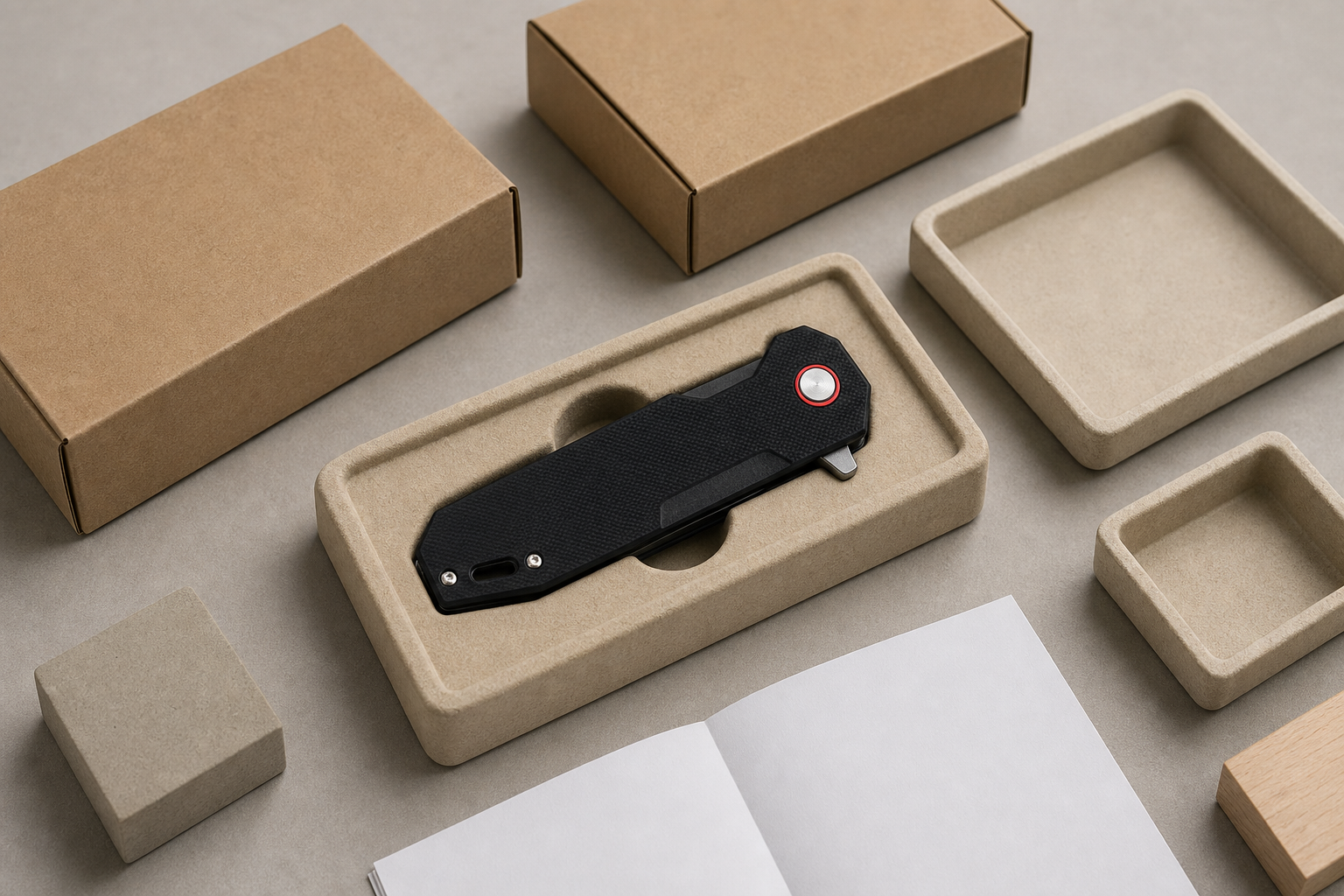
Tooling can be needed for blade blanks, handles, liners, clips, backspacers, packaging inserts, or molded trays. Special materials may require minimum purchase quantities. Special finishes may require setup time. Small batches may have higher unit costs because setup and QC work are spread over fewer pieces.
This does not mean buyers should avoid customization. It means customization should support the product goal. A logo and packaging change may be enough for a private label budget project. A full custom mechanism may be better for a serious brand-building project. A buyer who understands this can choose where to spend money.
| Custom item | Cost driver | Better question |
|---|---|---|
| Custom blade profile | Tooling and grinding | Does it improve the product? |
| Custom handle material | Sourcing and machining | Does it fit the price tier? |
| Custom finish | Setup and batch control | Does it match brand positioning? |
| Custom packaging | Printing and inserts | Does it increase sellable value? |
Why Is Quality Control More Than Final Inspection?
Final inspection can catch defects, but it cannot fix a weak process after the batch is built.
Quality control for folding knives should cover incoming material, blade processing, heat treatment, part dimensions, finishing, assembly, functional checks, packaging, and corrective feedback.
I Build the Checklist Around Likely Failure Points
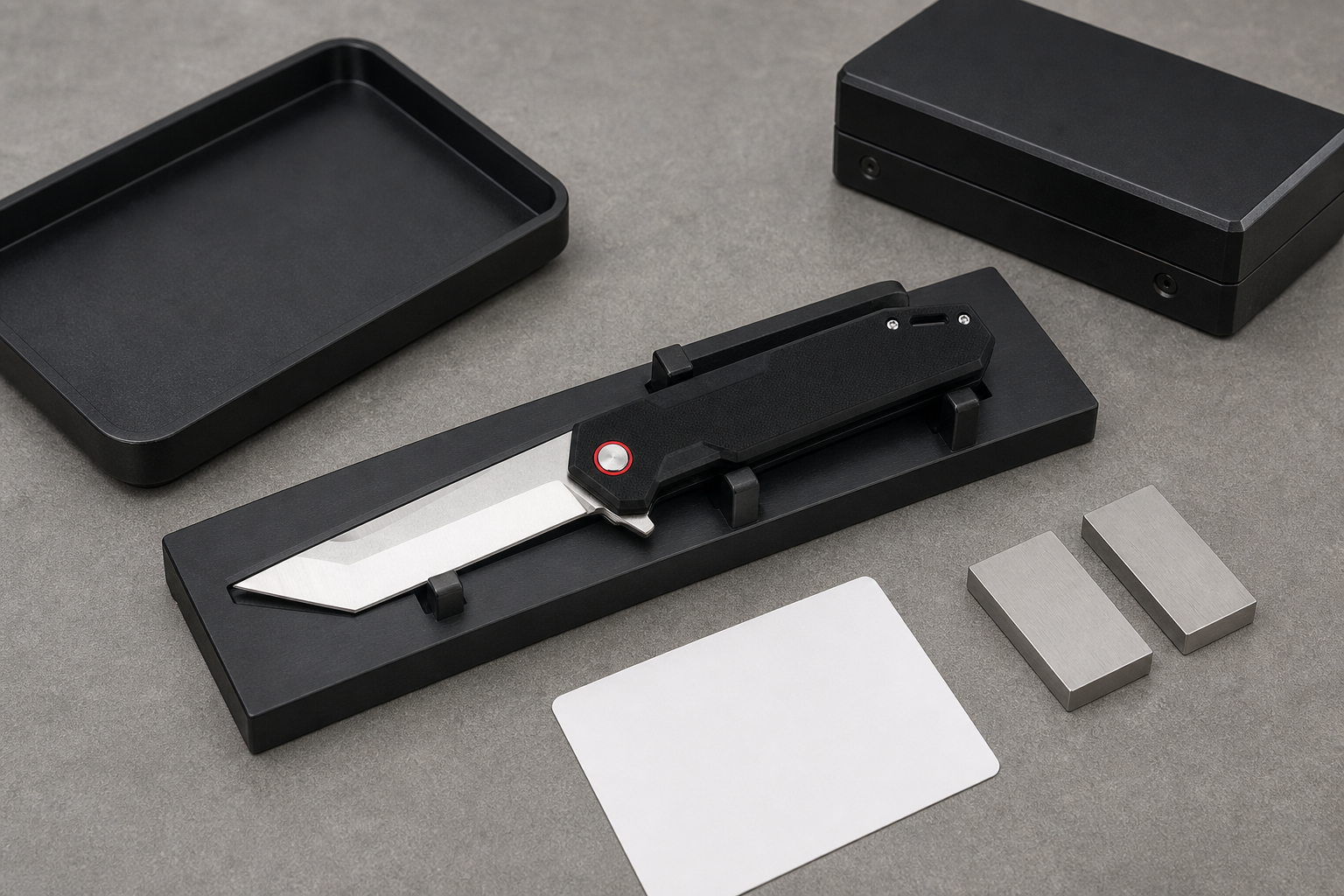
For folding knives, common failure points include blade play, poor centering, weak lockup, lock stick, rough action, inconsistent edge, scratches, coating defects, loose screws, poor clip tension, unclear logo, and packaging errors. Each likely problem should become a control point.
ISO describes ISO 9001 as a quality management standard focused on meeting customer expectations and improving quality management systems. I use that process mindset in folding knife production. QC should not be only a person looking at finished knives. It should include material verification, in-process checks, hardness checks, assembly checks, final function checks, and packaging checks.
Good QC also needs boundary samples. The approved sample should show what is acceptable. Boundary samples can show the limit for finish marks, lock feel, centering, logo clarity, and packaging appearance. This helps avoid subjective arguments during mass production.
| QC stage | What to check | Why it matters |
|---|---|---|
| Incoming material | Steel, handle, hardware | Prevent weak inputs |
| In-process | Holes, grind, hardness, finish | Catch issues early |
| Assembly | Pivot, lock, centering, screws | Protect function |
| Final packing | Sharpness, appearance, packaging | Protect sellable quality |
What Should Buyers Prepare Before Starting a Custom Folding Knife RFQ?
A supplier cannot quote accurately if the buyer has not defined the product.
Buyers should prepare target user, use case, dimensions, blade steel, lock type, opening method, handle material, finish, logo, packaging, quantity, target price, sample deadline, and QC expectations.
I Use the RFQ as the First Engineering Document
For OEM and ODM projects, the RFQ is not only a price request. It is the first project document. A good RFQ tells me what the buyer wants to build and why. A weak RFQ forces the supplier to guess, which creates wrong pricing and slow revisions.
The buyer should state the product category first. Is it a compact EDC folder, outdoor folder, premium folder, work knife, gift item, or brand line extension? Then the buyer should provide blade length, blade shape, steel target, hardness target if known, lock type, opening method, handle material, clip requirement, finish, logo method, packaging, MOQ, target price, target market, and sample deadline.
If the buyer has drawings, 3D files, reference samples, or packaging requirements, those should be included. If the buyer only has a rough idea, that is also fine, but the supplier should know that development support is needed. Clear information saves time on both sides.
| RFQ item | Why it helps | Example |
|---|---|---|
| Product role | Guides structure | EDC, outdoor, work, gift |
| Mechanism | Controls engineering | Liner lock, back lock, slip joint |
| Materials | Controls cost and performance | Steel, handle, hardware |
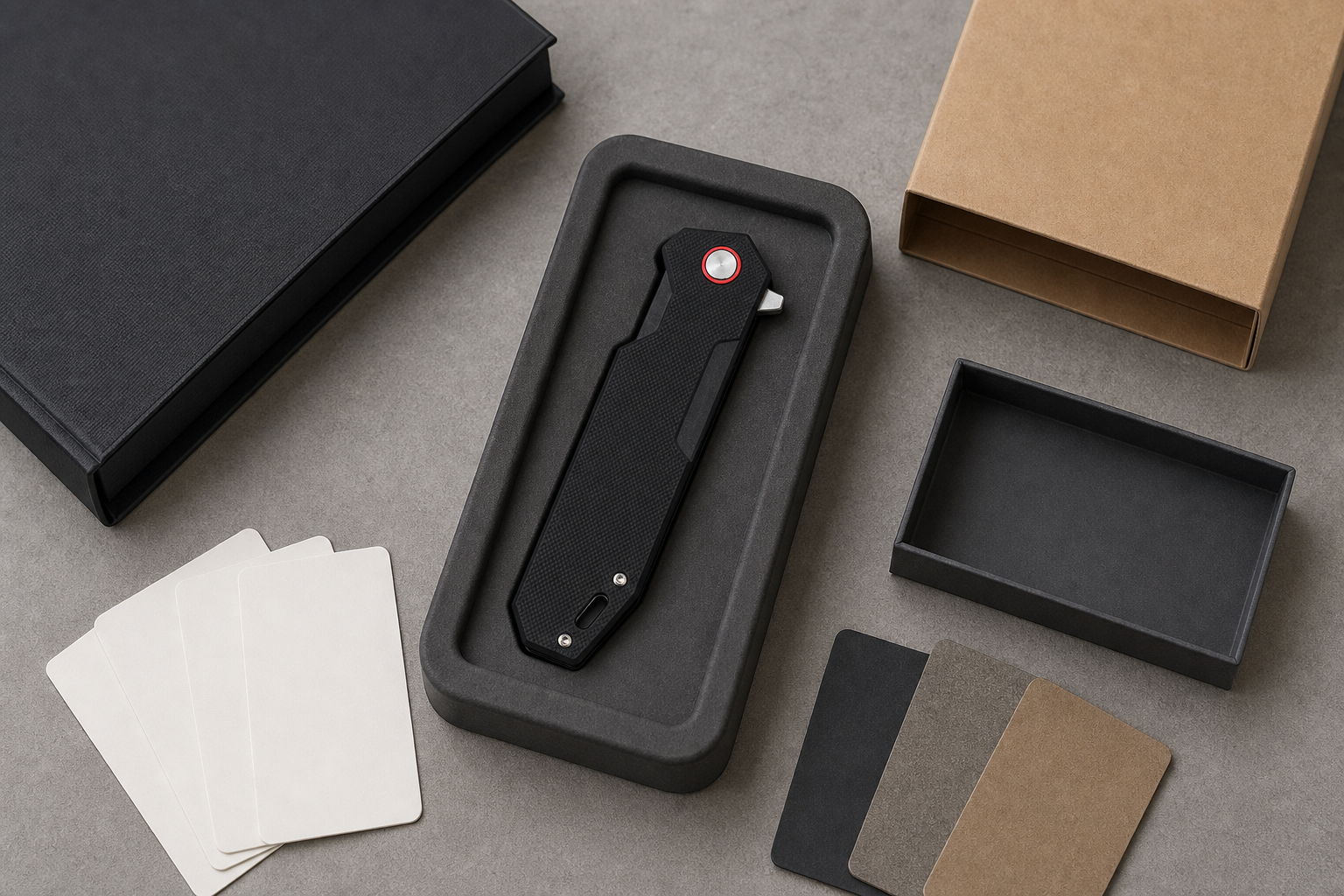
| Packaging | Controls final value | Box, pouch, instruction card |
How Can Vast State Reduce Custom Folding Knife Development Risk?
Buyers need more than a quotation. They need practical feedback before the project becomes expensive.
Vast State reduces custom folding knife development risk through concept review, structure suggestions, material selection, prototype follow-up, finish and packaging support, production communication, and QC control.
I Help Buyers Turn Ideas Into Repeatable Products
Vast State works with international B2B customers on folding knives, fixed blade knives, pocket knives, camping tools, rescue tools, and multi-tools. For custom folding knives, I focus on the full development path. I look at the buyer's target market, product position, cost range, materials, mechanism, packaging, and production risk.
If a customer already has a finished design, I can review whether it is practical to manufacture. If a customer only has a rough concept, I can help turn it into a more realistic product direction. I may suggest changing a blade shape, simplifying a lock, adjusting handle thickness, choosing a different finish, or separating premium and budget versions.
My goal is not only to make one attractive sample. My goal is to help the buyer build a product that can be produced consistently, communicated clearly, and sold with confidence. That is where engineering support, stable manufacturing, flexible customization, efficient communication, and quality control matter most.
| Support area | What I review | Buyer benefit |
|---|---|---|
| Concept review | User, market, and target price | Clearer direction |
| Structure feedback | Pivot, lock, handle, clip | Better manufacturability |
| Material and finish | Steel, handle, coating, logo | More realistic cost and quality |
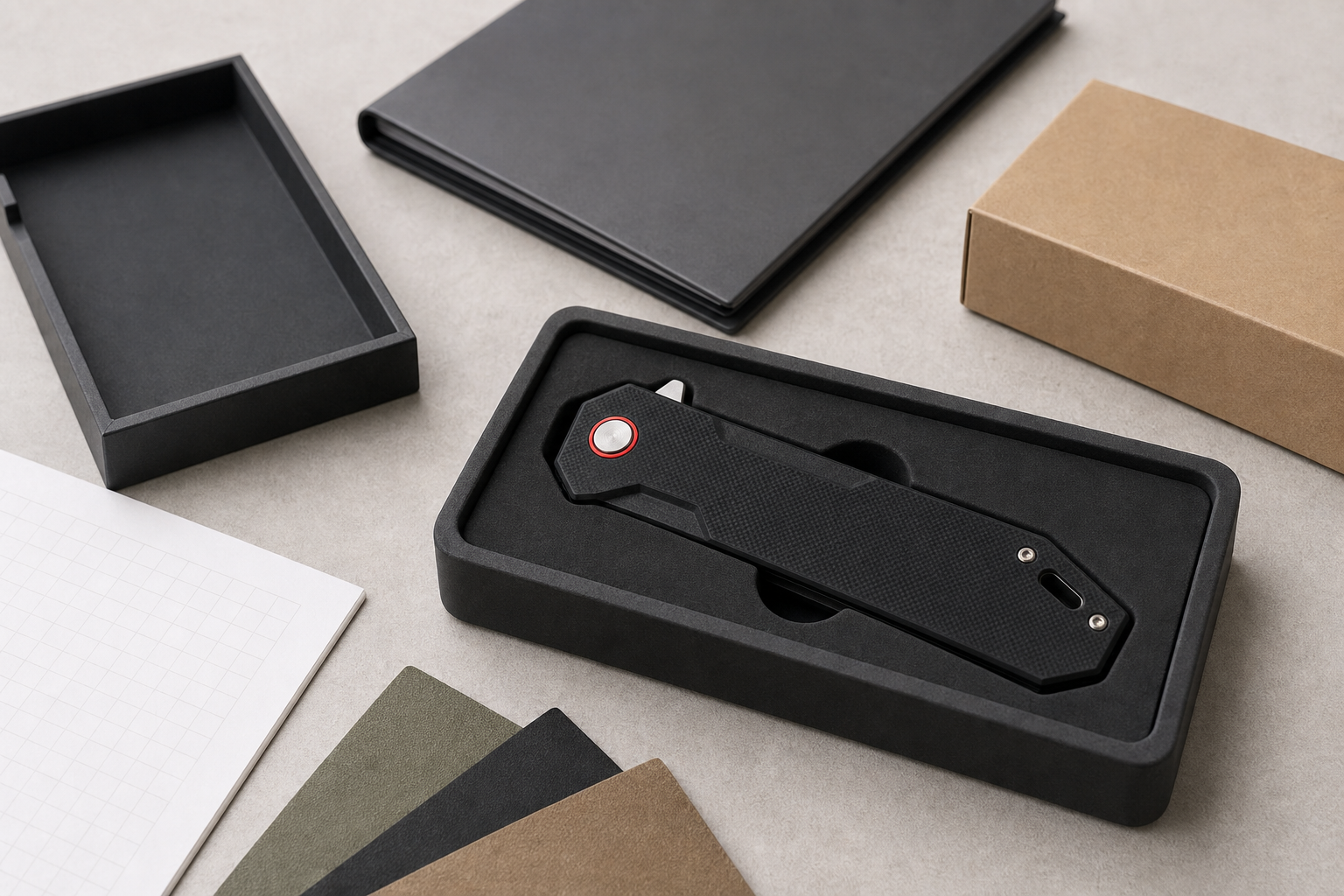
| Production follow-up | Samples, QC, packaging | More stable execution |
Turn this article into a folding knife project.
Share your blade type, lock direction, steel preference, handle material, quantity, target market, and packaging needs. Vast State can prepare OEM/ODM options.
Conclusion
Custom folding knife development is difficult because every part affects another part. Buyers manage risk by planning clearly, sampling carefully, and controlling production.