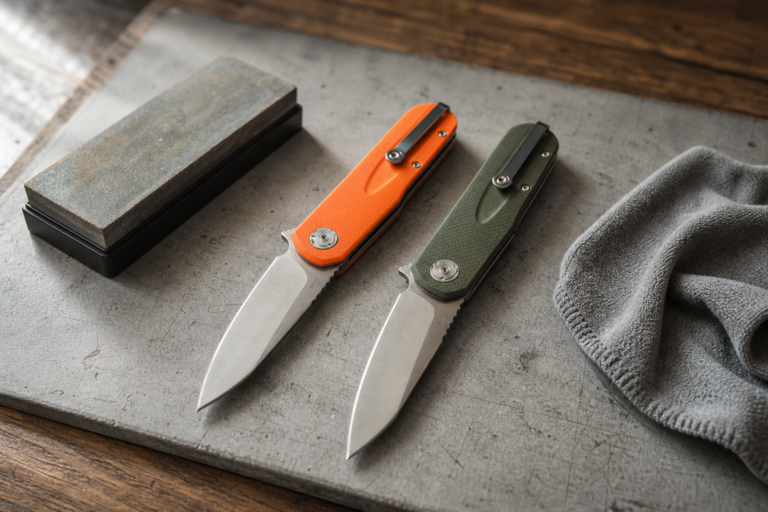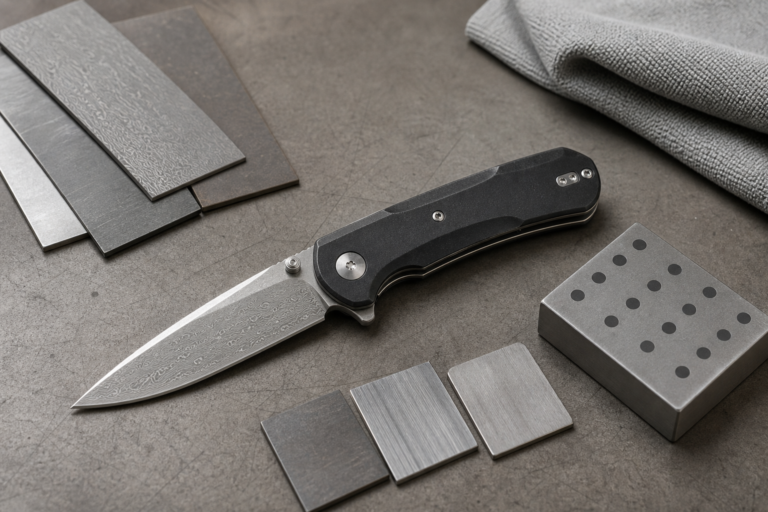
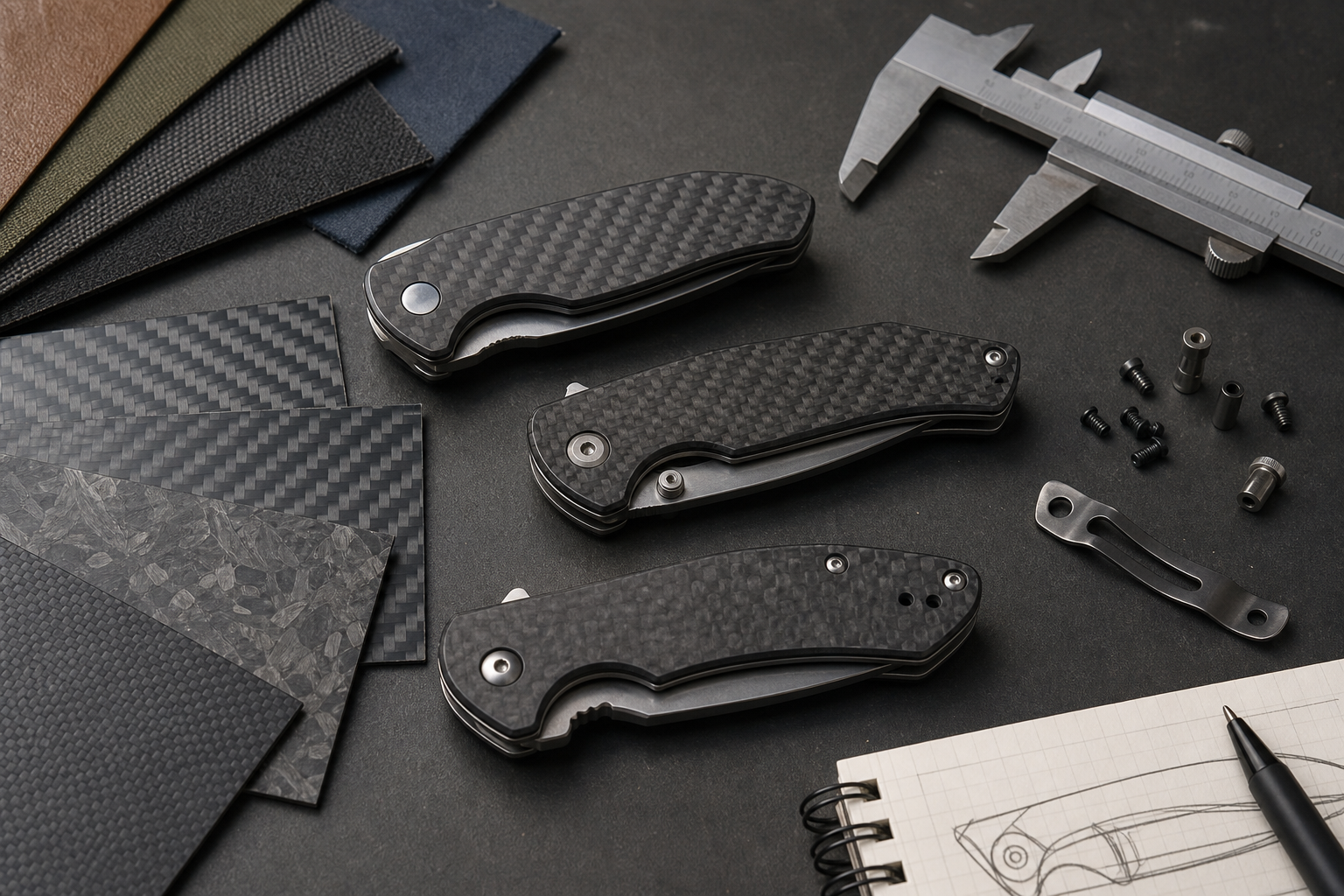
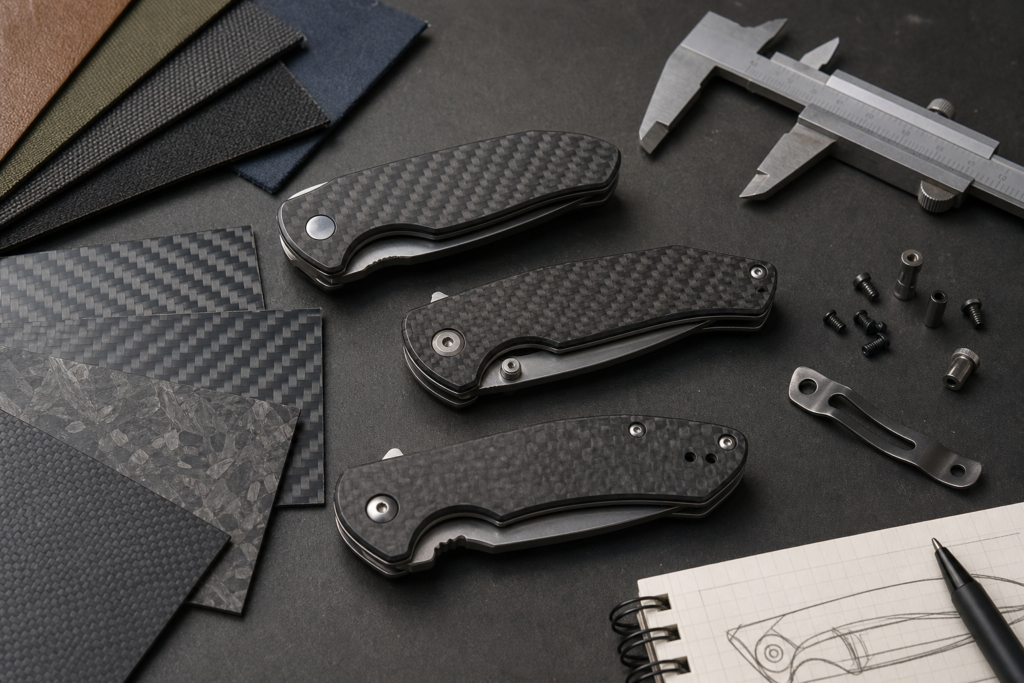
Carbon fiber can make an EDC knife look premium. But the wrong specification can raise cost without improving the real product.
Buyers should choose carbon fiber handles for EDC folding knives when the target market values lightweight feel, premium appearance, stiffness, clean machining, and strong visual identity. The material still needs correct structure, surface finish, hardware fit, grip design, cost control, and QC.
Quick buyer brief:
- Answer: Carbon fiber handles work best for premium EDC folders, lightweight pocket knives, private label upgrades, gift lines, and modern outdoor utility knives where appearance and weight matter.
- Buyer context: This guide is for knife brands, outdoor brands, EDC brands, importers, wholesalers, distributors, private label buyers, and sourcing managers.
- Key checks: Carbon fiber type, resin system, laminate quality, thickness, weave direction, edge sealing, CNC machining, screw fit, chamfering, texture, pocket feel, lock structure, clip fit, packaging language, and batch appearance.
Developing a folding knife line for your brand?
Vast State supports OEM/ODM folding knife projects, including blade steel, lock structure, handle material, finish, logo method, packaging, and quality inspection planning.
When I review a carbon fiber handle project, I do not start with the black woven look. I start with the product goal. Does the buyer want a lighter premium EDC knife? Does the product need a modern technical style? Does the target price allow the material, machining, and QC work? Carbon fiber can be a strong choice, but only when the whole knife supports it. If the handle looks premium but the blade action, lock fit, screw assembly, or packaging feels average, the buyer pays more without getting the full value.
What Does Carbon Fiber Handle Material Mean in Knife Manufacturing?
Carbon fiber sounds like one material, but knife handles can use different composite forms. Buyers need clear material language.
Carbon fiber knife handles usually mean carbon-fiber-reinforced composite scales or overlays, where carbon fibers and resin create a lightweight, stiff, patterned handle material.
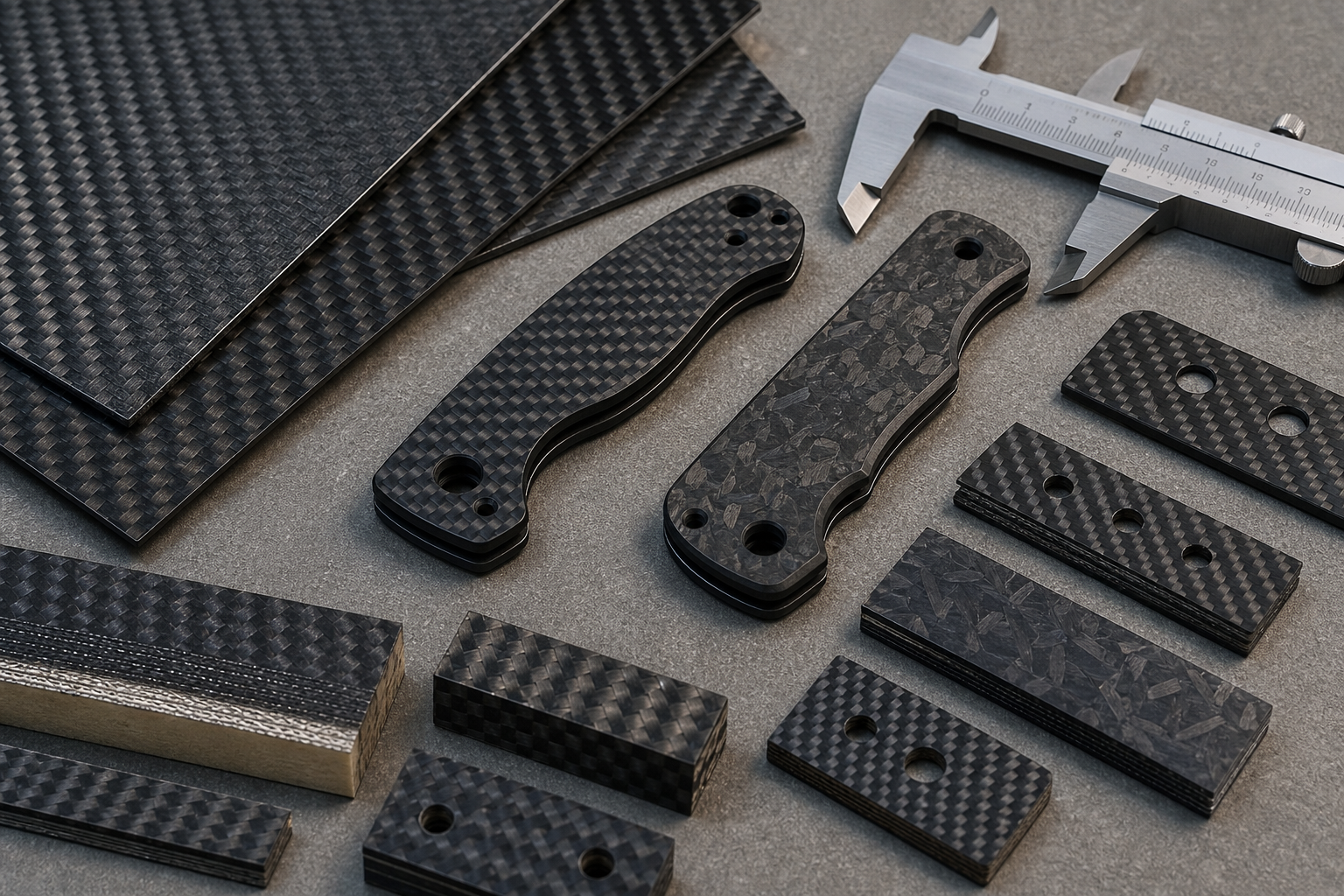
I Ask What Kind of Carbon Fiber the Buyer Means
Many buyers say "carbon fiber handle" as if it describes one fixed material. In production, I need more detail. Is the buyer asking for full carbon fiber scales, carbon fiber overlay over liners, carbon fiber inlay, carbon fiber-style surface, or a carbon-fiber-reinforced composite? These options can look similar in photos but differ in cost, strength, machining, and user perception.
Carbon fiber is often valued because it can provide high strength and stiffness at low weight when used correctly in a composite system. Hexcel's carbon fiber information describes carbon fiber as selected for high strength, low weight, stiffness, and other technical properties. Toray's carbon fiber page also connects carbon fiber grades with lightweight and tensile-strength-critical applications.
For knife handles, the buyer should not translate those industrial claims into automatic handle superiority. A handle scale is a finished part. Its behavior depends on laminate quality, resin, thickness, machining, screw holes, edge finishing, and support from liners or frame structure.
This is why I turn "carbon fiber" into a specification. I ask for material form, thickness, visual pattern, surface finish, edge treatment, backing structure, and acceptable variation. That keeps the project practical.
| Material term | What it may mean | Buyer question |
|---|---|---|
| Carbon fiber scale | Composite handle scale | Full scale or overlay? |
| Carbon fiber inlay | Decorative insert | How is it fixed? |
| Carbon fiber-style | Visual imitation | Is it real composite? |
| CFRP | Carbon-fiber-reinforced plastic | What resin and thickness? |
OEM/ODM RFQ Checklist
Prepare these details to help Vast State review your project and provide a more accurate quotation.
| RFQ Field | What to Prepare |
|---|---|
| Project type | OEM from drawing / ODM private label / wholesale catalog |
| Product category | Folding knife / fixed blade / multi-tool / outdoor tool |
| Design status | Idea / sketch / 2D drawing / 3D CAD / physical sample |
| Target price | Ex-factory target price or retail price range |
| MOQ expectation | 500 / 1,000 / 3,000 / 5,000+ pcs |
| Logo method | Laser engraving / etching / printing / molded logo |
| Packaging | Standard packaging / custom retail box / Amazon-ready |
| Market | USA / EU / Japan / Korea / Middle East / other |
| Compliance needs | Buyer-specified testing / documentation / labeling |
| Timeline | Sample deadline / mass production deadline |
Why Do Buyers Choose Carbon Fiber Handles for EDC Folding Knives?
Carbon fiber is not chosen only because it looks good. It changes how the product feels in the pocket.
Buyers choose carbon fiber handles for lightweight carry, premium visual style, technical brand positioning, stiffness, corrosion-resistant handle surfaces, and clear product differentiation.
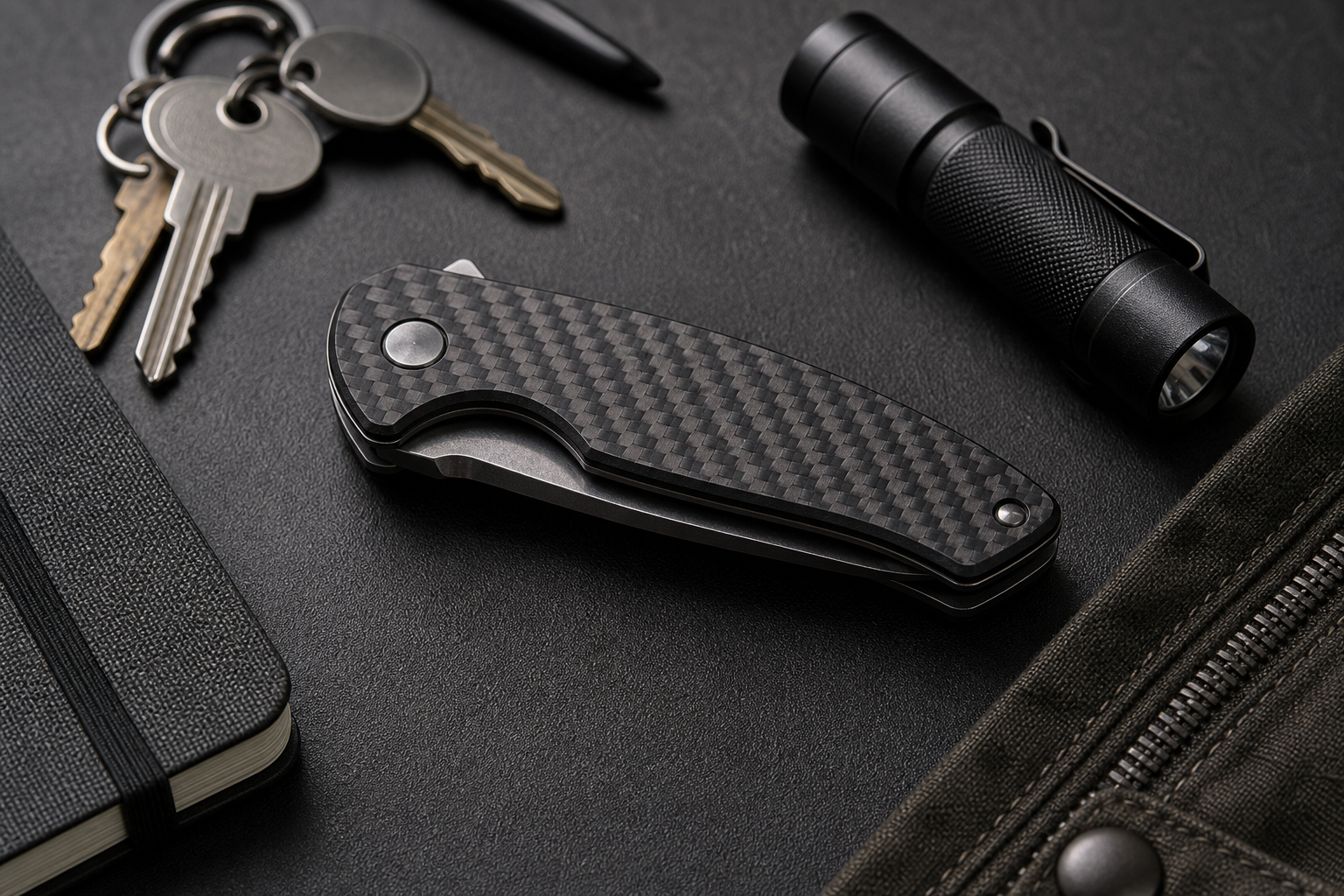
I Use Carbon Fiber When It Solves a Product Problem
Carbon fiber handles can help when a buyer wants a premium EDC knife that feels light but not cheap. A heavy handle can make a knife feel solid, but it can also make daily carry less comfortable. A carbon fiber scale can reduce handle weight while keeping a modern, high-value appearance.
The material also supports a technical look. Some buyers want a knife that feels modern, clean, and performance-oriented. Carbon fiber can communicate that quickly. It pairs well with satin blades, stonewashed blades, black hardware, titanium-colored finishes, stainless liners, and premium packaging.
The U.S. Department of Energy materials technology page discusses lightweight materials such as carbon fiber and polymer composites in the context of reducing weight. That source is about vehicles, not knives, but it supports the broad material idea that lightweight materials are used when weight reduction matters. In EDC knives, the same product logic appears at a smaller scale: carry comfort matters.
Still, carbon fiber is not always the right choice. If the buyer needs the lowest price, stronger texture, or a more rugged outdoor feel, G10 or micarta may fit better. I choose carbon fiber when the target customer will understand and pay for the lightweight premium look.
| Buyer goal | Carbon fiber value | Watch point |
|---|---|---|
| Lightweight carry | Reduces handle weight | Structure still matters |
| Premium look | Strong visual identity | Finish must be clean |
| Technical style | Modern material story | Avoid overclaiming |
| Private label upgrade | Differentiates the line | Cost must fit margin |
What Carbon Fiber Handle Options Should Buyers Compare?
Not every carbon fiber handle option fits every price range. The structure decides cost and production risk.
Buyers should compare full carbon fiber scales, carbon fiber overlays, inlays, laminated sheets, textured finishes, smooth finishes, and hybrid handle structures before confirming the design.
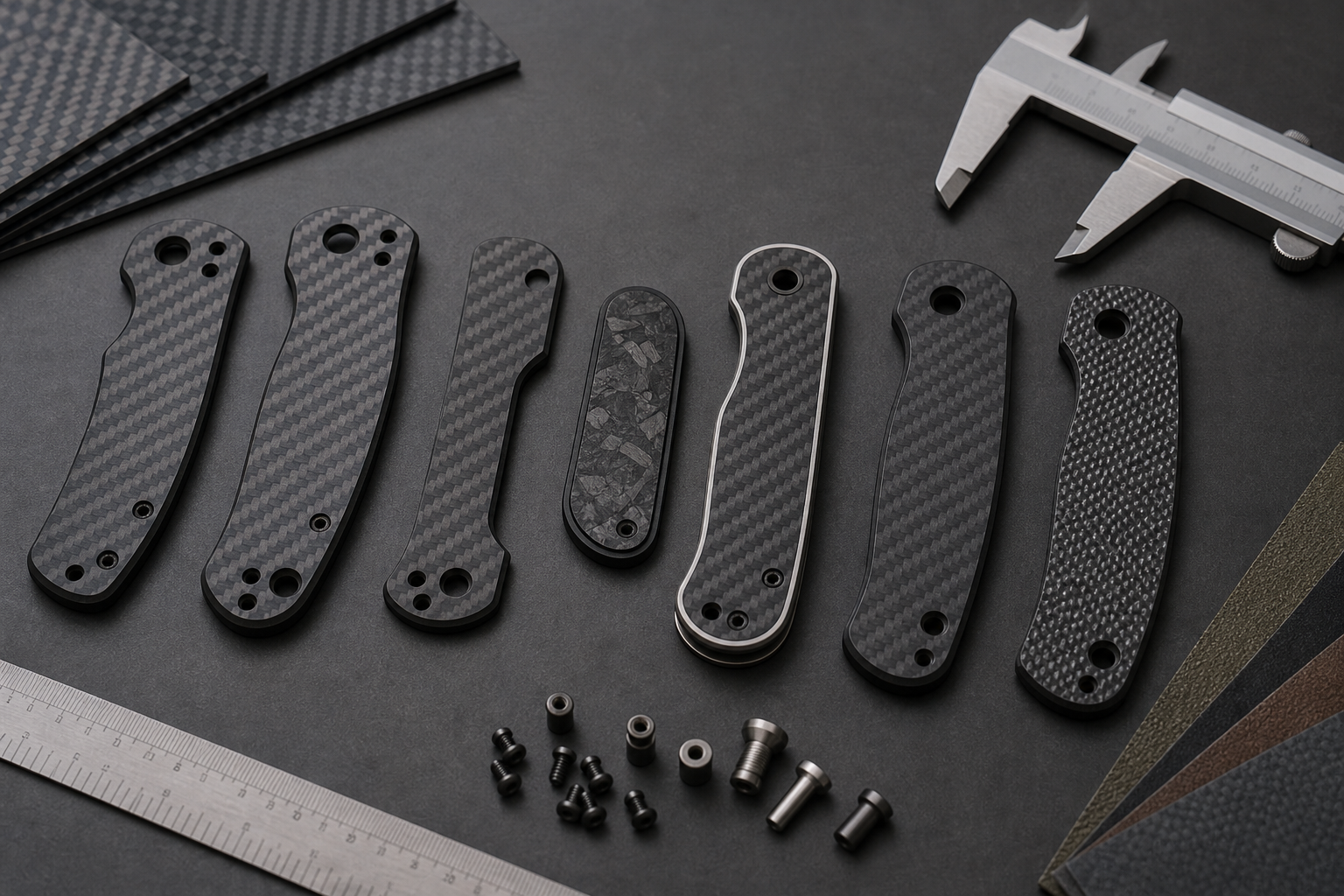
I Match the Carbon Fiber Form to the Price Tier
A full carbon fiber handle scale can feel premium and lightweight, but it may require careful machining and edge finishing. It can also need internal support depending on the lock type and handle structure. A carbon fiber overlay can create a similar visual effect at a lower cost if the underlying liner or frame carries the structure. A carbon fiber inlay can add a premium accent without making the entire handle from carbon fiber.
The buyer should also compare surface style. A glossy woven finish can look elegant but may show fingerprints and scratches. A matte finish can feel more understated. A textured finish may improve grip, but it can change the visual depth of the weave. Chamfering and edge polishing also change user perception. Sharp edges make the handle feel unfinished even if the material is expensive.
Thickness is important. A thin scale may reduce weight, but it may not give enough screw engagement or stiffness if the handle structure is weak. A thick scale may feel stronger, but it can make the knife bulky. The best choice depends on blade size, liner thickness, lock type, and target carry feel.
I also ask how the carbon fiber will be sourced and repeated. If the pattern changes between batches, the buyer should approve the acceptable range.
| Option | Best use | Production concern |
|---|---|---|
| Full scale | Premium lightweight handle | Machining and support |
| Overlay | Cost-controlled visual upgrade | Bonding and edge fit |
| Inlay | Accent design | Fit and adhesive control |
| Textured finish | Better grip | Pattern appearance changes |
How Should Buyers Evaluate Strength, Weight, and Grip?
Carbon fiber can be strong and light, but handle performance depends on the full design.
Buyers should evaluate carbon fiber handles by checking weight target, stiffness, screw support, edge comfort, surface grip, drop risk, pocket comfort, and liner or frame support.
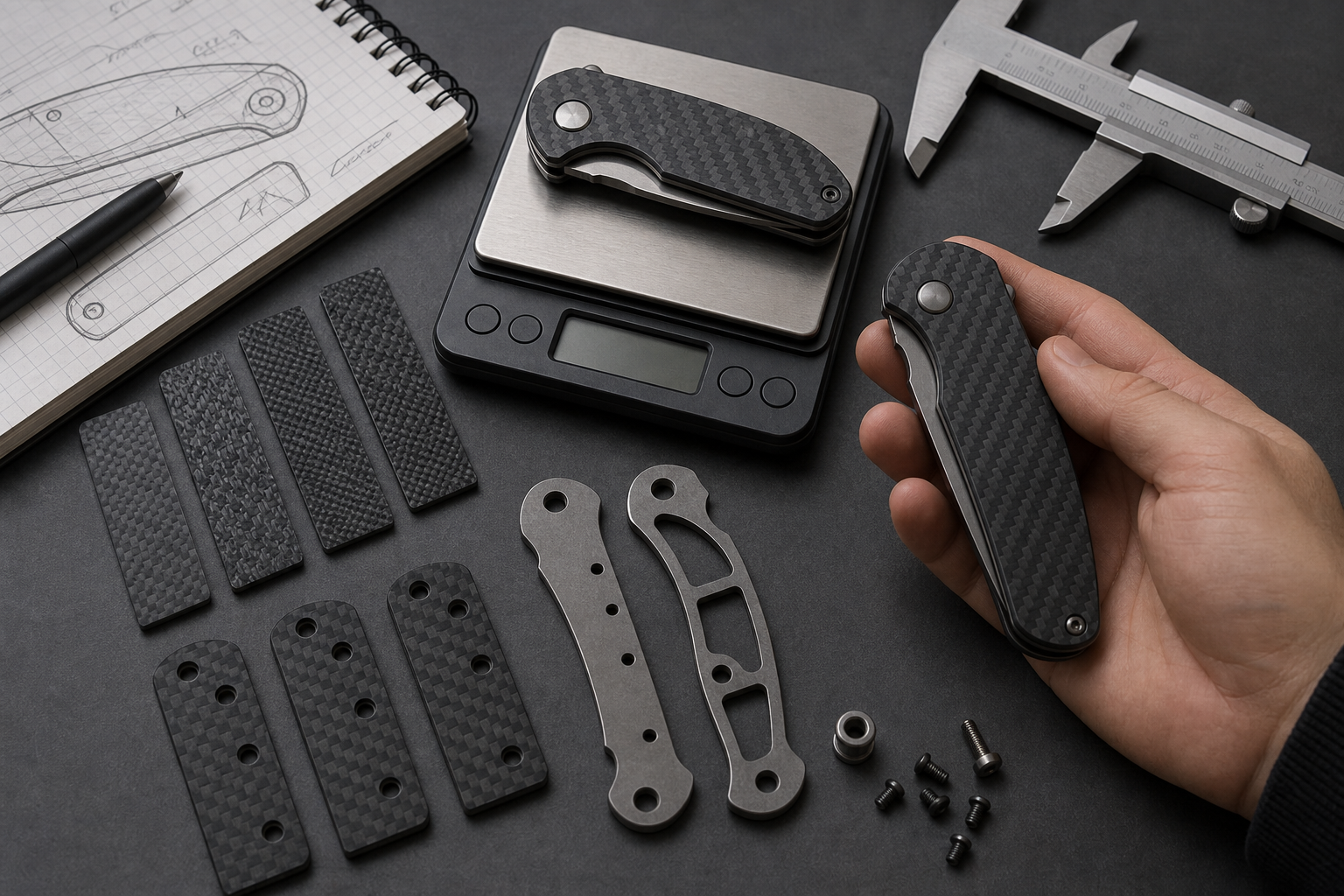
I Do Not Let Material Reputation Replace Testing
Carbon fiber has a strong reputation, but a knife handle is not only a sheet of material. It has screw holes, pocket clip screws, pivot hardware, chamfered edges, cutouts, lock clearance, and sometimes thin sections near the butt or pivot. These areas can create weakness if the design is not controlled.
The first test is weight. If the buyer wants carbon fiber for lightweight EDC positioning, the finished knife should actually feel lighter than comparable handle options. The second test is stiffness. The handle should not flex in a way that affects lockup, blade centering, or user confidence. The third test is grip. A smooth glossy carbon fiber handle may look premium but may feel slippery in wet or dusty conditions. A matte or textured finish may be better for practical use.
I also check screw support. Pocket clip screws and body screws need stable holding. The design may require liners, inserts, standoffs, or controlled hole geometry. If the screw area is weak, the user may experience loose clips or damaged holes.
The buyer should test the complete knife, not only the handle material. A lightweight handle with poor balance may feel awkward. A premium handle with rough edges may feel cheap. Real user feel matters.
| Performance area | What to test | Why it matters |
|---|---|---|
| Weight | Finished knife weight | Supports EDC carry |
| Stiffness | Handle flex and lock fit | Protects mechanism feel |
| Grip | Dry and light-use handling | Improves user confidence |
| Screw support | Clip and body screw areas | Reduces after-sales issues |
What Machining and Finish Issues Affect Carbon Fiber Handles?
Carbon fiber can look clean in photos but rough in the hand if machining is poor.
Machining and finish issues include edge chipping, delamination, dust control, hole quality, chamfer consistency, surface scratches, pattern direction, pocket clip fit, and final cleaning.
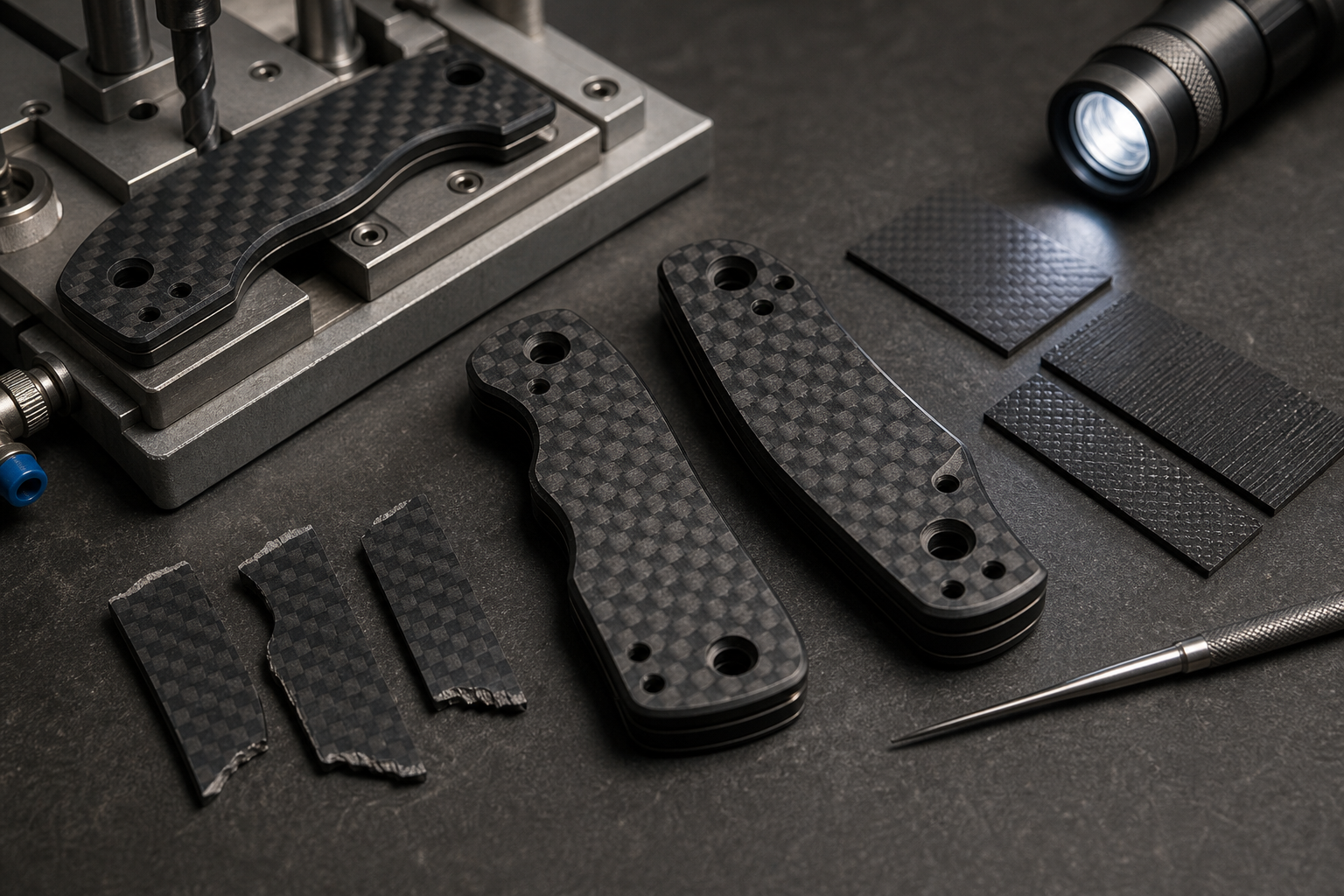
I Watch the Edges and Holes Carefully
Carbon fiber handle parts require careful machining. The edges should be clean, not chipped. Screw holes should be accurate, not frayed. The surface should not show avoidable scratches, resin haze, or uneven gloss. The weave direction should match the approved sample if the buyer cares about pattern alignment.
Dust control is also part of responsible manufacturing. Carbon fiber machining creates fine dust. The factory should manage cutting, extraction, cleaning, and worker protection. For buyers, this is not only a factory issue. Poor dust control can leave contamination on parts and create rough-looking finished products.
The edge finish changes the perceived quality. A small chamfer can make the handle more comfortable. A polished edge can make the material look more refined. A rough edge can make the product feel unfinished. This matters because the user's fingers touch the handle more than they look at the blade steel.
I also check pocket clip fit. Carbon fiber scales can crack or crush if clip screws are poorly supported or over-tightened. The design should define screw torque, screw length, inserts if needed, and how the clip contacts the handle.
| Machining point | Defect risk | Control method |
|---|---|---|
| Edge cutting | Chips and rough feel | Correct tooling and chamfer |
| Screw holes | Fraying or weak fit | Accurate drilling and support |
| Surface finish | Scratches or haze | Finish standard and cleaning |
| Pattern direction | Inconsistent appearance | Approved orientation sample |
How Should Carbon Fiber Match Blade, Lock, and Hardware?
A premium handle can expose weak mechanical details. The whole knife must feel consistent.
Carbon fiber handles should match the blade size, lock type, liner strength, pivot hardware, screw layout, pocket clip, spacer design, and target balance of the finished folding knife.
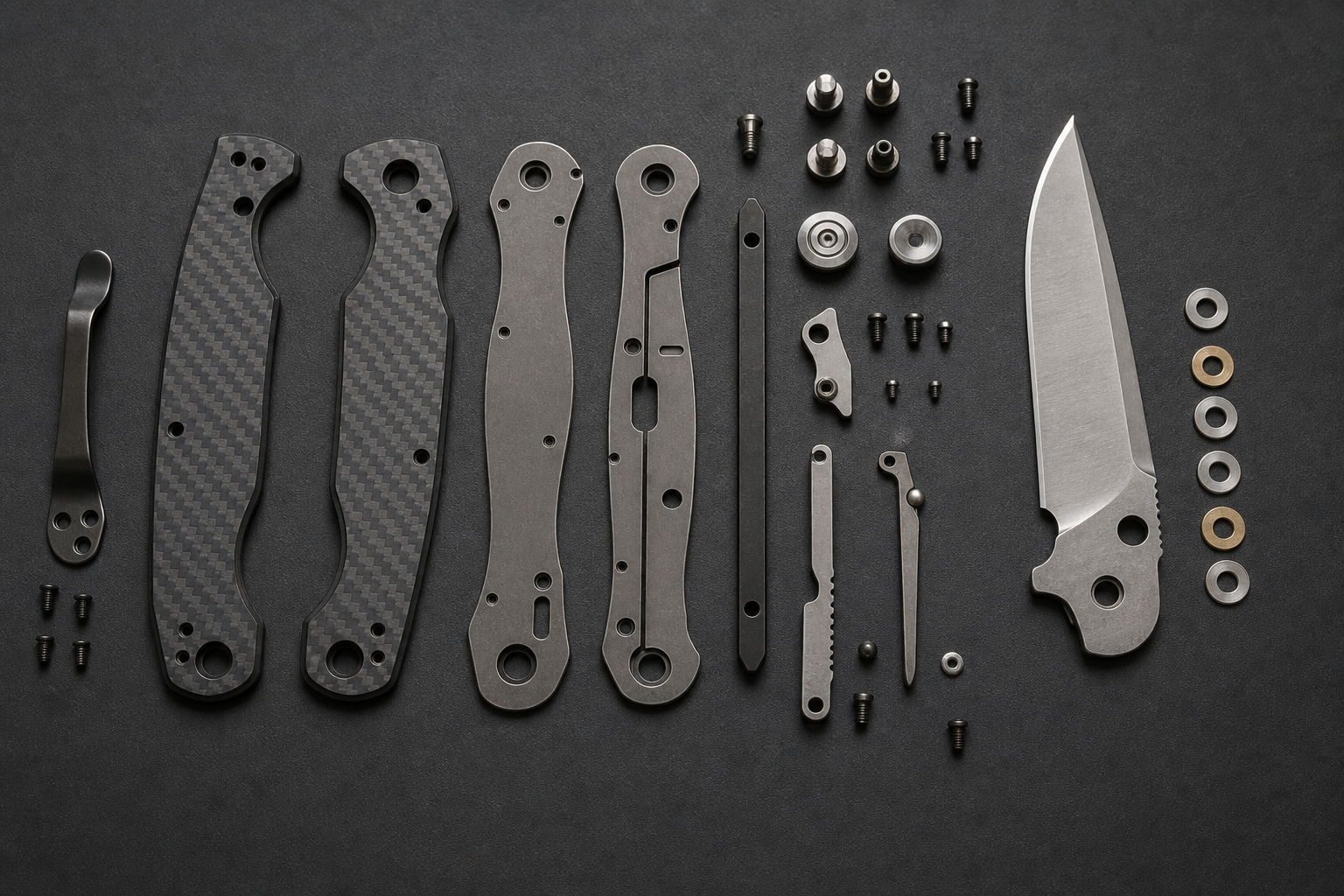
I Treat the Handle as Part of the Mechanism
Carbon fiber handles are not only decorative scales. On a folding knife, the handle supports the pivot, blade path, lock, screws, and pocket clip. If the handle structure is too weak or too thin, the knife can develop poor centering, flex, loose screws, or uneven action.
The lock type is important. A liner lock may use carbon fiber scales over steel liners. A frame lock may use carbon fiber as an inlay or show-side scale while the metal frame carries the lock. A back lock needs room for the lock bar and spring. A button lock needs controlled button clearance. A slip joint needs spring structure and handle stability.
Hardware finish should match the handle style. Black screws can create a clean technical look. Satin hardware can feel more refined. Bright hardware may look out of place on a dark carbon fiber handle if the rest of the design is not balanced.
Blade finish also matters. Carbon fiber often pairs well with satin, stonewashed, or blackwashed blades. Damascus-style blades can pair with carbon fiber too, but the product can become expensive fast. I always check whether the target market will pay for the full combination.
| Knife part | Carbon fiber design question | Practical reason |
|---|---|---|
| Lock | Does the structure support it? | Protects lock consistency |
| Pivot | Are holes stable and aligned? | Supports smooth action |
| Clip | Is screw support strong enough? | Reduces loose clip risk |
| Blade finish | Does it match the handle? | Supports product identity |
What Cost, MOQ, and Lead Time Risks Should Buyers Plan?
Carbon fiber can improve product value, but it can also strain the budget. Buyers should check this before sampling.
Buyers should plan for material cost, machining time, waste rate, finish control, MOQ, sample lead time, pattern consistency, packaging level, and inspection workload.
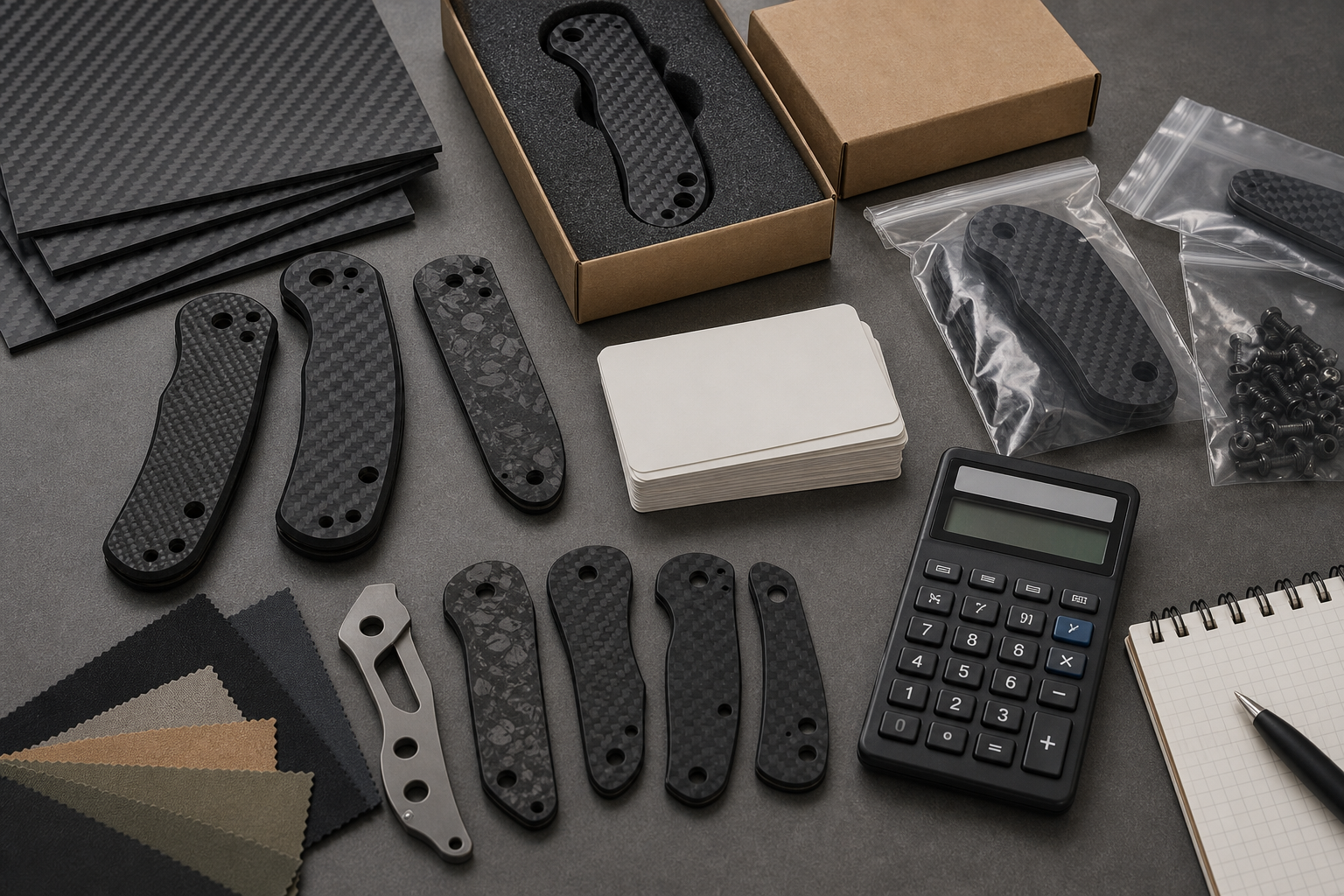
I Separate Premium Value From Uncontrolled Cost
Carbon fiber is often more expensive than common handle materials. The final cost depends on material grade, thickness, sheet yield, machining time, finish standard, defect rate, and assembly support. A small design change can affect cost. For example, deep contouring may take more machining time. Complex inlays may need more fitting. Glossy finishes may need more surface control.
MOQ also matters. If the buyer wants a special carbon fiber pattern or custom sheet, the material MOQ may be higher. If the buyer accepts a standard carbon fiber sheet, sampling and production may be easier. The supplier should explain where the cost comes from, not only give one final price.
Lead time can increase when the handle requires extra machining, edge finishing, inspection, or packaging protection. A buyer who needs a fast promotional project may choose a simpler handle material. A buyer building a premium repeat product may accept the longer process.
I also look at margin. Carbon fiber should help the buyer sell the product at the right level. If the market will not pay for it, the material becomes a cost burden instead of a product advantage.
| Cost factor | What drives it | Buyer action |
|---|---|---|
| Material sheet | Grade and pattern | Approve practical option |
| Machining | Shape complexity | Avoid unnecessary details |
| Finish | Gloss, matte, texture | Define sample standard |
| Inspection | Pattern and edge checks | Build QC into pricing |
What Safety, Care, and Packaging Language Should Buyers Use?
Carbon fiber handles may look technical, but the product is still a sharp hand tool. Packaging should stay clear and responsible.
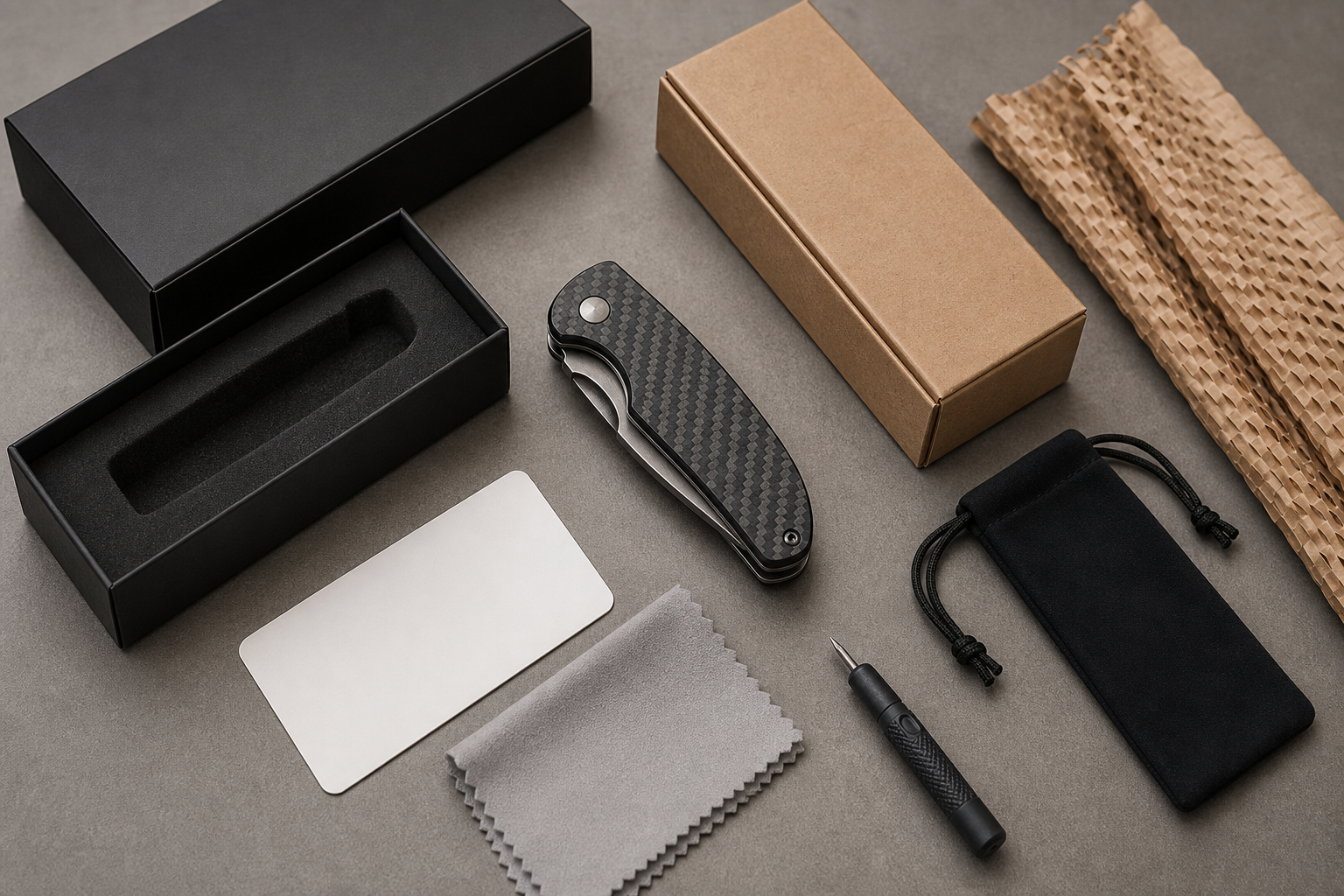
Packaging should explain intended utility use, safe handling, blade closing, storage, cleaning, screw care, handle finish care, and destination-market responsibility without self-defense claims.
I Keep the Product Story Practical
Carbon fiber can invite strong marketing language. I prefer to keep the claims practical. The buyer can say the handle is lightweight, modern, and visually premium if that matches the actual product. The buyer should avoid unsupported claims that the handle makes the knife indestructible or automatically superior to all other materials.
Safe-use language matters because the product is a folding knife. The CCOHS hand-tool guidance supports ideas such as selecting the right tool, keeping tools in good condition, inspecting tools, storing tools properly, and covering sharp edges. For a carbon fiber EDC knife, that becomes simple packaging content: use it for suitable cutting tasks, keep it closed when not in use, inspect it before use, and store it safely.
Care language should also cover the handle. Carbon fiber handle surfaces can scratch, show fingerprints, or be damaged by rough abuse. The buyer can include cleaning advice, screw-check advice, and finish protection notes. The goal is not to scare the user. The goal is to set reasonable expectations.
I also avoid combat or self-defense positioning. Vast State's role is practical OEM/ODM manufacturing support for utility, outdoor, EDC, and general tool markets.
| Packaging topic | Good direction | Avoid |
|---|---|---|
| Material story | Lightweight premium handle | Indestructible claims |
| Use | Utility cutting tasks | Self-defense claims |
| Care | Clean, inspect, store closed | No-maintenance promises |
| Market rules | Buyer verifies destination | Universal legal claims |
What QC Checks Are Needed for Carbon Fiber Handle Knives?
One good carbon fiber sample is not enough. Repeat production needs clear inspection standards.
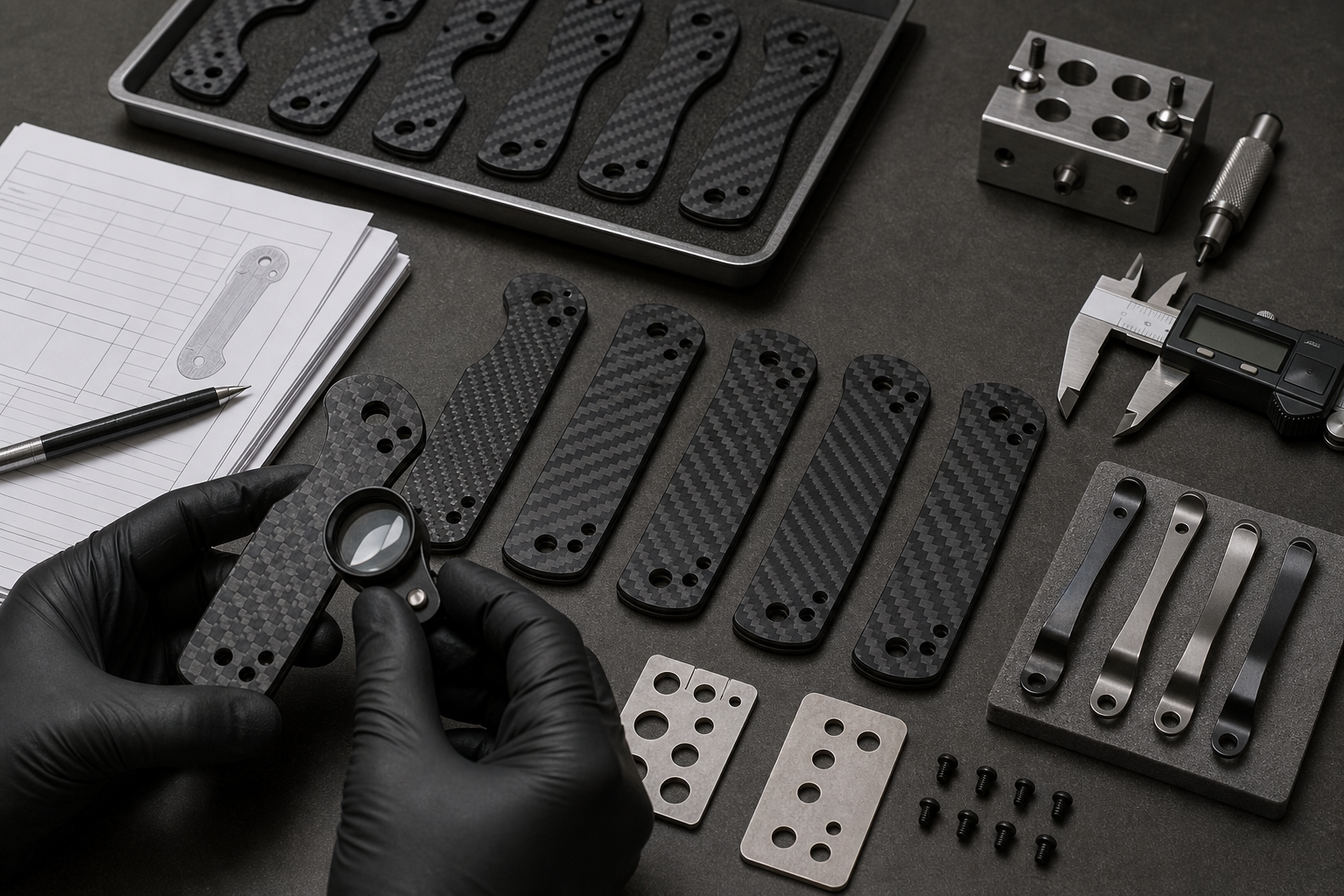
QC should check carbon fiber appearance, weave direction, surface finish, edge quality, hole accuracy, screw fit, clip strength, blade centering, lockup, action, packaging, and batch consistency.
I Use Appearance and Function Checks Together
Carbon fiber handle QC has a visual side and a mechanical side. Visual checks include weave direction, color tone, surface scratches, resin marks, edge chips, chamfer quality, and match between left and right scales. Mechanical checks include screw hole accuracy, pivot fit, pocket clip fit, handle stiffness, lockup, blade centering, and opening action.
The NIST dimensional metrology page is a broad reference for high-accuracy dimensional measurement and manufacturing process improvement. In knife production, that mindset applies to carbon fiber handle scales. A small hole position error can affect assembly, screw fit, and blade centering. A poorly controlled thickness can affect action and handle feel.
I also connect this with quality management. ISO 9001 is a recognized quality management standard focused on meeting customer expectations and improving quality management systems. For a B2B buyer, the practical lesson is to define requirements, inspect against them, record issues, and improve the process.
I prefer approved samples and defect boundary samples. They make it easier for the factory and buyer to agree on what is acceptable.
| QC area | What to inspect | Why it protects buyers |
|---|---|---|
| Appearance | Weave, scratches, edge finish | Matches premium expectation |
| Dimensions | Holes, thickness, alignment | Supports assembly |
| Function | Lockup, action, centering | Protects user experience |
| Packaging | Surface protection and care card | Reduces after-sales issues |
What Should Buyers Put in a Carbon Fiber Handle RFQ?
A vague RFQ creates guesswork. Carbon fiber handle projects need clear material and finish details.
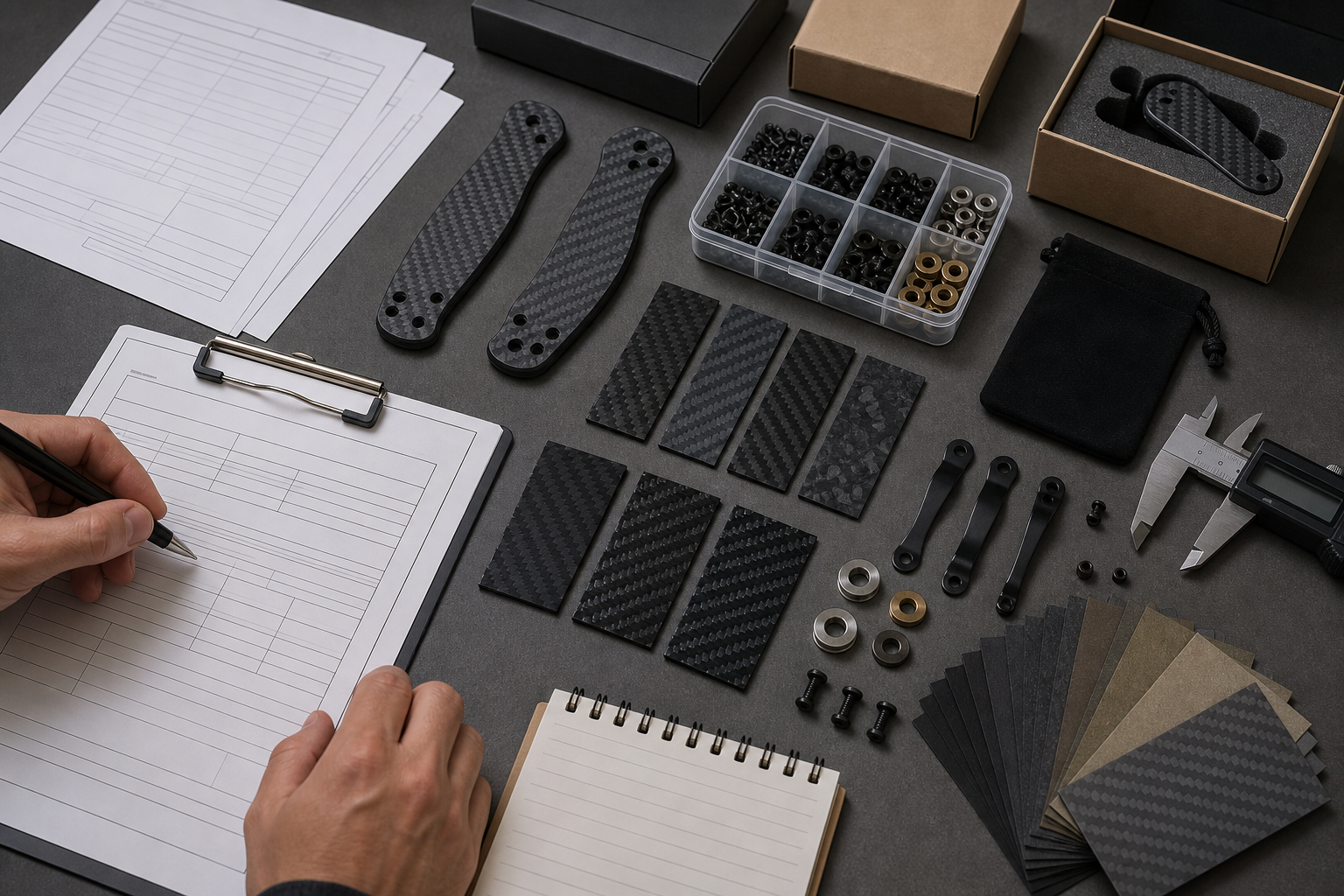
An RFQ should define product type, carbon fiber form, thickness, finish, blade size, lock, opening method, steel, hardware, clip, packaging, logo, MOQ, target price, timeline, and QC tests.
I Want the RFQ to Prevent Cost Surprises
When a buyer writes "carbon fiber handle folding knife," the supplier still needs many decisions. Is the handle full carbon fiber or carbon fiber overlay? What thickness is needed? Does the buyer want glossy, matte, textured, contoured, or flat scales? What lock type will the knife use? Does the design need liners? What blade steel and finish will pair with the handle? What pocket clip style is required?
The RFQ should also include the target market and target price. A premium EDC knife can support more material and finish cost. A budget pocket knife may need a carbon fiber-style appearance or a smaller inlay instead of full carbon fiber scales.
Sample requirements should be clear. I ask buyers to define how many samples they need, what tests they will perform, and what defects they cannot accept. The sample should be reviewed for weight, balance, grip, finish, edge comfort, screw fit, blade centering, lockup, and packaging.
The RFQ should also ask for production controls. Carbon fiber handle parts should not be approved only by photo. Buyers should approve actual samples and define batch consistency.
| RFQ item | What to include | Why it helps |
|---|---|---|
| Carbon fiber form | Full scale, overlay, inlay | Controls cost and structure |
| Finish | Gloss, matte, texture, contour | Controls user feel |
| Structure | Lock, liner, clip, screws | Controls function |
| QC | Appearance and fit tests | Controls repeat orders |
How Can Vast State Support Carbon Fiber Handle Knife Projects?
Buyers need more than a material name. They need a supplier who can connect the handle to the full product.
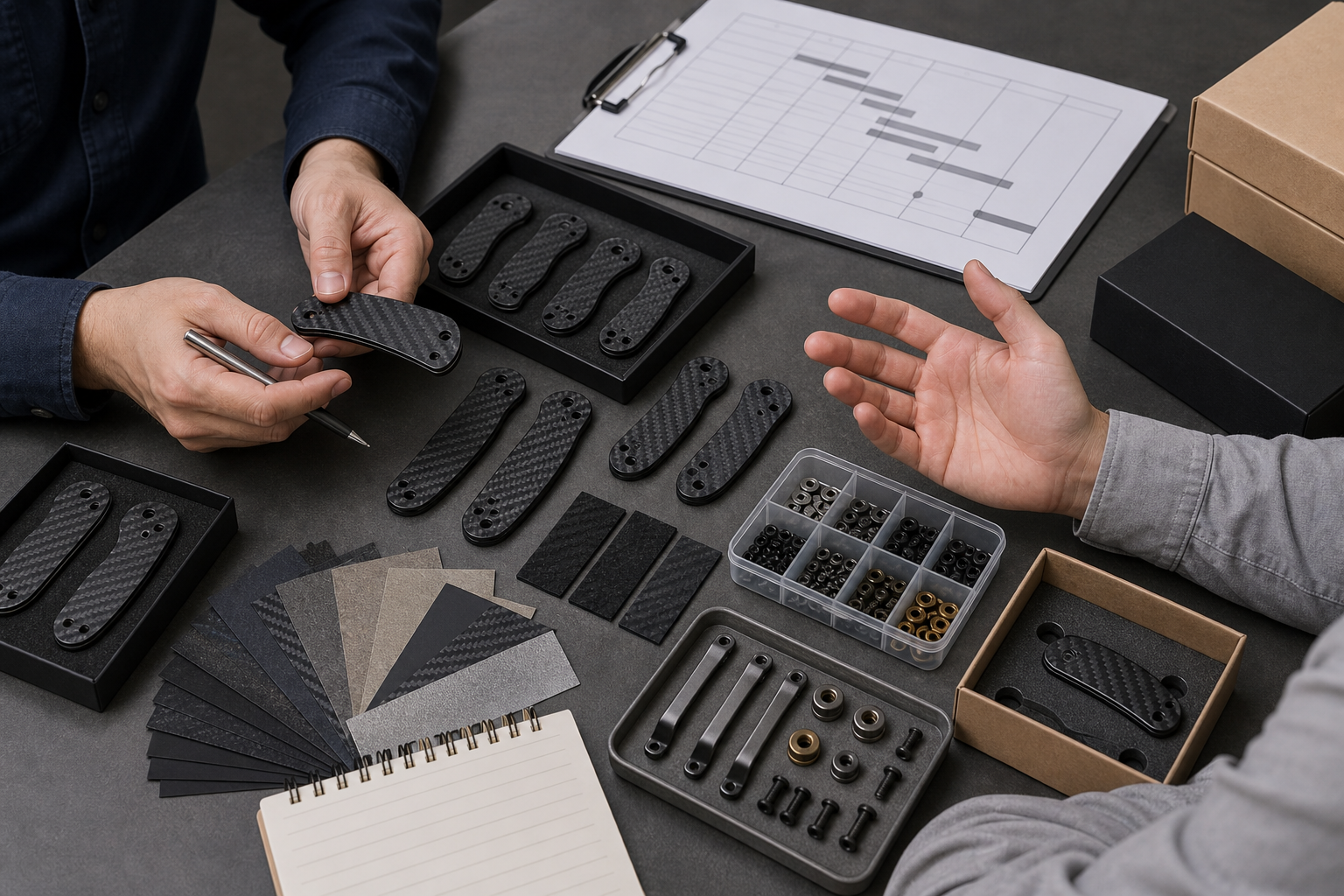
Vast State can support carbon fiber handle knife projects through concept review, material selection, prototype development, lock and structure suggestions, finish options, packaging customization, QC planning, and production follow-up.
I Connect the Handle Choice With the Buyer’s Market
Vast State works with international B2B customers who need practical development, stable manufacturing, flexible customization, and efficient communication. For carbon fiber handle projects, I help buyers connect material choice with market positioning, target price, structure, and production reality.
If a customer already has a design, I review whether the carbon fiber handle thickness, screw layout, liner support, lock type, and clip position are practical. If the customer only has an idea, I help turn it into a manufacturable product direction. That may include choosing between full scales, overlays, inlays, G10 alternatives, micarta alternatives, or hybrid structures.
I also help with prototype development, finish options, packaging customization, and production follow-up. Carbon fiber handles need clean machining, consistent finish, comfortable edges, and stable assembly. These details affect the customer experience as much as the visual pattern.
My goal is not only to make a knife that looks premium in one photo. My goal is to help the buyer build a product that fits the target market, price range, and brand position across repeat production.
| Support area | What we help with | Buyer value |
|---|---|---|
| Concept review | Market, price, product level | Clearer direction |
| Material selection | Carbon fiber form and finish | Better specification |
| Engineering input | Lock, liner, screw, clip | More stable structure |
| QC follow-up | Appearance, fit, function | Better repeat production |
Turn this article into a folding knife project.
Share your blade type, lock direction, steel preference, handle material, quantity, target market, and packaging needs. Vast State can prepare OEM/ODM options.
Conclusion
Carbon fiber handles work best when lightweight feel, premium look, structure, machining, packaging, cost, and QC all support the same EDC product goal.