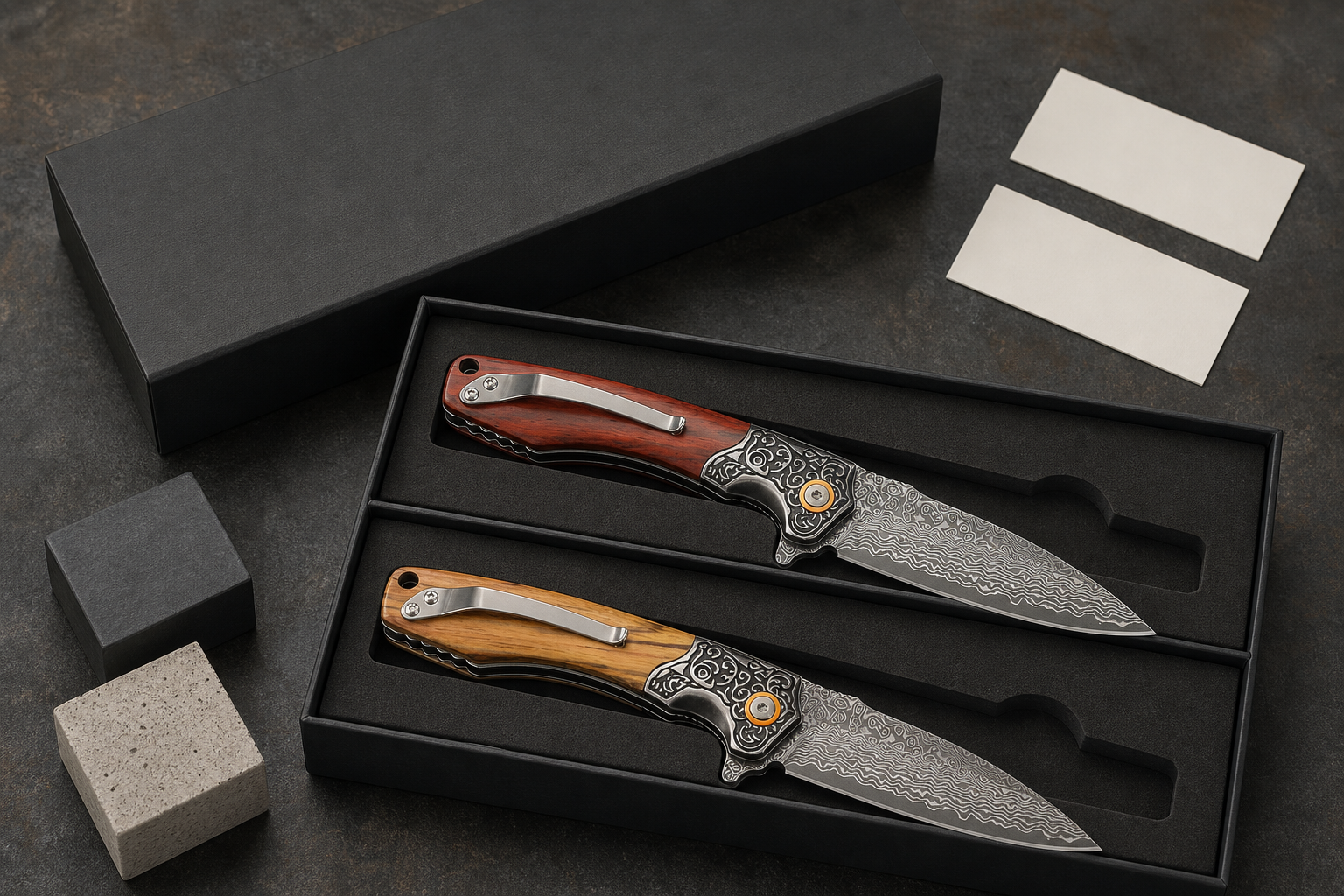
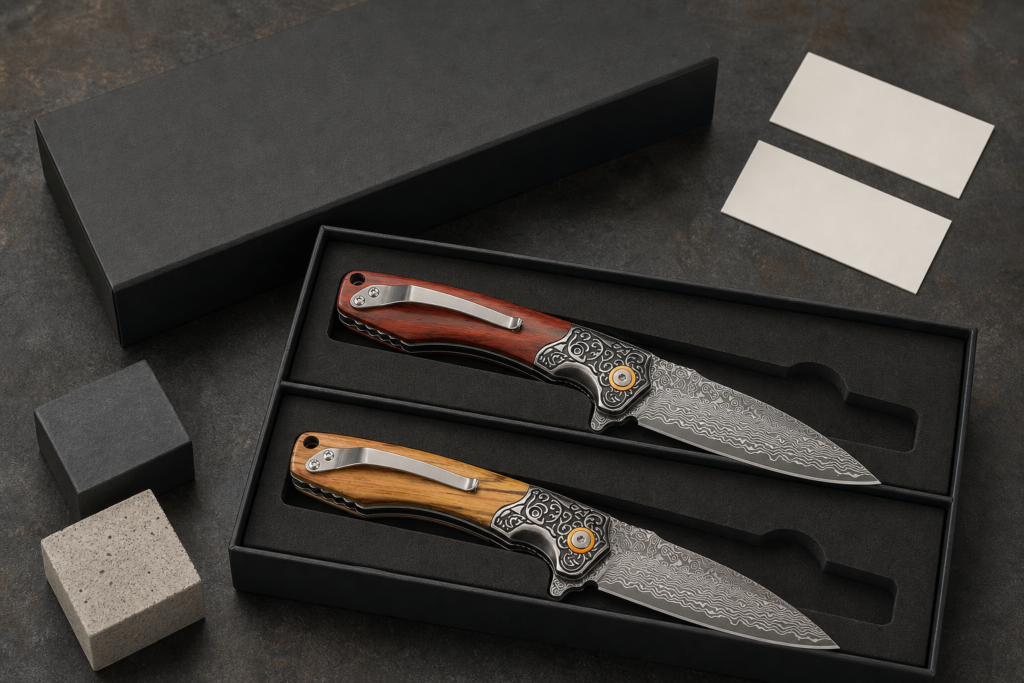
Damascus steel can make a knife look premium fast. But visual charm alone does not protect cost, performance, or repeat quality.
The Damascus steel features that matter most in OEM/ODM knife development are pattern clarity, base steel choice, heat treatment, corrosion care, edge geometry, finish consistency, mechanism fit, packaging language, and QC repeatability. Buyers should treat Damascus as a specification, not only a decorative upgrade.
Quick buyer brief:
- Answer: Damascus-style steel is useful when its pattern, material behavior, finish, care needs, and production cost match the target market and brand position.
- Buyer context: This guide is for knife brands, outdoor brands, EDC brands, importers, wholesalers, distributors, private label buyers, and sourcing managers.
- Key checks: Historical meaning, modern material type, pattern range, base steels, hardness, heat treatment, corrosion care, etching contrast, blade geometry, handle pairing, lock fit, logo method, packaging copy, and final inspection standard.
Planning a knife project with this steel?
Send us your target market, MOQ, price range, and blade type. Vast State can help you choose the right steel, HRC range, finish, handle material, and QC requirements for OEM/ODM production.
When a buyer asks me about Damascus steel, I first separate emotion from engineering. The pattern is attractive. It can help a private label knife look more special. It can support premium packaging and gift positioning. But it also creates questions that a plain steel blade may not create. What is the steel combination? How stable is the heat treatment? How much pattern variation is normal? Will the customer understand care requirements? Can the supplier repeat the same finish across an order? These questions decide whether Damascus is a useful choice or only a nice sample.
What Does Damascus Steel Really Mean for Modern Knife Buyers?
The word Damascus sounds clear, but different buyers use it in different ways. That can create confusion before sampling starts.
Modern buyers often use Damascus steel to describe a patterned blade material, usually layered and etched, while historical Damascus is commonly linked with wootz or crucible steel and watered patterns.
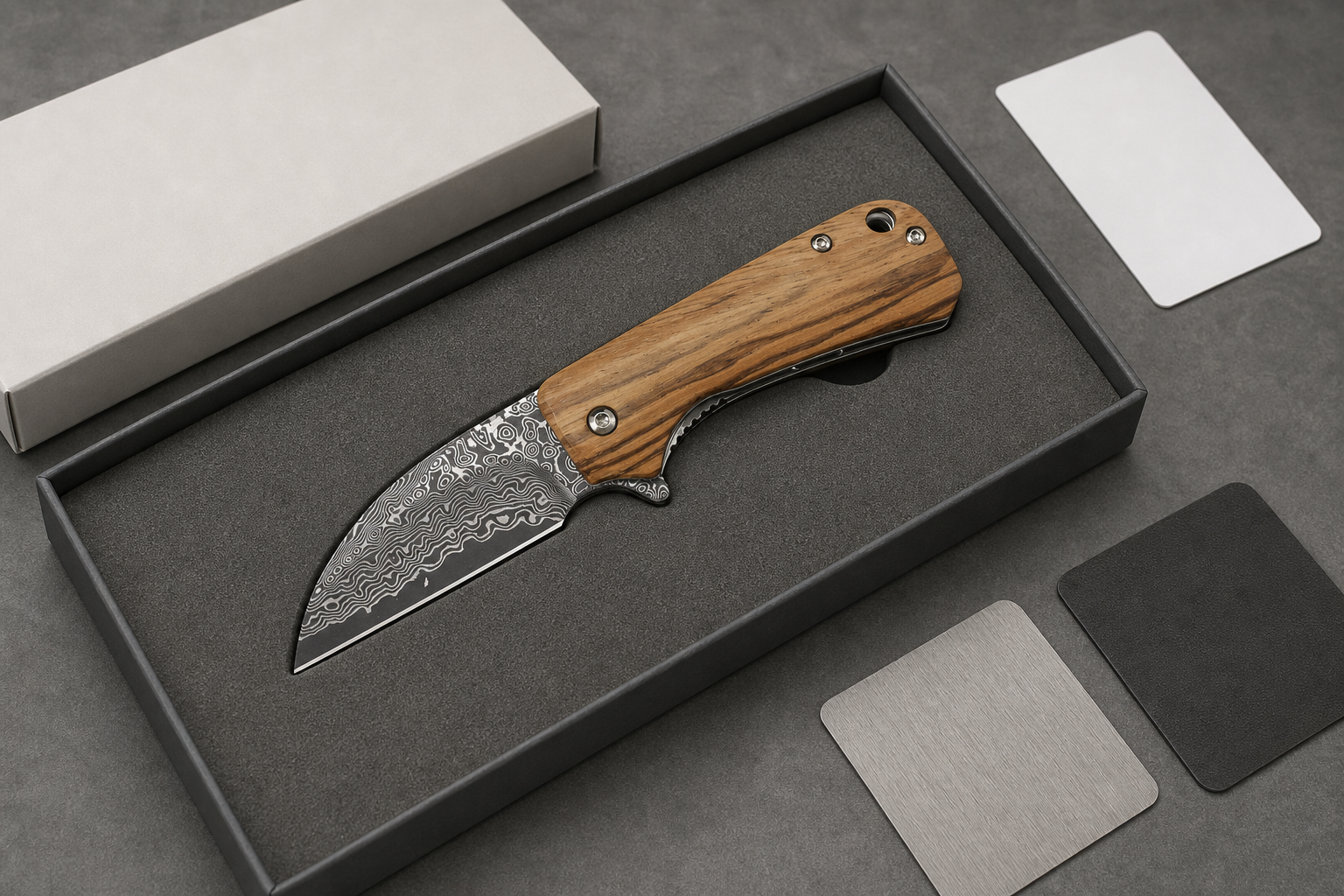
I Define the Material Before I Discuss the Look
The first practical feature of Damascus steel is not the pattern. It is clarity. Buyers need to know what kind of Damascus they are asking for. Historical Damascus is often discussed through wootz or crucible steel. Britannica's wootz steel reference connects wootz with famous medieval Damascus swords. The Metropolitan Museum of Art also explains that Damascus or watered steel describes blades with a wavy or watered appearance created through specific historical steelmaking and forging methods.
Modern commercial knife projects usually use pattern-welded or Damascus-style layered steel. The feature buyers see is the pattern. The features I need to confirm are the actual steel types, bonding quality, heat treatment, hardness, corrosion behavior, and finishing method.
This distinction matters because a buyer may expect historical romance, while the factory must build a repeatable modern product. The RFQ should not only say "Damascus blade." It should state whether the buyer wants pattern-welded steel, stainless Damascus-style steel, a specific visual pattern, or supplier recommendation.
If a buyer only wants the look, I can help choose a practical material and finish. If the buyer wants a performance claim, we need test data and realistic wording. A beautiful pattern does not automatically mean better cutting.
| Meaning | Buyer expectation | What to specify |
|---|---|---|
| Historical Damascus | Story and heritage | Use careful wording |
| Pattern-welded steel | Layered visible pattern | Base steels and pattern |
| Damascus-style finish | Visual premium effect | Finish and etching standard |
| Performance blade | Cutting and durability | Heat treatment and edge geometry |
Quote-ready RFQ Checklist for Damascus Projects
To get an accurate OEM/ODM quote, prepare construction, core steel, pattern, layer, hardness, and etch details before contacting a knife manufacturer.
| RFQ Field | What to Prepare |
|---|---|
| Damascus construction | Pattern-welded / clad / stainless patterned / decorative etch |
| Core steel | 10Cr15CoMoV / VG10 / 14C28N / buyer-specified |
| Pattern | Random / ladder / twist / raindrop |
| Layer specification | Supplier standard or verified target |
| Target HRC | Based on core or full construction |
| Etch standard | Contrast, depth, residue and variation limits |
Why Does the Pattern Matter Beyond Appearance?
The pattern attracts attention, but it also affects expectations. Buyers need to manage that expectation in product design.
Damascus pattern matters because it creates visual identity, supports premium positioning, helps private label differentiation, and sets customer expectations for uniqueness and finish quality.
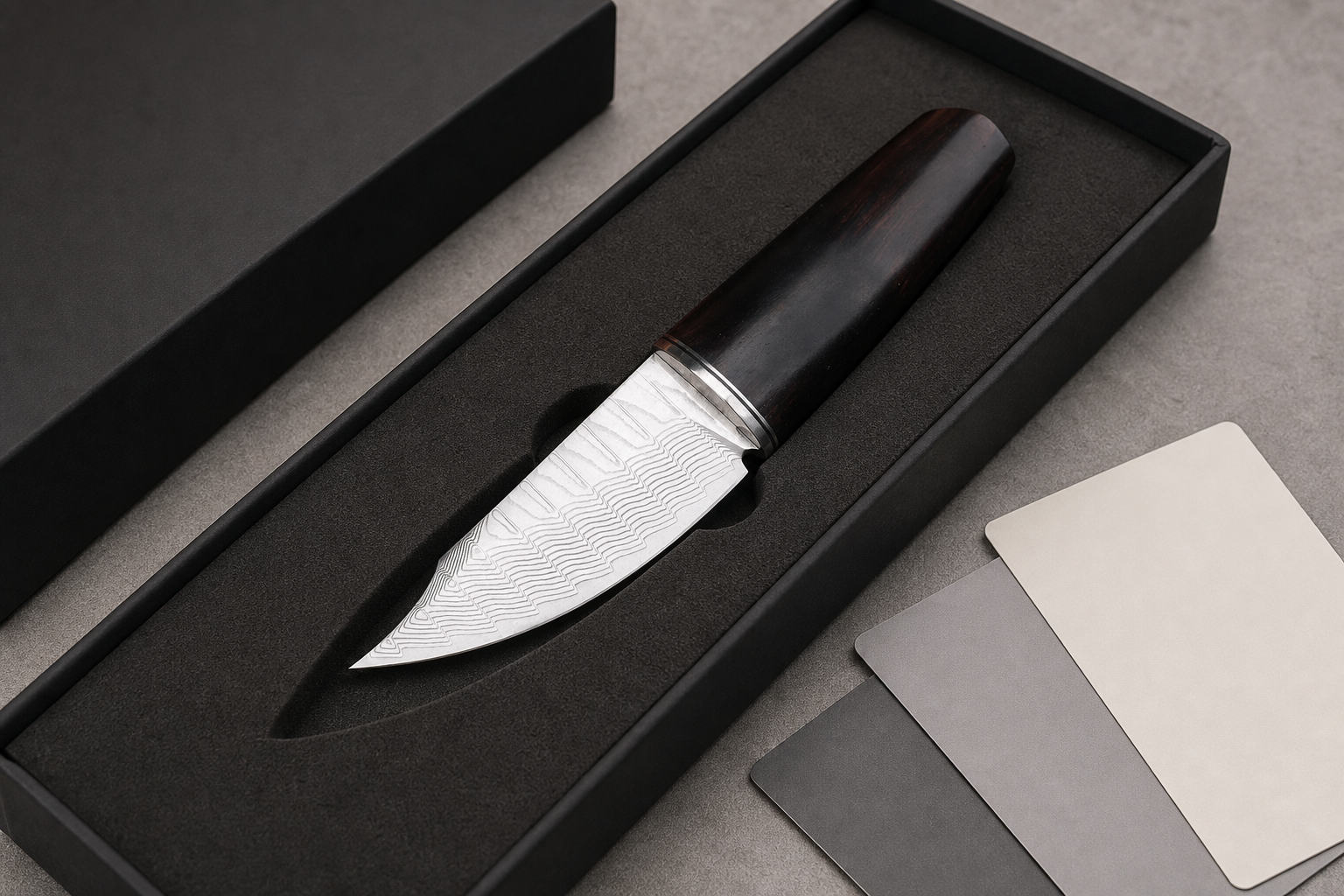
I Treat the Pattern as a Product Signal
The Damascus pattern gives the buyer a strong visual signal. In a crowded EDC or outdoor tool market, many knives have similar blade shapes and handle materials. A patterned blade can make a product easier to recognize. It can also make the product feel more crafted, more premium, and more suitable for gift packaging.
But the pattern also creates a promise. If the website photo shows a strong flowing contrast, the actual product should not arrive with a weak, dull, or uneven pattern. If the packaging says each blade is unique, customers may accept small variation. If the packaging implies every piece matches the photo exactly, the buyer may receive complaints.
This is why I ask buyers to approve a pattern range instead of one perfect blade. Pattern variation can be part of the charm. It becomes a defect only when the buyer and factory fail to define the acceptable range.
The pattern should also match the product level. A highly dramatic pattern may fit a premium collector-style EDC knife. A more subtle pattern may fit a refined executive-style folder. A heavy pattern on a low-cost knife can look forced if the handle, fit, and packaging do not support the same quality level.
| Pattern feature | Product value | Buyer control |
|---|---|---|
| Contrast | Strong photo appeal | Approve etching standard |
| Flow direction | Visual movement | Approve pattern range |
| Uniqueness | Gift and collector appeal | Explain variation honestly |
| Subtlety | Cleaner premium look | Match brand style |
Which Base Steel Features Should Buyers Confirm?
The blade pattern may be visible, but the steel combination does the real work. Buyers should not skip that question.
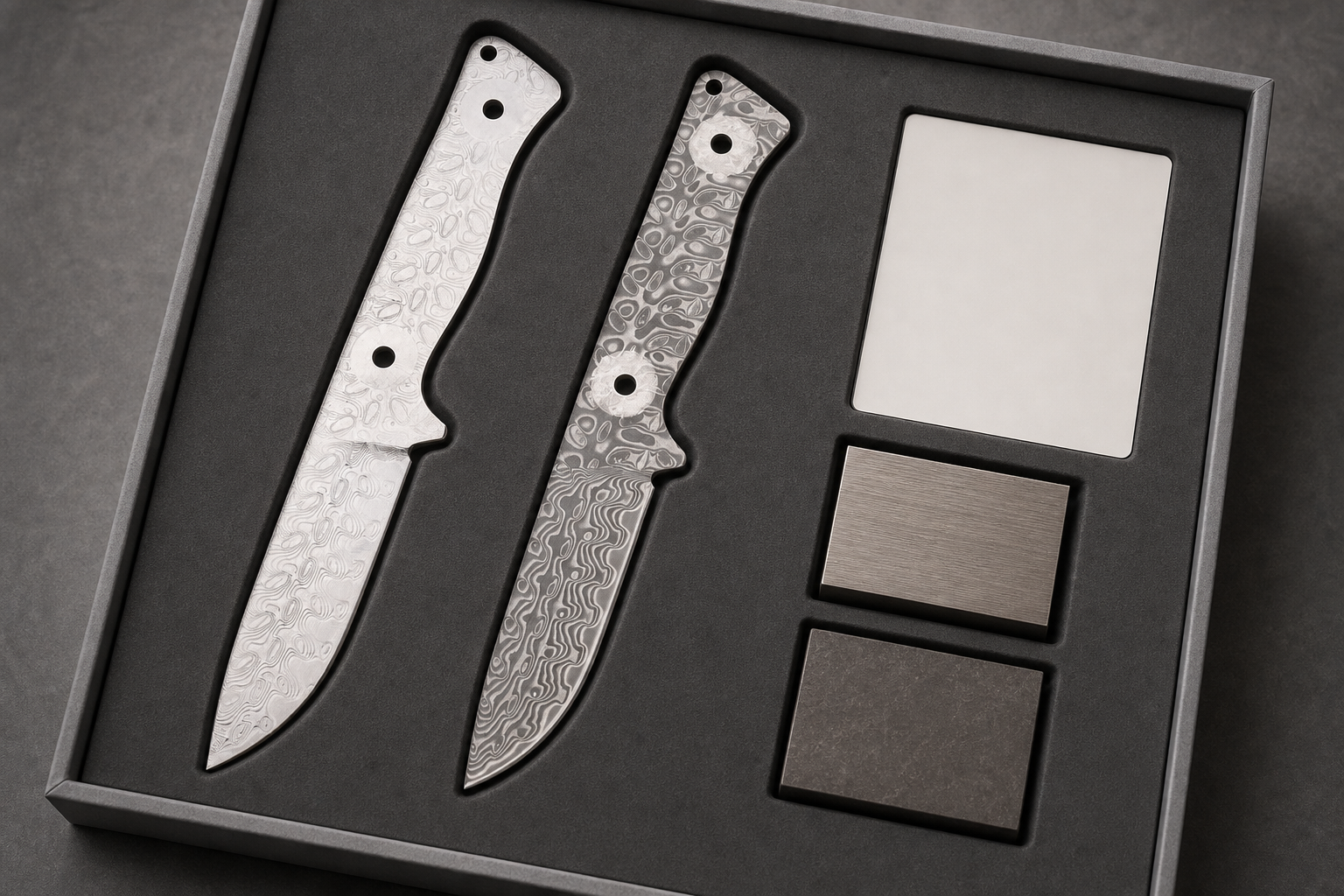
Buyers should confirm the base steels, hardness target, heat treatment plan, corrosion resistance, edge behavior, and sharpening expectations before choosing Damascus-style steel.
I Ask What the Pattern Is Made From
Damascus-style steel is not one single material. Different steel combinations can create different contrast, hardness, corrosion behavior, toughness, and cost. Some combinations are selected because they etch with strong contrast. Some are selected for better blade performance. Some are selected because they are available and commercially practical.
This is why I want the buyer to ask about base steels. If the supplier cannot explain the material, the buyer may not be able to control performance or after-sales expectations. A knife brand may sell the product as a premium EDC folder, but the user will still judge it by cutting feel, sharpening, rust resistance, and everyday care.
Heat treatment is also part of the steel feature. A patterned blade still needs the right hardening and tempering process. The NIST Rockwell hardness measurement guide explains that hardness measurement needs good practice because results can vary. For buyers, that means a hardness number should be tied to a real inspection method, not used as loose marketing language.
I also ask buyers to think about sharpening and maintenance. Some Damascus-style steels may need more care than a simple stainless mono-steel. If the target customer wants low maintenance, the material choice should reflect that.
| Steel feature | What buyers ask | Why it matters |
|---|---|---|
| Base steels | What layers are used? | Defines performance potential |
| Hardness | What target range? | Supports edge expectations |
| Corrosion behavior | What care is needed? | Prevents user surprise |
| Sharpening | Is it easy to maintain? | Affects everyday satisfaction |
How Does Heat Treatment Affect Damascus Steel Features?
Heat treatment is hidden from the buyer's eye. But it can decide whether the knife feels reliable or disappointing.
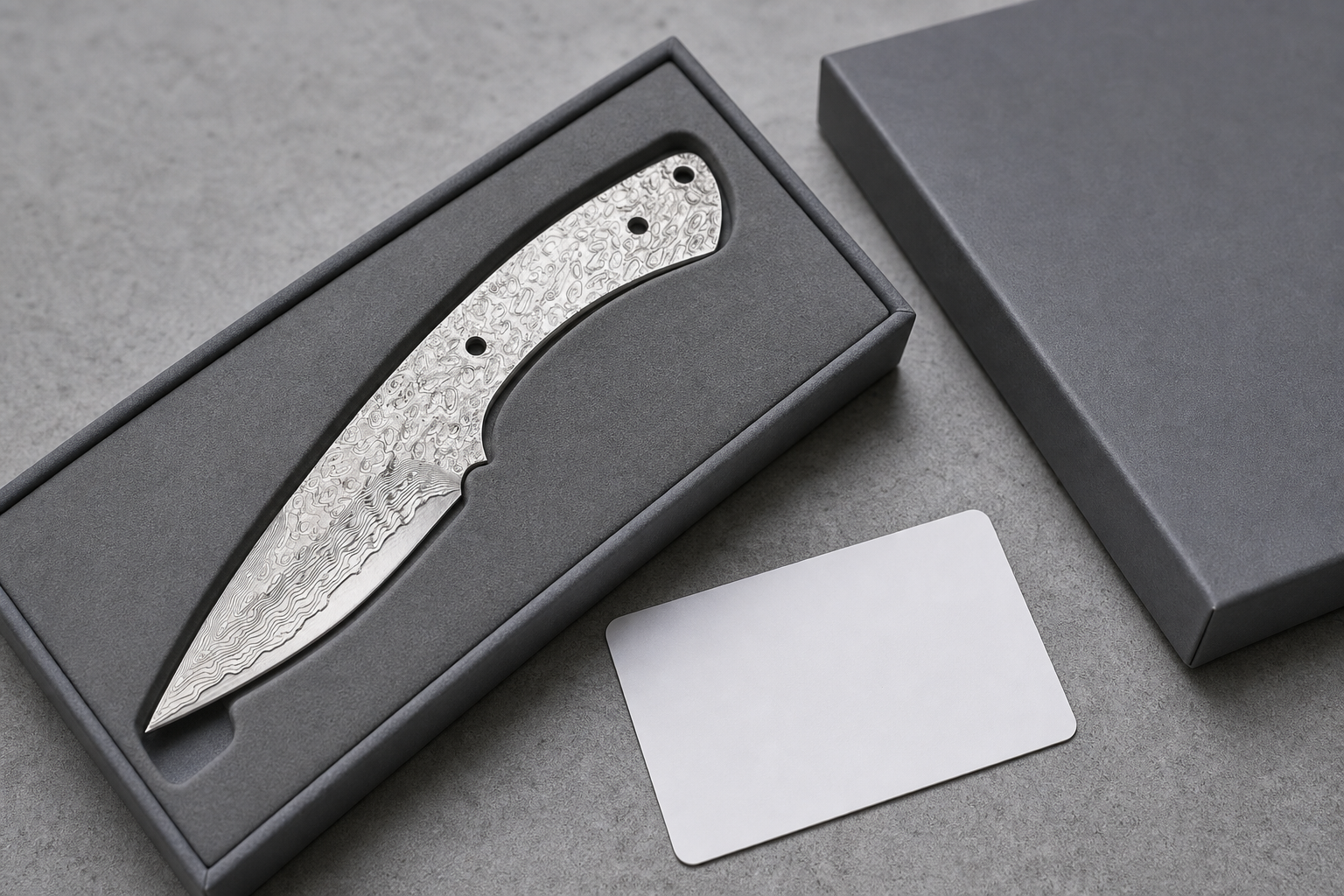
Heat treatment affects Damascus steel hardness, toughness, edge retention, warping risk, grinding behavior, and final consistency across the production batch.
I See Heat Treatment as the Real Performance Gate
A Damascus-style blade can look finished before heat treatment proves anything. The layers, pattern, and finish are easy to notice. The steel structure and hardness are not. This is why I treat heat treatment as a key feature, not a background process.
The heat treatment must match the steel combination. If different steels are layered together, the process must still create a useful balance of hardness and toughness. If the blade becomes too hard, it may chip more easily. If it is too soft, it may lose cutting performance too quickly. If the process causes warping, the blade may have centering problems in a folding knife.
The technical study by Verhoeven, Pendray, and Dauksch on ancient Damascus steel blades discusses how visible patterns in wootz Damascus related to material and process variables. Modern commercial Damascus-style steel is not the same thing as historical wootz, but the lesson is still useful. Pattern and process are connected. Buyers should not separate the look from the manufacturing method.
For OEM/ODM orders, I prefer to define target hardness, inspection points, sample testing, and acceptable blade straightness early. This reduces the chance of approving a beautiful sample that becomes unstable when the order moves into production.
| Heat treatment issue | Possible result | Buyer control |
|---|---|---|
| Wrong hardness | Poor edge behavior | Define target range |
| Warping | Assembly and centering problems | Check straightness |
| Brittle edge | Chipping risk | Test realistic use |
| Batch variation | Inconsistent quality | Inspect across samples |
What Finish and Etching Features Should Buyers Control?
The finish makes the pattern visible. If the finish is unstable, the product can look cheap.
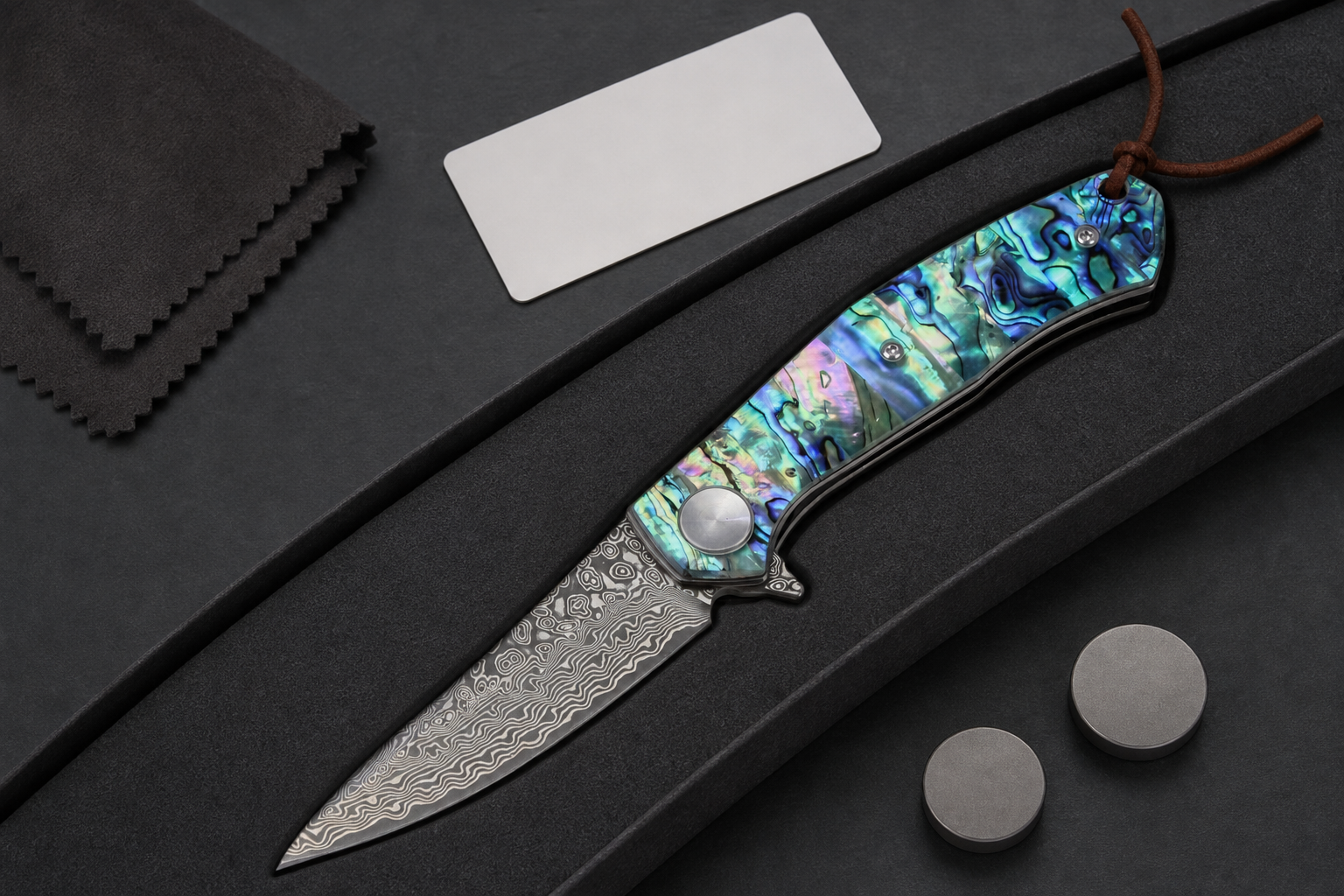
Buyers should control etching contrast, surface smoothness, scratch direction, logo clarity, bevel cleanliness, rust prevention, packaging protection, and acceptable pattern variation.
I Approve the Finished Blade, Not Only the Raw Pattern
The pattern depends on etching and finishing. A blade may have good material but weak visual contrast if the finish is not controlled. It may also look too dark, too rough, or too uneven if the etch is too aggressive. A premium product should not rely on one lucky sample.
Buyers should review the finished blade after grinding, heat treatment, etching, logo marking, and final cleaning. The pattern can change after each step. A bevel grind can make the pattern look different from the flat blade face. A logo can become hard to read if it crosses a busy pattern. A stonewashed or polished treatment can reduce contrast if it is not tested first.
Packaging protection is also important. A patterned blade can show fingerprints, light corrosion, or finish marks before the customer receives it. If the material needs oiling, drying, or careful storage, the package should support that with a care card, pouch, coating, or desiccant where suitable.
I recommend keeping finish cards or approved photos for mass production. Words such as "strong pattern" or "premium etch" are too vague. A buyer and factory need a shared standard.
| Finish feature | Risk | Control method |
|---|---|---|
| Etching contrast | Too weak or too harsh | Approve sample range |
| Logo clarity | Hard to read | Test marking method |
| Surface texture | Rough or uneven feel | Define finish standard |
| Packaging protection | Stains before sale | Add care and protection |
How Should Damascus Features Match Handle and Lock Design?
Damascus steel can raise the perceived value of a knife. The rest of the knife must support that value.
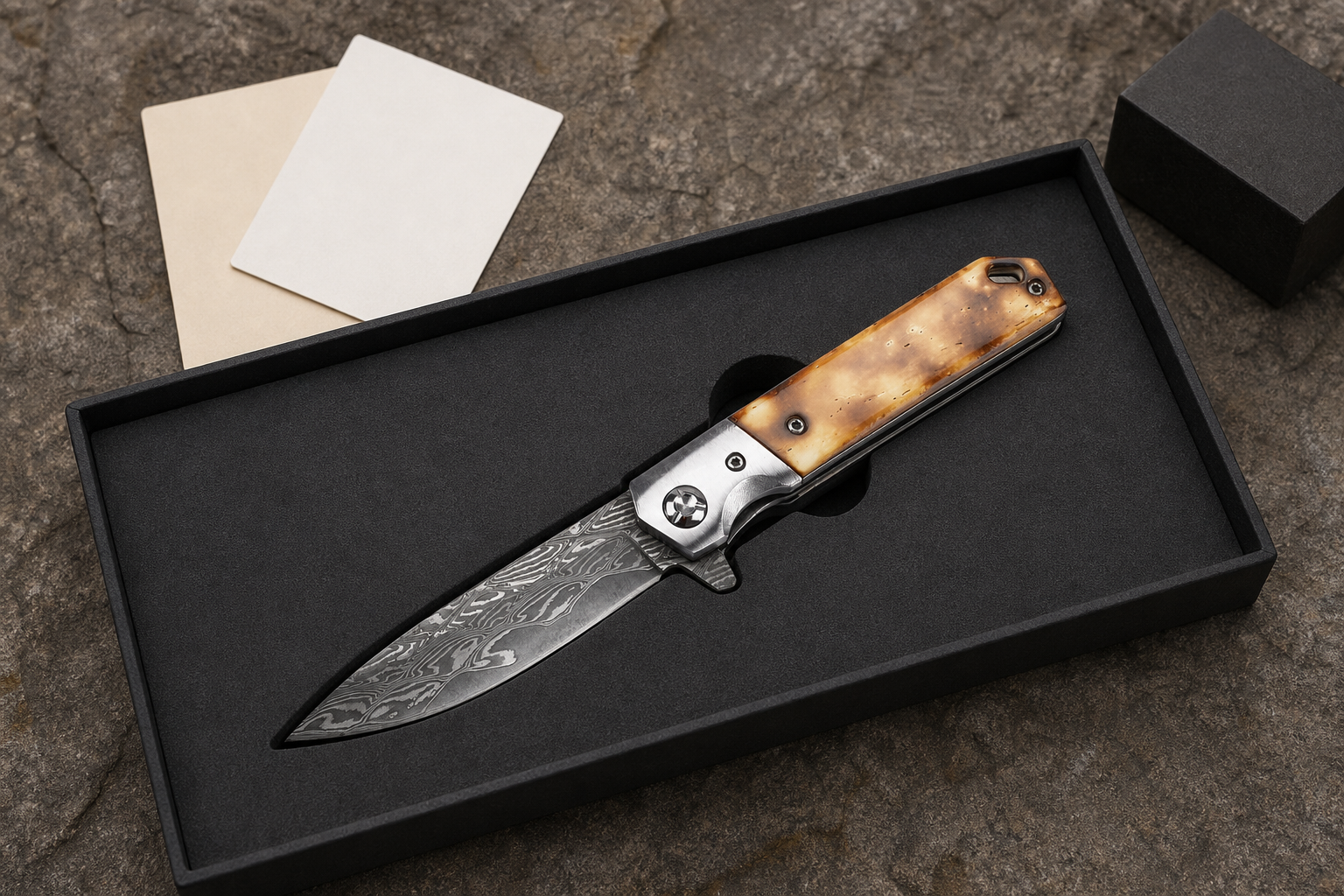
Damascus features should match handle material, opening method, lock type, blade thickness, pivot design, pocket clip, packaging level, and target price.
I Do Not Let the Blade Outrun the Product
A Damascus-style blade can look premium, but the handle and mechanism must match it. If the blade looks expensive but the handle feels weak, the product feels unbalanced. If the pattern is dramatic but the pivot action is rough, users will still complain. If the packaging is basic but the buyer wants premium retail positioning, the product story is incomplete.
Handle materials should be chosen with the blade story in mind. Wood can support a warm gift look. Micarta can support outdoor and craft positioning. G10 can support practical EDC use. Aluminum can support a clean modern look. Carbon fiber-style materials can support a lighter premium direction. The best choice depends on the buyer's target channel and price.
Lock type also matters. A Damascus blade in a folding knife still needs correct tang geometry, pivot hole accuracy, lock engagement, and blade centering. The patterned blade face should not distract from the mechanism. For a B2B order, I check the lock and pivot as carefully as I check the pattern.
I also think about weight and thickness. A thick Damascus-style blade may look strong, but it can make a pocket knife too heavy. A thin blade may carry better, but the edge geometry and stiffness must still be checked.
| Product part | How it should match | Buyer question |
|---|---|---|
| Handle material | Supports blade story | Does it fit the price tier? |
| Lock type | Supports safe utility use | Is lockup repeatable? |
| Opening method | Matches user expectation | Is the action smooth? |
| Packaging | Supports premium promise | Does it protect the finish? |
What Market Positioning Works Best for Damascus-Style Knives?
Damascus can help a product sell, but only when the market understands why it costs more.
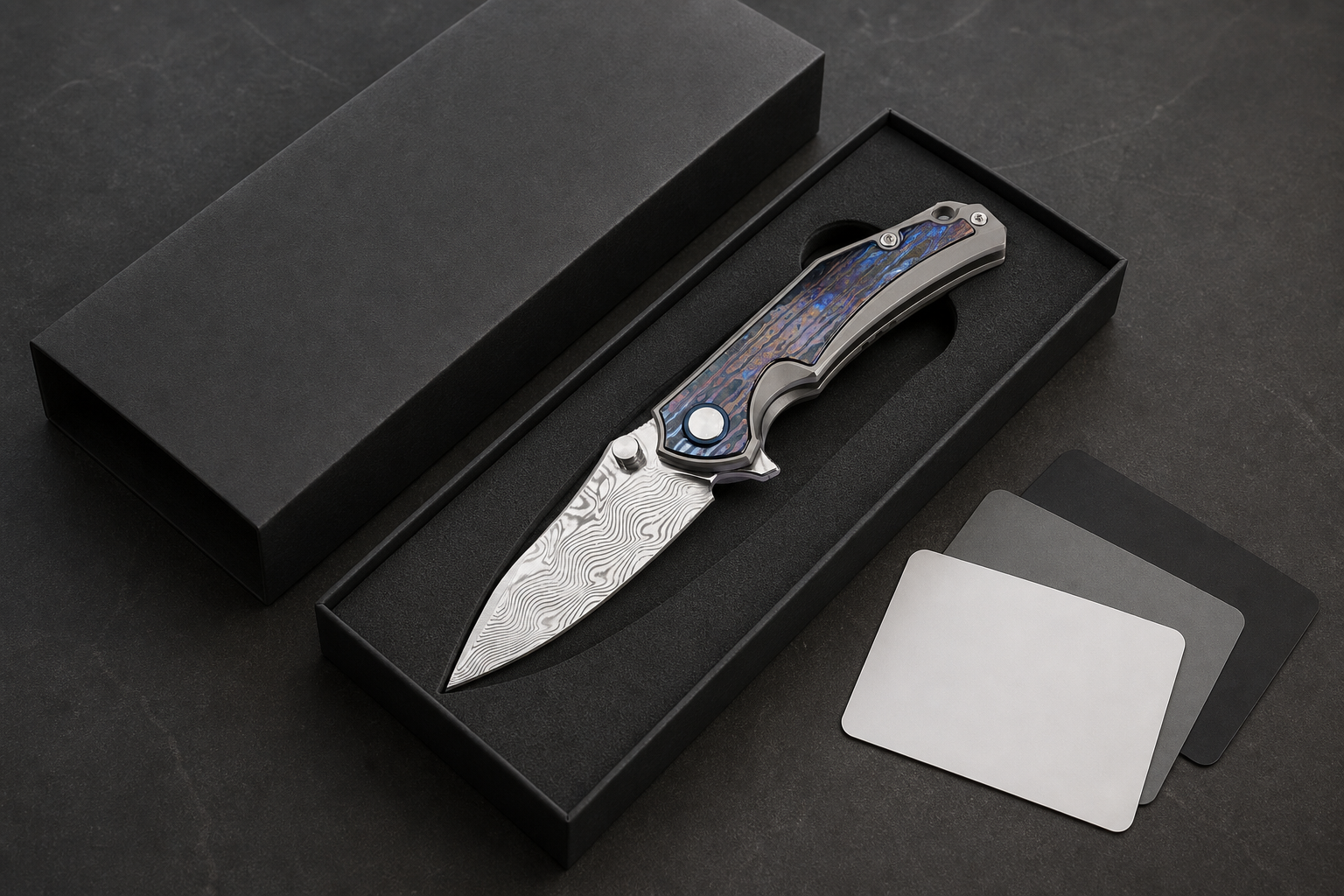
Damascus-style knives work best for premium EDC, gift, collector-style, private label, and limited-line products where visual identity and perceived craftsmanship matter.
I Match Damascus to the Buyer’s Sales Channel
Damascus-style steel is not the right answer for every knife. It can be a strong choice when the buyer wants visual appeal, gift value, and a product story. It may be less practical when the buyer wants the lowest cost, lowest maintenance, or a hard-use utility message.
For premium EDC lines, Damascus can help create a higher-tier product without changing the entire product category. For gift lines, it can make the knife feel more personal and special. For private label buyers, it can create a recognizable product style that is different from standard satin or stonewashed blades. For limited runs, it can support scarcity and higher perceived value.
The risk is overpositioning. If the buyer describes the knife as the ultimate performer without test support, the claim becomes weak. If the buyer markets it as a combat product, the product moves into a riskier communication area. I prefer utility, craftsmanship, material story, and responsible care language.
I also remind buyers to look at margin. Damascus-style steel can raise material and finishing cost. The final product must have a clear reason for the higher price.
| Market direction | Why Damascus helps | Watch point |
|---|---|---|
| Premium EDC | Visual upgrade | Mechanism must match |
| Gift knife | Emotional appeal | Packaging must support it |
| Private label | Differentiation | Pattern standard needed |
| Limited line | Product story | Avoid unsupported claims |
What Safety and Care Features Should Packaging Explain?
A patterned blade may need more careful user guidance. If the packaging is silent, customers may misunderstand the product.
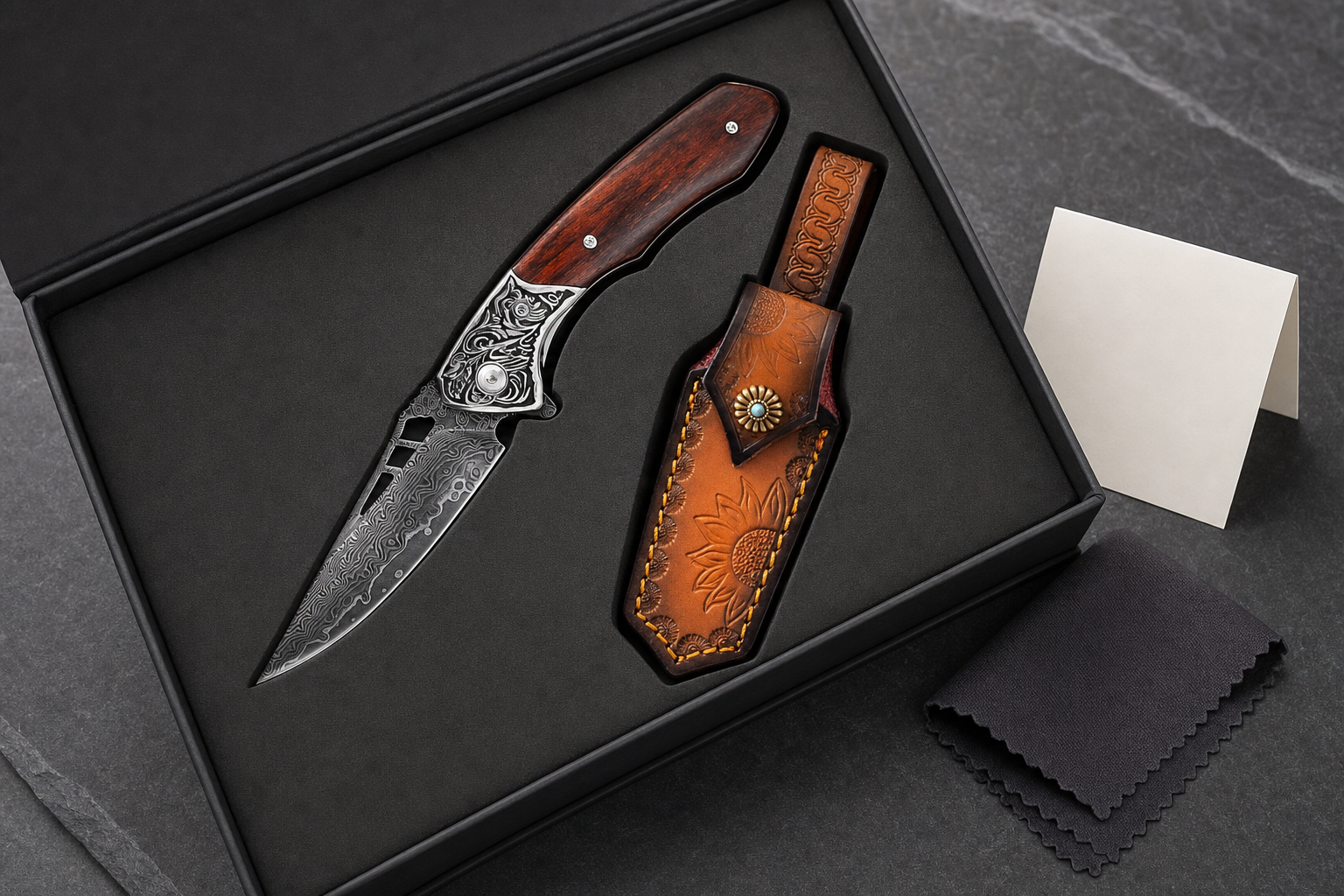
Packaging should explain safe handling, intended utility use, cleaning, drying, corrosion prevention, storage, blade closing, and normal pattern variation.
I Write Care Language Before the Order Ships
Damascus-style knives can create care questions. Some buyers sell to users who already understand knife maintenance. Some sell to general retail customers who may not. If the blade can stain, patina, or rust, the packaging should explain simple care steps. Clean the blade after use. Dry it before storage. Apply light oil if the material requires it. Store it safely. Do not leave it wet.
Safety language should stay practical. The CCOHS hand-tool guidance supports basic principles such as using the right tool, keeping tools in good condition, inspecting tools, storing tools properly, and covering sharp edges. Those ideas fit folding knife packaging well. The user should know the knife is a sharp hand tool, not a toy and not a guaranteed safe device.
The buyer should also explain pattern variation. If every blade is slightly different, that can be presented as a feature. But the buyer must still define what variation is acceptable. A customer may accept natural pattern differences. A customer may not accept deep stains, uneven etching, poor logo marks, or scratches.
I prefer care cards that are simple, direct, and honest. That reduces after-sales trouble and supports a more professional product experience.
| Packaging feature | Why it matters | Practical wording direction |
|---|---|---|
| Care instructions | Reduces rust complaints | Clean, dry, oil if needed |
| Safe handling | Supports responsible use | Utility cutting only |
| Storage | Protects blade and user | Store closed and dry |
| Variation note | Manages expectations | Pattern may vary naturally |
What QC Checks Make Damascus Features Repeatable?
Damascus is easy to admire in one sample. The real challenge is repeating it in production.
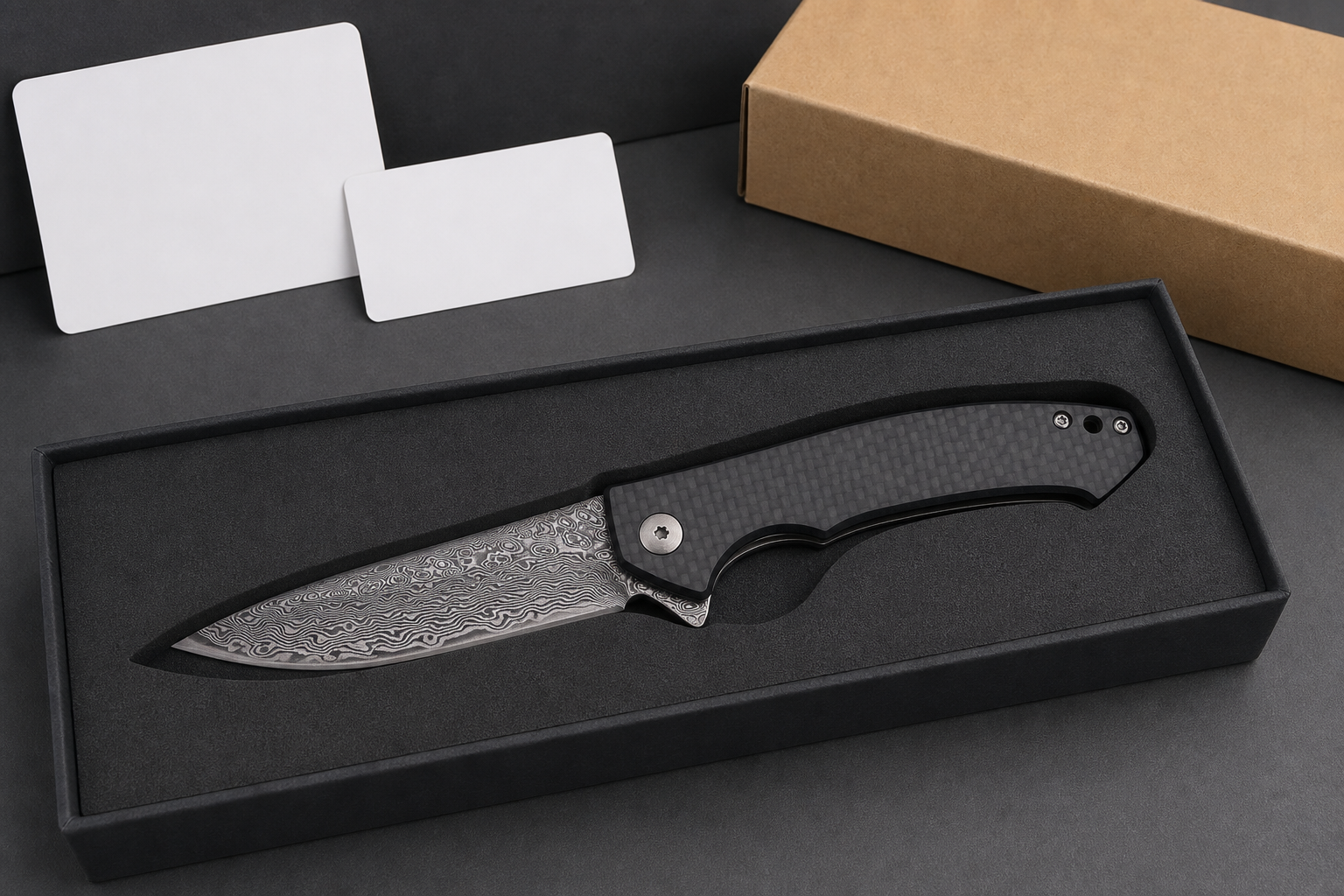
QC should check pattern range, etching contrast, hardness, blade straightness, grind symmetry, edge quality, lock fit, opening action, corrosion protection, logo clarity, and packaging.
I Use Both Visual and Functional Standards
A Damascus-style product needs visual QC and functional QC. Visual QC checks pattern contrast, pattern range, surface finish, scratches, stains, logo clarity, and packaging appearance. Functional QC checks hardness, edge geometry, blade straightness, opening action, lockup, blade centering, screw security, and final sharpness.
The buyer should not choose only one standard. A blade can look good but have poor action. A knife can function well but look different from the approved sample. Both situations can create complaints.
I connect this with quality management. ISO 9001 is a recognized quality management standard focused on meeting customer expectations and improving quality systems. For a knife project, the practical lesson is clear. Requirements must be defined, processes must be controlled, inspection must be recorded, and problems should feed back into improvement.
For mass production, I like to keep an approved golden sample and several boundary samples. One shows the ideal product. Others show the acceptable minimum for pattern, contrast, finish, and action. This helps the production team inspect consistently and helps the buyer understand what will ship.
| QC area | What to inspect | Why it matters |
|---|---|---|
| Pattern | Range and contrast | Matches product photos |
| Hardness | Target inspection | Supports performance |
| Mechanism | Action and lockup | Protects user experience |
| Packaging | Care and finish protection | Reduces complaints |
What Should Buyers Put in a Damascus Knife RFQ?
A vague RFQ creates vague samples. Damascus projects need more detail than a simple blade material request.
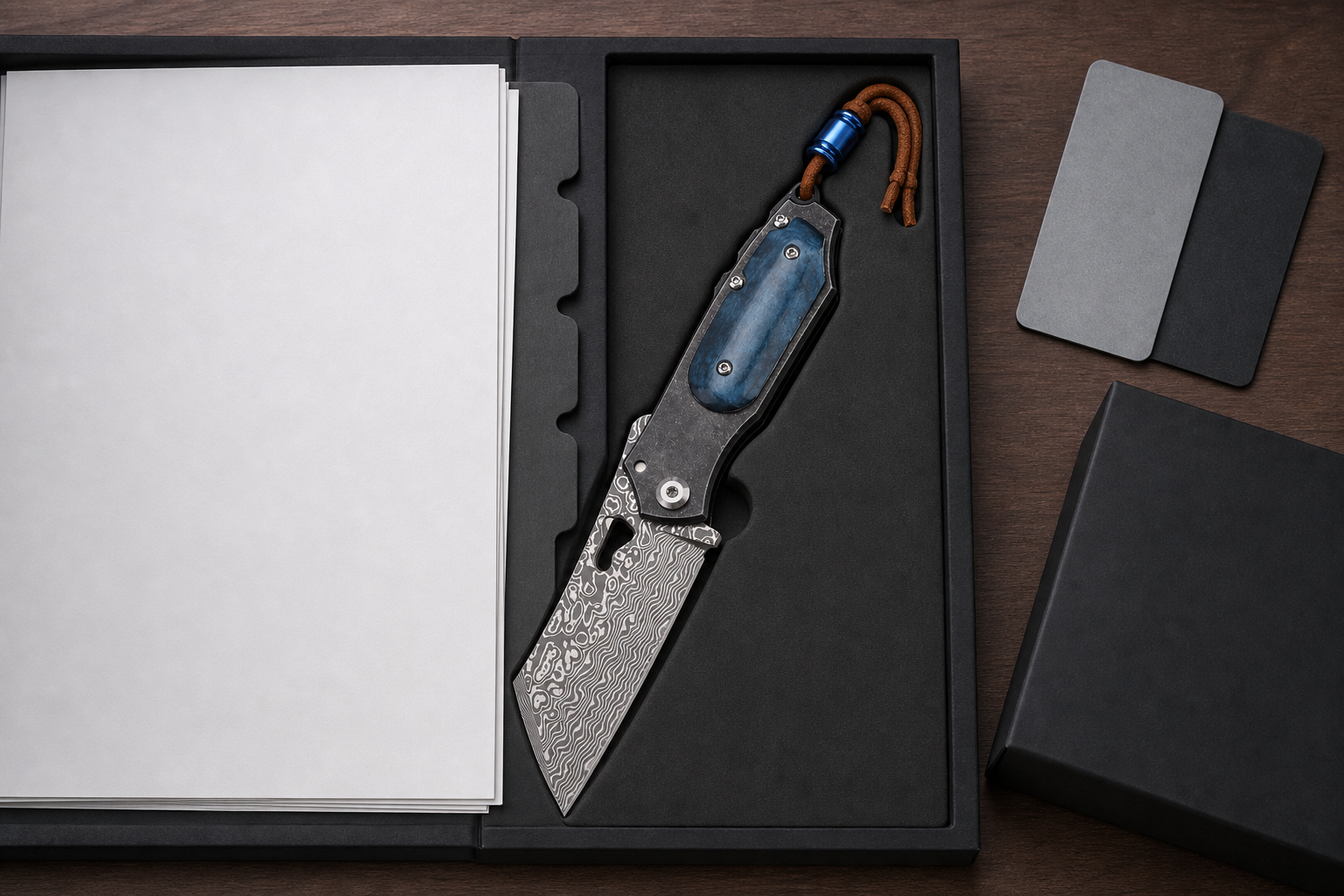
A Damascus knife RFQ should include product type, target market, base steel preference, pattern expectation, hardness, finish, handle, lock, opening method, packaging, logo, quantity, timeline, and QC requirements.
I Want the RFQ to Turn Beauty Into Specification
When a buyer writes "Damascus knife," the supplier still needs to guess too much. Is the product a folding knife, fixed blade, pocket knife, gift knife, or outdoor knife? What is the target price? What pattern does the buyer want? Does the buyer require stainless Damascus-style steel? What handle material should match the blade? What finish should be used? What packaging is expected?
The RFQ should also define what the buyer does not want. If the buyer wants a clean premium product, say so. If the buyer does not want aggressive marketing language, say so. If the buyer needs care instructions, say so. If the buyer needs a safe utility positioning, say so.
Sample approval should be part of the RFQ. I ask how many samples the buyer needs and what tests they will perform. Will they check edge retention, corrosion care, opening action, lockup, packaging, or logo clarity? A clear test plan helps the factory prepare better samples.
For repeat orders, the RFQ should define production inspection. Pattern range, etching contrast, hardness check, blade centering, lock function, and packaging condition should be part of the control plan.
| RFQ item | What to include | Why it helps |
|---|---|---|
| Material | Base steels or recommendation | Controls performance |
| Pattern | Style and acceptable range | Controls appearance |
| Product structure | Handle, lock, opening method | Controls manufacturability |
| QC plan | Tests and pass criteria | Controls repeat orders |
How Can Vast State Support Damascus-Style Knife Projects?
Buyers need more than a patterned blade sample. They need a product that can be repeated.
Vast State can support Damascus-style knife projects through concept review, material selection, prototype development, structure suggestions, finish options, packaging customization, QC planning, and production follow-up.
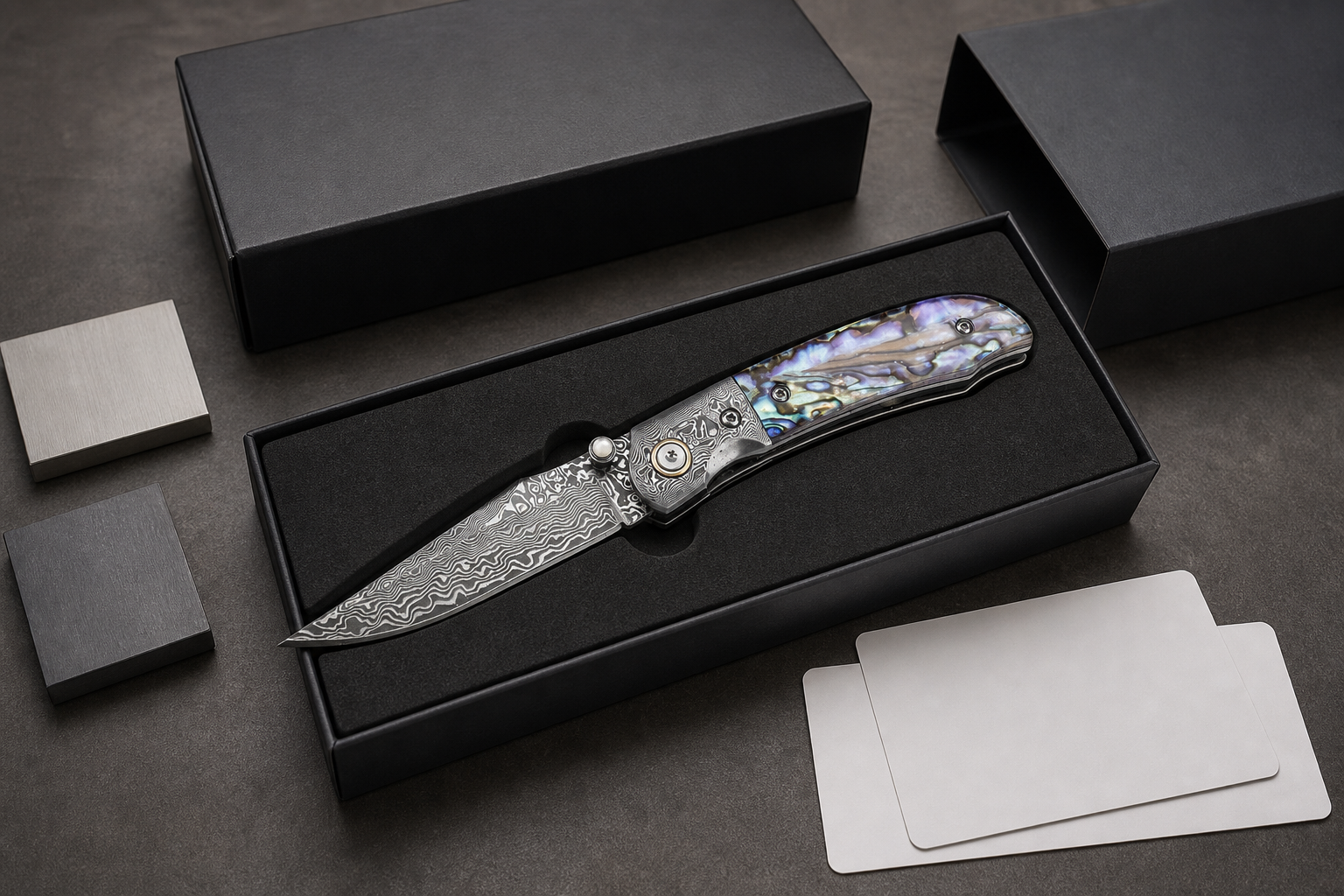
I Help Buyers Connect the Pattern With the Whole Product
Vast State works with international B2B customers who need practical product development, stable manufacturing, flexible customization, and efficient communication. For Damascus-style knife projects, that support starts with a simple question: what should this pattern do for the buyer's market?
If the buyer wants premium EDC positioning, I review blade steel, handle material, lock type, opening method, and packaging together. If the buyer wants a gift product, I look at presentation, care card, finish protection, and logo placement. If the buyer wants a cost-sensitive project, I explain where Damascus-style steel may increase cost and where a simpler steel may be better.
I also help turn ideas into manufacturable specifications. That may include prototype development, material selection, finish options, blade and handle structure suggestions, packaging customization, and production follow-up. The goal is not only to make a beautiful sample. The goal is to make a product that fits the target market, price range, and brand position.
For buyers, this is where a manufacturing partner matters. Damascus-style steel is attractive, but the full product must still be practical, consistent, and clearly communicated.
| Support area | What we help with | Buyer value |
|---|---|---|
| Concept review | Market, price, product type | Clearer direction |
| Material selection | Pattern, steel, care needs | Better specification |
| Structure support | Blade, lock, handle, finish | More practical sampling |
| QC follow-up | Pattern, function, packaging | More stable production |
Ready to use this material in your next knife line?
Vast State can help you compare blade steels, heat treatment ranges, handle materials, finishes, packaging options, and QC requirements based on your target market and quantity.
Conclusion
Damascus features matter when pattern, steel, heat treatment, finish, care, structure, positioning, and QC work together as one product system.