A lock type can look simple on paper. But a poor lock decision can create safety complaints, assembly delays, and unstable repeat orders.
Buyers should evaluate EDC pocket knife lock types by matching the target user, legal market, blade size, opening method, handle structure, production tolerance, assembly cost, safety wording, and QC test plan. The best lock is not always the most complex one. It is the one that works consistently.
Quick buyer brief:
- Answer: Compare liner lock, frame lock, back lock, button lock, crossbar-style lock, and slip joint designs by function, cost, assembly control, user expectation, and destination-market requirements.
- Buyer context: This guide is for knife brands, outdoor brands, EDC brands, importers, wholesalers, distributors, private label buyers, and sourcing managers.
- Key checks: Lock engagement, lock release feel, blade play, spine pressure test, impact risk, detent strength, spring consistency, pivot fit, screw torque, blade centering, handle clearance, user instructions, and final inspection sampling.
Developing a folding knife line for your brand?
Vast State supports OEM/ODM folding knife projects, including blade steel, lock structure, handle material, finish, logo method, packaging, and quality inspection planning.
When I talk with buyers about EDC pocket knives, lock type is one of the first structural choices I want to settle. It affects the handle layout, blade tang, opening method, assembly time, part count, cost, user confidence, and even the product language on the package. A buyer may start with a shape, a steel, or a target price, but the lock decides how the knife behaves in the hand. That is why I do not treat lock selection as a small detail. I treat it as a product architecture decision.
Why Does Lock Type Matter in an EDC Pocket Knife Project?
A knife may look finished before the lock is proven. That is risky because the lock controls the user's trust in the folding system.
Lock type matters because it affects safety, opening and closing feel, handle design, assembly tolerance, production cost, QC workload, and the market position of the EDC pocket knife.
I Start With Function Before Style
An EDC pocket knife is carried often and used for ordinary cutting tasks. The lock must support that use without making the knife difficult to close, too expensive to build, or unstable in mass production. This is why I always ask what the buyer wants the knife to do. A light everyday package opener, a compact outdoor utility knife, and a premium one-hand opening folder may need different lock choices.
The lock also affects user confidence. A clean lockup makes the knife feel controlled. A weak lock, sticky release, blade play, or rough closing action makes the product feel cheap even if the blade steel is good. The buyer may not see these issues in a product render, but the end user will feel them immediately.
I also connect lock choice with safe tool language. The CCOHS guidance on sharp blades reminds users to choose the right tool, inspect it, keep blades in good condition, and avoid unsafe cutting behavior. For a folding knife, the lock is part of that safe-use story. It does not make the knife risk-free. It helps the blade stay in a controlled open position when the design, use, and inspection are correct.
| Lock impact | What it changes | Buyer decision |
|---|---|---|
| User confidence | Opening, lockup, release | Choose a lock that feels stable |
| Structure | Tang, liner, scale, spring | Design the knife around the lock |
| Production | Part count and assembly time | Match lock to target price |
| QC | Functional tests and tolerances | Define pass/fail criteria early |
OEM/ODM RFQ Checklist
Prepare these details to help Vast State review your project and provide a more accurate quotation.
| RFQ Field | What to Prepare |
|---|---|
| Project type | OEM from drawing / ODM private label / wholesale catalog |
| Product category | Folding knife / fixed blade / multi-tool / outdoor tool |
| Design status | Idea / sketch / 2D drawing / 3D CAD / physical sample |
| Target price | Ex-factory target price or retail price range |
| MOQ expectation | 500 / 1,000 / 3,000 / 5,000+ pcs |
| Logo method | Laser engraving / etching / printing / molded logo |
| Packaging | Standard packaging / custom retail box / Amazon-ready |
| Market | USA / EU / Japan / Korea / Middle East / other |
| Compliance needs | Buyer-specified testing / documentation / labeling |
| Timeline | Sample deadline / mass production deadline |
Which Common Lock Types Should Buyers Compare First?
Many buyers ask for a lock name before defining the product. That can lead to the wrong structure.
Buyers should first compare liner lock, frame lock, back lock, button lock, crossbar-style lock, and slip joint structures because these cover most practical EDC pocket knife needs.
I Explain Each Lock as a Manufacturing Choice
A liner lock uses a liner leaf that moves inward to engage the blade tang. It is common because it can be compact, cost-efficient, and friendly to many handle designs. It also needs good liner spring tension, lock face angle, and tang geometry. If the liner is too soft, too hard, too thin, or poorly fitted, lockup can feel weak or inconsistent.
A frame lock uses part of the handle frame as the locking bar. It can feel solid and premium, but it usually pushes the project toward metal handle construction. It also needs careful control of lockbar tension, overtravel, surface finish, and handle machining.
A back lock uses a spring-loaded bar along the spine side of the handle. It can give a familiar two-hand closing experience and strong perceived security. It needs accurate notch geometry, spring force, and clean release fit.
A button lock uses a button or plunger system to control engagement. It can offer convenient operation, but it is more sensitive to part fit, spring quality, button travel, and debris control.
A crossbar-style lock uses a bar and springs to engage the blade tang from both sides. It can support ambidextrous operation, but it adds parts and requires tight control of slots, springs, and handle clearance.
A slip joint is not a locking mechanism. It uses spring resistance to hold the blade open and closed. It can be useful for traditional or market-specific products where non-locking carry is preferred, but buyers must explain use limits clearly.
| Lock type | Typical benefit | Production concern |
|---|---|---|
| Liner lock | Compact and cost practical | Lock face and liner tension |
| Frame lock | Strong premium feel | Metal handle machining |
| Back lock | Familiar secure feel | Spring and notch fit |
| Button lock | Convenient release | Part tolerance and spring control |
| Crossbar-style lock | Ambidextrous operation | More parts and slot control |
| Slip joint | Simple non-locking carry | Clear use expectations |
How Should Buyers Match Lock Type to the Target User?
A lock can be technically good but still wrong for the customer. The user context decides the direction.
Buyers should match lock type to user habits, hand size, opening preference, closing comfort, price tier, brand style, and destination-market expectations.
I Do Not Pick a Lock in Isolation
The same lock can feel very different in different knives. A compact EDC knife with a thin handle may not give enough space for a comfortable back lock release. A premium metal-handle folder may benefit from a frame lock if the target user expects that solid feel. A light utility folder may be better with a simple liner lock if the buyer needs cost control and easy repeat production.
Hand feel matters. Some users prefer a one-hand closing action. Some prefer a more traditional two-hand closing action. Some users want left-hand friendly operation. Some buyers sell into channels where a non-locking slip joint is more acceptable. I do not give legal advice in the article or on packaging, but I do remind buyers to check the rules and sales-channel expectations in their target market before confirming the lock type.
The lock also shapes the brand message. A simple liner lock can be positioned as practical and accessible. A back lock can feel familiar and steady. A button lock can feel modern. A slip joint can feel traditional and pocket friendly. The buyer should choose the message on purpose.
| Target user factor | What I ask | Lock direction |
|---|---|---|
| Everyday carry | Is the knife opened often? | Smooth release matters |
| Outdoor utility | Is grip security important? | Stable lockup matters |
| Traditional market | Is non-locking preferred? | Slip joint may fit |
| Premium positioning | Does the user expect metal build? | Frame lock may fit |
What Mechanical Details Decide Lock Reliability?
Lock names do not guarantee performance. Small geometry choices decide the final behavior.
Lock reliability depends on blade tang geometry, contact angle, spring force, lockbar travel, pivot tolerance, stop pin position, handle stiffness, screw torque, and clean surface finishing.
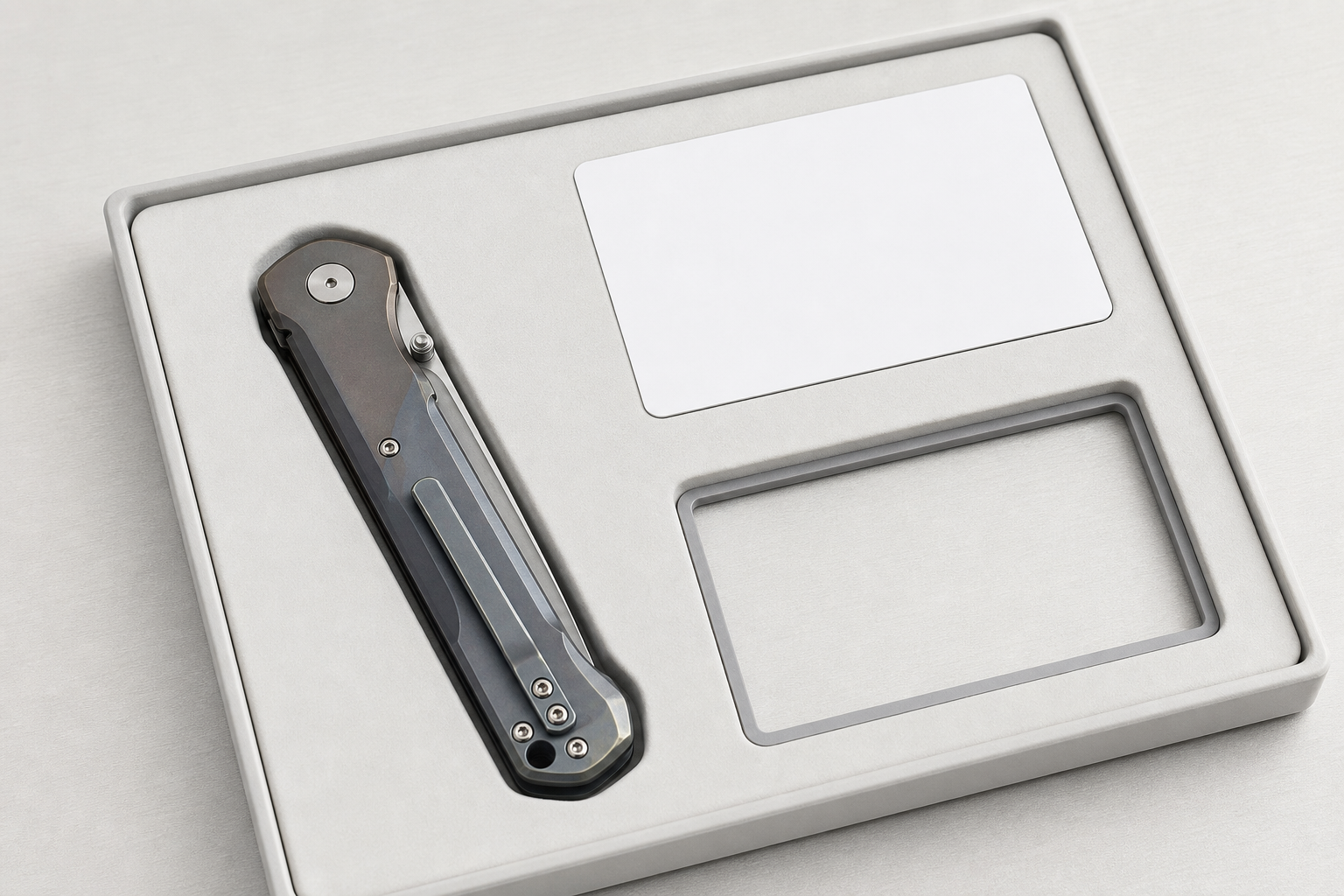
I Watch the Contact Surfaces First
The lock face and tang contact area are small, but they decide much of the user's experience. If the lock angle is wrong, the knife may have lock slip, lock stick, or early wear. If the lockbar has poor spring force, the lock may engage weakly. If the pivot hole is loose, the blade may move even when the lock itself is acceptable.
The stop pin is also important. It controls the open position of the blade. If the stop pin position varies, the lock engagement changes. This is why I ask for dimensional checks on pivot holes, stop pin holes, blade tang surfaces, liners, and handle scales. The NIST dimensional metrology page is a useful reminder that high accuracy dimensional measurement supports manufacturing process improvement. In knife production, the same mindset applies at a practical factory level. We need repeatable measurements, not only a nice sample.
Surface finishing matters too. A rough lock face can create sticky release. A polished surface in the wrong place can reduce friction. Debris, burrs, coating buildup, and inconsistent heat treatment can all change the way a lock behaves.
For B2B buyers, the key point is simple. Do not approve a lock type only from a 3D drawing. Approve it from functional samples, measured parts, assembly feedback, and repeat tests.
| Mechanical detail | What can go wrong | Practical control |
|---|---|---|
| Lock face | Slip or stick | Control angle and finish |
| Pivot hole | Blade play | Check diameter and roundness |
| Stop pin | Variable lockup | Control position and hardness |
| Spring force | Weak or hard release | Define acceptable feel range |
How Should Lock Choice Affect Blade, Handle, and Opening Design?
A lock is not a separate part of the knife. It connects with the whole structure.
Lock choice should guide blade tang shape, handle thickness, liner or frame material, opening method, clip position, finger clearance, screw layout, and final assembly sequence.
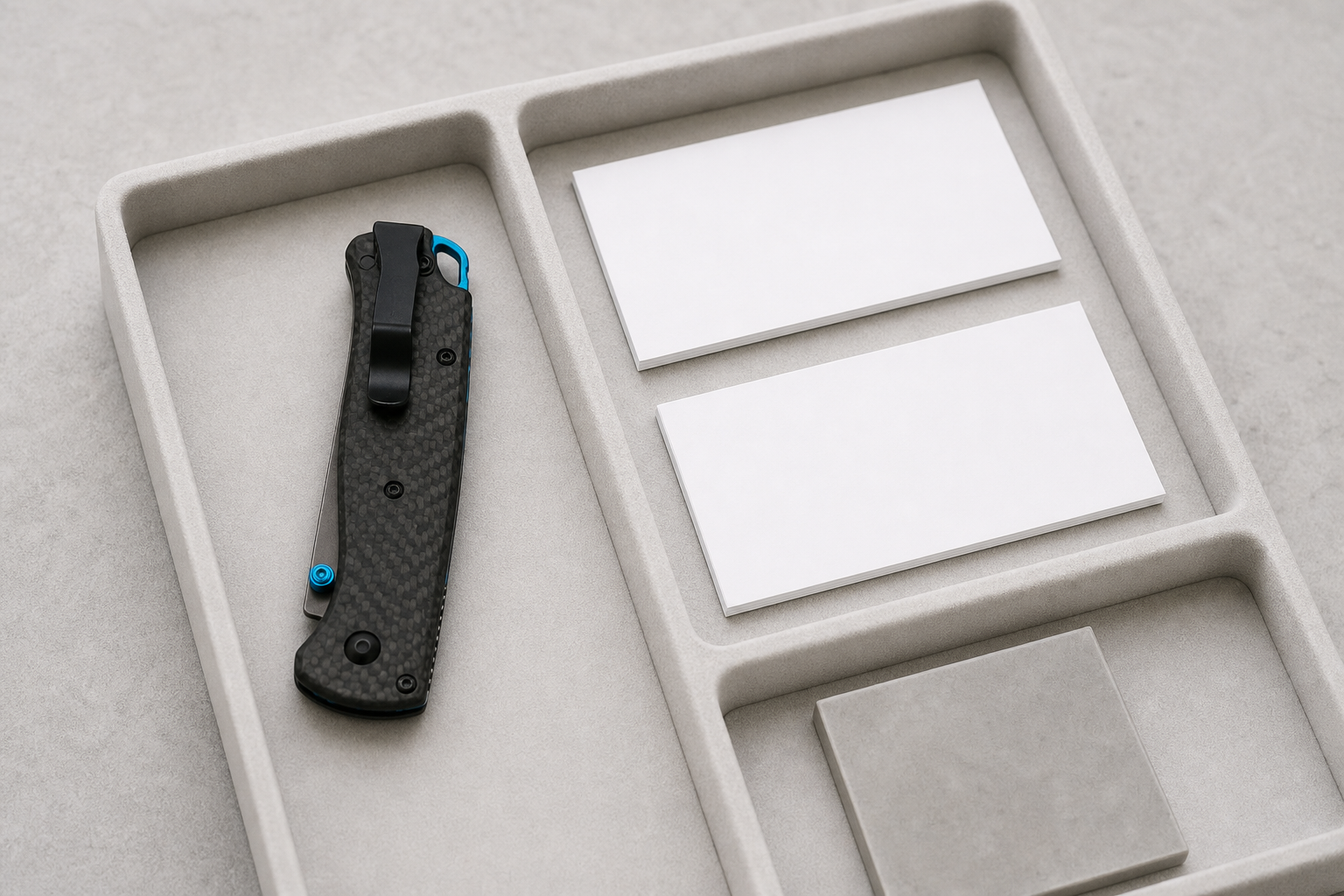
I Build the Knife Around Controlled Movement
The opening method and lock type must work together. A flipper design needs detent strength, smooth pivot fit, and finger clearance. A thumb stud or thumb hole needs enough access and comfortable handle contour. A nail nick or slip joint design may need stronger spring feel and a different user expectation. If these parts are designed separately, the knife can feel awkward.
Handle material changes lock design too. G10 scales over steel liners work well for many liner lock projects. Stainless steel or aluminum handles may support different structures. A frame lock usually needs a metal frame with enough strength and controlled spring behavior. A back lock needs space for the lock bar and spring. A button lock needs room for the button, spring, and plunger path.
Blade shape also matters. The blade tang must fit the chosen lock. The closed blade must sit safely inside the handle. The edge must not contact spacers or screws. The point must stay covered. The lock release area must not create an accidental pinch point.
I also review the assembly sequence. If a lock design needs too much manual adjustment, the cost may rise and repeat production may become unstable. A design that feels excellent in one hand-built sample may still be risky for a larger order if the tolerances are too tight for the target price.
| Design area | Lock-related question | Why it matters |
|---|---|---|
| Blade tang | Does it match the lock face? | Controls engagement |
| Handle thickness | Is there room for parts? | Prevents cramped assembly |
| Opening method | Does detent feel match? | Improves user experience |
| Closed position | Is the edge fully covered? | Supports safe carry |
What Production and Cost Risks Should Buyers Check?
A lock can be attractive but expensive to stabilize. That cost may appear after sampling.
Buyers should check part count, machining time, spring sourcing, assembly skill, rework rate, testing time, MOQ impact, and long-term repeatability before approving a lock type.
I Separate Sample Success From Production Stability
Some lock types need more parts. Some need tighter machining. Some need spring control. Some need more hand fitting. These details affect cost. They also affect lead time and reject rate. A buyer may like the feel of a button lock or crossbar-style lock, but the project must support the parts and assembly control. If the target price is tight, a simpler liner lock or back lock may be more realistic.
MOQ can also change the decision. A small custom order may tolerate more manual adjustment. A larger repeat order needs more process stability. For B2B buyers, stable repeat production is often more valuable than a feature that looks exciting but creates rework.
The supplier should explain where the cost comes from. Is it CNC time? Stamping tooling? Heat treatment? Spring material? Surface finish? Assembly labor? Lock testing? Packaging instruction cards? When I can show the buyer these cost drivers, the buyer can choose the lock with a clearer mind.
I also connect lock choice to quality management. ISO 9001 is a globally recognized quality management standard focused on meeting customer expectations and improving quality management systems. I do not treat ISO wording as a marketing sticker. I treat it as a reminder that a lock design needs defined requirements, process control, inspection, and improvement.
| Cost driver | Why it changes cost | Buyer action |
|---|---|---|
| Part count | More parts need more control | Review assembly plan |
| Machining tolerance | Tight fit takes time | Define critical dimensions |
| Spring quality | Feel depends on consistency | Approve spring sample |
| Rework rate | Manual tuning adds cost | Test pilot production |
What QC Tests Should Be Included Before Shipment?
Final inspection cannot be only appearance. Lock function must be checked piece by piece or by controlled sampling.
QC should include lock engagement, lock release, blade play, blade centering, opening and closing action, screw torque, edge clearance, spring feel, visual finish, and packaging instructions.
I Put Function Checks Before Cosmetic Approval
For lock inspection, I check the basic mechanical behavior first. The blade should open smoothly. The lock should engage clearly. The blade should not show unacceptable side play or vertical movement. The release should feel controlled. The blade should close without scraping the liner or handle. The edge should stay safely inside the handle when closed.
After that, I check consistency. Does the 50th piece feel close to the approved sample? Does the release force vary too much? Does the pivot loosen after cycling? Are screws secure? Are there burrs around the lock cutout? Does coating or stonewash affect the lock contact area? These questions help catch production drift.
The NIST Rockwell hardness measurement guide is about hardness testing, not lock testing. Still, it gives a useful manufacturing lesson: measurement results can vary, and good practice reduces error. Lock QC needs the same discipline. The buyer and factory should define what is measured, how it is measured, and what counts as pass or fail.
I also recommend keeping an approved golden sample and a defect reference set. These are easier for production workers to use than vague words like "smooth" or "good." When the buyer and factory share the same standard, fewer arguments happen later.
| QC item | What to check | Why it protects buyers |
|---|---|---|
| Lock engagement | Position and stability | Reduces functional complaints |
| Blade play | Side and vertical movement | Protects perceived quality |
| Release feel | Too hard or too loose | Improves user experience |
| Screw torque | Pivot and body screws | Supports repeat use |
How Should Buyers Handle Safety, Legal, and Marketing Language?
Marketing can make a lock sound stronger than the test plan supports. That can create risk.
Buyers should describe lock function clearly, avoid combat or self-defense claims, include safe-use instructions, and verify destination-market rules before selling locking pocket knives.
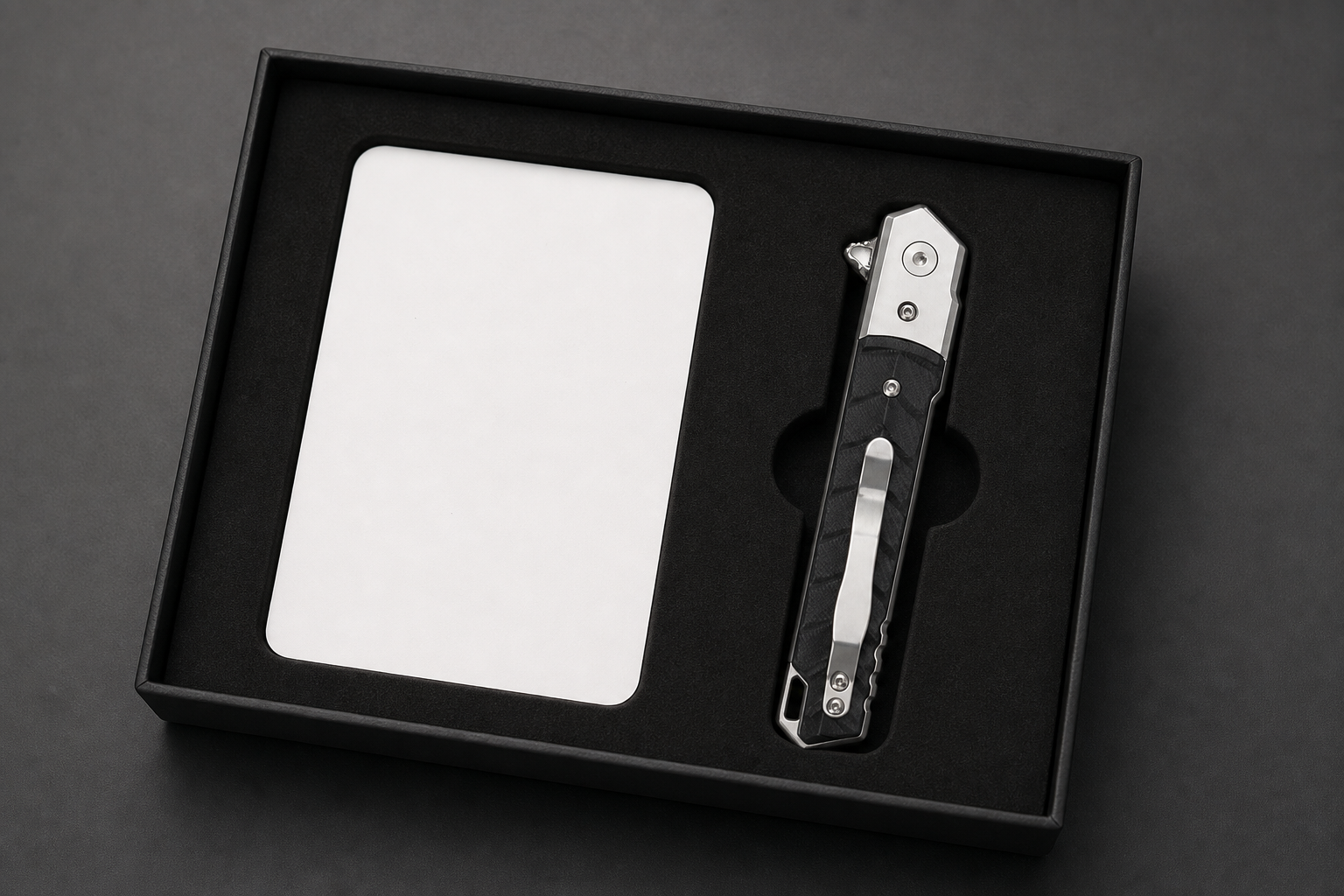
I Keep the Product Language Practical
A lock supports controlled utility use. It should not be described as a guarantee against injury or as a combat feature. I prefer simple language: lock type, intended cutting use, safe opening and closing, storage, care, and inspection. The user should understand that a folding knife is still a sharp hand tool.
The OSHA hand and power tools publication gives broad safety principles for tools, including keeping tools in good condition, using the right tool, examining tools for damage, following instructions, and using proper protective equipment. Those ideas are useful for packaging and instruction cards. The packaging should not be dramatic. It should be clear.
Legal rules vary by market, and locking knives may be treated differently in different places. I do not write a legal claim into the product without buyer confirmation. I ask the buyer to check the destination market, sales channel, carrier rules, and age or retail restrictions where relevant. If the buyer wants a non-locking product for a specific market, we can discuss slip joint structure and safer wording.
I also avoid words that push the product toward weapon use. Vast State's B2B positioning is practical manufacturing support. That means we focus on product quality, consistency, utility tasks, packaging, and responsible communication.
| Language area | Good direction | Avoid |
|---|---|---|
| Lock description | Clear mechanism name | Unsupported strength claim |
| Intended use | Utility cutting tasks | Self-defense positioning |
| Safety | Inspect, use, close, store | No-risk promise |
| Market rules | Buyer verifies destination | Universal legal claim |
What Should Buyers Put in an RFQ for Lock Types?
A vague RFQ makes the supplier guess. That guess can create the wrong sample.
An RFQ should define the preferred lock type, target user, blade size, opening method, handle material, steel, price target, safety language, testing method, packaging need, MOQ, timeline, and destination market.
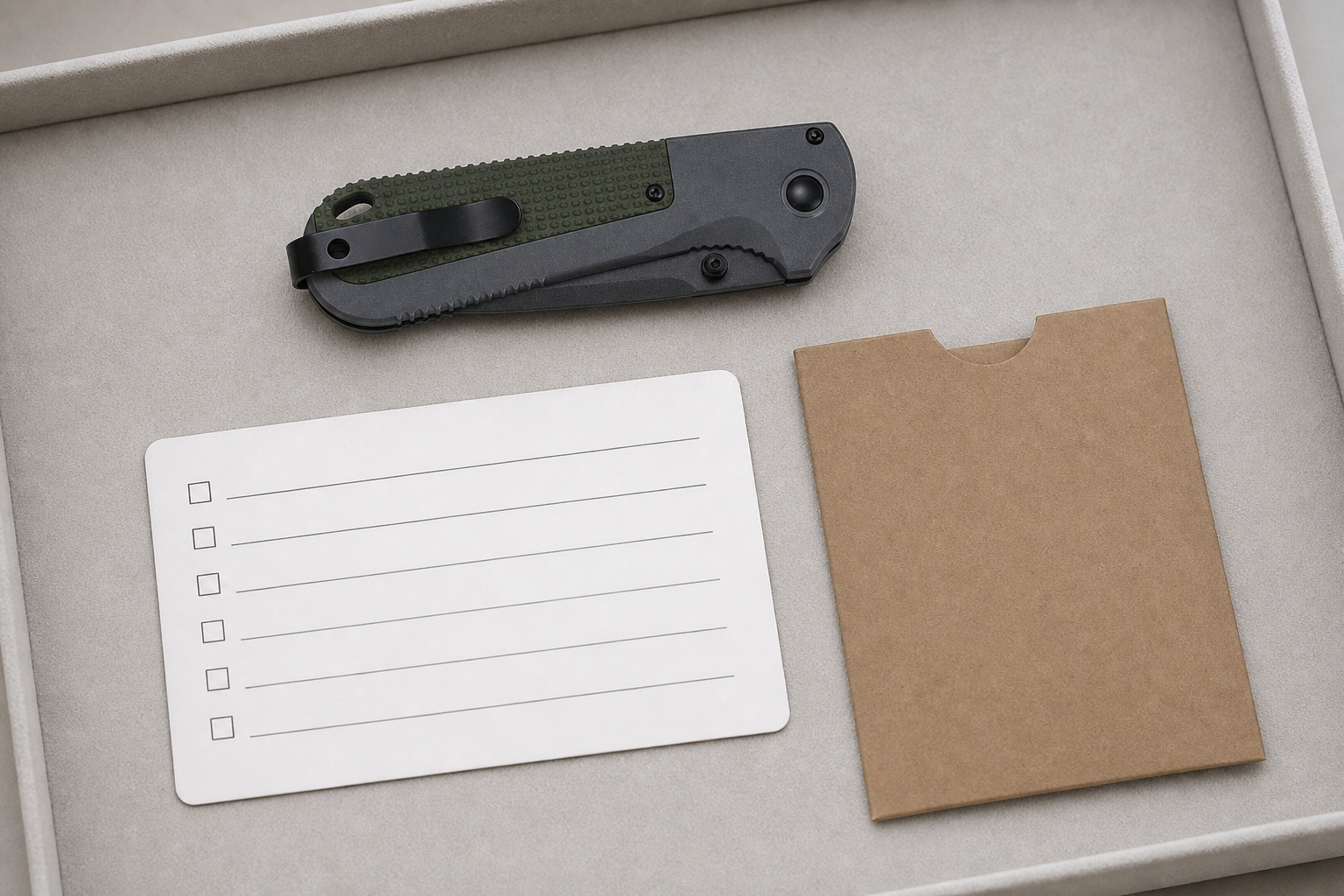
I Want the RFQ to Prevent Misunderstanding
When a buyer asks for "EDC knife with good lock," the supplier has too much room to guess. A better RFQ says what lock type the buyer prefers and why. It also says the target price, expected MOQ, blade length, handle material, opening method, pocket clip need, packaging style, and market.
If the buyer is not sure, the RFQ should say that too. I can then recommend a lock based on cost, function, and manufacturing risk. For example, a cost-sensitive private label EDC folder may start with a liner lock. A traditional pocket knife project may use a slip joint. A premium metal-handle folder may consider a frame lock. A left-hand friendly project may consider a lock with better ambidextrous access.
The RFQ should also define sample testing. I want to know how many samples the buyer needs, what tests they will run, and what defect level they cannot accept. The sample stage should check opening action, lockup, release, blade centering, handle feel, finish, edge, packaging, and instructions.
Clear RFQs save time. They help the supplier quote more accurately and help the buyer compare options without turning every detail into a new negotiation.
| RFQ item | What to include | Why it helps |
|---|---|---|
| Lock preference | Type or open recommendation | Guides structure |
| Product target | User, price, channel | Guides cost and feature level |
| Testing need | Functional checks and samples | Prevents weak approval |
| Market | Destination and sales channel | Supports responsible design |
How Can Vast State Support EDC Pocket Knife Lock Development?
Buyers need more than a lock name. They need a supplier who can turn the lock into a repeatable product.
Vast State can support lock selection, structure review, prototype development, material matching, assembly planning, packaging customization, and production QC for OEM/ODM EDC pocket knife projects.
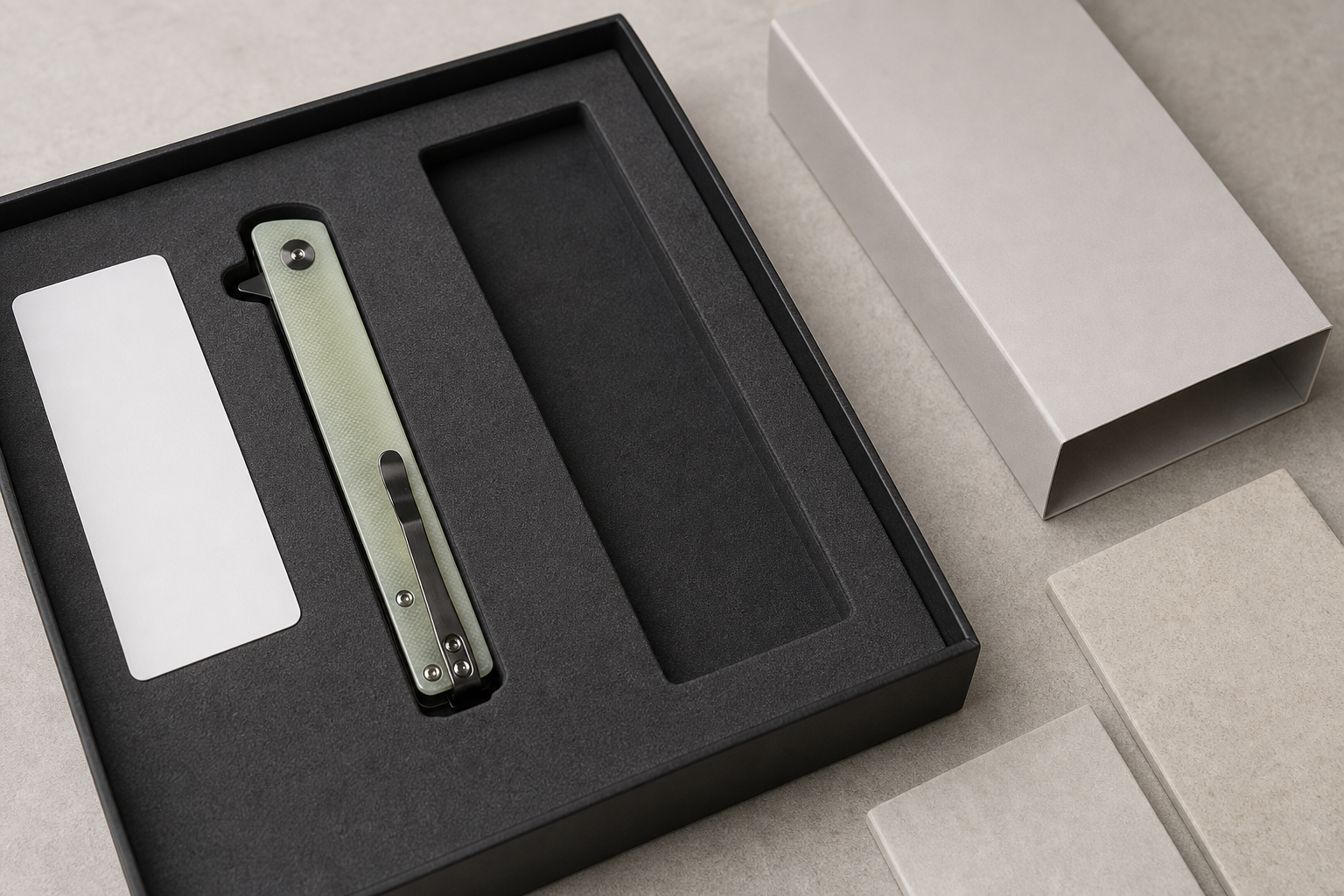
I Connect Product Ideas With Manufacturable Structures
Vast State works with international B2B customers who may have a finished design, a rough concept, or only a target market and price range. For lock type selection, that support matters because the lock affects many downstream decisions. I can help review whether the preferred lock matches the blade size, handle material, opening method, budget, and production plan.
If a customer already has a CAD design, I check the structure for production risk. If the customer only has a product idea, I help turn it into a practical specification. I may suggest a different lock if the requested one adds cost without enough market value. I may also suggest changes to handle thickness, pivot hardware, screw layout, or packaging instructions.
For repeat production, I focus on consistency. A good first sample is not enough. The lock must be stable across batches. That means clear drawings, controlled parts, practical assembly steps, inspection points, defect references, and fast communication when a problem appears.
This is the kind of supplier role I believe B2B buyers need. We are not only producing a knife. We are helping create a product that fits the target user, target price, brand position, and production reality.
| Support area | What we help with | Buyer value |
|---|---|---|
| Lock selection | Compare practical options | Better early decisions |
| Engineering review | Tang, pivot, handle, spring | Fewer sample problems |
| Customization | Logo, finish, packaging | Stronger brand fit |
| QC follow-up | Lockup, action, finish | More stable repeat orders |
Turn this article into a folding knife project.
Share your blade type, lock direction, steel preference, handle material, quantity, target market, and packaging needs. Vast State can prepare OEM/ODM options.
Conclusion
The right EDC pocket knife lock balances user need, structure, cost, safety language, and repeatable QC before production begins.