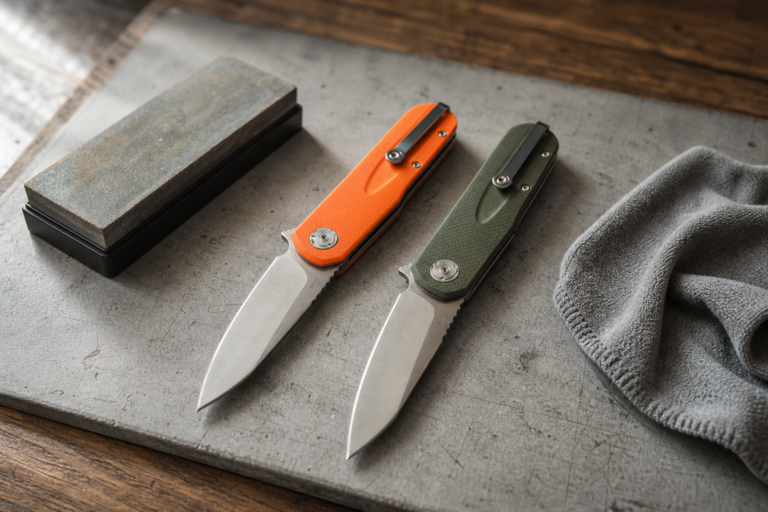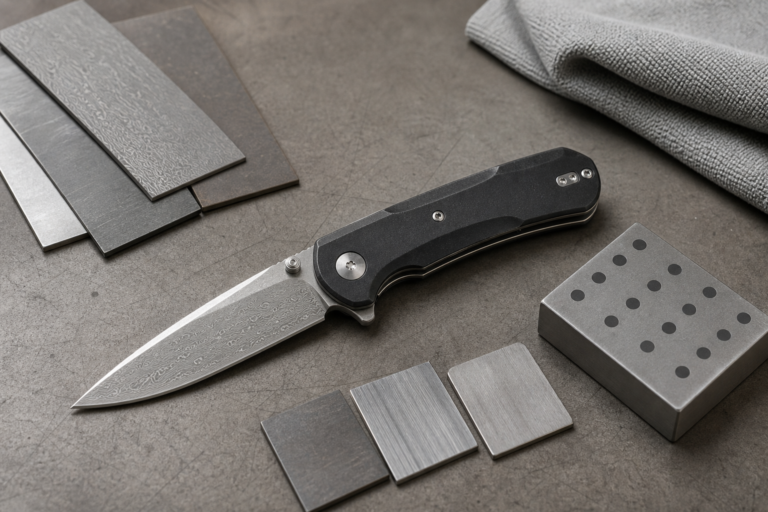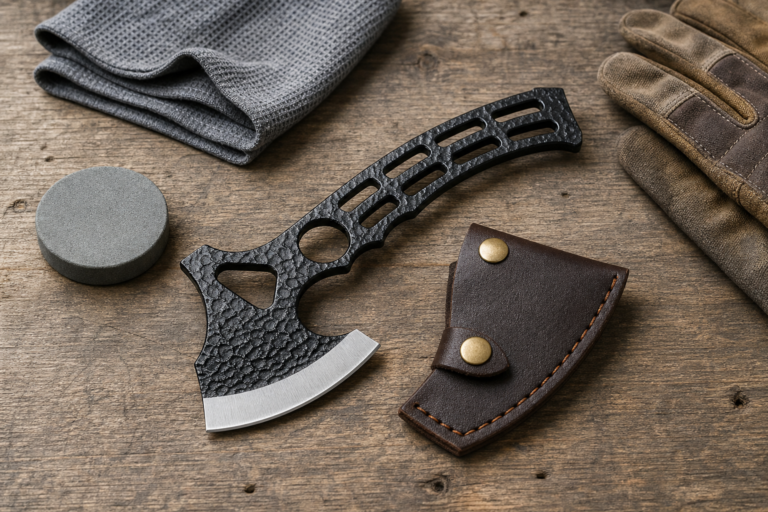
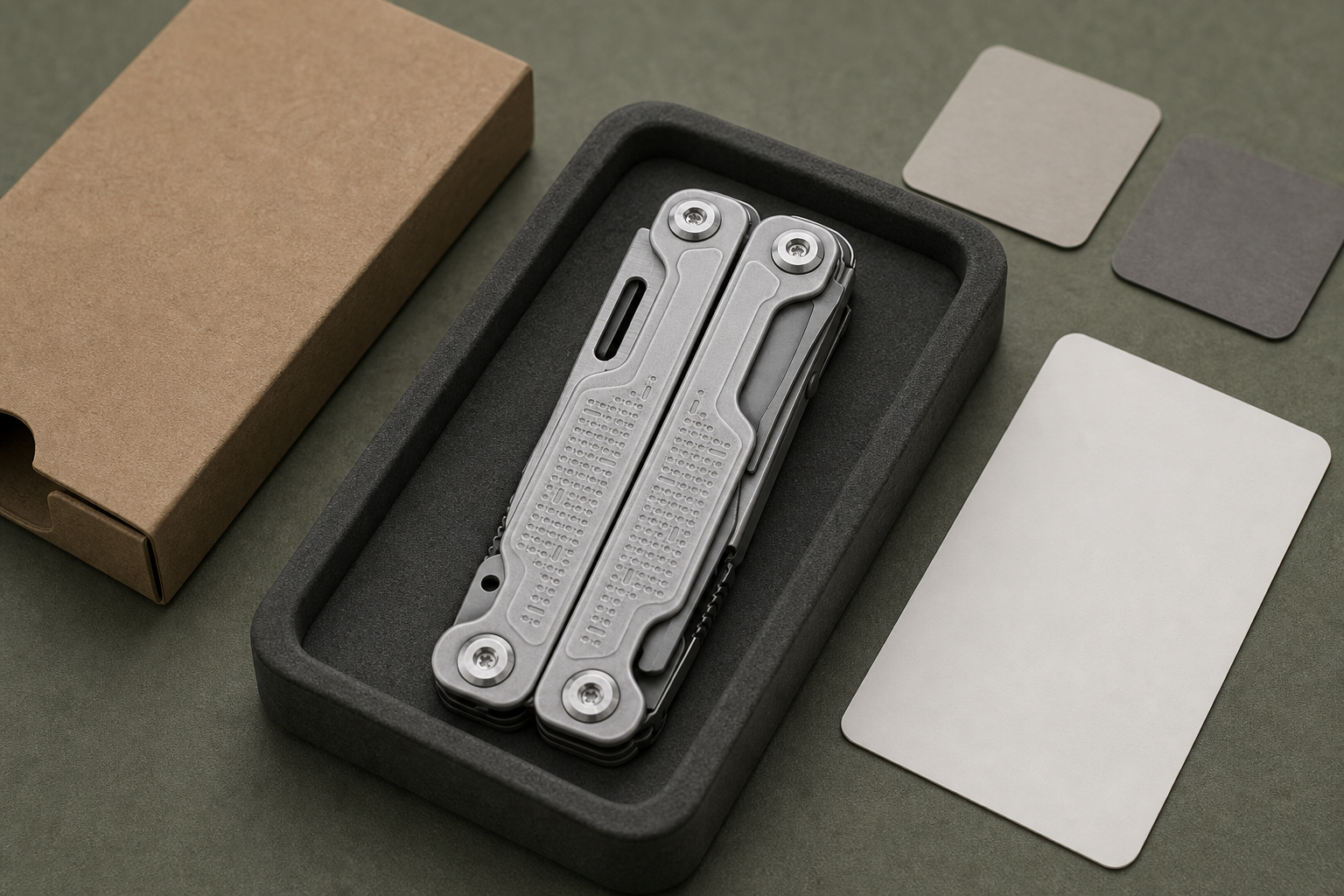
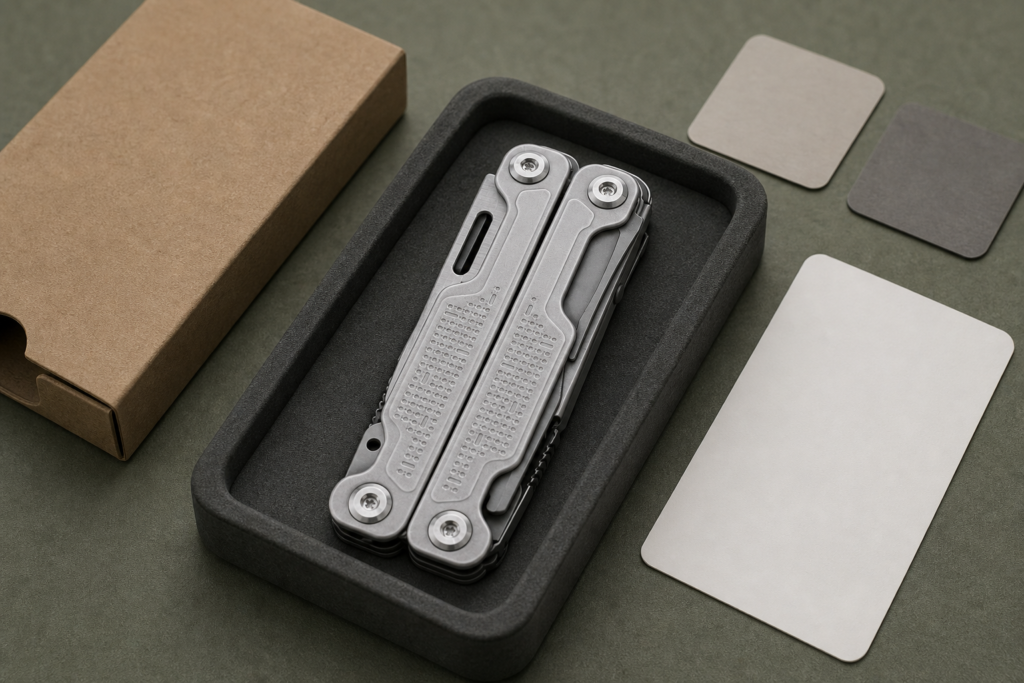
EDC tools can fail in two ways. They can look useful but feel awkward, or look attractive but solve no real task.
Buyers should balance function and appearance in EDC tool design by defining real daily tasks, pocket comfort, safe utility use, material choices, finish style, size, weight, manufacturing tolerance, packaging language, and QC standards. A good-looking EDC tool still has to work clearly and repeat well.
Quick buyer brief:
- Answer: EDC tools do not need to be overbuilt. They need to be useful, comfortable, easy to carry, visually clear, safely explained, cost realistic, and consistent in production.
- Buyer context: This guide is for knife brands, outdoor brands, EDC brands, importers, wholesalers, distributors, private label buyers, and sourcing managers.
- Key checks: User task, tool size, closed carry, handle comfort, grip texture, material finish, color, clip position, blade or tool access, lock or retention, packaging wording, target price, sample testing, and final inspection.
Planning a custom multi-tool project?
Send your function list, reference photo, target quantity, and budget range. Vast State can review materials, tooling, assembly, inspection, and packaging options.
When I work with buyers on EDC tools, I often see the same tension. The buyer wants the tool to look special, but the user wants it to be easy to carry and useful. If the design becomes too bulky, the user leaves it at home. If the design becomes too decorative, the user may not trust it. The best EDC product is not the most powerful-looking product. It is the product that fits the pocket, fits the hand, fits the task, and fits the brand.
Why Should EDC Tools Avoid Being Overbuilt?
An EDC tool can look impressive and still be too heavy, too thick, or too awkward for daily carry.
EDC tools should avoid being overbuilt because everyday users value carry comfort, quick access, simple use, safe storage, and practical task fit more than unnecessary size or aggressive appearance.
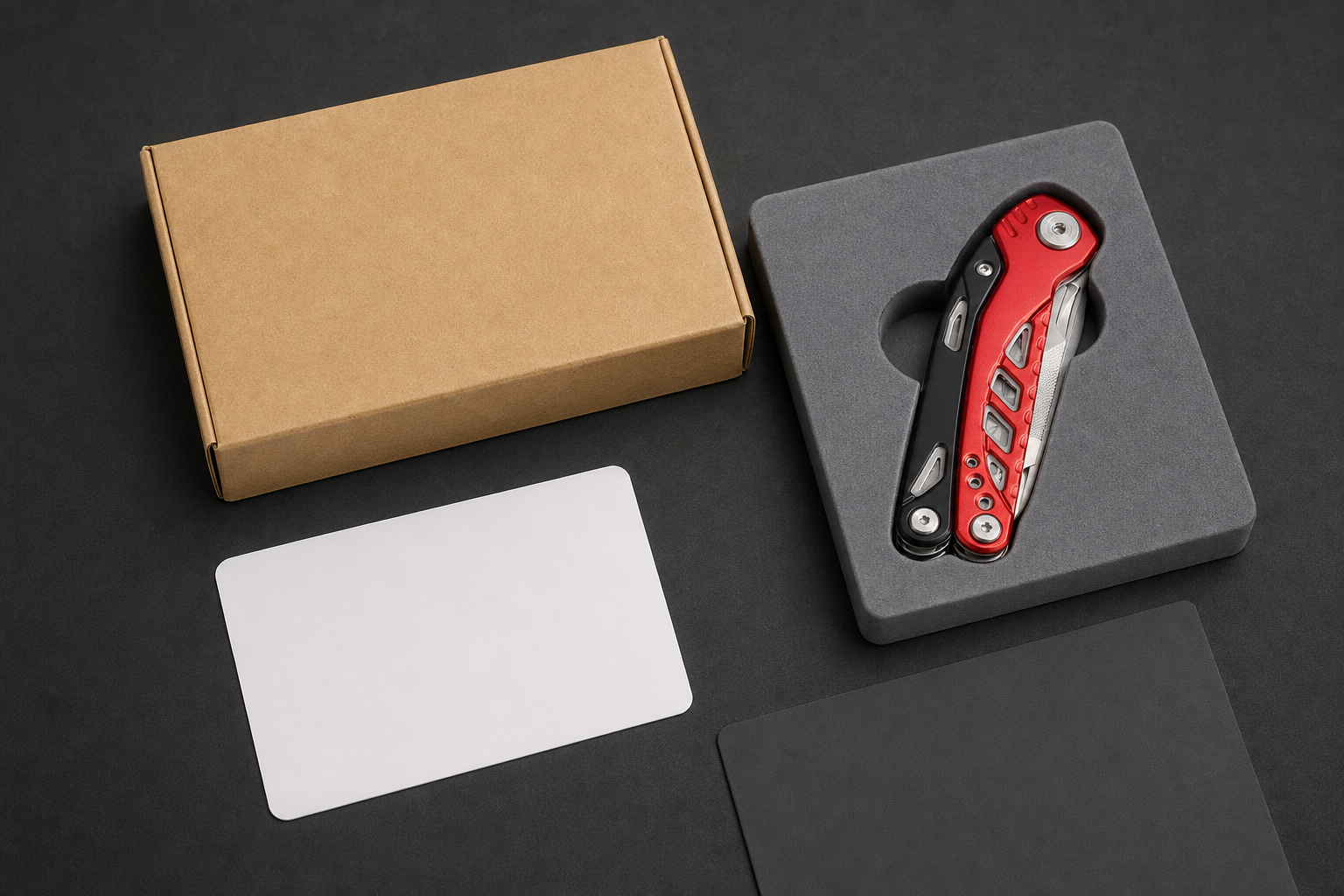
I Start With Carry Reality
EDC means everyday carry. That phrase should control the product direction. A tool that is too large, too heavy, too sharp-edged, or too complicated may look impressive in photos but fail in real daily use. Users usually carry EDC tools because they want convenience. They want a tool for opening packages, cutting cord, small repairs, camping preparation, travel organization, or light utility tasks.
I ask buyers to define what "daily" means for their market. A compact office-friendly folding knife, a small outdoor multi-tool, and a carabiner accessory should not follow the same design logic. If the target user carries the tool in a pocket, the tool should not tear fabric or feel bulky. If the user attaches it to a bag, the tool should not rattle or snag. If the user keeps it in a car kit, compact size may matter less than clear function.
The CCOHS hand-tool guidance supports a practical principle: users should choose the right tool for the job and keep tools in good condition. For EDC products, the right tool is often not the largest one. It is the tool that the user actually carries and uses correctly.
| Overbuilt feature | Possible problem | Better buyer question |
|---|---|---|
| Too thick | Poor pocket comfort | What thickness feels carryable? |
| Too heavy | User leaves it behind | What weight target fits the market? |
| Too many features | Confusing use | Which functions are truly needed? |
| Aggressive style | Limited sales channel | Does the look match the buyer's market? |
OEM/ODM RFQ Checklist
Prepare these details to help Vast State review your project and provide a more accurate quotation.
| RFQ Field | What to Prepare |
|---|---|
| Project type | OEM from drawing / ODM private label / wholesale catalog |
| Product category | Folding knife / fixed blade / multi-tool / outdoor tool |
| Design status | Idea / sketch / 2D drawing / 3D CAD / physical sample |
| Target price | Ex-factory target price or retail price range |
| MOQ expectation | 500 / 1,000 / 3,000 / 5,000+ pcs |
| Logo method | Laser engraving / etching / printing / molded logo |
| Packaging | Standard packaging / custom retail box / Amazon-ready |
| Market | USA / EU / Japan / Korea / Middle East / other |
| Compliance needs | Buyer-specified testing / documentation / labeling |
| Timeline | Sample deadline / mass production deadline |
How Does Appearance Create Value in EDC Tools?
Appearance is not only decoration. It can help customers understand product level and brand position.
Appearance creates value when color, material, texture, finish, shape, hardware, and packaging make the EDC tool easier to understand, easier to trust, and easier to remember.
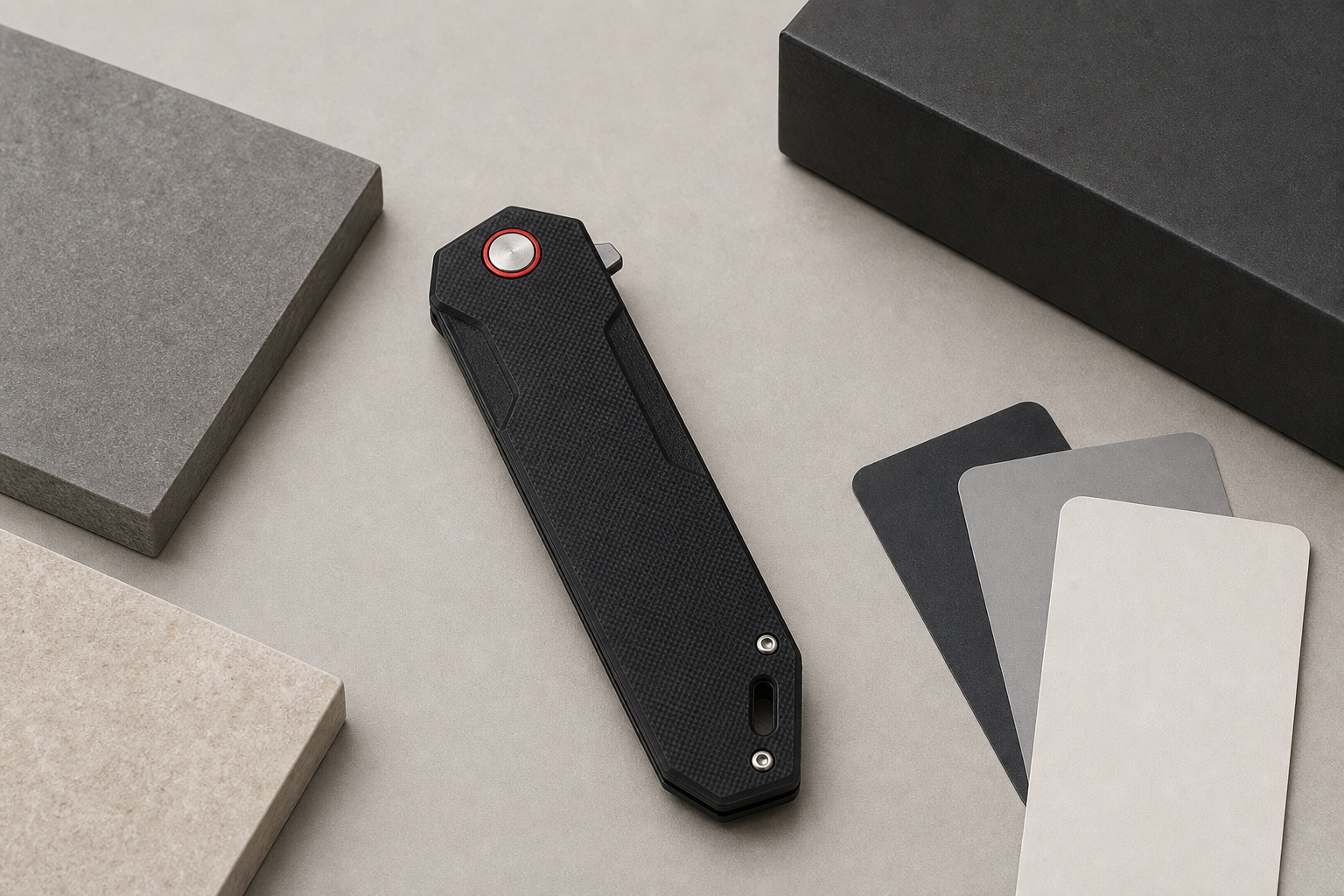
I Treat Good-Looking Design as Communication
A good-looking EDC tool can help a buyer position the product clearly. A matte black finish may suggest technical utility. A natural wood handle may suggest warmth and gift value. A carbon fiber handle may suggest lightweight premium style. A bright color may help a tool feel friendly and easy to find in a bag. A clean satin finish may feel more professional than a rough, overly tactical surface.
The important point is that appearance should communicate the product's real purpose. If a tool is designed for everyday utility, the appearance should feel useful, approachable, and durable. If a tool is designed for a premium EDC line, the material and packaging should support that price tier. If the tool is for outdoor retail, the color and texture should fit that channel.
I also think about photography. Many buyers sell online. The first product image must explain the product fast. Shape, contrast, visible function, handle material, clip placement, and package style all matter. But the product must still feel good after the customer opens the box.
Appearance has commercial value. It helps the buyer build a product line, create private label identity, and justify a price point. It should not hide weak function.
| Appearance element | What it communicates | Buyer control |
|---|---|---|
| Material | Product level and style | Match target price |
| Color | Friendly, technical, outdoor, premium | Match sales channel |
| Finish | Cleanliness and durability | Approve sample standard |
| Packaging | First impression | Support product position |
How Should Buyers Define Real EDC Use Before Designing?
Without a clear use case, every feature can seem important. That usually creates a messy product.
Buyers should define the main EDC use case by listing the target user, carry method, common tasks, tool environment, safety expectations, price range, and sales channel.
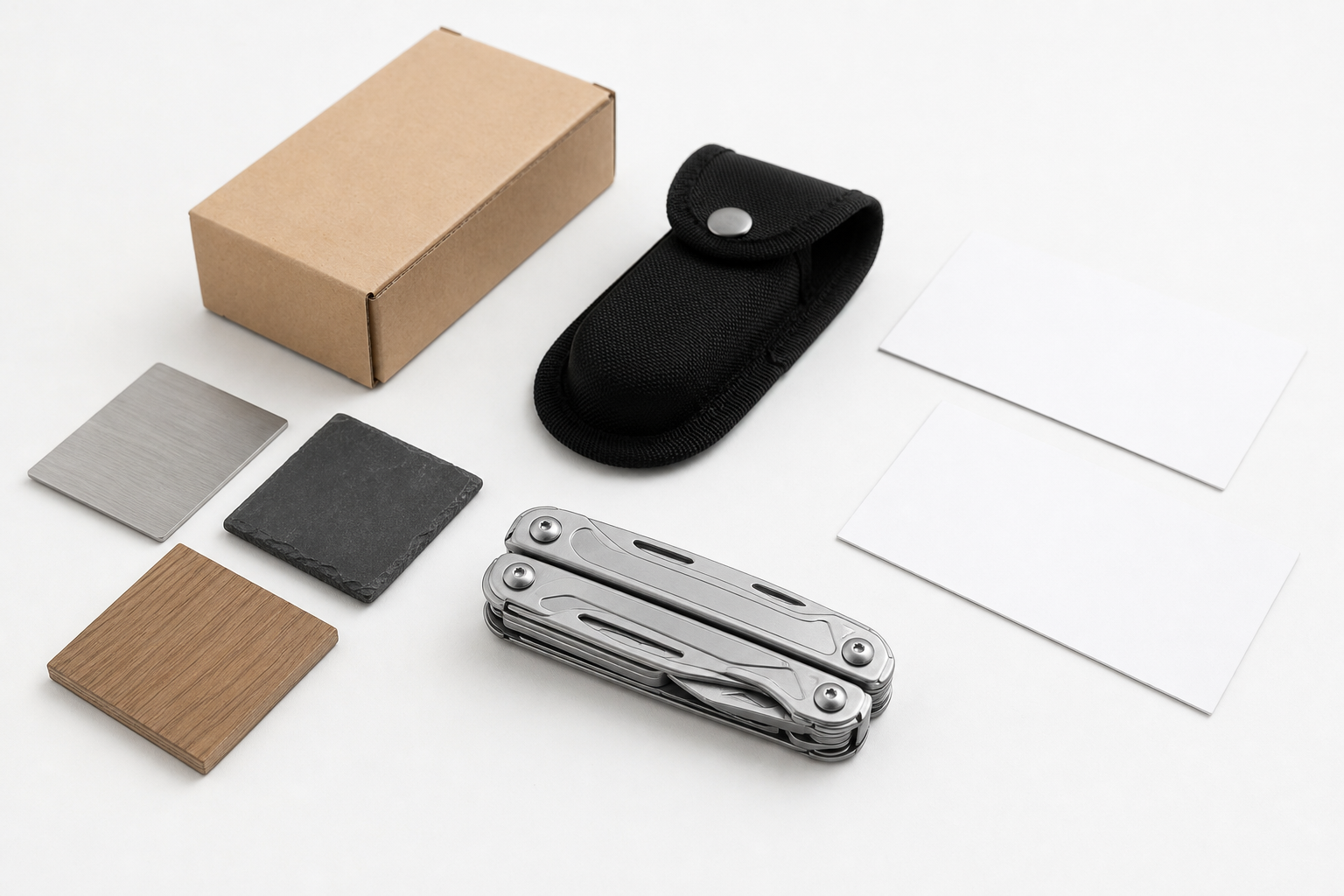
I Build the Tool Around the User's Day
The first design question is simple: what does the user actually do with the tool? If the answer is "everything," the product is not defined yet. A useful EDC tool should have a main purpose. It can have secondary features, but it needs one clear reason to exist.
For a folding knife, the main task may be light cutting. For a multi-tool, it may be small repairs or outdoor backup. For a carabiner tool, it may be carrying, clipping, bottle opening, or small utility. For a compact pry tool, it may be scraping, lifting, or simple maintenance tasks. Each purpose changes the shape, material, finish, and packaging.
I also ask how the user carries it. Pocket carry needs smooth edges and controlled thickness. Keychain carry needs small size and low snagging. Bag carry needs secure attachment. Toolbox carry allows more weight. If the carry method is ignored, the design may look good but feel wrong.
The ISO 9241-11 usability standard page explains that usability can apply to products and services and focuses on use in context. I apply that idea in a practical way. EDC tools should be designed around a specific user, specific goals, and a specific use context.
| Use question | Why it matters | Design impact |
|---|---|---|
| Who carries it? | Defines hand and pocket needs | Size and ergonomics |
| What task is common? | Defines tool function | Blade, pliers, driver, clip |
| Where is it used? | Defines finish and material | Corrosion and grip |
| How is it sold? | Defines product language | Packaging and photos |
What Materials and Finishes Support Both Looks and Function?
Material can make a product look attractive. It can also create cost, weight, grip, or durability issues.
Materials and finishes should support the intended use, price tier, grip, corrosion resistance, machining quality, color stability, packaging story, and repeat production.
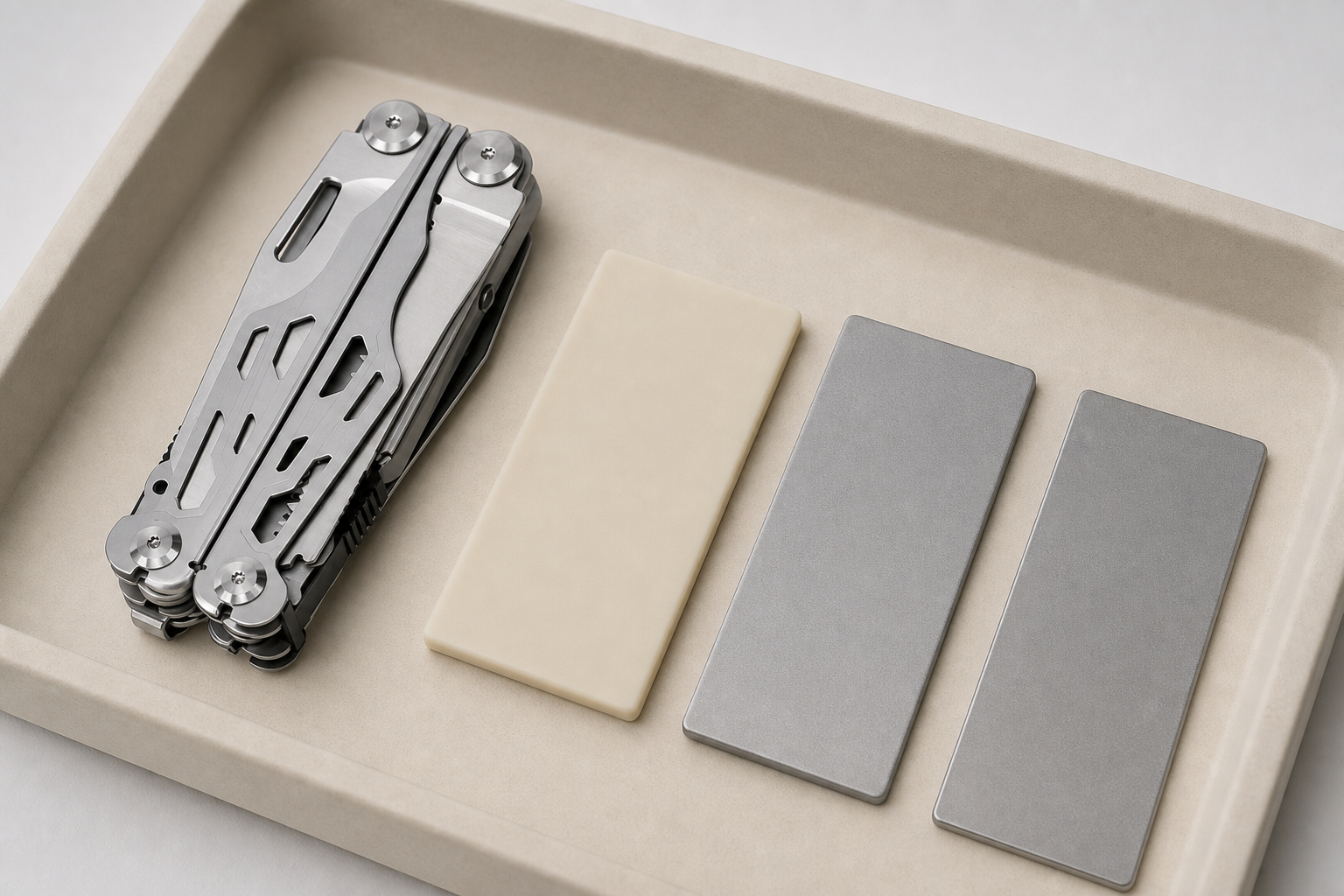
I Match Material to the Product Promise
Materials create both feel and cost. G10 can support a practical EDC or outdoor product with good grip and color options. Micarta can feel warmer and more craft-oriented. Aluminum can feel light and modern, but surface treatment must be controlled. Stainless steel can feel solid but may add weight. Carbon fiber can feel premium and lightweight but usually increases cost. Wood can add gift appeal but needs good finishing and care language.
Finish choices also matter. A satin finish can look clean. Stonewash can hide light use marks. Bead blast can feel subdued but may need corrosion consideration depending on material. Coatings can support color and protection, but the coating must not interfere with fit, lock contact, or moving parts.
I do not let the buyer choose a material only because it looks good in a photo. I ask whether it fits the target price, MOQ, production method, user environment, and after-sales risk. A beautiful handle that scratches too easily may create complaints. A strong material with poor edge finishing may feel unpleasant.
For B2B buyers, the best material is not always the most expensive one. It is the one that supports the product story and the production plan.
| Material or finish | Visual value | Practical concern |
|---|---|---|
| G10 | Color and grip | Dust and clean machining |
| Aluminum | Light modern look | Anodizing consistency |
| Carbon fiber | Premium lightweight style | Cost and edge finish |
| Stonewash | Use-friendly surface | Must stay consistent |
How Can Buyers Keep EDC Tools Comfortable and Easy to Carry?
Comfort is easy to ignore during early design. The user notices it every day.
Buyers can keep EDC tools comfortable by controlling thickness, weight, edge radius, clip position, handle contour, closed length, grip texture, tool access, and pocket snag points.
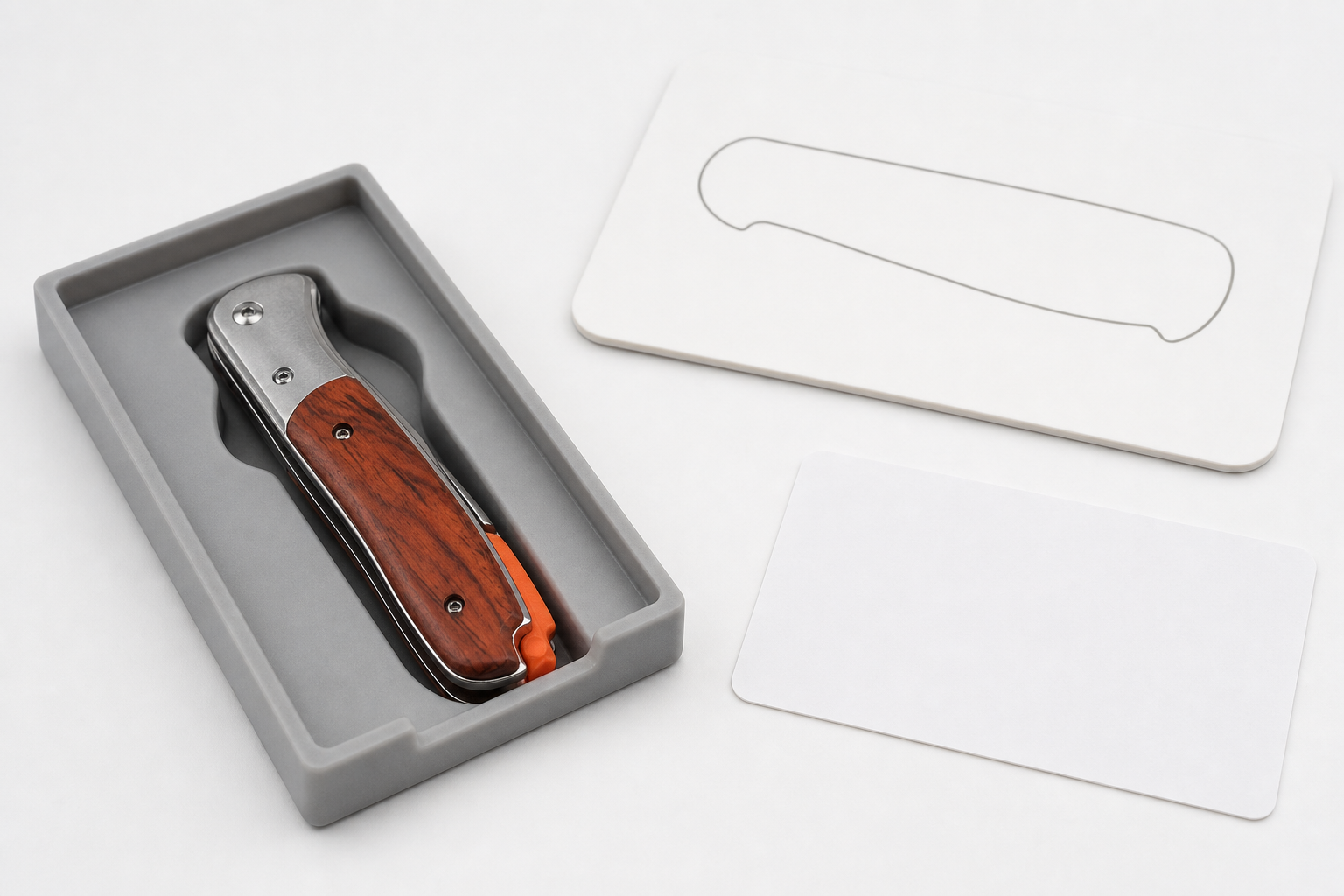
I Check the Edges Before I Check the Logo
Pocket comfort often decides whether a user carries the tool long term. The product may have a good blade, good finish, and good packaging, but if it digs into the hand or pocket, the user will not enjoy it.
I look at the closed shape first. Does the tool have sharp corners? Does the clip create a hot spot? Does the handle feel too thick? Does the flipper tab or tool tip catch on fabric? Does the pocket clip sit too high or too tight? These small details shape the daily experience.
Weight is also important. Some buyers like a heavy tool because it feels solid. That can work for certain markets. But for everyday carry, too much weight can make the tool less attractive. A product can feel high quality without being heavy if the finish, fit, and action are controlled.
Grip should be balanced. A very aggressive texture may help outdoor use but feel rough in office or urban carry. A very smooth surface may look premium but feel slippery. The buyer should define the main environment before choosing texture.
| Comfort factor | What to check | Why it matters |
|---|---|---|
| Edge radius | Sharp corners and chamfers | Improves hand feel |
| Weight | Finished product weight | Affects carry habit |
| Clip position | Pocket access and hot spots | Affects daily use |
| Texture | Grip versus pocket wear | Matches target user |
Why Should Good-Looking Design Stay Manufacturable?
Decorative ideas can look easy in a drawing. They may become difficult in production.
Good-looking EDC design should stay manufacturable by using practical shapes, controlled tolerances, stable finishes, repeatable colors, reasonable part counts, and clear inspection standards.
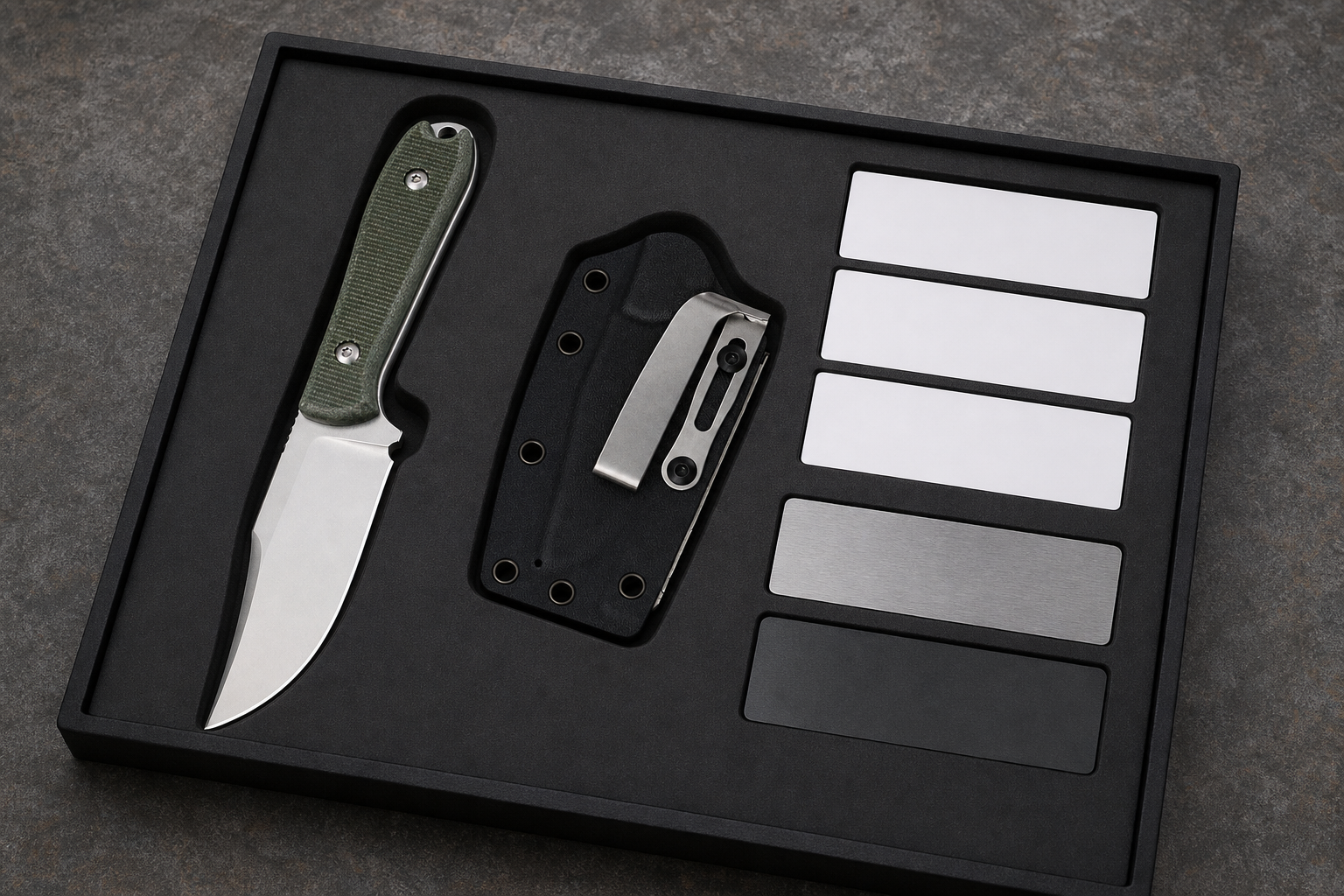
I Watch for Expensive Beauty
Some visual details are expensive to make stable. Deep contours may increase CNC time. Complex inlays may create fit problems. Two-tone finishes may need extra masking or process steps. Tiny screws may look clean but become hard to assemble. Thin decorative cutouts may weaken the handle or collect dirt.
This does not mean buyers should avoid attractive design. It means the attractive design must be planned with manufacturing in mind. I prefer design details that add visible value without creating unnecessary risk. A clean bevel, good color, comfortable chamfer, consistent hardware finish, and simple packaging can often create a better product than a complicated shape with poor execution.
The NIST dimensional metrology page highlights how dimensional measurements can support manufacturing process improvement. In EDC tool production, that mindset matters. Decorative parts still need stable hole positions, thickness, surface finish, and assembly fit.
If a buyer wants a special visual feature, I ask whether it can pass mass production. Can we inspect it? Can workers assemble it consistently? Can the finish be repeated? Can the buyer afford the reject rate? These questions protect the project.
| Design detail | Production risk | Practical control |
|---|---|---|
| Complex contour | Longer machining time | Simplify high-risk areas |
| Inlay | Gaps and adhesive issues | Define fit standard |
| Special color | Batch variation | Approve color range |
| Decorative cutout | Weakness or dirt trap | Test function and cleaning |
How Should Buyers Position EDC Tools Without Aggressive Claims?
Some EDC products are marketed too aggressively. That can limit the product's audience and increase risk.
Buyers should position EDC tools around utility, convenience, carry comfort, materials, finish, design, safe handling, and everyday tasks instead of combat, self-defense, or exaggerated power claims.
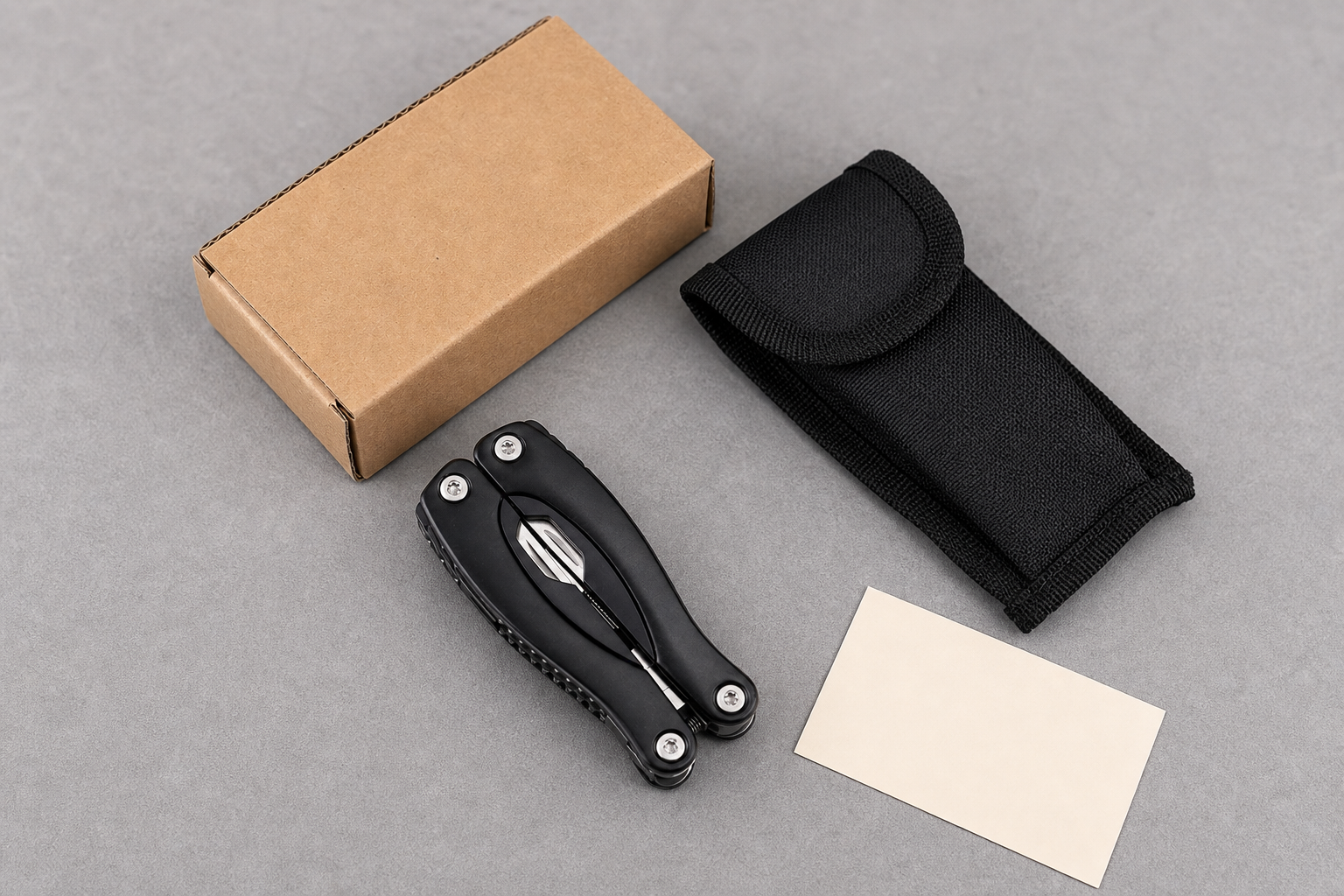
I Keep the Message Useful and Responsible
EDC tools should be easy to explain. A buyer can talk about carry comfort, utility tasks, material options, build quality, color, finish, and private label customization. The buyer does not need to make the tool sound extreme. In many sales channels, a calmer product story can reach a wider audience.
For knives and sharp tools, safe-use wording matters. The OSHA hand and power tools publication gives broad safety principles such as maintaining tools, using the right tool, examining tools for damage, following instructions, and using protective equipment where needed. For EDC packaging, the same ideas become practical user guidance.
I avoid self-defense language and combat positioning. Vast State's B2B work is focused on practical knives, outdoor tools, camping tools, rescue tools, and multi-tools for international customers. The product language should support utility and responsible use.
Good-looking design helps here. A friendly color, clean packaging, smooth shape, and simple copy can make an EDC tool feel approachable instead of intimidating. That can be useful for general retail, gift channels, and private label product lines.
| Positioning area | Better direction | Avoid |
|---|---|---|
| Use case | Daily utility tasks | Self-defense claims |
| Style | Clean, modern, outdoor, premium | Aggressive exaggeration |
| Safety | Inspect, use, close, store | No-risk promises |
| Value | Material, fit, customization | Unsupported power claims |
What QC Checks Protect Both Appearance and Function?
Appearance defects hurt first impressions. Function defects hurt trust. Buyers need both checks.
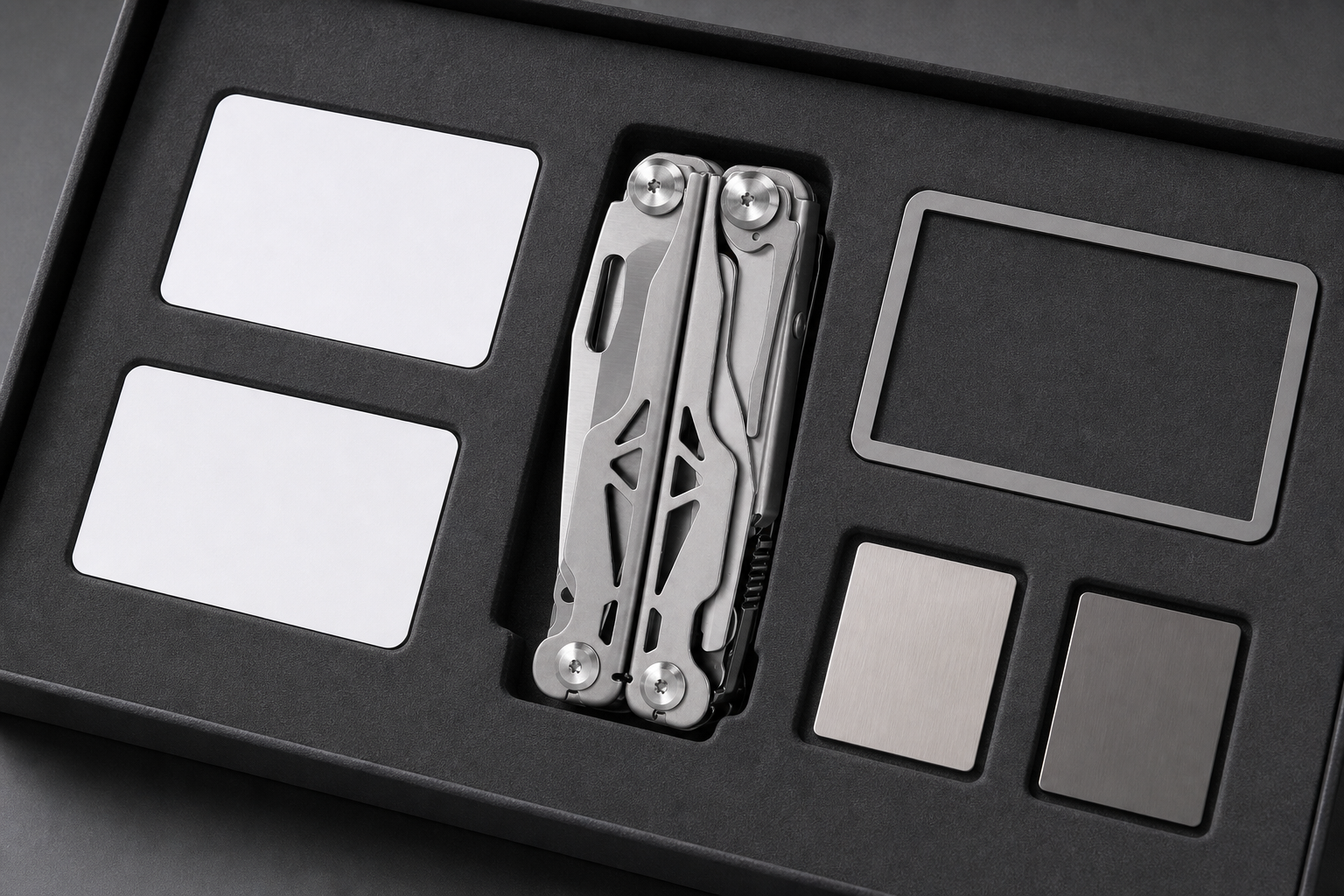
QC should check visual finish, color match, surface defects, edge comfort, hardware fit, opening and closing action, lock or retention, tool access, screw torque, packaging, and batch consistency.
I Inspect the Product the Way a Customer Experiences It
The user first sees the product, then touches it, then opens or uses it. QC should follow that path. The appearance should match the approved sample. The surface should not have avoidable scratches, stains, coating defects, color mismatch, rough edges, or poor logo marks. Then the hand feel should be checked. Edges should be comfortable. The clip should fit. The tool should not rattle.
Function checks come next. A folding knife should open and close correctly. A multi-tool should let users access the tool parts without fighting the mechanism. A carabiner accessory should clip smoothly. Screws should be secure. Moving parts should not bind. The final product should match the buyer's approved sample, not only the drawing.
I connect QC with quality management. ISO 9001 is a recognized quality management standard that focuses on meeting customer expectations and improving quality management systems. For an EDC project, the practical lesson is to define requirements, inspect against them, record defects, and improve the process.
I like to keep approved samples and defect boundary samples. They help the factory judge finish, color, action, and packaging consistently.
| QC area | What to inspect | Buyer value |
|---|---|---|
| Appearance | Finish, color, logo, scratches | Protects first impression |
| Comfort | Edges, clip, texture | Protects carry experience |
| Function | Action, access, lock, screws | Protects trust |
| Packaging | Copy, protection, presentation | Supports sellable product |
What Should Buyers Put in an EDC Tool RFQ?
A broad RFQ leads to broad guesses. A better RFQ makes design choices easier.
An EDC tool RFQ should define target user, main task, carry method, size, weight, materials, finish, tool functions, packaging style, safety wording, target price, MOQ, timeline, and QC tests.
I Ask Buyers to Define the Product Before the Feature List
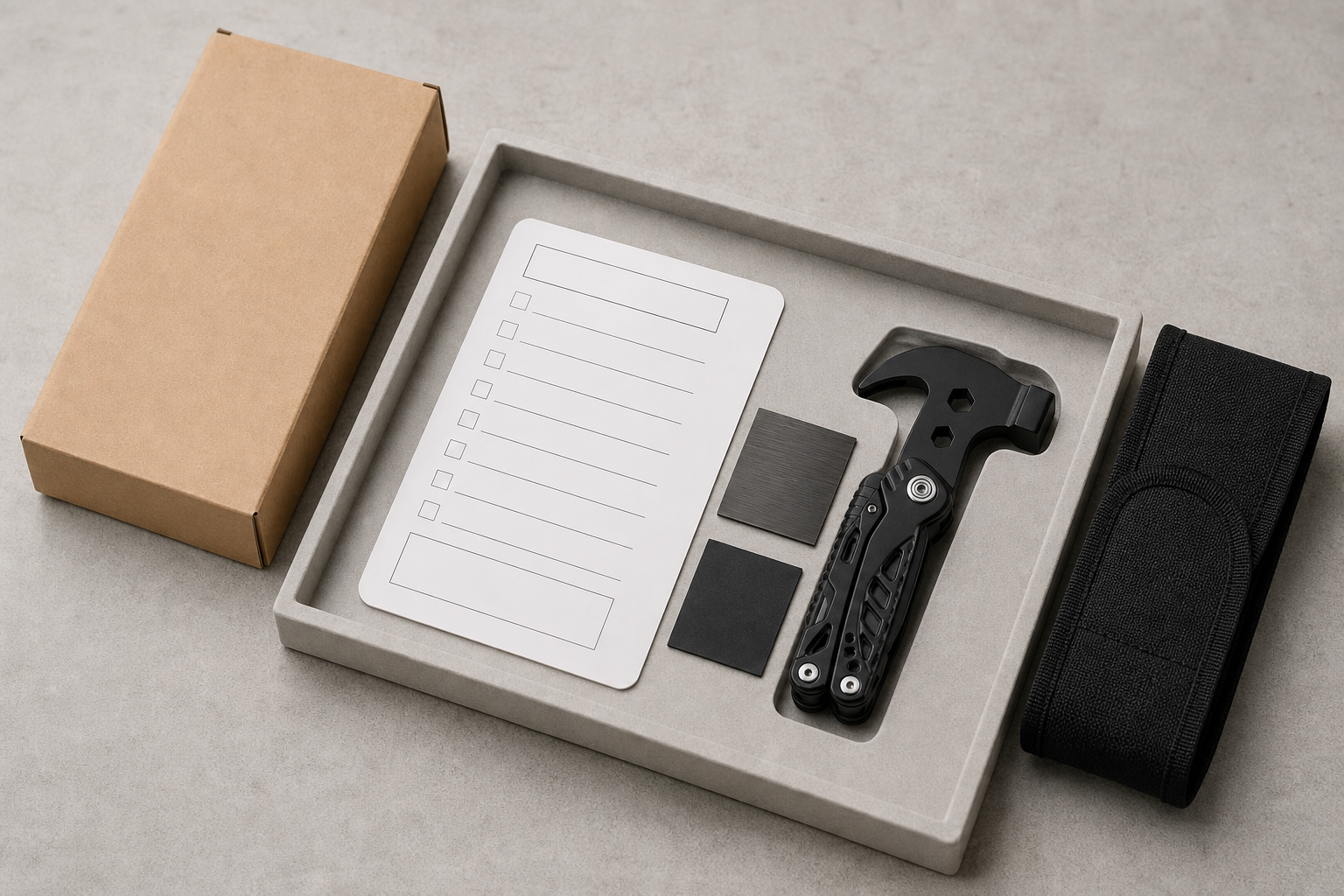
An RFQ that says "good-looking EDC tool" is not enough. The supplier needs to know what product the buyer wants. Is it a folding knife, multi-tool, carabiner tool, compact pry tool, rescue tool, or outdoor accessory? What does the user do with it? How will the user carry it? What price level should it reach?
The RFQ should include material and finish expectations. If the buyer wants a premium look, the RFQ should say whether that means carbon fiber, aluminum, micarta, G10, stainless steel, titanium-colored finish, wood, color coating, or packaging upgrade. If the buyer is open to suggestions, the RFQ should give the target price and market so the supplier can recommend realistic options.
The RFQ should also include safety and positioning direction. If the buyer wants utility positioning without aggressive claims, say that clearly. If the destination market has rules or retailer requirements, the buyer should note them for review.
Sample testing should be defined early. The buyer should approve appearance, hand feel, carry comfort, function, packaging, and repeatability before mass production.
| RFQ field | What to include | Why it helps |
|---|---|---|
| Target user | Market and carry method | Guides size and style |
| Main task | Cutting, repair, clip, rescue, outdoor | Guides function |
| Material and finish | Preferred or open options | Guides cost |
| QC plan | Appearance and function tests | Guides production control |
How Can Vast State Support EDC Tool Design Balance?
Buyers need a supplier who can question the design before production problems appear.
Vast State can support EDC tool design balance through concept review, product structure suggestions, material selection, finish options, prototype development, packaging customization, QC planning, and production follow-up.
I Help Buyers Connect Market, Design, and Production
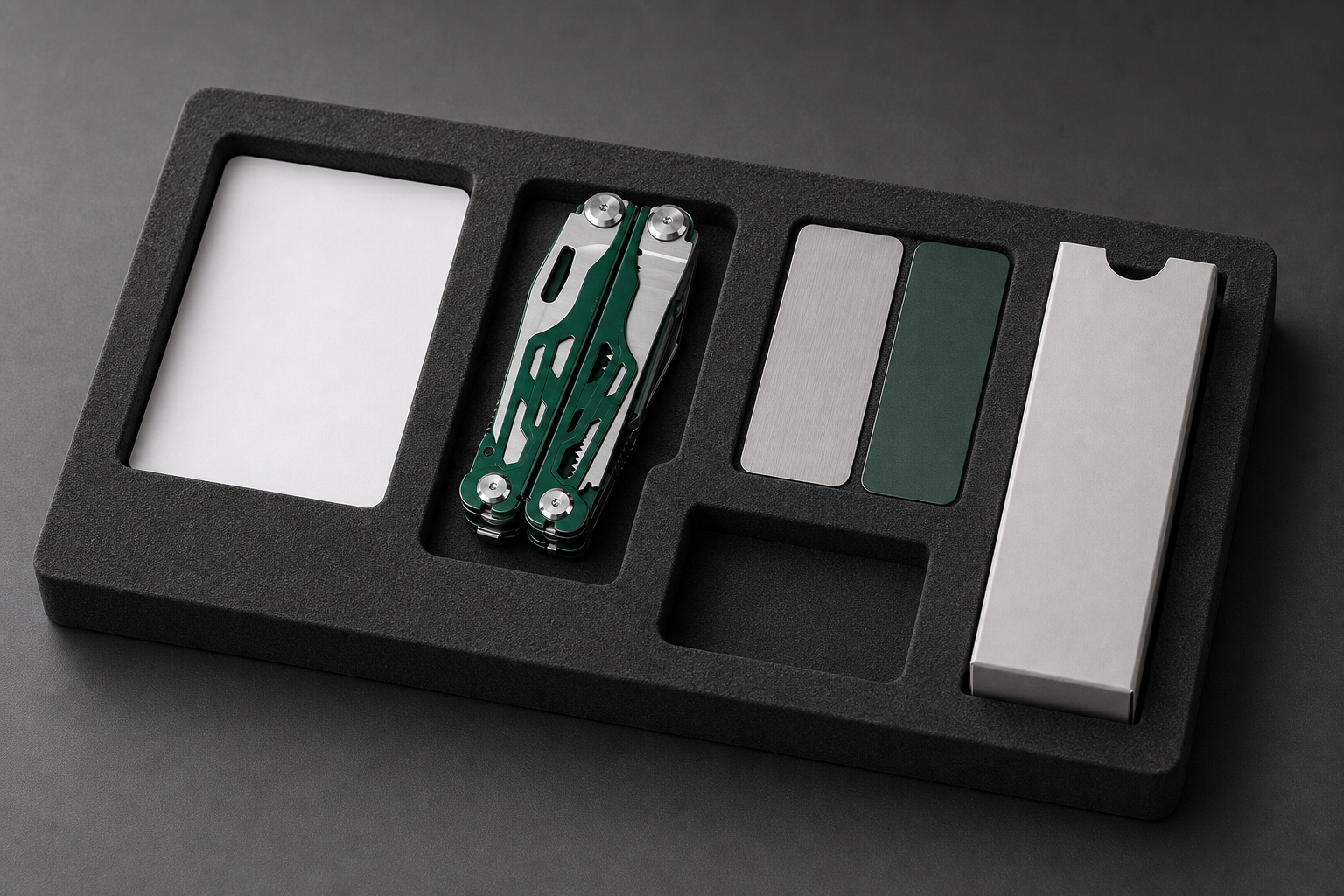
Vast State works with B2B customers who need practical product development, stable manufacturing, flexible customization, and efficient communication. For EDC tools, that means I help buyers turn a rough idea into a product that is useful, attractive, manufacturable, and consistent.
If the buyer already has a finished design, I review the structure, materials, finish, assembly, packaging, and QC risks. If the buyer only has a concept, I help define the product direction based on target user, price range, carry method, and brand position. Sometimes that means simplifying a tool. Sometimes it means upgrading the material or finish. Sometimes it means changing packaging so the product story becomes clearer.
I also help prevent overbuilt products. A tool does not need to be oversized to feel valuable. It needs the right combination of function, finish, comfort, and consistency. That is where OEM/ODM support matters.
The goal is not only to create a nice-looking sample. The goal is to create an EDC tool that buyers can sell confidently and reorder reliably.
| Support area | What we help with | Buyer value |
|---|---|---|
| Concept review | User, task, price, style | Clearer product direction |
| Material selection | Handle, body, finish options | Better fit to market |
| Prototype support | Shape, action, carry feel | Faster design learning |
| QC follow-up | Appearance and function | More stable repeat orders |
Ready to develop a custom multi-tool?
Send your function list, reference photo, target quantity, and budget range. Vast State can help turn it into a manufacturable OEM/ODM specification.
Conclusion
Good EDC tools balance useful tasks, pocket comfort, attractive design, responsible positioning, manufacturable details, and repeatable quality control.