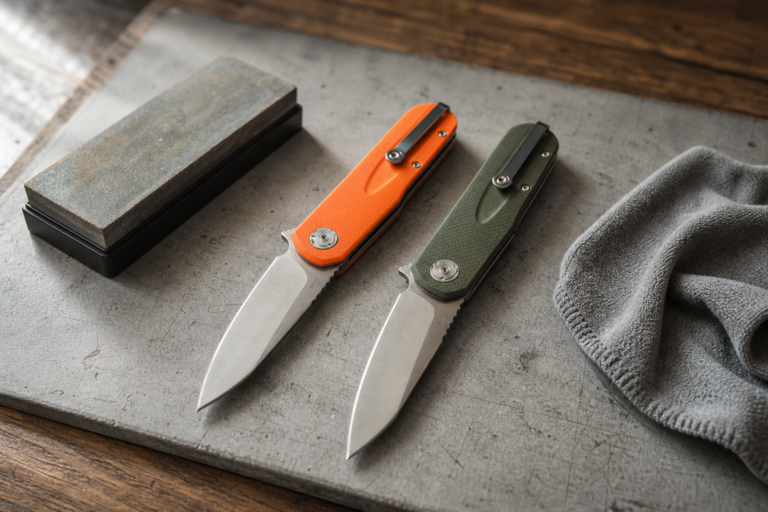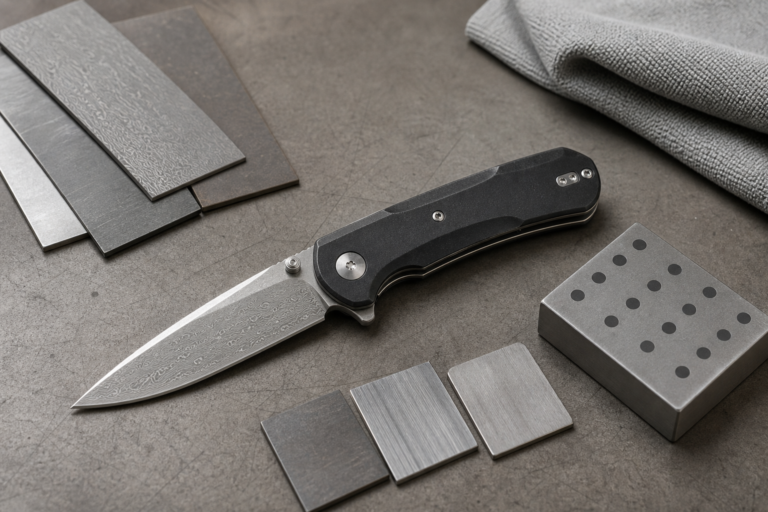
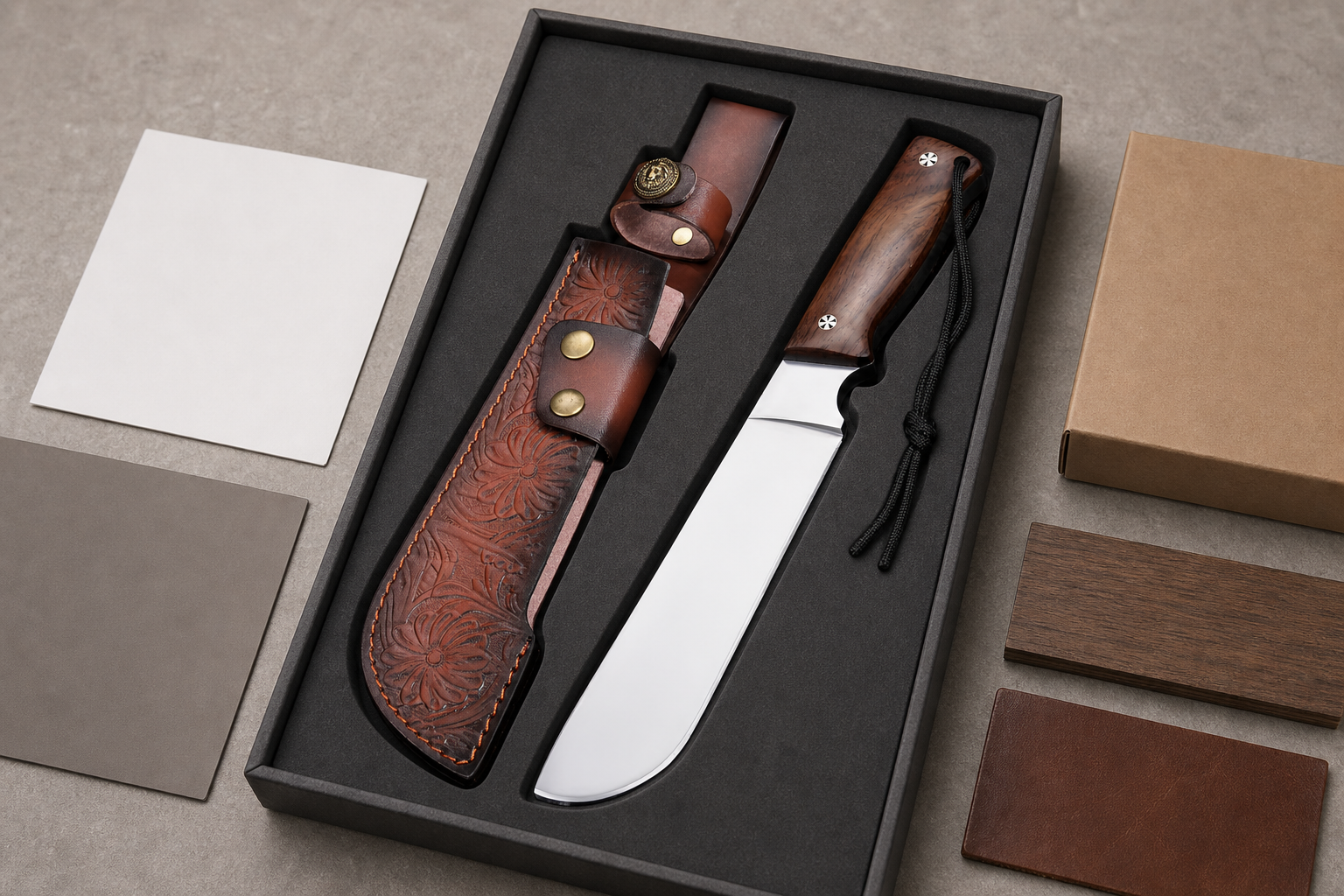
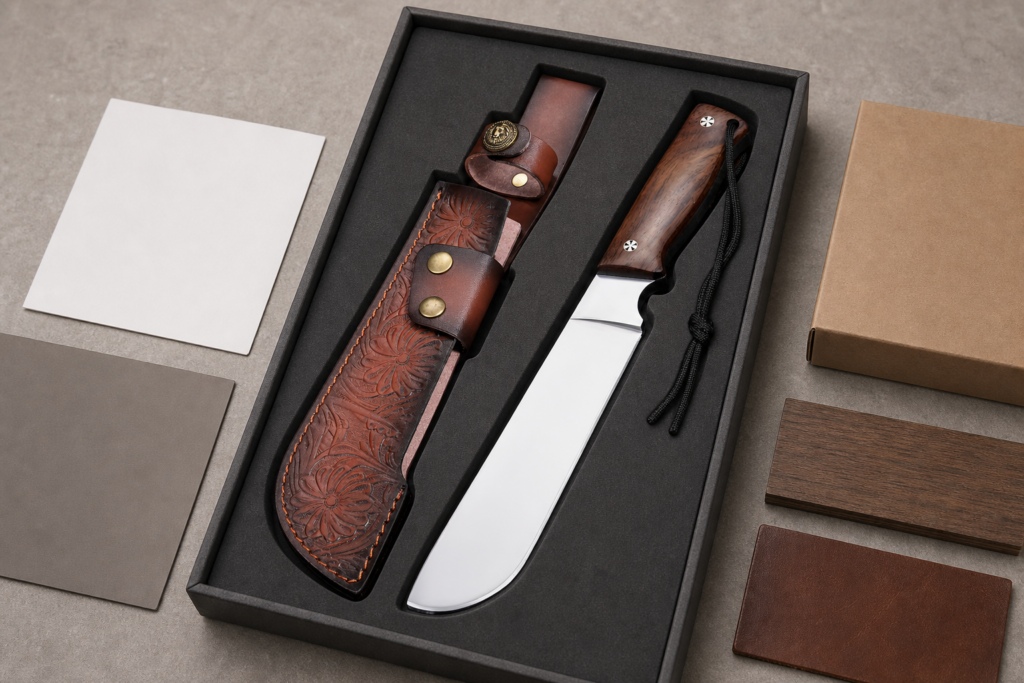
A mirror finish can make a knife look premium. But it can also add cost, fingerprints, scratches, and production risk.
OEM knife buyers should specify a mirror finish only when the target market values a polished premium appearance and the supplier can control grinding marks, surface roughness, heat, edge geometry, corrosion protection, handling marks, packaging, and final inspection. Mirror finish should be a controlled requirement, not a vague request.
Quick buyer brief:
- Answer: Mirror finish is best for premium pocket knives, gift knives, collector-style lines, display-oriented fixed blades, and private label products where visual refinement matters more than scratch-hiding utility.
- Buyer context: This guide is for knife brands, outdoor brands, EDC brands, importers, wholesalers, distributors, private label buyers, and sourcing managers.
- Key checks: Steel grade, blade geometry, pre-polish grinding, scratch sequence, polishing compound, heat control, edge safety, logo method, fingerprint control, rust protection, packaging, approved sample, defect boundary samples, and QC checklist.
Have a knife or multi-tool project in mind?
Send your sketch, CAD file, sample photo, or product idea. Vast State can review manufacturability, suggest materials, estimate MOQ, and prepare a quote for your OEM/ODM project.
When a buyer asks for mirror finish, I always ask what the finish is supposed to do for the product. A mirror blade can look clean, premium, and refined. It can also show every scratch, fingerprint, uneven grind line, and handling mark. This is why I do not treat mirror polishing as a simple final step. I treat it as a full process decision. The blade shape, steel, grinding quality, logo method, packaging, and QC standard must all support the finish.
What Does Mirror Finish Mean in Knife Manufacturing?
Mirror finish sounds simple, but suppliers and buyers may imagine different levels of polish. That creates sample disputes.
Mirror finish means a highly polished reflective surface created through controlled grinding, sanding, buffing, and cleaning steps. The exact standard must be defined with approved samples and inspection criteria.
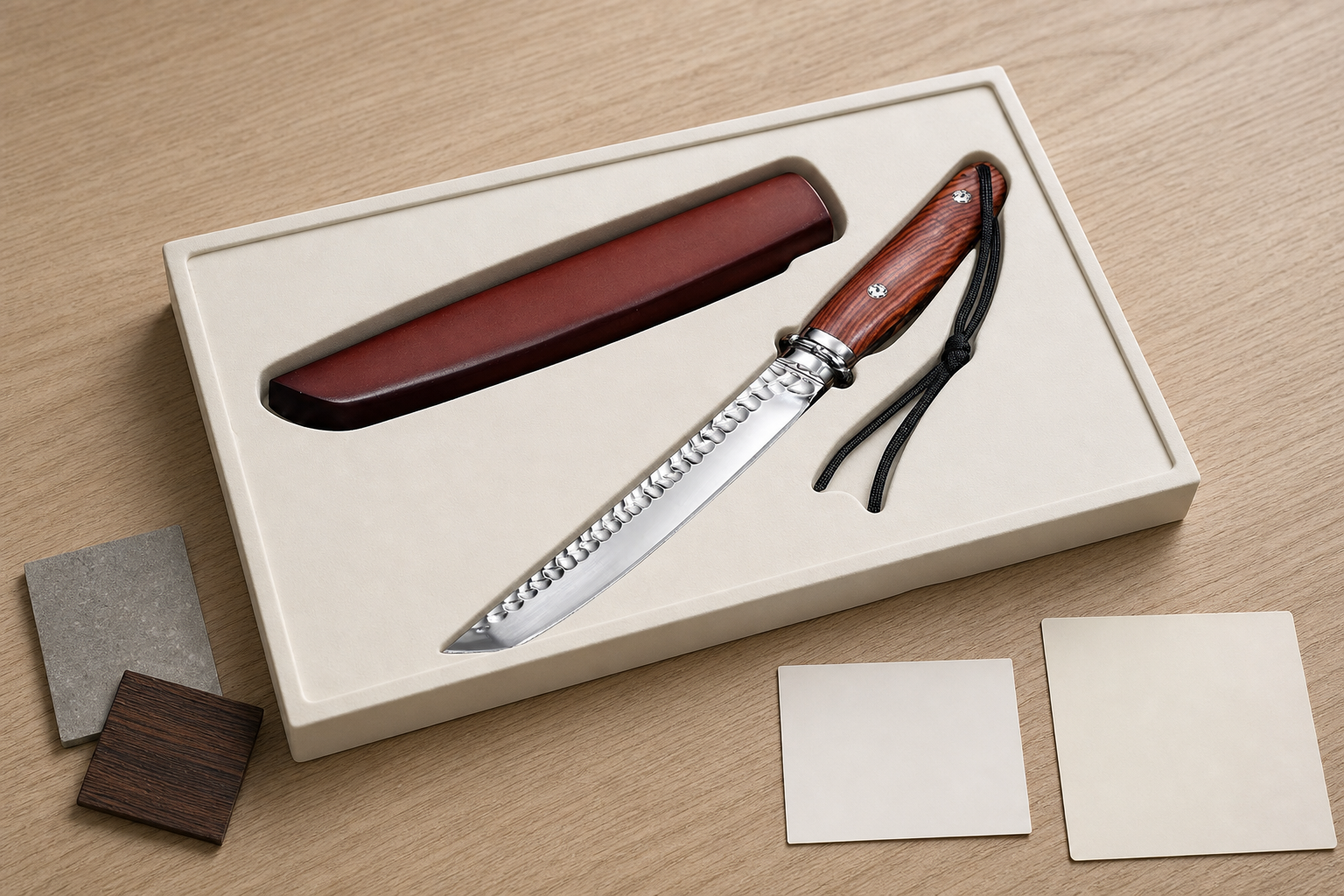
I Define the Finish Before I Quote the Project
Mirror finish is a visual target, but production needs a measurable and inspectable standard. A buyer may say "mirror" and expect a flawless reflective blade. The factory may understand it as a high-polish commercial finish with minor acceptable marks. Those are not the same. If the expectation is not defined early, the first sample may create unnecessary frustration.
The finish starts before final polishing. A blade with deep grinding marks cannot become a clean mirror surface without extra work. The polishing process must remove scratches step by step. If the scratch sequence is skipped, hidden marks remain under the shine. If buffing heat is not controlled, the edge or surface may be affected. If the blade geometry is uneven, the mirror surface may reflect that unevenness clearly.
The NIST Surface and Interface Metrology Group works with measurements of surface roughness, waviness, and form. A buyer does not need laboratory surface metrology for every knife order, but the principle is useful. Surface quality is not only a feeling. It can be defined, compared, inspected, and controlled.
For B2B buyers, I recommend approving physical finish samples. Photos can mislead because lighting changes the reflection.
| Finish term | What it may mean | Buyer control |
|---|---|---|
| Bright polish | Reflective but not perfect | Approve sample level |
| Mirror finish | High reflection target | Define defect limits |
| Hand polish | More labor-intensive finish | Clarify cost and variation |
| Display finish | Visual priority | Add packaging protection |
OEM/ODM RFQ Checklist
Prepare these details to help Vast State review your project and provide a more accurate quotation.
| RFQ Field | What to Prepare |
|---|---|
| Project type | OEM from drawing / ODM private label / wholesale catalog |
| Product category | Folding knife / fixed blade / multi-tool / outdoor tool |
| Design status | Idea / sketch / 2D drawing / 3D CAD / physical sample |
| Target price | Ex-factory target price or retail price range |
| MOQ expectation | 500 / 1,000 / 3,000 / 5,000+ pcs |
| Logo method | Laser engraving / etching / printing / molded logo |
| Packaging | Standard packaging / custom retail box / Amazon-ready |
| Market | USA / EU / Japan / Korea / Middle East / other |
| Compliance needs | Buyer-specified testing / documentation / labeling |
| Timeline | Sample deadline / mass production deadline |
Which Knife Products Benefit Most From Mirror Finish?
Mirror polish can raise perceived value, but it does not fit every knife. Some products need more practical finishes.
Mirror finish works best for premium pocket knives, gift knives, collector-style products, presentation fixed blades, and private label lines where visual refinement supports the price.
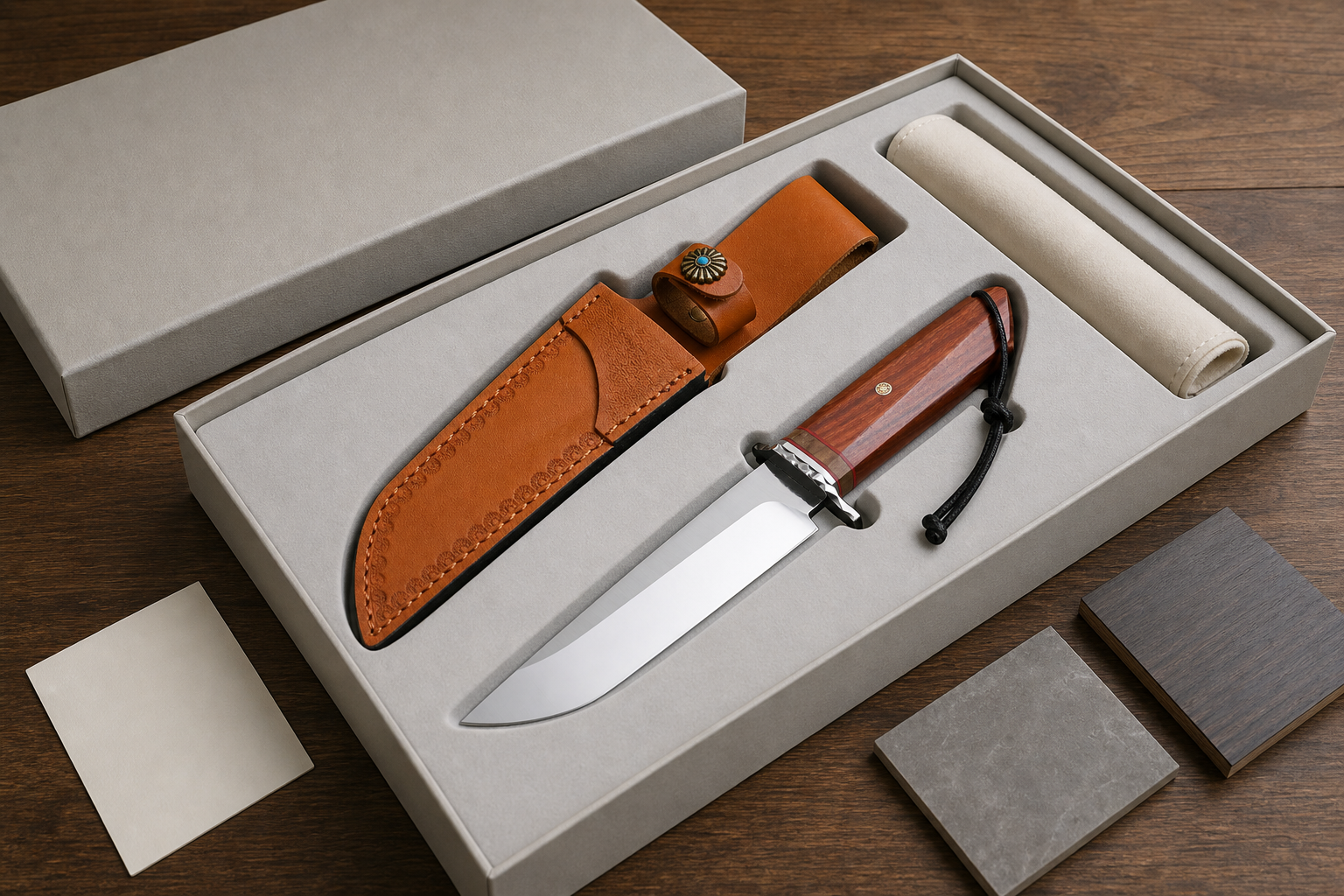
I Match Mirror Finish to the Sales Channel
Mirror finish is strongest when the buyer wants a refined visual impression. It can work well for gift products because the first look matters. It can work for premium pocket knives because the shine supports a higher product tier. It can work for collector-style or display-oriented knives because the buyer is selling visual craftsmanship as part of the value.
But mirror finish is not always practical for hard-use outdoor products. A stonewashed or satin finish may hide small scratches better. A coated finish may support a stronger visual color story or corrosion protection. A bead blasted finish may look clean but can need corrosion attention depending on the steel. The right finish depends on the user and product promise.
I also ask whether the customer will accept visible fingerprints. A mirror blade looks impressive in a clean photo, but it can show handling marks quickly. If the sales channel includes gift boxes or retail displays, packaging should protect the surface. If the product will be handled often in a store, mirror finish may need extra care.
The buyer should not choose mirror finish only because it sounds premium. The buyer should choose it because the target market will pay for the look and understand the care.
| Product type | Mirror finish value | Watch point |
|---|---|---|
| Gift knife | Strong first impression | Fingerprints and packaging |
| Premium pocket knife | Refined appearance | Scratch visibility |
| Collector-style line | Display value | High QC expectation |
| Outdoor work knife | Usually less ideal | Satin or stonewash may fit better |
How Does Steel Choice Affect Mirror Finish Results?
The same polish can look different on different steels. Buyers should confirm material before finalizing finish.
Steel choice affects mirror finish by changing polish response, corrosion behavior, hardness, grindability, heat treatment, scratch visibility, and final maintenance needs.
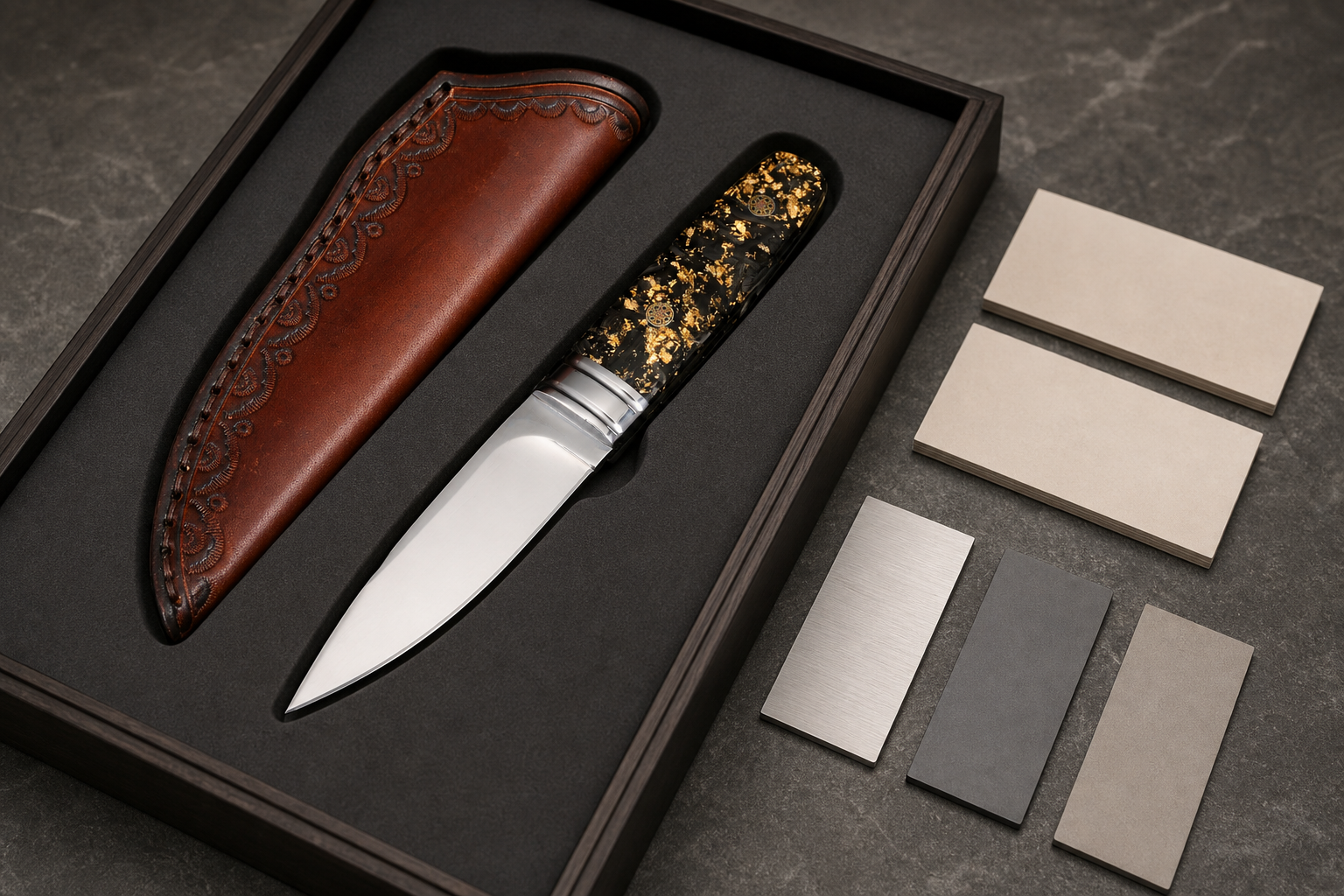
I Check Polishability and Care Together
Some steels polish more easily than others. Some steels hold visible fine scratches differently. Some steels are more corrosion resistant. Some steels require more careful heat treatment and grinding control. A mirror finish can make these differences more visible.
Stainless steels are often more practical for mirror finish consumer products because corrosion resistance matters when the surface is expected to look clean. But stainless steel is not one single material either. Buyers still need to define the grade, hardness target, and use case. High-carbon steels can take attractive finishes, but they may need clearer care instructions because staining and rust risk may be higher.
Heat treatment also affects polishing. If the steel is too hard or the blade surface has distortion from processing, polishing time can increase. If the blade has warping, uneven grinding, or deep scratches, mirror finish becomes more expensive and less stable.
Hardness measurement is not the same as finish inspection, but it is part of the production control mindset. The NIST Rockwell hardness measurement guide explains that hardness testing needs good practice because results can vary. For knife projects, I want the same discipline for both blade performance and finish control.
| Steel factor | Finish impact | Buyer question |
|---|---|---|
| Corrosion resistance | Surface stays clean longer | What care is needed? |
| Hardness | Polishing and edge behavior | What target range? |
| Grindability | Labor and scratch removal | Can cost fit the project? |
| Heat treatment | Warping and surface quality | How is it inspected? |
What Process Steps Create a Clean Mirror Finish?
Mirror finish cannot cover poor preparation. Each earlier step affects the final shine.
A clean mirror finish usually needs accurate grinding, progressive sanding, scratch removal, polishing, buffing, cleaning, inspection, handling protection, and packaging protection.
I Look for Scratch Discipline
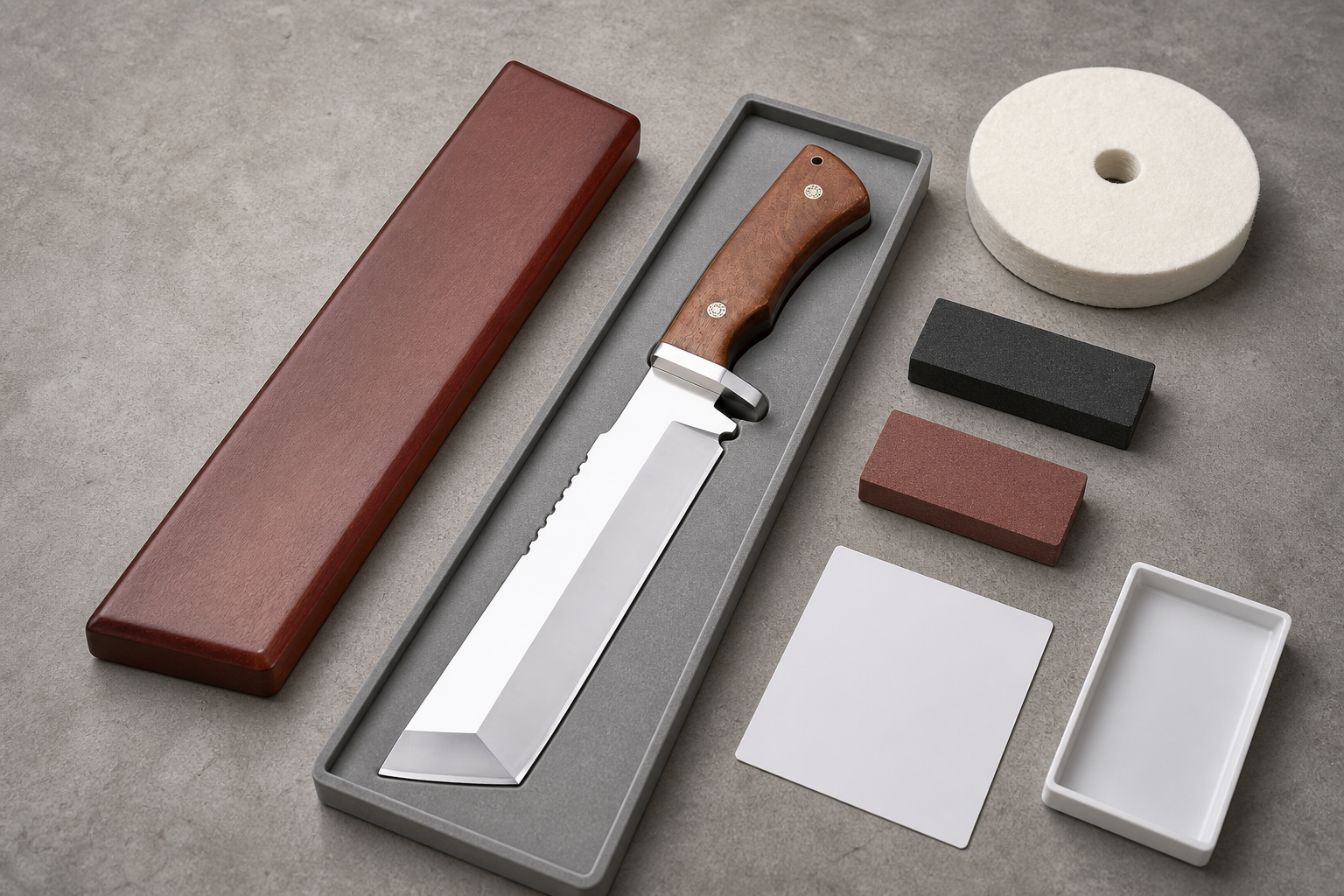
Mirror finish is a sequence. The blade must move from rough shaping to finer grinding and sanding. Each step should remove the marks from the previous step. If a deeper scratch remains, final buffing may make the surface shiny but not clean. Under bright light, the defect still appears.
Blade geometry matters. Flat surfaces are easier to polish consistently than complex curves, deep hollows, swedges, and tight corners. A mirror finish on a complicated blade profile may need more handwork. That affects cost and repeatability. Buyers should consider finish complexity during design, not after the blade is shaped.
Heat control is important. Grinding and buffing create heat. The process should avoid overheating the blade, damaging the edge, rounding important geometry, or changing fit areas. On folding knives, polishing should not damage the tang, pivot hole, lock contact, or detent path. Some areas need functional precision more than shine.
Cleaning is also part of the process. Compound residue, fingerprints, dust, and small fibers can make a finished blade look poor. Gloves, clean cloths, and packaging protection help keep the surface sellable.
| Process step | Purpose | Key risk |
|---|---|---|
| Grinding | Forms blade geometry | Deep marks or uneven bevel |
| Sanding | Removes earlier scratches | Skipped grit sequence |
| Buffing | Builds reflection | Heat and rounded edges |
| Cleaning | Removes residue | Fingerprints and compound marks |
What Quality Problems Are Common With Mirror Finish?
Mirror finish shows defects that other finishes can hide. Buyers need stricter inspection language.
Common mirror finish problems include fine scratches, cloudy reflection, uneven polish, rounded edges, visible grind waves, fingerprints, rust spots, logo distortion, and packaging abrasion.
I Approve Boundary Samples, Not Only the Best Sample
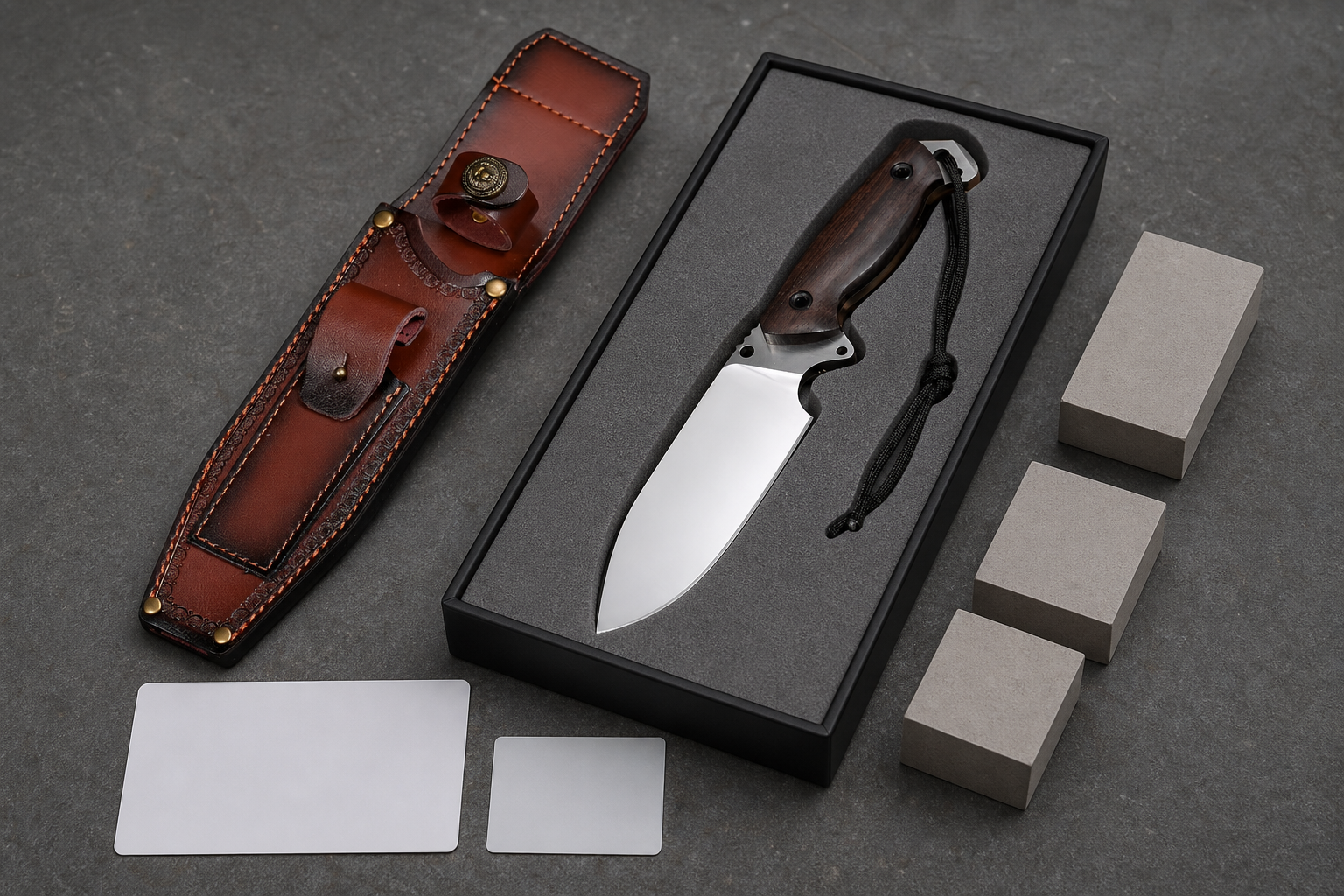
The best sample is usually made carefully. Production needs a wider standard. Buyers should approve what is ideal and what is still acceptable. This is especially important for mirror finish because tiny defects become visible.
Fine scratches are the most common complaint. They may come from incomplete sanding, handling, packaging, or cleaning. Cloudy reflection can come from uneven polishing or residue. Rounded edges can happen when buffing is too aggressive. Visible grind waves can show if the blade was not prepared properly before polishing. Fingerprints can appear during assembly and packing.
Logo marking also needs testing. Laser marks, etching, engraving, or printed logos can look different on a mirror surface. A logo that looks good on satin steel may look too harsh or too weak on mirror polish. Buyers should approve the logo method on the final finish, not on raw steel.
Packaging abrasion is easy to miss. If the blade rubs against cardboard, plastic, foam, or a loose accessory, the surface may scratch before the customer opens the box. A mirror-finished product often needs better protection than a stonewashed product.
| Defect | Likely cause | Buyer control |
|---|---|---|
| Fine scratches | Handling or skipped sanding | Define inspection light and limits |
| Cloudy surface | Residue or uneven polish | Improve cleaning and process |
| Rounded geometry | Excessive buffing | Protect critical edges |
| Packaging marks | Rubbing in box | Add blade sleeve or protection |
How Should Mirror Finish Affect Logo, Packaging, and Product Photos?
Mirror finish can make branding look premium, but it can also reflect everything around it.
Buyers should test logo method, photo lighting, packaging protection, anti-fingerprint handling, care cards, and retail presentation before approving mirror-finished knives.
I Test Branding on the Final Surface
Mirror finish changes how logos appear. A laser logo can look sharp, but it may interrupt the reflective surface. An engraved logo may feel premium, but it may add cost and create cleaning issues. A printed logo may not fit the product level. The correct choice depends on the buyer's brand position and the finish standard.
Photos need planning too. A mirror blade reflects the camera, lighting, room, and surrounding colors. This can make product photography harder. A buyer may love the sample in hand but struggle to photograph it consistently. If the product depends on online sales, the buyer should consider photo requirements before choosing mirror finish.
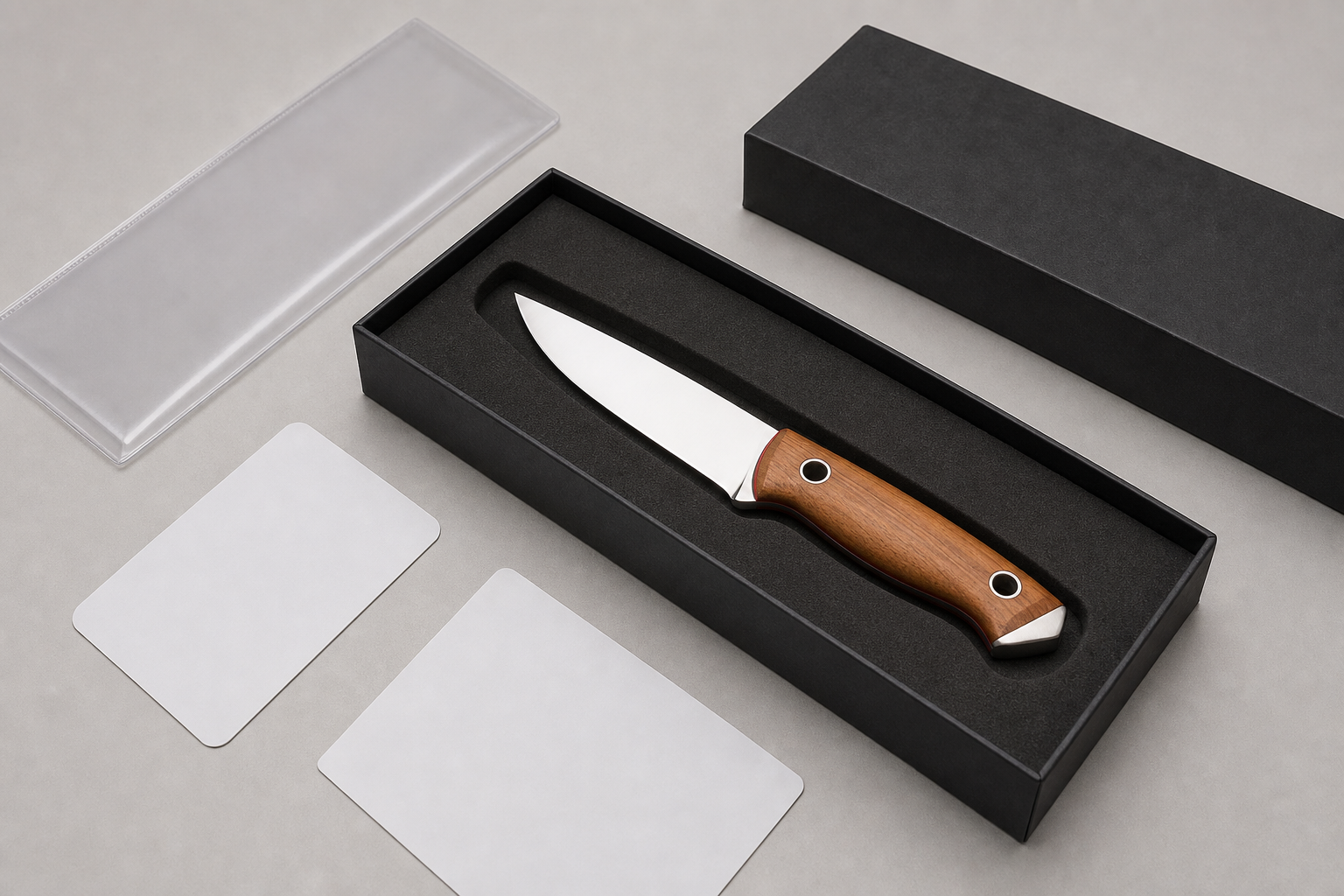
Packaging should protect the blade from contact. A blade sleeve, soft pouch, paper wrap, oil film, or fitted insert may be useful depending on material and product level. If the blade requires special care, a short care card can reduce customer confusion.
I also recommend defining how the product is handled during final assembly. Gloves and clean cloths matter. A worker can create visible fingerprints on a perfect blade in seconds. The packaging process should be part of the finish control plan.
| Brand area | Mirror finish issue | Practical solution |
|---|---|---|
| Logo | Contrast and readability | Test on final finish |
| Photos | Unwanted reflections | Plan lighting and angles |
| Packaging | Surface abrasion | Add protective insert |
| Handling | Fingerprints | Use gloves and clean cloths |
How Does Mirror Finish Change Cost, MOQ, and Lead Time?
Mirror finish can look like a simple upgrade, but the process can add real production time.
Mirror finish can increase cost, MOQ sensitivity, sample time, production lead time, reject rate, handling care, packaging cost, and inspection workload.
I Explain the Cost Before Sampling
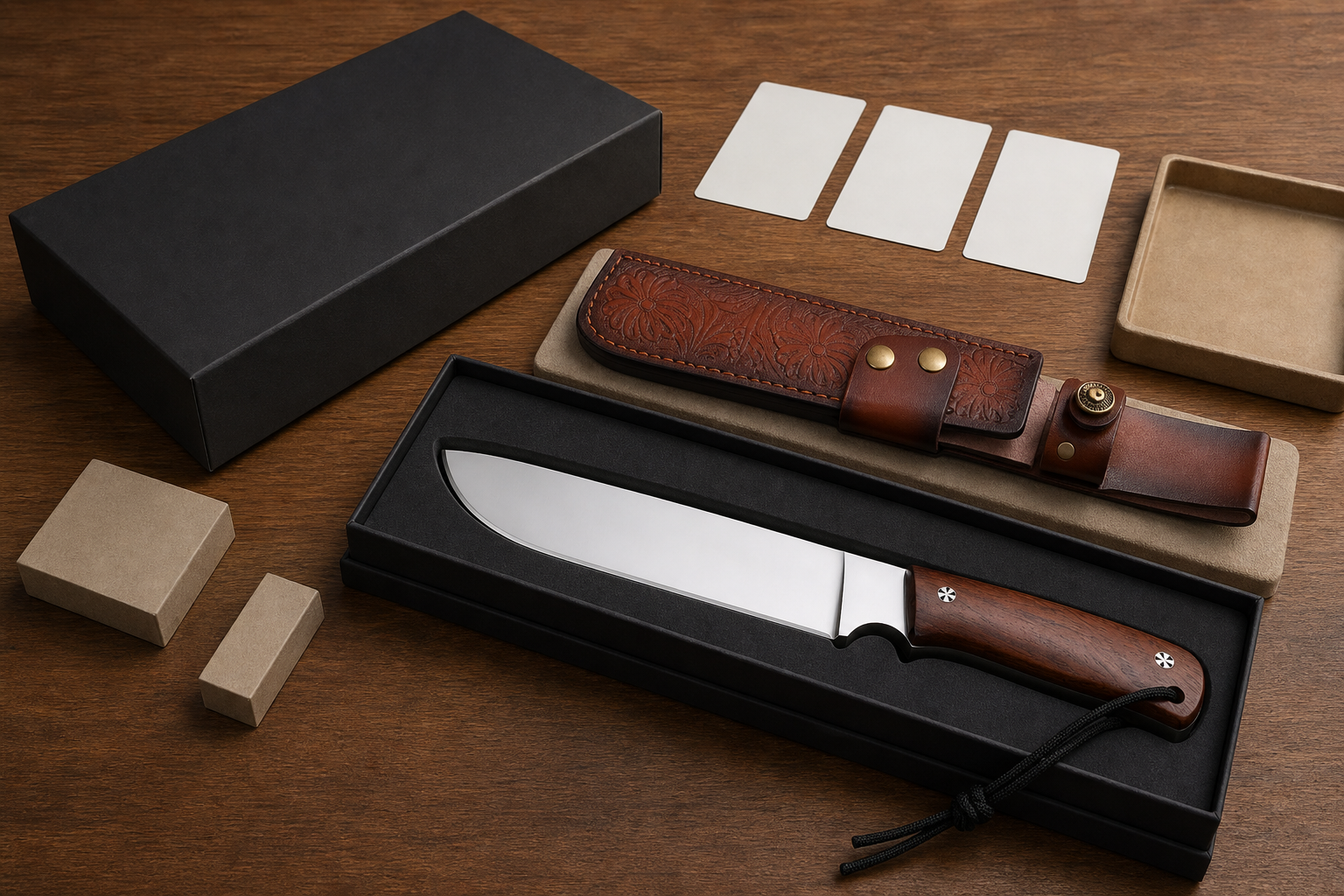
Mirror finish cost comes from preparation, labor, inspection, and risk. If the blade has a simple shape and the buyer accepts a commercial mirror level, cost may be manageable. If the blade has complex geometry and the buyer expects a near-perfect display finish, cost can rise quickly.
Reject rate is part of the cost. A blade with a small scratch may be acceptable for a satin finish but unacceptable for a mirror finish. Rework can also be difficult because polishing one area may change the surrounding reflection. This is why the buyer should define defect limits before mass production.
MOQ can matter because finish consistency improves when the process is planned at a stable batch level. For very small orders, extra setup and handwork may make the unit cost higher. For larger orders, inspection time still needs to be included.
Lead time can increase because mirror finish usually needs extra polishing, cleaning, handling, and packaging. If the buyer has a strict launch date, the finish choice should be confirmed early.
I prefer to give buyers finish options. Sometimes satin or stonewash gives better value. Sometimes mirror polish is worth the cost because it supports the brand position.
| Cost factor | Why it increases | Buyer action |
|---|---|---|
| Labor | More sanding and buffing | Approve realistic finish level |
| Rework | Small defects are visible | Define defect limits |
| Packaging | Surface needs protection | Plan insert or sleeve |
| Inspection | More visual checks | Include QC time |
What Safety and Process Controls Matter During Mirror Polishing?
Polishing and grinding are production processes, not casual handwork. Safety and process control matter.
Mirror polishing requires trained workers, correct abrasives, controlled machines, eye and face protection, dust control, guarded equipment, careful handling, and safe blade storage during production.
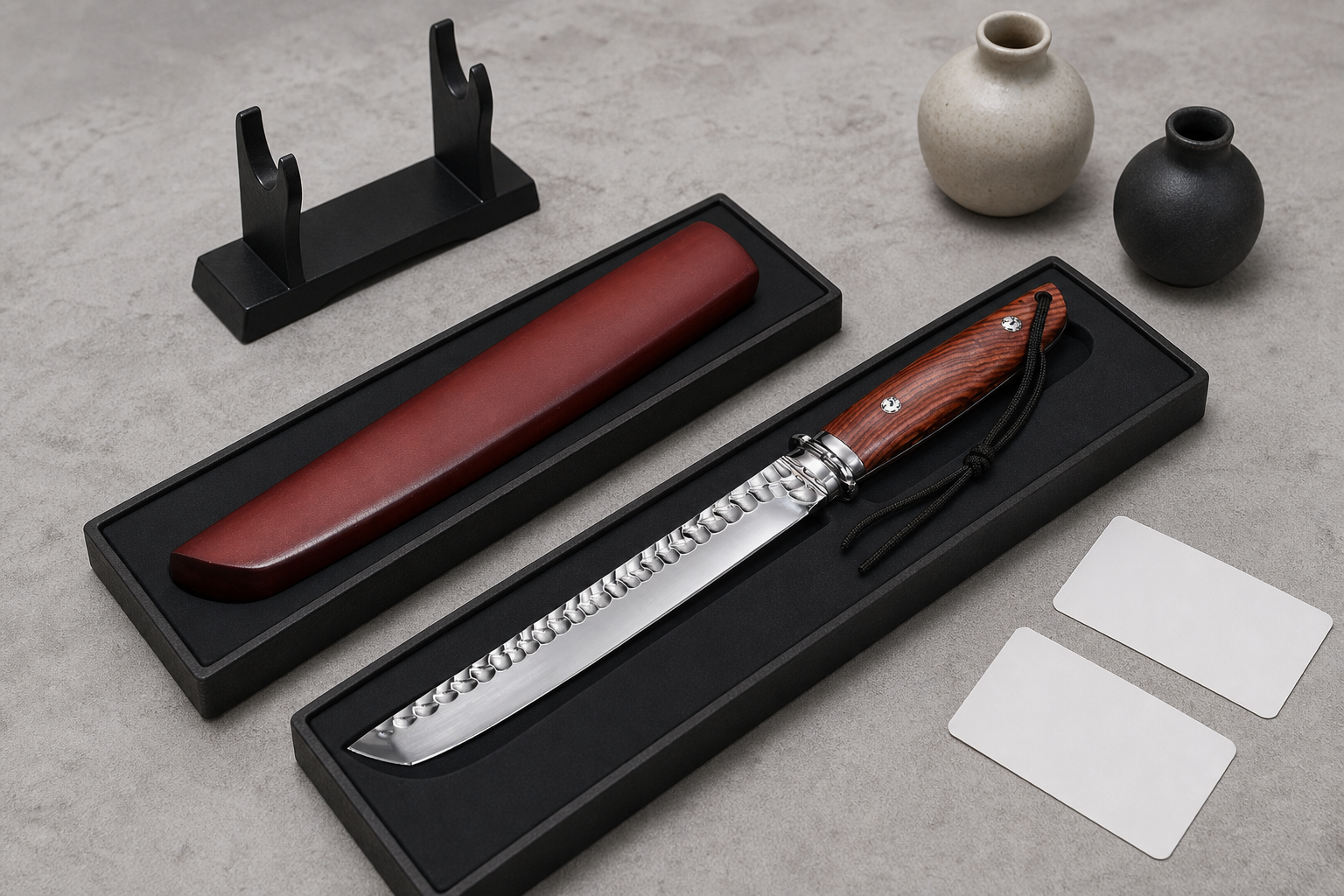
I Keep Polishing as a Controlled Factory Step
Mirror polishing involves abrasive processes, rotating equipment, polishing compounds, sharp blade edges, and fine dust. It should be handled by trained workers with controlled equipment. It should not be treated as a casual add-on.
The OSHA abrasive wheel machinery standard covers guarding requirements for abrasive wheel machinery. The CCOHS abrasive wheel guidance also emphasizes training, safe use, and protective practices around bench and pedestal grinders. A knife factory has its own process details, but the general point is clear. Grinding and polishing steps need safety control.
Process control also protects quality. If workers rush, heat can build. If fixtures are poor, edges can round or surfaces can become uneven. If blades are not stored safely between steps, scratches and handling marks can appear. If dust and compound are not cleaned, packaging can be contaminated.
For buyers, this means mirror finish should be discussed as part of the manufacturing plan. Ask how the supplier controls grinding, polishing, cleaning, and inspection. A good supplier should explain the process clearly.
| Control area | Why it matters | Buyer question |
|---|---|---|
| Training | Safe and consistent polishing | Who performs the finish? |
| Machine guarding | Worker protection | Is equipment controlled? |
| Heat control | Protects blade geometry | How is overheating avoided? |
| Handling | Prevents scratches | How are blades stored? |
What QC Checklist Should Buyers Use for Mirror Finish?
Mirror finish needs inspection rules that both buyer and factory can understand.
QC should check reflection quality, scratch limits, cloudy areas, grind symmetry, edge geometry, logo quality, fingerprints, rust spots, packaging protection, and match to approved samples.
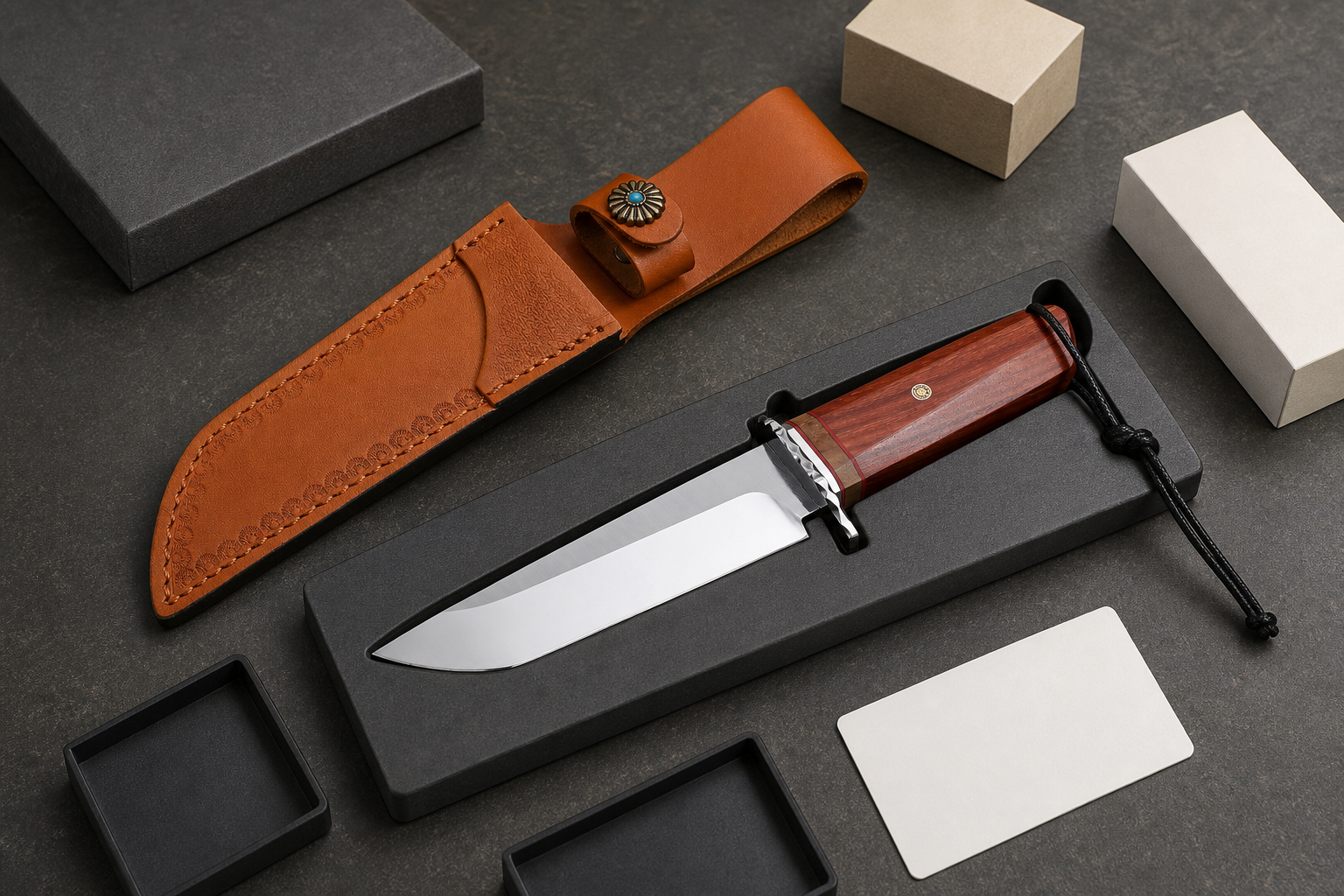
I Inspect Appearance and Function Together
Mirror finish is visual, but the knife still has to function. The blade should have the approved level of reflection. It should not have unacceptable scratches, cloudy areas, stains, fingerprints, rust spots, compound residue, or packaging marks. The grind should remain even. The edge should not be rounded in a way that affects cutting performance. The point and bevel should match the approved sample.
For folding knives, the polished blade must still fit the mechanism. The pivot hole, tang, lock contact, detent path, and blade centering matter. Polishing should not change those functional areas. A beautiful blade with poor lockup is not a good product.
For fixed blades, the handle fit, spine finish, tang area, and sheath contact should be checked. A sheath can scratch a mirror finish if contact points are not tested.
I also connect this with quality management. ISO 9001 is a recognized quality management standard focused on meeting customer expectations and improving quality systems. For mirror finish, that means requirements should be defined, inspections should be recorded, and recurring defects should trigger process improvement.
| QC item | What to inspect | Why it matters |
|---|---|---|
| Reflection | Approved visual level | Matches product promise |
| Scratches | Under defined lighting | Prevents complaints |
| Function | Action, lockup, edge | Keeps knife usable |
| Packaging | No rubbing or residue | Protects surface to customer |
What Should Buyers Put in a Mirror Finish RFQ?
A vague finish request leads to vague samples. The RFQ should turn the look into production requirements.
A mirror finish RFQ should define product type, steel, blade shape, polish level, logo method, packaging protection, care language, target price, sample standard, defect limits, MOQ, timeline, and QC tests.
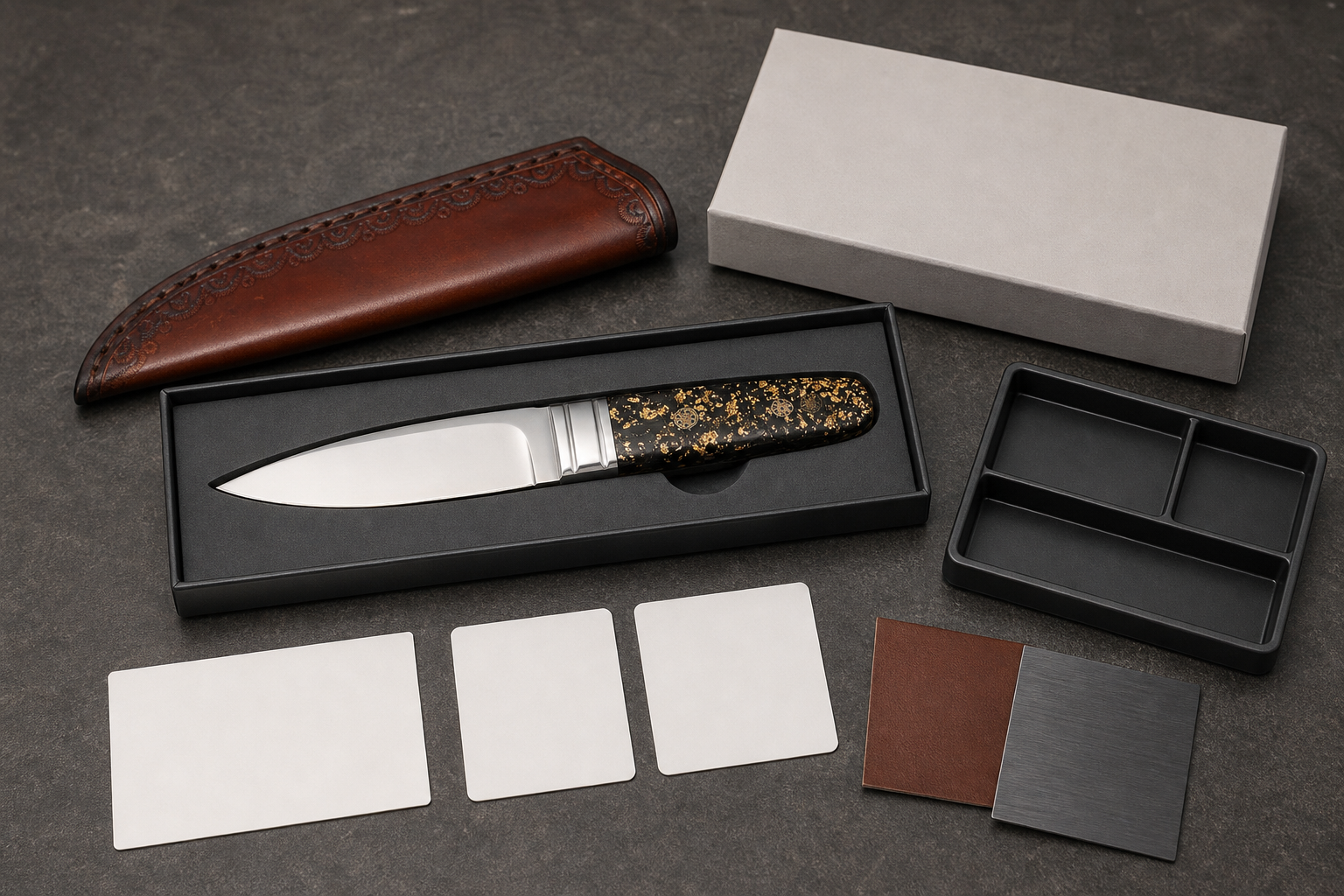
I Ask Buyers to Specify the Finish Like a Product Feature
When a buyer writes "mirror finish blade," the supplier still needs details. Is the product a folding knife, fixed blade, pocket knife, or gift knife? What steel is used? Is the mirror finish required on the full blade, only the flats, or only selected visible surfaces? Should the spine be polished? Should the bevel be mirror polished? How should the logo appear?
The RFQ should include the target market and price. A display-oriented gift knife can justify more polishing time. A cost-sensitive EDC utility knife may not. The RFQ should also ask for protective packaging if the surface must stay clean.
I also ask buyers to define defects early. What scratch size or visibility is acceptable? Under what lighting will inspection happen? Are fingerprints acceptable before cleaning? Are minor handling marks acceptable on internal areas? If the buyer cannot answer these questions, sample approval may become subjective.
The RFQ should request real samples, not only photos. Mirror finish is too dependent on lighting for photo-only approval.
| RFQ item | What to define | Why it helps |
|---|---|---|
| Finish area | Whole blade or selected surfaces | Controls labor |
| Polish level | Commercial or display mirror | Controls expectation |
| Defect limits | Scratches, cloudiness, fingerprints | Controls QC |
| Packaging | Sleeve, pouch, insert, care card | Protects the finish |
How Can Vast State Support Mirror Finish Knife Projects?
Buyers need more than a shiny blade. They need a finish that fits the product and can be repeated.
Vast State can support mirror finish knife projects through concept review, material selection, prototype polishing, finish options, logo testing, packaging customization, QC planning, and production follow-up.
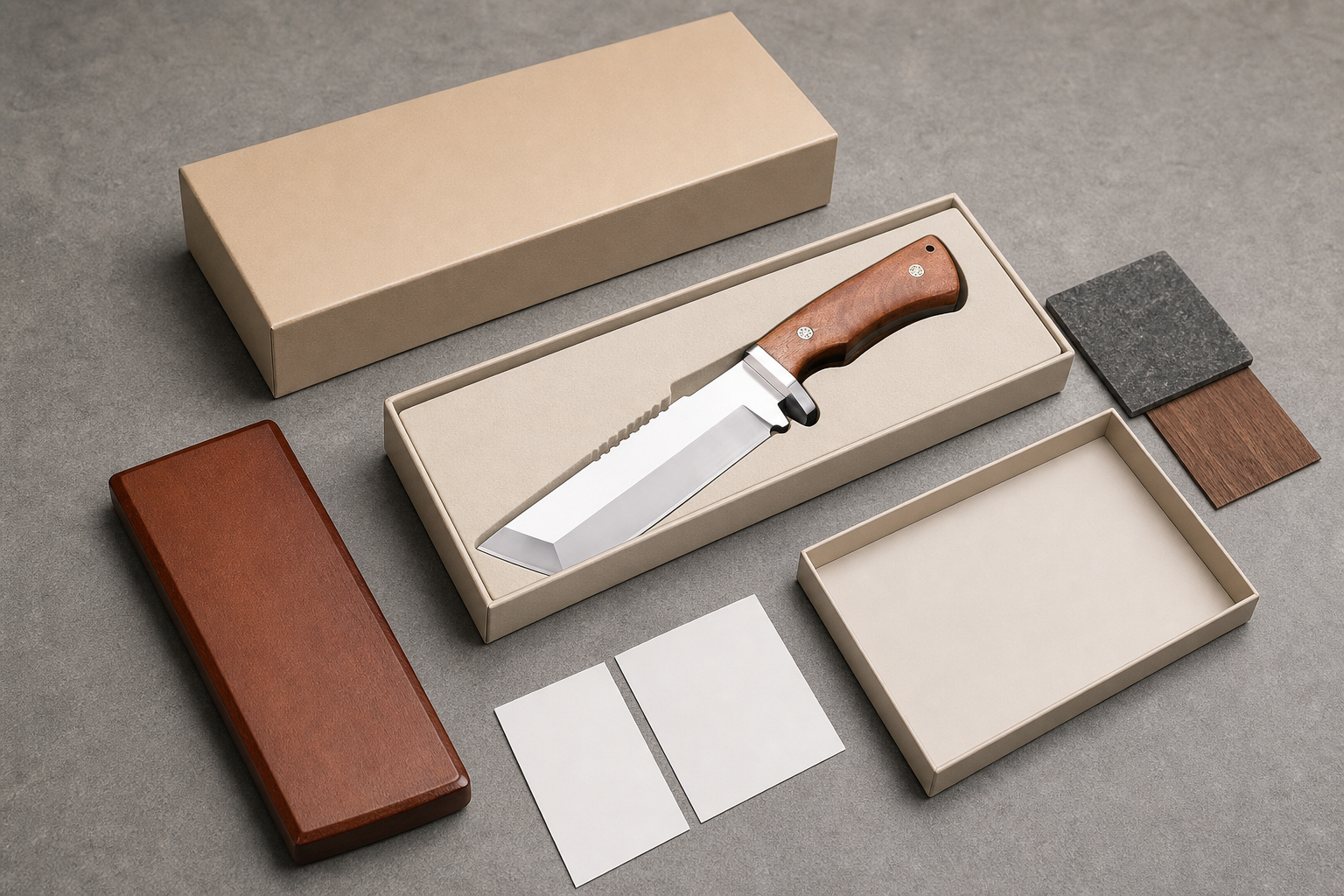
I Connect Finish Choice With the Whole Knife
Vast State works with international B2B customers who need practical development, stable manufacturing, flexible customization, and efficient communication. For mirror finish projects, I help buyers decide whether the finish supports the product's target market, price range, and brand position.
If a customer already has a design, I review the blade shape, steel, grinding requirement, logo method, handle pairing, and packaging risk. If the customer only has a product idea, I help define a practical finish direction. Sometimes mirror finish is right. Sometimes satin, stonewash, bead blast, coating, or partial polish is more suitable.
I also help with prototype development and sample approval. A mirror finish project should not move into mass production until the buyer and factory agree on the finish level, defect limits, handling method, and packaging protection. The goal is not only to make one beautiful sample. The goal is to make a sellable product that can be repeated.
For B2B buyers, this support reduces confusion. It also helps protect cost, lead time, quality, and customer expectations.
| Support area | What we help with | Buyer value |
|---|---|---|
| Finish review | Mirror, satin, stonewash, coating | Better product fit |
| Prototype support | Polish level and logo method | Clearer sample approval |
| Packaging support | Sleeve, box, pouch, care card | Better surface protection |
| QC follow-up | Scratches, reflection, function | More stable repeat orders |
Turn your idea into a quote-ready knife project.
Share your drawing, sample photo, target quantity, market, and packaging needs. Vast State will review manufacturability and prepare OEM/ODM options.
Conclusion
Mirror finish works best when buyers define the polish level, cost, packaging, care, inspection, and product purpose before production starts.