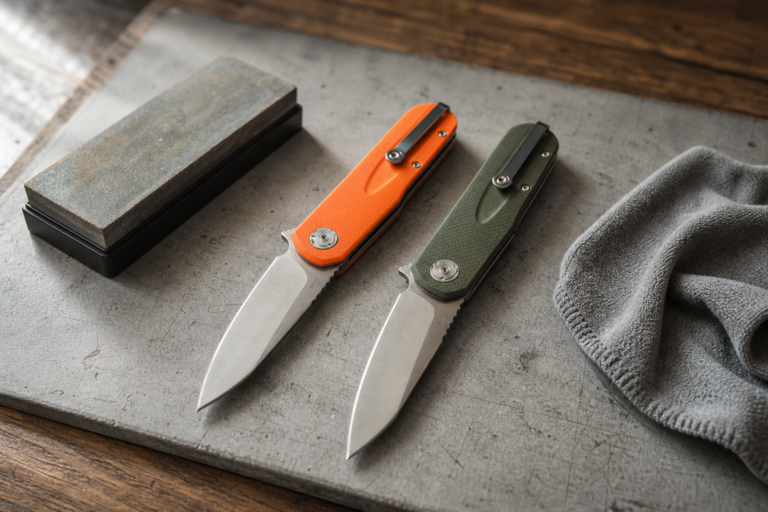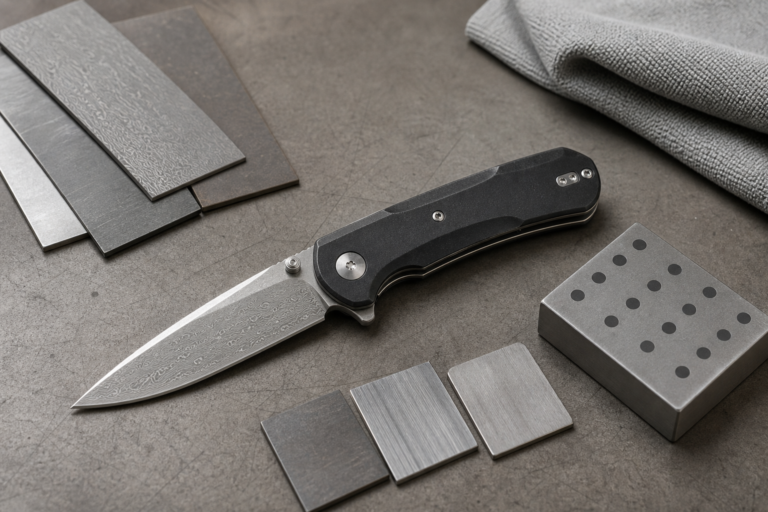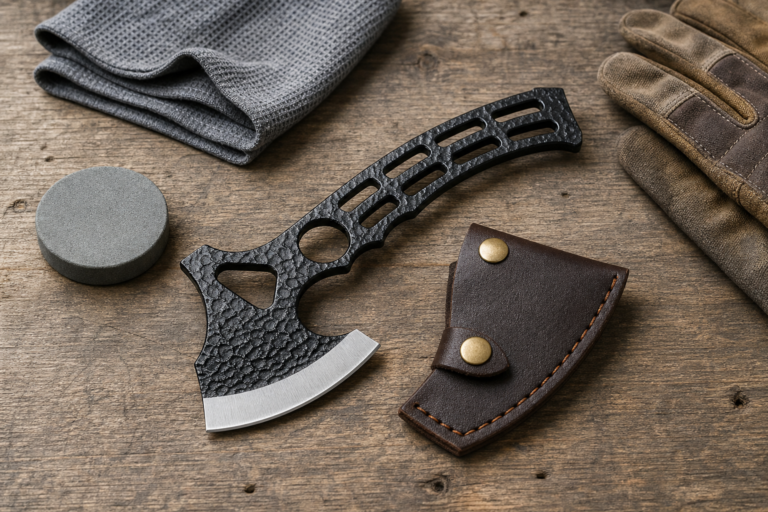
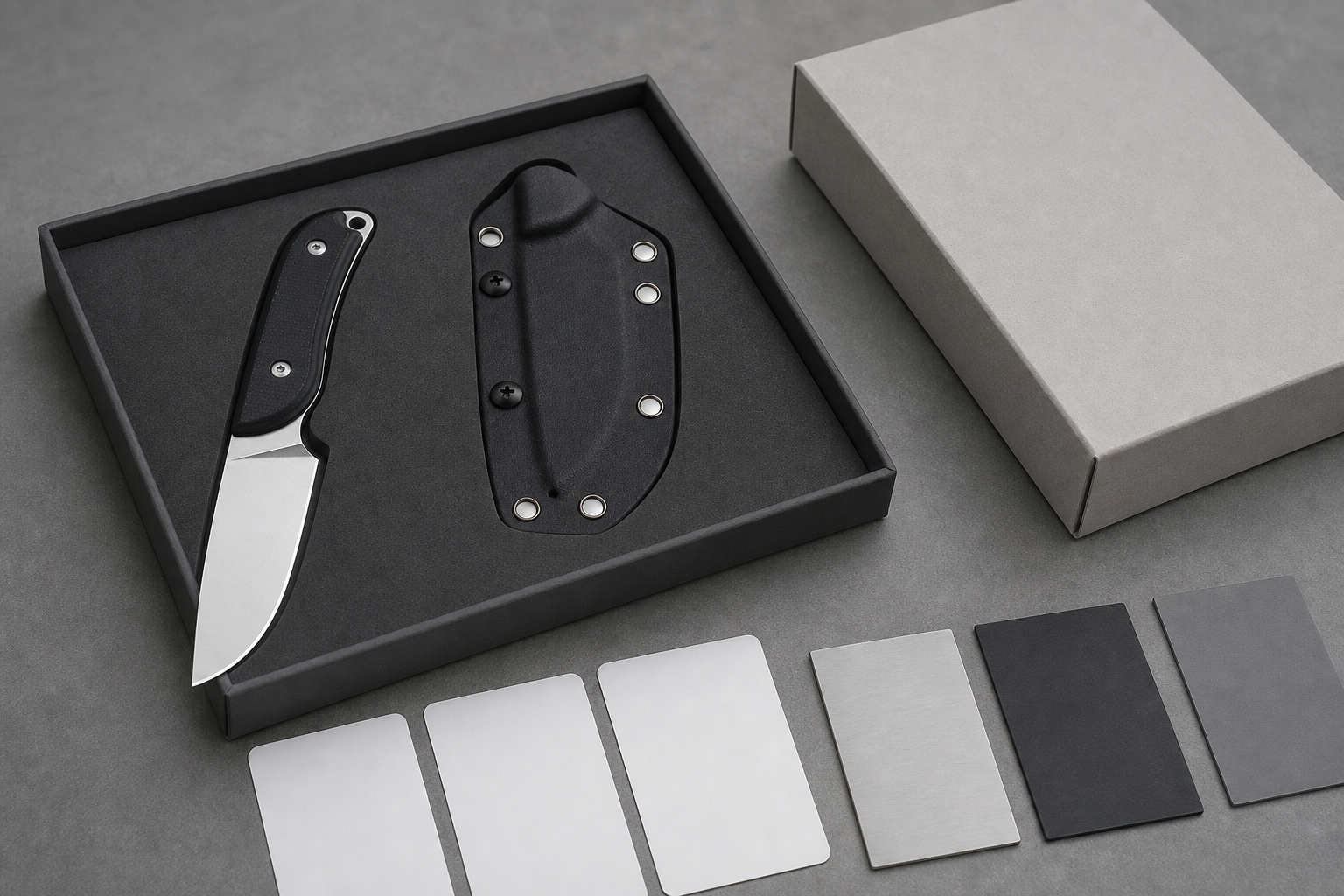
A blade shape can look familiar but still fail the product goal. Poor shape decisions create poor cutting, unsafe tips, and costly rework.
Buyers should choose knife blade shapes by matching the target user, cutting task, safety expectation, handle structure, steel, heat treatment, manufacturing tolerance, cost, packaging, and market position. A good shape is not the most dramatic shape. It is the shape that works, repeats, and sells.
Quick buyer brief:
- Answer: Drop point, clip point, sheepsfoot, Wharncliffe, spear point, tanto-style, trailing point, hawkbill, and cleaver-style blades all have useful roles, but each one changes cutting feel, tip strength, grinding difficulty, cost, and brand positioning.
- Buyer context: This guide is for knife brands, outdoor brands, EDC brands, importers, wholesalers, distributors, private label buyers, and sourcing managers.
- Key checks: Target use, blade length, tip geometry, belly, edge angle, stock thickness, steel grade, lock clearance, closed position, handle ergonomics, grind type, finish, QC tolerance, packaging, compliance, and sample approval.
Developing a folding knife line for your brand?
Vast State supports OEM/ODM folding knife projects, including blade steel, lock structure, handle material, finish, logo method, packaging, and quality inspection planning.
When I review a new knife project, I do not start by asking which shape is popular. I start by asking what the knife must do for the buyer's customer. A camping knife, an EDC folding knife, a rescue tool, and a packaging utility knife do not need the same blade profile. The shape affects the first impression, but it also affects real function. It changes how the knife enters material, how it slices, how strong the tip feels, how the edge is sharpened, how the blade folds into the handle, and how stable the design is in production.
Why Does Blade Shape Matter Before Sampling?
A sample can look nice in photos but feel wrong in use. That mistake usually starts before production.
Blade shape matters before sampling because it fixes the product direction. It controls use case, geometry, handle relationship, steel choice, cost, finishing difficulty, QC checks, and buyer expectations.
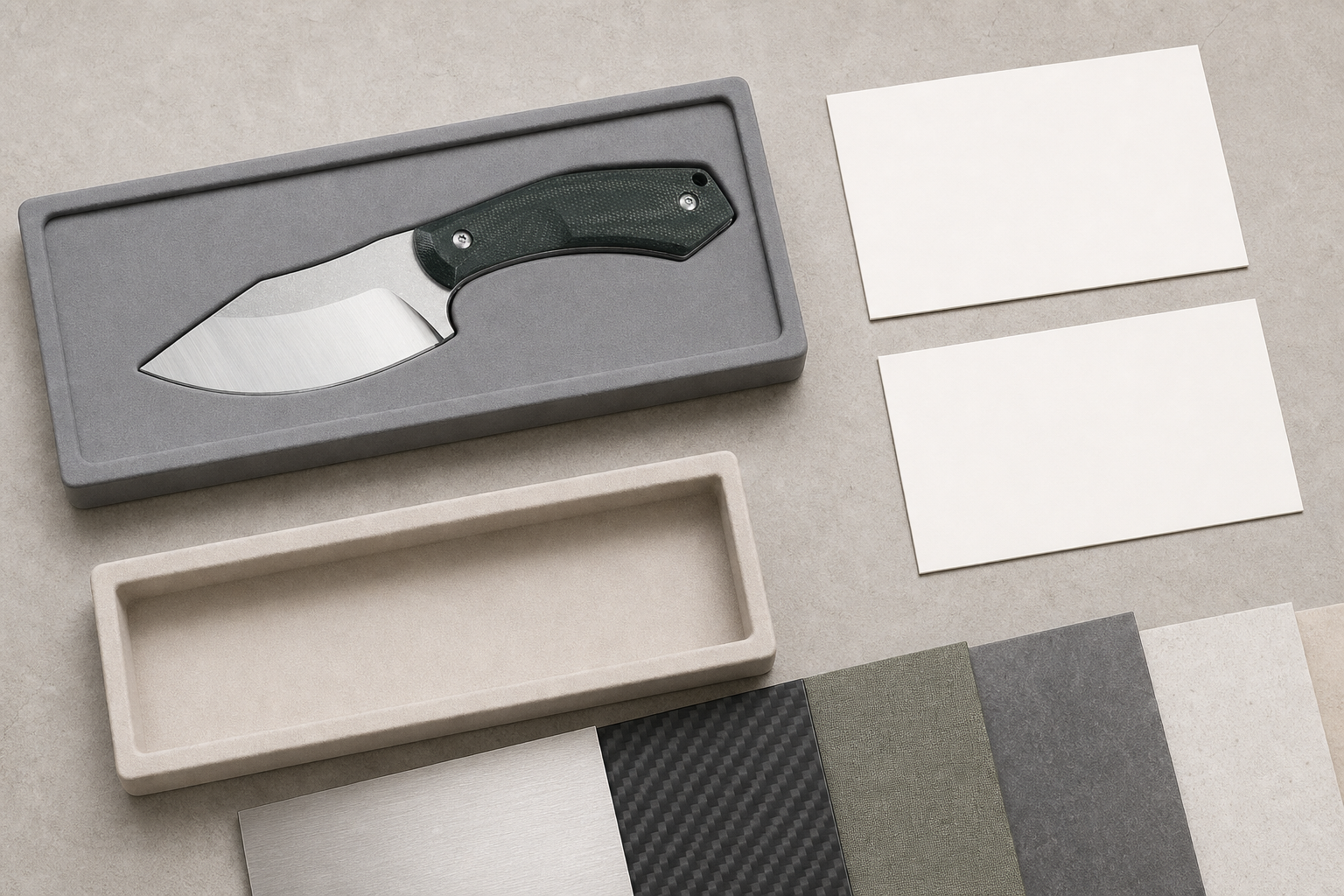
I Treat Shape as a Product Decision
Many buyers first describe blade shape as a style choice. I understand why. Shape is one of the first things a customer sees. But in manufacturing, blade shape is also a structure choice. The location of the point affects piercing and safety. The amount of belly affects slicing. The spine line affects thickness and strength. The tang area affects lock fit on folding knives. The grind height affects cutting performance and production time.
I also connect blade shape to the user. The ISO page for ISO 9241-11:2018 explains usability as a framework for products and services in relation to use. I apply the same practical idea to knives. A shape should serve a specific user, task, and context. If the buyer cannot explain the use case, the design can become decorative instead of useful.
For OEM and ODM projects, early blade-shape decisions also protect cost. A simple profile with stable grinding can support repeat production. A complex profile with many transitions may require more machining, more finishing, more inspection, and more hand adjustment. This does not mean complex shapes are always wrong. It means they should be chosen on purpose.
| Shape decision | What it affects | Buyer question |
|---|---|---|
| Point location | Tip strength and control | Does the user need piercing or safer utility? |
| Belly curve | Slicing feel | What materials will be cut most often? |
| Spine profile | Visual style and strength | Does the design match the product tier? |
| Tang geometry | Folding action and lock fit | Can the mechanism repeat in mass production? |
OEM/ODM RFQ Checklist
Prepare these details to help Vast State review your project and provide a more accurate quotation.
| RFQ Field | What to Prepare |
|---|---|
| Project type | OEM from drawing / ODM private label / wholesale catalog |
| Product category | Folding knife / fixed blade / multi-tool / outdoor tool |
| Design status | Idea / sketch / 2D drawing / 3D CAD / physical sample |
| Target price | Ex-factory target price or retail price range |
| MOQ expectation | 500 / 1,000 / 3,000 / 5,000+ pcs |
| Logo method | Laser engraving / etching / printing / molded logo |
| Packaging | Standard packaging / custom retail box / Amazon-ready |
| Market | USA / EU / Japan / Korea / Middle East / other |
| Compliance needs | Buyer-specified testing / documentation / labeling |
| Timeline | Sample deadline / mass production deadline |
Which Common Blade Shapes Should Buyers Compare?
The names can sound simple, but buyers often compare shapes without knowing their tradeoffs. That creates unclear RFQs.
Buyers should compare drop point, clip point, spear point, sheepsfoot, Wharncliffe, tanto-style, trailing point, hawkbill, and cleaver-style blades by function, cost, safety, and market fit.
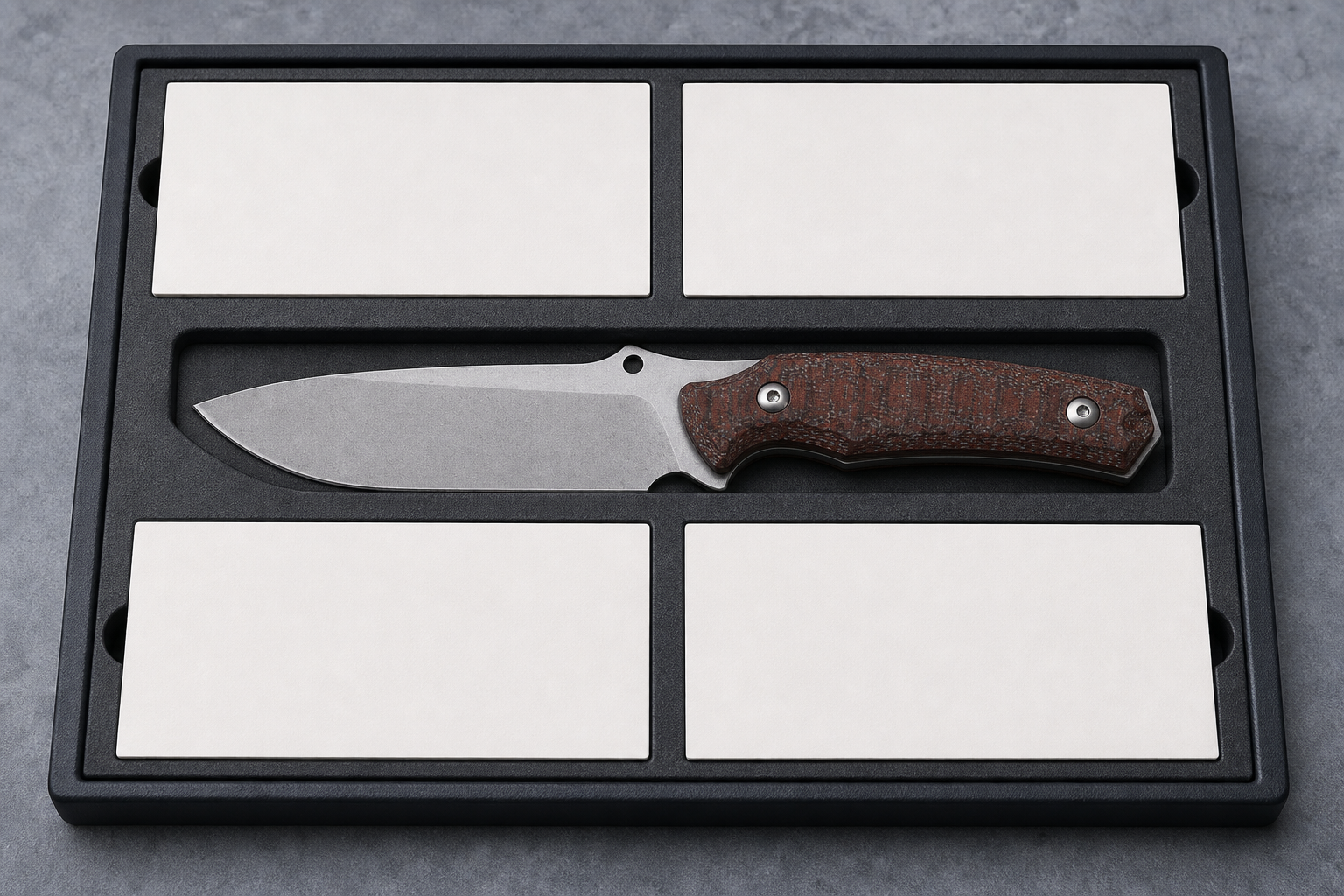
I Explain Shapes by Use, Not by Hype
A drop point blade is often useful for outdoor and EDC projects because the tip is controlled and the belly can slice well. It is not automatically the best shape, but it is usually practical. A clip point creates a finer point and a more traditional look. It can suit pocket knives and outdoor knives when the buyer wants a sharper visual line. A spear point places the point closer to the centerline. It can create a balanced look, but the buyer should define whether the design is for general utility rather than aggressive messaging.
Sheepsfoot and Wharncliffe shapes are strong choices for utility-oriented knives because the edge can be easy to control. They can also reduce accidental tip contact compared with very pointed profiles. CCOHS advises using the right tool for the job and not misusing knives as pry bars or other tools. That safety principle matters when I help buyers choose a shape for work, warehouse, rescue, or general utility tasks.
Tanto-style blades create a strong angular tip and a bold look, but they can be more demanding to grind and sharpen consistently. Trailing point blades add belly for slicing, but the raised tip may not fit every folding handle. Hawkbill shapes can pull material into the cut, but they are specialized. Cleaver-style utility profiles can look modern and broad, but buyers should check weight, closed safety, and edge geometry.
| Blade shape | Practical strength | Watch point |
|---|---|---|
| Drop point | Balanced EDC and outdoor use | Avoid making it too thick behind the edge |
| Clip point | Fine point and traditional style | Tip may need strength review |
| Sheepsfoot | Controlled utility cutting | Less piercing ability |
| Wharncliffe | Precise straight-edge work | Tip geometry needs protection |
| Tanto-style | Strong visual identity | More grinding and sharpening control |
How Should Buyers Match Blade Shape to Target Use?
A beautiful shape is not enough. If it does not fit the task, the product may disappoint repeat buyers.
Buyers should match blade shape to the main cutting job, carrying context, user skill level, safety expectation, sales channel, and price range before confirming drawings.
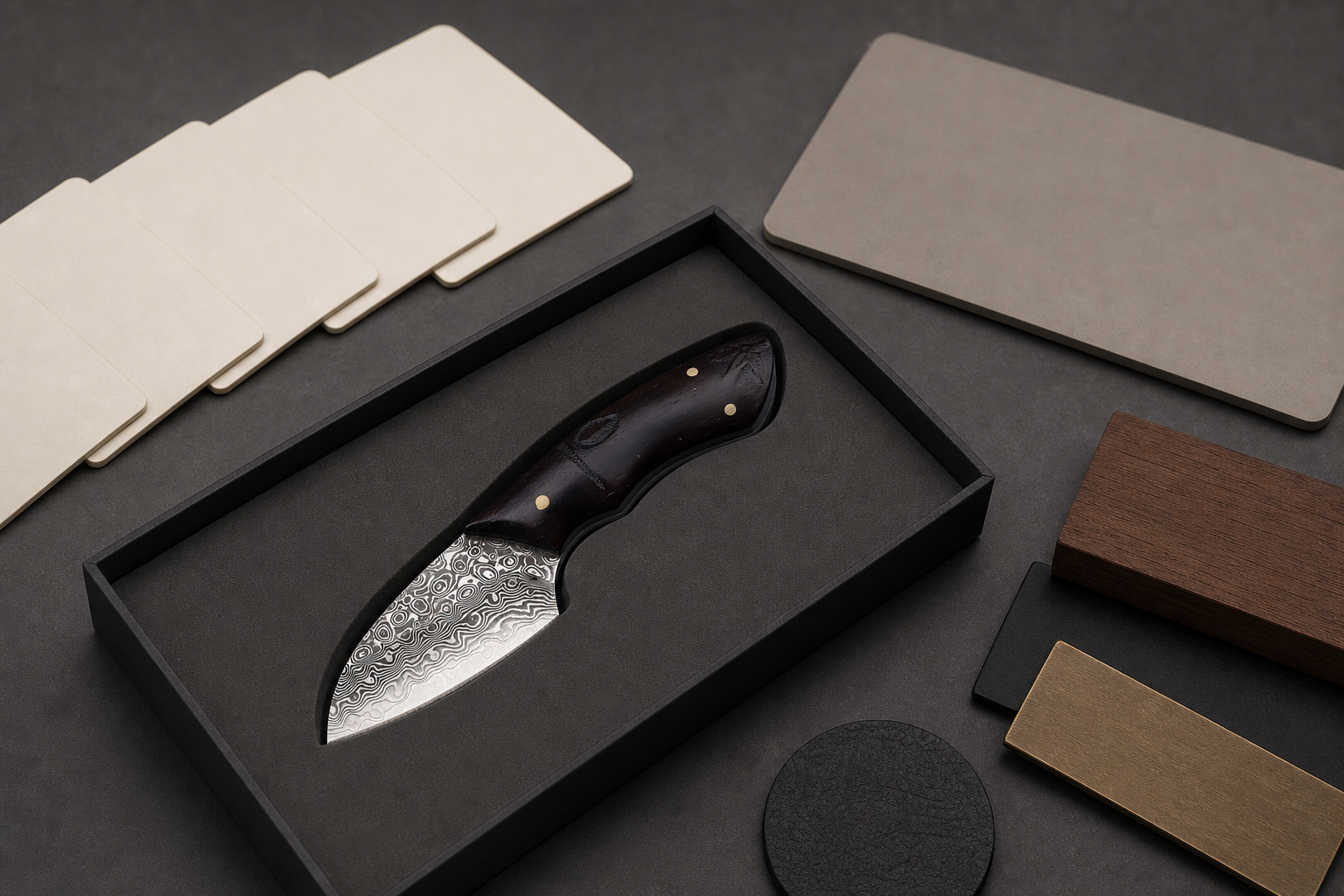
I Start With the Most Common Cut
When a customer says "outdoor knife," I ask what outdoor means. Some outdoor buyers need slicing for camping preparation. Some need a compact EDC folder for daily packages, cord, tape, and light tasks. Some need a rescue-style tool where controlled cutting and safety are more important than a sharp point. The blade shape should follow the most common real task.
For general EDC, I usually look for a shape that is easy to open, easy to control, not too thick, and not too difficult to maintain. Drop point, modified sheepsfoot, and Wharncliffe-style profiles can all work depending on brand direction. For outdoor fixed blades, I check whether the buyer wants chopping, carving, slicing, or general camp utility. Shape alone will not solve these tasks. Blade length, thickness, grind, steel, and handle design must work together.
For work-use knives, I pay extra attention to safety and repeatable cutting. A very sharp fine point may not be needed if the user mainly cuts cartons, straps, rope, or film. A controlled tip can reduce risk in some applications. For retail and private label buyers, I also consider what the final customer expects when seeing the product online. If the product promise is "practical EDC," the blade should look practical too.
| Target use | Shape direction | Practical note |
|---|---|---|
| Everyday carry | Drop point, sheepsfoot, Wharncliffe | Keep size and edge easy to manage |
| Camping utility | Drop point, trailing point, broad utility shape | Balance slicing, strength, and cleaning |
| Rescue or work tool | Sheepsfoot or controlled-tip profile | Reduce unnecessary piercing focus |
| Brand display line | Clip point, spear point, tanto-style | Control messaging and manufacturability |
How Does Blade Shape Affect Cutting Performance?
Buyers may focus on steel first. But geometry often decides how the knife actually cuts.
Blade shape affects cutting performance through edge length, belly curve, tip angle, stock thickness, grind height, behind-edge thickness, sharpening access, and user control.
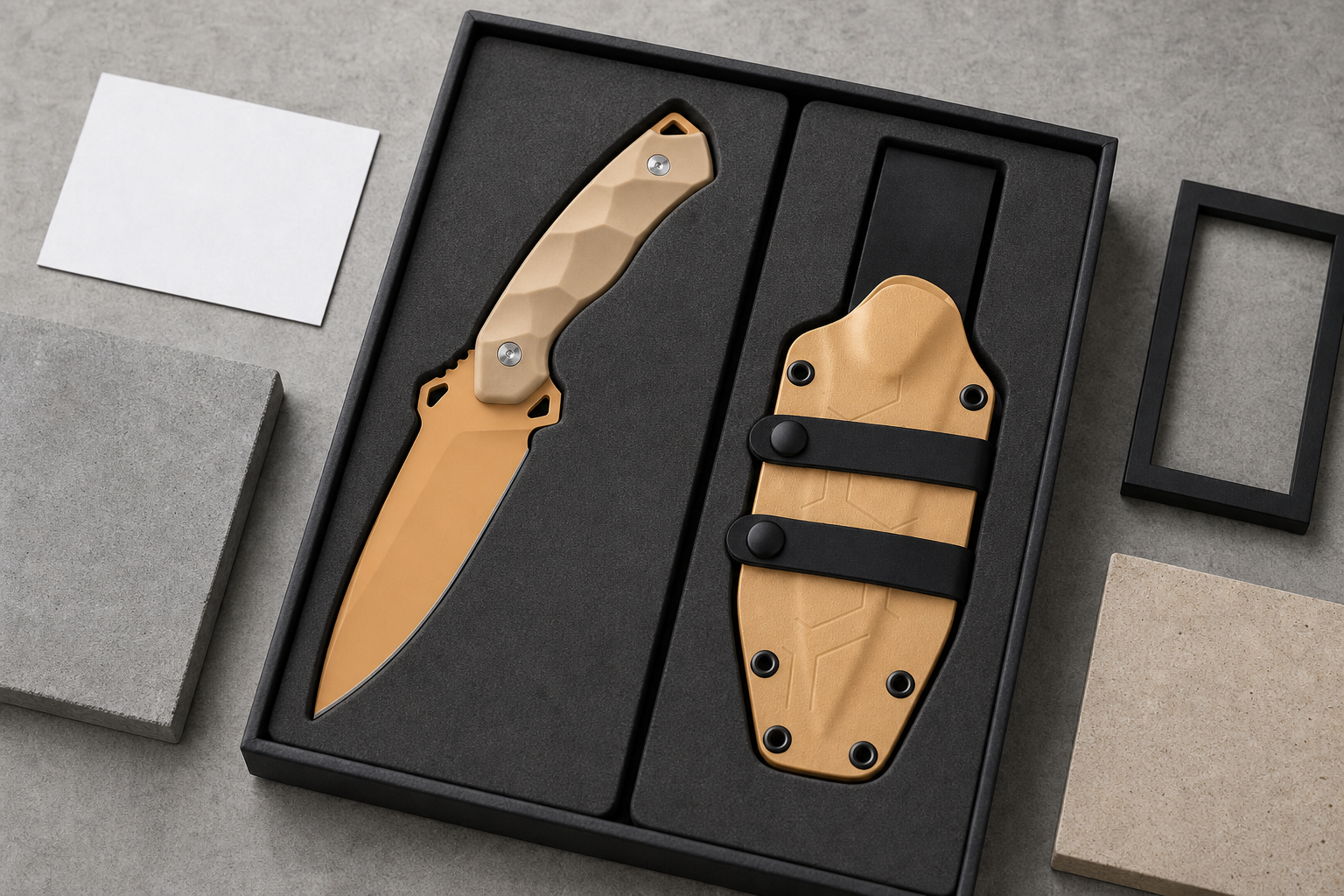
I Look at the Edge, Belly, and Tip Together
Cutting performance is not one feature. It is a relationship between shape, grind, thickness, and steel. A long belly can make slicing smoother because more edge contacts the material through the cut. A straighter edge can give better control on flat materials. A fine tip can help with detail work, but it may be more fragile. A thick tip can feel strong, but it may not enter material cleanly.
This is why I do not promise performance only from steel names. Steel matters, but geometry matters every time the knife touches material. If a buyer chooses premium steel but requests a thick low grind, the knife may still cut poorly. If a buyer chooses a practical steel and a well-planned geometry, the knife can feel much better in the user's hand.
Sharpening also belongs in the discussion. Some shapes are easier for users to maintain. A recurve or hawkbill edge may be useful for special tasks, but it can require more care during sharpening. A straight or gently curved edge is usually easier for mass-market customers. For B2B buyers, this affects after-sale satisfaction. The final customer judges the whole product, not only the spec sheet.
| Geometry factor | Cutting effect | Buyer control |
|---|---|---|
| Belly | Helps slicing motion | Match belly to material |
| Tip angle | Controls piercing and detail work | Balance strength and safety |
| Grind height | Changes cutting efficiency | Confirm sample before mass production |
| Edge access | Affects sharpening | Avoid shapes users cannot maintain |
How Does Blade Shape Affect Manufacturing Cost and Consistency?
Some shapes look simple on screen but cost more in production. The problem appears during grinding and inspection.
Blade shape affects cost through cutting method, CNC time, grinding complexity, heat distortion risk, polishing difficulty, scrap rate, fixture design, and inspection workload.
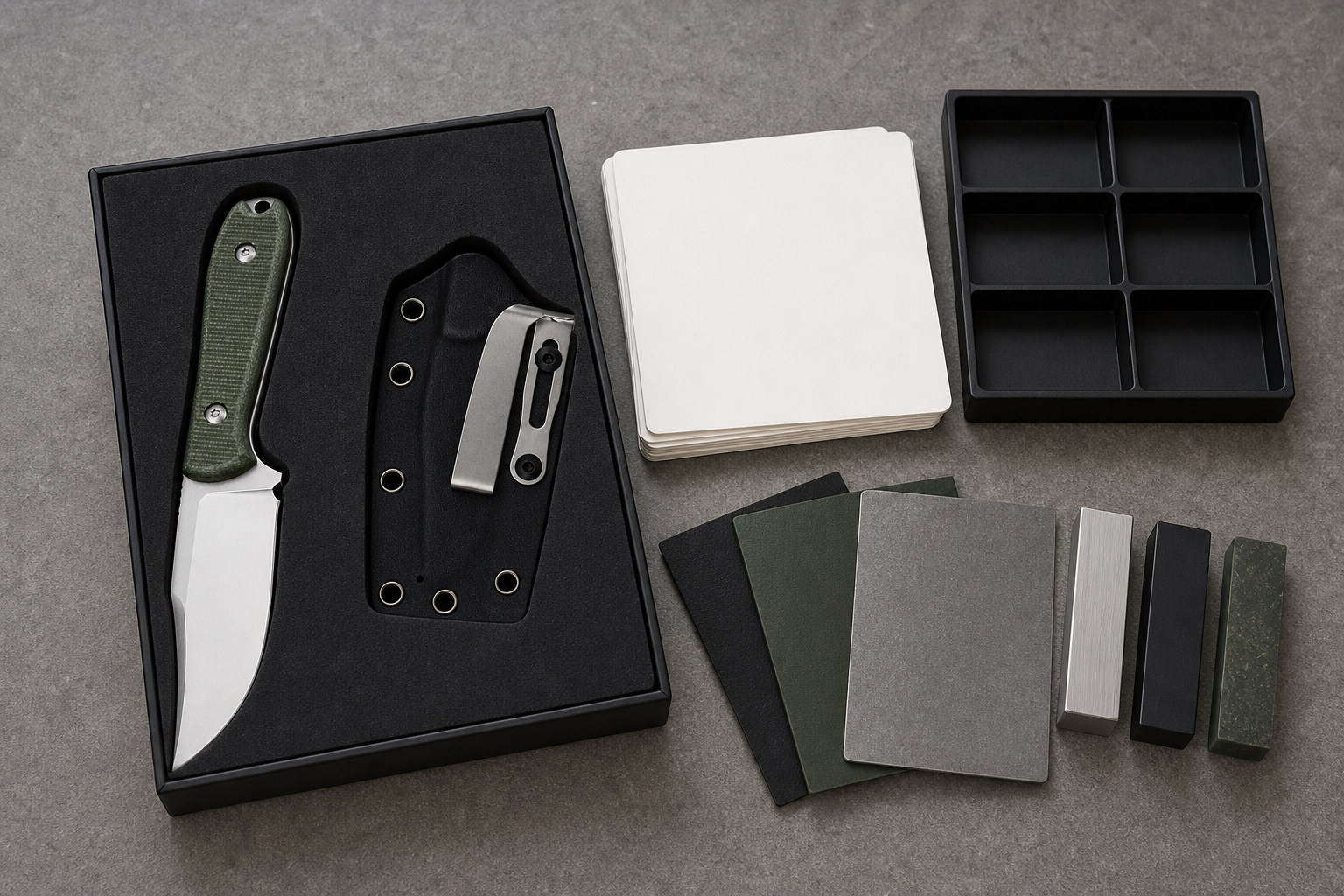
I Check Whether the Shape Can Repeat
Manufacturing cost is not only material cost. A blade with many corners, transitions, swedges, recurves, or tight inside curves may need more processing time. If the shape requires more hand grinding, each piece can vary more. That may be acceptable for a small premium run, but it can become risky for a larger OEM order.
Dimensional control matters more than many buyers expect. The blade outline, pivot hole, stop area, lock face, opening hole, thumb stud position, and closed tip position all need stable measurement. The NIST page on dimensional metrology connects dimensional measurement with manufacturing improvement and accurate part information. In knife production, this mindset helps prevent blade centering problems, unsafe closed tips, weak lock engagement, and inconsistent action.
Finishing cost also changes with shape. A simple satin finish on a simple profile is easier to control than a polished finish on a complex profile. Coatings may also behave differently around corners and transitions. If the buyer wants stonewash, bead blast, coating, satin, or mirror polish, I check whether the blade profile supports that finish cleanly.
For a serious RFQ, I prefer to receive drawings or sample targets with tolerances. A picture alone is not enough for repeat production.
| Cost driver | Why it matters | Buyer decision |
|---|---|---|
| Tight curves | More machining or finishing effort | Simplify if cost is sensitive |
| Swedges | More grinding control | Confirm visual and functional need |
| Recurve edge | Harder grinding and sharpening | Use only when task supports it |
| Tight tolerances | More inspection time | Define critical dimensions clearly |
How Should Blade Shape Fit the Handle, Lock, and Opening Method?
A blade is not separate from the knife. If it does not fit the handle system, the whole product suffers.
Blade shape must fit the handle, lock, pivot, detent, stop pin, opening method, clip position, closed safety, and user grip before tooling or sampling.
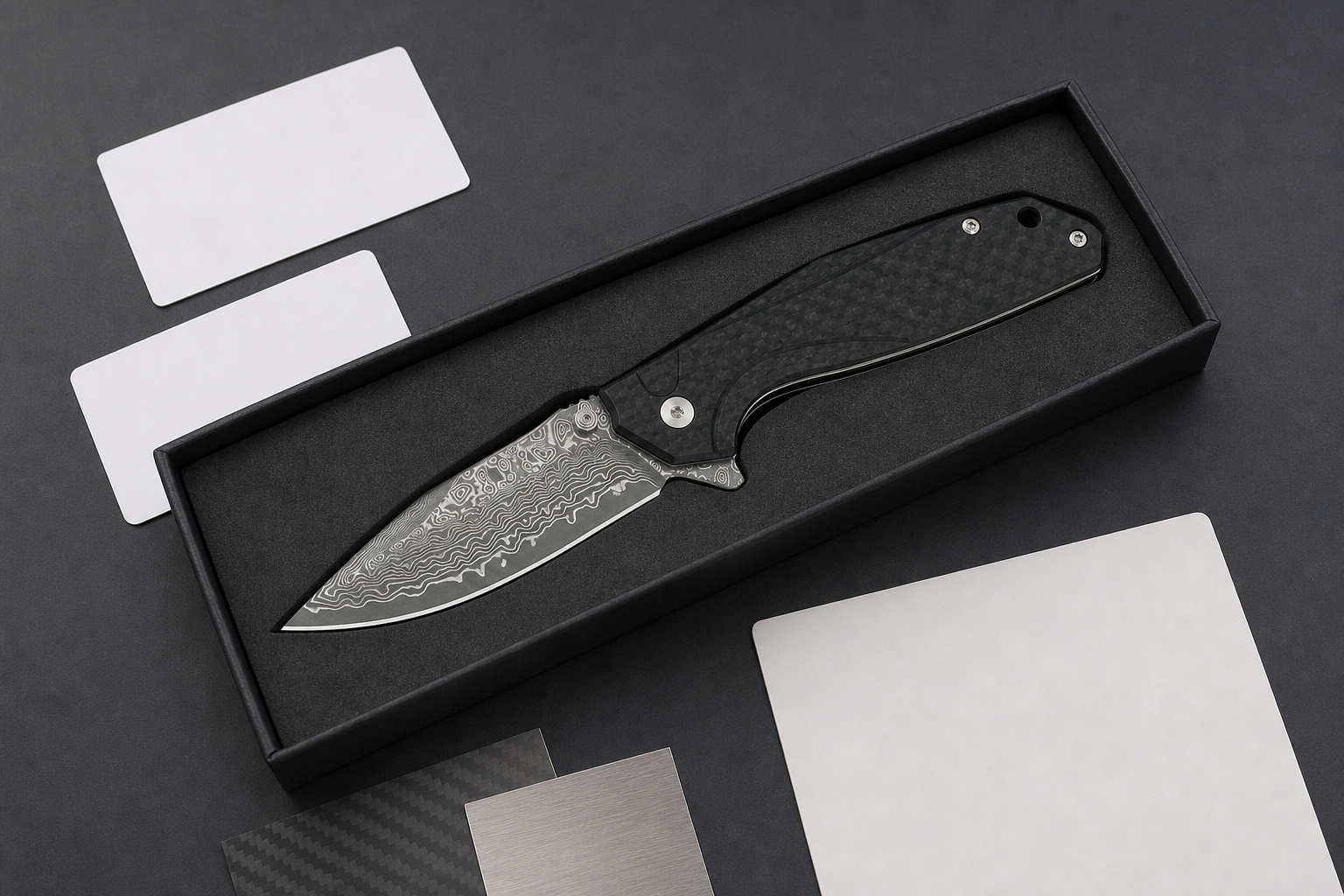
I Test the Shape Inside the Knife, Not Only Outside
For folding knives, blade shape must work in two positions: open and closed. The open shape must cut well and look balanced. The closed shape must sit safely inside the handle. The tip should not be exposed. The edge should clear spacers, liners, screws, and backspacers. The tang should support the lock. The opening method should be reachable without forcing the handle to become awkward.
This is where many attractive concepts fail. A tall blade may look powerful, but it may need a taller handle. A broad cleaver-style blade may create weight and centering challenges. A clip point may need careful closed-tip clearance. A sheepsfoot or Wharncliffe blade may allow a useful straight edge, but the handle must still protect the point. A thumb hole, flipper tab, nail nick, or thumb stud can change the available blade surface and visual balance.
Fixed blades also need handle fit. A blade with too much forward weight may feel tiring. A blade with too little guard or grip control may not suit wet outdoor use. The shape should support the user's hand, not fight it.
In ODM development, I often suggest small profile changes before the first prototype. These changes may look minor, but they can improve action, safety, and production stability.
| Structure area | Shape effect | What I check |
|---|---|---|
| Closed position | Tip and edge safety | No exposed sharp point |
| Lock area | Engagement and release | Tang geometry and stop control |
| Opening method | Access and balance | Hole, stud, flipper, or nail nick location |
| Handle height | Grip and carry comfort | Blade must not force a bulky handle |
What Safety and Market Positioning Should Buyers Consider?
Blade shape sends a message. The wrong message can reduce buyer trust or create channel friction.
Buyers should position blade shapes around responsible utility, outdoor tasks, EDC convenience, rescue use, and compliance awareness rather than aggressive or unsupported claims.
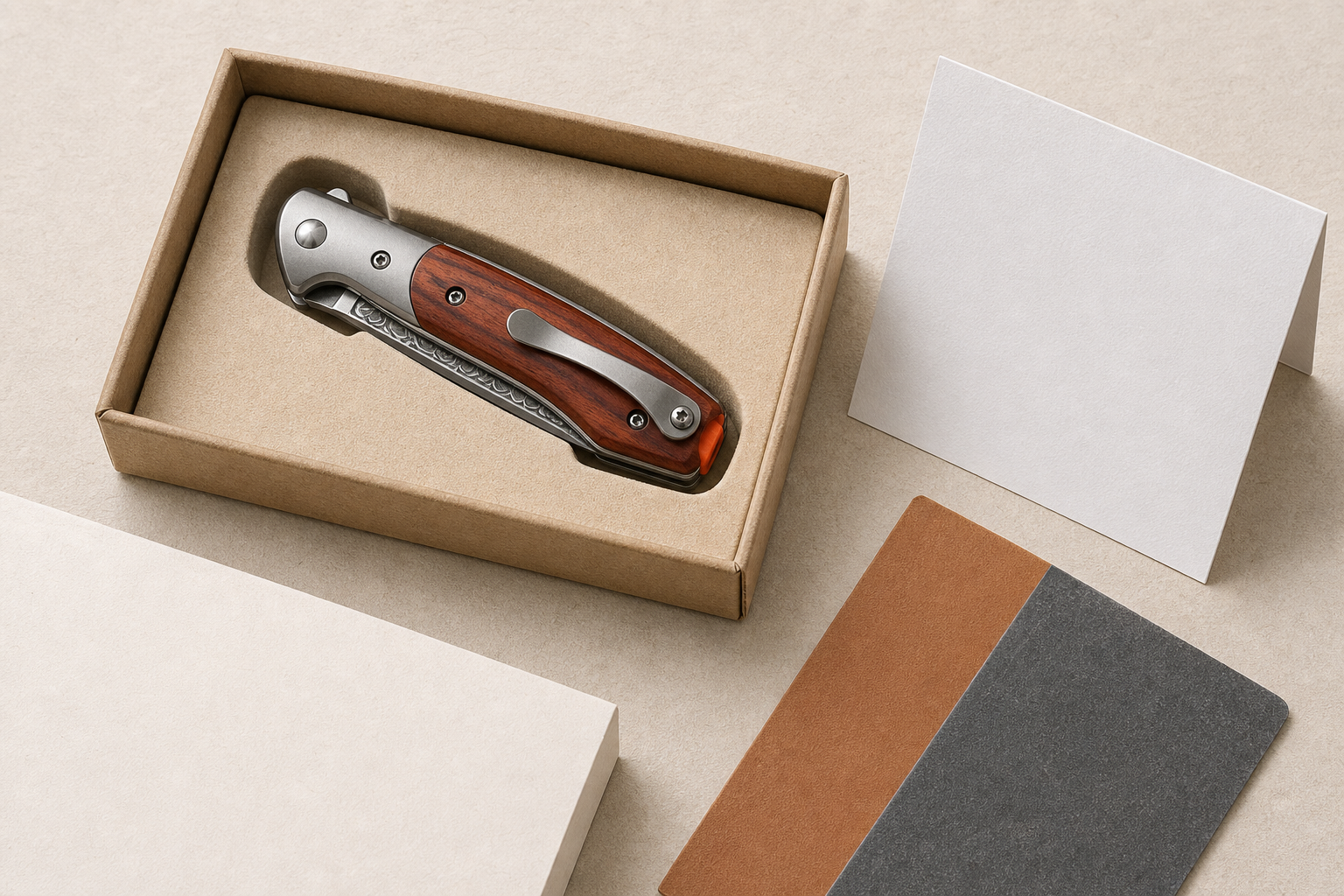
I Keep the Product Promise Practical
For B2B projects, the same blade shape can be received differently in different markets. A very aggressive-looking profile may limit channels or create unnecessary concern. A controlled utility shape may fit a wider range of outdoor, work, and EDC buyers. I do not give legal advice, but I always tell customers to review their target market rules before confirming blade length, locking mechanism, opening method, and product description.
Safety also affects design language. If the product is for warehouse use, rescue kits, camping, or daily utility, the copy should explain those use cases clearly. It should not push risky claims. A practical knife can still look good. It does not need exaggerated language to sell.
The CCOHS sharp blade guidance also reminds us that dull blades can require more force and that tools should be used for their intended job. I translate that into product development by asking whether the shape helps the intended task. If a knife is likely to be misused because the shape suggests prying, chopping, or stabbing beyond its design, the buyer may face more complaints.
Market positioning should be honest. A budget EDC knife should not pretend to be a heavy-duty survival tool. A rescue-oriented cutter should not hide the safety reason for its controlled point.
| Positioning goal | Shape direction | Risk to avoid |
|---|---|---|
| EDC utility | Balanced, compact profiles | Overly aggressive messaging |
| Outdoor camping | Strong but usable shapes | Excessive thickness |
| Work or rescue | Controlled-tip shapes | Poor edge access |
| Premium display | Distinct profile and finish | Unstable production cost |
What Materials and Heat Treatment Questions Matter?
Blade shape and steel choice cannot be separated. A thin tip and a thick outdoor blade need different thinking.
Buyers should connect blade shape with steel grade, hardness target, toughness, corrosion resistance, grindability, edge thickness, heat treatment, and final use conditions.
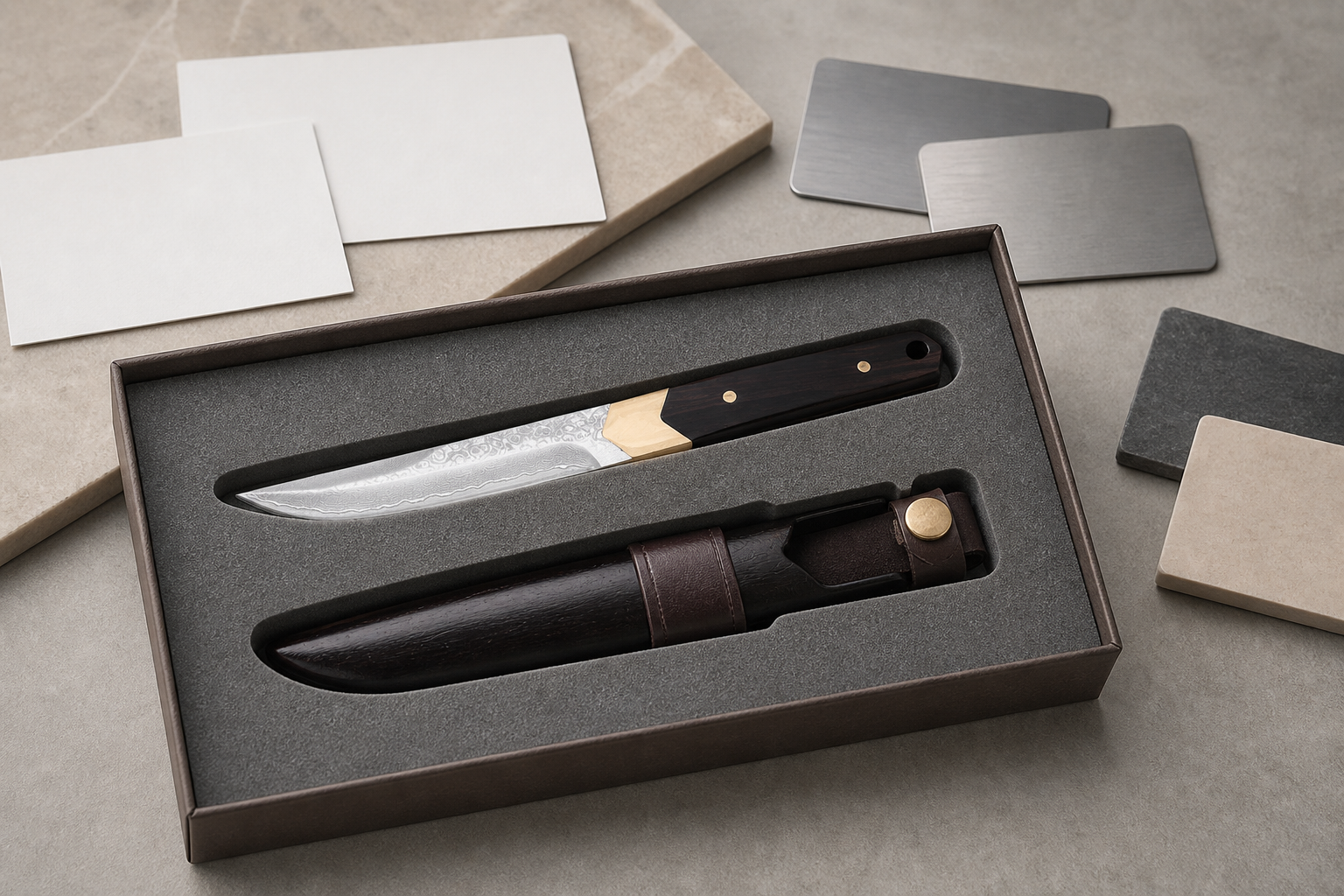
I Balance Steel Performance With Shape Risk
Steel choice should support the blade shape. A fine point may need a steel and heat treatment plan that balances hardness and toughness. A large outdoor fixed blade may need toughness and stability more than maximum hardness. A thin slicing EDC blade may need corrosion resistance, edge stability, and good grind geometry.
Alleima explains that hardening and tempering of knife steel are used to build a balance between hardness, toughness, and corrosion resistance. That is the kind of balance I discuss with buyers. The correct hardness target depends on steel grade and use case. It should not be copied blindly from another product.
Blade shape also affects grinding after heat treatment. A narrow tip can be easier to overheat during grinding. A broad blade may need more attention to warping and surface finish. A complex profile may need fixtures to keep the process stable. If the buyer wants coating, stonewash, satin, or mirror polish, the material and heat treatment should still support the final look.
For B2B buyers, I recommend asking for a clear material spec, hardness target, heat treatment route, and inspection method. This helps avoid vague claims and protects repeat orders.
| Material question | Why it matters | Buyer action |
|---|---|---|
| Steel grade | Controls corrosion and edge behavior | Match grade to market level |
| Hardness target | Affects edge and toughness | Confirm realistic range |
| Tip geometry | Changes breakage risk | Avoid extreme thinness unless needed |
| Grinding process | Affects heat and consistency | Inspect sample geometry |
What QC Checks Protect Blade Shape Consistency?
One good sample is not enough. The buyer needs the same shape to repeat across production.
QC should check blade outline, critical dimensions, tip location, edge symmetry, grind line, thickness, hardness, finish, lock fit, opening action, closed safety, and packaging protection.
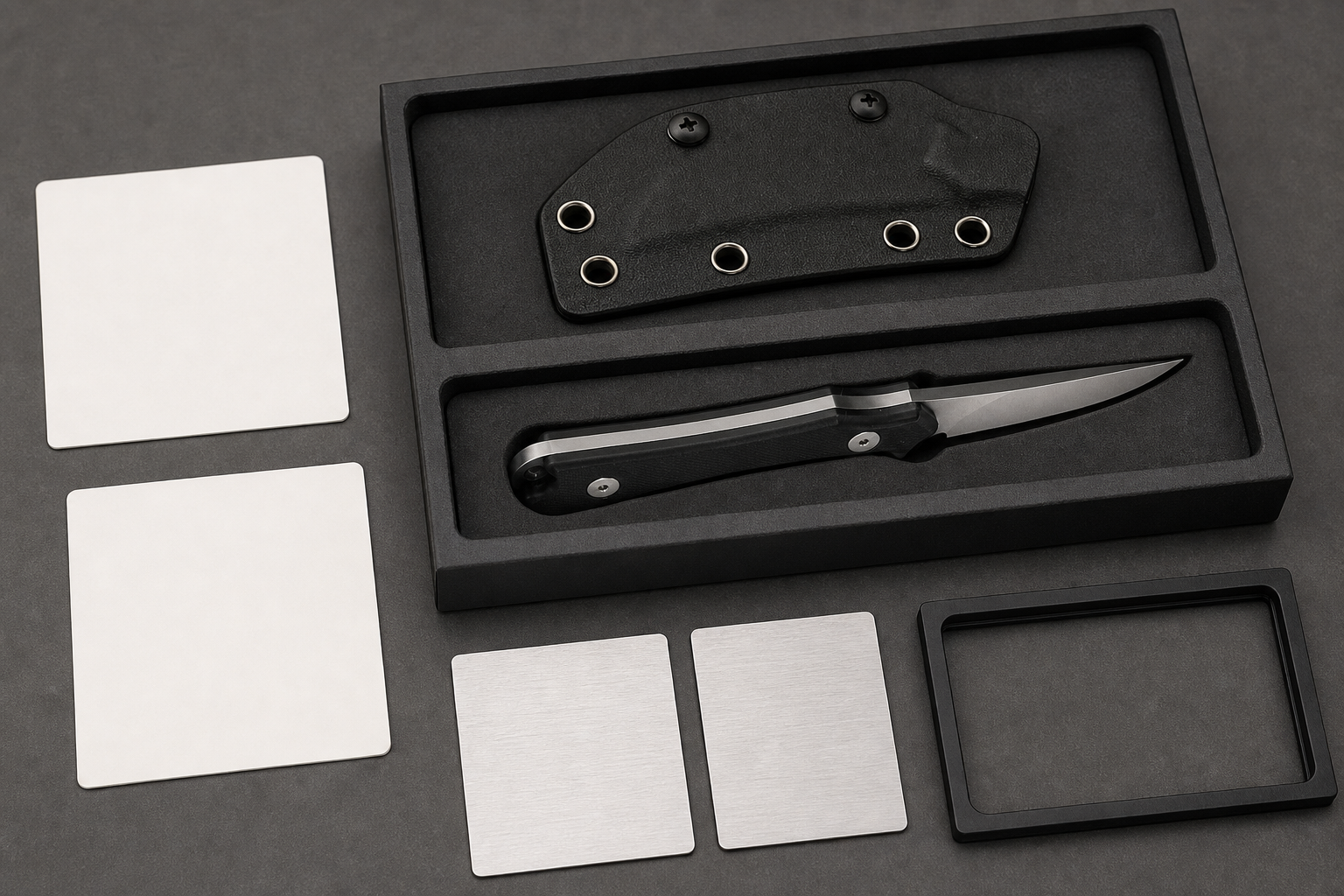
I Convert the Shape Into Checkpoints
Quality control should turn design intent into inspection points. If the buyer only says "same as sample," the factory still needs to know what same means. The blade outline can be checked with templates, fixtures, calipers, or measurement tools. The pivot hole and lock area need tighter control than a non-critical decorative curve. The edge bevel should be symmetrical enough for the product tier. The tip should be clean and protected in packaging.
For folding knives, I check blade centering, side play, lock engagement, opening smoothness, closing safety, and whether the edge contacts anything inside the handle. A small profile error can create a functional problem. For fixed blades, I check handle alignment, balance, sheath fit, edge evenness, and finish consistency.
ISO's ISO 9001 quality management systems page describes requirements for quality management systems. A buyer does not need to turn every article into a standards document, but the principle is useful. Stable process control protects the order better than final inspection alone.
I also like boundary samples. The buyer should approve acceptable and unacceptable examples for grind lines, finish marks, edge alignment, and closed-tip exposure. This reduces arguments during production.
| QC item | Why it matters | Inspection method |
|---|---|---|
| Blade outline | Confirms profile repeatability | Template or measurement check |
| Tip position | Protects safety and appearance | Visual and dimensional check |
| Grind symmetry | Affects cutting and perceived quality | Light, gauge, and sample comparison |
| Lock fit | Protects function | Assembly and action test |
What Should Buyers Put in a Blade Shape RFQ?
A weak RFQ produces vague quotes. A detailed RFQ helps the supplier quote accurately and suggest improvements.
Buyers should include target use, blade shape reference, dimensions, steel, thickness, grind, finish, lock type, opening method, handle material, packaging, MOQ, target price, and inspection expectations.
I Prefer Clear Tradeoffs Over Perfect Words
An RFQ does not need to be complicated, but it should be clear. I want to know the target market, use case, price range, and order plan. If the buyer has drawings, I review manufacturability. If the buyer only has a rough concept, I help turn the idea into a workable direction. The earlier we discuss tradeoffs, the faster the project moves.
A useful RFQ should include blade length, overall length, stock thickness, steel preference, hardness target, finish, edge type, lock or fixed-blade structure, opening method, handle material, logo method, packaging, target MOQ, and target price. It should also say what the buyer values most. Is the buyer trying to reduce cost, improve cutting performance, create a premium feel, speed up prototyping, or build a distinctive private label line?
I also ask for unacceptable points. For example, the buyer may not want a sharp point. The buyer may want easy sharpening. The buyer may need a lower-cost grind. The buyer may need a blade shape that fits a compact handle. These limits help the supplier propose practical options.
For ODM work, the best RFQ is a conversation starter. It gives enough direction for engineering, but it leaves room for manufacturing suggestions.
| RFQ detail | What to include | Why it helps |
|---|---|---|
| Use case | EDC, camping, work, rescue, utility | Guides blade profile |
| Geometry | Length, thickness, point, belly | Supports accurate quoting |
| Materials | Steel, handle, hardware | Controls cost and performance |
| Acceptance | Sample standard and QC needs | Reduces production disputes |
How Can Vast State Support Blade Shape Development?
Buyers often know their market but need factory support. The right supplier should connect design, cost, and production.
Vast State supports blade shape development through OEM/ODM review, prototype support, material selection, structure suggestions, finish options, packaging customization, production follow-up, and practical quality control.
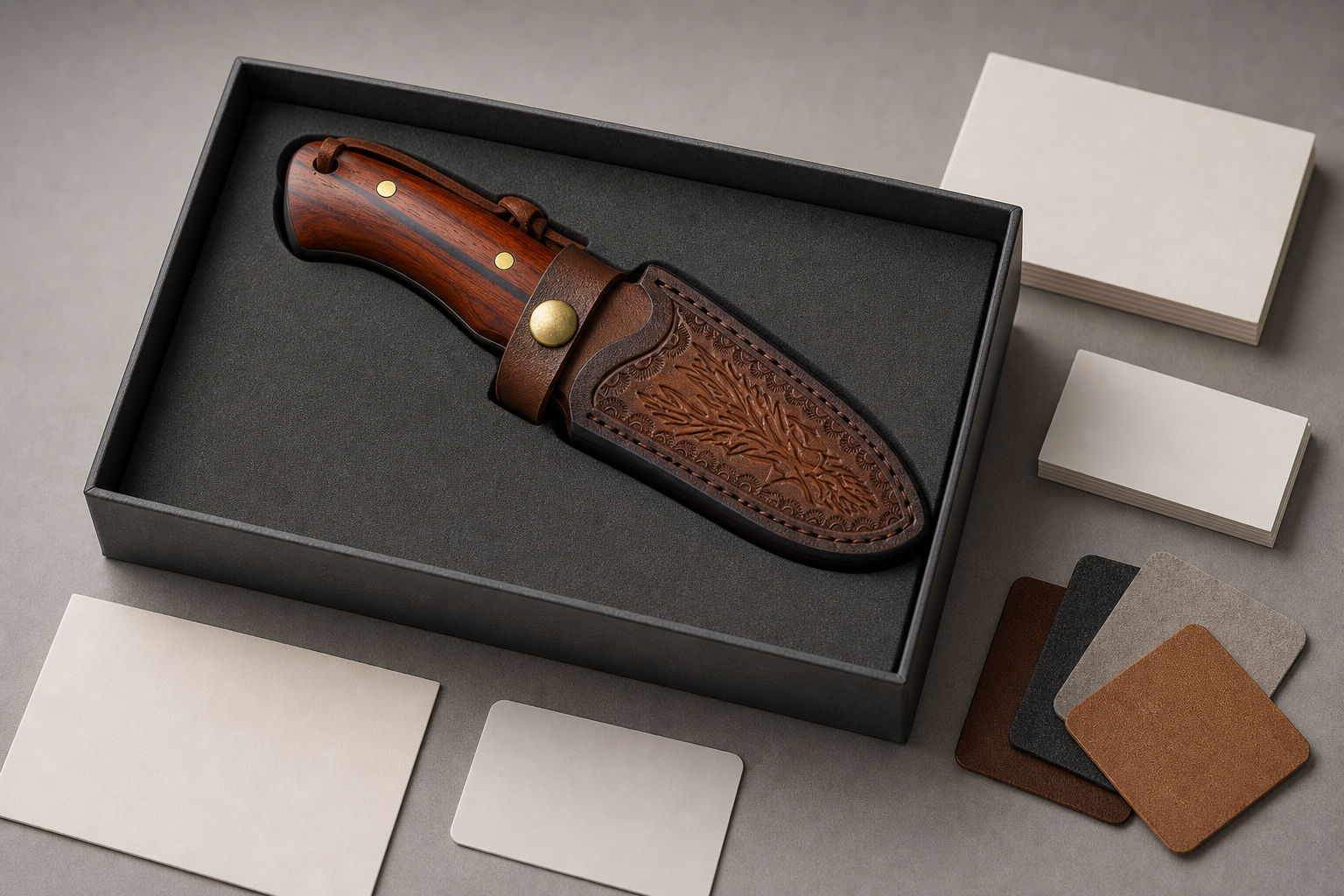
I Help Buyers Turn a Shape Idea Into a Manufacturable Product
At Vast State, I see blade shape as part of the full product system. I do not only ask whether the shape looks good. I ask whether it fits the buyer's target market, price range, material plan, function, manufacturing route, and brand position. This is especially important for international B2B customers who need stable communication and repeatable execution.
Some customers come with finished drawings. In that case, I review whether the design can be produced smoothly and whether the blade shape creates hidden risks. Some customers come with a market idea, target price, or reference direction. In that case, I help narrow the shape, steel, handle, finish, lock, and packaging options before sampling.
My goal is not to push one blade shape. My goal is to help the buyer choose a shape that the market understands and production can repeat. A practical shape can still be distinctive. A distinctive shape can still be practical. The key is to connect the profile to real use, clear cost, and controlled quality.
When the blade shape is right, the rest of the project becomes easier. The sample is easier to approve. The quote is more accurate. The production risk is lower. The final knife feels more honest to the customer.
| Support area | What I review | Buyer benefit |
|---|---|---|
| Concept | Use case and market position | Better product direction |
| Engineering | Shape, lock, handle, opening method | Lower development risk |
| Production | Grinding, finish, tolerance, QC | More stable repeat orders |
| Packaging | Protection and brand presentation | Fewer surface and delivery issues |
Turn this article into a folding knife project.
Share your blade type, lock direction, steel preference, handle material, quantity, target market, and packaging needs. Vast State can prepare OEM/ODM options.
Conclusion
I choose blade shape by matching use, structure, steel, cost, safety, and repeat production, not by chasing the most dramatic profile.