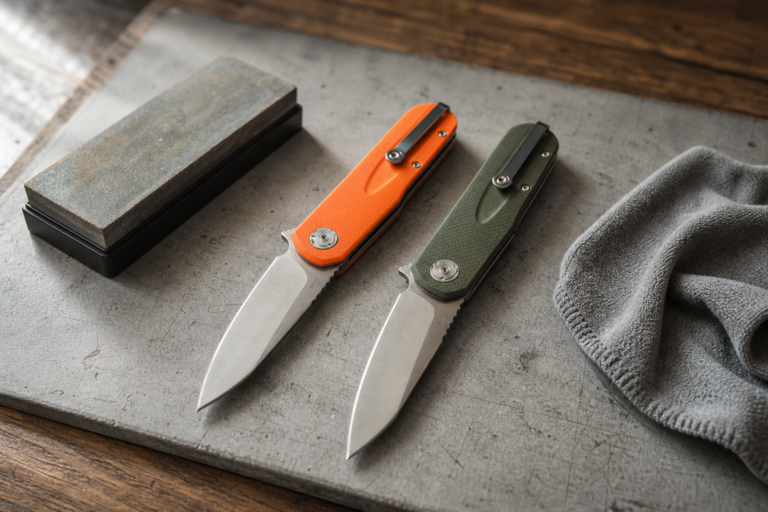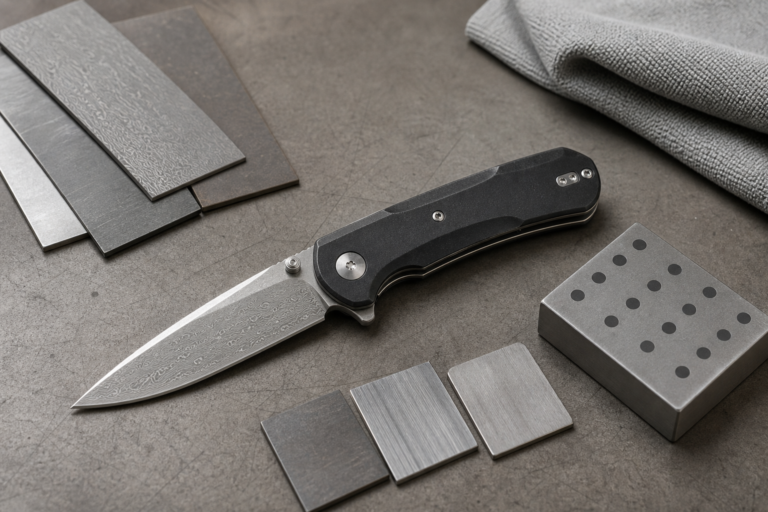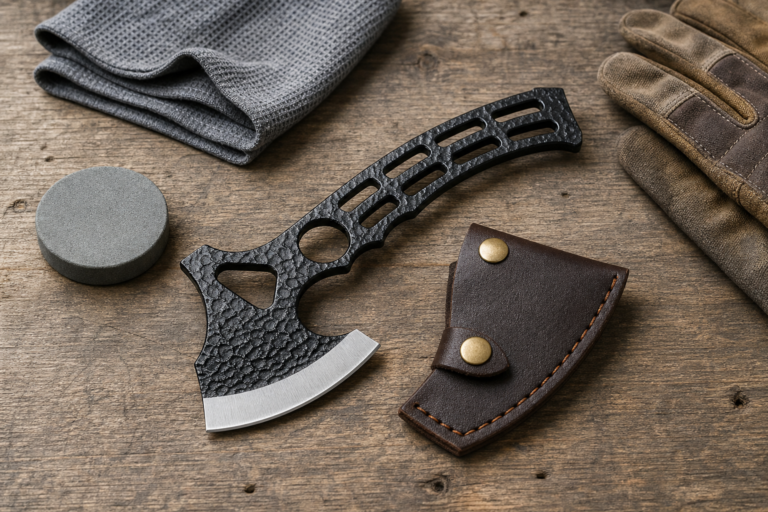
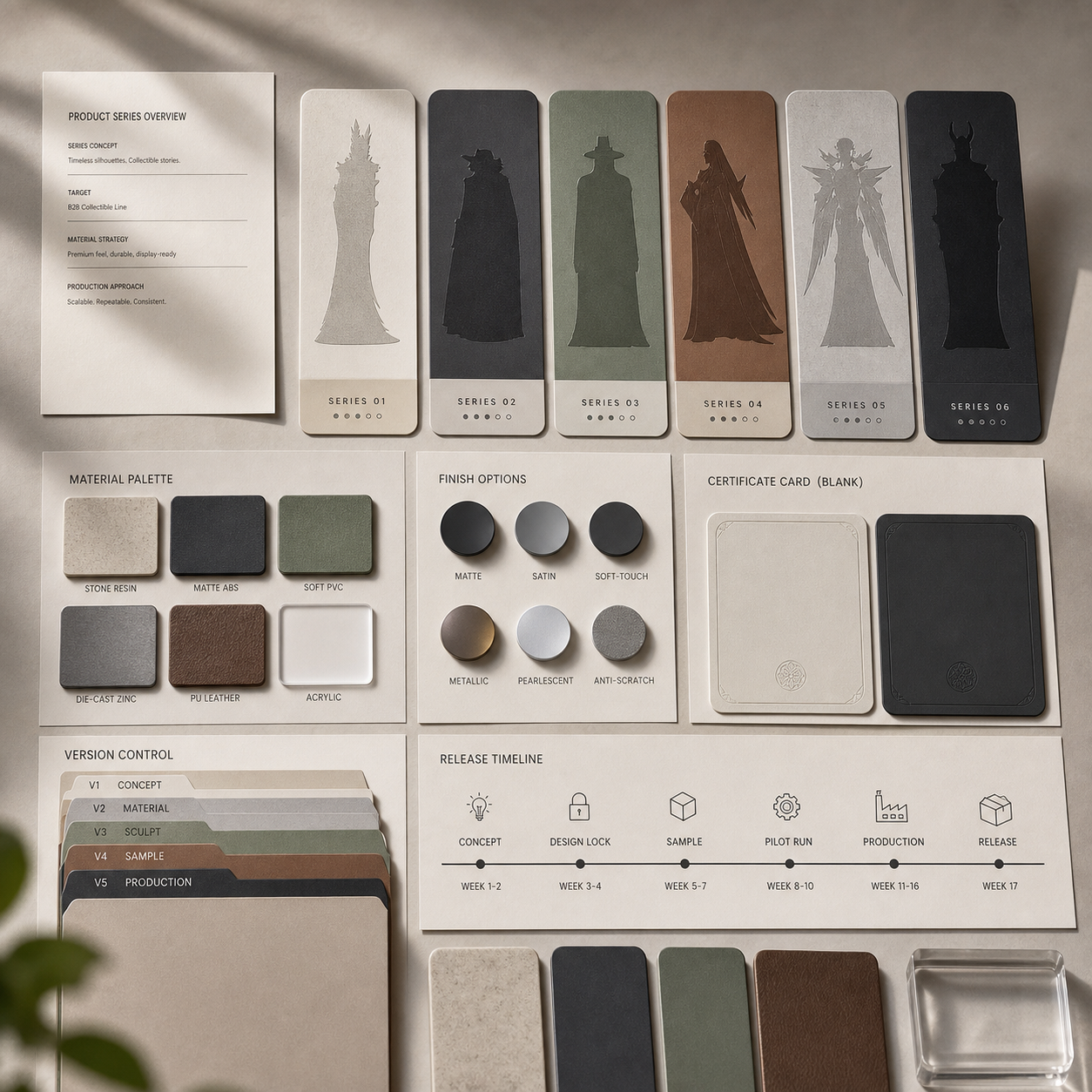
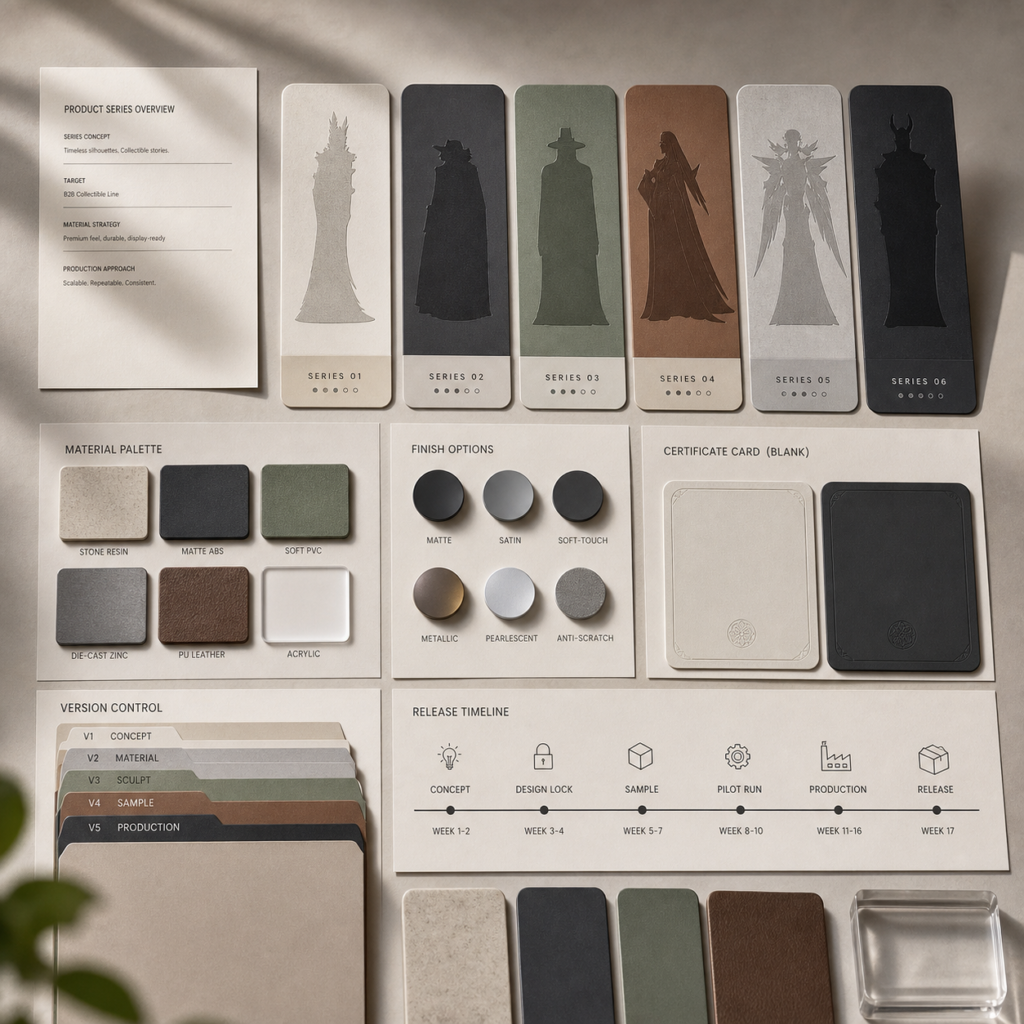
A beautiful knife can impress once. A weak series plan fades quickly. Collectible products need design discipline, not only decoration.
Buyers can develop collectible art knife series by planning a clear theme, shared design language, material system, numbering method, packaging story, version control, QC standards, and future release path. A collection should feel artistic, but it still needs stable OEM/ODM production control.
Quick buyer brief:
- Answer: Build the collection as a product system, not as one isolated showpiece.
- Buyer context: This helps brands, importers, distributors, and private label buyers plan collectible knife lines.
- Key checks: Theme, design language, material set, limited version rules, packaging, certificates, QC, target price, and repeat order plan.
Have a knife or multi-tool project in mind?
Send your sketch, CAD file, sample photo, or product idea. Vast State can review manufacturability, suggest materials, estimate MOQ, and prepare a quote for your OEM/ODM project.
When I look at an art knife or collector knife project, I do not see only one attractive sample. I see a possible system. The blade shape, handle material, finish, logo, packaging, certificate, serial number, and future releases should speak the same language. If they do not, the product may look expensive but feel scattered. For B2B buyers, the goal is practical: create a collectible line that supports brand identity, price range, production consistency, and future repeat sales. A knife can have artistic value, but the manufacturing file still needs drawings, material codes, inspection points, and controlled version records.
Why Should A Collectible Knife Start With A Series Plan?
One art knife can look special. But a weak series plan makes future products feel random and hard to sell together.
A collectible knife should start with a series plan because collectors respond to theme, continuity, version logic, packaging consistency, and clear release structure. The plan guides both design and production.
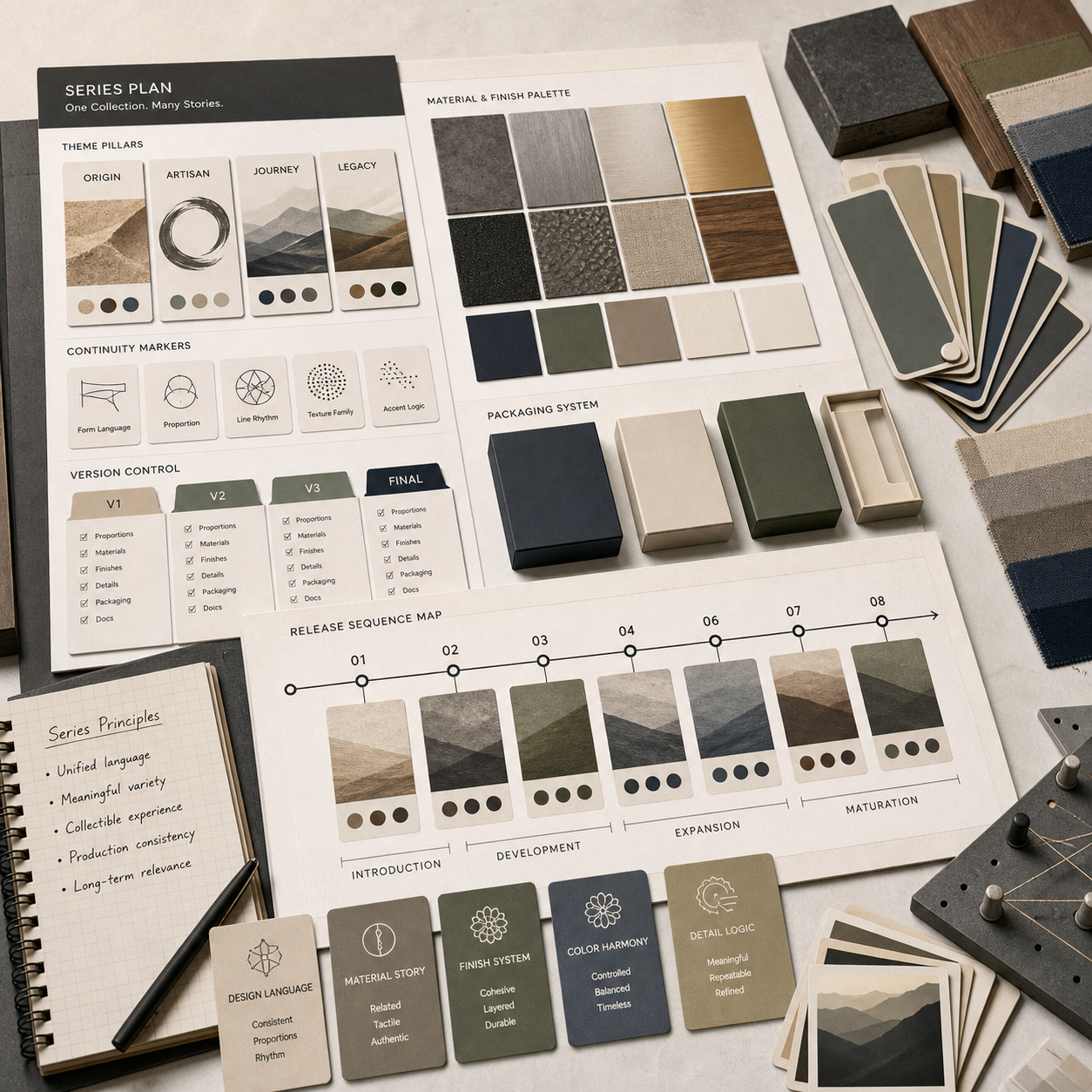
I Plan The System Before The First Sample
In OEM and ODM work, I see many buyers begin with one beautiful idea. That is fine for a single promotional product, but it is not enough for a collection. A real series needs a theme. It also needs a release structure. The buyer should decide whether the line is based on seasons, materials, regional inspiration, blade profiles, handle inlays, color sets, or anniversary editions. This plan helps the factory build the first sample in a way that leaves room for the next pieces.
The series plan also protects cost. If every item uses a new handle shape, new blade profile, new box, and new hardware, the line may become too expensive. If the buyer keeps a shared structure and changes selected visual details, the series can feel coherent and still be manufacturable. I like to define what stays fixed and what changes. That turns art direction into a product map.
| Series element | What it controls | Practical buyer decision |
|---|---|---|
| Theme | The reason the products belong together | Define the story before sampling |
| Shared structure | Cost and production stability | Keep key parts common where possible |
| Release logic | Collector understanding | Plan editions, sets, or yearly drops |
| Visual variation | Freshness between models | Change material, finish, inlay, or packaging |
OEM/ODM RFQ Checklist
Prepare these details to help Vast State review your project and provide a more accurate quotation.
| RFQ Field | What to Prepare |
|---|---|
| Project type | OEM from drawing / ODM private label / wholesale catalog |
| Product category | Folding knife / fixed blade / multi-tool / outdoor tool |
| Design status | Idea / sketch / 2D drawing / 3D CAD / physical sample |
| Target price | Ex-factory target price or retail price range |
| MOQ expectation | 500 / 1,000 / 3,000 / 5,000+ pcs |
| Logo method | Laser engraving / etching / printing / molded logo |
| Packaging | Standard packaging / custom retail box / Amazon-ready |
| Market | USA / EU / Japan / Korea / Middle East / other |
| Compliance needs | Buyer-specified testing / documentation / labeling |
| Timeline | Sample deadline / mass production deadline |
How Should Buyers Define The Design Language?
Art direction can become vague quickly. If the factory receives only mood words, the sample may miss the brand idea.
Buyers should define design language with drawings, material references, finish direction, logo rules, color palette, shape limits, and packaging style. Clear design language makes a collection repeatable.
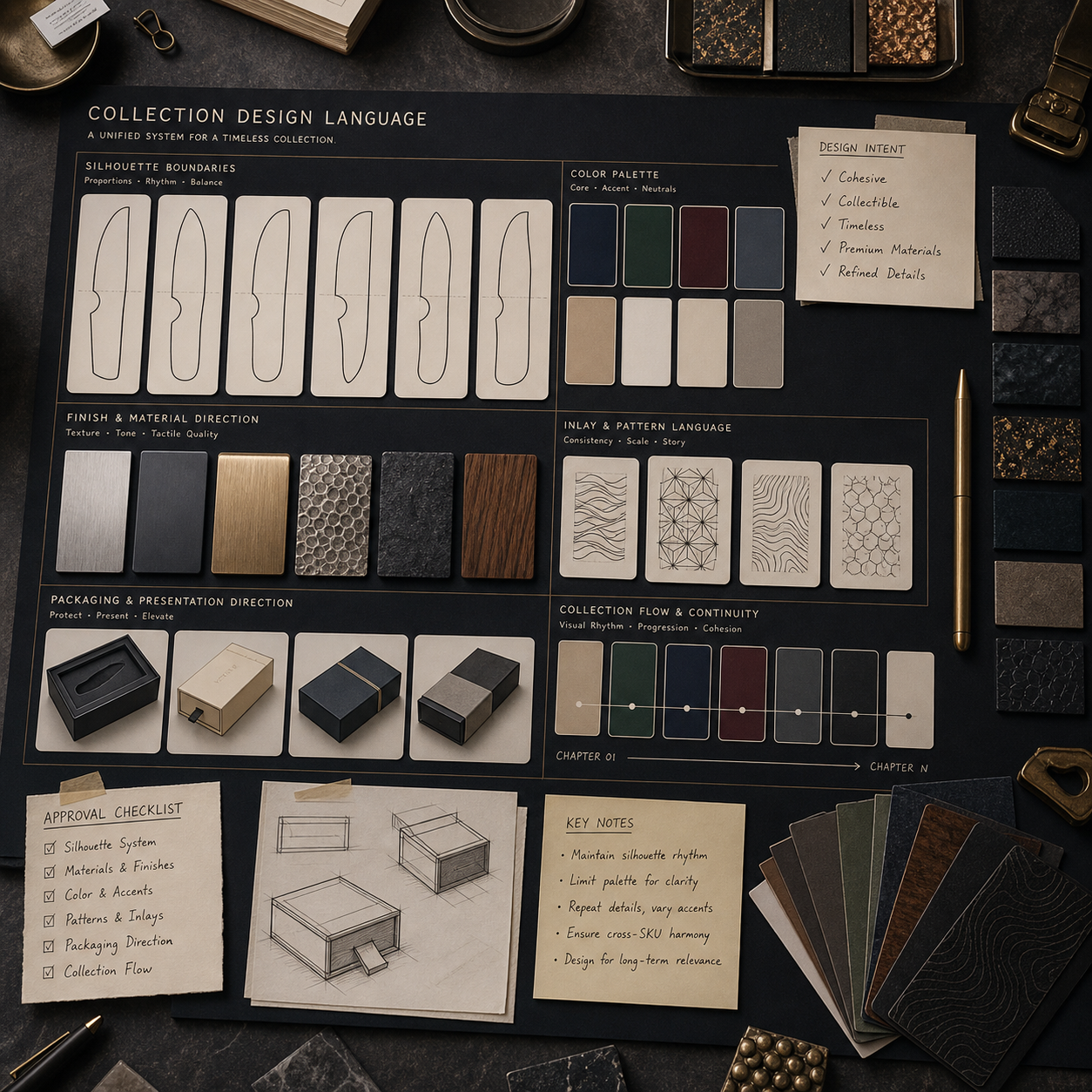
I Convert Taste Into Rules
Design language is the bridge between art and production. WIPO's industrial design materials explain that industrial design focuses on the ornamental or aesthetic aspects of useful articles. That idea is useful here because a collectible knife is still a useful manufactured product, even when the buyer sells it mainly as a collector piece. The visual features should be intentional and repeatable.
For a knife collection, I define the design language through measurable details. The handle outline, blade profile, screw color, clip style, logo size, inlay shape, finish texture, and packaging color should follow rules. If the buyer wants a clean modern series, the shapes should be simple and balanced. If the buyer wants a traditional craft feeling, the material and finish should support that story. If the buyer wants a bold collector set, the visual variation should be strong but controlled. The goal is not to remove creativity. The goal is to make creativity buildable.
| Design rule | Why it matters | How I document it |
|---|---|---|
| Shape family | Creates visual identity | Profile drawing and handle outline |
| Color palette | Keeps the series coherent | Swatch board and finish sample |
| Logo rule | Protects brand taste | Size, position, and process notes |
| Detail limit | Controls cost and clutter | List must-have and optional features |
What Materials Make A Collection Feel Coherent?
Random materials can make a collection feel messy. The buyer may pay more but lose the feeling of a real set.
Materials make a collection coherent when blade steel, handle material, inlay, hardware color, finish, and packaging texture follow one planned system. Material logic supports brand value.
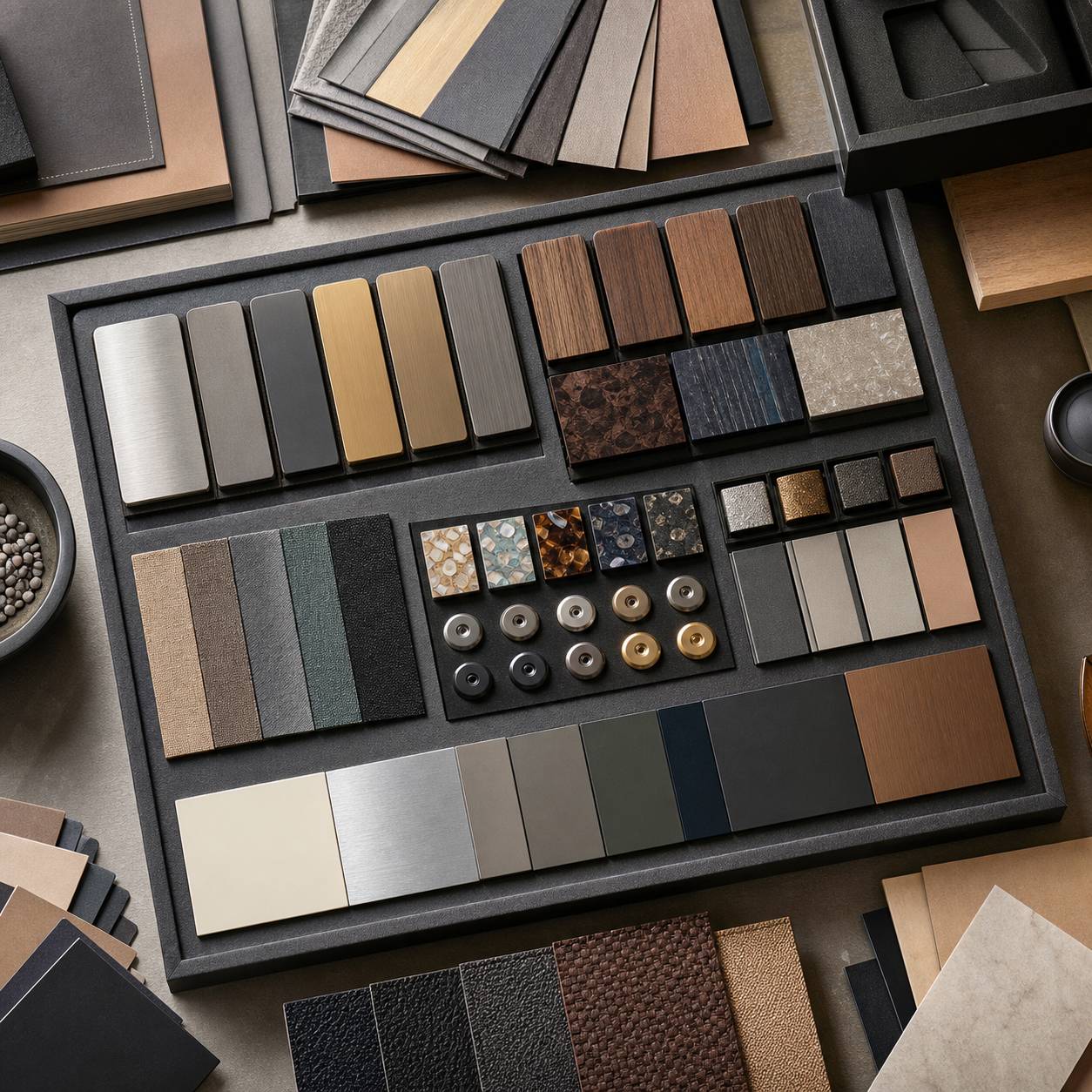
I Build A Material Palette
For a collector line, materials are part of the story. A buyer might choose wood for warmth, carbon-fiber-style material for a modern look, G10 for practical texture, aluminum for color control, or stainless steel for a clean metal feeling. Blade steel also matters. A performance-oriented series needs a steel story that makes sense. Alleima describes 14C28N as a knife steel designed for applications that need a balance of hardness, edge performance, and corrosion resistance. That kind of source helps buyers connect material choice with real product claims.
I like to create a material palette before sampling. The palette shows which materials are core, which are limited editions, and which should not be mixed. This avoids random decisions later. It also helps with cost control. A line can have one shared blade steel and several handle variations. Or it can have one shared handle construction and different finish versions. Either way, the material system should help collectors understand the series.
| Material layer | Series role | Production concern |
|---|---|---|
| Blade steel | Performance and price signal | Heat treatment and hardness consistency |
| Handle material | Main visual identity | Machining, color, texture, and weight |
| Inlay or accent | Collector detail | Fit, adhesive, and finish control |
| Hardware finish | Small but visible consistency | Screw color and coating stability |
How Should Numbering And Version Control Be Managed?
Limited editions can create trust or confusion. If numbers and versions are messy, the collector value becomes unclear.
Numbering and version control should be managed with clear edition rules, serial number format, approved samples, configuration records, and packaging records. Every batch should match the release plan.
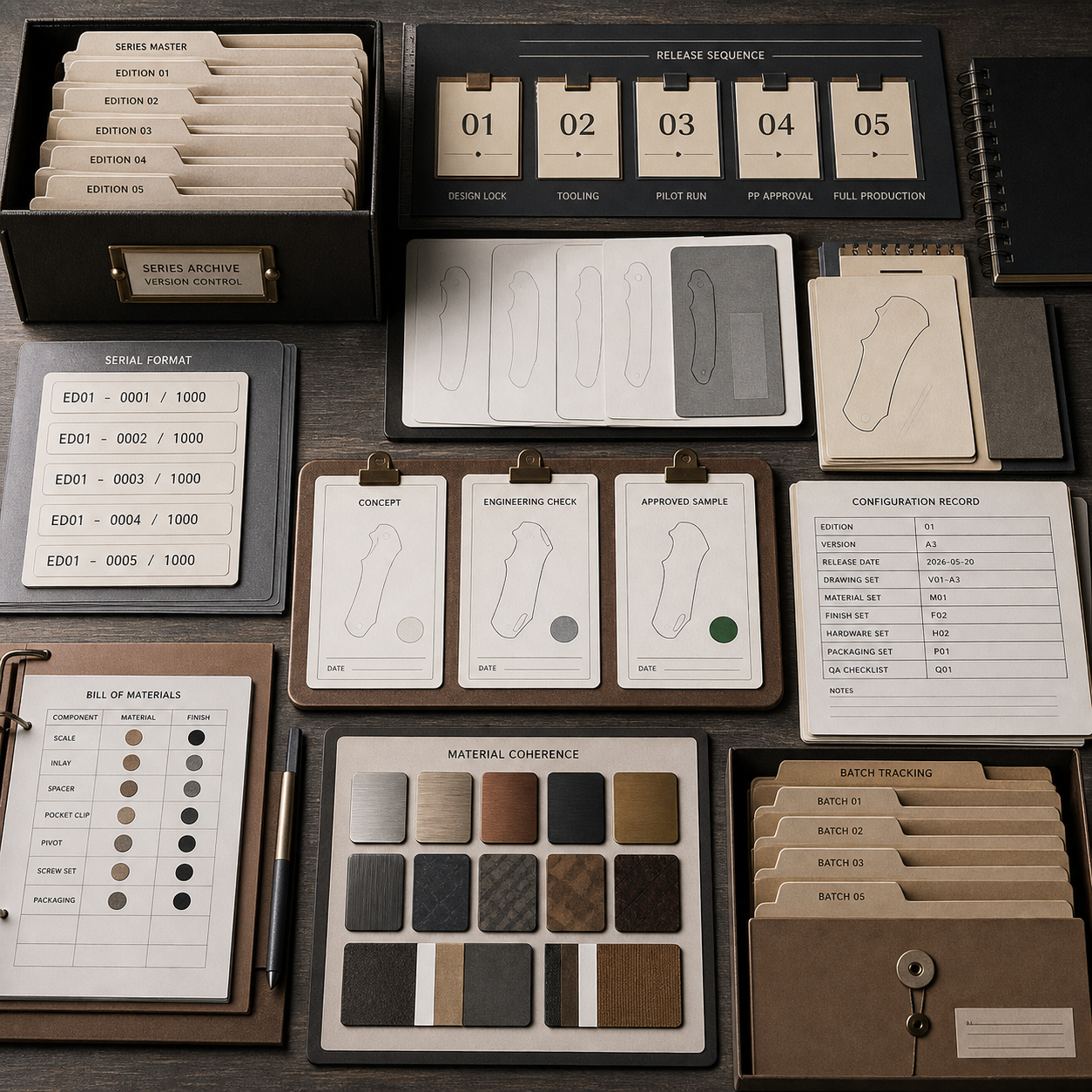
I Treat Collector Details As Configuration Data
For a normal product, a small detail change may be acceptable if the buyer approves it. For a collectible series, that same change can create confusion. The serial number, edition name, handle material, blade finish, logo location, package artwork, certificate card, and insert color all belong to the version. I treat them as configuration data, not casual decoration.
ISO 10007 gives guidance on configuration management. I use that concept in a practical factory way. The buyer and supplier should define the approved configuration for each release. If the buyer orders "Series A, model 02, satin blade, black handle, numbered 001-300," the factory should have a record that matches those details. If the next release changes handle color, that should become a new version, not an informal change. This protects the buyer's brand and helps future reorders.
| Control item | What it records | Why it matters |
|---|---|---|
| Edition name | Product identity | Prevents mixed releases |
| Serial format | Numbering rule | Supports collector clarity |
| Approved sample | Physical standard | Guides production and QC |
| Version sheet | Material and package details | Protects repeat orders |
What Packaging And Certificates Support Collector Value?
A collector product can feel unfinished if the packaging is weak. The box and certificate must support the product story.
Packaging and certificates support collector value by showing edition identity, material facts, care notes, authenticity details, and safe storage. They should look refined and protect the product.
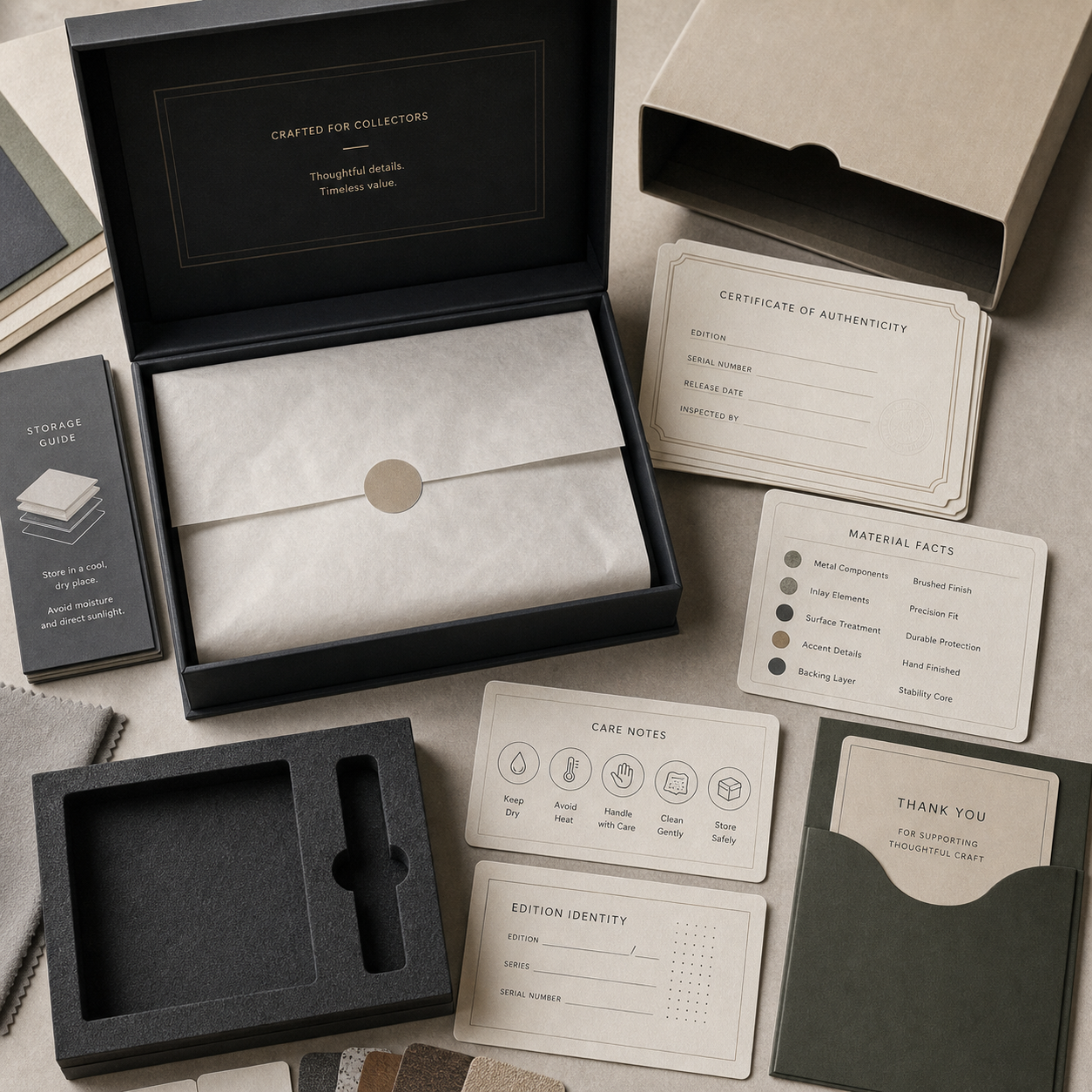
I Make The Package Part Of The Set
Packaging is not only protection. For collector products, packaging is part of the experience. A rigid box, sleeve, insert tray, certificate card, care card, or display-friendly layout can help the product feel complete. But the packaging should not make claims the product cannot support. It should state material facts, edition information, care guidance, and brand story clearly. If the buyer uses serial numbers, the certificate should match the product and carton record.
Transport protection still matters. A beautiful box that arrives crushed hurts the brand. ISO 4180 covers general rules for compiling performance test schedules for complete filled transport packages. I do not treat that as a promise for every shipment, but it supports the idea that packaging should be planned. In practice, I check tray fit, surface protection, movement inside the box, carton strength, and packing method. Collector packaging must look good and survive normal logistics.
| Packaging item | Collector role | Factory control |
|---|---|---|
| Rigid box or sleeve | Creates gift and display value | Structure, color, and surface finish |
| Insert tray | Protects the product | Fit, pressure, and movement |
| Certificate card | Supports edition clarity | Serial number and material details |
| Export carton | Protects shipment | Carton strength and packing method |
How Should QC Protect Art Details And Function?
Art details can hide production problems. If QC checks only appearance, the product may look good but feel weak.
QC should protect art details and function by checking dimensions, lock action, blade centering, hardness, finish, inlay fit, logo position, serial number, packaging, and approved-sample match.
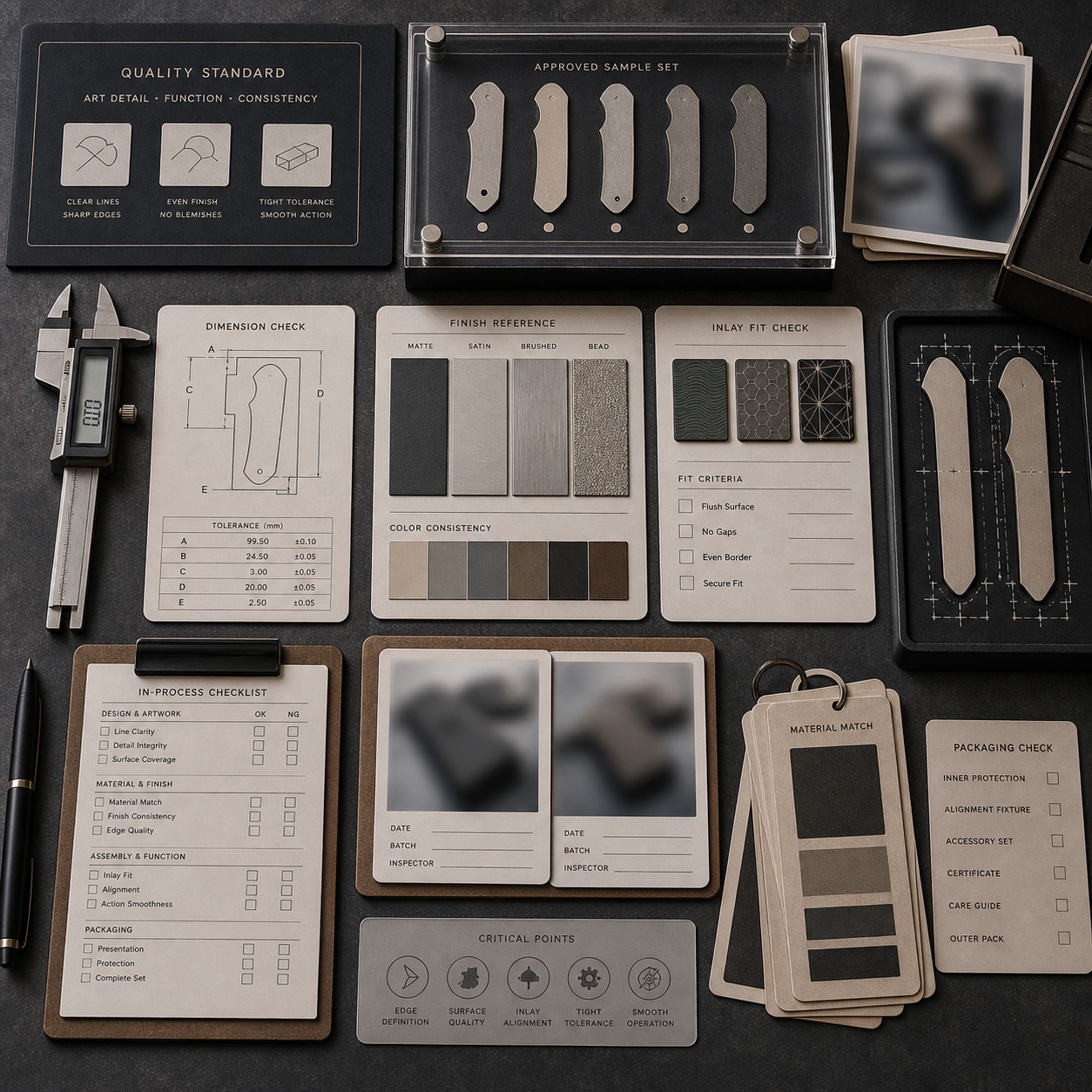
I Inspect The Story And The Mechanism
Collector products need two layers of QC. The first layer is function. The knife must open and close correctly, lock as designed, align well, and match the approved dimensions. The second layer is collector detail. The finish should match the sample. The inlay should sit cleanly. The logo should be in the right place. The serial number should match the certificate. The box should match the release version.
Hardness also matters when the buyer specifies blade steel and heat treatment. The NIST Rockwell hardness guide is useful because hardness measurement needs controlled practice. ISO 9001 also supports the value of documented quality management and customer-requirement control. I apply that thinking by making inspection sheets specific to the collector series. A standard EDC QC sheet may not catch collector details, so I add checks for color, finish, number, card, box, and approved sample match.
| QC layer | What I check | Why it matters |
|---|---|---|
| Function | Action, lock, centering, screw tension | Protects product feeling |
| Blade quality | Steel, hardness, grind, finish | Supports material promise |
| Art details | Inlay, logo, serial number, color | Protects collector identity |
| Packaging | Box, insert, card, carton | Protects full set value |
How Can RFQs Balance Art Details With Production Cost?
Art details can raise cost quickly. Without a clear RFQ, the sample may become beautiful but commercially hard to repeat.
RFQs should balance art details with production cost by separating must-have details, flexible details, target price, MOQ, material options, finish options, packaging level, and inspection requirements.
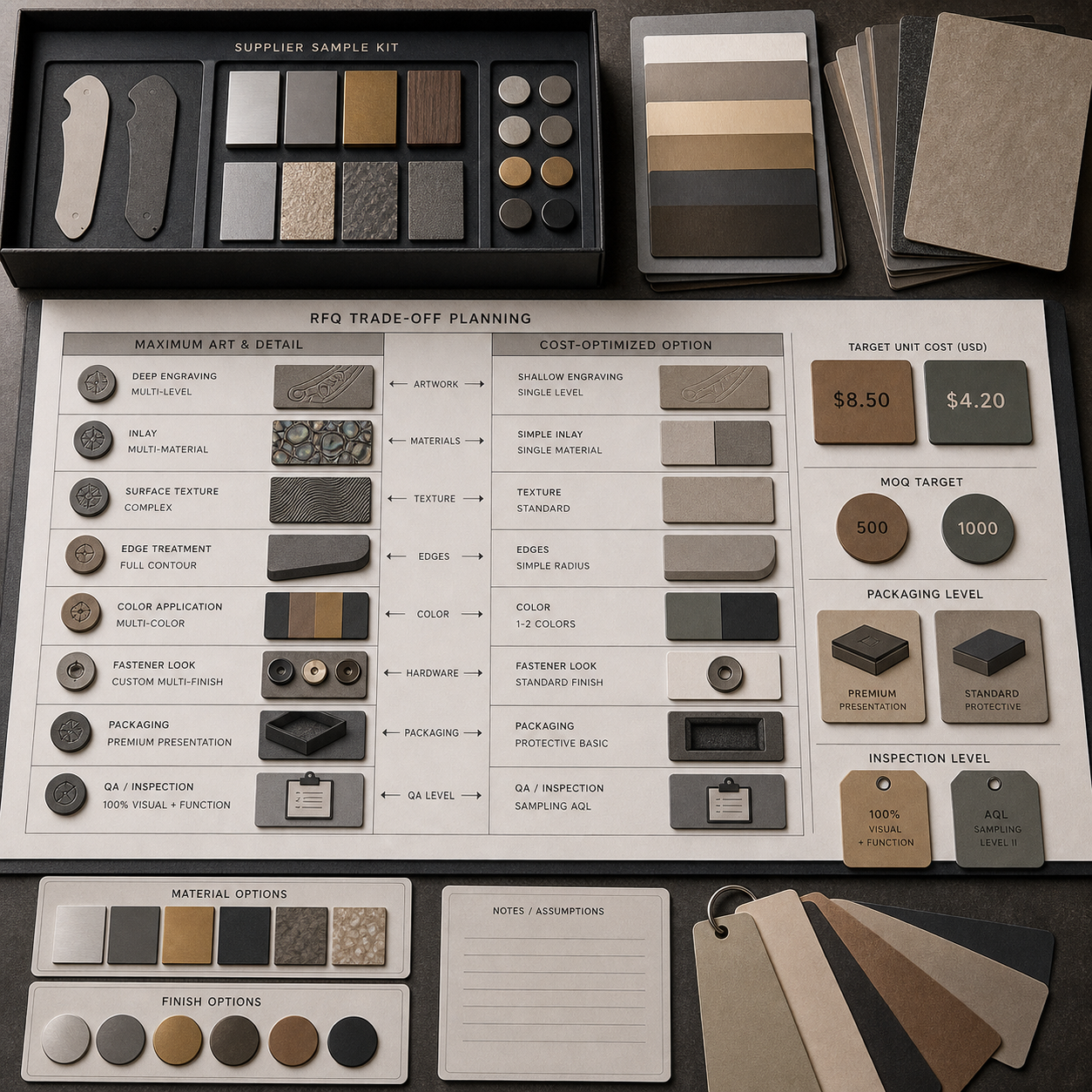
I Separate Fixed And Flexible Details
A good RFQ does not ask the factory to guess which art details matter. It tells the factory what must stay fixed and what can be adjusted for cost. The blade profile may be fixed. The handle inlay may be flexible. The steel may be fixed. The box insert material may be flexible. The serial number method may be required. The logo process may have two options. This helps me build a quotation path that protects the buyer's story without wasting money.
The RFQ should include target market, target price, MOQ, edition size, blade steel, handle material, inlay material, finish, logo method, serial number method, packaging level, certificate need, sample approval process, and inspection standard. If the buyer wants future releases, the RFQ should also say which parts should stay common. This allows the factory to build a system, not only one sample.
| RFQ detail | Why it matters | Better buyer input |
|---|---|---|
| Must-have detail | Protects the collection story | Mark non-negotiable features |
| Flexible option | Controls cost | Allow material or packaging alternatives |
| Edition size | Guides numbering and production | State quantity and numbering rule |
| Future releases | Supports series planning | Name shared parts and changeable details |
How Should Buyers Plan Future Sets And Repeat Orders?
A collection can lose value if future releases do not connect. Repeat orders need planning from the first product.
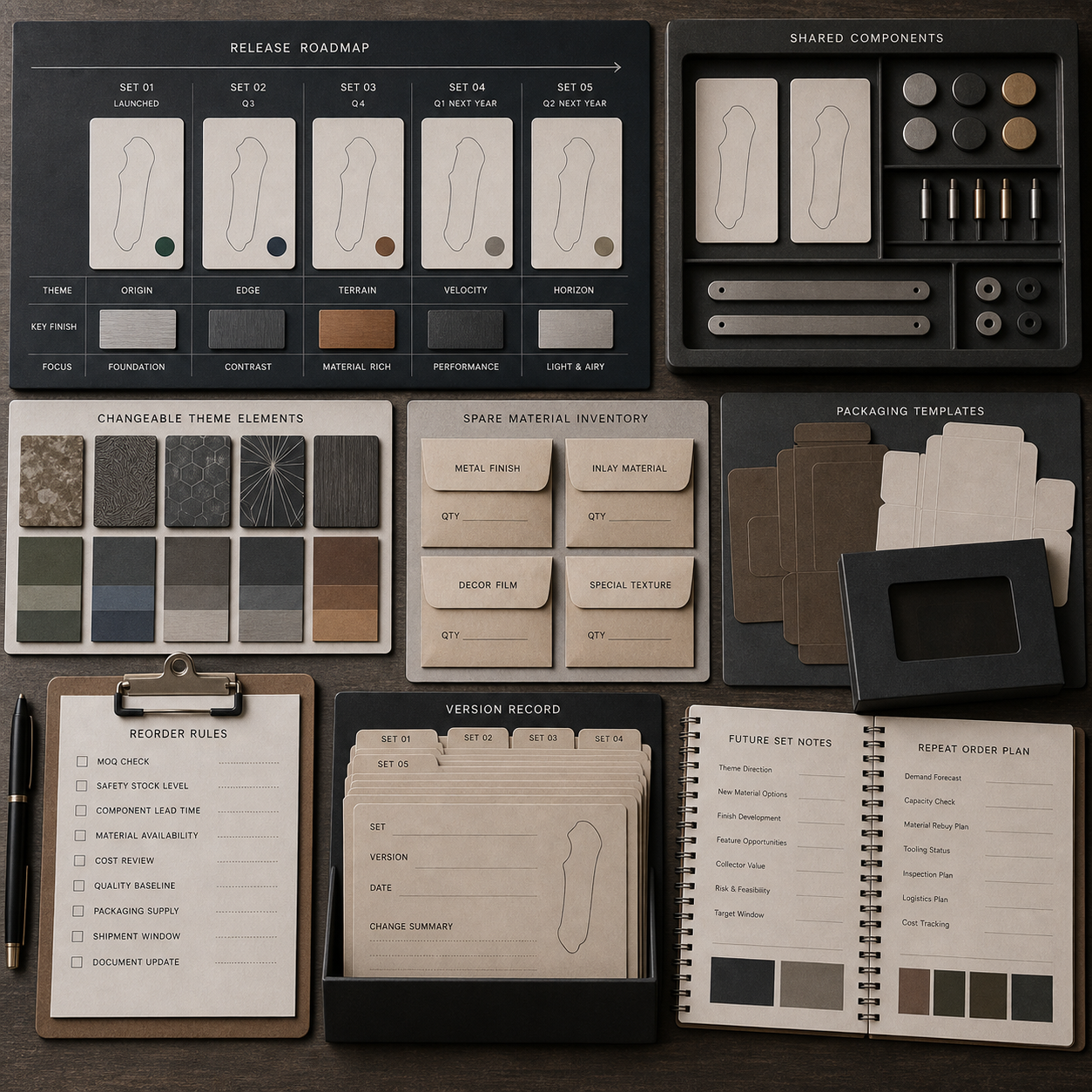
Buyers should plan future sets and repeat orders by defining shared components, changeable themes, version records, spare materials, packaging templates, and reorder rules before launch.
I Leave Room For The Next Release
The first release should not trap the buyer. If every part is unique and expensive, future releases may be slow and costly. If the first release uses a controlled base structure, the buyer can create future sets by changing handle material, inlay, finish, packaging color, or certificate theme. This is how a collection becomes a system. It gives the buyer room to tell new stories without rebuilding the entire product each time.
Repeat orders need records. The factory should know which blade profile, handle material, screw color, finish, logo process, package, certificate, and carton belonged to each release. The buyer should also decide whether old editions can be repeated or whether each edition is closed. If an edition is closed, the factory should not reproduce the same numbering or packaging. If a product is open for repeat orders, the approved configuration should stay clear. This discipline supports long-term brand trust.
| Future planning item | Why it matters | Practical rule |
|---|---|---|
| Shared base structure | Controls cost and lead time | Keep blade and handle platform stable |
| Changeable details | Keeps new releases fresh | Vary material, finish, inlay, or package |
| Edition status | Protects collector clarity | Define open or closed edition |
| Reorder file | Supports consistency | Keep approved samples and version records |
Turn your idea into a quote-ready knife project.
Share your drawing, sample photo, target quantity, market, and packaging needs. Vast State will review manufacturability and prepare OEM/ODM options.
Conclusion
I build stronger collectible knife series by turning art direction into a controlled system of design, materials, packaging, QC, and versions.
Source Notes
- WIPO industrial designs publication supports the idea that industrial design concerns ornamental or aesthetic aspects of useful articles.
- WIPO Looking Good publication gives context for design protection issues that businesses should consider, but it is not legal advice.
- ISO 10007 supports using configuration management ideas for version records and approved configurations.
- ISO 9001 supports documented quality management and customer-requirement control.
- ISO 4180 supports planning transport package performance checks for complete filled transport packages.
- NIST Rockwell hardness guide supports treating hardness as a controlled measurement point.
- Alleima 14C28N knife steel supports connecting blade steel choice with performance expectations.