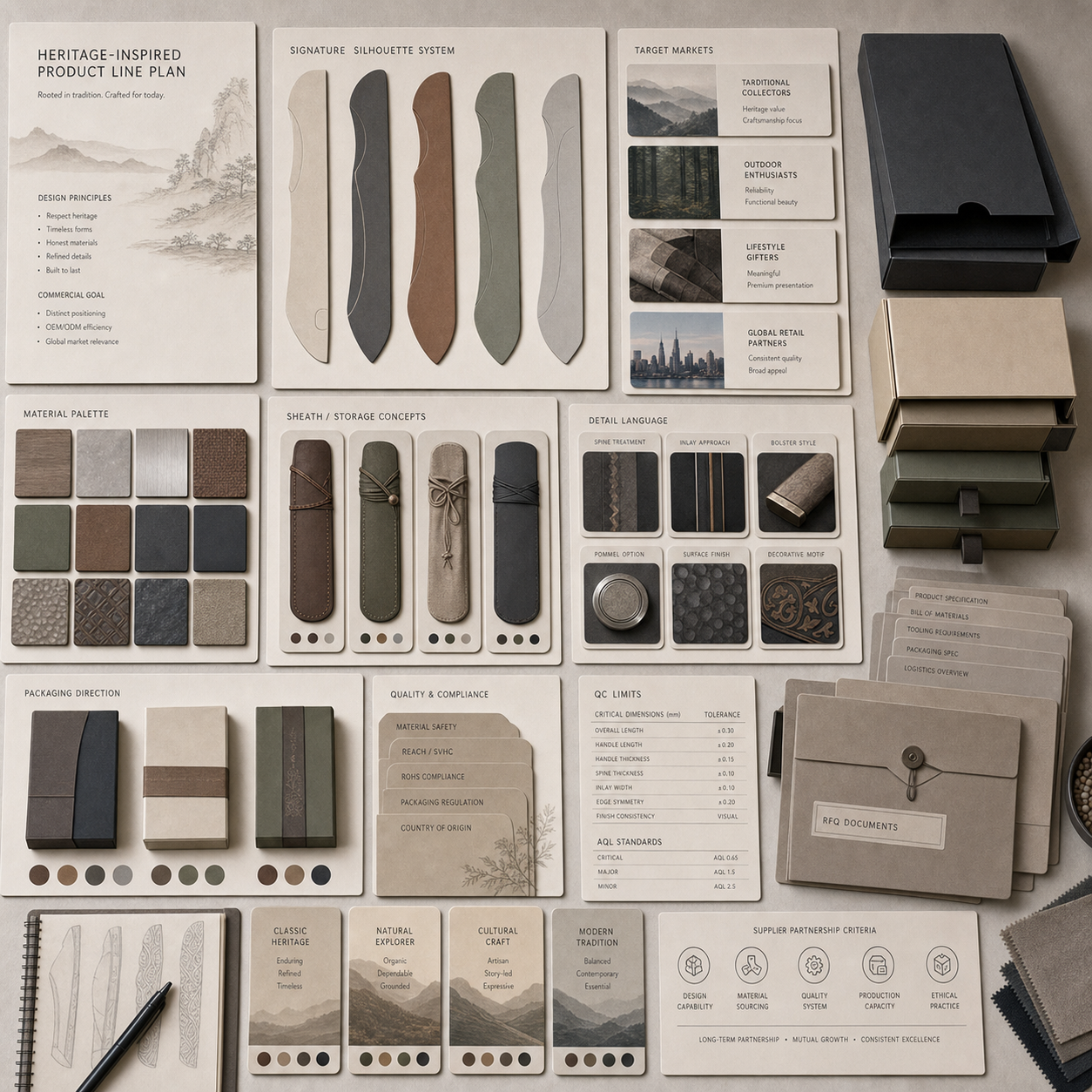
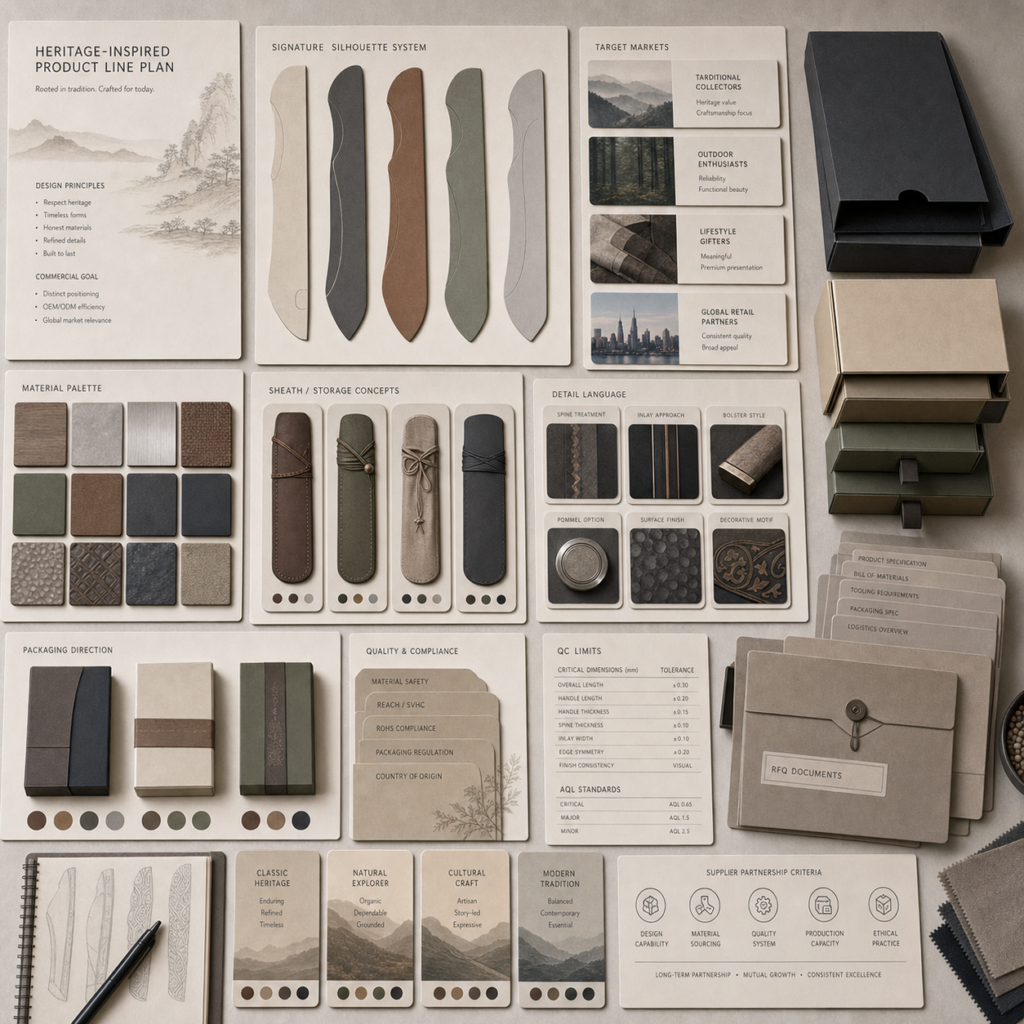
A heritage knife shape can attract attention fast. But poor sourcing turns culture into confusion. Buyers need design control, not only a dramatic outline.
Buyers should develop Nepal-inspired traditional knife lines by respecting cultural references, defining safe product positioning, controlling curved blade geometry, choosing practical materials, checking classification and material compliance, and giving suppliers clear RFQ details for OEM/ODM production.
Quick buyer brief:
- Answer: Treat Nepal-inspired knife design as a controlled heritage product project.
- Buyer context: This helps knife brands, importers, distributors, and private label buyers brief OEM/ODM factories.
- Key checks: Shape reference, target market, material choice, sheath design, packaging, HS code, local rules, QC limits, and RFQ files.
Have a knife or multi-tool project in mind?
Send your sketch, CAD file, sample photo, or product idea. Vast State can review manufacturability, suggest materials, estimate MOQ, and prepare a quote for your OEM/ODM project.
When I review a Nepal-inspired knife project, I do not start by copying a tourist souvenir shape. I start by asking what the buyer wants to sell, where the product will be sold, and how the design can be made responsibly. The curved kukri profile has strong cultural recognition, but a B2B product still needs practical engineering. The blade thickness, curve, balance, handle angle, sheath fit, finish, packaging, and compliance notes must all be clear. For Vast State, this kind of project works best when the buyer treats heritage as design inspiration and treats production as a controlled system.
Why Should Buyers Reframe Traditional Nepalese Knife Ideas As Product Lines?
A traditional shape can look powerful in a catalog. Without a product-line plan, it may become hard to price, explain, and repeat.
Buyers should reframe traditional Nepalese knife ideas as product lines because B2B success depends on target market, positioning, dimensions, materials, packaging, and repeat production, not only on heritage appearance.
I Start With The Buyer Segment
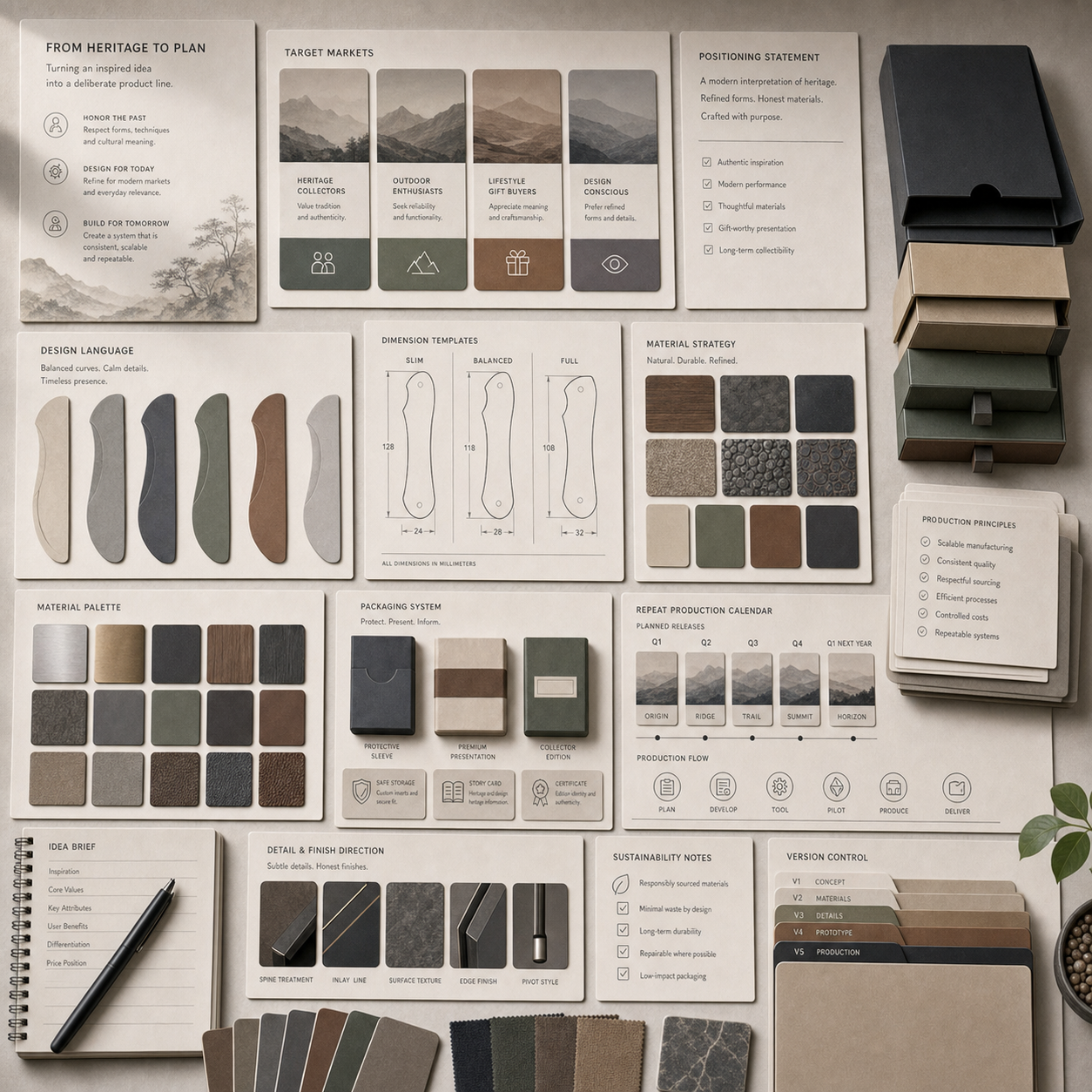
The first question is not "Can we make the shape?" The first question is "Who is the product for?" A heritage-style fixed blade for outdoor retail, a display-oriented collector piece, a compact utility-inspired product, and a premium gift set should not use the same specification. The target market affects blade size, steel, handle material, sheath choice, packaging, labeling, and price. It also affects how strongly the design should reference traditional forms.
I like to separate the project into product families. One line may keep a full curved profile and focus on collector presentation. Another line may use a smaller inspired curve for outdoor or camp retail. A third line may use decorative handle details and a safer commercial profile. This helps the buyer avoid a one-model decision that tries to serve every channel. It also helps the factory quote more accurately, because size, material, sheath, and finish drive real cost.
| Product-line decision | What it controls | Practical buyer question |
|---|---|---|
| Target channel | Retail story and specification level | Is this for outdoor, collector, gift, or utility market? |
| Size range | Cost, packaging, and shipping | Will the line use one size or several sizes? |
| Visual reference | Cultural identity and originality | Which details are inspiration, and which are fixed? |
| Repeat plan | Tooling, samples, and inventory | Will the buyer reorder or create limited runs? |
OEM/ODM RFQ Checklist
Prepare these details to help Vast State review your project and provide a more accurate quotation.
| RFQ Field | What to Prepare |
|---|---|
| Project type | OEM from drawing / ODM private label / wholesale catalog |
| Product category | Folding knife / fixed blade / multi-tool / outdoor tool |
| Design status | Idea / sketch / 2D drawing / 3D CAD / physical sample |
| Target price | Ex-factory target price or retail price range |
| MOQ expectation | 500 / 1,000 / 3,000 / 5,000+ pcs |
| Logo method | Laser engraving / etching / printing / molded logo |
| Packaging | Standard packaging / custom retail box / Amazon-ready |
| Market | USA / EU / Japan / Korea / Middle East / other |
| Compliance needs | Buyer-specified testing / documentation / labeling |
| Timeline | Sample deadline / mass production deadline |
What Does Kukri-Inspired Geometry Mean For Manufacturing?
The curved profile is easy to recognize. It is also easy to distort if the drawing and process are not controlled.
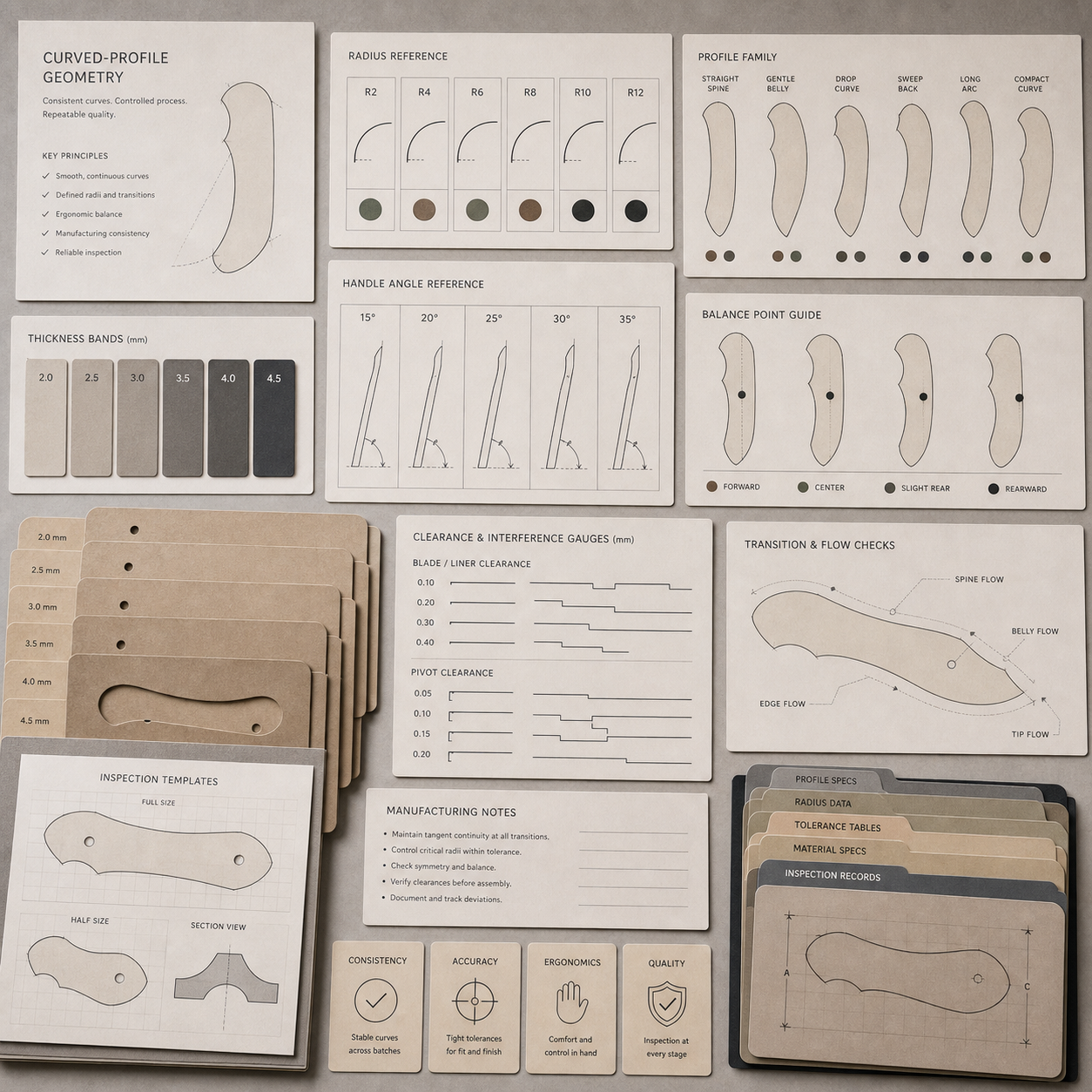
Kukri-inspired geometry means the OEM/ODM team must control blade curve, belly position, spine thickness, handle angle, balance, sheath clearance, grinding method, and inspection templates.
I Treat The Curve As A Controlled Feature
Museum records show why this topic needs respect and precision. The British Museum kukri and sheath record describes kukris from Nepal with iron blades, carved wooden hilts, and a fitted wooden sheath. The Met collection record for a knife known as kukri lists a 19th-century example with steel and wood. These records do not tell a factory how to make a modern product, but they show that the form has material, region, and object-context meaning.
In manufacturing, the curve must become measurable. I check overall length, blade height, curve radius, tip position, spine thickness, edge curve, tang shape, and handle angle. I also check whether the product will be full tang, hidden tang, or simplified construction. The sheath must be checked with the blade path because a curved blade can rub if the inner space is wrong. A good sample is not enough. The factory needs a profile template or CAD file so every batch follows the same design.
| Geometry point | Production effect | Buyer control method |
|---|---|---|
| Blade curve | Changes grinding and sheath fit | Approve CAD profile and template |
| Belly position | Changes visual balance | Define with dimensions, not photos only |
| Spine thickness | Changes weight and cost | Set thickness range by size |
| Handle angle | Changes appearance and assembly | Confirm with prototype and drawing |
How Can Buyers Respect Heritage Without Copying Carelessly?
Heritage styling can add value. Careless copying can make a product look shallow and create brand risk.
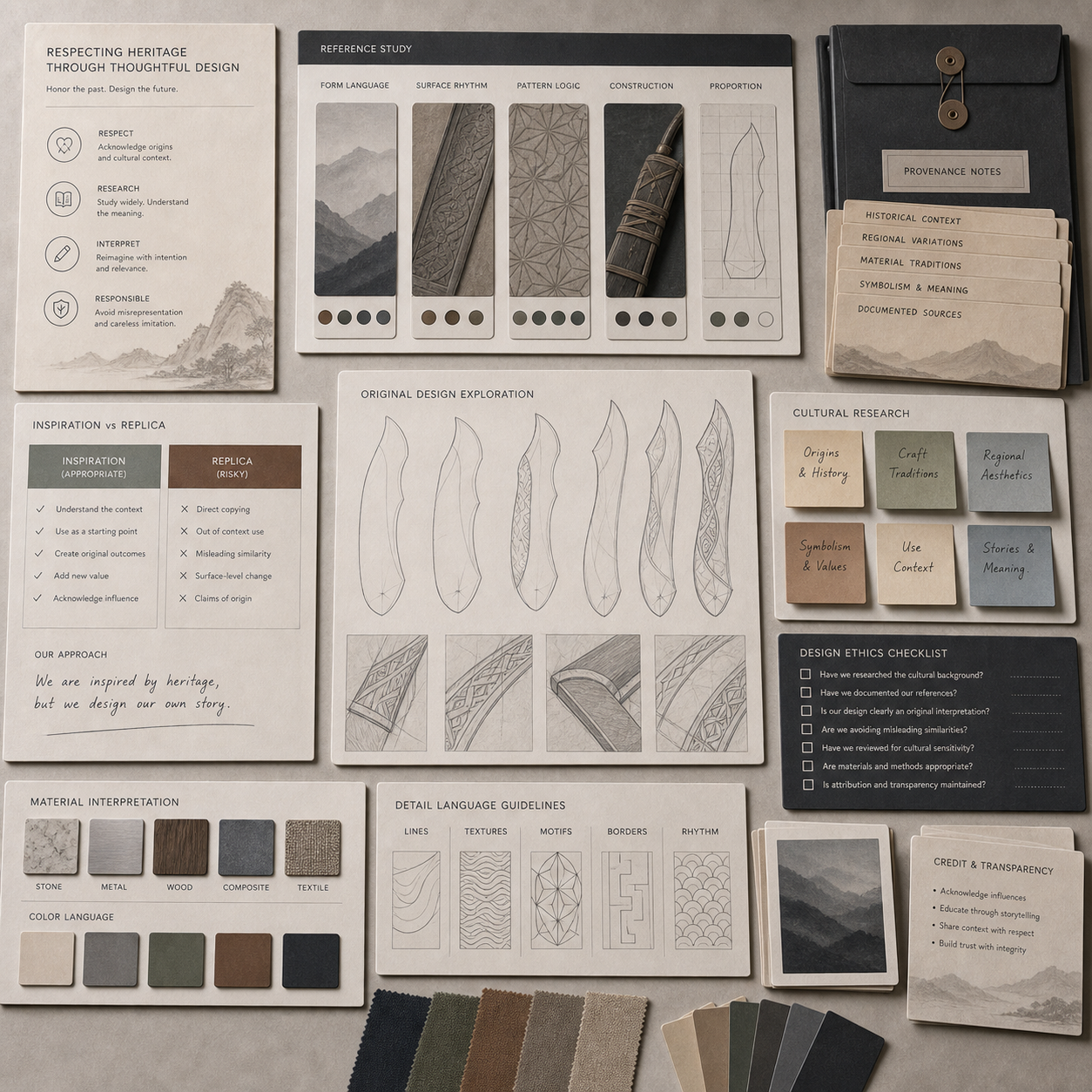
Buyers can respect heritage by using documented design references, avoiding false origin claims, separating inspiration from replica language, and creating original details that fit their brand and market.
I Avoid Fake Authenticity
I think this point matters for independent brands. A Nepal-inspired knife line should not pretend to be a traditional handmade Nepalese product if it is an OEM/ODM product made elsewhere. The buyer can honestly describe the product as heritage-inspired, curved-profile, or Nepal-influenced. That is different from claiming a specific historical origin, craft lineage, or cultural authority that the product does not have.
This approach is also better for design. Instead of copying one object, the buyer can create an original product language. The line can use a curved blade profile, a warm handle material, a fitted sheath, and collector-style packaging, while still using the buyer's own brand shape, hardware, finish, and color system. I also recommend avoiding sacred symbols, state marks, military markings, or ethnic claims unless the buyer has rights and context. The safest path is respectful inspiration plus clear modern manufacturing.
| Heritage issue | Risk if ignored | Better approach |
|---|---|---|
| Origin wording | False or confusing product story | Use "inspired" language when accurate |
| Visual symbols | Cultural and brand risk | Use original brand details |
| Historical claims | Unsupported marketing | Cite only what the product can support |
| Replica language | Higher expectation and legal concern | Define modern OEM/ODM interpretation |
Which Materials And Finishes Fit A Nepal-Inspired Knife Line?
Materials can support the story or weaken it. A beautiful curve still fails if material choices do not match cost and market.
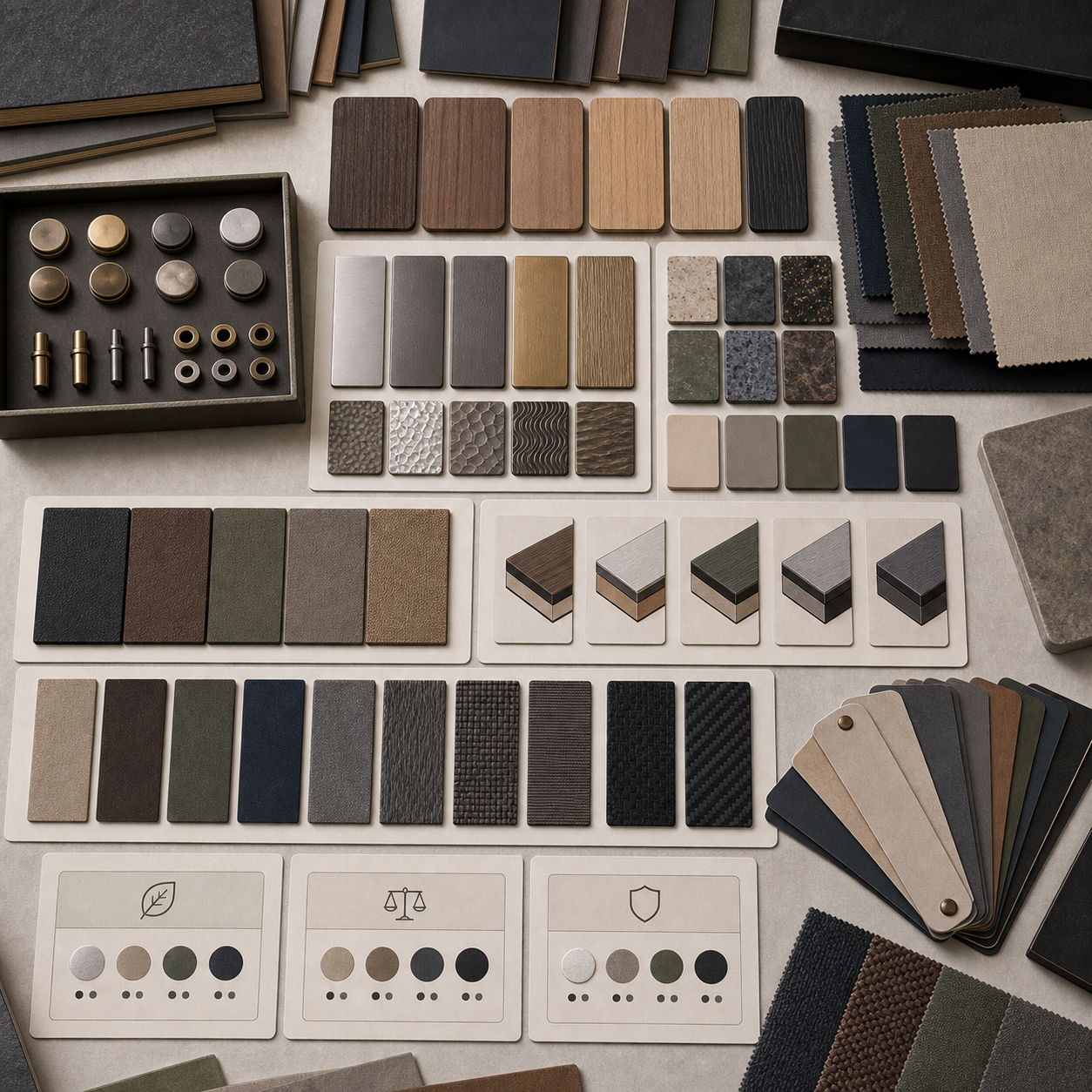
Suitable materials depend on positioning. Buyers can choose practical blade steel, wood or synthetic handles, controlled metal hardware, durable sheath materials, and finishes that match the target price and compliance needs.
I Match Material To The Sales Channel
For a heritage-style knife, buyers often ask for wood, horn, leather, or forged-look finishes. These materials can look right, but they create supply and consistency questions. Wood can vary in color and grain. Natural handle materials may involve extra documentation. Leather-like sheaths may be easier to control than genuine leather in some channels. Synthetic materials such as G10-style laminates or stabilized composites can give better repeatability for larger orders.
Blade steel should also match the promise. A budget line may use a practical stainless or carbon steel option. A mid-range line may need a clearer steel story and hardness target. I do not suggest choosing steel only because it sounds impressive. I check machining, heat treatment, finish, edge consistency, corrosion resistance, and buyer price. If the product uses woods or animal-derived materials, the buyer should check local import rules and CITES-related material concerns. This is not legal advice. It is a sourcing reminder that material beauty must travel through real customs and retail channels.
| Material choice | Benefit | Production concern |
|---|---|---|
| Stainless blade steel | Easier care story for many markets | Heat treatment and finish control |
| Carbon steel | Traditional visual feeling | Corrosion care and packaging notes |
| Wood handle | Warm heritage appearance | Color, moisture, and documentation |
| Synthetic handle | Better repeatability | Must avoid looking too generic |
How Should Sheath And Packaging Be Planned?
The sheath is not an afterthought. If it feels loose, cheap, or unsafe for shipping, the whole product loses value.
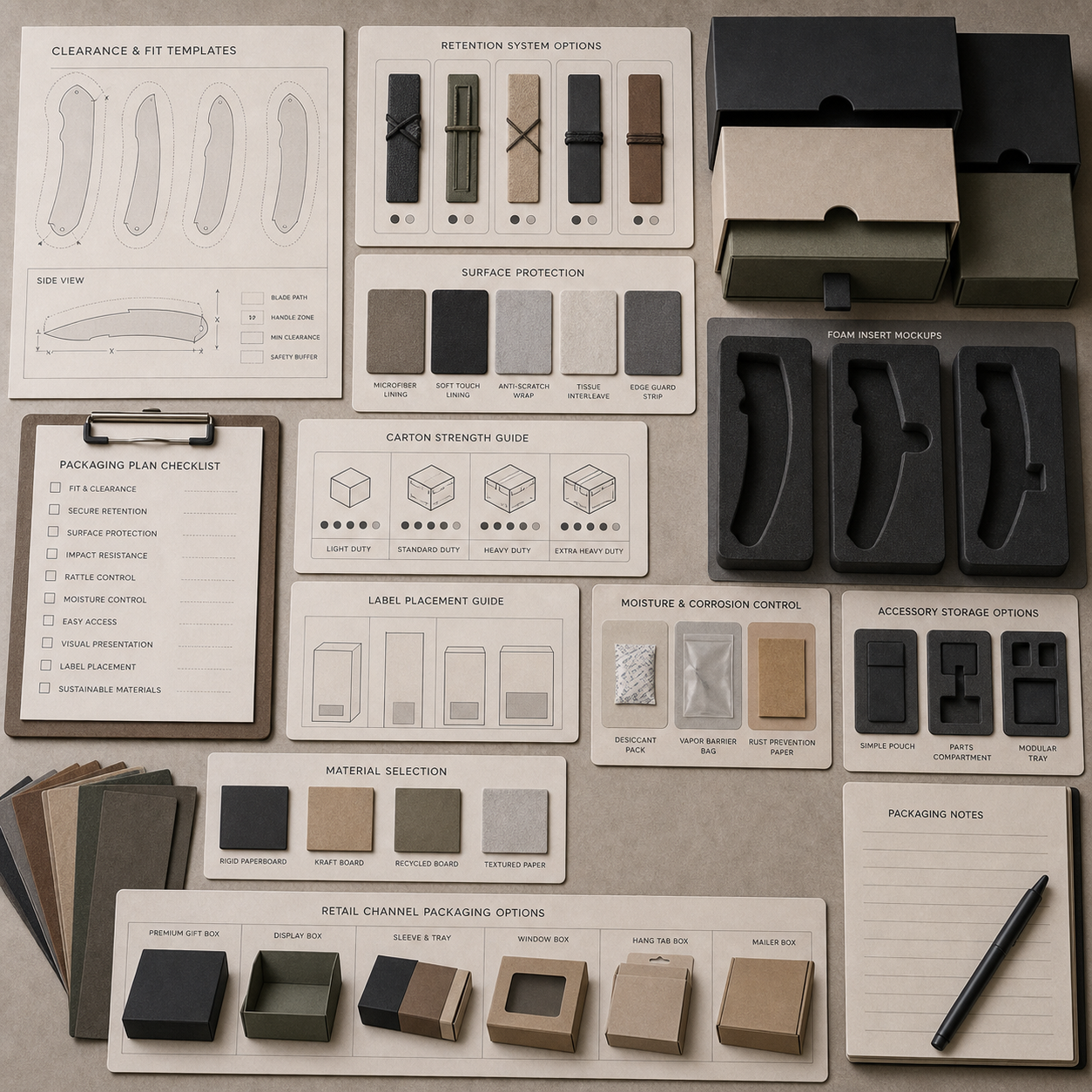
Sheath and packaging should be planned around blade curve, retention, surface protection, carton strength, display value, labeling needs, and the buyer's retail channel.
I Design Protection Before Decoration
A curved blade needs a sheath or insert that matches the profile. If the inside shape is too tight, the blade may scratch the sheath or finish. If it is too loose, the product may move during shipping. The outer packaging should also protect the handle, tip area, and finish. For a collector or gift line, the box can add value. For a budget outdoor line, a simpler carton and sleeve may be enough.
I separate packaging into three layers. The first layer is product contact, such as sheath, insert, wrap, or edge guard. The second layer is retail presentation, such as box, sleeve, hang card, or certificate. The third layer is export packing, such as inner cartons and master cartons. ISO 4180 gives general rules for planning performance test schedules for complete filled transport packages. I use that idea as a reminder: packaging should be tested as a system, not judged only by appearance.
| Packaging layer | Purpose | Buyer decision |
|---|---|---|
| Product contact | Protects finish and fit | Sheath, insert, wrap, or guard |
| Retail presentation | Supports brand story | Box, sleeve, card, or set layout |
| Export carton | Protects delivery | Carton strength and packing method |
| Labeling | Helps channel compliance | SKU, material, warnings, and market notes |
What Compliance And Classification Checks Should Buyers Make?
A traditional-style knife can face different rules in different markets. Assuming one rule fits all markets creates avoidable risk.
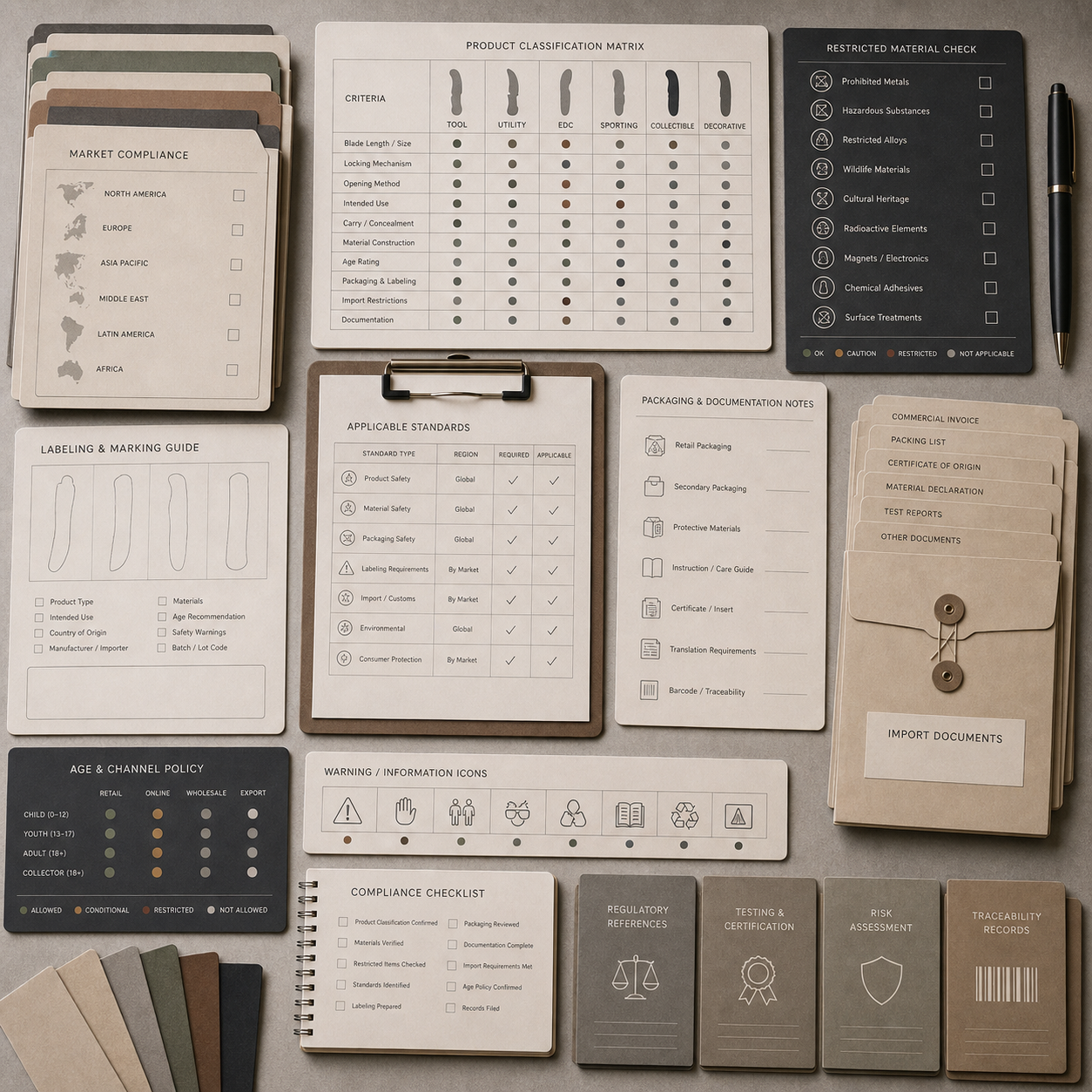
Buyers should check product classification, local knife rules, restricted materials, labeling, packaging, age-channel policies, and import documentation before confirming a Nepal-inspired knife project.
I Treat Compliance As A Market Filter
This section is not legal advice. It is a practical sourcing checklist. The same product may be acceptable in one sales channel and difficult in another. Buyers should confirm local laws, marketplace rules, carrier policies, and retail requirements before approving final design. The shape, length, sheath style, packaging wording, and materials can all affect acceptance.
For international classification context, the United Nations Statistics Division lists HS 8211 for knives with cutting blades and related subheadings for fixed blades, other blades, and sets. That does not decide every country's final customs treatment, but it gives buyers a starting point for broker discussion. Materials also matter. If the buyer wants rosewood, ivory-like material, horn, exotic leather, or other natural materials, the buyer should check whether any species or derivatives are restricted. A safer OEM path often uses documented common materials, synthetic substitutes, and clear material declarations.
| Compliance area | What to check | Why it matters |
|---|---|---|
| Product rules | Length, structure, sheath, sales channel | Prevents market mismatch |
| Customs code | HS heading and local tariff advice | Supports import planning |
| Natural materials | Species, origin, and documents | Reduces shipment risk |
| Packaging wording | Claims, warnings, and retail rules | Avoids unsupported promises |
How Should QC Control Curved Blades And Handle Fit?
Curved profiles create inspection challenges. If the curve drifts, the product may still look close but fit poorly.
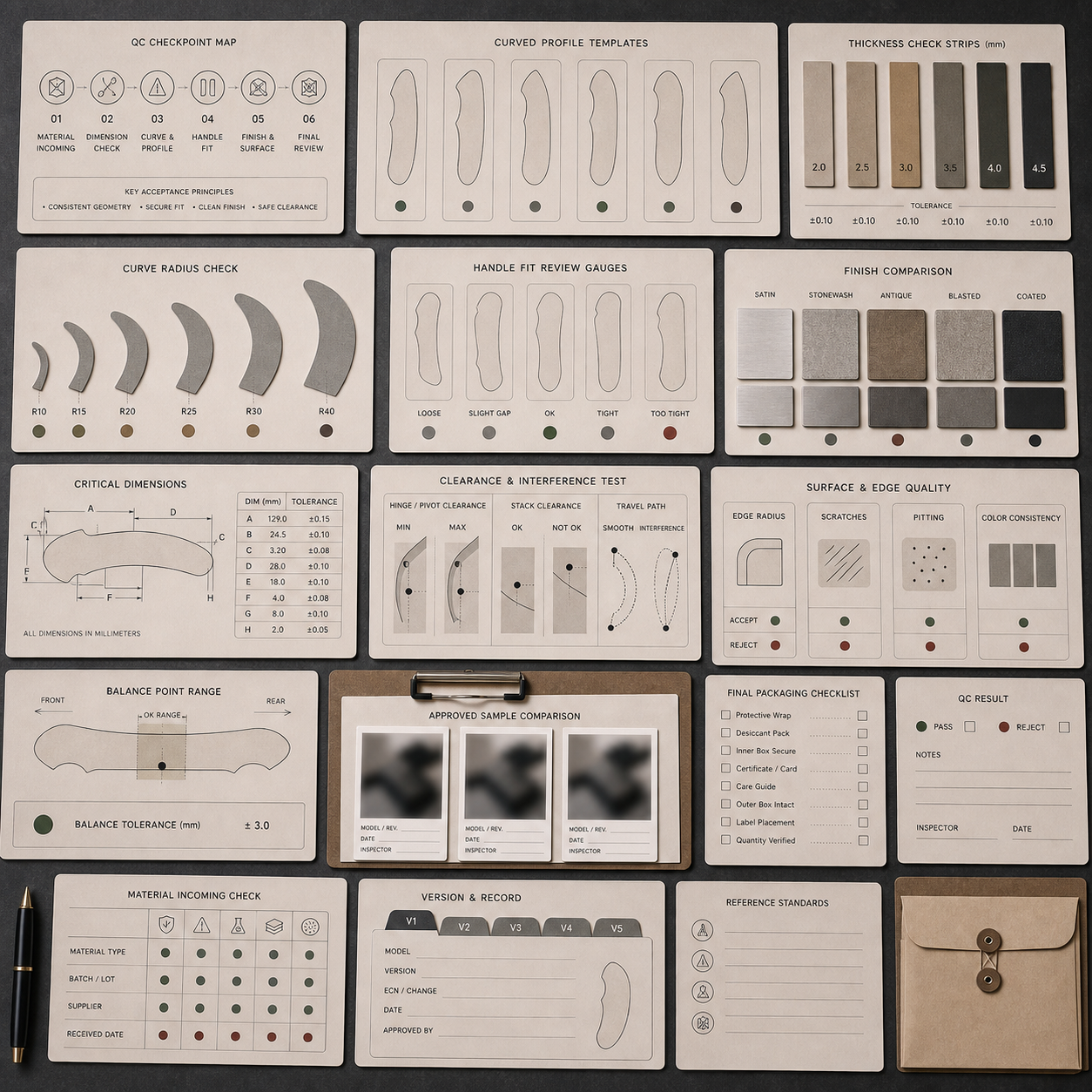
QC should control curved blades and handle fit through profile templates, thickness checks, grind inspection, heat treatment records, handle fit review, sheath clearance tests, finish comparison, and final packaging checks.
I Inspect Fit As Much As Appearance
For this type of product, I inspect the outline first. The curve needs a template. The blade length, blade height, spine thickness, tip position, tang shape, and handle alignment should be measured against the approved sample. The grind should also be checked because a curved blade can show uneven bevels more clearly than a straight utility profile. If the product has a satin, stonewash, black finish, or forged-look surface, the finish standard should be documented with photos and samples.
Handle fit is just as important. A traditional-style handle often has a strong shape, so small gaps or angle changes are easy to see. The sheath needs its own inspection. I check insertion path, retention, finish rubbing, stitching or hardware, and carton fit. ISO 9001 supports the idea of planned processes and customer requirement control. ISO 10007 supports configuration management from concept to later product life. I use those ideas by keeping approved drawings, version records, sample signoff, and inspection sheets for each batch.
| QC checkpoint | What I check | Why it matters |
|---|---|---|
| Profile template | Curve, tip, belly, and tang | Protects visual identity |
| Thickness and grind | Spine, bevel, and symmetry | Protects production consistency |
| Handle fit | Gap, angle, fasteners, finish | Protects perceived quality |
| Sheath and packaging | Clearance, retention, carton fit | Protects delivery and retail value |
What RFQ Details Help Suppliers Quote Responsibly?
An unclear RFQ causes guesswork. The sample may look interesting but miss cost, compliance, or production needs.
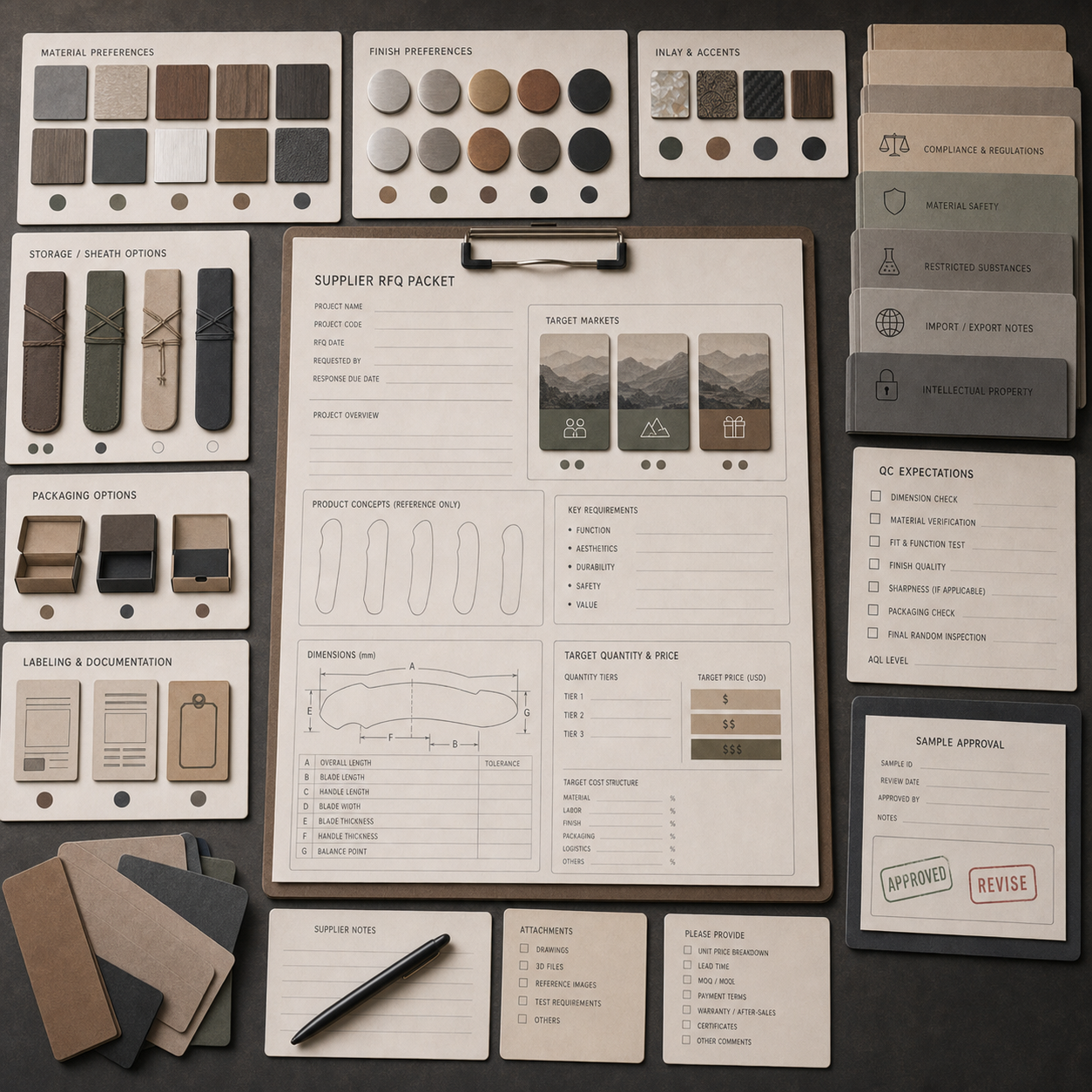
Buyers should include target market, design reference, drawing, dimensions, steel, handle material, sheath type, packaging, quantity, target price, compliance notes, QC expectations, and sample approval process.
I Ask Buyers To Separate Fixed And Flexible Items
A responsible RFQ tells the supplier what must stay fixed and what can be adjusted. The buyer may fix the blade outline, but allow two steel options. The buyer may want a wood handle look, but accept a stable synthetic alternative. The buyer may require a sheath, but allow different materials based on target price. This makes quotation practical.
The RFQ should include product type, target market, blade length, overall length, blade thickness, blade steel, heat treatment target if known, handle material, sheath type, packaging level, logo method, quantity, target price, inspection needs, and target country. If the buyer has a reference image, I ask for it as inspiration only, plus a dimensioned drawing for production. I also ask for compliance concerns early. This saves sample time and prevents a project from becoming beautiful but unsuitable for the buyer's channel.
| RFQ field | Why it helps | Example buyer input |
|---|---|---|
| Design reference | Shows visual direction | Heritage-inspired curved fixed blade |
| Dimensioned drawing | Reduces factory guessing | Length, thickness, curve, handle angle |
| Material options | Balances look and cost | Steel A or B, wood or synthetic handle |
| Compliance notes | Protects market fit | Target country and sales channel |
Turn your idea into a quote-ready knife project.
Share your drawing, sample photo, target quantity, market, and packaging needs. Vast State will review manufacturability and prepare OEM/ODM options.
Conclusion
I develop better Nepal-inspired knife lines by respecting heritage, defining geometry, checking compliance, and controlling materials, sheath, packaging, QC, and RFQ details.
Source Notes
- British Museum kukri and sheath record supports material and object-context references for Nepal-associated kukri examples.
- The Met kukri collection record supports the steel-and-wood material context for a 19th-century kukri example.
- UNSD HS 8211 supports customs classification discussion for knives and blades, but local broker advice is still needed.
- ISO 4180 supports packaging performance-test planning for complete filled transport packages.
- ISO 9001 supports documented quality management and customer requirement control.
- ISO 10007 supports configuration management ideas for drawings, samples, versions, and repeat orders.