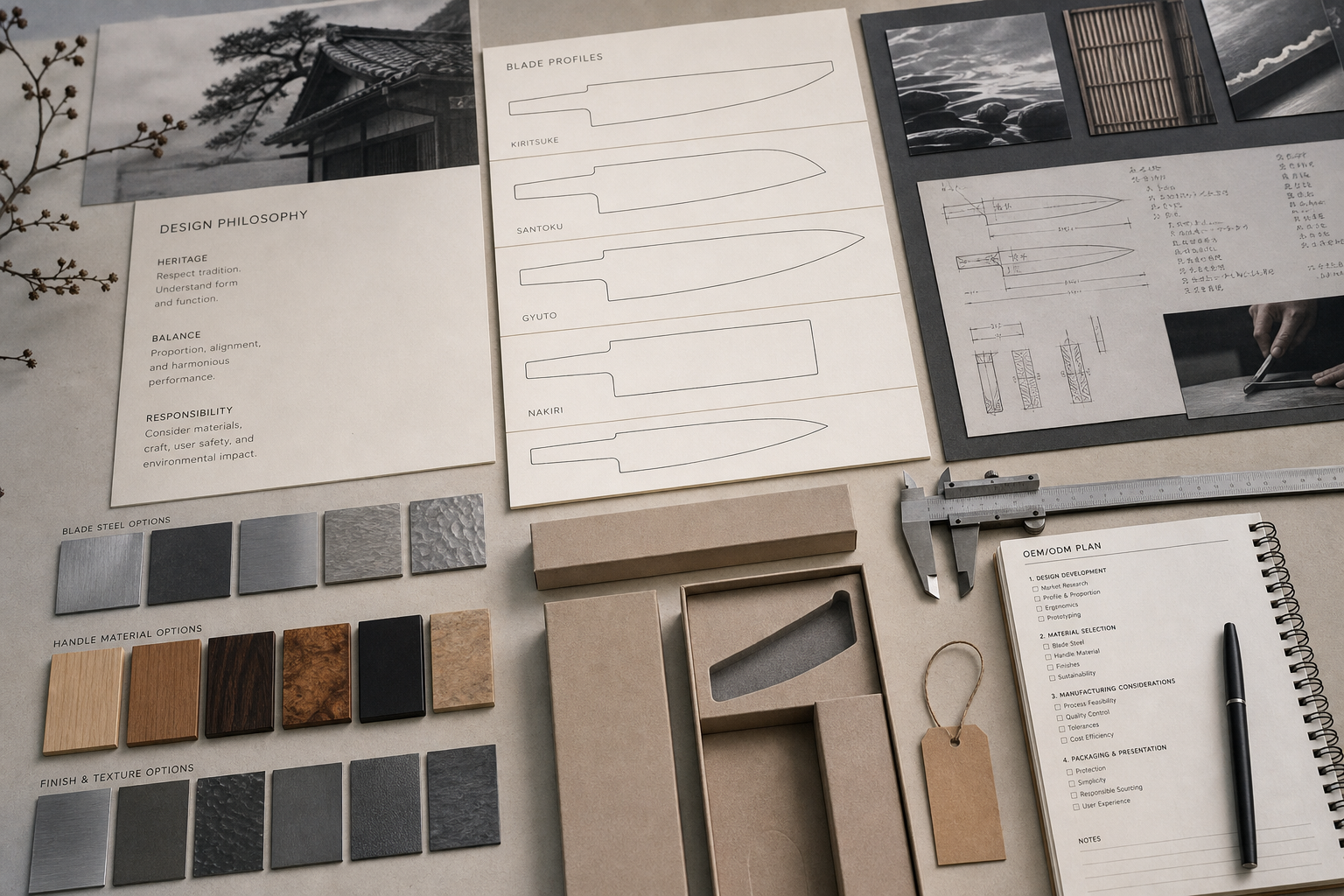
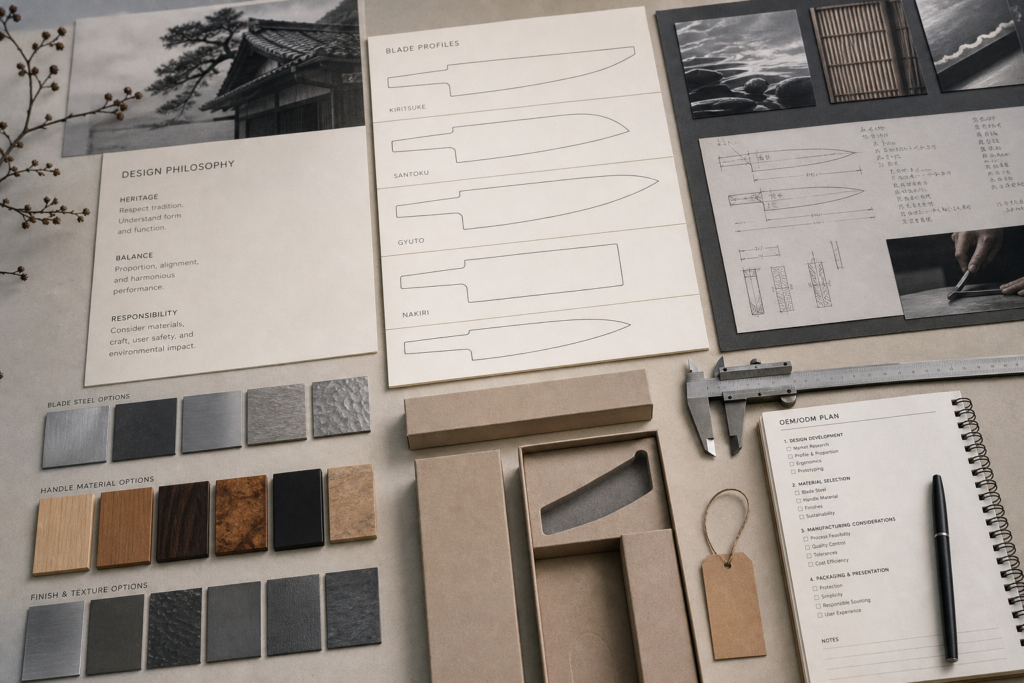
Japanese blade history can inspire strong products. But copying old forms without control creates cost, compliance, and branding problems.
Buyers can develop Japanese-inspired heritage blade lines by using history as design reference, not as a replica shortcut. They should define product positioning, blade geometry, material claims, fittings, packaging, compliance checks, QC records, and RFQ details before OEM/ODM sampling.
Quick buyer brief:
- Answer: Turn Japanese blade heritage into a controlled modern product system.
- Buyer context: This helps knife brands, importers, distributors, and private label buyers brief OEM/ODM factories.
- Key checks: Reference source, blade profile, material story, finish, handle, sheath or box, classification, market rules, QC, and RFQ files.
Have a knife or multi-tool project in mind?
Send your sketch, CAD file, sample photo, or product idea. Vast State can review manufacturability, suggest materials, estimate MOQ, and prepare a quote for your OEM/ODM project.
When I review a Japanese-inspired knife project, I do not begin with a dramatic story. I begin with the buyer's market. A collector gift line, an outdoor utility line, a kitchen-adjacent product, and a display-oriented product all need different specifications. Japanese blade culture has deep history, but modern B2B sourcing needs practical decisions. The buyer must decide which parts are inspiration, which parts are functional, and which parts are marketing language. This protects the product from false claims, unstable samples, poor packaging, and avoidable compliance issues.
Why Should Buyers Treat Japanese Blade Heritage As Design Reference?
History can make a product memorable. But if buyers treat heritage as a simple copy file, the result may feel shallow or risky.
Buyers should treat Japanese blade heritage as design reference because modern OEM/ODM products need original positioning, safe market fit, measurable geometry, documented materials, and honest claims.
I Separate Inspiration From Replica Claims
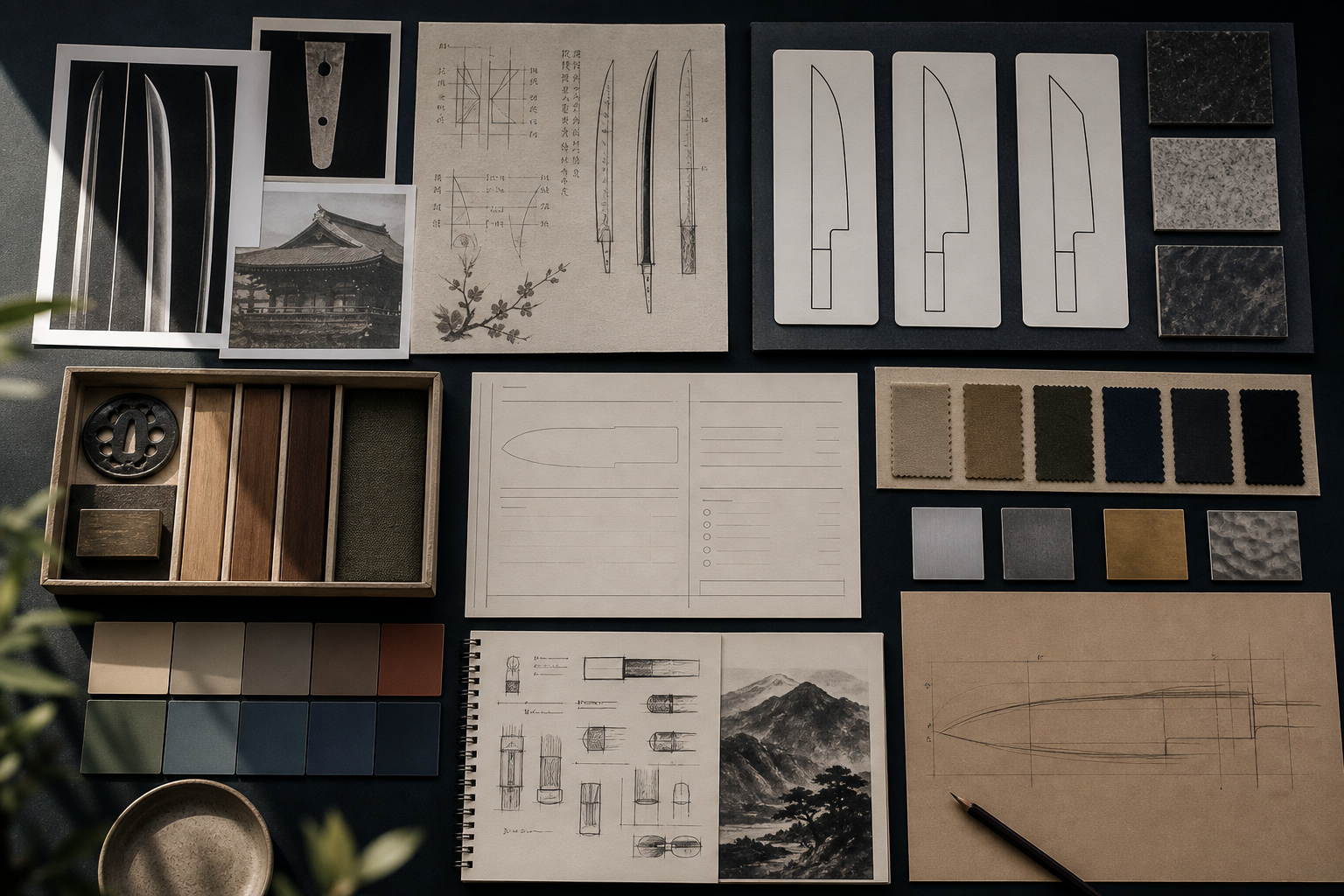
The first line I draw is between inspiration and replica. A buyer can create a Japanese-inspired blade line with clean geometry, simple fittings, wrapped-handle texture, dark metal details, lacquer-style packaging, or a visible temper-line aesthetic. But the buyer should not claim traditional origin, handmade sword craft, or historical authenticity unless that is true and documented.
For OEM/ODM production, this difference matters. A replica claim creates higher expectation, stronger scrutiny, and possible channel risk. An inspired product can be more practical. It can use modern blade steel, modern handle materials, stable machining, controlled finishing, and packaging that fits the buyer's brand. I usually ask the buyer to define three lists: the cultural cues they like, the manufacturing details that must be controlled, and the claims they will avoid. That gives the factory a workable development map.
| Reference decision | Why it matters | Practical buyer action |
|---|---|---|
| Inspiration scope | Prevents false product claims | Define which historical cues are only visual |
| Product role | Guides size, steel, and package | Choose collector, outdoor, EDC, or gift positioning |
| Original details | Builds brand ownership | Add brand-specific handle, finish, and packaging choices |
| Claim limits | Reduces compliance and trust risk | Avoid unsupported origin or craft claims |
OEM/ODM RFQ Checklist
Prepare these details to help Vast State review your project and provide a more accurate quotation.
| RFQ Field | What to Prepare |
|---|---|
| Project type | OEM from drawing / ODM private label / wholesale catalog |
| Product category | Folding knife / fixed blade / multi-tool / outdoor tool |
| Design status | Idea / sketch / 2D drawing / 3D CAD / physical sample |
| Target price | Ex-factory target price or retail price range |
| MOQ expectation | 500 / 1,000 / 3,000 / 5,000+ pcs |
| Logo method | Laser engraving / etching / printing / molded logo |
| Packaging | Standard packaging / custom retail box / Amazon-ready |
| Market | USA / EU / Japan / Korea / Middle East / other |
| Compliance needs | Buyer-specified testing / documentation / labeling |
| Timeline | Sample deadline / mass production deadline |
What Historical Sources Can Guide The Product Direction?
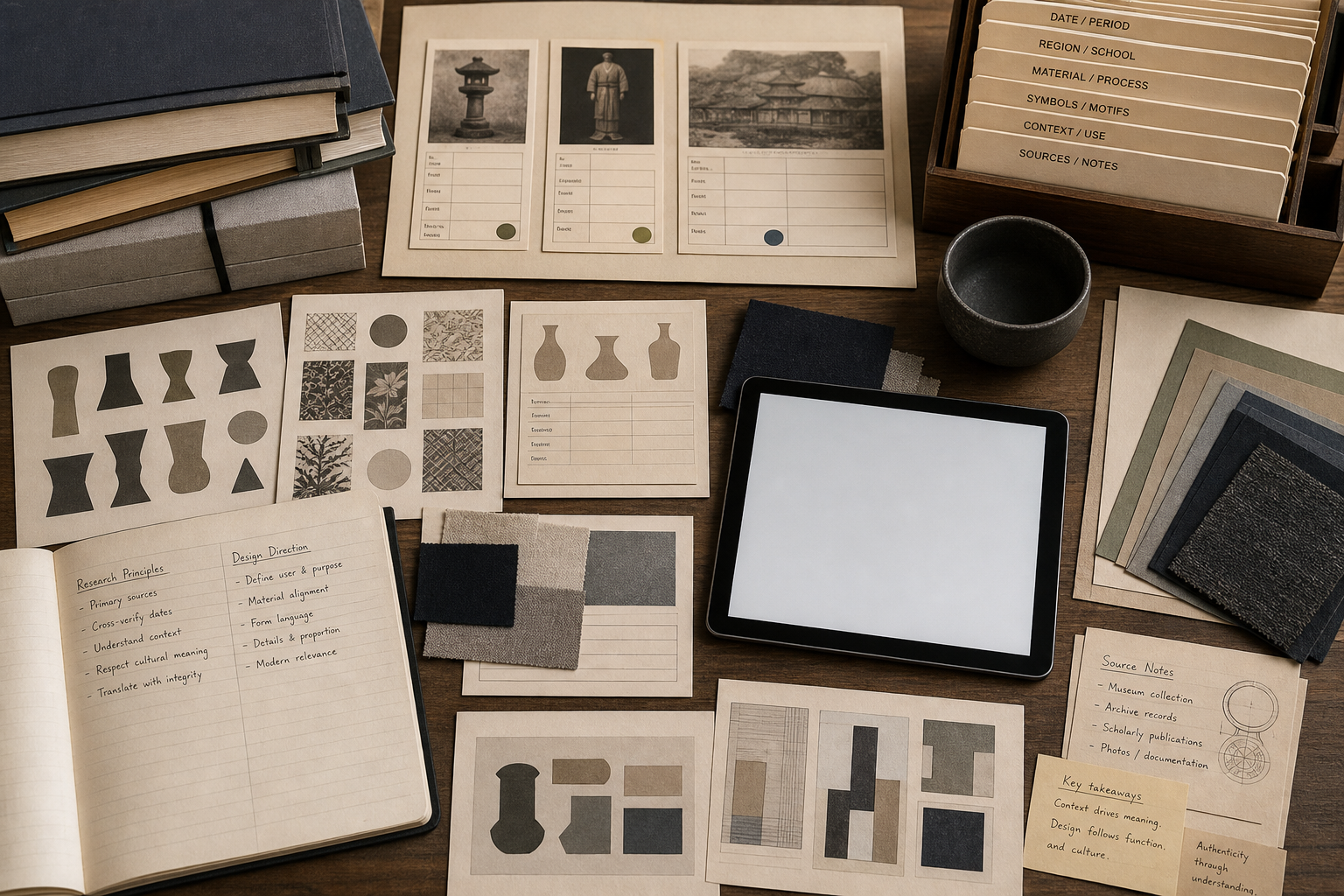
Random online images are weak references. Serious product planning needs sources that explain object type, material, date, and context.
Useful historical sources include museum collection records, cultural heritage references, and official tourism or cultural pages. These sources support design context, not modern production claims.
I Use Sources To Avoid Guesswork
The Met record for an early Japanese ken blade explains that a straight double-edged blade type was used in Japan before later single-edged forms developed. This helps buyers understand that Japanese blade history is not one shape only. The British Museum katana record shows how a blade, scabbard, hilt, fittings, guard, steel, lacquered wood, ray skin, and metal decoration can be recorded as one object system. That matters for product design because the blade is not the whole story.
I also use official heritage context carefully. The Japan Tourism Agency page for the Okuizumo Tatara and Sword Museum discusses tatara ironmaking and tamahagane steel as part of Japanese ironmaking heritage. For modern OEM work, I do not turn that into a production claim. I use it to remind buyers that material words carry meaning. If the product is not made with traditional materials or methods, the packaging should not say it is.
| Source type | What it can support | What it cannot support |
|---|---|---|
| Museum record | Shape, material, date, object parts | Modern performance claims |
| Heritage page | Cultural and material context | Factory certification |
| Product sample | Buyer-specific design direction | Historical authenticity |
| Engineering drawing | Production control | Cultural meaning by itself |
How Should Buyers Translate Blade Geometry Into OEM/ODM Specs?
Japanese-inspired profiles can look simple. In production, small changes in curve, tip, and thickness can change the whole product.
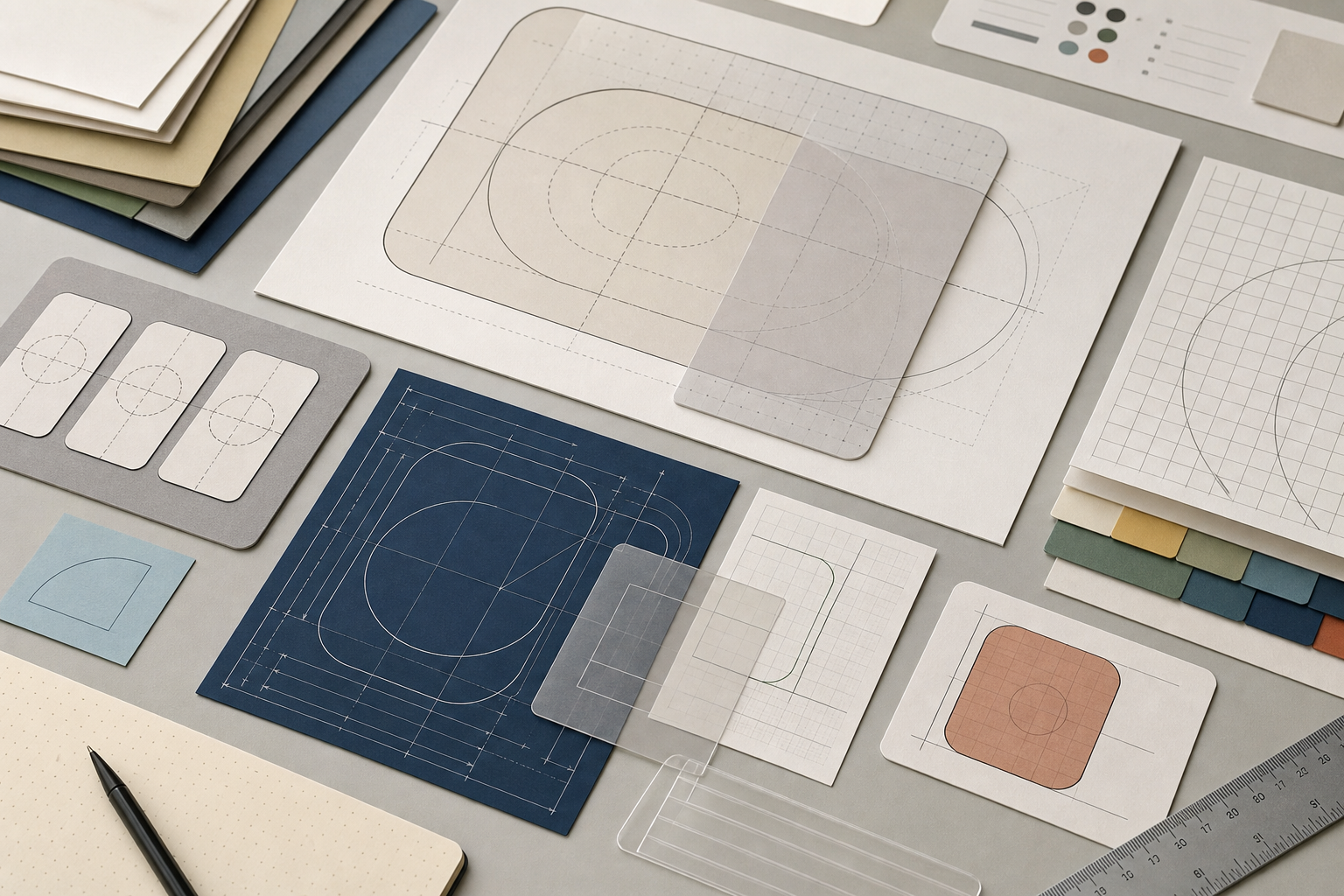
Buyers should translate blade geometry into OEM/ODM specs with drawings for length, height, curve, spine thickness, tip position, tang or pivot structure, handle angle, grind line, and sheath or handle clearance.
I Make The Shape Measurable
A buyer may say "katana-style," "tanto-style," or "Japanese utility style." Those words are not enough for production. The factory needs exact geometry. The drawing should show blade length, overall length, blade height, spine thickness, edge curve, tip shape, grind line, tang shape, pivot position for folders, stop position, and handle angle. If a sheath or box insert is needed, the blade path and clearance should be reviewed too.
This is especially important when the buyer wants a modern folding knife with Japanese-inspired styling. A folder has more moving relationships than a fixed blade. The pivot, stop pin, lock face, closed tip clearance, pocket clip, screw positions, and handle scales all have to work together. A fixed blade has fewer moving parts, but the tang, handle fit, and sheath are still critical. I prefer to approve a side profile, top view, and sample standard before mass production. A style word should never replace a measurable drawing.
| Geometry item | What I check | Why it matters |
|---|---|---|
| Blade profile | Length, height, curve, and tip | Protects visual identity |
| Thickness | Spine and grind plan | Controls weight and cost |
| Handle relationship | Tang, angle, grip shape, or pivot | Protects fit and user feeling |
| Sheath or closure | Clearance and retention | Prevents rubbing and packaging issues |
What Material Story Should Buyers Use Without Overclaiming?
Material words can sell a product. They can also create trust problems if the factory cannot prove them.
Buyers should use a material story that matches real steel, heat treatment, handle material, finish, and documentation. Avoid traditional steel claims unless the material and process are verified.
I Keep The Steel Claim Practical
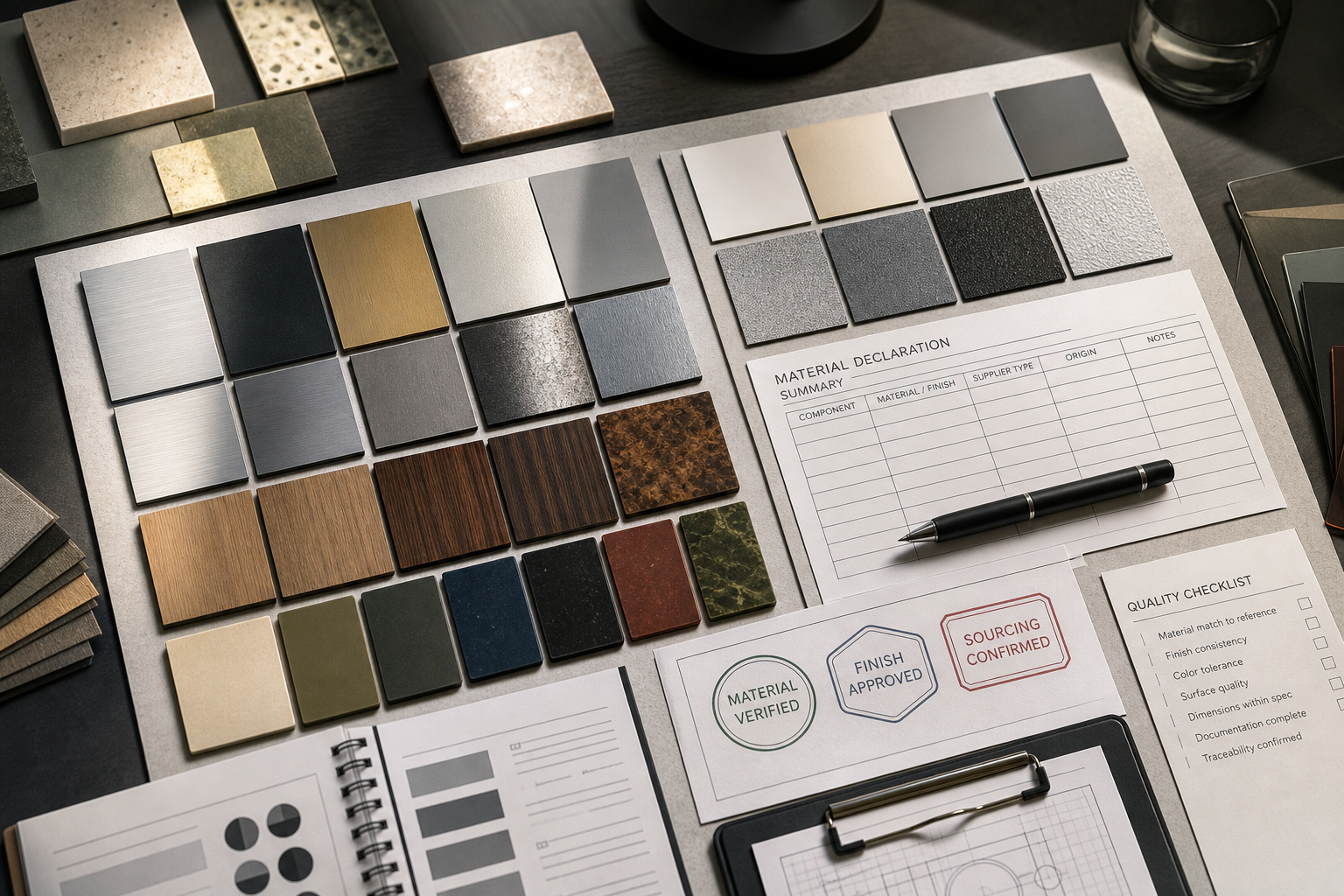
Japanese blade heritage often leads buyers to ask about layered steel, visible lines, or traditional-sounding material names. I understand the marketing value. But I also know the manufacturing risk. A modern OEM/ODM knife should use claims that can be controlled and repeated. If the product uses stainless steel, say so. If it uses carbon steel, explain care needs. If it uses a decorative laminate or etched finish, do not imply it is a traditional sword-making material unless that is true.
The Japan Tourism Agency PDF on forging a Japanese sword describes tamahagane and traditional appearance features in a heritage context. I use that source only as context. For a commercial knife line, I focus on practical material controls: steel grade, hardness target, heat treatment process record, finish, corrosion expectation, handle material stability, and packaging care notes. This helps buyers sell a clear product without promising what the factory did not make.
| Material claim | Safe use | Risky use |
|---|---|---|
| Stainless steel | State grade and care level | Claim traditional steel heritage |
| Carbon steel | Explain care and patina | Hide corrosion responsibility |
| Decorative line | Describe visual finish | Claim traditional hamon without proof |
| Handle material | State actual material | Use vague natural-material claims |
How Should Fittings, Handles, And Packaging Support The Look?
A Japanese-inspired product is not only a blade. Poor handles, fittings, or packaging can make the design feel unfinished.
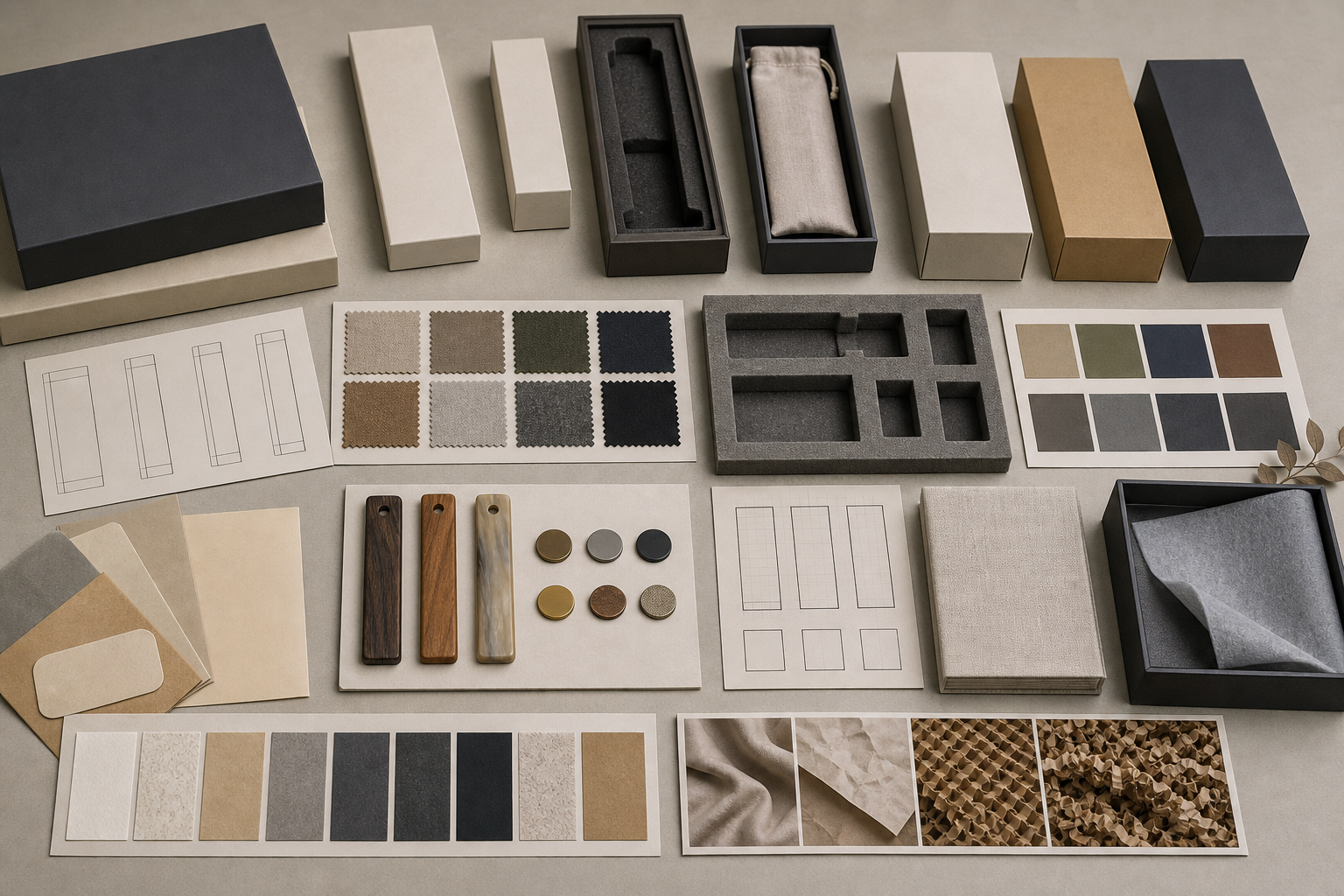
Fittings, handles, and packaging should support the look through consistent color, texture, proportion, material truth, box structure, care notes, and safe shipping protection.
I Design The Whole Product, Not Only The Blade
Historic Japanese blades are often discussed with fittings, guards, scabbards, and mountings. The British Museum katana record is useful here because it lists blade, scabbard, hilt, guard, and decorative fittings as related parts. In a modern product, the same idea becomes product-system thinking. The blade, handle, fasteners, sheath, clip, insert, box, card, and outer carton should feel like one planned line.
For a gift or collector product, the packaging may carry more value. A rigid box, paper sleeve, certificate-style card, or molded insert can support the story. For an outdoor or utility product, the buyer may prefer simpler packaging and stronger protective packing. I always separate presentation from transport. A beautiful inner box still needs a practical carton. ISO 4180 supports the idea of planning performance test schedules for complete filled transport packages. I do not claim every package follows that standard, but I use the mindset: test the packed product as a system.
| Product part | Design role | Production control |
|---|---|---|
| Handle texture | Creates visual identity | Material, wrap, machining, and finish sample |
| Metal fittings | Adds heritage detail | Fit, coating, edge condition, and color |
| Inner packaging | Supports presentation | Insert fit and surface protection |
| Export carton | Protects delivery | Carton strength and packing method |
What Compliance And Classification Checks Matter?
The product can be beautiful and still be difficult to sell. Rules vary by country, sales channel, and product structure.
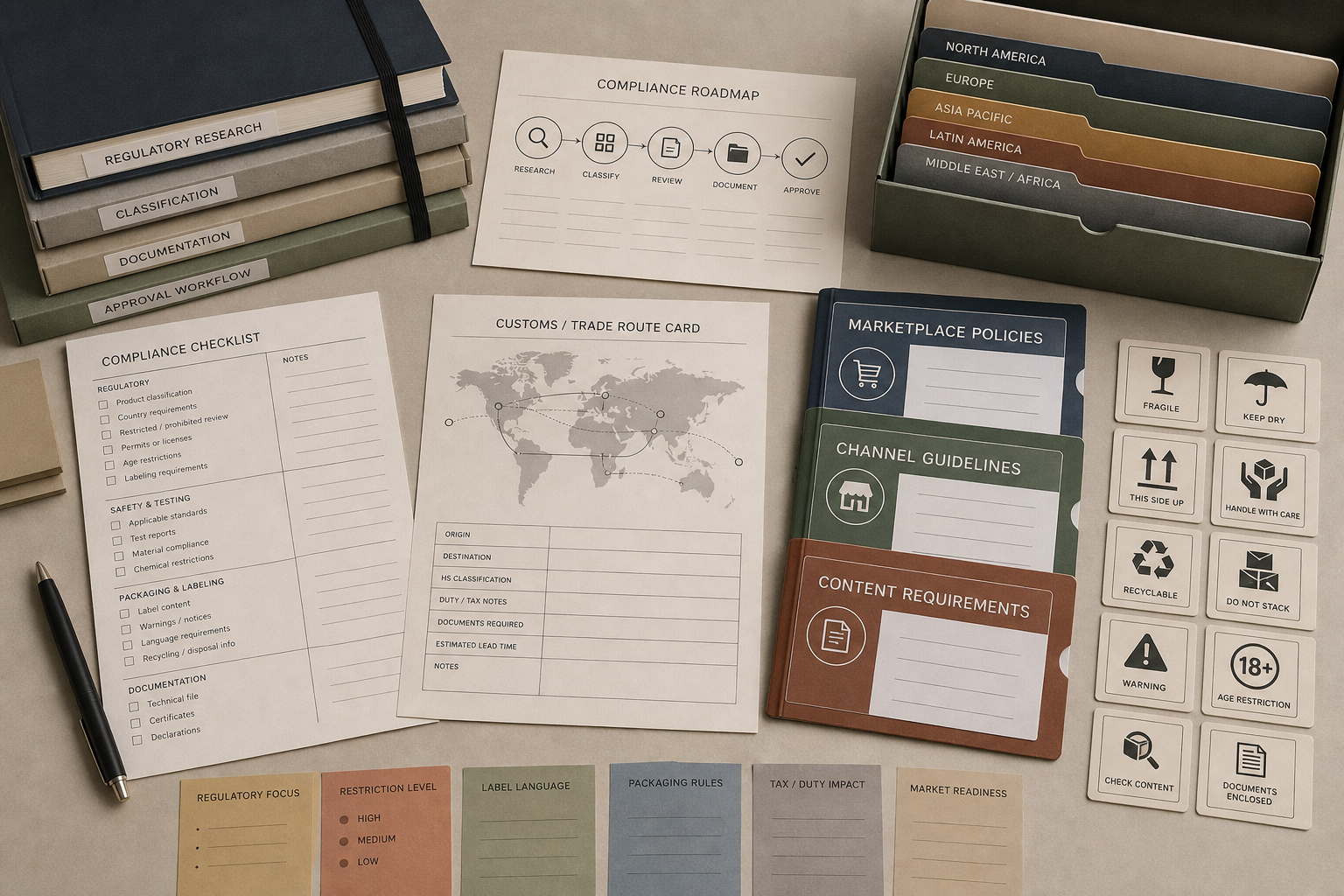
Buyers should check customs classification, local knife rules, marketplace policy, material restrictions, labeling, packaging language, and age-channel requirements before approving Japanese-inspired blade products.
I Treat Compliance As A Design Input
This section is not legal advice. It is a practical sourcing reminder. A product inspired by Japanese blade forms may be fixed blade, folding knife, kitchen-adjacent tool, display piece, or collector gift. Each category can face different rules. The buyer should confirm local knife law, retail platform policy, carrier rules, customs classification, labeling, and restricted-material rules before finalizing the sample.
For customs context, the United Nations Statistics Division lists HS 8211 for knives with cutting blades and related subheadings. That is useful for broker discussion, but it is not a final answer for every market. The buyer should also avoid packaging words that create unnecessary risk. If the product is a modern outdoor tool, say that clearly. If the product is a display gift, say that clearly. If the product has natural handle materials, confirm the material documents early. Design and compliance should talk to each other before tooling or sample approval.
| Compliance area | What to confirm | Why it matters |
|---|---|---|
| Customs classification | HS heading and local broker view | Supports import planning |
| Product rules | Blade type, length, lock, sheath, market | Prevents channel mismatch |
| Material documents | Wood, animal-derived, or restricted materials | Reduces shipment risk |
| Packaging wording | Claims, warnings, and category language | Avoids unsupported promises |
How Should QC Protect Geometry, Finish, And Version Records?
Japanese-inspired details can be subtle. If QC checks only basic function, the product may lose the intended design feeling.
QC should protect geometry, finish, and version records by checking profile templates, thickness, grind line, surface finish, handle fit, hardware color, packaging version, and approved-sample match.
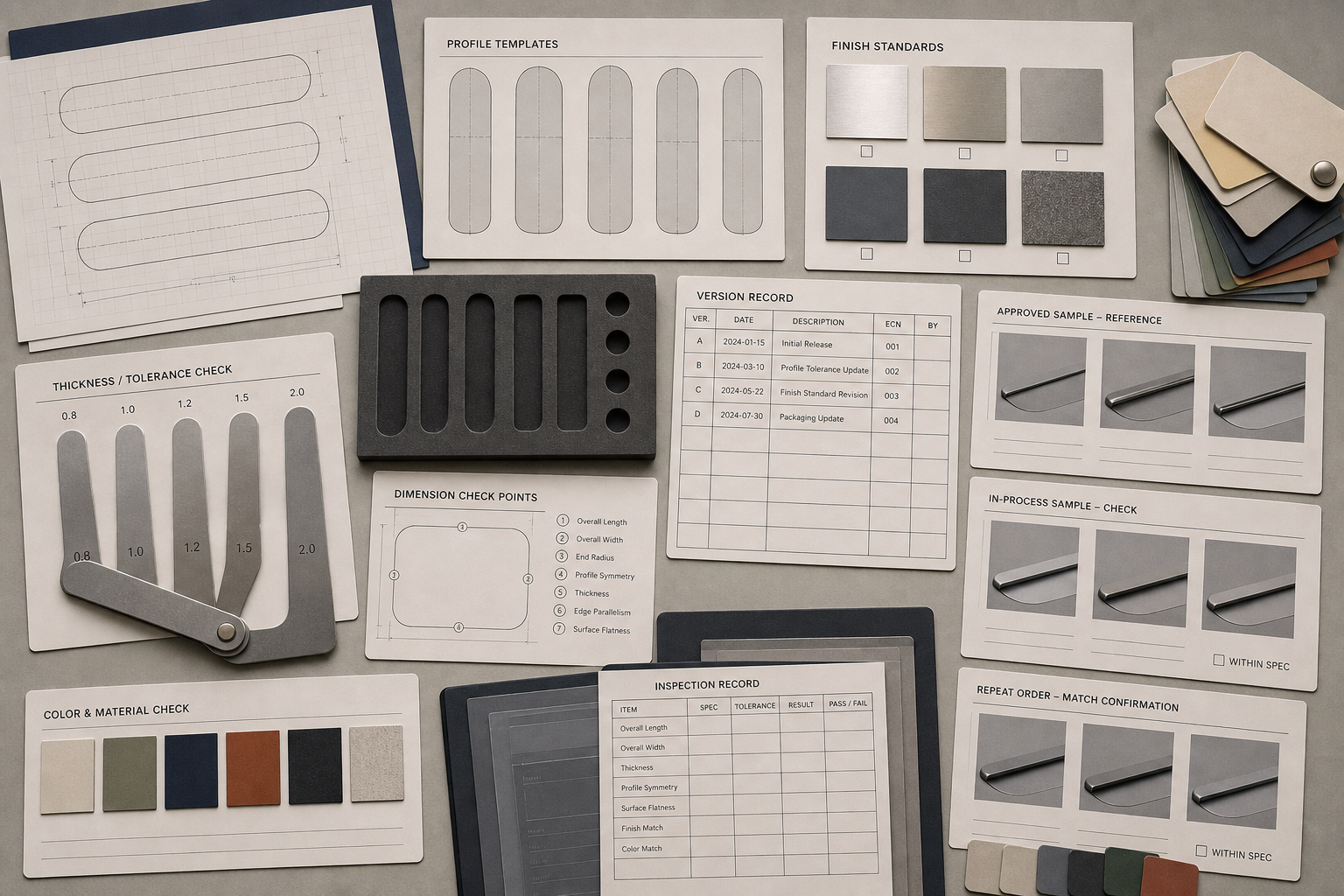
I Inspect The Style Standard
For this product type, QC must cover both engineering and style. Engineering checks include blade length, thickness, grind symmetry, handle fit, screw tension, lock function if applicable, sheath clearance, and final packaging. Style checks include surface finish, visible line treatment, handle texture, hardware color, logo position, box color, and version name. A small mismatch can make a heritage-inspired line feel inconsistent.
ISO 9001 supports quality management through planned processes and customer-requirement control. ISO 10007 supports configuration management from concept to later product stages. I translate those ideas into everyday factory practice: keep the drawing, approved sample, material card, packaging proof, and inspection sheet together. If a buyer orders version A with black handle and satin blade, the next order should not quietly become version B. For repeat orders, controlled records are as important as the first sample.
| QC checkpoint | What I check | Why it matters |
|---|---|---|
| Profile and thickness | Dimensions and template match | Protects design identity |
| Finish | Surface line, polish, coating, or etching | Protects appearance consistency |
| Handle and fittings | Fit, color, texture, and fasteners | Protects perceived quality |
| Version record | Drawing, sample, packaging, and label | Protects repeat orders |
What RFQ Details Help Suppliers Quote Japanese-Inspired Projects?
An unclear RFQ wastes sampling time. The supplier may make something attractive but miss the target price or market.
Buyers should include target market, design inspiration, dimensioned drawings, blade type, steel, handle material, finish, fittings, packaging, quantity, target price, compliance notes, QC limits, and sample plan.
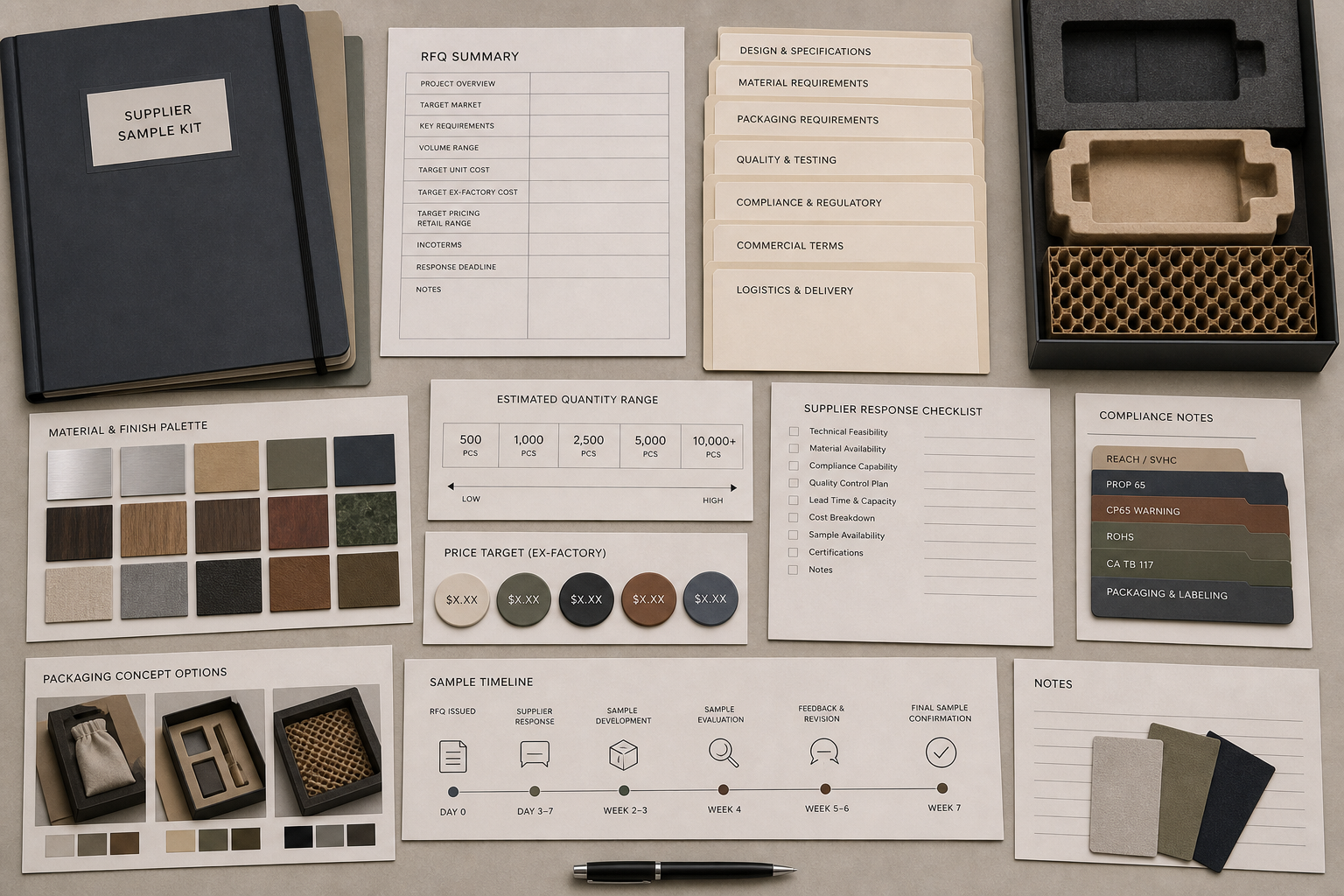
I Ask For Fixed And Flexible Requirements
A strong RFQ separates fixed items from flexible items. The buyer may fix the blade profile but allow different steel options. The buyer may require a Japanese-inspired handle texture but allow material alternatives. The buyer may want a visible line effect but accept a simpler finish for a lower target price. This lets the factory quote several paths without guessing.
I ask buyers to include product type, target market, blade length, overall length, blade thickness, steel grade, heat treatment target if known, handle material, finish, fittings, sheath or box, logo method, quantity, target price, compliance notes, and QC expectations. If the buyer has reference images, I use them as inspiration only. I still need a drawing. For B2B buyers, the best brief is not the longest brief. It is the clearest brief.
| RFQ field | Why it helps | Example buyer input |
|---|---|---|
| Product positioning | Guides specification level | Collector gift, outdoor tool, or EDC line |
| Drawing and dimensions | Reduces factory guessing | Blade profile, thickness, handle angle |
| Material options | Balances cost and story | Steel A or B, synthetic or wood handle |
| QC and compliance notes | Protects market fit | Target country, inspection list, labeling needs |
Turn your idea into a quote-ready knife project.
Share your drawing, sample photo, target quantity, market, and packaging needs. Vast State will review manufacturability and prepare OEM/ODM options.
Conclusion
I build better Japanese-inspired knife lines by turning heritage into controlled design, clear claims, measurable specs, compliant packaging, QC records, and RFQ-ready details.
Source Notes
- The Met early Japanese ken record supports historical context for early Japanese blade development.
- British Museum katana record supports the product-system view of blade, scabbard, hilt, fittings, and guard.
- Japan Tourism Agency Okuizumo Tatara and Sword Museum page supports heritage context for tatara ironmaking and tamahagane steel.
- UNSD HS 8211 supports customs classification discussion for knives and blades, but local broker advice is still needed.
- ISO 4180 supports packaging performance-test planning for complete filled transport packages.
- ISO 9001 and ISO 10007 support quality management and configuration record concepts used in the article.