A strong steel choice can still be wrong. If it does not match the product, buyers may pay more and solve the wrong problem.
CPM 3V is usually better for tough, impact-resistant fixed blades and heavy-use outdoor knives that can accept non-stainless care. MagnaCut is usually better for premium EDC, outdoor, marine, and all-around knives that need stainless corrosion resistance with strong toughness and edge performance.
Quick buyer brief:
- Answer: Choose CPM 3V for toughness-first projects; choose MagnaCut for balanced stainless premium projects.
- Buyer context: This helps knife brands, outdoor brands, importers, wholesalers, distributors, and private label buyers.
- Key checks: Knife type, corrosion exposure, target hardness, heat treatment, blade geometry, finish or coating, price tier, user education, and QC plan.
Planning a knife project with this steel?
Send us your target market, MOQ, price range, and blade type. Vast State can help you choose the right steel, HRC range, finish, handle material, and QC requirements for OEM/ODM production.
When a buyer asks me whether CPM 3V or MagnaCut is better, I do not answer with one steel name. I ask what the knife must survive and where the customer will use it. CPM 3V and MagnaCut are both powder metallurgy steels, but they are not solving the same problem. CPM 3V is a toughness-first tool steel. MagnaCut is a stainless knife steel designed for a broad balance of toughness, wear resistance, and corrosion resistance. For OEM/ODM work, the right answer depends on the knife type, price tier, blade geometry, heat treatment plan, finish, and the story the buyer can sell honestly.
What Is the Core Difference Between CPM 3V and MagnaCut?
Steel names can sound similar because both are CPM steels. But their commercial purpose and user expectations are different.
CPM 3V is a high-toughness, wear-resistant tool steel for breakage and chipping resistance. MagnaCut is a stainless powder metallurgy knife steel designed to combine toughness, wear resistance, and improved corrosion resistance.
I Separate Toughness-First From Balanced Stainless
The CPM 3V data sheet from Niagara Specialty Metals describes CPM 3V as a tool steel designed for maximum resistance to breakage and chipping in a highly wear-resistant grade. The same page places its intended use around HRC 58-60 and lists industrial knives, shear blades, punches, dies, and other wear applications. That tells me CPM 3V is not just a trendy knife steel. It is a serious toughness and wear-resistance steel with industrial roots.
The CPM MagnaCut data sheet describes MagnaCut differently. It is a powder metallurgy stainless tool steel designed to eliminate chromium carbide in the heat-treated microstructure. The data page explains that small vanadium and niobium carbides help create a strong toughness and wear-resistance balance, while the absence of chromium carbide improves corrosion resistance. That makes MagnaCut more directly aligned with modern knife use, especially where stainless performance matters.
So I do not compare them as "old vs new" or "cheap vs expensive." I compare them by product goal. CPM 3V is a toughness-first choice. MagnaCut is a balanced stainless choice. Both can make excellent knives when heat treatment, geometry, and product design match the steel.
| Comparison point | CPM 3V | MagnaCut |
|---|---|---|
| Main identity | High-toughness tool steel | Balanced stainless knife steel |
| Strongest reason to choose | Breakage and chipping resistance | Stainless corrosion resistance with strong balance |
| Common project fit | Fixed blades and heavy-use outdoor knives | Premium folders, EDC, outdoor, marine, kitchen-adjacent tools |
| Buyer risk | Corrosion care and finish planning | Higher cost and market education |
Quote-ready RFQ Checklist for This Steel
To get an accurate OEM/ODM quote, prepare these details before contacting a knife manufacturer.
| RFQ Field | What to Prepare |
|---|---|
| Product type | Folding knife / fixed blade / multi-tool / kitchen knife |
| Target market | US / EU / outdoor retail / promotional / tactical / EDC |
| Steel option | 4116 / 14C28N / D2 / N690 / Nitro-V |
| Target HRC | Example: 55-57 HRC, 58-60 HRC |
| Blade finish | Satin / stonewash / black coating / bead blast |
| Handle material | G10 / micarta / aluminum / stainless steel / wood |
| Lock or structure | Liner lock / frame lock / slip joint / full tang |
| Estimated quantity | 500 / 1,000 / 3,000 / 5,000+ pcs |
| Packaging | White box / color box / blister / pouch / gift box |
| Required documents | Drawing / sample photo / logo file / packaging artwork |
When Does CPM 3V Make More Sense for a Knife Project?
Some buyers choose stainless steel automatically. That can miss the point when the knife must handle impact, twisting, or hard field use.
CPM 3V makes more sense when the knife needs high toughness, strong resistance to chipping, good wear resistance, and a rugged fixed blade or outdoor tool identity where non-stainless care is acceptable.
I Use CPM 3V When Toughness Is the Main Selling Point
CPM 3V is attractive when the product promise is strength under hard use. I think of fixed blades, outdoor survival-style knives, camp knives, heavy utility knives, and products where edge chipping or blade breakage would create more concern than light surface staining. The data sheet supports that direction because it emphasizes resistance to breakage and chipping, impact toughness, wear resistance, and suitability for industrial knives and wear applications.
That does not mean CPM 3V is only for large knives. It can also work in tough folding knives, but the buyer must ask whether the corrosion trade-off makes sense. CPM 3V has chromium, but it is not positioned as a stainless knife steel. If the customer uses the knife around salt water, food acids, sweat, or wet outdoor conditions, the brand must plan the finish, care instructions, and user expectations clearly.
From a manufacturing point of view, CPM 3V also asks for discipline. Heat treatment must balance toughness and hardness. A very thin edge can cut well, but the product goal should still guide the geometry. If the buyer wants a heavy-duty knife, I do not make the edge too delicate just to win a spec-sheet argument. A tough steel still needs a practical grind.
For B2B buyers, CPM 3V can create a strong product story: rugged, tough, tool-like, and built for demanding use. But that story must include non-stainless care and appropriate finish options.
| CPM 3V use case | Why it fits | What I still check |
|---|---|---|
| Fixed blade outdoor knife | Toughness-first design logic | Heat treatment and edge geometry |
| Camp or heavy utility knife | Chipping resistance matters | Coating, finish, and corrosion care |
| Work tool identity | Industrial steel story feels credible | User instructions and warranty language |
| Tough folding knife | Strong performance story | Lock structure and maintenance expectation |
When Does MagnaCut Make More Sense for a Knife Project?
Some knives need toughness, but customers also expect stainless care. In that case, CPM 3V may solve only half the problem.
MagnaCut makes more sense when the knife needs premium stainless corrosion resistance, good toughness, useful wear resistance, modern steel recognition, and a balanced story for EDC, outdoor, marine, and higher-end product lines.
I Use MagnaCut When the Buyer Needs Balance and a Premium Story
MagnaCut is strong when the buyer wants one steel to cover many customer expectations. The data sheet states that the steel was designed to remove chromium carbide from the heat-treated microstructure and that this leads to improved corrosion resistance while keeping an excellent combination of properties for knives. Larrin Thomas's Knife Steel Nerds background article explains the design idea in more detail: balance the carbon and chromium so chromium remains available for corrosion resistance, while vanadium and niobium carbides support wear resistance and toughness.
For knife brands, that balance can be commercially useful. MagnaCut is easy to explain in a premium EDC or outdoor product page: stainless, tough, modern, and designed for knives. It can reduce customer worry around rust compared with CPM 3V, especially for users who carry knives daily, work around moisture, or want lower maintenance.
I also see MagnaCut as a strong option when the buyer wants a premium folder. Many EDC customers understand the steel name. That recognition can help the retail price if the rest of the knife supports the steel. The handle material, lock action, blade finish, packaging, and edge quality must all match the premium story.
The limitation is cost and expectation. If the buyer's market will not pay for MagnaCut, the steel can hurt margin. If heat treatment or sharpening is poor, the brand loses the advantage. MagnaCut is balanced, but it is not magic. It still needs correct processing.
| MagnaCut use case | Why it fits | What I still check |
|---|---|---|
| Premium EDC folder | Strong stainless steel recognition | Retail price and brand story |
| Outdoor or marine-adjacent knife | Corrosion resistance matters | Finish, hardware, and care instructions |
| Product ladder upgrade | Clear premium step above basic steels | Cost difference and buyer education |
| Thin slicing design | Toughness helps edge stability | Heat treatment and edge thickness |
How Do Heat Treatment, Hardness, and Geometry Change the Result?
A steel name cannot rescue poor processing. Bad heat treatment or weak geometry can waste both CPM 3V and MagnaCut.
Heat treatment, hardness target, quench, tempering, cold treatment, blade thickness, edge geometry, and final sharpening decide how CPM 3V or MagnaCut performs in the real knife.
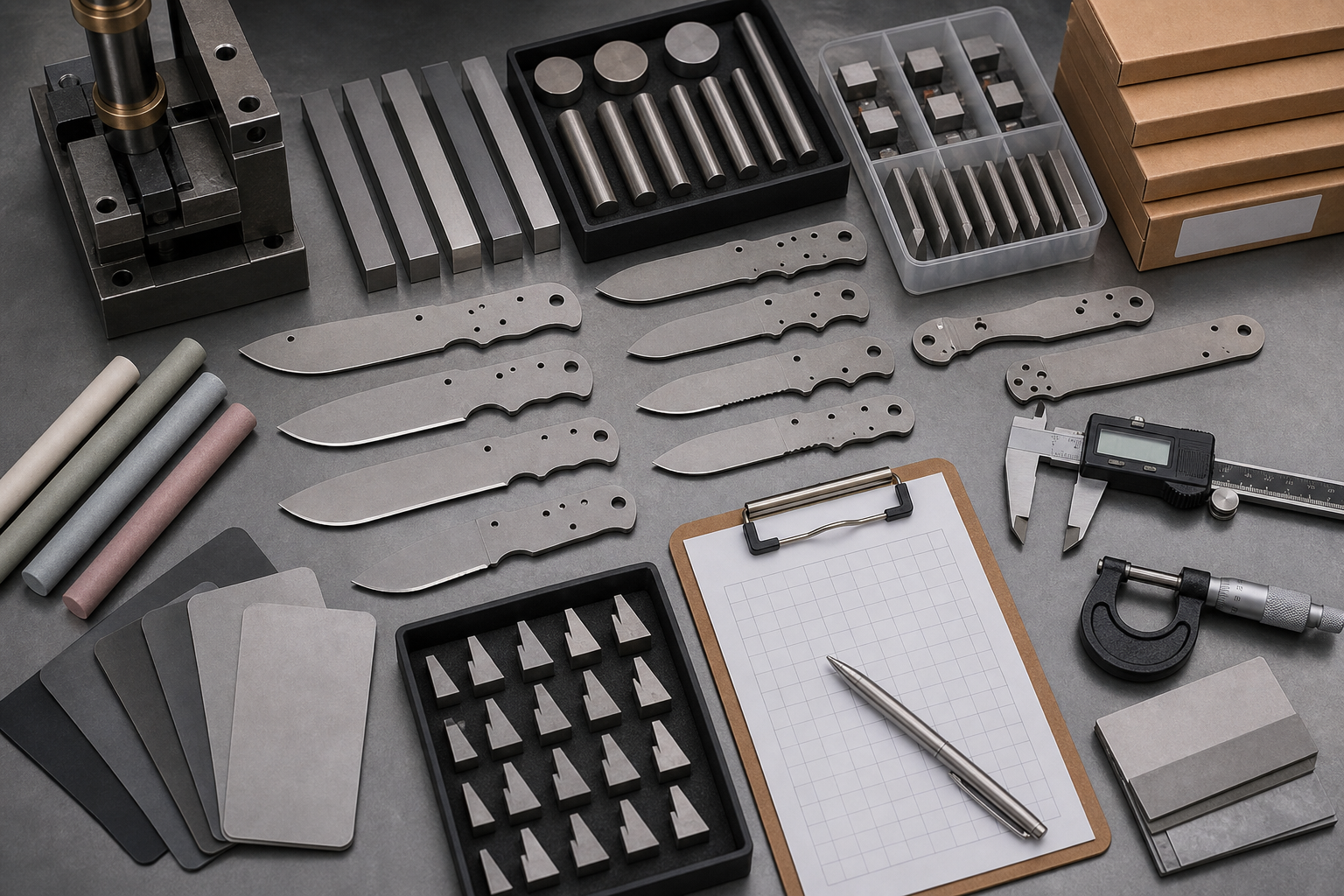
I Treat Heat Treatment as Part of the Quotation
The CPM 3V data sheet gives heat treatment guidance and notes an intended hardness around HRC 58-60 for the balance of toughness and wear resistance. It also shows how impact toughness changes as hardness and heat treatment change. That is important for a buyer. If CPM 3V is chosen for toughness, the process should not chase hardness in a way that loses the main advantage.
MagnaCut also needs a clear heat treatment plan. Its data sheet and Knife Steel Nerds background both show that the steel can reach a useful hardness range, but the result still depends on the process. A premium steel name on the blade does not prove the heat treatment was done well. The buyer should ask for target hardness, process summary, testing points, and sample approval.
Hardness testing also has to be controlled. NIST's guide to Rockwell hardness measurement is useful because it explains why measurement practice matters. In mass production, one random number is not enough. I want a practical inspection plan that covers sample blades, batch checks, and any special risk from blade thickness or heat treatment load.
Geometry is just as important. A tough steel with a bad grind can still chip or cut poorly. A stainless premium steel with an overly thick edge can disappoint users. The RFQ should treat steel, heat treatment, and geometry as one package.
| Control point | CPM 3V concern | MagnaCut concern |
|---|---|---|
| Hardness target | Keep toughness advantage | Balance hardness, toughness, and corrosion story |
| Heat treatment | Avoid process choices that reduce impact toughness | Confirm recommended process and cold treatment if needed |
| Edge geometry | Match heavy-use purpose | Match EDC or slicing purpose |
| QC testing | Hardness and straightness checks | Hardness, finish, and corrosion-related expectations |
How Should Buyers Match Steel to Knife Type and Market Position?
The same steel can help one product and weaken another. The market must understand why the steel was chosen.
Buyers should match CPM 3V or MagnaCut to knife type, user environment, price tier, care expectation, marketing story, and warranty risk instead of choosing by online popularity alone.
I Match the Steel to the Customer's Use Case
For a heavy-use fixed blade, CPM 3V can be the stronger story. The buyer can explain toughness, chipping resistance, rugged field use, and tool-like durability. The handle can support that story with Micarta, G10, or a durable molded material. The finish can be stonewash, coating, or another option that helps manage corrosion expectations. The packaging can include care guidance without sounding weak.
For a premium EDC folder, MagnaCut often has the stronger story. The customer wants everyday stainless behavior, good cutting, toughness, and a steel name that feels modern. The blade can pair well with titanium, G10, carbon fiber, aluminum, Micarta, or other handle choices depending on price tier. The product page can explain the balance without overpromising.
For a marine or wet-environment tool, MagnaCut usually makes more sense because corrosion resistance becomes a primary need. For a chopping or impact-oriented outdoor knife, CPM 3V may still be more aligned if the buyer accepts finish and maintenance planning. For a price-sensitive private label knife, both steels may be too costly unless the brand has a clear reason.
This is where I push buyers to think commercially. The steel should help the product sell, reduce after-sales problems, and match the user. A famous steel name is not enough.
| Product type | Likely better fit | Reason |
|---|---|---|
| Heavy fixed blade | CPM 3V | Toughness and chipping resistance story |
| Premium EDC folder | MagnaCut | Stainless balance and steel recognition |
| Marine or wet-use tool | MagnaCut | Corrosion resistance is more important |
| Rugged outdoor work knife | CPM 3V or MagnaCut | Depends on impact vs corrosion priority |
| Budget private label knife | Often neither first | Cost may not match target margin |
What Manufacturing and Cost Risks Should OEM Buyers Watch?
Premium steel does not only change the blade. It changes sourcing, machining, heat treatment, inspection, packaging, and customer expectations.
OEM buyers should watch steel availability, material cost, blank cutting, grinding time, heat treatment control, finish choice, scrap risk, warranty risk, and whether the final retail price can support the steel.
I Look at Total Project Cost, Not Only Steel Price
CPM 3V and MagnaCut both require careful production planning. The material cost is only one part. Blank cutting, heat treatment, straightening, grinding, surface finishing, sharpening, and inspection all affect the real cost. If the buyer wants a complex blade profile or thin edge, process risk increases. If the buyer wants a special coating or high polish, the finish path changes.
CPM 3V may need more attention to corrosion protection and customer education. A coated CPM 3V blade can create a strong outdoor story, but the coating adds cost and must be controlled. A stonewashed or satin CPM 3V blade may appeal to some users, but the buyer should explain care. If customers expect stainless behavior, after-sales risk can rise.
MagnaCut may reduce corrosion complaints, but it can raise material cost and customer expectations. A customer who pays for MagnaCut expects good heat treatment, clean edge geometry, smooth action, and strong overall quality. The handle, lock, packaging, and QC cannot feel like a low-cost product.
For repeat production, I prefer an approved sample and a written inspection standard. ISO 9001 is useful as a general quality-management reference because it focuses on customer requirements, process control, and continual improvement. The practical point is simple: the factory should repeat the approved knife, not reinterpret it every batch.
| Risk area | Why it matters | Buyer action |
|---|---|---|
| Material availability | Premium steels may affect lead time | Confirm sourcing before launch |
| Heat treatment | Steel performance depends on process | Define target hardness and test plan |
| Finish choice | Affects corrosion, appearance, and cost | Approve finish samples |
| Grinding and sharpening | Controls cutting feel and defect risk | Approve edge geometry |
| Customer expectations | Premium steels raise quality standards | Match whole knife to steel tier |
What Should Buyers Put in the RFQ Before Choosing CPM 3V or MagnaCut?
A vague steel request creates a weak quotation. The supplier needs the product goal, not only the steel name.
The RFQ should include knife type, target user, steel options, blade geometry, hardness target, heat treatment expectation, finish, handle material, lock type, MOQ, target price, packaging story, and inspection requirements.
I Need the Use Case Before I Recommend the Steel
The RFQ should make the steel decision easy to judge. If the buyer says, "I want CPM 3V or MagnaCut," I still need to know the knife type, user, target environment, retail price, and production quantity. A fixed blade for hard outdoor use and a slim EDC folder are not the same project. They should not use the same steel logic.
For CPM 3V, I want to know if the buyer accepts non-stainless care, coating, stonewash, oiling instructions, or other finish planning. I also want to know whether toughness is the main selling point. If the buyer wants stainless behavior, CPM 3V may create unnecessary service risk.
For MagnaCut, I want to know whether the market will pay for the premium steel. The buyer should define target retail price, handle material, lock quality, packaging, and sample approval standard. MagnaCut can be a strong upgrade, but the whole knife must support that upgrade.
The RFQ should also ask for two cost paths if the buyer is unsure. Path one can be CPM 3V for a rugged fixed blade or tool-style project. Path two can be MagnaCut for a premium stainless version. A supplier like Vast State can then compare manufacturability, cost, sample timing, and QC needs instead of guessing.
| RFQ field | Why it matters | Example buyer input |
|---|---|---|
| Product type | Steel choice depends on use | Fixed blade, folding knife, EDC, outdoor tool |
| Steel options | Allows side-by-side quotation | CPM 3V and MagnaCut options |
| Target environment | Controls corrosion priority | Dry outdoor, wet use, marine, daily carry |
| Heat treatment | Protects performance | Target HRC and process expectation |
| Finish and packaging | Supports honest product story | Coated 3V or stainless MagnaCut callout |
| Inspection plan | Protects repeat production | Hardness, straightness, edge, finish, assembly |
Ready to use this material in your next knife line?
Vast State can help you compare blade steels, heat treatment ranges, handle materials, finishes, packaging options, and QC requirements based on your target market and quantity.
Conclusion
I choose CPM 3V for toughness-first knives and MagnaCut for balanced stainless premium knives. The right steel follows the project, not the trend.
Source Notes
- Niagara CPM 3V data sheet supports CPM 3V's toughness-first, wear-resistant tool steel positioning and heat-treatment context.
- Niagara CPM MagnaCut data sheet supports MagnaCut's stainless design, chromium-carbide-free microstructure, carbide structure, and knife-focused property balance.
- Knife Steel Nerds MagnaCut article gives technical background on MagnaCut's design goals and balance of toughness, wear resistance, hardness, and corrosion resistance.
- NIST Rockwell hardness guidance supports the need for controlled hardness measurement.
- ISO 9001 supports the broader manufacturing point about repeatable process control and customer requirements.