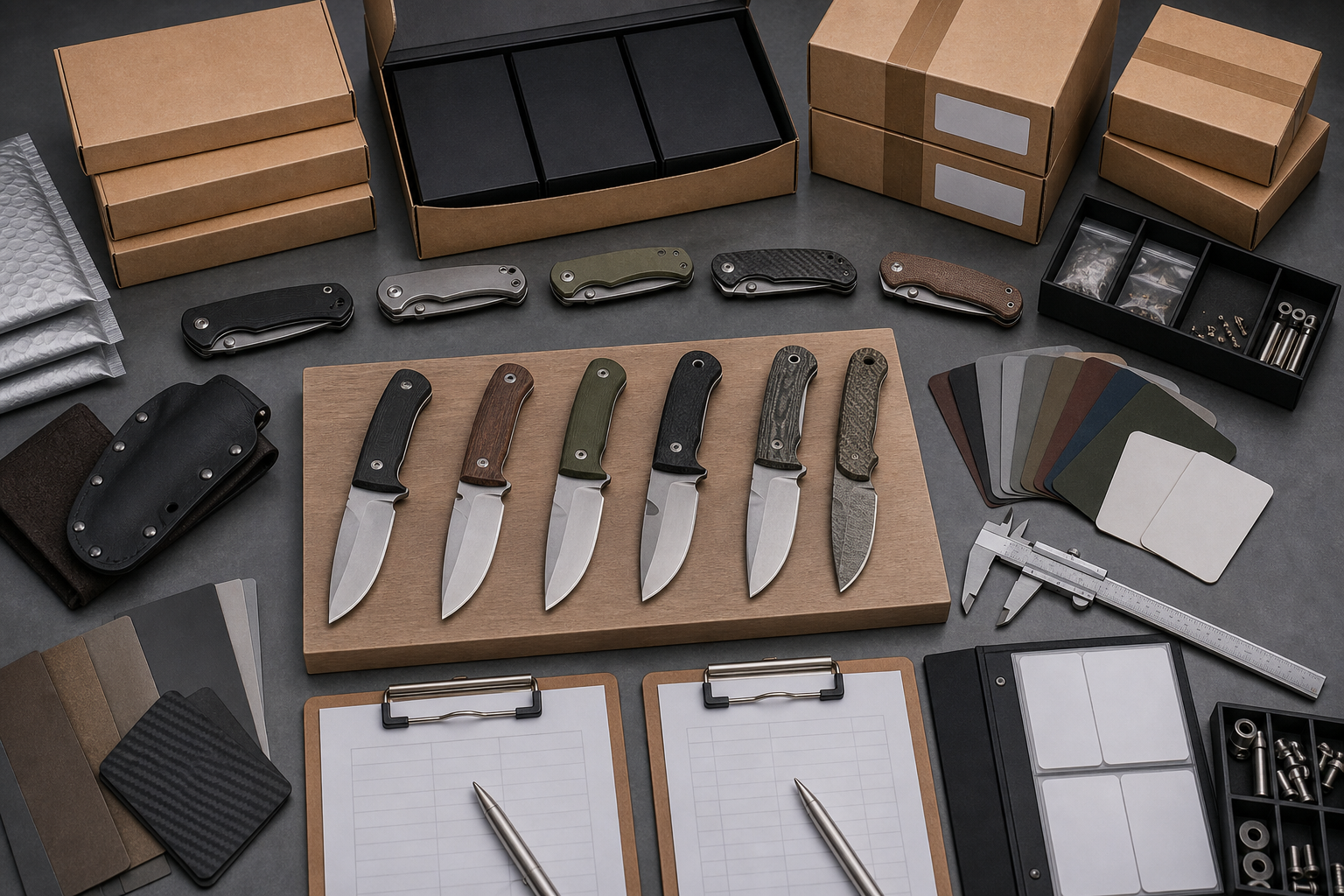
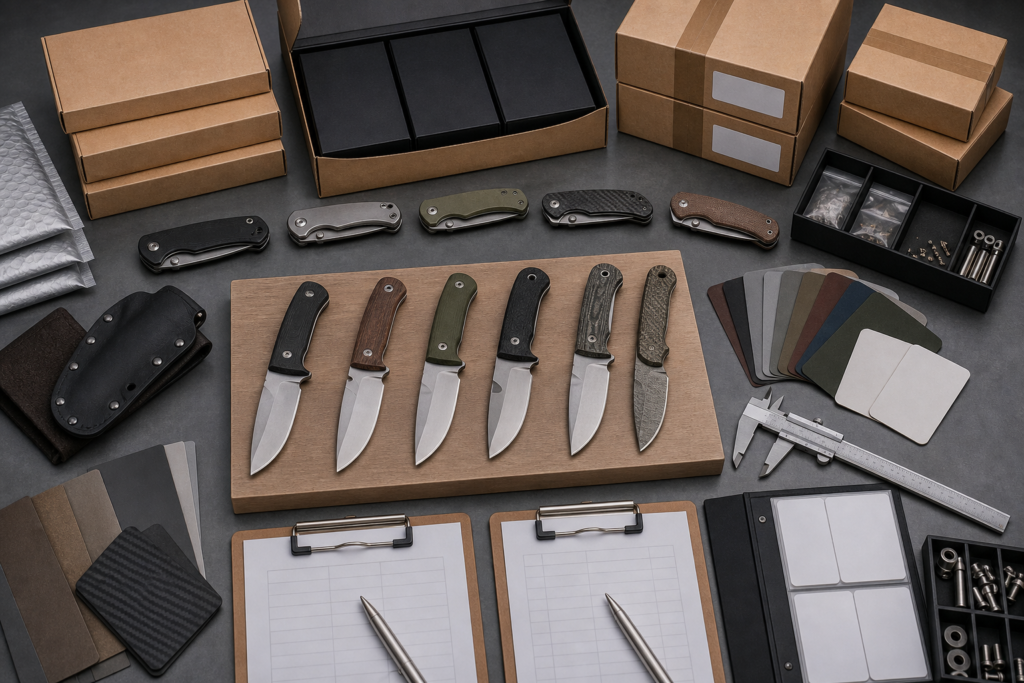
A low quote can look attractive. But the wrong private label knife manufacturer can damage quality, timing, packaging, and your brand.
Buyers can find a trustworthy private label knife manufacturer by checking real product capability, sample-to-production control, material knowledge, QC process, packaging support, IP awareness, communication speed, export experience, and whether the supplier asks practical questions before quoting.
Quick buyer brief:
- Answer: Trust should be verified through evidence, not promises.
- Buyer context: This helps knife brands, outdoor brands, importers, wholesalers, distributors, and private label buyers.
- Key checks: Factory capability, sample control, QC records, material options, packaging, trademarks, compliance, MOQ, target price, lead time, and production follow-up.
Have a knife or multi-tool project in mind?
Send your sketch, CAD file, sample photo, or product idea. Vast State can review manufacturability, suggest materials, estimate MOQ, and prepare a quote for your OEM/ODM project.
When a buyer says they need a private label knife manufacturer they can trust, I know the problem is not only price. The buyer is asking whether the supplier can protect the brand when the project becomes real. Can the supplier understand the target market? Can it suggest workable materials? Can it control the sample? Can it repeat that sample in production? Can it manage packaging and communication without making the buyer chase every detail? That is the difference between a generic supplier and a manufacturing partner.
What Does Trust Mean in Private Label Knife Manufacturing?
Trust can sound emotional. In manufacturing, it should be practical, documented, and visible before the buyer places a serious order.
Trust means the manufacturer can explain what it makes, what it does not make, how it controls samples, how it checks quality, how it communicates risks, and how it protects repeat production.
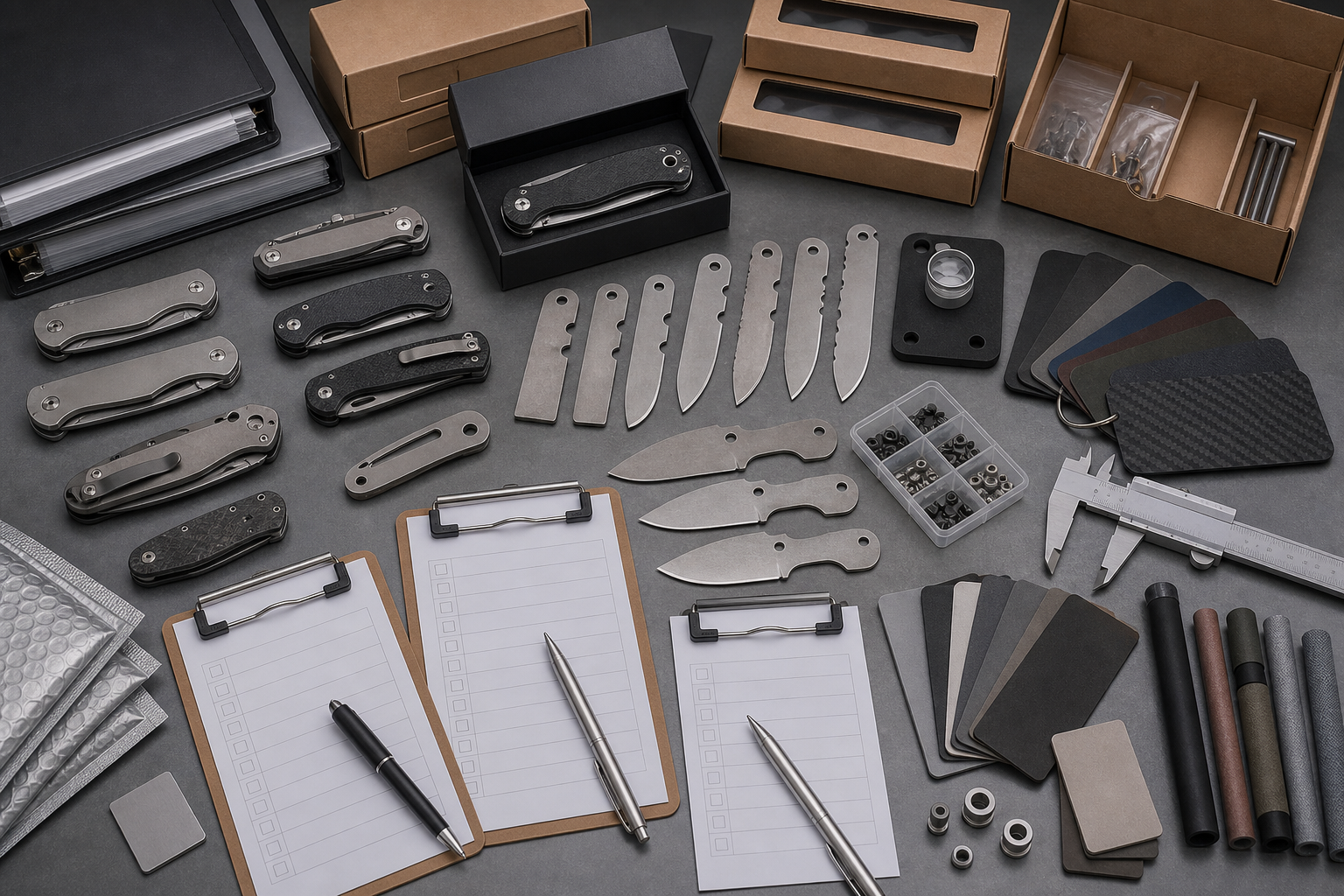
I Define Trust as Repeatable Execution
Trust is not a nice website or a fast reply. Those things help, but they do not prove the supplier can make your knife correctly. In private label knife manufacturing, trust means the supplier can turn your brand idea into a product that can be repeated. It also means the supplier can tell you when a design, price target, material, logo method, or packaging idea is risky.
I usually divide trust into four parts. The first part is capability. Does the manufacturer truly understand folding knives, fixed blade knives, pocket knives, camping tools, rescue tools, or multi-tools? The second part is control. Can the manufacturer control material, heat treatment, handle fit, lock action, sharpness, finish, and packaging? The third part is communication. Does the supplier explain problems early, or only after the deadline is already damaged? The fourth part is commercial fit. Can the supplier support your MOQ, target price, lead time, and repeat-order plan?
This matches the basic idea of due diligence. The U.S. International Trade Administration says good due diligence helps protect a company from problems, loss, and liability, and encourages companies to evaluate partners carefully. I apply that same thinking to private label knife sourcing. A trustworthy manufacturer should give you evidence, not just reassurance.
| Trust area | What it means | Evidence to request |
|---|---|---|
| Capability | The supplier understands your knife type | Similar samples, process explanation, material suggestions |
| Control | The supplier can repeat the approved sample | QC checklist, approved sample, inspection points |
| Communication | The supplier raises risks early | Clear questions, written follow-up, practical alternatives |
| Commercial fit | The supplier fits your business model | MOQ, target price review, lead time plan |
OEM/ODM RFQ Checklist
Prepare these details to help Vast State review your project and provide a more accurate quotation.
| RFQ Field | What to Prepare |
|---|---|
| Project type | OEM from drawing / ODM private label / wholesale catalog |
| Product category | Folding knife / fixed blade / multi-tool / outdoor tool |
| Design status | Idea / sketch / 2D drawing / 3D CAD / physical sample |
| Target price | Ex-factory target price or retail price range |
| MOQ expectation | 500 / 1,000 / 3,000 / 5,000+ pcs |
| Logo method | Laser engraving / etching / printing / molded logo |
| Packaging | Standard packaging / custom retail box / Amazon-ready |
| Market | USA / EU / Japan / Korea / Middle East / other |
| Compliance needs | Buyer-specified testing / documentation / labeling |
| Timeline | Sample deadline / mass production deadline |
How Should Buyers Verify Real Manufacturing Capability?
Many suppliers can show product photos. Fewer can explain how the knife is made and where the risks are.
Buyers should verify manufacturing capability by asking about product category experience, in-house and outsourced processes, sample history, materials, lock structures, finishing options, packaging, inspection steps, and production follow-up.
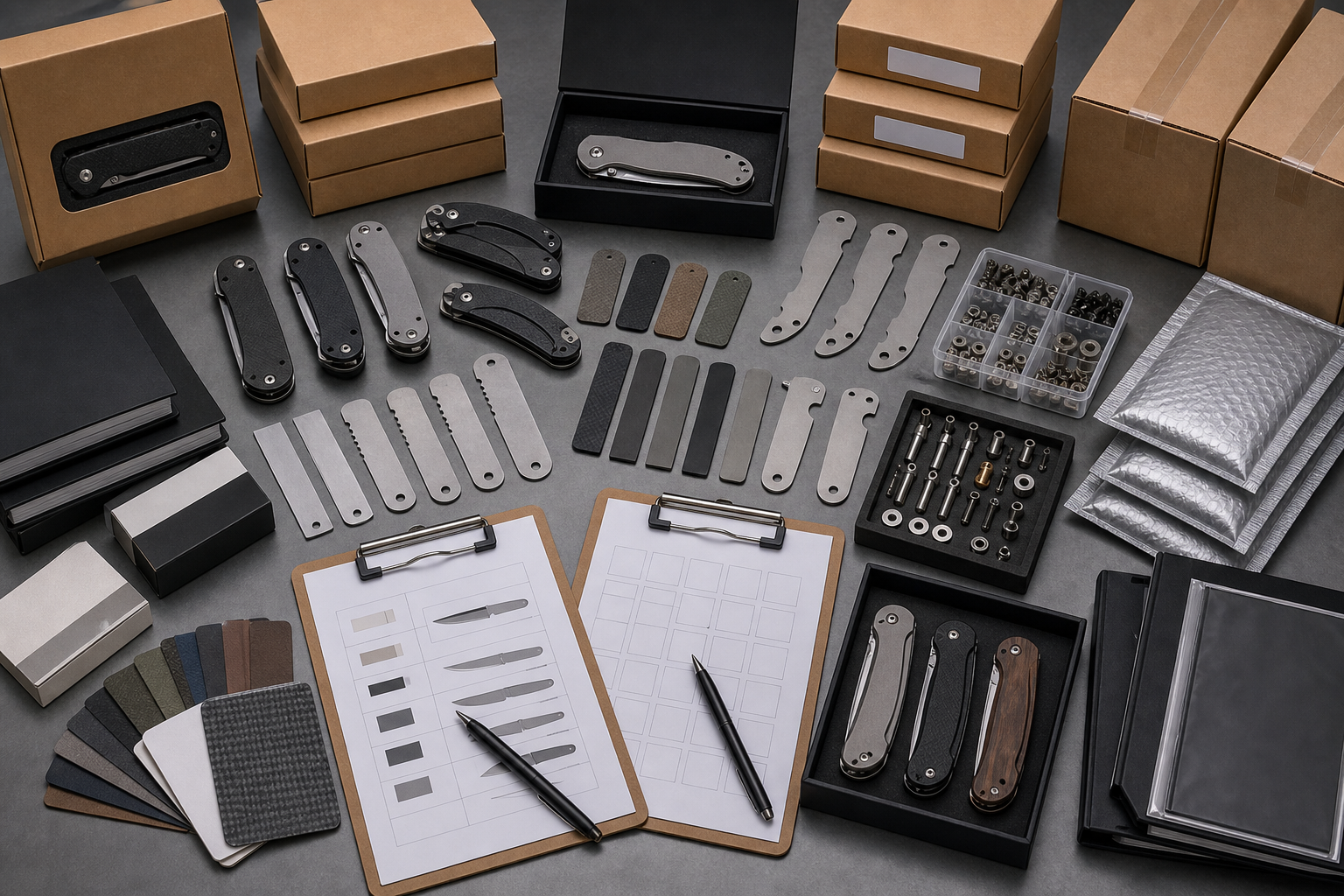
I Ask Process Questions, Not Only Catalog Questions
A catalog can show many knives, but it may not show who made them or how much control the supplier has. I ask process questions because they reveal whether the supplier understands the product. For a folding knife, I ask about pivot fit, washers or bearings, liner lock or frame lock geometry, blade centering, screw torque, handle flatness, and final action. For a fixed blade, I ask about blade blank processing, tang structure, heat treatment, grinding, handle attachment, sheath fit, and edge geometry. For a multi-tool, I ask about part tolerance, spring action, assembly sequence, and function checks.
The supplier does not need to do every process in-house. Many strong manufacturers use trusted partners for heat treatment, coating, packaging, or special materials. The key is whether the manufacturer controls the project and takes responsibility for the result. If the answer to every question is "yes, no problem," I become cautious. A real manufacturer usually explains trade-offs.
Buyers should also ask for relevant samples. If the project is a private label EDC folder, a kitchen knife sample does not prove folding knife capability. If the project needs a rescue tool, a decorative pocket knife does not prove functional development. The evidence should match the project.
| Capability question | Strong answer | Weak answer |
|---|---|---|
| Have you made this knife type before? | Shows relevant samples and explains process | Shows unrelated catalog items |
| What parts are outsourced? | Names process and control method | Avoids the question |
| What risks do you see? | Mentions structure, cost, tooling, or QC risks | Says everything is easy |
| How do you control repeat orders? | Uses approved samples and inspection records | Treats each order as new |
What Questions Reveal a Strong Product Development Partner?
A private label project often starts with a rough idea. If the supplier only quotes, the buyer may miss design and cost problems.
A strong product development partner asks about target market, target price, MOQ, knife type, blade steel, handle material, lock type, finish, packaging, compliance market, and brand positioning before confirming a plan.
I Trust Suppliers Who Push for Clear Inputs
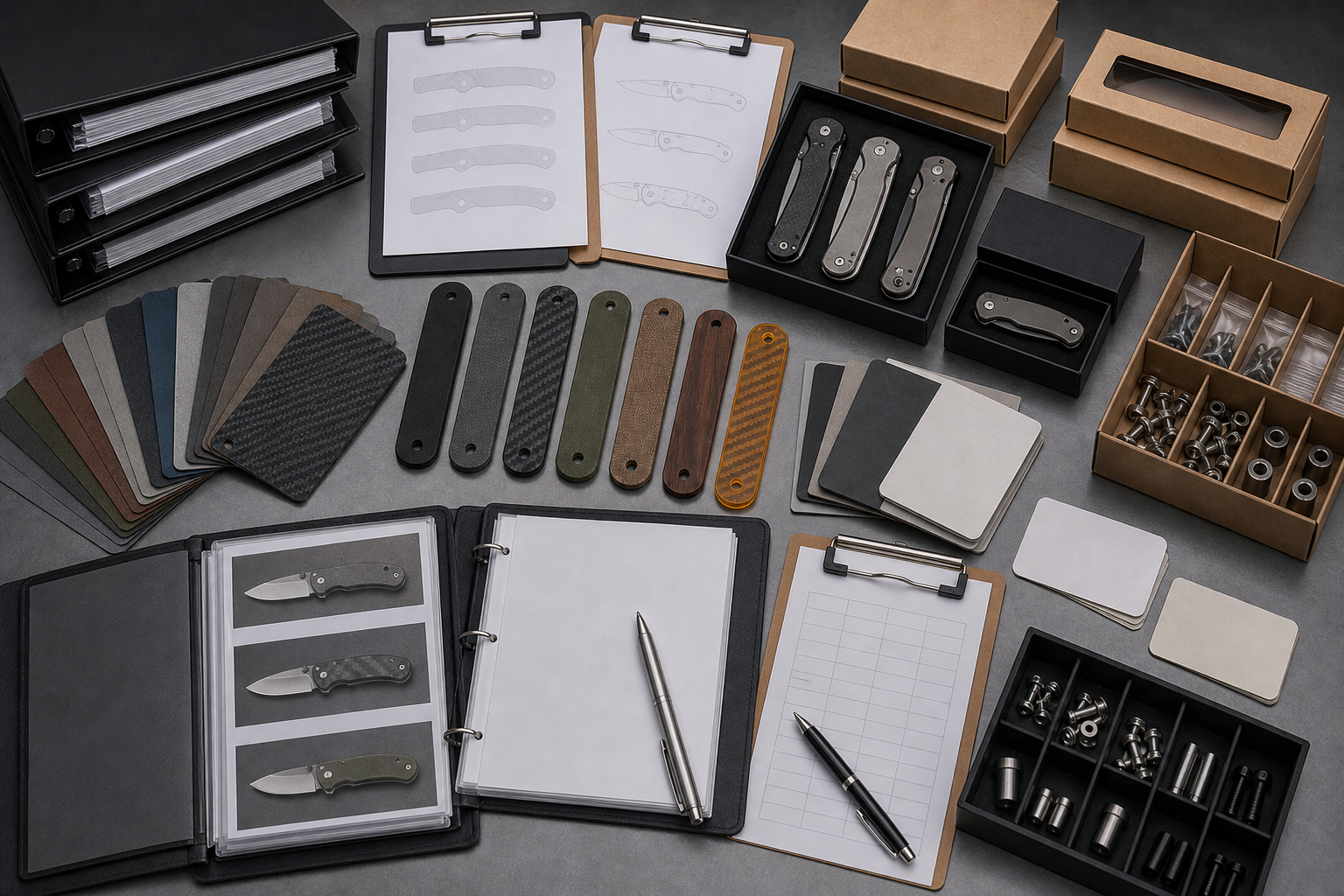
Private label buyers are not always engineers. Some have finished drawings. Some have only a market idea, target price, or competitor reference. A useful manufacturer should help turn that idea into a manufacturable product. That does not mean the manufacturer should blindly copy a reference. It means the manufacturer should ask what the knife must do, who will buy it, what price range it needs, and what features matter most.
At Vast State, I ask these questions early because they save time later. A buyer may want D2 steel, G10 handles, a button lock, and premium packaging at a target price that cannot work. Another buyer may request a thick blade for outdoor strength but also want a very light EDC feel. A good supplier should explain the conflict and offer options. That may include changing steel, reducing machining, choosing another handle material, adjusting the lock, or planning a simpler package.
This is where trust becomes practical. I prefer a supplier who says, "This can work, but here is the risk," over a supplier who says yes to everything. The buyer should listen for specific reasoning. Does the supplier talk about material cost, heat treatment, assembly time, tooling, finishing, and inspection? Or does the supplier only talk about price?
| Development input | Why it matters | What the supplier should do |
|---|---|---|
| Target market | Controls style, function, and compliance needs | Suggest suitable structure and materials |
| Target price | Controls steel, handle, finish, and packaging | Offer realistic cost paths |
| MOQ | Controls tooling and material choice | Match process to quantity |
| Brand positioning | Controls product story | Align design and packaging |
How Should Samples and Quality Control Be Checked?
A beautiful sample can hide mass production risk. The real test is whether the supplier can repeat it consistently.
Buyers should approve a golden sample, define inspection points, check material and hardness where relevant, review function and finish, confirm packaging, and agree how production differences will be handled.
I Treat the Sample as a Contract for Production
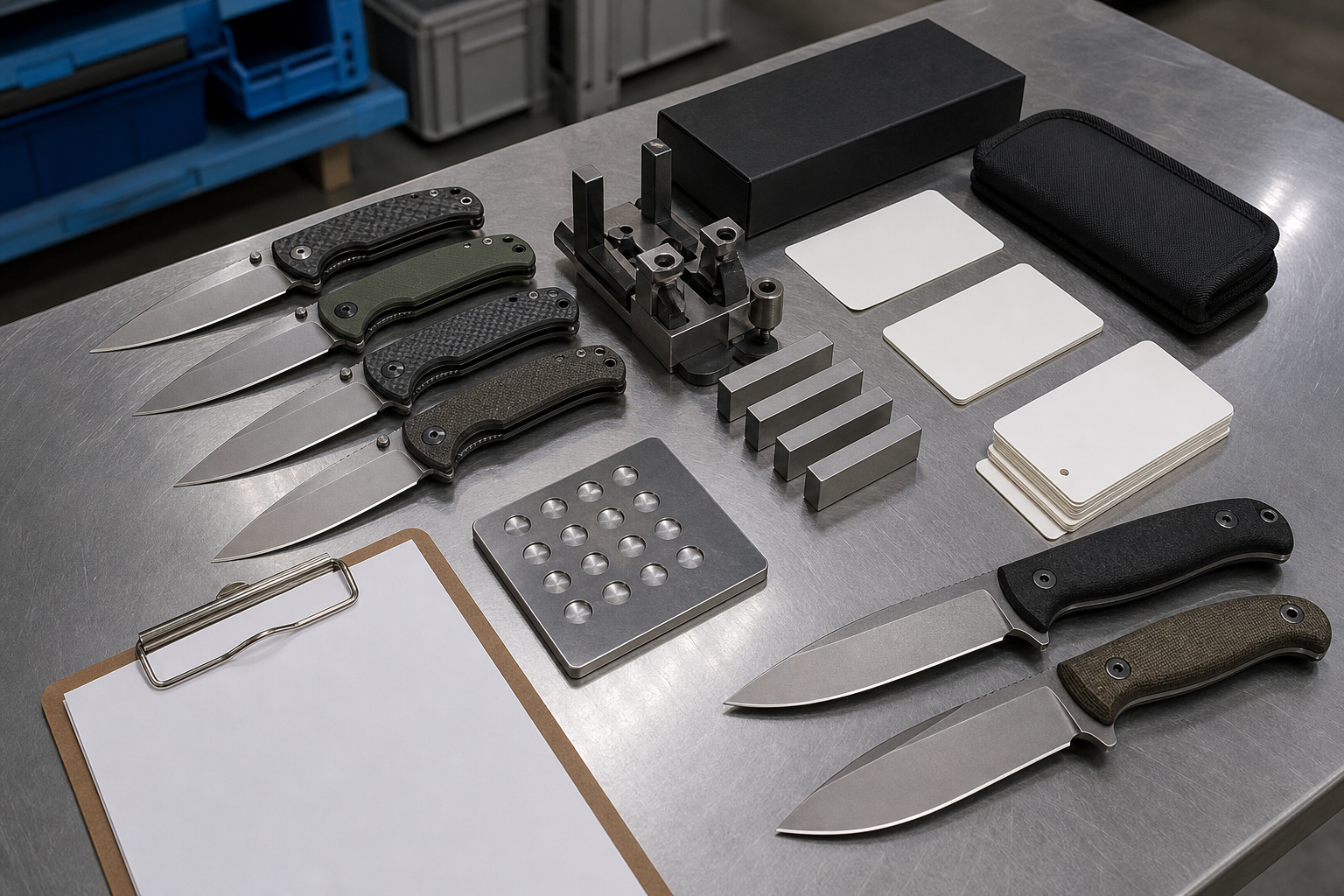
The sample is not only a demonstration. It should become the reference for production. I like to call it the approved sample or golden sample. The buyer and supplier should agree what it represents: blade finish, sharpness, handle color, lock action, blade centering, screw color, logo position, packaging, and carton labels. If the approved sample is vague, mass production will also be vague.
Quality control should begin before final inspection. ISO 9001 explains quality management as a system for consistent products and services, customer expectations, process approach, risk-based thinking, documented information, monitoring, measurement, and continual improvement. In knife manufacturing, those ideas become very practical. Incoming material checks reduce wrong inputs. In-process checks catch machining or heat-treatment problems early. Assembly checks catch lockup, blade play, and screw issues. Final checks confirm sharpness, appearance, function, and packaging.
For blade steel, buyers may also need hardness checks. NIST's Rockwell hardness measurement guide supports the idea that measurement practice matters. A hardness number is useful only when the method is controlled.
I also recommend defining acceptable variation. Natural wood, Micarta, stonewash, anodizing, and molded texture can vary. The buyer should approve a range, not only one perfect photo. This protects both sides.
| QC stage | What to check | Why it protects the buyer |
|---|---|---|
| Incoming material | Steel, handle material, screws, packaging | Prevents wrong inputs |
| In-process inspection | Dimensions, hardness, finish, fit | Finds problems before assembly |
| Assembly inspection | Lockup, blade centering, screw fit, action | Protects user experience |
| Final inspection | Sharpness, appearance, packaging, cartons | Protects sellable product quality |
How Should Buyers Protect Branding, Packaging, and Private Label Details?
Private label projects are not only products. They are brand assets. Poor control can create wrong logos, weak packaging, or IP confusion.
Buyers should confirm logo files, trademark ownership, packaging artwork, barcode needs, carton marks, warning text, brand-use authorization, photo policy, and whether the supplier may display the product publicly.
I Separate Product Manufacturing From Brand Control
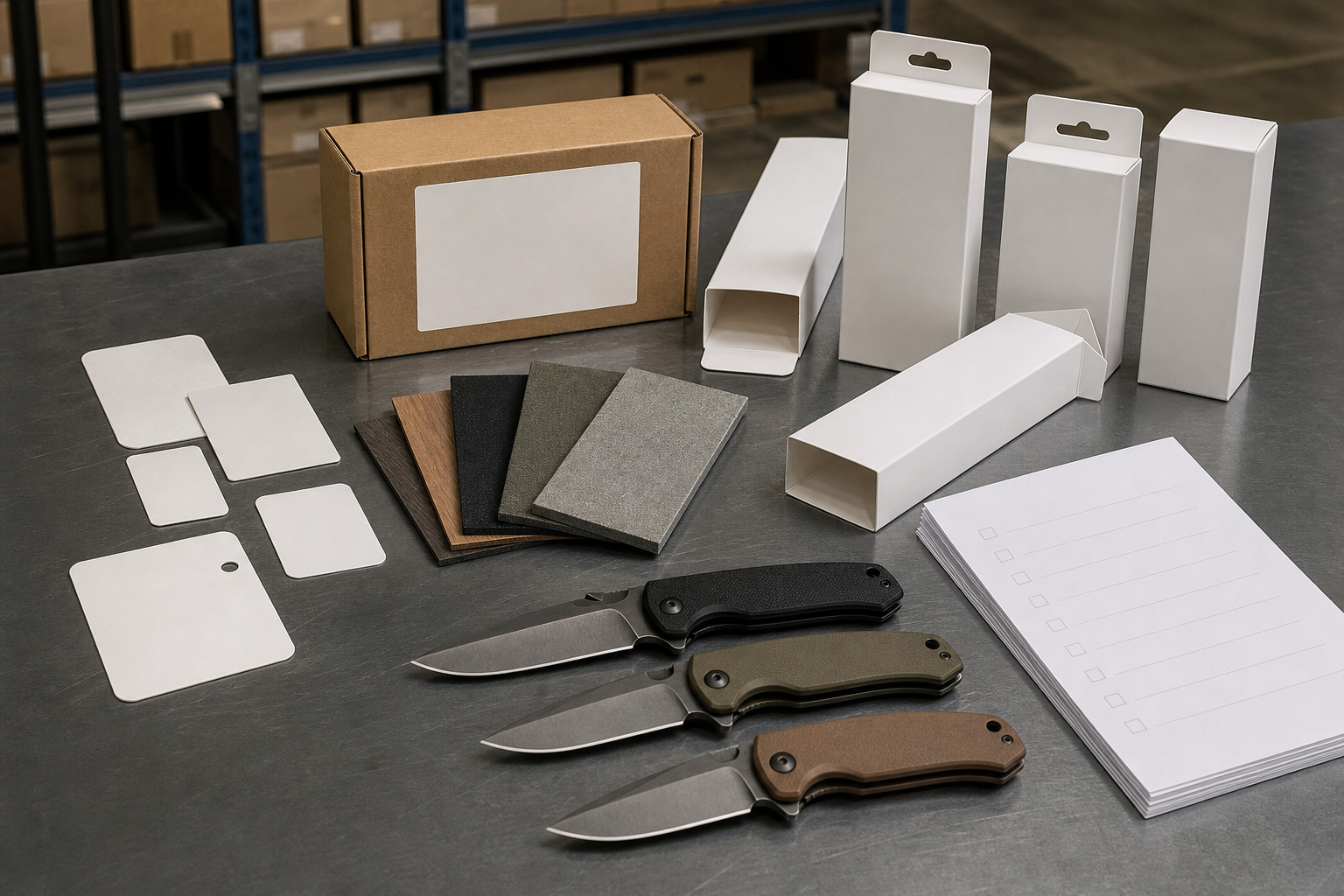
Private label buyers often focus on the knife first, then packaging later. I think the brand details should be controlled early. A knife with the wrong logo position, wrong font, wrong box size, wrong barcode, or wrong carton label can create real trouble. If the product is going into retail, packaging may matter as much as the knife. If the product is going into online sales, the unboxing, images, and product claims matter too.
The buyer should provide clear logo files and confirm who owns the trademark. WIPO's Madrid System is useful context because it supports international trademark management and reminds brand owners to search target markets before filing. It is not a substitute for legal advice, but it shows why brand planning matters when a private label product may be sold in several countries.
Buyers should also discuss confidentiality. Can the supplier show the product on its website? Can the supplier use photos in a catalog? Can it sell a similar design to another customer? These topics should be addressed in purchase documents or agreements, not left to assumptions. A serious supplier should respect brand boundaries and ask before using customer designs publicly.
Packaging claims also need care. If the box says "D2 steel," "titanium," "MagnaCut," "made in," or "complies with," the buyer should have evidence. Unsupported claims create brand risk.
| Brand control point | What to confirm | Why it matters |
|---|---|---|
| Trademark ownership | Buyer owns or may use the brand | Avoids future dispute |
| Logo application | Laser, etch, print, stamp, badge | Controls appearance and cost |
| Packaging artwork | Box, insert, barcode, warning text | Supports retail readiness |
| Product display rights | Supplier may or may not show the product | Protects private label identity |
How Should Communication, Pricing, MOQ, and Lead Time Be Evaluated?
A supplier can be polite and still be risky. Buyers need communication that explains trade-offs before money is committed.
Buyers should evaluate whether the manufacturer gives clear quotes, realistic MOQ, itemized options, sample timelines, lead-time assumptions, risk warnings, and written follow-up that matches the technical discussion.
I Look for Clear Trade-Offs in the Quote
The quotation should help the buyer make decisions. It should not only show one number. A stronger private label knife manufacturer can explain what drives the price: blade steel, handle material, lock type, finish, machining time, packaging, order quantity, and inspection needs. If the buyer asks for a lower price, the supplier should explain what can change. Maybe the buyer can use another steel, simpler handle texture, standard packaging, or higher MOQ. Maybe the target price is not realistic.
MOQ should also be practical. A very low MOQ may sound attractive, but it may not support custom tooling, special materials, color matching, or packaging. A high MOQ may be reasonable for injection-molded parts but unnecessary for CNC-machined G10 handles. The supplier should explain the reason behind the MOQ, not only state a number.
Lead time should include sample time, material sourcing, tooling if needed, production, inspection, packaging, and shipping preparation. If a supplier promises an unusually fast delivery without asking about materials or packaging, I become cautious. Fast can be good, but only when the process supports it.
For international trade, documentation also matters. CBP's Reasonable Care publication gives U.S. importers a useful compliance context. Importers should keep product descriptions, origin, valuation, classification, and documentation organized. A supplier should support accurate product information.
| Commercial item | Strong supplier behavior | Buyer action |
|---|---|---|
| Quotation | Explains cost drivers and options | Compare assumptions, not only price |
| MOQ | Gives a reason linked to process | Ask what changes at different quantities |
| Lead time | Breaks down sample and production stages | Confirm milestones in writing |
| Documentation | Supports accurate product details | Keep import and compliance records |
What Should Buyers Put in a Supplier Scorecard and RFQ?
Without a scorecard, buyers may choose the cheapest quote by habit. That can hide quality and delivery risk.
A useful scorecard should rate product fit, factory capability, sample quality, QC process, communication, price logic, MOQ, packaging support, IP control, compliance support, and repeat-production reliability.
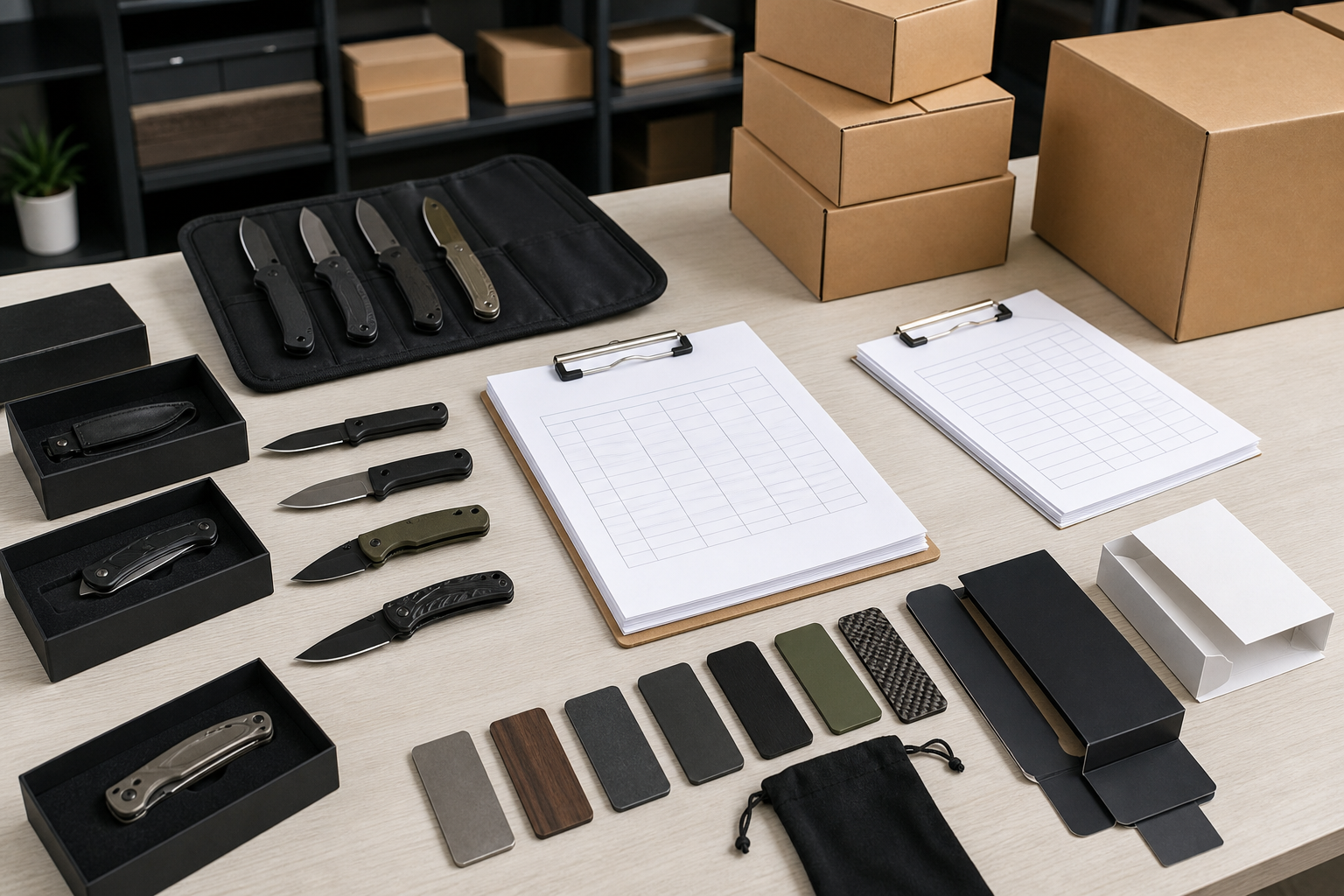
I Want Buyers to Compare Evidence Side by Side
A supplier scorecard makes sourcing less emotional. It lets the buyer compare evidence instead of impressions. I would score each supplier on product-category fit, sample quality, technical feedback, material knowledge, packaging ability, communication, quotation clarity, quality-control process, lead-time realism, and after-sales support. The lowest price should not win automatically. The best fit should win.
The RFQ should be detailed enough to make the scorecard fair. It should include knife type, target user, blade steel, handle material, lock type, finish, logo method, packaging, target market, target price, MOQ, sample deadline, inspection requirements, compliance market, and delivery terms. If the buyer does not know all details, the RFQ should say which parts need supplier suggestions.
Responsible sourcing is also part of trust. The OECD due diligence guidance encourages companies to use a risk-based due diligence framework and engage with business partners to improve over time. For a private label knife buyer, that can mean asking practical questions about material sources, production conditions, subcontracted processes, and problem escalation. It does not mean the buyer must solve everything at once. It means the buyer should not ignore obvious risks.
At Vast State, I prefer this kind of structured conversation. It saves time and helps both sides decide if the project is a real fit. A good RFQ helps us suggest a practical development path instead of guessing.
| Scorecard item | What to score | Good evidence |
|---|---|---|
| Product fit | Matches your knife category | Relevant samples and clear process explanation |
| Quality control | Can repeat approved sample | QC plan, inspection points, records |
| Communication | Explains risks and options | Written follow-up and practical questions |
| Brand support | Handles logo and packaging carefully | Artwork approval process and confidentiality terms |
| Commercial fit | Fits price, MOQ, and lead time | Itemized quote and realistic timeline |
Turn your idea into a quote-ready knife project.
Share your drawing, sample photo, target quantity, market, and packaging needs. Vast State will review manufacturability and prepare OEM/ODM options.
Conclusion
I trust a private label knife manufacturer when its capability, sample control, QC, communication, branding support, and repeat production can be verified.
Source Notes
- Trade.gov due diligence guidance supports partner evaluation, background checks, and ongoing due diligence.
- ISO 9001 explained supports the quality-management, process-control, documented-information, and continuous-improvement discussion.
- WIPO Madrid System supports trademark search and international brand-protection planning for private label buyers.
- CBP Reasonable Care gives U.S. importers compliance context for product descriptions, origin, valuation, classification, and documentation.
- OECD due diligence guidance supports risk-based due diligence and responsible supplier engagement.
- NIST Rockwell hardness guidance supports controlled hardness measurement when blade steel performance is part of QC.