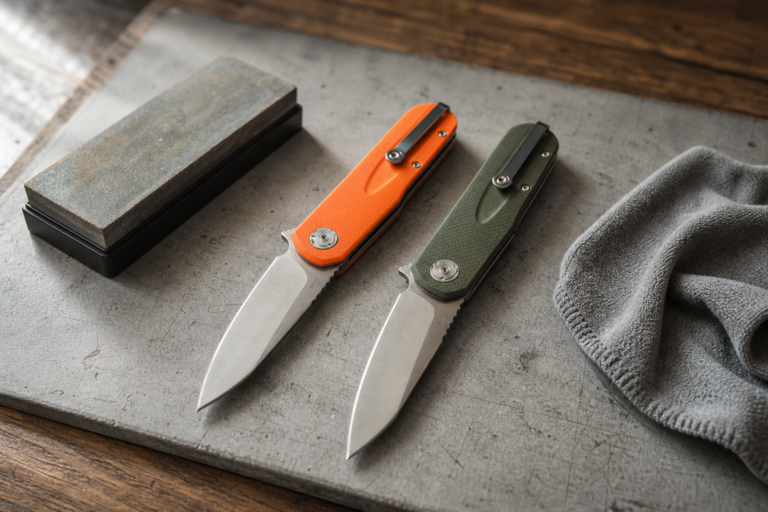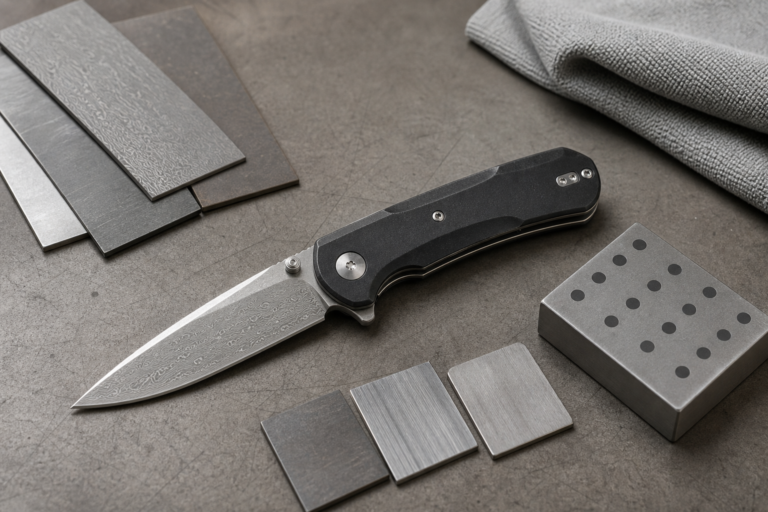
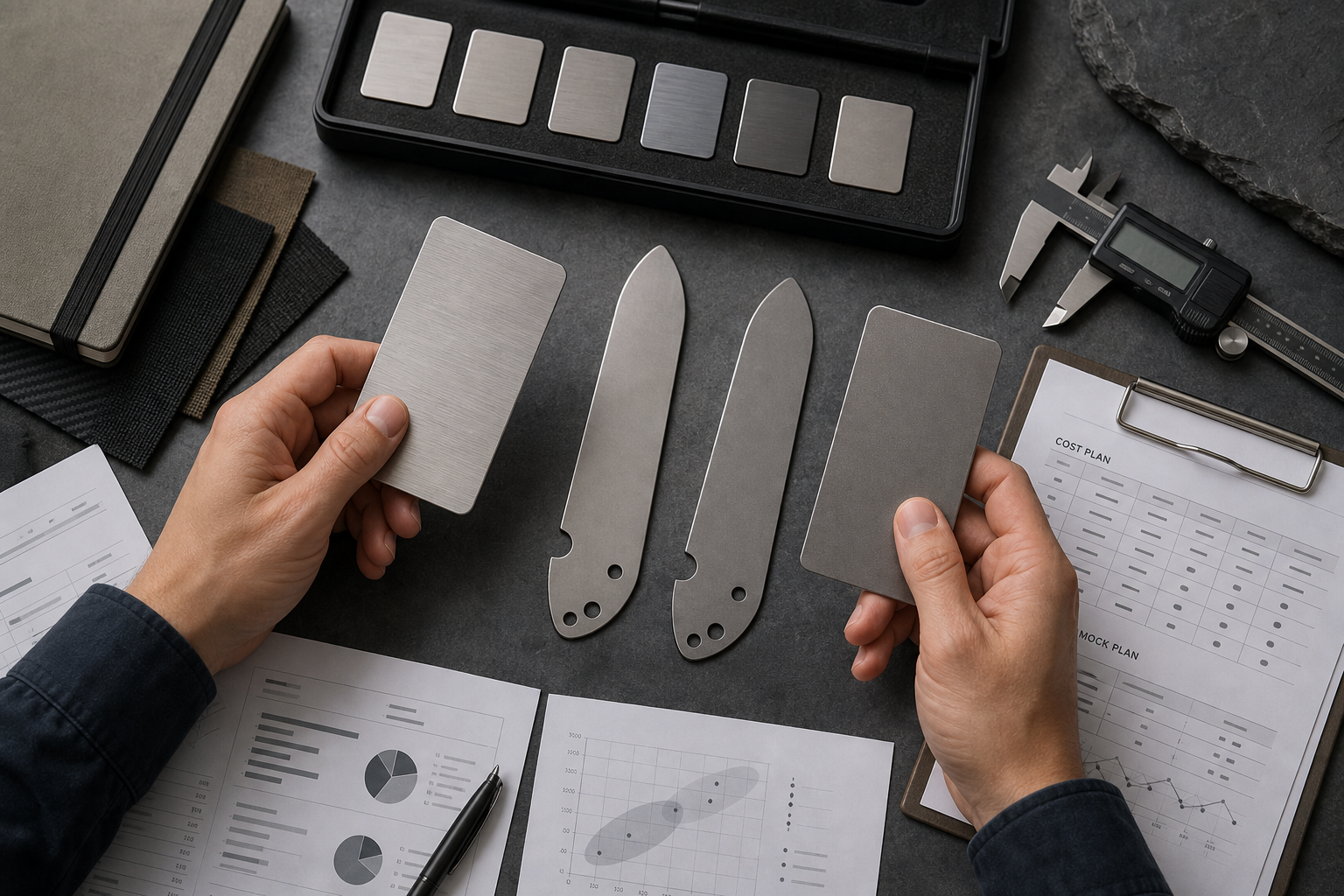
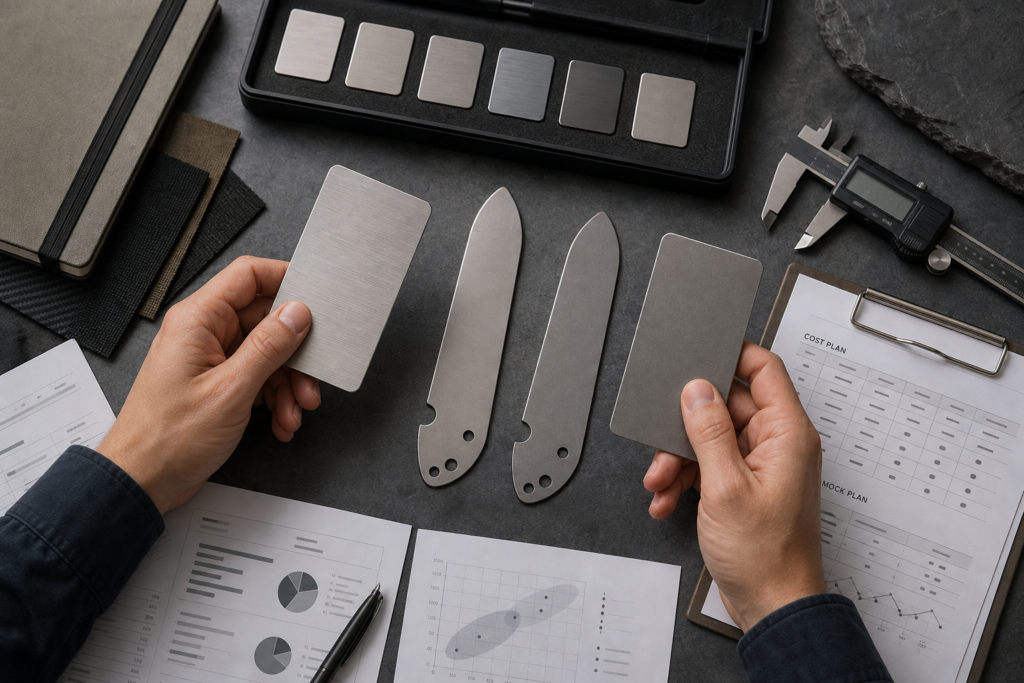
Steel comparisons can sound simple, but wrong choices hurt cost, sampling, and reviews. I compare CPM S30V and 154CM through product fit.
CPM S30V usually fits higher-positioned pocket knives that need stronger wear resistance, toughness, and a premium steel story. 154CM often fits balanced pocket knives that need stainless performance, proven cutlery use, easier positioning, and more flexible cost planning.
Quick buyer brief:
- Answer: Choose CPM S30V for a higher material story; choose 154CM for balanced value and easier specification control.
- Buyer context: B2B buyers must match steel choice with target price, MOQ, heat treatment, grinding, QC, and branding.
- Key checks: Steel composition, heat treatment, hardness target, edge retention, corrosion resistance, machinability, sharpening expectation, and proof records.
Planning a knife project with this steel?
Send us your target market, MOQ, price range, and blade type. Vast State can help you choose the right steel, HRC range, finish, handle material, and QC requirements for OEM/ODM production.
When a customer asks me whether CPM S30V or 154CM is better, I avoid a one-word answer. A steel can be better for one product and wrong for another. CPM S30V has a stronger premium message and useful wear-resistance story. 154CM has a long cutlery history and can still support a capable stainless pocket knife. But the real decision depends on the product tier, target price, blade geometry, heat treatment, grinding cost, sharpening expectation, packaging claim, and repeat-production control. For OEM/ODM work, the best steel is the one that helps the buyer sell the knife and repeat it consistently.
What Should Buyers Define Before Comparing CPM S30V And 154CM?
Steel choice can distract from the product goal. If the buyer has no price or market direction, the comparison becomes noise.
Buyers should define target market, price level, blade size, use scenario, sharpening expectation, finish, MOQ, packaging claim, and QC evidence before choosing CPM S30V or 154CM.
I Start With Positioning, Not Steel Pride
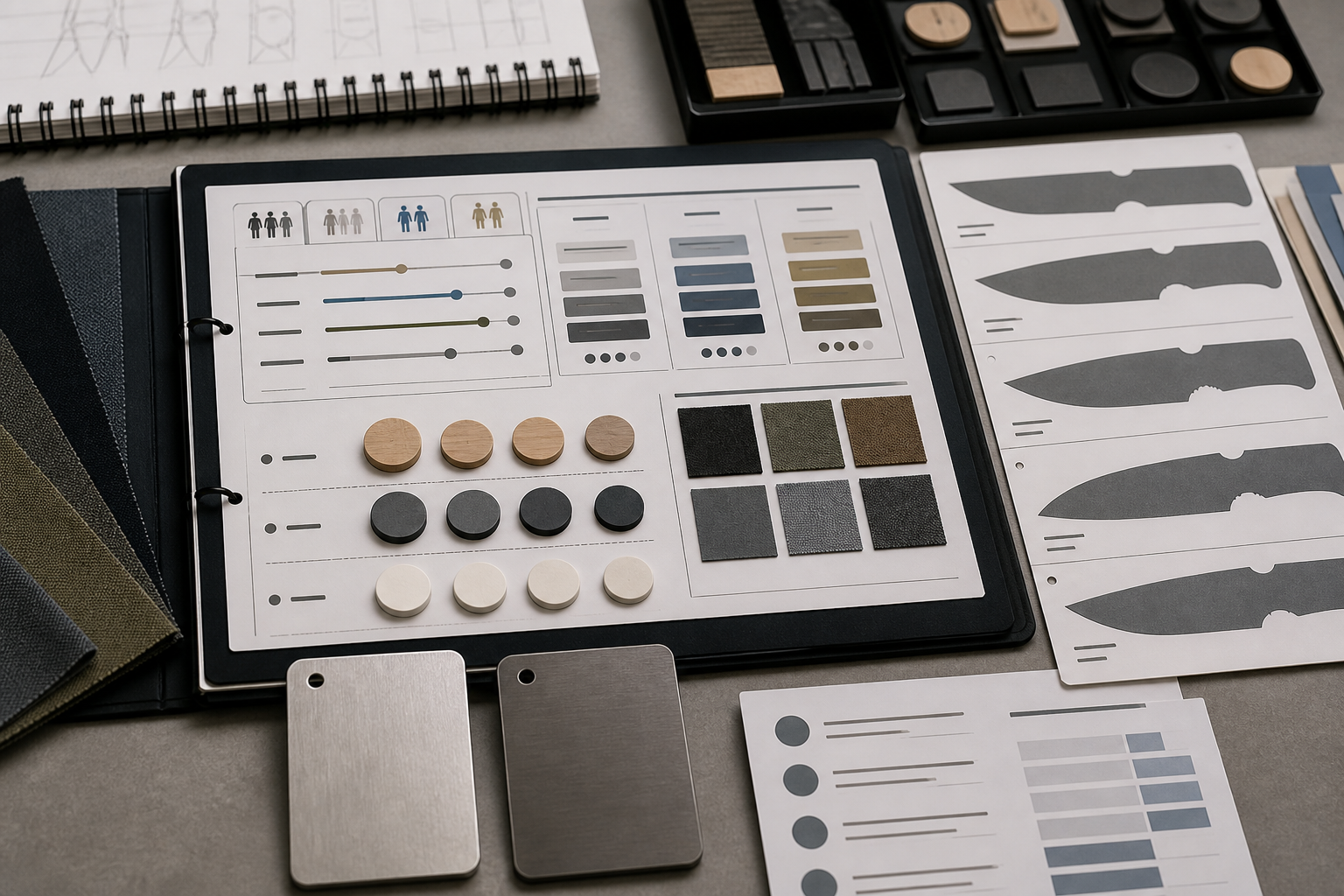
Both steels can make useful pocket knives. The question is not whether one name sounds better. The question is which steel supports the buyer's market. A buyer selling a higher-positioned EDC knife may need a steel story that helps justify price. A buyer building a broader utility line may need a stainless steel that balances cost, performance, sharpening, and stable production.
I ask about the sales channel first. Is the product for an outdoor brand, a private label catalog, an online EDC launch, a wholesale program, or a distributor line? I also ask about target price and expected repeat quantity. If the steel cost makes the final knife too expensive for the buyer's channel, the steel name will not solve the problem.
Blade geometry matters too. A thin slicer, compact EDC folder, heavier outdoor pocket knife, and small utility knife do not need the same balance. Heat treatment, grinding, finishing, and sharpening plan must follow the chosen direction. I prefer to define the product brief first, then compare CPM S30V and 154CM against that brief.
| Planning point | Buyer decision | Why it matters |
|---|---|---|
| Product tier | Value, mid-range, higher-positioned | Guides steel budget |
| Use scenario | Daily carry, outdoor, utility, collector-style | Guides toughness and edge needs |
| Target price | Factory target and market retail range | Controls material path |
| QC evidence | Hardness, finish, sample match, batch records | Protects repeat orders |
Quote-ready RFQ Checklist for This Steel
To get an accurate OEM/ODM quote, prepare these details before contacting a knife manufacturer.
| RFQ Field | What to Prepare |
|---|---|
| Product type | Folding knife / fixed blade / multi-tool / kitchen knife |
| Target market | US / EU / outdoor retail / promotional / tactical / EDC |
| Steel option | 4116 / 14C28N / D2 / N690 / Nitro-V |
| Target HRC | Example: 55-57 HRC, 58-60 HRC |
| Blade finish | Satin / stonewash / black coating / bead blast |
| Handle material | G10 / micarta / aluminum / stainless steel / wood |
| Lock or structure | Liner lock / frame lock / slip joint / full tang |
| Estimated quantity | 500 / 1,000 / 3,000 / 5,000+ pcs |
| Packaging | White box / color box / blister / pouch / gift box |
| Required documents | Drawing / sample photo / logo file / packaging artwork |
What Does CPM S30V Offer For Pocket Knife Projects?
CPM S30V can help a product feel more serious, but it also asks for stronger process control and clearer cost planning.
CPM S30V offers a powder-metallurgy stainless steel option with vanadium carbide wear resistance, useful toughness, corrosion resistance, and a stronger material story for higher-positioned pocket knives.
I Use CPM S30V When The Product Needs A Stronger Steel Story
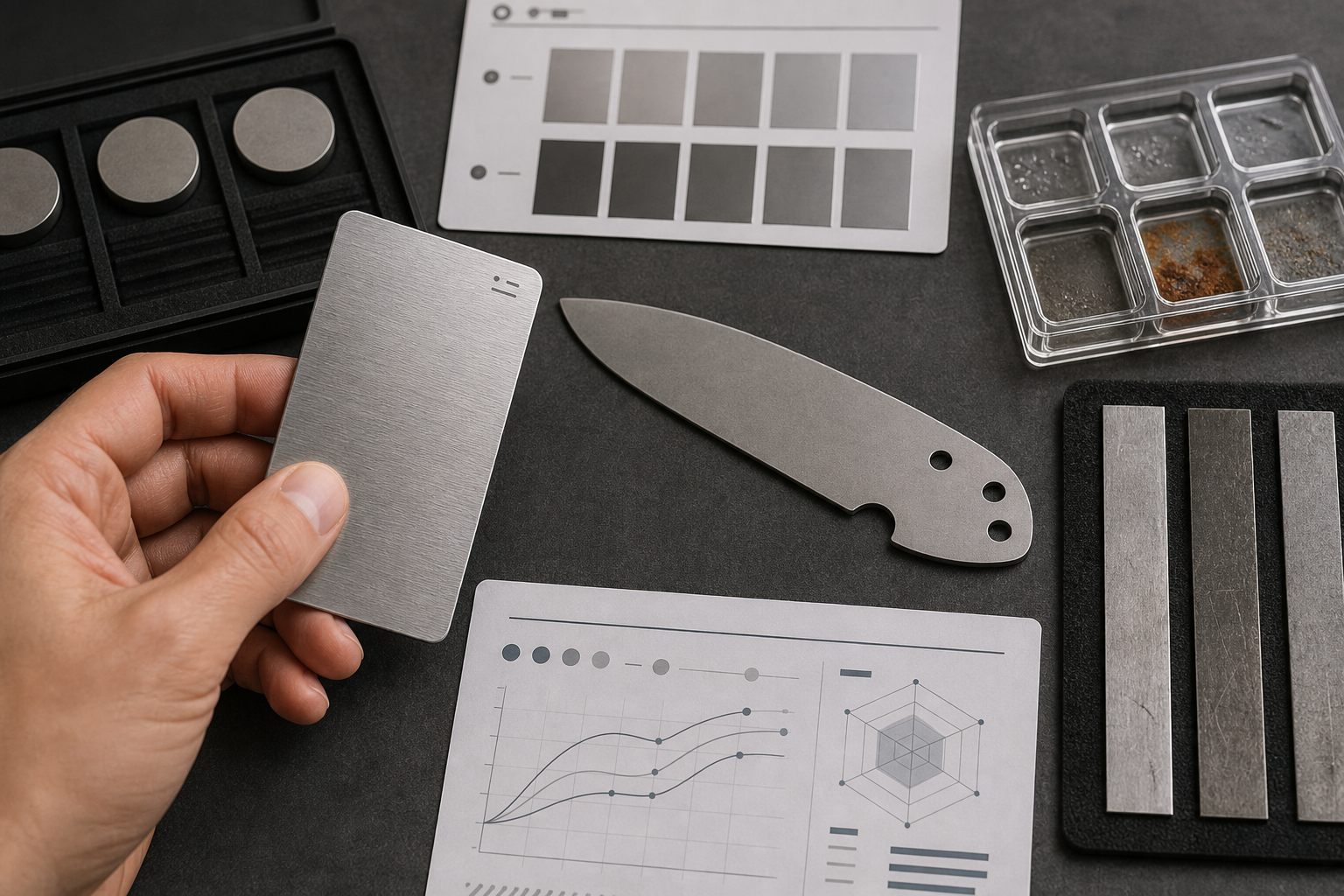
Niagara Specialty Metals' CPM S30V data sheet lists a typical composition of 1.45 carbon, 14.00 chromium, 2.00 molybdenum, and 4.00 vanadium. It describes CPM S30V as a martensitic stainless steel designed for a balance of toughness, wear resistance, and corrosion resistance. It also explains that the chemistry promotes vanadium carbides, which support wear resistance.
For B2B buyers, this gives CPM S30V a useful product story. It can support a higher-positioned pocket knife, especially when the buyer wants better edge-retention messaging and a recognized steel name. But I still do not treat the steel as magic. The final knife depends on heat treatment, blade geometry, edge thickness, finish, sharpening, and QC records.
CPM S30V may also influence cost and process planning. The data sheet says similar grinding equipment and practices used for high-speed steels are recommended, and it points to suitable grinding wheel types for CPM steels. In factory terms, I need to check grinding time, belt or wheel choice, heat control, and rework risk. CPM S30V can be a strong choice, but it should be selected with the full process in mind.
| CPM S30V factor | Practical meaning | Buyer impact |
|---|---|---|
| Powder metallurgy | More uniform carbide distribution than conventional processing | Supports premium material story |
| Vanadium content | Strong wear-resistance contribution | Helps edge-retention positioning |
| Stainless base | Useful corrosion resistance | Supports EDC and outdoor market fit |
| Grinding need | Requires controlled abrasive process | Affects cost and production planning |
What Does 154CM Offer For Pocket Knife Projects?
154CM can be easy to underestimate because it is not the newest steel. That can cause buyers to miss a balanced option.
154CM offers a proven martensitic stainless steel option with carbon, chromium, and molybdenum content, useful cutlery history, good stainless performance, and practical value for balanced pocket knife lines.
I Use 154CM When Balance Matters More Than Steel Drama
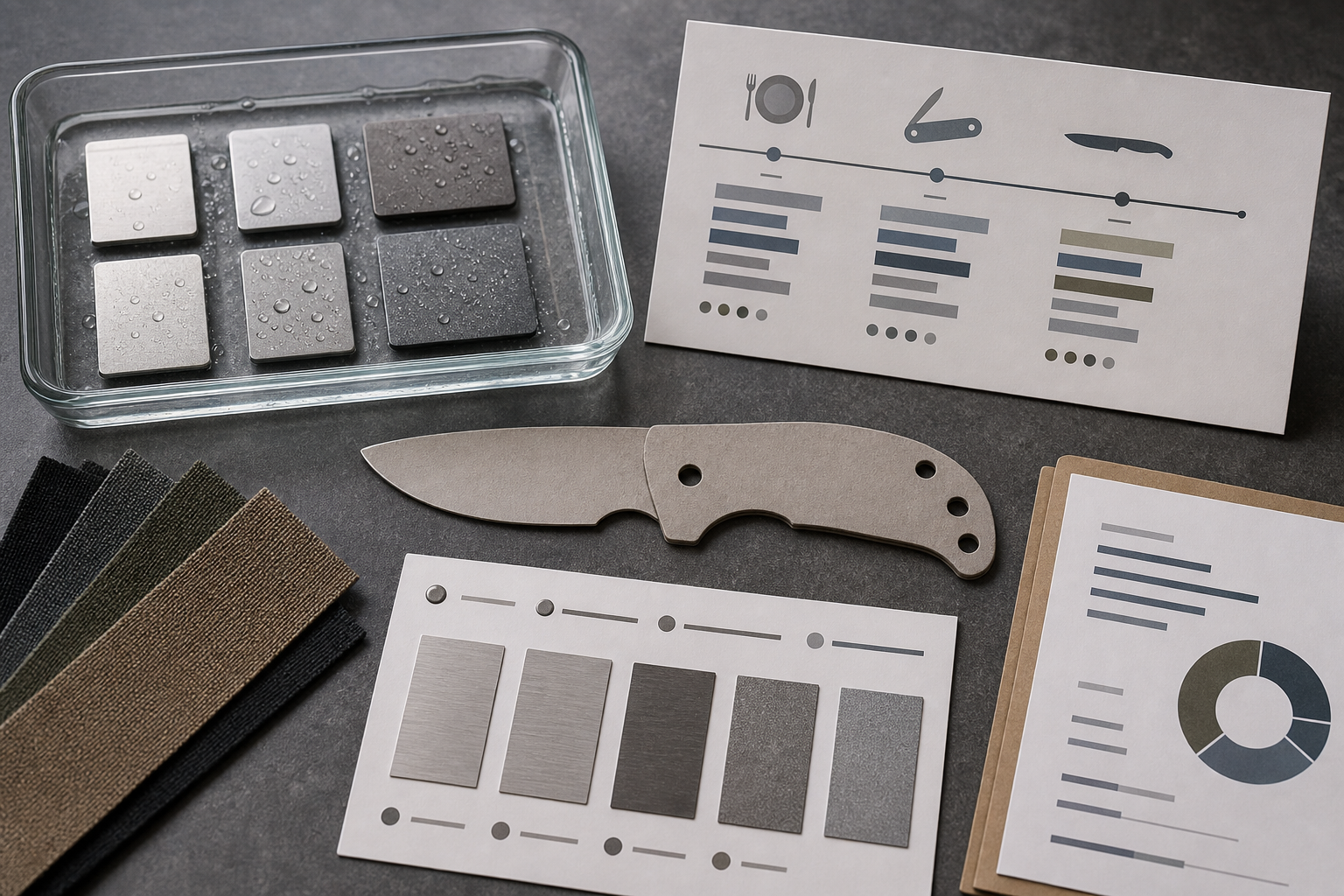
Niagara Specialty Metals' 154CM data sheet lists a typical composition of 1.05 carbon, 14.00 chromium, and 4.00 molybdenum. It describes 154CM as a modification of 440C martensitic stainless steel with added molybdenum. The sheet also notes typical applications including cutlery, bearings, valve ports, and bushings.
For pocket knife projects, I see 154CM as a practical material path when the buyer wants a stainless blade with a known cutlery background but does not need the stronger premium signal of CPM S30V. It can fit a balanced EDC line, distributor catalog, or private label product where cost control and reliable positioning matter.
The 154CM data sheet also gives useful manufacturing warnings. It states that 154CM is a little more difficult to machine than 440C because of higher carbide volume, and it includes heat-treatment details and target hardness guidance. This matters because a buyer should not choose 154CM only because it sounds familiar. The factory still needs process control, proper heat treatment, grinding control, and final hardness records.
| 154CM factor | Practical meaning | Buyer impact |
|---|---|---|
| Conventional stainless steel | Proven martensitic stainless route | Supports balanced product positioning |
| Molybdenum content | Improves stainless performance versus older baseline steels | Helps value story |
| Cutlery use | Data sheet lists cutlery as a typical application | Supports pocket knife relevance |
| Process needs | Still needs controlled machining and heat treatment | Protects consistency |
How Do Edge Retention, Toughness, And Corrosion Resistance Compare?
Simple comparison charts can mislead buyers. A pocket knife needs a balance, not only one winning number.
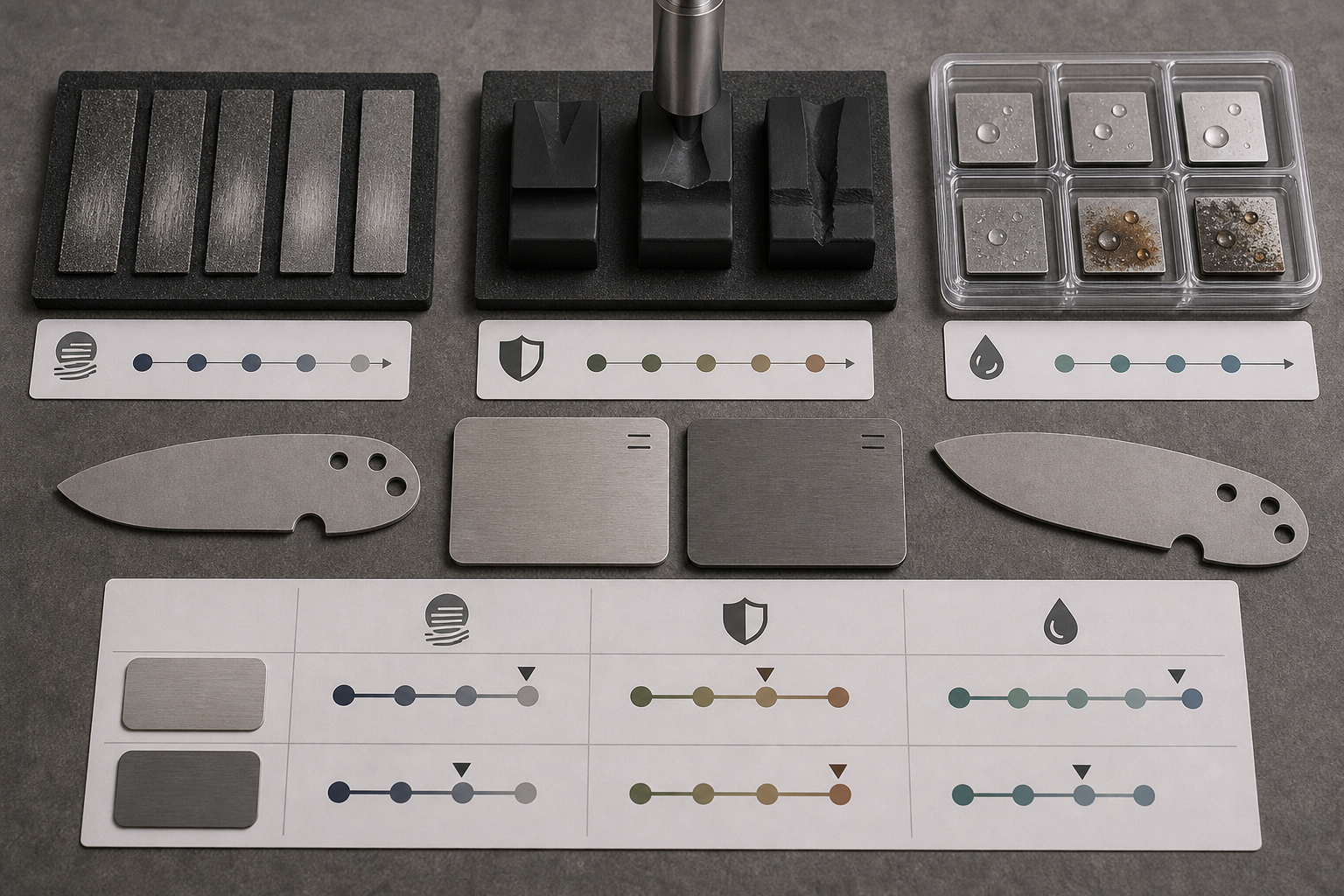
CPM S30V generally gives a stronger wear-resistance and premium-performance story. 154CM gives a balanced stainless option. The better choice depends on blade geometry, heat treatment, target price, and user expectations.
I Compare Performance Against The Knife's Job
The CPM S30V data sheet includes relative comparisons that present CPM S30V ahead of 154CM in transverse toughness and CATRA edge-retention comparison in that data set. I use those points carefully. They support the idea that CPM S30V can offer stronger performance potential, but they do not replace testing of the actual pocket knife design.
For an OEM/ODM pocket knife, edge retention depends on more than steel grade. It also depends on heat treatment, final hardness, blade thickness, edge angle, grinding heat, sharpening quality, and user expectations. A buyer who wants long edge life may prefer CPM S30V. A buyer who wants a more balanced and easier-to-position product may still choose 154CM.
Corrosion resistance also needs real use context. Both are stainless grades, but no stainless steel should be sold as maintenance-free. Humidity, salt, acidic residue, and poor drying can still create problems. I prefer careful language: better corrosion resistance helps, but care instructions and surface finish still matter. The buyer should choose the steel that supports both product performance and honest marketing.
| Performance area | CPM S30V direction | 154CM direction |
|---|---|---|
| Edge retention | Stronger wear-resistance story | Balanced edge retention |
| Toughness | Strong potential in data sheet comparison | Useful when geometry and heat treatment are controlled |
| Corrosion resistance | Stainless option with strong positioning | Stainless option with practical value |
| Sharpening expectation | May need stronger user education | Often easier to position for broad buyers |
Why Does Heat Treatment Decide The Real Result?
A steel name can sell the sample, but heat treatment decides whether the blade performs consistently in production.
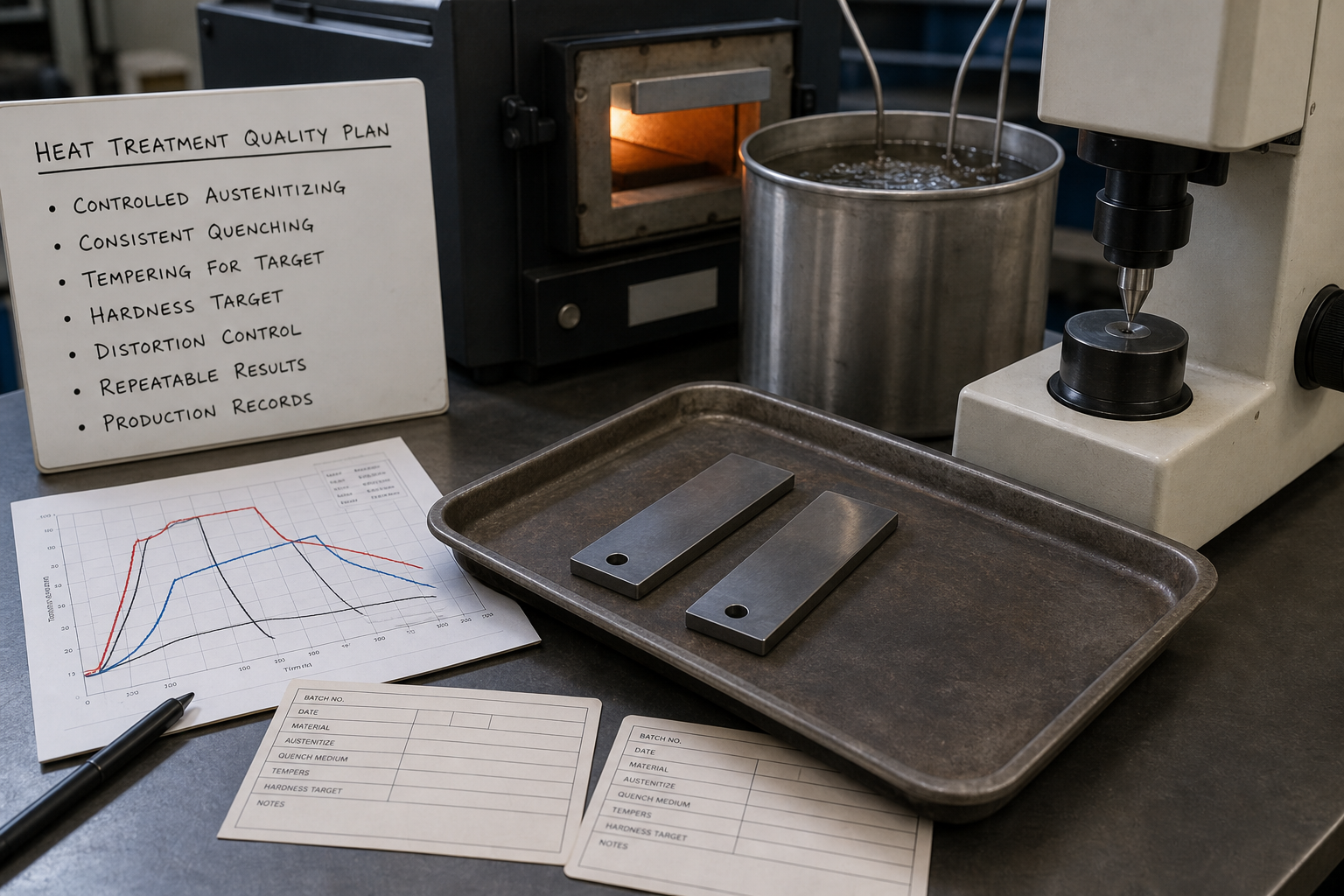
Heat treatment should define austenitizing, quenching, tempering, hardness target, retained-austenite control, distortion control, and batch records for both CPM S30V and 154CM.
I Ask For Heat-Treatment Records, Not Just Steel Labels
The S30V data sheet lists a recommended heat-treatment practice with a target hardness range of 58 to 61 HRC. The 154CM data sheet lists an aim hardness of HRC 55 to 62 and includes heat-treatment response data. I do not use these numbers as automatic targets for every knife. I use them as a starting point for discussion with the buyer and heat-treatment team.
For pocket knives, the target hardness should match the steel, blade geometry, edge thickness, and market expectation. A higher hardness may support edge holding, but it can also increase chipping risk if the geometry is too thin or the product is used roughly. A lower hardness may improve toughness feel, but it may reduce edge life. The best result comes from balancing steel, process, geometry, and QC.
The NIST Rockwell hardness measurement guide is useful because it explains that Rockwell hardness measurement can vary and that good practice helps reduce errors. In production, I translate that into practical records: test method, test location, batch number, target range, sample count, and approval standard. The steel name should be backed by measurable process control.
| Heat-treatment item | What to define | Why it matters |
|---|---|---|
| Target hardness | HRC range for the product | Controls edge and toughness balance |
| Quench and temper | Process route and record | Supports repeatability |
| Test method | Rockwell practice and location | Reduces measurement confusion |
| Batch records | Heat lot, blade lot, inspection result | Supports B2B confidence |
How Do Machining, Grinding, And Finishing Affect Cost?
Buyers often compare steel price only. The hidden cost is machining time, grinding control, finish difficulty, and scrap risk.
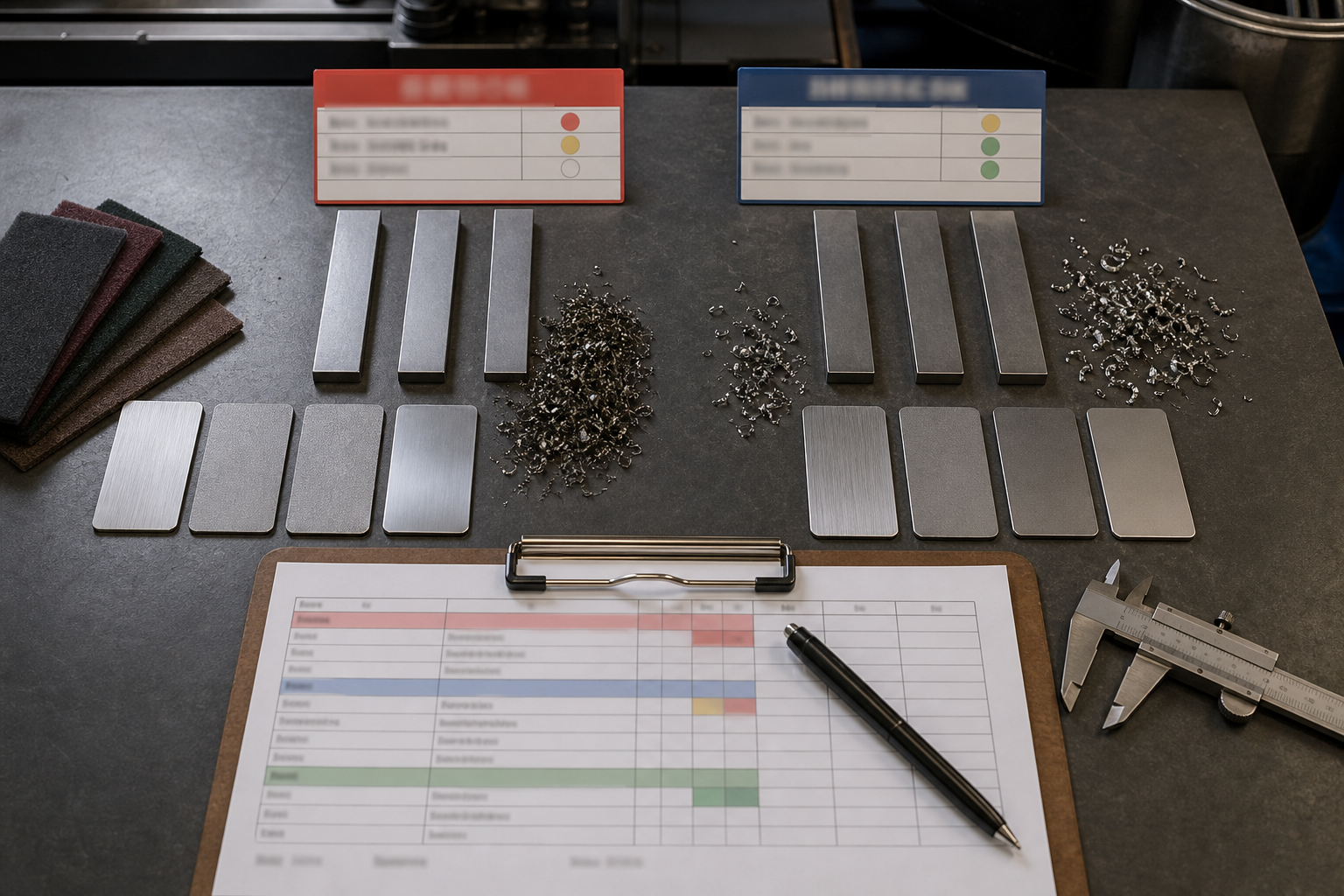
Machining, grinding, finishing, and sharpening can make CPM S30V more demanding than a simpler material path. 154CM can still need care, but may support a more balanced cost plan.
I Quote The Process, Not Only The Steel
Material cost is only one part of the quotation. A steel that takes longer to grind, finish, or sharpen can raise the final product cost. A steel that increases rework risk can also affect lead time. This is why I do not answer steel questions with material price alone.
The CPM S30V data sheet mentions grinding practices and suitable abrasive choices for CPM steels. This matters in production because blade grinding creates heat and can affect the edge area if not controlled. It also affects belt or wheel consumption, operator time, and finish consistency. A buyer choosing CPM S30V should expect the factory to plan grinding and sharpening carefully.
154CM also has process considerations. Its data sheet says it is a little more difficult to machine than 440C due to higher carbide volume. That means it is not a low-effort steel just because it is older or more familiar. The difference is that 154CM may fit a more balanced value position when the buyer does not need CPM S30V's stronger premium material story. I prefer to quote both steels with process notes, not just a price line.
| Cost driver | What I check | Buyer impact |
|---|---|---|
| Steel procurement | Availability, size, minimum order | Affects MOQ and lead time |
| Machining | Holes, profile, tang, lock area | Affects tolerance cost |
| Grinding | Bevel time, heat control, abrasive need | Affects blade consistency |
| Finishing | Satin, stonewash, coating, polish | Affects appearance and rework |
What QC Records Should Buyers Require For Repeat Orders?
A first sample can look good, but repeat orders need evidence. Without records, steel choice becomes hard to verify.
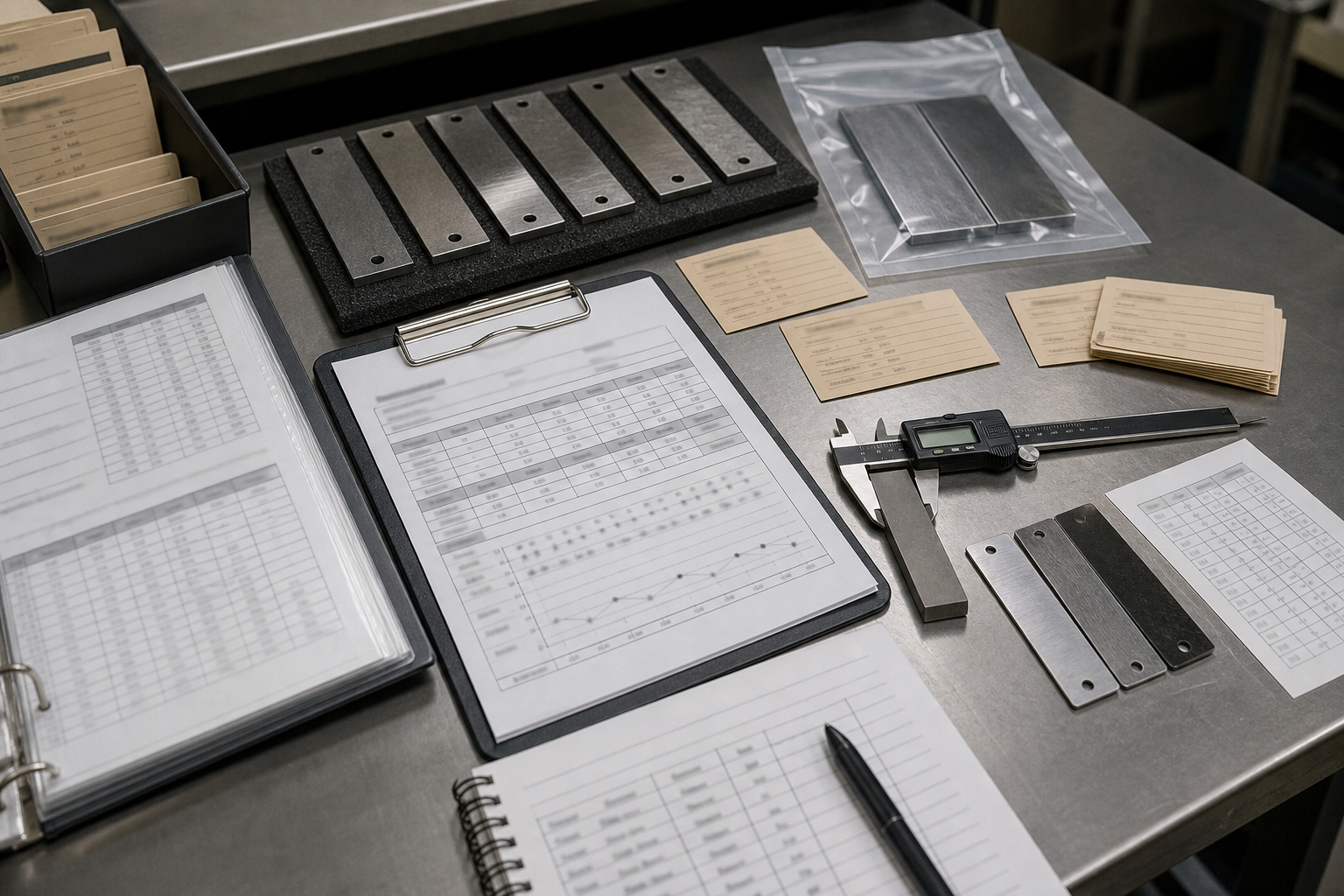
Buyers should require steel grade confirmation, heat-lot records, hardness reports, blade dimension checks, finish samples, edge inspection, packaging approval, and final sample comparison.
I Build The Steel Choice Into The Control File
For OEM/ODM buyers, steel verification should not stop after the first sample. I prefer a control file that includes steel grade, supplier record, heat lot, hardness target, heat-treatment route, approved sample, finish standard, packaging copy, and inspection method. This file helps when the buyer repeats an order months later.
I also keep steel claims in the same control file. CPM S30V can be described as a powder-metallurgy stainless steel for a higher-positioned pocket knife. 154CM can be described as a proven stainless cutlery steel with balanced value. Both claims should avoid unsupported wording such as "never rusts" or "best steel." Packaging copy should match the steel record, hardness target, finish sample, and care instruction.
ISO 9001 is useful as a quality-management reference because it focuses on requirements, controlled operations, documented information, performance evaluation, and improvement. The ISO page for ISO 9001 quality management systems supports that process-based thinking. I do not use it to claim certification unless separate evidence exists. I use it as a practical reminder that repeat quality needs records.
ISO 10007 also gives guidance on configuration management, which is useful when steel grade, heat treatment, finish, packaging, or drawings change. If the buyer switches from 154CM to CPM S30V, or changes hardness target or finish, the product record should change too. This protects the buyer from mixing old and new specifications.
| QC record | What it proves | Why buyers need it |
|---|---|---|
| Steel record | Grade and material batch | Supports steel claim |
| Hardness report | Heat treatment result | Supports performance consistency |
| Finish sample | Surface standard | Reduces visual disputes |
| Configuration file | Current approved specification | Protects repeat orders |
What RFQ Details Help A Factory Compare CPM S30V And 154CM?
A factory cannot compare steels from a title alone. Missing RFQ details lead to wrong samples and weak quotations.
Buyers should send target market, pocket knife type, target price, MOQ expectation, blade size, grind, finish, hardness expectation, packaging claim, QC needs, and whether CPM S30V or 154CM should be quoted as separate options.
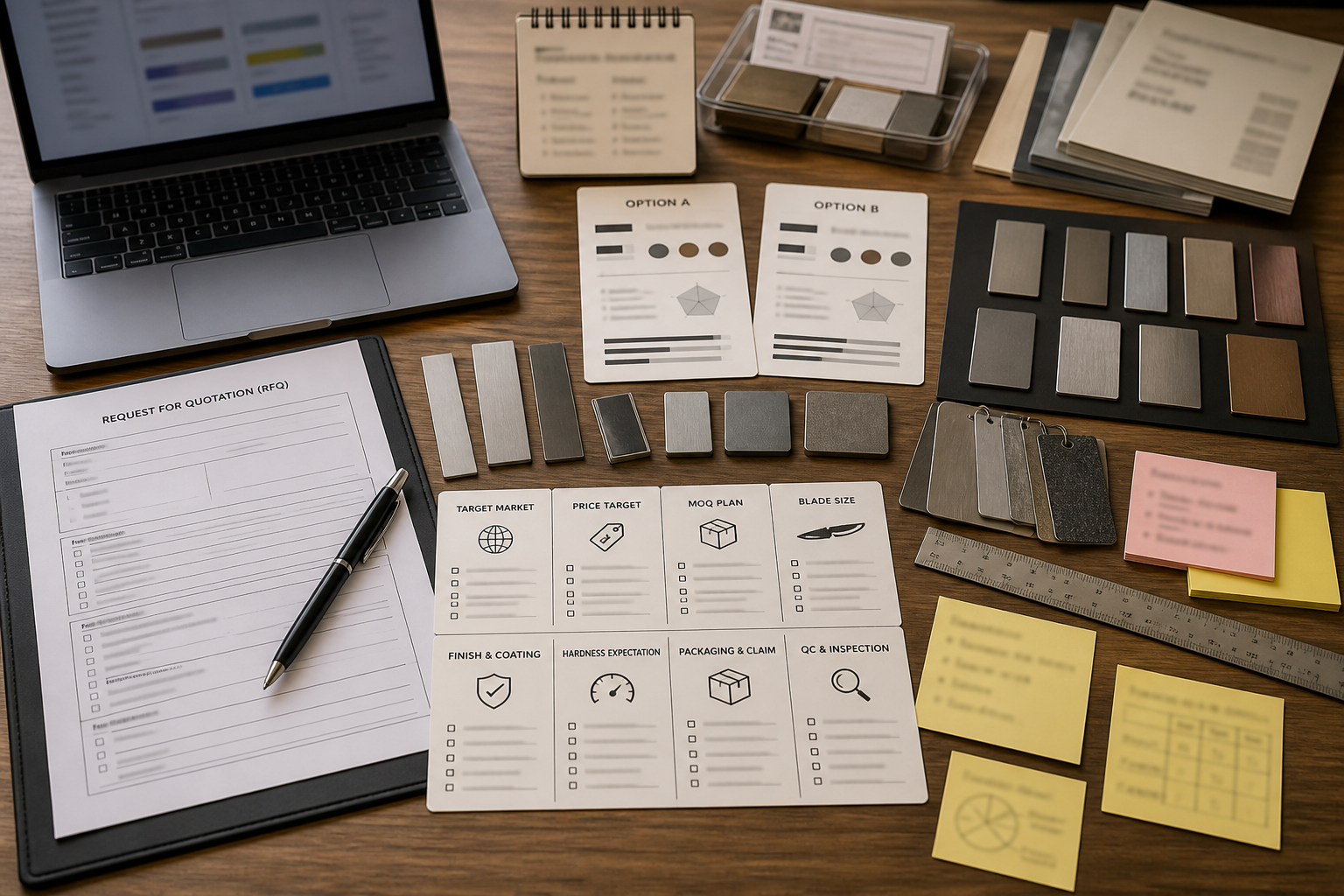
I Prefer Two Quotation Paths When The Buyer Is Unsure
When a buyer is unsure, I often suggest quoting CPM S30V and 154CM as two product paths. The first path can be a higher-positioned version with CPM S30V, stronger steel story, and matching packaging. The second path can be a balanced version with 154CM, practical stainless performance, and better cost control. This lets the buyer compare margin, MOQ, sample cost, and sales positioning.
The RFQ should include the target user, knife type, blade length, blade thickness, lock type, handle material, finish, expected hardness range, packaging style, branding method, target price, quantity, timeline, and inspection requirements. If the buyer has a drawing, I check whether both steels fit the geometry and process. If the buyer has only an idea, I help turn it into a manufacturable specification.
Vast State can support OEM/ODM development from concept to production. We can help with material selection, prototype development, structure suggestions, finish options, packaging customization, QC planning, and production follow-up. A clear RFQ lets us compare CPM S30V and 154CM as real production choices, not just steel names.
| RFQ field | What to include | Why I need it |
|---|---|---|
| Product target | Market, channel, price level | Guides steel tier |
| Blade spec | Size, grind, steel options, hardness target | Builds accurate samples |
| Process need | Finish, sharpening, packaging, care copy | Guides quotation |
| QC requirement | Material record, hardness, sample match | Protects repeat production |
Ready to use this material in your next knife line?
Vast State can help you compare blade steels, heat treatment ranges, handle materials, finishes, packaging options, and QC requirements based on your target market and quantity.
Conclusion
I choose CPM S30V or 154CM by matching steel performance, cost, heat treatment, branding, and repeat-production control.
Source Notes
- Niagara CPM S30V data sheet supports composition, CPM process, wear-resistance, toughness, corrosion, grinding, and heat-treatment discussion.
- Niagara 154CM data sheet supports composition, cutlery application, machining, surface-treatment, and heat-treatment discussion.
- NIST Rockwell hardness guide supports careful hardness measurement and record control.
- ISO 9001 supports process-based quality-management thinking.
- ISO 10007 supports configuration-control thinking for steel, finish, packaging, and revision changes.