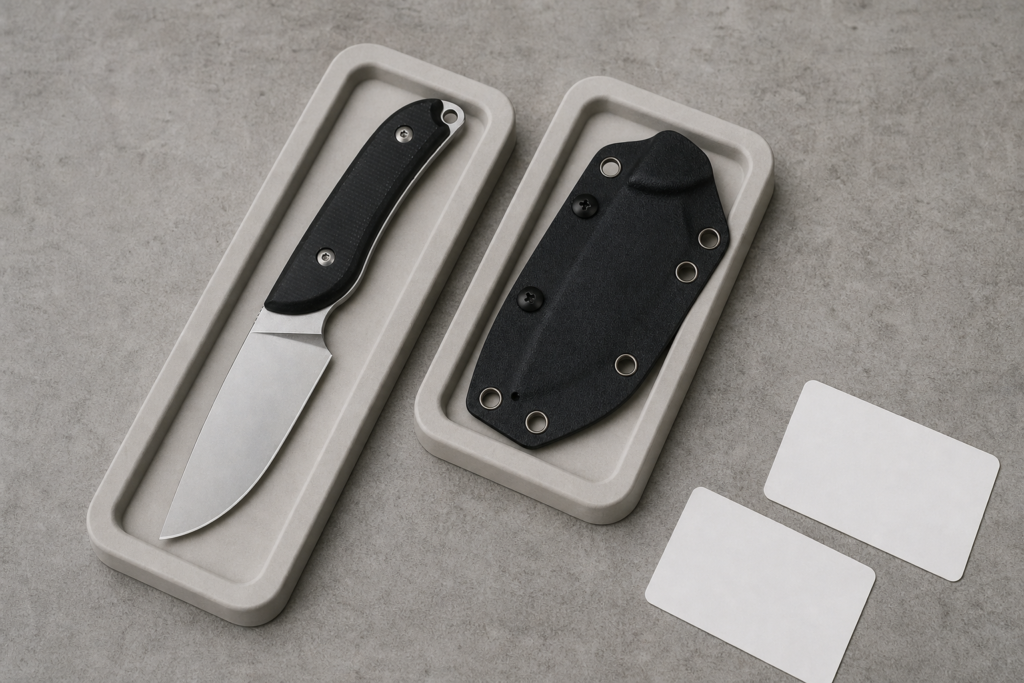
Military-inspired knife ideas can attract attention fast. But unclear positioning can create cost, safety, and compliance problems. I turn the idea into specifications.
Buyers should evaluate military-inspired field knife concepts by focusing on product role, responsible positioning, blade steel, heat treatment, handle safety, sheath design, finish, packaging, compliance checks, QC records, and RFQ clarity. This is manufacturing guidance, not operational advice.
Quick buyer brief:
- Answer: Treat the concept as a field-tool specification, not as operational instruction.
- Buyer context: Outdoor brands, duty-style gear brands, importers, wholesalers, and private label buyers need responsible product positioning.
- Key checks: Product role, blade steel, heat treatment, handle structure, sheath fit, finish, marking, packaging, QC records, and destination-market review.
Have a knife or multi-tool project in mind?
Send your sketch, CAD file, sample photo, or product idea. Vast State can review manufacturability, suggest materials, estimate MOQ, and prepare a quote for your OEM/ODM project.
When a customer sends me a military-inspired knife idea, I do not discuss tactics or field operations. I bring the conversation back to product development. What is the legal product category? Who is the buyer's market? Is the knife for outdoor utility, rescue support, camping, collection, or duty-style retail positioning? What blade length, steel, handle, sheath, finish, packaging, and inspection level will support that market? A serious OEM/ODM project must be practical, repeatable, and responsible. The product should not depend on aggressive claims. It should depend on controlled materials, safe handling details, clear packaging, and reliable production records.
What Should Buyers Clarify Before Developing A Military-Inspired Field Knife?
A strong-looking field knife can still be a weak product. If the buyer skips positioning, the sample may miss cost and compliance needs.
Buyers should clarify target market, product category, intended lawful use, blade size, steel level, sheath need, handle material, target price, MOQ, packaging, compliance concerns, and inspection requirements before development.
I Start With The Buyer Channel
The words military-inspired can mean many things. For one buyer, it may mean a rugged outdoor field knife. For another buyer, it may mean a survival-style retail product, a rescue support tool, a collector-style fixed blade, or a brand story based on durability and simple design. These are different projects.
I first ask where the product will be sold. A general outdoor channel needs different packaging and language than a duty-style gear catalog. A collector-style product may need a stronger finish and presentation. A utility-focused product may need a simpler structure and better cost control. If the buyer wants to sell across several markets, the specification must avoid claims that create unnecessary risk.
I also ask whether the product is fixed blade or folding, whether a sheath is required, and whether the buyer has destination-market rules to consider. This article is sourcing and manufacturing guidance only. It is not legal advice and not operational advice. The buyer should confirm final rules for the target market before ordering.
| Planning point | What I ask | Why it matters |
|---|---|---|
| Sales channel | Outdoor, duty-style gear, distributor, private label | Controls positioning |
| Product category | Fixed blade, folding knife, rescue tool, kit item | Controls structure |
| Commercial target | Price, MOQ, margin, repeat order goal | Controls material level |
| Compliance concern | Destination market and marking needs | Reduces launch risk |
OEM/ODM RFQ Checklist
Prepare these details to help Vast State review your project and provide a more accurate quotation.
| RFQ Field | What to Prepare |
|---|---|
| Project type | OEM from drawing / ODM private label / wholesale catalog |
| Product category | Folding knife / fixed blade / multi-tool / outdoor tool |
| Design status | Idea / sketch / 2D drawing / 3D CAD / physical sample |
| Target price | Ex-factory target price or retail price range |
| MOQ expectation | 500 / 1,000 / 3,000 / 5,000+ pcs |
| Logo method | Laser engraving / etching / printing / molded logo |
| Packaging | Standard packaging / custom retail box / Amazon-ready |
| Market | USA / EU / Japan / Korea / Middle East / other |
| Compliance needs | Buyer-specified testing / documentation / labeling |
| Timeline | Sample deadline / mass production deadline |
How Should Product Role Be Defined Without Unsafe Claims?
Some product pages lean on aggressive wording. That can make the product harder to sell responsibly and harder to support.
The product role should be defined through lawful utility, durability, outdoor readiness, rescue support, material quality, sheath function, and inspection evidence, not through operational claims or unsafe language.
I Build The Story Around Utility And Evidence
I prefer product language that a buyer can support with real specifications. For example, a brand can discuss blade steel, corrosion resistance, handle grip, sheath retention, coating durability, packaging, and QC records. These are product facts. They can be checked, approved, and repeated in production.
I avoid language that teaches behavior or suggests unsafe application. A field knife can be positioned as an outdoor utility product, a rescue support product, a heavy-duty work companion, or a collector-style design. The product description should stay focused on lawful use, safe handling, care, and manufacturing quality. This protects the buyer's brand and reduces misunderstanding.
The structure should support the story. If the buyer says rugged outdoor utility, the knife should have suitable steel, strong handle attachment, comfortable grip, a stable sheath, and a finish that fits the environment. If the buyer says collector-style, the product may need better presentation and finish control. A good product story should be backed by visible details and inspection records.
| Positioning element | Responsible direction | Evidence to support it |
|---|---|---|
| Durability | Material and structure claims | Steel record and assembly checks |
| Outdoor utility | Corrosion and grip planning | Finish, handle, and sheath tests |
| Rescue support | Clear product limits and safe packaging | Function checklist and instructions |
| Brand story | Design and material explanation | Approved sample and packaging copy |
Which Blade Steel And Heat Treatment Choices Matter?
Steel choice can make the product sound strong. But without heat treatment and hardness control, the story is not enough.
Buyers should choose blade steel by corrosion resistance, toughness, edge needs, thickness, heat-treatment route, hardness target, finish compatibility, cost, and repeat-production stability.
I Match Steel To The Real Environment
A military-inspired field knife often needs a stronger material story than a simple promotional knife. But the correct steel depends on the target price and market. A stainless steel direction may help when the product is sold for outdoor or humid environments. A tougher carbon or tool-steel direction may fit other product stories, but it will need more careful maintenance language.
For stainless knife steel, Alleima 14C28N is a useful reference because it is designed for knife applications and discusses a balance of hardness, edge performance, and corrosion resistance. It is not automatically the right steel for every field knife. It is an example of how buyers should connect steel grade with product role.
Heat treatment is the next decision. Alleima's guide to hardening and tempering of knife steel supports the idea that hardening and tempering are used to create hardness while reducing brittleness. In production, I connect steel grade, heat-treatment route, hardness target, blade thickness, grinding, and final inspection. The buyer should approve the process, not only the steel name.
| Steel decision | What I check | Buyer impact |
|---|---|---|
| Steel grade | Stainless, carbon, tool steel options | Controls performance story |
| Heat treatment | Hardening, quench, tempering, distortion risk | Controls real blade behavior |
| Hardness target | Practical HRC range for design | Supports consistency |
| Finish compatibility | Stonewash, satin, coating, polish | Affects care and appearance |
How Should Handle, Guard, And Sheath Details Be Specified?
A blade gets attention, but the handle and sheath decide whether the product feels controlled and sellable.
Buyers should specify handle material, tang structure, fasteners, guard shape, edge rounding, texture, balance, sheath retention, belt attachment, drainage, packaging fit, and inspection method.
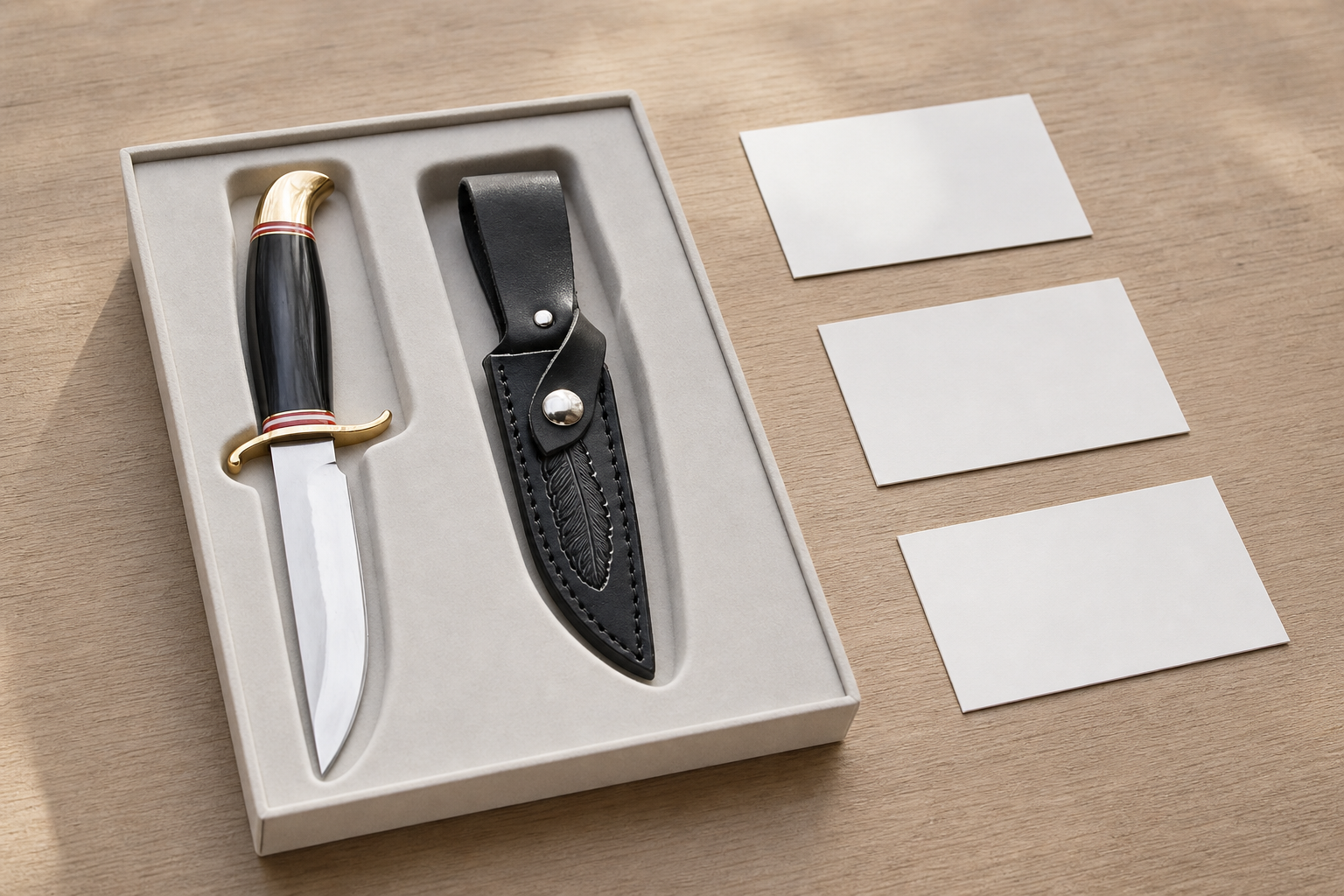
I Treat The Sheath As Part Of The Product
For a field knife, the handle and sheath are not secondary details. They shape safety, comfort, storage, packaging, and perceived quality. A handle that looks aggressive but feels uncomfortable can hurt reviews. A sheath that fits loosely can create complaints. A sheath that scratches the blade can damage the finish before the product reaches the end user.
Handle materials should be chosen for the real market. G10, micarta, rubber-like materials, wood, and molded polymers all create different cost and production concerns. Curbell's G10/FR-4 material page is useful background because it discusses strength, stiffness, dimensional stability, and machining concerns for G10/FR-4. It is not knife-specific, so I still test the actual handle texture and fit.
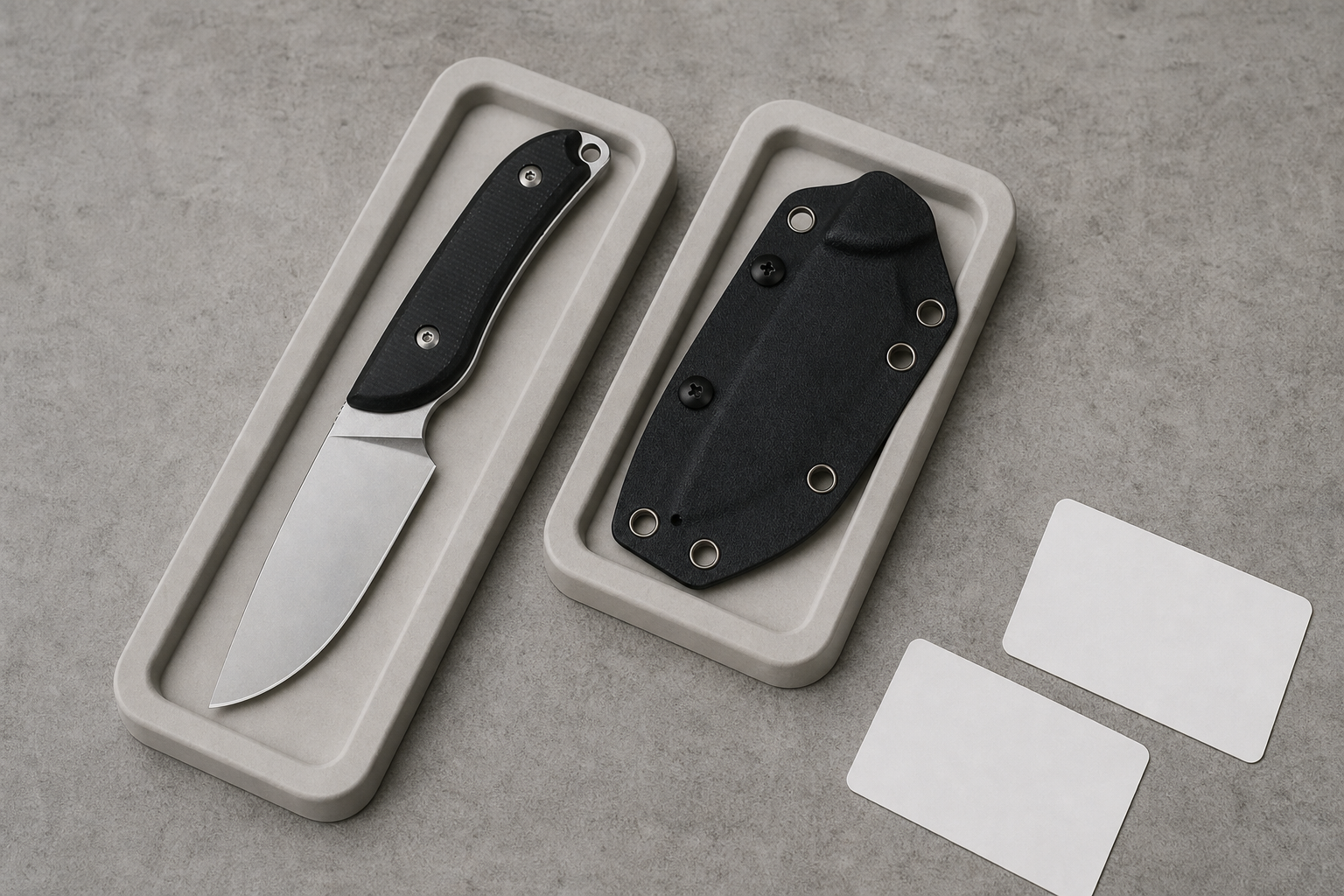
The sheath needs its own specification. I check retention, insertion feel, rattle, scratch risk, drainage, attachment method, edge clearance, packaging fit, and long-term repeatability. The buyer should approve a complete sample: knife, sheath, fasteners, packaging, and instruction insert together.
| Component | What to define | Why it matters |
|---|---|---|
| Handle | Material, texture, thickness, fasteners | Controls comfort and cost |
| Guard area | Shape, edge rounding, transition | Supports safe handling feel |
| Sheath | Retention, fit, drainage, attachment | Protects storage and presentation |
| Packaging fit | Box, insert, pouch, carton | Prevents movement and scratches |
How Should Finish, Corrosion Resistance, And Maintenance Be Planned?
A field knife may be sold as rugged, but a poor finish or vague care guidance can create complaints quickly.
Finish planning should connect corrosion resistance, coating durability, cleaning needs, edge protection, handle material, sheath contact, packaging environment, and care instructions.
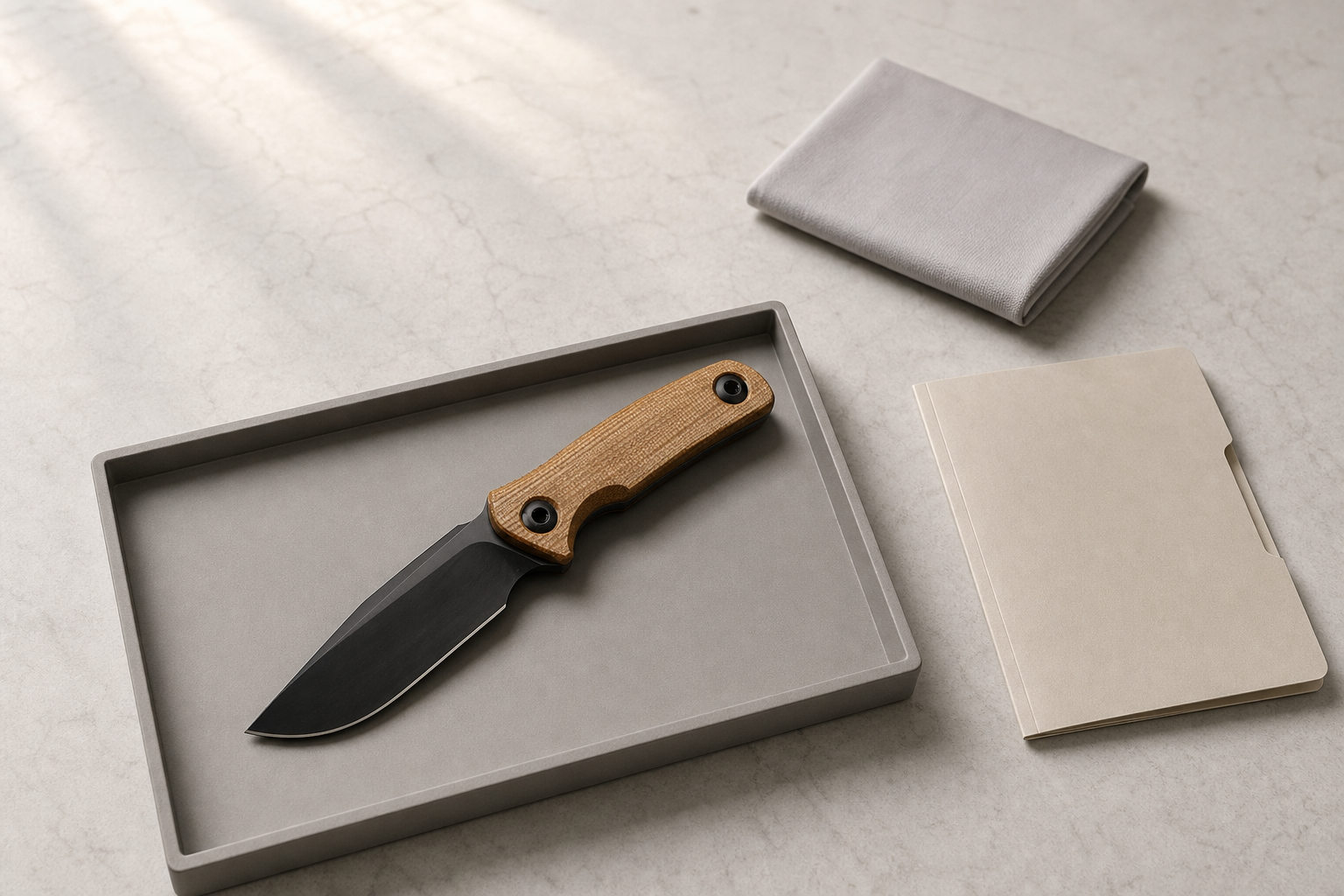
I Avoid Maintenance-Free Claims
Finish selection is both visual and functional. Satin, stonewash, bead blast, coating, and polish all create different appearances and care expectations. A dark coating may fit a field-style product, but the buyer should check coating consistency, edge exposure, sheath rub, and cleaning compatibility. A stonewash finish may hide small scratches, but it still needs consistent process control.
Corrosion resistance must be discussed honestly. Stainless steel helps, but no steel should be described as maintenance-free. Outdoor moisture, salt, sweat, acidic residue, and poor drying can still create problems. I prefer clear care language: clean after residue, dry after moisture, and store properly. If a buyer wants a coated blade, the care card should explain how to protect the finish without making unsupported claims.
The sheath can also affect finish. Tight sheath contact may create rub marks. Poor inner edges may scratch the coating. Moisture trapped in a sheath can damage a blade over time. This is why I check knife and sheath together. A field knife is not only a blade. It is a complete product system.
| Finish issue | What I check | Buyer impact |
|---|---|---|
| Coating | Adhesion, rub points, edge exposure | Affects appearance complaints |
| Stonewash or satin | Consistency and scratch visibility | Affects batch matching |
| Corrosion planning | Steel, finish, care instructions | Reduces after-sales risk |
| Sheath contact | Retention, rub, moisture traps | Protects finish and user experience |
What Packaging, Marking, And Compliance Questions Should Be Managed?
Packaging can make a field knife look professional, but it can also create avoidable compliance and claim problems.
Buyers should manage retail packaging, sheath protection, warning language where required, country-of-origin marking, barcode space, carton design, and destination-market compliance review before production.
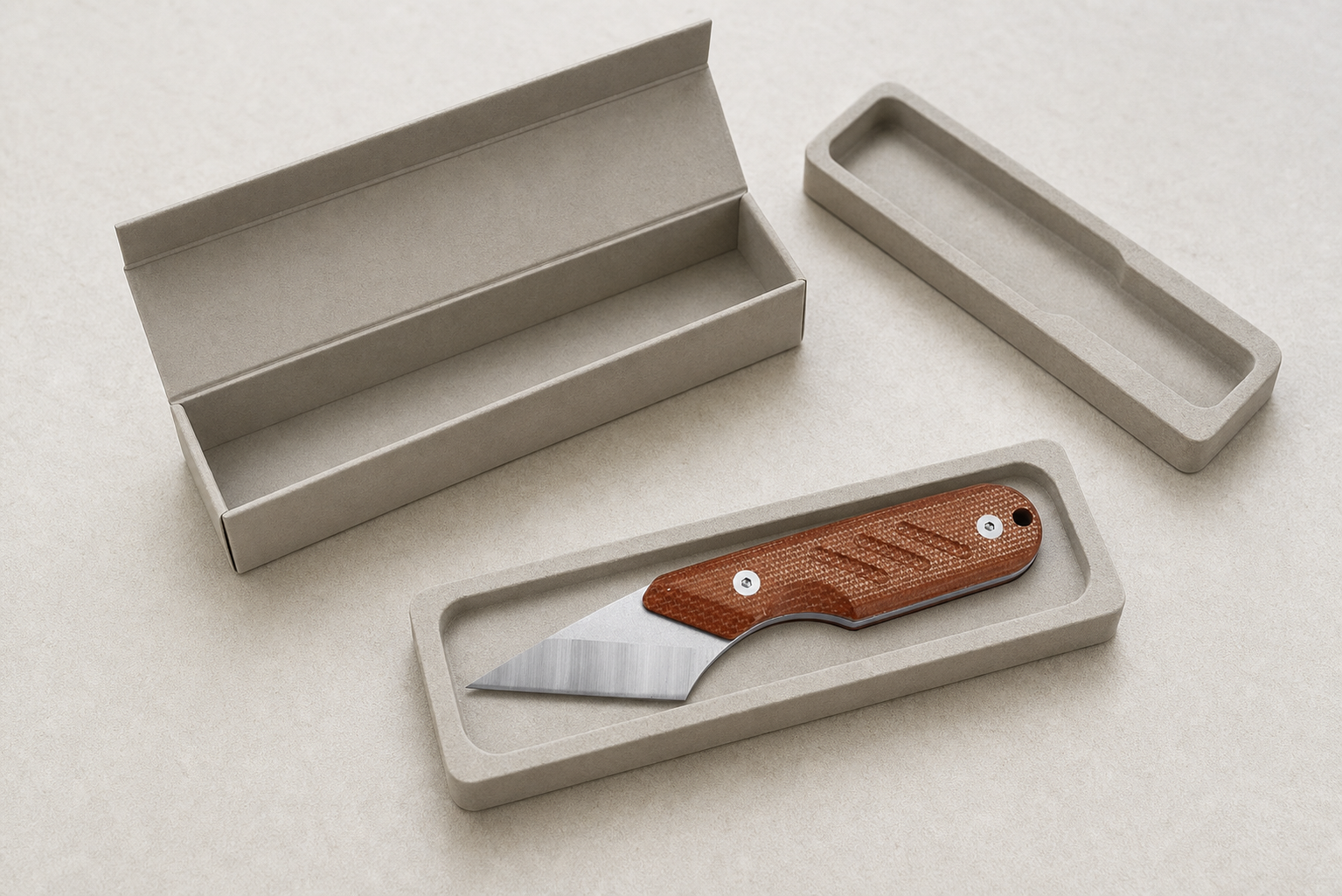
I Keep Packaging Practical And Reviewable
A field knife package has several jobs. It must protect the blade and sheath, present the brand, carry required labels, and avoid loose movement during shipping. A heavy fixed blade can damage a weak insert. A loose sheath can scratch the product. A box that looks good in a photo may fail when stacked in cartons.
ISO 4180 provides general rules for compiling performance test schedules for complete, filled transport packages. I use that as packaging-planning context. It reminds me to test the retail pack, inner support, and master carton as a complete filled package, not as separate design files.
Marking also matters. For the U.S. market, 19 CFR 134.43 lists knives among articles requiring certain country-of-origin marking methods, with specific exceptions depending on the applicable rule. Other markets may have different rules. This article is not legal advice. The buyer should confirm final destination-market requirements and give the factory clear marking instructions.
| Packaging area | What to decide | Why it matters |
|---|---|---|
| Retail pack | Box, insert, pouch, care card | Controls presentation |
| Product protection | Edge cover, sheath position, separators | Reduces scratches |
| Marking | Origin, barcode, importer info if needed | Supports market entry |
| Carton | Master carton, inner pack, label space | Supports shipping stability |
What QC Records Protect Repeat Production?
A good first sample is useful, but repeat orders need records. Without records, the same product may drift over time.
QC records should cover steel grade, hardness, blade dimensions, handle fit, fastener torque, sheath retention, finish, packaging, marking, and approved-sample comparison.
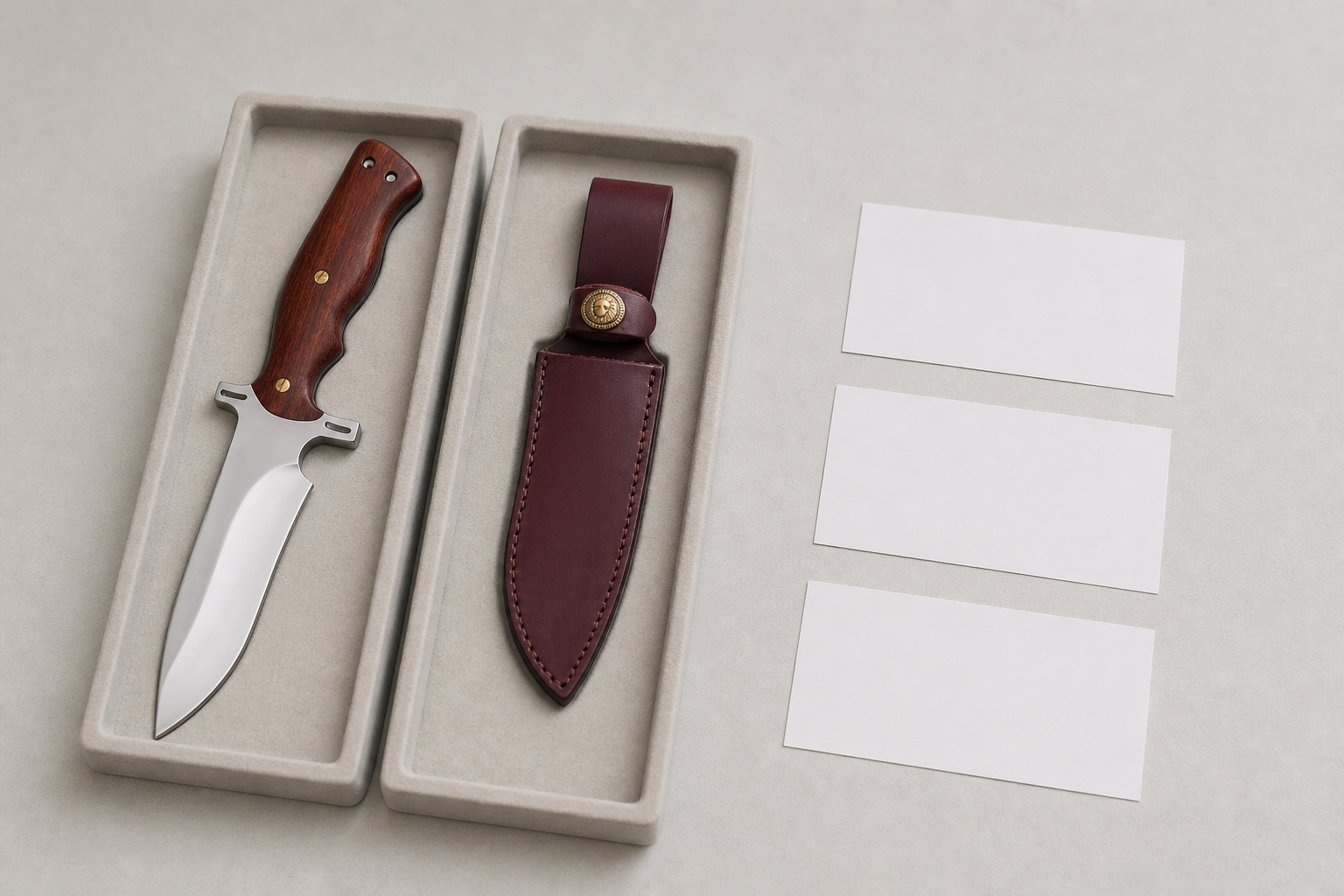
I Build A Control File For The Whole Product
For field knife projects, the control file should include the approved drawing, steel grade, heat-treatment target, hardness result, handle material, fastener standard, sheath material, retention standard, finish sample, packaging artwork, marking instructions, and final approved sample. This is the file that protects the second order, not only the first sample.
The NIST Rockwell hardness guide is useful because it explains that hardness testing needs good practice to reduce measurement errors. In factory work, I translate that into hardness target, test location, sample size, batch record, and acceptance criteria.
ISO 9001 is useful as a process-based quality reference because it focuses on requirements, controlled operations, documented information, performance evaluation, and improvement. The ISO page for ISO 9001 quality management systems supports that thinking. ISO 10007 gives guidance on configuration management, which is useful when steel, handle, sheath, finish, or packaging changes. I do not claim certification unless separately documented. I use these sources as practical references for control.
| QC record | What it controls | Why buyers need it |
|---|---|---|
| Material record | Steel, handle, sheath material | Supports specification |
| Hardness report | Heat-treatment result | Supports blade consistency |
| Sheath check | Fit, retention, rub points | Protects user experience |
| Configuration file | Current approved version | Protects repeat orders |
What RFQ Details Should Buyers Send Before Sampling?
A factory cannot build a responsible field knife from a dramatic idea alone. Missing details create wrong samples and weak quotations.
Buyers should send product role, target market, blade type, steel, hardness target, handle material, sheath design, finish, packaging, marking needs, quantity, target price, MOQ, compliance concerns, and QC requirements.
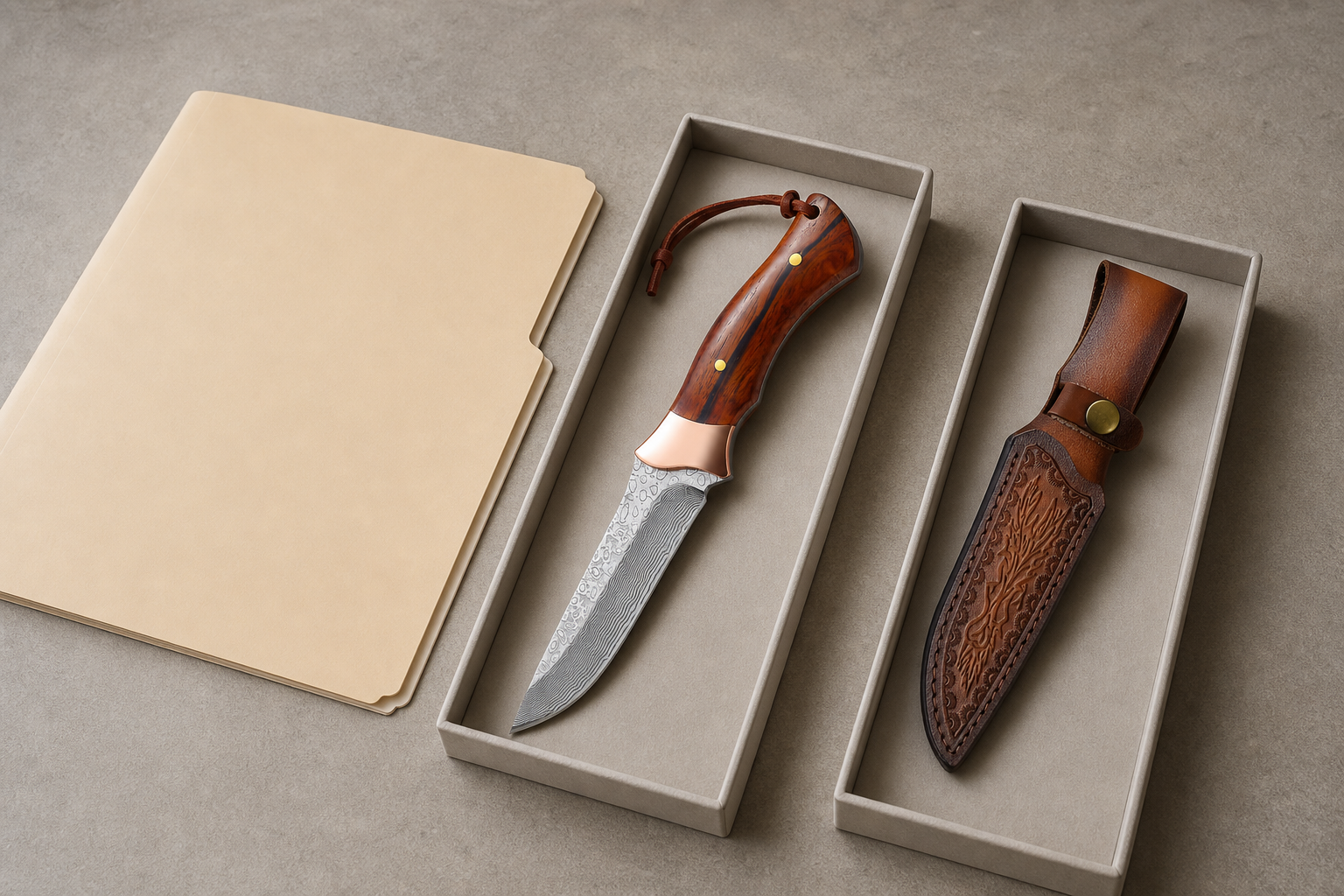
I Ask For A Responsible Product Brief
For this type of project, I want the buyer to define the product in commercial and technical terms. The RFQ should explain the target market, buyer channel, product role, blade length, blade thickness, steel preference, heat-treatment target, handle material, tang structure, sheath material, retention expectation, finish, logo method, packaging type, quantity, target price, and inspection requirements.
I also ask the buyer to state what claims should be avoided. If the product is for outdoor utility, the packaging should say that clearly. If the product is for a collector-style channel, the finish and presentation should support that. If the product is for a duty-style catalog, the buyer should confirm the destination-market rules and avoid unsafe language. The factory can support product development, but the buyer owns market positioning and final compliance.
Vast State can help turn the concept into a manufacturable OEM/ODM product. We can support prototype development, material selection, structure suggestions, finish options, sheath and packaging coordination, QC planning, and production follow-up. Clear RFQ details help us respond with practical options instead of guesses.
| RFQ field | What to include | Why I need it |
|---|---|---|
| Product role | Outdoor utility, rescue support, collector-style, duty-style | Guides positioning |
| Technical spec | Steel, hardness, blade, handle, sheath, finish | Builds accurate samples |
| Commercial target | Quantity, MOQ, target price, packaging level | Guides quotation |
| QC and compliance | Marking, destination-market concerns, inspection plan | Protects launch and repeats |
Turn your idea into a quote-ready knife project.
Share your drawing, sample photo, target quantity, market, and packaging needs. Vast State will review manufacturability and prepare OEM/ODM options.
Conclusion
I evaluate military-inspired field knife concepts by turning style into responsible specifications, controlled materials, clear packaging, and repeatable QC records.
Source Notes
- Alleima 14C28N supports stainless knife steel discussion.
- Alleima hardening and tempering guidance supports heat-treatment discussion.
- Curbell G10/FR-4 supports handle material background, though it is not knife-specific.
- ISO 4180 supports complete filled transport package planning.
- 19 CFR 134.43 supports country-of-origin marking planning for knives entering the U.S. market.
- NIST Rockwell hardness guidance supports controlled hardness measurement practice.
- ISO 9001 and ISO 10007 support process and configuration control thinking.