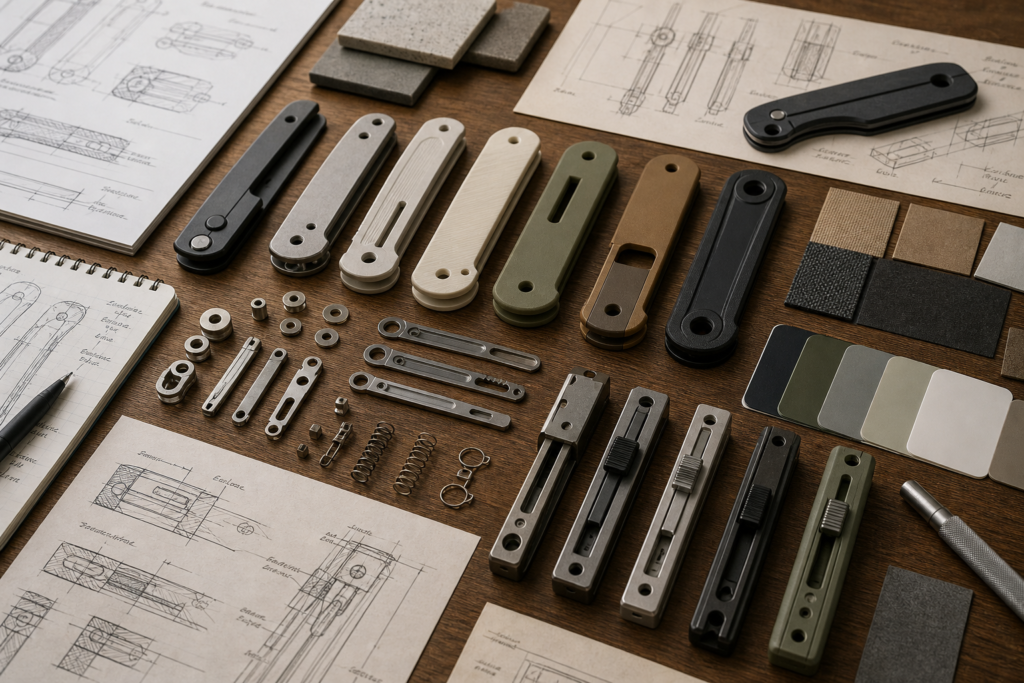
A crossbar lock can feel smooth and modern, but a weak specification can create blade play, spring issues, and confusing product names.
Knife buyers should specify crossbar lock knives by defining the lock name, blade and handle structure, crossbar material, spring type, tang geometry, pivot tolerance, opening feel, safety expectations, QC tests, packaging, and RFQ details before sampling.
Quick buyer brief:
- Answer: A crossbar lock is a sliding bar lock that engages the blade tang and is usually biased by springs.
- Buyer context: This helps B2B buyers source folding knives with clear mechanism requirements and fewer sample revisions.
- Key checks: Lock naming, bar fit, spring force, tang contact, pivot play, handle slots, blade centering, hardness, assembly consistency, and inspection criteria.
Have a knife or multi-tool project in mind?
Send your sketch, CAD file, sample photo, or product idea. Vast State can review manufacturability, suggest materials, estimate MOQ, and prepare a quote for your OEM/ODM project.
When a customer asks for a crossbar lock knife, I first try to understand what they mean by the name. Some buyers use "crossbar lock," some say "bar lock," some say "sliding lock," and some use brand-style names that may not be suitable for private label marketing. The mechanism itself also needs care. The bar, springs, tang, liners, handle slots, pivot, and stop surfaces must work together. At Vast State, I treat a crossbar lock knife as a precision assembly project, not only a lock option on a quotation sheet.
What Is a Crossbar Lock in a Folding Knife?
Lock names can sound simple, but the actual structure is more specific. If the buyer uses the wrong name, the sample may drift.
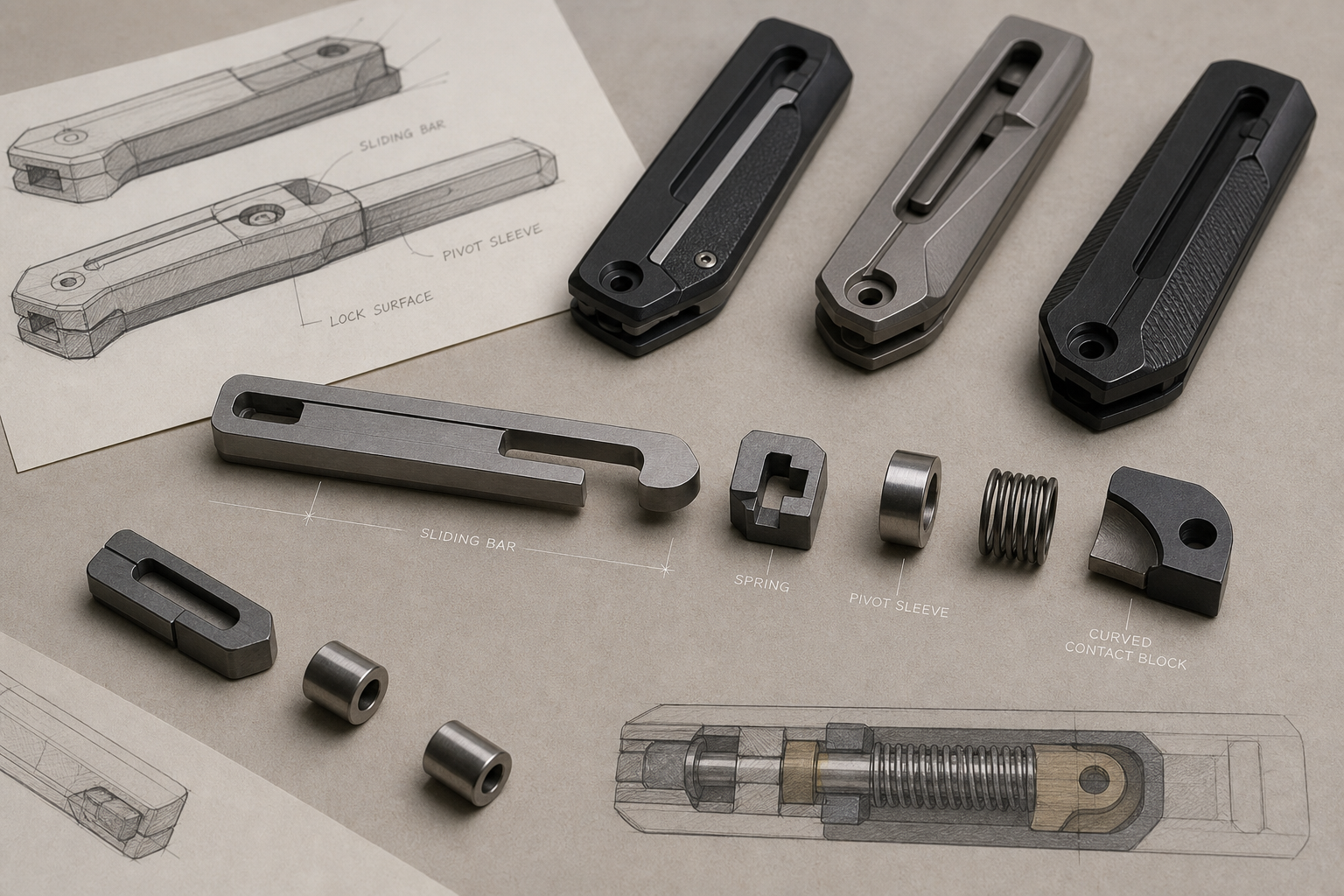
A crossbar lock is a folding knife lock where a sliding bar or pin moves across the handle and engages the blade tang. Springs or similar biasing parts push the bar into position.
I Define the Lock by Function, Not Only by Name
In daily sourcing conversations, "crossbar lock" usually means a sliding bar that travels across the handle and blocks or engages the blade tang when the blade is open. The user can pull the bar back from either side to release the lock. That is the simple buyer-facing explanation. For manufacturing, I need more detail.
A patent record for a folding knife with locking blade describes a locking member carried for sliding movement in a handle channel, biased toward the locking position, and accessible from either side of the handle. That type of description is useful for understanding the basic engineering idea behind many crossbar-style mechanisms. It also reminds buyers that the lock is not one isolated part. It depends on the handle channel, blade tang profile, spring force, and pivot control.
The buyer should not only ask, "Can you make a crossbar lock?" The better question is, "Can you make this lock feel, hold, assemble, and repeat according to my product level?" A budget EDC knife and a higher-spec outdoor folder may both use a crossbar lock, but they should not share the same tolerance expectation.
| Lock element | What it does | Buyer specification point |
|---|---|---|
| Crossbar or pin | Engages the tang area | Material, diameter, finish, and fit |
| Spring system | Biases the bar forward | Spring type, force, and durability target |
| Tang geometry | Gives the bar a locking surface | Contact angle and stop relationship |
| Handle slot | Guides the bar movement | Slot width, smoothness, and symmetry |
OEM/ODM RFQ Checklist
Prepare these details to help Vast State review your project and provide a more accurate quotation.
| RFQ Field | What to Prepare |
|---|---|
| Project type | OEM from drawing / ODM private label / wholesale catalog |
| Product category | Folding knife / fixed blade / multi-tool / outdoor tool |
| Design status | Idea / sketch / 2D drawing / 3D CAD / physical sample |
| Target price | Ex-factory target price or retail price range |
| MOQ expectation | 500 / 1,000 / 3,000 / 5,000+ pcs |
| Logo method | Laser engraving / etching / printing / molded logo |
| Packaging | Standard packaging / custom retail box / Amazon-ready |
| Market | USA / EU / Japan / Korea / Middle East / other |
| Compliance needs | Buyer-specified testing / documentation / labeling |
| Timeline | Sample deadline / mass production deadline |
Why Do Crossbar Lock Knives Have So Many Names?
Different names can help marketing, but they can also create risk. A private label buyer should not copy protected branding carelessly.
Crossbar lock knives have many names because brands, factories, and buyers describe similar sliding-bar mechanisms in different ways. Buyers should use generic, accurate wording unless they have approval to use a protected name.
I Keep Names Generic Until the Buyer Approves Branding
In the market, buyers may hear names such as crossbar lock, bar lock, sliding bar lock, bolt lock, ambidextrous bar lock, or brand-specific lock names. Some of these words are generic descriptions. Some may be connected to brand identity or intellectual property. I do not want a customer to create packaging around a name that later creates a trademark problem.
The USPTO explains that a trademark can protect a word, phrase, design, or combination that identifies goods or services and distinguishes them from others. This is why I keep private label wording careful. If the buyer owns the brand name, we can print it. If the buyer wants to use another company's lock name, I ask them to confirm authorization before artwork starts.
For most OEM projects, generic naming is enough. "Crossbar lock" or "sliding bar lock" explains the structure without copying a brand story. The product page can describe the user-facing benefit in simple language: ambidextrous release, stable lock engagement, smooth opening feel, or clean handle operation. These claims still need to match the approved sample.
| Name type | Example wording | My recommendation |
|---|---|---|
| Generic mechanism | Crossbar lock, sliding bar lock | Usually suitable for OEM discussion |
| Descriptive feature | Ambidextrous bar release | Useful if the product supports it |
| Brand-owned term | Specific branded lock name | Use only with buyer authorization |
| Marketing phrase | Smooth bar lock system | Check that the sample proves the claim |
Which Parts Control Crossbar Lock Performance?
A lock can fail in feel before it fails in strength. Small parts create the user's trust or doubt.
Crossbar lock performance is controlled by the lock bar, springs, blade tang, stop pin, pivot, liners, handle slots, washers or bearings, screw tension, and assembly accuracy.
I Look at the Whole Moving Stack
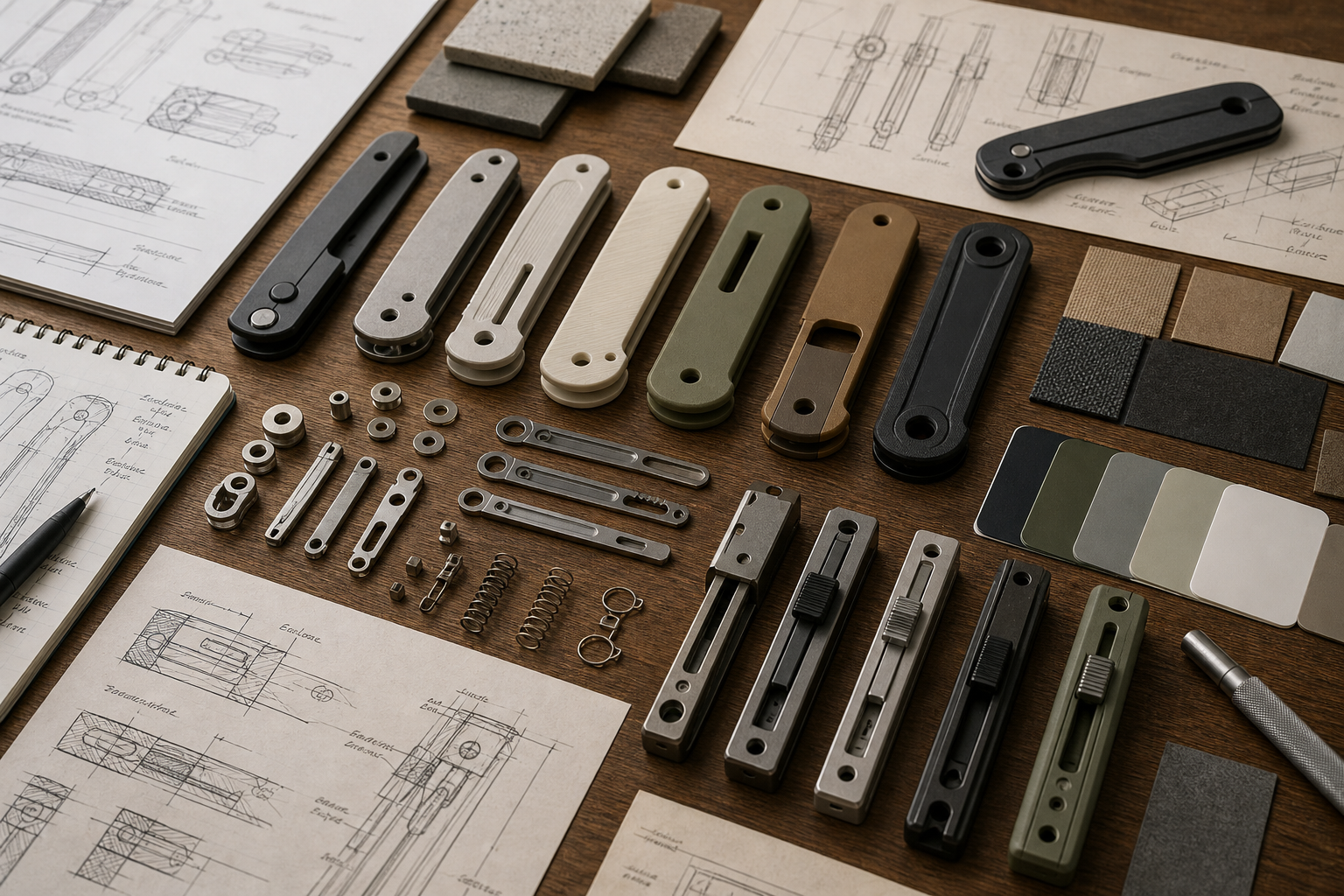
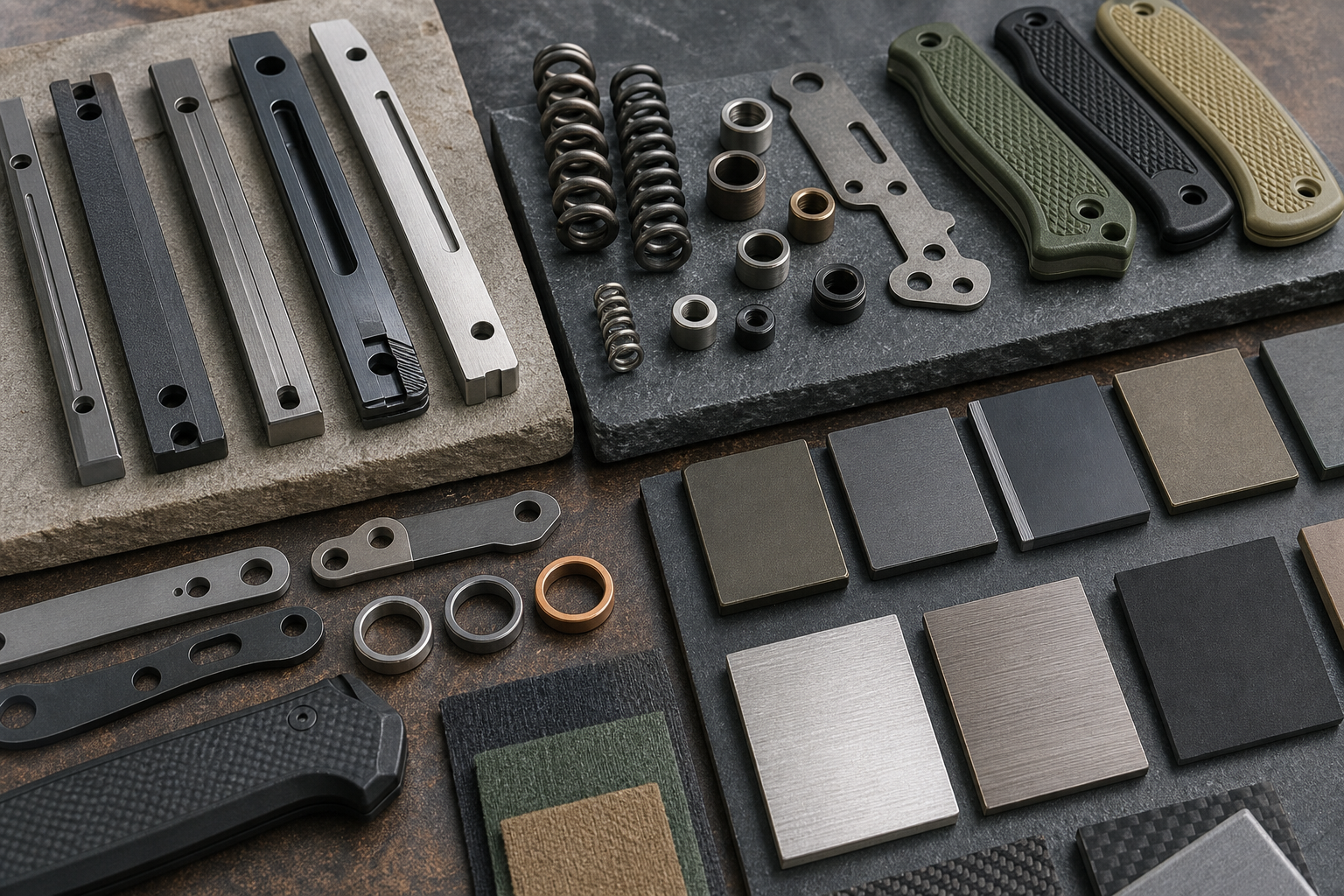
The crossbar is the part buyers notice, but the whole stack controls the result. The blade pivots around the pivot screw. The tang shape meets the bar. The stop pin defines the open position. The liners and handle scales guide the bar. The springs push the bar toward the tang. The washers or bearings affect opening feel. The screws affect side pressure. If one part is not controlled, the lock can feel rough, loose, sticky, or inconsistent.
One older patent for a locking device for a folding knife describes a spring-loaded crossbolt fitted to the blade tang, with locking engagement at different positions. The exact structure is not the same as every modern crossbar knife, but it shows why crossbolt and bar-style locks depend on spring pressure, engagement surfaces, and accurate movement paths.
In production, I focus on three relationships. First, the bar must meet the tang in the intended place. Second, the springs must push the bar consistently without making the release too heavy. Third, the pivot must be tight enough to reduce play but not so tight that action feels blocked. This balance is where a good sample becomes a repeatable product.
| Part | What can go wrong | Practical check |
|---|---|---|
| Lock bar | Burrs, soft material, rough finish | Diameter, hardness, surface finish |
| Springs | Uneven force or early fatigue | Spring force and cycle checks |
| Tang surface | Poor contact or wrong angle | Lockup position and contact mark |
| Pivot area | Side play or stiff action | Torque, centering, washer fit |
How Should Buyers Specify Materials and Heat Treatment?
A crossbar lock knife has more wear points than a simple folder. Wrong materials can make the action age quickly.
Buyers should specify blade steel, lock bar material, spring material, liner material, handle material, heat treatment, hardness range, corrosion expectation, and finish compatibility.
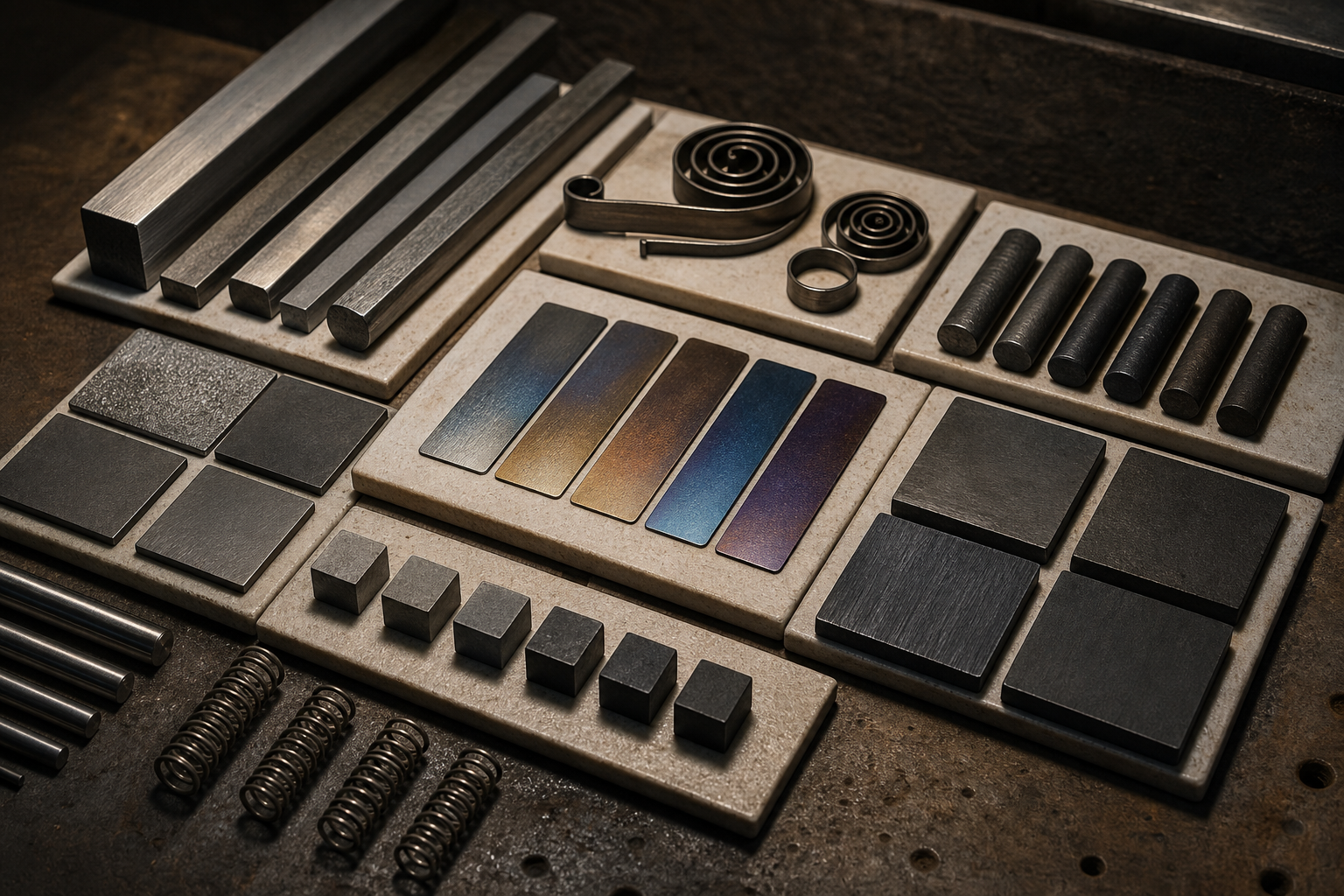
I Match Wear Points With the Product Level
The blade steel gets the most attention, but the lock bar and springs also matter. A crossbar lock has contact between the bar and tang. That contact area should resist wear. The spring system should give stable force. The handle slots should not scrape or bind the bar. If the buyer asks for a low-cost model, we can simplify the structure, but we should not hide the tradeoff. If the buyer wants a long-term catalog product, it is worth improving the wear surfaces and inspection standard.
Blade steel should match the target market. Alleima describes 14C28N knife steel as having a useful combination of edge performance, hardness, and corrosion resistance, with a recommended hardness range for knife applications. That does not mean it is always the right steel. It shows why steel selection should connect to performance, heat treatment, and price.
Hardness checks also need discipline. The NIST guide to Rockwell hardness measurement explains that good measurement practice helps reduce errors. In OEM work, I translate that into a simple rule: if the buyer specifies hardness, the supplier needs a controlled way to verify it.
| Material area | Buyer decision | Production focus |
|---|---|---|
| Blade steel | Edge, corrosion, price, hardness | Heat treatment and hardness testing |
| Lock bar | Wear resistance and smooth surface | Bar diameter, finish, and contact wear |
| Springs | Stable return force | Material, shape, fatigue check |
| Handle | G10, aluminum, steel, micarta, or polymer | Slot accuracy and surface finish |
What Quality Control Checks Matter Most?
A crossbar lock can pass a photo check and still disappoint users. The lock must be tested as a moving assembly.
Important QC checks include lock engagement, vertical and side play, blade centering, release force, spring return, pivot torque, stop pin contact, slot smoothness, repeated operation, sharpness, and packaging protection.
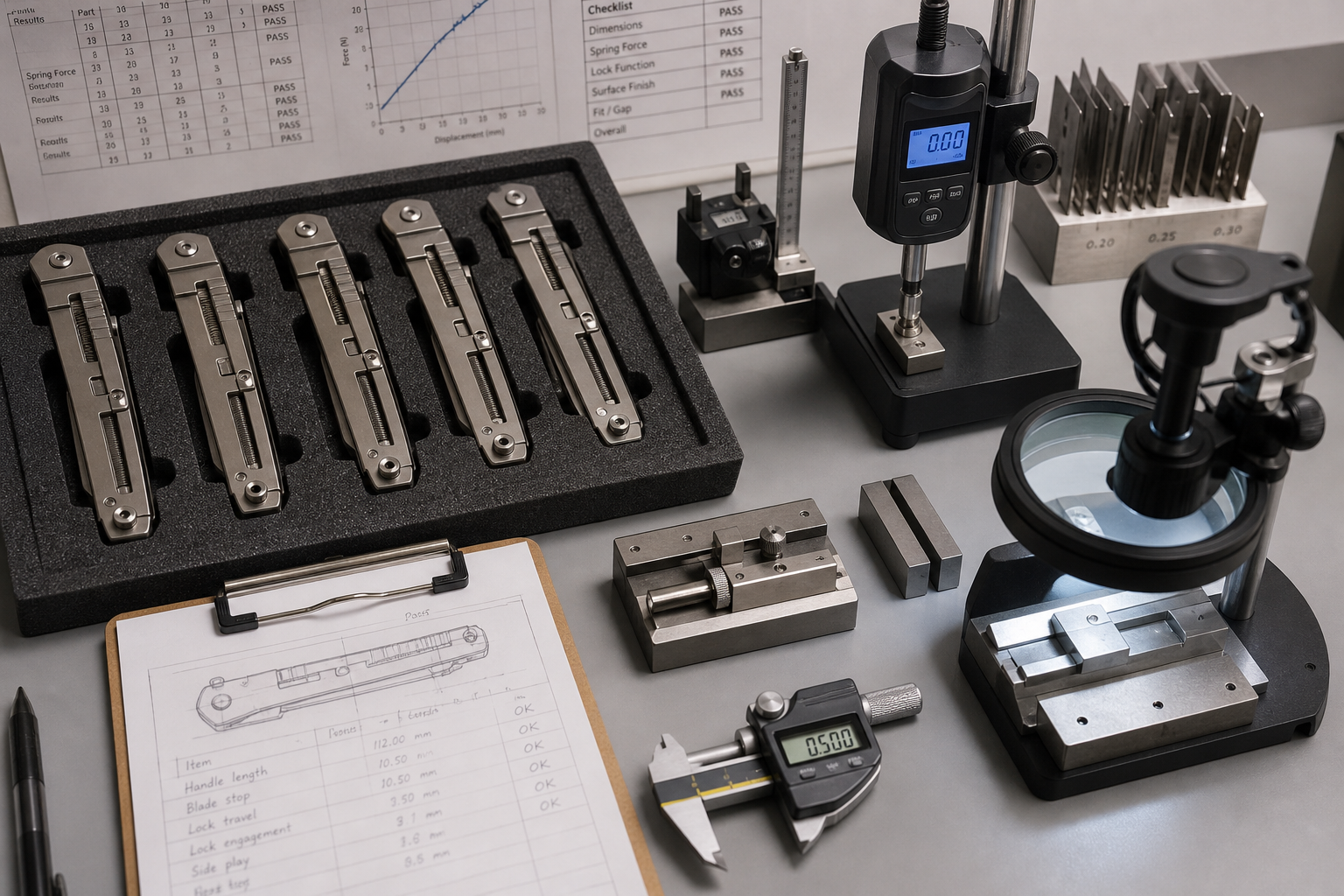
I Test the Lock in More Than One Position
For crossbar lock knives, I want QC to look beyond the open position. The blade should stay controlled when closed. The action should feel smooth when opening. The bar should move freely in the slot. The lock should engage clearly when open. The release should not feel gritty. The blade should not show obvious vertical movement under normal hand checks. The blade should be centered enough to avoid rubbing the handle.
I also check the sample after repeated operation. A fresh sample may hide problems that appear after the bar and tang contact several times. Springs may settle. Screws may loosen. Burrs may polish themselves into a different feel. If a buyer wants a higher product level, cycle checks and screw-retention checks should be included in the inspection plan.
The ISO page for ISO 9001 quality management is useful because it supports the wider idea of process control and meeting customer requirements. I do not use ISO as a marketing shortcut. I use the thinking behind it: define the requirement, inspect against the requirement, record defects, and improve the process when the same issue appears again.
| QC check | What I look for | Why it matters |
|---|---|---|
| Lock engagement | Bar reaches the correct tang position | Supports safe function and user trust |
| Blade play | Side and vertical movement | Controls perceived quality |
| Release feel | Smooth pull from both sides | Supports left and right hand usability |
| Repeated operation | Action after multiple open-close cycles | Finds early wear or spring issues |
How Does Ergonomics Affect Crossbar Lock Design?
A strong lock can still feel wrong if the release is hard to reach. Usability depends on handle layout.
Ergonomics affects crossbar lock design through thumb access, handle thickness, release texture, spring force, grip comfort, pocket carry feel, and whether the lock can be used from both sides.
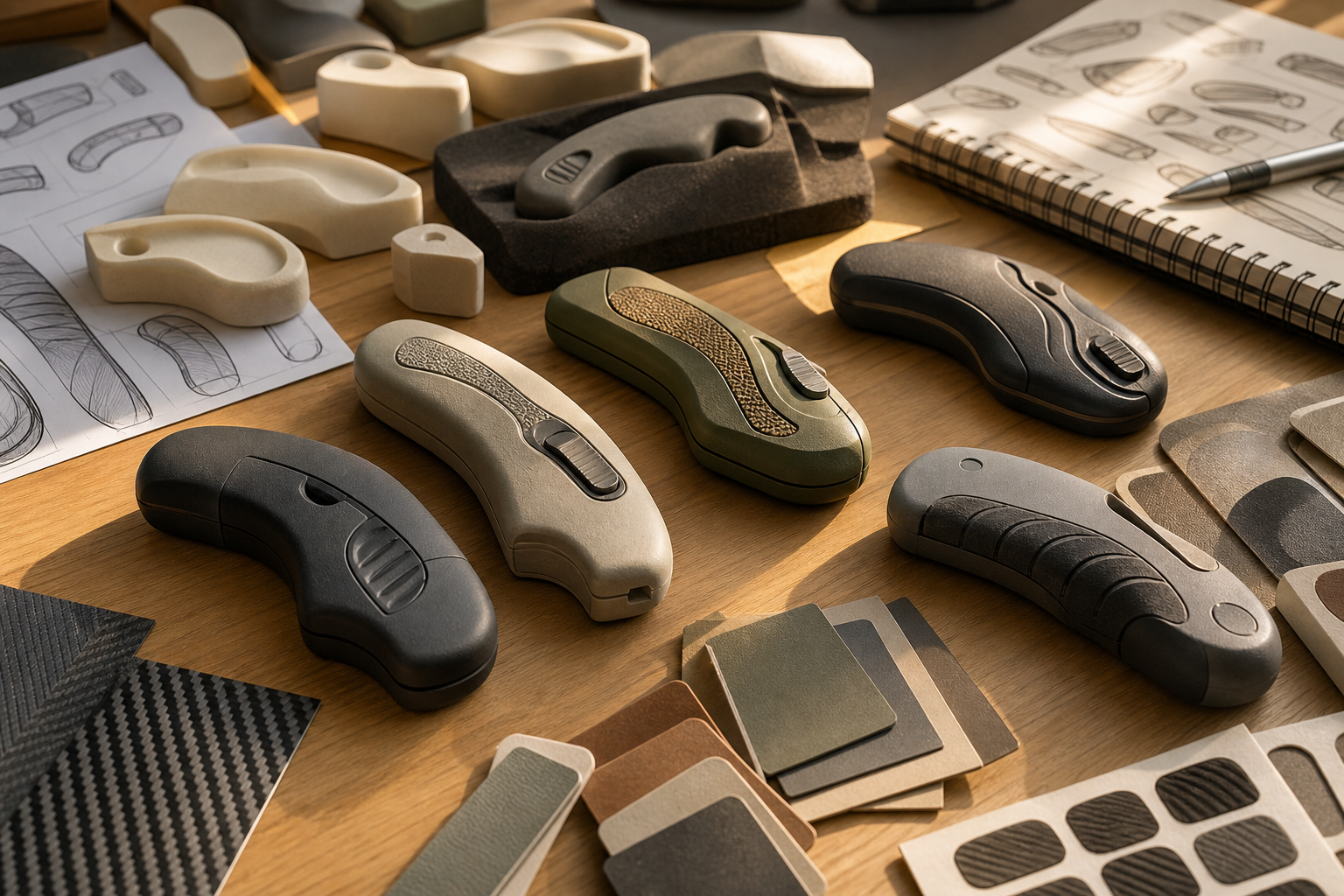
I Design the Release Around Real Fingers
Crossbar locks are popular partly because the release can be reached from both sides. But that benefit only works if the handle design supports it. If the handle scale covers too much of the bar, the user may struggle to pull it back. If the release studs are too small, they may feel sharp. If spring force is too heavy, the lock feels tiring. If spring force is too light, the blade may not feel controlled. If the handle is too thick, pocket carry may suffer.
The Canadian Centre for Occupational Health and Safety explains in its hand tool ergonomics guidance that tool design should consider weight, shape, fit to the user, and fit to the task. A folding knife is a specific product, but the general principle applies. A lock is not only a mechanical part. It is a point of user interaction.
For OEM work, I suggest checking the release with bare hands and with the kind of use case the buyer expects. An EDC knife may need a slim handle and easy pocket feel. An outdoor knife may need more grip texture. A work knife may need easier access with gloves. These choices affect handle scale shape, lock bar length, spring force, and surface finishing.
| Ergonomic factor | What to specify | Buyer benefit |
|---|---|---|
| Release access | Stud size and slot opening | Easier operation from both sides |
| Spring force | Light, medium, or firm target | Controls feel and consistency |
| Handle thickness | Slim EDC or stronger outdoor profile | Fits target market |
| Texture | Smooth, milled, G10 texture, or coating | Balances grip and comfort |
What Should Buyers Put in a Crossbar Lock RFQ?
An RFQ with only "crossbar lock" leaves the factory guessing. Guessing creates sample delays and price confusion.
A crossbar lock RFQ should include target market, blade steel, handle material, lock name, crossbar material, spring design, tang geometry, pivot system, finish, MOQ, target price, packaging, and QC requirements.
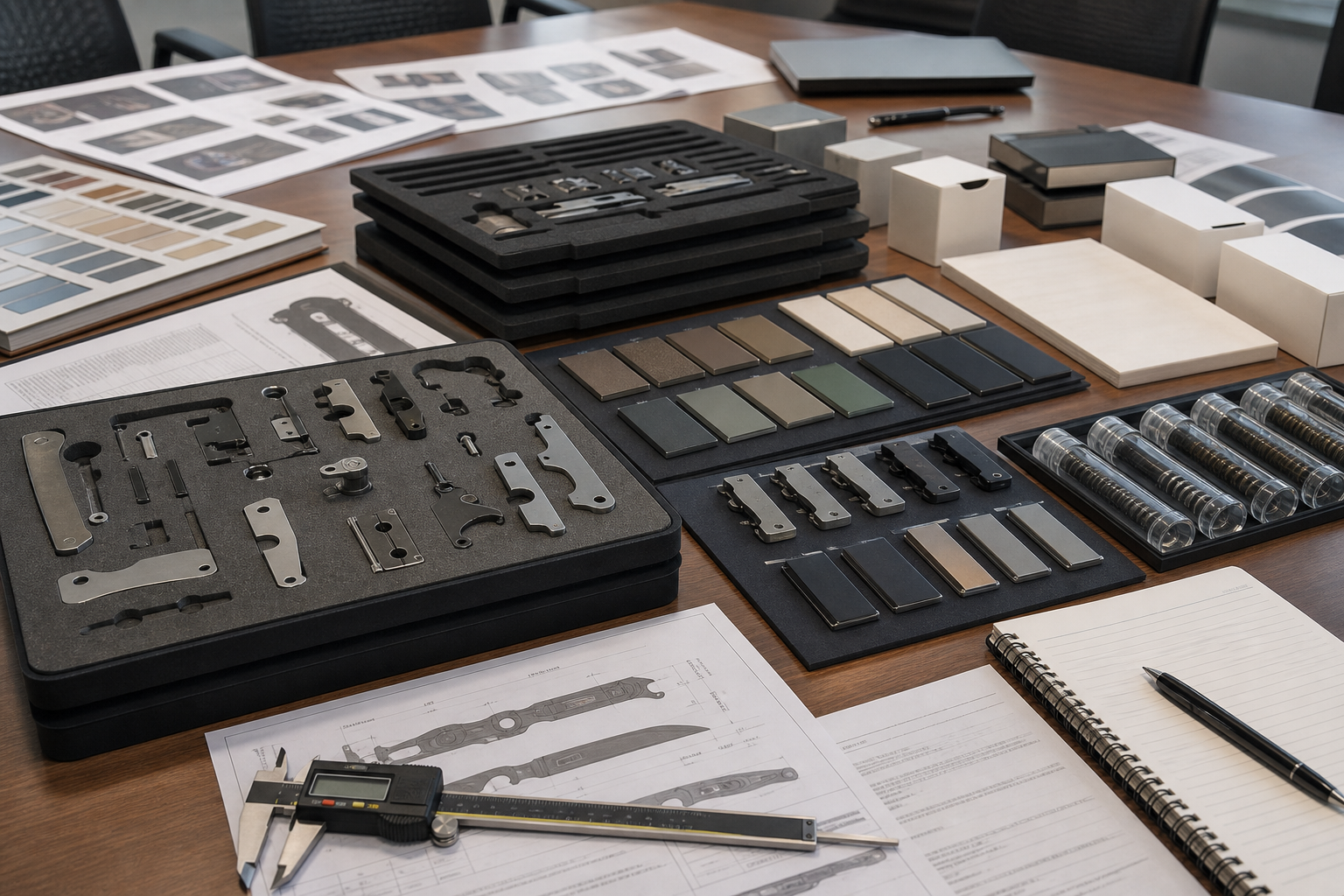
I Ask for the Lock Standard Before I Quote Seriously
For a crossbar lock project, I want the RFQ to define both product positioning and mechanical expectations. A buyer can start with a sketch or reference photo, but the quotation becomes better when the buyer explains the target price range, MOQ, blade steel, handle material, finish, packaging, and quality level. If the buyer wants a smooth action, I ask what "smooth" means in the approved sample. If the buyer wants strong lockup, I ask what inspection method should prove it.
The RFQ should also include naming rules. If the buyer wants to use a generic phrase such as "crossbar lock," that is simple. If the buyer wants a brand-style term, the buyer should confirm the legal right to use it before packaging work begins. This keeps the supplier from printing risky artwork.
I also ask whether the buyer expects washers or bearings, one spring or two springs, a particular release shape, reversible pocket clip, logo method, spare parts, or after-sales support. These details affect cost and lead time. The more clearly the buyer defines them, the easier it is for a manufacturer like Vast State to suggest a practical structure.
| RFQ field | What to include | Why it matters |
|---|---|---|
| Lock specification | Generic name, bar type, spring type | Prevents naming and structure confusion |
| Product level | Entry, mid-range, or higher-spec | Guides tolerance and material choices |
| Inspection plan | Lockup, blade play, centering, spring return | Makes quality measurable |
| Packaging | Box, pouch, insert card, warning text | Supports private label sales |
Turn your idea into a quote-ready knife project.
Share your drawing, sample photo, target quantity, market, and packaging needs. Vast State will review manufacturability and prepare OEM/ODM options.
Conclusion
I specify crossbar lock knives by turning the lock name into a clear mechanism, material, QC, and RFQ checklist.
Source Notes
- Folding knife with locking blade patent record supports the explanation of a sliding locking member, spring bias, two-side access, and lateral play control.
- Locking device for folding knife patent record gives useful context for spring-loaded crossbolt locking concepts.
- USPTO trademark basics supports the naming caution around generic lock terms and brand-specific terms.
- Alleima 14C28N knife steel supports material discussion for hardness, corrosion resistance, and knife steel selection.
- NIST Rockwell hardness guide supports controlled hardness measurement practice.
- ISO 9001 supports the process-control mindset behind customer requirements and QC checks.
- CCOHS hand tool ergonomics supports the ergonomic discussion around tool shape, fit, and task use.