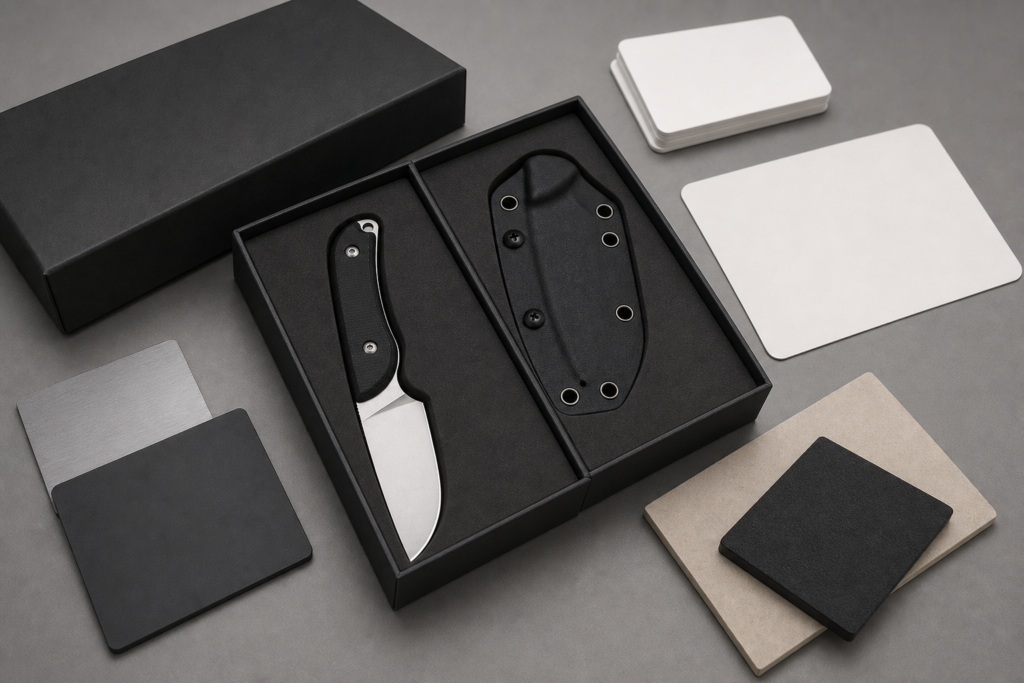
A custom fixed blade can look strong on a drawing, then fail on cost, comfort, sheath fit, or repeat production.
Buyers should develop custom fixed blade knives by defining the target user, cutting tasks, blade shape, steel, heat treatment, handle material, sheath, packaging, cost range, prototype plan, and QC standard before mass production. A good custom knife must be useful, manufacturable, and repeatable.
Quick buyer brief:
- Answer: Custom fixed blade development should move from market purpose to engineering detail, then to prototype, testing, production planning, packaging, and final inspection.
- Buyer context: This guide is for knife brands, outdoor brands, camping brands, importers, wholesalers, distributors, private label buyers, and sourcing managers.
- Key checks: Target use, blade profile, blade length, thickness, steel grade, hardness target, grind, finish, handle material, tang structure, sheath retention, packaging, logo method, MOQ, target price, lead time, compliance review, and QC criteria.
Planning a fixed blade or outdoor knife project?
Share your target use, blade size, steel preference, handle direction, sheath needs, quantity range, and packaging plan. Vast State can help turn it into a quote-ready specification.
When a buyer asks me about a custom fixed blade knife, I do not start by asking only for the shape. I ask what the buyer wants the knife to do in the market. A camping fixed blade, a hunting-style utility knife, a fishing knife, a rescue kit knife, and a private label gift knife need different choices. The drawing is important, but the full project is bigger than the drawing. It includes materials, structure, finishing, sheath, packaging, cost, lead time, and repeat quality.
Why Should Custom Fixed Blade Development Start With the Target User?
Many projects begin with a reference photo. That can help style, but it does not define the product.
Custom fixed blade development should start with the target user because the user's task, environment, skill level, carry method, price expectation, and sales channel control the design direction.
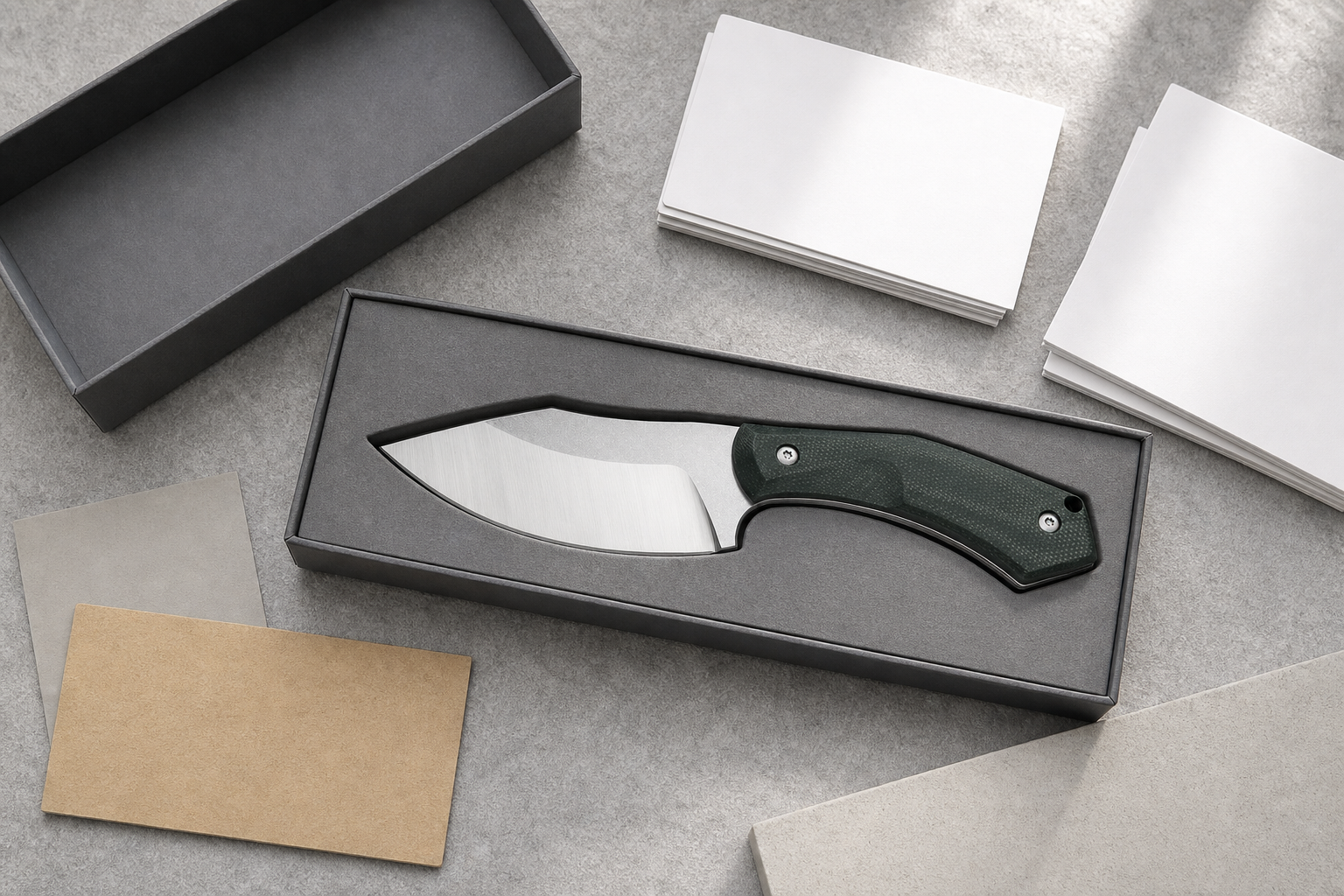
I Turn the Market Idea Into a Product Direction
The target user decides more than many buyers expect. A beginner camping customer may need a simple, comfortable, easy-care knife. A premium outdoor buyer may accept better steel, tighter finish control, and a more expensive sheath. A fishing market may care more about corrosion resistance and cleaning. A gift or private label product may need stronger packaging and a more refined finish.
The ISO page for ISO 9241-11:2018 describes usability as a framework that can apply to products and services. I use that idea in a practical way. A custom knife should be developed for a specific user, goal, and context. If the buyer cannot define those three things, the design may drift into a product that looks good but does not fit the market.
I usually ask buyers to define three layers. The first layer is the main use. The second layer is the commercial target, including price, MOQ, and sales channel. The third layer is the brand feeling, such as practical, premium, lightweight, rugged, or gift-ready. Once these layers are clear, material and structure choices become easier.
| Planning question | Why it matters | Buyer output |
|---|---|---|
| Who uses the knife? | Controls size and comfort | Target user profile |
| What will it cut? | Controls blade shape and grind | Main task list |
| Where is it sold? | Controls packaging and wording | Market and channel plan |
| What price is needed? | Controls materials and process | Realistic cost range |
OEM/ODM RFQ Checklist
Prepare these details to help Vast State review your project and provide a more accurate quotation.
| RFQ Field | What to Prepare |
|---|---|
| Project type | OEM from drawing / ODM private label / wholesale catalog |
| Product category | Folding knife / fixed blade / multi-tool / outdoor tool |
| Design status | Idea / sketch / 2D drawing / 3D CAD / physical sample |
| Target price | Ex-factory target price or retail price range |
| MOQ expectation | 500 / 1,000 / 3,000 / 5,000+ pcs |
| Logo method | Laser engraving / etching / printing / molded logo |
| Packaging | Standard packaging / custom retail box / Amazon-ready |
| Market | USA / EU / Japan / Korea / Middle East / other |
| Compliance needs | Buyer-specified testing / documentation / labeling |
| Timeline | Sample deadline / mass production deadline |
How Should Buyers Define Blade Shape, Size, and Tang Structure?
A fixed blade may look simple, but small geometry choices affect strength, weight, comfort, sheath fit, and cost.
Buyers should define blade shape, blade length, thickness, grind, point style, tang structure, balance, and handle relationship based on use case and production stability.
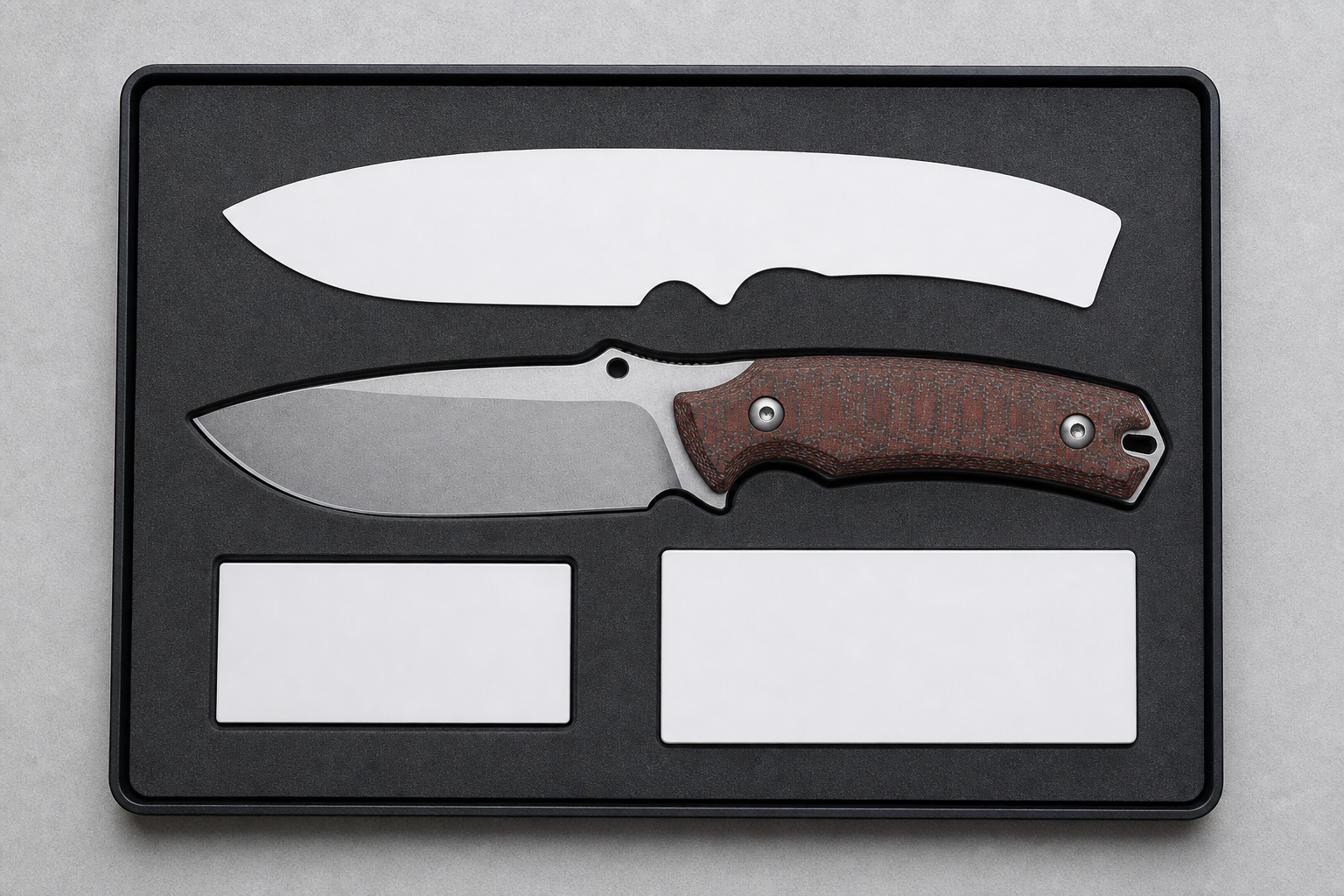
I Check the Blade as a Working Part
Blade shape should follow the most common task. A drop point can be practical for many outdoor knives. A straight-edge utility shape can give good control. A trailing point may help slicing but may not fit every sheath or task. A broad blade may look strong but can become heavy. A very fine point may look precise but may not fit rough outdoor use.
Size also needs control. A long blade can impress buyers in photos, but it can be harder to carry and more expensive to produce. A thick blade can feel strong, but it may cut poorly if the grind is not planned well. A thin blade can slice well, but it may not match heavy outdoor positioning. The buyer should not choose thickness only by appearance.
Tang structure is important. A full tang can support strong outdoor positioning and simple assembly, but it adds material and weight. A hidden tang can create a different handle style but needs careful engineering. Skeletonized tangs can reduce weight, but cutouts should not weaken the product beyond the intended use. The handle and tang should be designed together.
| Design choice | Effect | Buyer check |
|---|---|---|
| Blade length | Carry and cutting reach | Match user and market rules |
| Stock thickness | Strength and cutting feel | Avoid excessive thickness |
| Tang style | Strength, weight, assembly | Match price and use case |
| Grind type | Cutting performance | Approve sample geometry |
How Should Steel and Heat Treatment Be Selected?
Steel names can sound impressive, but poor heat treatment or wrong geometry can still create a bad knife.
Steel and heat treatment should be selected by target use, corrosion need, toughness, edge stability, hardness target, grindability, cost, and repeat production control.
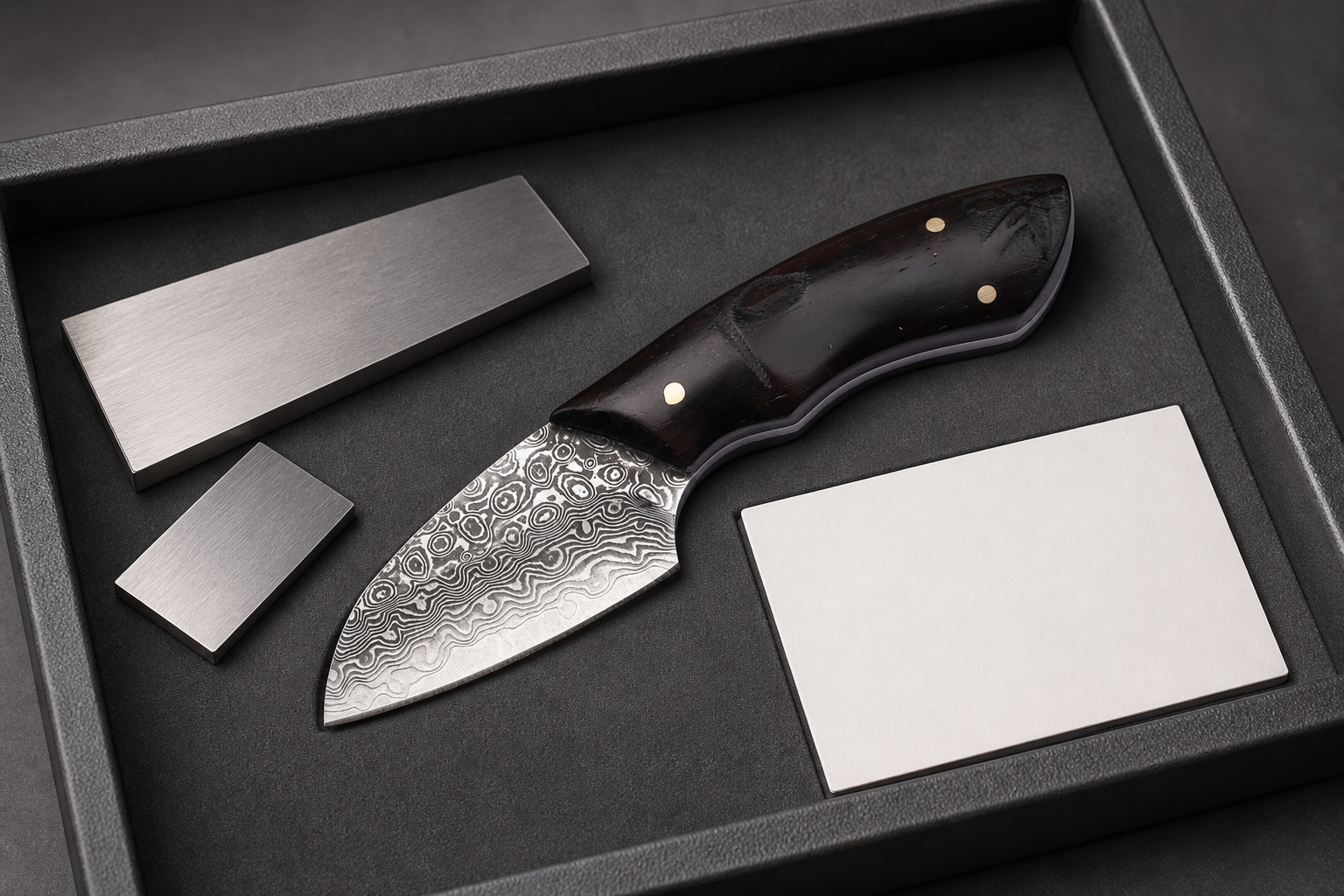
I Match Steel to the Product Promise
For a custom fixed blade, steel choice should support the use case and price. A stainless steel may fit wet outdoor markets, fishing, camping, and lower-maintenance retail products. A high-carbon steel may fit some rugged outdoor concepts, but the buyer should plan stronger rust-prevention guidance. Premium steels can help higher product tiers, but only if the market will pay for them and the supplier can control the process.
Heat treatment matters as much as steel selection. Alleima explains that hardening and tempering of knife steel should create a balance between hardness, toughness, and corrosion resistance. This balance is exactly what I discuss with buyers. A knife that is too soft may lose edge performance quickly. A knife that is too hard for its geometry may chip.
The buyer should define a hardness target range, not only ask for the highest number. The correct range depends on steel, blade size, grind, target use, and price. For outdoor knives, toughness and edge stability often matter more than a high hardness claim on a product page.
I also connect heat treatment to production planning. Warping, grinding heat, surface finish, and batch consistency all need control.
| Steel decision | Why it matters | Buyer question |
|---|---|---|
| Stainless grade | Corrosion and maintenance | Will the user need low-care ownership? |
| Carbon steel | Toughness and edge feel | Can the market accept care needs? |
| Hardness range | Edge and toughness balance | What target range fits the task? |
| Heat treatment route | Batch consistency | How will hardness be checked? |
How Should Handle Materials and Ergonomics Be Developed?
A fixed blade with a good blade can still fail if the handle is uncomfortable, slippery, or expensive to repeat.
Handle design should balance grip, comfort, material stability, assembly method, weight, moisture resistance, brand style, cost, and long-term user expectations.
I Test the Handle With the Blade Concept
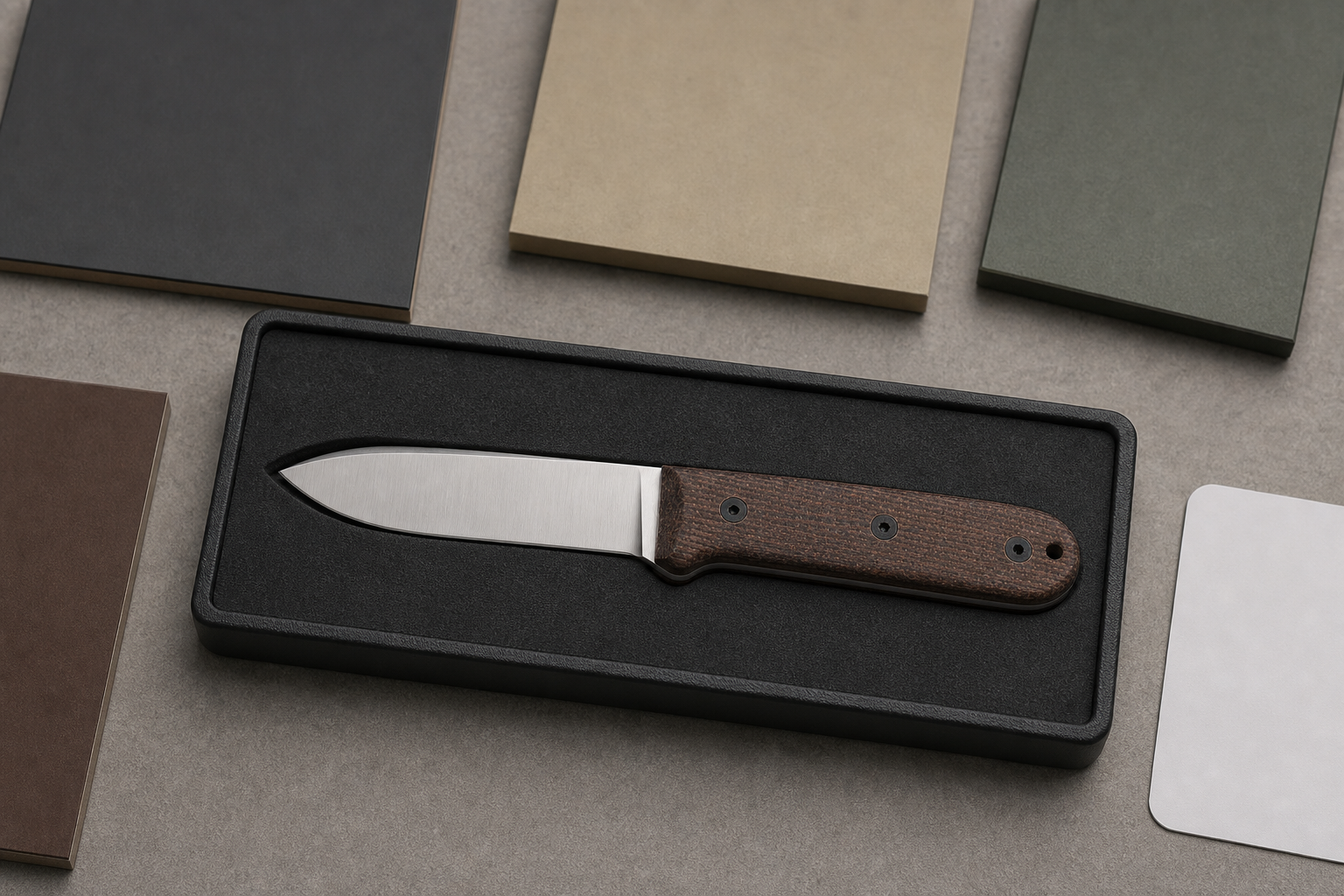
The handle should fit the task. A camping knife may need comfort during repeated cutting. A fishing or wet-use knife may need more grip and corrosion-aware materials. A premium gift knife may need wood or layered handle materials, but the buyer should plan care instructions. A budget outdoor line may need a simpler polymer or rubberized handle if the target price is tight.
Handle shape affects safety and comfort. The user should know where the edge begins. The grip should not create sharp hot spots. The handle should not feel too thin under pressure. If the knife is large, the handle needs enough control. If the knife is compact, the handle should still fit the intended user's hand.
Assembly method also matters. Full tang scales can use screws, pins, rivets, adhesive, or a combination. Each method affects cost, serviceability, appearance, and QC. Textured materials can improve grip but may require more careful cleaning and machining. Metal handles can look clean but may feel cold or slippery.
I prefer reviewing handle prototypes early. A drawing cannot show everything. A real sample shows balance, finger position, thickness, and surface feel.
| Handle material | Main benefit | Watch point |
|---|---|---|
| G10 | Stable and grippy | Machining and texture cost |
| Micarta | Warm grip feel | Color can darken with use |
| Wood | Premium natural look | Moisture and care needs |
| Rubber or polymer | Practical wet grip | Aging and finish consistency |
How Should Sheath and Carry Design Be Planned?
The sheath is not a small accessory. It changes safety, carry, packaging, and user satisfaction.
Sheath design should be planned with the knife because retention, draw force, edge coverage, drainage, belt attachment, material, thickness, and packaging all affect the final product.
I Develop the Knife and Sheath Together
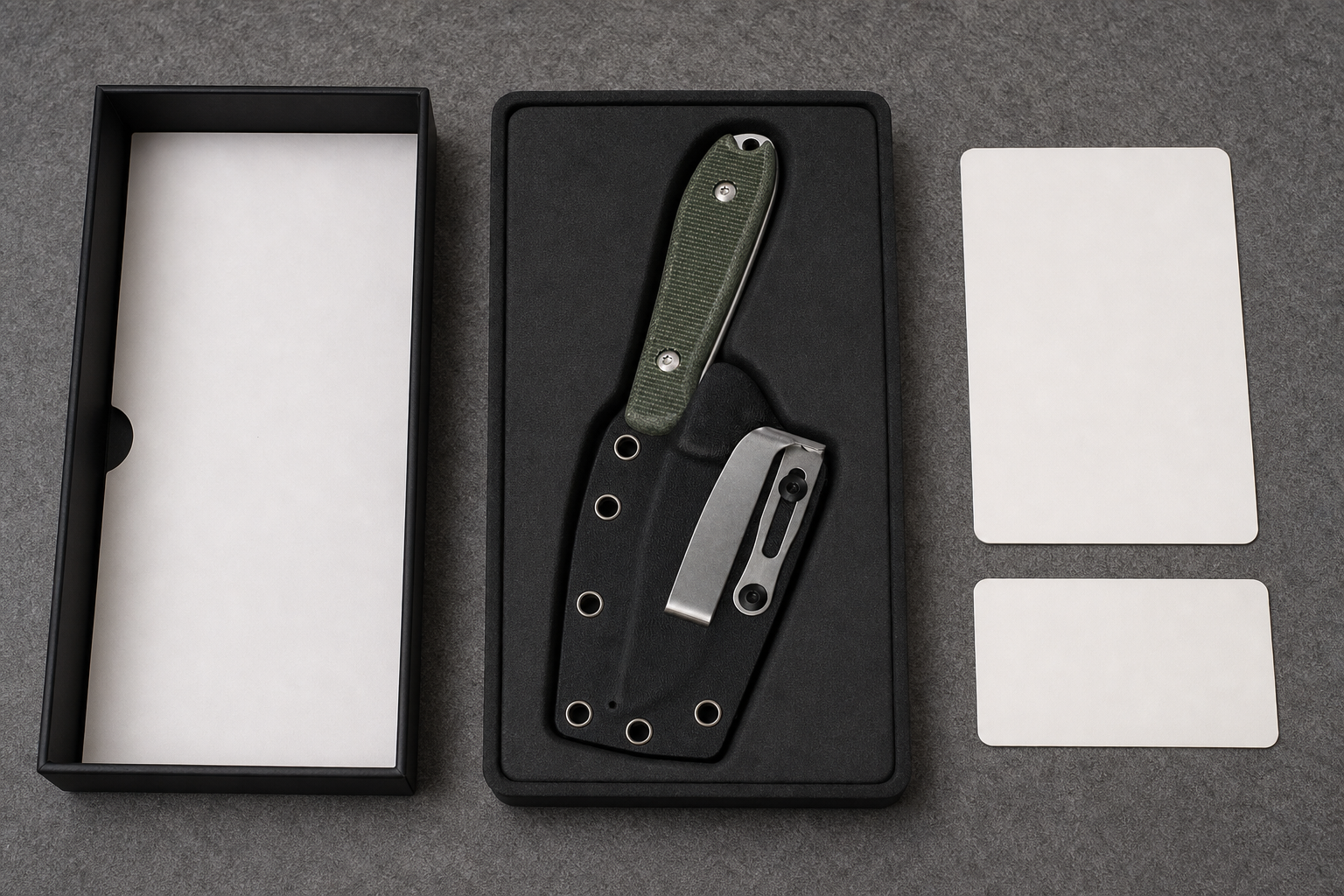
For fixed blades, the sheath protects both the user and the blade. A good sheath should cover the edge, protect the tip, hold the knife securely, and allow controlled draw. If the sheath is too loose, the product feels unsafe. If it is too tight, users may use too much force. If the material traps moisture, the care card should explain dry storage.
Material choice depends on product level. A leather-style sheath can feel premium but needs moisture care. A molded sheath can be practical and stable, but it must fit the blade shape accurately. Nylon can be cost-effective and light, but insert quality and stitching matter. Belt loops, clips, straps, and lanyard holes should match the user's carry habit.
CCOHS guidance on working safely with sharp blades or edges includes safe handling and storage principles. I apply that thinking to sheath development. The sheath should support safe storage and transport, not only look good in the product photo.
I recommend sheath testing during the prototype stage. Waiting until final packaging can create expensive changes.
| Sheath area | What I check | Buyer concern |
|---|---|---|
| Retention | Holds knife securely | Avoid loose carry |
| Draw force | Removes smoothly | Avoid unsafe force |
| Edge coverage | Protects blade and user | No exposed sharp edge |
| Carry method | Belt, clip, pack, kit | Match target user |
What Prototype Steps Should Buyers Expect?
A prototype is not only a photo sample. It should answer engineering, cost, comfort, and production questions.
Prototype development should check blade geometry, handle feel, sheath fit, material response, finish quality, logo method, packaging fit, and manufacturability before mass production.
I Use Prototypes to Remove Guesswork
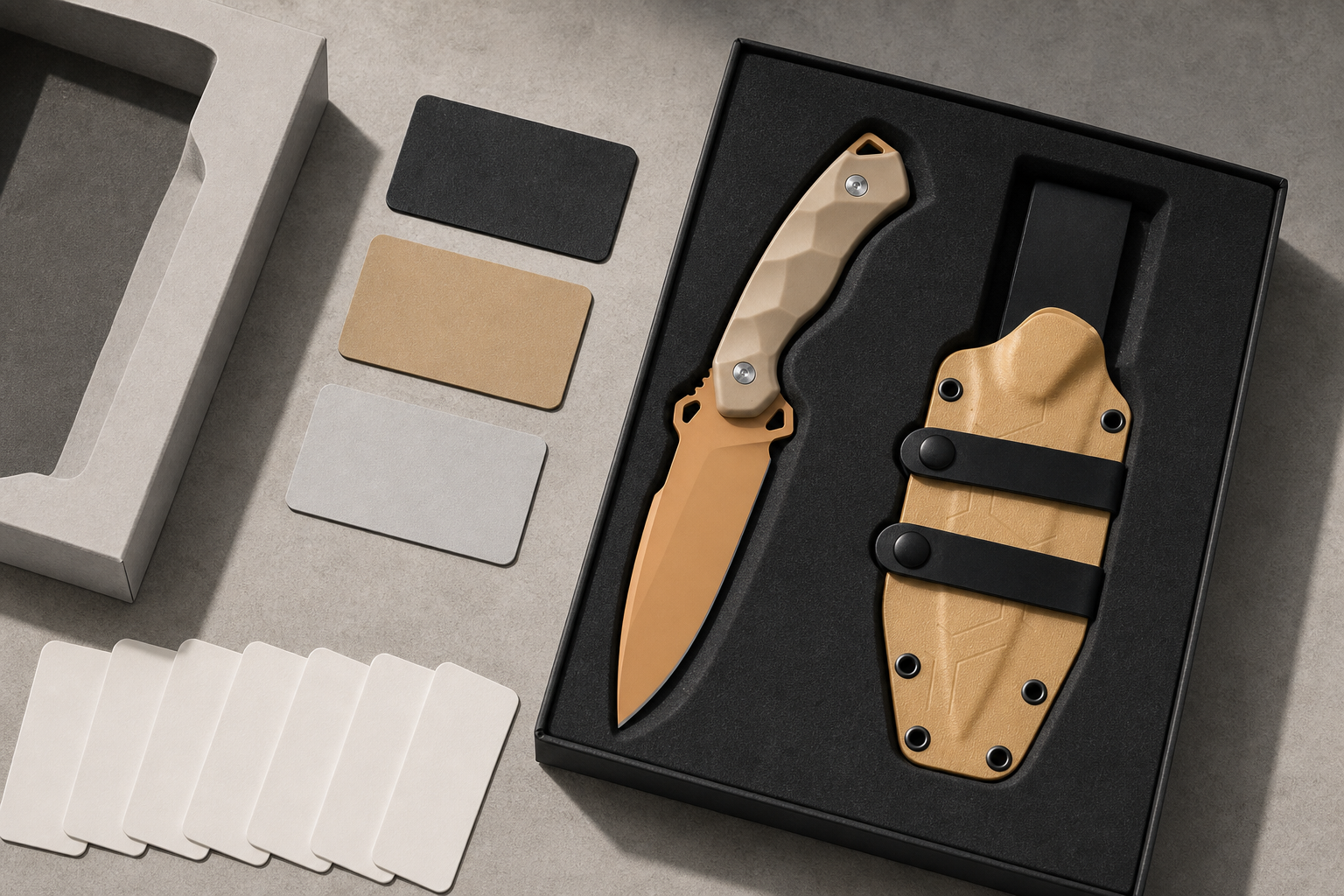
The first prototype should show whether the concept is realistic. The blade profile should feel right. The thickness should match the cutting task. The handle should feel comfortable. The sheath should retain the knife. The finish should match the brand level. The logo should look correct on the chosen finish. The packaging should protect the product.
Prototype feedback should be specific. "Make it better" is not useful. A buyer should comment on blade length, handle thickness, grip texture, balance, sheath retention, finish, edge, and packaging. If the buyer has a target price, the prototype should also be reviewed for cost. A beautiful sample that cannot meet the price range is not a successful sample.
Some projects need several sample rounds. That is normal when the product is new. But the process should move with clear decisions. If every round changes the market direction, time and cost increase. I prefer to confirm the use case and material direction before cutting samples.
Prototype approval should not only approve appearance. It should approve function, cost direction, production method, and QC checkpoints.
| Prototype check | What it answers | Buyer action |
|---|---|---|
| Blade sample | Shape and thickness | Confirm cutting direction |
| Handle sample | Comfort and grip | Test in hand |
| Sheath sample | Retention and carry | Check draw and storage |
| Finish sample | Visual standard | Approve boundary examples |
How Do Manufacturing Methods Affect Cost and Consistency?
Custom manufacture is not only making one sample. The real challenge is producing the same knife repeatedly.
Manufacturing methods affect cost and consistency through cutting, machining, heat treatment, grinding, handle assembly, surface finishing, sheath production, packaging, and inspection control.
I Design for Repeat Production
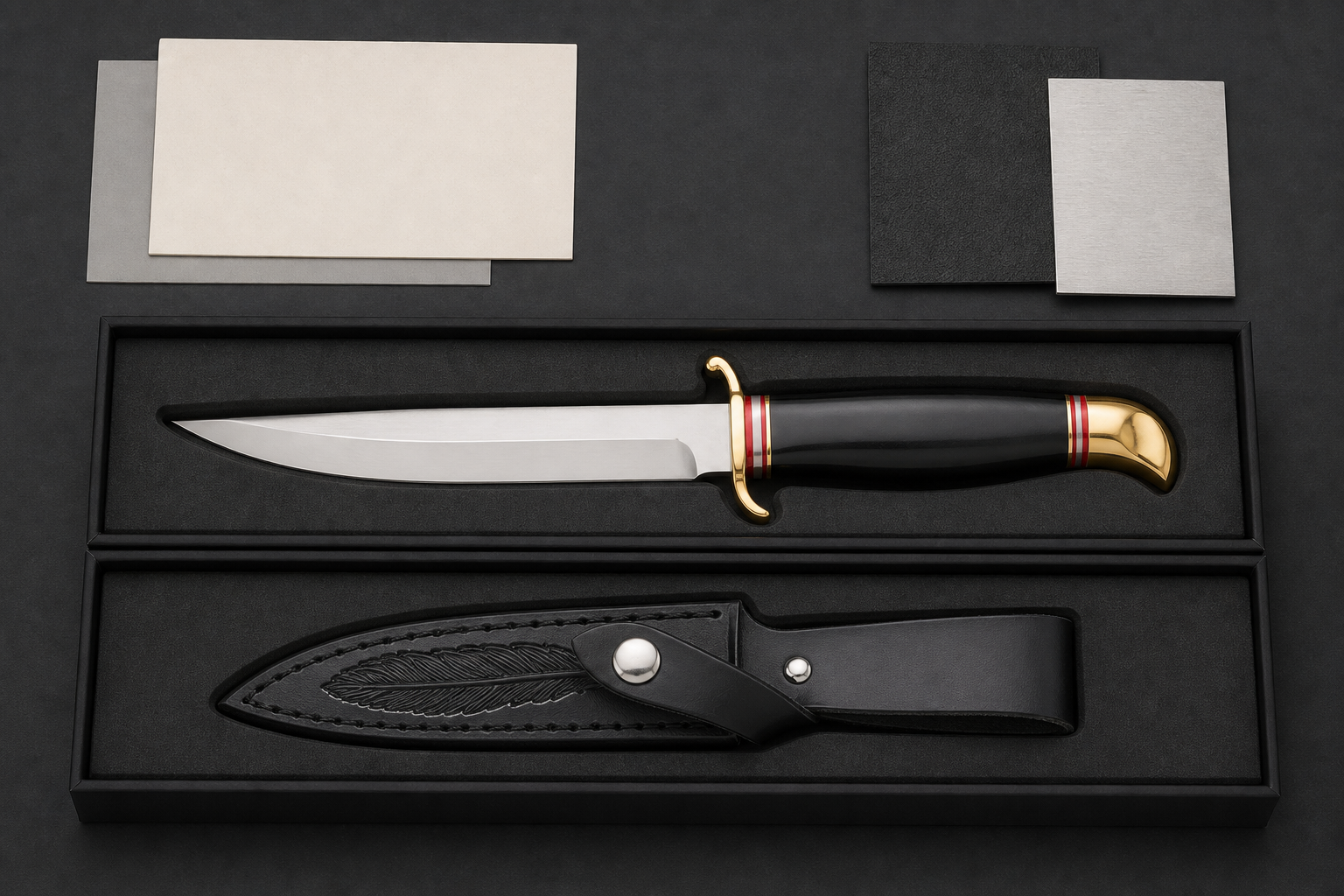
Different production methods fit different quantities and designs. Blade blanks may be cut by laser, waterjet, stamping, or machining depending on steel, thickness, volume, and accuracy needs. Handle scales may need CNC machining, molding, texturing, drilling, or polishing. Sheaths may need molding, stitching, hardware, or inserts. Each method affects lead time and cost.
Dimensional control matters in fixed blade production. Blade outline, tang holes, handle screw holes, pin locations, thickness, grind symmetry, and sheath fit all need consistency. The NIST page on dimensional metrology connects measurement with manufacturing improvement and accurate part information. That principle is very practical for OEM knife projects.
I also check where handwork is required. Hand grinding, hand polishing, handle shaping, and sheath finishing can create a premium feel, but they can also increase variation and cost. The buyer should know whether the design depends heavily on hand adjustment. If the order quantity is large or price-sensitive, the design may need simplification.
Good custom manufacture means the factory can repeat the approved sample within agreed tolerances.
| Process | Purpose | Risk to control |
|---|---|---|
| Blank cutting | Creates blade profile | Shape and hole accuracy |
| Heat treatment | Builds blade properties | Warping and hardness variation |
| Grinding | Creates cutting geometry | Symmetry and overheating |
| Handle assembly | Creates grip and finish | Gaps, looseness, alignment |
How Should Buyers Control Cost, MOQ, and Lead Time?
A custom fixed blade can become expensive quickly if every detail is treated as premium. Buyers need priorities.
Cost, MOQ, and lead time are controlled by material grade, blade size, process complexity, handle material, sheath type, finish, logo method, packaging, inspection, and sample rounds.
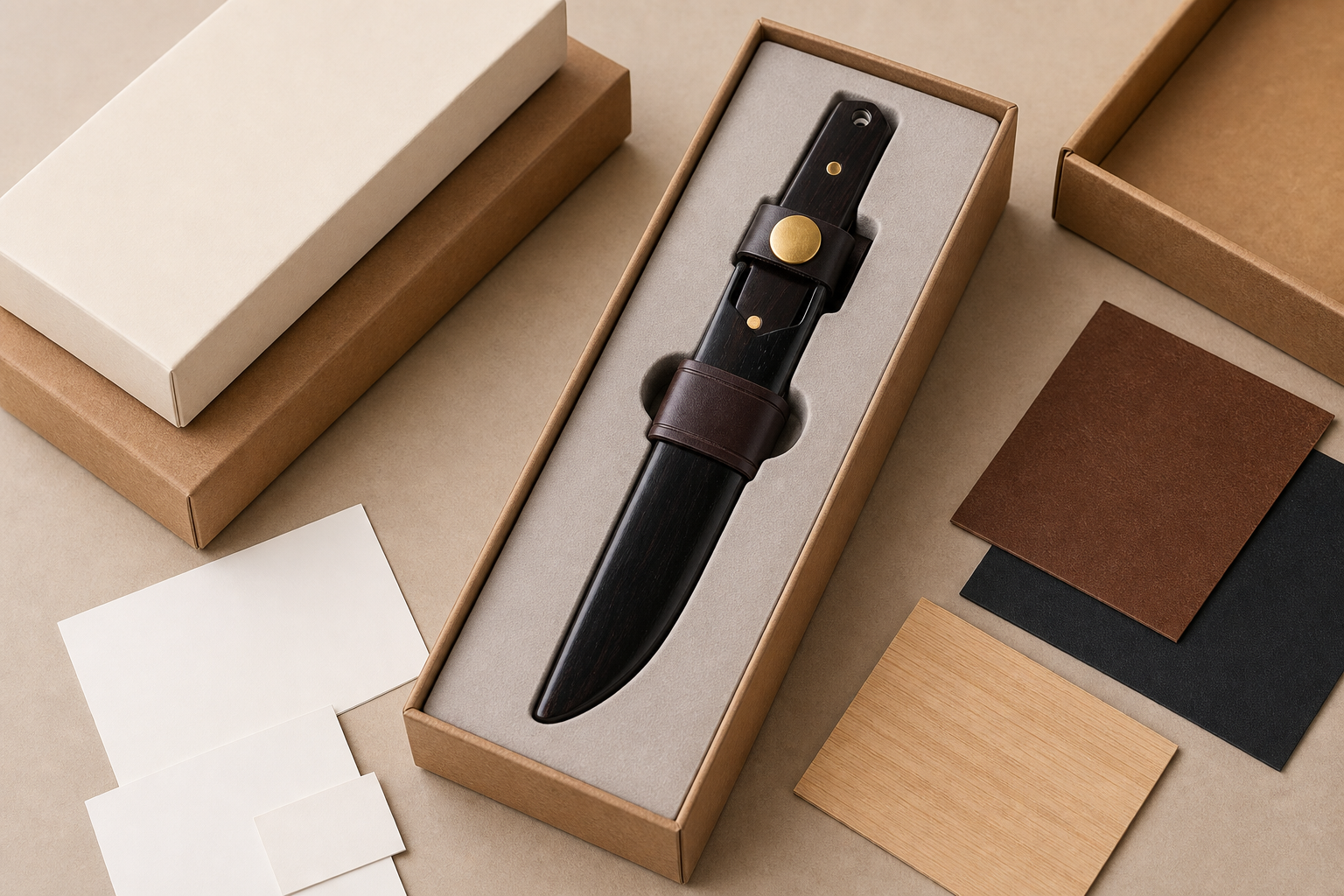
I Ask Buyers to Rank What Matters Most
Cost control starts with priority. If the buyer cares most about premium steel, we may need a simpler handle or sheath to keep the price realistic. If the buyer cares most about retail packaging, we may choose a practical steel and finish. If the buyer cares most about low MOQ, we may avoid custom-molded parts or overly complex tooling.
Blade size affects material usage and processing time. Thicker steel costs more and takes more work to grind. Complex blade shapes cost more to cut and finish. Premium handle materials can raise both material and machining cost. Sheaths can also be a major cost driver, especially if they require custom molding, hardware, or premium materials.
Lead time depends on sample approval, material availability, tooling, production capacity, finishing, packaging, and inspection. If the buyer changes the design after prototype approval, the timeline can move. This is why I prefer clear decisions before mass production.
MOQ is not only a number. It depends on material purchasing, tooling, setup, packaging, and process efficiency. A simple custom design may be more flexible than a highly customized design with many special parts.
| Cost driver | Why it matters | Buyer option |
|---|---|---|
| Steel grade | Material and heat treatment | Match steel to product tier |
| Handle material | Material and machining cost | Use premium only when market pays |
| Sheath design | Tooling and assembly | Simplify for lower MOQ |
| Finish | Labor and reject risk | Choose finish by purpose |
What Safety, Compliance, and Market Positioning Should Buyers Review?
Custom fixed blades need responsible positioning. A strong product does not need unsafe language.
Buyers should review blade size, intended use, target market rules, packaging warnings, care instructions, sheath safety, and product copy before launching custom fixed blade knives.
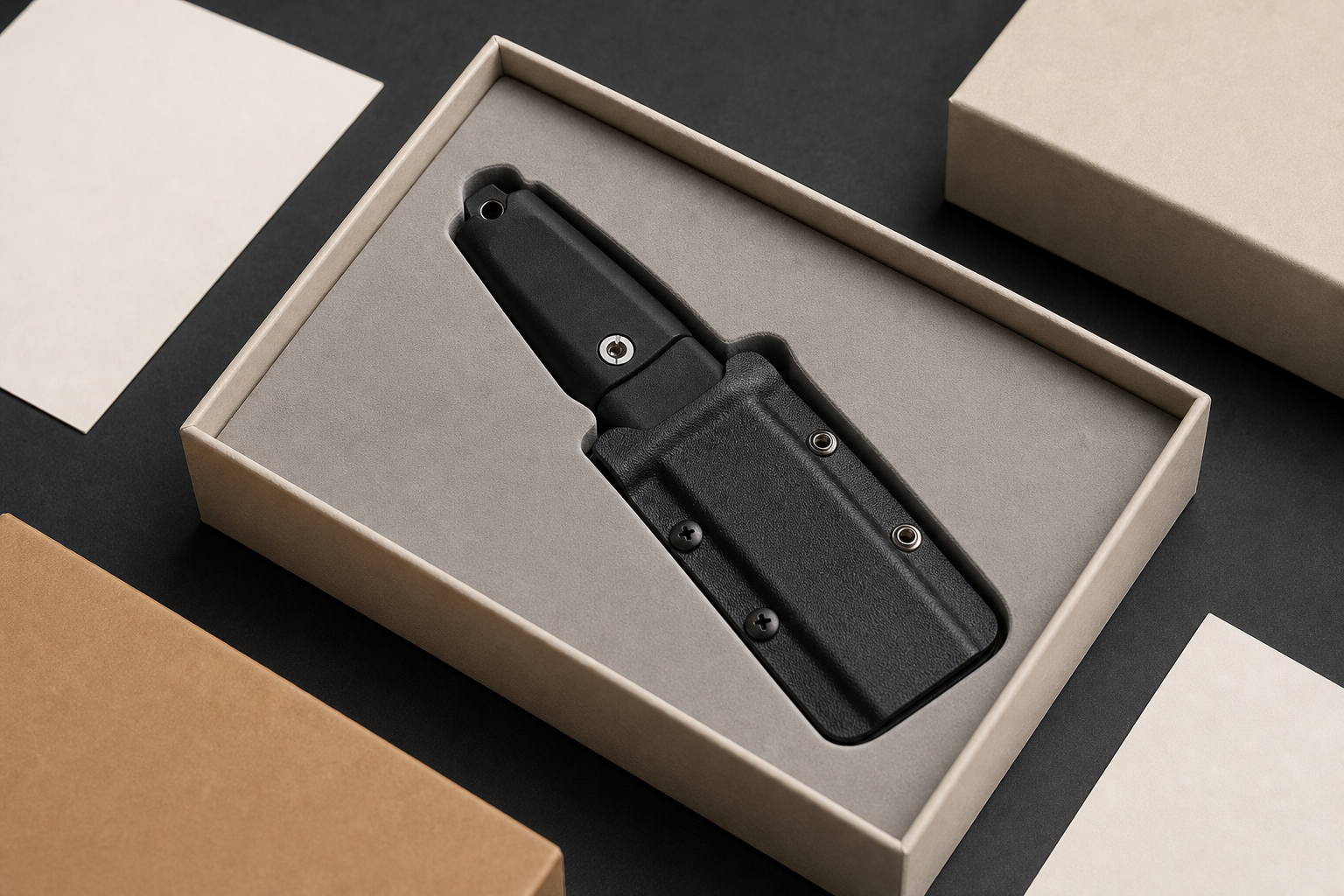
I Keep the Product Story Practical
For international B2B buyers, fixed blade positioning should stay practical and responsible. Product copy can talk about camping, outdoor utility, kit readiness, fishing, hunting-style utility, general cutting, and tool durability where appropriate. It should avoid exaggerated claims, self-defense positioning, and unsafe use promises.
Market rules vary. I do not give legal advice, but I encourage buyers to review target market rules before confirming blade length, sheath type, carry method, packaging claims, and sales channel. Some retailers and platforms may also have their own requirements.
Safety wording should match the product. The packaging should identify sharp edges, proper storage, care guidance, and intended use limits. If the knife is not designed for prying, throwing, chopping, or heavy impact, the copy should not suggest those tasks. Clear limits reduce after-sale issues.
The sheath is part of safety positioning. A secure sheath, covered edge, and stable packaging show the buyer's customers that the product is designed responsibly. A practical product can still look strong and premium without risky language.
| Positioning item | What to review | Why it matters |
|---|---|---|
| Use claim | Camping, utility, outdoor tasks | Keeps messaging responsible |
| Market rules | Blade size and labeling | Supports launch planning |
| Safety wording | Sharp edge and storage | Reduces user confusion |
| Sheath design | Retention and edge coverage | Protects carry experience |
What QC Checks Protect Custom Fixed Blade Orders?
One approved sample does not guarantee a stable batch. QC must turn the sample into repeatable standards.
QC should check blade dimensions, hardness, grind symmetry, edge sharpness, surface finish, handle fit, sheath retention, logo quality, packaging protection, and approved-sample consistency.
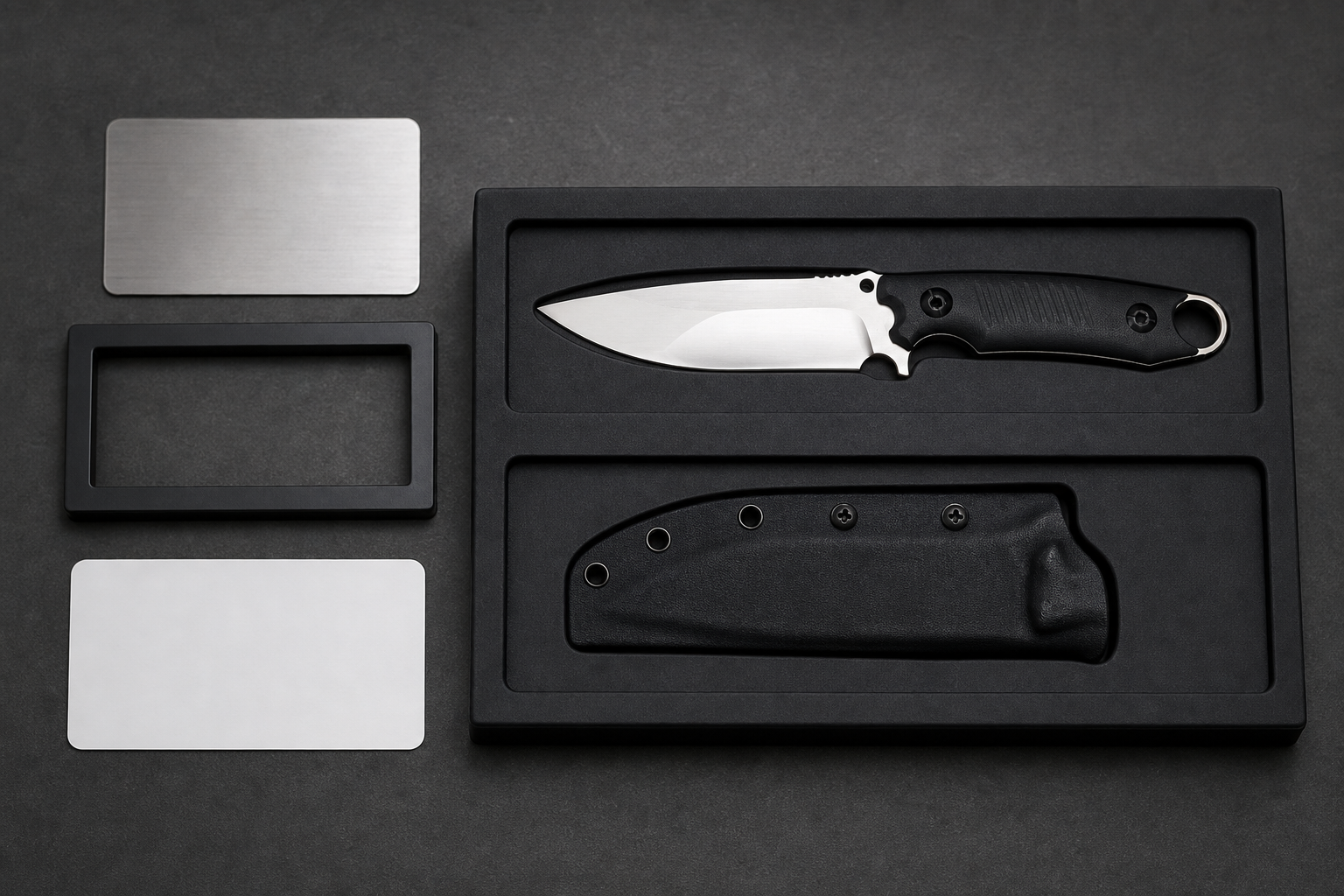
I Build QC From the Approved Sample
Quality control should begin before final inspection. Incoming steel should match the order. Blade blanks should meet profile and hole tolerances. Heat treatment should meet the agreed hardness range. Grinding should match the approved geometry. Handle assembly should be tight and aligned. The sheath should fit the blade. Packaging should protect the product during shipping.
ISO describes ISO 9001 as a quality management standard that helps organizations improve performance, meet customer expectations, and maintain a quality management system. That process mindset is useful for custom fixed blade orders. Final inspection can catch defects, but process checks reduce the chance of creating them.
Boundary samples are important. The buyer and factory should agree on acceptable and unacceptable examples for finish marks, handle gaps, edge alignment, sheath retention, logo appearance, and packaging condition. This makes inspection less subjective.
For repeat production, I keep the approved sample and QC points visible. The goal is not only to ship one good batch. The goal is to support repeat orders with consistent results.
| QC area | What to check | Buyer protection |
|---|---|---|
| Blade | Dimensions, hardness, edge | Protects function |
| Handle | Fit, alignment, comfort | Protects user experience |
| Sheath | Retention and coverage | Protects carry and storage |
| Packaging | Movement and surface protection | Protects delivery condition |
What Should Buyers Put in a Custom Fixed Blade RFQ?
A clear RFQ saves time. A vague RFQ forces the supplier to guess and creates avoidable sample revisions.
Buyers should include target use, blade drawing or reference, dimensions, steel, hardness, grind, finish, handle material, sheath, packaging, logo, MOQ, price target, market, and QC expectations.
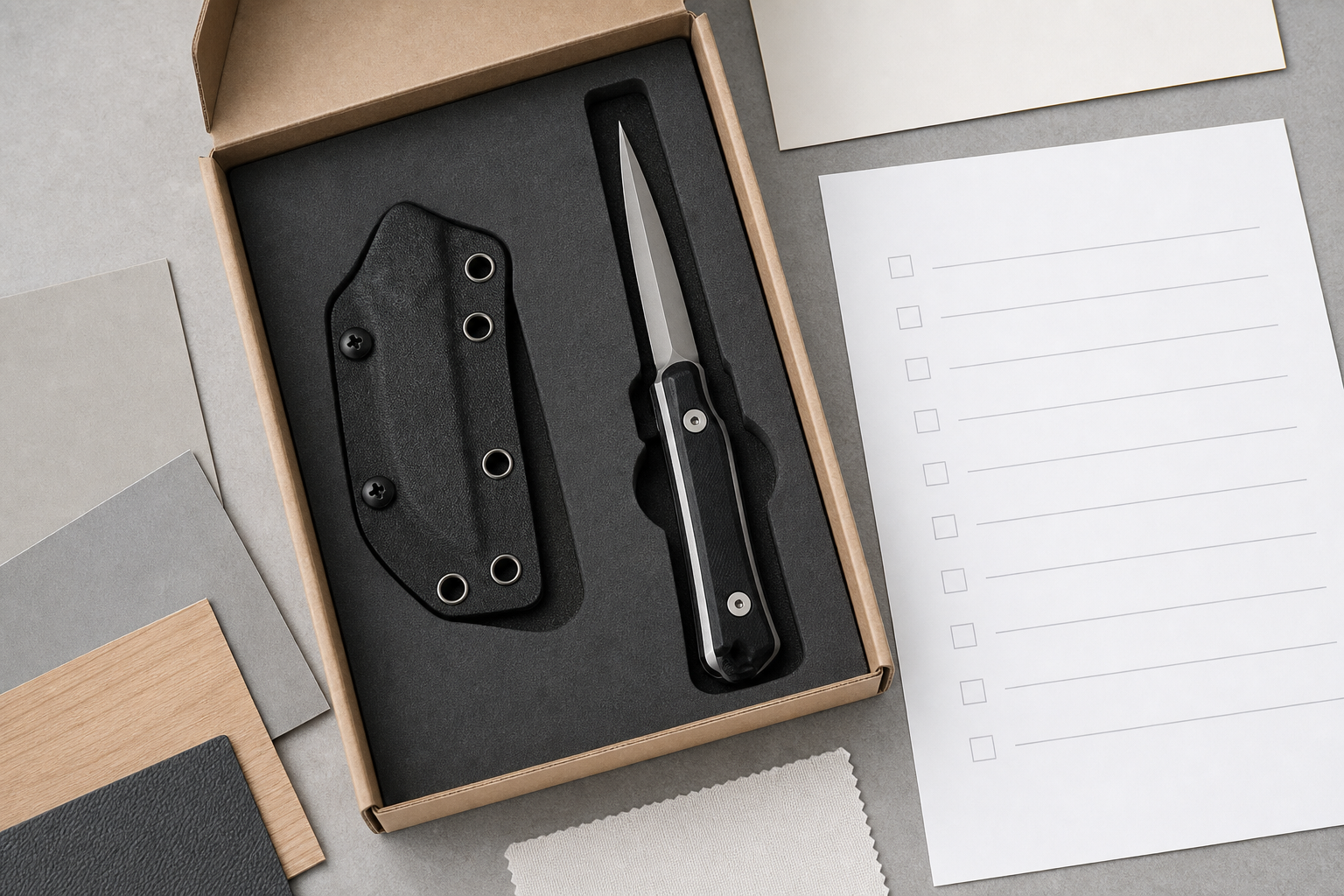
I Prefer RFQs With Priorities, Not Only Specifications
The best RFQ gives both technical details and commercial priorities. It should say whether the buyer values low cost, premium finish, fast prototype, special handle material, better sheath, or repeat production stability. Without priorities, the factory may quote the wrong version of the product.
The RFQ should include target user, target use, blade length, overall length, thickness, tang style, steel grade, hardness target, grind type, finish, handle material, fastener method, sheath material, carry method, logo method, packaging style, care-card needs, target MOQ, target price, target market, and sample deadline. If the buyer has a drawing, 3D file, or sample, that helps. If not, a clear concept can still start the ODM process.
I also ask for limits. What should the knife not do? What cost cannot be exceeded? What market rule must be considered? What material should be avoided? These limits help me propose a realistic path.
For B2B projects, a good RFQ is the start of engineering communication. It is not only a price request.
| RFQ field | What to include | Why it helps |
|---|---|---|
| Use case | Market and main tasks | Guides design direction |
| Technical spec | Size, steel, grind, handle | Supports accurate quote |
| Sheath and package | Carry, storage, retail needs | Completes product plan |
| Commercial target | MOQ, price, timeline | Keeps project realistic |
How Can Vast State Support Custom Fixed Blade Development?
Buyers need more than a supplier who can make a sample. They need a partner who can connect design, cost, and production.
Vast State supports custom fixed blade development through OEM/ODM review, prototype development, material selection, structure suggestions, finish options, sheath and packaging customization, production follow-up, and QC.
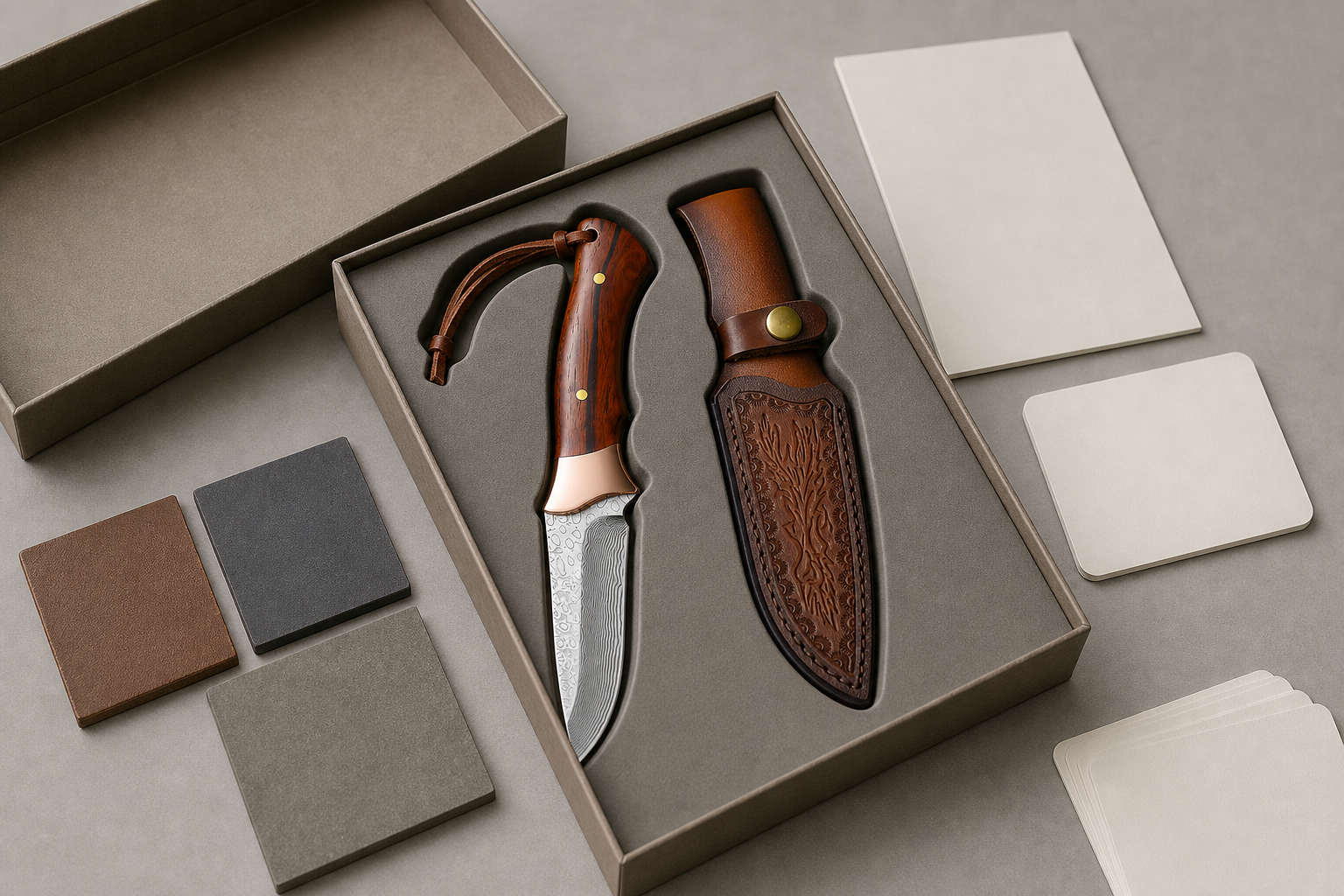
I Help Buyers Move From Idea to Repeat Production
At Vast State, I support buyers from concept to production. For fixed blade projects, this means I review the target market, blade shape, steel, heat treatment, handle material, sheath, finish, packaging, cost target, and QC plan. I want the product to fit the buyer's market, not only look good in the first sample photo.
Some buyers already have finished drawings. I review manufacturability and point out production risks. Some buyers only have an idea, rough reference, or target price. I help turn that into a practical ODM direction. This may include changing blade thickness, simplifying a profile, choosing a more suitable steel, improving handle ergonomics, or adjusting sheath structure.
Our goal is not only to manufacture products. It is to help customers build products that fit their target market, price range, and brand position. Fixed blade projects can be very strong private label products when the development process is practical and controlled.
For long-term B2B customers, stable communication matters. Clear drawings, clear samples, clear cost decisions, and clear QC standards help the project move faster and reduce surprises.
| Support area | What I review | Buyer benefit |
|---|---|---|
| Concept | Market, use, product tier | Better direction |
| Engineering | Blade, tang, handle, sheath | Lower sample risk |
| Production | Materials, process, QC | More stable batches |
| Packagi [TRUNCATED: see Source Markdown File for full content]
Turn this article into a fixed blade project.
Send your target use, blade size, steel, handle direction, sheath needs, quantity, and packaging plan. Vast State can help shape it into a quote-ready project.