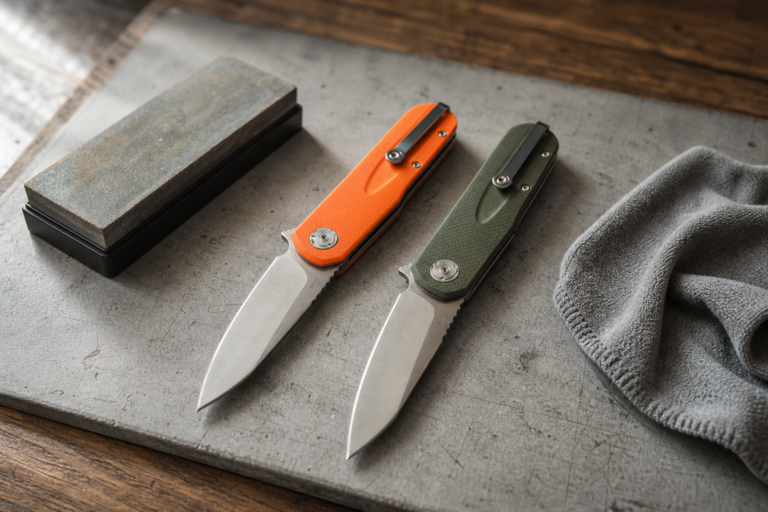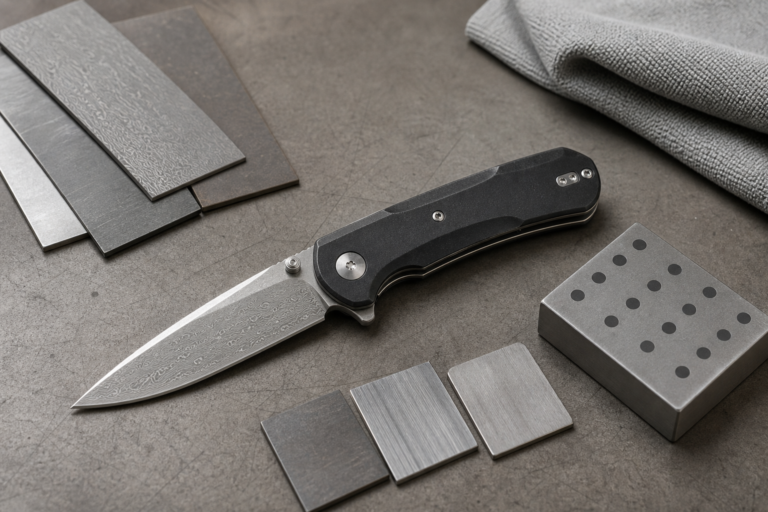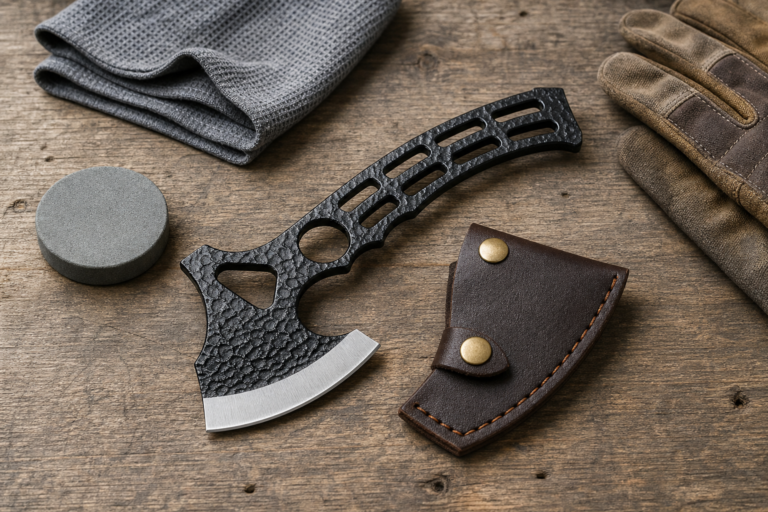
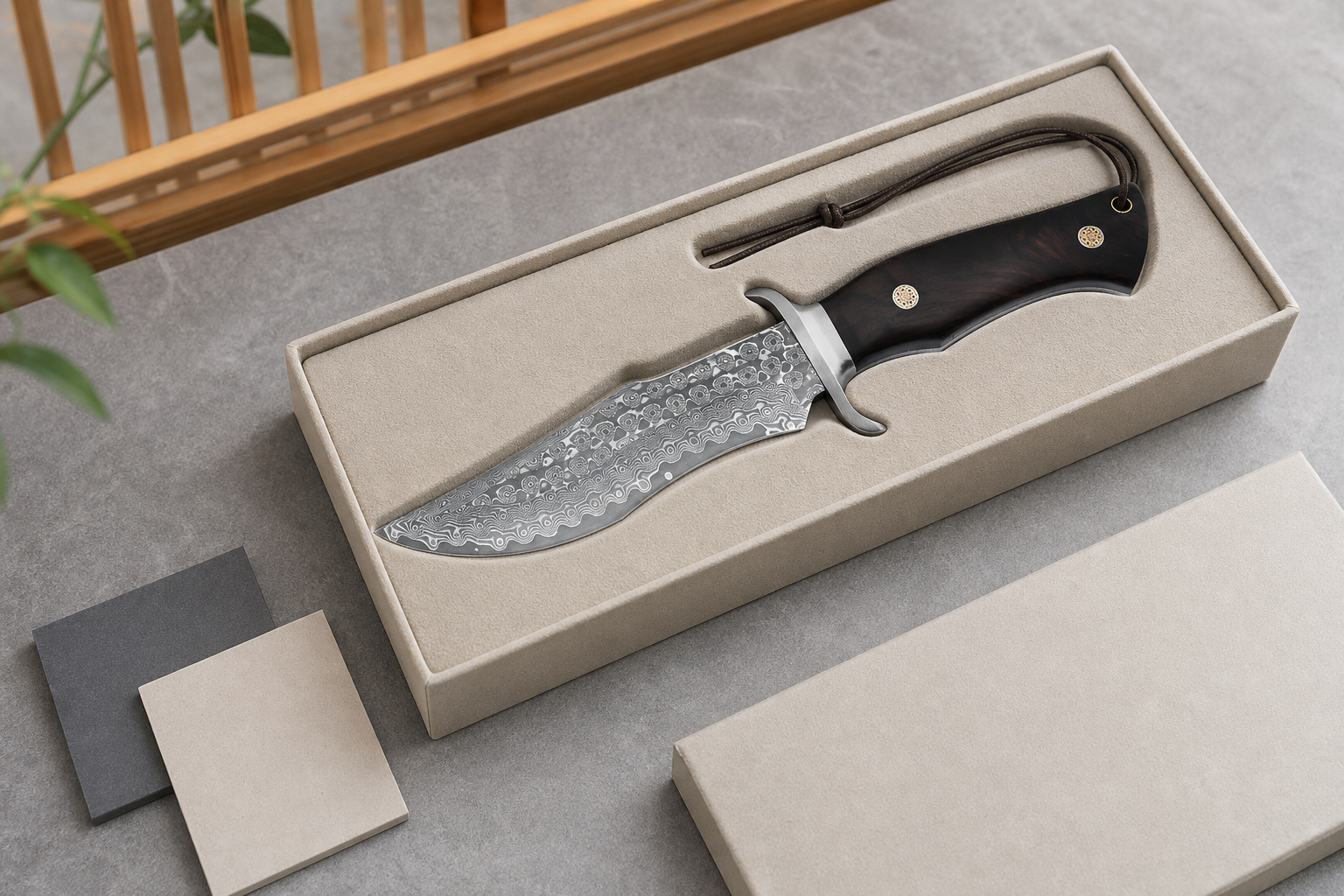
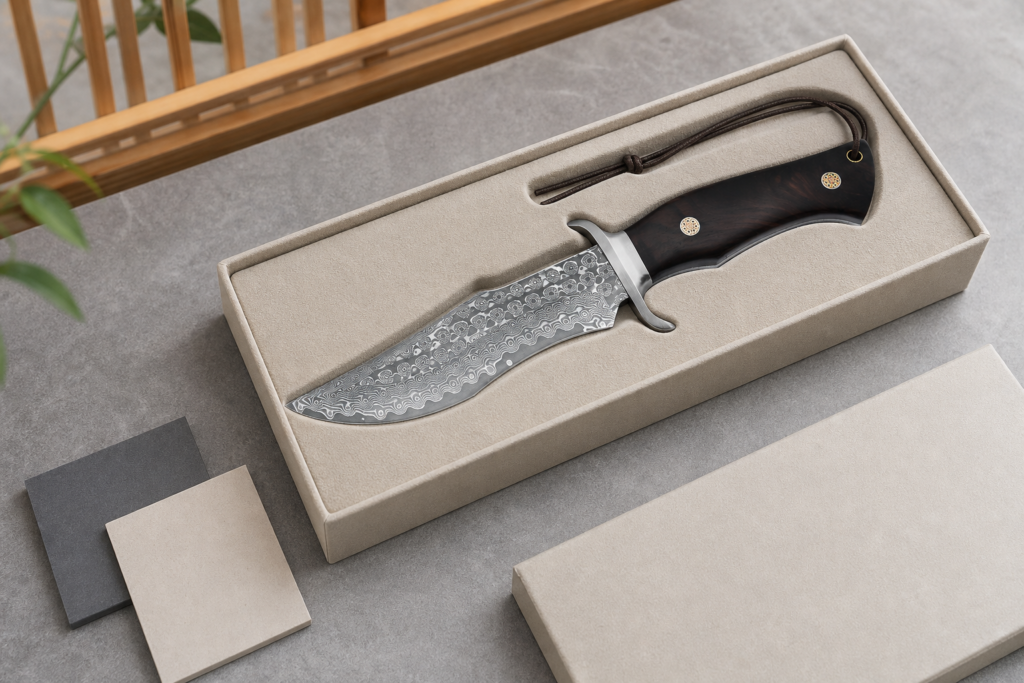
Japanese-style knife design can look refined, but outdoor use adds dirt, moisture, impact, gloves, sheaths, and rougher handling.
Japanese-style knife design can work for outdoor OEM/ODM projects when buyers adapt the blade geometry, steel, handle, sheath, finish, packaging, and use guidance for outdoor utility. Buyers should not simply move a thin kitchen-style concept into the field without redesign.
Quick buyer brief:
- Answer: Japanese-style outdoor knives can be attractive for camping, food-prep support, fishing, lightweight utility, and premium private label lines, but they need outdoor-ready structure, corrosion planning, sheath protection, and clear use limits.
- Buyer context: This guide is for knife brands, outdoor brands, camping brands, importers, wholesalers, distributors, private label buyers, and sourcing managers.
- Key checks: Target use, blade thickness, edge geometry, tip strength, steel grade, heat treatment, corrosion resistance, handle material, wet grip, sheath retention, finish, packaging, maintenance guidance, MOQ, target price, and QC criteria.
Have a knife or multi-tool project in mind?
Send your sketch, CAD file, sample photo, or product idea. Vast State can review manufacturability, suggest materials, estimate MOQ, and prepare a quote for your OEM/ODM project.
When a buyer asks whether a Japanese knife can be used outdoors, I first separate design inspiration from product engineering. A Japanese-style look can be beautiful. It can suggest clean lines, controlled slicing, refined handles, and a premium feeling. But outdoor products face different conditions from kitchen tools. A camping or fishing user may need moisture resistance, sheath safety, stronger tip geometry, easier maintenance, and a handle that stays controlled outside. This is why I treat Japanese-style outdoor knives as adapted products, not copied products.
Why Should Buyers Adapt Japanese-Style Designs Before Outdoor Use?
A thin, elegant knife can cut beautifully in the right context. Outdoors, the same design may be too delicate or hard to maintain.
Buyers should adapt Japanese-style designs because outdoor use changes the requirements for toughness, corrosion resistance, handle grip, sheath safety, edge geometry, and user guidance.
I Start With Use Context, Not Style Alone
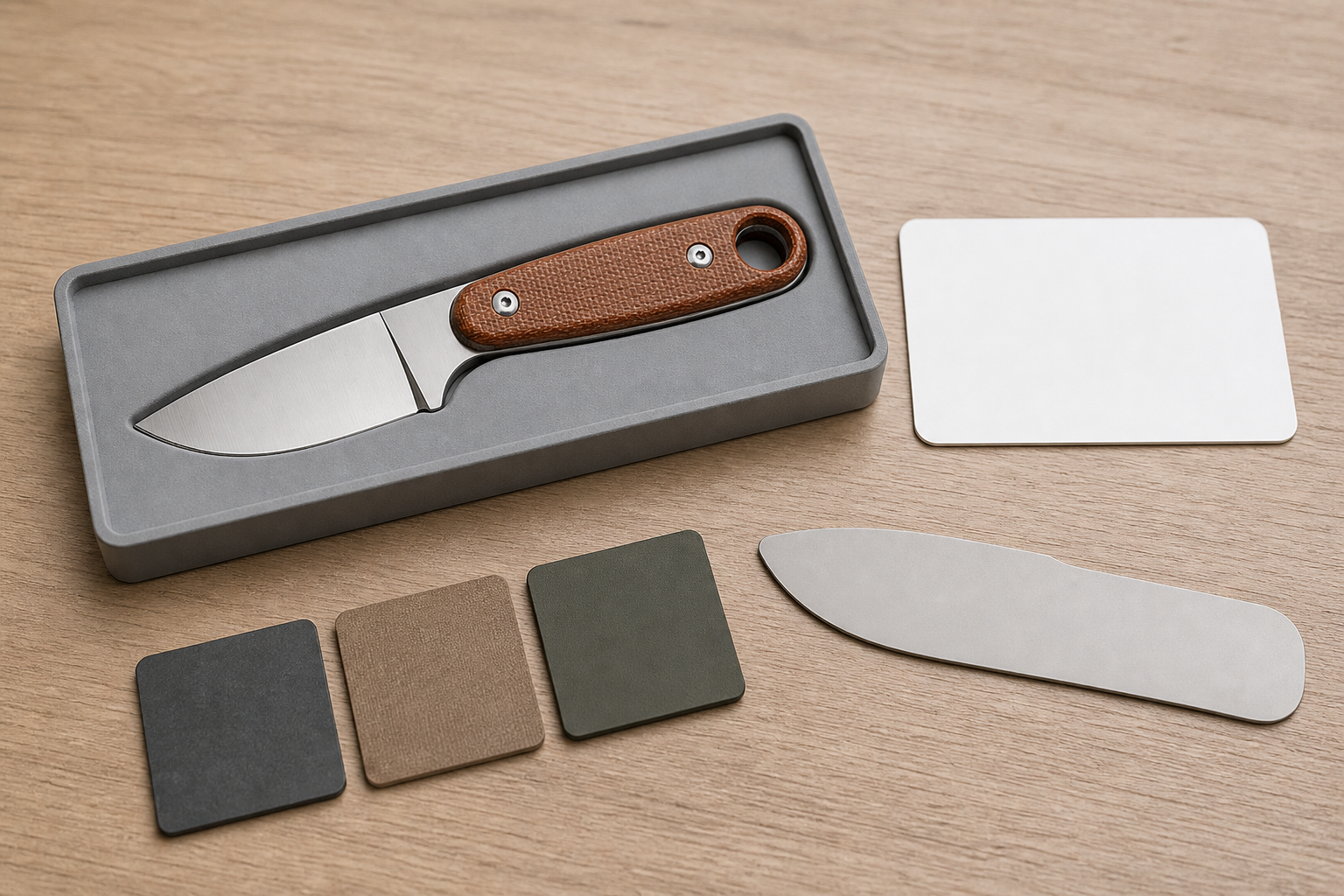
The first question is not whether the knife looks Japanese. The first question is where it will be used. A knife for camp cooking support may keep a thinner slicing character. A knife for fishing may need corrosion resistance and easy cleaning. A knife for general camping utility may need more robust thickness, a stronger tip, and a secure sheath. A premium gift line may prioritize finish, packaging, and handle material, but it still needs safe carry and realistic guidance.
The ISO page for ISO 9241-11:2018 describes usability as a framework that can apply to products and services. I use that idea in product development. A knife should be designed for specified users, goals, and context. If the buyer only copies a kitchen-like silhouette, the product may not match outdoor goals.
Outdoor use also changes after-sale expectations. The user may not wash and dry the knife immediately. The knife may stay in a sheath. It may meet salt, sweat, wet grass, dust, or wood sap. The design must survive the real environment, not only a product photo.
| Outdoor question | Design impact | Buyer decision |
|---|---|---|
| Camp food prep? | Slicing geometry matters | Keep thin but protect edge |
| Fishing or wet use? | Corrosion and cleaning matter | Choose stainless and simple handle |
| General utility? | Toughness matters | Increase thickness and tip support |
| Premium retail? | Finish and packaging matter | Add care guidance and protection |
OEM/ODM RFQ Checklist
Prepare these details to help Vast State review your project and provide a more accurate quotation.
| RFQ Field | What to Prepare |
|---|---|
| Project type | OEM from drawing / ODM private label / wholesale catalog |
| Product category | Folding knife / fixed blade / multi-tool / outdoor tool |
| Design status | Idea / sketch / 2D drawing / 3D CAD / physical sample |
| Target price | Ex-factory target price or retail price range |
| MOQ expectation | 500 / 1,000 / 3,000 / 5,000+ pcs |
| Logo method | Laser engraving / etching / printing / molded logo |
| Packaging | Standard packaging / custom retail box / Amazon-ready |
| Market | USA / EU / Japan / Korea / Middle East / other |
| Compliance needs | Buyer-specified testing / documentation / labeling |
| Timeline | Sample deadline / mass production deadline |
Which Japanese-Style Design Cues Are Useful Outdoors?
Design inspiration can help a product stand out. But each visual cue should serve the product, not only the catalog image.
Useful Japanese-style cues may include clean blade lines, refined slicing geometry, simple handles, natural-looking materials, satin or stonewash finishes, and a calm premium appearance.
I Choose Cues That Support the Market
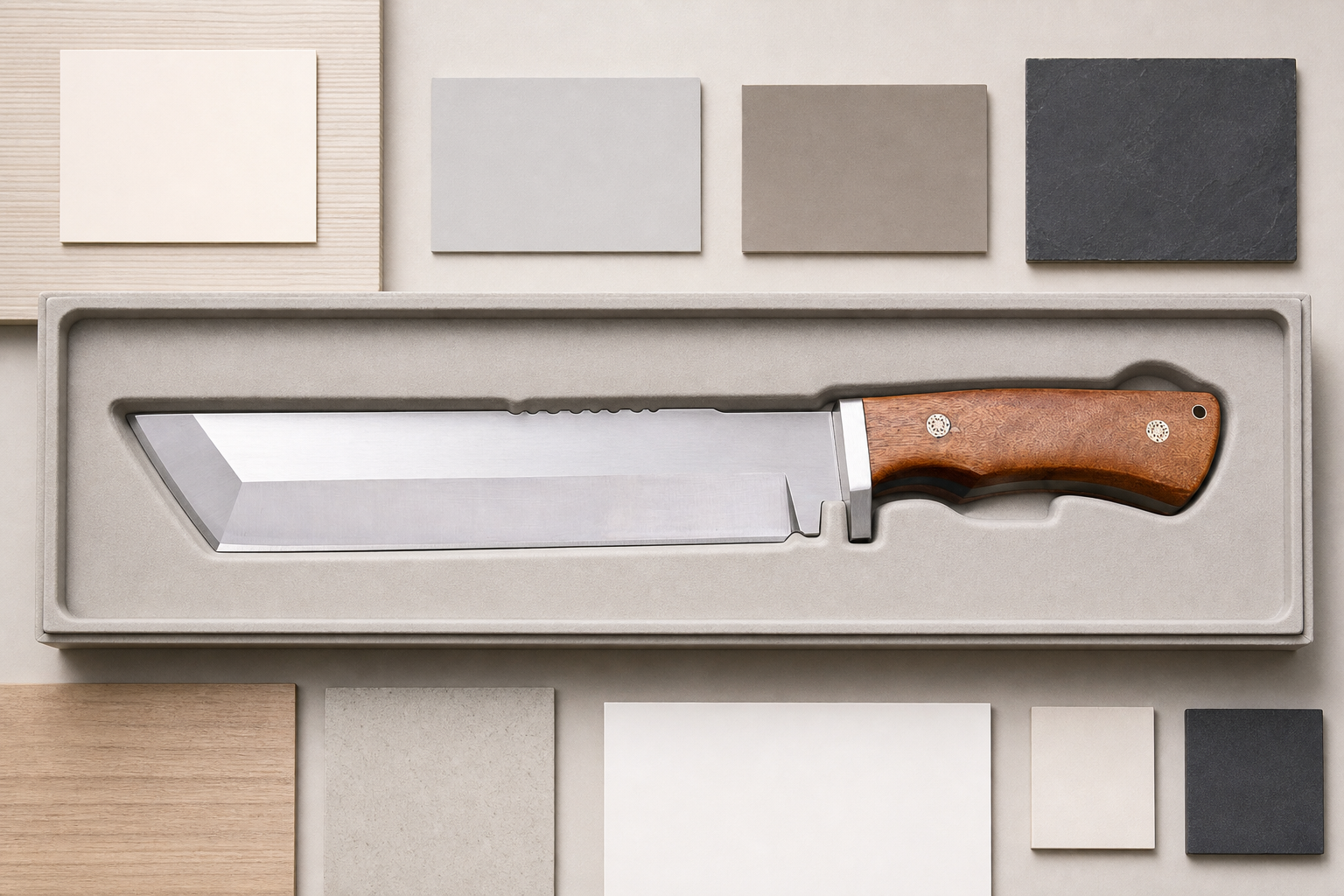
Japanese-style design does not need to mean copying a traditional kitchen knife. For outdoor OEM and ODM products, I usually think in terms of design cues. A clean blade line can create a refined look. A slimmer grind can help slicing. A straight or gently curved edge can help food-prep support or light camp cutting. A simple handle can look calm and premium. Natural materials can add warmth if the market accepts the care needs.
But each cue has a tradeoff. A very thin edge may cut well but may not suit rough wood contact. A natural wood handle may look premium but needs moisture guidance. A polished finish may look beautiful but show scratches. A minimalist handle may look refined but may not provide enough grip when wet. The buyer should decide which cues support the product promise.
I also avoid exaggerated cultural claims. If the product is only inspired by Japanese-style lines, the copy should say that honestly. The product can be attractive without pretending to be a traditional artisan knife. For B2B buyers, accurate positioning protects trust.
| Design cue | Outdoor benefit | Watch point |
|---|---|---|
| Clean blade line | Premium appearance | Avoid weak tip geometry |
| Slim slicing grind | Good food-prep support | Confirm durability target |
| Simple handle | Refined visual style | Check wet grip |
| Natural material | Warm brand feeling | Add care instructions |
How Should Blade Geometry Be Changed for Outdoor Tasks?
Outdoor work is less controlled than kitchen use. Geometry must balance cutting feel with durability.
Blade geometry should be adjusted by task. Buyers should define blade thickness, grind height, edge angle, tip support, belly, spine shape, and tang structure before sampling.
I Balance Slicing With Strength
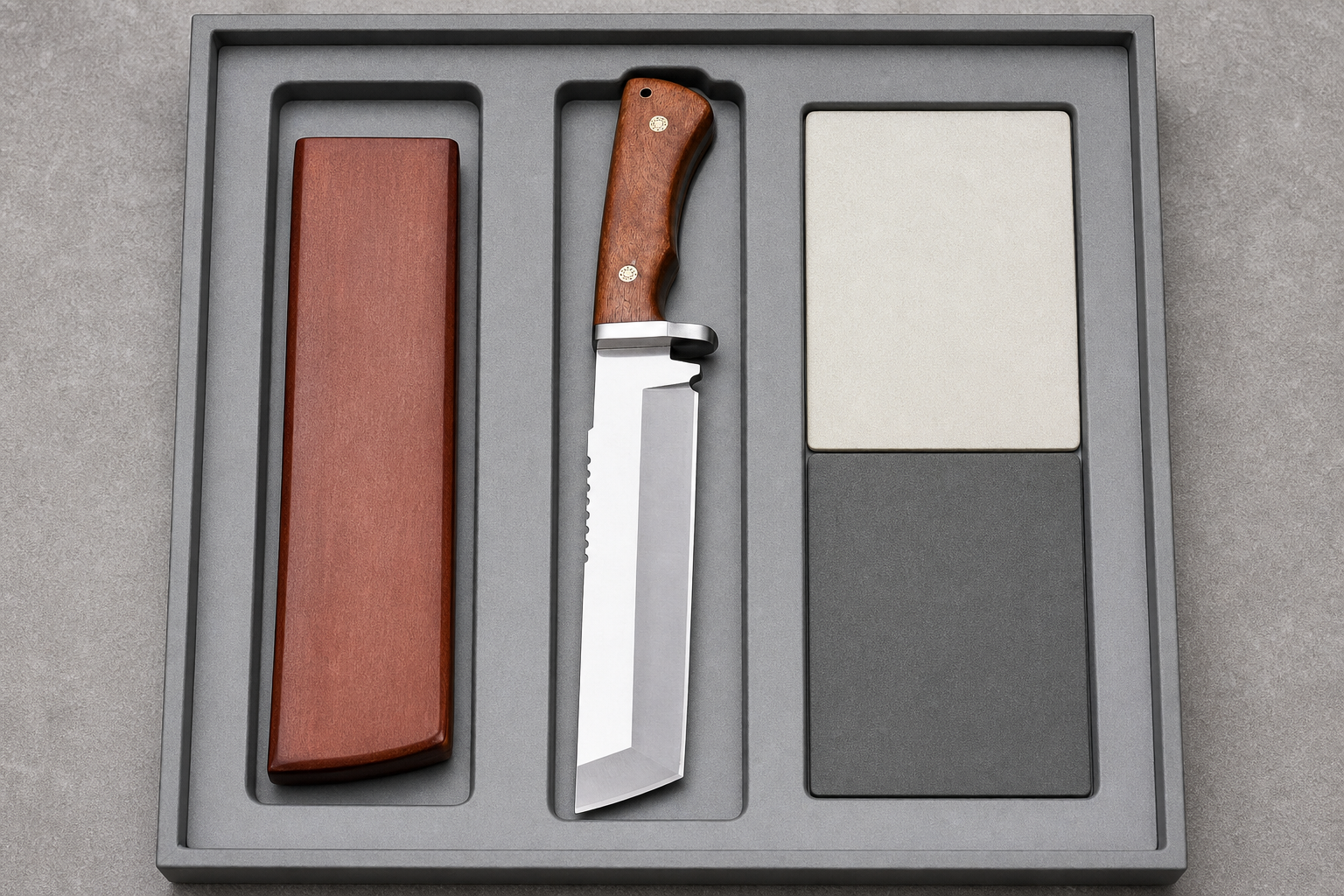
A Japanese-style outdoor knife often succeeds when it keeps good slicing performance but gains enough structure for outdoor handling. This does not mean making every blade thick and heavy. It means adjusting the geometry to the task. A camp cooking support knife may stay thin behind the edge. A fishing knife may need a fine cutting feel and corrosion resistance. A general camp utility knife may need more spine thickness and a stronger point.
Blade thickness should be chosen carefully. Too thick, and the knife loses the refined cutting feel that made the concept interesting. Too thin, and the buyer may receive edge damage or tip complaints. Grind height also matters. A taller grind can cut better, but it may require more careful production and finish control. A low grind can feel stronger, but it can wedge in material.
Tang structure should match the product. A full tang can support outdoor positioning. A hidden tang can create a clean handle style but needs good engineering. A skeletonized tang can reduce weight, but cutouts should be reviewed for strength and assembly.
| Geometry item | Outdoor role | Buyer check |
|---|---|---|
| Blade thickness | Strength and cutting feel | Match task and price |
| Grind height | Slicing performance | Approve sample cuts |
| Tip shape | Control and durability | Avoid overly fine tips |
| Tang structure | Strength and handle style | Match product promise |
How Should Steel and Heat Treatment Be Selected?
A refined blade still needs the right steel. Outdoor use can punish poor material choices quickly.
Steel and heat treatment should be selected by corrosion resistance, toughness, edge stability, sharpening feel, finish target, cost, and batch consistency.
I Avoid Steel Names Without a Use Case
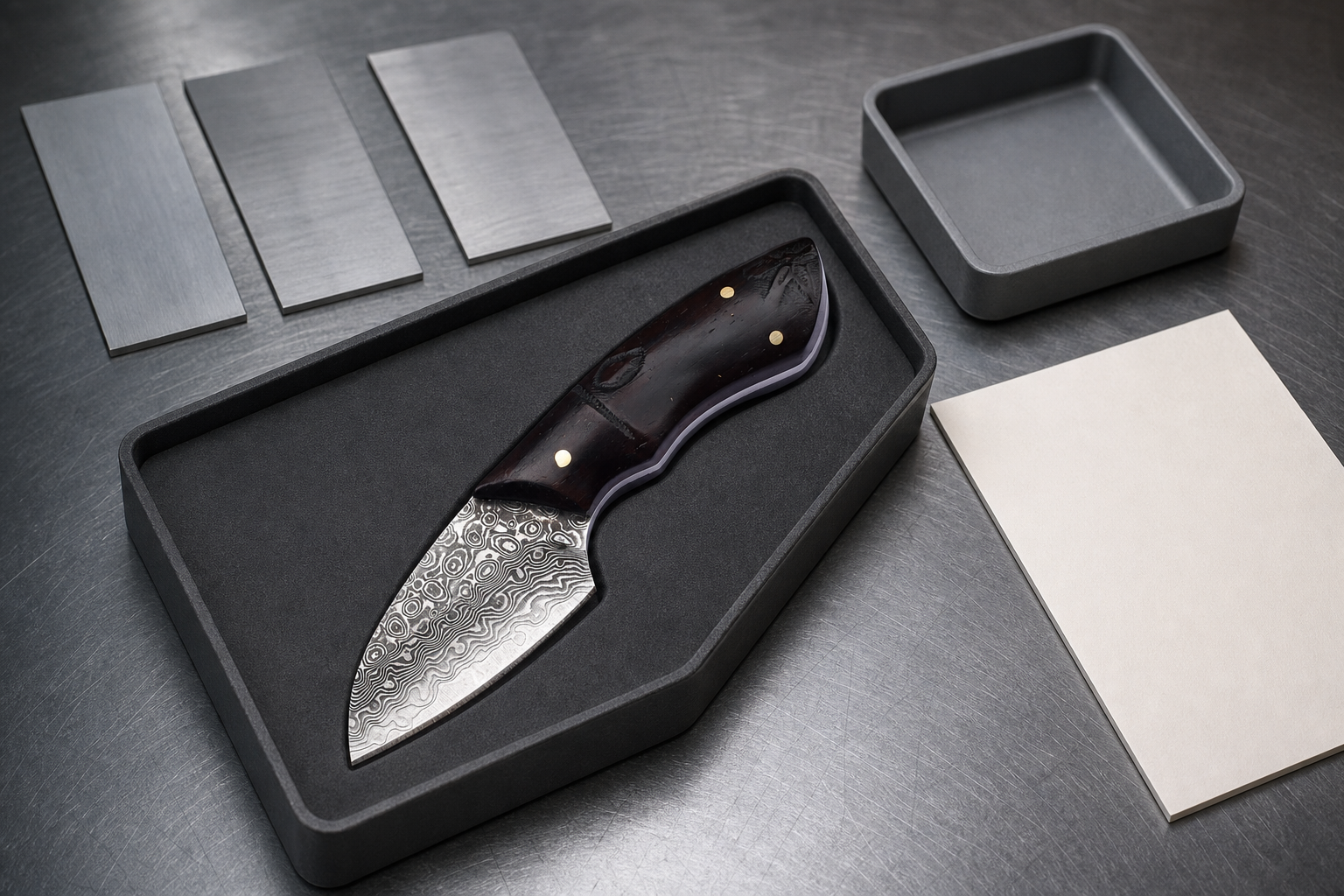
For outdoor products, the steel must fit the environment. If the knife will be used around water, food, fishing, or humid camping conditions, stainless steel may reduce maintenance burden. If the buyer wants a traditional-feeling high-carbon concept, the product needs clearer care instructions and target users who understand maintenance. If the buyer wants premium positioning, the steel must justify its cost in that market.
Alleima describes 14C28N knife steel as a knife steel for applications requiring edge sharpness, edge stability, and corrosion resistance. I use material references like this to explain the bigger point: outdoor steel selection should connect performance and maintenance. A steel with better corrosion resistance can help, but the user should still clean and dry the blade.
Heat treatment should not be treated as a hidden step. Hardness target, toughness, and geometry must work together. A thin slicing edge may need careful hardness and grinding control. A larger outdoor blade may need more toughness. The correct target is not the highest hardness number. It is the range that fits the use case.
| Steel factor | Why it matters outdoors | Buyer action |
|---|---|---|
| Corrosion resistance | Moisture and food-prep use | Match steel to environment |
| Toughness | Outdoor handling | Avoid fragile geometry |
| Edge stability | Slicing and utility | Confirm heat treatment |
| Sharpening feel | User maintenance | Match customer skill level |
How Should Handle Materials Support Outdoor Grip and Style?
The handle must carry both the visual story and the real grip. A beautiful handle can still fail in wet use.
Handle materials should be chosen by grip, moisture stability, weight, cleaning needs, machining cost, brand feeling, assembly method, and care expectations.
I Keep the Handle Honest to the Use
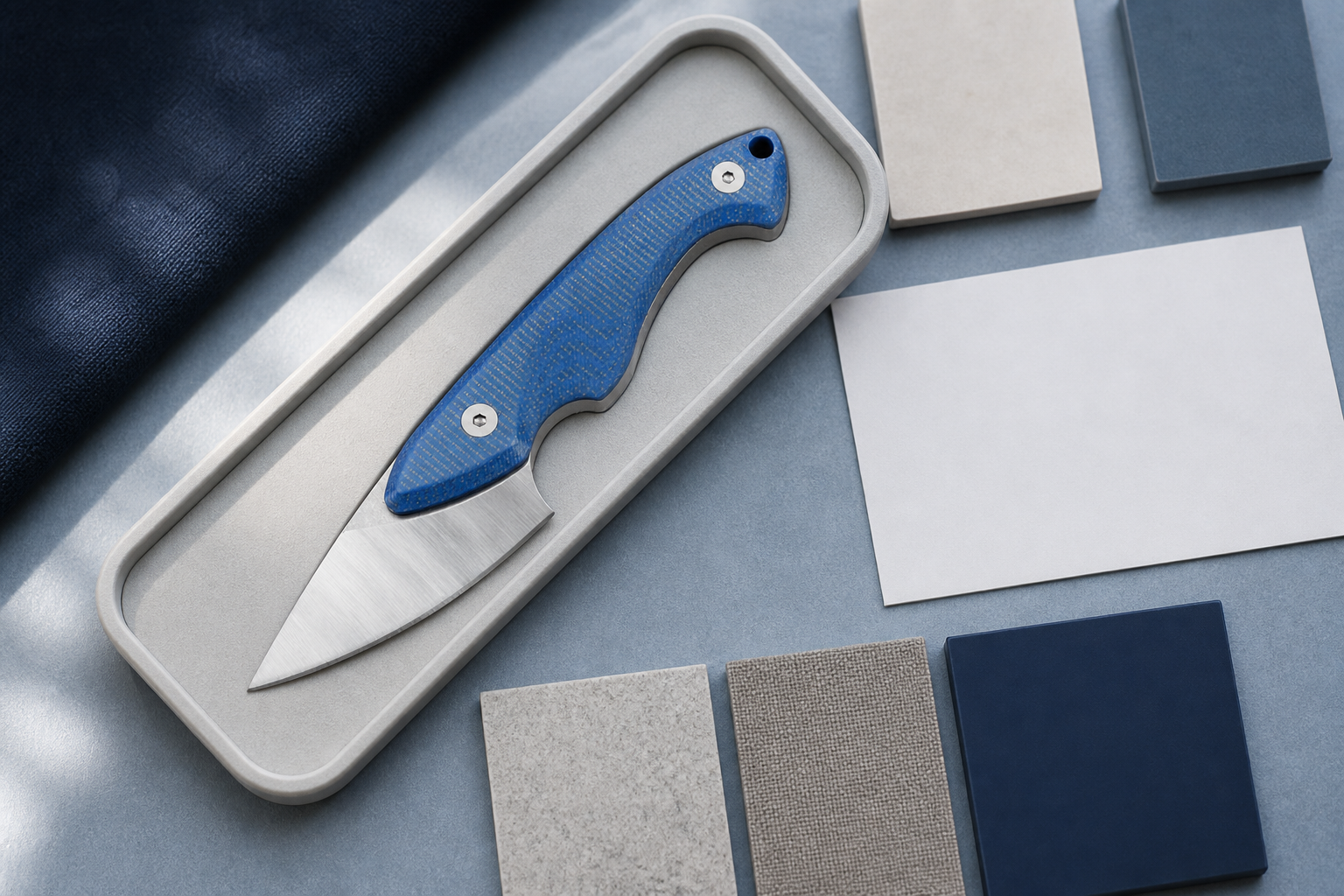
Natural wood can support a Japanese-style or premium outdoor look, but it needs care. It may not suit buyers who want low-maintenance wet use unless the structure, finish, and care notes are planned well. G10 and micarta can give better outdoor stability while still allowing refined colors and textures. Rubber or polymer handles can improve wet grip and reduce cost, but they may not create the same premium feeling.
Shape matters as much as material. A straight handle can look clean, but the user still needs grip control. A knife used outdoors may be handled with wet hands, gloves, or cold fingers. The handle should not be too thin or too smooth. If the buyer wants a traditional-inspired handle shape, I check whether it needs added texture, contour, guard detail, or lanyard support for outdoor use.
Assembly also matters. Full tang scales may support strength and visible hardware. Hidden tang designs may create a cleaner look, but production and QC need attention. If the handle uses wood or layered materials, the buyer should approve color variation boundaries.
| Handle option | Strength | Watch point |
|---|---|---|
| Wood | Premium natural look | Moisture and variation |
| G10 | Stable outdoor grip | Machining cost |
| Micarta | Warm tactile feel | Darkening with use |
| Rubber or polymer | Practical wet grip | Brand positioning |
How Should Sheath and Packaging Be Designed?
A Japanese-style outdoor knife still needs safe carry. The sheath and packaging shape the first real user experience.
Sheath and packaging should protect the edge, secure the blade, support controlled carry, prevent finish damage, explain care, and match the product's market level.
I Develop the Sheath With the Knife
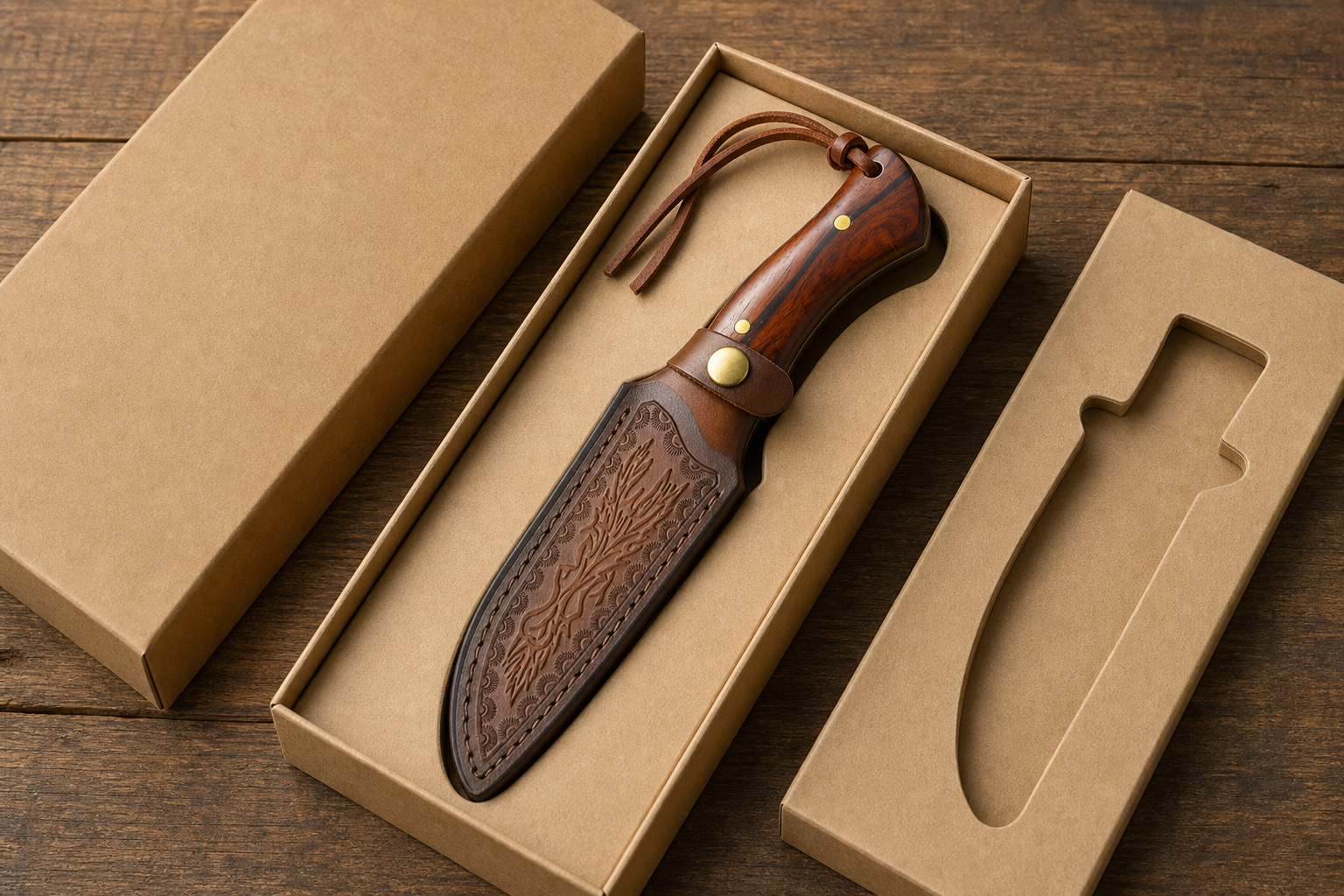
The sheath should not be designed after everything else. A slimmer Japanese-style blade may need a sheath that protects a fine edge and point. A wood handle may need packaging that prevents rubbing and moisture issues. A polished or satin blade may need a protective sleeve or clean insert. If the buyer plans retail sales, the packaging should also explain the product clearly.
CCOHS guidance on working safely with sharp blades or edges supports safe storage and proper handling of sharp tools. I apply that thinking to sheath and package design. The edge should be covered. The knife should not move freely in the box. The user should understand that the knife is a sharp outdoor utility tool.
Sheath material should match the product. Leather-style sheaths can look premium but need moisture care. Molded sheaths can offer more stable retention and easier cleaning. Nylon can be practical for kits, but insert and stitching quality matter. The buyer should choose by use case, not only style.
| Sheath or package item | Purpose | Buyer check |
|---|---|---|
| Sheath retention | Holds blade securely | Test draw force |
| Edge coverage | Protects user and edge | No exposed edge |
| Insert or sleeve | Prevents rubbing | Match finish sensitivity |
| Care card | Explains maintenance | Keep wording specific |
What Outdoor Use Claims Should Buyers Avoid?
Strong design language can sell, but unrealistic claims can create product misuse and complaints.
Buyers should avoid claims that suggest the knife replaces axes, saws, pry bars, rescue tools, or heavy-duty tools unless the design is specifically built and tested for those tasks.
I Keep the Product Promise Narrow Enough to Trust
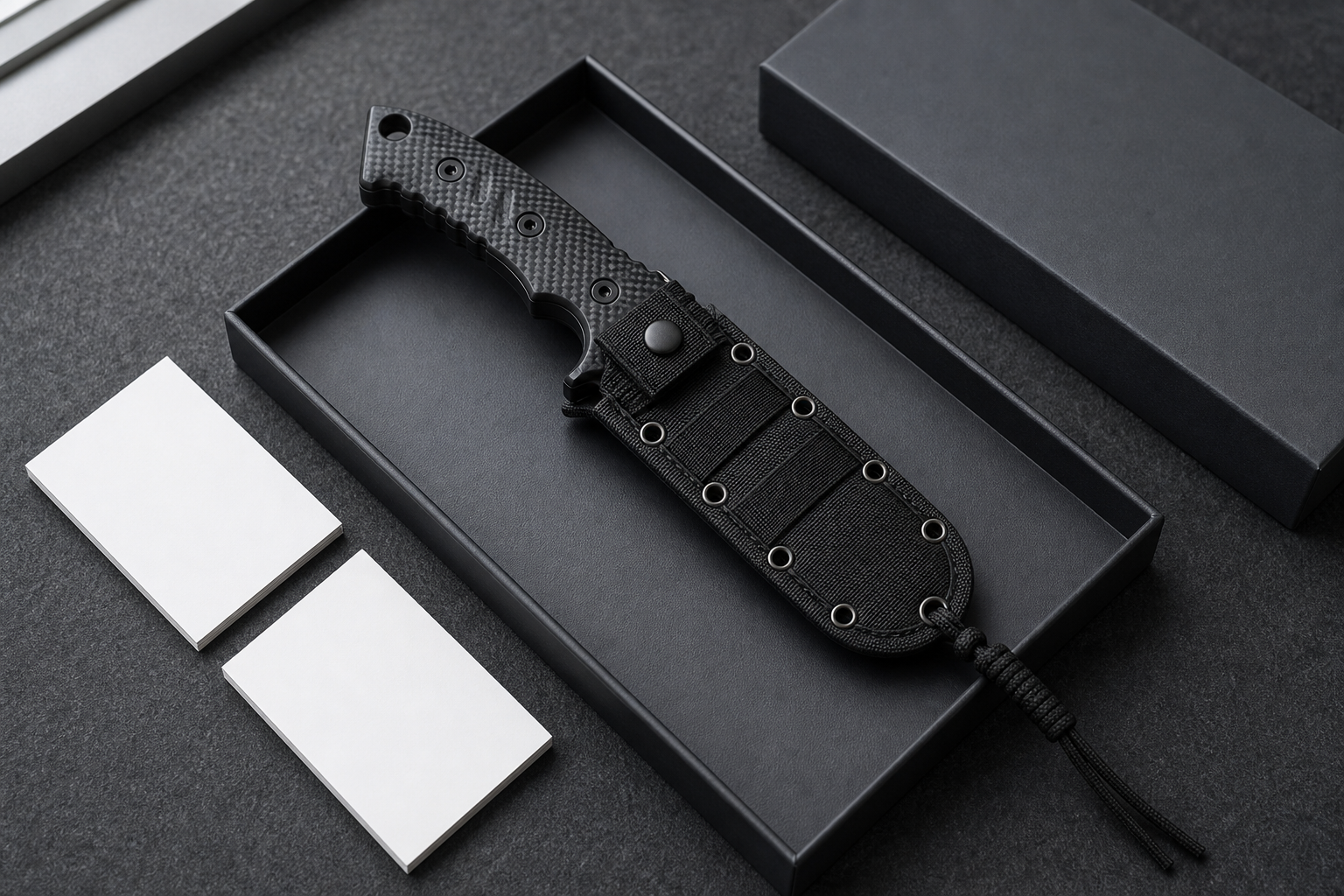
Japanese-style outdoor knives are often strongest when positioned around controlled cutting, camp food-prep support, fishing support, lightweight utility, and refined outdoor carry. They do not need exaggerated claims. If the knife is not designed for batoning, prying, chopping, or emergency rescue, the product copy should not imply those uses.
This is especially important when the blade is slimmer or more refined. A user who buys a slicing-oriented outdoor knife should understand that it is not a heavy impact tool. Clear positioning protects the buyer from after-sale problems. It also helps the buyer reach the right customer.
The right claim depends on testing. If the buyer wants a heavier outdoor knife with Japanese-style visual cues, we can design for stronger geometry. If the buyer wants a refined slicer for camping food prep, we should not pretend it is a survival chopper. Both can be good products. They are just different products.
For international sales, I also advise buyers to review market rules, retailer requirements, and platform wording rules before finalizing blade length, packaging language, and intended-use claims.
| Claim type | Better direction | Risk to avoid |
|---|---|---|
| Camp slicing | Food-prep and utility support | Overstating toughness |
| Fishing support | Corrosion-aware cutting tool | Ignoring maintenance |
| Premium outdoor | Refined private label product | Weak sheath or packaging |
| General utility | Controlled cutting tasks | Pry bar language |
How Do Manufacturing Methods Affect This Style?
Refined design can expose production variation. Clean lines and thin geometry leave less room to hide errors.
Manufacturing methods affect Japanese-style outdoor knives through profile cutting, grinding, heat treatment, handle shaping, surface finishing, sheath fit, and final inspection.
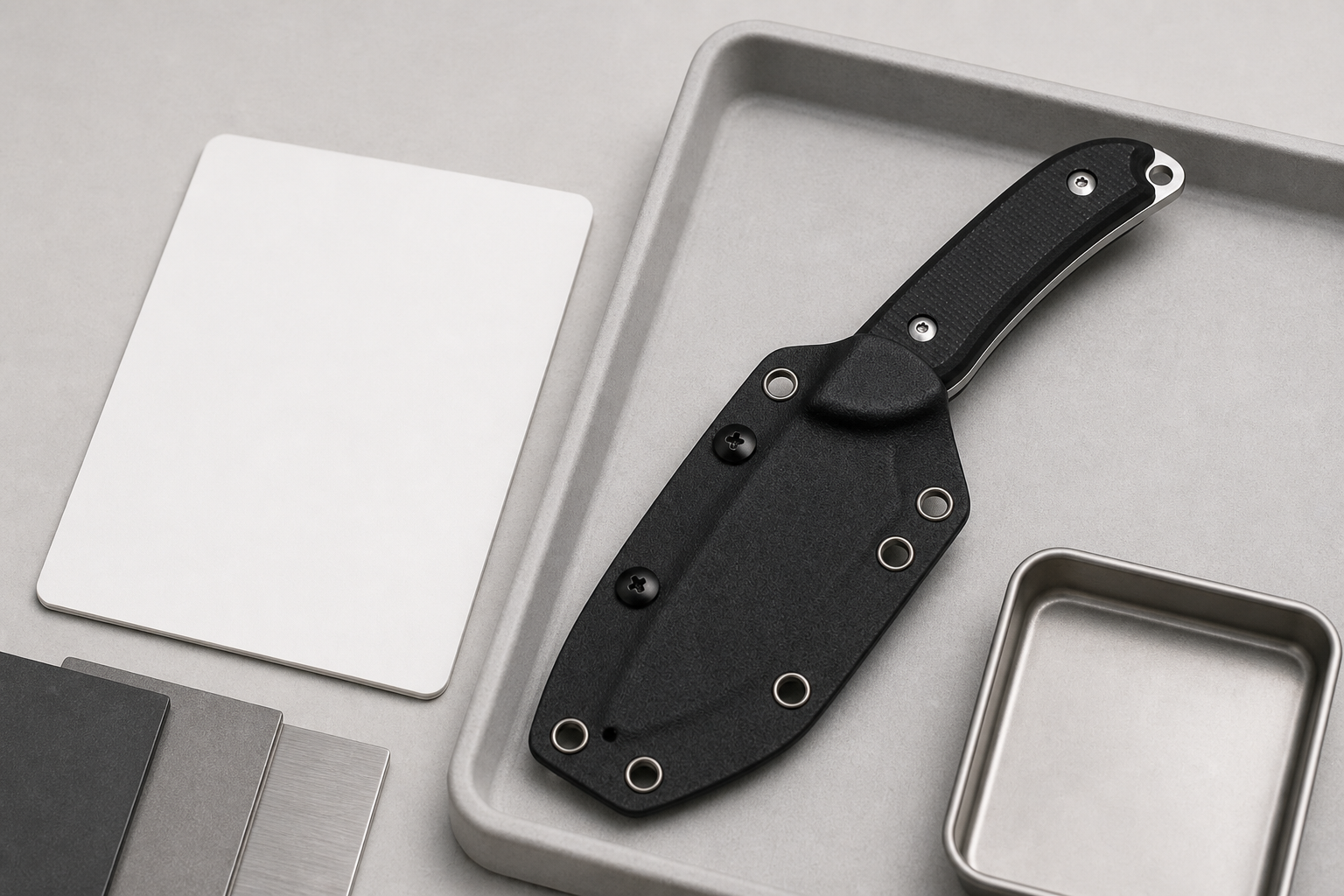
I Watch Thickness, Grind, and Finish Carefully
Japanese-style outdoor concepts often depend on clean geometry. If the grind is uneven, the user sees it quickly. If the tip is too thin, the product may feel delicate. If the handle alignment is off, the simple design has nowhere to hide it. If the sheath scratches the finish, the premium impression drops.
Dimensional control is important. The NIST page on dimensional metrology connects measurement with manufacturing improvement and accurate part information. In this type of knife project, measurement helps control blade thickness, tang holes, handle scale fit, grind symmetry, tip position, and sheath fit.
Surface finishing also matters. Satin can show directional scratches. Stonewash can hide use marks. Polished finishes can look premium but show fingerprints. Coatings can create a modern outdoor style but may not fit every Japanese-style concept. The finish should be chosen by market use and production stability.
If the design requires heavy handwork, the buyer should understand cost and variation. A beautiful sample is not enough. The factory must repeat the look across the order.
| Process area | Risk | Buyer control |
|---|---|---|
| Grinding | Uneven bevels | Approve geometry samples |
| Heat treatment | Warping or hardness variation | Define target range |
| Handle shaping | Fit and alignment | Use boundary samples |
| Sheath fit | Scratches or loose carry | Test with final blade finish |
What Maintenance Guidance Should Buyers Include?
Outdoor users may not treat the knife like a kitchen tool. Care guidance must be simple and material-specific.
Maintenance guidance should cover cleaning, drying, corrosion prevention, sharpening, handle care, sheath storage, finish protection, and what tasks the knife is not designed to do.
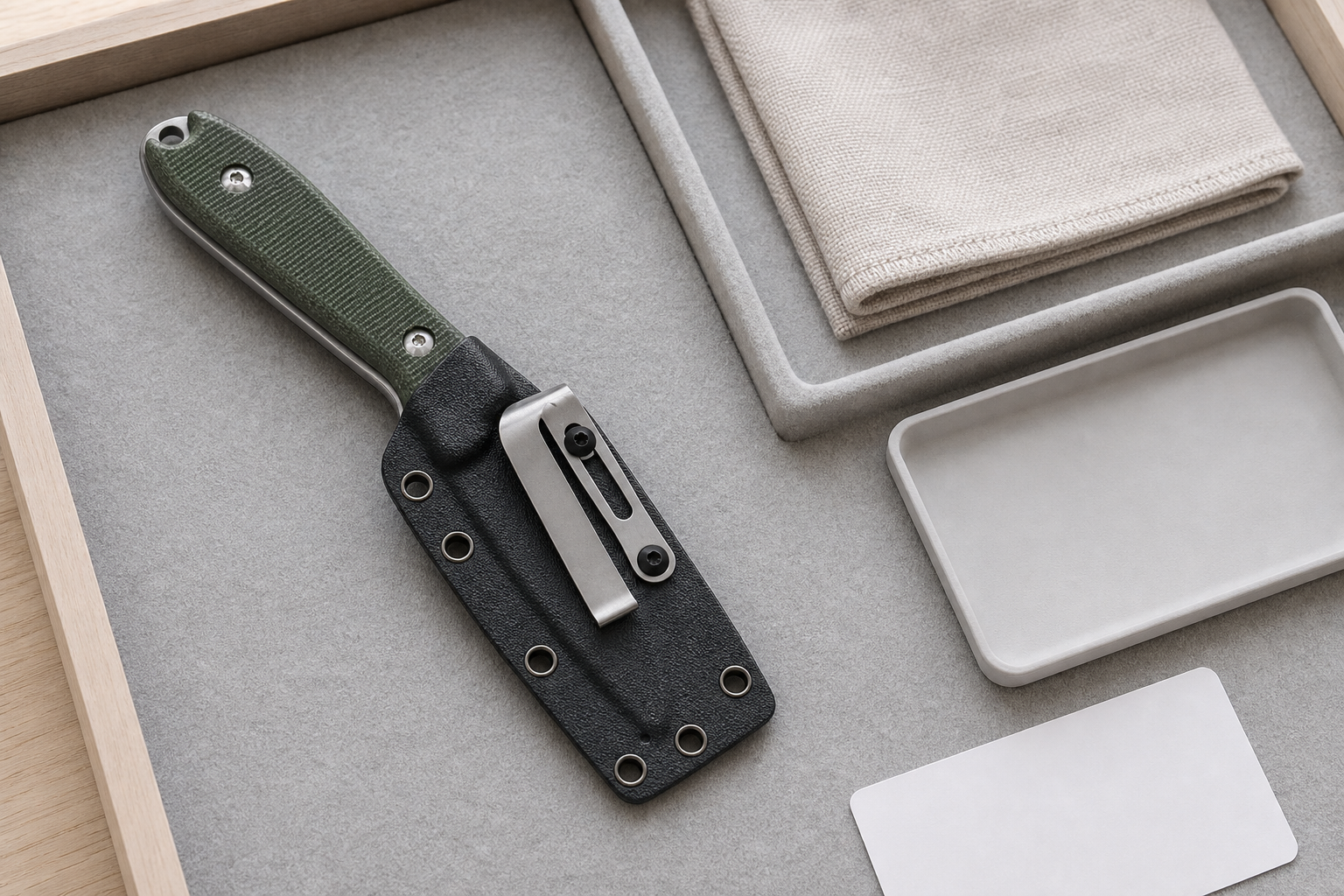
I Match Care Notes to the Materials
If the blade is stainless, I still tell buyers to include cleaning and drying instructions. Stainless does not mean zero maintenance. If the blade is high-carbon or semi-stainless, care guidance becomes more important. If the handle is wood, the card should warn against soaking and long wet storage. If the handle is G10 or micarta, cleaning guidance can be simpler, but users should still dry the knife.
The sharpening note should fit the geometry. A thin slicing edge should not be treated like a heavy outdoor chopper. Users should maintain the original edge angle where practical and use suitable sharpening tools. If the edge is specialized, the buyer may need a clearer care card or online guide.
The sheath storage note is also important. A blade should not stay wet inside a sheath. Dirt or grit inside the sheath can scratch the finish. If the product includes a premium finish, the packaging and care card should protect that expectation.
Simple care guidance can reduce complaints. It also makes the product feel more professional.
| Maintenance area | Guidance point | Buyer benefit |
|---|---|---|
| Blade | Clean and dry after use | Reduces corrosion complaints |
| Edge | Sharpen appropriately | Protects cutting feel |
| Handle | Match material care | Reduces staining or swelling issues |
| Sheath | Store dry and clean | Protects finish and edge |
What QC Checks Protect Japanese-Style Outdoor Knife Orders?
A refined concept needs stable inspection. Small variation can damage the product impression.
QC should check blade geometry, hardness, grind symmetry, edge condition, finish marks, handle fit, sheath retention, packaging protection, care-card accuracy, and approved-sample consistency.
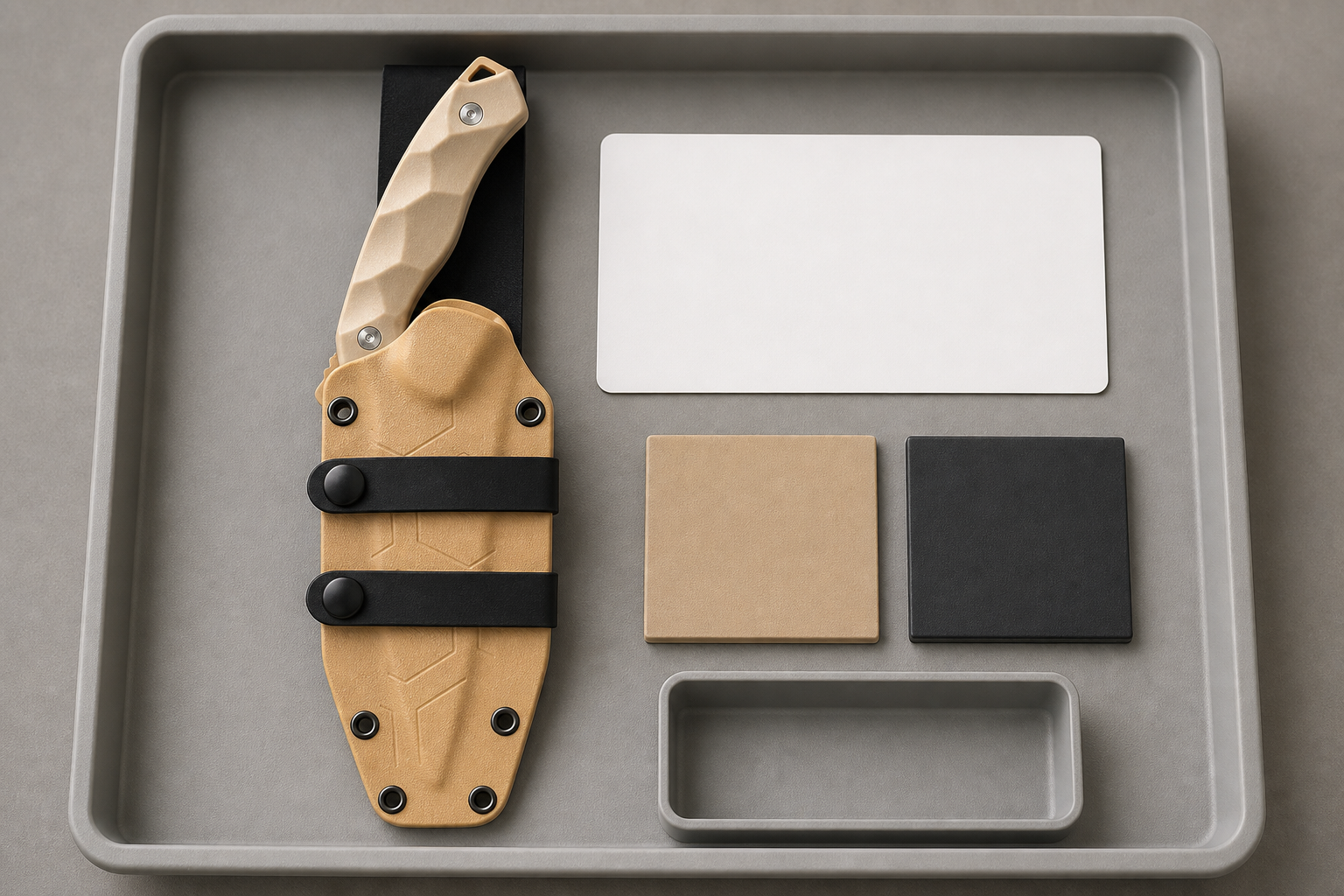
I Build QC Around What Makes the Product Different
Quality control should follow the product promise. If the product is sold as refined and slicing-oriented, the grind and finish must be consistent. If the product is sold as outdoor-ready, the handle, sheath, and corrosion-resistant material plan must support that claim. If the product is sold as premium private label, packaging and surface protection must be controlled.
ISO describes ISO 9001 as a quality management standard that helps organizations meet customer expectations and maintain a quality management system. I use this process mindset in fixed blade projects. Incoming material checks, heat treatment checks, grinding checks, handle assembly checks, sheath checks, and final packaging checks all matter.
Boundary samples help a lot. The buyer and factory should agree on acceptable and unacceptable examples for bevel symmetry, handle color variation, finish marks, sheath retention, logo appearance, and packaging condition. This makes mass production more predictable.
The QC checklist should also confirm that the care card matches the actual product. If the steel, handle, or finish changes, the care guidance should change too.
| QC item | What it protects | Inspection focus |
|---|---|---|
| Grind symmetry | Refined cutting feel | Bevel and edge check |
| Finish | Premium appearance | Scratch and stain boundary |
| Handle fit | Comfort and quality | Alignment and gaps |
| Sheath | Safe carry and storage | Retention and edge coverage |
What Should Buyers Put in a Japanese-Style Outdoor Knife RFQ?
A clear RFQ helps the supplier adapt the concept correctly. Vague inspiration creates vague samples.
Buyers should include target use, design inspiration, blade dimensions, steel, hardness, grind, finish, handle material, sheath, packaging, target price, MOQ, market, and QC expectations.
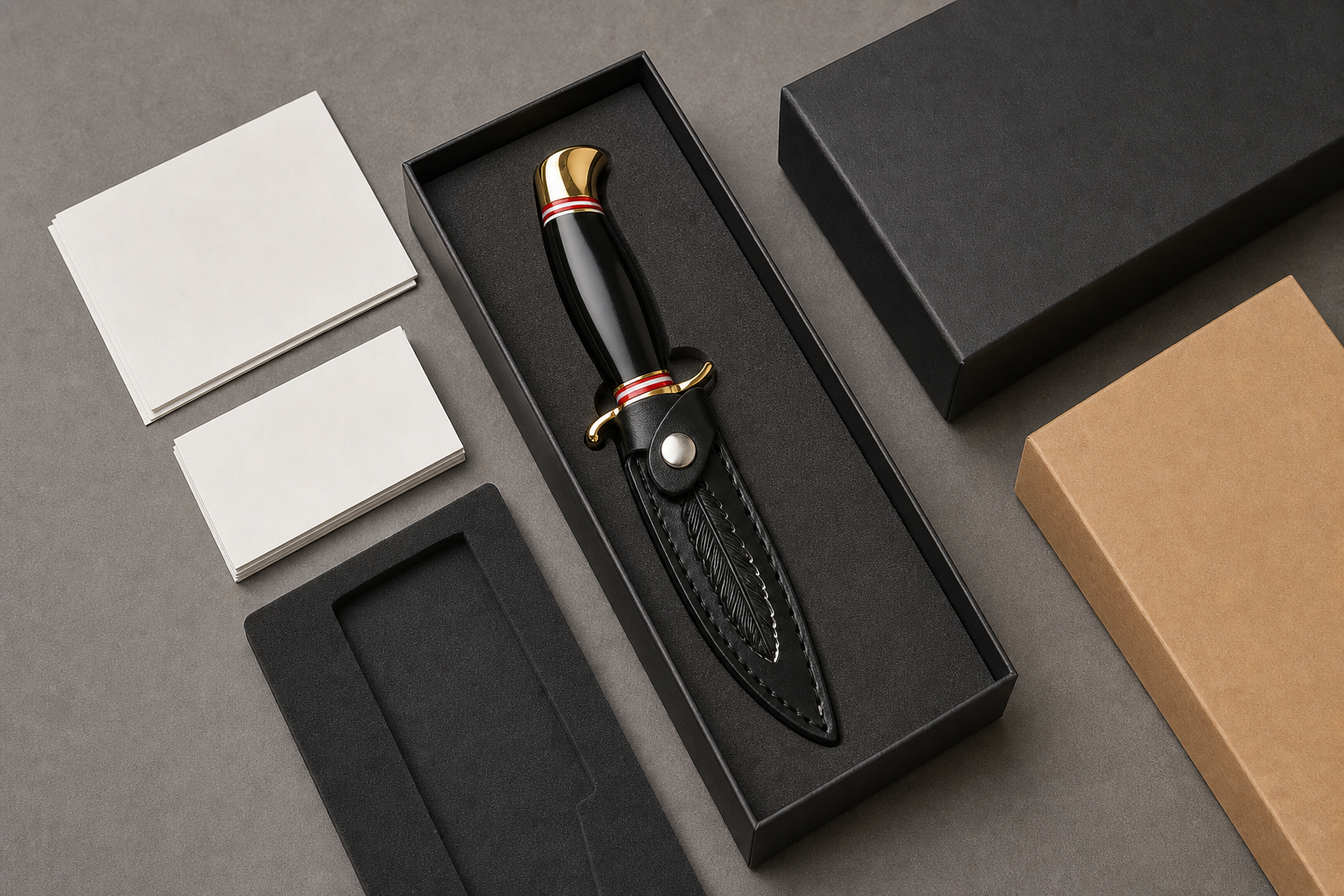
I Ask Buyers to Define Inspiration and Limits
The RFQ should explain what Japanese-style means for the buyer. Does it mean a slim slicing profile? A simple handle? A natural material look? A satin finish? A compact outdoor food-prep knife? A premium gift-style fixed blade? These are different directions.
The RFQ should also include target user, target use, blade length, overall length, thickness, tang style, steel grade, hardness target, grind type, finish, handle material, sheath material, carry method, packaging style, logo method, care-card needs, target MOQ, target price, target market, and sample deadline. If the buyer has sketches, references, or existing samples, those help. If not, a clear written concept can still start ODM development.
I also ask for limits. Should the knife avoid heavy chopping claims? Does the buyer need low maintenance? Does the handle need to avoid wood? Does the price require a simpler sheath? These limits help me suggest a manufacturable direction.
| RFQ detail | What to include | Why it helps |
|---|---|---|
| Inspiration | Which style cues matter | Avoids copying without purpose |
| Use case | Camping, fishing, food prep, utility | Guides geometry |
| Materials | Steel, handle, sheath, finish | Controls cost and care |
| Commercial target | MOQ, price, market | Keeps project realistic |
How Can Vast State Support Japanese-Style Outdoor Knife Development?
Buyers need a supplier who can balance style with outdoor function. A good sample must become a stable product.
Vast State supports Japanese-style outdoor knife development through OEM/ODM review, prototype development, material selection, structure suggestions, finish options, sheath and packaging customization, production follow-up, and QC.
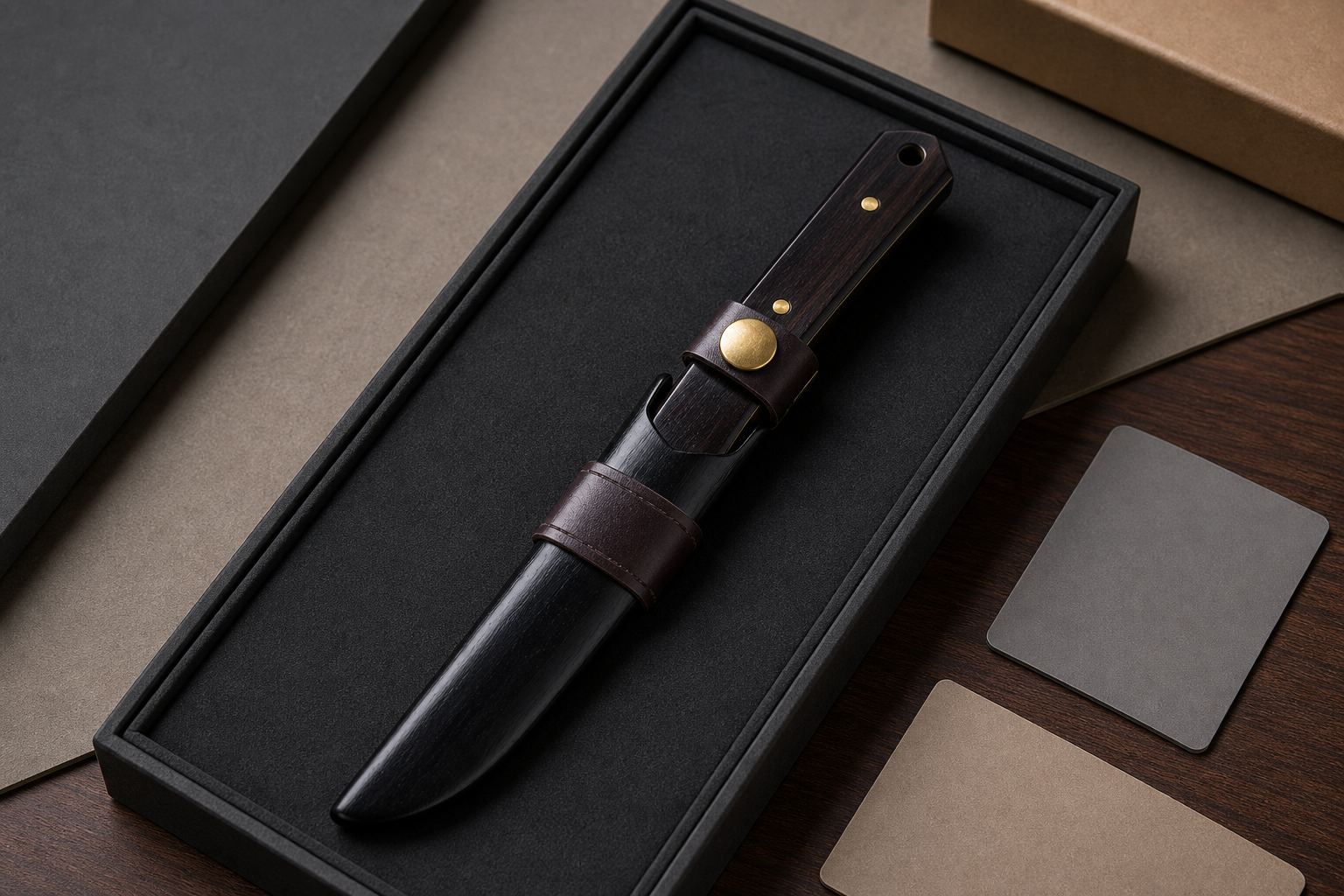
I Help Buyers Adapt the Concept for Production
At Vast State, I do not treat Japanese-style outdoor knives as simple copies of kitchen knives. I treat them as outdoor products with a refined design direction. That means I review the target use, blade geometry, steel, heat treatment, handle material, sheath, finish, packaging, cost, and QC plan together.
Some buyers already have drawings. I review whether the concept can handle outdoor use and repeat production. Some buyers only have a reference idea. I help turn that idea into a practical ODM direction. This may mean changing thickness, adjusting the tip, selecting stainless steel, simplifying the handle, choosing a more stable sheath, or changing finish to reduce scratch complaints.
Our goal is to help customers build products that fit their target market, price range, and brand position. A Japanese-style outdoor knife can be refined and practical when the design is honest. It should not overpromise. It should not hide maintenance needs. It should not depend on a sample that cannot repeat.
For long-term B2B buyers, this practical development process saves time, reduces rework, and supports stable repeat orders.
| Support area | What I review | Buyer benefit |
|---|---|---|
| Concept | Style cues and target use | Clearer product direction |
| Engineering | Geometry, steel, handle, sheath | Better outdoor function |
| Packaging | Care card and protection | Better retail readiness |
| QC | Grind, finish, sheath, sample match | More stable repeat production |
Turn your idea into a quote-ready knife project.
Share your drawing, sample photo, target quantity, market, and packaging needs. Vast State will review manufacturability and prepare OEM/ODM options.
Conclusion
I make Japanese-style outdoor knife projects work by adapting the design for real outdoor use, not by copying a kitchen-style concept.