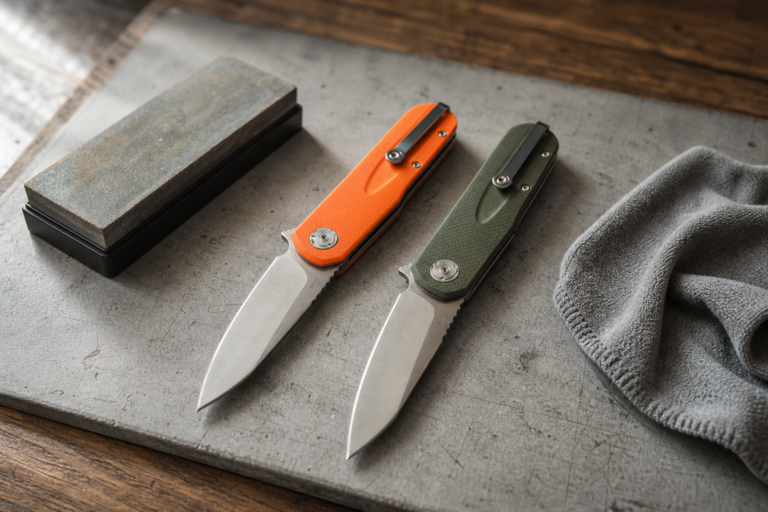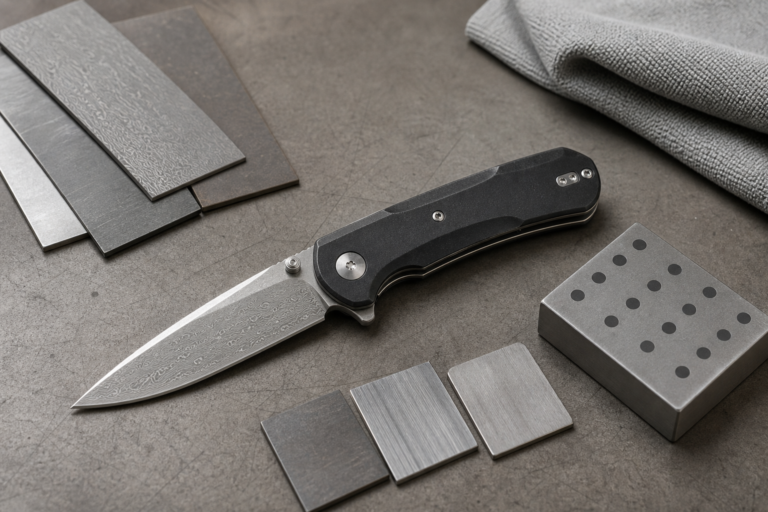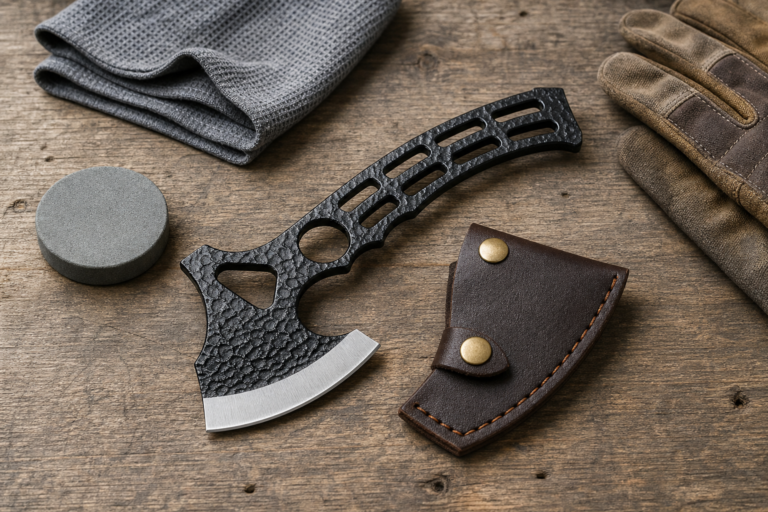
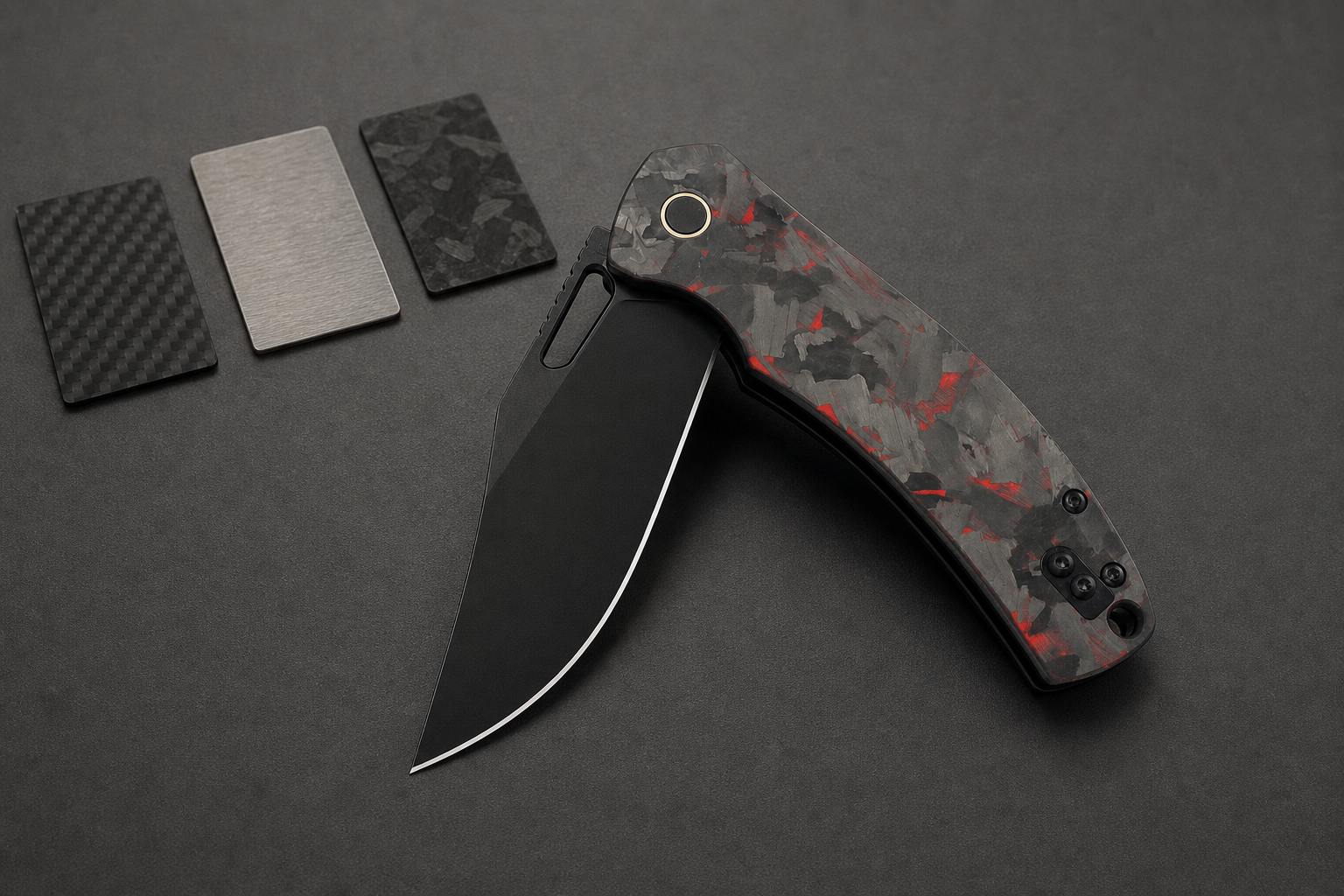
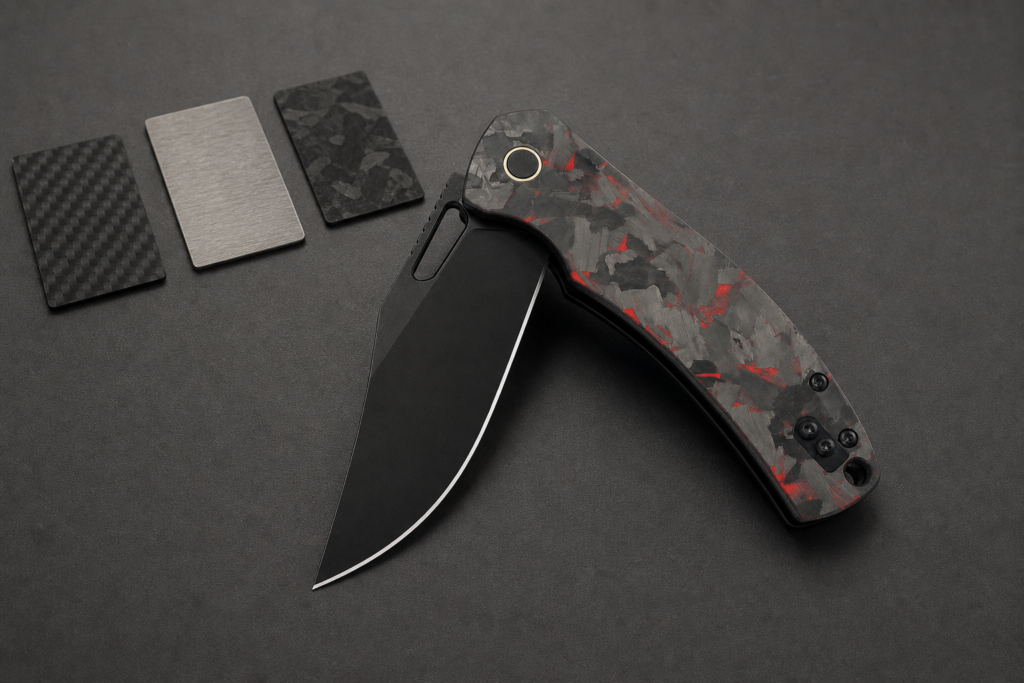
A custom knife project can create value. It can also become expensive noise if buyers customize the wrong details.
The real benefit of custom knife development is control. Buyers can align blade shape, handle feel, material, safety, packaging, brand position, compliance records, and QC standards with a target customer instead of accepting a generic catalog knife.
Quick buyer brief:
- Answer: Custom knife development is useful when the buyer has a clear market, user task, price range, compliance plan, and production brief.
- Buyer context: This guide is for outdoor brands, kitchenware brands, EDC brands, hunting and camping brands, importers, distributors, retail buyers, private label teams, and OEM/ODM sourcing managers.
- Key checks: Target user, use case, blade profile, handle ergonomics, locking or fixed-blade structure, steel grade, heat treatment, sheath or clip, packaging, claim wording, sample approval, measurement plan, safety notes, inspection criteria, and supplier communication.
Have a knife or multi-tool project in mind?
Send your sketch, CAD file, sample photo, or product idea. Vast State can review manufacturability, suggest materials, estimate MOQ, and prepare a quote for your OEM/ODM project.
Many buyers like the idea of a custom knife because it sounds premium. But "custom" by itself does not make a knife better. A random color change, oversized blade, strange handle shape, or complicated package can raise cost without improving customer satisfaction.
In OEM/ODM work, customization should solve a business problem. The product should fit a customer segment, a sales channel, a target price, a legal market, and a practical use case. If it does that, customization can make the product easier to sell and easier to defend.
Why Does Custom Knife Development Give Buyers More Control?
Catalog knives are fast, but they also limit the buyer's product story.
Custom knife development gives buyers control over function, appearance, cost target, packaging, compliance scope, and inspection standards, so the final product can fit a specific market instead of a generic sample shelf.
I Start With the Buyer Problem, Not the Decoration
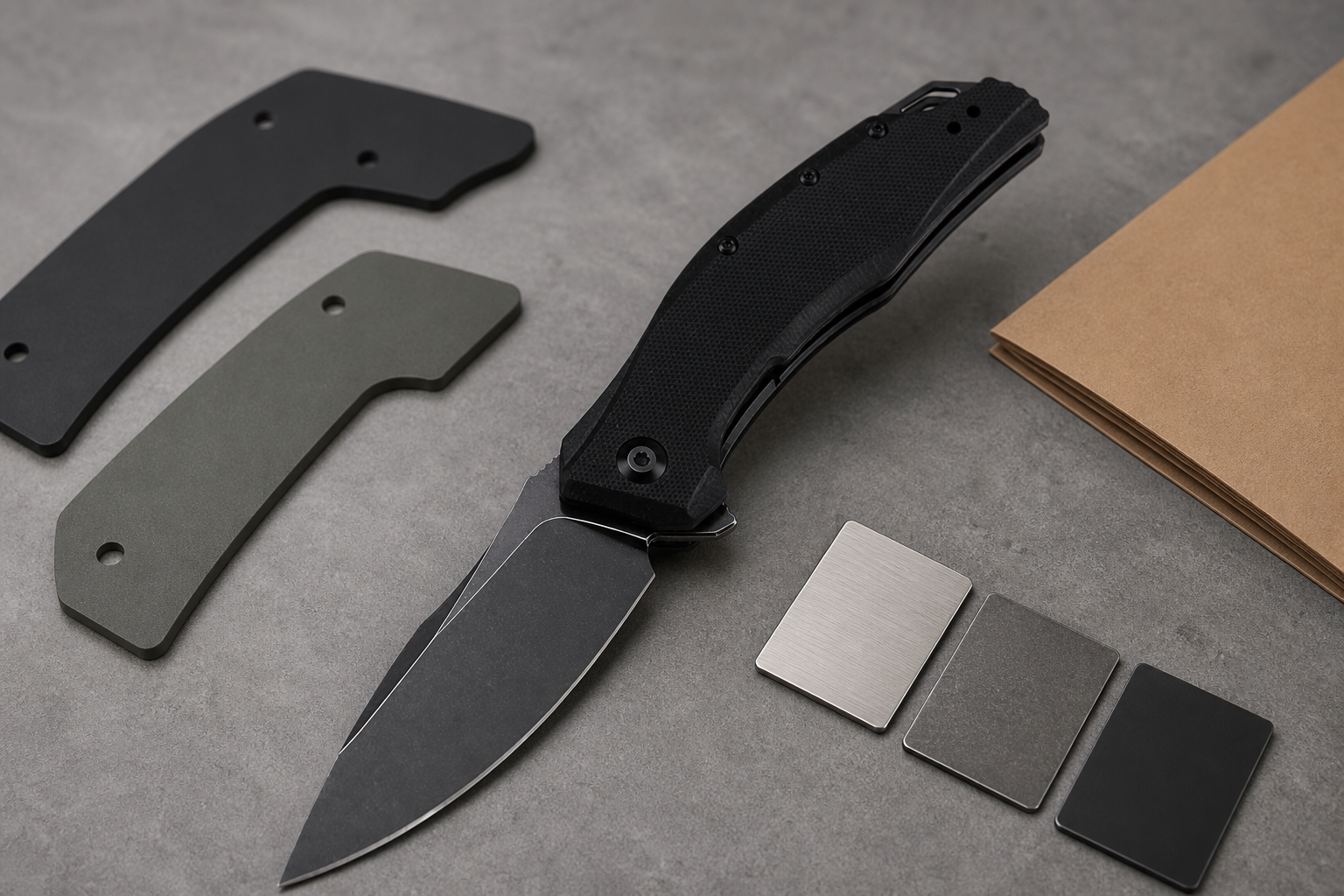
A catalog knife can be useful when speed matters. The buyer chooses an existing frame, changes color or logo, and moves quickly. But a custom knife project gives the buyer more control over the details that shape customer experience. The buyer can adjust blade length, tip style, handle thickness, grip texture, pocket clip, sheath, packaging, instruction copy, and QC limits.
That control matters because buyers do not sell to "everyone." A garden tool brand may care about corrosion resistance and safe packaging. A camping brand may care about grip with gloves, sheath retention, and simple field maintenance. A kitchenware brand may care about balance, edge geometry, food-contact communication, and gift-box presentation. An EDC brand may care about pocket feel, legal sensitivity, and consistent action.
The CPSC manufacturing best practices page explains a useful product-safety idea: good safety thinking starts in the design stage. For knife buyers, that means custom development should include hazard review, storage plan, instructions, packaging, and foreseeable use. A safer project is not created by a warning label at the end. It is created by design choices made early.
| Buyer control area | Custom project benefit | Risk if ignored |
|---|---|---|
| Use case | Product fits the target customer | Generic knife feels unfocused |
| Dimensions | Better hand feel and packaging fit | Returns or poor reviews |
| Materials | Better cost and performance balance | Overpaying for unused features |
| Claims | Cleaner marketing message | Unsupported premium claims |
| QC limits | Repeatable production | Good sample, weak shipment |
OEM/ODM RFQ Checklist
Prepare these details to help Vast State review your project and provide a more accurate quotation.
| RFQ Field | What to Prepare |
|---|---|
| Project type | OEM from drawing / ODM private label / wholesale catalog |
| Product category | Folding knife / fixed blade / multi-tool / outdoor tool |
| Design status | Idea / sketch / 2D drawing / 3D CAD / physical sample |
| Target price | Ex-factory target price or retail price range |
| MOQ expectation | 500 / 1,000 / 3,000 / 5,000+ pcs |
| Logo method | Laser engraving / etching / printing / molded logo |
| Packaging | Standard packaging / custom retail box / Amazon-ready |
| Market | USA / EU / Japan / Korea / Middle East / other |
| Compliance needs | Buyer-specified testing / documentation / labeling |
| Timeline | Sample deadline / mass production deadline |
How Can Custom Design Improve User Fit and Task Focus?
A knife should match the task, not only look different from competitors.
Custom design can improve user fit by matching blade shape, handle size, grip texture, balance, carry method, and safety features to the customer's real cutting tasks and storage habits.
I Treat Ergonomics as a Specification
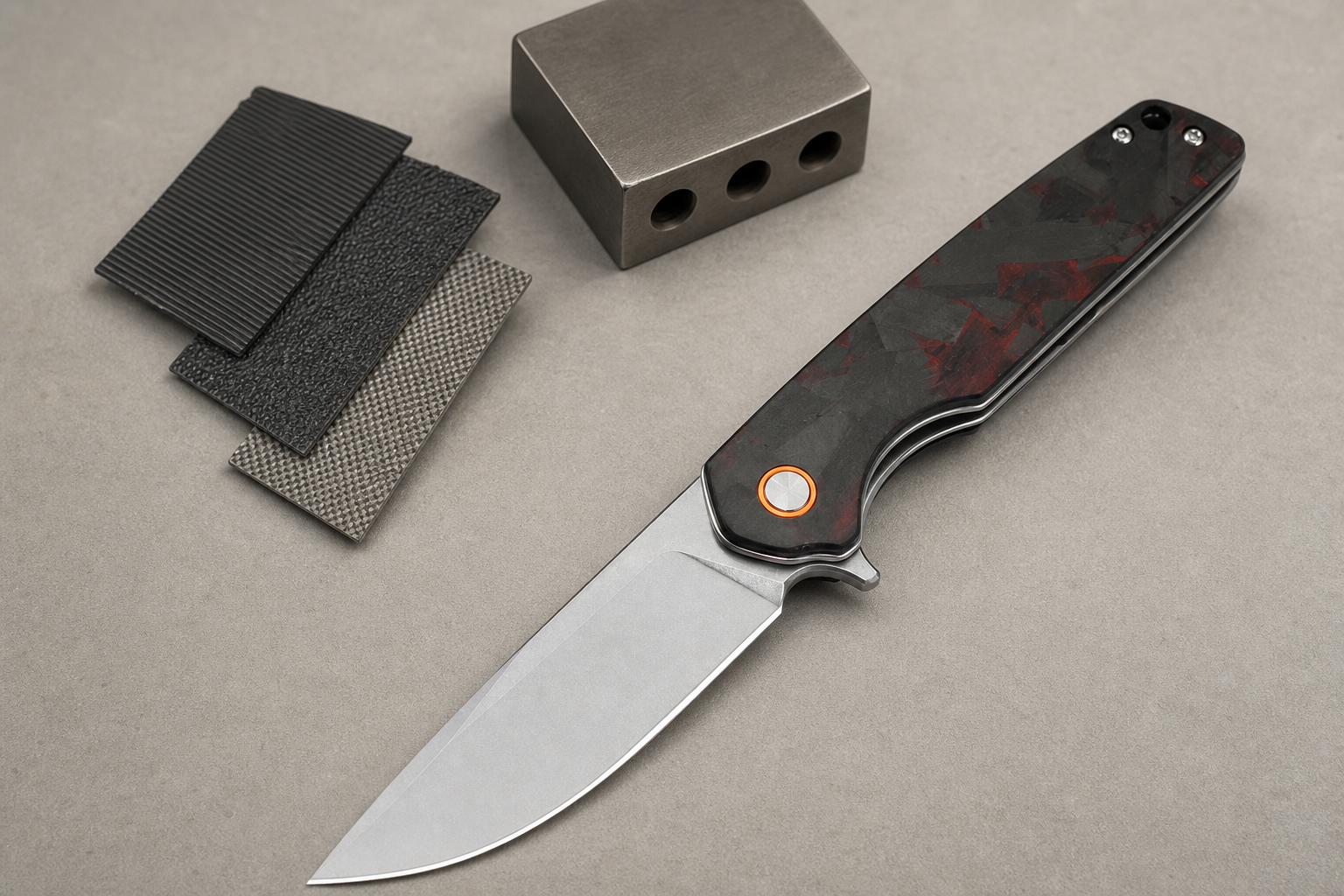
Handle design is one of the clearest reasons to customize. A handle can look attractive but still feel wrong. It can be too thin, too round, too sharp at the edges, too smooth when wet, too heavy at the rear, or too cramped near the guard. These problems are hard to fix after tooling.
The CCOHS hand tool ergonomics guidance gives practical design principles for hand tools, including handle shape, grip, texture, and the need to consider size, weight, and hazards together. Knife buyers should not copy those figures blindly, but the principle is useful: a handheld product should be designed around the hand and the task.
For a custom knife, the buyer can define:
- Intended task: slicing, trimming, food prep, camping chores, warehouse opening, or general utility.
- User group: casual user, trained worker, outdoor user, retail consumer, or gift buyer.
- Grip needs: dry grip, wet grip, gloved grip, precision grip, or power grip.
- Carry context: box storage, pocket carry, belt sheath, kitchen block, roll pouch, or retail blister.
- Safety context: blade coverage, lock strength, guard, finger clearance, instruction copy, and packaging protection.
Customization should reduce friction. The customer should understand what the knife is for, hold it naturally, store it safely, and maintain it without confusion.
Which Knife Features Are Worth Customizing First?
Not every custom detail deserves tooling cost or extra sample rounds.
Buyers should customize features that affect customer value first: blade geometry, handle ergonomics, steel and heat treatment, locking or fixed-blade structure, sheath or clip, finish, packaging, and instructions.
I Separate Value Details From Vanity Details
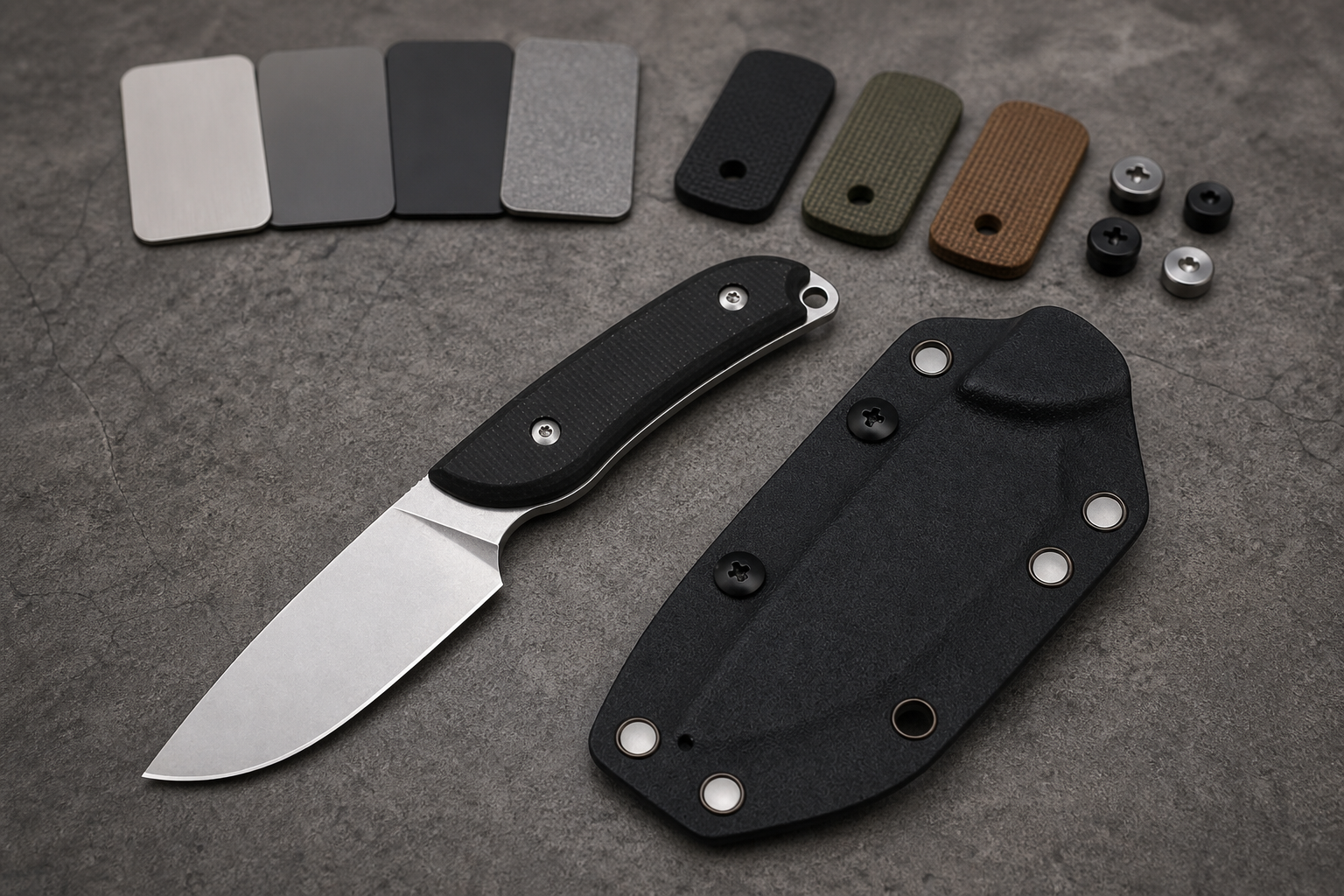
A buyer does not need to customize everything. Some changes are high-value. Others only make the project harder. Blade shape is high-value because it affects cutting behavior, safety perception, and product category. Handle size is high-value because it affects comfort and control. Steel and heat treatment are high-value because they affect edge life, corrosion resistance, toughness, and sharpening experience.
Other details may be useful but should be tested against the buyer's goal. A special coating can support corrosion resistance or visual identity, but it can also scratch, increase lead time, or require claim control. A new pocket clip can improve carry, but it may need bending tests, screw checks, and pocket-position review. A custom package can support retail value, but it can also raise freight cost and create insert problems.
I usually sort custom details into three groups:
| Priority group | Examples | Buyer decision |
|---|---|---|
| Core performance | Blade shape, steel, heat treatment, edge, handle | Define early |
| User experience | Clip, sheath, lock feel, balance, packaging | Prototype and test |
| Brand surface | Color, logo, pattern, texture, gift insert | Add after function is stable |
This order keeps the project disciplined. The buyer does not spend weeks debating handle color while the blade geometry, lock action, and packaging safety remain unclear.
When Can Customization Increase Cost, Risk, or Lead Time?
Customization is useful only when the buyer controls the project scope.
Customization can increase cost, risk, and lead time when buyers add new tooling, unusual materials, complex finishes, unclear tolerances, unsupported claims, or too many sample revisions without a locked specification.
I Put a Cost Gate Before Every New Idea
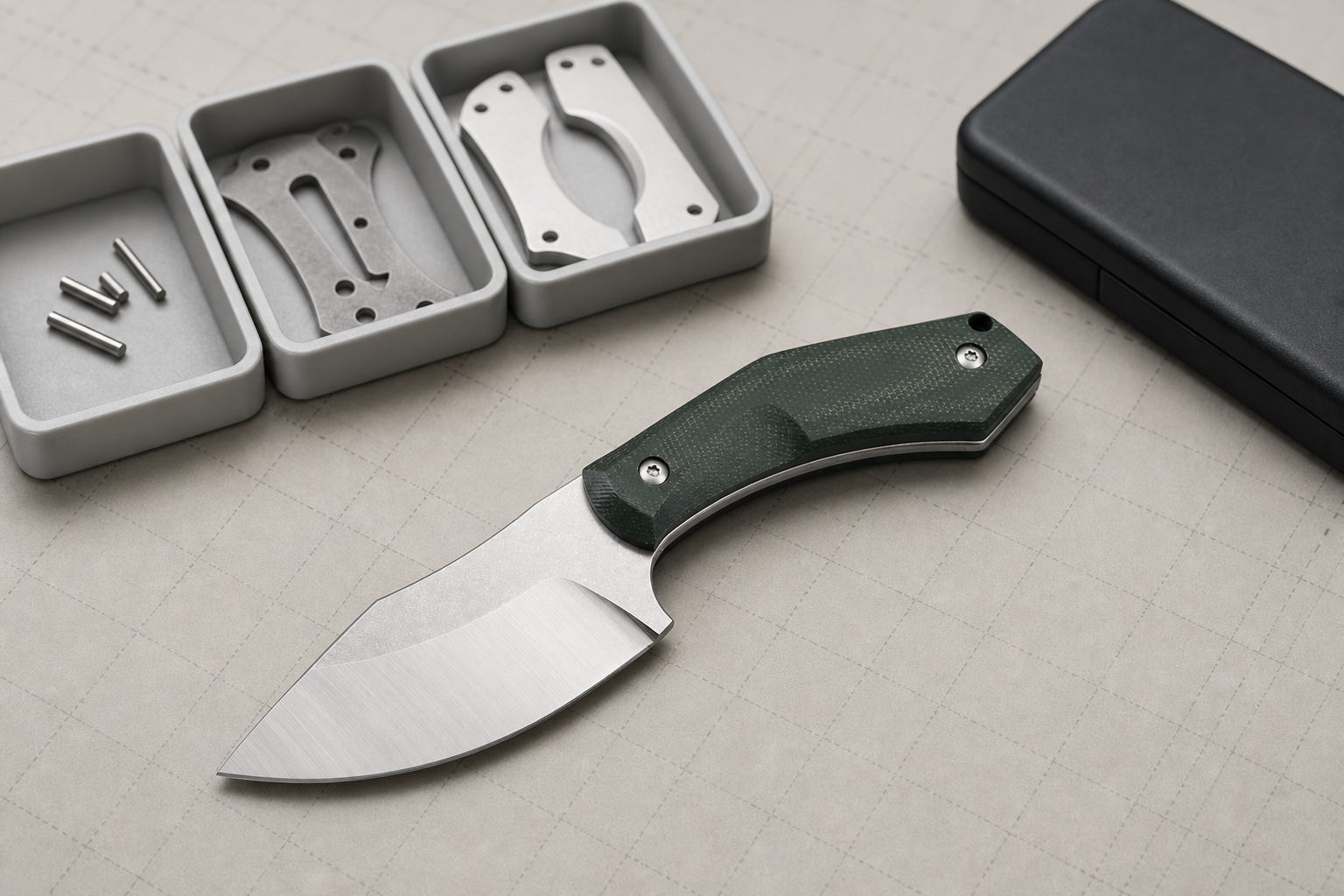
Custom knife development can drift. One stakeholder asks for a special steel. Another asks for a new handle mold. Another asks for a premium box. Another asks for a unique finish. Each request may sound small, but together they can change MOQ, tooling, unit cost, sample time, QC complexity, and claim risk.
Buyers should place a cost gate before every new custom detail. The gate is simple:
- Does this feature help the target customer?
- Does it support the sales channel?
- Does it fit the target retail price?
- Does it require new tooling?
- Does it change testing or inspection?
- Does it create a marketing claim we must prove?
- Does it create a repair or replacement problem later?
If the answer is unclear, the feature should stay out of the first production run. A buyer can always add a premium version later. A first run should prove the core product, not carry every possible idea.
This is also where MOQ matters. Custom steel, special screws, uncommon handle material, custom packaging, or a unique sheath can push the factory to buy minimum material quantities. Buyers should ask for cost impact by feature, not only one total quotation.
How Should Buyers Control Samples and Revisions?
A good sample is not useful if nobody records what was approved.
Buyers should control samples by using drawings, BOMs, revision numbers, measured dimensions, approved boundary samples, change logs, photo records, and written acceptance criteria before mass production.
I Do Not Approve Samples by Memory
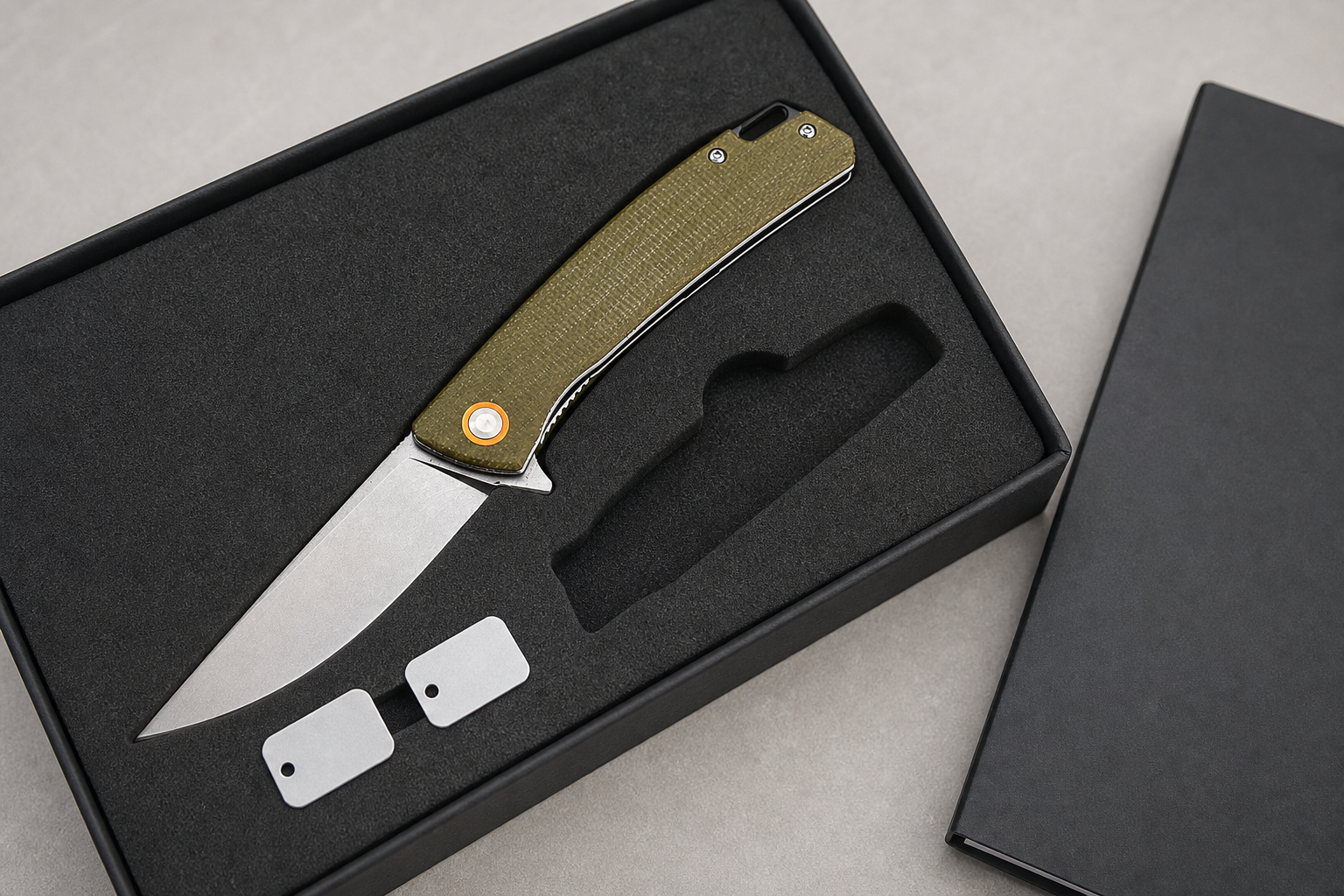
Sample approval can fail when people rely on memory. A buyer may approve sample three because the handle feels better, but forget that sample two had the correct clip tension. The factory may change a screw, finish, or washer during sampling and assume it is acceptable. The product manager may approve a package mockup without checking whether the knife moves inside during shipping.
The buyer should create one approved sample record. It should include a bill of materials, drawing revision, color references, finish references, steel grade, hardness target, edge type, lock or sheath requirements, packaging layout, warning and care copy, and final photos. The physical approved sample should be stored safely and compared with production samples.
This is where custom development becomes professional. A custom project should not be a conversation of personal preferences. It should become a controlled specification that a supplier can repeat.
Useful revision controls:
- Give every sample a version number.
- Mark what changed from the previous sample.
- Record measured dimensions, not only comments.
- Separate "must change" from "nice to improve."
- Stop adding new features after the final approval gate.
- Keep one approved sample for production comparison.
What Measurement and QC Checks Make Custom Knives Repeatable?
Custom products need measurement because visual approval is not enough.
QC checks should cover critical dimensions, blade centering, lock or sheath function, edge consistency, handle fit, screw security, surface finish, hardness target, packaging fit, and final inspection records.
I Turn the Custom Idea Into Checkable Limits
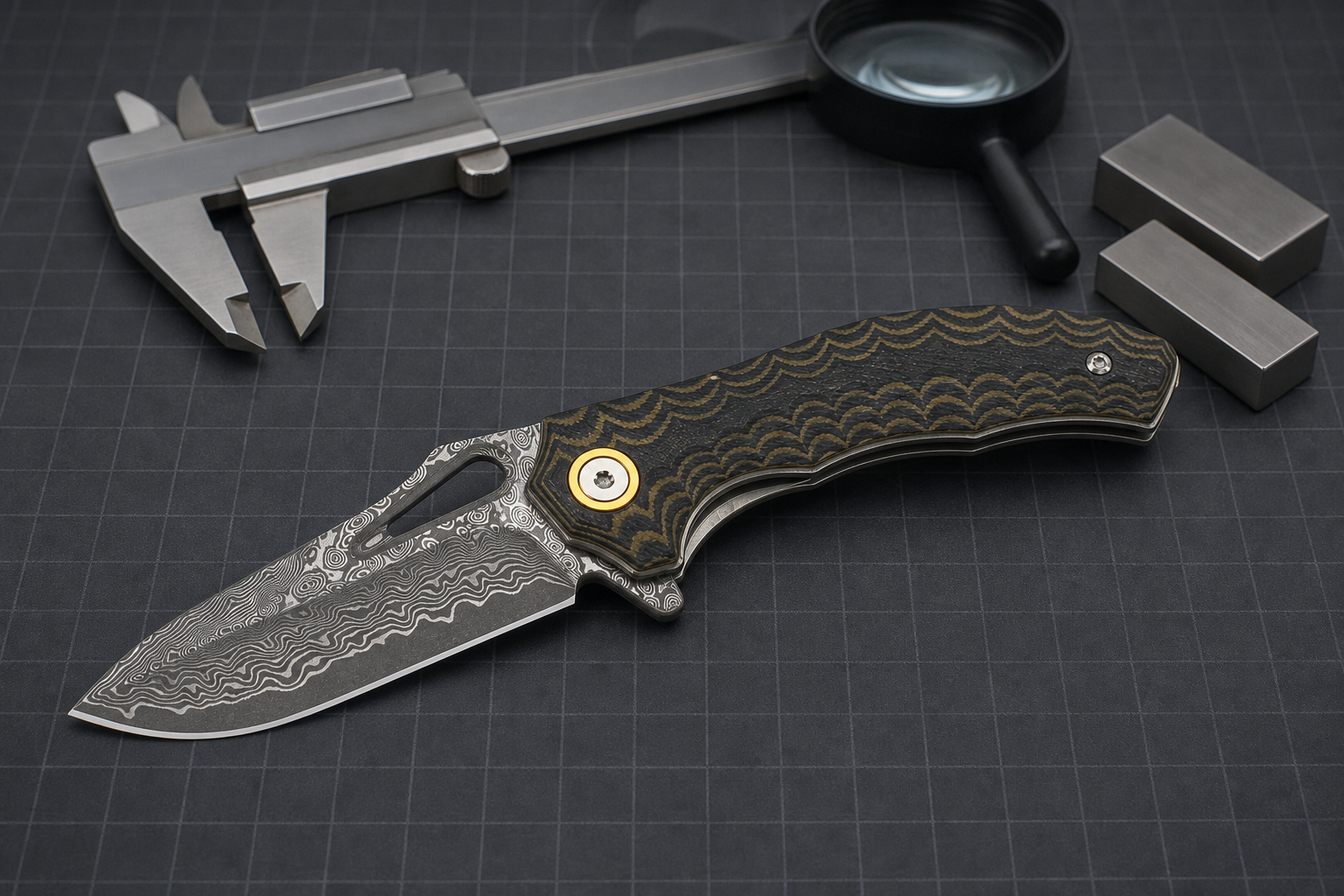
The NIST dimensional metrology page shows why measurement matters in manufacturing and process improvement. For knife projects, the lesson is simple: if a feature matters, define how it will be checked.
Critical dimensions may include blade length, blade thickness, handle thickness, pivot position, lock interface, clip screw position, sheath fit, package cavity size, and finished weight. Functional checks may include opening feel, closing safety, lock engagement, blade centering, fixed-blade handle fit, sheath retention, and edge uniformity. Appearance checks may include color, coating, grind symmetry, logo placement, and scratches.
ISO 9001 is useful as a quality-management reference because it frames quality as a managed system, not a one-time inspection. A buyer does not need to quote ISO language in a product brief, but the mindset matters. Define requirements. Control changes. Keep records. Review nonconformities. Improve the process.
| QC item | Why it matters | How buyer can specify it |
|---|---|---|
| Critical dimensions | Keeps parts compatible | Drawing with tolerance limits |
| Functional action | Affects customer trust | Sample-based test method |
| Edge consistency | Affects cutting experience | Edge angle and visual limits |
| Surface finish | Affects perceived quality | AQL defect examples |
| Packaging fit | Protects during transit | Pack-out test and photo record |
How Should Buyers Plan Packaging, Instructions, and Claims?
Custom products often fail because the product story is stronger than the evidence.
Buyers should plan packaging and claims by matching instructions, warnings, care guidance, origin claims, steel claims, environmental claims, and performance claims to evidence and market rules.
I Write Claims After the Evidence Is Clear
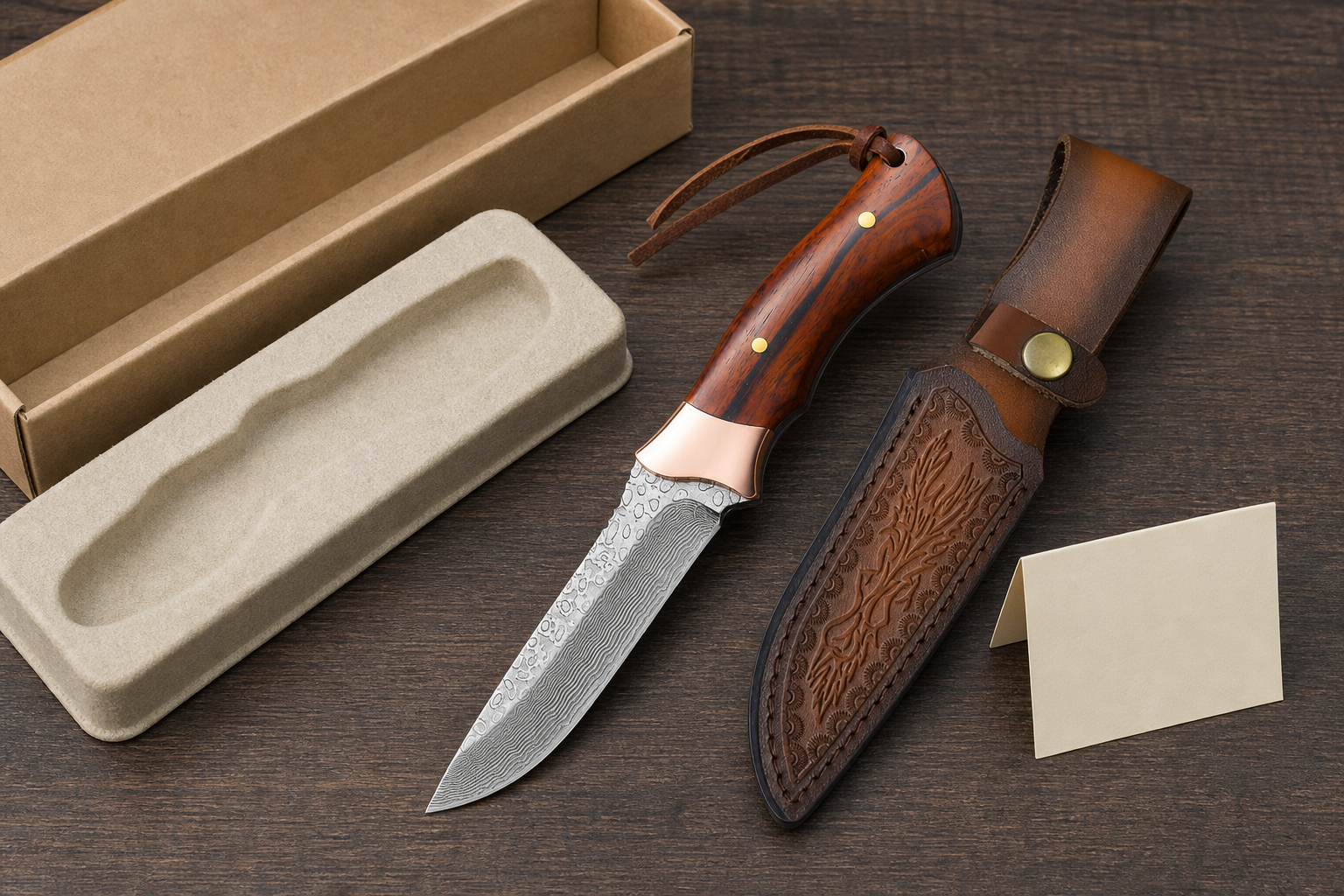
Custom knife buyers often want strong claims: premium steel, rugged build, outdoor ready, corrosion resistant, eco-friendly handle, handmade feel, professional grade, or long-lasting edge. Some claims may be reasonable. Some may need test reports, material records, or careful wording. Some may be too risky for the evidence available.
The FTC advertising and marketing guidance is a useful reminder that advertising claims need to be truthful and not misleading. The FTC environmental marketing guidance is especially relevant when buyers want recycled, eco, sustainable, non-toxic, or low-impact claims. Environmental claims need evidence and should not be vague.
The CPSC labeling overview also reminds buyers that labeling requirements depend on product type, design, components, and intended age group. A custom knife project should therefore include packaging and instruction review, not only product design.
Good custom packaging should answer basic questions:
- What is this knife for?
- How should the user store it?
- How should the user keep fingers away from the edge?
- Is there a sheath, lock, clip, or guard to explain?
- What care instructions are needed?
- What claims need evidence?
- What market-specific labels or importer details are required?
How Can Custom Development Support a Stronger Product Line?
One custom knife can become a platform if the buyer plans it well.
Custom development can support a stronger product line by creating shared parts, consistent design language, modular packaging, repeatable QC standards, and clear upgrade paths for future models.
I Think Beyond One SKU
A custom knife project becomes more valuable when it creates a product platform. The buyer may start with one camping knife, then build a compact version, a sheath upgrade, a gift-box version, or a different handle material for another channel. If the first product is planned well, later products can reuse some design language, packaging structure, QC methods, and supplier learning.
This does not mean every product should share the same blade or handle. It means the buyer should decide what should stay consistent. Maybe the brand keeps the same handle texture, screw style, packaging layout, care copy, and color system. Maybe it uses a shared steel grade across a line to simplify sourcing. Maybe it creates a good-better-best ladder by changing sheath, finish, packaging, and inspection level.
The danger is uncontrolled expansion. Too many SKUs can divide purchase volume and make QC harder. A good product line starts with a stable core product, then expands only when there is a clear reason.
Line planning questions:
- Which parts can be shared?
- Which features define the brand look?
- Which upgrades justify higher price?
- Which changes require new testing?
- Which variants create channel conflict?
- Which SKU should be the production benchmark?
How Can Vast State Help Buyers Develop Custom Knife Projects?
Vast State can help turn a custom knife idea into a controlled OEM/ODM project.
Vast State helps buyers define the target user, product brief, blade and handle specifications, sample revisions, packaging, claim wording, compliance documents, QC checks, and RFQ data for custom knife development.
I Keep Custom Projects Practical
Vast State can help buyers avoid two common mistakes. The first mistake is treating custom development as decoration. The second mistake is over-customizing before the product has a stable market case. Both mistakes create cost without enough value.
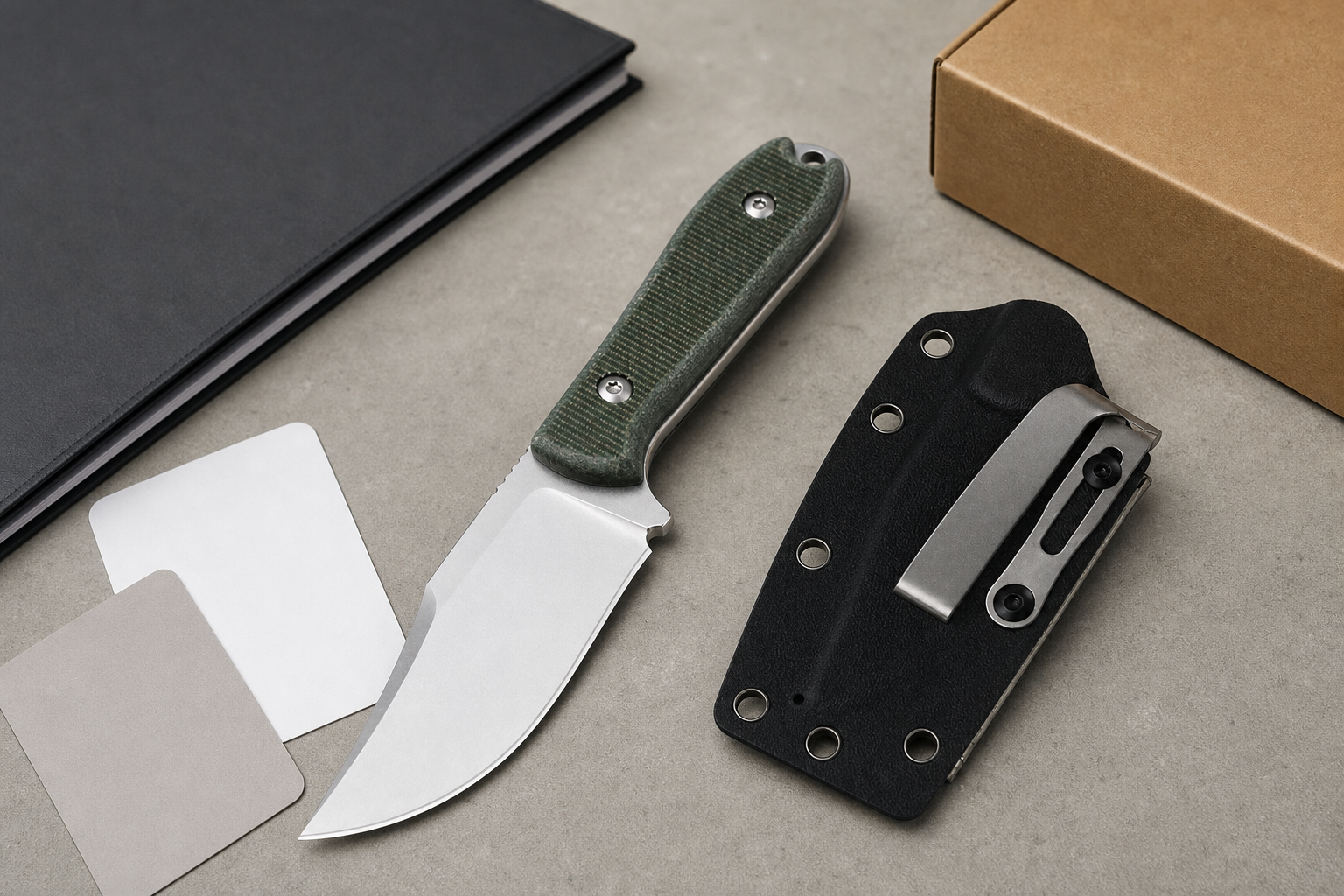
We can help buyers start with the commercial brief: target customer, channel, price range, use case, required documents, packaging needs, and launch timing. Then we translate that brief into a knife specification. That includes blade profile, steel, heat treatment target, handle material, handle texture, lock or fixed-blade construction, sheath or clip, finish, logo position, packaging, instructions, and inspection criteria.
Vast State can support:
- Custom knife product brief
- OEM/ODM feature priority list
- Material and finish options
- Sample revision record
- Packaging and claim review
- QC checklist and defect examples
- Supplier RFQ schema
- Pre-shipment inspection alignment
The goal is not to make a knife different for its own sake. The goal is to make a knife that buyers can explain, suppliers can repeat, and customers can trust.
Turn your idea into a quote-ready knife project.
Share your drawing, sample photo, target quantity, market, and packaging needs. Vast State will review manufacturability and prepare OEM/ODM options.
Conclusion
Custom knife development works best when buyers turn creative ideas into measurable specifications, controlled samples, honest claims, and repeatable production standards.