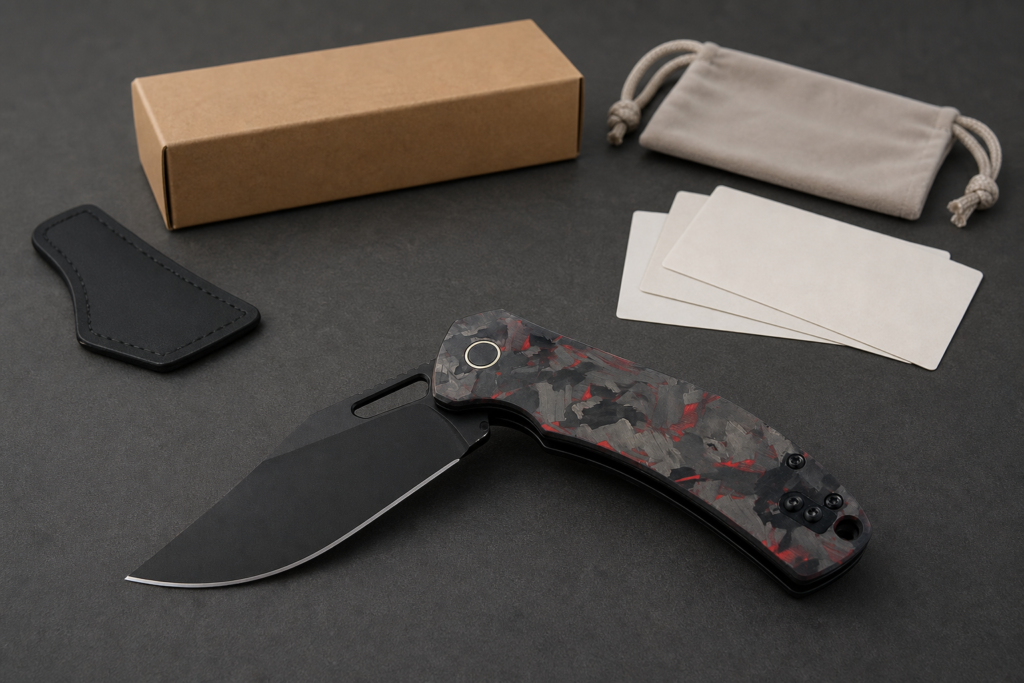
A knife safety page can protect users. It can also expose weak product design if it is written too late.
Buyers should build knife safety guidance by controlling design hazards, blade coverage, packaging, warnings, instructions, age positioning, inspection records, and claim wording before mass production. Safety copy should support a safer product, not hide a risky design.
Quick buyer brief:
- Answer: Knife safety guidance should start with product design, then packaging, instruction copy, labels, QC checks, and post-sale support.
- Buyer context: This guide is for knife brands, outdoor brands, kitchenware brands, EDC brands, importers, distributors, retail buyers, private label teams, and OEM/ODM sourcing managers.
- Key checks: Foreseeable use, blade exposure, sheath or lock, handle control, packaging protection, instruction wording, warning priority, target age, market labeling, claim evidence, inspection criteria, and supplier records.
Have a knife or multi-tool project in mind?
Send your sketch, CAD file, sample photo, or product idea. Vast State can review manufacturability, suggest materials, estimate MOQ, and prepare a quote for your OEM/ODM project.
Many articles about knife safety are written for individual owners. They tell people how to hold, store, clean, or carry a knife. That information matters, but OEM/ODM buyers have a different responsibility. They must decide what safety guidance belongs on the product, in the package, in the manual, on the website, and in the inspection plan.
This is not only a copywriting task. A knife is a sharp product. If the blade is exposed during shipping, the lock is vague, the sheath is loose, the package allows movement, or the warning copy is buried, the product may create avoidable risk. The buyer should build safety into the project before writing the final instruction card.
Why Should Knife Safety Start Before the Instruction Card?
Warnings are useful, but they cannot repair every design problem.
Knife safety should start during product design because buyers can reduce risk through blade coverage, handle control, lock or sheath choices, packaging protection, and clear use boundaries before relying on warning text.
I Treat Safety as a Design Input
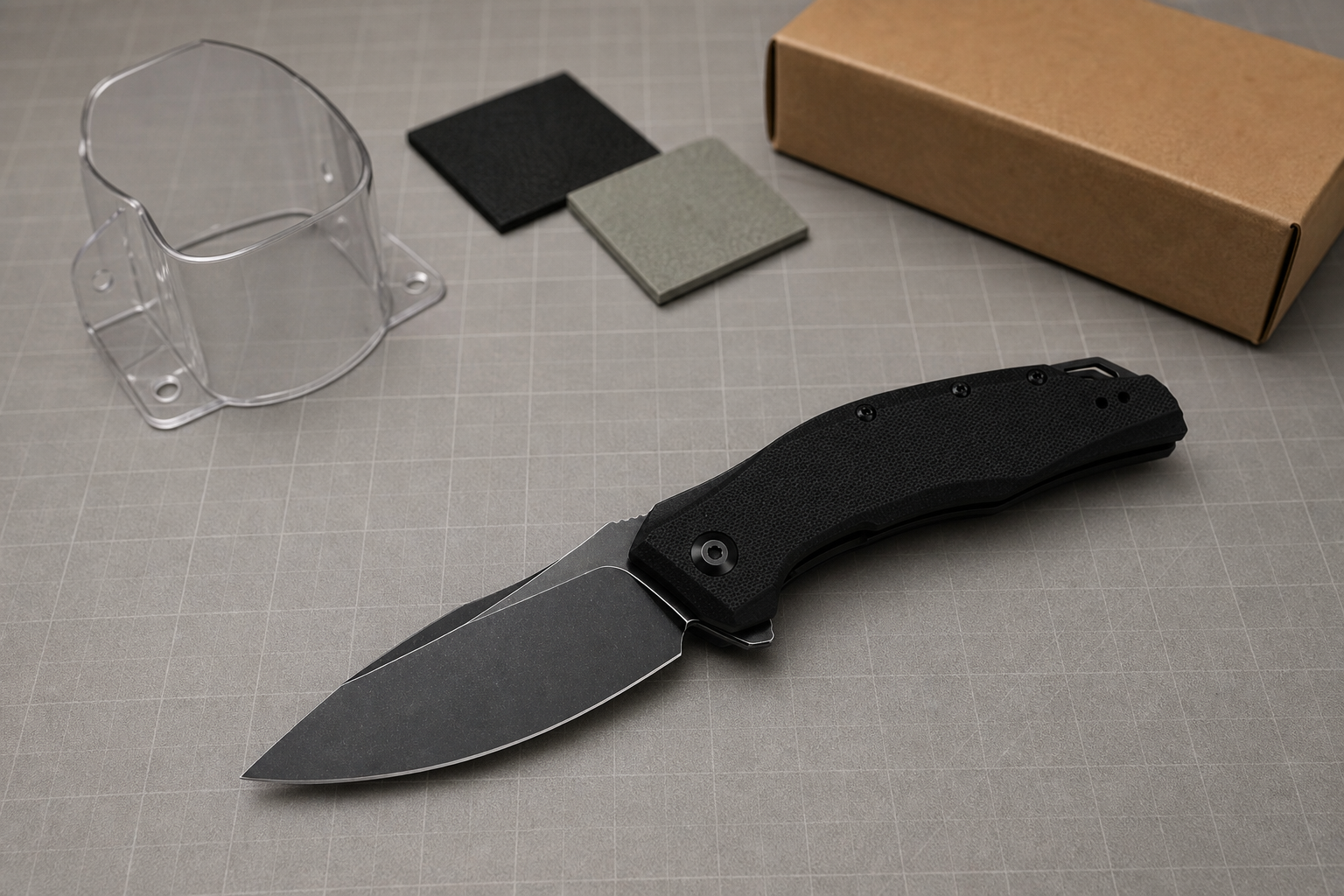
The first safety question is not "What warning should we print?" The first question is "Can the product be made safer by design?" If a fixed blade ships without secure blade coverage, no warning card can fully solve that. If a folding knife has inconsistent lock engagement, a manual cannot make the mechanism reliable. If a retail box lets the knife slide and pierce the package, the package needs redesign.
The CPSC manufacturing best practices page supports this approach. It says product safety should be a priority at the design stage, with hazard identification, risk assessment, foreseeable consumer use, and a sequence of eliminating, guarding against, or warning users about risks.
For knife buyers, this means safety guidance should come from a product review. The buyer should review blade exposure, edge protection, point protection, handle grip, lock or sheath function, package movement, instruction clarity, and target user. The warning card should then explain the remaining risks that cannot reasonably be designed out.
| Safety layer | Buyer question | Practical output |
|---|---|---|
| Design | Can we reduce the hazard? | Blade cover, guard, lock, sheath, grip |
| Packaging | Can the knife move or cut through? | Tray, wrap, insert, tip protection |
| Instructions | What must the user know? | Clear storage, handling, care copy |
| Labels | What needs immediate attention? | Short warning and age guidance |
| QC | Can production repeat it? | Inspection checklist and sample records |
OEM/ODM RFQ Checklist
Prepare these details to help Vast State review your project and provide a more accurate quotation.
| RFQ Field | What to Prepare |
|---|---|
| Project type | OEM from drawing / ODM private label / wholesale catalog |
| Product category | Folding knife / fixed blade / multi-tool / outdoor tool |
| Design status | Idea / sketch / 2D drawing / 3D CAD / physical sample |
| Target price | Ex-factory target price or retail price range |
| MOQ expectation | 500 / 1,000 / 3,000 / 5,000+ pcs |
| Logo method | Laser engraving / etching / printing / molded logo |
| Packaging | Standard packaging / custom retail box / Amazon-ready |
| Market | USA / EU / Japan / Korea / Middle East / other |
| Compliance needs | Buyer-specified testing / documentation / labeling |
| Timeline | Sample deadline / mass production deadline |
What Knife Hazards Should Buyers Review First?
Knife hazards are not limited to the sharp edge.
Buyers should review blade edge, point, lock or sheath failure, handle slip, package puncture, cleaning risk, storage risk, misuse, loose hardware, corrosion, and unclear user instructions before final sample approval.
I Look Beyond the Obvious Edge
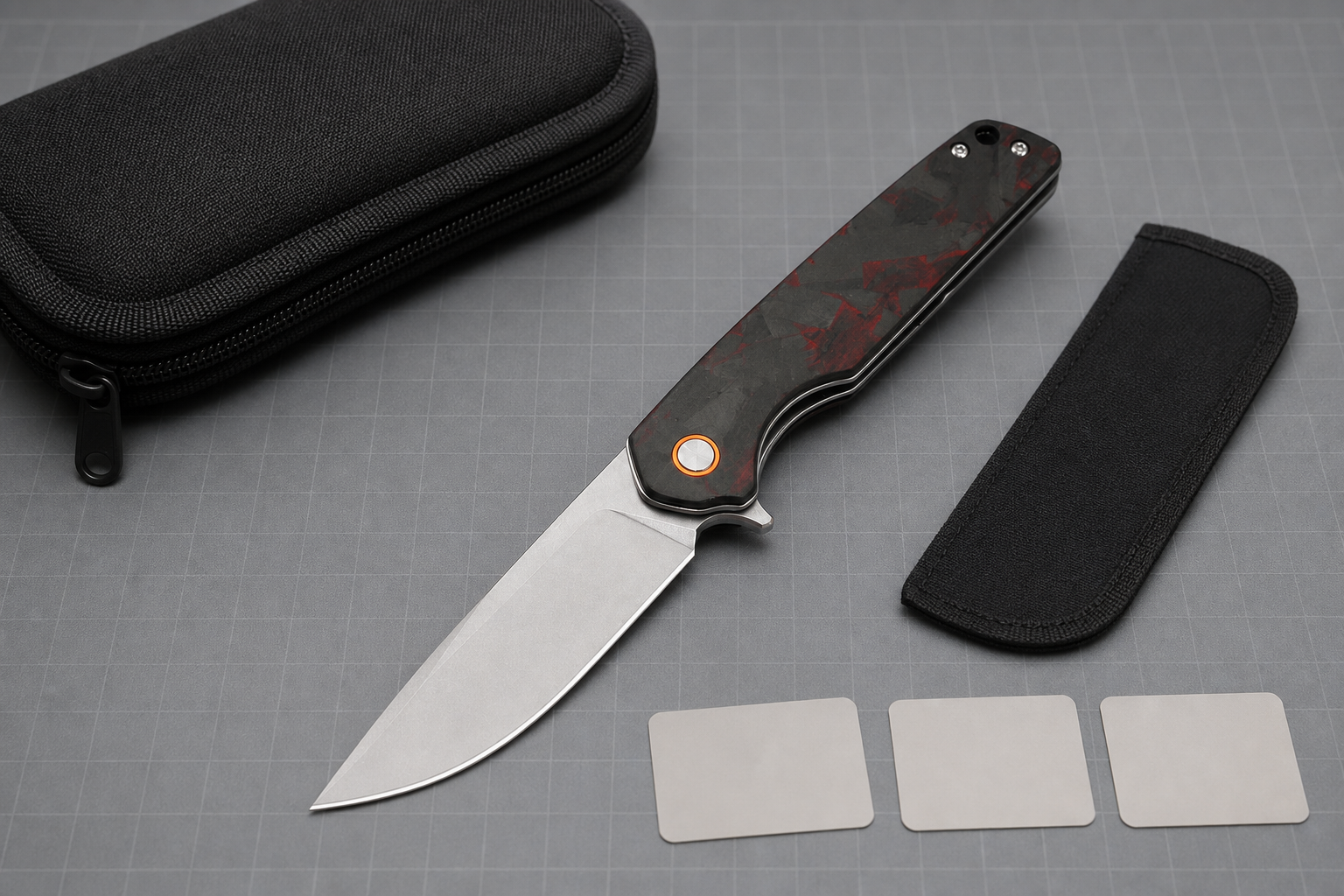
The edge is the obvious hazard, but it is not the only one. A knife can create risk through a loose pivot, a sharp handle corner, a weak lock, a sheath that does not retain the blade, a clip that catches unexpectedly, packaging that exposes the tip, or instructions that imply the knife can do jobs it was not designed to do.
The CCOHS sharp blade safety guidance lists practical risk controls for sharp tools, including using the right tool for the job, inspecting tools before use, keeping blades sharp, using stable surfaces, storing tools appropriately, and avoiding excessive pressure. A buyer should translate those user-facing points into product and packaging questions.
For example, if instructions say users should store the knife securely, the buyer should decide whether the package includes a sheath, guard, pouch, blade cover, or storage note. If instructions say users should inspect the tool, the buyer should define what damage means: loose screws, cracked handle, damaged sheath, rust, broken tip, bent lock, or exposed blade.
Useful hazard questions:
- Can the blade or point contact the user during unpacking?
- Can the package be damaged by the knife during shipping?
- Can the knife be inserted into the sheath incorrectly?
- Can the folding knife close unexpectedly under normal use?
- Can the handle become slippery in the intended environment?
- Can the product be mistaken for a toy or novelty item?
- Does any marketing copy suggest unsafe use?
How Should Buyers Use the Safety Hierarchy in Knife Projects?
Good safety guidance should not depend only on user behavior.
Buyers should use a hierarchy: remove avoidable risks, choose safer design options, add physical guards or covers, write clear instructions, and use labels or PPE guidance only for remaining risks.
I Prefer Product Controls Before Warning Copy
The NIOSH hierarchy of controls ranks risk controls from more effective to less effective: elimination, substitution, engineering controls, administrative controls, and personal protective equipment. It is written for workplace exposure control, but the thinking helps buyers plan safer product projects.
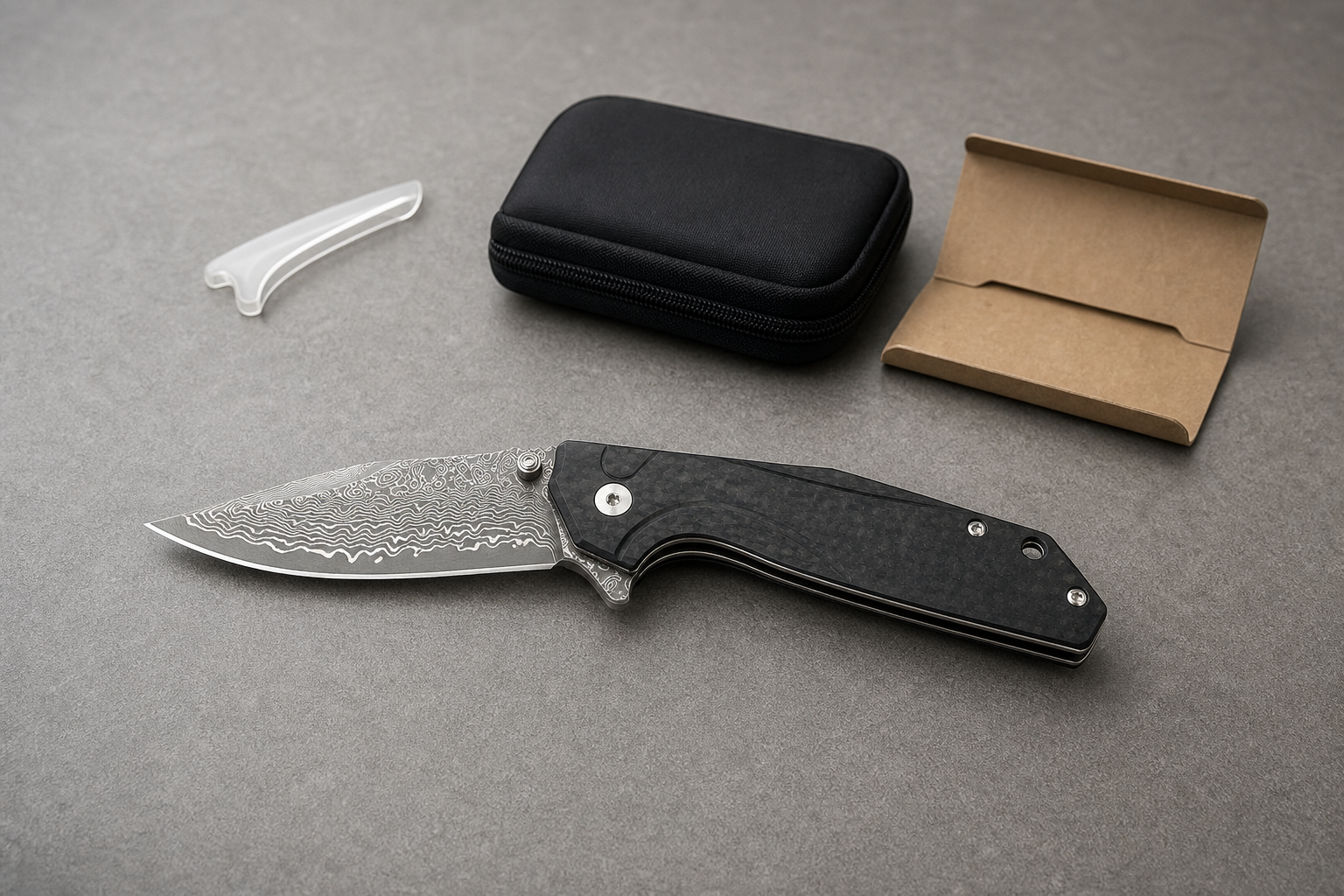
In knife sourcing, "elimination" may mean avoiding an unnecessary exposed point in packaging. "Substitution" may mean choosing a safer package opener format instead of a general knife for a retail kit. "Engineering control" may mean adding a sheath, blade guard, lock design, finger guard, or package tray. "Administrative control" may mean instruction copy. PPE guidance may be relevant for industrial or kitchen contexts, but it should not be the only safety layer.
This hierarchy prevents a common mistake. Some buyers want to solve every concern with one warning label. That is weak. If a sheath retention problem can be fixed, fix the sheath. If a package can expose the point, change the package. If a handle edge can be softened, change the handle. Then write instructions for the risks that remain.
| Control type | Knife project example | Better buyer question |
|---|---|---|
| Eliminate | Avoid exposed blade in package | Can we remove this contact risk? |
| Substitute | Choose safer accessory format | Is a knife the right product here? |
| Engineering | Add sheath, guard, tray, lock | Can design block the hazard? |
| Administrative | Instruction card and training copy | What must the user know? |
| PPE | Gloves in work context | Is PPE realistic and clearly scoped? |
What Should Be Included in Knife Safety Instructions?
Safety instructions should be short enough to read and specific enough to use.
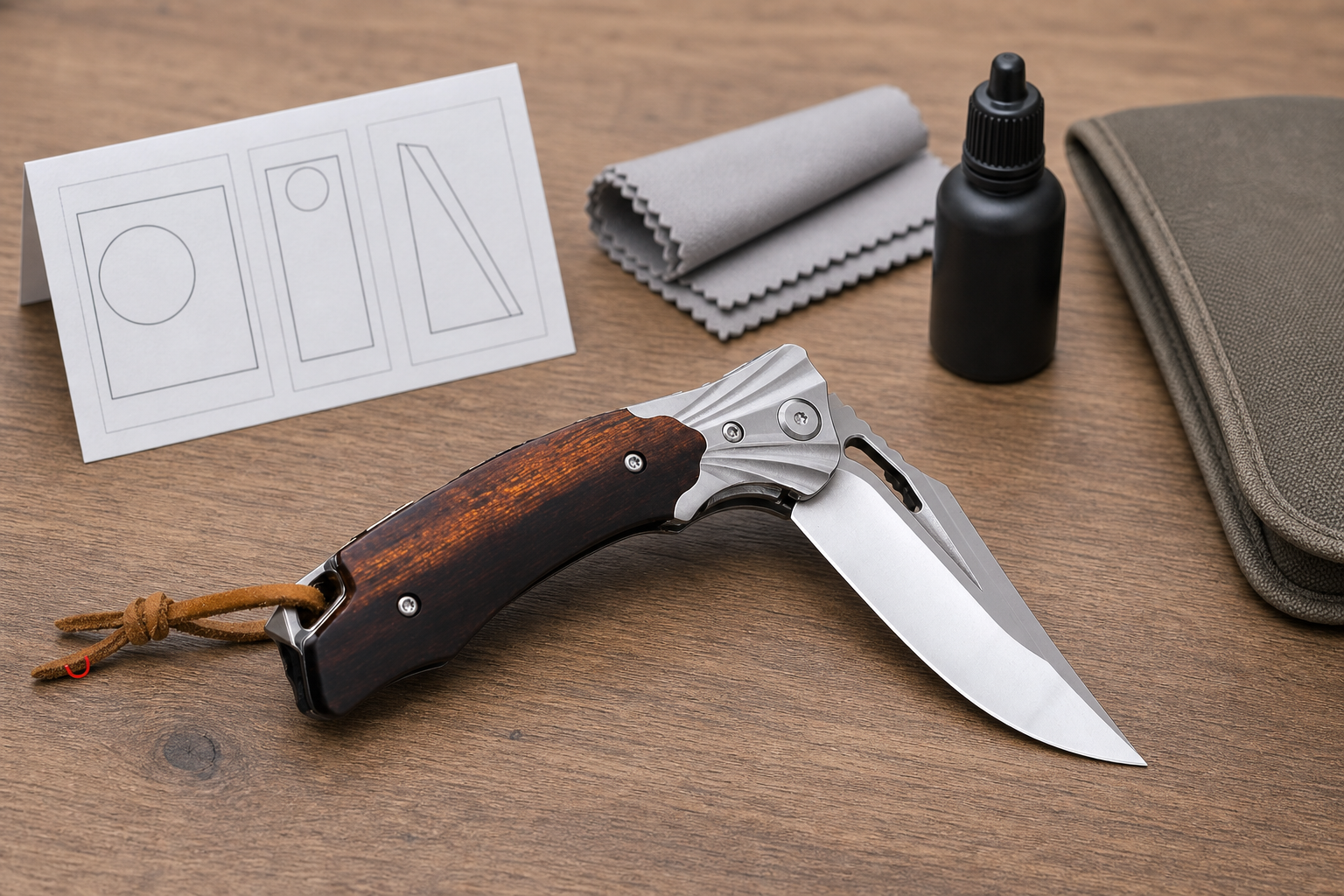
Knife safety instructions should cover intended use, blade handling, storage, sheath or lock use, cleaning, maintenance, inspection, damage, disposal, age positioning, local rules, and when to stop using the product.
I Write Instructions Around Real User Decisions
The CPSC Manufacturer's Guide to Developing Consumer Product Instructions gives a useful warning about instructions: even strong safety messages cannot guarantee safe behavior, and instructions should not compensate for fixable design problems. It also advises identifying foreseeable hazards that cannot be designed out or guarded against, repeating product safety messages in the manual, avoiding overwarning, and describing the hazard, consequence, and avoidance behavior clearly.
Knife instructions should not become a long essay. They should help users make decisions at the moment they unpack, use, clean, store, or dispose of the product. The buyer should use short language and avoid clever marketing words in the safety section.
Useful instruction topics:
- Use the knife only for its intended cutting tasks.
- Keep fingers clear of the blade path.
- Use the sheath, blade cover, lock, or storage feature as intended.
- Keep the knife closed or covered when not in use.
- Do not use a damaged knife, lock, sheath, handle, or clip.
- Clean and dry the knife before storage.
- Keep out of reach of children where appropriate.
- Follow local carry, transport, and use rules.
- Dispose of damaged blades with the edge covered.
The buyer should match the wording to the product. A kitchen knife, folding knife, camping fixed blade, utility knife, and multi-tool need different safety notes. A generic card can miss the actual risk.
How Should Warnings and Labels Be Prioritized?
Too many warnings can make the important message easier to miss.
Warnings should be prioritized by severity, likelihood, user knowledge, and product-specific risk. Buyers should use clear signal words, plain language, and market-specific label review rather than filling the package with vague warnings.
I Do Not Let Warning Copy Become Wallpaper
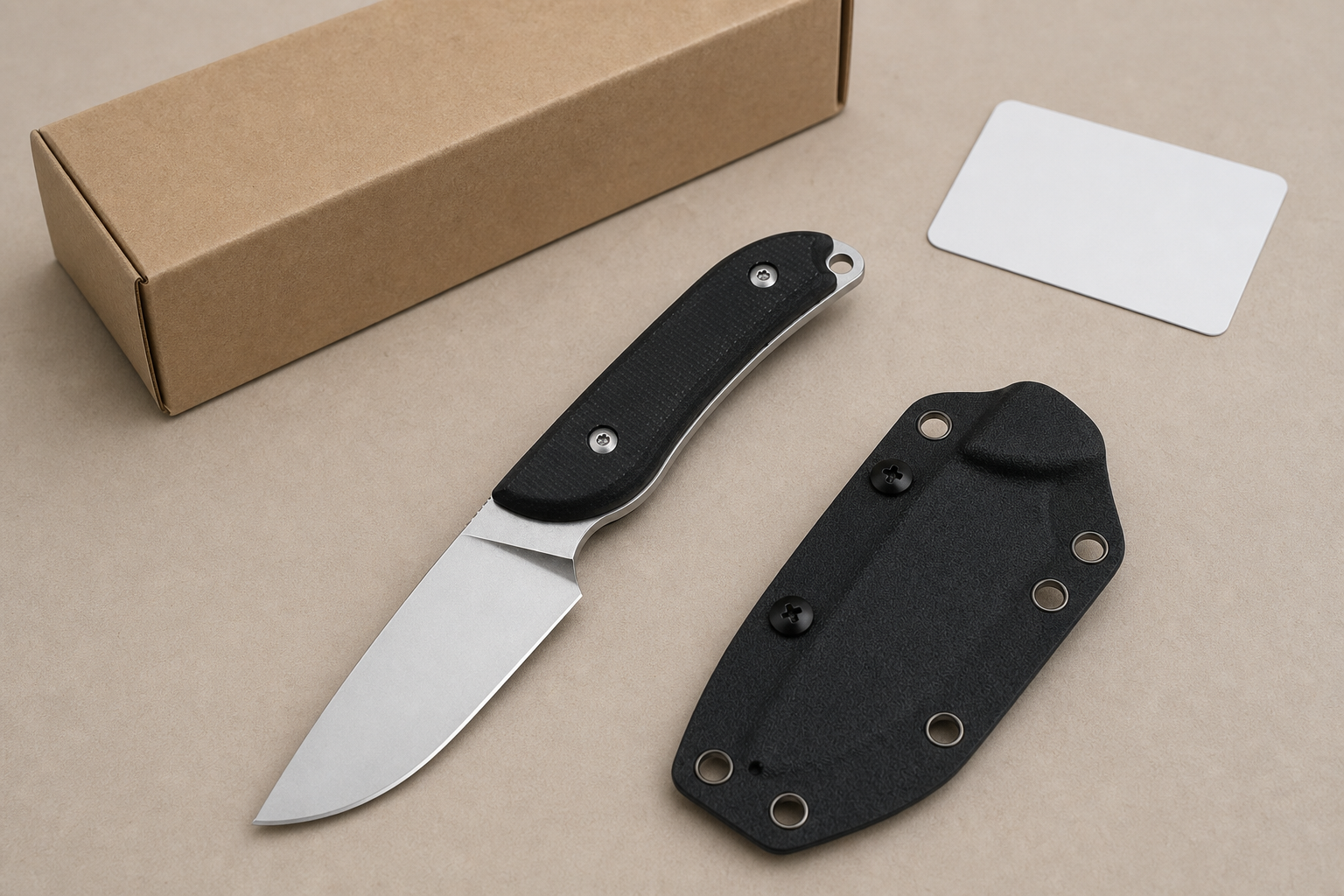
Warnings lose power when they become decoration. A package covered in general danger words may look serious, but users may not know what to do. The better approach is to prioritize the important hazards, put the most urgent message where the user needs it, and keep longer guidance in the instruction insert or online support page.
The CPSC instruction guide explains that warnings should be succinct and immediately understandable. It also describes the common structure of safety messages: identify the hazard, explain the consequence, and tell the user how to avoid it. That structure is useful for knife packaging.
For example, a weak warning says, "Use caution." A stronger instruction says, "Sharp blade. Keep fingers away from the edge and keep the knife closed or sheathed when not in use." The second version tells the user what the hazard is and what action to take.
Buyers should review:
- Which warnings belong on the product.
- Which warnings belong on the package.
- Which warnings belong in the instruction card.
- Which warnings belong on the website.
- Which warnings are too remote or too vague.
- Whether translation changes the meaning.
- Whether label size is still readable after printing.
What Packaging Decisions Affect Knife Safety?
Packaging is part of knife safety because the first user contact happens during unpacking.
Packaging should prevent blade exposure, tip puncture, package movement, loose accessories, unsafe unboxing, missing instructions, moisture damage, and confusion about age or intended use.
I Inspect the Unboxing Path
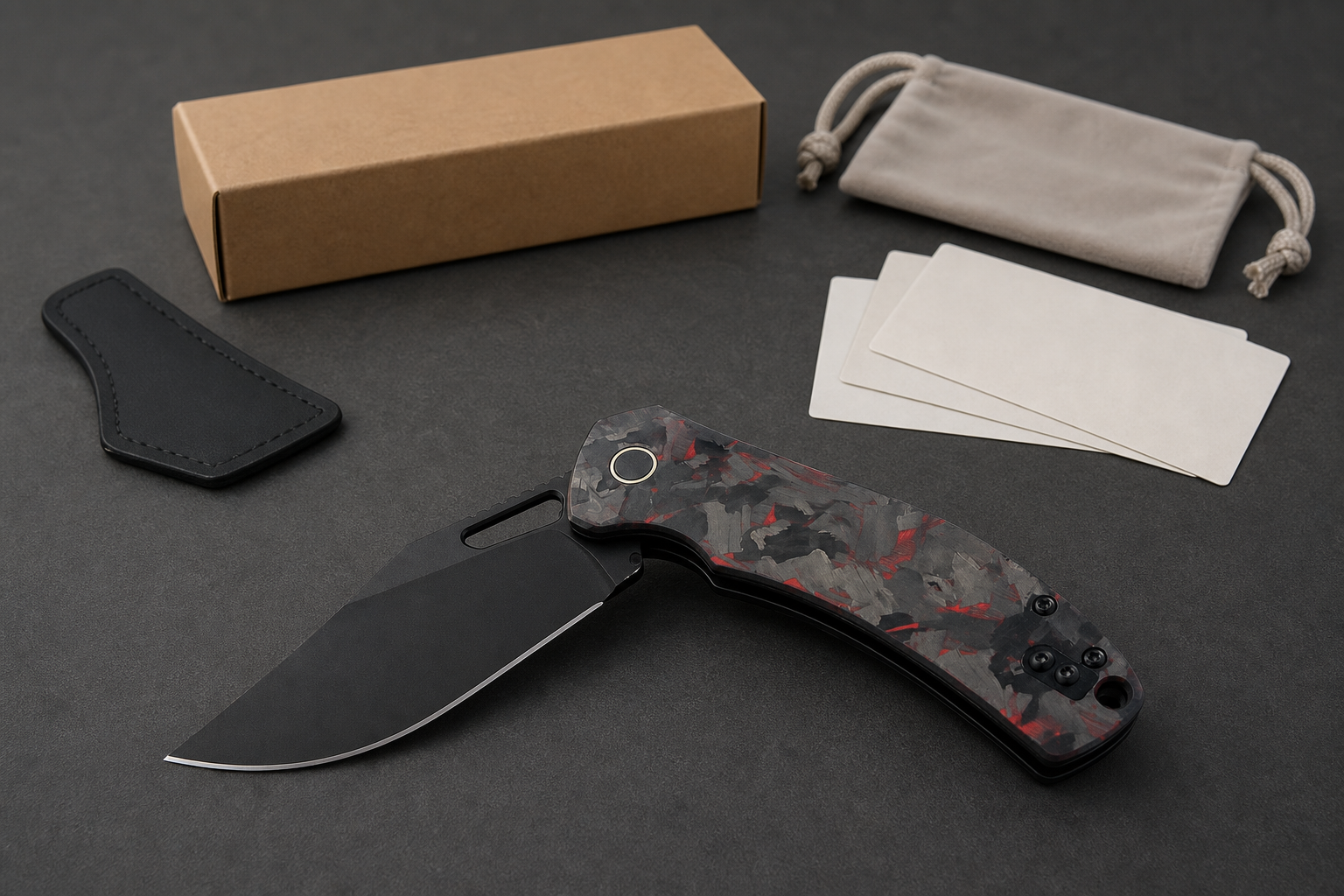
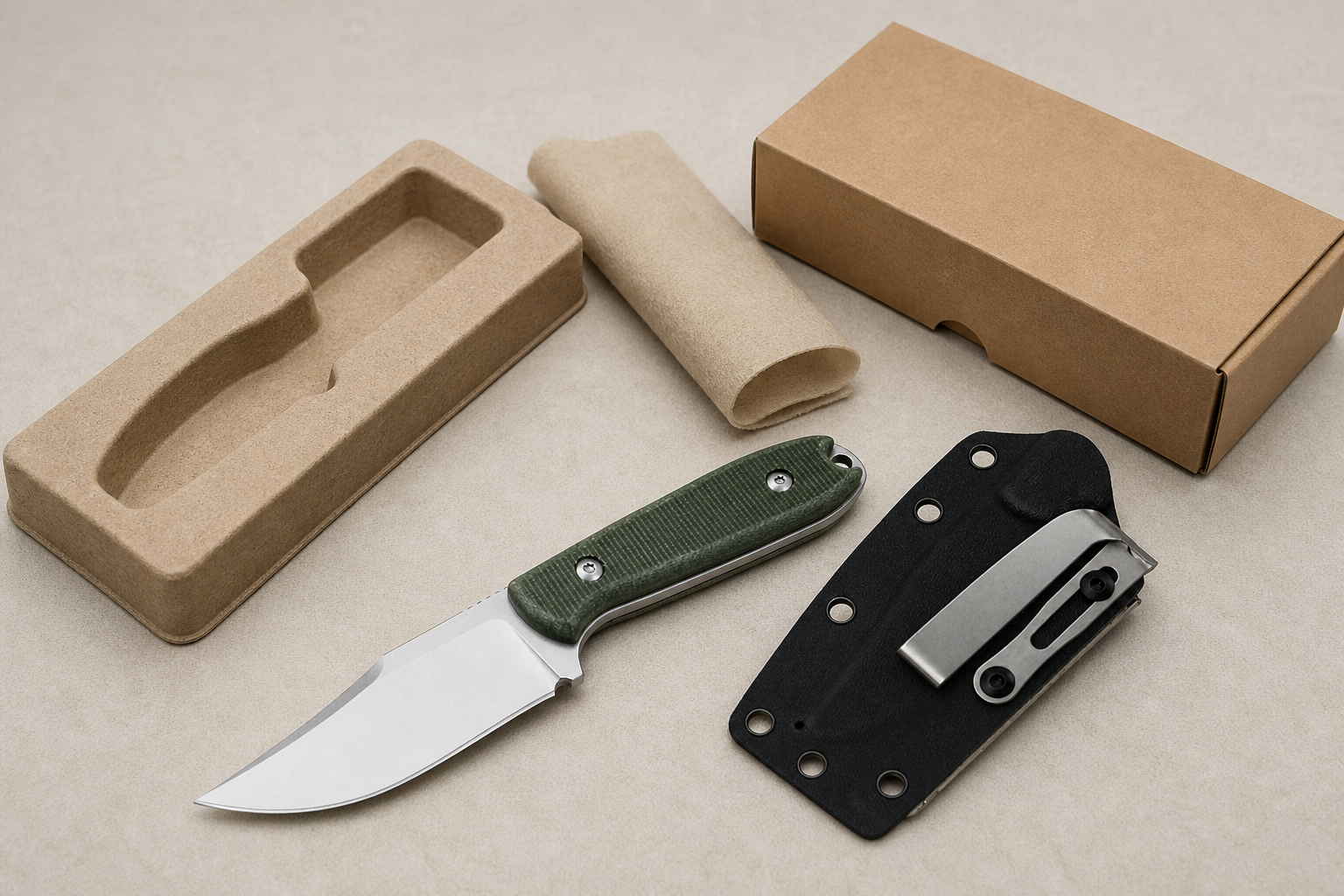
A knife can pass product inspection and still fail packaging safety. If the knife can move inside the box, it can damage the package or arrive in a dangerous orientation. If a fixed blade has no point protection, it can stress the sheath or package. If a folding knife ships partially open, the first user contact becomes risky. If small accessories move freely, they can scratch the product or hide important instructions.
The CPSC labeling overview notes that labeling requirements vary by product type, design, components, and intended age group. A knife buyer should not assume one universal label rule fits every market or sales channel. Packaging review should include legal review where needed, especially if the product is sold in a market with specific importer, tracking, age, or hazard-label expectations.
Packaging safety checks can include:
- Knife cannot shift into an exposed position.
- Blade, point, or edge cannot touch the carton wall.
- Sheath, guard, tray, or tie-down holds the product.
- Instruction card is visible during unboxing.
- Package does not imply child use or toy positioning.
- Barcode, importer, and required market labels are legible.
- Retail display does not invite unsafe handling.
The package is the first safety interface. Buyers should test it like part of the product.
What QC Checks Should Confirm Safety Guidance Before Shipment?
Safety guidance is only useful if production matches the approved sample.
QC should confirm blade coverage, lock or sheath function, handle condition, sharp-edge control, screw security, packaging fit, instruction placement, warning readability, and final inspection records before shipment.
I Connect Warnings to Inspection Items
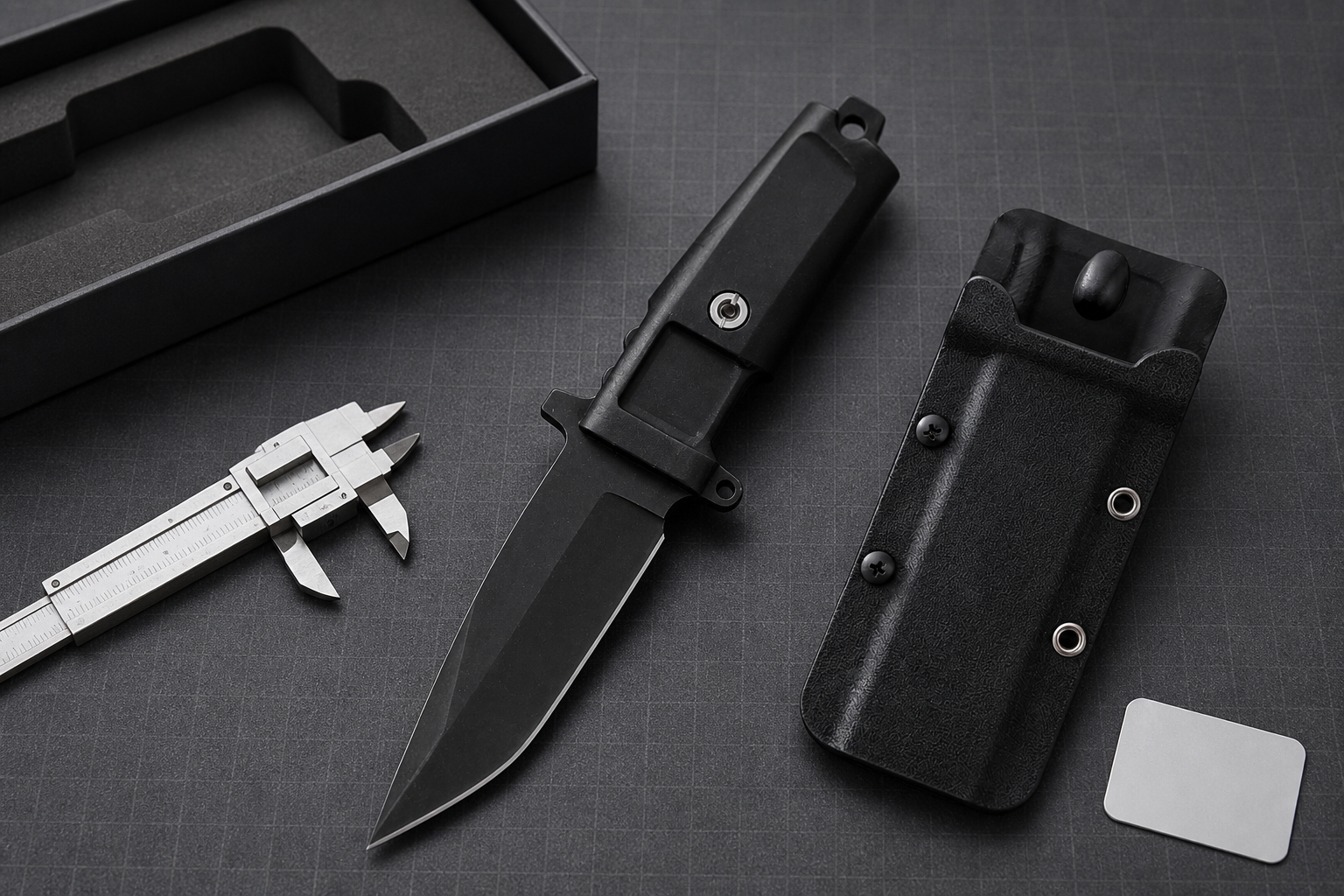
A safety instruction should be checkable when possible. If the manual says the knife should be kept sheathed, the sheath should be inspected for fit and retention. If the package says the knife locks open, lock engagement should be checked. If the instruction card says users should stop using a damaged sheath, QC should define what damaged stitching, rivets, or straps look like.
The NIST dimensional metrology page supports the broader manufacturing principle that measurement helps process improvement and part control. In knife safety projects, dimensions and functional checks should be tied to safety-critical features. Examples include blade length, exposed tip, package clearance, lock engagement, handle thickness, sheath opening, and clip screw location.
ISO 9001 is also a useful quality reference because it frames quality as a managed system that helps organizations meet customer expectations and improve processes. Buyers can use that mindset without claiming certification. Define requirements, keep records, compare production to approved samples, and handle nonconformities consistently.
QC safety records may include:
- Approved safety instruction version
- Approved warning label artwork
- Package fit photos
- Lock or sheath function checks
- Blade coverage and tip protection checks
- Sharp edge and burr checks
- Screw and hardware checks
- Final inspection report
How Should Buyers Avoid Risky Marketing Claims?
Safety claims can create risk when they promise more than the product proves.
Buyers should avoid unsupported claims such as child-safe, foolproof, accident-proof, self-defense, indestructible, professional rescue, non-toxic, or eco-safe unless the wording is legally reviewed and backed by evidence.
I Keep Safety Claims Narrow and Evidence-Based
Marketing teams often want strong words. They may want to say a knife is safe, professional, tactical, rescue-ready, non-slip, corrosion-proof, child-safe, or eco-friendly. Some wording may be acceptable with the right evidence and market context. Some wording may create avoidable risk.
The FTC advertising and marketing guidance is a useful reminder that advertising should be truthful and not misleading. For knife buyers, this means product claims should match test reports, materials, and intended use. A safer phrase is often more specific. Instead of "safe knife," the package can say "includes blade cover for storage." Instead of "accident-proof lock," it can say "liner lock design; inspect before use and follow instructions."
Buyers should also avoid positioning that creates regulatory, platform, or brand risk. Self-defense language, combat framing, and exaggerated rescue claims may make the product harder to sell through mainstream channels and can shift user expectations. If the product is a practical cutting tool, the safety copy and marketing should say that clearly.
Claim review questions:
- Can we prove this claim with records?
- Does the claim overpromise safety?
- Does the wording imply weapon use?
- Does the claim match the target market?
- Does the package include the necessary limitations?
- Does the instruction card support the claim?
How Can Vast State Help Buyers Build Knife Safety Guidance?
Vast State can help buyers turn safety concerns into practical product requirements.
Vast State helps buyers build knife safety guidance by aligning product design, blade coverage, sheath or lock checks, packaging, instruction wording, warning placement, claim review, and pre-shipment QC records.
I Build Safety Into the RFQ
Vast State can help buyers include safety guidance in the RFQ instead of waiting until the package is finished. That timing matters. If the supplier knows the safety requirements early, the factory can plan sheath fit, lock checks, packaging trays, instruction placement, label printing, and inspection records before production.
We can help buyers define the difference between product controls and warning copy. We can review whether the knife needs a sheath, guard, storage card, lock instruction, user care section, disposal note, or extra package restraint. We can also help align the instruction copy with the actual product, so the wording does not promise features that the sample does not have.
Vast State can support:
- Knife safety product brief
- Hazard review checklist
- Packaging safety review
- Warning and instruction copy
- Market label document list
- Claim wording review
- QC inspection criteria
- RFQ schema for supplier communication
The goal is direct: the knife should arrive safely, explain itself clearly, and match the safety guidance the buyer approved.
Turn your idea into a quote-ready knife project.
Share your drawing, sample photo, target quantity, market, and packaging needs. Vast State will review manufacturability and prepare OEM/ODM options.
Conclusion
Knife safety guidance should connect design, packaging, instructions, warnings, claims, and QC records before shipment, not after problems appear.