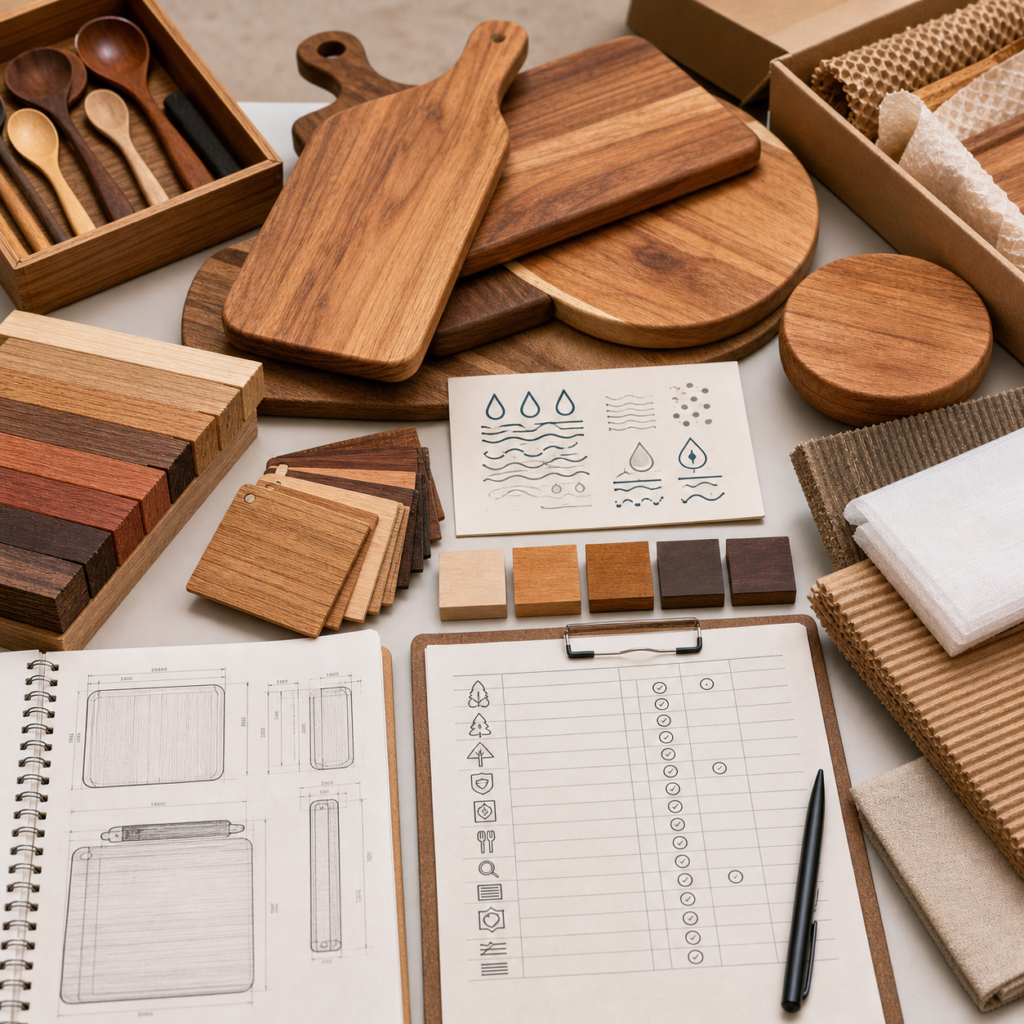
Wooden tableware can look warm and natural, but poor specs lead to cracks, stains, odor, and complaints. Better sourcing starts with controls.
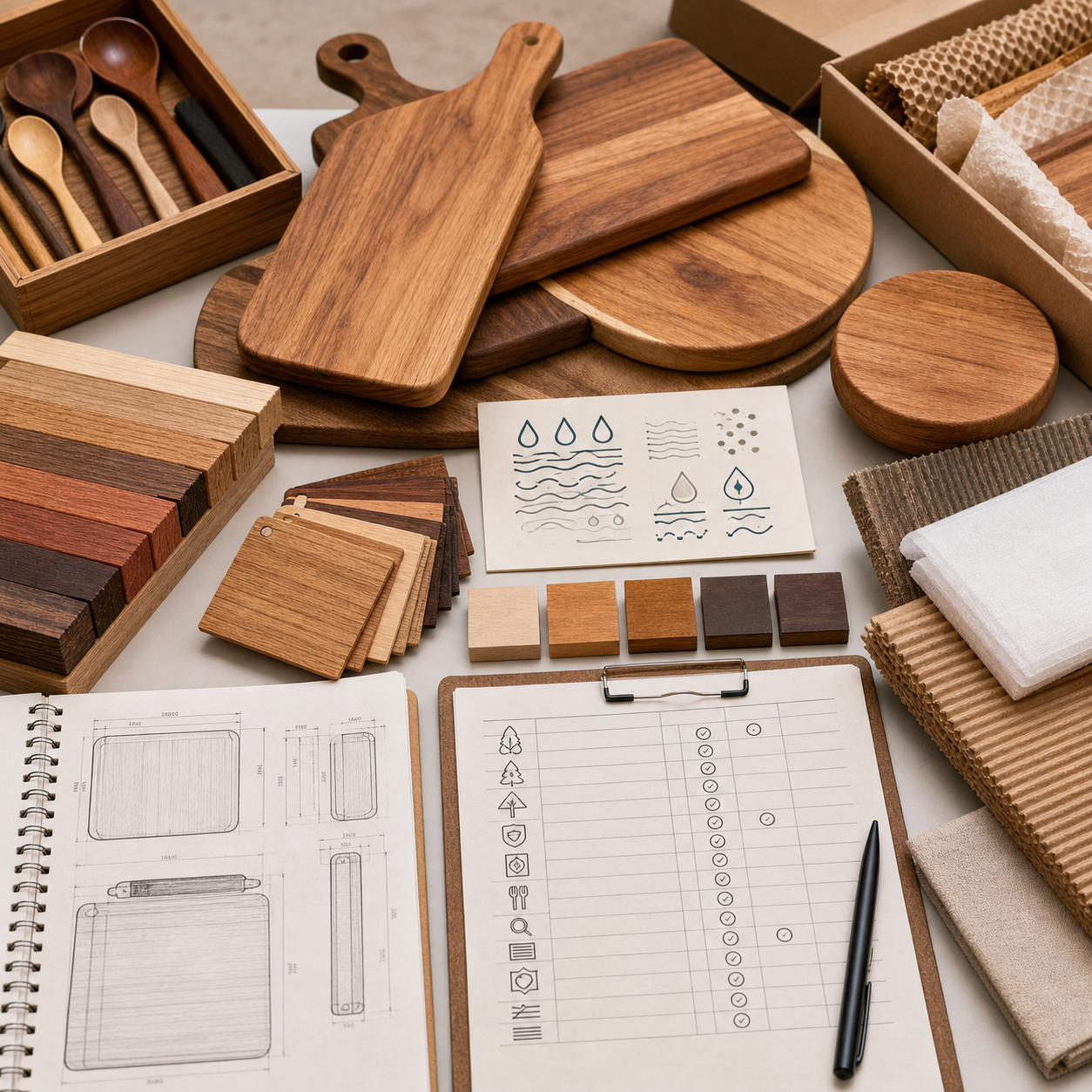
Buyers should specify durable custom wooden cutting boards and tableware by defining food-contact requirements, wood species, moisture control, grain direction, finish system, dye limits, cleaning instructions, packaging protection, marking needs, and QC records before sampling.
Quick buyer brief:
- Answer: Treat wooden cutting boards and tableware as food-contact products with material and moisture controls.
- Buyer context: This helps kitchenware brands, cutlery brands, gift-set buyers, importers, wholesalers, and distributors.
- Key checks: Food-contact review, wood species, moisture, glue, dye, oil, finish, sanding, warping, packaging, labels, and care card.
Have a knife or multi-tool project in mind?
Send your sketch, CAD file, sample photo, or product idea. Vast State can review manufacturability, suggest materials, estimate MOQ, and prepare a quote for your OEM/ODM project.
When a buyer asks about remaking a cutting board or using coffee and tea color on wooden tableware, I do not start with color. I start with the product's real job. A wooden cutting board or spoon touches food, absorbs moisture, dries, moves, and gets cleaned many times. If the buyer only controls the look, the product may fail after launch. I prefer to turn the idea into a sourcing brief that covers food-contact review, wood selection, drying, finish, packaging, and buyer instructions.
Why Should Wooden Tableware Projects Start With Food-Contact Review?
A beautiful board can still create sourcing risk. If the material, finish, glue, or dye is not suitable, the order can stop.
Wooden tableware projects should start with food-contact review because cutting boards, spoons, trays, and serving pieces may touch food. Buyers should confirm market rules, finish safety, labeling, and intended use before sampling.
I Treat The Surface As Part Of The Product
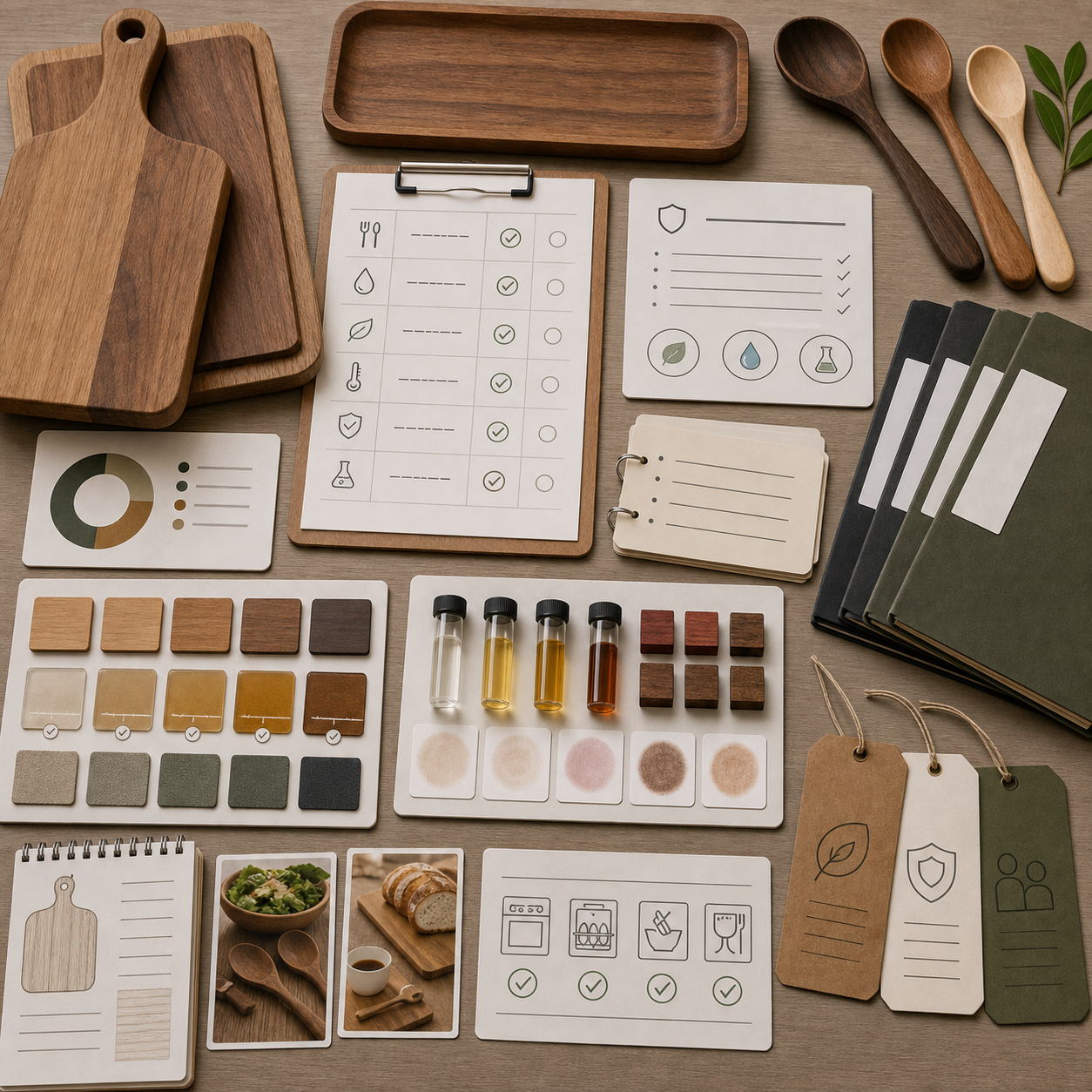
Wooden cutting boards and tableware are not only decorative products. They are food-contact products when they touch food. That changes the sourcing conversation. A buyer should not approve a stain, glue, coating, oil, or printed surface only because it looks good. The buyer should know whether that material is suitable for the target market and use condition.
The FDA explains food contact substances as substances used in materials that come into contact with food through packaging, manufacturing, or holding food. FDA's Packaging and Food Contact Substances page is useful background for U.S.-focused buyers. The EU also has a framework for food contact materials through food contact materials legislation, including Regulation (EC) No 1935/2004. These sources do not approve one supplier's product automatically, but they show why buyers should ask for documentation.
I also separate cutting boards from decorative serving pieces. A cutting board faces knives, moisture, repeated washing, and food residue. A decorative tray may face different conditions. A spoon may face hot or acidic food. The intended use decides the material risk, finish choice, testing need, and care instruction.
| Food-contact topic | What I check | Buyer action |
|---|---|---|
| Intended use | Cutting, serving, display, or gift set | Define before quotation |
| Finish and dye | Oil, wax, stain, coating, or natural color | Ask for suitable documentation |
| Glue and lamination | Edge grain, end grain, joined panels | Confirm adhesive suitability |
| Target market | U.S., EU, or other market | Check local rules before sampling |
OEM/ODM RFQ Checklist
Prepare these details to help Vast State review your project and provide a more accurate quotation.
| RFQ Field | What to Prepare |
|---|---|
| Project type | OEM from drawing / ODM private label / wholesale catalog |
| Product category | Folding knife / fixed blade / multi-tool / outdoor tool |
| Design status | Idea / sketch / 2D drawing / 3D CAD / physical sample |
| Target price | Ex-factory target price or retail price range |
| MOQ expectation | 500 / 1,000 / 3,000 / 5,000+ pcs |
| Logo method | Laser engraving / etching / printing / molded logo |
| Packaging | Standard packaging / custom retail box / Amazon-ready |
| Market | USA / EU / Japan / Korea / Middle East / other |
| Compliance needs | Buyer-specified testing / documentation / labeling |
| Timeline | Sample deadline / mass production deadline |
Which Wood Species Work Better For Cutting Boards And Tableware?
Wood choice affects durability, color, weight, cost, and customer feeling. A random attractive species can create production issues.
Buyers should choose wood species by checking hardness, grain, porosity, odor, color stability, moisture movement, availability, cost, and target use. Cutting boards and tableware need practical wood, not only attractive wood.
I Choose Wood By Use, Not Only Color
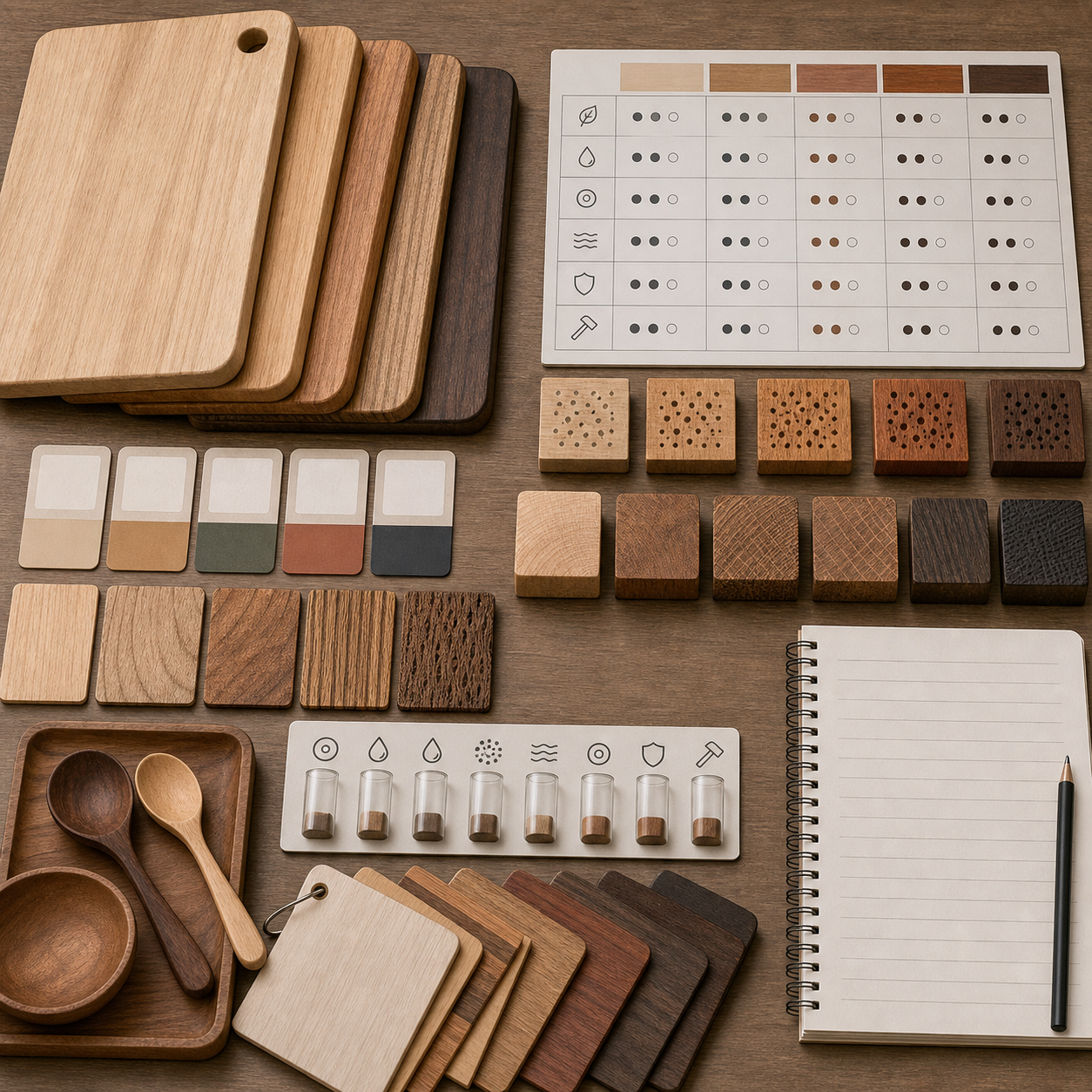
Many buyers start with color. They want a dark board, a warm tray, a light spoon, or a rustic look. Color matters, but it is not enough. Wood species also affects density, pore structure, moisture movement, machining, sanding, finishing, odor, price, and repeat supply. A wood that looks beautiful in one sample may not be stable across a container order.
For cutting boards, I usually think about tight grain, controlled moisture, stable supply, and clean finishing. For tableware, I also think about weight, hand feel, edge comfort, and whether the item will be washed often. If the buyer wants a knife gift set with a matching wooden board or serving accessory, the wood color should match the brand story without making the product too difficult to repeat.
The USDA Forest Service Wood Handbook is a useful reference because it covers wood structure, moisture relations, physical properties, drying, shrinkage, gluing, and finishing. I do not use it to choose one species blindly. I use it to remind buyers that wood is a moving natural material. Species selection should be connected to moisture control, grain direction, machining, and final use.
| Wood decision | Why it matters | Practical check |
|---|---|---|
| Grain and pore structure | Affects cleaning and surface feel | Review real sample surface |
| Density and hardness | Affects durability and machining | Match to cutting or serving use |
| Color stability | Affects repeat orders | Approve range, not one perfect board |
| Supply stability | Affects cost and lead time | Confirm source and batch control |
How Should Moisture Content And Grain Direction Be Controlled?
Wood moves when moisture changes. If buyers ignore this, boards may warp, crack, split, or open at glue lines.
Moisture content and grain direction should be controlled through drying, acclimation, lamination design, thickness planning, sanding, packaging humidity control, and final inspection before shipment.
I Treat Wood Movement As A Design Issue
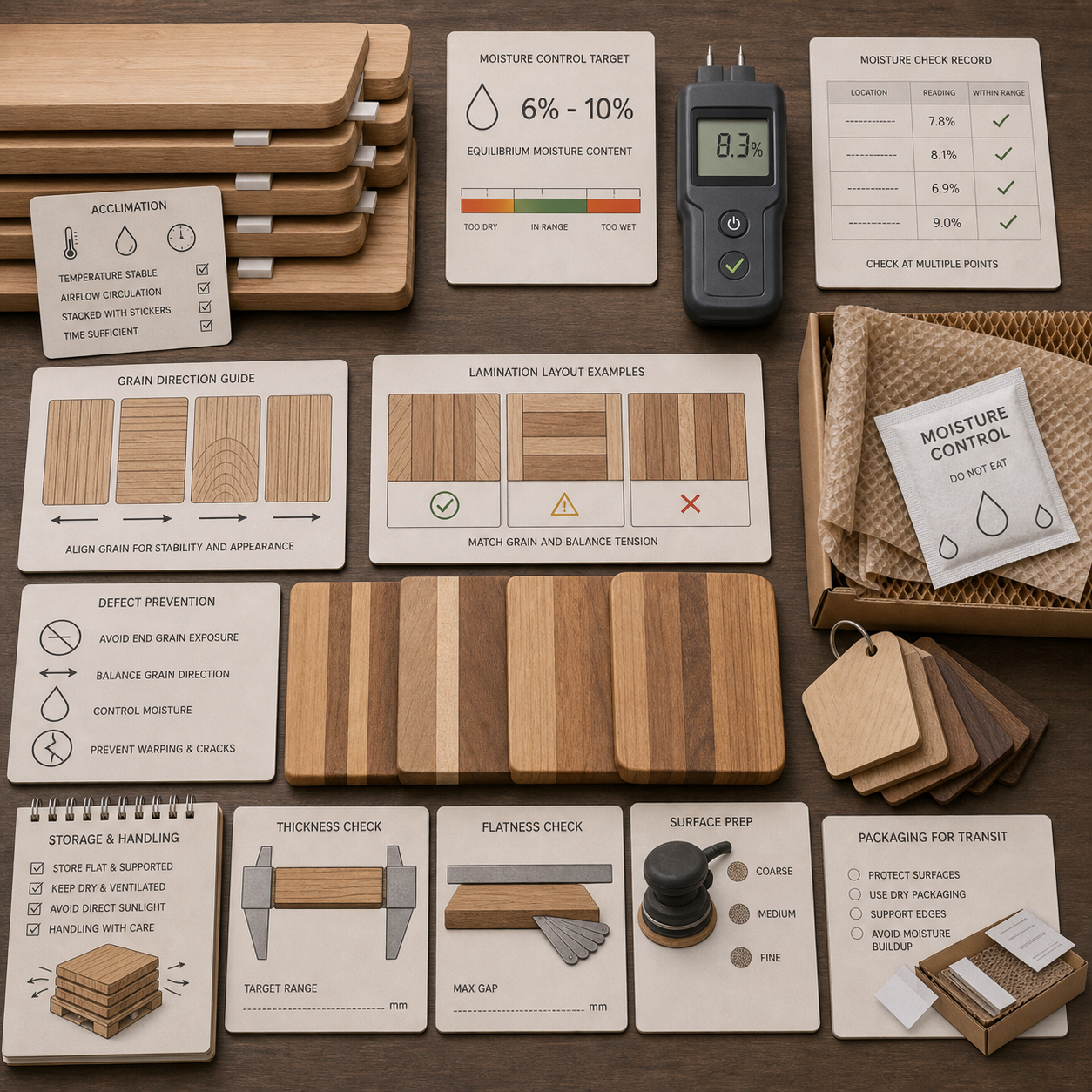
Wood is not plastic. It expands and shrinks with moisture change. It also moves differently along grain directions. If a buyer wants a large board, thick tray, or glued panel, these details become important. A board that is stable in the factory may change after shipping if moisture content, grain orientation, packaging, or storage is not controlled.
The USDA Forest Service chapter on drying and control of moisture content is useful because it connects drying, moisture content, dimensional change, shrinkage, and defects. For B2B sourcing, this means the buyer should not only ask for "good wood." The buyer should ask how the wood is dried, how blanks are stored, how moisture is checked, and what visual defects are rejected.
Grain direction also affects the product. Edge-grain boards, end-grain boards, single-piece boards, and laminated boards have different production risks. End-grain boards can look attractive and protect edges in some uses, but they require careful glue-up, sanding, and finish control. Single-piece boards can look clean but may warp if thickness and moisture are not managed. I prefer to define construction before sample making, then confirm it with inspection points.
| Control point | What can go wrong | Buyer requirement |
|---|---|---|
| Moisture content | Warping, cracking, open joints | Define checking method |
| Grain direction | Uneven movement | Approve construction style |
| Board thickness | Cupping or heavy product | Match size and use |
| Storage and packing | Moisture change before delivery | Add packing and storage rules |
Can Coffee Or Tea Dye Be Used For Custom Wooden Tableware?
Natural staining sounds simple. If the color is not controlled, the batch can look uneven and may raise food-contact questions.
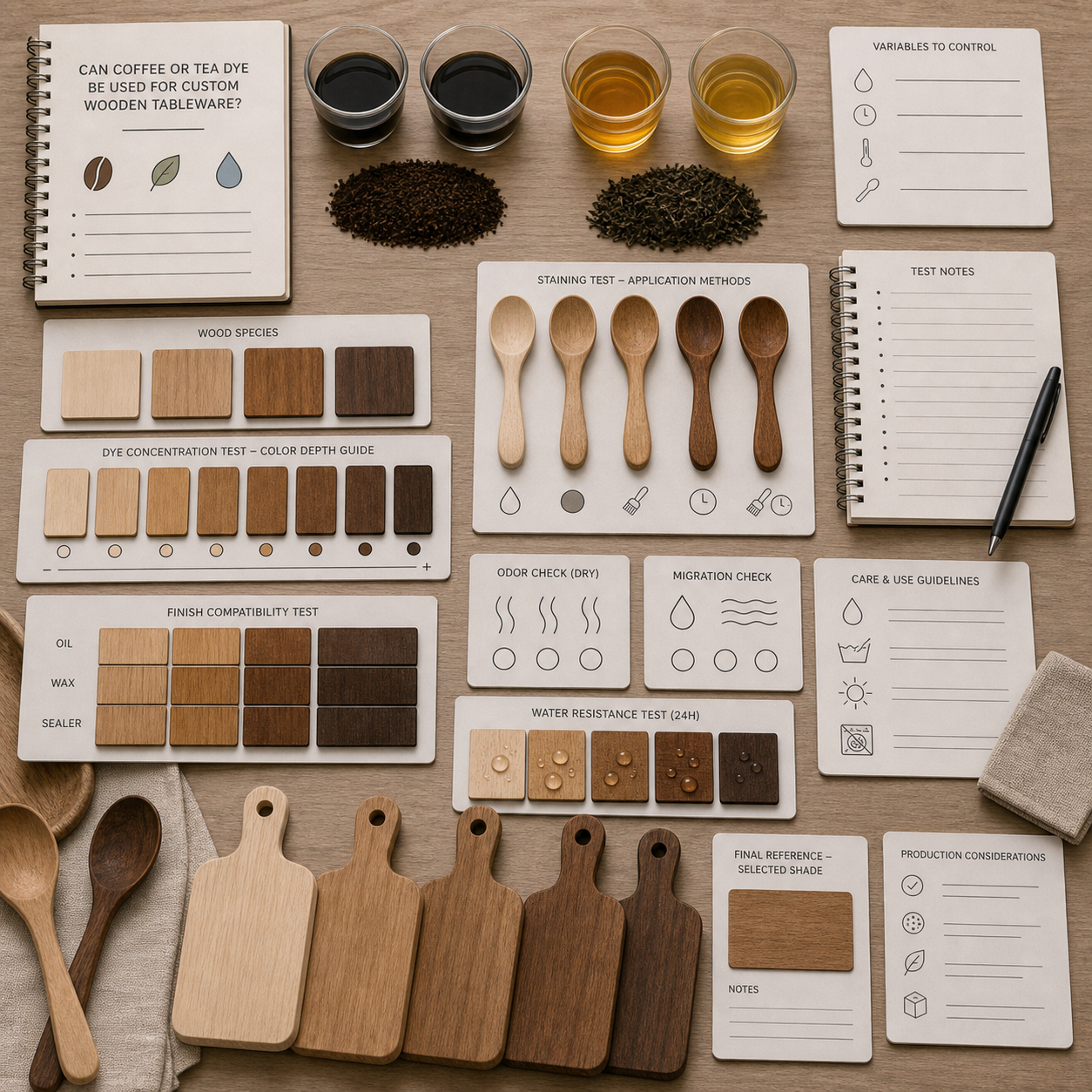
Coffee or tea dye can be used only as an appearance process after food-contact review. Buyers should treat it as color styling, then control stain depth, repeatability, finish sealing, odor, migration risk, and care instructions.
I Separate Natural Color From Verified Safety
Coffee and tea can create a warm brown tone on wood. This may fit a rustic cutting board, gift set, or wooden tableware collection. But I do not treat "natural" as a food-contact approval. A coffee or tea stain is still a process that affects the surface. The buyer should confirm whether the final stained and finished product is suitable for the intended food-contact use and target market.
Color repeatability is also difficult. Coffee concentration, tea type, soaking time, wood species, sanding grit, moisture content, and final oil can all change the color. One sample may look rich and warm. A production batch may look patchy or too dark. This is why I prefer sample panels, approved color ranges, and clear acceptance standards. The buyer should approve a range, not one perfect photo.
Odor and care also matter. A board or spoon should not carry a strong smell into the package. The stain should not rub off after normal handling. The final finish should be compatible with the staining process. If the buyer wants a darker look, sometimes choosing naturally darker wood is more stable than relying on coffee or tea staining. The best choice depends on target price, color tolerance, and food-contact review.
| Dye issue | Why it matters | Buyer control |
|---|---|---|
| Color variation | Natural wood absorbs unevenly | Approve a color range |
| Odor | Packaging can trap smell | Check after drying and packing |
| Surface rub-off | Customer may see transfer | Test handling and wiping |
| Food-contact fit | Natural is not automatic approval | Review final product system |
Which Finish Choices Help Wooden Products Last Longer?
Unfinished wood can dry, stain, and absorb moisture. The wrong finish can also fail or create compliance problems.
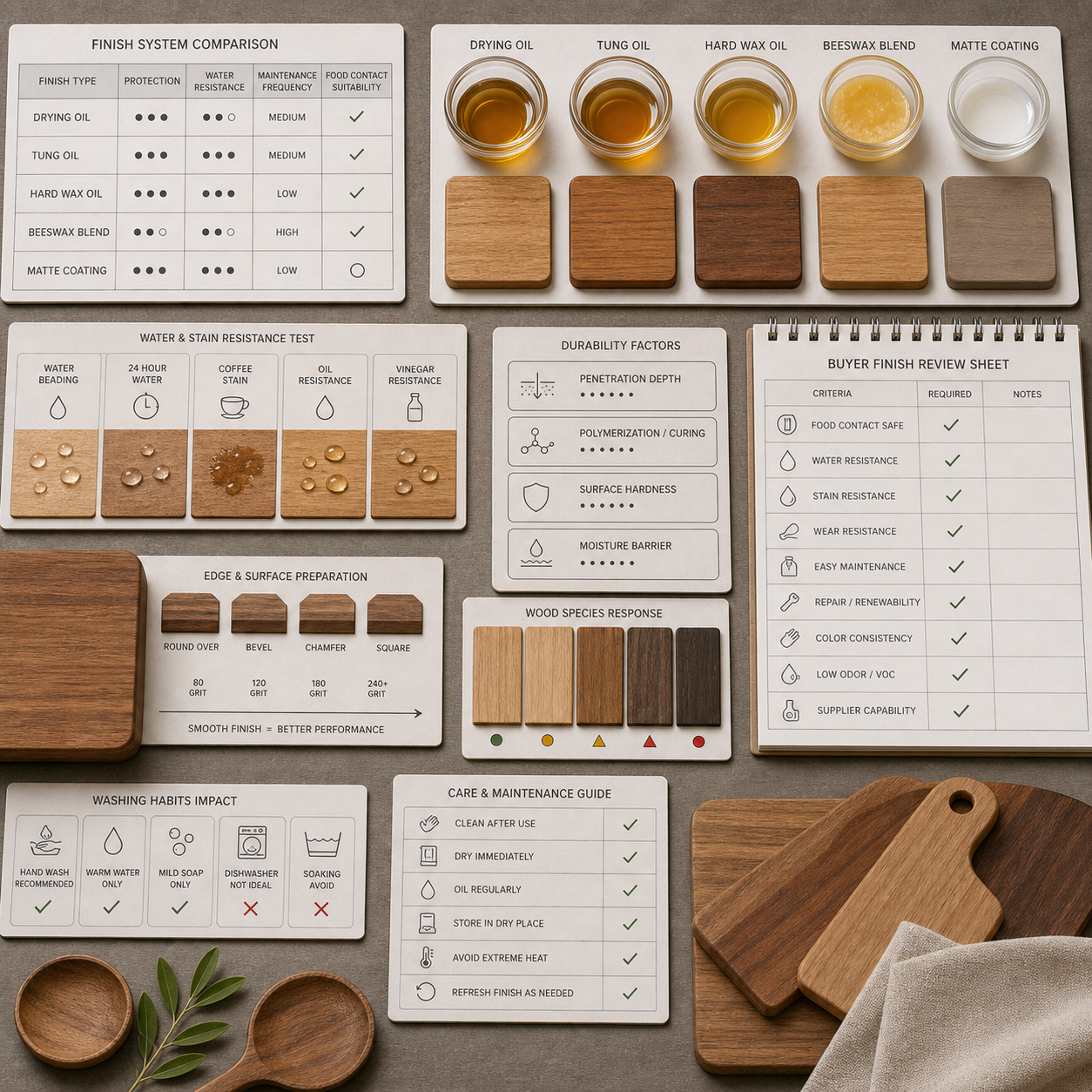
Durable wooden products need a finish system matched to food contact, washing habits, wood species, color, target market, and care instructions. Oil, wax, or coating choices should be documented.
I Build Finish Around The Real Use Pattern
The finish decision should start with how the product will be used and cleaned. A cutting board faces knife marks, moisture, food residue, and repeated washing. A serving tray may face less cutting but more visual inspection. A spoon may touch hot food and liquids. A decorative item may not be used the same way. Each use pattern needs a different finish discussion.
For food-contact items, buyers should ask whether oils, waxes, coatings, pigments, and adhesives are suitable for the target market and condition of use. FDA's page on determining regulatory status of food contact material components gives useful background for U.S. buyers because it explains that components may need to comply with regulations, notifications, or other authorizations. I use that as a reminder to document the full surface system, not only the wood species.
Finish also affects maintenance. Some oil-and-wax systems need reapplication by the user. Some coatings may resist staining better but may not be right for a cutting surface. Sanding grit affects how much finish is absorbed and how smooth the product feels. I like to approve finish samples after drying, wiping, packing, and unpacking. That gives a more realistic view than a fresh sample on a workbench.
| Finish option | Product fit | Buyer should check |
|---|---|---|
| Oil system | Cutting boards and natural feel | Re-oiling instruction |
| Oil and wax | Warmer touch and surface protection | Rub-off and odor |
| Clear coating | Serving or decorative use | Food-contact and cutting suitability |
| Natural wood only | Simple look | Stain and moisture risk |
How Should Care Instructions Be Designed Into The Product?
Many complaints come from misuse. If care instructions are unclear, buyers may blame production for avoidable damage.
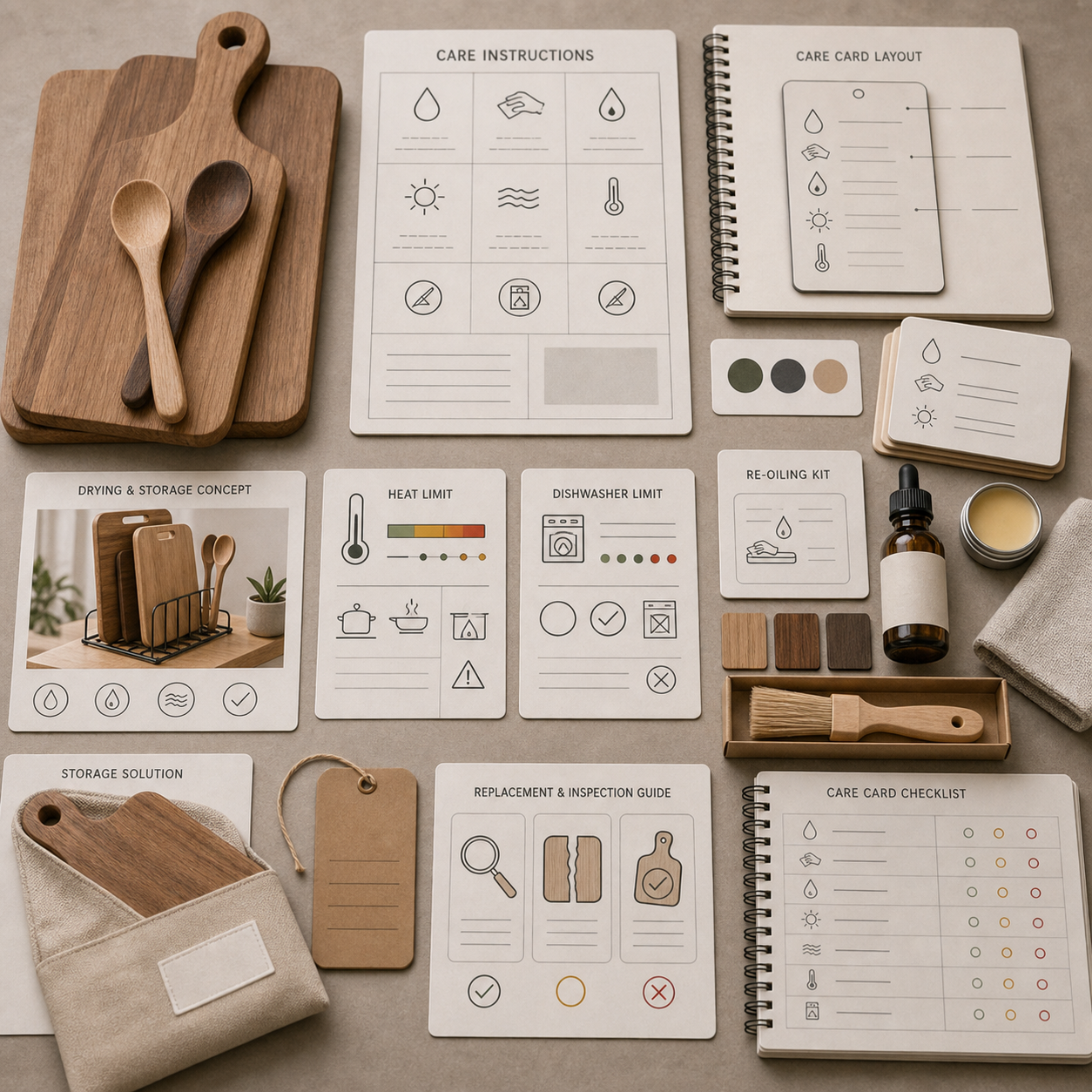
Care instructions should explain washing, drying, separation of food types, re-oiling, heat limits, dishwasher limits, storage, and replacement signs. The care card should match the product design.
I Make Care Part Of The Product Brief
Wooden cutting boards and tableware need clear care instructions. This is not a small afterthought. It is part of product performance. If a customer soaks a board, places it in a dishwasher, dries it near high heat, or uses one board for every food type without proper cleaning, the product can stain, smell, warp, or crack. Good instructions reduce complaints and make the buyer's brand look more responsible.
The USDA FSIS page on cutting boards is useful because it tells consumers that wood or nonporous boards can be used, and it emphasizes separation for raw meat, poultry, seafood, fresh produce, and bread. This supports the need for clear consumer guidance. The FDA Food Code 2022 also gives background on food-contact surfaces and utensils in food service contexts.
For OEM/ODM buyers, the care card should be written before packaging is finalized. The box, insert, hang tag, and user leaflet need enough space. If the product requires re-oiling, the instruction should say that plainly. If the product should not be put in a dishwasher, the instruction should be visible. The design and instruction should match each other.
| Care topic | Why it matters | Product design link |
|---|---|---|
| Washing and drying | Reduces odor and warping risk | Surface finish and care card |
| Food separation | Reduces cross-use risk | Board set or color option |
| Re-oiling | Supports long-term use | Include instruction or accessory |
| Storage | Reduces moisture problems | Packaging and user guide |
How Should Packaging Protect Wooden Tableware During Export?
Wood can leave the factory in good condition and arrive damaged. Moisture, pressure, and rubbing can ruin the first impression.
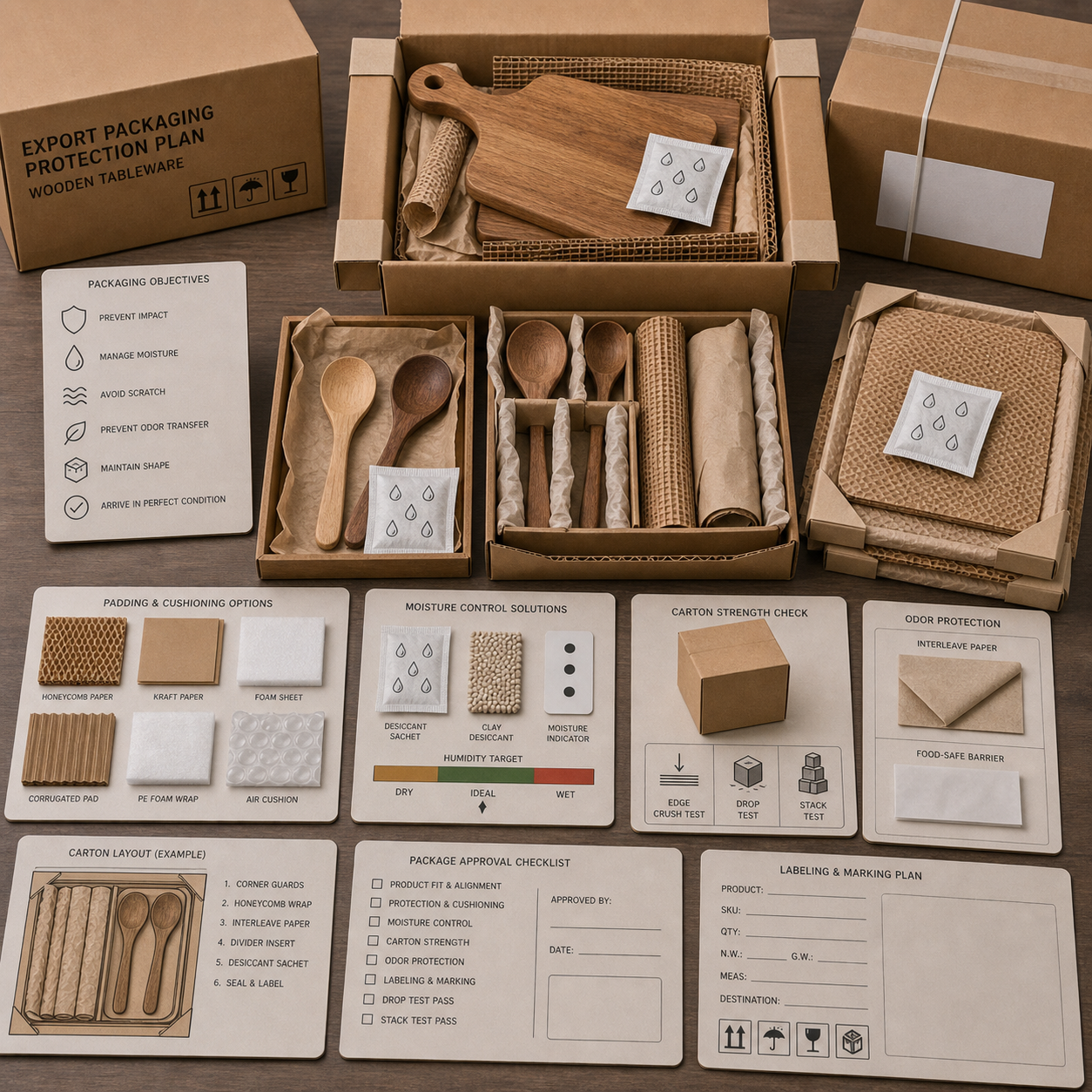
Packaging should protect wooden tableware from moisture change, surface rubbing, corner damage, odor trapping, carton pressure, and label confusion. Buyers should approve packing after real samples are finished.
I Test Packaging With Finished Samples
Packaging for wooden products has two jobs. It must protect the item, and it must present the brand. For cutting boards and tableware, protection comes first. A board can be scratched by a label edge, dented by another board, stained by trapped moisture, or damaged by carton pressure. A spoon can rub against a tray and create marks. A dark stained item can transfer color if it is not fully dried and sealed.
Transport packaging also deserves attention. ISO 4180 gives context for performance test schedules for complete filled transport packages. It does not prove any package is strong by itself, but it reminds buyers that packaging is a testable part of the product system. I like to check carton strength, inner protection, stacking direction, moisture control, and whether finished samples survive unpacking cleanly.
Marking and import labels also matter. For U.S.-related shipments, 19 CFR 134.43 includes knives among specific articles, but wooden tableware and boards still need origin marking review under the broader rules. CBP's country-of-origin marking guidance is useful background. Buyers should confirm final marking needs with their own advisor and target market.
| Packaging risk | What can happen | Buyer control |
|---|---|---|
| Moisture change | Warping or odor | Drying and packing check |
| Surface rubbing | Scratches and color transfer | Sleeve, wrap, or insert |
| Carton pressure | Corner dents or cracks | Carton and stacking design |
| Marking gaps | Customs or retail issues | Confirm label needs early |
What RFQ Details Help Suppliers Quote Custom Wooden Tableware Accurately?
A vague wooden product RFQ creates vague samples. Buyers need details that connect appearance, safety, durability, and cost.
An RFQ should include product type, wood species, size, thickness, construction, moisture target, finish, dye, glue, food-contact market, packaging, care card, target price, MOQ, inspection standards, and sample deadline.
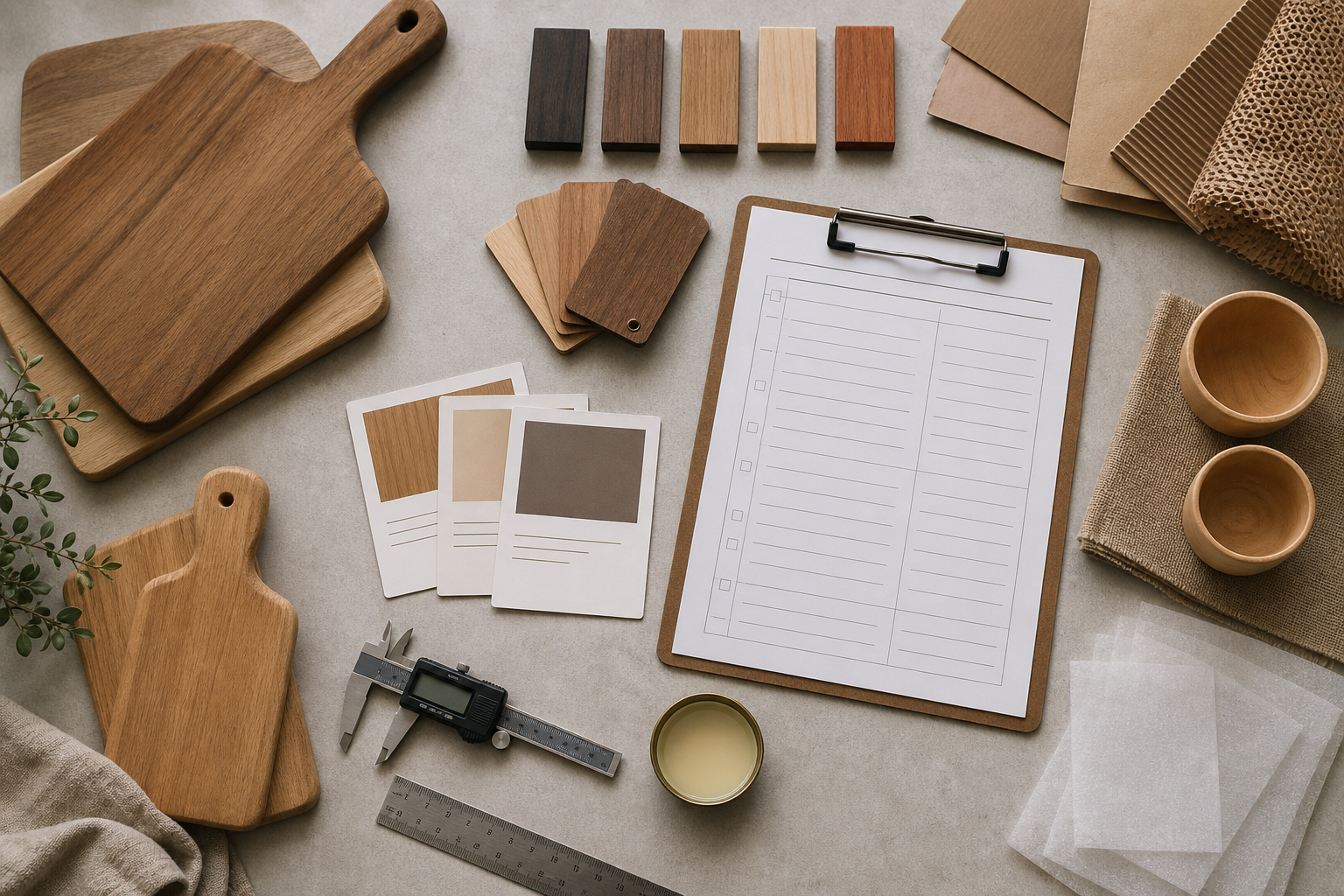
I Ask Buyers To Define Use And Risk First
For custom wooden cutting boards and tableware, I want the RFQ to define the product's real use before discussing color. Is it a cutting board, serving board, spoon, tray, paddle, gift-set accessory, or decorative piece? Will it touch hot food, wet food, oily food, or raw ingredients? Will it be sold in the U.S., EU, or another market? These answers shape the material and finish plan.
Then I ask for construction details. The buyer should define size, thickness, edge shape, handle hole, groove, lamination style, wood species, color range, dye method, finish system, logo method, packaging, care card, and inspection needs. If the buyer wants coffee or tea dye, the RFQ should include color tolerance, odor requirement, rubbing check, and final food-contact review. If the buyer wants a long-life product, moisture and packaging controls should be included from the start.
Commercial details are also important. Target price, MOQ, sample deadline, order schedule, packaging level, and market channel affect the design. A low-cost board and a gift-ready board should not use the same specification. The strongest RFQ gives the supplier enough detail to suggest practical options instead of guessing.
| RFQ field | What to provide | Why it helps |
|---|---|---|
| Product use | Cutting, serving, spoon, tray, gift | Defines risk and structure |
| Material and finish | Wood, glue, dye, oil, wax, coating | Supports accurate sample plan |
| Quality target | Moisture, warping, sanding, color | Protects repeat production |
| Commercial target | Price, MOQ, channel, packaging | Keeps development realistic |
Turn your idea into a quote-ready knife project.
Share your drawing, sample photo, target quantity, market, and packaging needs. Vast State will review manufacturability and prepare OEM/ODM options.
Conclusion
I specify durable wooden boards and tableware by controlling food-contact review, wood movement, finish, care instructions, packaging, QC, and RFQ details.
Source Notes
- FDA Food Contact Substances and EU food contact legislation support food-contact review.
- USDA Forest Service Wood Handbook and moisture control chapter support wood movement and drying discussion.
- USDA FSIS cutting board guidance supports care and separation guidance.
- FDA Food Code 2022 gives food-contact surface and utensil context.
- ISO 4180, 19 CFR 134.43, and CBP origin marking guidance support packaging and marking context.