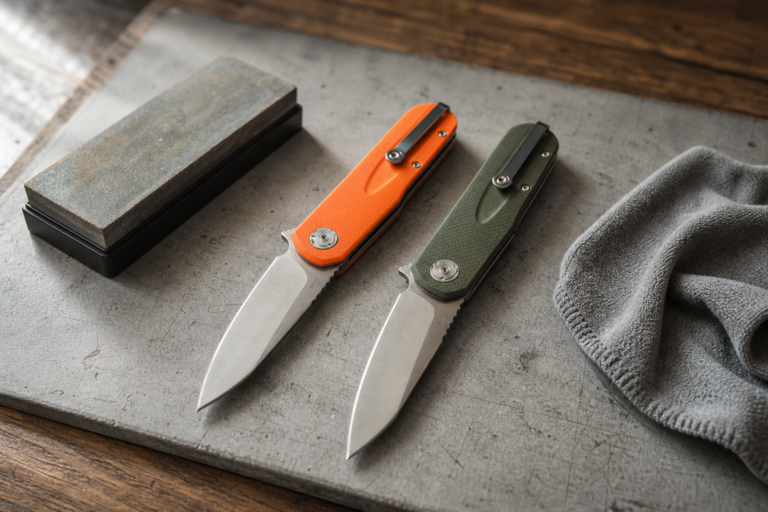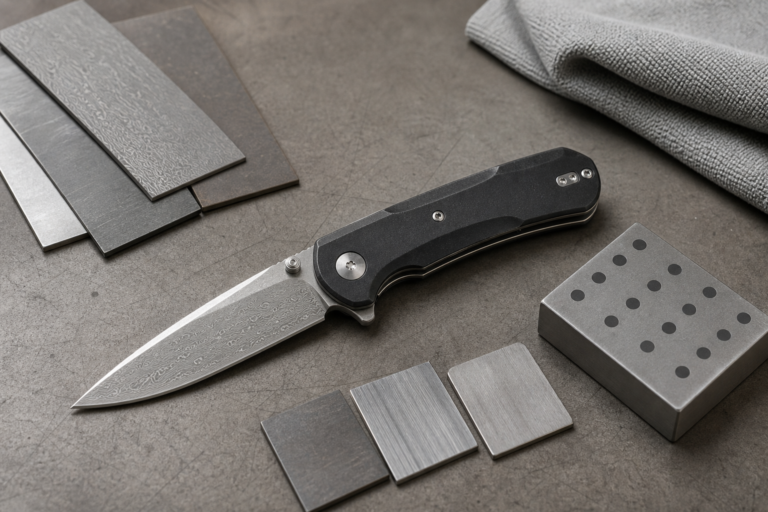
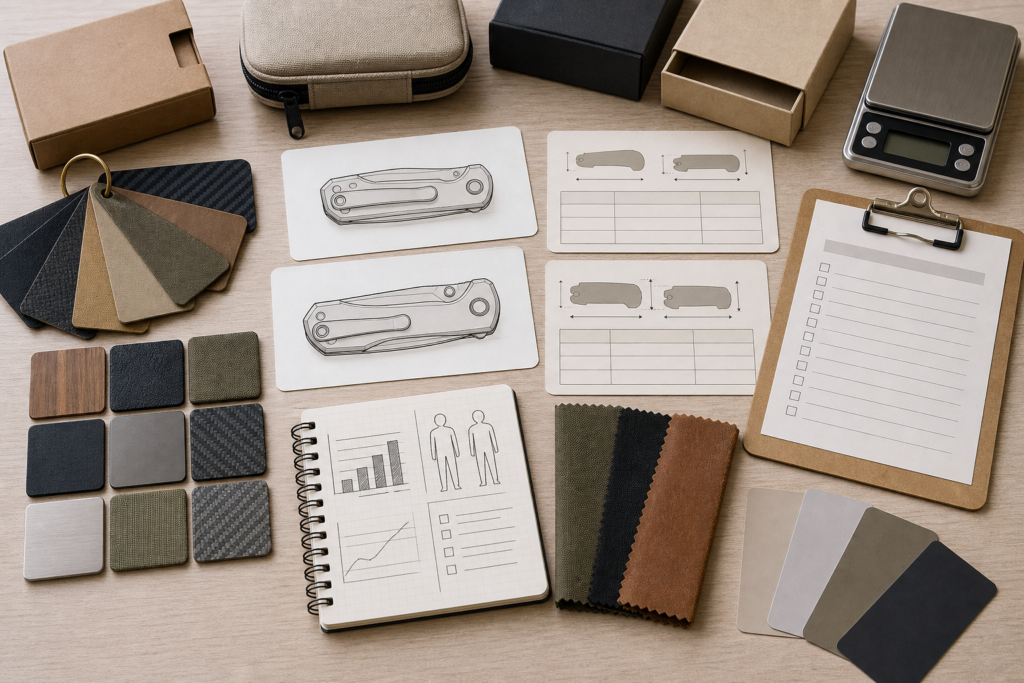
Small knives can feel easy to sell, and larger knives can look more capable. But wrong sizing creates cost, comfort, and market problems.
Buyers should choose between small and larger EDC knives by matching user tasks, pocket comfort, blade length, handle grip, weight, lock strength, steel choice, target price, packaging, market rules, and inspection needs. The right size is the size that fits the buyer's product position and repeat production plan.
Quick buyer brief:
- Answer: Choose EDC size by user scenario, product tier, structure, and market fit.
- Buyer context: This helps knife brands, outdoor brands, importers, wholesalers, distributors, and private label buyers.
- Key checks: Blade length, closed size, weight, handle grip, lock type, steel, HRC range, pocket clip, packaging, target market, and QC records.
Developing a folding knife line for your brand?
Vast State supports OEM/ODM folding knife projects, including blade steel, lock structure, handle material, finish, logo method, packaging, and quality inspection planning.
When a buyer asks whether a small knife or a larger knife is better for everyday carry, I do not answer with one fixed size. I ask about the product's real user, price range, sales channel, and target market. A compact EDC knife may be easier to carry and cheaper to pack. A larger EDC knife may give more grip and cutting length. Both can be good products. Both can also fail if the size does not match the buyer's promise.
Why Should EDC Knife Size Start With Target User And Market?
Knife size looks like a simple spec. If the target user is unclear, the same size can feel useful, awkward, too costly, or hard to sell.
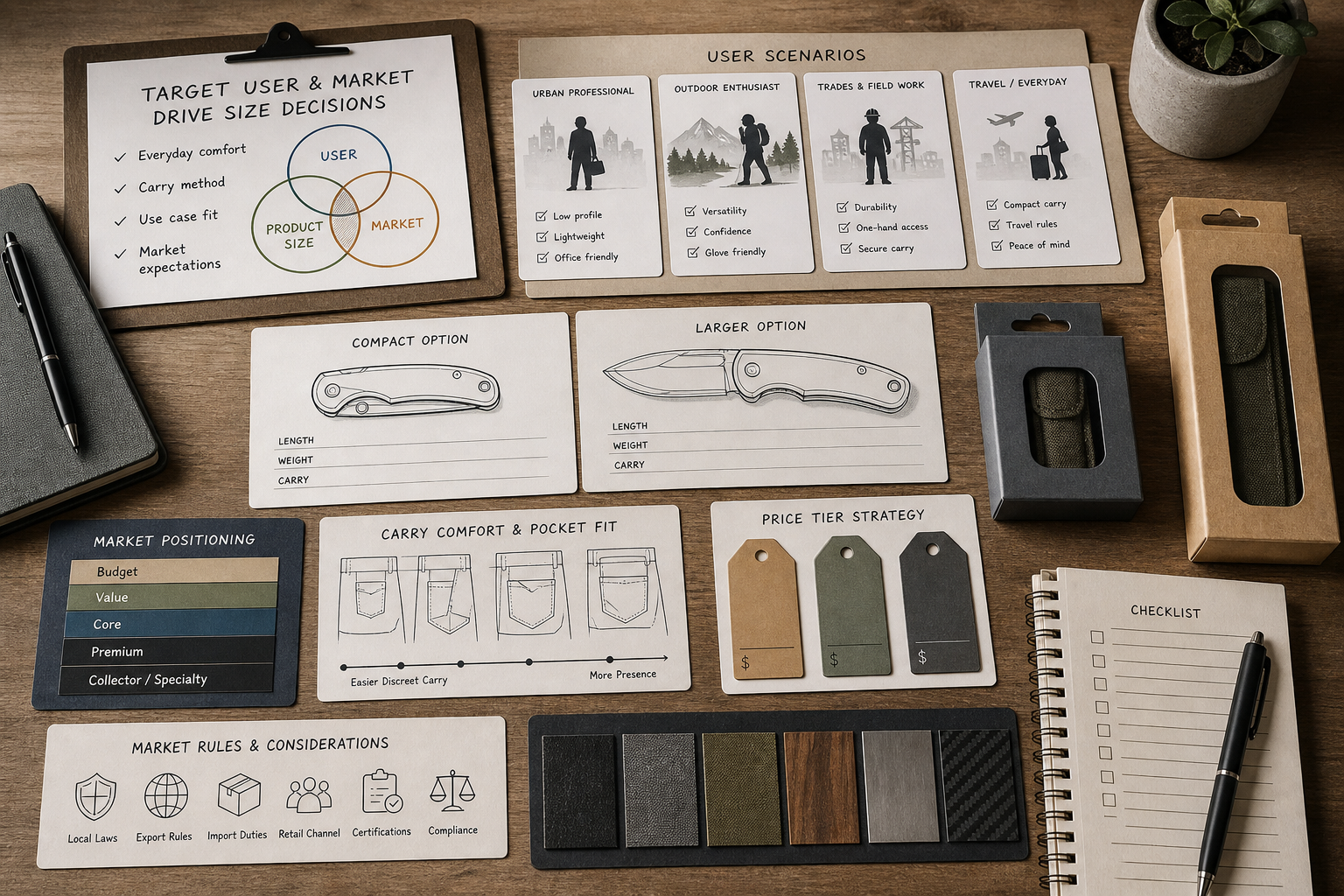
EDC knife size should start with target user and market because daily tasks, pocket habits, local rules, retail price, packaging style, and brand position all change the right blade length, handle length, and weight.
I Define The Product Promise Before The Dimension
I treat size as a business decision, not only an engineering number. A small EDC knife can be right for a keychain-style line, a compact retail set, a gift item, or a low-weight pocket product. A larger EDC knife can be right for outdoor users, work-focused utility, camping channels, or buyers who want a stronger hand feel. But the size only makes sense when it supports a clear product promise.
For B2B buyers, the target market matters early. A knife brand may want a pocket-friendly model for general utility. An outdoor brand may want a more secure handle and longer cutting edge. A distributor may need a lower-cost model that fits standard packaging and stable MOQ. A private label buyer may need a size that looks good in photos but still feels practical after real use.
I also ask buyers to check local laws, retailer rules, and platform rules before locking blade length. I do not give legal advice in product development. I do ask buyers to confirm target-market limits before tooling, packaging, and marketing copy are approved. This protects the project from late redesigns.
| Sizing factor | What I ask | Why it matters |
|---|---|---|
| Target user | Urban daily user, outdoor user, gift buyer, or work user | It guides size and structure |
| Sales channel | Retail, online, wholesale, or private label | It affects packaging and price |
| Target market | Country or region | It affects rule review and label planning |
| Product promise | Compact carry or stronger utility | It guides blade, handle, and lock choices |
OEM/ODM RFQ Checklist
Prepare these details to help Vast State review your project and provide a more accurate quotation.
| RFQ Field | What to Prepare |
|---|---|
| Project type | OEM from drawing / ODM private label / wholesale catalog |
| Product category | Folding knife / fixed blade / multi-tool / outdoor tool |
| Design status | Idea / sketch / 2D drawing / 3D CAD / physical sample |
| Target price | Ex-factory target price or retail price range |
| MOQ expectation | 500 / 1,000 / 3,000 / 5,000+ pcs |
| Logo method | Laser engraving / etching / printing / molded logo |
| Packaging | Standard packaging / custom retail box / Amazon-ready |
| Market | USA / EU / Japan / Korea / Middle East / other |
| Compliance needs | Buyer-specified testing / documentation / labeling |
| Timeline | Sample deadline / mass production deadline |
When Does A Small EDC Knife Make Better Commercial Sense?
A small knife can be attractive because it feels easy to carry. But it still needs enough grip, action, and perceived value.
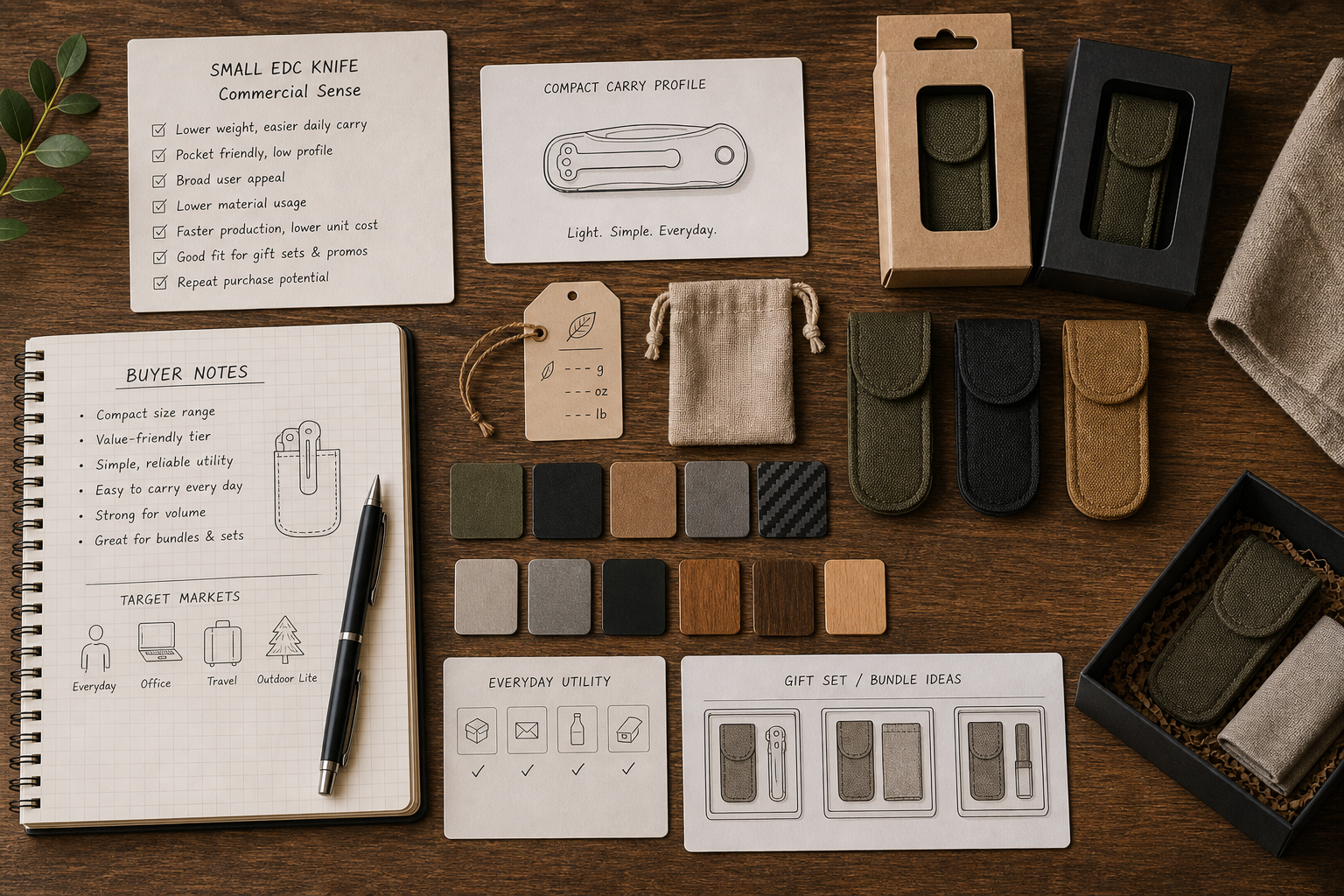
A small EDC knife makes better commercial sense when the buyer wants pocket comfort, lower weight, lower material cost, compact packaging, simple daily utility, gift-set use, or a value-friendly product tier.
I Use Small Size When Carry Comfort Is The Selling Point
Small EDC knives often work well when the product promise is easy carry. They can fit lower weight targets, smaller packaging, simpler shipping cartons, and value-focused price points. They can also work well in gift sets, keychain-style assortments, and entry-level private label ranges. For many buyers, a compact model is a good way to enter the EDC category before building a wider line.
But small does not mean careless. A small handle can become uncomfortable if the edges are too sharp or the grip area is too short. A small blade can feel weak if the geometry is too thin or the heat treatment is not controlled. A tiny pocket clip can look neat but feel unstable if the tension is wrong. A small lock can require careful tolerance control because there is less room for adjustment.
I also think about perceived value. A small knife may use less material, but buyers still expect clean action, consistent finish, safe closing, and a useful edge. If the product feels toy-like, the lower cost will not save the brand. I prefer compact models that are simple, stable, and honest about their role.
| Small knife advantage | Buyer value | Risk to control |
|---|---|---|
| Lower weight | Better pocket comfort | Handle may feel too short |
| Smaller package | Lower packaging volume | Retail presence may feel weak |
| Lower material use | Better cost control | Perceived value may drop |
| Simple daily role | Easy product story | Blade must still cut well |
When Does A Larger EDC Knife Fit The Product Brief Better?
A larger knife can look more capable. It can also become heavy, costly, or harder to position if the brief is unclear.
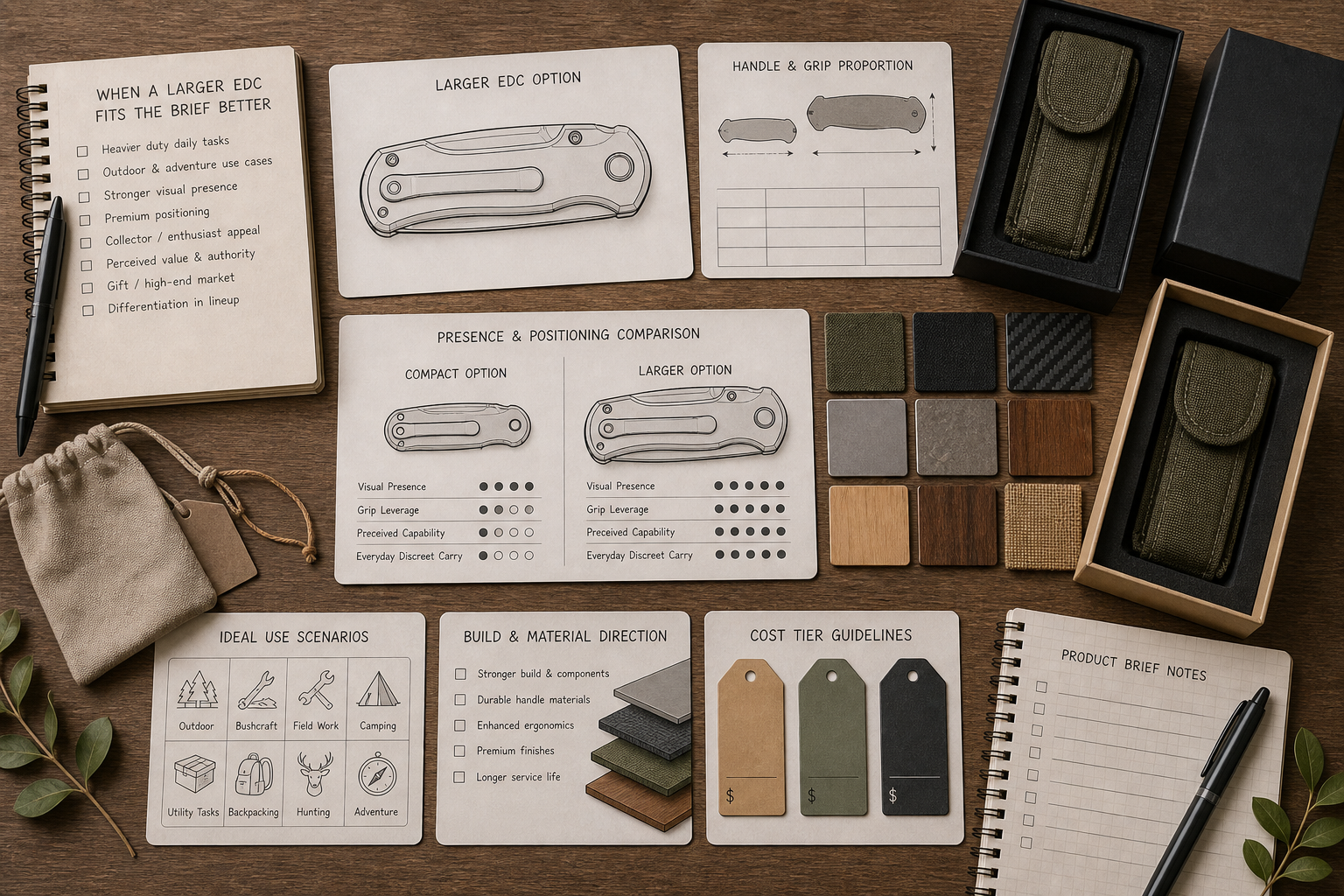
A larger EDC knife fits better when the buyer needs more handle grip, longer cutting edge, outdoor utility, stronger visual presence, higher perceived value, or a mid-range product tier with better materials and packaging.
I Use Larger Size When The User Needs More Control
Larger EDC knives can make sense when the buyer's customers need more grip and cutting length. Outdoor users, camping customers, and work-focused buyers may prefer a handle that fills the hand better. A larger blade can also support more visible product value in a retail package. If the buyer wants a core or upgraded product tier, a larger size can give more room for better materials, refined machining, and branding details.
The tradeoff is cost and control. Larger knives use more blade steel, more handle material, larger packaging, and often more assembly time. They may also need stronger lock geometry, more careful blade centering, and better screw torque control. If the size grows but the budget does not, the buyer may have to compromise on steel, finish, packaging, or inspection.
Weight is another issue. A sample can feel impressive during a short review. It may feel too heavy after daily pocket carry. I like to weigh samples and compare them against the buyer's user scenario. I also test the pocket clip and handle shape because larger products can create pressure points if the clip is too stiff or the handle edges are not refined.
| Larger knife benefit | Buyer value | Production concern |
|---|---|---|
| More handle grip | Better control in use | More machining and fitting |
| Longer edge | More cutting reach | Higher steel and grinding cost |
| Stronger retail presence | Higher perceived value | Larger packaging and display needs |
| More design space | Better branding and material options | More version control required |
How Do Blade Length, Handle Length, And Weight Change User Experience?
The user feels size through the hand and pocket. If the balance is wrong, the knife may look right but feel wrong.
Blade length, handle length, and weight change user experience by affecting cutting reach, grip comfort, pocket comfort, opening leverage, blade centering, package size, and the user's sense of product value.
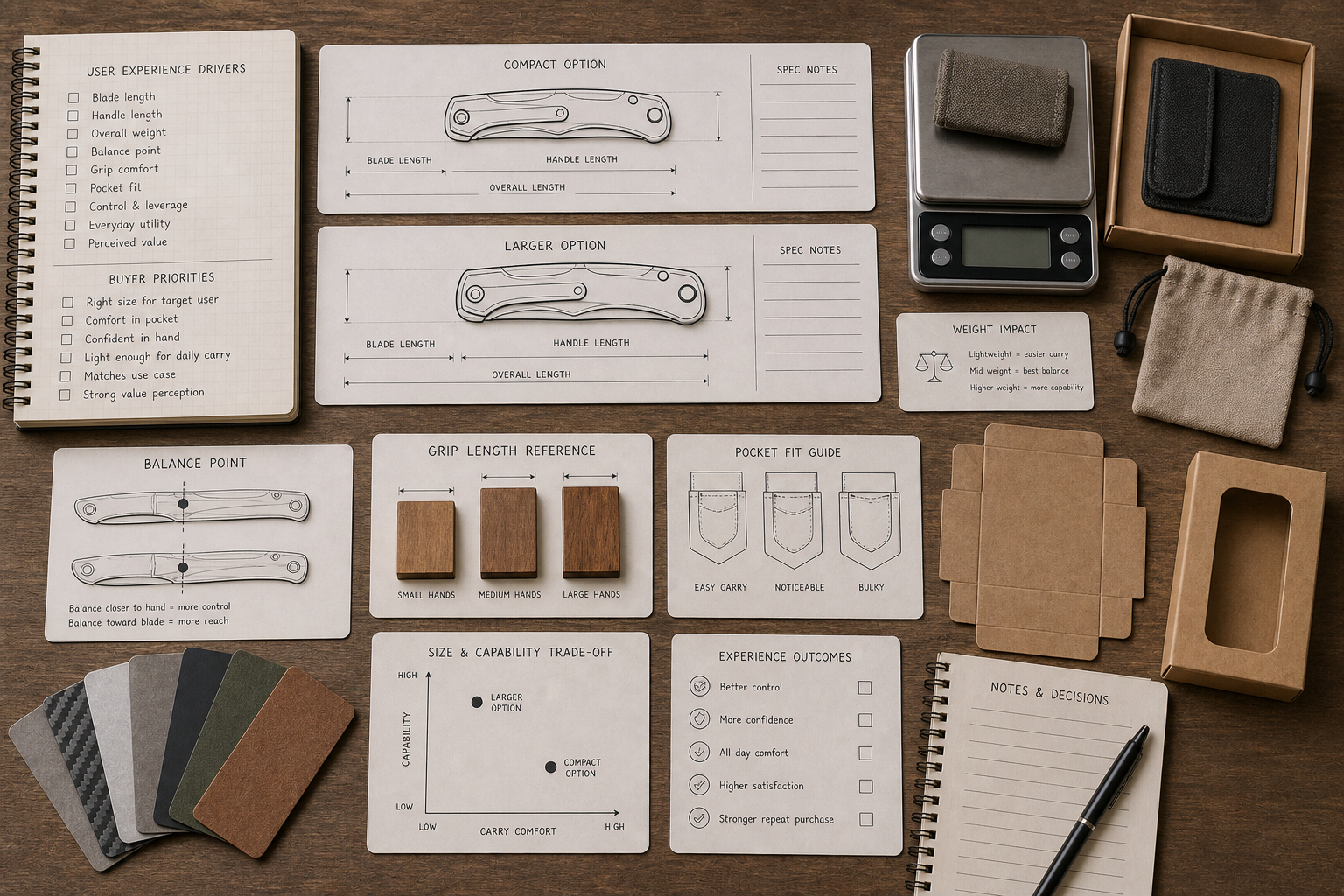
I Check Carry Feel And Work Feel Separately
I separate two feelings when I review EDC size. The first is carry feel. The knife should sit comfortably in the pocket, bag, or package role the buyer expects. The second is work feel. The knife should provide enough handle contact and blade control for its daily utility tasks. A knife that carries well but feels weak in use may disappoint. A knife that works well but feels heavy in pocket may also miss the target.
Ergonomics matters here. The Canadian Centre for Occupational Health and Safety page on hand tool ergonomics gives useful general guidance about hand tool design, including handle shape, grip, and tool fit. It is not a knife-specific design rule, but it supports the idea that handle comfort and user fit are practical design concerns.
Blade length affects cutting reach and visual impression. Handle length affects grip security and pocket space. Weight affects daily carry comfort and perceived quality. Closed size affects packaging and retail display. These details should be measured on real samples, not judged only from drawings.
I also look at balance. A small blade with a heavy handle can feel strange. A long blade with a thin handle can feel unstable. A well-balanced EDC knife should feel intentional.
| Dimension | User-facing effect | Factory check |
|---|---|---|
| Blade length | Cutting reach and visual value | Profile, grind, and closing safety |
| Handle length | Grip and comfort | Edge radius, scale fit, and screw layout |
| Weight | Pocket comfort and perceived quality | Material selection and balance |
| Closed size | Carry and packaging | Clip position and retail fit |
How Should Steel, Heat Treatment, And Edge Geometry Change With Size?
Changing size changes stress, grinding, and cost. A small and larger knife should not always share the same blade plan.
Steel, heat treatment, and edge geometry should change with size when blade thickness, cutting task, price tier, corrosion need, grind depth, and edge stability require different process controls.
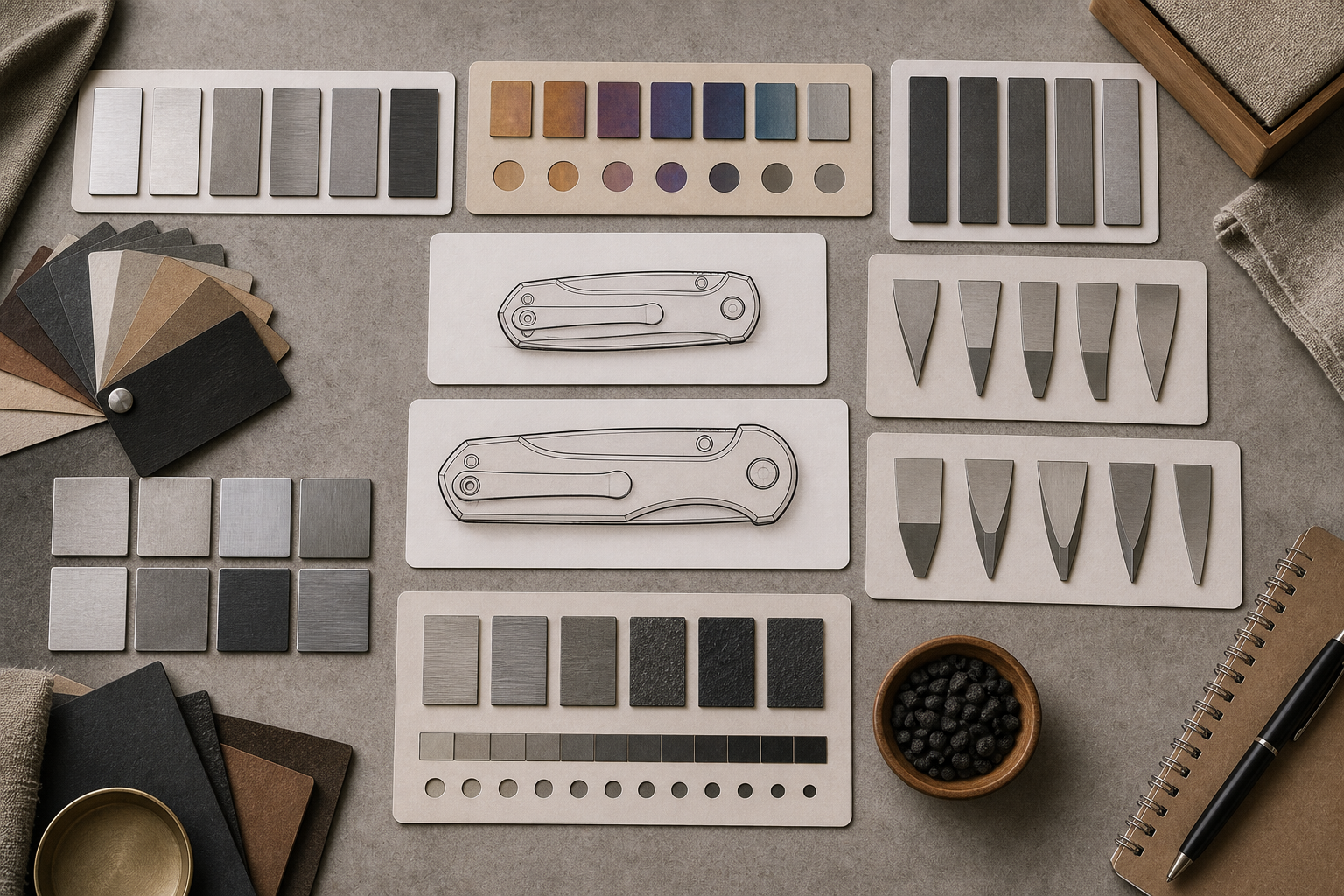
I Link Blade Size To Process Control
Small and larger knives often need different thinking around steel and edge geometry. A compact knife may use a thinner blade and simpler grind. That can support pocket comfort and cost control. A larger knife may use more steel and a longer grind. That can improve cutting reach but also increases grinding time, heat control needs, and finish inspection work.
Steel choice should still match the product tier. Alleima 14C28N knife steel is a useful official example because it is positioned for knife applications where edge performance, high hardness, and good corrosion resistance matter. I use it as an example of how buyers can connect steel data with product positioning. I do not treat one steel as the answer for every size.
Hardness also needs discipline. The NIST Rockwell hardness measurement guide supports the need for good measurement practice. In production, I prefer a realistic HRC range, steel-specific heat treatment, and batch records. A larger blade may need extra attention to straightness and grind consistency. A small blade may need careful edge finishing because small errors are easy to feel.
The edge should fit use. A small daily knife should cut cleanly without becoming fragile. A larger outdoor EDC knife may need a slightly more robust edge, depending on the buyer's target user. The RFQ should say this plainly.
| Size-related blade issue | Small EDC focus | Larger EDC focus |
|---|---|---|
| Steel grade | Cost and corrosion balance | Edge stability and product tier |
| HRC range | Repeatable daily utility | Strength, straightness, and consistency |
| Edge thickness | Easy cutting in small tasks | More robust outdoor utility |
| Grind control | Clean finish at small scale | Heat and symmetry over longer edge |
Which Lock, Pivot, Clip, And Handle Details Need Extra Attention?
Size changes the mechanical feel of a folding knife. The same lock idea can behave differently on small and larger models.
Lock, pivot, clip, and handle details need extra attention because knife size changes leverage, screw spacing, lock contact, blade centering, pocket feel, opening smoothness, and assembly tolerance.
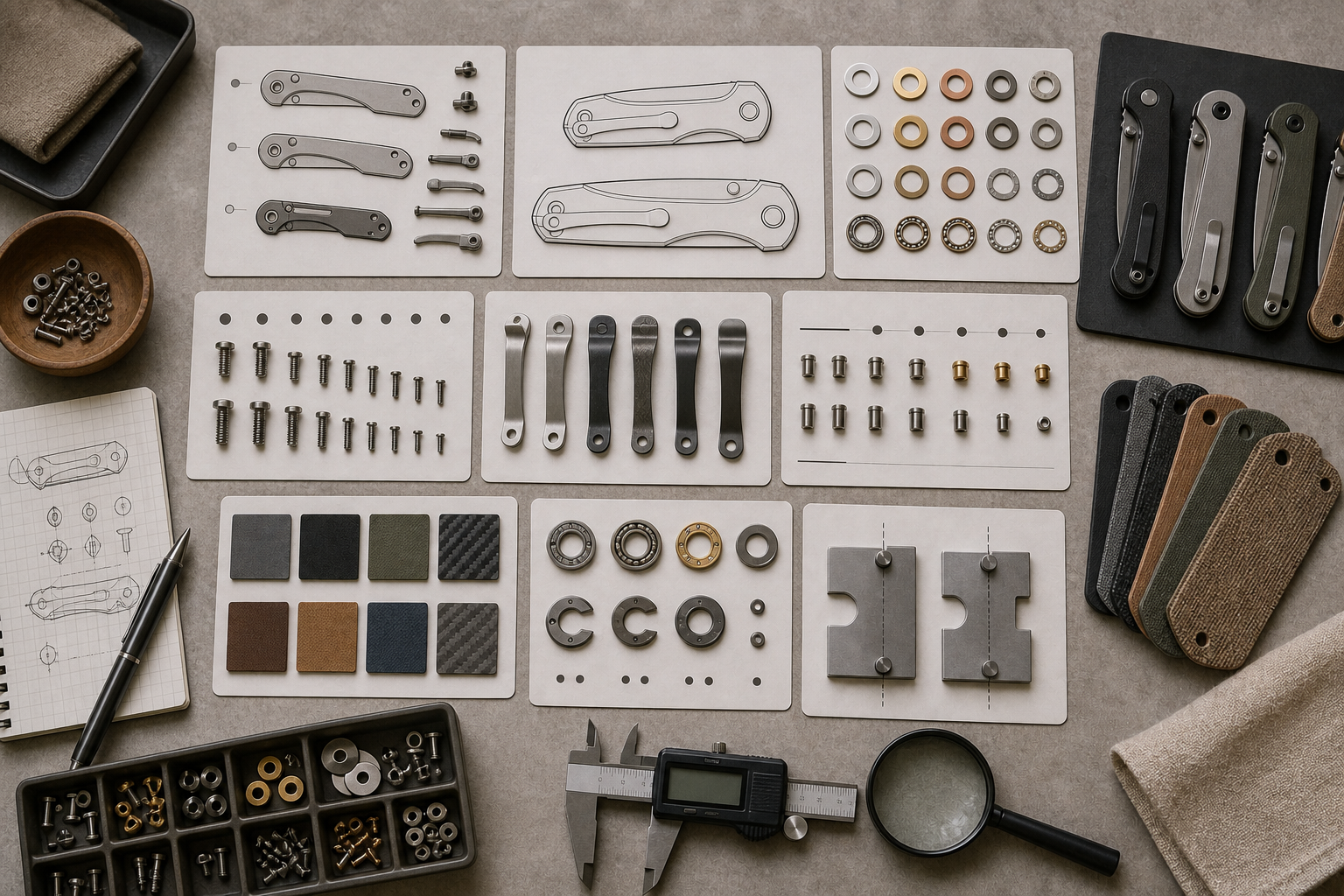
I Inspect The Moving System As A Whole
In a small folding knife, the parts are compact. The lock area, pivot, screws, and handle scales have less room. Small errors can make the knife feel stiff, loose, or hard to assemble. In a larger folding knife, the blade has more leverage. The pivot, stop pin, lock surface, and handle structure must control that movement well. This is why I do not assume one structure works the same across all sizes.
The lock should fit the product level. A liner lock may be cost-effective and familiar, but it needs stable engagement. A frame lock can feel solid, but it changes handle design and finish needs. A back lock can suit some product positions, but it needs precise fitting. Button-style structures or other mechanisms can create selling points, but they also add process controls. The buyer should choose a lock for user experience and repeat production, not only novelty.
Pocket clip details change with size too. A compact knife may need a smaller clip that does not overwhelm the handle. A larger knife needs clip tension that holds the weight without making carry uncomfortable. Clip screws, finish, and packaging protection should be inspected because clip scratches are easy to notice.
Handle shape should match hand use. I check edge radius, scale fit, screw placement, texture, and clip contact. The user's hand does not care how nice the CAD file looks. It cares how the product feels.
| Detail | Small model concern | Larger model concern |
|---|---|---|
| Lock contact | Limited space for fitting | More blade leverage to control |
| Pivot system | Small tolerances feel obvious | Smooth action under more weight |
| Pocket clip | Clip may dominate handle | Clip must hold heavier product |
| Handle shape | Enough grip length | Comfort over longer body |
How Should Packaging, Marking, And Compliance Review Change By Size?
Packaging is often planned late. Size changes carton, display, label, care card, and import marking decisions.
Packaging, marking, and compliance review should change by size because small knives and larger knives need different retail presentation, protection, label space, origin marking review, shipping carton layout, and target-market checks.
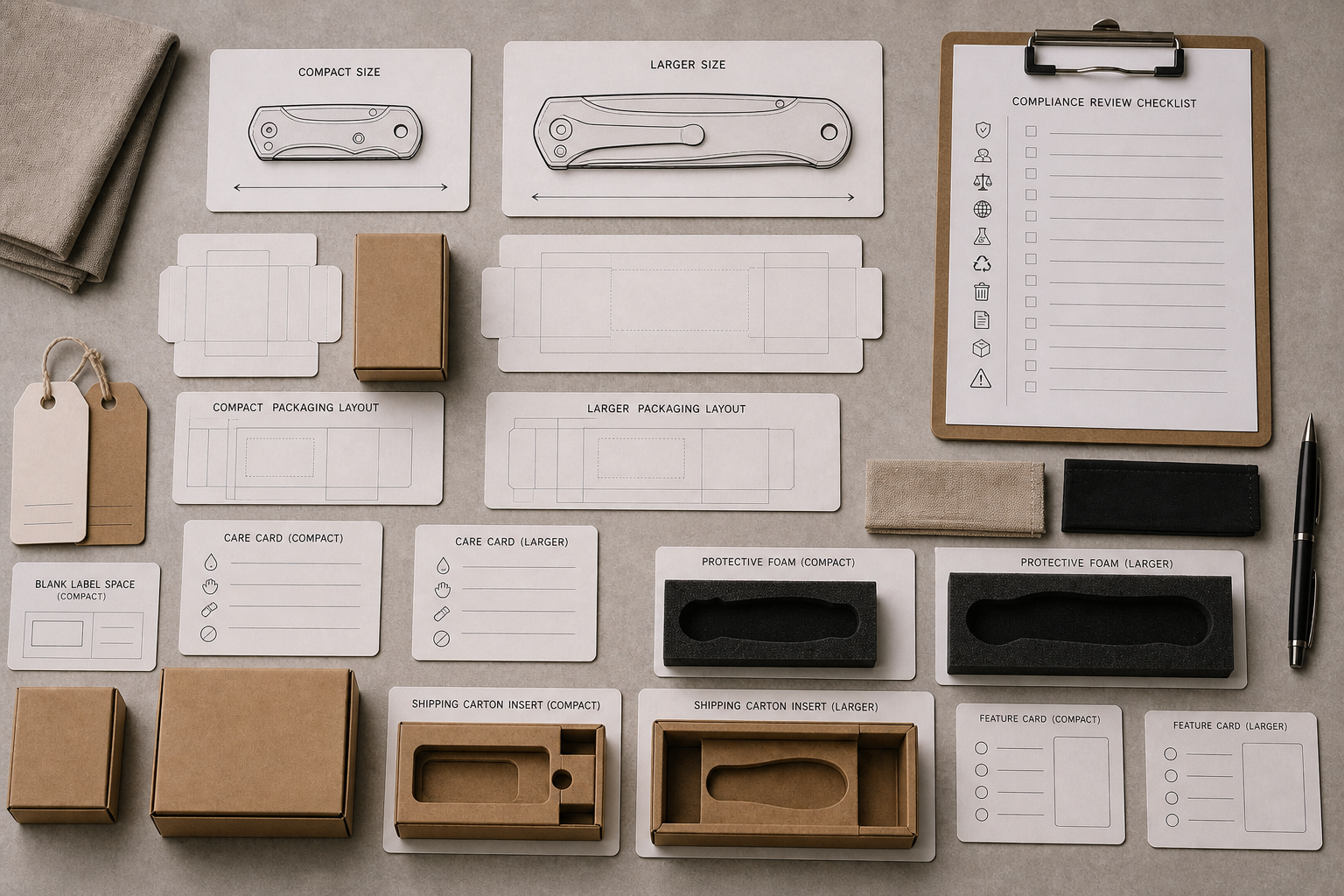
I Treat Packaging As Part Of The Size Decision
Small knives can use compact packaging, but they may need stronger visual presentation to avoid looking too minor on the shelf. Larger knives can create stronger retail presence, but they require bigger boxes, stronger inserts, and more carton planning. Packaging affects cost, shipping volume, damage risk, and the buyer's first impression.
I also review how the knife sits inside the package. A clip can rub against the insert. A blade tip area may need protection even when the knife is closed. A larger product may shift inside a loose box. A small product may look lost if the package is too large. These problems are simple to prevent when packaging is tested with finished samples.
Marking and market review should happen before mass production. The U.S. Customs and Border Protection page on country-of-origin marking provides useful context for import marking review. It does not replace buyer-side compliance work, but it reminds buyers to plan origin marking, item description, and packaging labels early.
For transport packaging, ISO 4180 provides context for performance test schedules for complete filled transport packages. It does not prove one package will pass every shipment condition. It supports the idea that packaging can be planned and tested as part of the product system.
| Packaging topic | Small knife issue | Larger knife issue |
|---|---|---|
| Retail presence | May look too small | Can look stronger but costs more |
| Insert design | Product may move in box | Weight needs better support |
| Label space | Limited claim and care space | More room but more compliance review |
| Carton layout | Efficient packing | Higher volume and protection needs |
What RFQ Details Help Suppliers Quote Small And Larger EDC Knives Accurately?
Vague size requests create vague samples. A supplier needs clear use, size, material, and price details to quote well.
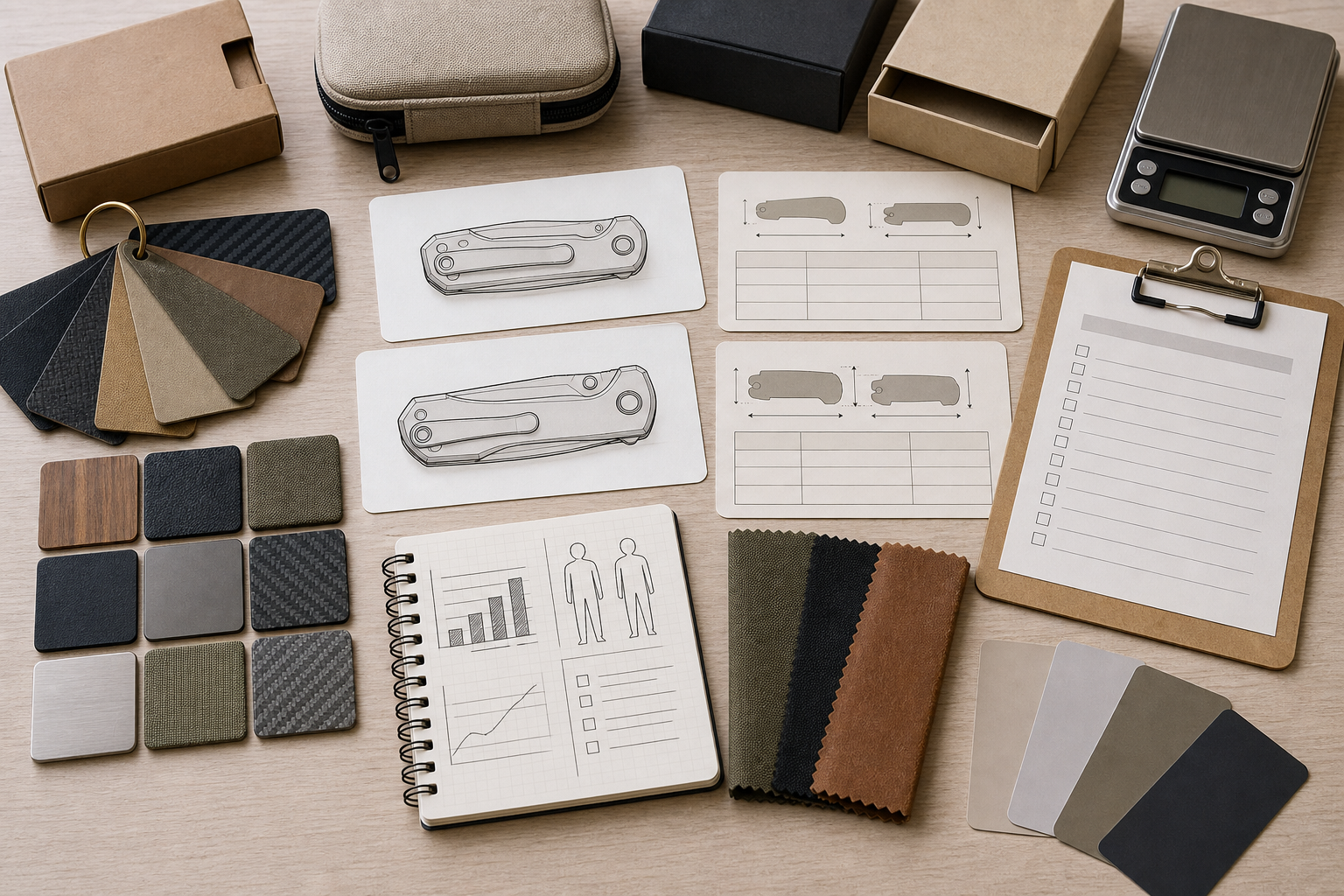
An RFQ should include target user, small or larger size direction, blade length, closed length, weight target, steel, HRC range, handle material, lock type, clip, finish, packaging, target market, quantity, target price, trade term, and inspection needs.
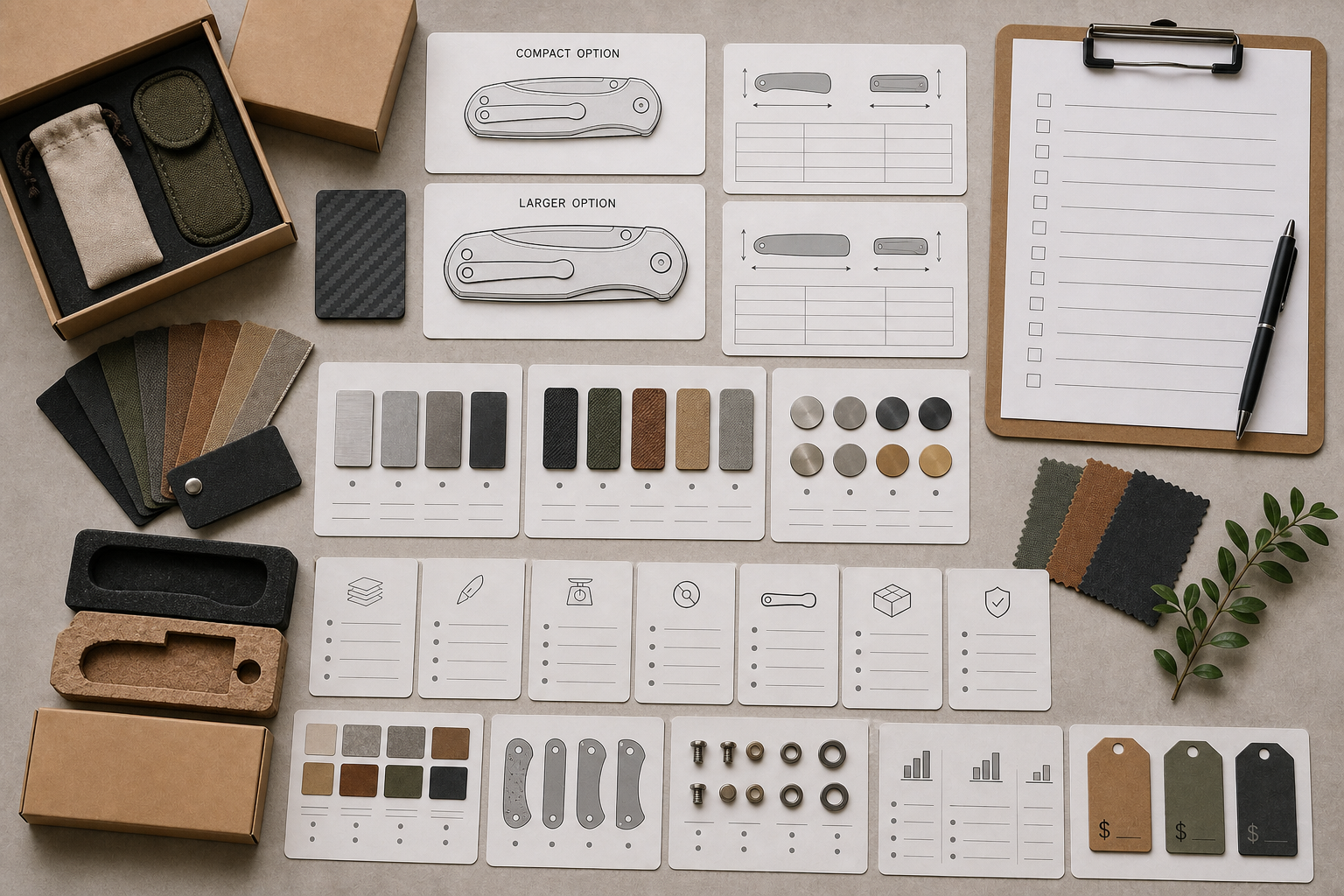
I Ask For A Size Brief, Not Only A Photo
A photo can show the style, but it cannot define the project. For a small or larger EDC knife, I want the buyer to share target user, product tier, blade length, closed length, weight target, steel preference, handle material, lock type, pocket clip, finish, logo method, packaging, target price, quantity, target market, and inspection needs. If the buyer does not know every detail, I can help suggest options. But I need enough direction to avoid guessing.
The RFQ should also define whether the buyer wants one model or a size pair. Some buyers want a compact model and a larger companion model in the same visual family. That can work well, but the two products must not be simple scaled copies. The lock, blade thickness, handle shape, clip, packaging, and cost target may need different choices.
Cost, MOQ, and product tier should be included in the same RFQ. Small knives are not always cheap, and larger knives are not always expensive. The real cost depends on steel grade, heat treatment, handle material, lock complexity, finish, assembly time, packaging, and inspection. I also ask buyers to freeze sample approval details clearly. ISO 10007 is useful context because configuration management helps control versions, options, and approved changes. ISO 9001 is useful background because process-based quality management supports incoming material checks, in-process checks, assembly checks, and final inspection.
Trade terms should be clear when comparing quotations. The ICC's Incoterms rules are useful context because they define common trade terms used in international business. If one quotation is FOB and another is EXW, the buyer is not comparing the same thing.
At Vast State, I like RFQs that describe both the product and the business goal. Then I can give more practical material, structure, packaging, and inspection suggestions.
| RFQ field | What to include | Why it helps |
|---|---|---|
| Size direction | Small, larger, or paired models | Guides structure and packaging |
| Technical spec | Blade length, closed length, weight, steel, lock | Makes sampling more accurate |
| Commercial target | Quantity, price, MOQ, timeline, trade term | Makes quotations comparable |
| Quality request | HRC, action, lock, clip, packaging, marking | Protects production consistency |
Turn this article into a folding knife project.
Share your blade type, lock direction, steel preference, handle material, quantity, target market, and packaging needs. Vast State can prepare OEM/ODM options.
Conclusion
I choose small or larger EDC knife sizes by matching user need, structure, cost, packaging, compliance review, and inspection.
Source Notes
- CCOHS hand tool ergonomics supports the general handle comfort and tool-fit discussion.
- Alleima 14C28N knife steel supports the steel selection discussion with official knife steel context.
- NIST Rockwell hardness measurement guide supports careful HRC measurement practice.
- ISO 10007 supports configuration management thinking for controlling size, version, and option changes.
- CBP country-of-origin marking guidance provides U.S. import marking context for packaging review.