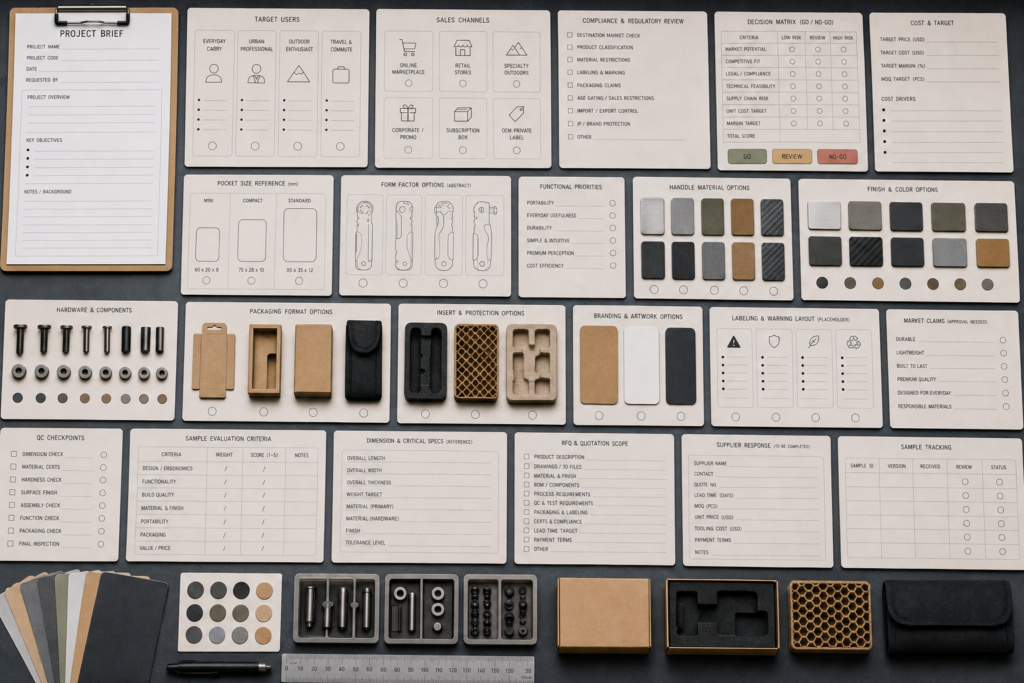
An everyday carry knife can sell well, but a vague project can become too costly, too heavy, or too risky. I start with controlled positioning.
Buyers should develop everyday carry knife projects by defining the target user, market restrictions, blade size, steel, handle material, lock structure, pocket-friendly design, packaging, QC checks, and RFQ details before sampling or production.
Quick buyer brief:
- Answer: Build EDC knife projects around practical use, market fit, compliance review, and repeatable production.
- Buyer context: This helps brands, importers, and private label buyers control cost and quality.
- Key checks: Target market, legal review, steel, lock, handle, clip, finish, packaging, QC, and RFQ scope.
Have a knife or multi-tool project in mind?
Send your sketch, CAD file, sample photo, or product idea. Vast State can review manufacturability, suggest materials, estimate MOQ, and prepare a quote for your OEM/ODM project.
When I work on an everyday carry knife project, I do not begin by asking only what style the buyer likes. I ask who will buy it, how it will be sold, what price range it must hit, what restrictions apply, and how the design will repeat in production. This article is not legal advice and it is not a personal carry tutorial. It is a B2B OEM/ODM product-development guide for buyers who want an EDC knife line that is practical, manufacturable, and easier to control.
What Does Everyday Carry Mean for a B2B Knife Project?
EDC can sound simple, but it means different things to different buyers. If the meaning is unclear, the design brief becomes unstable.
For B2B sourcing, everyday carry means a compact, practical knife project designed around daily utility, price position, legal review, pocket-friendly size, reliable structure, and repeatable production quality.
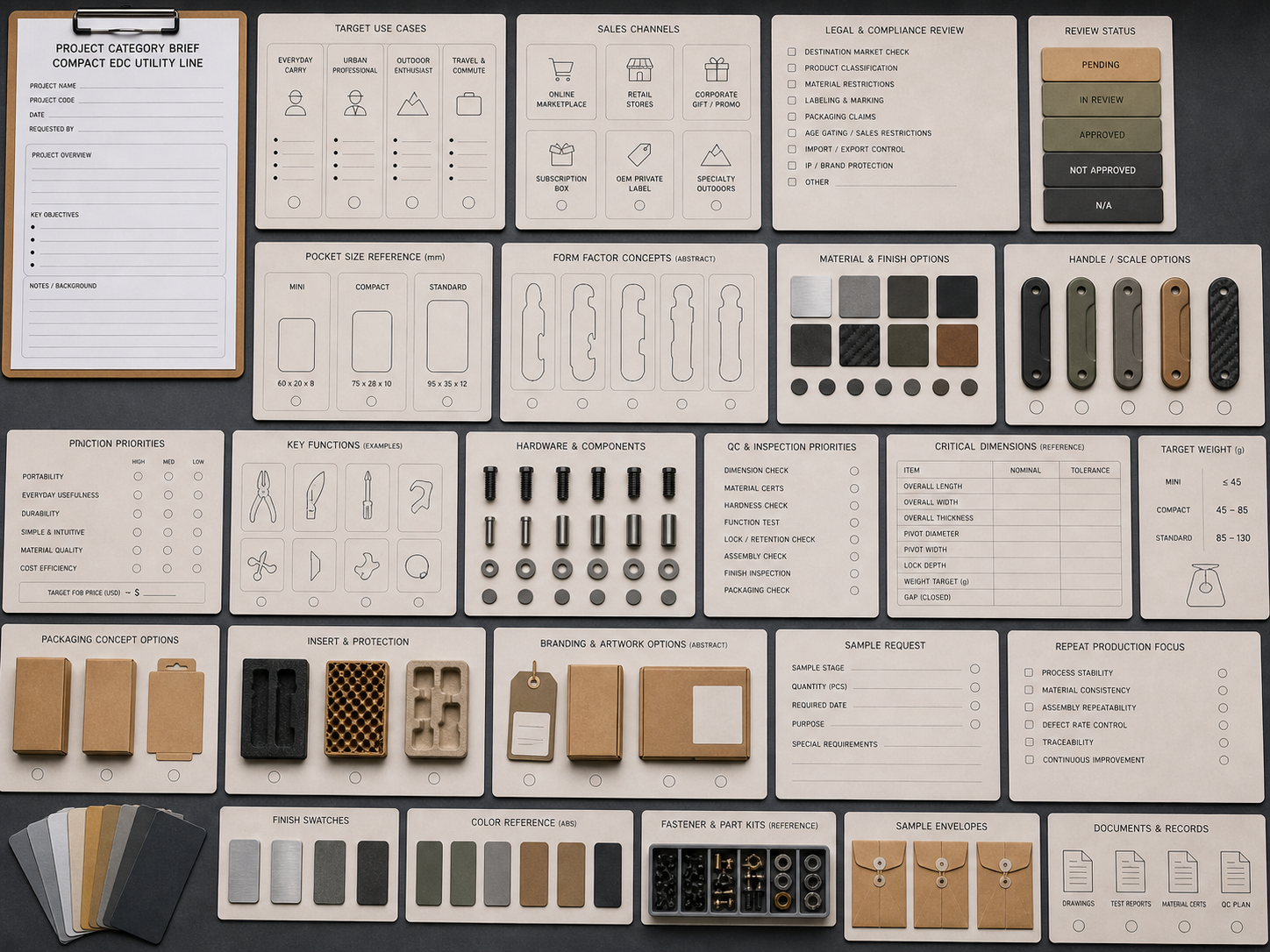
I define EDC by buyer need, not by a buzzword
In OEM and ODM work, EDC is not one fixed product. It can mean a lightweight folding knife for outdoor retail, a simple utility knife for a private label program, a compact pocket knife for a gift set, or a higher-spec model for an enthusiast channel. Each direction changes the blade steel, handle material, lock structure, clip design, finish, packaging, and inspection plan.
I usually ask buyers to define the product in plain business terms. Who is the target buyer? What is the expected retail price level? What is the product's main daily task? Does the buyer need a slim pocket profile, stronger handle feel, low MOQ, color options, or special packaging? These answers are more useful than a mood board alone. A good EDC knife project should feel practical, not overbuilt. It should fit the market, match the buyer's margin plan, and stay stable in repeat production.
| EDC decision | What I ask first | Why it matters |
|---|---|---|
| Product level | Entry, mid-range, or higher specification | Controls material and finish choices |
| Main task | Daily utility, outdoor backup, gift item, or private label line | Guides blade and handle design |
| Target channel | Retail, importer, distributor, or online store | Affects packaging and positioning |
| Production goal | Sample test, repeat order, or full product family | Changes development planning |
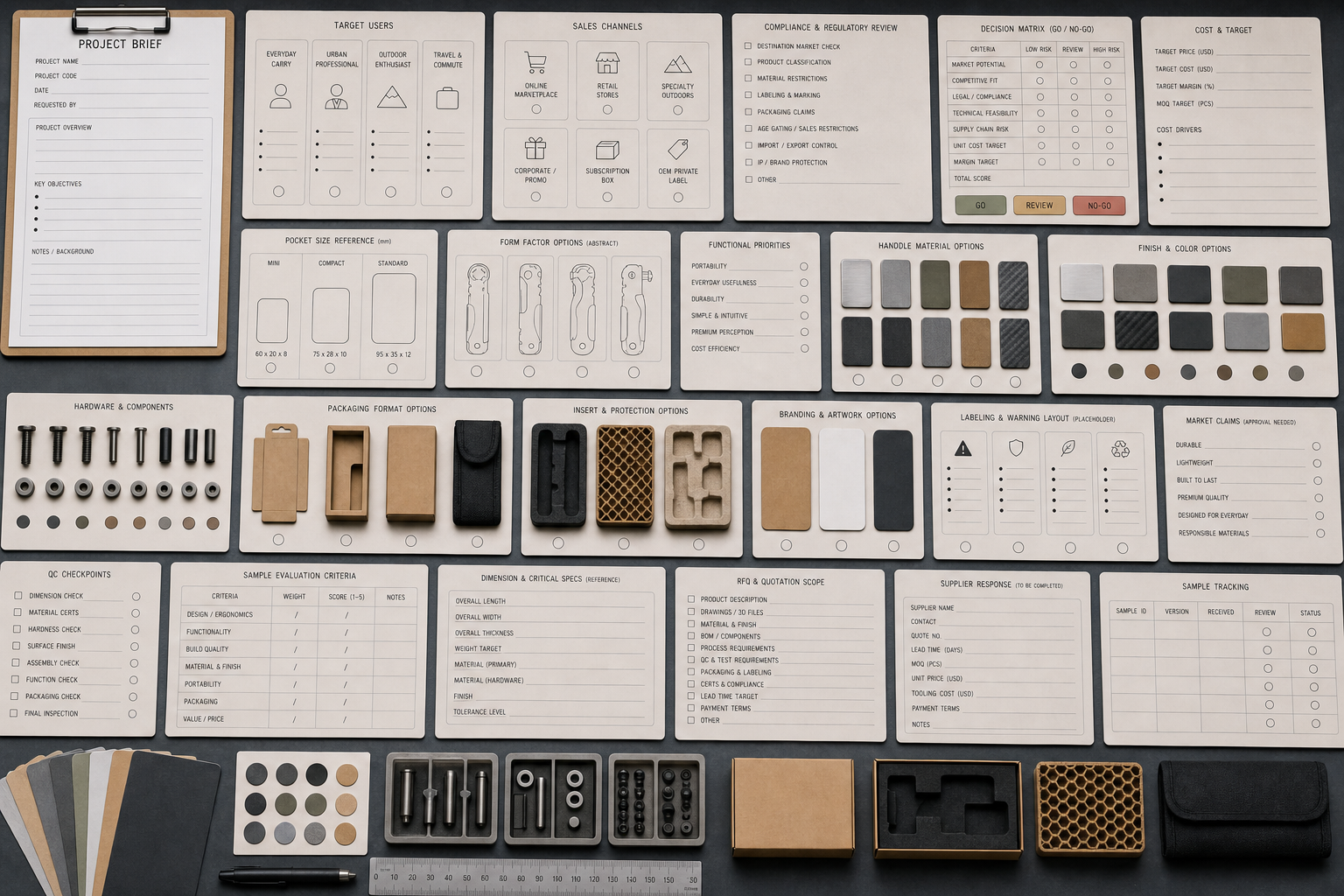
OEM/ODM RFQ Checklist
Prepare these details to help Vast State review your project and provide a more accurate quotation.
| RFQ Field | What to Prepare |
|---|---|
| Project type | OEM from drawing / ODM private label / wholesale catalog |
| Product category | Folding knife / fixed blade / multi-tool / outdoor tool |
| Design status | Idea / sketch / 2D drawing / 3D CAD / physical sample |
| Target price | Ex-factory target price or retail price range |
| MOQ expectation | 500 / 1,000 / 3,000 / 5,000+ pcs |
| Logo method | Laser engraving / etching / printing / molded logo |
| Packaging | Standard packaging / custom retail box / Amazon-ready |
| Market | USA / EU / Japan / Korea / Middle East / other |
| Compliance needs | Buyer-specified testing / documentation / labeling |
| Timeline | Sample deadline / mass production deadline |
How Should Buyers Define the Target User and Sales Channel?
A knife can be well made and still miss the market. If the buyer does not define the user, the factory must guess.
Buyers should define the target user and sales channel by clarifying price range, daily task, market region, retail format, packaging style, and product family role before the design is finalized.
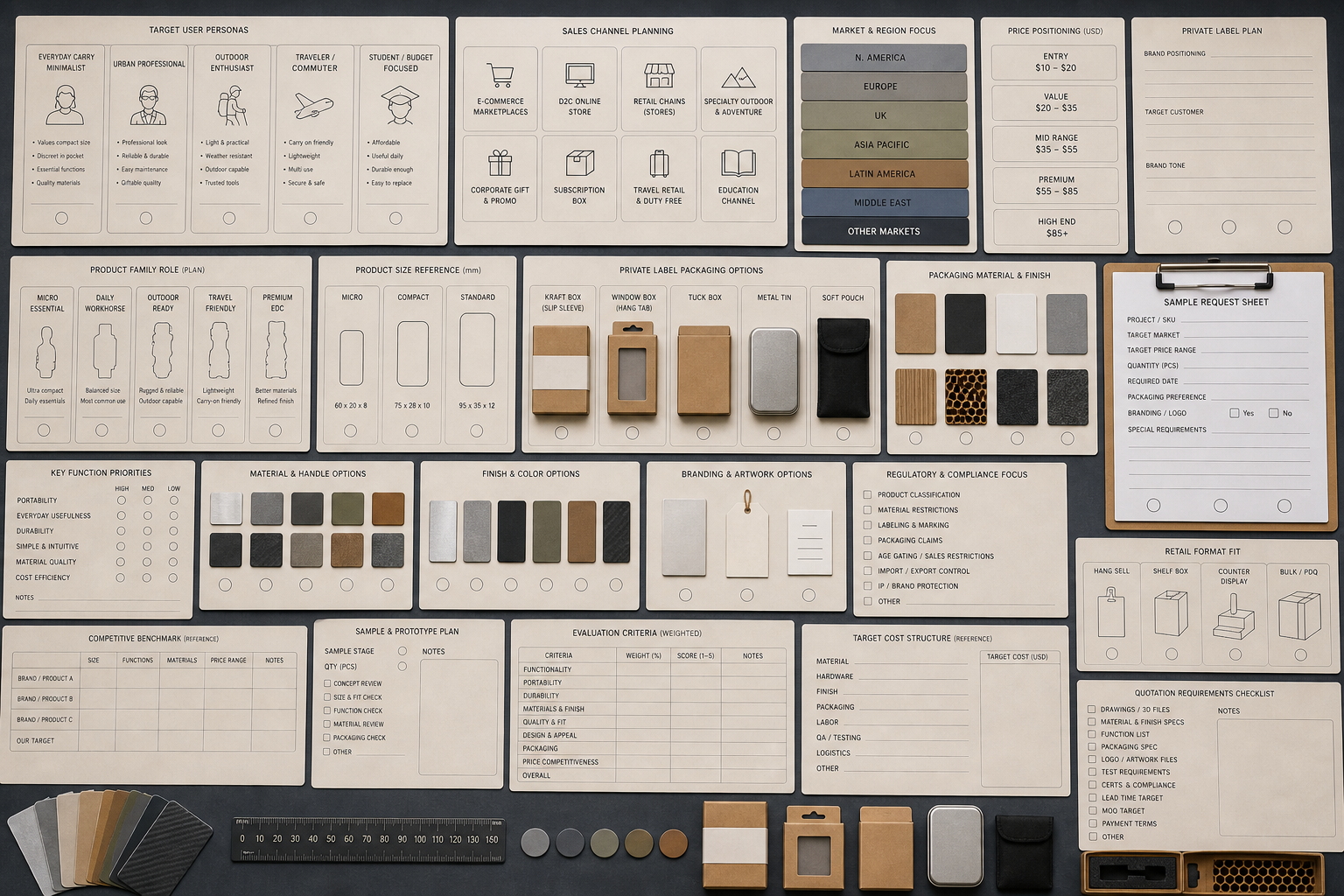
I connect product details with sales reality
The same EDC knife cannot serve every buyer. A distributor may want a safe mid-range specification with stable supply. A private label buyer may care most about target price, logo method, packaging, and MOQ. An outdoor gear brand may need better corrosion resistance and a handle material that feels secure in wet conditions. An importer may need clear carton data, consistent packaging, and fewer after-sales surprises.
This is why I ask for market and channel information early. If the product is for a low-price program, I may suggest simpler handle construction, fewer surface treatments, and a proven blade steel. If it is for a more design-focused channel, I may suggest better finish control, smoother action, more refined handle texture, and more detailed packaging. The factory's job is not only to make a sample. It is to help the buyer build a product that fits its market promise. That only works when the buyer explains the sales channel before the project becomes too fixed.
| Buyer type | Common focus | Development response |
|---|---|---|
| Knife brand | Product identity and repeat quality | Stronger structure review and packaging detail |
| Importer | Cost, carton data, delivery stability | Clear specification and production follow-up |
| Wholesaler | Price and broad appeal | Practical materials and simple packaging |
| Private label buyer | Logo, MOQ, and retail presentation | Flexible branding and packaging options |
Which Legal and Market Restrictions Should Buyers Check First?
EDC products can enter many markets, but rules are not the same everywhere. Late review can stop a good project.
Buyers should check destination rules, blade length limits, opening mechanism rules, age or retail channel requirements, transport screening context, and platform restrictions before approving samples or packaging.
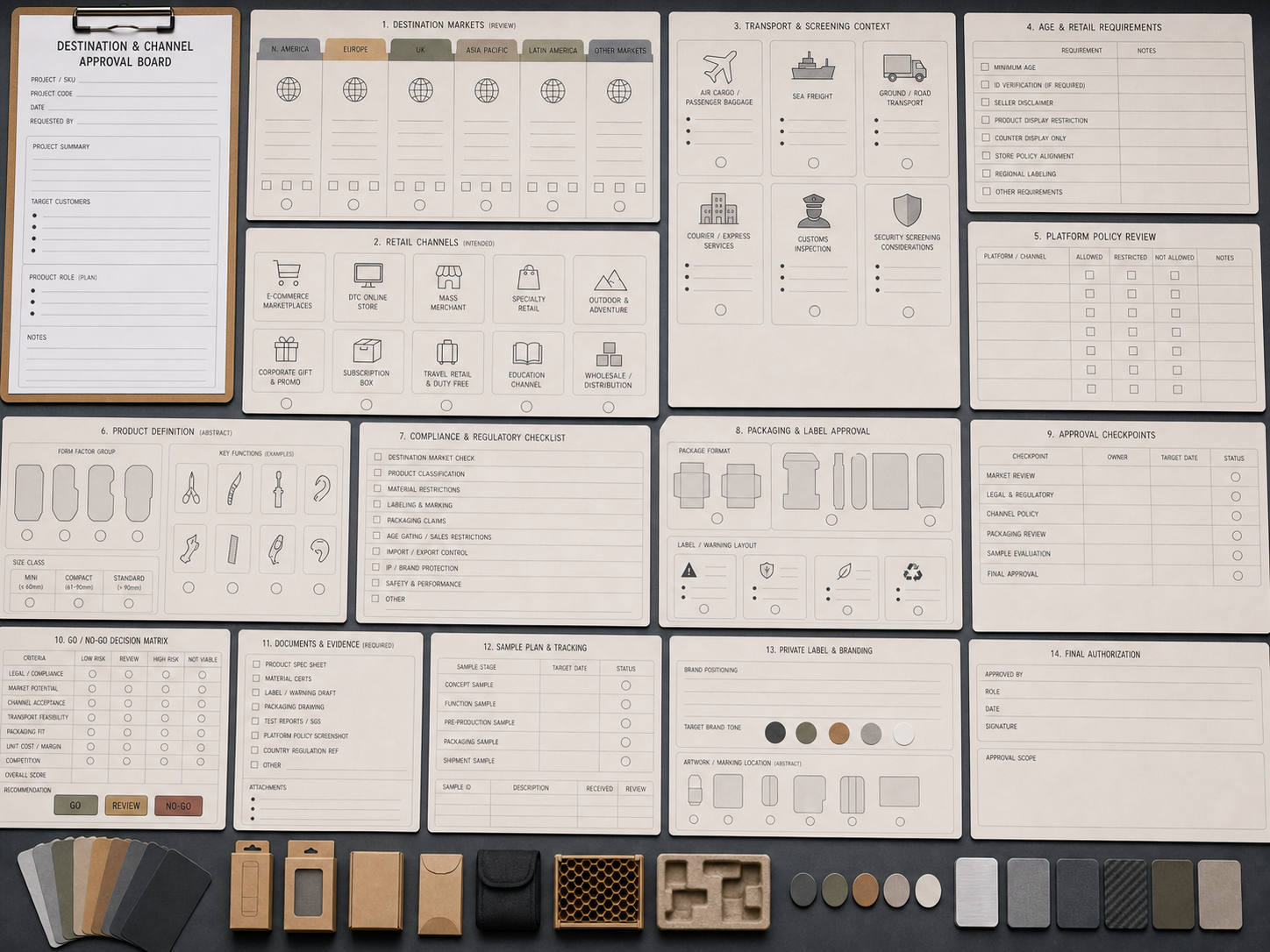
I ask for legal review before the sample becomes final
An EDC knife project may look ordinary, but it can still face rules based on blade length, opening mechanism, lock type, retail channel, import route, or transport context. I do not give legal advice. I ask buyers to confirm requirements in each destination market before final drawings, tooling, packaging, and public listings are approved. The U.S. Code chapter on switchblade knives is useful context because mechanism wording can matter. The TSA page for pocket knives also shows that sharp items can face strict air-travel screening rules.
For OEM/ODM projects, this review affects real product choices. A buyer may ask for a manual opening structure, a shorter blade, a simpler package description, or a different retail claim. The factory can support drawings, measurements, product photos, carton data, and specification sheets. The buyer should use those materials to complete legal and channel review. This keeps the product from becoming a beautiful sample that cannot be sold through the intended route.
| Restriction area | Buyer should confirm | Factory can support |
|---|---|---|
| Blade size | Destination and channel limits | Drawings and measurement records |
| Opening mechanism | Allowed structure type | Manual structure suggestions |
| Retail channel | Platform or distributor requirements | Packaging and specification data |
| Transport context | Travel and shipping restrictions | Safe packing and carton information |
What Blade Size, Steel, and Heat Treatment Choices Fit EDC Products?
Too much steel specification can raise cost, but weak material can hurt reviews. EDC needs a balanced product plan.
EDC blade choices should balance compact size, cutting geometry, corrosion resistance, toughness, sharpening expectation, heat treatment control, and target price. I choose steel based on product use and repeatability.
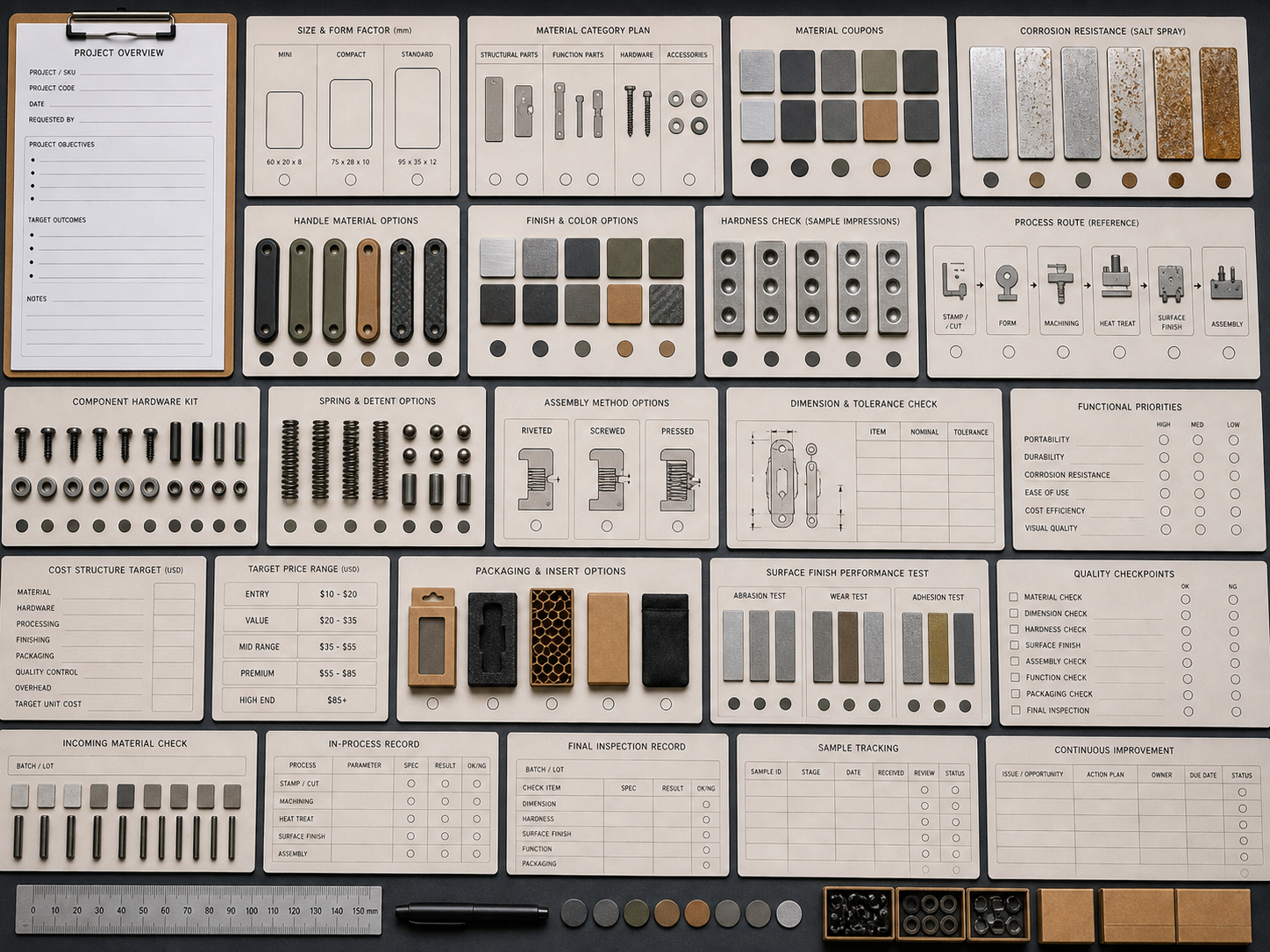
I choose steel through the product's real job
For EDC knives, buyers often ask whether they should choose D2, 14C28N, 9Cr, 8Cr, or another steel. I do not answer by saying one steel is always best. I ask what the knife must do, what price it must reach, and how the market will judge it. A stainless knife steel such as Alleima 14C28N can make sense when the buyer wants corrosion resistance and balanced edge performance. Other steels may work better when price is the main concern.
Heat treatment decides whether the steel can perform consistently. Alleima's guide to hardening and tempering of knife steel explains the need to balance hardness and brittleness. In production, I connect that to hardness targets, batch control, grinding heat, and inspection records. A compact EDC blade should be easy to sell, but it should also be easy to repeat. If the steel choice is too ambitious for the price, the project may lose margin. If it is too weak for the market, the product may lose buyer trust.
| Blade decision | What I check | Buyer takeaway |
|---|---|---|
| Blade length | Market fit and packaging space | Keep size practical and reviewable |
| Steel grade | Corrosion, toughness, edge plan, cost | Match steel to price and user expectation |
| Heat treatment | Hardness target and batch record | Protect repeat performance |
| Blade finish | Stonewash, satin, coating, bead blast | Balance appearance, cost, and consistency |
How Should Handle, Lock, and Pocket-Friendly Structure Be Designed?
An EDC knife must feel practical in daily utility. Poor handle shape, weak lock fit, or bad clip placement can ruin the product.
Handle, lock, and pocket-friendly structure should be designed around comfort, weight, closed-blade safety, lock stability, screw control, clip strength, and repeatable assembly.
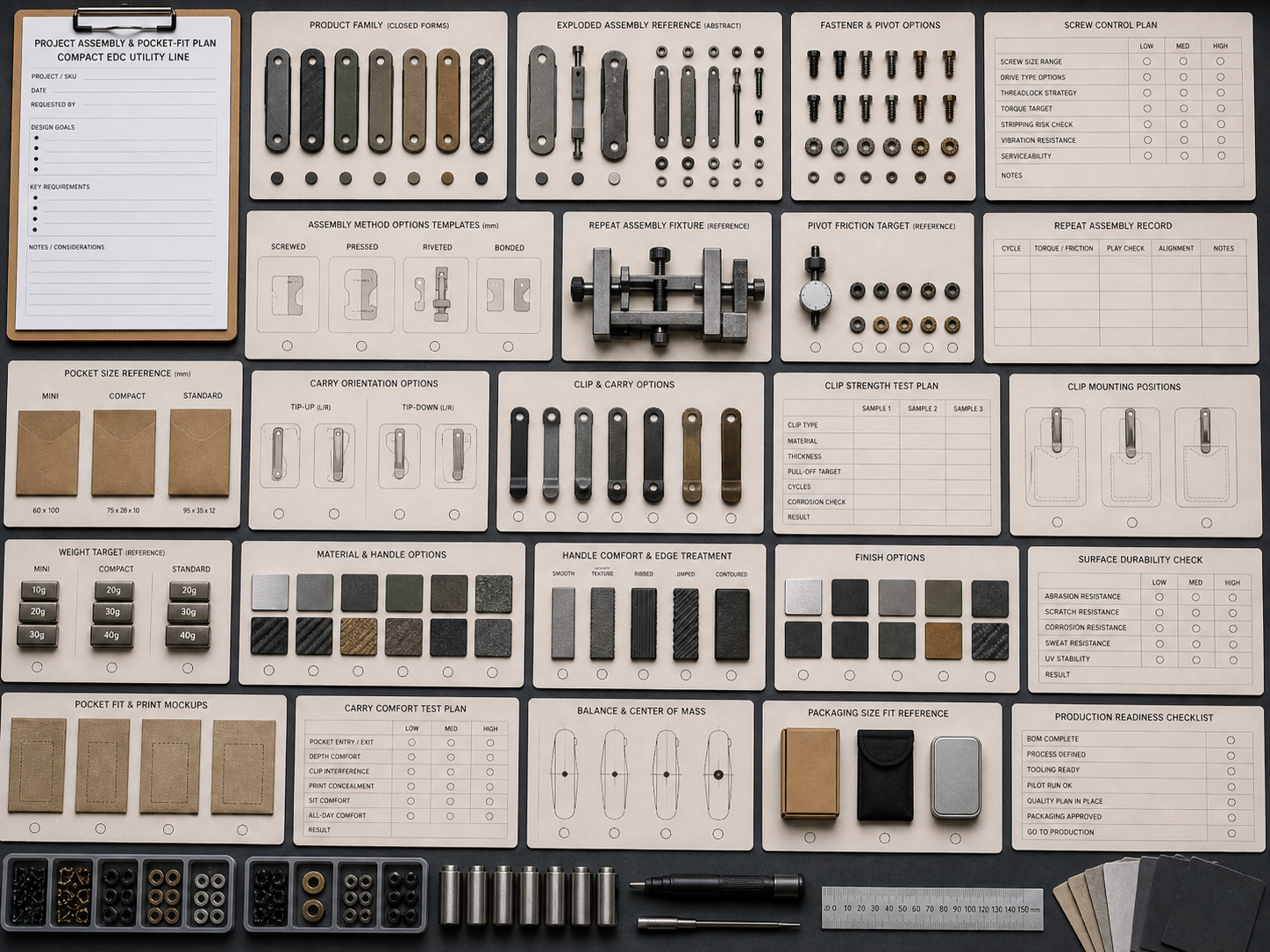
I design the handle as a system, not a decoration
The handle is where EDC projects often succeed or fail. A beautiful handle can still be too thick, too slippery, too heavy, or too expensive. I look at scale material, liner design, screw position, texture, edge rounding, pocket clip strength, and total weight. G10, aluminum, stainless steel, micarta, wood, and engineered polymers all create different costs and user feelings. The right material depends on the buyer's market and target price.
The lock and pivot also need early review. A liner lock, frame lock, back lock, button-style lock, or slipjoint-style structure each has different tolerance needs. I check blade centering, lock engagement, side play, opening feel, screw torque, and closed clearance. For pocket-friendly design, I also check clip placement and screw strength. The goal is not only a good first sample. The goal is an assembly that workers can repeat without too much hand adjustment. That saves time, reduces rejects, and gives the buyer a more stable product.
| Structure choice | What I review | Why it matters |
|---|---|---|
| Handle material | Weight, grip feel, machining, finish | Controls comfort and cost |
| Lock structure | Engagement, release, and repeatability | Protects function and QC |
| Pocket clip | Strength, screw position, finish | Supports everyday product practicality |
| Closed clearance | Blade position inside handle | Protects product and packaging |
What Finish, Branding, and Packaging Choices Support Private Label Sales?
Private label success is not only the knife. Weak branding or loose packaging can make a good product look cheap.
Finish, branding, and packaging should match the target price, sales channel, product story, and inspection plan. I recommend practical finishes, clear logo methods, safe packaging, and consistent carton control.
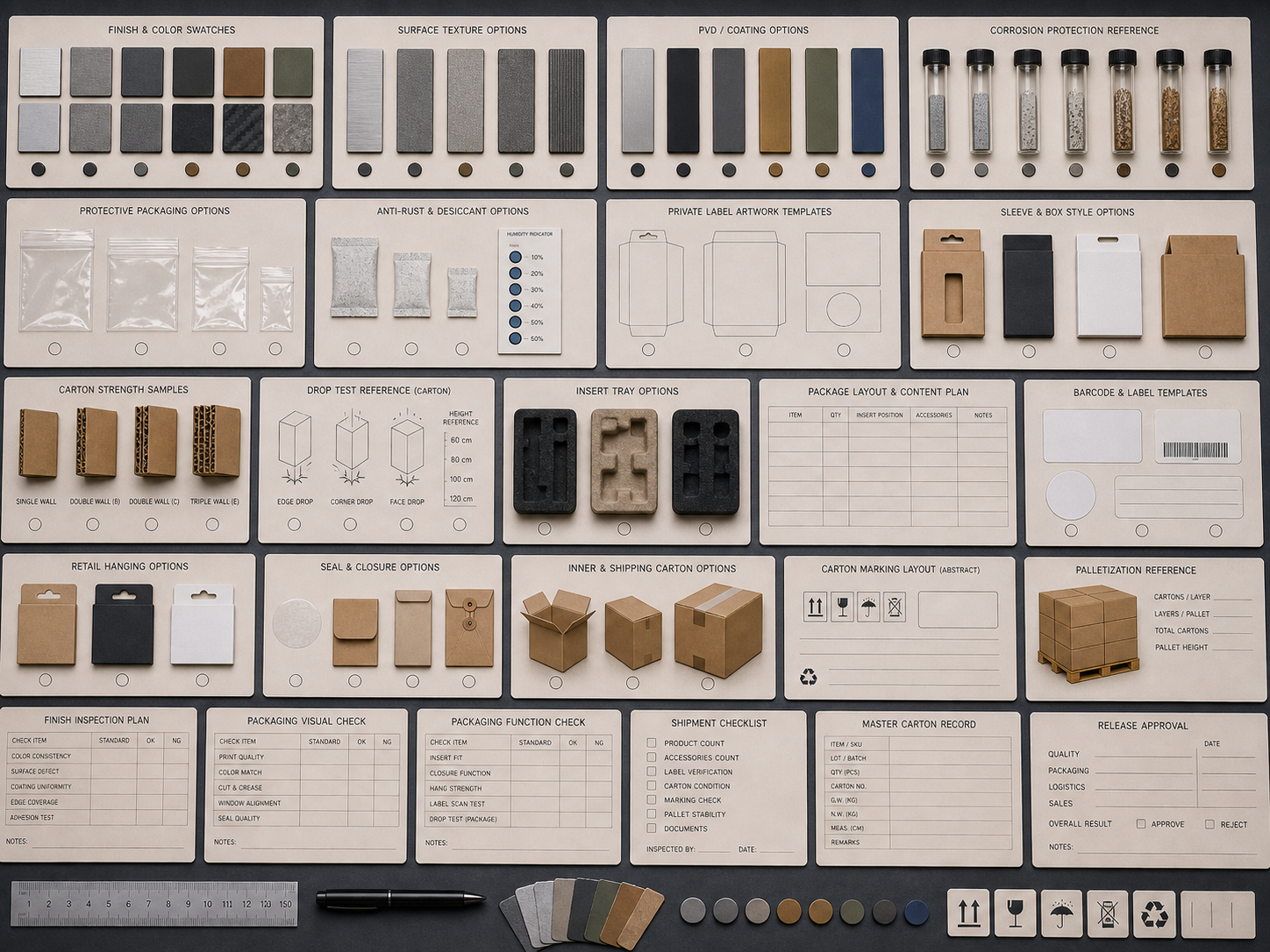
I make the packaging fit the selling plan
EDC knives often sell through brands, importers, wholesalers, distributors, and private label programs. These buyers need more than a blade and handle. They need a sellable presentation. The finish should match the product level. Stonewash can hide small use marks and look practical. Satin can look clean but needs more surface control. Coating can support a certain style, but it adds cost and process risk. Handle colors, clip finish, screw color, and logo method should all be planned together.
Packaging should also match the channel. A simple kraft box may work for a cost-driven wholesale program. A rigid box or custom insert may fit a higher-positioned brand. A blister pack may fit retail display needs, but it needs different tooling and packing control. I also ask buyers to decide whether they need a manual, warning card, barcode, spare screws, microfiber bag, or outer carton label. Packaging is part of quality control because the inspector must confirm that the right knife, right accessories, and right brand materials are packed together.
| Sales detail | Option to consider | Practical effect |
|---|---|---|
| Blade finish | Stonewash, satin, bead blast, coating | Controls look, cost, and consistency |
| Logo method | Laser, etching, printing, engraving | Affects brand clarity and unit cost |
| Inner pack | Foam, tray, sleeve, bag | Protects finish during shipping |
| Outer carton | Quantity, label, carton strength | Supports export and warehouse handling |
Which QC Checks Protect Everyday Carry Knife Consistency?
One approved sample is not enough. If production checks are weak, repeat orders can drift from the original promise.
EDC knife QC should cover incoming materials, blade processing, heat treatment, handle fit, lock function, clip strength, surface finish, sharpness, packaging, and final batch sampling.
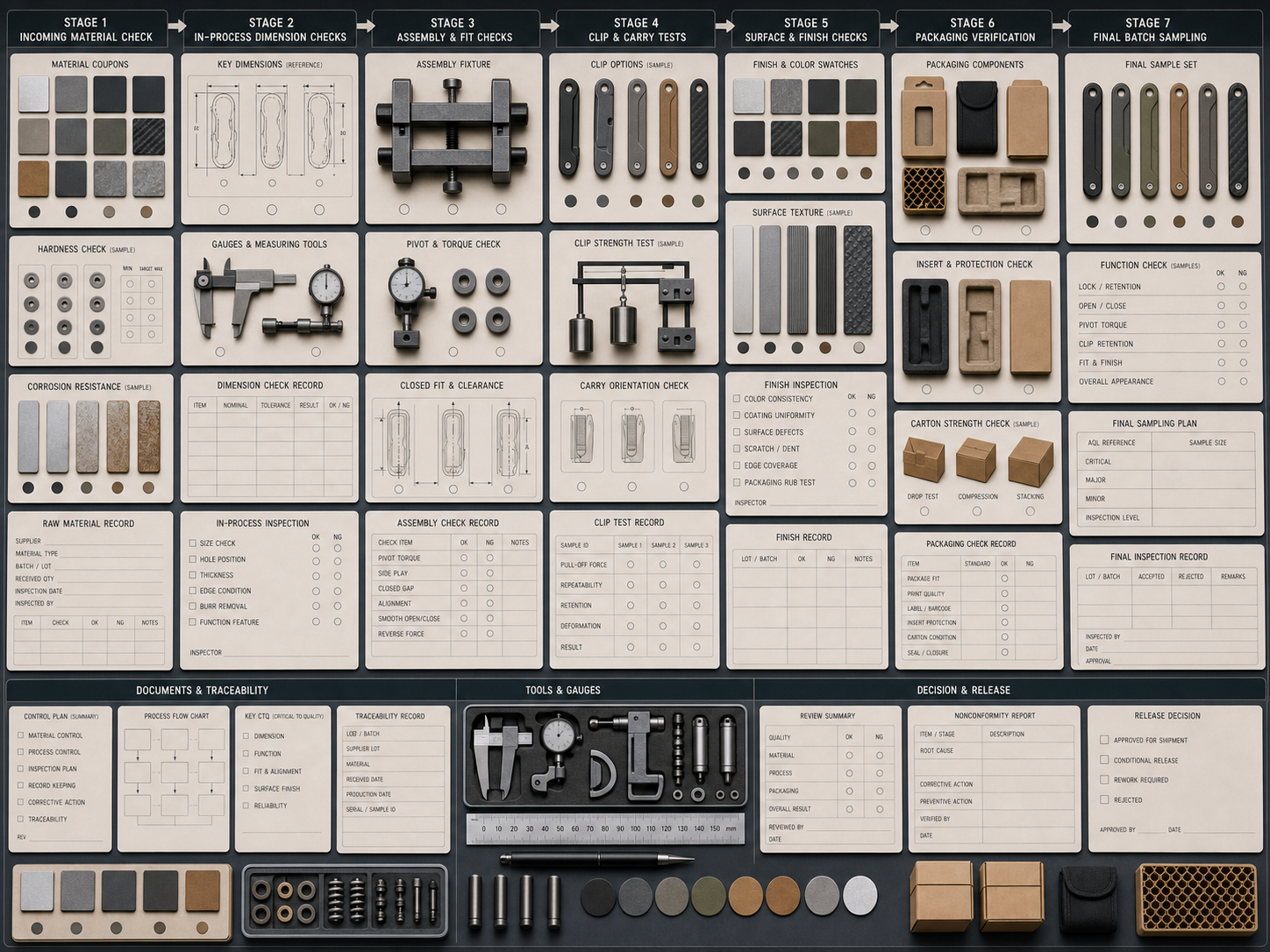
I use QC to protect repeat orders
For an EDC project, I like to build the QC plan before mass production. Incoming inspection checks blade steel, handle material, screws, clips, bearings or washers, and packaging parts. Blade processing checks profile, pivot hole, bevel symmetry, heat treatment record, and finish. The NIST guide to Rockwell hardness measurement supports the importance of careful hardness measurement practice.
Assembly inspection is where many EDC problems appear. I check blade centering, lock engagement, side play, screw torque, clip fit, closed clearance, and general feel. Final inspection checks appearance, edge condition, packaging contents, carton marks, and match to approved sample. A process-based quality mindset is useful here. The ISO 9000 family focuses on quality management principles and customer requirements. I use that idea in a practical way: clear inputs, in-process checks, final checks, and feedback for the next order.
| QC stage | Main checks | Buyer benefit |
|---|---|---|
| Incoming QC | Steel, handle, screws, clips, packaging | Prevents weak inputs |
| Process QC | Profile, bevel, heat treatment, finish | Finds problems early |
| Assembly QC | Pivot, lock, clip, centering, clearance | Controls product feel |
| Final QC | Sharpness, appearance, pack, carton | Supports sale-ready delivery |
What Should an EDC Knife OEM/ODM RFQ Include?
A vague RFQ slows development. If the supplier must guess, quotation, sample work, and production planning become weaker.
An EDC knife RFQ should include target market, legal review status, product size, blade steel, handle material, lock type, clip style, finish, packaging, MOQ, target price, sample deadline, and QC requirements.
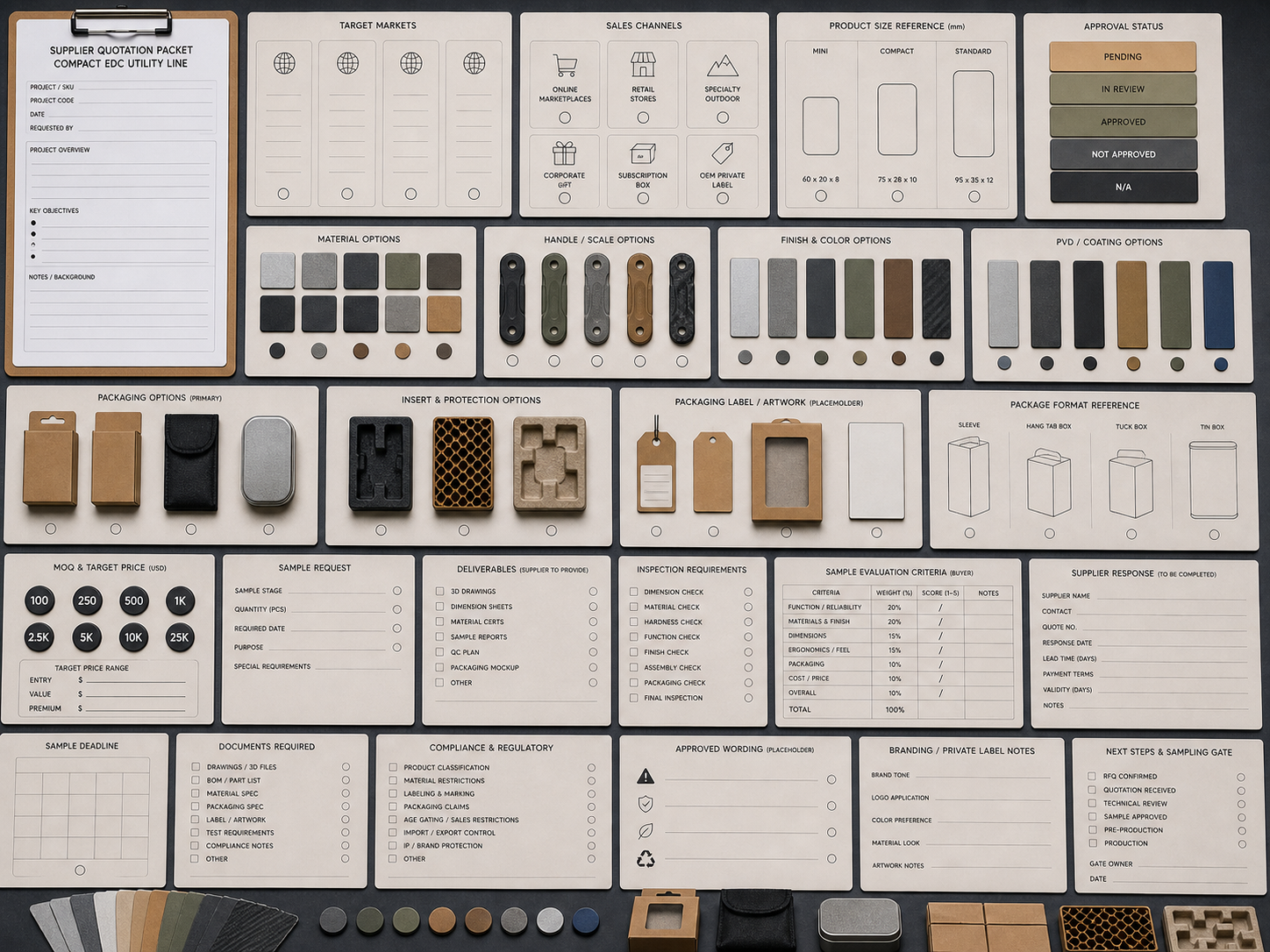
I ask for the details that affect quotation
When a buyer sends an EDC knife RFQ, I want to see the product goal clearly. The RFQ should include target market, sales channel, legal review status, expected price range, target MOQ, sample deadline, and whether the buyer wants OEM production from existing design or ODM development from a rough idea. Then I need the technical details: blade length, blade steel, thickness, finish, handle material, lock type, clip preference, screw color, logo method, packaging format, and inspection needs.
The buyer does not need every answer before the first conversation. But the more information they provide, the faster the factory can suggest practical options. If the buyer only sends one photo and asks for the cheapest price, the quotation may not reflect real quality. If the buyer explains the market and target price, I can suggest a design path that fits manufacturability, cost, and brand positioning. This is where Vast State can support buyers from concept to production with fewer surprises.
| RFQ field | What to include | Why it helps |
|---|---|---|
| Market context | Destination, sales channel, legal review | Keeps project realistic |
| Product specification | Size, steel, handle, lock, clip, finish | Supports accurate quotation |
| Branding and packaging | Logo method, box, insert, carton | Controls sale-ready presentation |
| QC requirement | Hardness, lock, clip, finish, packaging checks | Reduces production disputes |
Turn your idea into a quote-ready knife project.
Share your drawing, sample photo, target quantity, market, and packaging needs. Vast State will review manufacturability and prepare OEM/ODM options.
Conclusion
I develop better EDC knife projects by connecting market fit, compliance review, practical design, stable materials, packaging, QC, and RFQ clarity.
Source Notes
- U.S. Code Title 15 Chapter 29 supports why opening mechanism wording may need review.
- TSA pocket knife guidance gives travel-screening context for sharp items, but it is not full product law.
- Alleima 14C28N data supports stainless knife steel discussion.
- Alleima hardening guidance supports the hardness and brittleness balance.
- NIST Rockwell guide supports careful hardness measurement.
- ISO 9000 family page supports process-based quality management thinking.