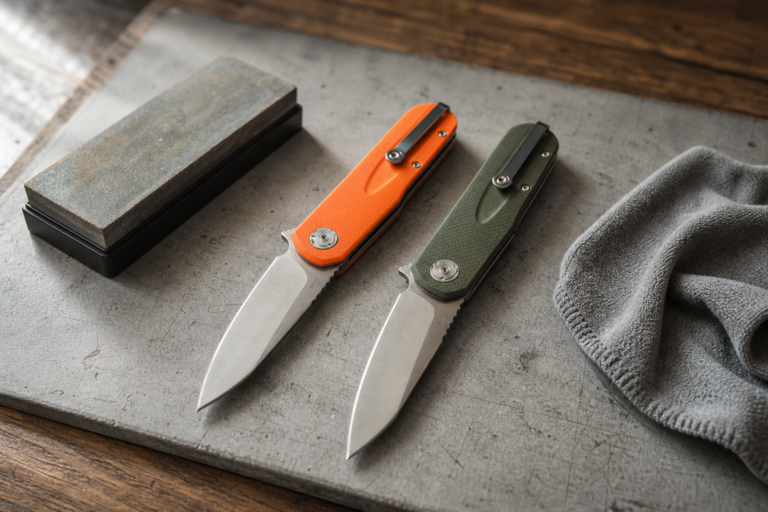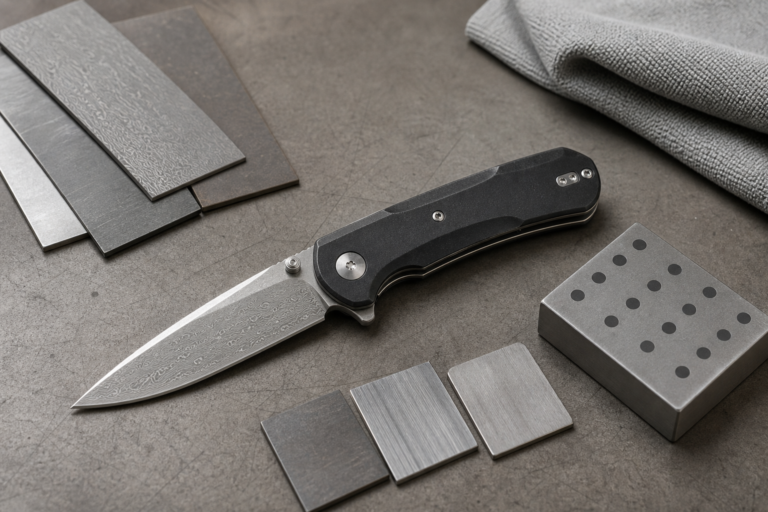
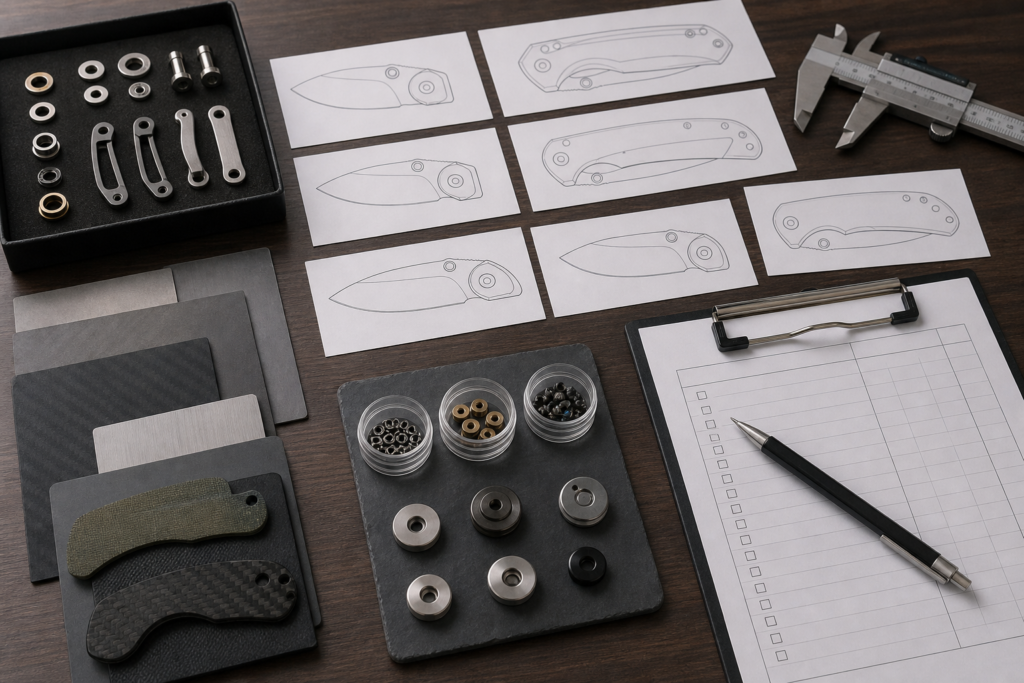
A folding knife can look simple from outside. But one weak part can create rough action, blade play, cost creep, or repeat-order problems.
Buyers should evaluate folding knife anatomy by checking the blade, pivot, washers or bearings, stop pin, lock, liners, handle scales, spacers, screws, clip, edge, finish, packaging, and QC records. Each part should match the target market, price range, function, and production tolerance.
Quick buyer brief:
- Answer: Treat folding knife anatomy as a production checklist, not only a parts diagram.
- Buyer context: This helps knife brands, outdoor brands, importers, wholesalers, and private label buyers brief an OEM/ODM factory.
- Key checks: Blade steel, geometry, pivot, lockup, handle stack, fasteners, clip, finish, edge, classification, packaging, inspection, and RFQ details.
Developing a folding knife line for your brand?
Vast State supports OEM/ODM folding knife projects, including blade steel, lock structure, handle material, finish, logo method, packaging, and quality inspection planning.
When I evaluate a folding knife project, I do not only ask whether the sample looks attractive. I ask whether the parts can work together again and again in production. A folding knife is a small mechanical product. The blade shape affects closed clearance. The pivot affects action. The lock affects safety feeling. The handle stack affects screw length, weight, and assembly time. The clip affects packaging and carry orientation. If a buyer understands these relationships early, the RFQ becomes clearer and the sample approval becomes more useful.
What Parts Should Buyers Identify In A Folding Knife Anatomy Review?
Many RFQs only say "folding knife." That is too broad. The supplier may quote the wrong structure, material, or cost level.
A folding knife anatomy review should identify the blade, tang, pivot, washers or bearings, stop pin, lock, liners, handle scales, backspacer or standoffs, screws, pocket clip, edge, finish, and packaging.
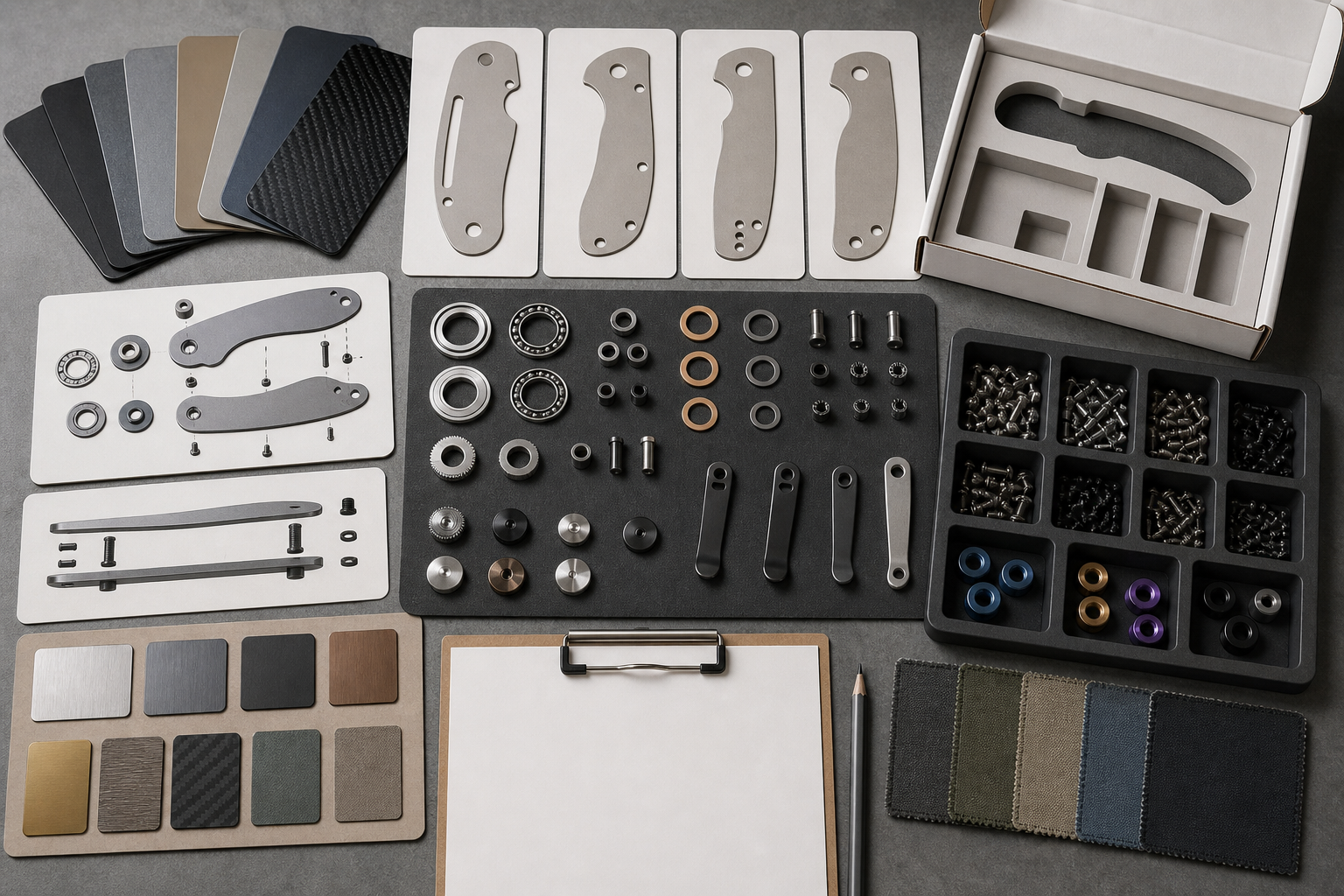
I Start With A Parts Map
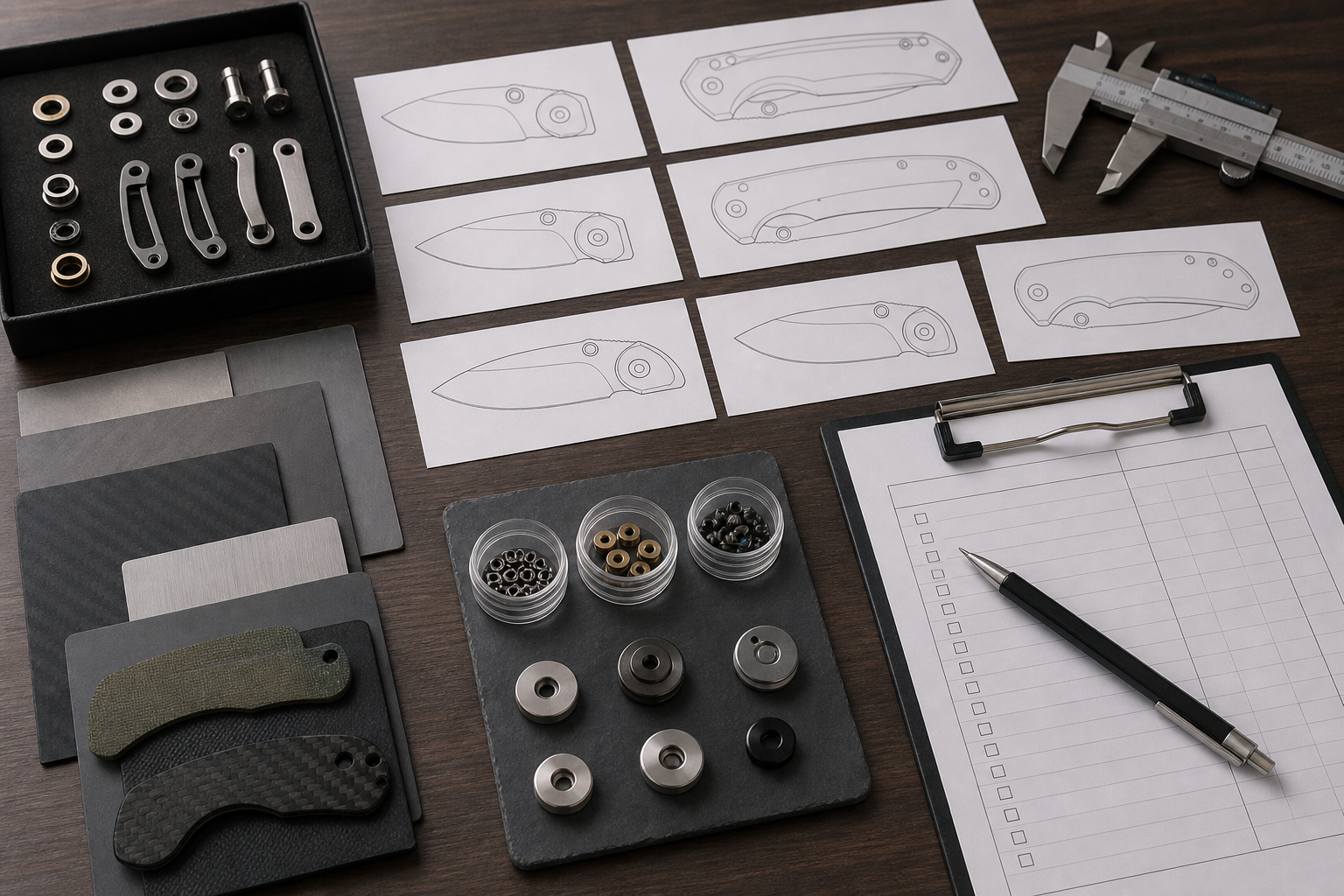
I like to begin every folding knife project with a parts map. The map does not need to be fancy. It needs to be clear. It should show the blade, tang, pivot, washers or bearings, stop pin, lock bar or lock part, liners, handle scales, backspacer or standoffs, screws, clip, and any inserts. This prevents a common sourcing problem: the buyer approves a nice-looking sample but later realizes that the structure is too costly, too heavy, too hard to assemble, or not suitable for the target market.
The AKTI approved knife definitions are useful because they show how industry terms can affect product understanding and legal wording. I do not use that page as a design manual. I use it as a reminder that terms such as blade length, folding mechanism, effective cutting edge, and bias toward closure should be handled carefully. For OEM/ODM work, the factory still needs drawings, dimensions, material choices, and inspection points. A shared vocabulary is the first step. A measured specification is the second step.
| Part group | What I identify | Why it matters |
|---|---|---|
| Blade group | Blade, tang, edge, spine, grind, finish | Controls performance, appearance, and cost |
| Pivot group | Pivot, washers, bearings, stop pin | Controls action, centering, and durability |
| Handle group | Liners, scales, spacer, screws, clip | Controls structure, weight, and assembly |
| Control group | Lock, detent, closing bias, inspection records | Controls safety feeling and repeatability |
OEM/ODM RFQ Checklist
Prepare these details to help Vast State review your project and provide a more accurate quotation.
| RFQ Field | What to Prepare |
|---|---|
| Project type | OEM from drawing / ODM private label / wholesale catalog |
| Product category | Folding knife / fixed blade / multi-tool / outdoor tool |
| Design status | Idea / sketch / 2D drawing / 3D CAD / physical sample |
| Target price | Ex-factory target price or retail price range |
| MOQ expectation | 500 / 1,000 / 3,000 / 5,000+ pcs |
| Logo method | Laser engraving / etching / printing / molded logo |
| Packaging | Standard packaging / custom retail box / Amazon-ready |
| Market | USA / EU / Japan / Korea / Middle East / other |
| Compliance needs | Buyer-specified testing / documentation / labeling |
| Timeline | Sample deadline / mass production deadline |
How Does Blade Geometry Affect Performance, Cost, And Production?
The blade is easy to notice. But buyers often under-specify thickness, grind, tang shape, and closed clearance.
Blade geometry affects cutting feel, material use, machining time, heat treatment risk, sharpening, lock contact, closed safety clearance, packaging fit, and buyer-perceived quality.
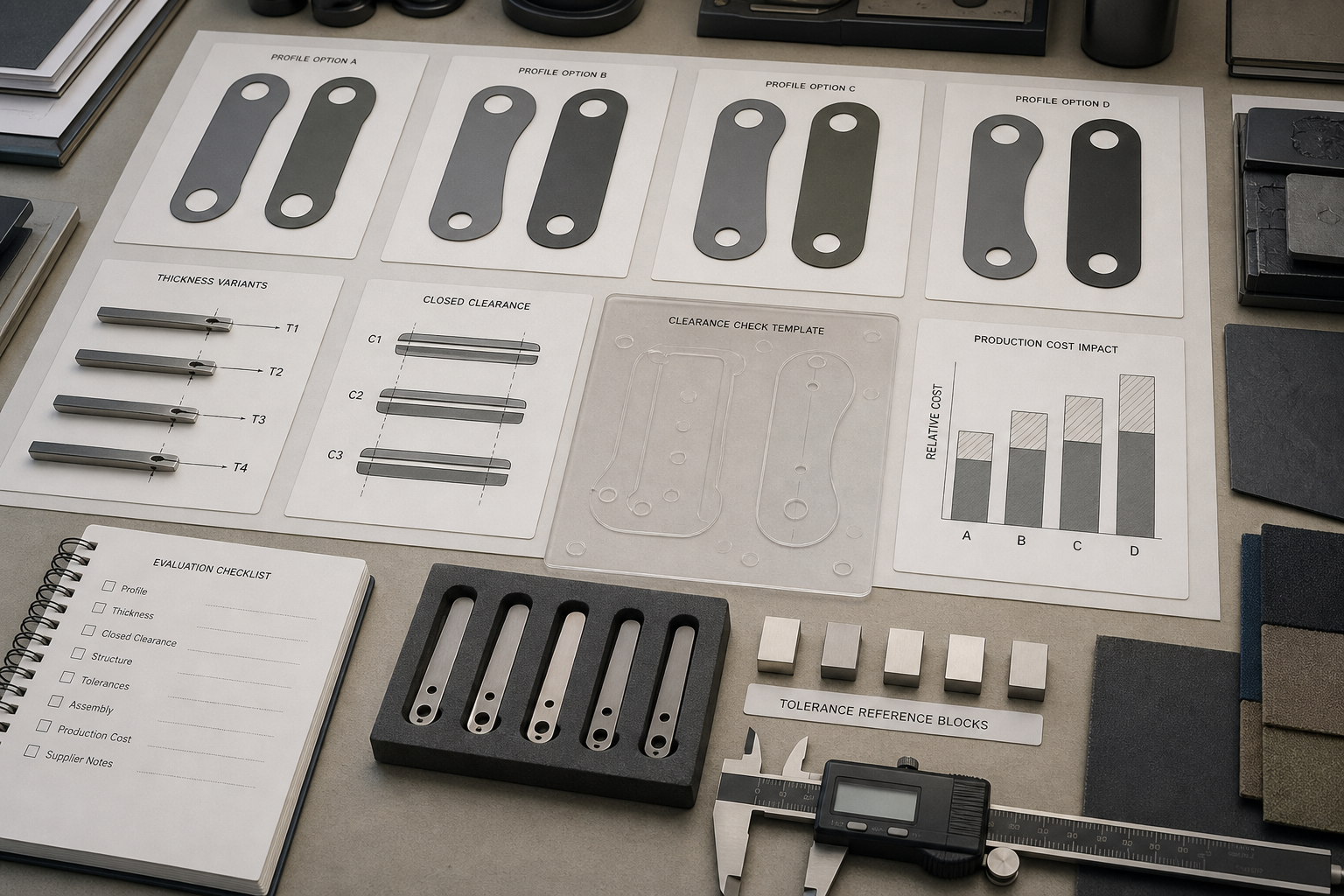
I Make The Blade More Than A Profile Drawing
A blade drawing should include blade length, cutting edge length, blade height, spine thickness, grind type, edge angle target, tip style, tang shape, pivot hole size, stop contact area, and lock contact area. A profile image alone is not enough. If the blade is too thick, the knife may feel heavy and cost more to grind. If the blade is too thin for the target use, the buyer may receive complaints. If the tang is not controlled, lockup and closed position can change across batches.
Steel choice also matters. A modern knife steel should match the target user, price, and care expectation. Alleima 14C28N knife steel is one useful reference because the manufacturer discusses knife-use properties such as hardness, edge stability, corrosion resistance, and production suitability. That does not make one steel right for every project. It shows the kind of material data I want buyers to think about. I also connect blade geometry with heat treatment and sharpening. A good blade spec should be practical to make, not just attractive on a rendering.
| Blade detail | What I ask the buyer to define | Production impact |
|---|---|---|
| Steel grade | Stainless, D2, 14C28N, 8Cr, or other option | Affects cost, care, and heat treatment |
| Thickness and grind | Spine thickness, bevel type, edge target | Affects weight, cutting feel, and grinding time |
| Tang geometry | Pivot, stop, lock, and closed position | Affects action and lock repeatability |
| Finish | Stonewash, satin, bead blast, coating, or polish | Affects appearance, corrosion care, and QC |
Why Do Pivot, Washers, Bearings, And Stop Pins Matter?
Small moving parts often cause big complaints. A knife can pass a photo review but still feel rough or loose.
The pivot, washers or bearings, and stop pin control blade action, centering, side play, opening feel, closed position, lock timing, assembly time, and long-term stability.
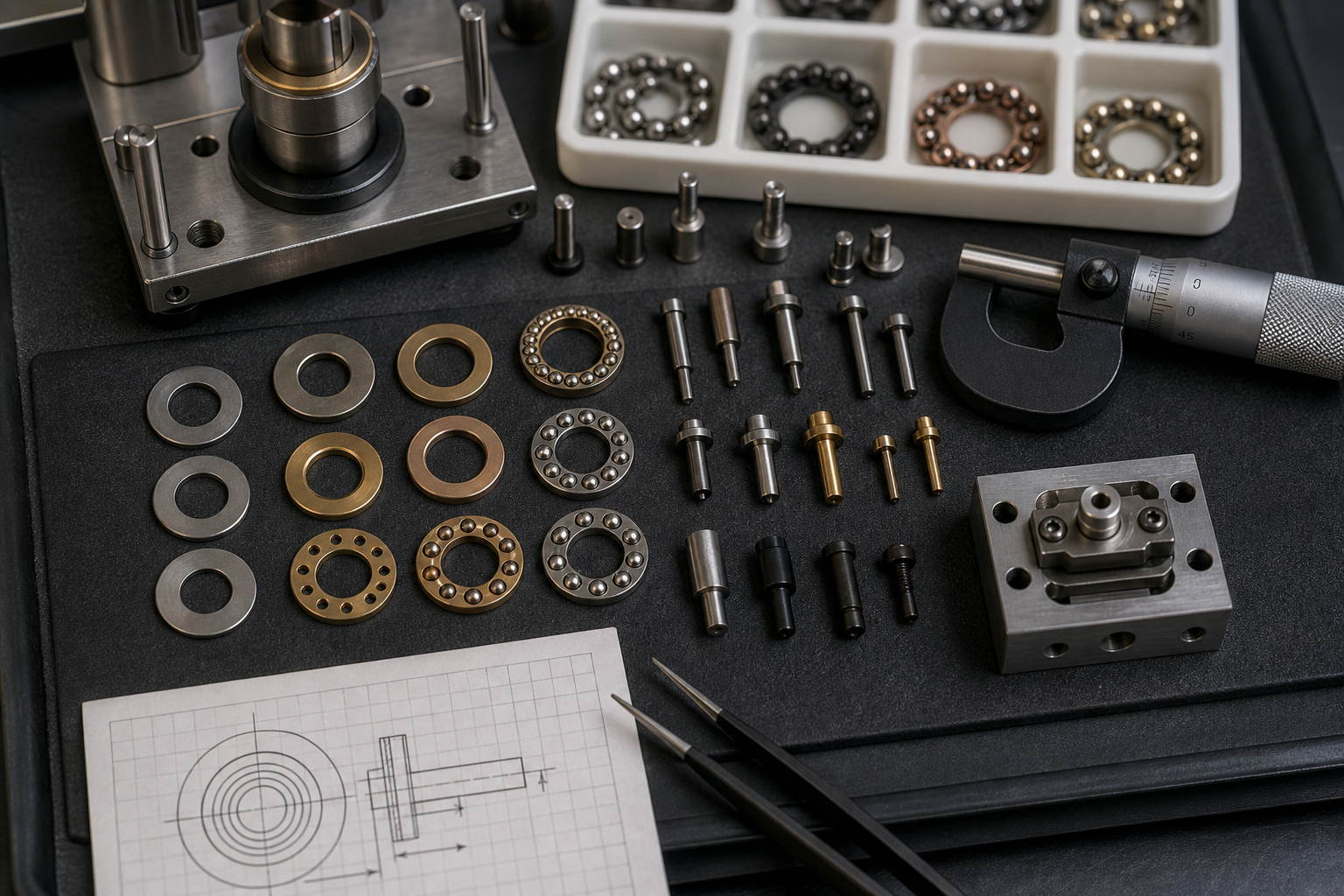
I Treat The Pivot Area As A Mechanical System
The pivot area is where many folding knife projects succeed or fail. A buyer may ask for smooth action, but smooth action comes from several controlled relationships. The pivot hole must be round and accurate. The pivot barrel must match the liner and blade stack. Washers or bearings must fit the intended price level and maintenance expectation. The stop pin must contact the tang cleanly. The screw tension must allow movement without obvious side play.
Washers and bearings also create different sourcing choices. Washers can be simple, stable, and easier to maintain. Bearings can feel smoother in some designs, but they require cleaner machining, better pocket control, and careful assembly. I do not treat bearings as automatically better. I match the choice to the product level, target price, and factory process. I also ask for a centering check and side-play check in the inspection sheet. These checks sound small, but they protect the user experience. A buyer who wants repeat production should specify how action, centering, and side play will be judged.
| Pivot part | What I check | Buyer decision |
|---|---|---|
| Pivot barrel and screw | Fit, thread quality, tension range | Choose hardware size and finish |
| Washers | Flatness, material, and clearance | Choose simple and stable action |
| Bearings | Pocket accuracy and cleanliness | Use only when the product level supports it |
| Stop pin | Contact position and strength | Protect open and closed position |
How Should Buyers Evaluate Liners, Scales, Spacers, And Screws?
Handle parts can look decorative. In production, they control alignment, weight, grip, hardware length, and assembly speed.
Buyers should evaluate liners, scales, spacers, and screws by checking stack thickness, material stability, screw engagement, edge comfort, color consistency, clip fit, and assembly tolerance.
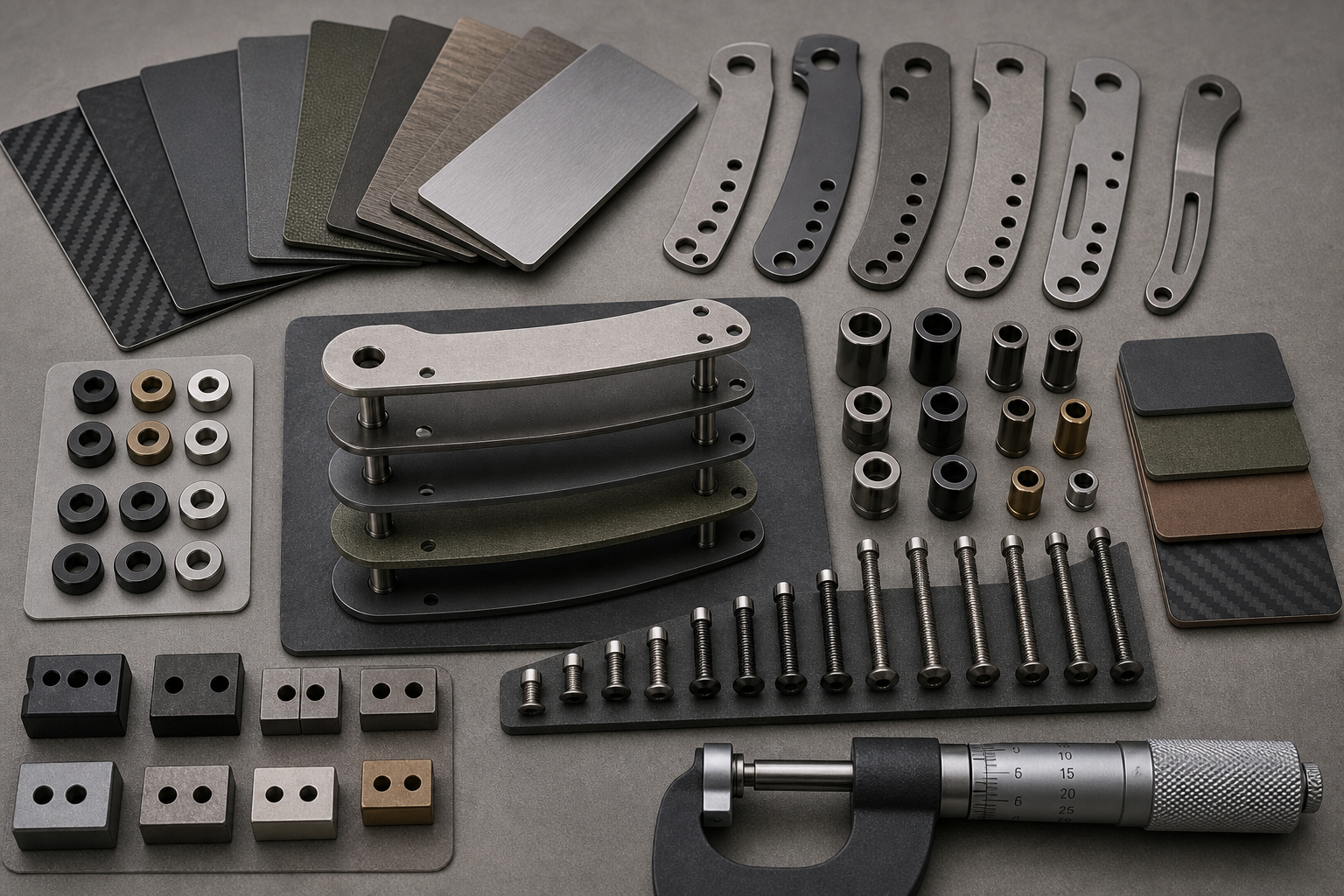
I Check The Handle As A Stack, Not A Shell
The handle is not only the part the user touches. It is a stacked structure. The liner thickness, scale thickness, spacer height, screw length, pivot length, clip screws, and pocket clip position all connect. If one layer changes, the hardware may no longer fit. If the handle scale is too soft, screws may loosen or crush the material. If the edge is too sharp, the knife feels uncomfortable even when the blade is good. If the clip screw enters too far, it can interfere with the blade or liner.
Material choice should match the target market. G10 and micarta can support grip and stable machining. Aluminum can reduce weight and create a clean modern look, but anodizing must be controlled. Stainless steel can feel solid, but it increases weight. Plastic can reduce cost, but the buyer must accept the product level. I also check screw type. A beautiful handle can still fail if screw heads strip easily or if the assembly needs too much hand adjustment. For B2B buyers, a handle spec should include material, surface texture, color sample, edge radius, screw standard, clip position, and packing protection.
| Handle item | What I inspect | Why it matters |
|---|---|---|
| Liner | Flatness, lock cut, holes, and thickness | Controls structure and alignment |
| Scale | Material, texture, color, and edge comfort | Controls grip and appearance |
| Spacer or standoff | Height, fit, and finish | Controls blade clearance and handle rigidity |
| Screws and clip | Thread, head fit, coating, and position | Controls assembly and repeat repairability |
How Should Lock, Detent, And Closing Bias Be Checked?
A folding knife may look finished but still feel unsafe or inconsistent. Lock and detent details need clear inspection language.
Lock, detent, and closing bias should be checked for engagement, release feel, blade retention, lock travel, blade centering, open stop contact, closed clearance, and repeat consistency.
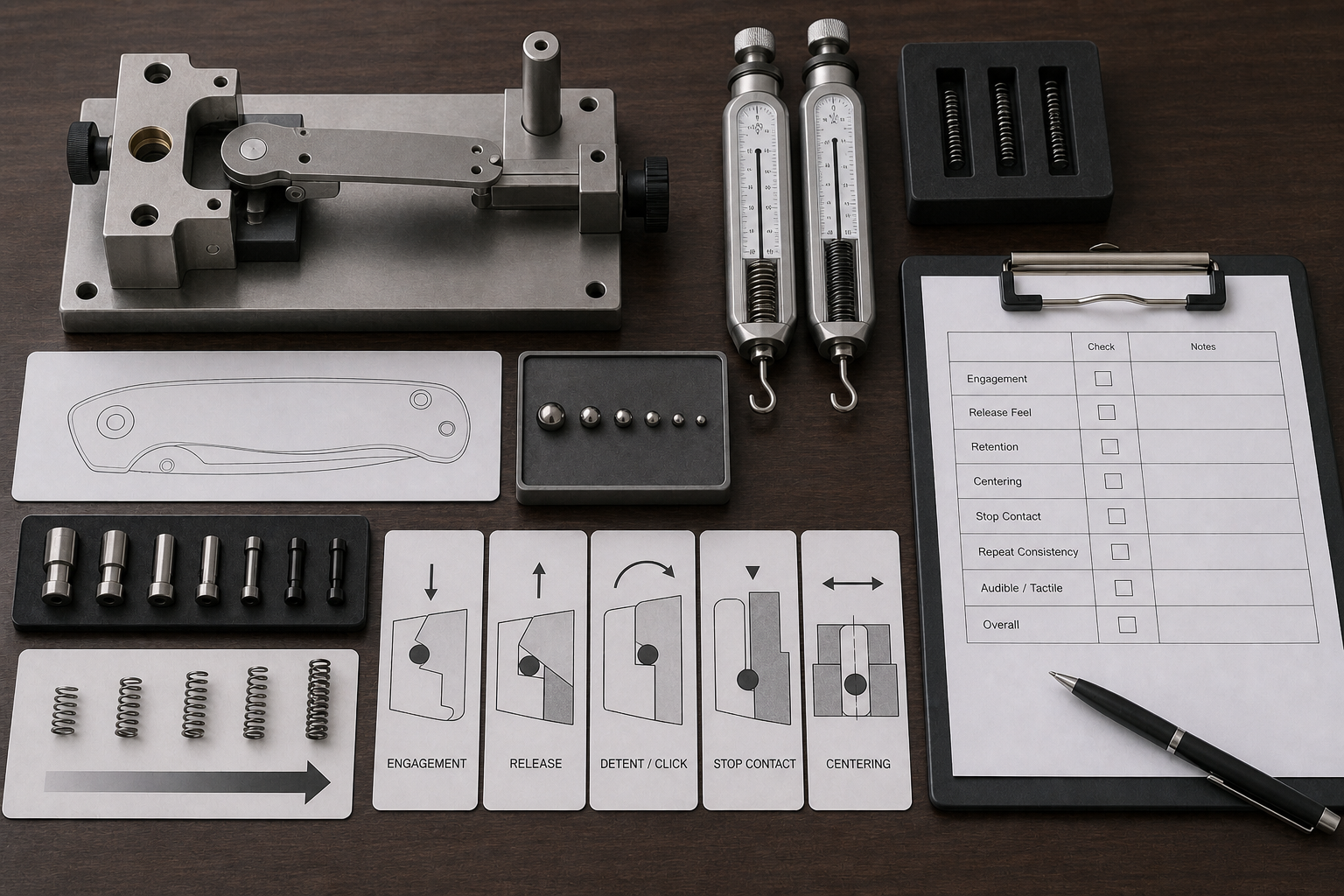
I Define The Feel Before Mass Production
The lock area needs both engineering control and buyer expectation control. A liner lock, frame lock, back lock, button lock, or crossbar-style structure will not feel the same. Each type has its own cost, machining needs, assembly time, and inspection points. The buyer should not approve a lock only by name. The buyer should approve how it engages, how it releases, how centered the blade should be, how much blade play is acceptable, and how the closed blade is retained.
The AKTI page on bias toward closure and knife mechanisms is useful because it explains the importance of a blade remaining in the closed position unless acted on by manual force. I use that concept in sourcing language. I ask the buyer to decide what closed retention, detent strength, and opening feel should be like for the product class. I avoid vague phrases such as "good action" or "solid lock." Instead, I ask for inspection samples, tolerance ranges, and an approved golden sample. A lock system should be repeatable, not only impressive in the first sample.
| Lock detail | What I check | Why it matters |
|---|---|---|
| Engagement | Contact area and lock travel | Supports stable open position |
| Release feel | Comfort and required force | Affects user experience |
| Closed retention | Detent or bias behavior | Supports safe handling and packaging |
| Consistency | Sample-to-sample variation | Protects repeat orders |
What Edge, Surface, And Assembly Details Affect Perceived Quality?
Small finishing issues can damage a buyer's brand. Scratches, burrs, uneven edges, and loose screws are easy to notice.
Perceived quality depends on edge symmetry, sharpening consistency, surface finish, burr removal, screw fit, clip alignment, blade centering, handle comfort, clean assembly, and final wipe-down.
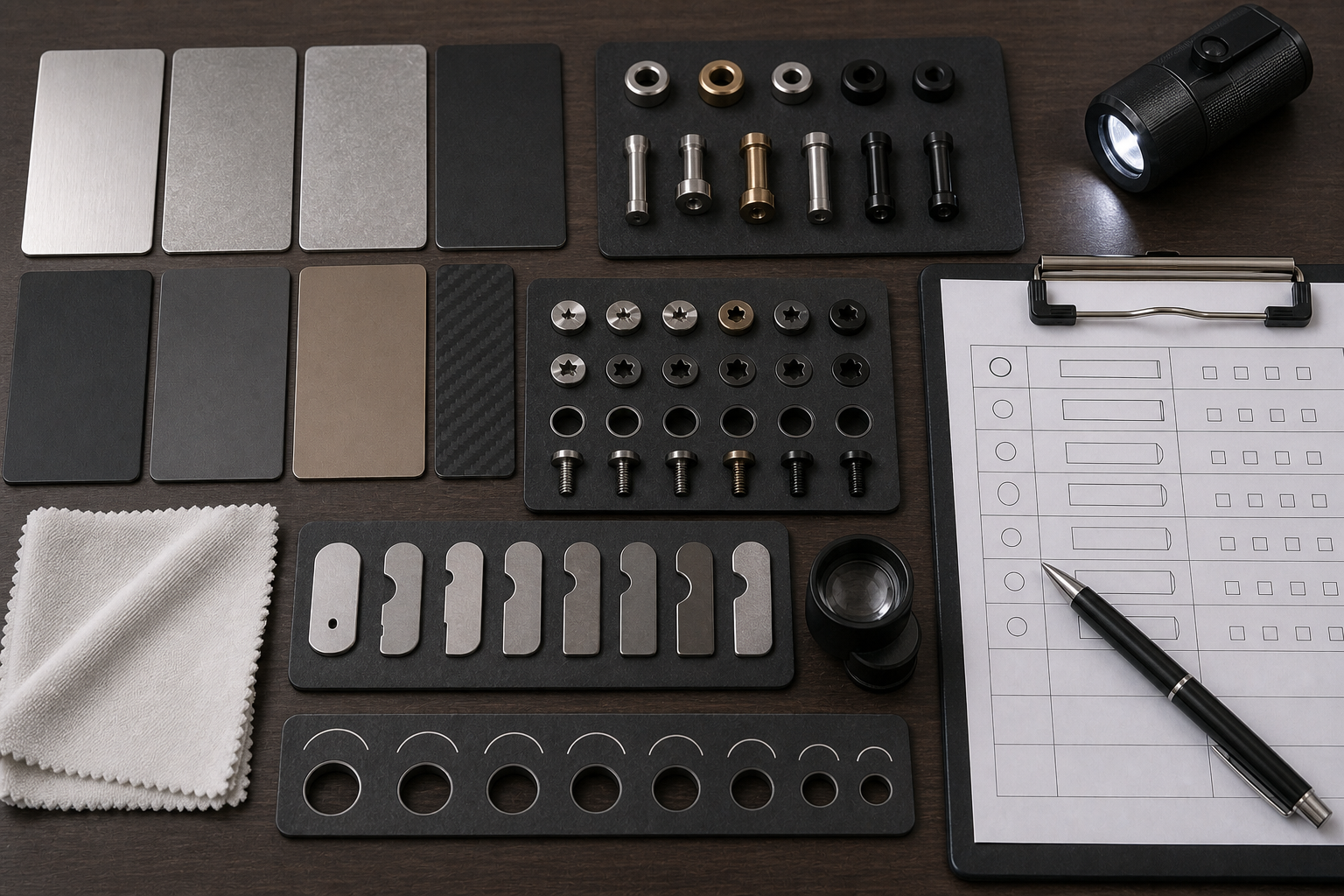
I Inspect The Details Buyers See First
Final users often judge a knife quickly. They notice blade centering, edge symmetry, finish scratches, screw heads, clip alignment, handle comfort, and opening feel. B2B buyers notice these details too because they affect reviews, returns, and repeat orders. I like to create a final assembly checklist that covers both function and appearance. The checklist should include blade centering, side play, lock engagement, screw tightness, clip fit, surface finish, burrs, edge sharpness, packaging cleanliness, and carton count.
Hardness is another control point for blade consistency. The NIST Rockwell hardness measurement guide supports the importance of proper Rockwell hardness measurement practice for metallic materials. In a knife order, hardness alone does not prove the whole product is good. But it is a useful process check when it is tied to steel grade, heat treatment, edge geometry, and inspection records. I prefer a practical system: incoming material check, in-process check, assembly check, sharpening check, and final check. This catches problems before they become a shipment issue.
| Quality detail | What I check | Buyer benefit |
|---|---|---|
| Edge | Symmetry, burr removal, and sharpness | Supports product satisfaction |
| Surface | Scratches, coating, stonewash, or satin match | Protects perceived value |
| Assembly | Screw fit, clip alignment, and centering | Reduces complaints |
| Hardness | Steel-specific HRC record where needed | Supports batch consistency |
Which Classification, Packaging, And Label Checks Belong In The Brief?
A knife can be well made and still face import or sales-channel problems. Compliance should not wait until shipment.
Buyers should include customs classification, local knife rules, marketplace policy, packaging claims, warning labels, material documents, carton protection, and target-market review in the brief.
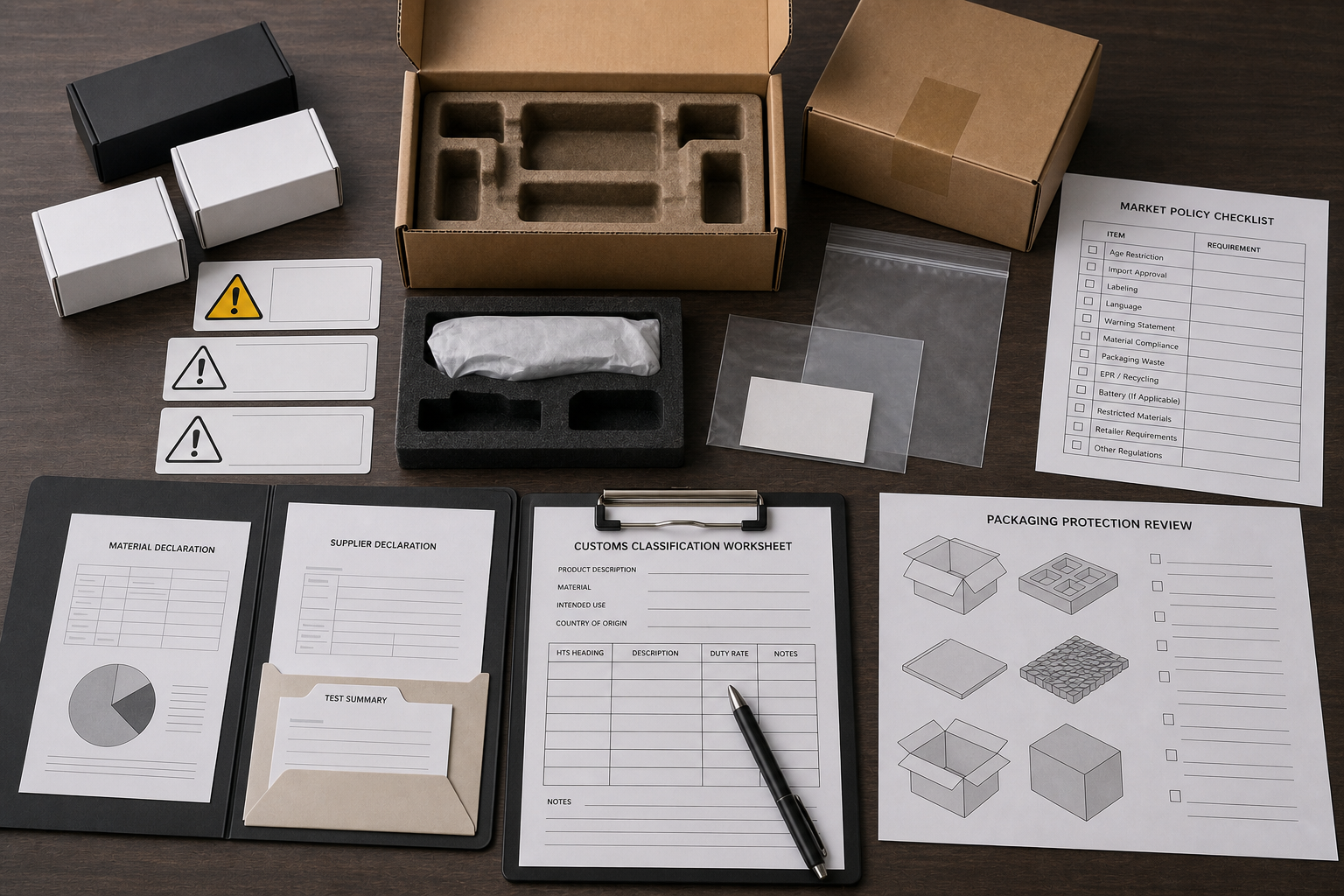
I Treat Market Rules As A Product Input
This section is not legal advice. It is a sourcing reminder. Folding knife rules vary by country, state, marketplace, carrier, and sales channel. A buyer should confirm the target market before freezing the design. Blade length, lock type, opening feature, edge type, packaging wording, and product category can all matter. If the buyer sells on a marketplace, platform policy may be different from customs classification or local law.
For customs context, the United Nations Statistics Division lists HS 8211 for knives with cutting blades and related subheadings, including pocket and pen knives. This is useful for broker discussion, but it does not replace local customs advice. Packaging also matters. The product should be protected in transit, and the packaging should not make unsupported claims. ISO 4180 gives general rules for compiling performance test schedules for complete filled transport packages. I use that as a packaging planning reference, not as a claim that every box is certified.
| Brief item | What to confirm | Why it matters |
|---|---|---|
| Classification | HS heading and broker view | Supports import planning |
| Market rules | Blade type, lock, length, and channel policy | Prevents sales mismatch |
| Packaging wording | Material, function, care, and warnings | Reduces unsupported claims |
| Transport packing | Insert, box, carton, and drop-risk thinking | Protects finish and hardware |
What RFQ And QC Details Should Buyers Send To The Factory?
An unclear RFQ makes the factory guess. Guessing creates sample delays, unstable quotes, and wrong production standards.
Buyers should send drawings, target market, target price, quantity, steel, hardness target, blade geometry, pivot system, lock type, handle stack, finish, clip, packaging, compliance notes, and QC checklist.
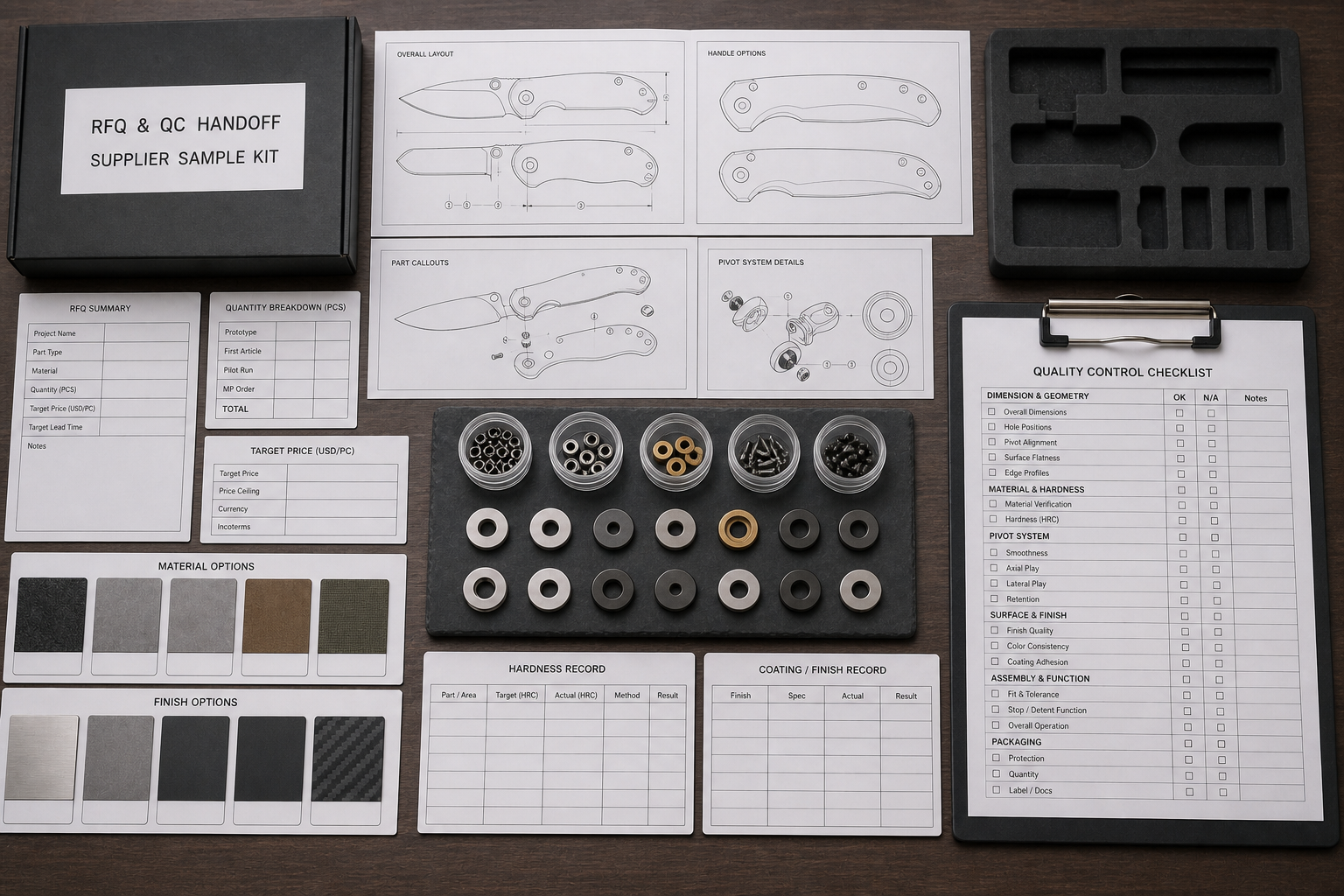
I Ask For A Product Standard, Not Only A Picture
A good RFQ should tell the factory what must stay fixed and what can be optimized. The buyer may fix the blade shape but allow steel alternatives. The buyer may require G10 scales but allow different texture levels. The buyer may prefer bearings but accept washers if the target price is tight. This gives the factory room to solve the project without changing the buyer's real goal.
I ask buyers to send blade drawings, closed and open views, blade thickness, steel grade, heat treatment target if known, pivot system, lock type, handle material, liner material, spacer choice, screw finish, clip position, logo method, surface finish, edge requirement, packaging style, target market, quantity, target price, and inspection needs. ISO 9001 supports quality management thinking around controlled processes and customer requirements. ISO 10007 supports configuration management thinking from concept to later product stages. In simple factory language, keep the approved sample, drawing, material card, finish board, packaging proof, and inspection sheet together.
| RFQ and QC field | What I need | Why it helps |
|---|---|---|
| Product drawings | Open view, closed view, and part details | Reduces structure guessing |
| Material and finish | Steel, handle, hardware, and surface finish | Improves quote accuracy |
| Function standard | Action, centering, lock, side play, and edge | Supports repeat inspection |
| Version record | Sample, drawing, packaging, and checklist | Protects repeat orders |
Turn this article into a folding knife project.
Share your blade type, lock direction, steel preference, handle material, quantity, target market, and packaging needs. Vast State can prepare OEM/ODM options.
Conclusion
I evaluate folding knife anatomy by turning every part into a clear spec, inspection point, cost decision, and repeat-production record.
Source Notes
- AKTI approved knife definitions supports industry terminology context for knife types, blade length, effective cutting edge, and mechanism language.
- AKTI bias toward closure and knife mechanisms supports discussion of closed blade retention and mechanism language.
- Alleima 14C28N knife steel supports modern blade steel specification discussion.
- NIST Rockwell hardness guide supports hardness measurement discussion for metallic materials.
- UNSD HS 8211 supports customs classification context for knives and pocket knives, but local broker advice is still needed.
- ISO 4180 supports packaging performance-test planning for complete filled transport packages.
- ISO 9001 and ISO 10007 support quality management and configuration record concepts used in this article.