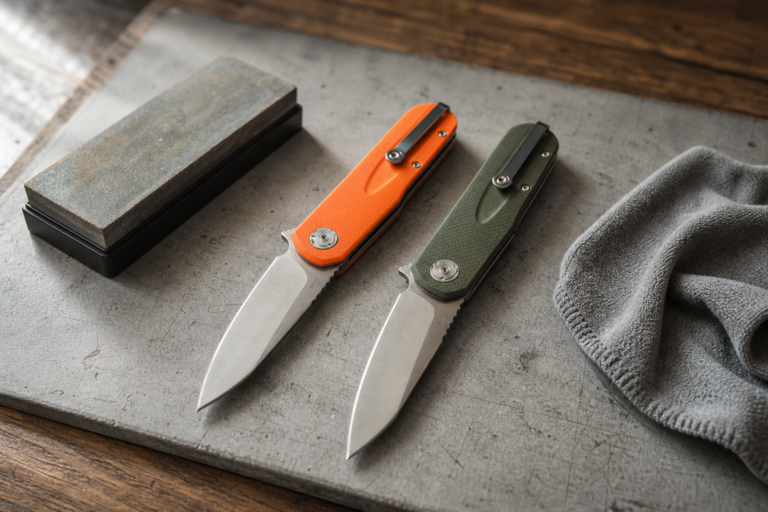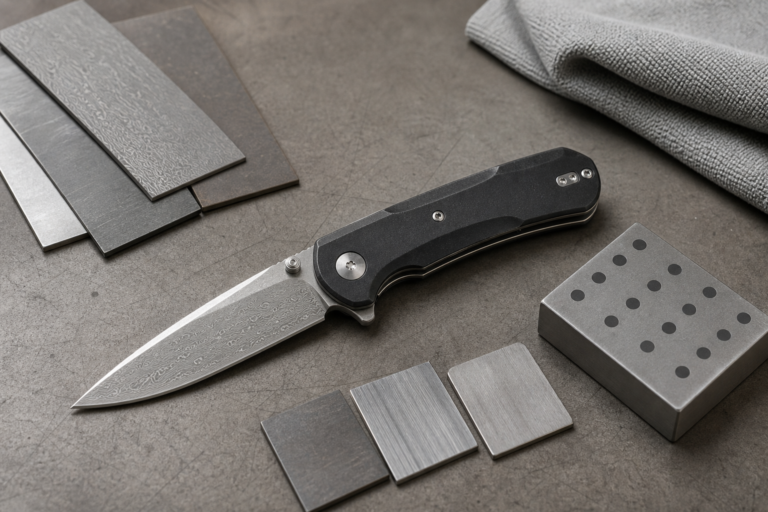
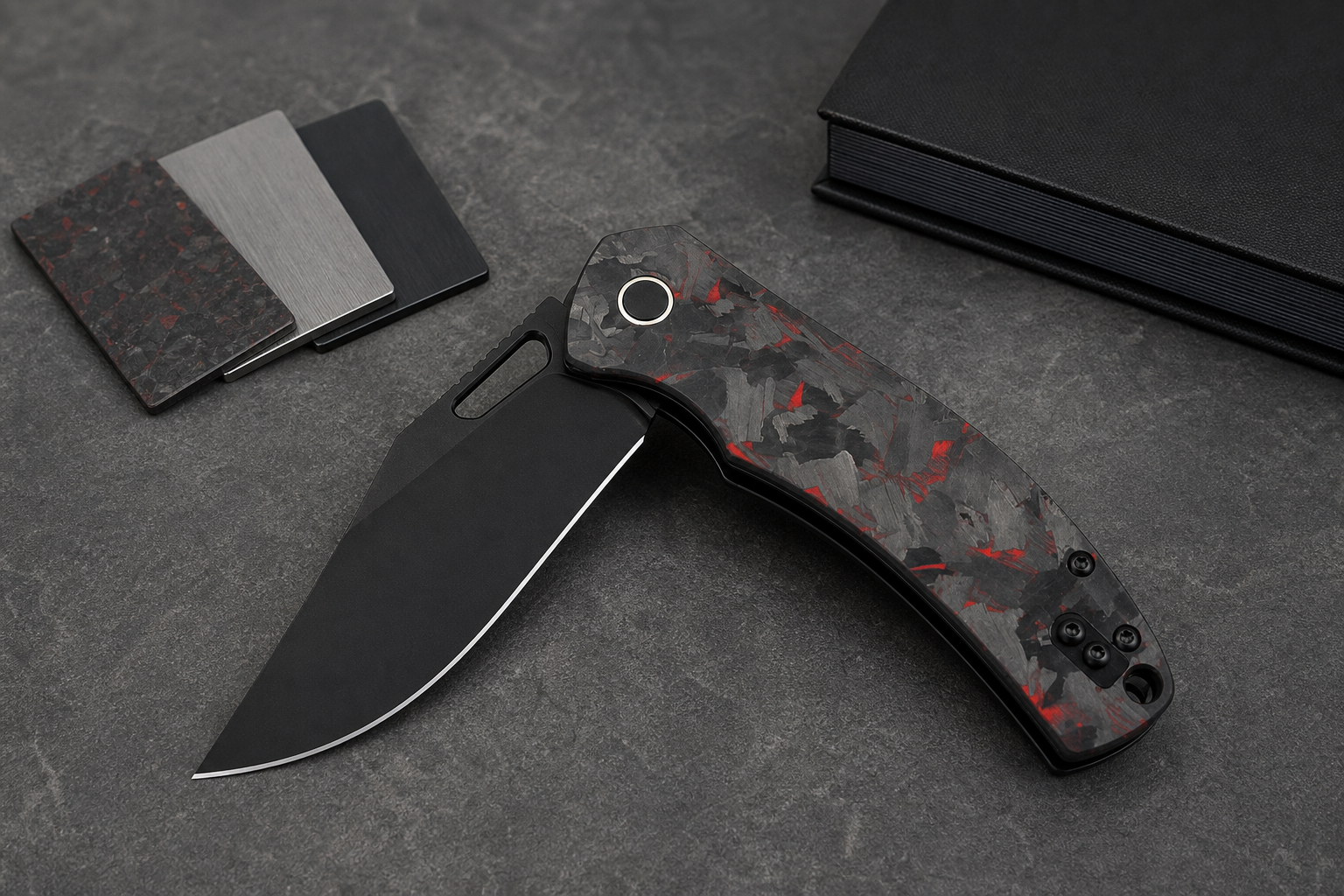
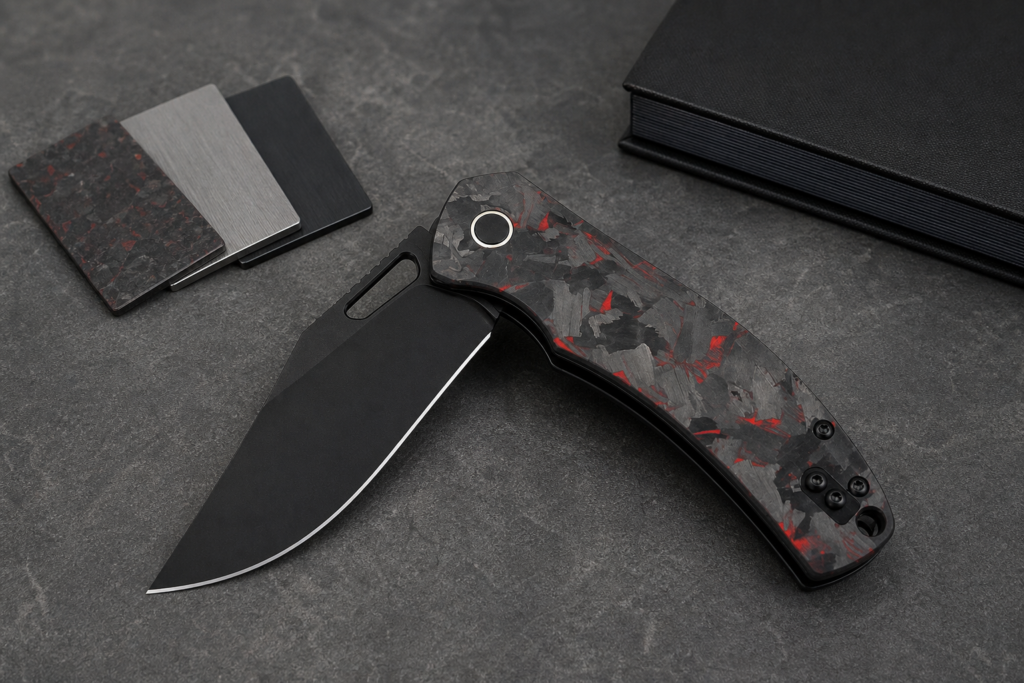
A folding knife looks compact and simple. In production, it is a moving product with many failure points.
Buyers should specify folding knives by defining blade profile, pivot structure, lock type, opening method, handle material, clip, closed-blade coverage, screw security, safety instructions, packaging, compliance scope, and QC checks before mass production.
Quick buyer brief:
- Answer: A folding knife brief should control the blade, pivot, lock, handle, clip, hardware, safety guidance, packaging, and inspection records, not just the steel and logo.
- Buyer context: This guide is for EDC brands, outdoor brands, retail buyers, importers, distributors, private label teams, promotional product buyers, and OEM/ODM sourcing managers.
- Key checks: Use case, blade size, blade profile, edge geometry, lock engagement, opening force, closing safety, pivot play, blade centering, handle ergonomics, clip position, closed-state coverage, screw torque, packaging protection, warning copy, and pre-shipment inspection.
Developing a folding knife line for your brand?
Vast State supports OEM/ODM folding knife projects, including blade steel, lock structure, handle material, finish, logo method, packaging, and quality inspection planning.
Many "folding knife 101" articles explain basic parts to consumers. Buyers need more than definitions. A folding knife is a mechanical product with a blade, pivot, lock, handle, screws, washers or bearings, clip, stop pin, detent or retention feature, packaging, and instruction copy. If any of those parts are vague, the product can feel cheap, unsafe, or inconsistent.
For OEM/ODM projects, the goal is not to chase the most complex mechanism. The goal is to create a folding knife that matches the target user, price range, sales market, and production capability. A simple, controlled folding knife can be better than a complicated sample that cannot be repeated.
Why Should Buyers Treat Folding Knives as Mechanical Products?
A folding knife is not only a small blade with a handle.
Buyers should treat folding knives as mechanical products because pivot fit, lock engagement, blade centering, handle alignment, screw security, opening feel, closing safety, and packaging all affect product quality.
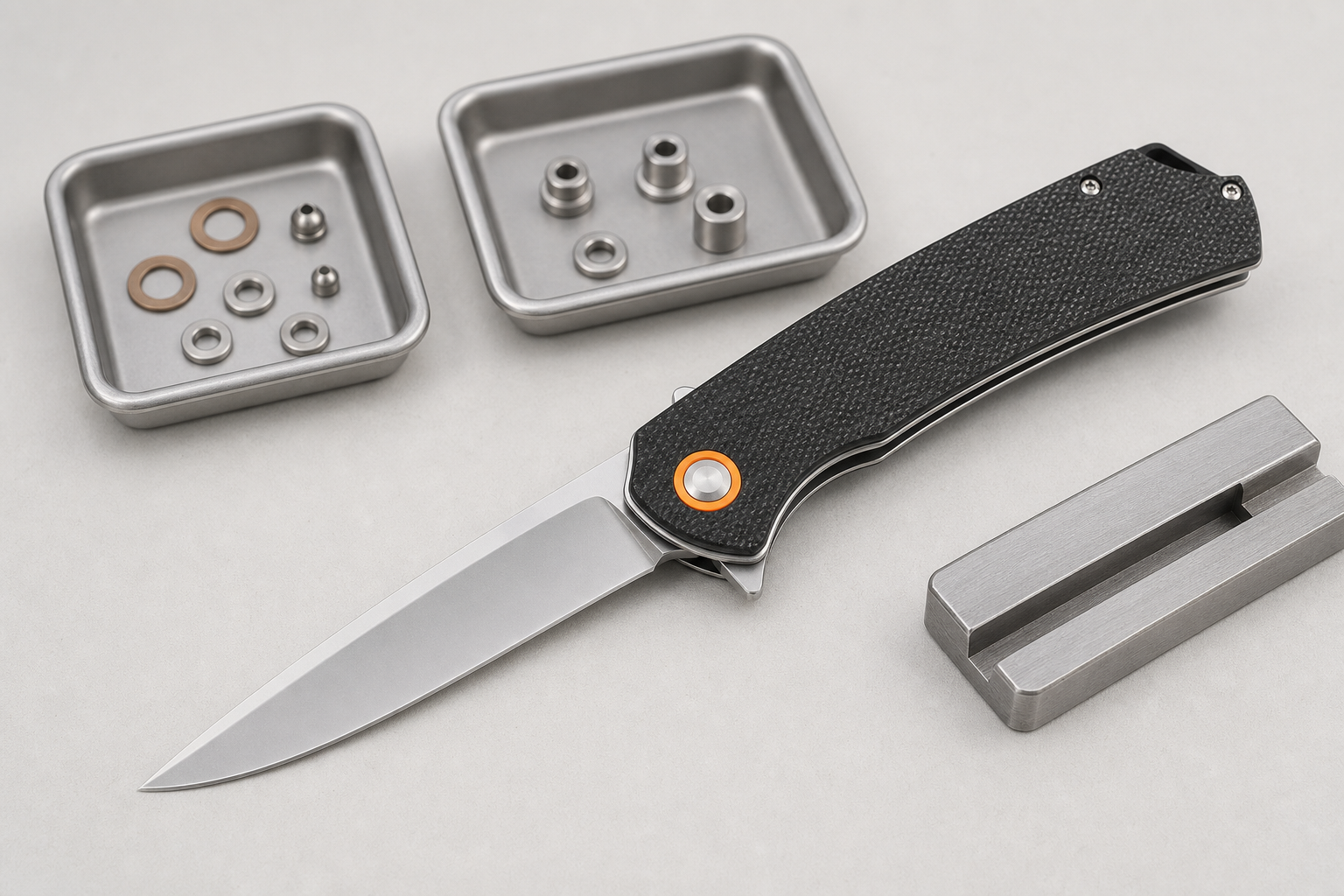
I Do Not Approve a Folding Knife by Looks Alone
A folding knife can look good in photos and still fail in use. It may have blade play, weak detent, poor centering, rough opening, sharp handle edges, loose screws, unstable lock engagement, or package movement. These are not small details. They decide whether customers trust the product.
The CPSC manufacturing best practices page supports a useful product-development principle: safety should be considered at the design stage, with hazard identification, foreseeable use, and a sequence of eliminating, guarding against, or warning about risks. For folding knives, this means buyers should review the mechanical structure before writing warnings.
Folding knives need a system-level brief:
- Blade profile and edge
- Pivot, washers, bearings, or bushings
- Stop pin and closed-position control
- Lock type and engagement target
- Handle scales, liners, and spacers
- Clip position and screw security
- Opening method and closing force
- Package protection and instruction copy
- QC checks and approved sample records
If the buyer does not define those areas, the supplier will make assumptions. Some assumptions may reduce cost, but they can also reduce quality.
Which Folding Knife Blade Details Should Buyers Define?
The blade must fit the mechanism, the handle, and the use case.
Buyers should define blade length, thickness, profile, grind, edge angle target, point geometry, opening feature, closed-blade coverage, finish, logo placement, and acceptable centering or rub limits.
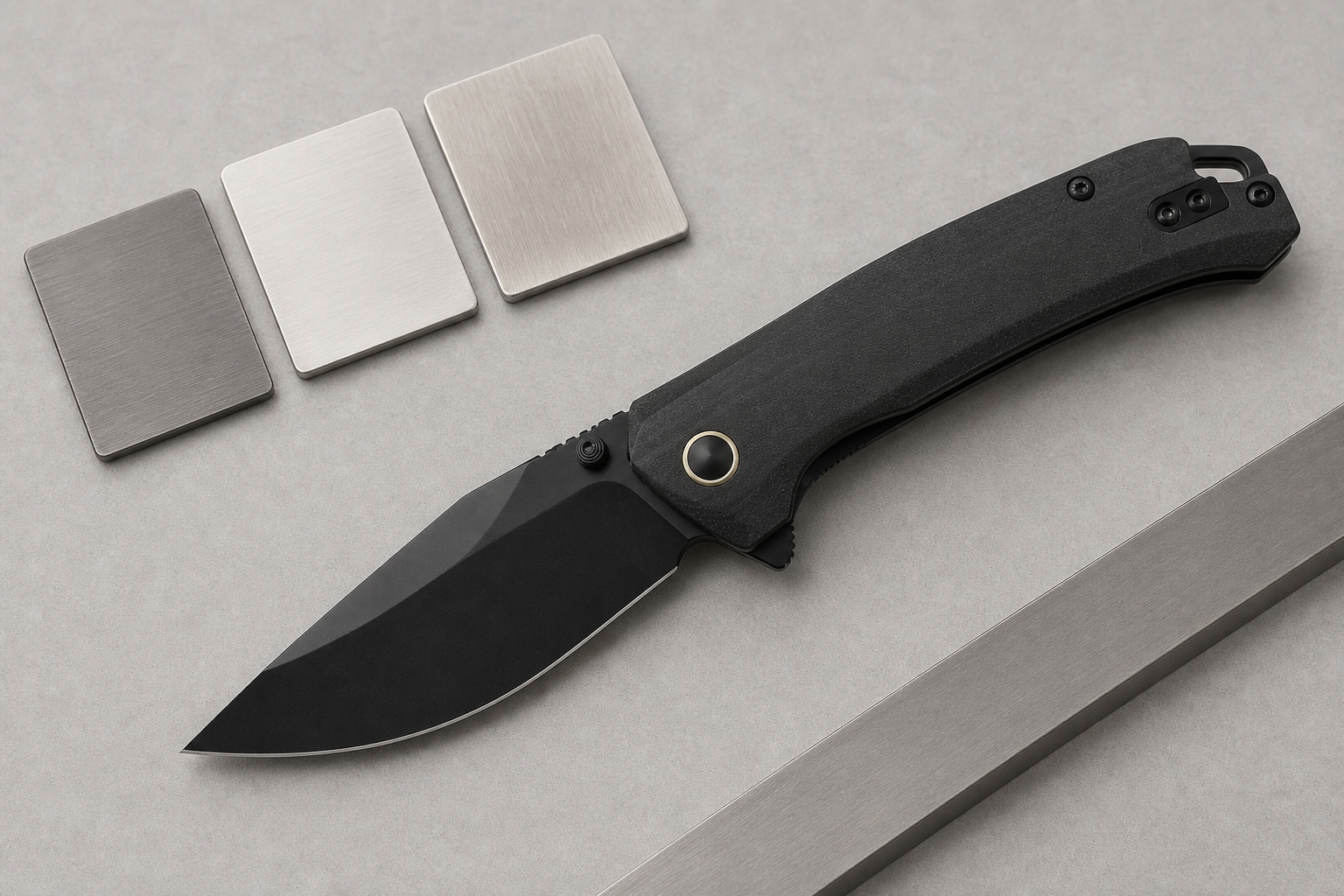
I Specify Blade Geometry With the Closed Knife in Mind
Folding knife blade geometry is different from fixed-blade geometry because the blade must move into the handle. The point, edge, ricasso, tang, kick, stop surface, and opening feature all affect how the knife opens and closes. A blade shape that looks attractive may create poor closed coverage, handle interference, or unsafe finger clearance.
The CCOHS sharp blade safety guidance gives general safety guidance for sharp tools, including using the right tool, inspecting blades, keeping tools stored securely, and avoiding unsafe pressure. For buyers, that supports the practical idea that blade geometry, storage, and instructions should match the intended job.
For an OEM/ODM folding knife, buyers should define:
- Blade length and closed length
- Blade thickness and grind height
- Tip style and point location
- Edge profile and edge angle target
- Opening feature position
- Tang and stop surface geometry
- Closed edge clearance inside handle
- Blade finish and logo placement
- Burr, scratch, and grind symmetry limits
The blade should be checked in both open and closed positions. A blade that cuts well but rubs the liner, sits off-center, or exposes the edge when closed is not ready for production.
How Should Buyers Choose Opening Method and Lock Type?
Opening and locking features shape both user experience and inspection risk.
Buyers should choose opening method and lock type based on target market, user skill, legal sensitivity, cost, reliability, closing safety, cleaning, serviceability, and factory capability.
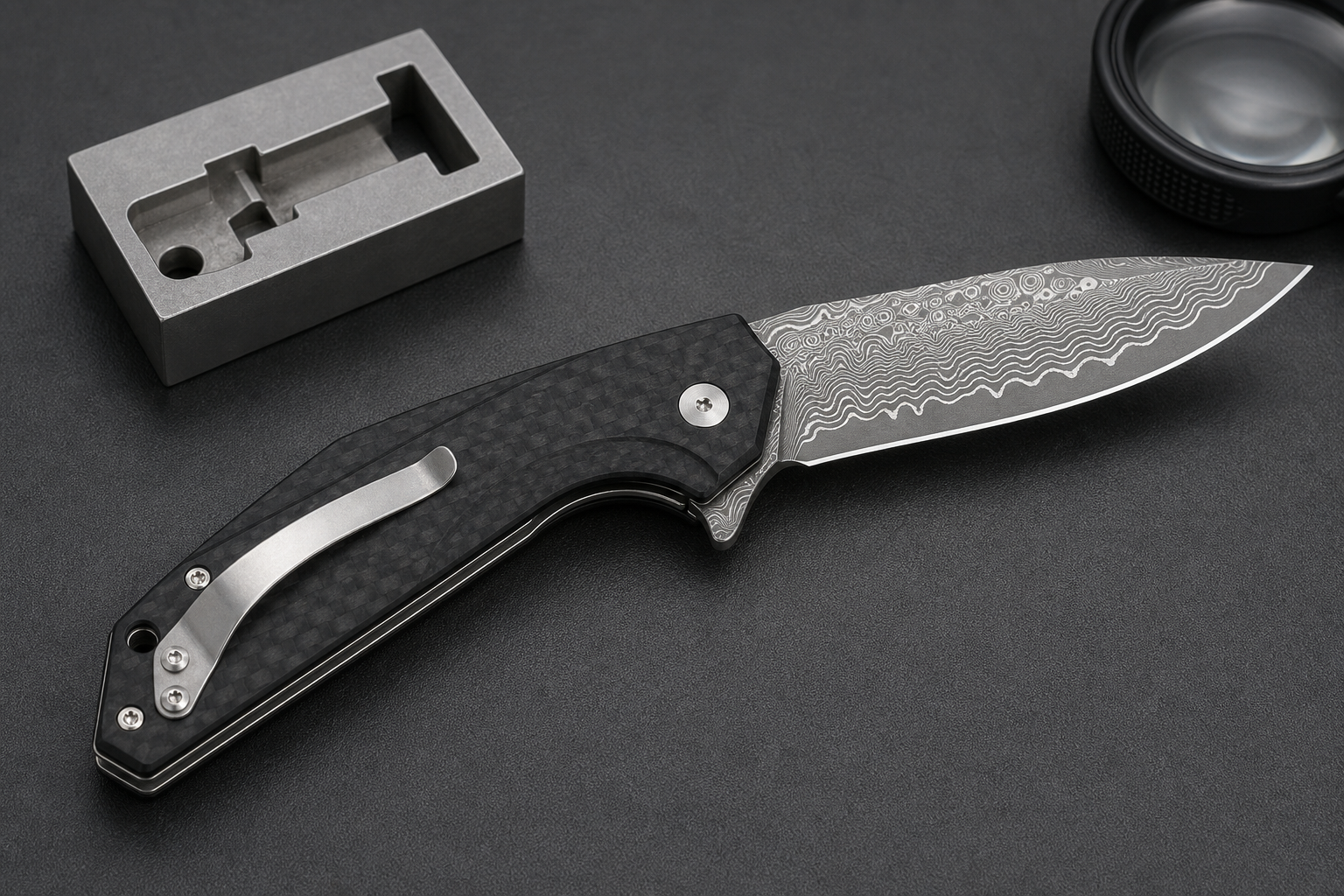
I Choose Mechanisms the Factory Can Repeat
Opening methods may include nail nick, thumb stud, thumb hole style opener, flipper-style tab, or two-hand opening. Lock types may include liner lock, frame lock, back lock, button-style lock, slipjoint, or non-locking friction designs. Each option affects cost, assembly, inspection, market positioning, and local rule review.
The buyer should not choose a mechanism only because it looks popular. A fast-opening design may create legal or platform sensitivity in some markets. A complex lock may feel premium but require tighter tolerances and more inspection. A simple two-hand opening design may be easier to sell in conservative channels. A slipjoint may suit certain markets but needs clear user guidance because it does not lock in the same way as locking designs.
Mechanism decisions should include:
- Opening force target
- Closing force and finger-clearance review
- Lock engagement and lock release feel
- Blade play limit
- Detent or closed retention target
- Left-hand or right-hand usability
- Cleaning and debris risk
- Legal and channel review by target market
The buyer should test mechanisms on multiple samples. One smooth sample does not prove mass-production consistency.
What Pivot, Washer, Bearing, and Hardware Details Matter?
Small parts decide whether the folding knife feels precise or loose.
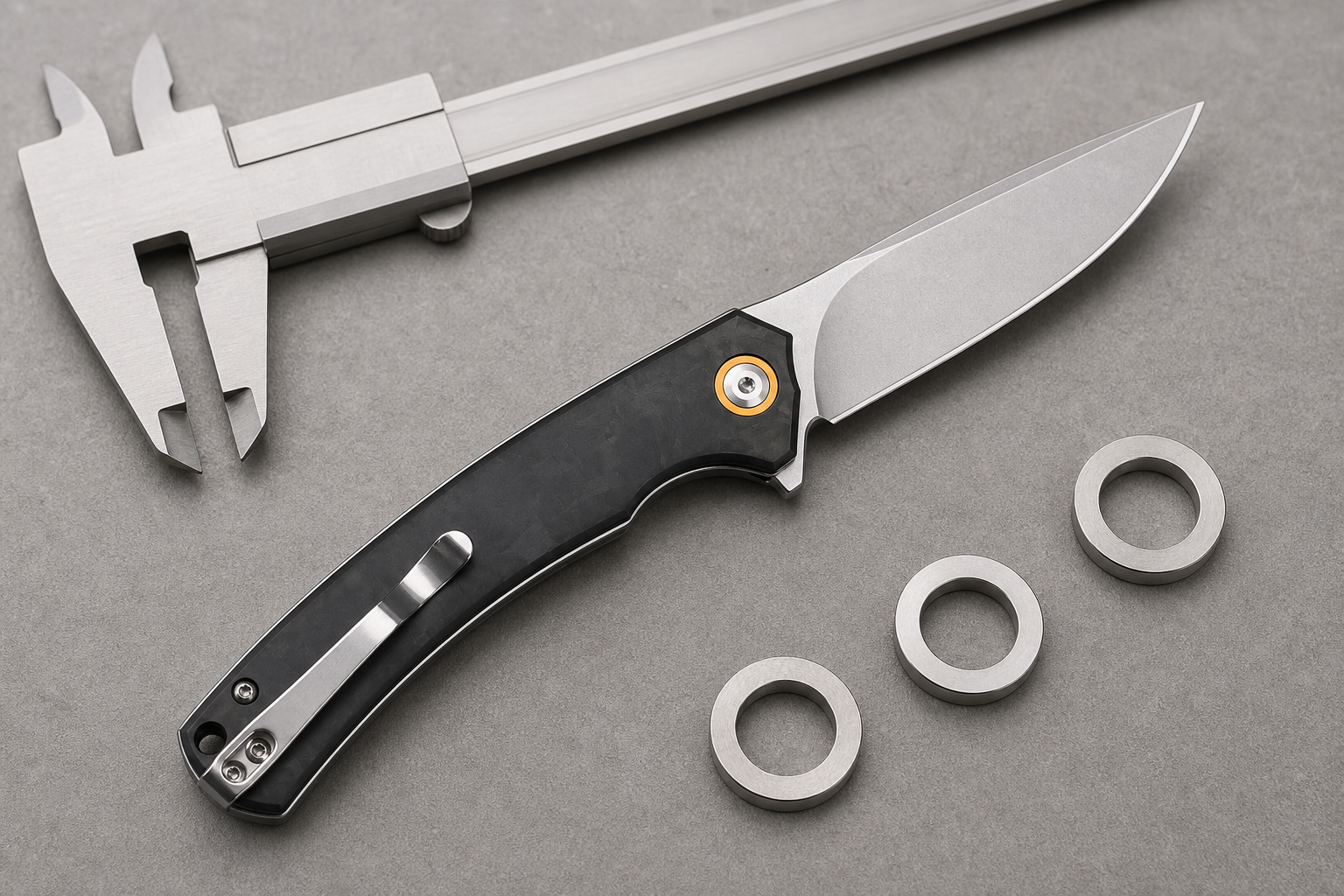
Buyers should specify pivot diameter, screw type, washers, bearings, bushings, stop pin, spacers, liners, threadlocker policy, screw torque, blade play limit, centering limit, and serviceability expectations.
I Treat Hardware as a Quality System
Pivot and hardware choices affect opening feel, blade centering, durability, maintenance, and customer complaints. A low-cost washer system can be reliable if controlled well. A bearing system can feel smooth, but it may need better sealing, cleanliness, and assembly control. A decorative pivot can support the product story, but it should not make service or QC harder.
The NIST dimensional metrology page supports the role of measurement in manufacturing and process improvement. In folding knives, buyers can apply that thinking to pivot hole diameter, washer thickness, blade thickness, liner spacing, stop pin position, handle scale thickness, screw length, and closed-blade clearance.
Hardware fields to define:
- Pivot screw style and material
- Washer or bearing material
- Stop pin diameter and position
- Liner and spacer material
- Screw thread and length
- Threadlocker use
- Torque or assembly method
- Blade play acceptance
- Centering acceptance
- Spare part or service policy
If the supplier changes screw length, washer material, or stop pin position after sample approval, the whole knife can feel different. Hardware belongs in the BOM.
How Should Handle, Clip, and Ergonomics Be Specified?
A folding knife handle must work open, closed, clipped, and in the package.
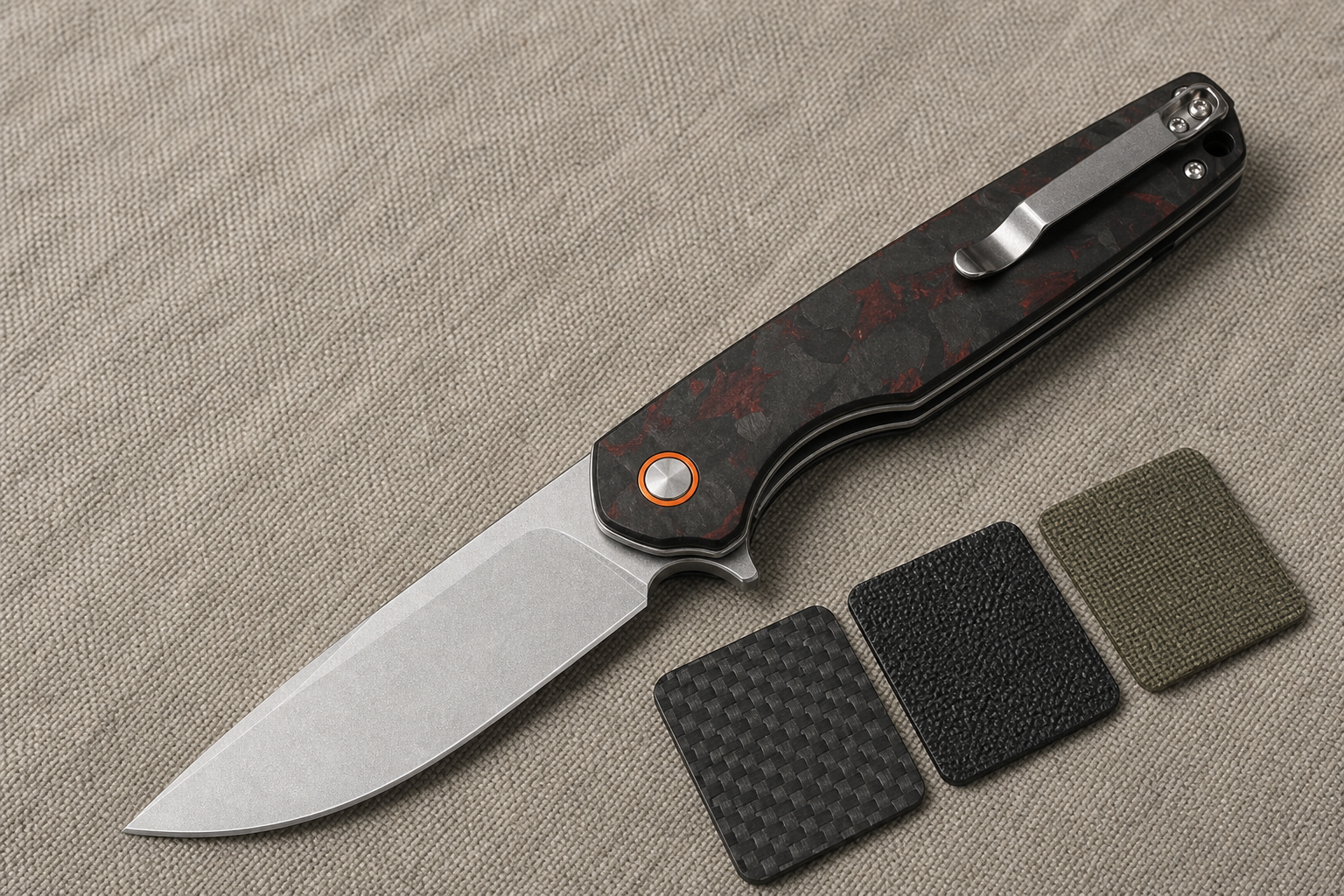
Buyers should specify handle material, thickness, edge radius, texture, liner structure, clip position, screw security, pocket feel, closed-blade coverage, grip comfort, and packaging clearance.
I Review the Handle in Four Positions
The CCOHS hand tool design guidance gives useful principles for handle design, including shape, grip, texture, weight, and hazards. Folding knife buyers should apply that thinking to both the open and closed product.
A folding knife handle has four jobs. It must hold the blade safely when closed. It must support the hand when open. It must carry or store comfortably if a clip or pouch is included. It must fit the package without damaging the blade, clip, or carton. A handle that feels good open may still be awkward in pocket carry. A clip that looks strong may tear packaging or create a hot spot.
Handle and clip fields to define:
- Handle material and finish
- Liner or scale structure
- Edge radius and chamfer
- Texture and grip area
- Clip side and tip-up or tip-down position
- Clip screw type and retention
- Closed thickness and pocket profile
- Finger clearance near lock release
- Logo position and wear risk
- Packaging contact points
Buyers should test the handle with the final clip and final package, not as separate pieces.
What Safety, Packaging, and Instructions Should Folding Knives Include?
Folding knives need clear guidance because the blade moves.
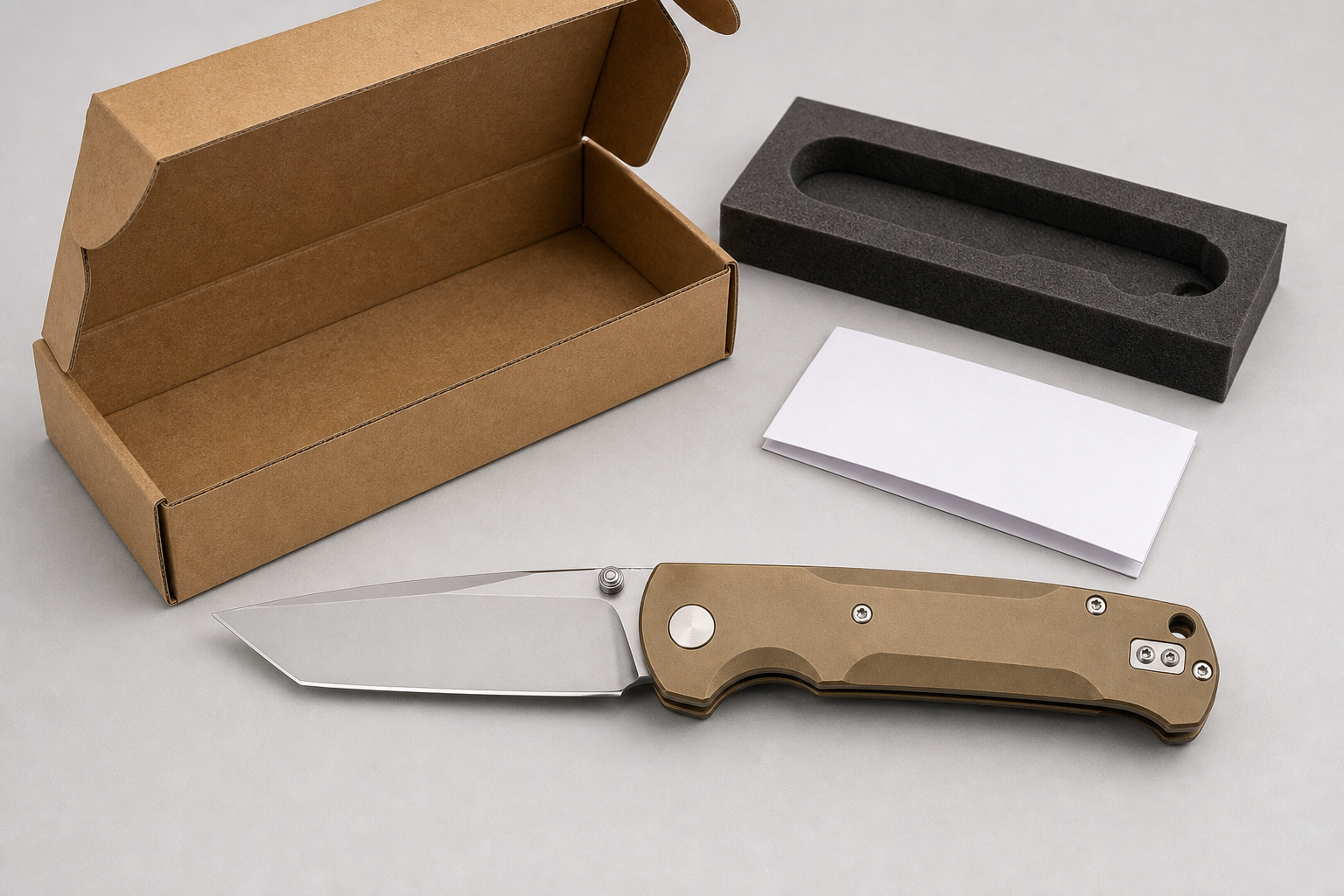
Packaging and instructions should explain intended use, safe opening and closing, lock or non-lock behavior, blade storage, cleaning, inspection, damaged-product warnings, local rules, and age-positioning where relevant.
I Make the First Unboxing Safe and Clear
The package is part of the folding knife safety system. It should keep the knife closed or protected during shipping and retail handling. It should prevent movement that can damage the handle, clip, blade edge, or carton. It should place important instructions where the customer can see them.
The CPSC labeling overview notes that labeling requirements can depend on product type, design, components, and intended age group. Buyers should review target-market rules and channel expectations instead of copying a generic label.
Instruction copy should be product-specific:
- Keep the knife closed when not in use.
- Keep fingers away from the blade path when closing.
- Confirm the lock or mechanism before use, if applicable.
- Do not use the knife if screws, lock, handle, or blade are damaged.
- Clean and dry before storage.
- Follow local carry and transport rules.
- Keep away from children where appropriate.
The article and package should avoid self-defense, combat, or aggressive positioning. A folding knife can be positioned as a practical cutting tool without creating unnecessary channel risk.
Which QC Checks Confirm Folding Knife Quality?
Folding knife QC should check motion, alignment, safety, and packaging together.
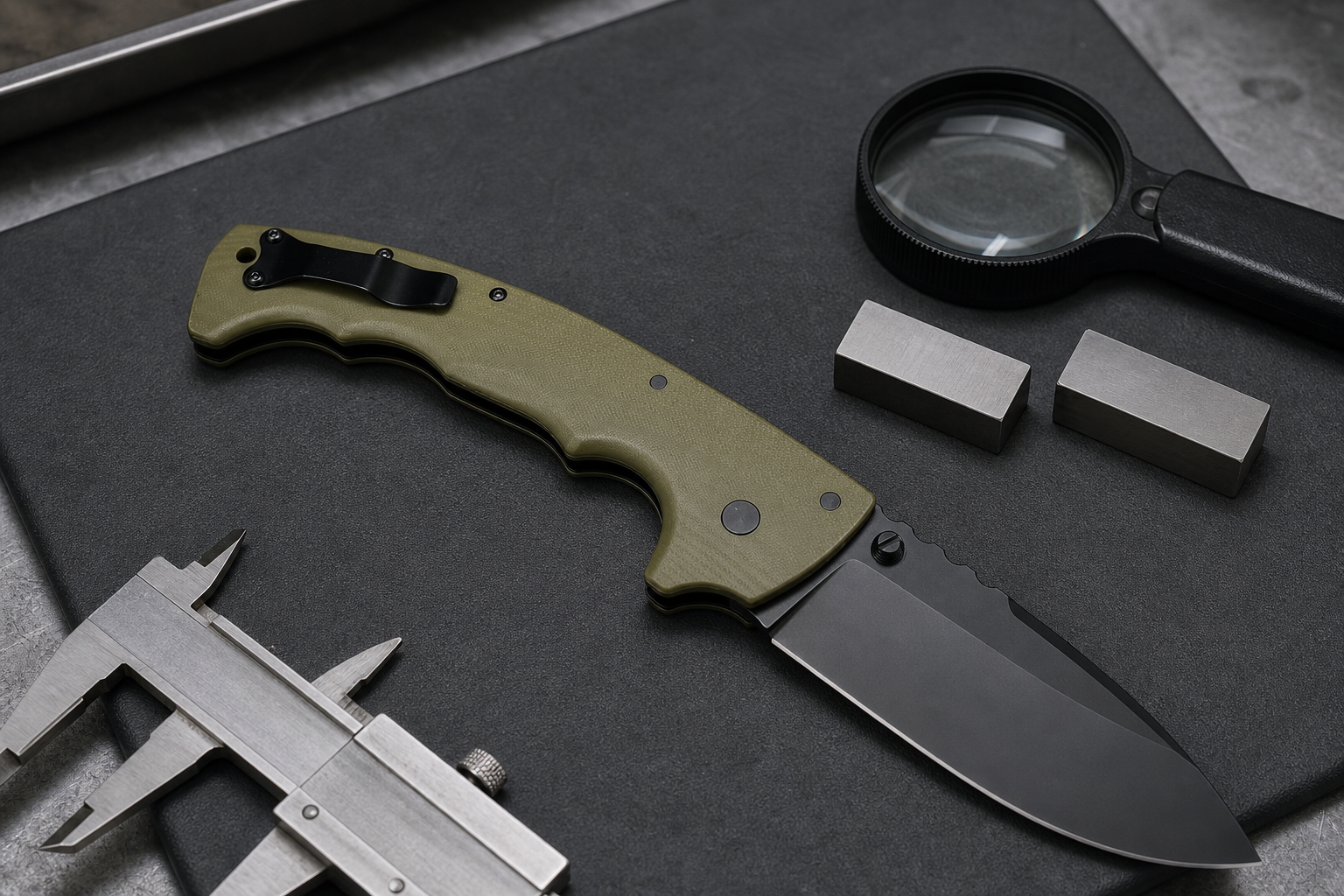
QC should verify blade centering, blade play, lock engagement, opening and closing feel, screw security, edge condition, handle fit, clip retention, finish, packaging fit, instructions, and final records.
I Inspect the Knife in Open, Closed, and Packaged States
Folding knife inspection must include more than surface finish. The QC team should open and close the knife, check lock or slipjoint behavior, check centering, check blade play, inspect screws, inspect handle gaps, and confirm the product fits the package.
ISO 9001 is useful as a quality-management reference because it frames quality as defined requirements, records, customer expectations, and process improvement. Buyers do not need to claim ISO certification. They can still use the quality-system mindset: define what matters, inspect against it, record results, and review failures.
Useful QC checks:
- Blade centering when closed
- No unsafe blade exposure when closed
- Opening force and smoothness
- Lock engagement or slipjoint tension
- Vertical and side-to-side blade play
- Pivot screw and handle screw security
- Clip retention and screw condition
- Edge finish and burr review
- Handle gap and finish
- Packaging movement and instruction placement
The buyer should define acceptance limits before inspection. "Smooth action" and "good centering" are not enough. The supplier and QC team need measurable or photo-based standards.
How Should Buyers Control Claims and Market Positioning?
Marketing can create problems when claims outrun the product evidence.
Buyers should control claims about steel, lock strength, corrosion resistance, safety, legality, professional use, environmental content, and durability with evidence and market-specific review.
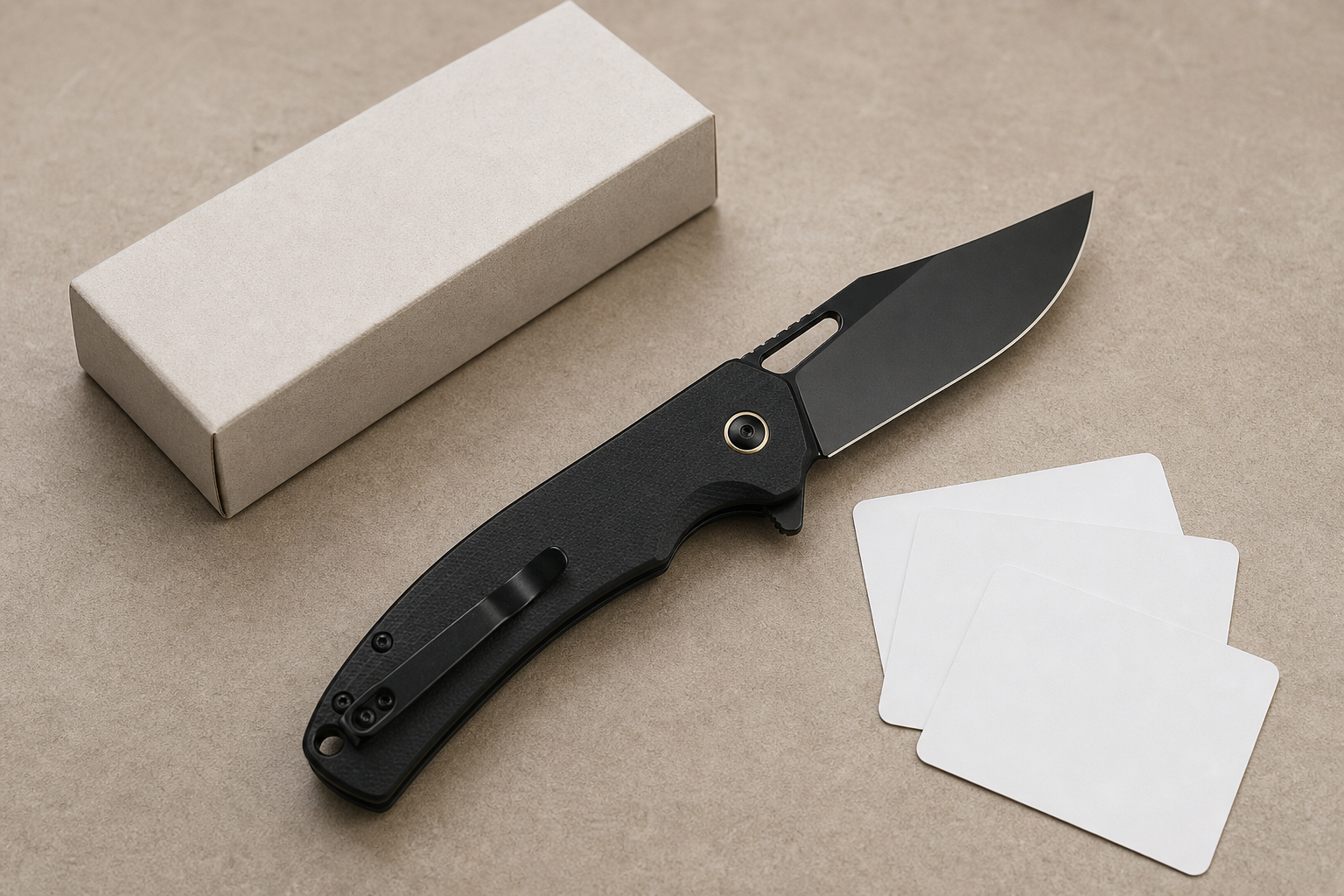
I Keep Folding Knife Claims Narrow and Practical
The FTC advertising and marketing guidance is a useful reminder that advertising should be truthful and not misleading. For folding knife buyers, this means claims should match the product and records. Do not call a lock "fail-proof." Do not call a steel "maintenance-free." Do not imply legal compliance in all regions unless that has been reviewed. Do not use environmental claims without evidence.
Folding knife copy should be practical:
- General utility cutting tool
- Compact folding design
- Pocket clip or storage pouch included, if true
- Specific steel or handle material, if documented
- Care and storage instructions included
- Lock type named accurately, if applicable
- Target use described without weapon positioning
Buyers should also review platform and retailer policies. Some channels may restrict certain opening mechanisms, product imagery, age positioning, or wording. The safest commercial path is usually clear, practical, and evidence-based.
How Can Vast State Help Buyers Develop Folding Knife Projects?
Vast State can help buyers turn a folding knife idea into a controlled sourcing brief.
Vast State helps buyers develop folding knife projects by aligning blade geometry, pivot hardware, lock type, opening method, handle materials, clip, packaging, safety copy, QC criteria, and RFQ records.
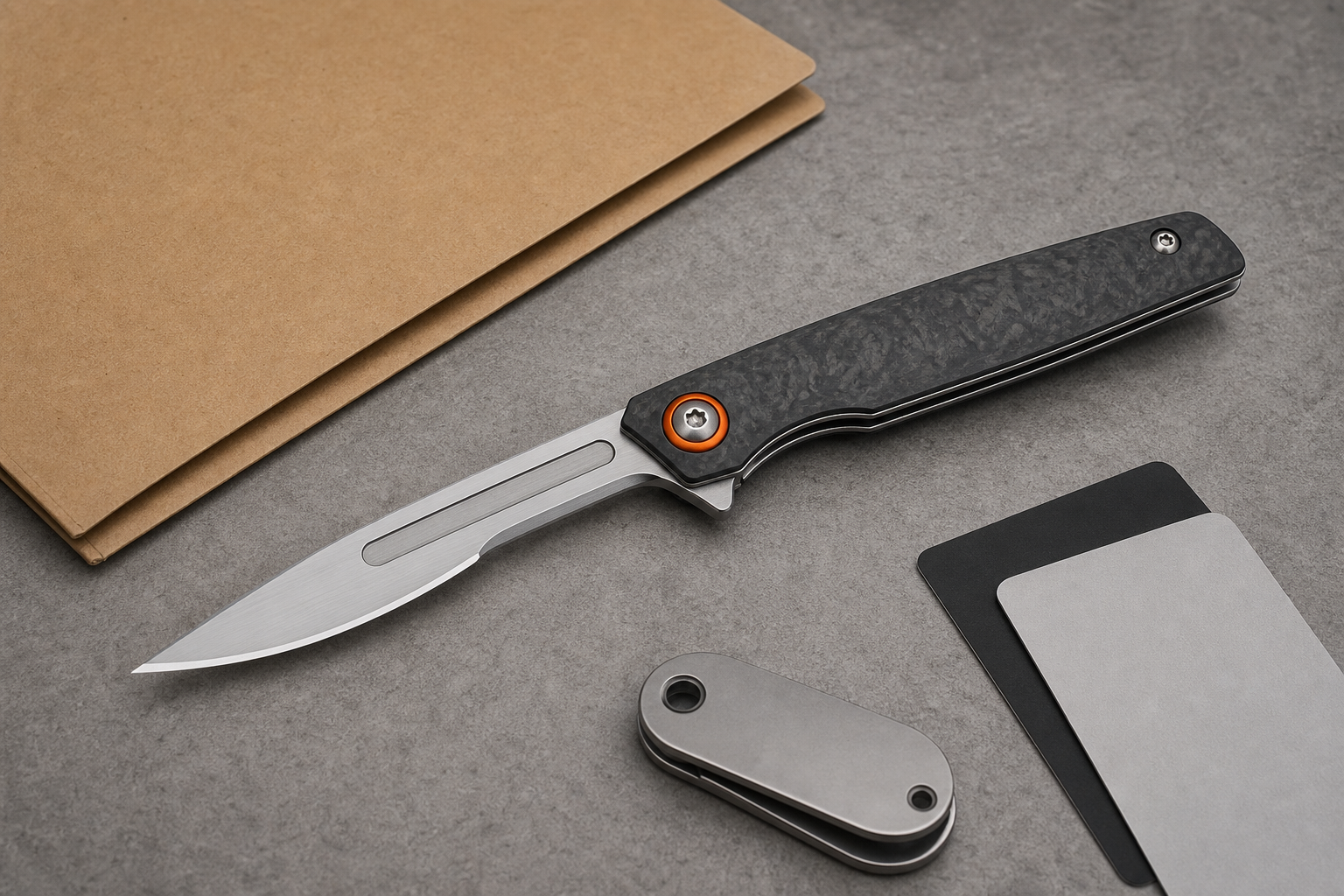
I Keep Folding Knife Development Measurable
Vast State can help buyers avoid vague folding knife briefs. We can translate a general idea into a specification for blade profile, steel, heat treatment, pivot hardware, lock type, opening method, handle material, clip, packaging, instructions, and inspection. This helps the supplier quote accurately and helps the buyer compare samples fairly.
We can also help decide when to simplify. A project may not need a complex mechanism, exotic material, or premium package in the first run. The right choice depends on target market, user, price, legal sensitivity, supplier capability, and QC budget.
Vast State can support:
- Folding knife product briefs
- Mechanism and feature priority lists
- Blade, pivot, lock, and handle specifications
- Packaging and safety instruction planning
- Claim wording review
- QC checklist and defect examples
- Sample revision records
- RFQ schema for supplier communication
The goal is not to make a folding knife complicated. The goal is to make it predictable, safe to present, practical to sell, and repeatable in production.
Turn this article into a folding knife project.
Share your blade type, lock direction, steel preference, handle material, quantity, target market, and packaging needs. Vast State can prepare OEM/ODM options.
Conclusion
Folding knives should be specified as mechanical products with controlled blade, pivot, lock, handle, clip, packaging, instructions, claims, and QC records.
OEM/ODM RFQ Checklist
Prepare these details to help Vast State review your project and provide a more accurate quotation.
| RFQ Field | What to Prepare |
|---|---|
| Project type | OEM from drawing / ODM private label / wholesale catalog |
| Product category | Folding knife / fixed blade / multi-tool / outdoor tool |
| Design status | Idea / sketch / 2D drawing / 3D CAD / physical sample |
| Target price | Ex-factory target price or retail price range |
| MOQ expectation | 500 / 1,000 / 3,000 / 5,000+ pcs |
| Logo method | Laser engraving / etching / printing / molded logo |
| Packaging | Standard packaging / custom retail box / Amazon-ready |
| Market | USA / EU / Japan / Korea / Middle East / other |
| Compliance needs | Buyer-specified testing / documentation / labeling |
| Timeline | Sample deadline / mass production deadline |