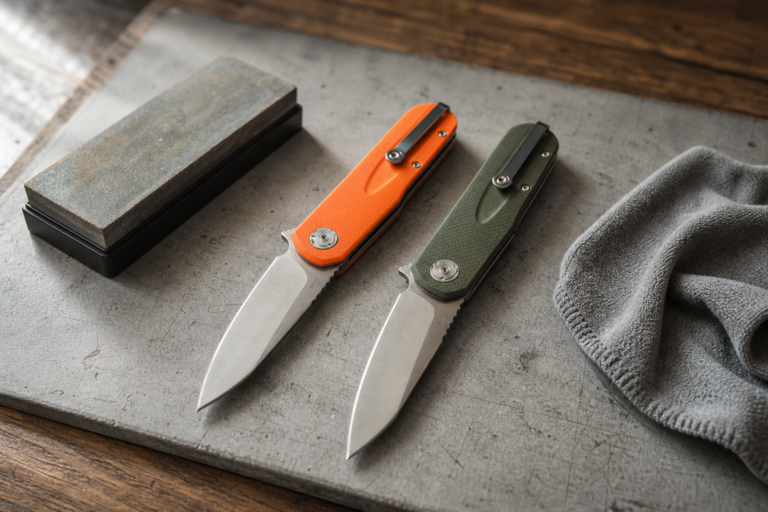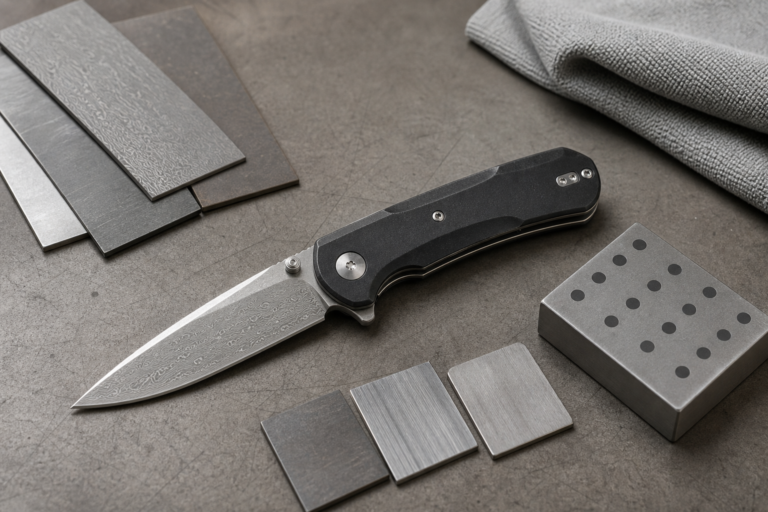
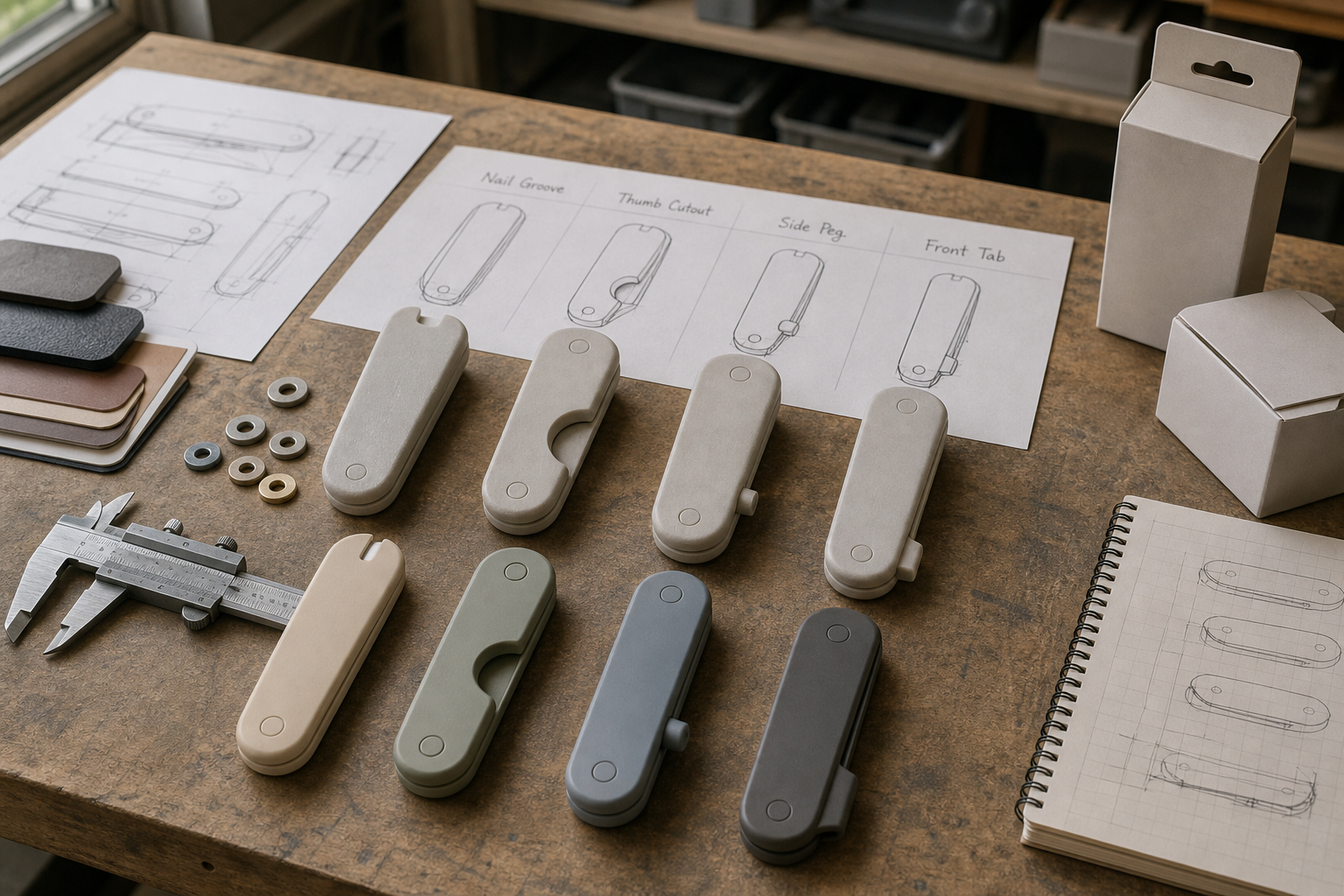
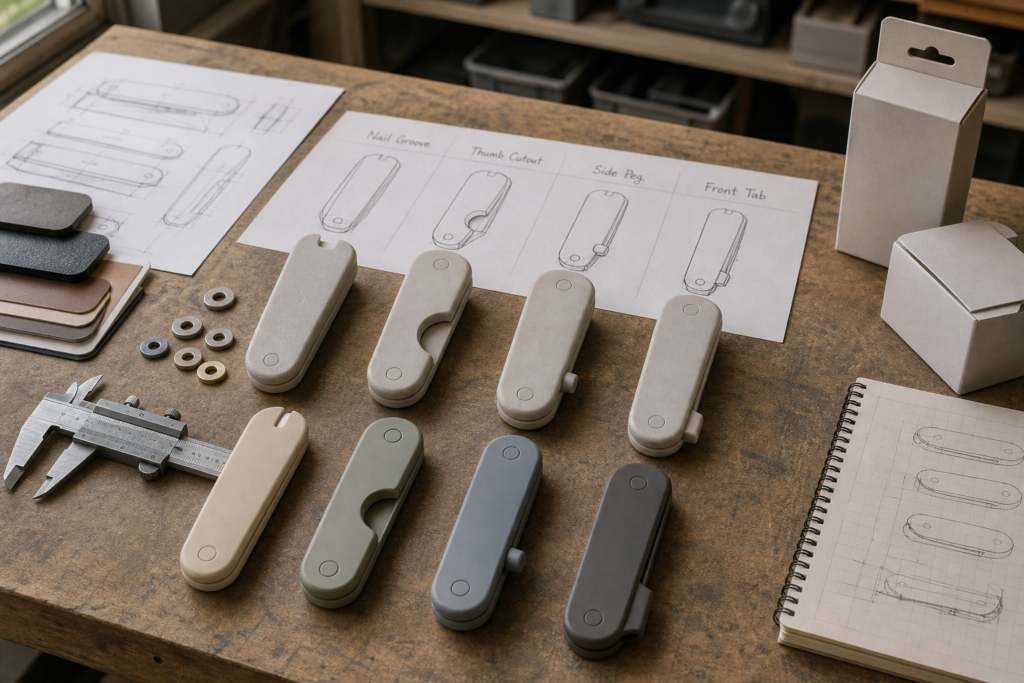
A folding knife can fail before it cuts anything. If the opening method feels awkward, users lose trust fast.
Buyers should choose a folding knife opening method by matching the user, market, lock type, detent, pivot system, blade shape, handle access, safety requirements, compliance limits, and production tolerance. Nail nicks, thumb studs, thumb holes, and flippers all work best in different product plans.
Quick buyer brief:
- Answer: Start from the target user and market, then choose an opening method that supports comfort, control, lawful positioning, and repeatable mass production.
- Buyer context: This helps EDC knife brands, outdoor brands, importers, wholesalers, distributors, private label buyers, and sourcing managers.
- Key checks: Opening access, thumb comfort, detent strength, pivot smoothness, closed retention, lock engagement, blade centering, handle relief, glove use, packaging wording, market restrictions, and QC consistency.
Developing a folding knife line for your brand?
Vast State supports OEM/ODM folding knife projects, including blade steel, lock structure, handle material, finish, logo method, packaging, and quality inspection planning.
When a buyer asks me which opening method is best, I never answer with one universal choice. A traditional two-hand nail nick, a thumb stud, a thumb hole, a front flipper, and a fuller-style groove all create different user experiences. They also create different manufacturing risks. The opening method affects the blade profile, handle relief, detent, pivot, lock, pocket carry, packaging, and compliance language. For an OEM/ODM folding knife project, the best opening method is the one that fits the target customer, price range, brand position, and destination market.
Why Should Buyers Decide the Opening Method Early?
Some buyers add the opening feature late. That can force weak blade shape, poor access, or difficult assembly.
Buyers should decide the opening method early because it affects blade geometry, handle cutout, pivot feel, detent strength, lock engagement, safety wording, and production tolerance.
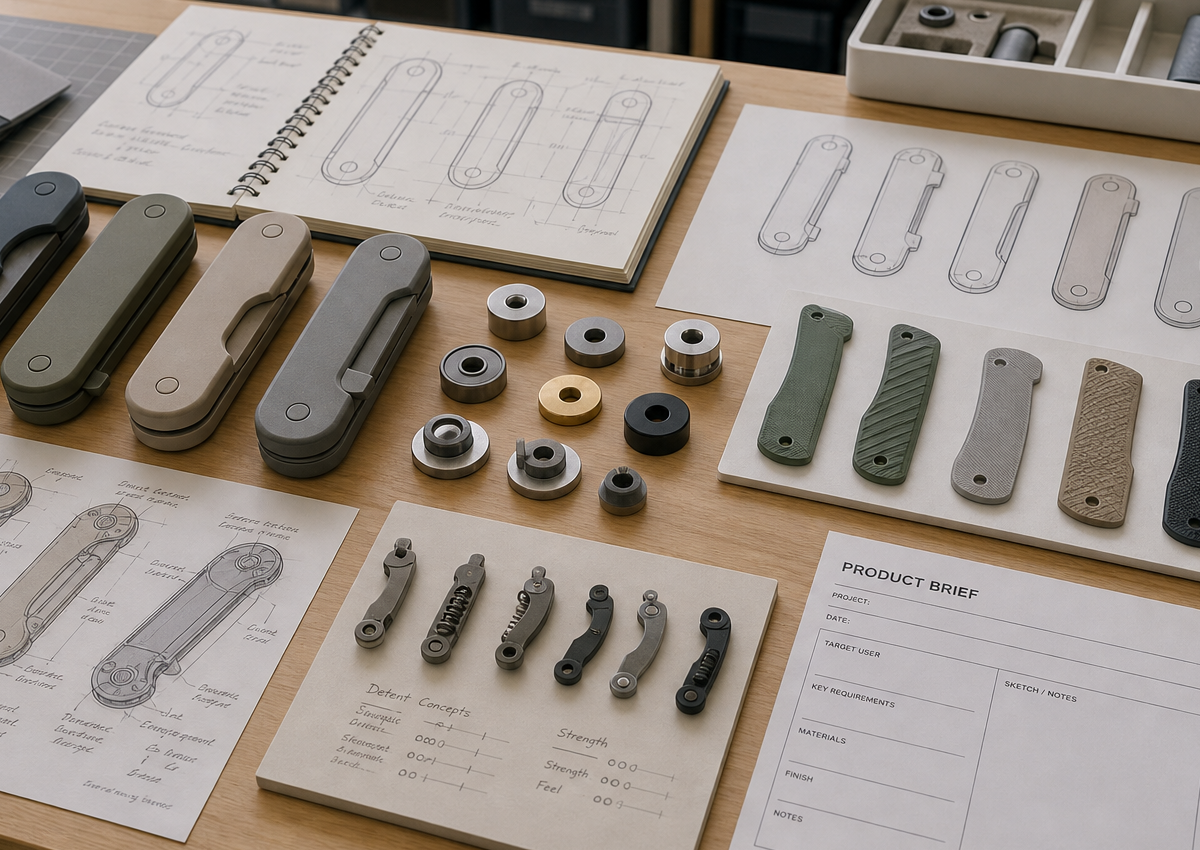
I Treat Opening as Part of the Whole Mechanism
The opening method is not just a small feature on the blade. It is part of the whole folding system. A nail nick needs enough blade exposure for two-hand opening. A thumb stud needs clear thumb access and enough distance from the handle. A thumb hole needs blade height and enough steel around the opening. A front flipper needs careful tab shape, detent tuning, and pivot smoothness. A fuller groove needs clean machining and useful thumb contact.
If the buyer decides the opening method after the blade shape is already fixed, the design may become compromised. The hole may sit in a weak area. The stud may interfere with the handle. The flipper tab may make the closed knife uncomfortable. The detent may become too strong or too weak.
I prefer to decide the opening method during concept review. First, I ask who will use the knife. A traditional pocket knife buyer may prefer a two-hand opening. A modern EDC buyer may want one-hand manual opening. An outdoor user may care about glove access. A retailer may care about wording and legal comfort.
Then I review the mechanism. The opening method must work with the lock, pivot, washer or bearing, stop pin, blade centering, and handle shape. If those parts do not work together, the user will feel it.
| Early decision | What it affects | Buyer benefit |
|---|---|---|
| Opening method | Blade and handle layout | Fewer redesigns |
| Lock type | Detent and closing behavior | Better safety feel |
| Pivot system | Smoothness and price | Clearer cost planning |
| Target market | Packaging wording | Lower compliance risk |
OEM/ODM RFQ Checklist
Prepare these details to help Vast State review your project and provide a more accurate quotation.
| RFQ Field | What to Prepare |
|---|---|
| Project type | OEM from drawing / ODM private label / wholesale catalog |
| Product category | Folding knife / fixed blade / multi-tool / outdoor tool |
| Design status | Idea / sketch / 2D drawing / 3D CAD / physical sample |
| Target price | Ex-factory target price or retail price range |
| MOQ expectation | 500 / 1,000 / 3,000 / 5,000+ pcs |
| Logo method | Laser engraving / etching / printing / molded logo |
| Packaging | Standard packaging / custom retail box / Amazon-ready |
| Market | USA / EU / Japan / Korea / Middle East / other |
| Compliance needs | Buyer-specified testing / documentation / labeling |
| Timeline | Sample deadline / mass production deadline |
When Is a Nail Nick or Two-Hand Opening the Better Choice?
Simple opening methods can look old-fashioned, but they still fit many markets well.
A nail nick or two-hand opening is often better when buyers want traditional styling, lower complexity, lower cost, conservative manual opening, compact carry, or a classic pocket knife experience.
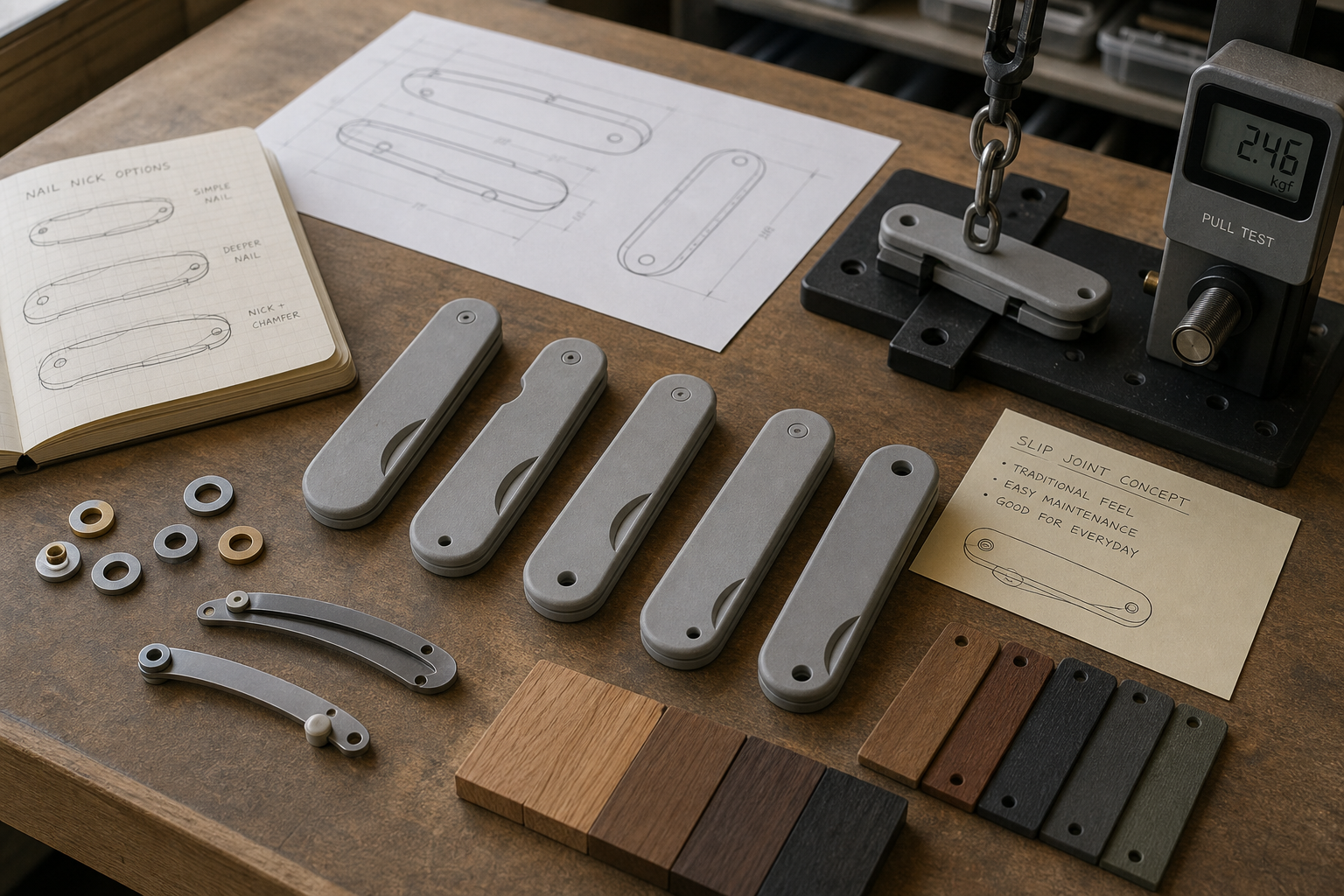
I Use Simplicity When It Supports the Product
A nail nick is one of the most familiar manual opening features. It usually supports two-hand opening. It can work well for classic pocket knives, small utility folders, slip-joint designs, gift items, and lower-complexity product lines. It also helps keep the blade profile clean because it does not require a thumb stud or large hole.
The main advantage is simplicity. A two-hand opening can reduce mechanism complexity and may feel more acceptable in conservative retail settings. It can also help buyers avoid aggressive fast-opening language. However, simple does not mean careless. The nail nick must be reachable. The spring or detent must match the intended user. The blade should not require painful force to open.
The biggest risk is poor ergonomics. If the nail nick is too shallow, too sharp, or hidden behind the handle, users may struggle. If the spring is too strong, the knife feels unfriendly. If the spring is too weak, closed retention may feel unsafe.
For B2B buyers, nail nick designs need clear sample testing. Ask several people to open the sample. Check whether fingernails catch safely. Check whether the blade closes cleanly. Check whether the style matches the price point. A classic opening method still needs modern consistency.
| Nail nick factor | What to check | Why it matters |
|---|---|---|
| Depth and shape | Finger access | Easier opening |
| Spring or detent | Pull force | Comfort and retention |
| Blade exposure | Access when closed | Better usability |
| Finish | Sharp edges or burrs | Better user feel |
When Should Buyers Use Thumb Studs or Thumb Discs?
Thumb hardware can make a knife easier to open, but it adds parts and assembly checks.
Thumb studs or thumb discs fit manual one-hand opening projects where buyers need clear access, simple user understanding, adjustable design style, and manageable production cost.
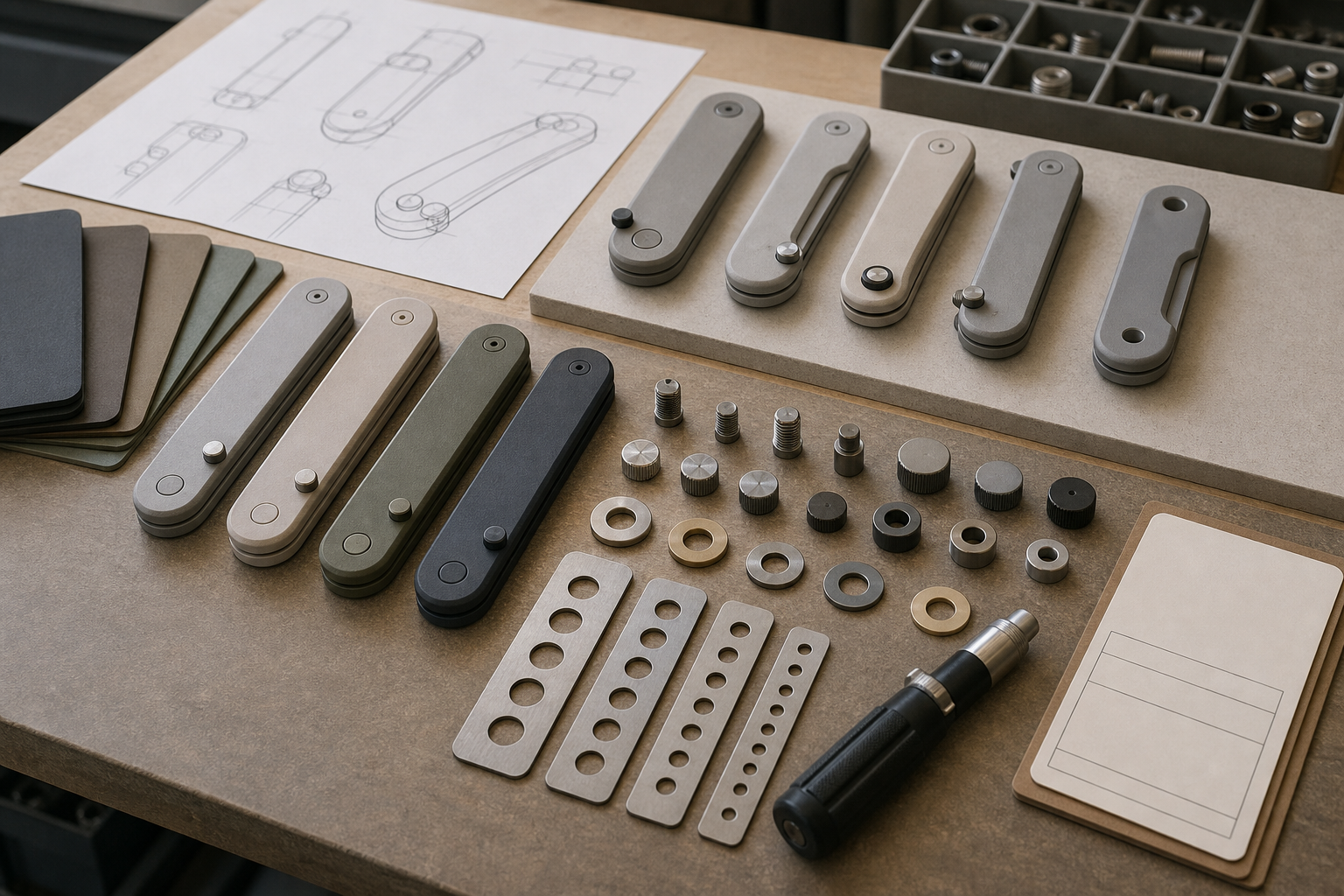
I Check Access, Hardware Security, and Comfort
Thumb studs are common because users understand them quickly. The stud gives the thumb a small raised part to push against. This can support one-hand manual opening when the pivot and detent are tuned correctly. A thumb disc works in a similar way but creates a different look and contact area.
The main design questions are position, height, diameter, and comfort. If the stud is too close to the handle, the thumb cannot push it cleanly. If it is too high, it may catch on pockets or packaging. If it is too sharp, users complain. If it is too smooth, the thumb can slip.
Hardware security matters. A press-fit or threaded thumb stud should not loosen in normal use. If the product uses double studs for left and right access, both sides should be checked. The buyer should define whether the knife needs ambidextrous opening. That may affect clip position, lock access, and handle shaping.
Thumb studs also affect packaging. A raised stud can rub against inserts or blister packaging. It can also make the knife wider. A buyer who wants a very slim product should think carefully before adding large hardware.
For OEM/ODM projects, I like thumb studs when the buyer wants familiar manual opening without changing blade height too much. I still test repeated opening because the stud, detent, pivot, and lock must work together.
| Thumb hardware factor | What I inspect | Buyer decision |
|---|---|---|
| Position | Thumb access and leverage | Natural opening path |
| Shape | Comfort and grip | Smooth but not slippery |
| Attachment | Thread or press-fit security | Prevent loosening |
| Packaging fit | Rubbing or pressure | Protect finish and action |
When Do Thumb Holes or Opening Slots Make Sense?
A hole or slot can look clean, but it removes steel and demands careful finishing.
Thumb holes or opening slots make sense when the blade has enough height, the buyer wants hardware-free manual opening, and the supplier can control hole placement, chamfer, burr removal, and blade strength.
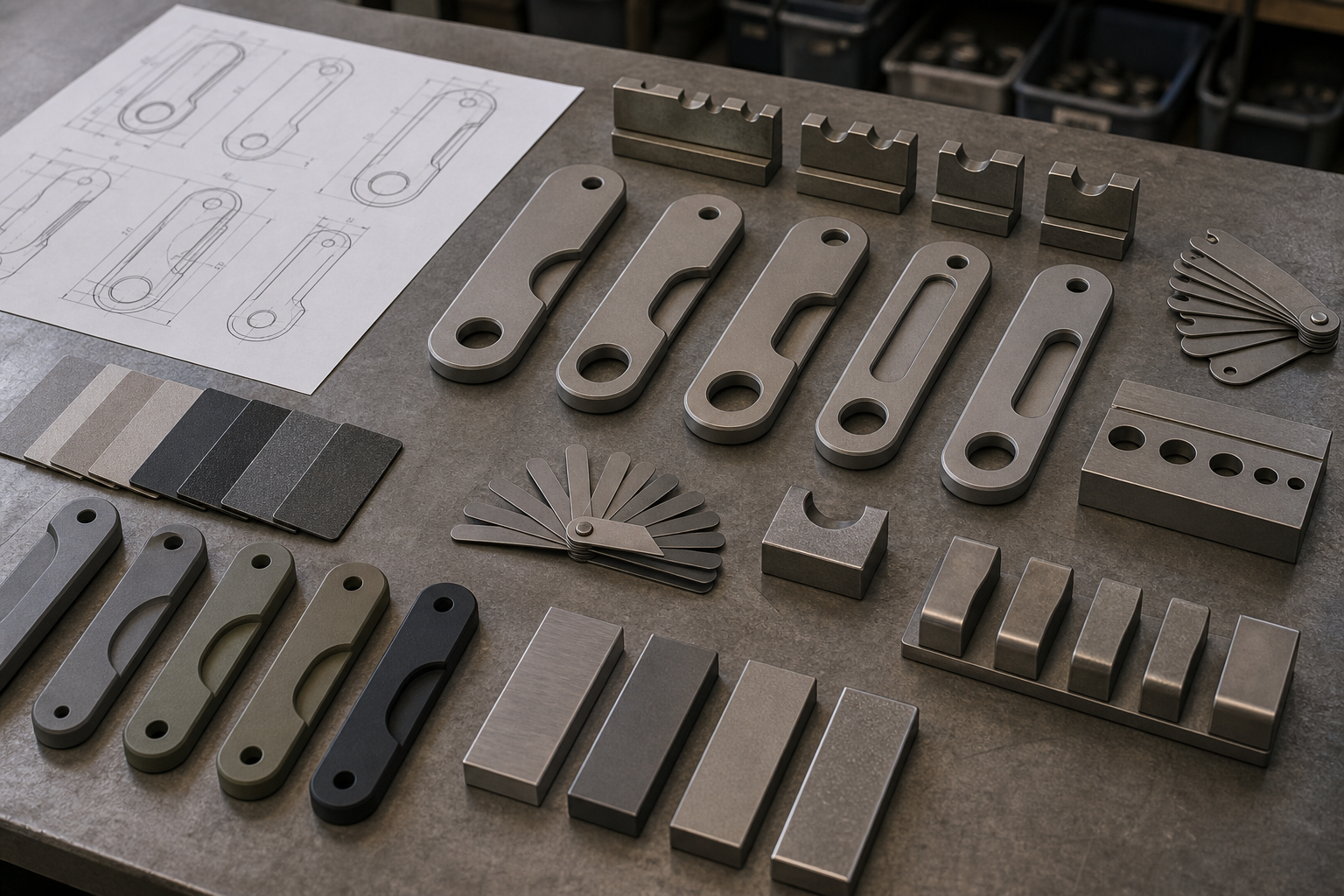
I Balance Access With Blade Strength
Thumb holes and slots avoid extra opening hardware. They can make the blade look cleaner and reduce the chance of a stud loosening. They can also improve thumb access when shaped well. But they are not free. A hole removes steel from the blade. A slot can create thin web areas. Both features need clean chamfering and finishing.
The buyer should check whether the blade has enough height. A narrow blade may not have room for a useful thumb hole without weakening the profile or interfering with the grind. A taller blade may accept a hole more easily, but the hole still needs correct placement. If the hole sits too close to the handle, the thumb cannot access it. If it sits too far from the pivot, the opening feel may be awkward.
Manufacturing quality is critical. Laser cutting, CNC machining, stamping, grinding, tumbling, coating, and polishing can all affect the hole edge. A rough hole makes the knife feel cheap. A sharp hole can hurt the thumb. A coating that builds up inside the hole can reduce comfort and visual quality.
For buyers, this opening method is good when the product concept supports it. It should not be copied only because it looks distinctive. The supplier should review blade strength, handle relief, and QC before sample approval.
| Hole or slot factor | What can go wrong | Control point |
|---|---|---|
| Blade web | Thin area around hole | Check remaining steel |
| Chamfer | Sharp or uneven edge | Define finish standard |
| Handle relief | Poor thumb access | Review closed position |
| Coating | Buildup or rough feel | Inspect after finishing |
When Are Flippers or Front Flippers Appropriate?
Flippers can feel smooth and modern. They also require tighter tuning than many buyers expect.
Flippers or front flippers are appropriate when the buyer wants a modern manual opening feel, has room for the tab, accepts tighter detent and pivot control, and has reviewed compliance wording for the target market.
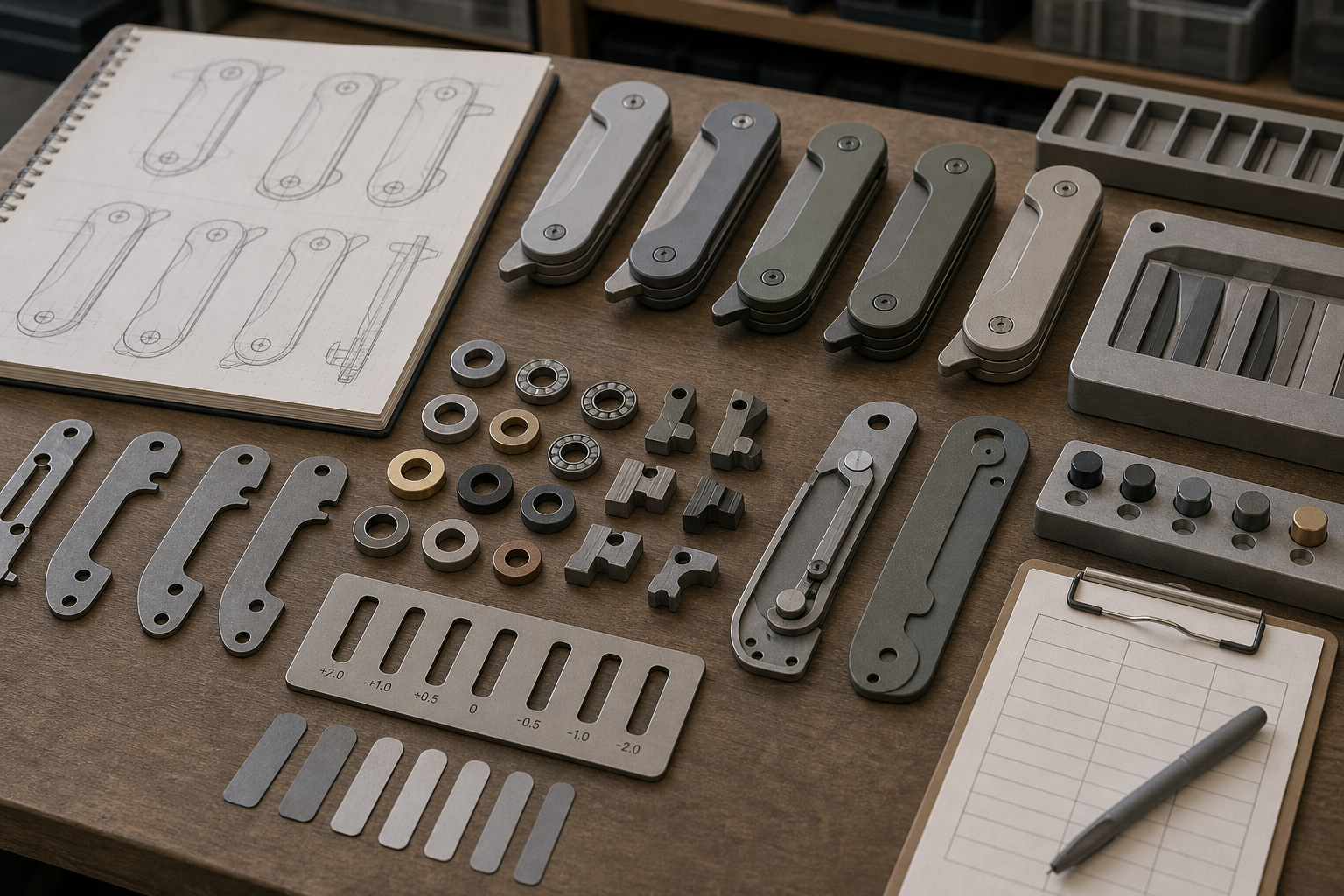
I Tune Detent and Pivot Before I Judge the Feature
A flipper tab gives the finger a lever to start opening the blade. A front flipper uses a different contact point, often near the spine or front of the handle. Both can create a clean modern feel when the detent, pivot, blade mass, and lock geometry are right. When they are wrong, the knife feels frustrating.
The detent is the heart of the flipper experience. Too strong, and the user must use excessive force. Too weak, and the blade may not stay closed well. The pivot must be smooth enough, but not loose. Washers may support a more controlled feel. Bearings may feel faster, but they add cost and require clean assembly.
The flipper tab also affects closed carry. A large tab can poke the hand, catch on fabric, or change the visual line of the knife. A small tab may look clean but fail to provide enough leverage. Front flippers can look refined, but they often require more user skill and tighter sample review.
Compliance language matters. I avoid marketing manual flippers with words that imply automatic opening, spring action, gravity opening, or weapon-style deployment. In the United States, 15 U.S. Code 1241 defines switchblade knives around automatic opening by a button or device in the handle, or by inertia or gravity. This is useful background, but buyers still need target-market review.
| Flipper factor | What to check | Buyer risk |
|---|---|---|
| Detent | Opening force and closed retention | Too hard or too weak |
| Pivot | Smoothness and side play | Stiffness or wobble |
| Tab shape | Comfort and leverage | Pocket snag or poor action |
| Wording | Manual vs restricted claims | Compliance confusion |
How Should Buyers Compare Opening Methods by User and Market?
The same mechanism can be right in one market and wrong in another. User context decides.
Buyers should compare opening methods by user skill, sales channel, destination market, glove use, price point, product style, lock type, and retailer comfort.
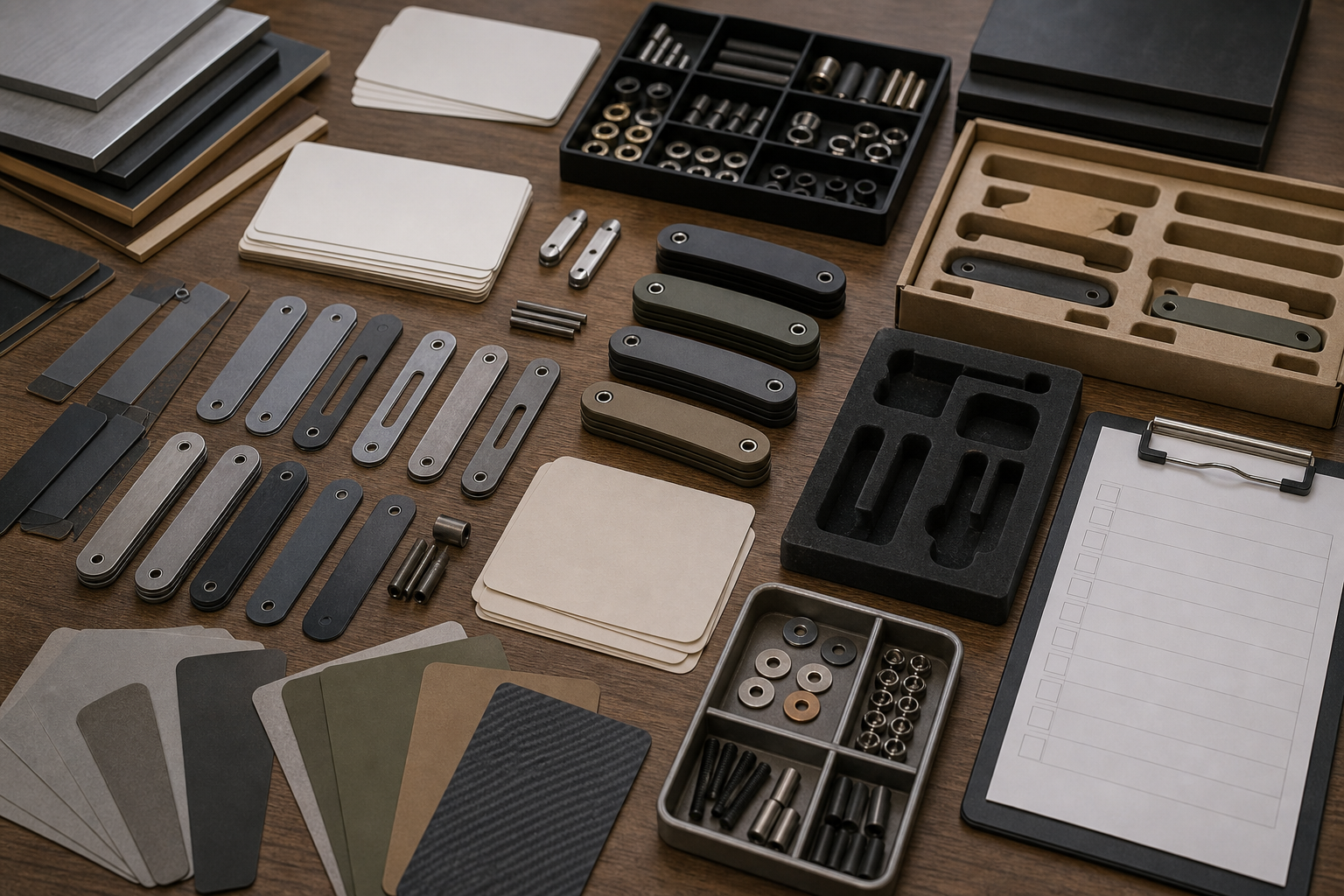
I Match the Feature to the Buyer’s Customer
An EDC buyer may want smooth one-hand manual access. A traditional pocket knife buyer may prefer a nail nick. A work-utility buyer may care about glove access and simple operation. A low-price private label buyer may need fewer parts and easier assembly. A premium buyer may want refined action and cleaner finishing.
The market also matters. Some retailers are comfortable with manual thumb studs but not with aggressive flipper language. Some regions have stricter views on locking knives, blade length, or opening methods. Some online platforms may apply their own product rules. The buyer should review the destination market before finalizing the mechanism.
I usually compare opening methods through a simple matrix. This helps the buyer avoid choosing based only on photos. The product should be judged by use case, cost, risk, and production repeatability.
The opening method also affects brand tone. A traditional nail nick suggests classic utility. A thumb stud suggests familiar modern function. A thumb hole or slot suggests clean technical design. A front flipper suggests a more refined enthusiast style. None is automatically better. The best one is the one the customer understands and trusts.
| Opening method | Best fit | Watch point |
|---|---|---|
| Nail nick | Classic pocket knives | Pull force and access |
| Thumb stud | Familiar EDC folders | Hardware security |
| Thumb hole | Clean manual opening | Blade strength and chamfer |
| Front flipper | Premium or enthusiast style | Detent and user skill |
What Safety and Compliance Boundaries Should Packaging Explain?
Opening claims can create unnecessary problems. Clear practical wording protects the buyer and the user.
Packaging should explain that the knife is a sharp manual cutting tool, describe the opening method accurately, avoid self-defense and automatic-opening claims, and remind users to handle, close, store, and maintain it safely.
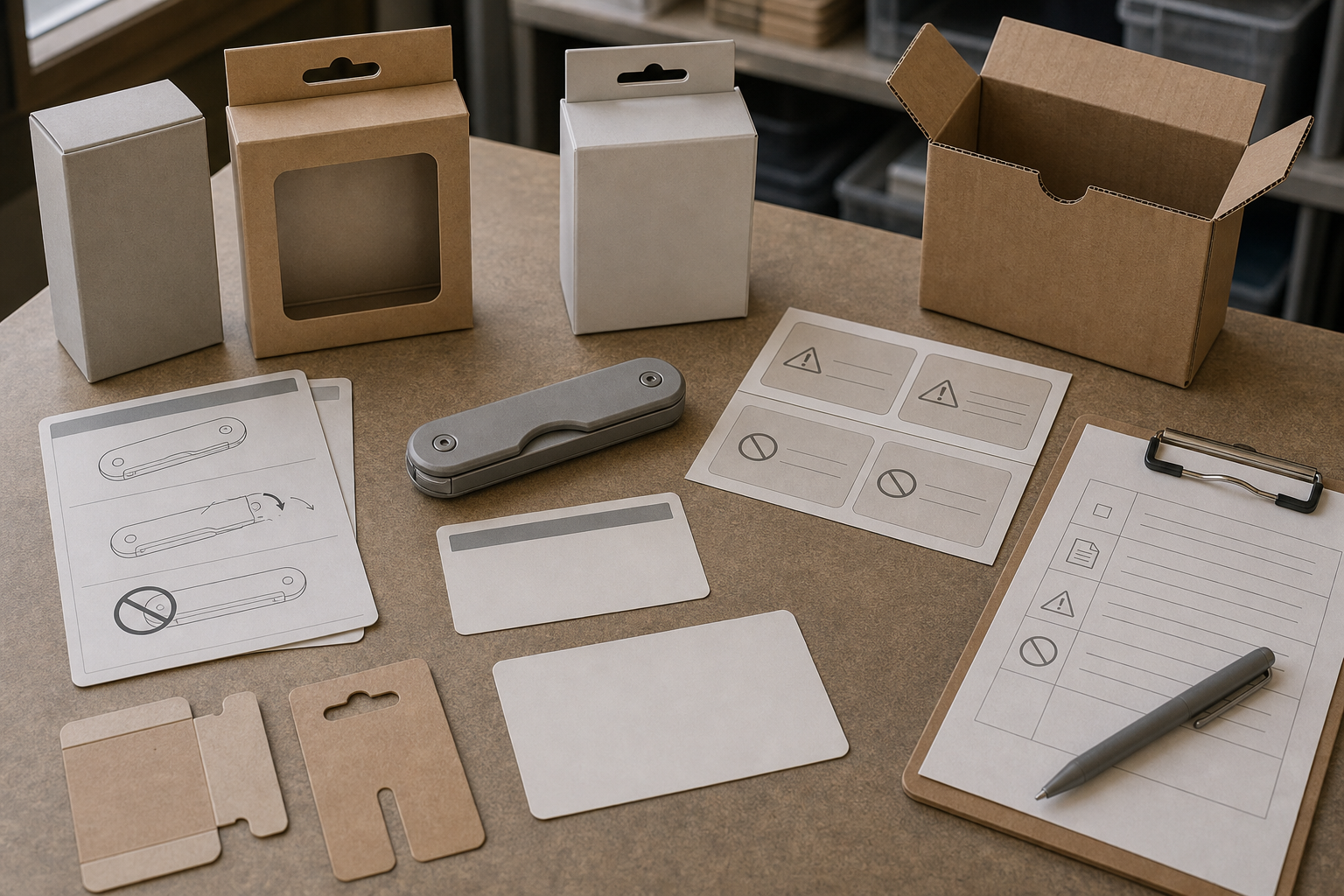
I Keep Product Claims Plain and Useful
Safety wording should not be dramatic. I prefer packaging that explains the product clearly: manual opening folding knife, pocket utility knife, outdoor utility folder, or two-hand opening pocket knife where accurate. I avoid claims such as combat-ready, instant deployment, self-defense, or tactical attack. Those words do not help B2B buyers build stable retail products.
The CCOHS hand-tool guidance supports simple safe-use principles such as inspecting tools, covering sharp edges, storing tools properly, using the right tool, and not cutting toward yourself. For folding knives, that becomes clear instruction-card language. Keep the blade closed when not in use. Cut away from the body. Do not use the knife as a pry bar or screwdriver unless it is designed for that task. Keep the product away from children if applicable.
Compliance documentation also matters. The CPSC general-use product guidance explains certification responsibilities for products subject to applicable consumer product safety rules. Not every folding knife has the same certification requirement. The point is that buyers should identify applicable rules early and keep product records, test records, and importer information organized.
Packaging should also prevent accidental opening during shipping. If the opening method or detent allows partial opening under pressure, the packaging needs improvement before shipment.
| Packaging area | What to include | Why it matters |
|---|---|---|
| Product wording | Manual opening and utility use | Clear market position |
| Safe handling | Close, store, cut safely | Better user guidance |
| Compliance review | Destination-market check | Lower import risk |
| Package fit | Prevent partial opening | Safer shipping |
What Manufacturing and QC Checks Matter for Opening Methods?
A good opening feature must repeat across the batch. One smooth sample is not enough.
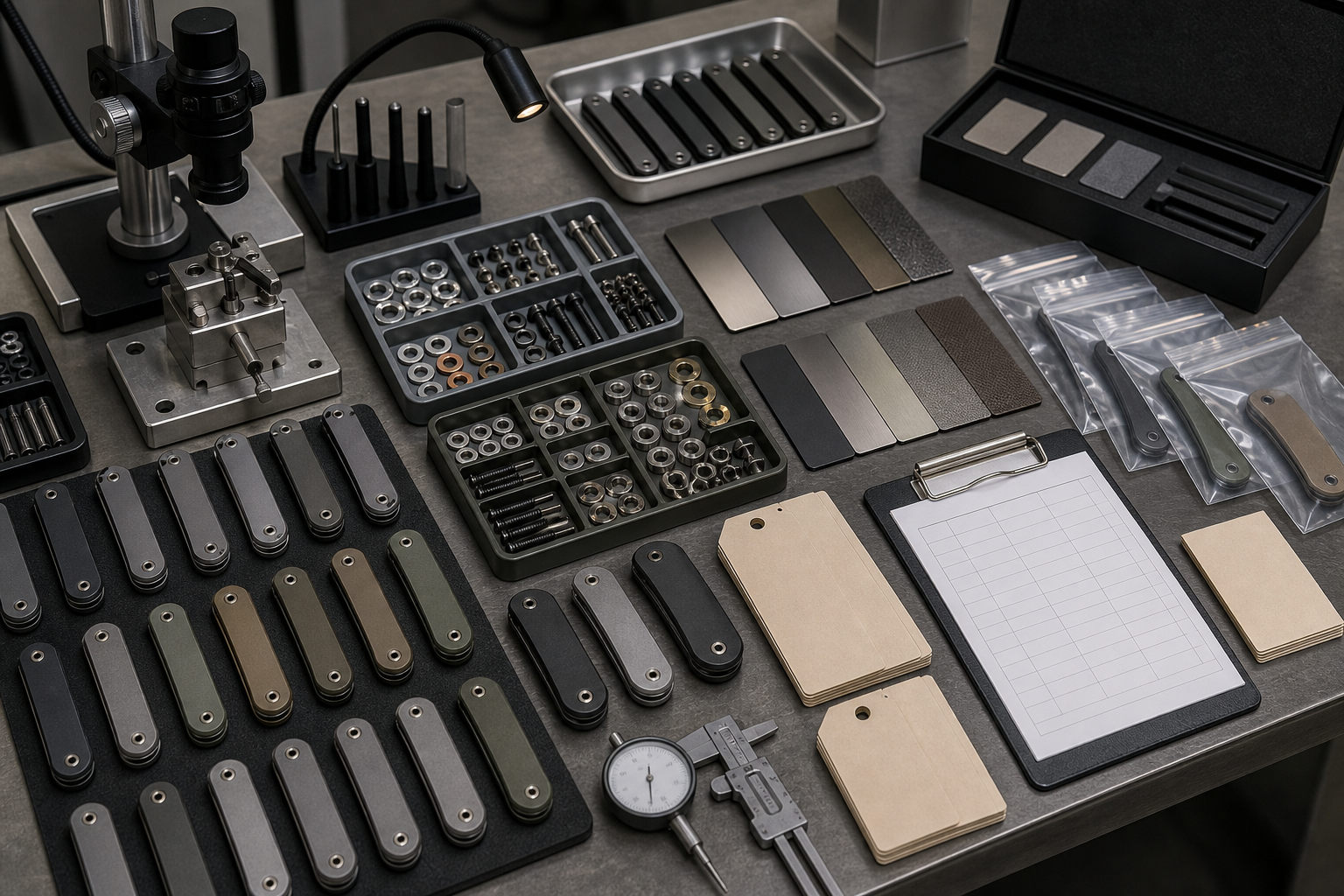
Manufacturing and QC should check hole or stud position, flipper tab geometry, nail nick depth, pivot tolerance, detent strength, lock engagement, blade centering, burr removal, finish quality, and packaging fit.
I Test the Opening Method Before and After Assembly
QC should not wait until the final carton. Blade blanks should be checked for opening feature position and burrs. Thumb holes and slots should be inspected after cutting and after finishing. Thumb studs should be checked for attachment strength and correct position. Flipper tabs should be checked for geometry and comfort. Nail nicks should be checked for depth and edge smoothness.
After assembly, the mechanism must be tested as a complete knife. The pivot should be smooth. The blade should not have excessive play. The detent or spring should hold the blade closed. The lock should engage correctly where the design uses a lock. The blade should center acceptably. The opening method should work repeatedly without scraping, slipping, or causing discomfort.
OSHA's hand-tool rule says employers are responsible for the safe condition of tools used by employees. This is a workplace rule, not a folding knife factory standard, but it supports the same quality mindset: a tool should be safe and serviceable before use.
For repeat orders, I recommend keeping a golden sample, action standard, defect examples, and clear inspection points. If the buyer only approves appearance, the next batch may feel different.
| QC item | What to check | Why it matters |
|---|---|---|
| Opening feature | Position, burrs, comfort | User experience |
| Pivot and detent | Smoothness and retention | Safe control |
| Lock or spring | Engagement and consistency | Trust in use |
| Packaging | Knife stays closed | Shipping safety |
How Can Vast State Support Folding Knife Opening Method Development?
Opening method selection can look small. In production, it touches nearly every folding knife detail.
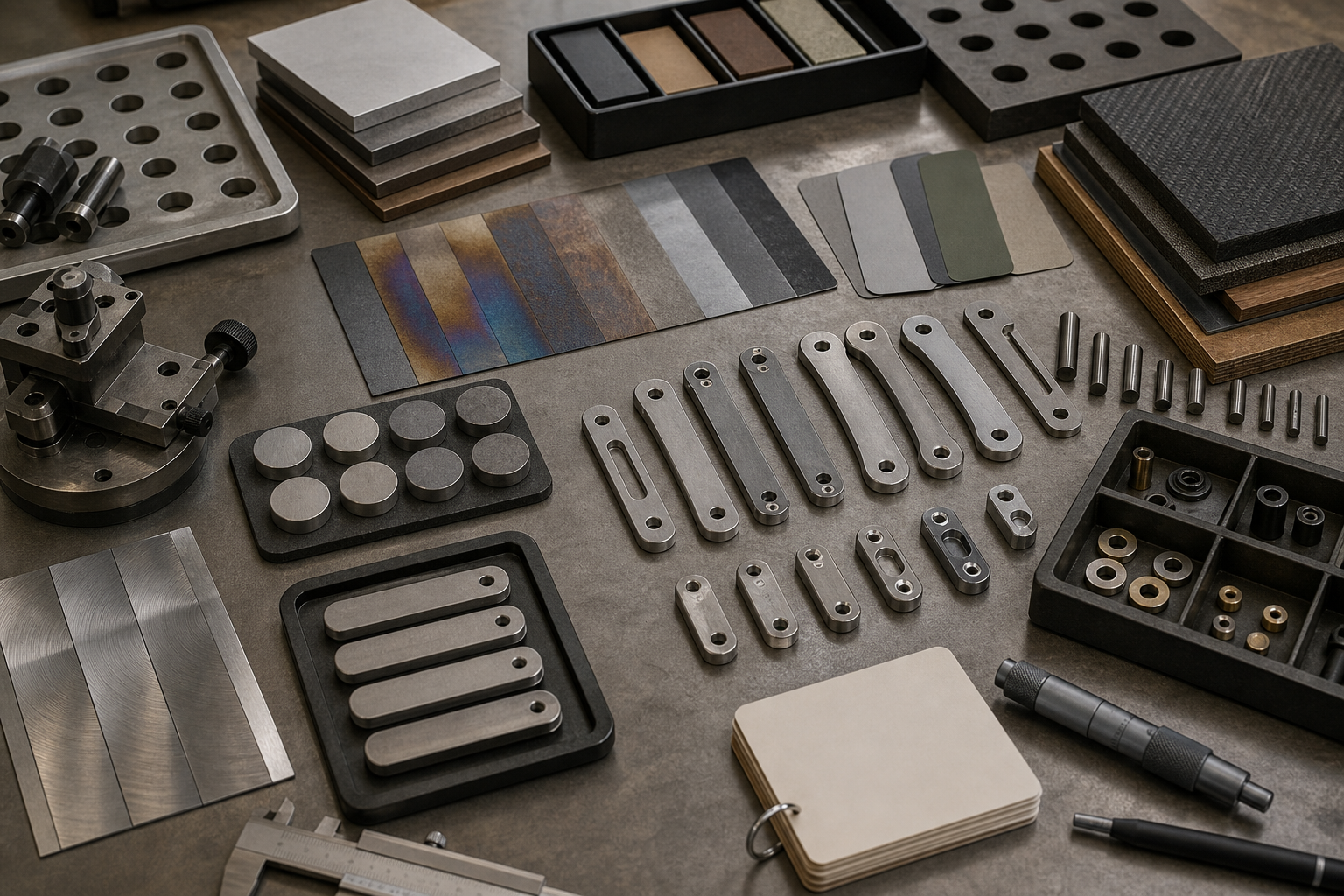
Vast State can support opening method development through concept review, mechanism suggestions, blade and handle layout, prototype testing, material selection, packaging customization, QC planning, and production follow-up.
I Help Buyers Choose the Opening Method That Fits the Project
Vast State is an OEM/ODM knife and outdoor tool manufacturer based in Yangjiang, China. We support international B2B customers with folding knives, fixed blade knives, pocket knives, camping tools, rescue tools, and multi-tools. Folding knife opening method selection is exactly the kind of detail where practical engineering support helps.
When a buyer brings a folding knife idea, I ask about the target market first. Is the product a classic pocket knife, modern EDC folder, outdoor work knife, private label gift item, or compact utility tool? Then I review the blade shape, handle layout, pivot system, lock type, detent need, opening feature, steel, handle material, finish, packaging, and target price.
If the buyer wants traditional style, a nail nick or two-hand opening may fit. If the buyer wants familiar one-hand manual opening, a thumb stud may be better. If the buyer wants a clean technical blade, a thumb hole or slot may fit. If the buyer wants a refined modern action, a front flipper may work, but it needs better tuning.
Our goal is to help buyers avoid mismatched features. A good opening method should feel natural, match the product's market, support safe wording, and repeat well in mass production. That is what turns a design idea into a product buyers can reorder with confidence.
| Support area | What we help with | Buyer value |
|---|---|---|
| Concept review | User, channel, price, opening style | Clearer product direction |
| Engineering input | Pivot, detent, lock, handle relief | Better opening feel |
| Customization | Opening feature, finish, logo, packaging | Stronger brand fit |
| QC follow-up | Action, centering, lock, packaging | More stable repeat orders |
Turn this article into a folding knife project.
Share your blade type, lock direction, steel preference, handle material, quantity, target market, and packaging needs. Vast State can prepare OEM/ODM options.
Conclusion
I choose folding knife opening methods by matching user needs, mechanism design, compliance wording, manufacturing control, and QC to one coherent product plan.
Source Notes
- CCOHS supports safe hand-tool guidance around inspection, covered sharp edges, correct use, storage, and cutting direction.
- OSHA supports the broader principle that hand tools should be kept in safe condition.
- 15 U.S. Code 1241 supports compliance discussion around automatic-opening definitions.
- CPSC supports early certification and testing review when applicable consumer product safety rules apply.