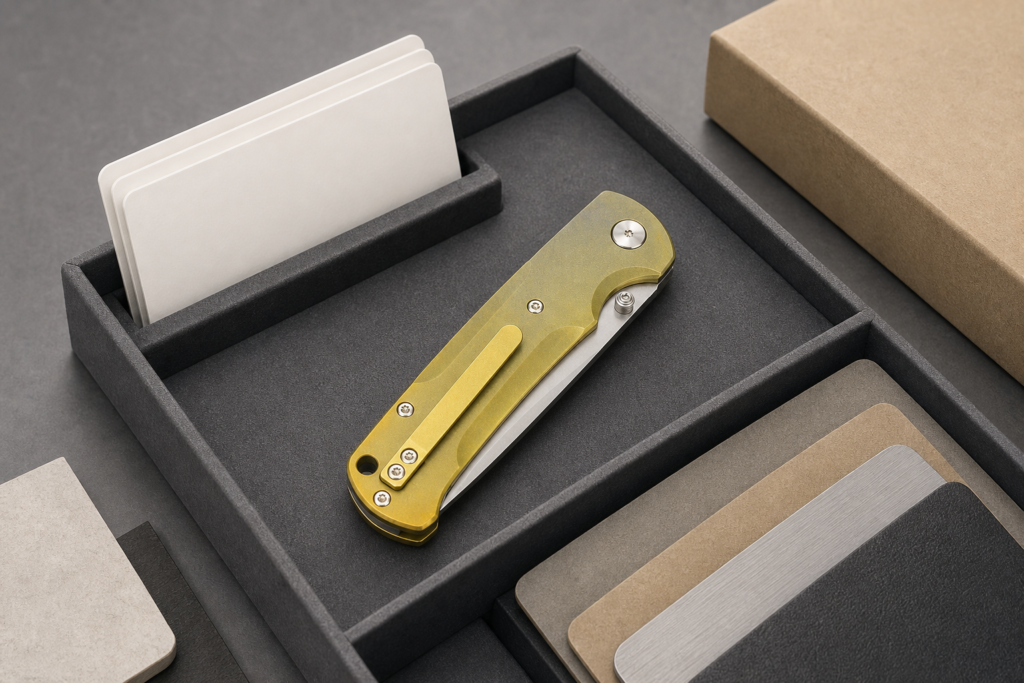
A folding knife can be useful and still cause market problems. The risk grows when possession, carry, and use rules are ignored until launch.
Buyers should address folding knife possession and use rules before OEM/ODM production by checking target-market law, carry context, blade length, lock type, opening method, transport rules, packaging warnings, sales channel policy, and local legal review. Supplier documents should support that review.
Quick buyer brief:
- Answer: Folding knife possession and use rules are market-specific and context-specific. Buyers need a product file and local review before launch.
- Buyer context: This guide is for knife brands, outdoor gear brands, importers, wholesalers, distributors, private label buyers, and sourcing managers.
- Key checks: Target country, state or province, sales channel, blade length, locking structure, opening method, restricted designs, carry context, transport rules, product wording, user instructions, packaging warnings, and QC records.
Developing a folding knife line for your brand?
Vast State supports OEM/ODM folding knife projects, including blade steel, lock structure, handle material, finish, logo method, packaging, and quality inspection planning.
When a buyer asks whether a folding knife can be carried or used in a market, I do not give a one-line answer. I ask where the product will be sold, who will buy it, how it opens, whether it locks, how long the blade is, how the packaging explains safe use, and which channel will handle delivery. This article is not legal advice. It is a buyer-side product-development guide. My goal is to help buyers prepare the right specifications and documents so local counsel, import brokers, distributors, retailers, and platform teams can review the product correctly.
Why Should Possession and Use Rules Be Part of Product Development?
Some teams treat rules as a sales issue. That can create expensive redesigns after samples, packaging, and production have already moved.
Possession and use rules should be part of product development because blade length, lock type, opening method, packaging wording, and carry context can affect market acceptance and customer guidance.
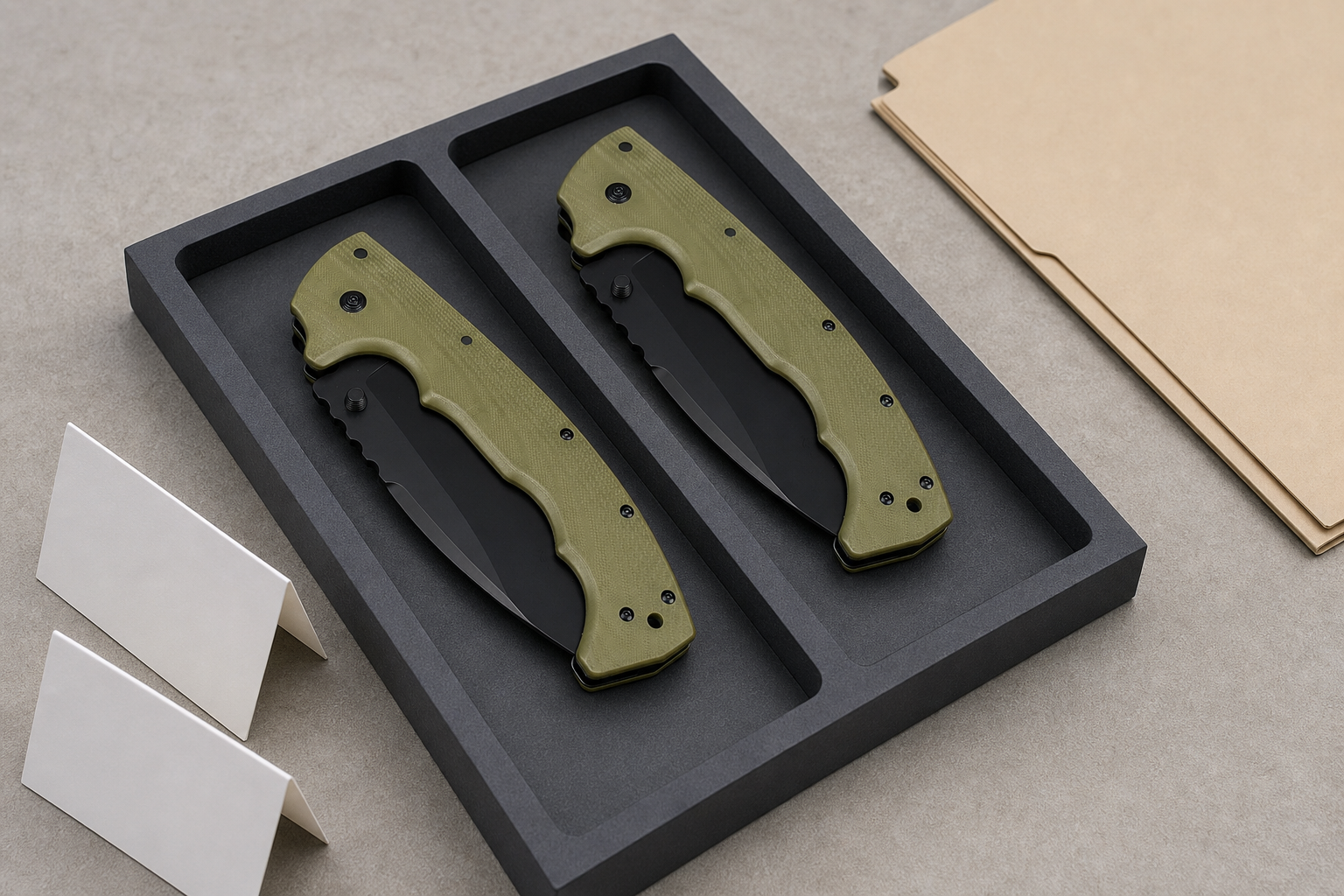
I Treat Rules as Design Inputs
In an OEM or ODM folding knife project, the rule review should start before structure approval. If the target market treats locking knives differently from non-locking folding pocketknives, then lock choice becomes a design decision. If opening method is sensitive, then pivot, detent, spring, flipper, button, and thumb-stud decisions become compliance-sensitive. If a market or channel has blade-length thresholds, then the drawing must define exact measurement.
The UK government page on selling, buying and carrying knives is a useful example. It explains that carrying most knives in public without good reason is illegal, and it describes an exception for certain folding pocketknives with a cutting edge no longer than 3 inches and not lock knives. I do not apply UK rules globally. I use the example to show why buyers must review structure early.
For B2B buyers, the safe path is simple. Do not ask only whether a knife is "legal." Ask whether the exact product can be imported, sold, delivered, possessed, carried, and used in the planned context. Then record who confirmed each answer.
| Product-development question | Why it matters | Buyer action |
|---|---|---|
| Target market | Rules differ by country and region | Confirm local law early |
| Lock type | Some rules treat locks differently | Decide before tooling |
| Opening method | Automatic or gravity action may be sensitive | Review mechanism with broker or counsel |
| Carry context | Public carry may differ from private use | Add clear user guidance |
OEM/ODM RFQ Checklist
Prepare these details to help Vast State review your project and provide a more accurate quotation.
| RFQ Field | What to Prepare |
|---|---|
| Project type | OEM from drawing / ODM private label / wholesale catalog |
| Product category | Folding knife / fixed blade / multi-tool / outdoor tool |
| Design status | Idea / sketch / 2D drawing / 3D CAD / physical sample |
| Target price | Ex-factory target price or retail price range |
| MOQ expectation | 500 / 1,000 / 3,000 / 5,000+ pcs |
| Logo method | Laser engraving / etching / printing / molded logo |
| Packaging | Standard packaging / custom retail box / Amazon-ready |
| Market | USA / EU / Japan / Korea / Middle East / other |
| Compliance needs | Buyer-specified testing / documentation / labeling |
| Timeline | Sample deadline / mass production deadline |
How Should Buyers Separate Possession, Carry, Transport, and Use?
A folding knife may be allowed in one context and restricted in another. One broad answer is not enough.
Buyers should separate possession, carry, transport, and use because each context can have different rules. Product pages and manuals should avoid giving oversimplified legal promises.
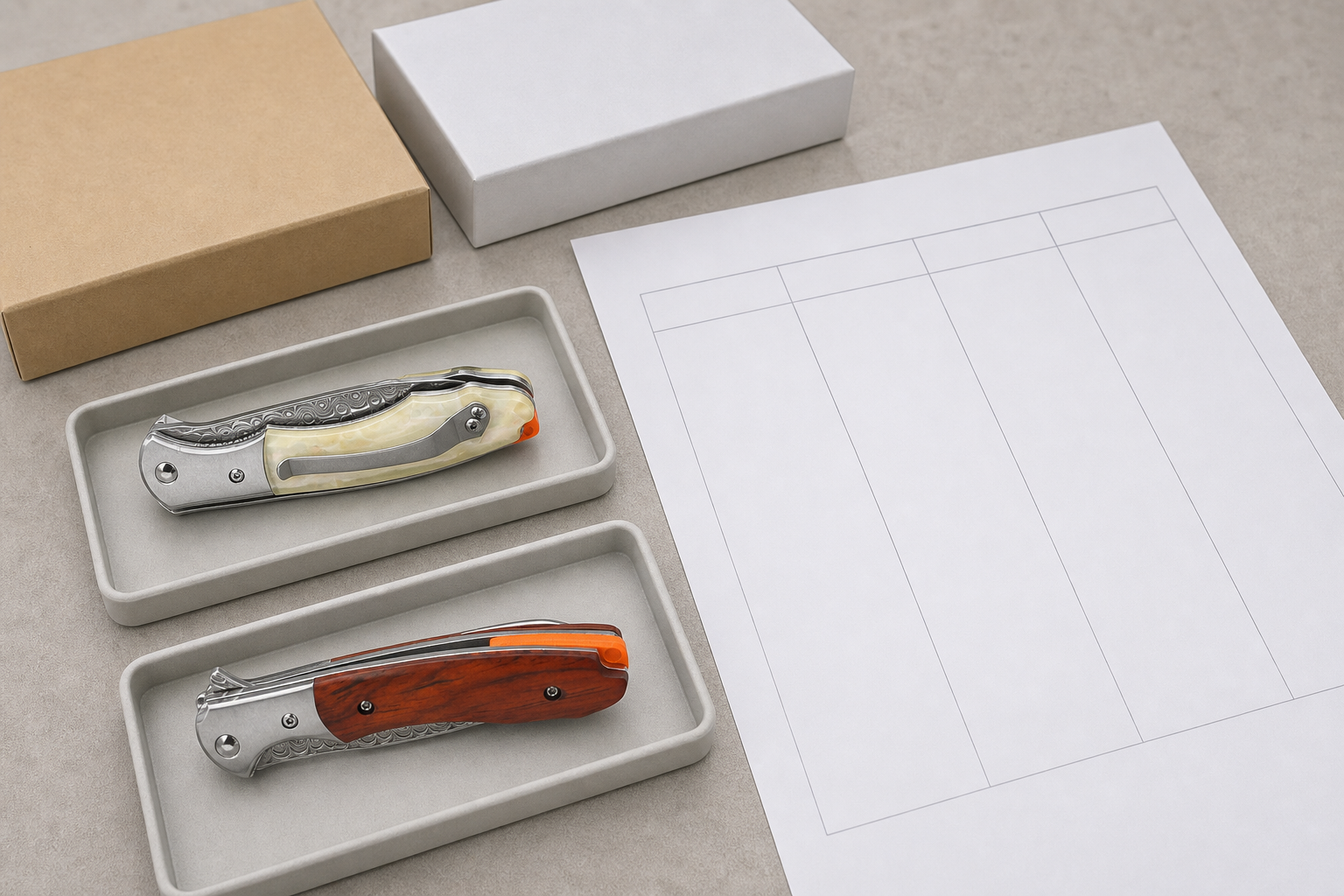
I Build a Context Matrix
Possession means a person owns or has the product. Carry means the person takes it into a public or controlled place. Transport means the product moves through travel, delivery, customs, or logistics. Use means the person performs a task with the knife. These are different. A buyer should not treat them as one rule.
Transport is a good example. The TSA What Can I Bring? entry for knives is an official travel-security reference for U.S. air travel. It is not a general knife law. It shows why buyers should tell users to check transport rules before travel. A knife that is acceptable for a camping kit may still be restricted in carry-on baggage or other controlled environments.
Use also depends on location and purpose. A product can be a normal utility tool in a workshop, campsite, warehouse, or private property setting, but public carry can have stricter rules. That is why packaging should not promise that a knife can be carried anywhere. It should use careful wording such as "check local laws and venue rules before carrying or using this product."
| Context | Example question | Product communication |
|---|---|---|
| Possession | Can the customer own this design? | Avoid banned-design features |
| Carry | Can it be carried in public? | Add local-law reminder |
| Transport | Can it travel by air or courier? | Add transport caution |
| Use | What tasks are appropriate? | Use utility-focused instructions |
Which Folding Knife Features Can Change Rule Treatment?
Small design details can change how a product is reviewed. Buyers need exact specifications, not general descriptions.
Features that can change rule treatment include blade length, lock type, opening method, automatic action, gravity or centrifugal opening, concealed blade design, double edges, and aggressive wording.
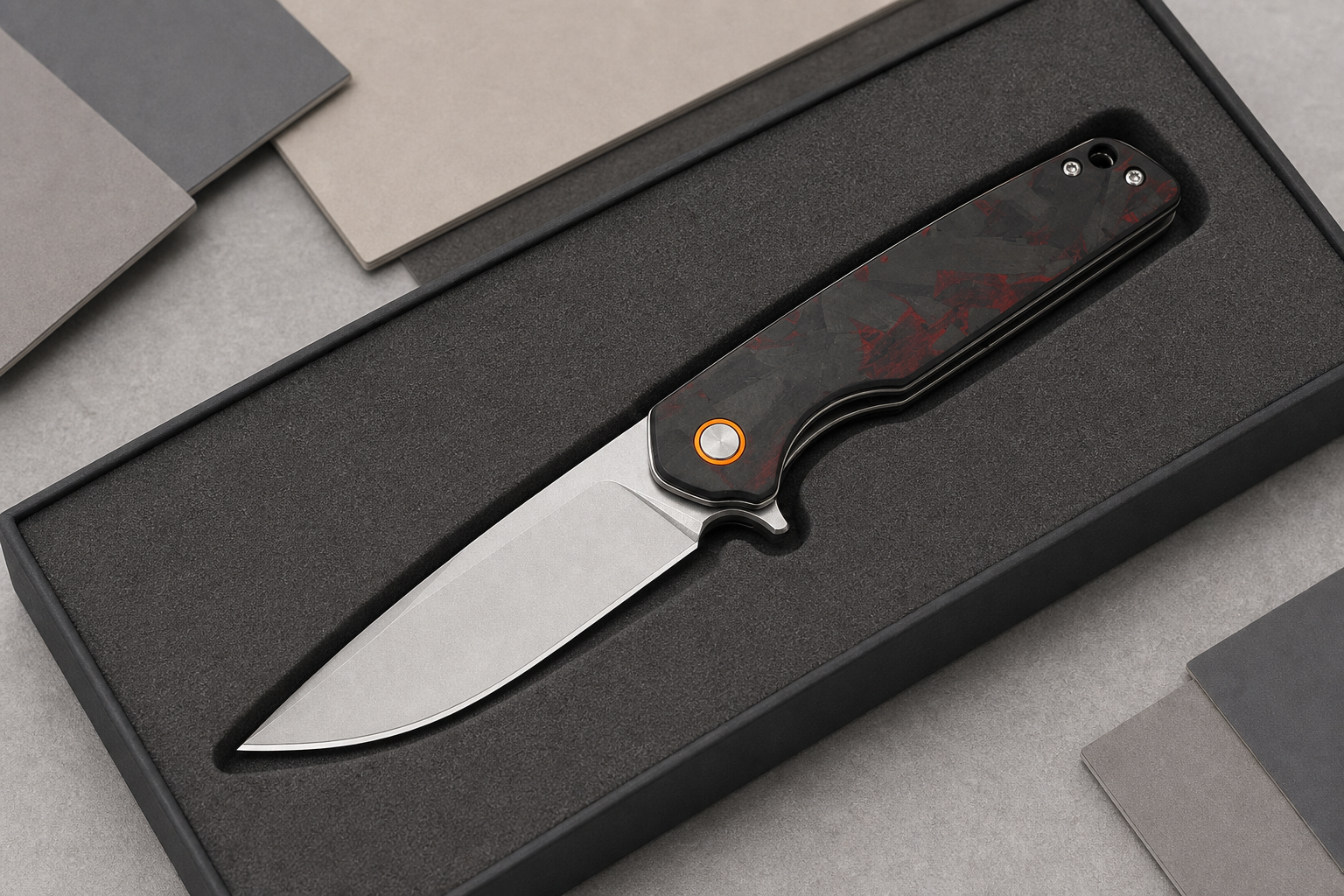
I Document Mechanism Before Legal Review
The first review file should describe the product clearly. It should include blade length, blade measurement method, lock type, opening method, spring or detent structure, handle design, blade shape, clip, packaging copy, and intended utility use. A local reviewer cannot judge a vague "folding knife" accurately.
Canada's official Criminal Code includes a prohibited-weapon definition involving a knife blade that opens automatically by gravity, centrifugal force, or hand pressure on a button, spring, or other device in or attached to the handle. This is a Canadian legal source, not a global standard. It still proves a practical point for buyers: opening method can matter.
The UK government page also lists designs such as flick knives, gravity knives, disguised knives, and other banned items. Again, the exact rule belongs to that market. The buyer lesson is broader. Do not design first and ask questions later. If the buyer wants one-hand opening, a button lock, a flipper, a spring-assisted feel, or an unusual handle, confirm market acceptance before production.
| Feature | Why it can matter | RFQ detail |
|---|---|---|
| Blade length | Some rules use length thresholds | Define measurement method |
| Lock type | Locking folders may be treated differently | State exact lock structure |
| Opening method | Automatic or gravity action may be restricted | Describe mechanism clearly |
| Concealment or wording | May increase risk | Use utility positioning |
How Should Rules Affect Packaging and User Instructions?
A product may be safe in design but risky in communication. Packaging can create confusion if it overpromises carry or use.
Rules should affect packaging and user instructions by adding safe handling, lawful-use reminders, transport cautions, age or channel notices, maintenance guidance, and clear utility positioning.
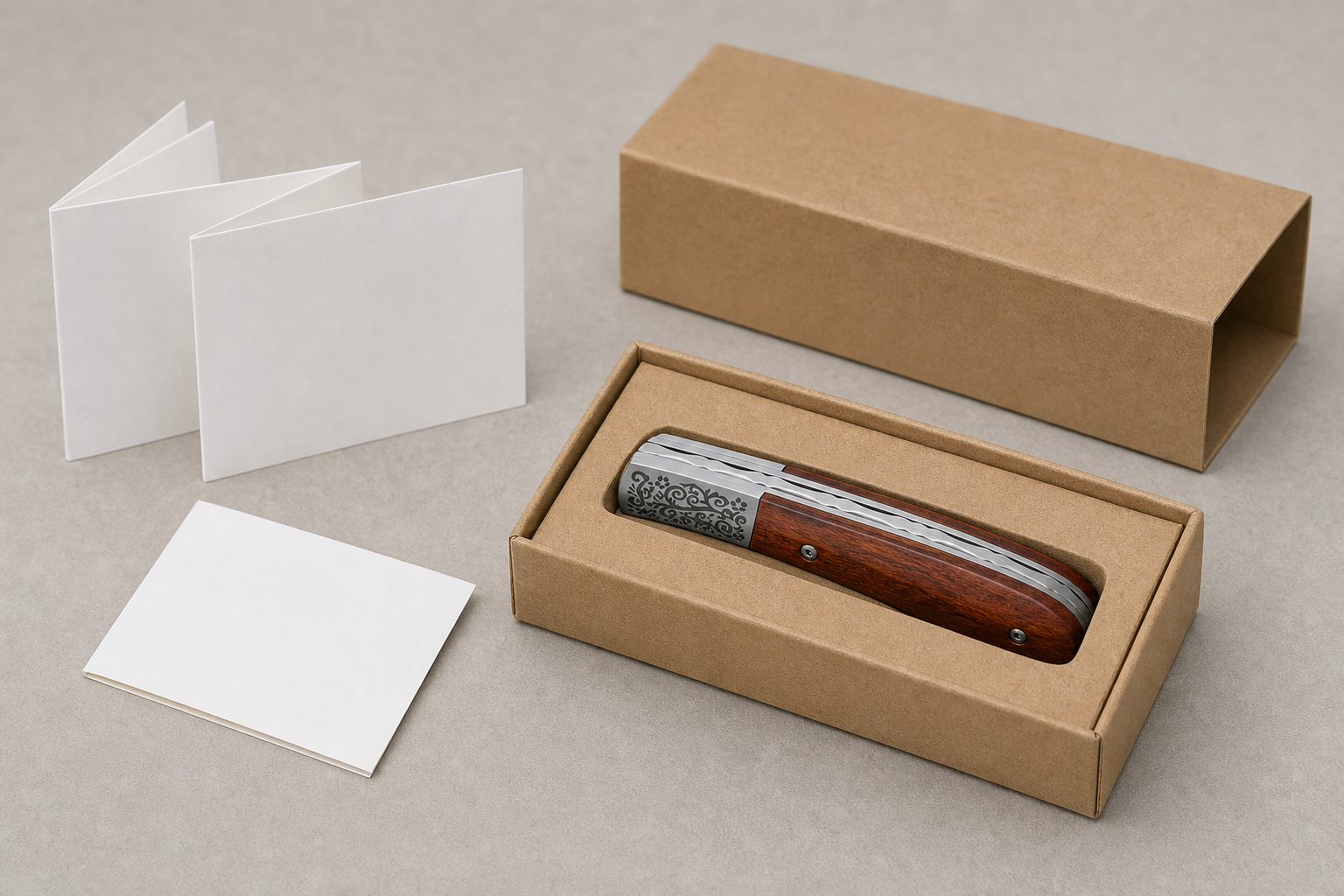
I Use Packaging to Set Responsible Expectations
Packaging cannot replace legal advice. But it can prevent some obvious confusion. A folding knife package can remind users to check local laws before carry or use, keep the knife away from children, store the knife closed, use the tool only for lawful utility tasks, follow transport rules, and maintain the product correctly. The wording should be reviewed for each market.
The Canadian Centre for Occupational Health and Safety page on working safely with sharp blades or edges gives practical advice such as using the right tool, keeping blades sharp, inspecting tools, and not carrying an open tool in a pocket. I use that type of safety thinking when planning inserts and manuals.
Packaging also affects physical safety. The knife should be closed. The edge should not be exposed. The insert should hold the product in place. A retail worker, warehouse team, or final customer should not open the box and meet a loose sharp edge. For folding knives, the package should not rely on the user to understand the lock or release method without instructions.
| Instruction topic | Why it matters | Product type |
|---|---|---|
| Local-law reminder | Rules vary by market | All folding knives |
| Safe opening and closing | Prevents user confusion | Locking and one-hand folders |
| Transport warning | Travel rules can differ | Outdoor and EDC products |
| Maintenance | Reduces complaints | All knives |
How Should Sales Channels and Online Platforms Be Checked?
A product can be lawful in a market and still blocked by a retailer or marketplace policy. Channel rules are commercial rules too.
Buyers should check retailer, marketplace, payment, courier, and distributor policies before production. Channel rules may cover age verification, listing language, delivery, images, and restricted designs.
I Review the Buyer Journey, Not Only the Product
The buyer journey may include importer, warehouse, distributor, marketplace, retailer, courier, and final customer. Each stage can have its own rules. The product may need age verification. The platform may require restricted-item approval. The courier may ask for packaging standards. A retailer may reject aggressive wording. A distributor may need a compliance file before taking the product.
EU product safety and market surveillance guidance from the Council of the European Union says the EU aims to ensure only safe products are placed on the European market and that risky products can be removed swiftly. It also notes that online marketplaces have product safety obligations under the General Product Safety Regulation. For knife buyers, this shows why online channels may ask for clear product information, safety data, and traceability.
This is why I encourage buyers to prepare channel-specific files. The file can include product specifications, photos, blade length, lock type, opening method, packaging artwork, warning text, age-control plan, and quality checklist. It is much easier to answer channel questions when the product file is ready.
| Channel gate | Common question | Buyer preparation |
|---|---|---|
| Marketplace | Can this item be listed? | Check restricted-goods policy |
| Retailer | Is packaging acceptable? | Prepare artwork and warnings |
| Courier | Can it be delivered? | Confirm shipping rules |
| Distributor | Can it be sold locally? | Share product file and review status |
What Should Buyers Avoid Saying in Product Copy?
Bad copy can make a practical tool look risky. Words can change how a buyer, retailer, or platform reads the product.
Buyers should avoid self-defense, combat, threat, concealment, illegal carry, and exaggerated survival claims. Product copy should focus on lawful utility, outdoor tasks, materials, safety, and maintenance.
I Keep the Product Promise Utility-Focused
A folding knife can be useful without aggressive language. Good product copy can explain blade steel, handle material, lock type, clip, edge geometry, corrosion resistance, maintenance, packaging, and intended utility tasks. It can talk about camping, EDC utility, gear repair, warehouse use, outdoor kits, and general cutting tasks. It does not need fear-based claims.
This matters because some official guidance focuses not only on physical objects but also on design categories and descriptions. The UK list, for example, includes categories such as disguised knives and specific banned knife styles. It also refers to wording or images for certain prohibited designs. Buyers should avoid packaging that suggests violence or unlawful use.
For private label customers, responsible copy also improves long-term brand trust. A retailer is more likely to understand a clear utility product than a dramatic product that creates concern. A customer is more likely to use the tool correctly when the product page explains real tasks and safe care. Good wording is part of product quality.
| Copy area | Avoid | Use instead |
|---|---|---|
| Product name | Weapon-style or threatening terms | Outdoor utility or EDC wording |
| Use claims | Self-defense or illegal carry | Camping, repair, package opening |
| Feature claims | Exaggerated toughness | Measurable specifications |
| Images | Dramatic unsafe scenes | Clean product and task photos |
How Should Buyers Handle Market-by-Market Differences?
One country's rule does not solve another country's project. Even one country can have regional or channel differences.
Buyers should build a market matrix covering country, state or province, city, venue, retailer, platform, transport, and packaging requirements before finalizing production.
I Ask Who Confirmed Each Rule
For international B2B orders, I like a simple market matrix. The buyer lists each target country or region. Then the buyer checks import, sale, possession, carry, use, transport, platform policy, age control, packaging, and user instructions. The matrix should include the review date and the person or adviser who confirmed it. That protects the buyer from relying on old blog posts or informal comments.
This is especially important for folding knives because structure matters. A non-locking small folder, a locking outdoor folder, a button-lock folder, and an assisted-opening folder may be treated differently. A product that works for one distributor may not work for another. A product accepted by a local outdoor retailer may still need different instructions for online sale or travel.
The supplier can support this process by providing accurate product data. Vast State can help define blade length, opening method, lock type, material, packaging, and QC details. But the buyer should still confirm local legal and channel requirements. I see this as shared work: the supplier controls product facts, and the buyer confirms market rules.
| Matrix field | Why it matters | Who confirms |
|---|---|---|
| Country or region | Basic legal framework | Buyer or local counsel |
| Platform or retailer | Commercial acceptance | Channel compliance team |
| Transport route | Travel or delivery limits | Courier or logistics partner |
| Product facts | Accurate review data | Supplier and buyer |
What Documentation Should Support Rule Review and Repeat Orders?
A verbal answer is not enough for international sourcing. Buyers need documents that can be reviewed and reused.
Documentation should include drawings, blade measurement, opening-method description, lock type, material list, packaging artwork, warnings, QC checklist, sample approval, and local review notes.
I Make Compliance-Sensitive Facts Traceable
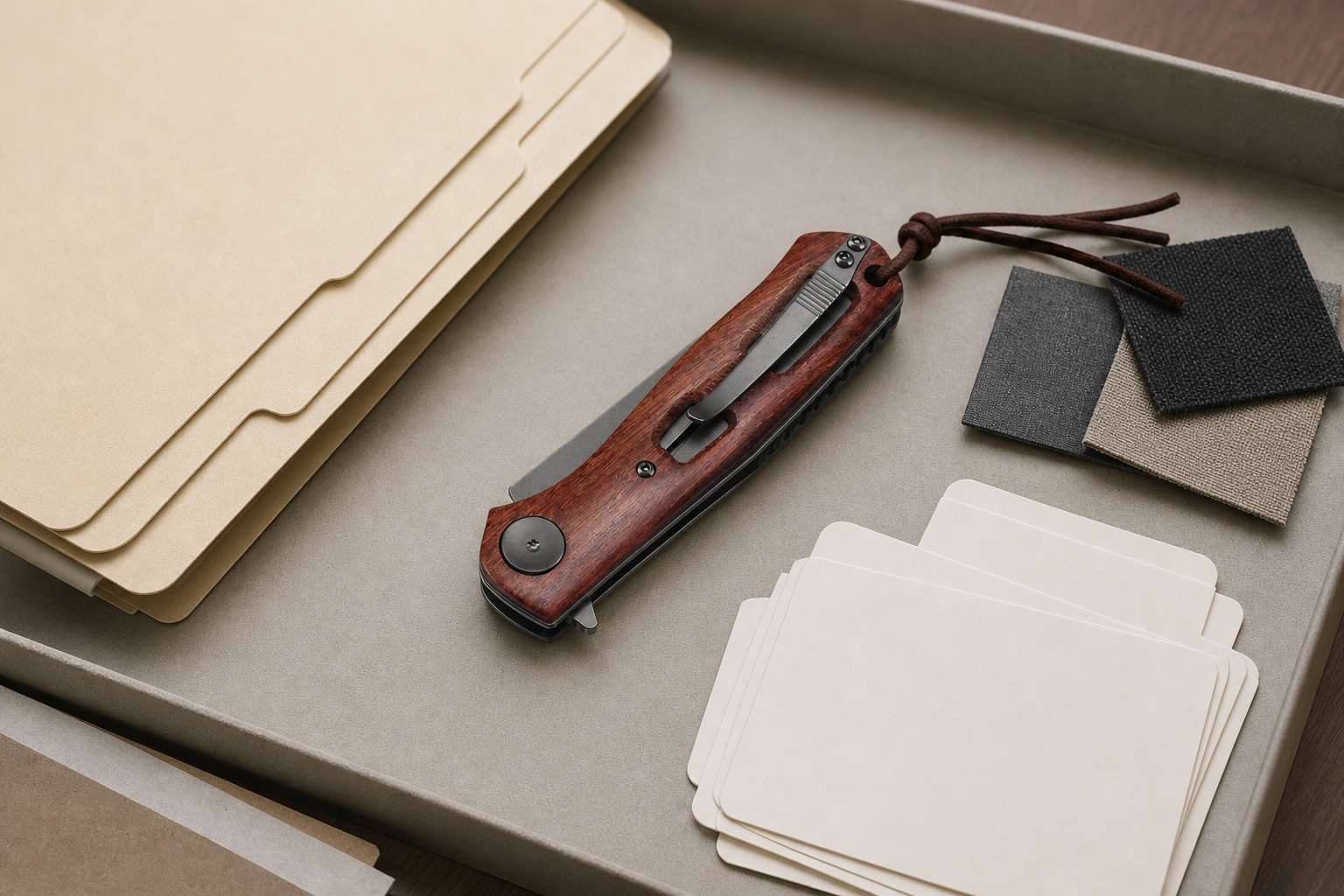
A product file helps buyers avoid confusion. It should show the exact product approved for production. If the buyer later changes the blade length, lock, opening method, or packaging copy, the file should be updated. Old review notes should not be reused after product changes.
The ISO 9001 quality management page connects quality management with meeting customer and applicable statutory or regulatory requirements. I apply that mindset to knife projects. The supplier should not treat compliance-sensitive product facts as casual chat notes. They should be part of the controlled product record.
For folding knives, I like to record blade length, blade thickness, steel, hardness target, lock type, opening method, pivot structure, handle material, clip, packaging, warning insert, and QC checks. This makes repeat orders easier because the second batch can be compared with the approved standard. It also makes channel review easier because the buyer can answer questions quickly.
| Document | What it records | Why it helps |
|---|---|---|
| Specification sheet | Dimensions and mechanism | Supports legal and channel review |
| Packaging proof | Warnings and wording | Prevents launch errors |
| QC checklist | Function and appearance checks | Supports repeat production |
| Review notes | Broker or counsel feedback | Keeps decisions traceable |
How Can Vast State Help Buyers Prepare Market-Ready Folding Knife Projects?
A manufacturer should not replace local legal advice. But a good supplier can make review faster and more accurate.
Vast State can help buyers prepare product facts, prototypes, material options, structure suggestions, packaging, QC plans, and production records for market-ready folding knife projects.
I Help Buyers Turn Rule Questions Into Product Decisions
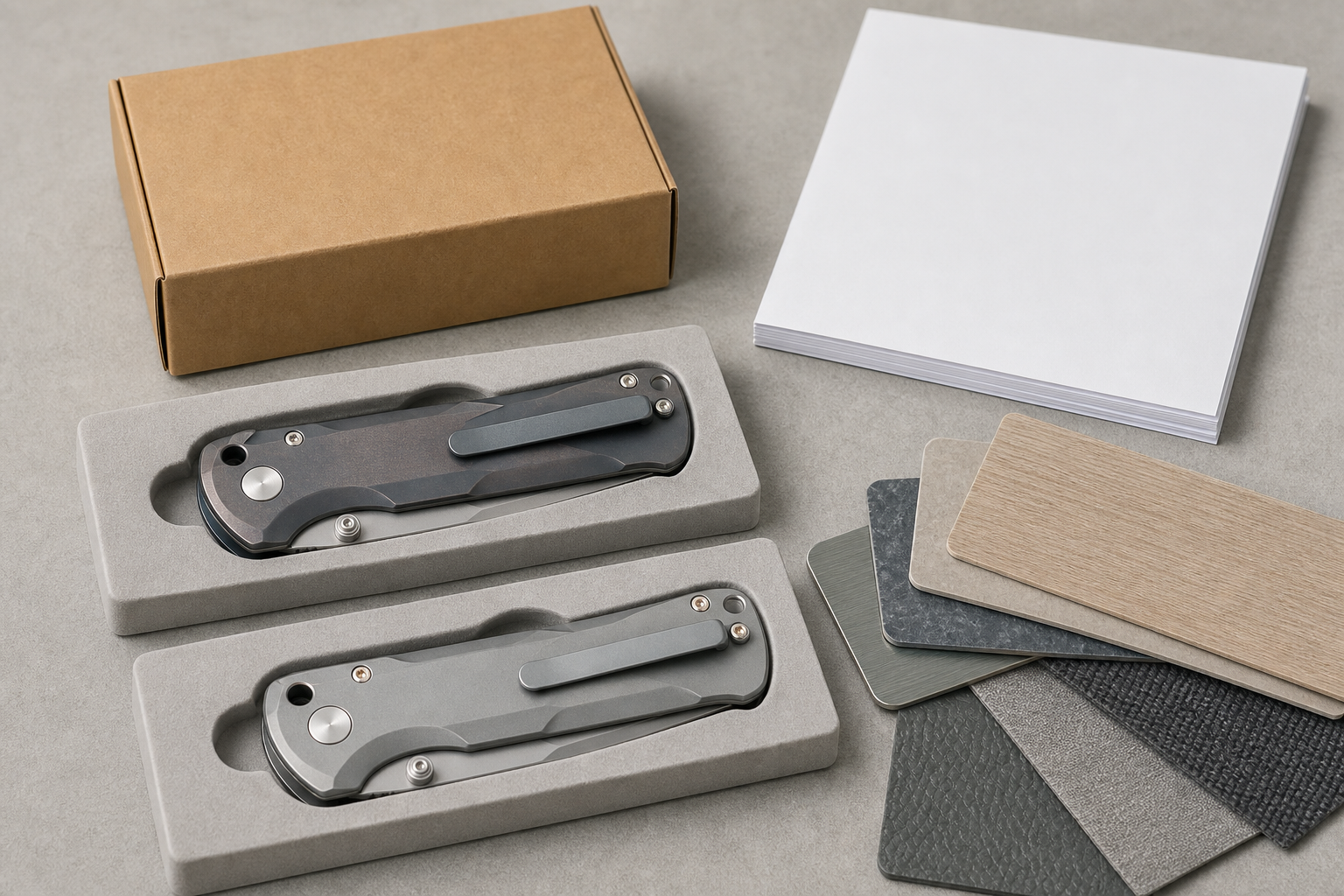
Vast State is an OEM and ODM knife and outdoor tool manufacturer based in Yangjiang, China. We support folding knives, fixed blade knives, pocket knives, camping tools, rescue tools, and multi-tools for international B2B customers. For folding knife projects, we can help buyers define the product details that matter for rule review.
If a buyer already has a finished design, I can help check manufacturability, blade length, mechanism details, packaging options, and QC points. If a buyer only has a rough idea, I can help suggest safer product directions based on target market, target price, user scenario, and sales channel. I cannot say a knife is legal everywhere. No responsible supplier should promise that. But I can help provide accurate product information for local review.
The best projects are specific. The buyer tells me the target market, channel, user, blade length, lock preference, opening method, price range, packaging needs, and documents required by the importer or distributor. Then we build the product around real commercial and regulatory expectations.
| Buyer need | Vast State support | Result |
|---|---|---|
| Finished design | Product fact and manufacturability review | Better local review file |
| New concept | ODM structure suggestions | Lower redesign risk |
| Packaging launch | Warning and instruction support | Clearer channel communication |
| Repeat order | QC and production follow-up | More stable supply |
Turn this article into a folding knife project.
Share your blade type, lock direction, steel preference, handle material, quantity, target market, and packaging needs. Vast State can prepare OEM/ODM options.
Conclusion
Folding knife rule review works best when buyers turn possession, carry, transport, and use questions into product facts, packaging guidance, and local confirmation.