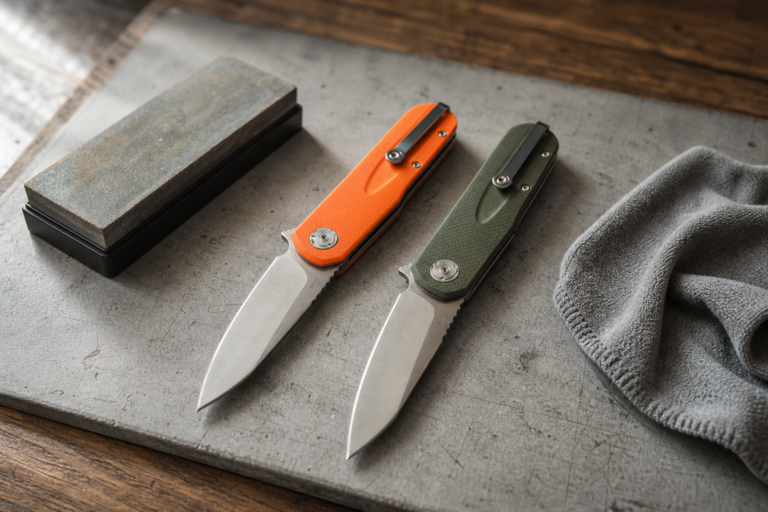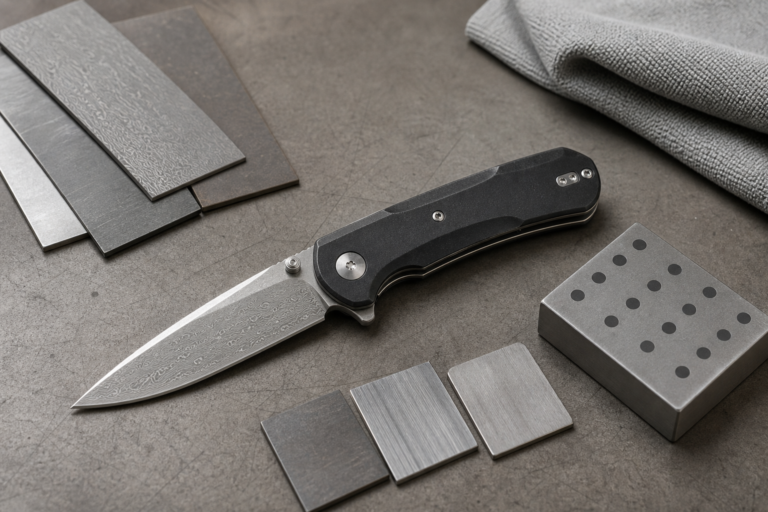
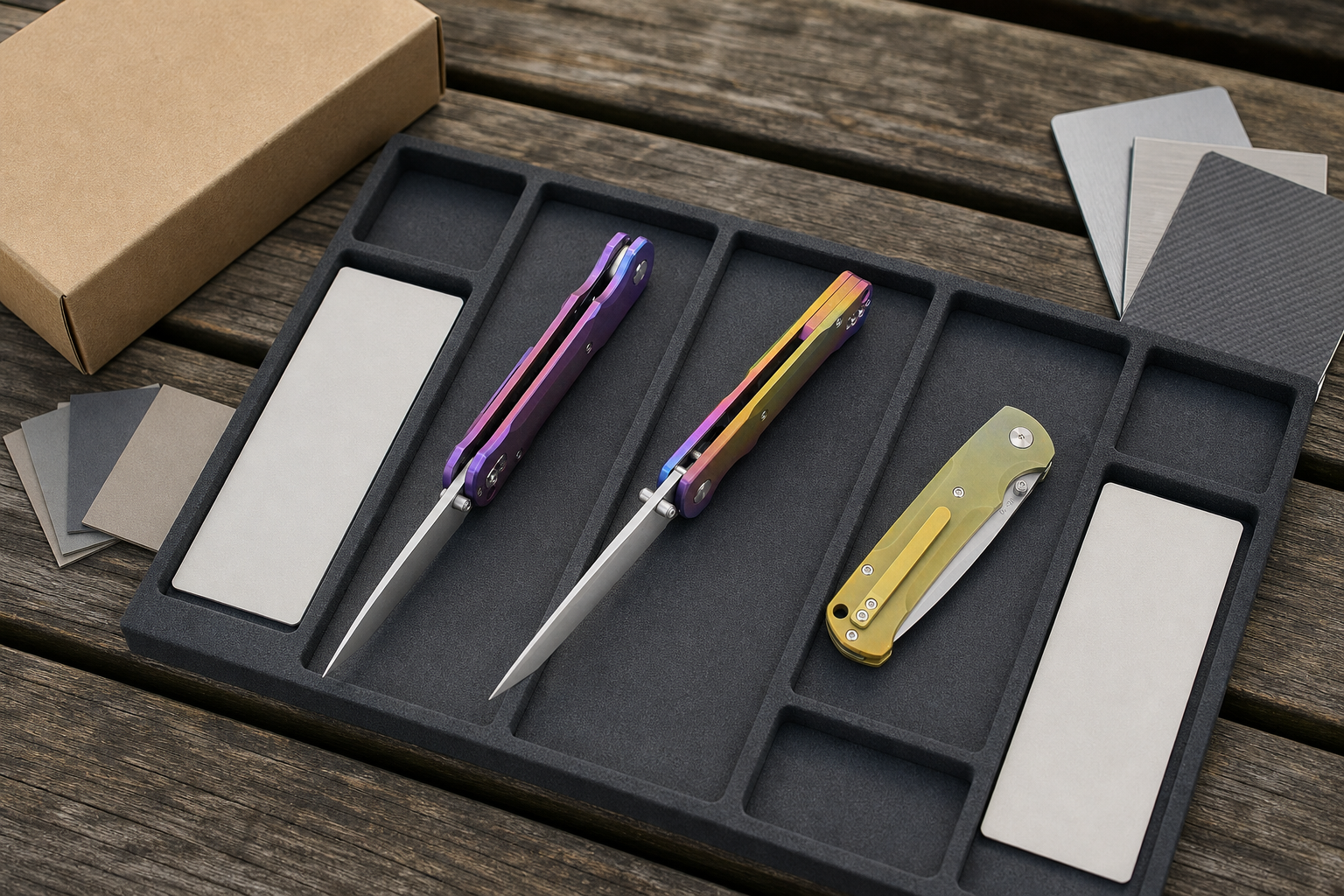
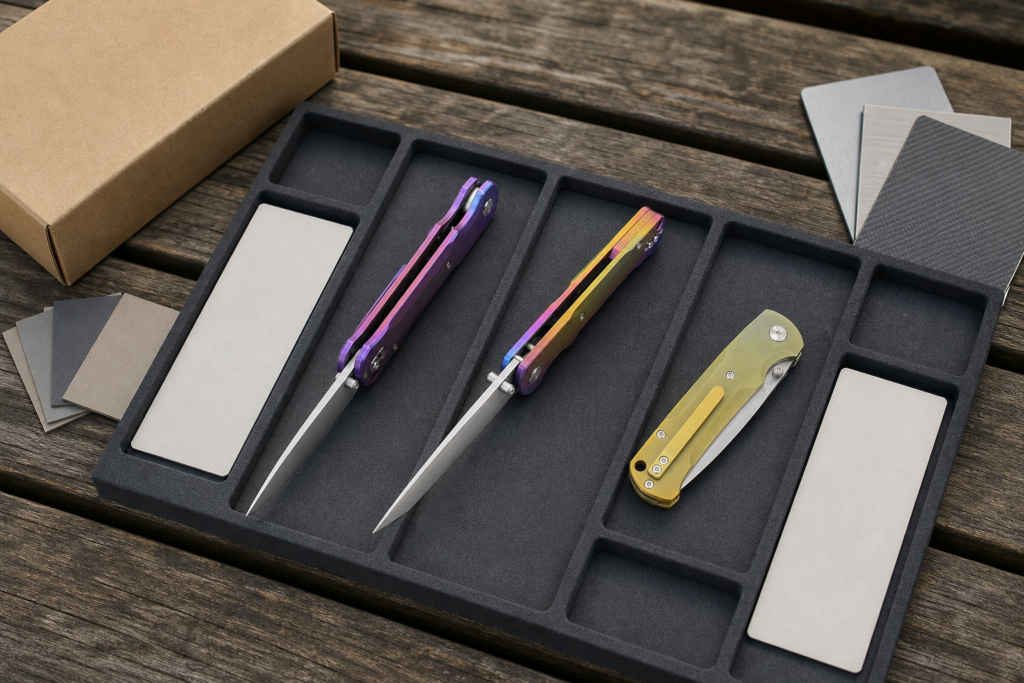
An outdoor folding knife can look rugged and still fail outside. Poor feature choices create weak grip, unstable action, rust complaints, and bad user trust.
Buyers should evaluate outdoor folding knife features by matching blade size, steel, lock, handle grip, carry method, corrosion resistance, maintenance needs, packaging, and safety information to the real outdoor task and target market.
Quick buyer brief:
- Answer: A strong outdoor folding knife is not only a sharp blade. It is a balanced product system with a suitable blade, reliable lock, secure grip, controlled weight, corrosion-aware materials, practical carry, serviceable screws, clear instructions, and repeatable QC.
- Buyer context: This guide is for outdoor brands, knife brands, importers, distributors, private label buyers, and sourcing managers planning OEM or ODM folding knife projects.
- Key checks: User scenario, blade length, blade profile, steel, hardness target, edge geometry, pivot system, lock type, handle material, texture, clip, closed safety, packaging, compliance review, sample testing, and inspection standard.
Developing a folding knife line for your brand?
Vast State supports OEM/ODM folding knife projects, including blade steel, lock structure, handle material, finish, logo method, packaging, and quality inspection planning.
When I discuss an outdoor folding knife project, I do not start by asking for the most aggressive blade shape. I start with the user's environment. A knife for camping food prep, camp chores, fishing, hiking, hunting support, emergency repair, or daily outdoor carry should not use the same feature package. A good feature list must connect to real use, target price, channel rules, production stability, and brand positioning. If the feature only looks strong in a photo but makes the knife heavier, harder to assemble, harder to inspect, or less safe to use, I treat it as a risk.
Why Should Outdoor Use Define the Feature List First?
Many buyers start with a visual style. The problem is that outdoor users judge the knife by grip, control, carry, and reliability.
Outdoor use should define the feature list because real tasks decide blade size, edge geometry, handle texture, lock strength, corrosion resistance, and packaging information.
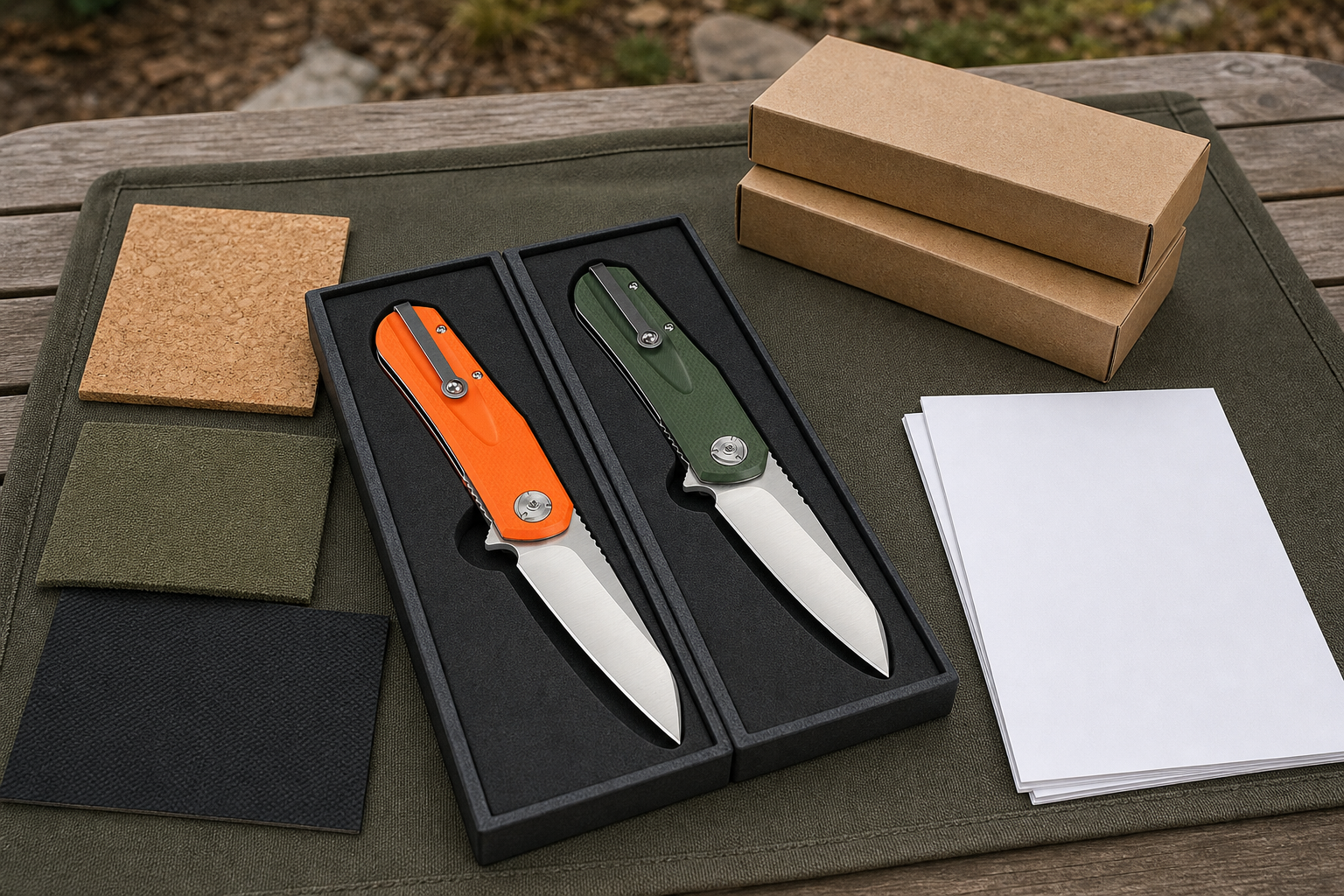
I Translate Outdoor Tasks Into Product Requirements
Outdoor is a broad word. A small hiking folder may need light weight, simple cleaning, and a secure pocket clip. A camping folder may need more handle comfort and edge stability. A fishing or coastal outdoor knife may need better corrosion resistance. A utility-focused outdoor knife may need a strong tip, easy sharpening, and packaging that explains safe use. The same "outdoor" label can hide very different needs.
The National Park Service Ten Essentials is a useful public reference because it treats a knife as part of repair and outdoor preparedness, not as decoration. That is how I prefer to think about product features. The knife should solve practical field tasks. It should help with cutting cord, opening packaging, preparing small materials, and handling repair needs. It should not rely on exaggerated tactical language.
For OEM and ODM buyers, this first step protects the whole project. If the target user is clear, material choices become easier. If the use environment is clear, corrosion and grip decisions become easier. If the sales channel is clear, packaging and compliance language become easier. Feature planning becomes a business decision, not only a design discussion.
| Outdoor scenario | Feature priority | Production note |
|---|---|---|
| Hiking and light carry | Low weight, compact size, secure clip | Avoid oversized hardware and heavy handles |
| Camping chores | Comfortable grip and stable edge | Test handle shape and edge geometry |
| Fishing or wet use | Corrosion resistance and easy cleaning | Review steel, screws, liners, and finish |
| General utility | Strong tip, easy maintenance, safe closing | Check lockup, pivot access, and instructions |
OEM/ODM RFQ Checklist
Prepare these details to help Vast State review your project and provide a more accurate quotation.
| RFQ Field | What to Prepare |
|---|---|
| Project type | OEM from drawing / ODM private label / wholesale catalog |
| Product category | Folding knife / fixed blade / multi-tool / outdoor tool |
| Design status | Idea / sketch / 2D drawing / 3D CAD / physical sample |
| Target price | Ex-factory target price or retail price range |
| MOQ expectation | 500 / 1,000 / 3,000 / 5,000+ pcs |
| Logo method | Laser engraving / etching / printing / molded logo |
| Packaging | Standard packaging / custom retail box / Amazon-ready |
| Market | USA / EU / Japan / Korea / Middle East / other |
| Compliance needs | Buyer-specified testing / documentation / labeling |
| Timeline | Sample deadline / mass production deadline |
What Blade Features Matter Most in an Outdoor Folding Knife?
A blade can look sharp in marketing images. But the wrong blade profile or grind can frustrate real users.
Key blade features include length, profile, tip strength, grind, edge angle, stock thickness, steel grade, hardness target, corrosion resistance, and sharpening behavior.
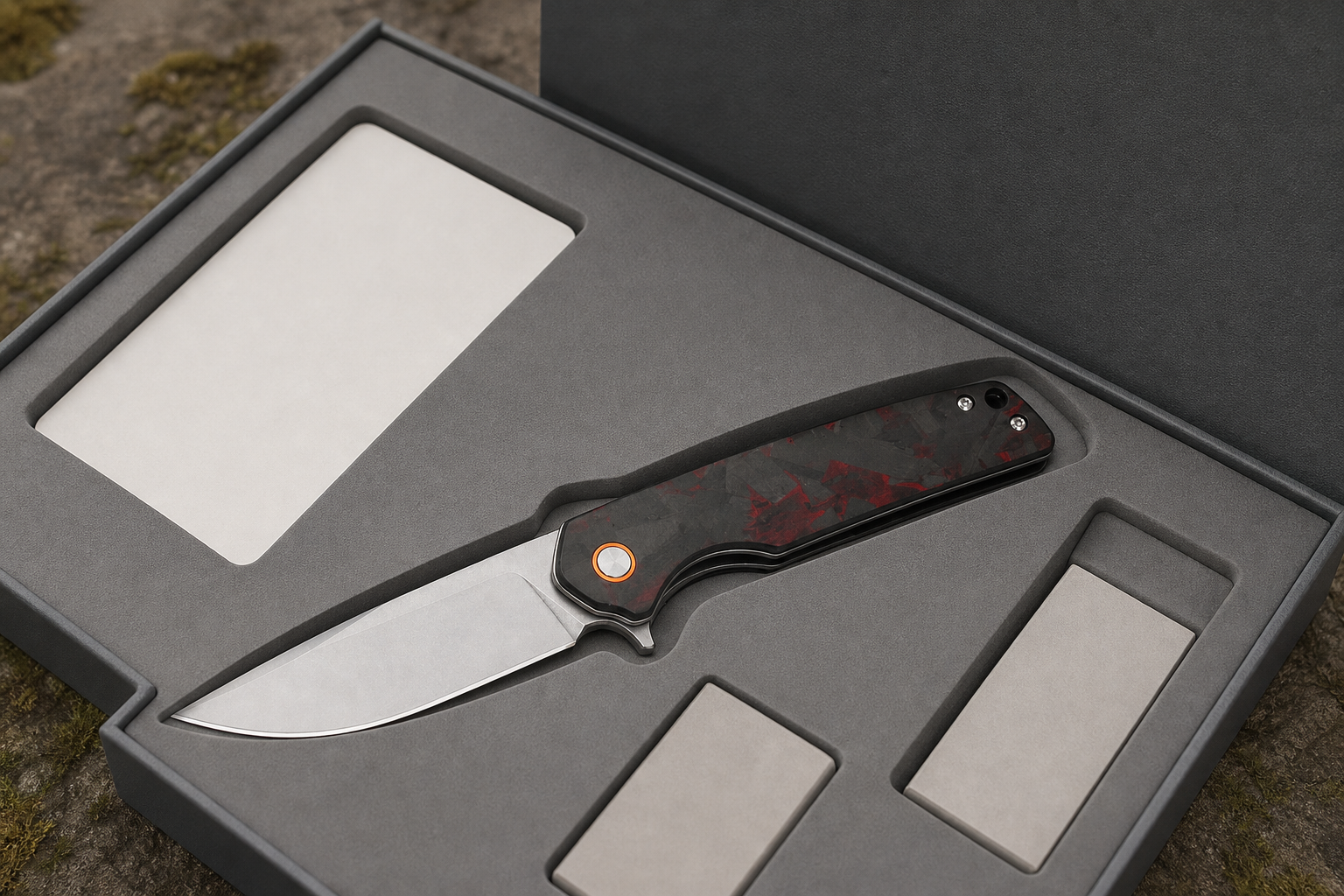
I Look at Geometry Before I Look at the Steel Name
Blade steel matters, but geometry decides much of the user experience. A thick blade with a poor grind may feel weak at slicing even if the steel sounds impressive. A very thin tip may cut well but fail in rough outdoor utility tasks. A blade that is too long may create legal or carry issues in some markets. A blade that is too short may not fit camping or repair needs.
For outdoor folding knives, I often prefer practical blade profiles. A drop point or simple utility profile can support controlled cutting and easier manufacturing. Very dramatic shapes can create grinding complexity, weak tips, closed-position safety concerns, and market confusion. The grind also matters. A flat grind may slice well. A saber or higher-strength grind may support harder use. The final edge should match the user's expected task.
Steel choice should support the geometry. Alleima 14C28N knife steel is often discussed in knife projects because it is a stainless knife steel designed around a balance of edge performance and corrosion resistance. Other steels may fit other price points. The important point is not to choose a steel name first and force the product around it. I match steel, heat treatment, grind, finish, and price together.
| Blade feature | Buyer question | Why it matters |
|---|---|---|
| Blade length | Does it fit the task and market? | Affects utility, carry, and compliance review |
| Blade profile | Is the tip strong enough? | Affects outdoor control and grinding stability |
| Grind | Is it for slicing or stronger use? | Affects cutting feel and edge durability |
| Steel and hardness | Can the supplier control it? | Affects performance and repeat orders |
How Should Buyers Judge Lock, Pivot, and Opening Features?
Smooth action feels good in the hand. But outdoor users also need controlled movement and reliable closing safety.
Buyers should judge the lock, pivot, and opening features by checking lock engagement, blade play, centering, dirt tolerance, one-hand control, closing safety, and assembly repeatability.
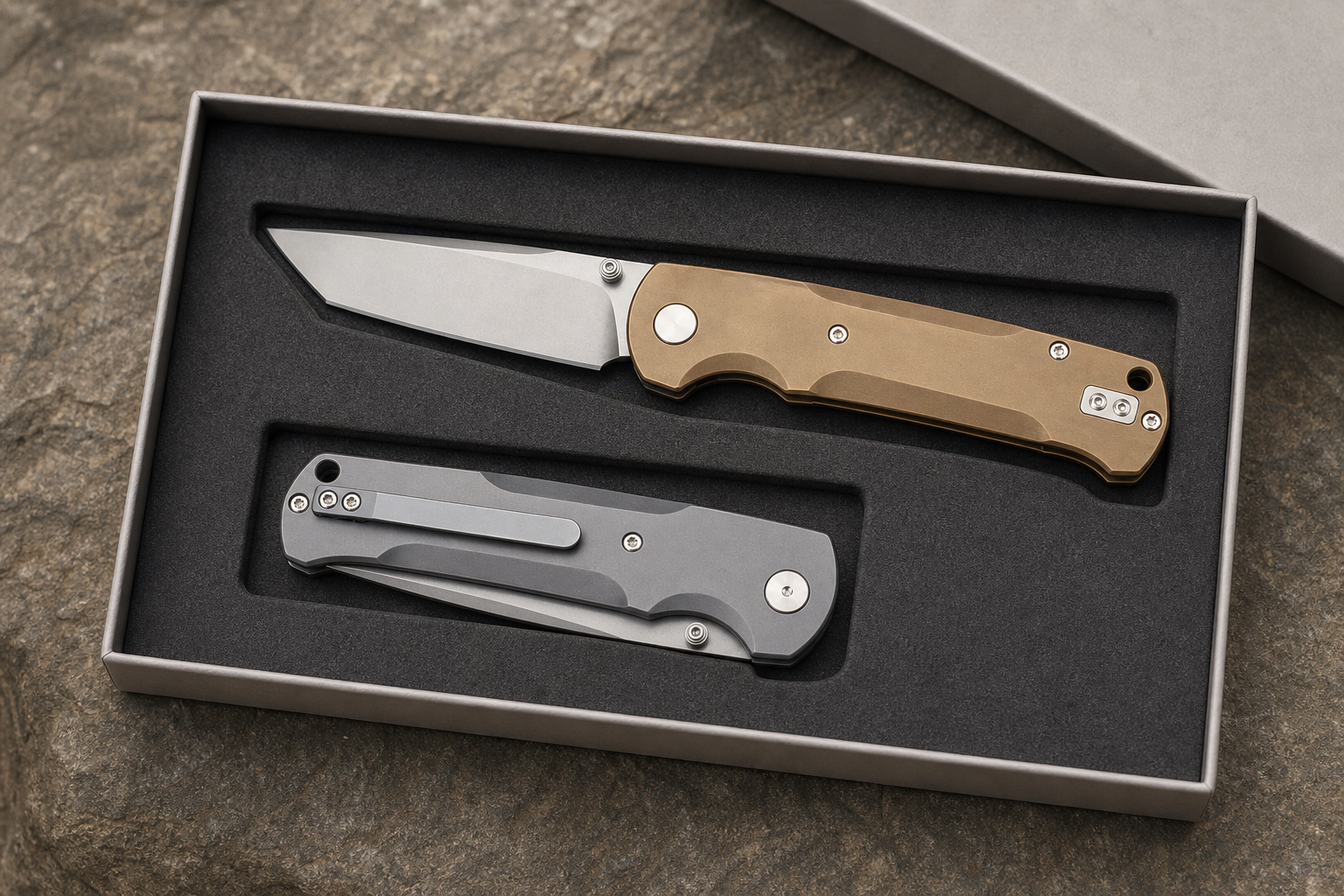
I Treat Folding Action as a Controlled Mechanical System
A folding knife is not only a blade and a handle. It is a moving system. The pivot, washer or bearing, stop pin, lock face, liners, screws, blade tang, and handle scales must work together. If the pivot is too tight, the knife feels rough. If it is too loose, the blade may develop play. If the lock surface is not controlled, the lockup may feel weak or inconsistent. If the detent or closing bias is poor, the knife may feel unsafe.
Outdoor use adds more pressure to this system. Dust, water, pocket debris, and rough handling can affect the action. A bearing system can feel smooth, but washers may be easier to clean in some outdoor projects. A liner lock may support a slim design. A back lock may create a traditional outdoor feel. A button or crossbar-style structure can feel convenient, but it needs careful engineering and market review. I do not treat any lock type as automatically best. I match it to the project level.
The NIST page on dimensional metrology explains that dimensional measurement supports manufacturing process improvement. In folding knives, this idea is very practical. Pivot hole size, blade thickness, liner flatness, stop pin position, and lock contact surfaces must be measured and controlled. A sample that feels smooth once is not enough. The mechanism must repeat across many pieces.
| Mechanism feature | What I check | Buyer risk |
|---|---|---|
| Pivot fit | Smooth movement without side play | Poor tolerance creates inconsistent action |
| Lock engagement | Stable lockup and safe release | Weak geometry affects user trust |
| Stop pin area | Open and closed position control | Wrong position affects safety and centering |
| Screw system | Torque and service access | Loose screws create after-sales issues |
Why Are Handle Grip, Shape, and Materials More Than Cosmetic Choices?
Outdoor buyers often focus on blade steel. But the handle decides comfort and control during real use.
Handle grip, shape, and material affect safety, fatigue, wet-hand control, weight, durability, color consistency, machining time, and perceived quality.
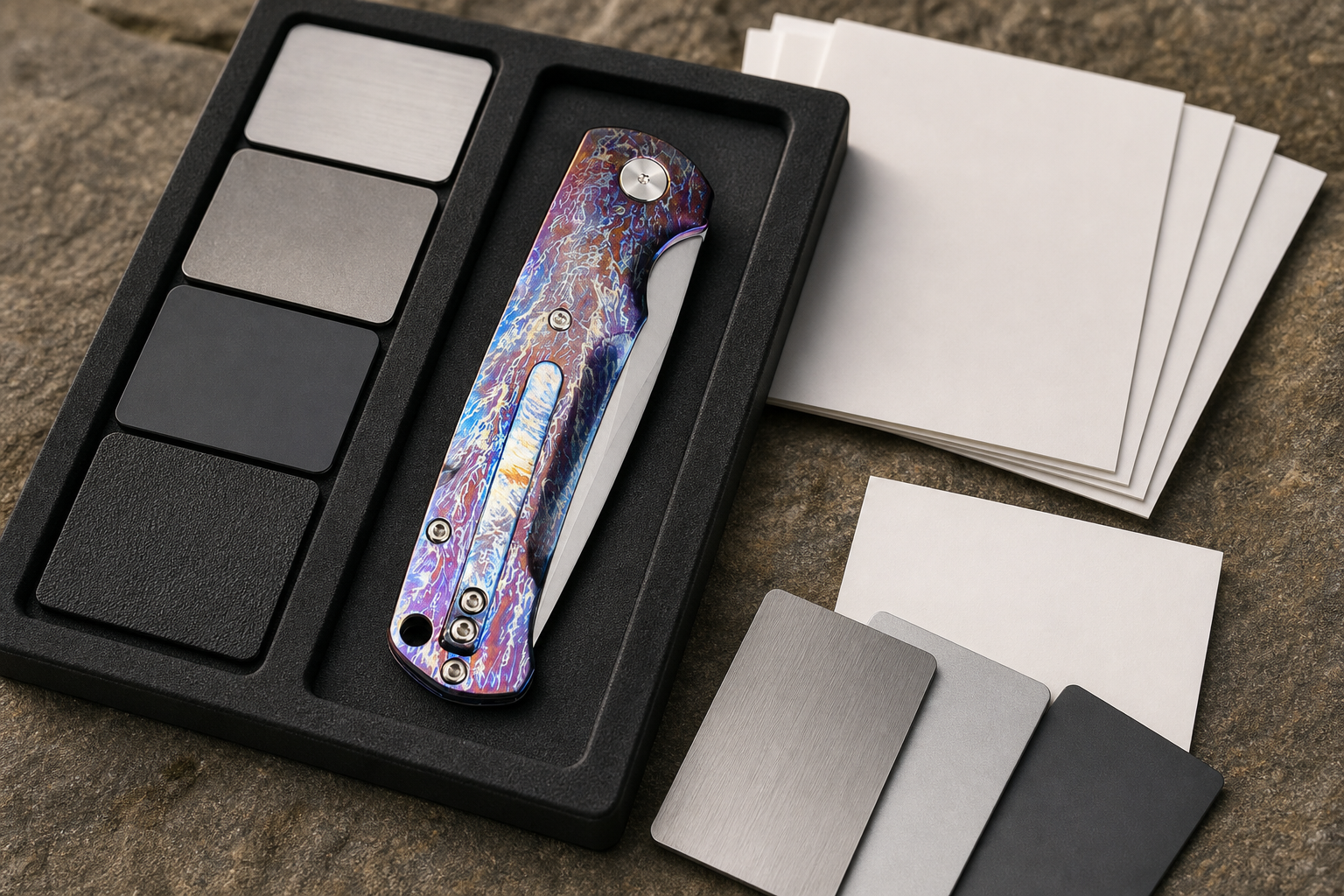
I Test the Handle as a Working Contact Surface
The handle is the part the user touches most. It must feel secure without creating hot spots. It should support the grip style expected for the task. A very thin handle may carry well, but it can feel uncomfortable during harder cutting. A very aggressive texture may grip well, but it can damage pockets or feel harsh. A smooth handle may look premium, but it can become risky when wet.
Material choice changes both feeling and production. G10 can provide stable grip and color options. Micarta can create a warmer outdoor identity. Aluminum can reduce weight and support anodizing, but sharp edges or poor texture can reduce confidence. Stainless steel can feel solid, but it may make the knife heavy. Wood can look traditional, but natural variation and moisture response need control. Polymer can support value projects, but it needs good molding or machining detail.
The ISO 9241-11 usability standard is helpful because it frames usability around users, goals, and context. I use that thinking for handle design. The question is not "which handle material looks best?" The better question is "which handle lets this target user control the knife safely and comfortably in the intended outdoor context?"
| Handle decision | User-facing effect | Production concern |
|---|---|---|
| Thickness | Comfort and pocket feel | Screw length and handle balance |
| Texture | Wet-hand control | Pocket wear and finish consistency |
| Material | Weight and perceived quality | Machining, color, and surface control |
| Edge rounding | Comfort during pressure cuts | Extra finishing time |
How Should Corrosion Resistance and Maintenance Shape the Feature Package?
Outdoor knives meet water, sweat, food residue, dirt, and humidity. Small material choices can become visible complaints.
Corrosion resistance and maintenance should shape the steel, hardware, liners, surface finish, pivot design, cleaning access, packaging instructions, and QC checks.
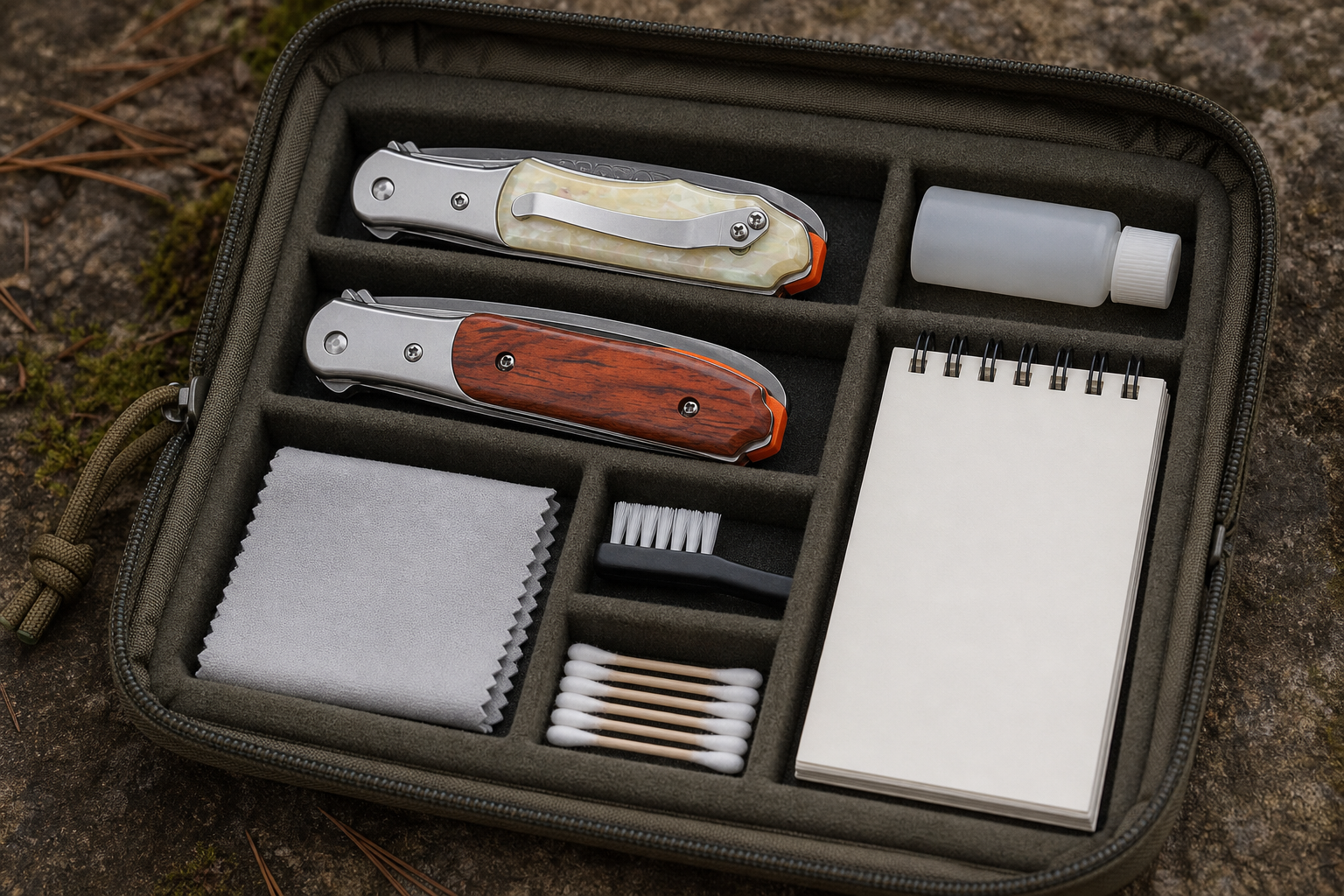
I Review the Whole Knife, Not Only the Blade
Many buyers ask if the blade steel is stainless. That is important, but corrosion complaints can also come from screws, liners, pocket clips, washers, backspacers, springs, or poor surface finishing. A folding knife has hidden spaces. Moisture can stay around the pivot, stop pin, and handle cavities. If the product is positioned for fishing, camping, coastal use, or humid markets, the full assembly needs review.
Surface finish also matters. Stonewash can hide small marks. Satin can look clean but show scratches. Bead blast can look technical, but the surface condition may need corrosion review. Coatings can improve appearance and offer some protection, but coating wear at the cutting edge and contact points should be expected. The buyer should approve both appearance and realistic wear expectations.
For test planning, ISO 9227 is a useful reference because it covers salt spray tests in artificial atmospheres. Not every outdoor knife project needs a formal salt spray program, but the concept matters. If corrosion resistance is part of the selling point, the buyer and supplier should agree how it will be checked. Maintenance guidance is also part of the feature package. A good knife should be easier to clean, dry, oil, and inspect.
| Corrosion topic | What I check | Why it matters |
|---|---|---|
| Blade steel | Stainless level and heat treatment | Affects rust resistance and edge performance |
| Hardware | Screws, liners, clip, springs | Hidden parts can create complaints |
| Finish | Satin, stonewash, coating, bead blast | Affects appearance and corrosion behavior |
| Cleaning access | Pivot and handle cavities | Supports real outdoor maintenance |
What Carry, Weight, and Closed Safety Features Should Buyers Specify?
Outdoor users carry tools for hours. A heavy or unsafe folder can fail before it ever cuts.
Carry features should include pocket clip position, closed retention, weight balance, handle thickness, lanyard option, sheath or pouch choice, and safe closed blade coverage.
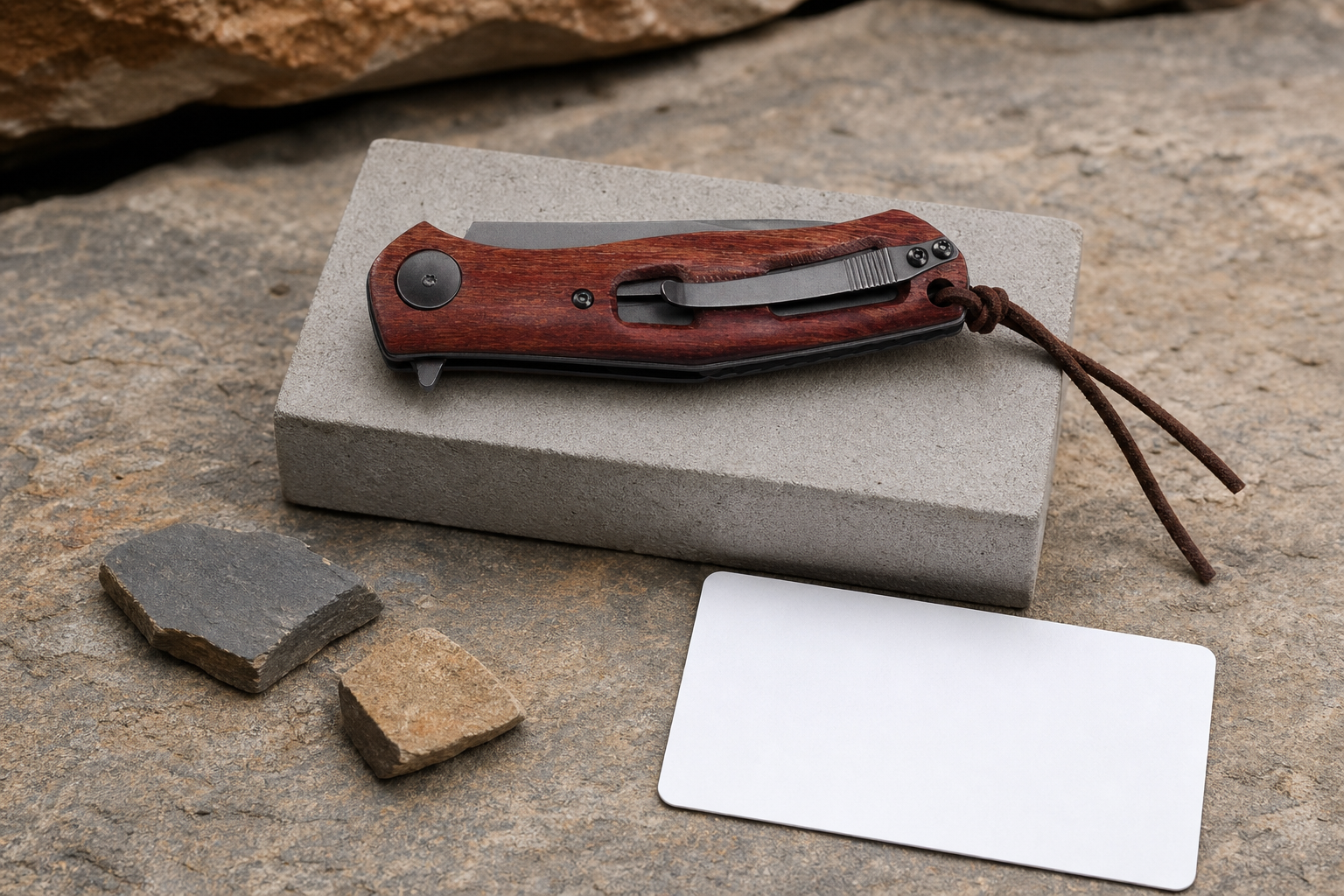
I Check the Knife as a Carried Product
A folding knife lives in a pocket, bag, pouch, or belt system before it is used. Carry comfort matters. If the knife is too heavy, the buyer may get complaints even when the blade cuts well. If the clip is too stiff, users may dislike daily carry. If the clip screws are weak, after-sales issues can appear. If the closed blade tip is exposed or poorly covered, the product has a serious safety problem.
Weight should match the product promise. A compact hiking knife should not feel like a heavy showpiece. A stronger camping folder can accept more weight if the handle comfort and strength justify it. The buyer should look at closed length, handle thickness, clip height, edge coverage, and pocket draw. For many B2B projects, this review is simple but often skipped.
Carry accessories also affect positioning. A nylon pouch may support outdoor gift sets or belt carry. A deep-carry clip may support EDC and hiking channels. A lanyard hole may support outdoor use, but it should not weaken the handle or interfere with grip. Every carry feature should be checked with the actual user scenario and packaging plan.
| Carry feature | Good result | Common problem |
|---|---|---|
| Pocket clip | Secure and comfortable carry | Too stiff, too loose, or weak screws |
| Closed retention | Blade stays closed in carry | Poor detent or spring bias |
| Weight | Matches user expectation | Heavy handle reduces carry comfort |
| Pouch or sheath | Supports outdoor channel | Adds cost and packaging size |
How Should Buyers Plan Safety, Instructions, and Responsible Product Copy?
Outdoor knives are useful tools. But careless copy or missing instructions can create avoidable risk.
Buyers should plan safety by checking product copy, warning text, instructions, packaging, age or channel rules, safe handling guidance, and market-specific compliance review.
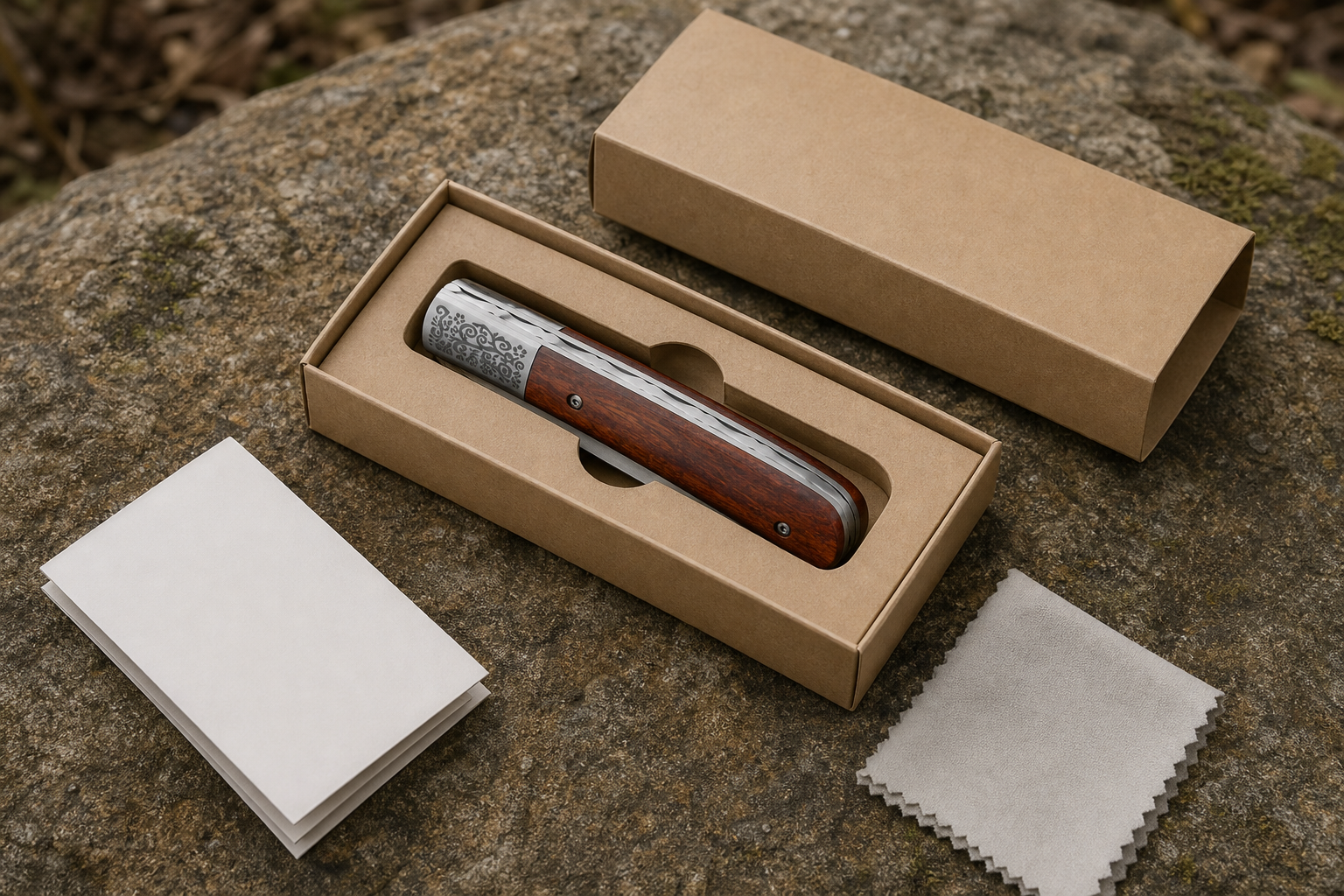
I Keep Outdoor Positioning Practical and Responsible
Product copy should explain tool use clearly. It can discuss camping, hiking, rope cutting, repair kits, food preparation support where suitable, and general utility. It should avoid exaggerated self-defense, combat, or fear-based claims. Those claims can create channel problems, compliance risk, and brand damage. For outdoor buyers, responsible positioning is usually stronger and more durable.
Instructions should be simple. They should explain safe opening and closing, lock release, cleaning, drying, lubrication, storage, and edge caution. They should not overpromise performance. If the knife has a special lock or pivot system, the instruction card should make the operation clear. If the knife is sold in multiple markets, the buyer should review age restrictions, carry rules, online marketplace policies, and local labeling needs before mass printing.
Workplace safety guidance can also inform product communication. The Canadian Centre for Occupational Health and Safety sharp blades guidance emphasizes using the right tool, keeping cutting tools sharp, and storing blades safely. The exact workplace context is different from consumer outdoor use, but the safety logic is useful. A knife project should not only look good. It should guide the user toward safer handling.
| Safety item | Why it matters | Buyer action |
|---|---|---|
| Product copy | Shapes channel acceptance | Use practical tool language |
| Instruction card | Reduces misuse and confusion | Explain lock, cleaning, and storage |
| Packaging warning | Supports responsible sale | Review before mass printing |
| Market rules | Affect sales channel readiness | Check before final feature approval |
What QC Checks Make Outdoor Folding Knife Features Repeatable?
One strong sample does not prove repeatable production. Outdoor features need measurable and functional controls.
QC checks should cover blade steel, hardness, grind, edge, pivot action, lockup, blade play, centering, handle fit, clip strength, corrosion-sensitive parts, packaging, and instructions.
I Turn Feature Decisions Into Inspection Points
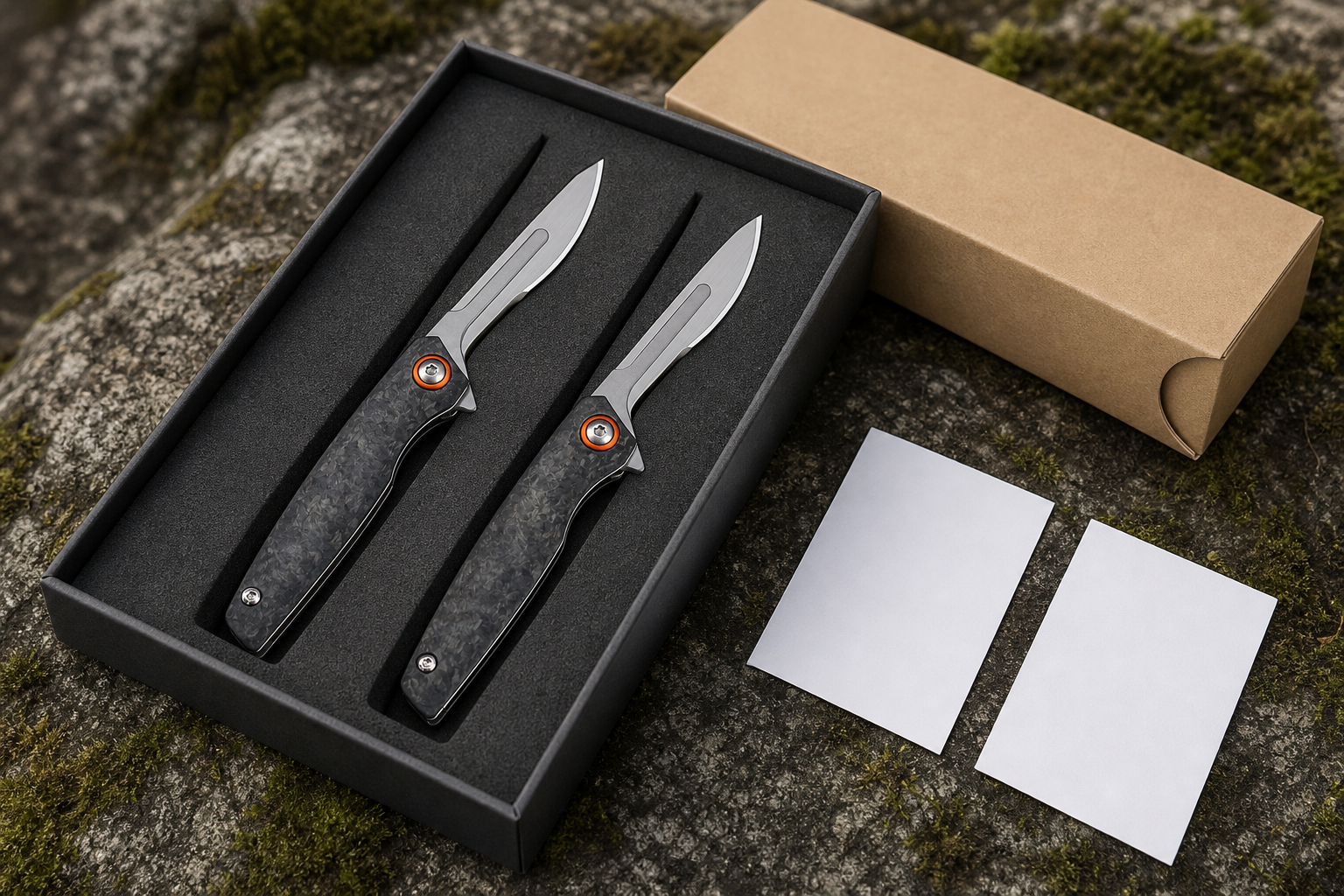
Every feature in the product brief should become a check point. If the buyer specifies easy one-hand opening, the action must be checked. If the buyer specifies outdoor grip, the handle texture and edge rounding must be checked. If the buyer specifies corrosion resistance, the blade, screws, liners, clip, and finish should be reviewed. If the buyer specifies premium feel, blade centering, screw finish, logo clarity, and packaging must match the approved sample.
The OSHA hand and power tools guide reminds users that tools should be maintained and kept in proper condition. For knife projects, I translate that idea into inspection and maintenance readiness. The supplier should ship a knife that opens correctly, locks safely, closes securely, and can be maintained by the user.
The ISO 9001 quality management framework is also useful because it focuses on meeting requirements and improving customer satisfaction through controlled processes. For OEM and ODM knife orders, this means the final sample should not be the only reference. The buyer should define inspection standards, boundary samples, packaging samples, and function tests before mass production. That is how the same outdoor feature package can repeat in the next batch.
| QC area | Inspection focus | Buyer benefit |
|---|---|---|
| Blade | Steel, hardness, grind, edge | Stable cutting performance |
| Mechanism | Action, lockup, blade play | Safer and smoother user experience |
| Handle | Fit, texture, comfort, screws | Better outdoor control |
| Packaging | Protection, instructions, labeling | More sellable and channel-ready product |
How Can Vast State Help Buyers Build Better Outdoor Folding Knife Projects?
Feature selection can become confusing when design, cost, safety, and production all move together.
Vast State helps buyers turn outdoor folding knife feature ideas into manufacturable OEM/ODM projects by reviewing use case, material, mechanism, appearance, cost, samples, and QC.
I Build the Feature Package Around Production Reality
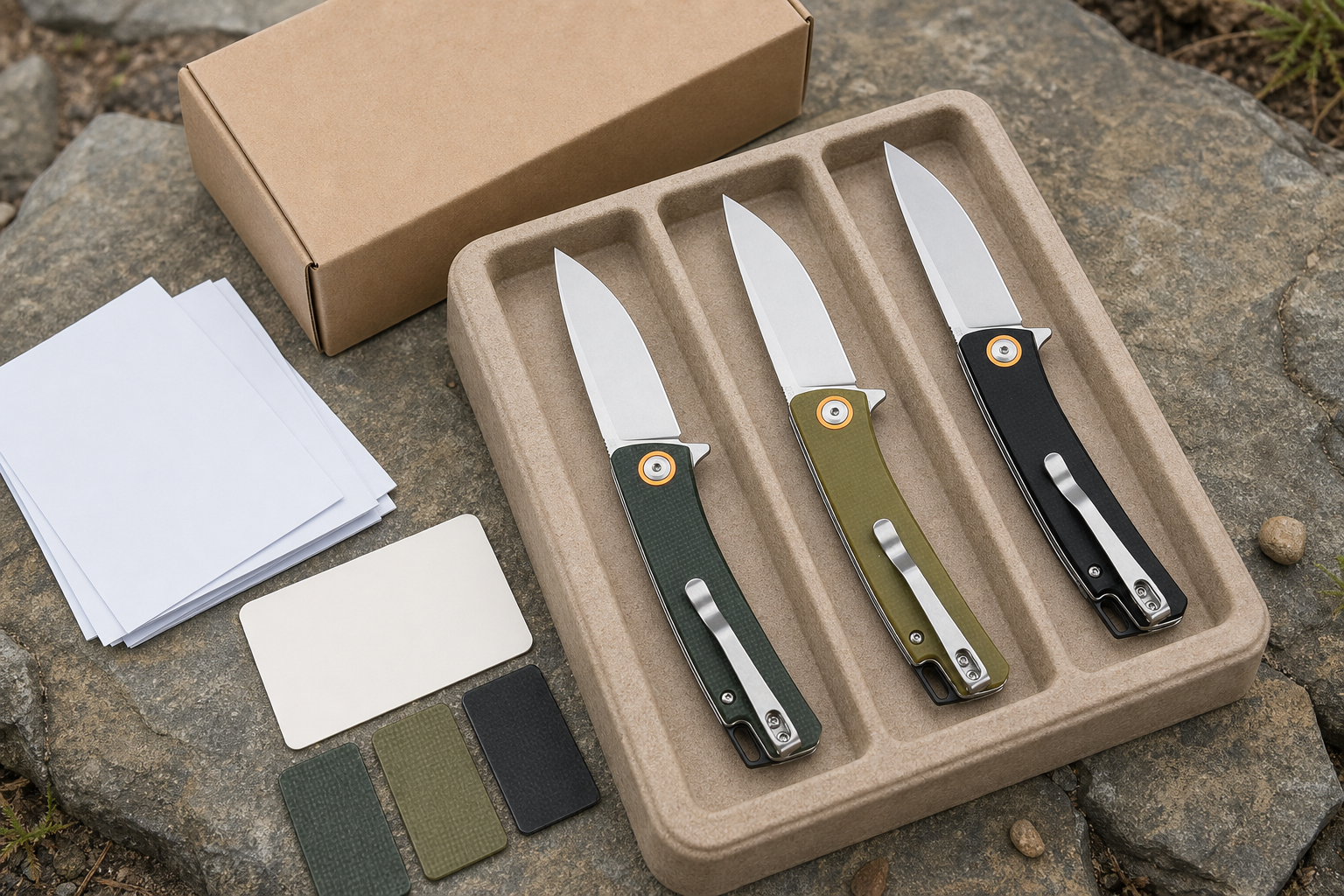
In a real project, I help buyers separate must-have features from nice-to-have features. A must-have feature may be corrosion resistance for a wet outdoor market, low weight for hiking, stronger handle comfort for camping, or a clear lock operation for general users. A nice-to-have feature may be a special finish, custom clip, or upgraded packaging. Both can be valuable, but they should not be treated the same.
I also connect feature choices to MOQ, tooling, lead time, and inspection. If a buyer wants a new blade profile, I review grinding, tip strength, closed position, and legal review. If the buyer wants a custom handle material, I review machining, texture, color, screw fit, and finish consistency. If the buyer wants a new lock or pivot feel, I expect prototype testing and assembly standards. This is where OEM and ODM support matters.
For private label buyers, the safest path may be a proven platform with improved materials, finish, logo, packaging, and instructions. For long-term brands, a deeper ODM project may create stronger differentiation. The best outdoor folding knife is not the one with the most features. It is the one where every feature has a reason, a cost plan, and a way to repeat in production.
| Buyer need | Vast State support | Project result |
|---|---|---|
| Fast private label launch | Existing platform plus branding | Lower risk and faster sampling |
| Outdoor product upgrade | Material, finish, grip, and packaging review | Better user fit |
| Full ODM project | Concept, sample, mechanism, and QC planning | Stronger product identity |
| Repeat orders | Boundary samples and inspection standard | More consistent production |
Turn this article into a folding knife project.
Share your blade type, lock direction, steel preference, handle material, quantity, target market, and packaging needs. Vast State can prepare OEM/ODM options.
Conclusion
A good outdoor folding knife balances blade, lock, handle, carry, corrosion control, safety information, and QC so the product works outside and repeats in production.