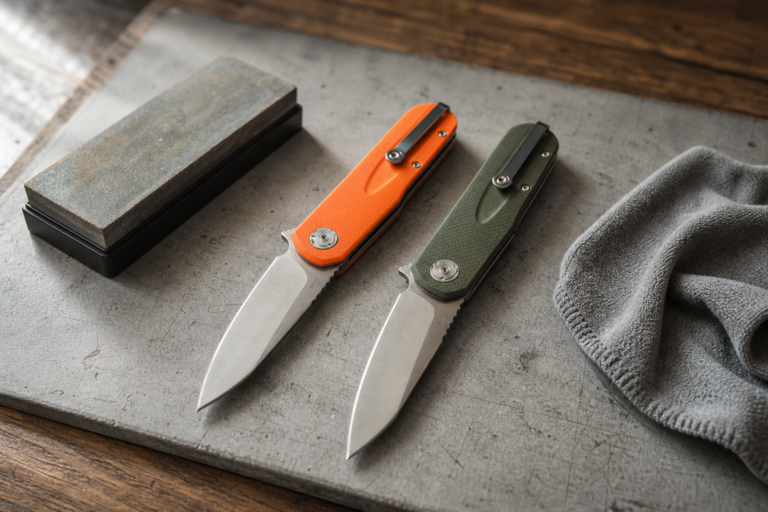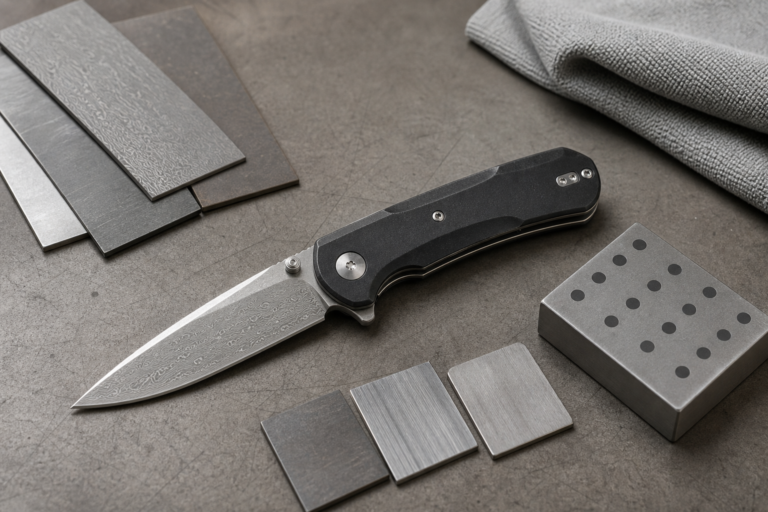
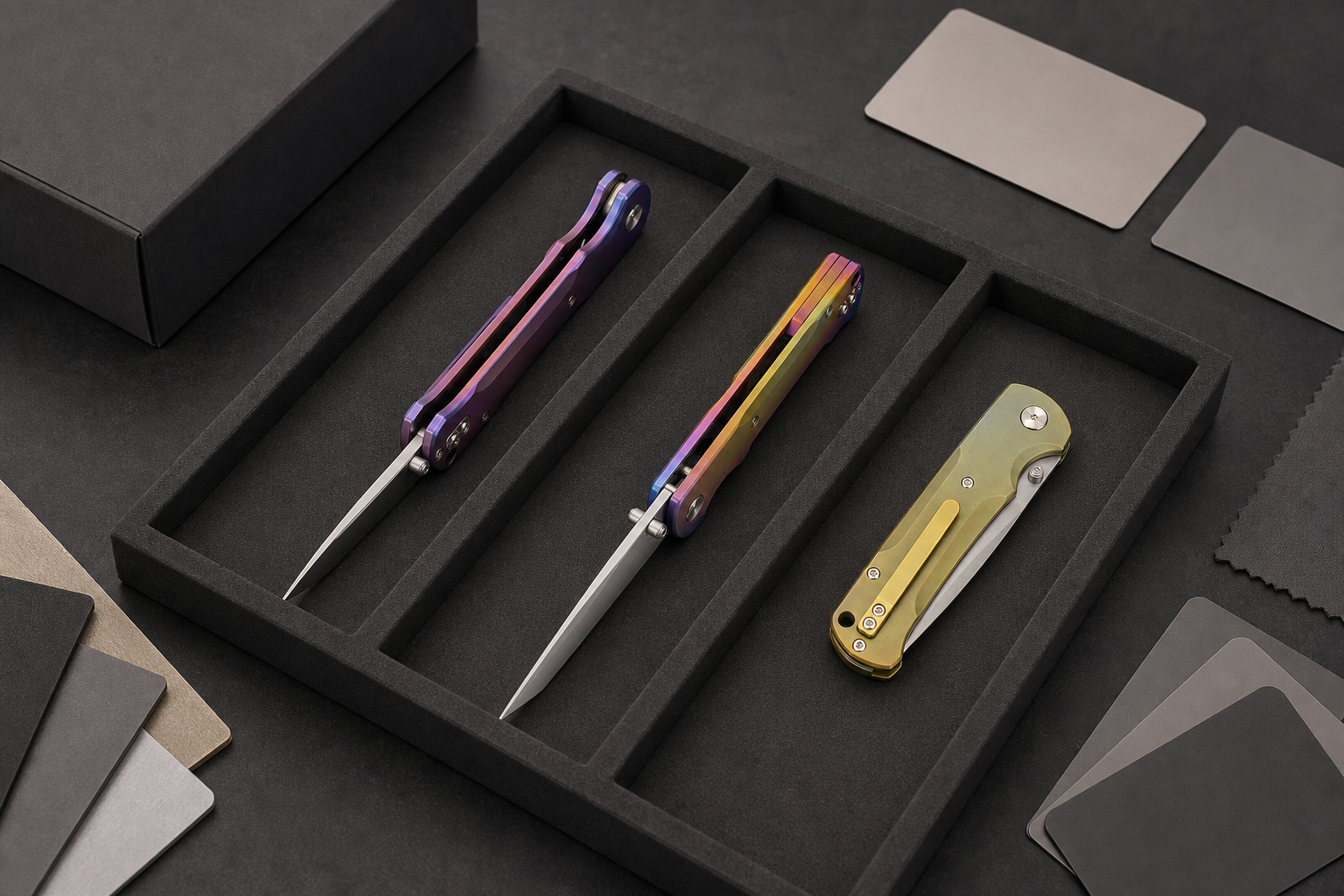
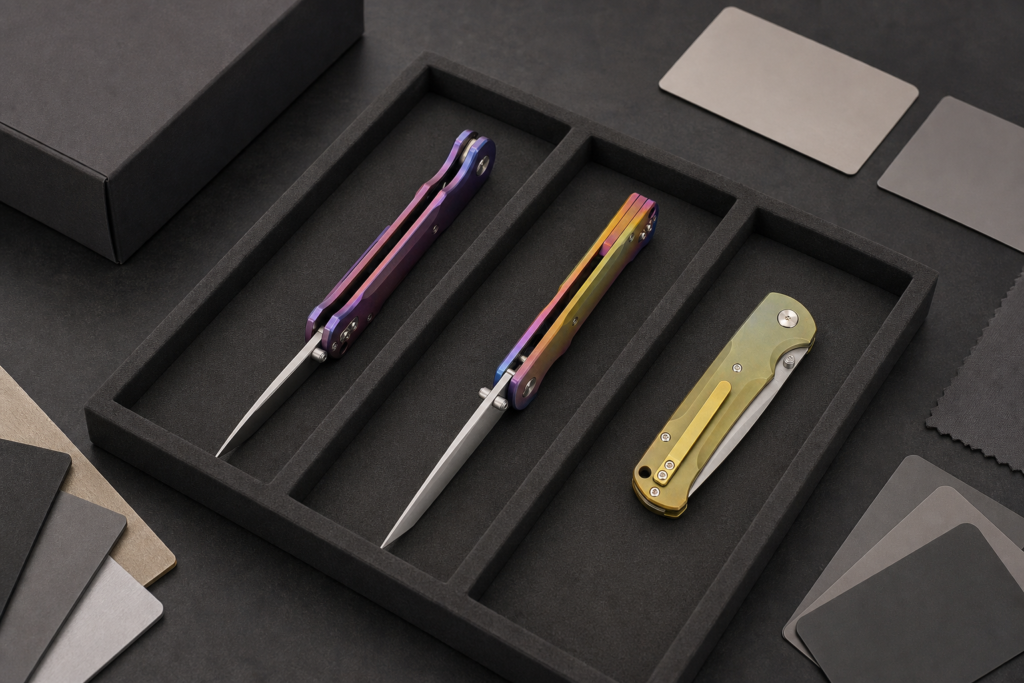
A folding pocket knife can look right in a catalog and still miss the market. The problem usually starts with an unclear specification.
Buyers should choose a folding pocket knife by defining the target user, sales channel, blade size, steel, lock, handle, carry method, customization level, compliance needs, and QC standard before sampling starts.
Quick buyer brief:
- Answer: The right folding pocket knife is not the one with the most features. It is the one whose specification matches the intended user, price range, market rules, production method, and repeat-order expectations.
- Buyer context: This guide is for knife brands, outdoor brands, EDC brands, importers, wholesalers, distributors, private label buyers, and sourcing managers.
- Key checks: Use case, target market, blade length, blade profile, steel, heat treatment, lock type, handle material, opening method, pocket clip, weight, packaging, instructions, compliance review, sample approval, and final inspection.
Developing a folding knife line for your brand?
Vast State supports OEM/ODM folding knife projects, including blade steel, lock structure, handle material, finish, logo method, packaging, and quality inspection planning.
When a buyer asks me how to choose a folding pocket knife, I do not start with a single model style. I start with the product brief. A knife for EDC, outdoor retail, utility gift sets, camping kits, rescue-adjacent tool lines, or private label promotion should not share the same specification. The blade, lock, handle, clip, finish, packaging, and QC plan all need a reason. If the specification is clear, sampling becomes faster. If it is vague, the buyer may receive a good-looking sample that becomes too expensive, too heavy, too hard to inspect, or too risky for the sales channel.
Why Should Buyers Start With Use Case and Sales Channel?
Many knife projects start with appearance. That can create a sample that looks good but has no clear buyer.
Buyers should start with use case and sales channel because those two factors control size, material level, safety wording, packaging, price, and compliance review.
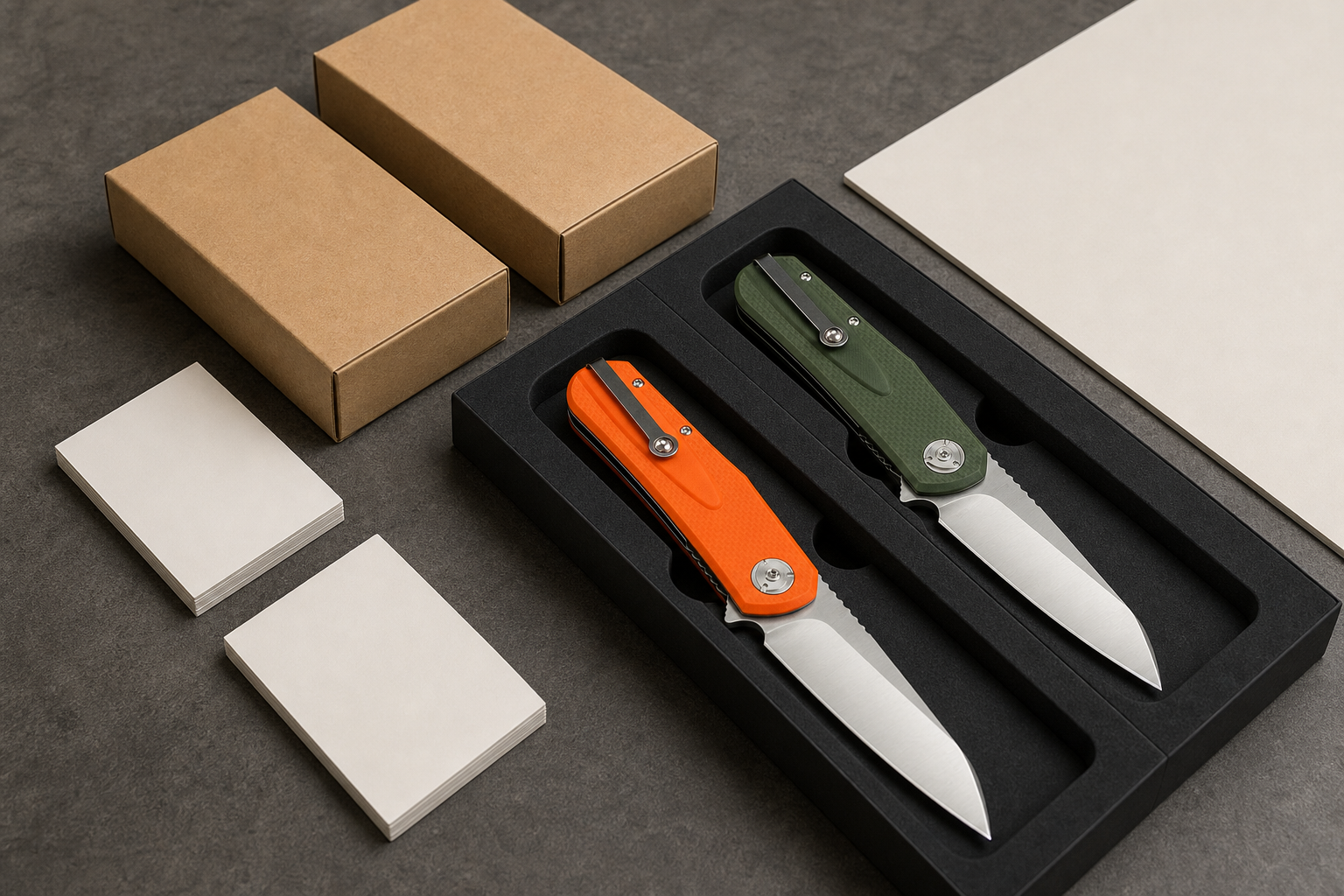
I Translate the Market Into a Product Brief
The first question is not "which knife is perfect?" The better question is "perfect for which user and which channel?" A compact EDC pocket knife should be easy to carry, clean in appearance, and simple to explain. An outdoor pocket knife may need more grip, stronger corrosion planning, and packaging that supports camping or hiking use. A promotional private label knife may need controlled cost, reliable branding, and lower development risk. A premium line may justify upgraded steel, tighter finishing, and more sample rounds.
Public outdoor guidance can help frame this thinking. The National Park Service Ten Essentials includes a knife as part of repair kit and tool planning. I use that idea in a B2B way. A pocket knife should support a real task. It should cut cord, open packaging, support light repair, prepare small materials, or fit daily carry. The product brief should make that use clear before the buyer chooses steel or handle material.
Sales channel is just as important. Online marketplaces, retail stores, outdoor distributors, gift channels, and regional importers may have different expectations. Some channels need simple packaging. Some need warning text. Some need product safety documentation. Some markets may care strongly about blade length or opening method. Choosing a pocket knife without channel review can create problems after production, which is the worst time to discover them.
| Buyer question | Specification impact | Why it matters |
|---|---|---|
| Who will use it? | Size, grip, steel, lock | The product must fit real tasks |
| Where will it sell? | Packaging, copy, compliance | Channels can reject risky products |
| What price tier? | Material and finish level | Cost must match the margin plan |
| What order size? | Customization depth | MOQ affects what is realistic |
OEM/ODM RFQ Checklist
Prepare these details to help Vast State review your project and provide a more accurate quotation.
| RFQ Field | What to Prepare |
|---|---|
| Project type | OEM from drawing / ODM private label / wholesale catalog |
| Product category | Folding knife / fixed blade / multi-tool / outdoor tool |
| Design status | Idea / sketch / 2D drawing / 3D CAD / physical sample |
| Target price | Ex-factory target price or retail price range |
| MOQ expectation | 500 / 1,000 / 3,000 / 5,000+ pcs |
| Logo method | Laser engraving / etching / printing / molded logo |
| Packaging | Standard packaging / custom retail box / Amazon-ready |
| Market | USA / EU / Japan / Korea / Middle East / other |
| Compliance needs | Buyer-specified testing / documentation / labeling |
| Timeline | Sample deadline / mass production deadline |
How Should Blade Size, Shape, and Edge Geometry Be Chosen?
A blade can look attractive and still cut poorly. Geometry often matters more than catalog language.
Blade size, shape, and edge geometry should be chosen by matching the cutting task, market limits, closed safety, tip strength, grind stability, and sharpening expectation.
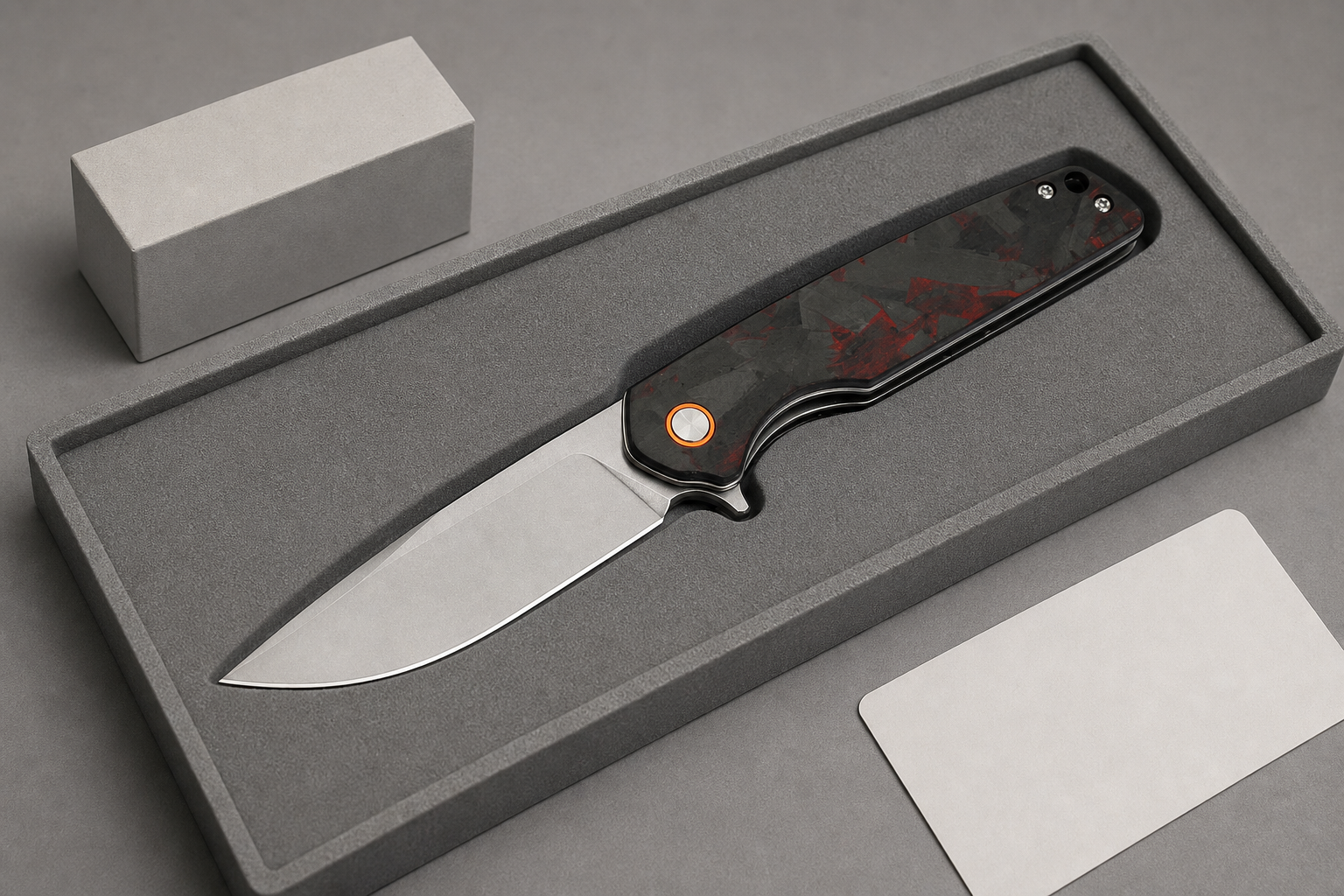
I Check Blade Geometry Before Decoration
Blade size affects more than cutting length. It affects carry comfort, closed handle length, weight, legal review, packaging size, and user perception. A long blade may look stronger, but it may create channel or market concerns. A very short blade may carry well but may not satisfy outdoor or utility users. A buyer should define the blade length range before the supplier builds samples.
Blade shape also needs discipline. A simple drop point, spear-style utility profile, sheepsfoot-style utility profile, or other practical shape can be easy to understand and easier to manufacture consistently. Very dramatic profiles can increase grinding difficulty, create weak tips, make closed safety harder, or push the product into a less responsible market position. I prefer blade shapes that support actual tasks instead of only strong photos.
Edge geometry is often overlooked. A thick edge can feel durable but cut poorly. A thin edge can slice well but may be less tolerant of abuse. The grind, edge angle, stock thickness, tip shape, and heat treatment must work together. This is why I do not judge a pocket knife by steel name alone. A well-balanced mid-range steel with good geometry can outperform a premium-sounding steel with poor grinding and weak QC.
| Blade choice | What I check | Buyer risk |
|---|---|---|
| Blade length | Use, carry, market review | Oversized blades may limit channels |
| Blade profile | Tip strength and task fit | Decorative shapes can reduce function |
| Grind | Slicing and strength balance | Poor grind creates bad cutting feel |
| Edge angle | Sharpness and durability | Wrong edge creates returns |
How Should Steel, Heat Treatment, and Hardness Targets Be Evaluated?
Steel names can sell a product page. But steel without controlled heat treatment is only a promise.
Steel should be evaluated with heat treatment, hardness target, edge geometry, corrosion needs, sharpening behavior, supply stability, price, and batch testing.
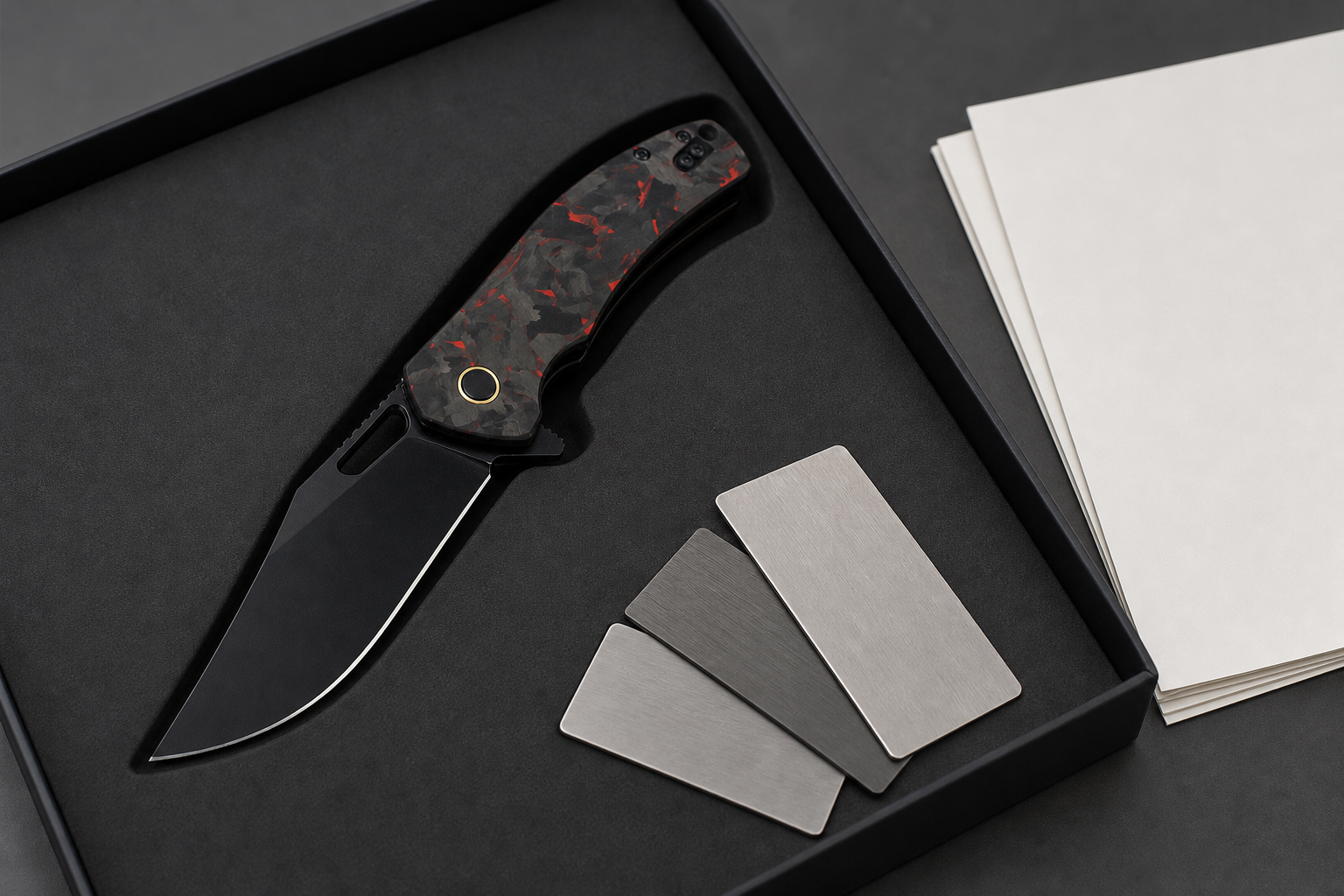
I Match Steel to Positioning and Production Stability
Different pocket knife projects need different steel logic. A value EDC project may need stable supply, easy sharpening, and controlled cost. An outdoor pocket knife may need better corrosion resistance. A premium line may need higher perceived value and tighter hardness control. A utility project may need toughness and easy maintenance. No steel is perfect for every target.
For example, Alleima 14C28N knife steel is often used as a reference because Alleima describes it around edge performance, high hardness, and corrosion resistance. That does not mean every buyer should choose it. It means the buyer should think in the same balanced way: edge, rust resistance, sharpening, hardness, cost, availability, and user expectation.
Hardness also needs verification. The NIST Rockwell hardness measurement guide is useful because it reminds us that hardness measurement depends on correct practice. In production, a hardness number is meaningful only when the test method, sampling plan, and steel grade are controlled. I want the buyer to approve a realistic target range, not an impossible number that creates chipping risk or inconsistent batches.
| Steel decision | Buyer question | Production focus |
|---|---|---|
| Stainless steel | Is corrosion resistance important? | Heat treatment and finish control |
| Carbon steel | Is easy sharpening or outdoor identity needed? | Rust guidance and packaging notes |
| Premium steel | Will the market pay for it? | MOQ, sourcing, and heat treatment |
| Hardness target | Is the range realistic? | Batch testing and edge performance |
Which Lock, Pivot, and Opening Features Fit the Project?
Smooth action is attractive during sampling. But the user also needs safe, repeatable movement.
Lock, pivot, and opening features should fit the product tier, market rules, assembly tolerance, cleaning needs, user skill, and long-term reliability expectation.
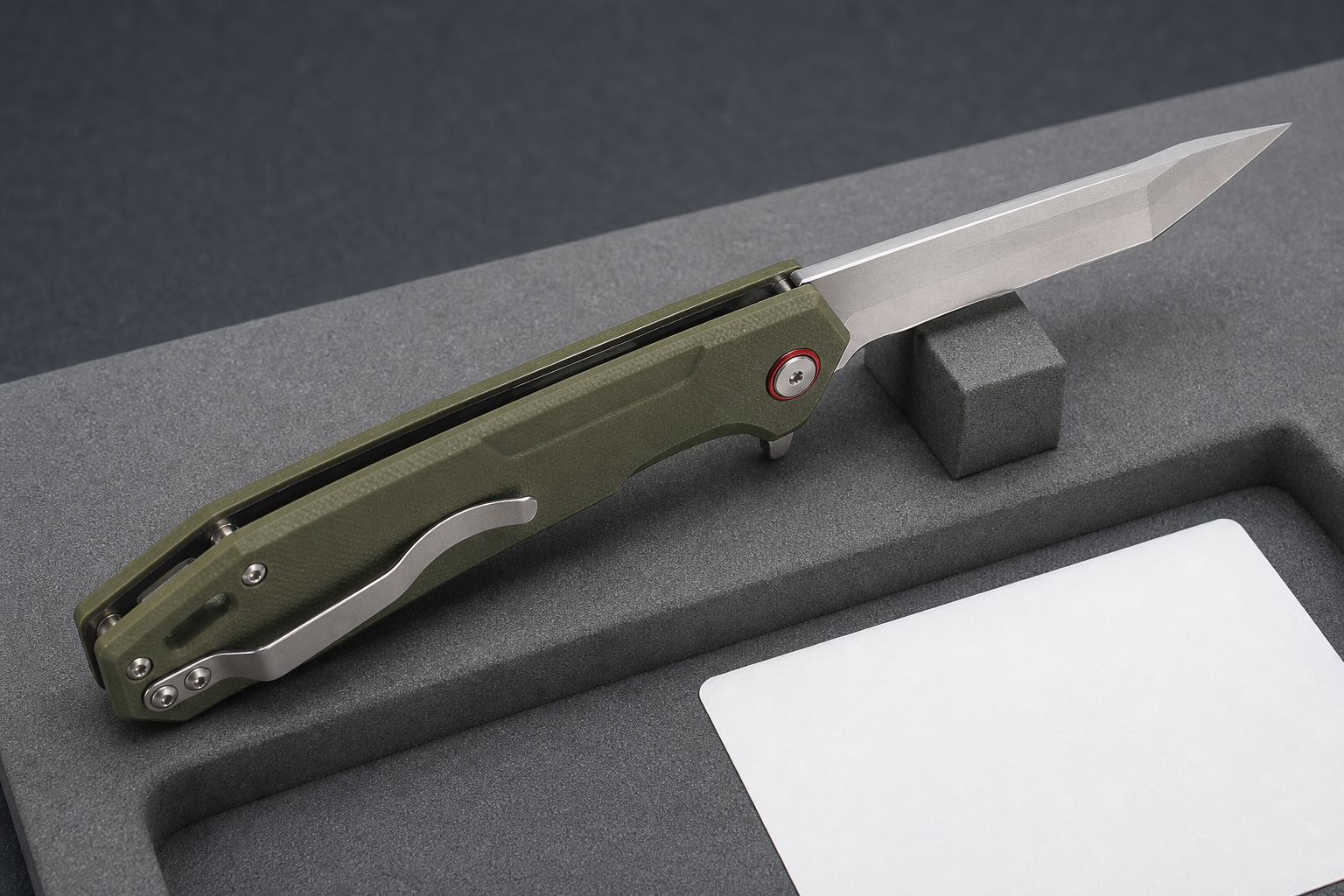
I Treat the Folding Mechanism as a Quality System
A folding pocket knife is a compact mechanism. The pivot, washer or bearing, blade tang, stop pin, liners, lock face, screws, and handle scales all affect action. A small tolerance problem can create blade play, poor centering, weak lockup, or rough opening. The buyer may not see the problem in a product photo, but the user will feel it immediately.
Different lock types create different trade-offs. A liner lock can be slim and familiar. A frame lock can feel solid but may raise cost and finishing needs. A back lock can support traditional positioning. A button or crossbar-style lock can feel convenient, but it requires careful engineering and market review. I avoid saying one lock is always best. The correct lock is the one that fits the user, price tier, production plan, and sales channel.
Measurement control supports this work. The NIST page on dimensional metrology explains that detailed part information can improve manufacturing processes. For folding knives, this connects directly to pivot holes, blade thickness, liner flatness, stop pin position, and lock surfaces. A mechanism should not only feel good once. It should repeat across the full batch.
| Mechanism feature | What I check | Why it matters |
|---|---|---|
| Pivot system | Smooth action and side play | Controls user feel |
| Lock type | Engagement and release | Controls safety perception |
| Opening method | Ease and market fit | Can affect compliance or channel rules |
| Closed retention | Blade stays safely closed | Protects carry experience |
How Should Handle Material, Grip, and Ergonomics Be Specified?
The handle is easy to treat as decoration. In real use, it controls comfort and confidence.
Handle material, grip texture, thickness, contour, edge rounding, screw design, and weight balance should be specified around the target user's hand and use context.
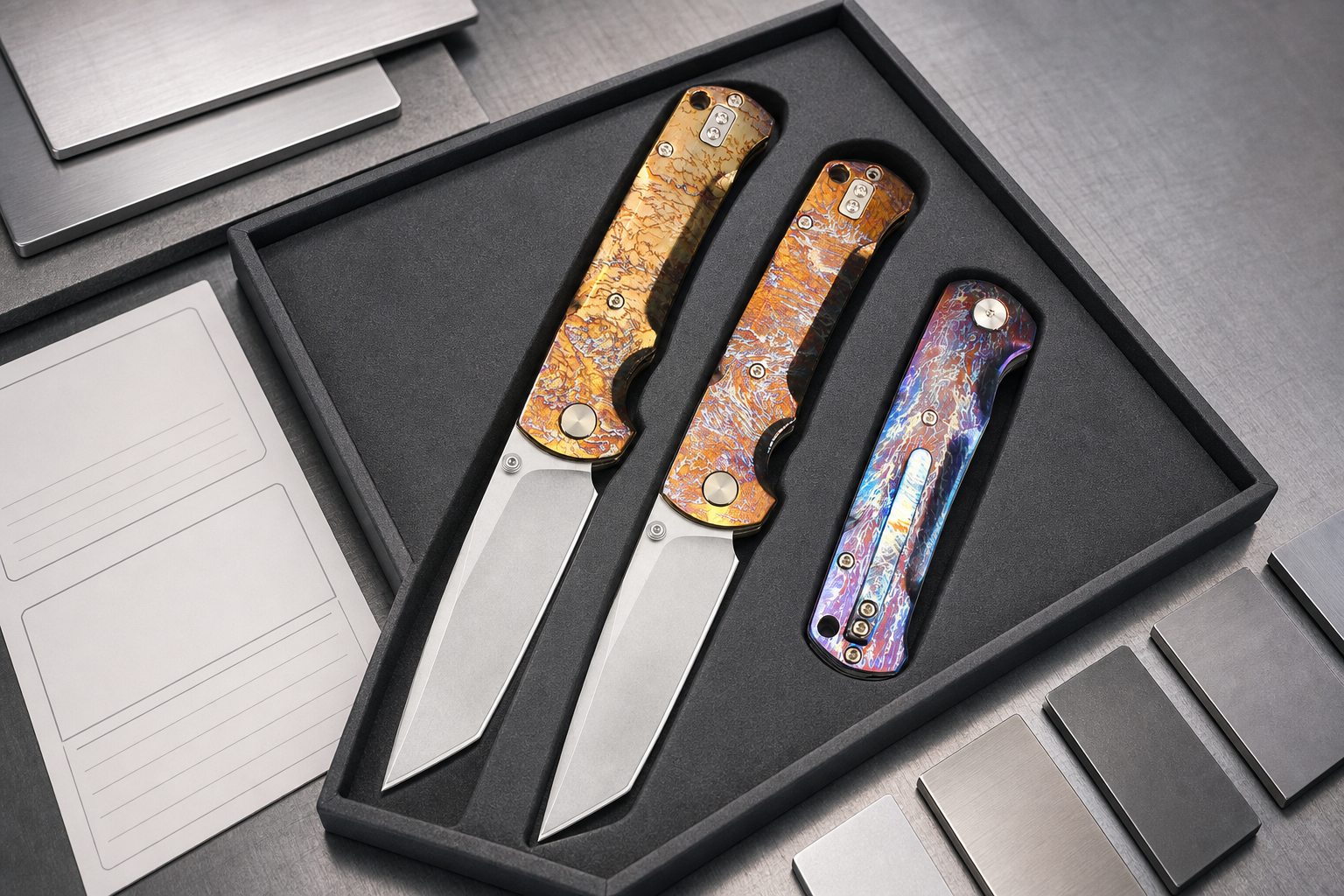
I Judge the Handle as the User's Control Surface
Handle material changes the whole personality of a pocket knife. G10 can provide grip and color options. Micarta can feel warmer and more outdoor-focused. Aluminum can reduce weight and support anodizing. Stainless steel can feel strong but heavy. Wood can look traditional but needs variation control. Polymer can support value projects if texture and finishing are handled well.
Grip is not only texture. It includes thickness, contour, finger clearance, edge rounding, clip placement, screw height, and surface finish. A knife that looks slim may feel uncomfortable during pressure cuts. A knife with aggressive texture may grip well but damage pockets. A knife with a beautiful smooth handle may feel unsafe when wet. Buyers should test the handle in hand, not only approve material photos.
The ISO 9241-11 usability standard is useful because it connects usability to users, goals, and context of use. I apply that logic to handle design. A handle is good when it helps the intended user control the knife for the intended task. It is not good just because it looks premium on a sample board.
| Handle feature | User effect | Production concern |
|---|---|---|
| Material | Weight, grip, perceived value | Machining and color stability |
| Texture | Wet or dry control | Pocket wear and finishing consistency |
| Thickness | Comfort and carry | Screw strength and balance |
| Edge rounding | Reduced hot spots | Extra finishing time |
What Carry, Clip, and Weight Choices Affect Daily Use?
Pocket knives spend more time being carried than being used. Poor carry design can hurt repeat sales.
Carry choices include closed length, weight, pocket clip, lanyard hole, pouch, handle thickness, closed blade coverage, and how the knife sits in a pocket or pack.
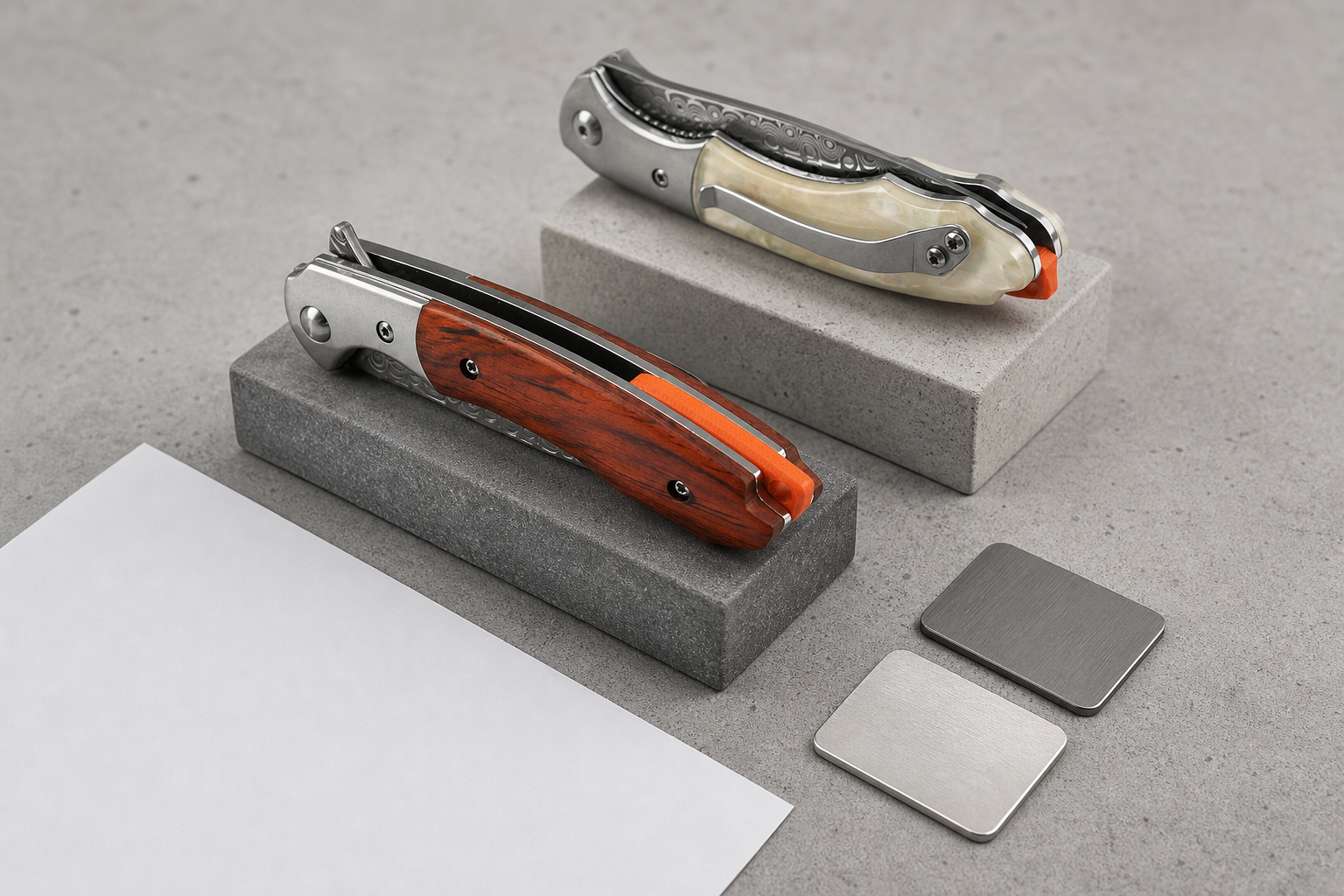
I Check Carry Before Finalizing the Sample
A pocket knife should feel acceptable before it ever cuts. If the handle is too thick, the user may stop carrying it. If the clip is too stiff, it may damage pocket fabric or frustrate use. If the clip is too loose, the knife may not feel secure. If the screws are weak or not controlled, the clip can become an after-sales problem.
Weight should match the product category. A light EDC knife can feel easy to carry, but it still needs enough handle strength. A heavier knife can feel solid, but it may not suit daily pocket use. A gift-box product may allow more weight than a hiking product. A value knife may need a simple clip and packaging plan. A premium knife may need better clip finishing, screw treatment, and surface consistency.
Closed safety is part of carry. The blade tip should not be exposed. The detent, spring, or lock bias should help the blade stay closed. The handle should not have sharp hot spots. If the knife includes a pouch, the edge and closed knife should be protected during shipping and storage. Buyers should check carry as a real user experience, not as an afterthought.
| Carry feature | What I check | Buyer benefit |
|---|---|---|
| Pocket clip | Tension, screws, finish | Better daily carry |
| Closed length | Pocket comfort | Better user acceptance |
| Weight | Category fit | Fewer complaints |
| Closed blade coverage | Tip and edge safety | Safer handling and packaging |
How Should Buyers Handle Compliance, Packaging, and Product Copy?
A pocket knife can be well made and still face channel problems. The issue often comes from rules or wording.
Buyers should review compliance, packaging, and copy by checking blade length, lock type, opening method, age rules, channel policies, safety warnings, and market-specific requirements.
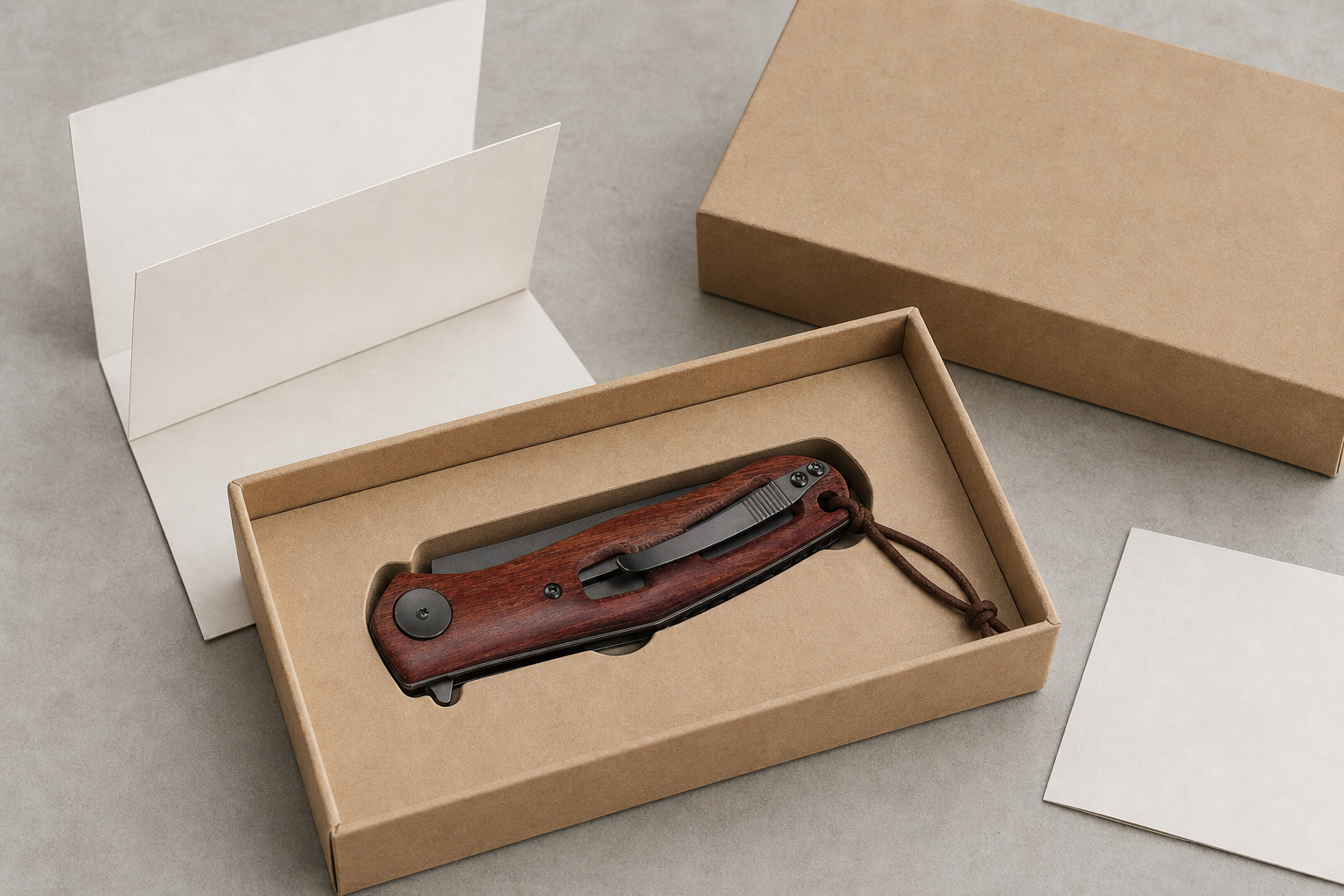
I Review Market Fit Before Mass Printing
Knife rules can vary by country, state, sales channel, and product feature. Buyers should not assume that a pocket knife is acceptable everywhere because it folds. Blade length, lock type, opening method, age restrictions, online sale rules, and carry rules can all matter. This is why I prefer early compliance review before packaging and product copy are finalized.
The GOV.UK page on buying, carrying, and selling knives is a useful example of how specific rules can treat folding pocket knives differently from other knives. I do not use this source as global legal advice. I use it to show why buyers should check the target market before approving a specification. A lock, blade length, or opening feature can change the product's risk profile.
Product copy should be responsible. It should explain practical use, EDC utility, outdoor chores, repair support, packaging opening, and maintenance. It should avoid combat, self-defense, or fear-based claims. Packaging should protect the product, support safe handling, and leave space for importer information, warning review, barcode needs, and instructions. A clean product story is easier for channels to accept.
| Compliance item | Why it matters | Buyer action |
|---|---|---|
| Blade length | May affect local rules | Check before tooling |
| Lock and opening | Can change classification | Review market and channel policies |
| Copy language | Shapes risk perception | Use practical tool positioning |
| Packaging information | Supports responsible sale | Review before printing |
What Customization Level Should Buyers Choose?
Customization can create brand value. It can also create cost, tooling, MOQ, and quality risk.
Buyers should choose customization level by matching logo, color, finish, steel, handle, blade shape, packaging, and full ODM design to budget, MOQ, launch timeline, and repeat-order value.
I Separate Fast Private Label From Full ODM
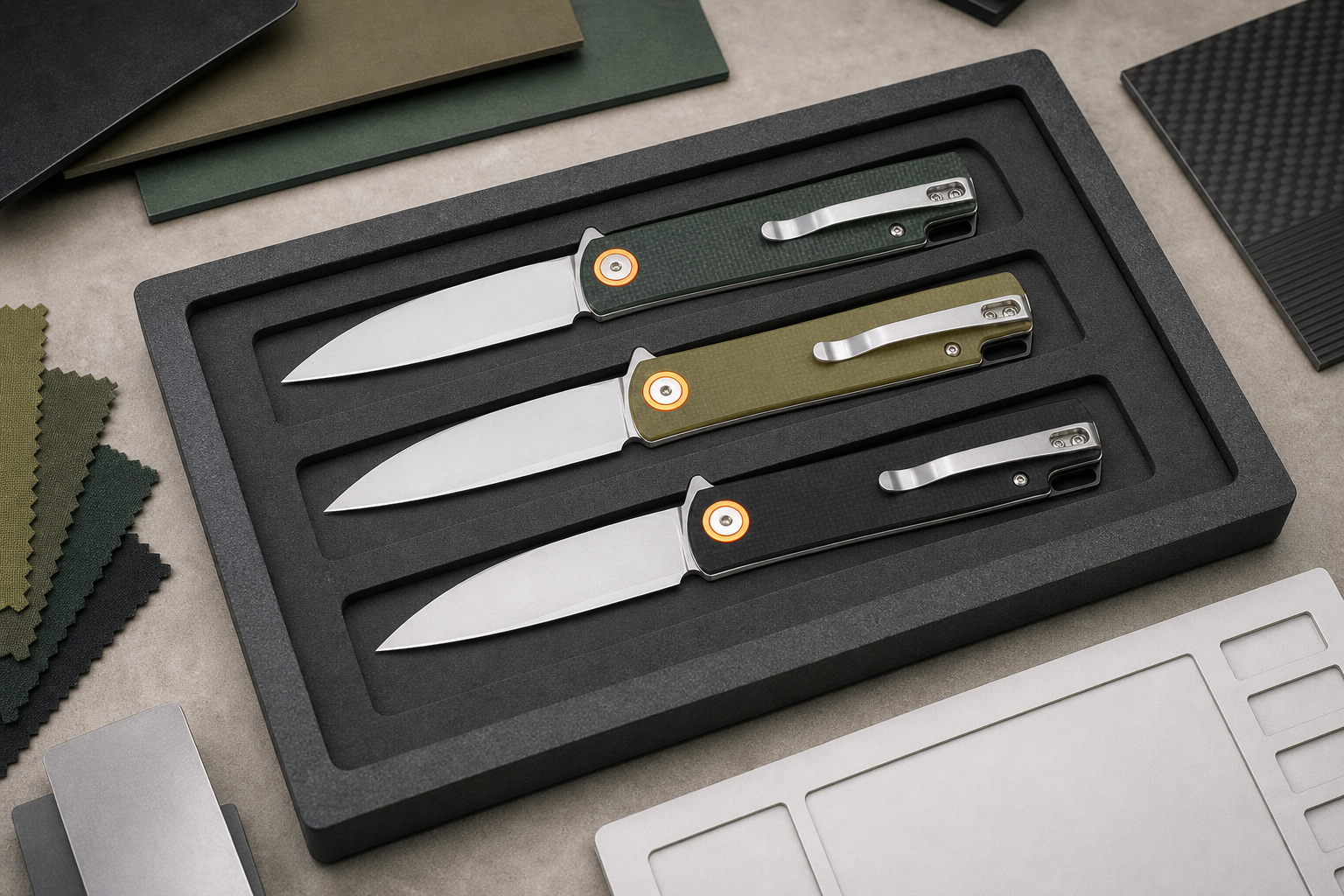
Light private label customization can be enough for many buyers. Logo marking, packaging, color, pouch, insert card, and finish selection can create a sellable product without heavy tooling. This path can be faster and lower risk, especially for buyers testing a new market.
Semi-custom projects go deeper. A buyer may request a different handle material, upgraded steel, special finish, clip change, or adjusted blade shape. These changes can create stronger differentiation, but they need sample approval, cost review, and inspection planning. A material change can affect weight. A finish change can affect corrosion behavior. A clip change can affect carry comfort and screw reliability.
Full ODM development is the highest commitment. It can create a unique folding pocket knife, but it needs concept review, CAD, prototype rounds, tooling, mechanism testing, packaging, and QC standards. I recommend this path when the buyer has clear market demand, enough order volume, and enough time. Customization should build brand value, not simply make the project more complicated.
| Custom level | Typical scope | Best fit |
|---|---|---|
| Private label | Logo, packaging, color | Faster launch |
| Semi-custom | Steel, handle, finish, clip | Controlled differentiation |
| Structural custom | Blade, lock, handle shape | Stronger product identity |
| Full ODM | New concept and tooling | Long-term product line |
What QC Checks Should Be Included Before Shipment?
One approved sample does not guarantee a stable batch. Pocket knives need functional and appearance checks.
QC should include material, hardness, dimensions, blade grind, edge, action, lockup, blade play, centering, screws, clip, handle fit, finish, logo, packaging, and instructions.
I Turn the Specification Into Inspection Standards
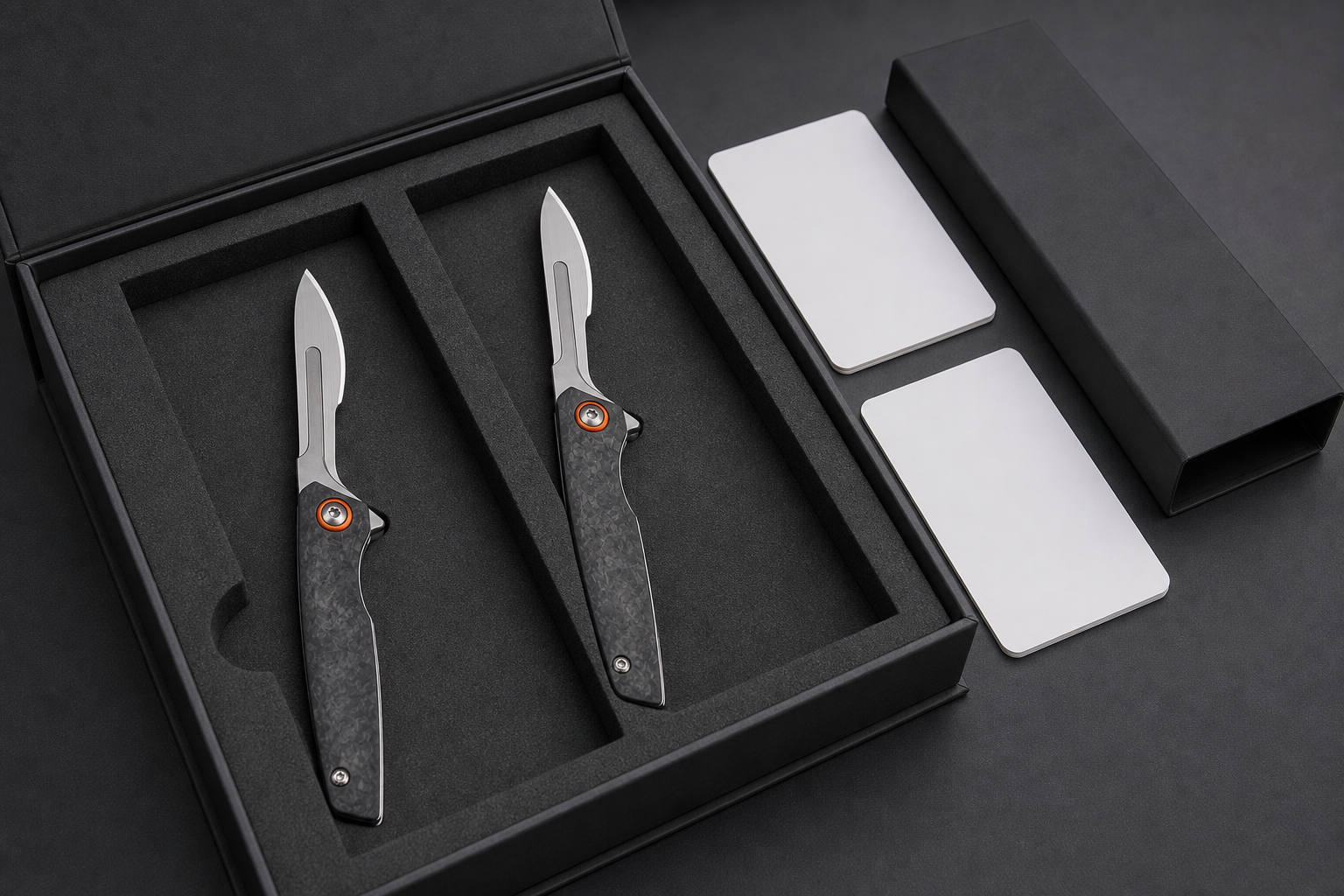
The final QC plan should come from the original specification. If the buyer specified a certain steel, the supplier should control incoming material and heat treatment. If the buyer specified a smooth action, the pivot and lock must be checked. If the buyer specified a premium handle, the finish, screw seating, color, and edge rounding must match the approved sample. If the buyer specified packaging, the box, insert, warning card, and label area must be inspected.
Safety guidance also matters. The Canadian Centre for Occupational Health and Safety sharp blades guidance discusses using the right tool, keeping blades sharp, and storing sharp tools safely. For pocket knife projects, I apply this as a reminder that product instructions, safe handling, and maintenance guidance should not be forgotten. A sharp product needs responsible communication.
The ISO 9001 quality management framework is useful because it focuses on meeting requirements and improving customer satisfaction through a quality management system. In knife manufacturing, this means QC should not only happen at the final table. It should include incoming checks, in-process checks, functional checks, appearance checks, packaging checks, and shipment records.
| QC area | What to inspect | Why it protects buyers |
|---|---|---|
| Blade | Steel, hardness, grind, edge | Protects cutting performance |
| Mechanism | Action, lockup, play, centering | Protects user experience |
| Handle and clip | Fit, screws, texture, finish | Protects perceived quality |
| Packaging | Box, insert, card, labels | Protects sellable condition |
How Can Vast State Help Buyers Choose the Right Folding Pocket Knife?
Many buyers know the style they want. The harder part is turning that style into a repeatable product.
Vast State helps buyers choose folding pocket knife specifications by connecting use case, target price, material, mechanism, customization, packaging, compliance review, samples, and QC.
I Build the Selection Around Real Production
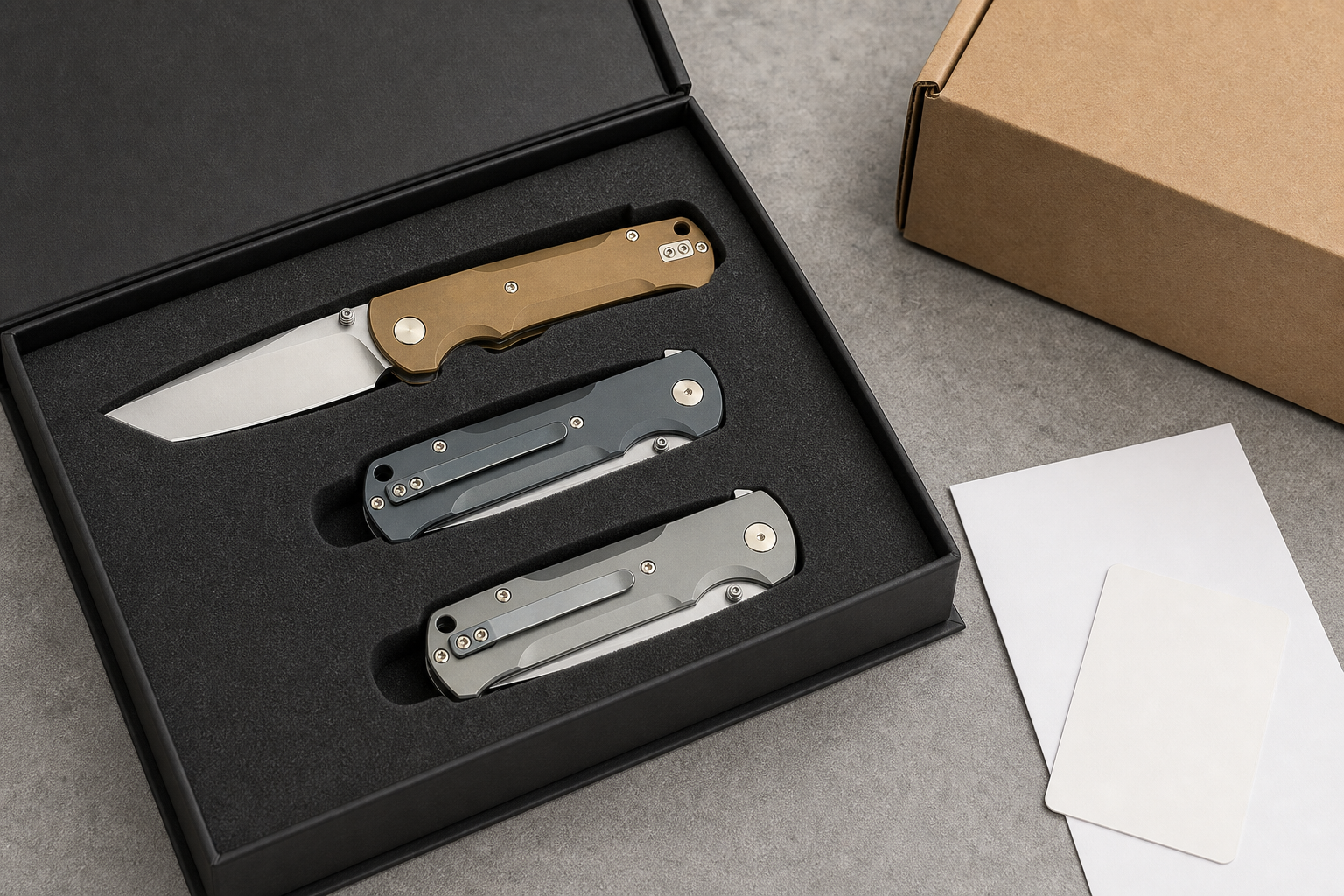
When I help a buyer choose a folding pocket knife, I build the decision around the buyer's market, not only around a product photo. I ask about target users, price, sales channel, desired customization, compliance concerns, order quantity, and launch timing. Then I help narrow the specification. This prevents the project from becoming a list of attractive but unrelated features.
For a first private label order, the best path may be a proven platform with controlled branding, color, finish, and packaging. For an established brand, a semi-custom or full ODM path may be better. For a product that will sell in outdoor channels, I pay more attention to grip, corrosion resistance, and instructions. For an EDC line, I pay more attention to carry comfort, clip feel, weight, and simple product copy.
The final goal is not to make the most complex pocket knife. The goal is to make a pocket knife that buyers can sell confidently, users can understand quickly, and the factory can repeat consistently. That is where a good OEM or ODM partner adds value.
| Buyer need | Vast State support | Project result |
|---|---|---|
| New private label line | Platform, logo, packaging, sample review | Faster launch |
| Outdoor or EDC upgrade | Material, grip, carry, finish planning | Better user fit |
| Full ODM concept | Structure, prototype, tooling, QC planning | Stronger differentiation |
| Repeat production | Inspection standards and boundary samples | More stable batches |
Turn this article into a folding knife project.
Share your blade type, lock direction, steel preference, handle material, quantity, target market, and packaging needs. Vast State can prepare OEM/ODM options.
Conclusion
A strong folding pocket knife starts with a clear specification, then turns user needs, materials, mechanism, packaging, and QC into repeatable production.