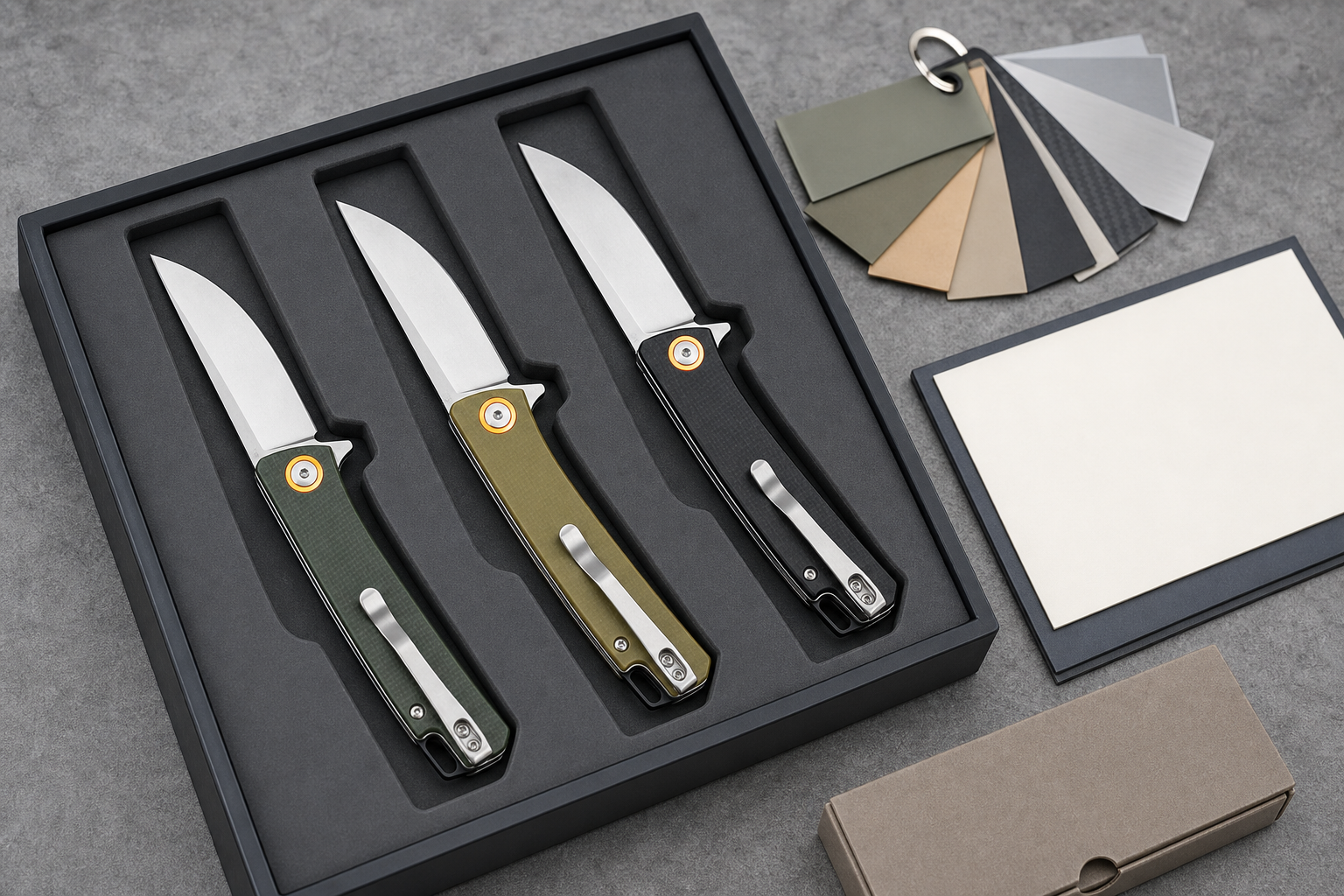
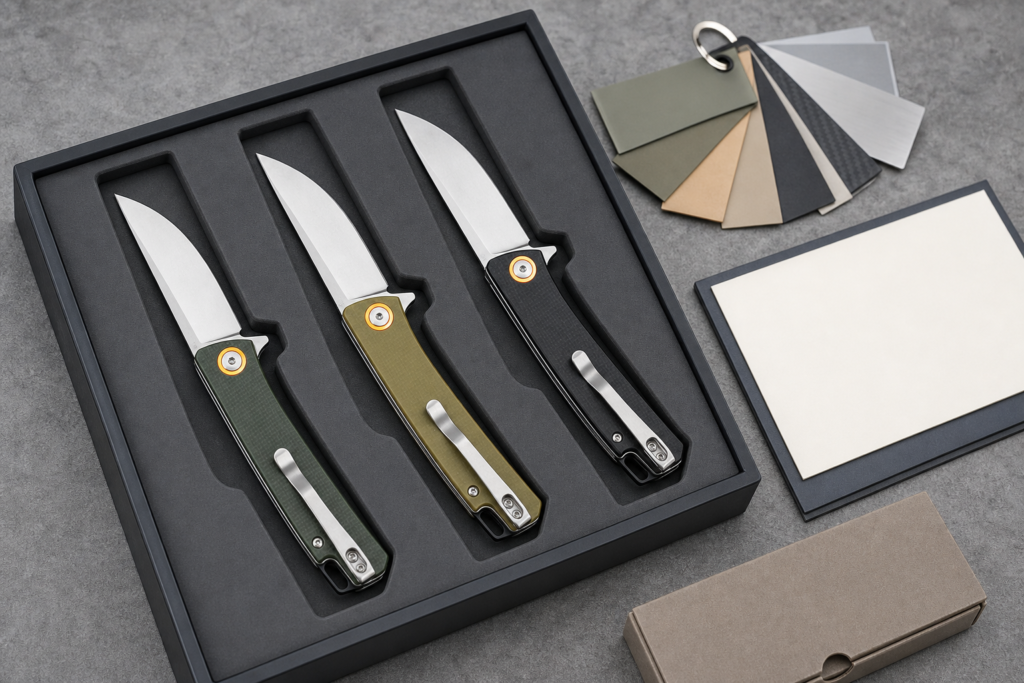
A knife brand is not built by a logo alone. A weak brand brief can lead to random features, unstable quality, and unclear market value.
Knife buyers should turn brand positioning into sourcing decisions by defining the target user, product promise, design language, material level, packaging, compliance needs, supplier controls, and after-sales expectations before OEM/ODM development starts.
Quick buyer brief:
- Answer: A strong knife brand gives the supplier a clear product direction. It tells the factory what matters most: price, function, finish, safety, packaging, consistency, or long-term ODM differentiation.
- Buyer context: This guide is for knife brands, outdoor brands, EDC brands, importers, distributors, wholesalers, private label buyers, and sourcing managers.
- Key checks: Brand promise, target user, sales channel, trademark status, product category, blade and handle standard, packaging tone, responsible copy, QC boundary samples, supplier fit, complaint handling, and repeat-order plan.
Have a knife or multi-tool project in mind?
Send your sketch, CAD file, sample photo, or product idea. Vast State can review manufacturability, suggest materials, estimate MOQ, and prepare a quote for your OEM/ODM project.
When I work with a buyer, I treat the brand as a practical production tool. A brand is not only a name, color, or logo. It should guide what kind of knife to make, which features to keep, which features to remove, what quality level to inspect, and how the product should feel when the customer opens the box. If the brand direction is clear, I can help build a product line with consistent materials, finishes, packaging, and QC standards. If the brand direction is vague, every sample decision becomes personal taste, and that is where sourcing becomes slow and expensive.
Why Should Brand Positioning Come Before Knife Specifications?
Many buyers ask for a knife sample before they define the brand promise. That can create a product with no clear place in the market.
Brand positioning should come before knife specifications because it guides product category, target price, feature level, design language, packaging, supplier selection, and quality standard.
I Use Brand Direction to Reduce Random Decisions
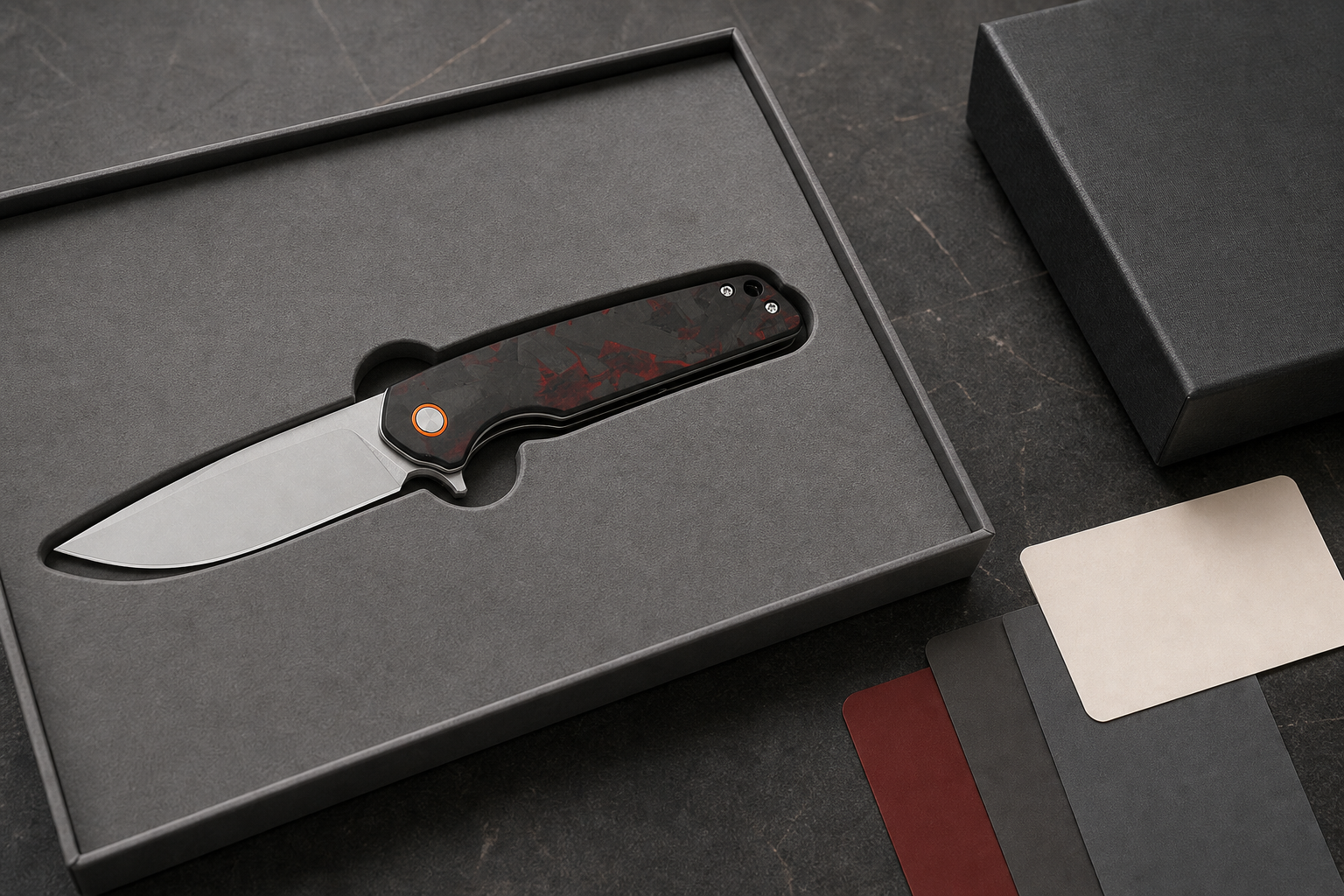
Knife specifications can easily become a long list. Blade steel, blade profile, lock type, handle material, finish, clip, screws, logo, sheath, pouch, box, insert, and instruction card all compete for attention. Without brand positioning, the buyer may choose features because they look impressive one by one. The result can be expensive, heavy, hard to inspect, or difficult to sell.
A brand position makes decisions easier. A value EDC brand may need simple structures, stable materials, clean packaging, and reliable QC. An outdoor brand may need grip, corrosion resistance, and practical instructions. A premium gift line may need stronger finishing, better packaging, and a more controlled visual system. A tool-focused line may need repair-use positioning, safe handling guidance, and clear functional claims. Each brand path creates a different specification.
The idea of brand value is not only emotional. ISO 10668 brand valuation recognizes that brands can be valued through structured procedures and quality data. I do not use that standard to calculate the value of a knife brand in a sourcing meeting. I use it as a reminder that brand is a business asset. If a brand is an asset, product development should protect it through consistent choices.
| Brand question | Sourcing decision | Why it matters |
|---|---|---|
| Who is the user? | Product category and feature set | Prevents random sample requests |
| What price tier? | Steel, handle, finish, packaging | Protects margin and positioning |
| What is the promise? | QC and after-sales standard | Protects long-term trust |
| What channel? | Packaging and compliance review | Prevents late launch problems |
OEM/ODM RFQ Checklist
Prepare these details to help Vast State review your project and provide a more accurate quotation.
| RFQ Field | What to Prepare |
|---|---|
| Project type | OEM from drawing / ODM private label / wholesale catalog |
| Product category | Folding knife / fixed blade / multi-tool / outdoor tool |
| Design status | Idea / sketch / 2D drawing / 3D CAD / physical sample |
| Target price | Ex-factory target price or retail price range |
| MOQ expectation | 500 / 1,000 / 3,000 / 5,000+ pcs |
| Logo method | Laser engraving / etching / printing / molded logo |
| Packaging | Standard packaging / custom retail box / Amazon-ready |
| Market | USA / EU / Japan / Korea / Middle East / other |
| Compliance needs | Buyer-specified testing / documentation / labeling |
| Timeline | Sample deadline / mass production deadline |
How Does Brand Identity Guide Knife Design and Material Choices?
Design without brand direction can become decoration. Material choices can become expensive but not meaningful.
Brand identity should guide blade style, handle material, color, surface finish, packaging feel, and product family consistency so the knife looks and feels intentional.
I Connect Visual Language With Use and Cost
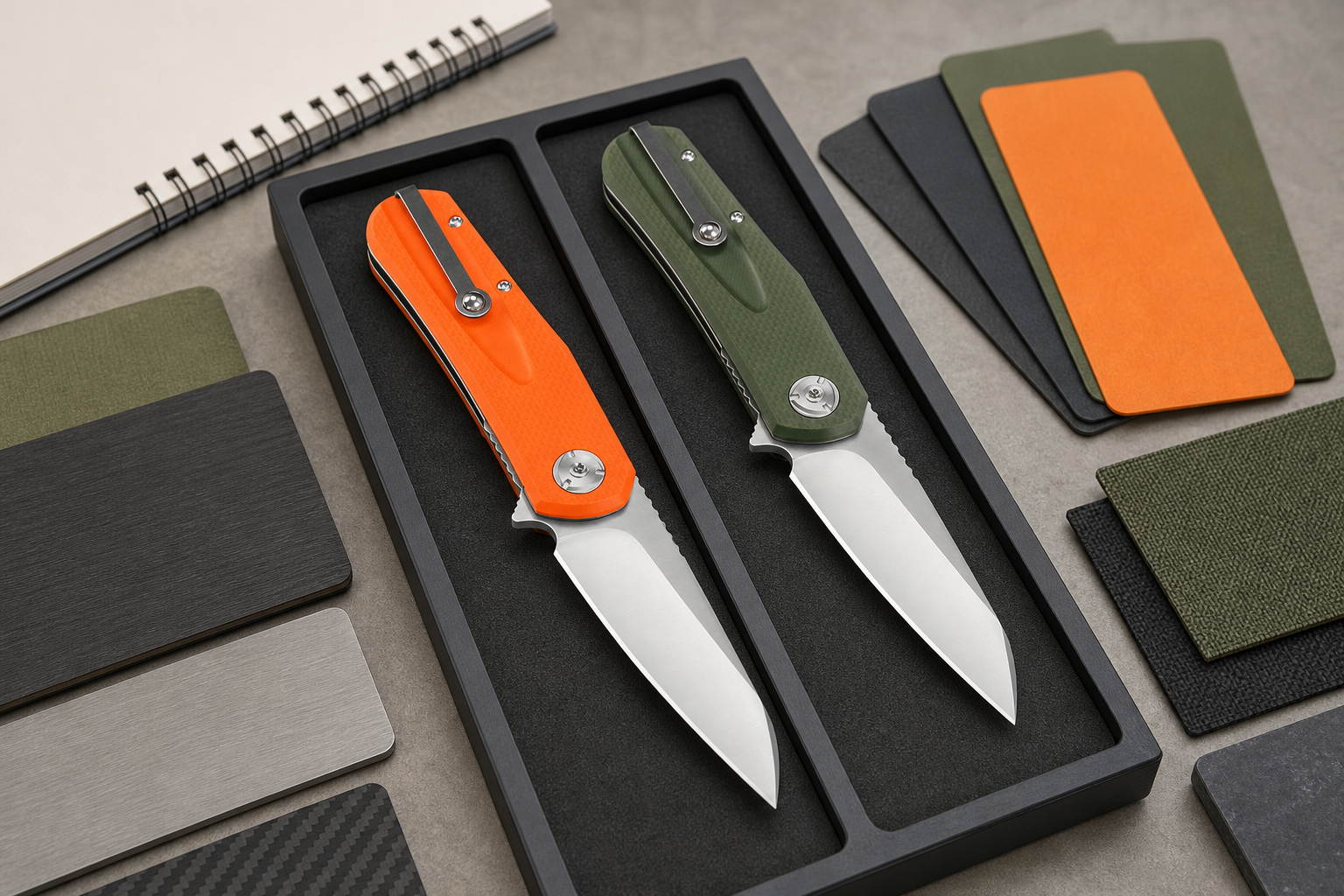
Brand identity does not mean making every product look dramatic. It means creating a recognizable logic. The blade profile should fit the product family. The handle texture should fit the user's hand and the brand's tone. The color should make sense across the line. The finish should support the price tier. The packaging should feel connected to the product.
For example, a practical outdoor brand may use textured handles, muted colors, corrosion-aware steel, and packaging that explains safe maintenance. A clean EDC brand may use compact profiles, lower weight, smoother handle finishes, and simple packaging. A premium line may use tighter finish control, upgraded materials, and more refined packaging. A utility brand may prioritize durability, simple sharpening, and clear task-based copy.
The ISO 9241-11 usability framework helps because it connects usability to users, goals, and context of use. I apply that thinking to brand identity. A handle material is not good only because it looks premium. It is good when it helps the target user control the knife in the intended context while still supporting the brand's price and story.
| Brand identity element | Product expression | Production concern |
|---|---|---|
| Practical outdoor | Grip, corrosion resistance, clear instructions | Material and finish repeatability |
| Clean EDC | Slim carry, smooth action, simple color | Clip, weight, and tolerance control |
| Premium gift | Refined finish and packaging | Higher inspection standard |
| Utility tool | Stronger edge and easy maintenance | Edge geometry and safe copy |
Why Do Trademark and IP Checks Matter in Private Label Knife Projects?
A buyer can develop a good product and still face brand risk. The risk may come from name, logo, or copy choices.
Trademark and IP checks matter because the brand name, logo, packaging, product line name, and market use must avoid confusion and support long-term ownership.
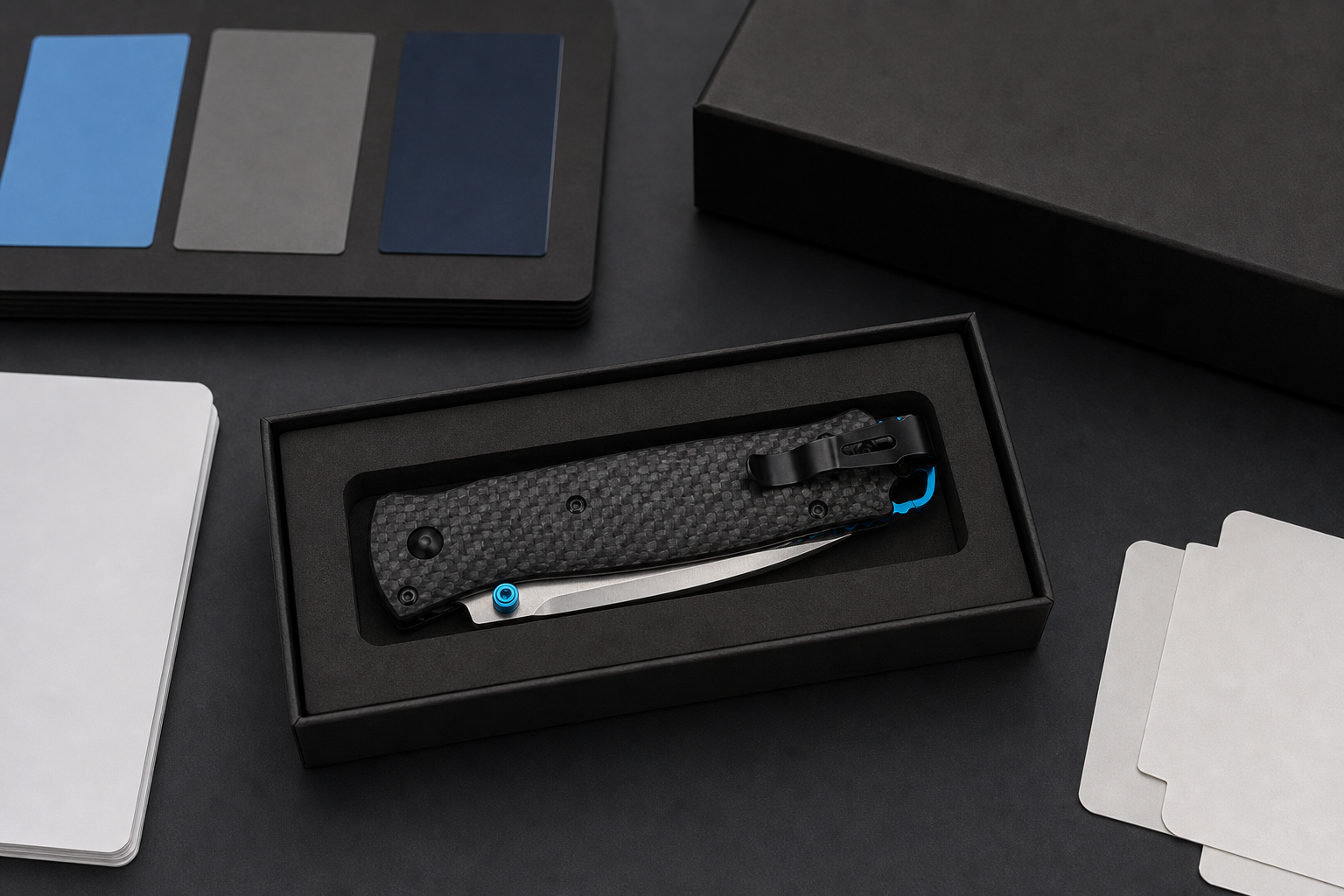
I Keep Brand Ownership Separate From Factory Customization
OEM and ODM factories can help with logo placement, packaging, product structure, and production. But brand ownership is a buyer-side responsibility. The buyer should check whether the name, logo, slogan, and packaging style can be used in the target market. This matters before mass printing, not after the goods are finished.
The WIPO trademark overview explains that a trademark is a sign capable of distinguishing the goods or services of one enterprise from those of other enterprises. The USPTO trademark basics page explains that a trademark identifies the source of goods or services and helps protect a brand. Those points are very practical for knife buyers. A brand mark should help customers recognize the seller's product and avoid confusion.
For private label knives, I suggest buyers separate three layers. First, the legal brand layer: name, logo, and trademark review. Second, the product identity layer: design language, materials, packaging, and copy. Third, the production layer: drawings, samples, tooling, QC, and repeat orders. If these layers are mixed together, the project can become messy. A factory can produce the product, but the buyer should protect the brand direction.
| Brand asset | Buyer-side check | Factory-side support |
|---|---|---|
| Brand name | Trademark and market review | Correct use on product and packaging |
| Logo | Ownership and usage rules | Marking method and placement |
| Packaging style | IP and channel fit | Printing, insert, and box production |
| Product line name | Clearance and consistency | Label and instruction implementation |
How Does Quality Consistency Build Knife Brand Trust?
Brand trust can be lost quickly. A beautiful first batch means little if the second batch feels different.
Quality consistency builds brand trust by making the blade, lock, action, handle, finish, packaging, and user experience repeat from batch to batch.
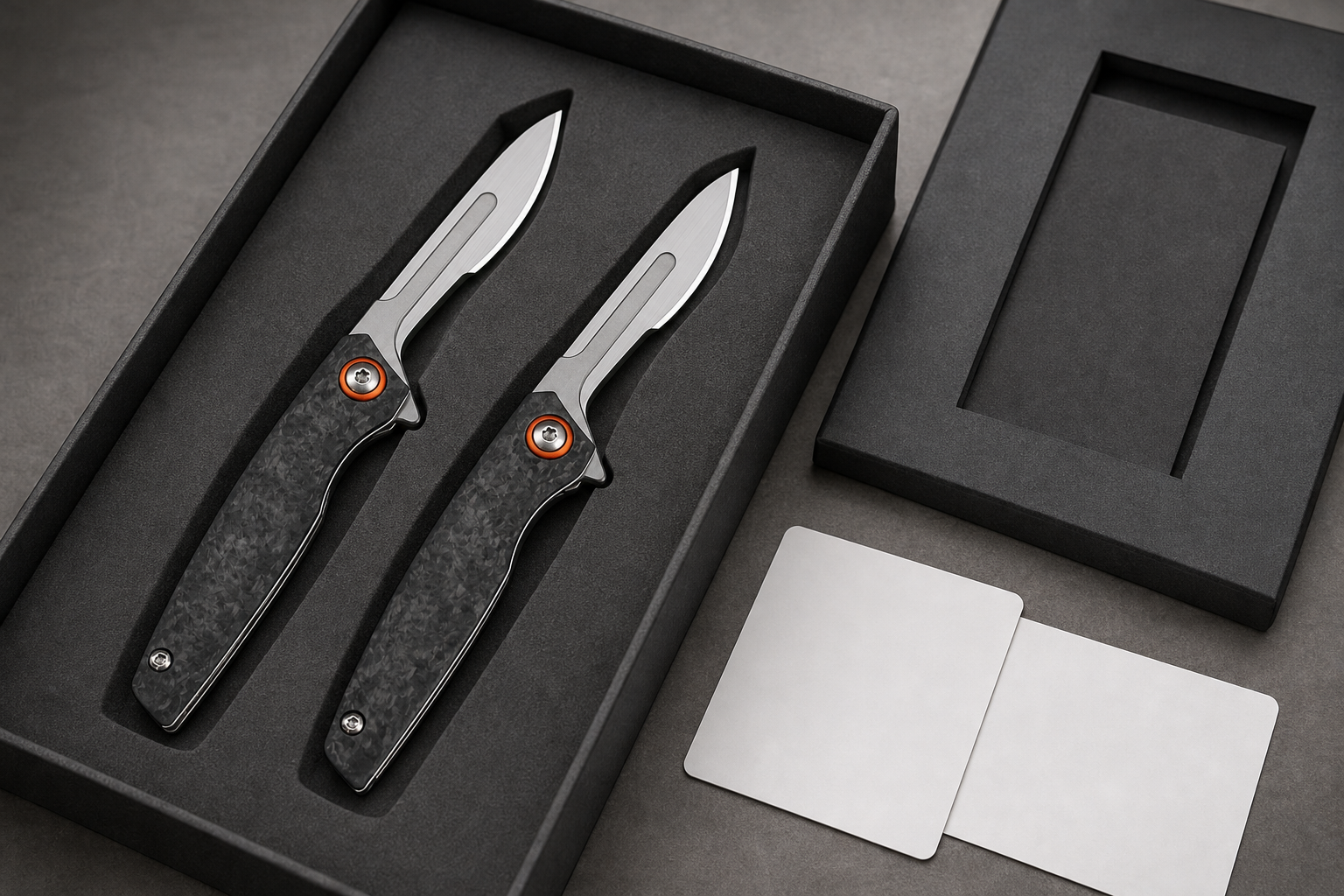
I Turn the Brand Promise Into QC Points
If a brand promises outdoor reliability, QC must check more than appearance. It should check action, lockup, blade play, edge, grip, corrosion-sensitive parts, screws, and packaging. If a brand promises premium finish, QC must check surface consistency, logo clarity, edge symmetry, screw seating, blade centering, and packaging detail. If a brand promises value, QC must still protect basic function and safety.
The ISO 9001 quality management page explains that the standard can help organizations meet customer and applicable statutory and regulatory requirements and enhance customer satisfaction. In knife sourcing, that means the buyer should not treat quality as a final inspection only. The brand promise should become incoming material checks, in-process checks, sample approval rules, functional tests, appearance standards, and shipment records.
Boundary samples are useful. A buyer can approve acceptable finish variation, logo position, handle color, blade centering range, packaging quality, and edge feel. This makes repeat orders easier. It also prevents arguments when a later batch is close but not exactly the same. A strong brand is not protected by one perfect photo. It is protected by a repeatable standard.
| Brand promise | QC translation | Example check |
|---|---|---|
| Reliable outdoor use | Function and corrosion review | Lockup, edge, screws, finish |
| Premium feel | Appearance and fit control | Centering, logo, polish, packaging |
| Value EDC | Stable basics | Sharpness, action, safe closing |
| Utility tool | Task performance | Edge geometry and handle security |
How Should Packaging and Copy Support the Knife Brand?
Packaging can make a good knife feel cheap. Product copy can make a useful tool look risky or unclear.
Packaging and copy should support the brand by explaining the product promise, safe use, material story, maintenance, warranty path, and sales-channel fit.
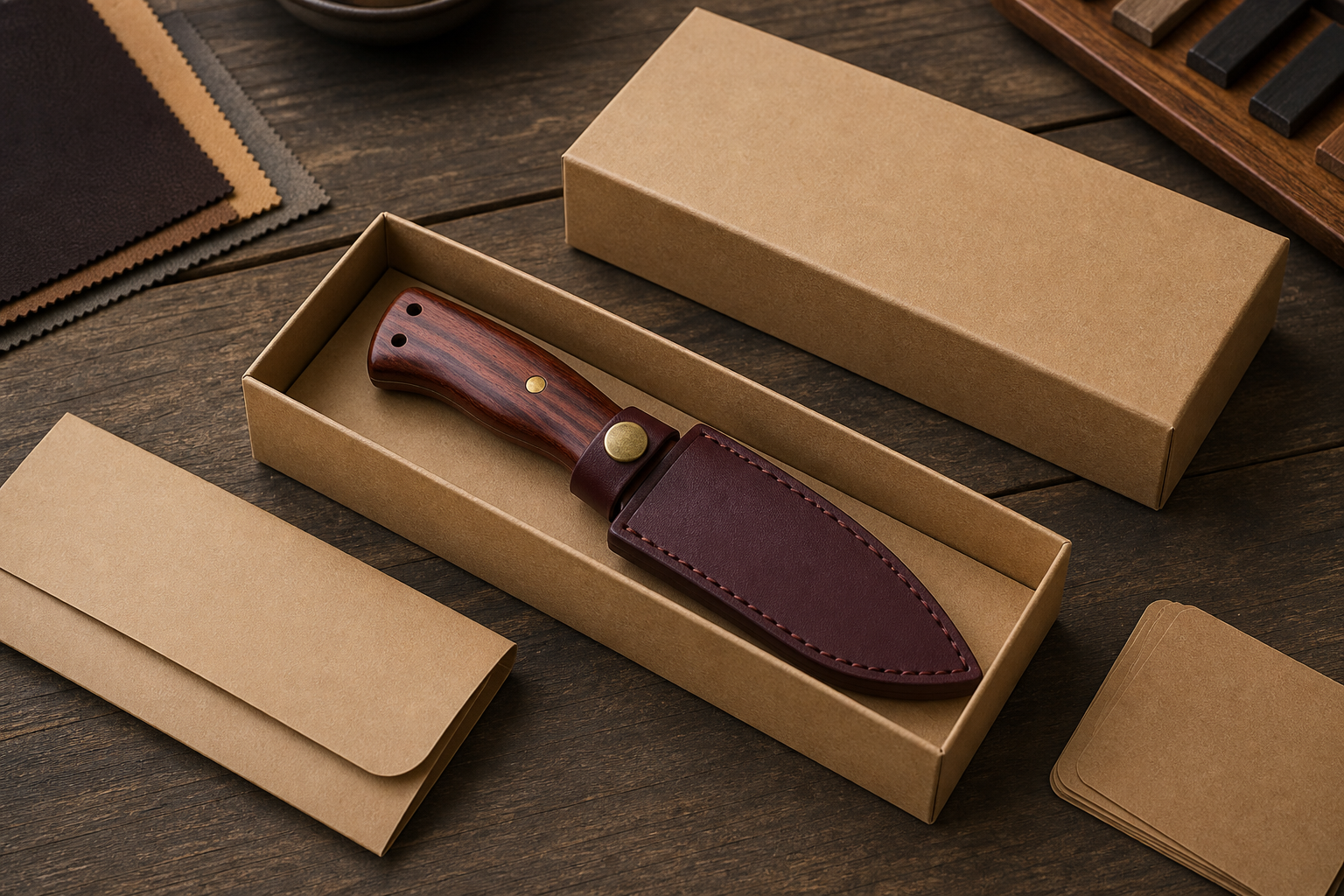
I Treat Packaging as Part of the Product Experience
The buyer's customer meets the product through packaging before touching the knife. A low-cost box may be correct for a value line. A pouch may support outdoor positioning. A gift box may support premium retail. A simple paper insert may explain maintenance and safe handling. The packaging should not be chosen at the last minute because it affects product protection, shipping, brand perception, and channel readiness.
Product copy should be responsible and useful. For knife products, I prefer practical language about EDC tasks, camping chores, repair support, utility cutting, maintenance, safe storage, and material care. I avoid exaggerated self-defense, combat, or fear-based language because it can damage brand trust and create channel problems. A useful tool brand should feel controlled and credible.
Product safety also connects to brand. The European Commission page on EU product safety and labelling points buyers toward rules on non-food product safety and Safety Gate. Even when a buyer sells outside the EU, this is a useful mindset. A brand should not only look polished. It should provide safe, clear, and market-ready information.
| Packaging or copy element | Brand role | Buyer action |
|---|---|---|
| Box or pouch | First impression | Match price tier and channel |
| Instruction card | User guidance | Explain safe use and maintenance |
| Material story | Product value | Keep claims accurate |
| Warning review | Risk control | Check target market and channel |
How Does Supplier Selection Affect Brand Reputation?
A buyer can have a strong brand idea and still lose control if the supplier cannot repeat the product.
Supplier selection affects brand reputation because the factory controls material consistency, tooling, assembly, finishing, packaging, communication, documentation, and delivery reliability.
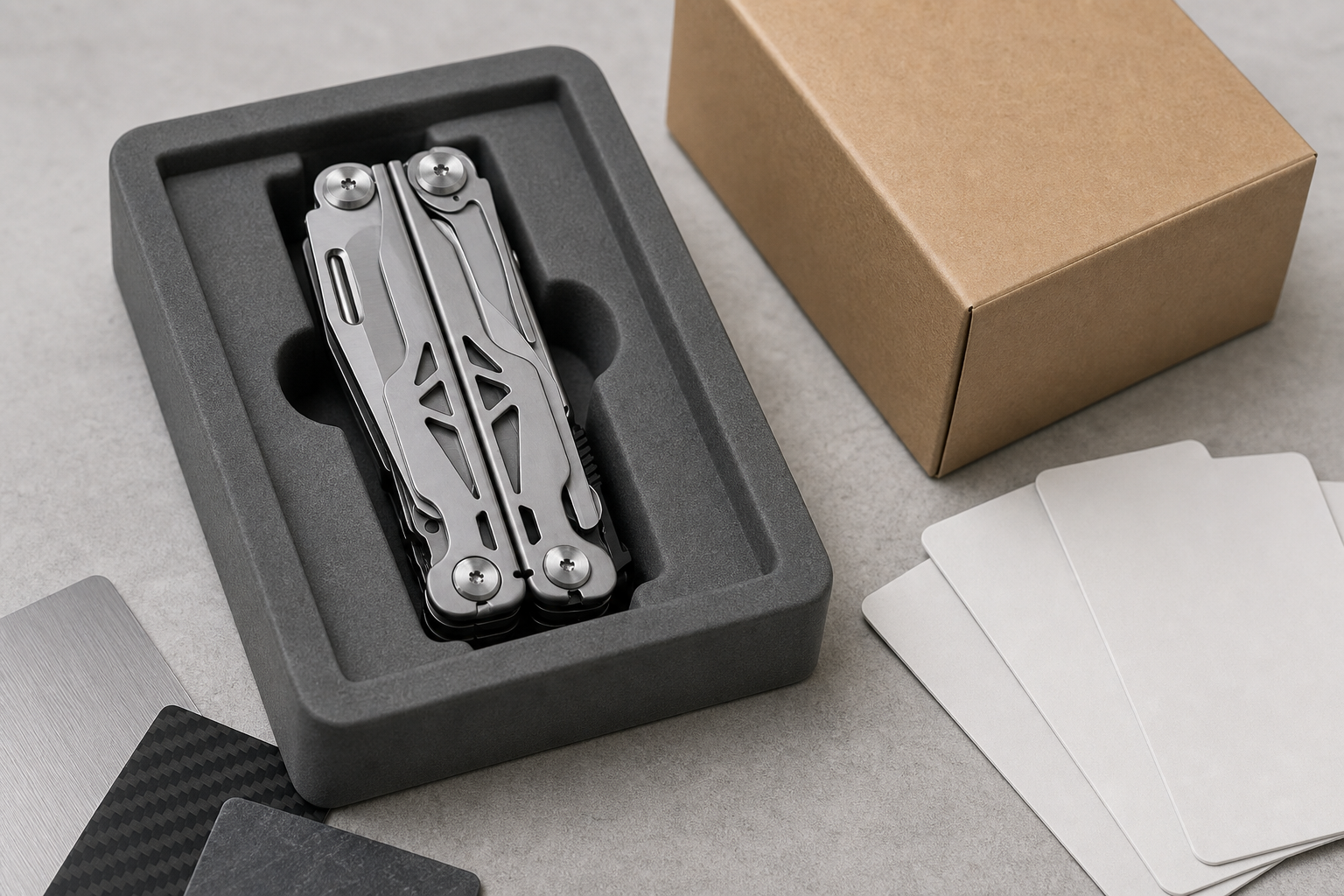
I Match Supplier Capability to Brand Risk
Not every supplier is right for every brand stage. A buyer testing a value private label line may need speed, stable stock platforms, logo support, and clear pricing. A buyer building a long-term ODM line may need engineering support, tolerance control, sample iteration, tooling management, and stronger documentation. A premium brand may need better surface finishing and tighter inspection. A utility brand may need edge consistency and functional reliability.
Supplier selection should include more than unit price. I check whether the supplier understands the target market, can explain material choices, can control heat treatment, can repeat lock action, can provide packaging support, and can communicate problems early. Low price is not useful if the supplier cannot protect the buyer's brand promise.
The OECD due diligence guidance topic page describes risk-based due diligence for responsible business conduct. The knife industry context is different from broad multinational guidance, but the principle is useful. Buyers should identify where supplier risk is most likely to affect product quality, safety, compliance, reputation, or delivery, then manage those risks before orders grow.
| Brand stage | Supplier capability needed | Risk if ignored |
|---|---|---|
| First private label order | Fast sample and stable platform | Slow launch or inconsistent basics |
| Growing product line | Material and packaging consistency | Mixed brand experience |
| Full ODM project | Engineering and tooling control | Costly redesign and delays |
| Premium positioning | Tight finish and QC | Brand trust damage |
How Should Buyer Feedback and Complaints Improve the Brand?
Complaints are uncomfortable, but ignoring them makes the next batch weaker.
Buyer feedback should improve the brand by turning user complaints, return reasons, QC findings, and sales-channel comments into product, packaging, and supplier improvements.
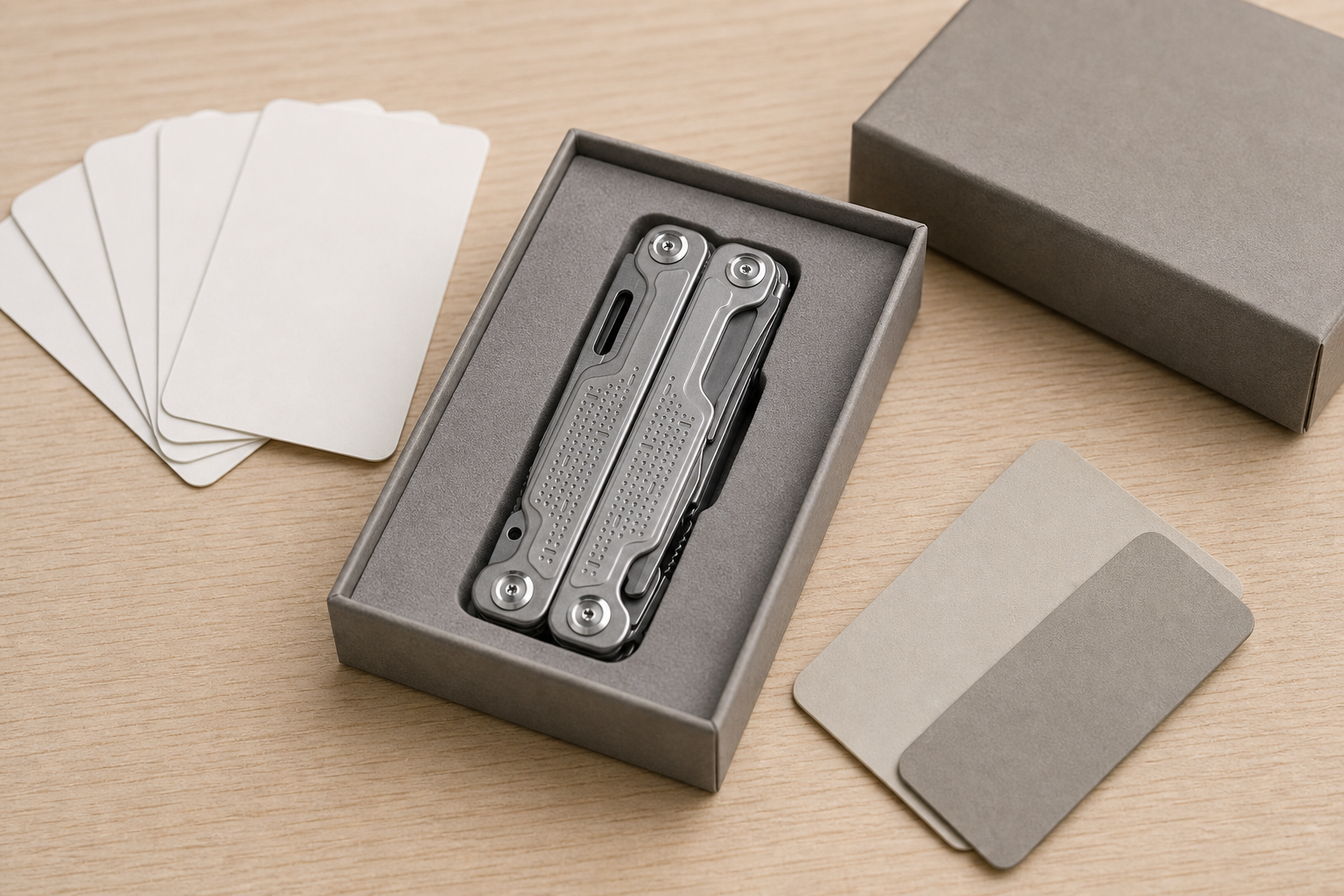
I Use Feedback as a Product Development Tool
Brand building continues after shipment. Users may complain about clip tension, blade centering, stiff action, loose screws, rust spots, handle comfort, packaging damage, unclear lock instructions, or edge performance. These comments should not stay only in customer service. They should return to product development and QC.
ISO 10002 complaints handling gives guidance for complaint handling related to products and services and links complaints to customer satisfaction and improvement. In a knife brand workflow, this means the buyer should collect complaint types, separate isolated cases from repeat problems, and decide which issues require design changes, supplier corrections, packaging updates, or instruction improvements.
I like to classify feedback into four groups. First, user education issues, such as misunderstanding a lock. Second, design issues, such as uncomfortable clip placement. Third, production issues, such as inconsistent finish or loose screws. Fourth, positioning issues, such as customers expecting a heavier or lighter tool. This structure helps buyers improve the next batch instead of only reacting to complaints.
| Feedback type | Possible cause | Improvement path |
|---|---|---|
| Lock confusion | Instruction gap | Add clearer card or video asset |
| Rust complaint | Material or maintenance mismatch | Review steel, finish, and care notes |
| Loose clip | Screw or torque issue | Add torque check and thread control |
| Packaging damage | Weak insert or box | Redesign protection and carton test |
What Should a Brand-Based Knife RFQ Include?
A vague RFQ forces the supplier to guess. Guessing creates slow quotes, weak samples, and cost surprises.
A brand-based knife RFQ should include target user, brand promise, product category, feature priorities, material level, packaging style, compliance concerns, customization scope, QC standard, and order plan.
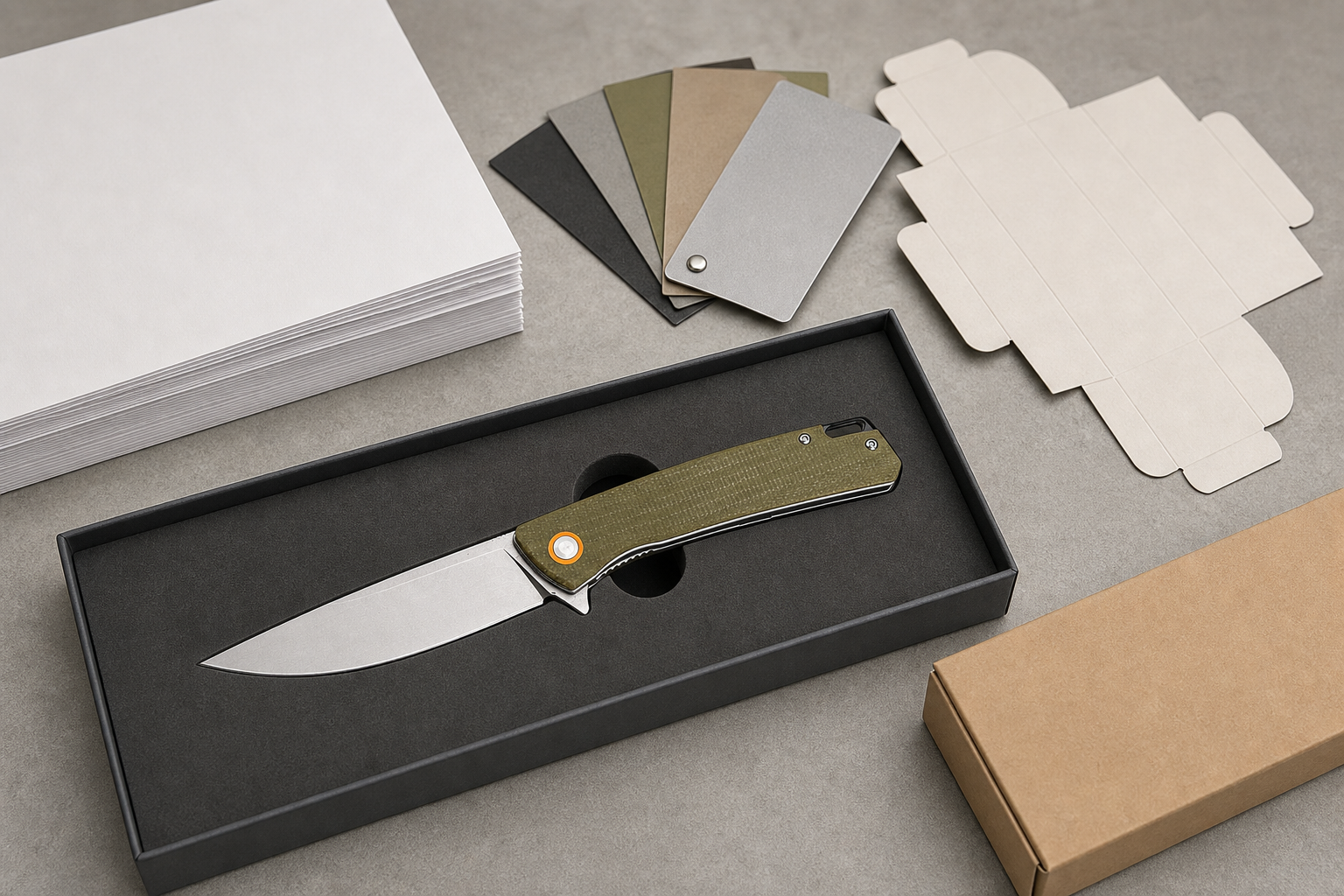
I Ask Buyers to Brief the Brand, Not Only the Knife
The supplier needs to know the product, but also the reason behind the product. A useful RFQ should tell the supplier whether the brand is value-focused, outdoor-focused, premium-focused, EDC-focused, tool-focused, or gift-focused. It should explain the target user and channel. It should define must-have features and flexible features. It should provide target price, order quantity, customization needs, and timing.
For example, instead of saying "quote a folding knife with G10 handle," the buyer can say "we need a compact outdoor EDC folder for a mid-price retail channel, with secure wet-hand grip, corrosion-aware hardware, logo marking, paper box packaging, instruction card, and consistent blade centering." This gives the supplier a real development direction.
The RFQ should also name quality expectations. If blade centering matters, say so. If screw torque matters, say so. If packaging must survive shipping, say so. If the brand wants to avoid aggressive wording, say so. A brand-based RFQ helps the supplier quote more accurately and helps the buyer compare factories more fairly.
| RFQ field | What to include | Why it helps |
|---|---|---|
| Brand position | Value, outdoor, EDC, premium, utility | Guides product decisions |
| Feature priority | Must-have and optional items | Controls cost and complexity |
| Packaging style | Box, pouch, insert, instructions | Supports channel fit |
| QC standard | Function, appearance, packaging checks | Supports repeat production |
How Can Vast State Help Buyers Build Stronger Knife Brands?
Brand strategy can feel abstract. It becomes useful only when it changes the product and sourcing process.
Vast State helps buyers build stronger knife brands by connecting brand positioning with product development, material choices, OEM/ODM sampling, packaging, supplier control, and QC.
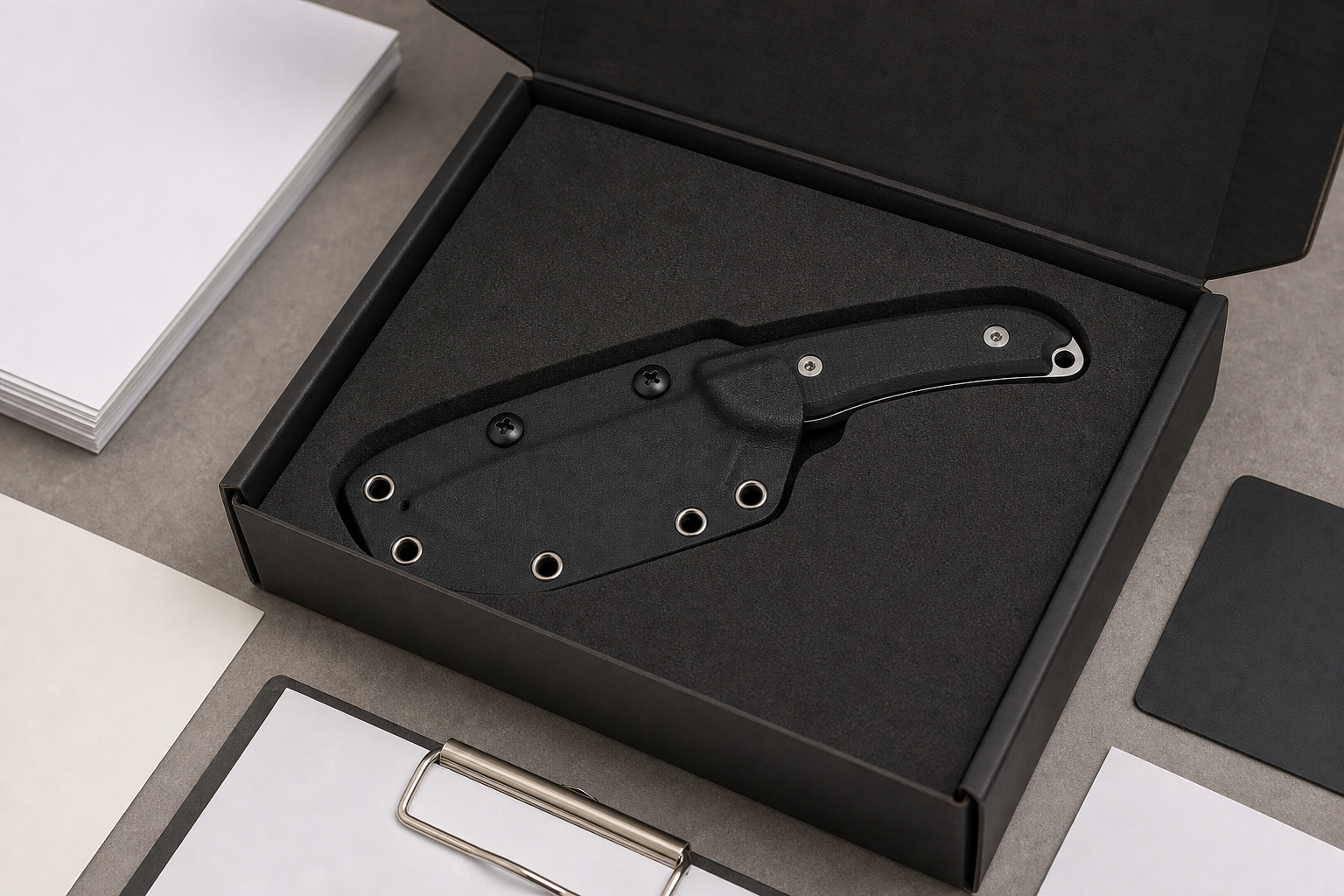
I Turn Brand Ideas Into Manufacturable Product Lines
In real sourcing work, I help buyers turn brand ideas into product decisions. If the buyer wants a practical outdoor identity, I focus on grip, corrosion planning, safe copy, and packaging information. If the buyer wants a clean EDC identity, I focus on compact carry, smooth action, clip feel, and simple finish. If the buyer wants a premium identity, I focus on material selection, tighter finish control, packaging, and inspection standards.
I also help buyers avoid over-customization. A first order may not need a full ODM structure. It may need a proven platform with strong branding, color, finish, and packaging. A mature brand may need deeper custom work because the sales volume and brand story justify it. The right path depends on the buyer's market, order plan, and long-term product line.
For me, a knife brand becomes stronger when the product looks right, works right, and repeats well. That means the brand must be visible in the specification, not only on the box. It should guide design, material, packaging, quality, and communication. That is the kind of support I want Vast State to provide.
| Buyer goal | Vast State support | Brand result |
|---|---|---|
| Launch private label line | Platform, logo, packaging, sample review | Faster and clearer market entry |
| Improve product identity | Material, finish, grip, design alignment | More consistent brand language |
| Develop ODM line | Concept, prototype, tooling, QC planning | Stronger differentiation |
| Protect repeat orders | Boundary samples and inspection standard | More reliable brand experience |
Turn your idea into a quote-ready knife project.
Share your drawing, sample photo, target quantity, market, and packaging needs. Vast State will review manufacturability and prepare OEM/ODM options.
Conclusion
A knife brand becomes stronger when positioning guides design, supplier choice, packaging, QC, and feedback, not only the logo on the finished product.