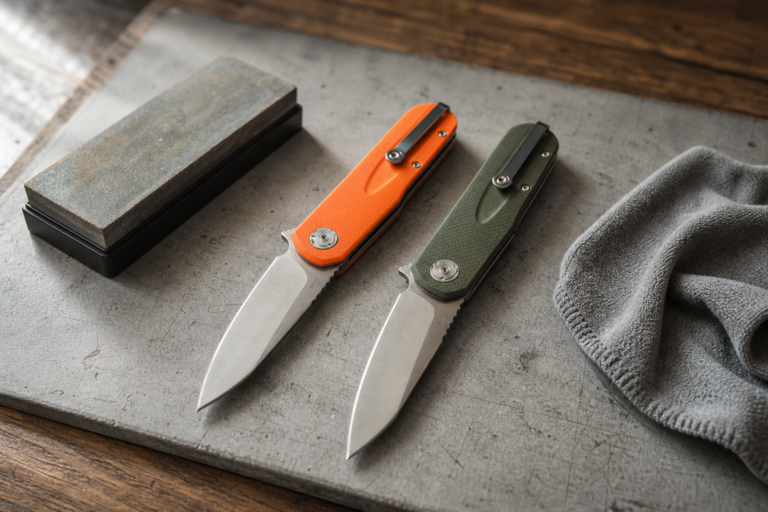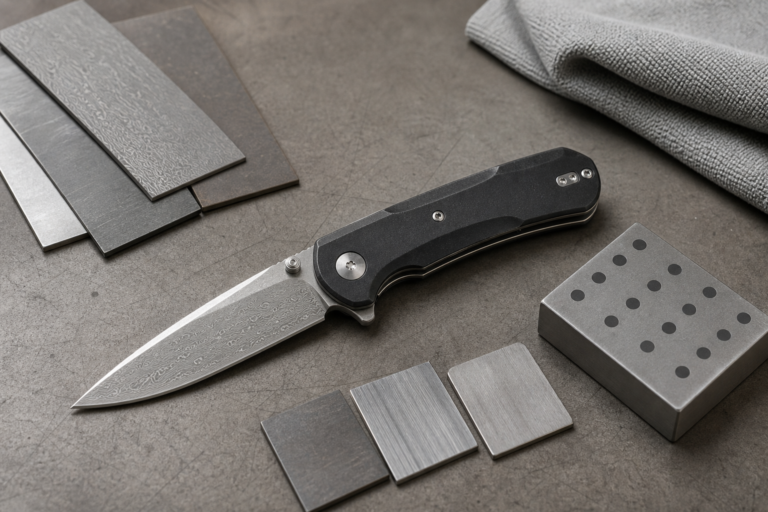
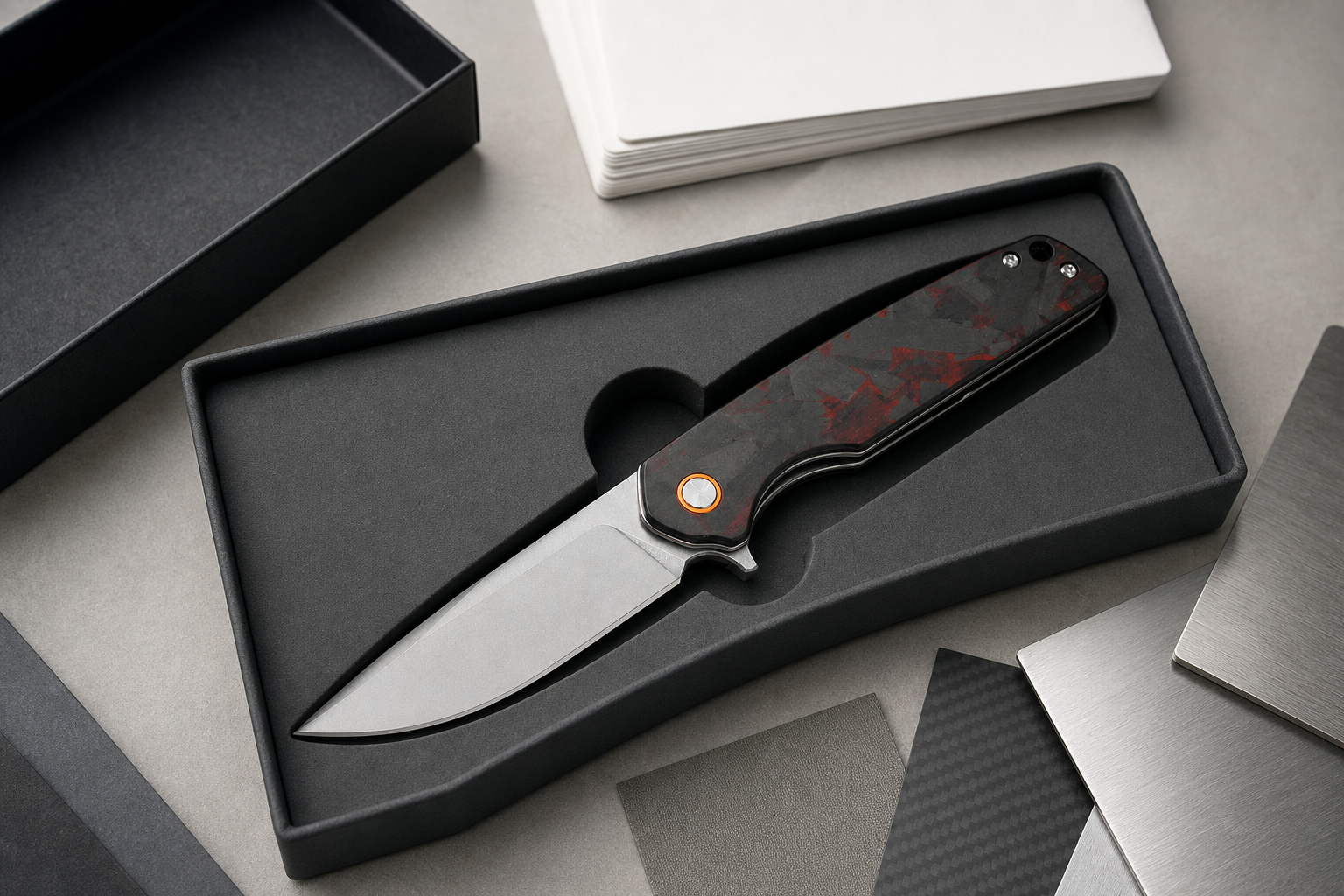
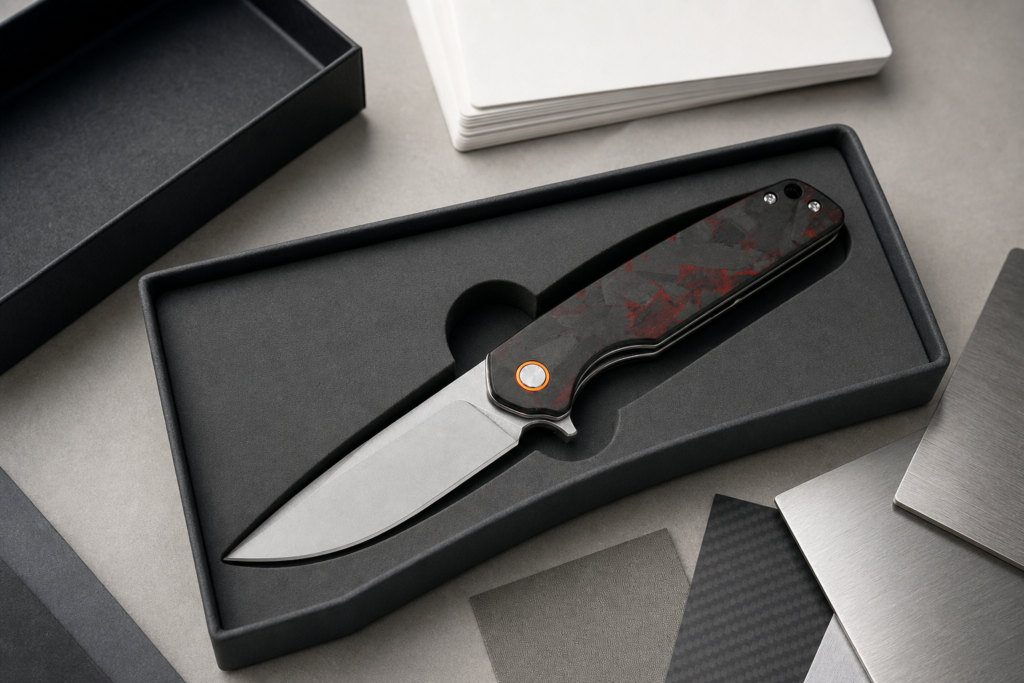
Pocket knife sharpness is easy to promise and hard to control. A vague edge standard can create complaints after the first real use.
Pocket knife sharpness does not last for one fixed time. It depends on steel, heat treatment, blade geometry, edge angle, factory sharpening, cutting material, user habits, corrosion, and maintenance. Buyers should define sharpness and edge-retention expectations before mass production.
Quick buyer brief:
- Answer: For OEM/ODM projects, buyers should avoid promising a fixed number of days. They should define initial sharpness, working edge retention, sharpening method, test method, acceptable edge variation, packaging guidance, and QC sampling.
- Buyer context: This guide is for knife brands, EDC brands, outdoor brands, importers, wholesalers, distributors, private label buyers, and sourcing managers.
- Key checks: Steel grade, heat treatment, hardness range, edge geometry, grind thickness, sharpening angle, burr removal, edge polish, corrosion resistance, user instructions, sample testing, and batch inspection.
Developing a folding knife line for your brand?
Vast State supports OEM/ODM folding knife projects, including blade steel, lock structure, handle material, finish, logo method, packaging, and quality inspection planning.
When a buyer asks how long a pocket knife should stay sharp, I usually answer with another question: sharp for what task? Cutting paper, cardboard, rope, food packaging, wood, cable ties, and outdoor materials will wear the edge differently. A knife can lose shaving sharpness quickly but still keep a useful working edge. Another knife can feel very sharp out of the box but roll or chip because the edge angle, heat treatment, or sharpening process is wrong. For B2B projects, sharpness must become a controlled specification, not a marketing sentence.
Why Is There No Single Answer for How Long Sharpness Lasts?
Many buyers want a simple number. But a fixed time promise can be misleading and risky.
Pocket knife sharpness lasts differently because edge wear depends on use, cutting material, steel, hardness, grind, edge angle, corrosion, sharpening quality, and maintenance.
I Separate Initial Sharpness From Working Edge
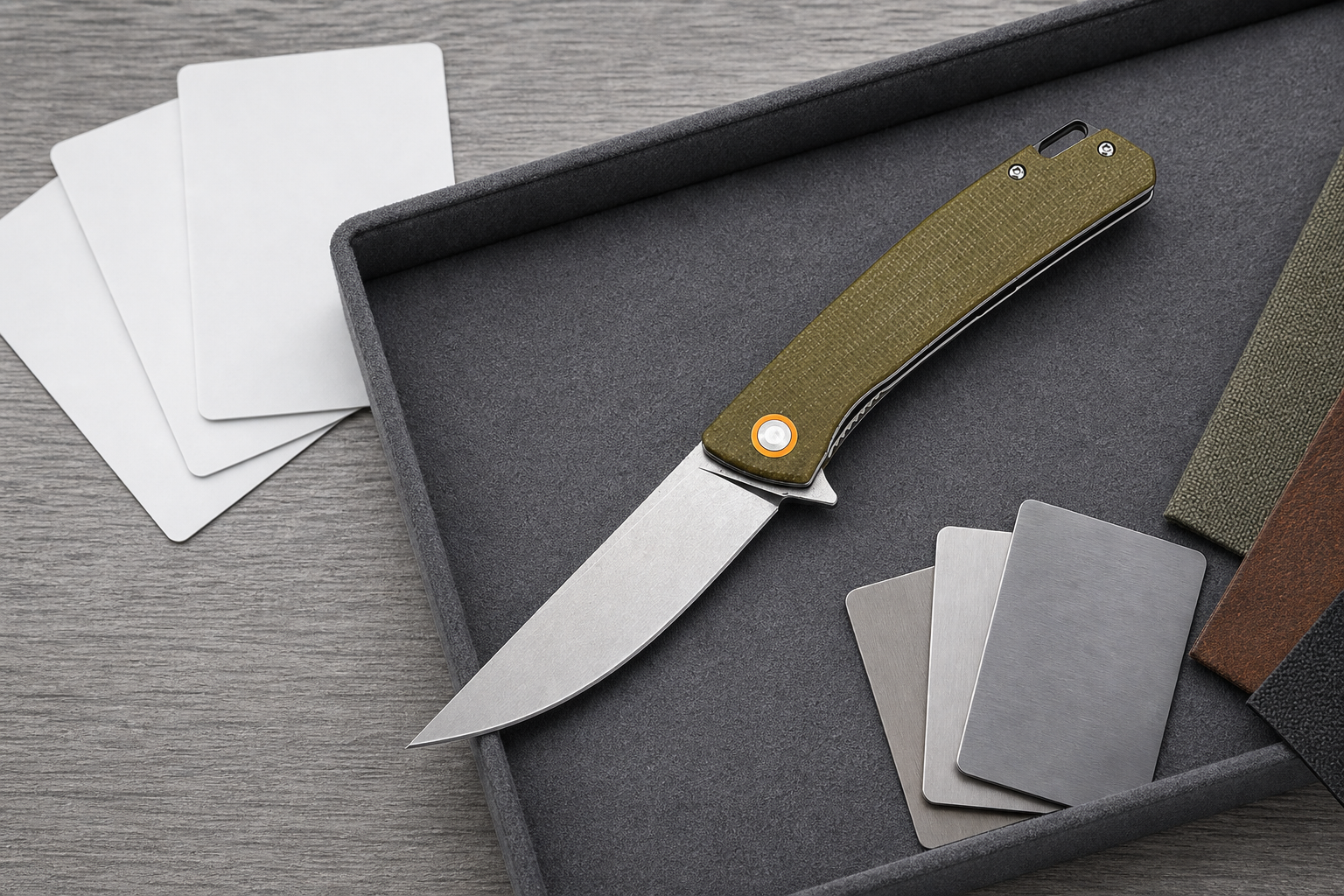
Initial sharpness is how the knife feels when the customer opens the box. Working edge is how useful the knife remains after real cutting. These are related, but they are not the same. A very fine polished edge can feel impressive at first. A slightly toothier edge may feel less refined but continue cutting fibrous material well. A thick edge may last longer in rough use but feel poor in slicing. The buyer needs to decide what kind of sharpness matches the product.
Use changes everything. Cardboard can be abrasive. Rope can stress the edge differently. Dirty material can dull a knife faster. Food use may involve moisture and cleaning. Outdoor tasks can combine wood, sand, sap, and humidity. A buyer cannot honestly say one pocket knife will stay sharp for a fixed number of weeks without defining the task and test condition.
This is why I prefer a specification approach. The buyer should define the intended user, typical cutting material, initial sharpness expectation, edge angle range, steel, hardness range, sharpening finish, and maintenance guidance. If the project needs stronger claims, it should use repeatable testing instead of guesses. That protects the brand and helps the supplier control the edge.
| Sharpness idea | What it means | Buyer action |
|---|---|---|
| Initial sharpness | Out-of-box cutting feel | Define factory edge standard |
| Working edge | Useful edge after real cutting | Match steel and geometry to use |
| Edge retention | Resistance to dulling under conditions | Define test method and media |
| Resharpening | User restores performance | Provide care guidance if needed |
OEM/ODM RFQ Checklist
Prepare these details to help Vast State review your project and provide a more accurate quotation.
| RFQ Field | What to Prepare |
|---|---|
| Project type | OEM from drawing / ODM private label / wholesale catalog |
| Product category | Folding knife / fixed blade / multi-tool / outdoor tool |
| Design status | Idea / sketch / 2D drawing / 3D CAD / physical sample |
| Target price | Ex-factory target price or retail price range |
| MOQ expectation | 500 / 1,000 / 3,000 / 5,000+ pcs |
| Logo method | Laser engraving / etching / printing / molded logo |
| Packaging | Standard packaging / custom retail box / Amazon-ready |
| Market | USA / EU / Japan / Korea / Middle East / other |
| Compliance needs | Buyer-specified testing / documentation / labeling |
| Timeline | Sample deadline / mass production deadline |
How Should Buyers Define Sharpness and Edge Retention?
Words like razor sharp and long lasting sound attractive. They do not tell the factory what to inspect.
Buyers should define sharpness and edge retention with measurable test methods, cutting media, edge angle, sample size, pass criteria, and approved boundary samples.
I Use Test Language When Claims Need Support
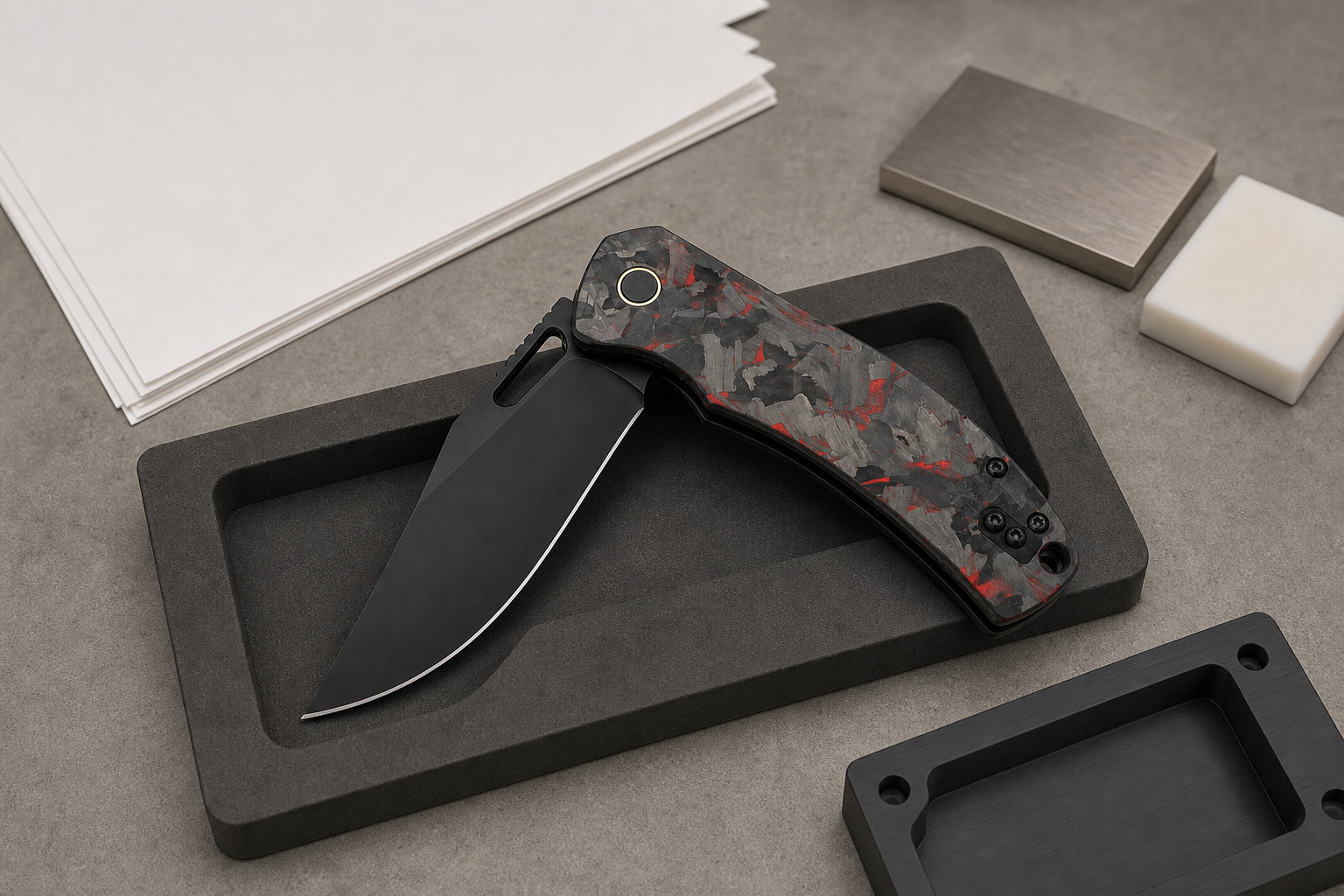
If a buyer only needs a normal private label pocket knife, a practical factory edge check may be enough. The supplier can inspect edge uniformity, burr removal, visual defects, cutting feel, and batch consistency. But if the buyer wants to claim strong edge retention, the project needs a better test plan.
The ISO 8442-5 sharpness and edge retention test is for professional and domestic food-preparation knives, not pocket knives. Still, it is useful because it shows how serious sharpness claims require controlled cutting action and defined test media. It separates the idea of sharpness from casual opinion. That lesson applies to OEM/ODM pocket knives: if a claim matters, the test condition must be clear.
The CATRA knife edge testing equipment page is also useful because CATRA describes equipment for sharpness and longevity testing of straight cutting edges, edge geometry measurement, and corrosion testing. Not every buyer needs CATRA testing. But the buyer should understand the difference between a casual paper-cut demonstration and a repeatable edge-retention test. A paper test can help check a sample. It should not become the only proof of a marketing claim.
| Definition item | Weak version | Better version |
|---|---|---|
| Sharpness | "Very sharp" | Initial cutting check and edge finish |
| Edge retention | "Lasts long" | Defined media, cycles, and pass standard |
| Factory edge | "Good edge" | Angle range, burr control, visual check |
| Batch control | "Same as sample" | Sampling plan and boundary sample |
How Do Steel and Heat Treatment Affect Sharpness Life?
Steel choice matters. But the same steel can perform badly if heat treatment and grinding are weak.
Steel and heat treatment affect sharpness life through hardness, wear resistance, toughness, corrosion resistance, carbide structure, edge stability, and batch consistency.
I Match Steel to the Target Edge Behavior
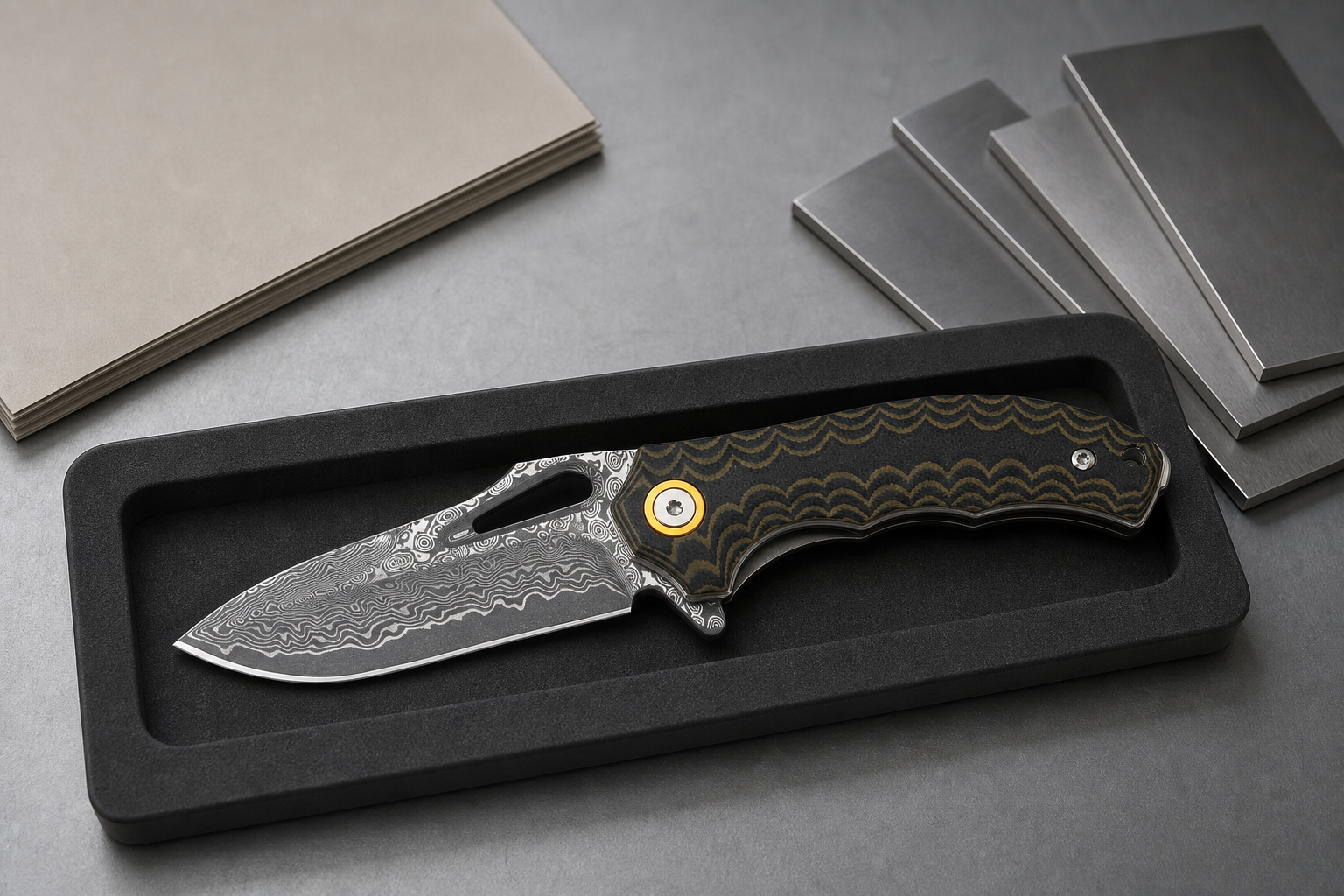
Different steel choices create different edge behavior. Some steels are easy to sharpen and good for value products. Some improve corrosion resistance. Some support stronger wear resistance. Some can hold a fine edge but need better heat treatment control. A buyer should not choose steel only because it sounds premium. The steel should fit the user, price tier, cutting task, and maintenance expectation.
Alleima 14C28N knife steel is a useful example because it is positioned around knife use, edge performance, hardness, and corrosion resistance. It is not the only good steel. It simply shows the kind of balanced thinking buyers need. Edge retention is not separate from corrosion resistance or sharpening behavior. Outdoor and EDC buyers often need a balance, not only the highest hardness.
Heat treatment is the second half of the steel decision. Alleima's hardening programs for knife steels show that hardening programs are matched to steel grades and that tempering temperature connects to required hardness. In production, this means the buyer should ask for a realistic hardness range and a consistent process. Too soft can lose edge performance. Too hard can increase chipping risk if geometry and toughness are not right.
| Material factor | Effect on sharpness life | Buyer check |
|---|---|---|
| Steel grade | Wear, toughness, corrosion, sharpening | Match to market and task |
| Heat treatment | Hardness and edge stability | Define target range |
| Corrosion resistance | Edge condition over time | Consider sweat and humidity |
| Supply stability | Batch repeatability | Confirm material source and MOQ |
Why Do Edge Geometry and Sharpening Process Matter So Much?
A good steel can still cut poorly. The edge shape and factory sharpening decide the first user impression.
Edge geometry and sharpening matter because blade thickness, grind, edge angle, burr removal, edge polish, and overheating can change both initial sharpness and working edge life.
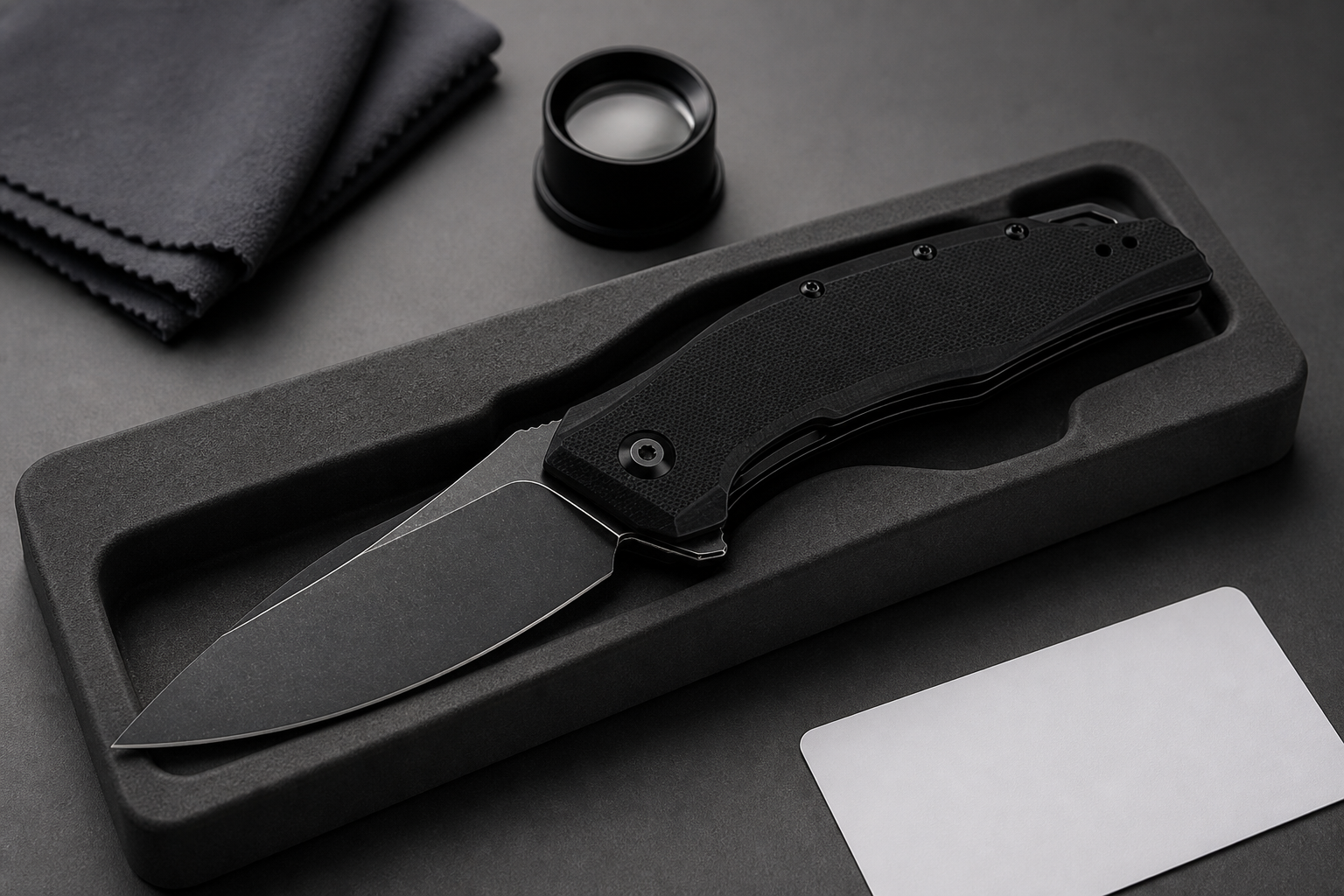
I Look Beyond the Steel Name
The edge is a small part of the knife, but it carries the whole cutting experience. Behind-the-edge thickness affects how easily the blade enters material. Edge angle affects sharpness and durability. A lower angle can cut better but may be more fragile. A higher angle can handle rougher use but may feel less sharp. The right choice depends on the task and steel.
Factory sharpening also matters. A remaining burr can make a knife feel sharp at first and then fail quickly. Overheating during powered sharpening can weaken the edge. Uneven sharpening can create a rough user experience. An edge that looks acceptable in a photo may not be acceptable in hand. This is why I ask for edge angle targets, burr checks, and cutting checks when sharpness is important to the product position.
For OEM projects, the sharpening process should be part of the production brief. If the buyer wants a slicer-style EDC knife, the edge should be thinner and cleaner. If the buyer wants a utility outdoor folder, the edge may need more strength. If the buyer wants easy user maintenance, the steel and edge angle should support resharpening. A factory cannot control what the buyer has not defined.
| Edge decision | Trade-off | Specification idea |
|---|---|---|
| Lower edge angle | Sharper feel, less abuse tolerance | Use for light slicing tasks |
| Higher edge angle | More durability, less slicing feel | Use for utility tasks |
| Fine polish | Smooth push cutting | Check if it suits target media |
| Toothier finish | Better bite on fibrous material | Define finish consistency |
How Should Hardness Testing Be Used Without Overpromising?
Hardness numbers look objective. But a number alone does not guarantee edge retention.
Hardness testing should confirm heat treatment consistency, but buyers should combine it with geometry checks, edge tests, visual inspection, and real-use expectations.
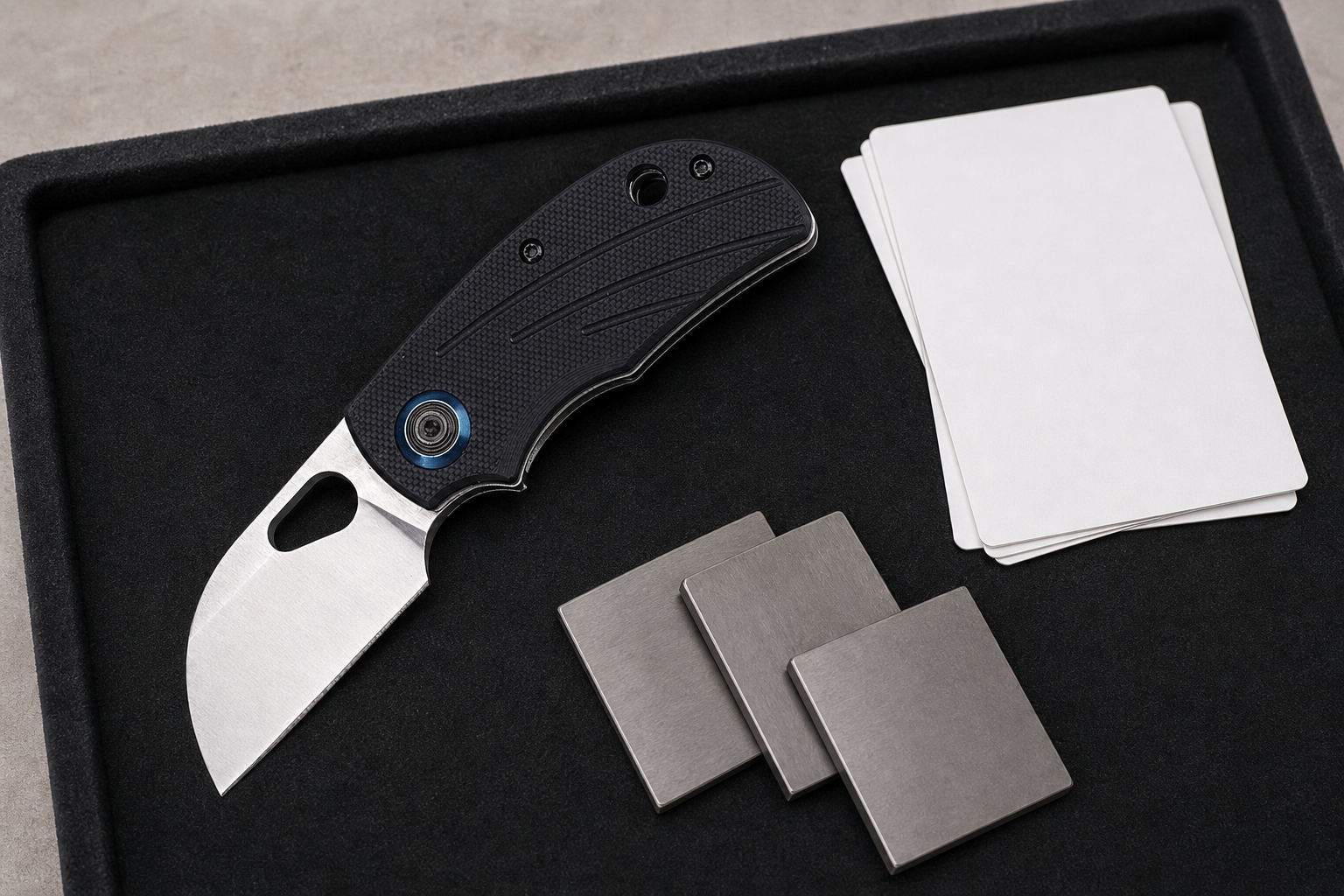
I Use Hardness as One Control Point
Hardness is important because it helps show whether the heat treatment process is in range. But hardness does not explain everything. Two knives with the same hardness can cut differently if the grind, edge angle, carbide structure, sharpening process, or corrosion condition differs. A hard blade can still chip if geometry is too thin. A softer blade can still be useful if the edge is designed for easy maintenance and the user understands the product.
The NIST Rockwell hardness measurement guide explains that good practice in Rockwell measurement helps reduce measurement errors. That matters for knife buyers because small hardness differences can become serious when a product page, supplier promise, or QC report depends on them. The buyer should ask where and how hardness is measured, what sample size is used, and what range is acceptable.
I prefer to treat hardness as a control point, not a marketing trophy. The target should fit the steel grade and edge geometry. The supplier should avoid chasing the highest number if it hurts toughness or consistency. For B2B orders, stable hardness across batches is often more valuable than one impressive sample result.
| Hardness issue | Risk | Better practice |
|---|---|---|
| Single sample number | Not representative | Use sampling plan |
| Too high target | Chipping or brittleness risk | Match steel and geometry |
| Too low target | Faster rolling or dulling | Adjust heat treatment |
| Poor test practice | Misleading report | Use controlled measurement |
How Do User Habits and Cutting Materials Change Edge Life?
Even a good knife can dull quickly if the user cuts dirty, abrasive, or unsuitable material.
User habits affect edge life through cutting media, cutting surface, moisture, cleaning, storage, pressure, twisting, impact, and sharpening frequency.
I Avoid Promising What the User Can Destroy
The same pocket knife can feel different in two users' hands. One user cuts clean packaging and maintains the edge. Another cuts dirty cardboard, scrapes against staples, twists the blade, leaves moisture in the pivot, and stores the knife without cleaning. The second user will dull or damage the edge much faster. This is not always a factory defect.
This is why packaging and instructions matter. Buyers should explain that knives are cutting tools, not prying tools. They should tell users to clean and dry the blade after wet use. They should explain safe storage and basic maintenance. They should avoid copy that suggests the knife can do everything. Overpromising creates complaints because users test the product against the claim.
The CCOHS sharp blades guidance is written for workplace safety, but its practical ideas are useful. It discusses using the right tool, keeping blades sharp, and storing sharp tools safely. For pocket knife projects, the lesson is simple: user instructions should help people choose the right task, maintain the edge, and store the knife safely.
| User factor | Effect on edge | Buyer communication |
|---|---|---|
| Abrasive material | Faster dulling | Avoid fixed sharpness promises |
| Twisting or prying | Chipping or tip damage | Explain cutting-only use |
| Wet storage | Corrosion at edge and pivot | Add cleaning and drying guidance |
| Poor sharpening | Uneven edge | Suggest suitable maintenance approach |
What Should Buyers Put in Packaging and Product Copy?
Sharpness copy can sell the product. Bad copy can create returns, unsafe expectations, or channel problems.
Packaging and product copy should describe sharpness responsibly, explain intended use, avoid fixed lifetime claims, include care guidance, and support safe handling.
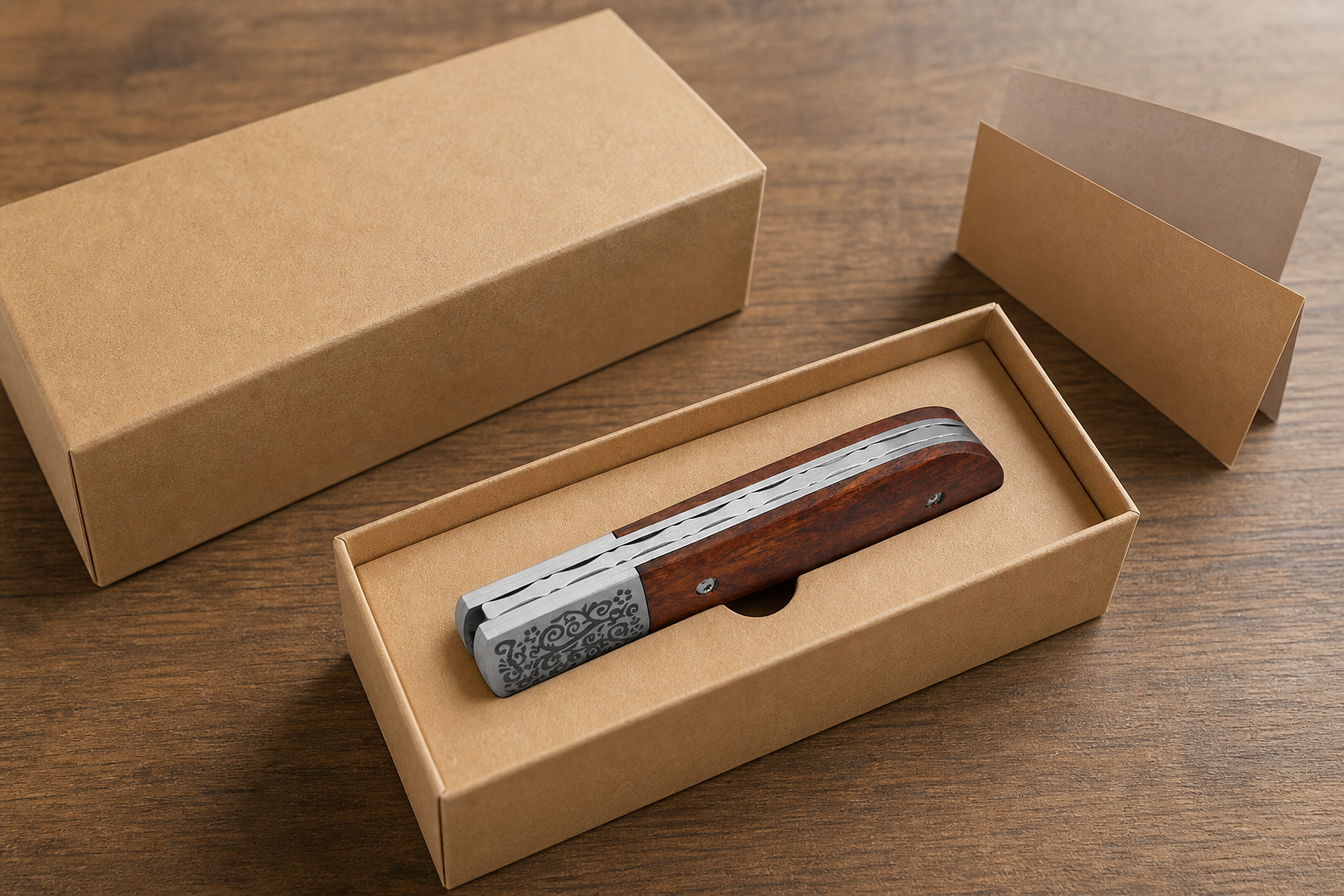
I Prefer Honest Edge Language
I do not like vague claims such as "stays sharp forever" or "never needs sharpening." A pocket knife is a consumable edge tool. The edge will change with use. Stronger copy can still be responsible. A buyer can say the knife is sharpened for practical everyday cutting, designed for easy maintenance, or built with a steel and edge geometry chosen for the target use. If the buyer has test data, the copy can reference the tested condition accurately.
The instruction card should explain safe opening and closing, cutting direction, cleaning, drying, storage, and sharpening. It should also warn users against prying, twisting, striking, or cutting hard hidden materials. The goal is not to scare the user. The goal is to align expectation with the product's real use.
For private label buyers, this is a brand issue. The first edge experience affects reviews. If the knife arrives sharp but dulls quickly under common use, the brand may receive complaints. If the knife is honestly positioned and easy to maintain, users are more likely to understand it as a practical tool. Good copy protects the product after it leaves the factory.
| Copy topic | Avoid | Better direction |
|---|---|---|
| Edge life | "Stays sharp forever" | "Designed for practical everyday cutting" |
| Steel claim | Unsupported premium language | Explain balanced performance |
| Maintenance | No care guidance | Include cleaning and sharpening notes |
| Use limits | Implied all-purpose abuse | State intended cutting tasks |
What QC Checks Should Control Sharpness Before Shipment?
One sharp sample does not prove a sharp batch. Edge consistency needs a repeatable inspection plan.
QC should control sharpness through edge angle checks, burr inspection, cutting tests, hardness sampling, visual inspection, finish checks, packaging review, and approved boundary samples.
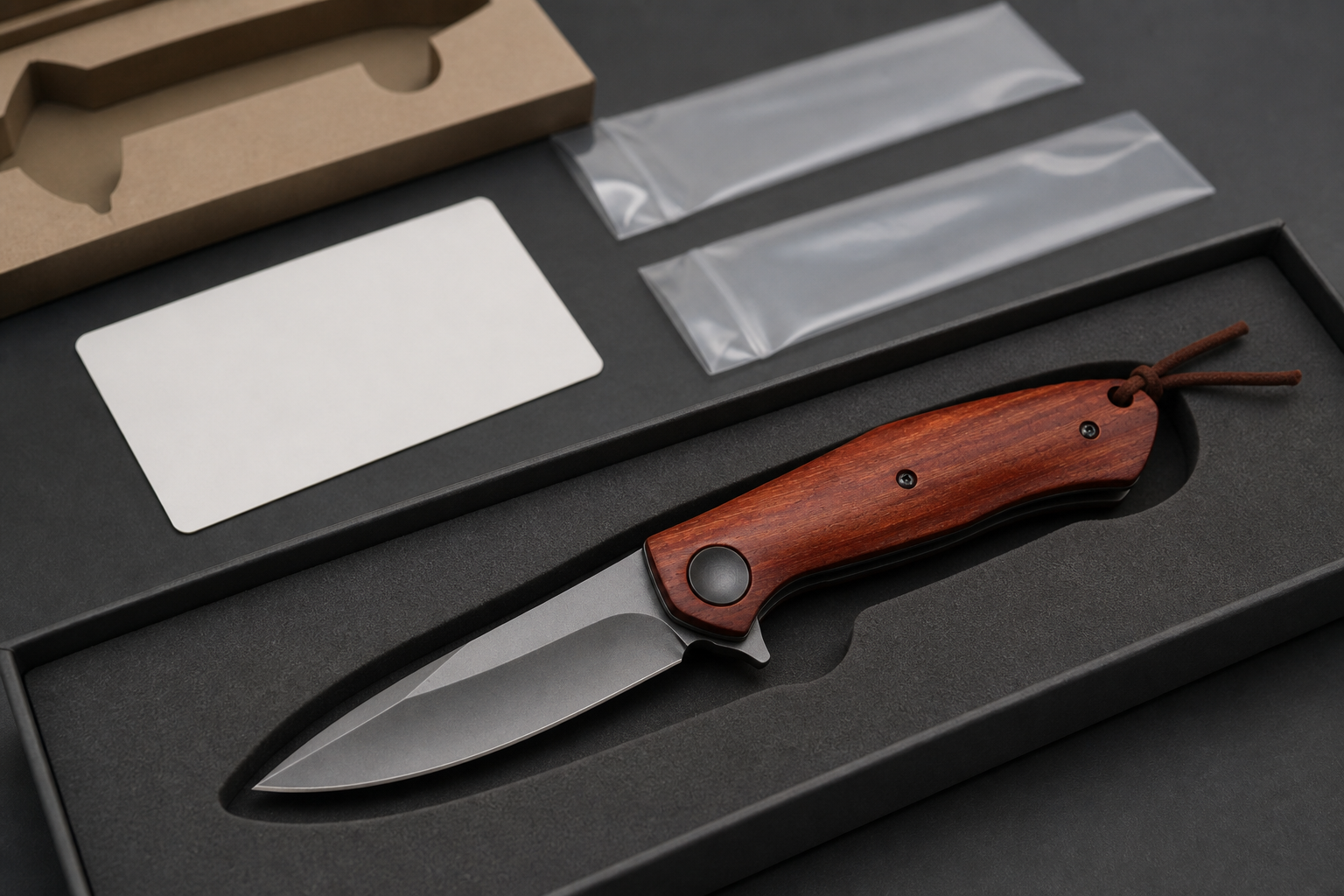
I Turn the Edge Standard Into Batch Control
The approved sample should become a production standard. The buyer and supplier should agree on edge appearance, sharpening angle, acceptable burr condition, cutting feel, hardness range, and finish. If the project is high value or strongly marketed around edge retention, the buyer should discuss more formal testing or sample retention. If the project is value-focused, the buyer still needs a basic cutting and visual check.
QC should not happen only at the end. Incoming steel, heat treatment, grinding, sharpening, cleaning, assembly, and packaging all affect the edge. A blade can be damaged during handling. A coating can affect cutting feel. Poor packaging can expose the edge. A final inspector may catch problems, but stable quality comes from process control.
The ISO 9001 quality management framework is useful here because it focuses on quality management system requirements and customer satisfaction. For pocket knives, this means sharpness should be controlled through defined requirements, process checks, records, corrective action, and repeatable inspection. A sharp knife is not only a worker's skill. It is a factory process.
| QC point | What to check | Why it matters |
|---|---|---|
| Edge angle | Range and consistency | Controls cutting feel |
| Burr removal | Clean final edge | Prevents quick false sharpness loss |
| Hardness | Heat treatment range | Supports edge stability |
| Cutting check | Functional confirmation | Protects user first impression |
How Can Vast State Help Buyers Build Better Edge Standards?
Sharpness decisions can become emotional. A clear standard turns the conversation into engineering and QC.
Vast State helps buyers build better edge standards by matching steel, heat treatment, geometry, sharpening process, packaging, user guidance, and inspection to the target market.
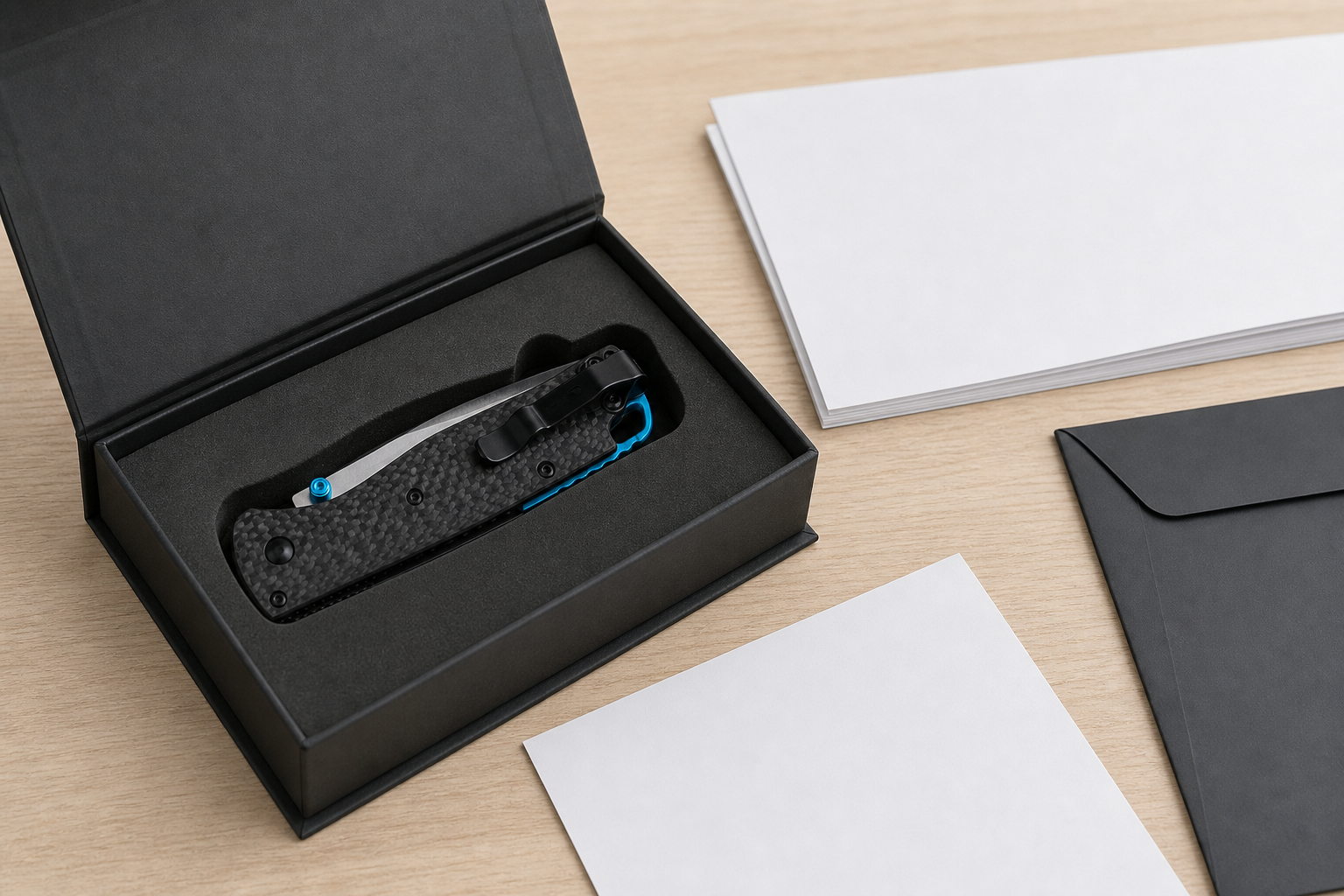
I Make Sharpness Fit the Brand and Use Case
In real projects, I help buyers decide what edge performance should mean for their product. A compact EDC knife may need a clean out-of-box edge and easy maintenance. An outdoor pocket knife may need a stronger working edge and corrosion-aware materials. A premium line may need tighter edge symmetry, better finish, and more controlled testing. A value private label project may need a reliable factory edge without overcomplicating the cost.
I also help buyers avoid claims the product cannot support. If there is no defined test, I avoid exact edge-retention promises. If the buyer wants a stronger claim, we need to define cutting media, sample size, pass criteria, and inspection method. This protects both the buyer and the factory.
The final goal is simple. The pocket knife should arrive sharp, cut as expected, be maintainable by the user, and repeat across batches. When sharpness is written into the specification, sampling and QC become much clearer.
| Buyer need | Vast State support | Project result |
|---|---|---|
| Better factory edge | Edge angle and sharpening review | Stronger first impression |
| Better working edge | Steel, heat treatment, geometry match | More useful product experience |
| Responsible marketing | Copy and instruction guidance | Fewer expectation problems |
| Repeat production | QC standards and boundary samples | More consistent batches |
Turn this article into a folding knife project.
Share your blade type, lock direction, steel preference, handle material, quantity, target market, and packaging needs. Vast State can prepare OEM/ODM options.
Conclusion
Pocket knife sharpness lasts only as long as the edge system supports it, so buyers should specify steel, geometry, sharpening, use guidance, and QC together.