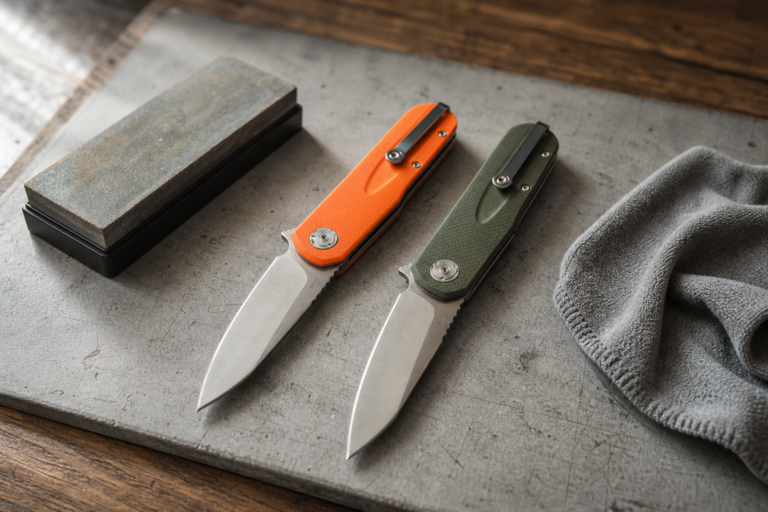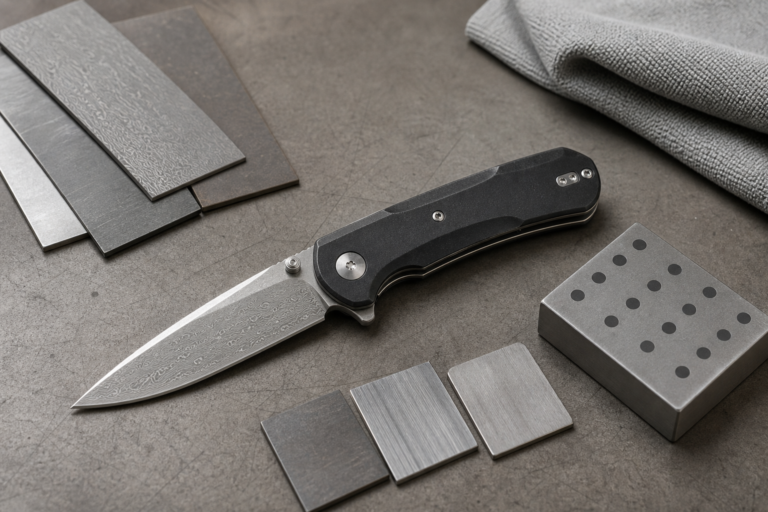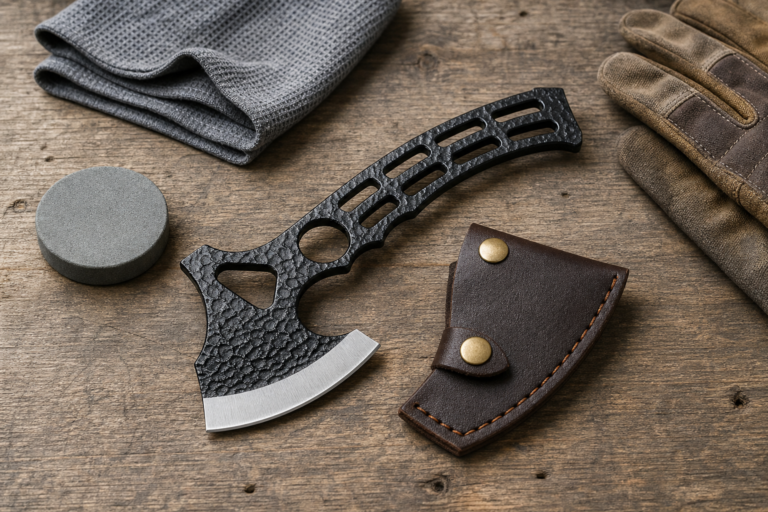
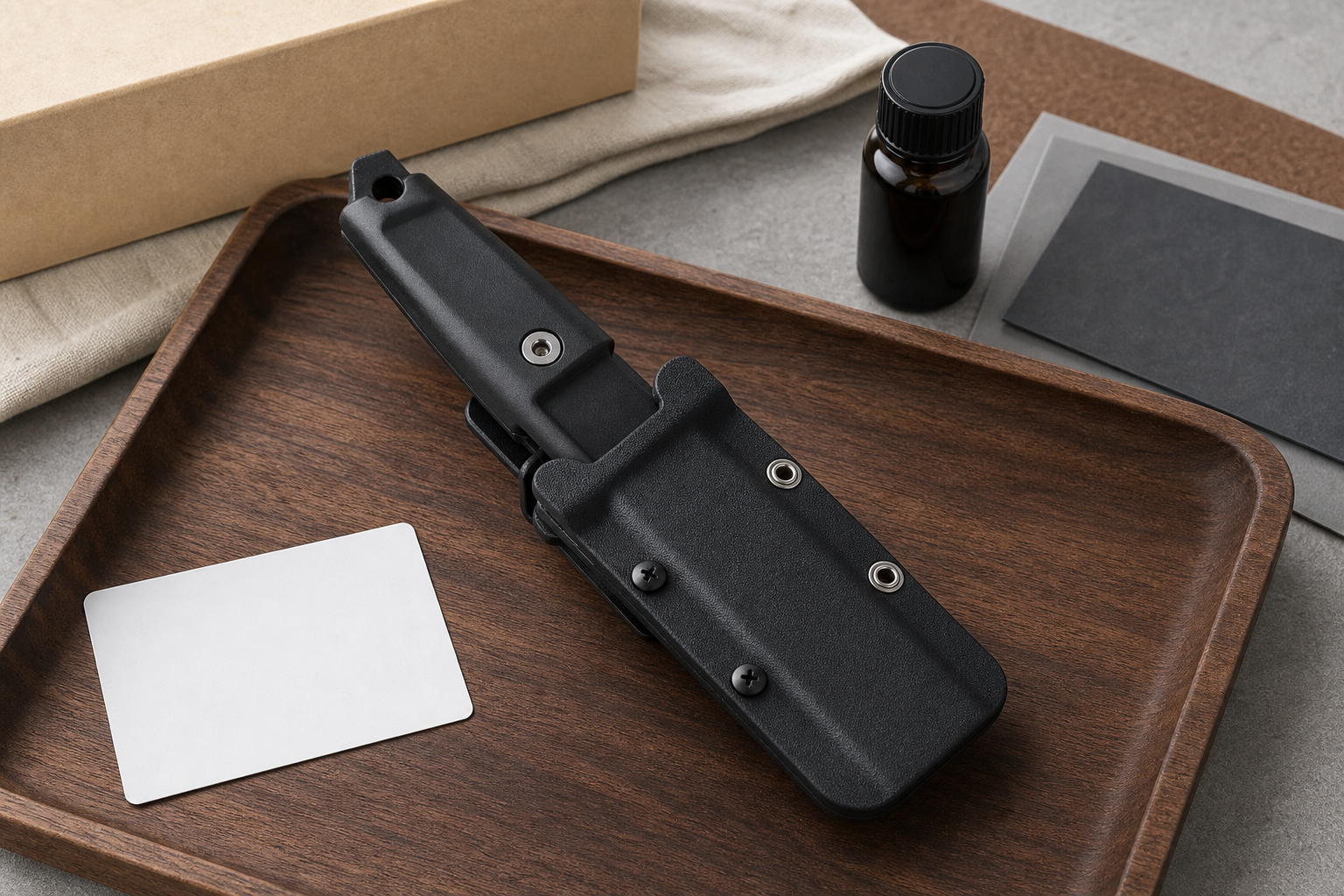
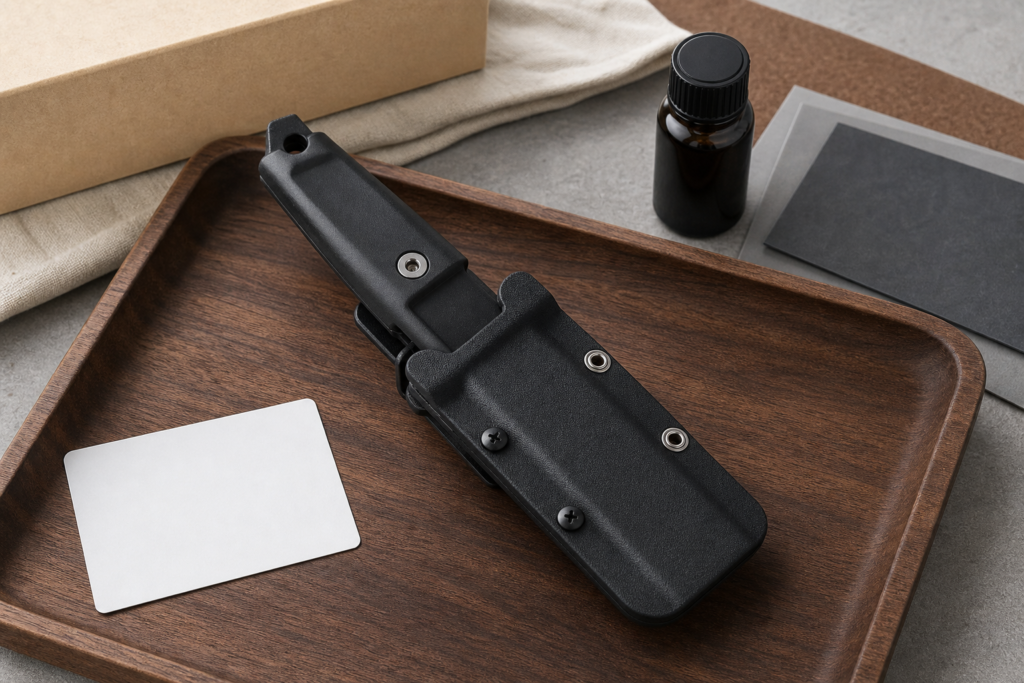
A hunting knife can be well made and still create user problems. Poor safety guidance, weak sheath design, and vague positioning can damage trust.
Buyers should design hunting knife safe-use guidance by connecting blade shape, handle control, sheath security, edge maintenance, cleaning, packaging, warnings, and QC to responsible outdoor use. The goal is not to teach graphic use steps, but to help users handle a sharp field tool safely.
Quick buyer brief:
- Answer: A hunting knife project should include safe handling, carry, cleaning, storage, maintenance, and responsible-use instructions from the start. These details should influence design, packaging, copy, and inspection.
- Buyer context: This guide is for outdoor brands, hunting-accessory brands, knife brands, importers, wholesalers, private label buyers, and sourcing managers.
- Key checks: Fixed blade or folding structure, blade length, point control, edge geometry, steel, handle grip, guard or finger stop, sheath retention, belt carry, cleaning access, corrosion resistance, warning card, market rules, and QC standard.
Planning a fixed blade or outdoor knife project?
Share your target use, blade size, steel preference, handle direction, sheath needs, quantity range, and packaging plan. Vast State can help turn it into a quote-ready specification.
When I review a hunting knife project, I do not treat the knife only as a blade. I treat it as a tool system: blade, handle, sheath, carry method, edge, cleaning method, packaging, and user guidance. A safe product is not created only by saying "be careful" on the box. It is created by designing the handle to control the hand, the sheath to protect the edge, the blade to match the task, and the instructions to guide responsible use. For OEM and ODM buyers, this is also a brand issue. A safer, clearer product reduces confusion and supports repeat sales.
Why Should Safe-Use Guidance Start During Product Design?
Safety guidance added after production often feels weak. The product may already have handle, sheath, or packaging problems.
Safe-use guidance should start during design because blade geometry, grip, sheath retention, edge sharpness, cleaning access, and instructions all affect how users handle the knife.
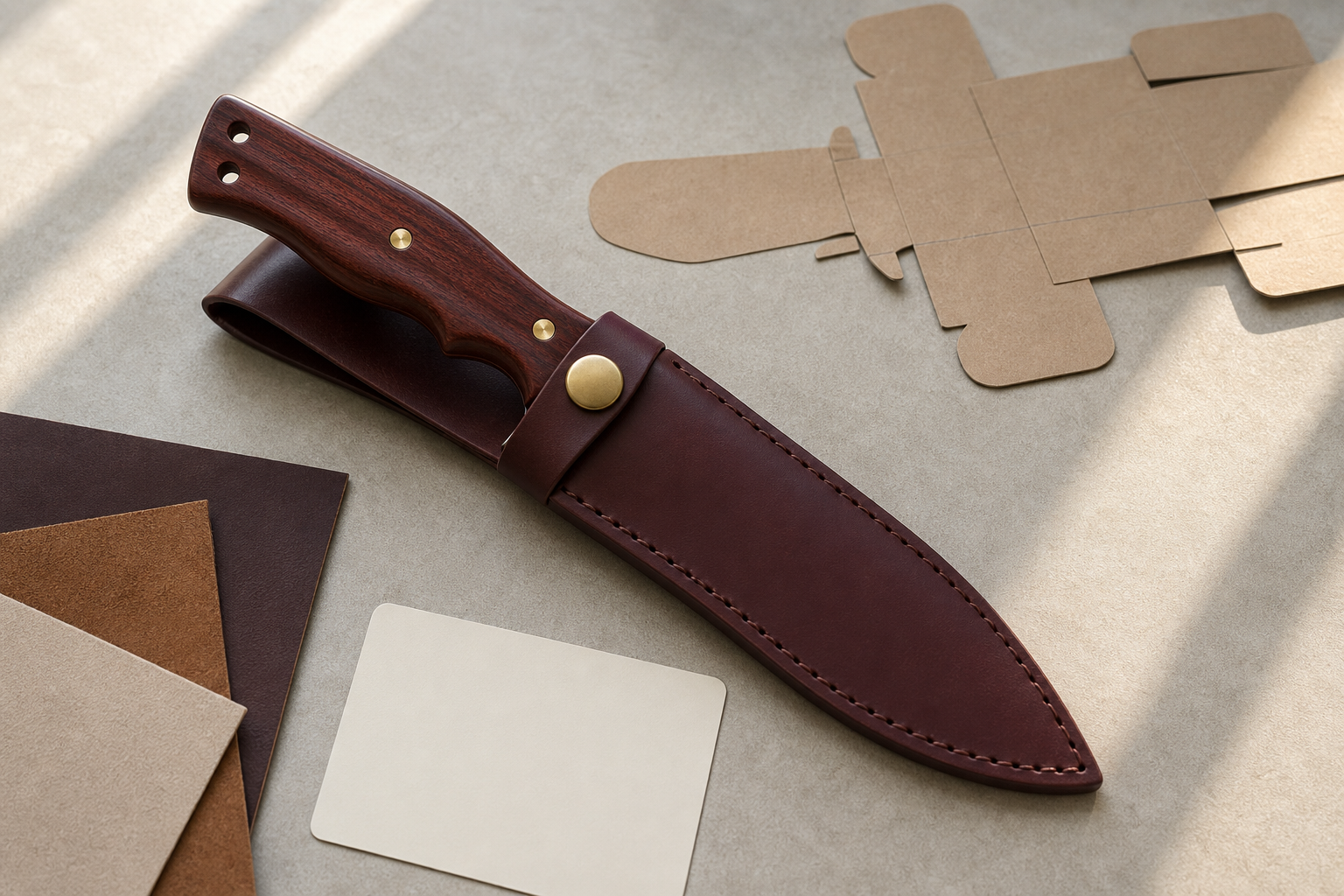
I Build Safety Into the Product, Not Only the Manual
Many buyers think safety is a packaging topic. I see it earlier. If the handle is slippery, the instruction card cannot fully solve the problem. If the sheath does not hold the knife securely, a warning label is not enough. If the blade tip is too aggressive for the target user, the product may create unnecessary risk. If the edge is dull, users may push harder and lose control. Safety guidance should reflect design, and design should reflect safety.
Hunting knife buyers also need to think about user skill. Some customers are experienced outdoor users. Some are new buyers who need simple handling guidance. Some will carry the knife in wet, cold, or dirty conditions. The handle, sheath, and instructions must account for real environments. The product should guide the user toward controlled actions.
The Iowa DNR hunter education page is useful because it frames hunting education around safety, ethics, responsibility, and landowner relations. That mindset fits product development. A hunting knife brand should not only sell a tool. It should support responsible outdoor behavior through design and information.
| Design area | Safe-use connection | Buyer action |
|---|---|---|
| Handle | Controls hand position | Test grip, texture, and edge rounding |
| Sheath | Covers and retains the blade | Check retention and carry method |
| Edge | Affects cutting control | Define sharpness and maintenance |
| Packaging | Sets user expectations | Add clear safety and care guidance |
OEM/ODM RFQ Checklist
Prepare these details to help Vast State review your project and provide a more accurate quotation.
| RFQ Field | What to Prepare |
|---|---|
| Project type | OEM from drawing / ODM private label / wholesale catalog |
| Product category | Folding knife / fixed blade / multi-tool / outdoor tool |
| Design status | Idea / sketch / 2D drawing / 3D CAD / physical sample |
| Target price | Ex-factory target price or retail price range |
| MOQ expectation | 500 / 1,000 / 3,000 / 5,000+ pcs |
| Logo method | Laser engraving / etching / printing / molded logo |
| Packaging | Standard packaging / custom retail box / Amazon-ready |
| Market | USA / EU / Japan / Korea / Middle East / other |
| Compliance needs | Buyer-specified testing / documentation / labeling |
| Timeline | Sample deadline / mass production deadline |
What Blade Features Matter for Responsible Hunting Knife Use?
A hunting knife blade can look strong but still be wrong for the user. Shape and geometry affect control.
Important blade features include length, tip shape, belly, spine thickness, edge angle, sharpening finish, steel, heat treatment, corrosion resistance, and cleanability.
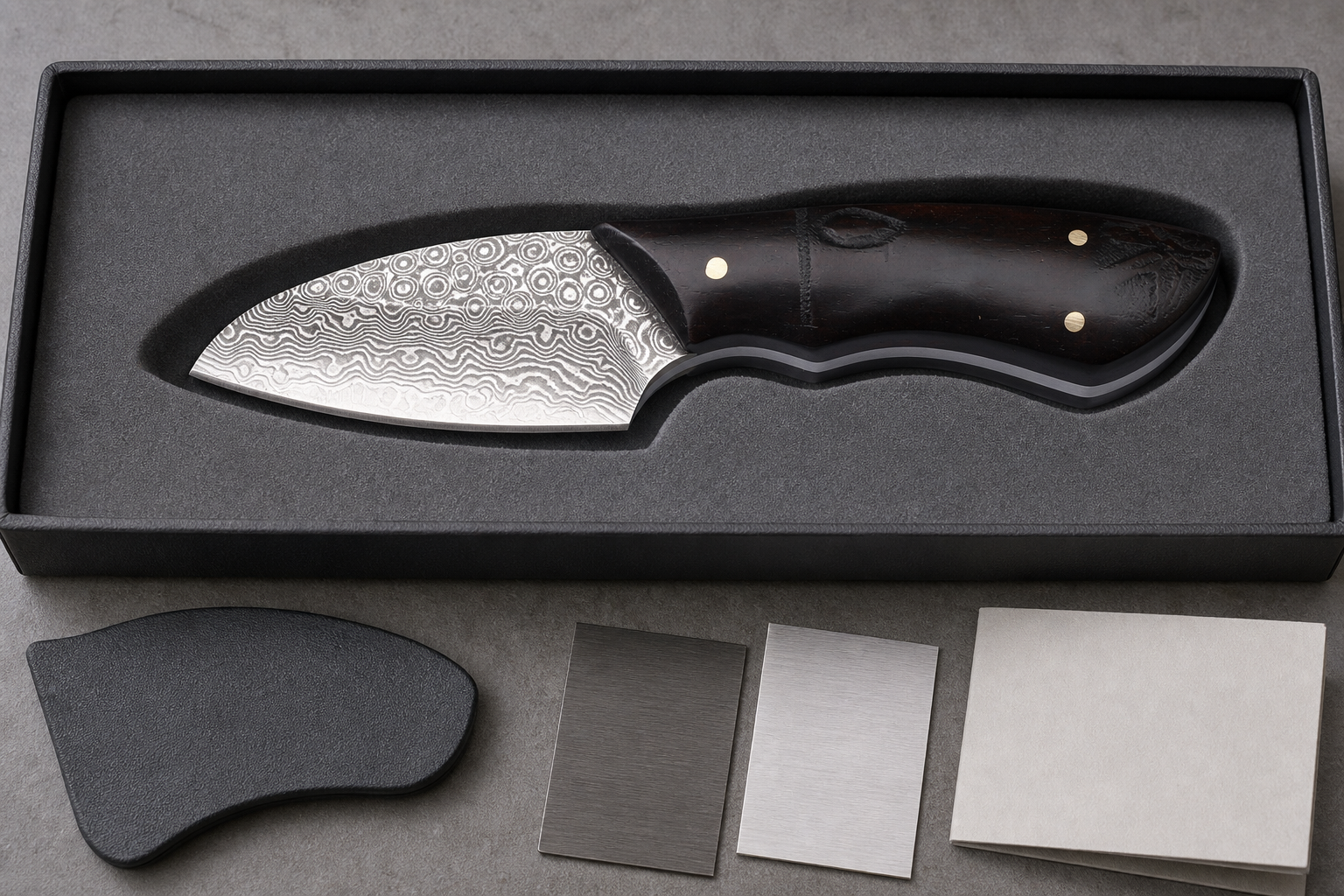
I Match the Blade to the Task Without Overdesigning It
Blade design should be practical. A hunting knife may need controlled slicing, tip control, and easy cleaning. It does not need fantasy shapes, exaggerated serrations, or decorative aggression. An overly dramatic blade can be harder to sharpen, harder to sheath, harder to clean, and harder to position responsibly in retail channels.
Length matters. A blade that is too large may feel impressive in photos but harder to control. A blade that is too small may not fit the target use. A moderate, task-focused shape often works better for broad outdoor and hunting-accessory channels. The buyer should also review whether the blade is a fixed blade or folding design. Fixed blades can be easier to clean and stronger for some field tasks. Folding designs can carry compactly but need more pivot and cleaning review.
Steel and heat treatment should support the intended edge. Alleima 14C28N knife steel is useful as a reference because it is positioned around knife use, edge performance, hardness, and corrosion resistance. The best steel still depends on budget and target market. I want buyers to connect blade steel with edge geometry, corrosion exposure, sharpening, and maintenance instructions.
| Blade feature | Safe-use question | Production focus |
|---|---|---|
| Length | Can the user control it? | Match target market and channel |
| Tip shape | Is it practical and predictable? | Avoid over-aggressive geometry |
| Edge angle | Does it balance sharpness and strength? | Define sharpening standard |
| Steel | Does it fit moisture and maintenance? | Control heat treatment and finish |
How Should Handle Grip and Ergonomics Reduce User Risk?
The handle is where safety becomes physical. A good blade with a poor handle still feels risky.
Handle grip and ergonomics reduce risk by improving control, preventing hand slip, supporting different grip positions, and reducing fatigue during field use.
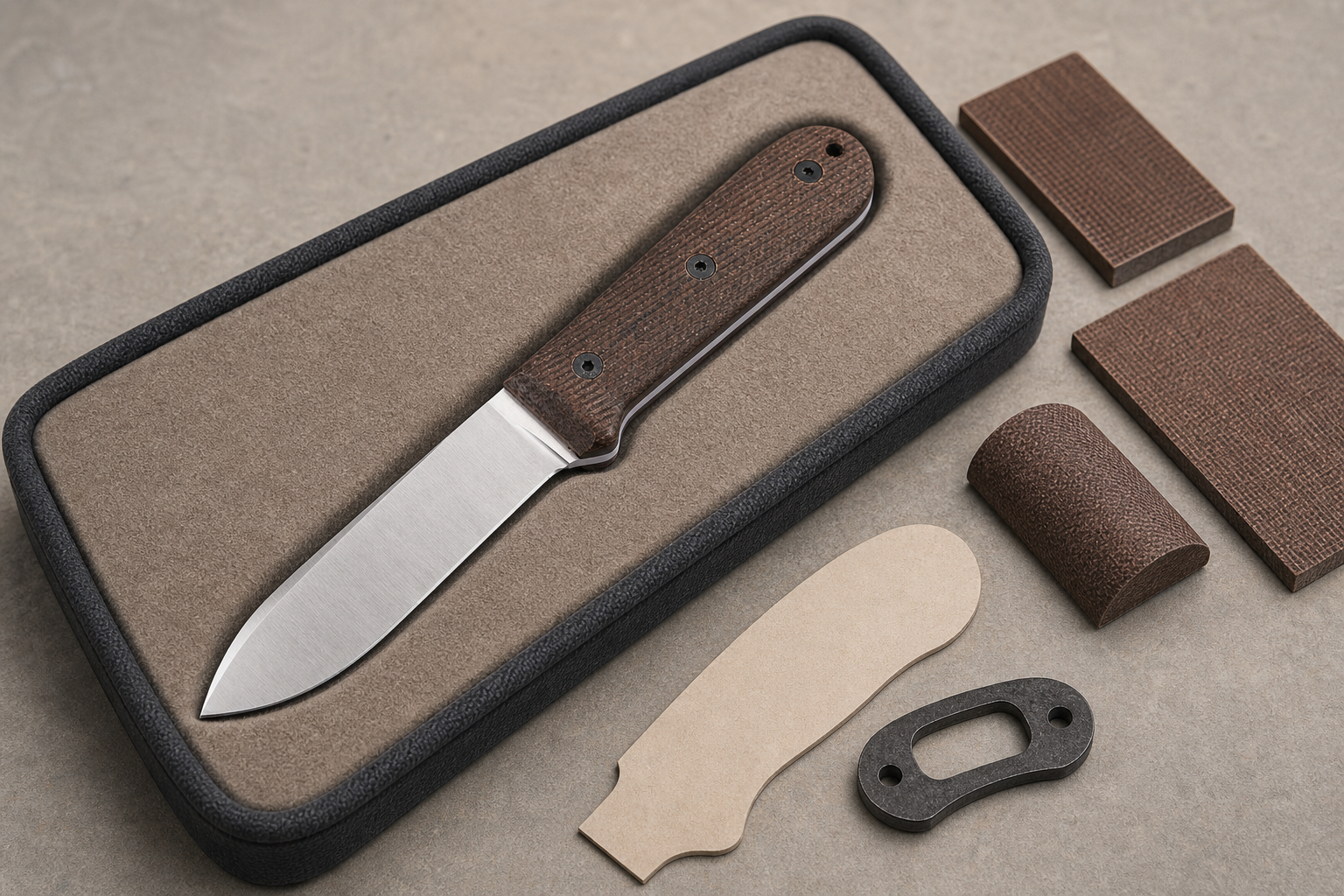
I Treat the Handle as a Control Surface
Handle material and shape should be selected for user control, not only appearance. A smooth handle may look premium but can become slippery with water, sweat, or cleaning residue. A very aggressive texture may grip well but can create discomfort or pocket and sheath wear. A heavy handle may feel strong but may reduce balance. A thin handle may look sleek but may be harder to hold during repeated cuts.
Ergonomics also includes guard, finger stop, handle contour, edge rounding, and weight distribution. Some hunting knife designs benefit from a clear index point so the user can understand hand position without staring at the knife. If the product is for broad retail, the handle should be intuitive. If the product is for experienced outdoor users, the buyer may accept more specialized geometry, but it should still be inspected.
The ISO 9241-11 usability framework connects usability with specified users, goals, and context of use. I use that principle in knife design. A handle is not good in isolation. It is good when the target user can control the knife effectively and safely in the intended outdoor context.
| Handle choice | User effect | Buyer check |
|---|---|---|
| Textured synthetic handle | Better wet-hand control | Avoid harsh hot spots |
| Wood handle | Traditional feel | Control variation and finish |
| Rubberized or grippy surface | Secure handling | Check aging and cleaning |
| Finger stop or guard | Better hand indexing | Avoid uncomfortable geometry |
Why Is Sheath Design Part of Hunting Knife Safety?
The sheath is not an accessory afterthought. It protects the user, the blade, and the product's reputation.
Sheath design affects safe carry, edge protection, retention, drawing control, storage, packaging, corrosion risk, and after-sales complaints.
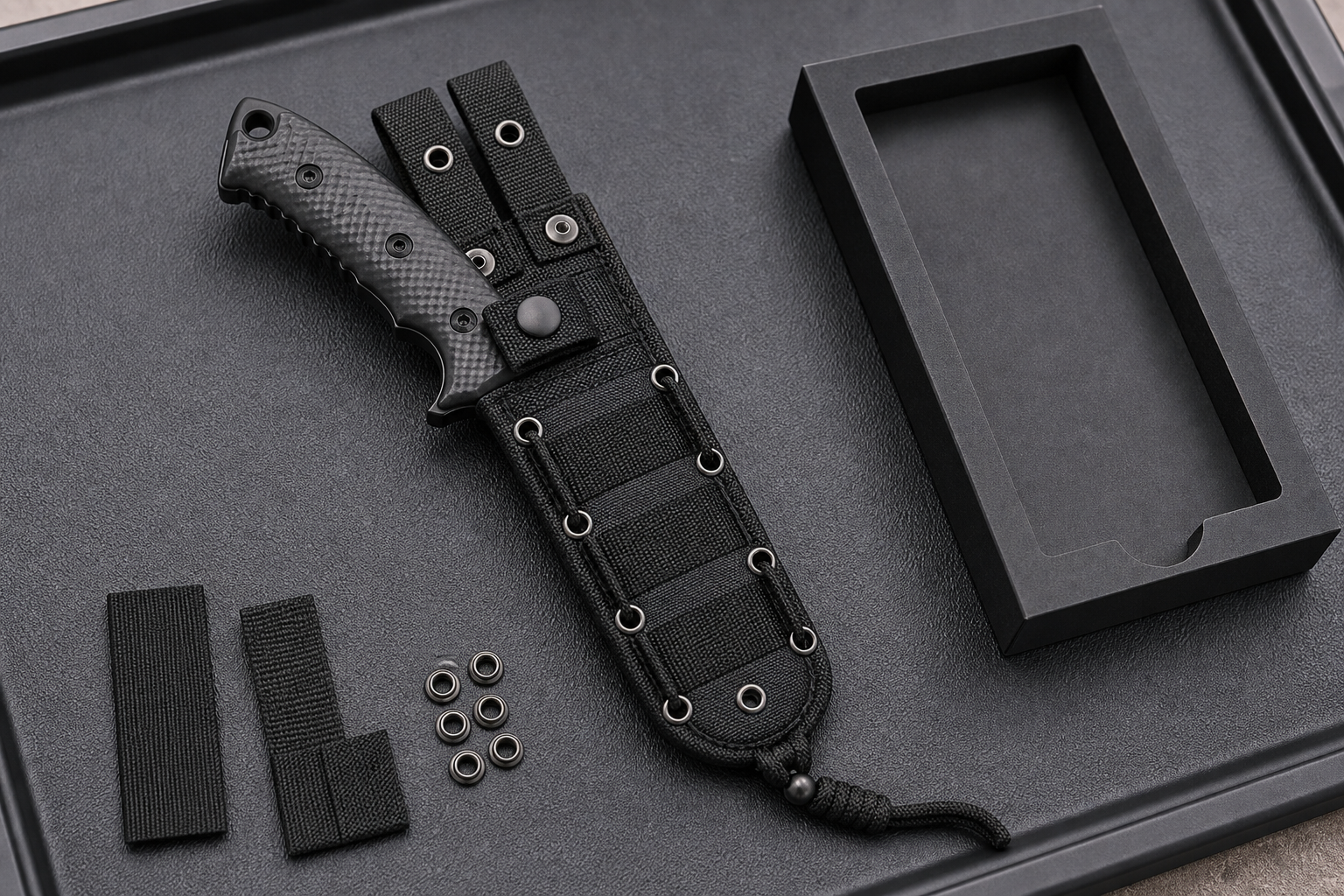
I Inspect the Sheath Like a Functional Component
A fixed blade hunting knife without a good sheath is not a complete product. The sheath must cover the edge, hold the knife securely, and allow controlled removal and return. If retention is too weak, the knife may fall out. If retention is too tight, the user may apply too much force. If the mouth of the sheath is poorly shaped, the edge may cut the sheath over time. If the belt loop is weak, carry confidence drops.
Material also matters. Nylon, molded polymer, leather-look materials, and hybrid sheaths all create different costs and user feelings. A premium-looking sheath can still fail if stitching, rivets, snaps, or inserts are weak. A simple molded sheath can be very practical if retention and edge coverage are controlled. The sheath should match the brand tier and the real use environment.
The CCOHS sharp blades guidance discusses safe storage and handling of sharp tools. That general safety idea applies directly here. A sheath is storage, transport, and safety control. For OEM buyers, sheath inspection should be part of the QC checklist, not only a visual accessory check.
| Sheath feature | Safe-use role | Inspection focus |
|---|---|---|
| Edge coverage | Prevents accidental contact | No exposed edge or tip |
| Retention | Keeps knife secure | Shake and draw control check |
| Belt loop or clip | Supports carry | Stitch, rivet, and pull strength |
| Mouth shape | Guides re-sheathing | Avoid edge damage and snagging |
How Should Buyers Write Instructions Without Teaching Risky Steps?
Some buyers want detailed use instructions. Too much detail can become unsafe, graphic, or market-sensitive.
Buyers should write instructions around safe handling, carry, cleaning, storage, maintenance, protective equipment, and local rules rather than graphic step-by-step cutting procedures.
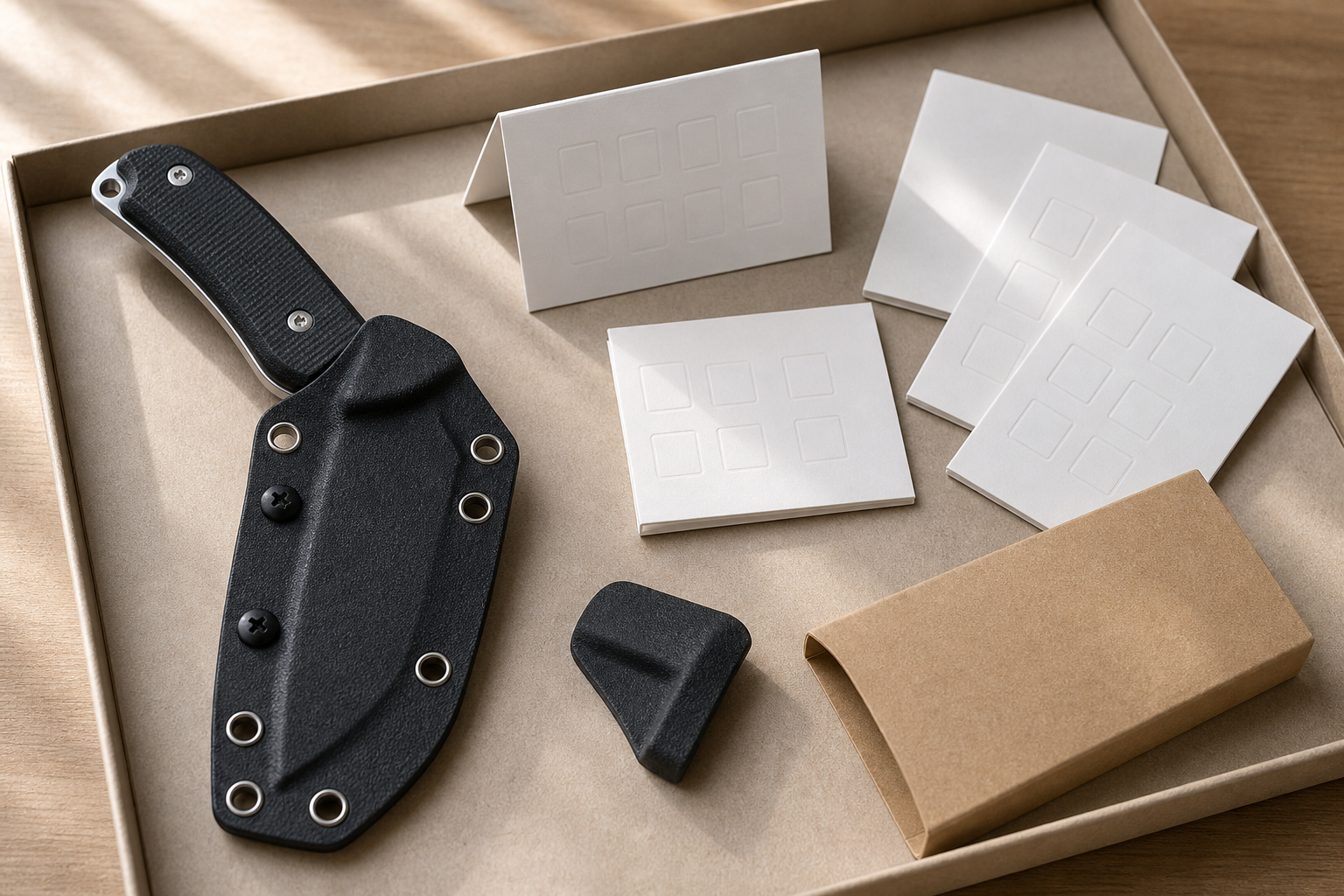
I Keep Instructions Responsible and Practical
Instruction cards should help the user avoid common mistakes. They can explain how to carry the knife sheathed, keep the edge covered, work with a stable position, keep hands away from the edge path, clean and dry the blade, maintain the sheath, and store the knife securely. They should also remind users to follow local laws and hunting regulations. They do not need to teach graphic cutting steps.
This is especially important for hunting-positioned products. Buyers may be tempted to add detailed field-use steps because they think it makes the product more complete. I usually recommend restraint. If the buyer wants educational content, it should come from qualified hunting education sources and be adapted for the target market. The product package itself should focus on safe handling and maintenance.
The Texas Parks and Wildlife field-care guidance notes that a sharp knife can make work safer and easier because users are less likely to force the blade and lose control. I use that principle carefully. The article should not become a graphic instruction manual. It should help buyers understand why sharpness, control, and user guidance matter.
| Instruction topic | Include | Avoid |
|---|---|---|
| Safe carry | Sheath, storage, edge coverage | Casual open-blade carry language |
| Use control | Stable position and hand awareness | Graphic cutting procedures |
| Maintenance | Clean, dry, oil, sharpen | Unsupported lifetime claims |
| Compliance | Follow local rules | Global legal assumptions |
What Cleaning, Hygiene, and Corrosion Guidance Should Packaging Include?
Outdoor knives meet moisture, dirt, oils, and organic residue. Poor care can damage edge, finish, and user trust.
Packaging should include cleaning, drying, storage, sharpening, corrosion prevention, sheath care, and food-contact caution where relevant to the target market.
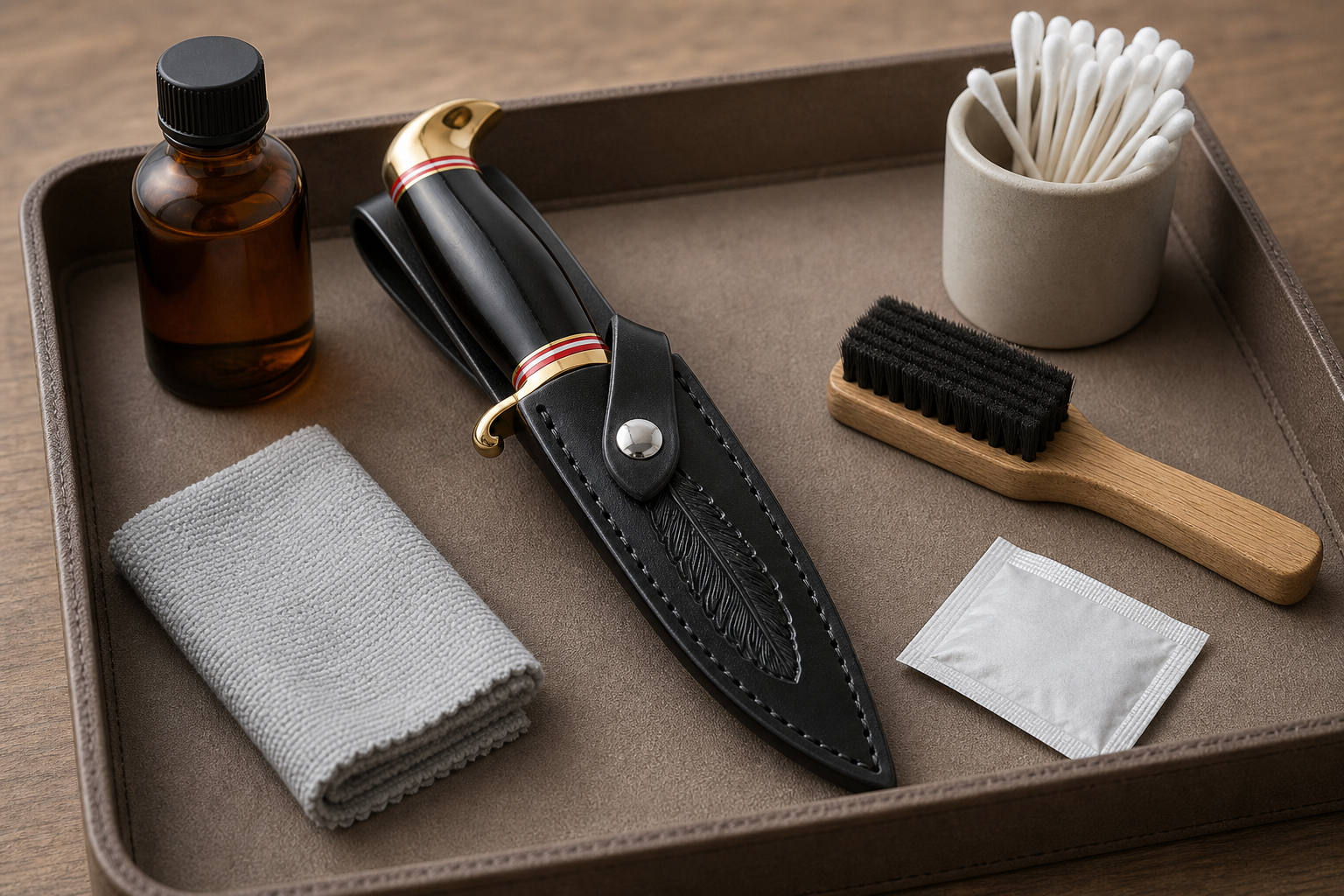
I Connect Care Guidance to Material Selection
A hunting knife can be exposed to water, dirt, sweat, and residue. Even stainless steel is not maintenance-free. The edge, handle, screws, guard, and sheath can all be affected by poor cleaning or wet storage. If the product uses high-carbon steel, the care guidance must be stronger. If the product uses stainless steel, the guidance should still tell users to clean and dry the blade.
Handle and sheath care also matter. Wood handles may need moisture guidance. Micarta and G10 are more stable but still need cleaning. Leather-look sheaths or fabric sheaths may hold moisture. Molded sheaths may trap dirt near the mouth. The packaging should give simple care instructions that fit the actual materials used.
This is not only for user safety. It protects reviews and repeat sales. Rust spots, odor, staining, loose handle materials, or sheath damage can become customer complaints. If the buyer defines care guidance before packaging, the message can be printed clearly. If it is added after complaints appear, the brand is already repairing trust.
| Care topic | Product design connection | Buyer action |
|---|---|---|
| Cleaning | Blade, handle, sheath material | Add simple care instructions |
| Drying | Corrosion and sheath moisture | Warn against wet storage |
| Sharpening | Edge angle and steel | Provide realistic guidance |
| Storage | Edge and user safety | Recommend covered, secure storage |
How Should Compliance and Responsible Product Copy Be Managed?
Hunting knife positioning can be useful. It can also create market or channel issues if the copy is careless.
Compliance and product copy should be managed by checking target-market rules, age or channel policies, blade size, carry method, packaging warnings, and responsible outdoor language.
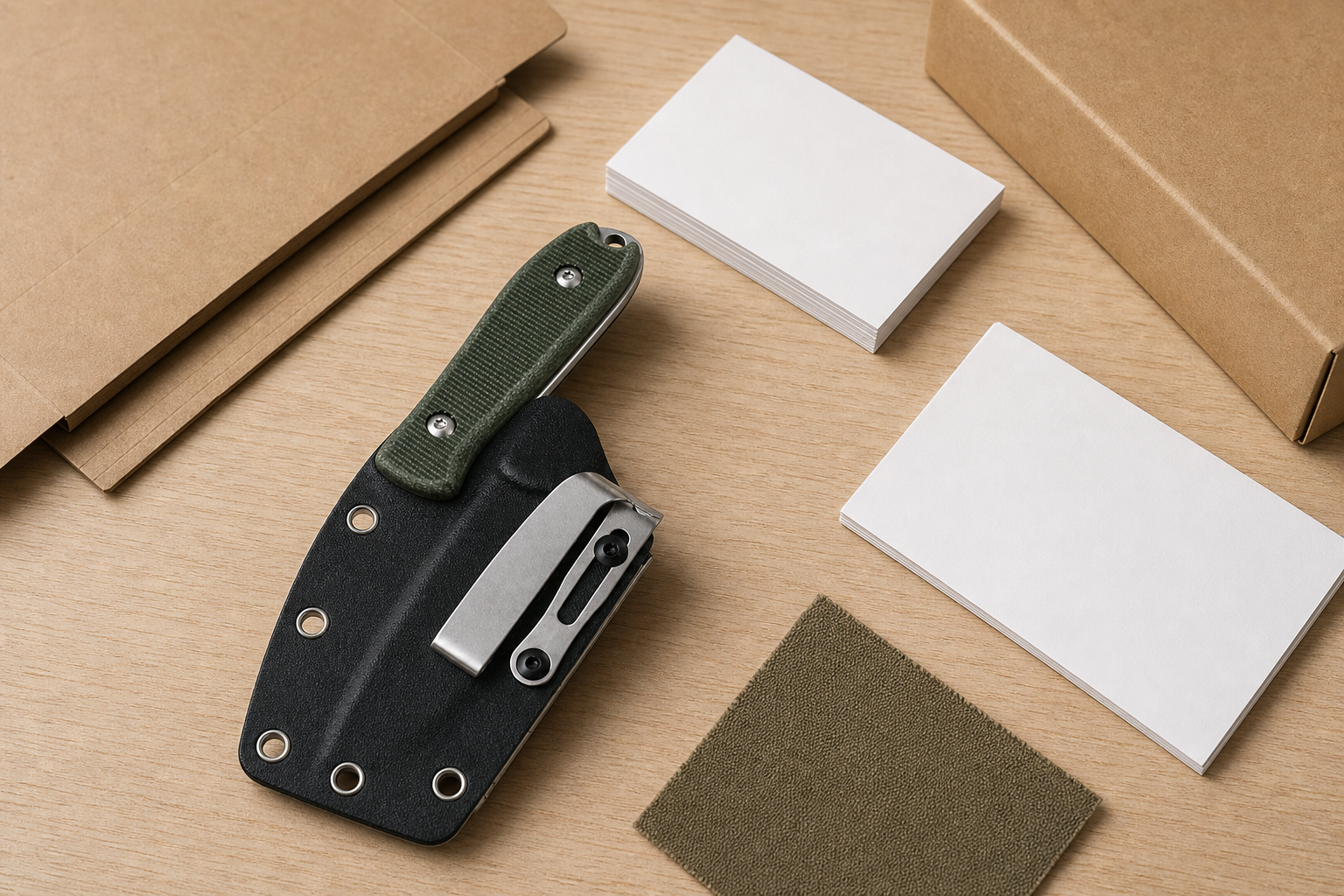
I Keep Copy Tool-Focused and Market-Aware
Product copy should describe the knife as an outdoor field tool, not as an aggressive weapon. Useful language can discuss safe handling, edge maintenance, sheath security, outdoor utility, and responsible use. I avoid fear-based or combat language because it can create channel risk and weaken the brand's credibility.
The buyer should also check rules before finalizing blade length, sheath carry, opening method, and packaging. Hunting knife rules can vary by market and channel. A fixed blade may be treated differently from a folding knife. A belt sheath may have rules in some places. Online platforms may have their own restrictions. This review should happen before tooling and printing.
The GOV.UK page on buying, carrying, and selling knives is a useful example of how detailed knife rules can become. I do not treat it as global legal advice. I use it to remind buyers that target-market review matters. Responsible product copy and packaging are part of sourcing, not an afterthought.
| Copy or rule item | Why it matters | Buyer action |
|---|---|---|
| Product positioning | Affects channel acceptance | Use practical outdoor tool language |
| Blade length | May affect market rules | Check before tooling |
| Sheath carry | May affect local treatment | Review target market |
| Warning card | Supports responsible sale | Add before mass printing |
What QC Checks Should Buyers Require Before Shipment?
One approved sample does not prove a safe batch. Hunting knives need design, sheath, edge, and packaging checks.
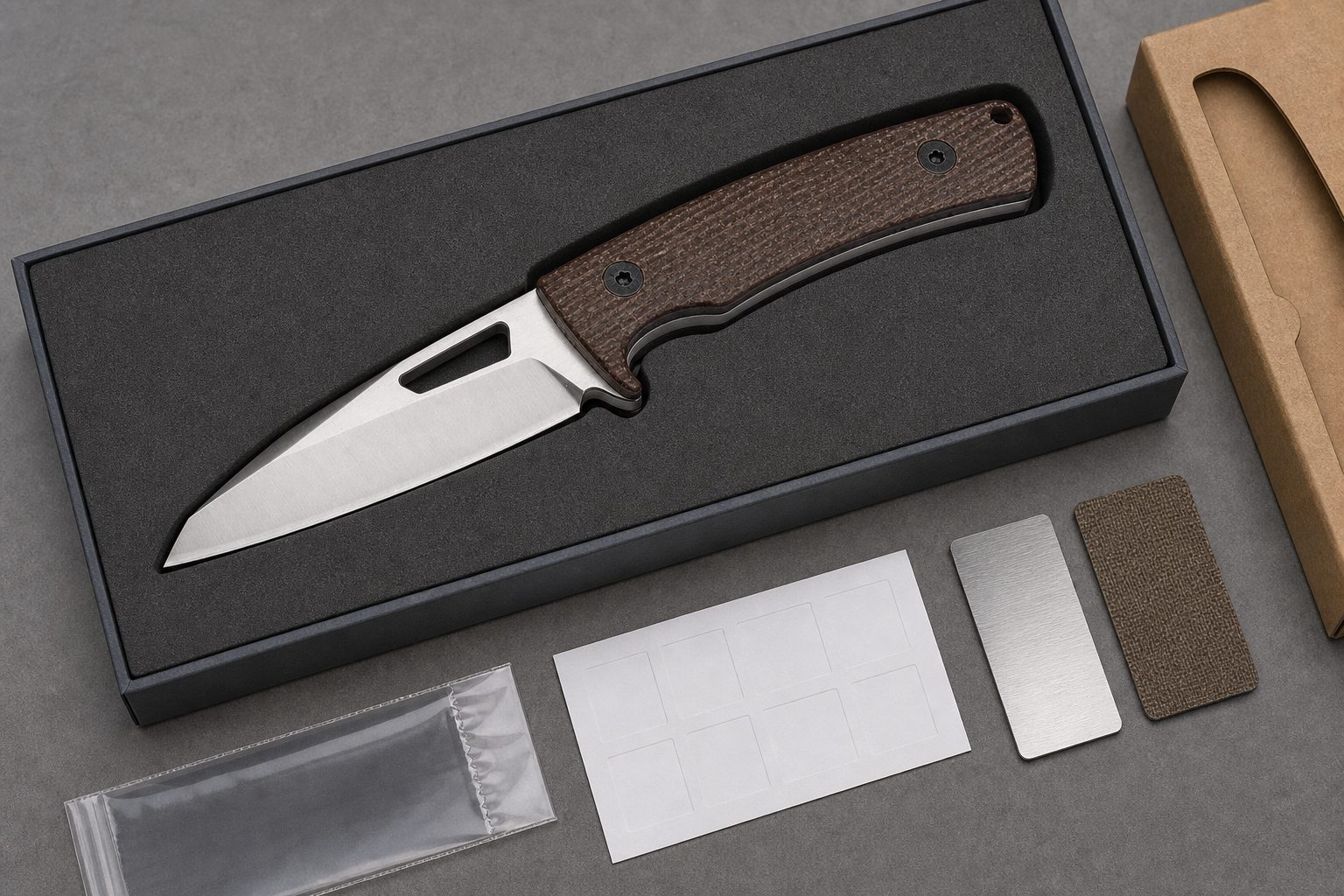
QC should include blade geometry, edge condition, handle fit, grip finish, sheath retention, tip and edge coverage, corrosion-sensitive parts, packaging, instructions, and warning review.
I Turn Safety Guidance Into Inspection Points
If the packaging says the knife has secure grip, QC should check handle texture, edge rounding, and fit. If the packaging shows belt carry, QC should check sheath retention and belt loop strength. If the product is positioned for wet outdoor use, QC should review steel, finish, screws, handle, and sheath moisture behavior. If the instructions say the knife should be stored covered, the sheath must actually protect the edge.
Measurement matters. The NIST page on dimensional metrology explains that dimensional measurement can provide detailed part information and support manufacturing process improvement. In hunting knife production, dimensions affect blade fit, handle attachment, sheath retention, grind consistency, and packaging fit.
The ISO 9001 quality management framework also matters because it focuses on quality management system requirements. For OEM/ODM buyers, this means safe-use claims should be tied to process checks, sample approval, inspection records, and corrective action. Final inspection is important, but safety-related quality starts earlier.
| QC area | What to inspect | Why it matters |
|---|---|---|
| Blade and edge | Geometry, sharpness, burrs, finish | Controls safe cutting feel |
| Handle | Fit, grip, guard, hot spots | Controls hand stability |
| Sheath | Retention, coverage, belt loop | Controls carry and storage |
| Packaging | Instructions, warnings, product fit | Controls user expectation |
How Can Vast State Help Buyers Develop Safer Hunting Knife Projects?
Safety can feel like a compliance topic only. In real sourcing, it should guide design and production.
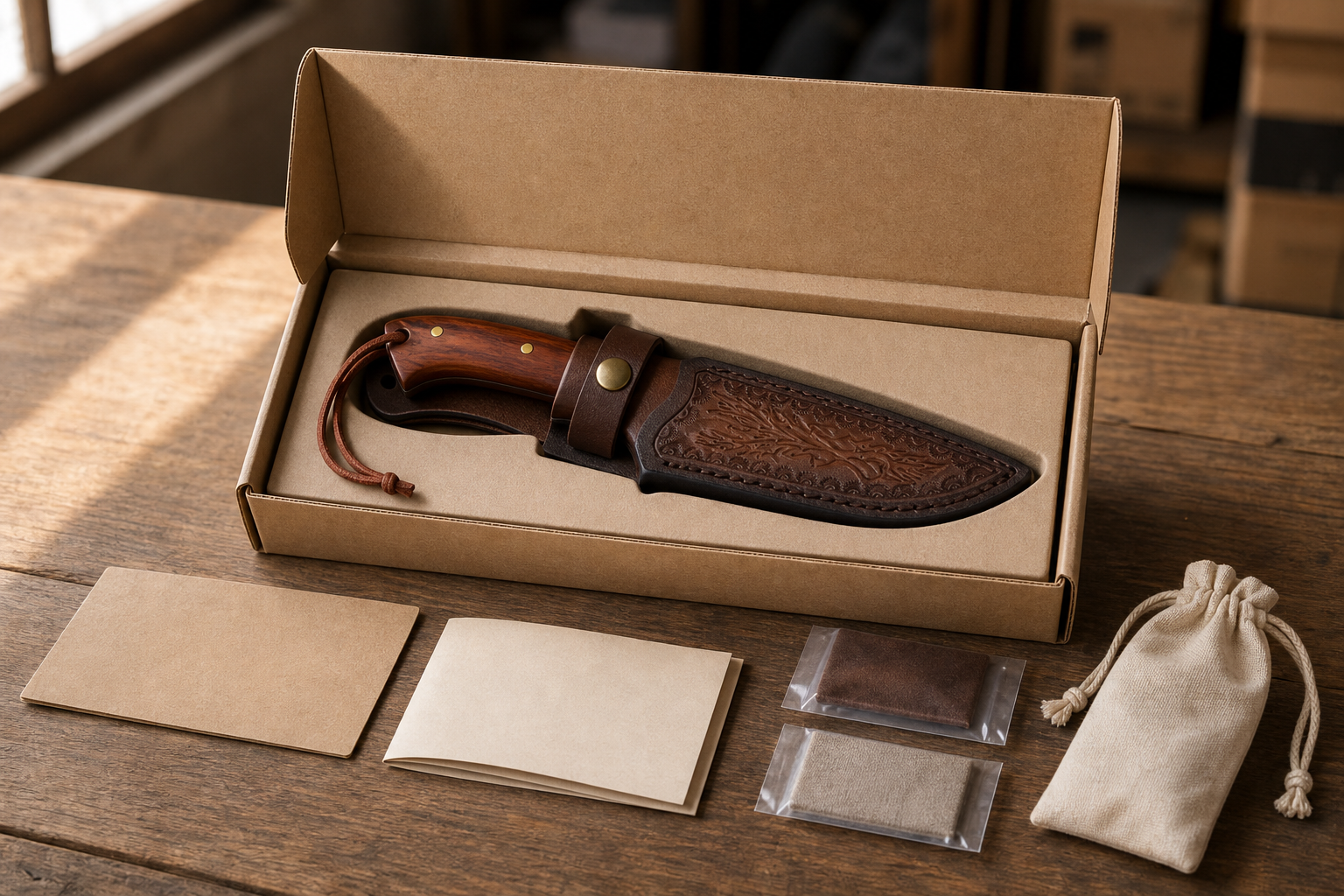
Vast State helps buyers develop safer hunting knife projects by connecting product positioning, blade design, handle control, sheath security, packaging guidance, and QC standards.
I Build the Knife, Sheath, and Instructions Together
In a real project, I help buyers decide what the hunting knife should be and what it should not be. A safe, responsible product does not need aggressive language. It needs the right blade shape, controlled edge, secure handle, reliable sheath, clear packaging, and repeatable QC. These details make the product easier to sell and easier to trust.
For private label buyers, I may recommend an existing platform with better packaging and instruction support. For stronger brand differentiation, I may review handle material, sheath structure, steel, finish, and full ODM design. The correct path depends on target market, MOQ, price tier, and launch timing.
My goal is to help buyers build hunting-positioned knives that look right, work right, and communicate responsibly. That means no vague safety claims, no risky copy, and no product features that the factory cannot repeat. A good OEM/ODM partner should help buyers control the entire tool system.
| Buyer need | Vast State support | Project result |
|---|---|---|
| Private label hunting knife | Platform, logo, sheath, packaging review | Faster, lower-risk launch |
| Safer product guidance | Instruction and warning card planning | Clearer user expectations |
| Better outdoor function | Blade, handle, sheath, material review | More useful field tool |
| Repeat production | QC standards and boundary samples | More consistent batches |
Turn this article into a fixed blade project.
Send your target use, blade size, steel, handle direction, sheath needs, quantity, and packaging plan. Vast State can help shape it into a quote-ready project.
Conclusion
A responsible hunting knife project controls the blade, handle, sheath, instructions, packaging, and QC together so users understand the tool and brands protect trust.