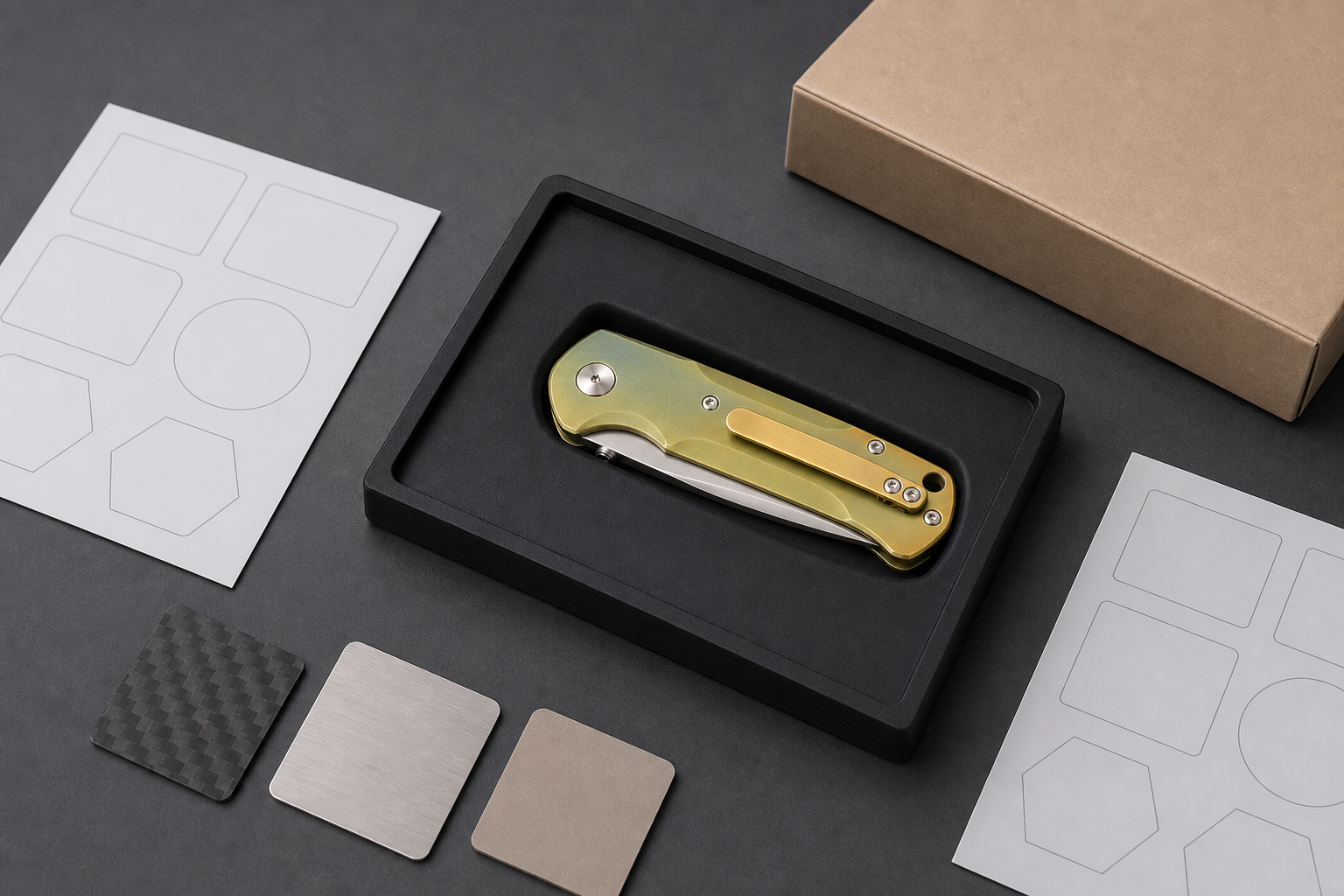
Knife customization can build a stronger brand. It can also create cost, tooling, lead time, and quality problems if buyers customize without a plan.
Buyers should weigh knife customization by matching each custom option to user needs, target price, MOQ, production risk, and brand value. Logo, packaging, finish, handle material, blade steel, structure, and full ODM design all create different benefits and different manufacturing risks.
Quick buyer brief:
- Answer: Knife customization is useful when it supports a clear market position and can be repeated in production. It becomes risky when buyers add custom features that do not improve user value or fit the target cost.
- Buyer context: This guide is for knife brands, outdoor brands, importers, wholesalers, distributors, private label buyers, and sourcing managers.
- Key checks: Target user, sales channel, price range, MOQ, logo, packaging, blade steel, handle material, finish, lock or structure, prototype rounds, tooling, lead time, QC standard, and repeat production plan.
Have a knife or multi-tool project in mind?
Send your sketch, CAD file, sample photo, or product idea. Vast State can review manufacturability, suggest materials, estimate MOQ, and prepare a quote for your OEM/ODM project.
When I discuss knife customization with a buyer, I first ask what the customization must achieve. A logo on an existing model can support a fast private label project. A custom handle color can match a brand line. A custom steel can support a higher product tier. A custom lock or blade structure can create strong differentiation, but it also adds engineering risk. For B2B customers, the question is not "can we customize?" The real question is "which customization gives enough value for the cost, MOQ, lead time, and quality-control effort?"
Why Is Knife Customization Both an Opportunity and a Risk?
Customization can make a product more sellable. But too many changes can make the project unstable.
Knife customization is an opportunity because it supports brand identity and target-market fit. It is a risk because each change can affect tooling, tolerance, cost, sampling, lead time, and QC.
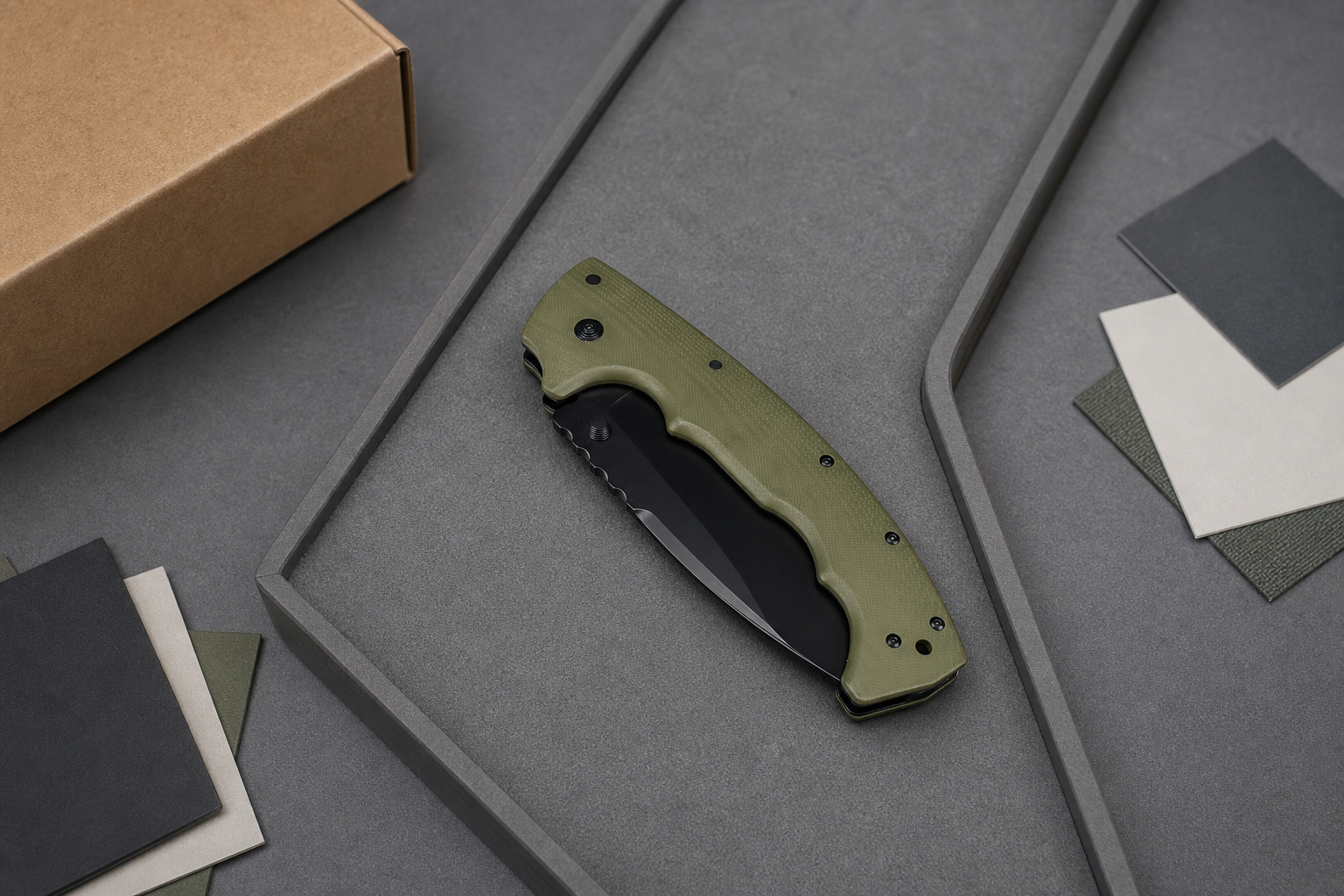
I Connect Every Custom Feature to a Business Reason
Customization should not be decoration for its own sake. It should solve a real commercial problem. A buyer may need a knife that fits a price point, supports a brand story, matches a sales channel, feels different from generic stock products, or improves a user's outdoor experience. In those cases, customization can be useful.
The risk starts when the buyer adds custom features without ranking them. A custom blade shape, custom steel, custom handle, custom coating, custom screws, custom clip, custom logo, custom box, and custom insert can all be possible. But together they can increase sample rounds, tooling cost, minimum order quantity, inspection work, and lead time. A small order may not support a heavy custom plan.
The ISO 9241-11 usability framework is useful because it connects products with users, goals, and context. I use the same thinking for knives. If the customization helps the intended user complete the intended task in the intended market, it may be worth it. If it only adds complexity, I would rather simplify.
| Customization benefit | Matching risk | Buyer question |
|---|---|---|
| Better brand identity | Higher setup cost | Does it improve market position? |
| Better user fit | More sample testing | Which task does it support? |
| Higher perceived value | Higher unit cost | Will the target margin still work? |
| Stronger differentiation | More production risk | Can it repeat in mass production? |
OEM/ODM RFQ Checklist
Prepare these details to help Vast State review your project and provide a more accurate quotation.
| RFQ Field | What to Prepare |
|---|---|
| Project type | OEM from drawing / ODM private label / wholesale catalog |
| Product category | Folding knife / fixed blade / multi-tool / outdoor tool |
| Design status | Idea / sketch / 2D drawing / 3D CAD / physical sample |
| Target price | Ex-factory target price or retail price range |
| MOQ expectation | 500 / 1,000 / 3,000 / 5,000+ pcs |
| Logo method | Laser engraving / etching / printing / molded logo |
| Packaging | Standard packaging / custom retail box / Amazon-ready |
| Market | USA / EU / Japan / Korea / Middle East / other |
| Compliance needs | Buyer-specified testing / documentation / labeling |
| Timeline | Sample deadline / mass production deadline |
Which Customization Options Usually Give Practical Brand Value?
Some custom options are simple and effective. Others look exciting but create too much risk for the order size.
Practical knife customization often starts with logo, packaging, color, finish, handle material, blade steel, and accessory choices. Full custom structure should be used when the brand value justifies engineering effort.
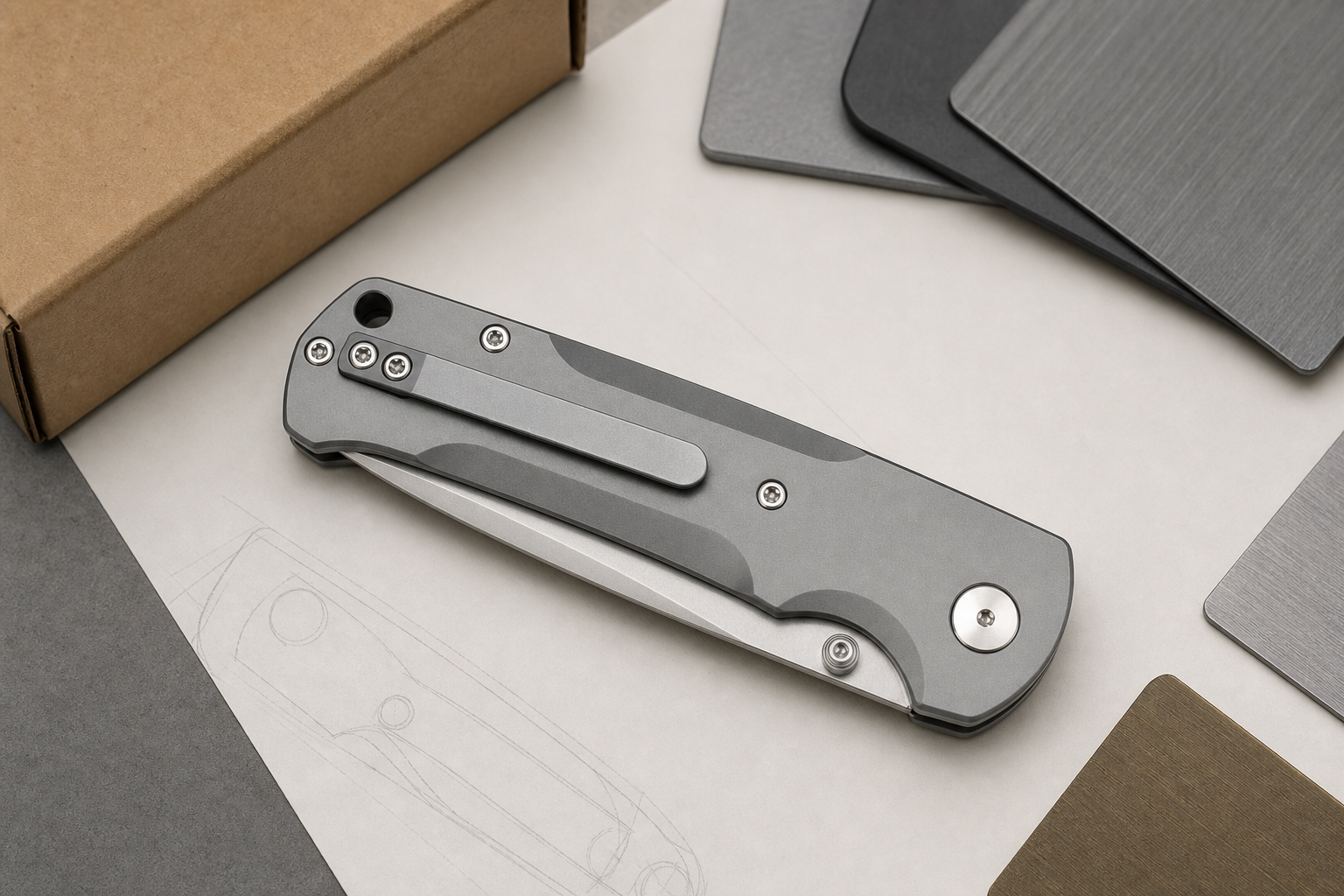
I Often Start With Low-Risk Custom Layers
For many private label buyers, the first useful layer is branding. Logo marking, box design, insert card, pouch, color selection, and surface finish can create a product that feels like the buyer's own line. These changes are usually easier than changing the whole structure. They can also fit smaller MOQ plans better than a full custom mechanism.
The second layer is material and finish. A buyer may choose G10 instead of plastic, aluminum instead of stainless steel, stonewash instead of satin, or a different blade steel. These changes can improve the product level, but they need cost and process review. Material changes can affect weight, machining, color consistency, and lead time.
The third layer is structure. This includes custom blade shape, custom handle profile, custom liner, custom lock, custom sheath, custom clip, or full ODM development. This can create the strongest product identity, but it also needs the most discipline. The buyer should plan prototype rounds, engineering checks, and QC boundary samples. I only recommend this path when the buyer has a clear market reason.
| Custom level | Typical options | Best fit |
|---|---|---|
| Light private label | Logo, box, insert, pouch | Fast launch and lower risk |
| Semi-custom | Color, finish, handle material, steel | Brand differentiation with controlled risk |
| Structural custom | Blade, handle, lock, sheath, clip | Stronger brand identity |
| Full ODM | New product from concept | Long-term product line building |
How Can Custom Blade Steel and Heat Treatment Affect Cost and Consistency?
Steel choice can look like a marketing decision. In production, it affects heat treatment, grinding, cost, and supply stability.
Custom steel choices affect edge performance, corrosion resistance, sharpening, heat treatment, machining, lead time, price, and batch consistency. Buyers should choose steel based on use and target market.
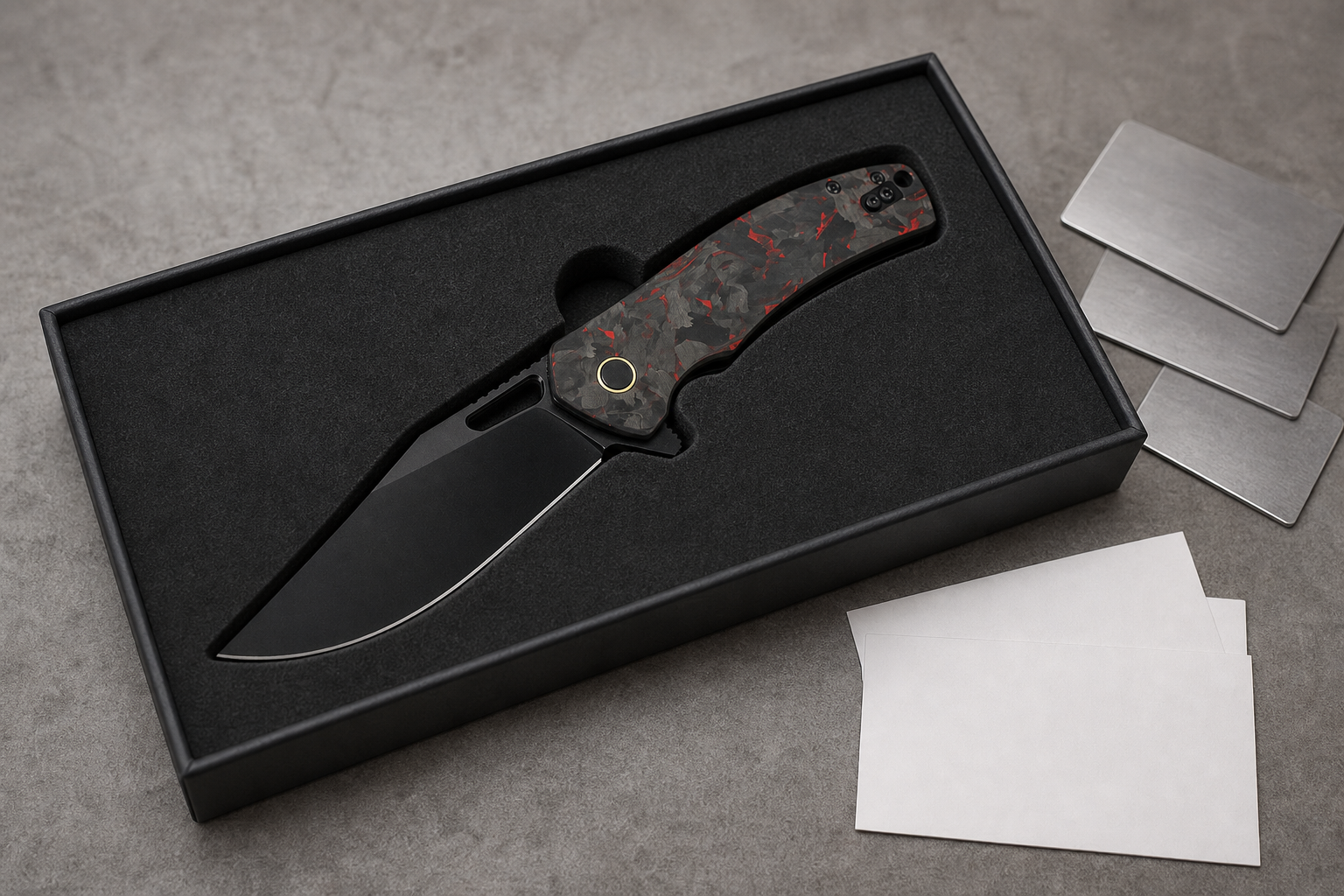
I Match Steel to the User, Not Only the Catalog Name
Many buyers ask for a custom steel because they want the product page to look stronger. That can work, but only if the steel fits the user's real need and the buyer's cost range. A budget EDC folder, outdoor fixed blade, rescue tool, and premium collector-style product should not follow the same steel logic.
For example, Alleima 14C28N knife steel is useful as a reference because it is positioned around edge performance, hardness, and corrosion resistance. But even a strong material reference does not replace project judgment. If the buyer needs low cost, easy sharpening, high corrosion resistance, or premium positioning, the steel discussion changes.
Heat treatment is also part of customization. A good steel with poor heat treatment can disappoint users. A hardness target that is too aggressive can create chipping risk. A hardness target that is too soft can reduce edge performance. The buyer should ask how the supplier will control batch consistency and test results. For B2B orders, steel customization must become a production plan, not just a line in the product description.
| Steel customization | Benefit | Risk |
|---|---|---|
| Upgraded stainless steel | Better corrosion resistance and value | Higher cost and sourcing check |
| High-carbon steel | Strong outdoor identity and easy sharpening | Rust guidance needed |
| Premium steel | Stronger product tier | Higher MOQ or lead time |
| Custom hardness target | Tuned performance | Needs controlled heat treatment |
Why Do Handle Materials and Surface Finishes Change More Than Appearance?
Handle and finish choices shape the first impression. They also affect grip, machining, wear, weight, and QC.
Handle and finish customization affects user feel, brand look, machining time, color consistency, corrosion behavior, logo clarity, packaging fit, and batch repeatability.
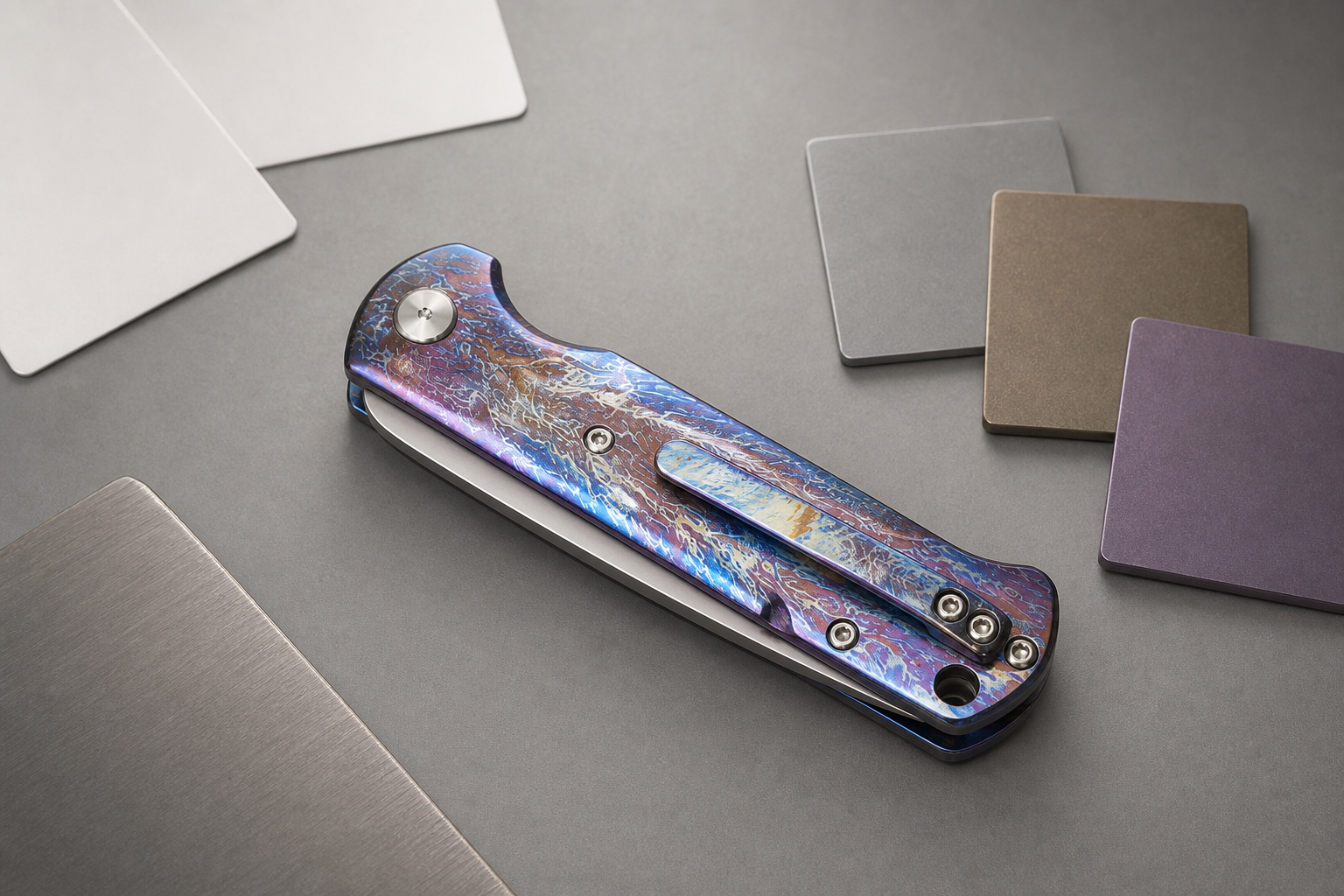
I Test the Material in the Real Product Structure
Handle customization is one of the most visible ways to change a knife. G10 can add grip and color stability. Micarta can create an outdoor feel. Aluminum can reduce weight and support anodizing. Wood can create warmth, but it needs more control for moisture and variation. Stainless steel can feel strong, but it may be heavy. Polymer can support value projects, but it needs careful texture and edge finishing.
The handle material also affects manufacturing. Some materials create more machining dust. Some require edge rounding. Some show scratches easily. Some need color boundary samples. Some change screw engagement or handle thickness. A material that looks beautiful on a sample plate may behave differently when assembled with liners, screws, pivots, and clips.
Finishes create similar trade-offs. Satin can look clean but may show scratches. Stonewash can hide small marks. Bead blast can create a technical appearance but may need corrosion review. Coatings can look strong, but wear at the edge should be expected. A buyer should approve finish samples and boundary samples, not only photos.
| Custom handle or finish | Benefit | Production concern |
|---|---|---|
| G10 or micarta | Grip and outdoor identity | Machining and edge finishing |
| Aluminum | Light and modern | Anodizing consistency |
| Wood | Traditional look | Natural variation and moisture |
| Coating or stonewash | Strong visual positioning | Wear and batch consistency |
How Do Custom Structures, Locks, and Opening Features Increase Engineering Risk?
Structural customization can create a unique product. It can also create the most expensive sample problems.
Custom structures, locks, and opening features increase engineering risk because they affect pivot alignment, lockup, blade centering, safety, tolerances, assembly time, and market acceptance.
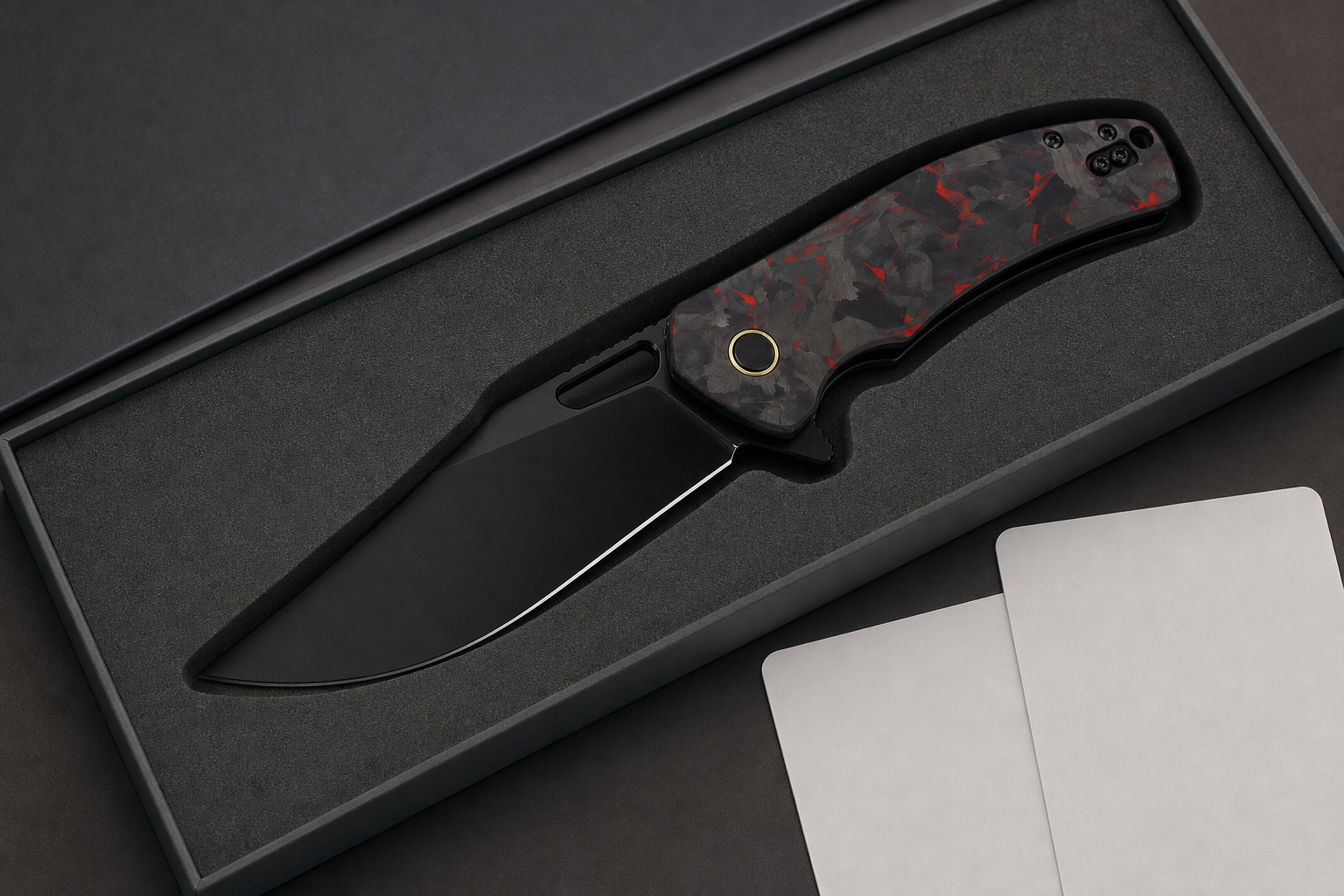
I Treat Structure as a Mechanical System
Structural customization is where buyers should be most careful. A folding knife is a compact mechanical system. The blade, pivot, washers or bearings, lock face, stop pin, liners, handle scales, screws, clip, and backspacer must all work together. Changing one part can affect many others.
The NIST page on dimensional metrology explains that measurement can provide detailed part information and support manufacturing process improvement. That is very relevant to custom folding knives. Pivot hole size, liner flatness, blade thickness, stop pin position, and lock contact surface all need measurement control.
If a buyer wants a custom lock, custom opening method, unusual blade shape, or very thin handle, I expect more prototype work. The first sample may prove appearance. The next sample may tune action, lockup, centering, and assembly. Some designs also need market review because opening methods and lock types can affect compliance or channel acceptance. This is why structural customization should be planned with time and budget.
| Structural change | Possible benefit | Main risk |
|---|---|---|
| Custom blade shape | Strong visual identity | Closed safety and grinding complexity |
| Custom lock | Differentiation and user feel | Lock geometry and assembly risk |
| Custom pivot system | Smoother action | Tolerance and cost |
| Thin handle | Slim carry | Screw strength and comfort risk |
What Packaging and Branding Customization Should Buyers Plan Early?
Packaging can look easy at the end. In reality, it affects cost, safety, shipping, retail display, and brand perception.
Packaging and branding customization should be planned early because box size, insert, warning text, logo method, barcode area, instruction card, and product protection all affect launch readiness.
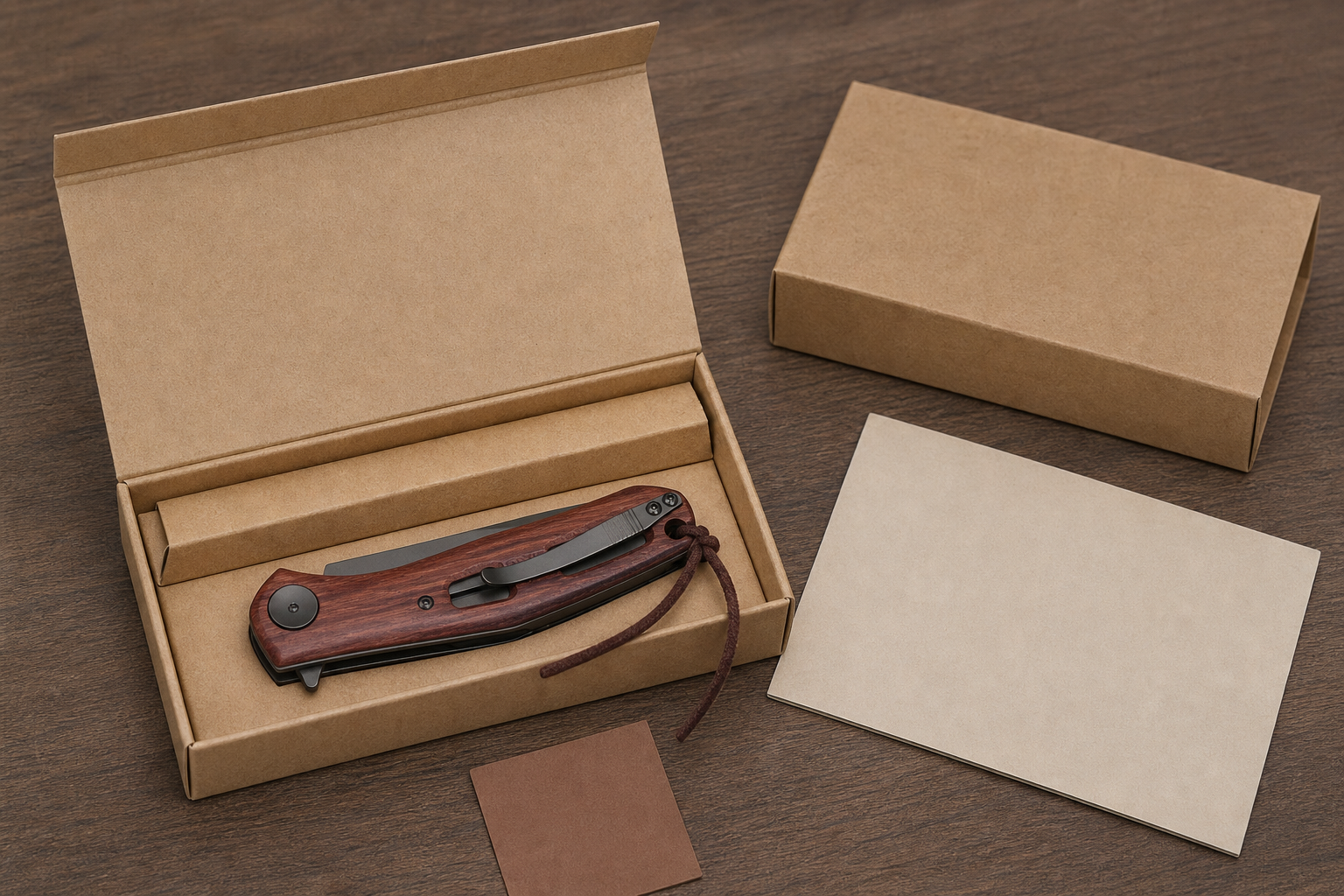
I Make Packaging Part of the Product Brief
Packaging is not only the outer box. It protects the edge, holds the knife in place, communicates safe use, supports the sales channel, and creates the buyer's first impression. A low-cost blister, paper box, magnetic gift box, nylon pouch, EVA case, or custom insert can all be correct in different situations. The right choice depends on price, channel, product value, and shipping method.
The European Commission page on product safety states the broad goal that only safe products should be available on the market. For a knife buyer, this connects to physical packaging and user information. The product should arrive with the edge protected, the knife secured, and the user guidance clear.
Branding also needs process control. Laser marking may look different on satin, stonewash, coating, anodizing, or wood. A logo that looks clear on a flat sample may look weak on a curved handle or clip. Printed packaging may need color matching, warning review, and enough space for importer information. Planning this early prevents late redesign.
| Packaging element | Why it matters | Buyer action |
|---|---|---|
| Box or pouch | Controls perceived value | Match channel and price |
| Insert or tray | Protects product in shipping | Test fit and edge protection |
| Logo method | Affects brand clarity | Test on final material |
| Warning card | Supports responsible use | Review before mass printing |
How Should Buyers Balance MOQ, Tooling, Lead Time, and Unit Cost?
Customization can look cheap on paper. Setup cost and production complexity often appear later.
Buyers should balance customization by separating tooling cost, MOQ, sample rounds, unit cost, material availability, assembly time, packaging cost, and inspection effort.
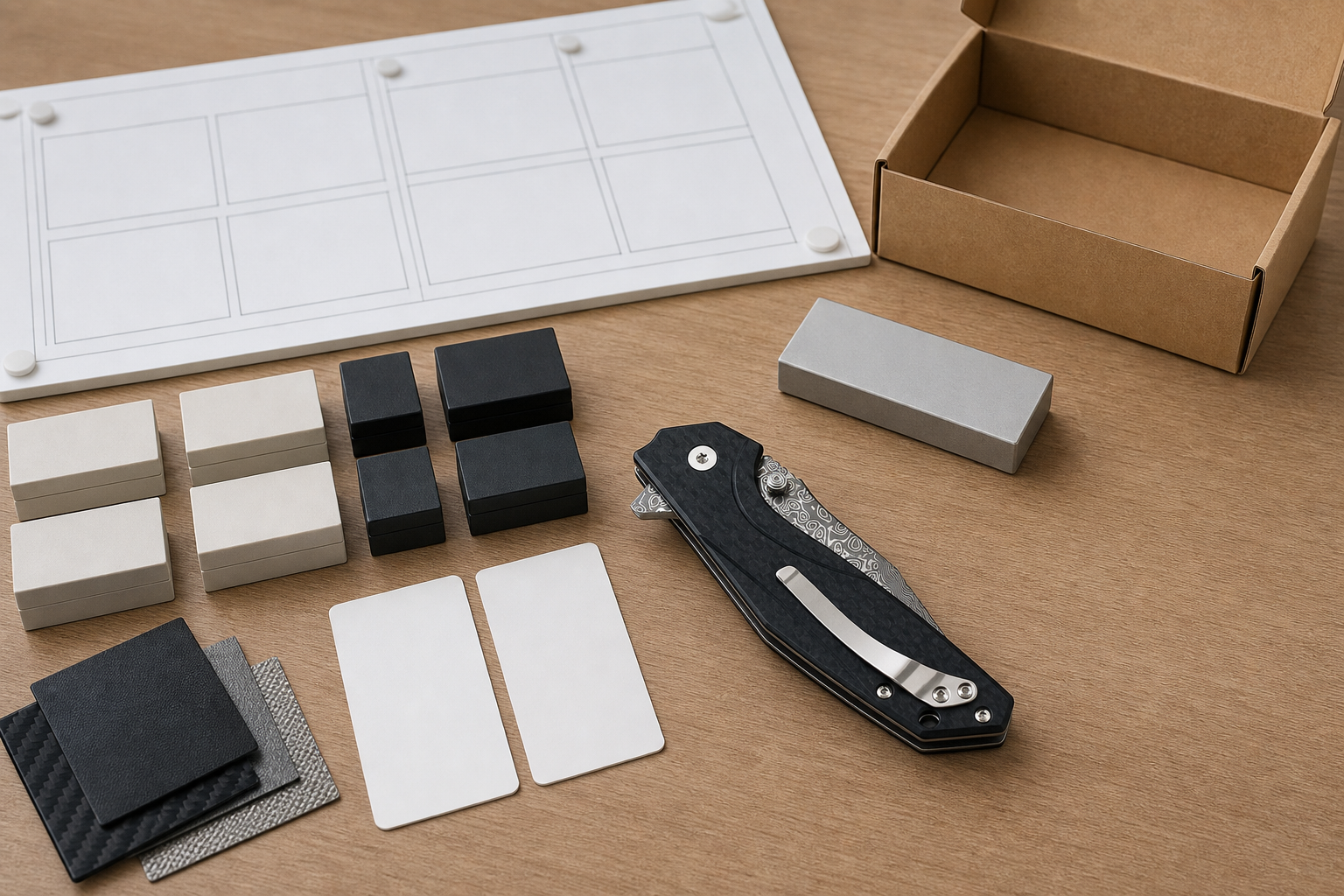
I Ask Where the Buyer Wants to Spend Complexity
Every custom decision spends some form of complexity. A logo may need fixture setup. A custom handle color may need material MOQ. A custom blade shape may need tooling and programming. A custom lock may need engineering and repeated sampling. A custom package may need printing minimums. A custom steel may need sourcing lead time. None of these are wrong, but they must fit the order plan.
Small buyers often get better results by choosing fewer high-impact custom points. For example, logo, packaging, handle color, and finish may create enough differentiation for a first order. A more established brand may justify a custom blade shape, custom handle, and upgraded steel because the sales volume can carry the tooling and development cost.
Lead time is also important. A stock-based private label project can move faster. A semi-custom project needs material and finish approval. A full ODM project may need CAD, prototypes, adjustment, pre-production samples, and more QC preparation. If the buyer has a launch deadline, the customization plan should respect it.
| Cost driver | Why it grows | Buyer control |
|---|---|---|
| Tooling | New shape or structure | Use existing platform when possible |
| MOQ | Custom material or packaging | Confirm minimums before approval |
| Lead time | Sampling and sourcing | Plan prototype rounds |
| QC effort | More custom details | Define boundary samples |
What QC Controls Make Custom Knife Orders Repeatable?
One good sample is not enough. Custom orders need repeatable standards or the second batch may feel different.
Custom knife orders need QC controls for material, dimensions, hardness, action, lockup, edge, handle fit, finish, logo, packaging, and approved boundary samples.
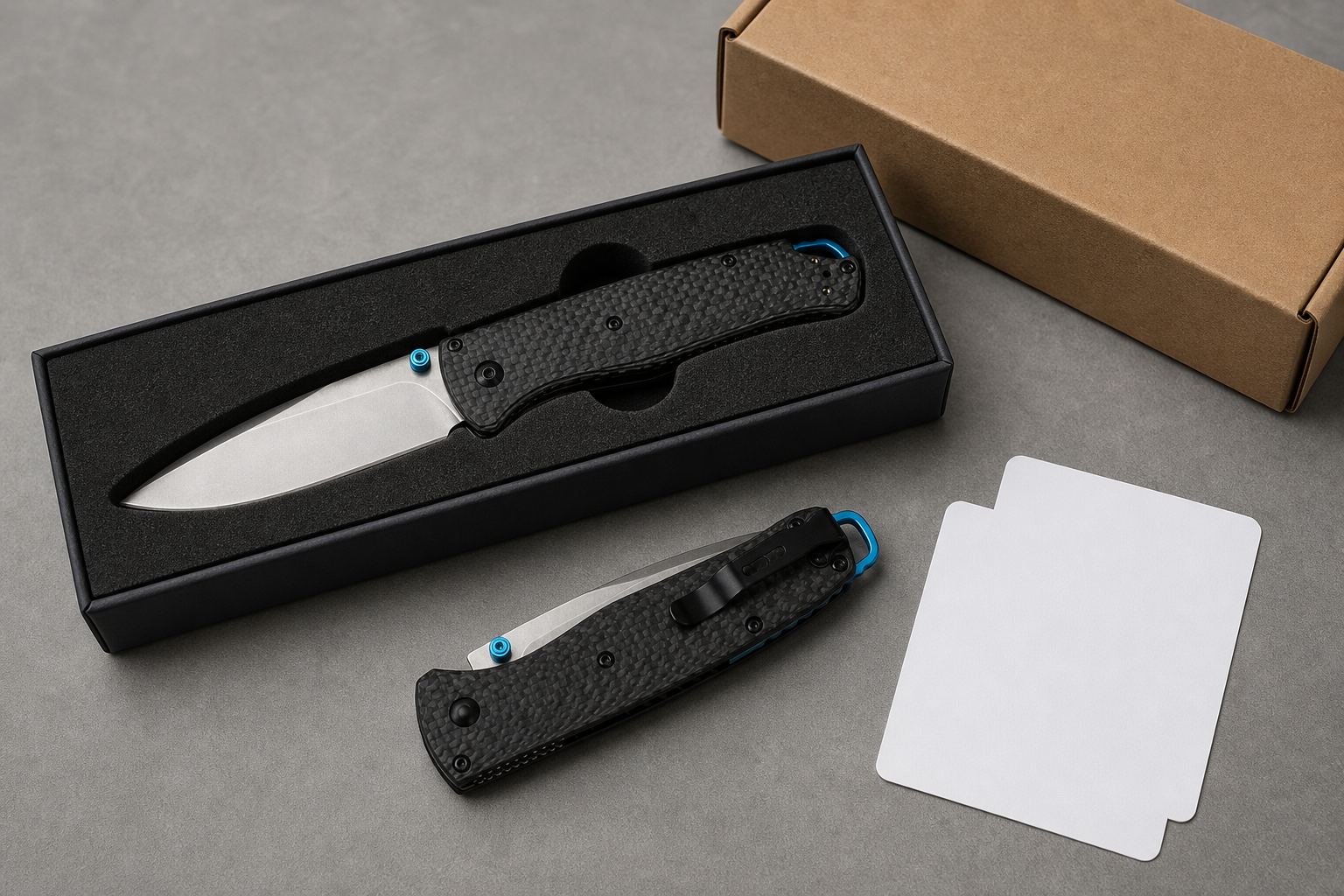
I Turn the Approved Sample Into a Production Standard
The biggest custom-order mistake is treating a sample as a photo reference only. A sample should become a production standard. The buyer and supplier should agree on dimensions, materials, finish, logo position, edge condition, lock feel, sheath fit, packaging, and acceptable variation. Some items need measurement. Some need boundary samples. Some need functional checks.
The ISO 9001 quality management page explains that ISO 9001 can help organizations meet customer and regulatory requirements and improve customer satisfaction. In knife manufacturing, the practical lesson is process control. Final inspection is important, but custom quality should begin with incoming material checks and continue through machining, heat treatment, assembly, finishing, packaging, and shipment.
For folding knives, I check pivot action, blade play, blade centering, lockup, screw torque, clip fit, edge, finish, and packaging. For fixed blades, I check blade straightness, handle fit, edge, sheath retention, finish, and packaging. For custom color or logo, I use approved samples and tolerance ranges. This makes repeat orders easier.
| QC area | Custom risk | Control method |
|---|---|---|
| Material | Wrong grade or color | Incoming check and approved samples |
| Mechanism | Poor action or lockup | Functional inspection |
| Finish and logo | Visual inconsistency | Boundary samples |
| Packaging | Wrong insert or artwork | Pre-production proof |
When Is Private Label Enough, and When Is Full Custom ODM Better?
Not every buyer needs a full custom knife. Choosing the wrong development level can waste money and time.
Private label is often enough for fast launches and lower risk. Full custom ODM is better when buyers need unique structure, stronger differentiation, and long-term product-line value.
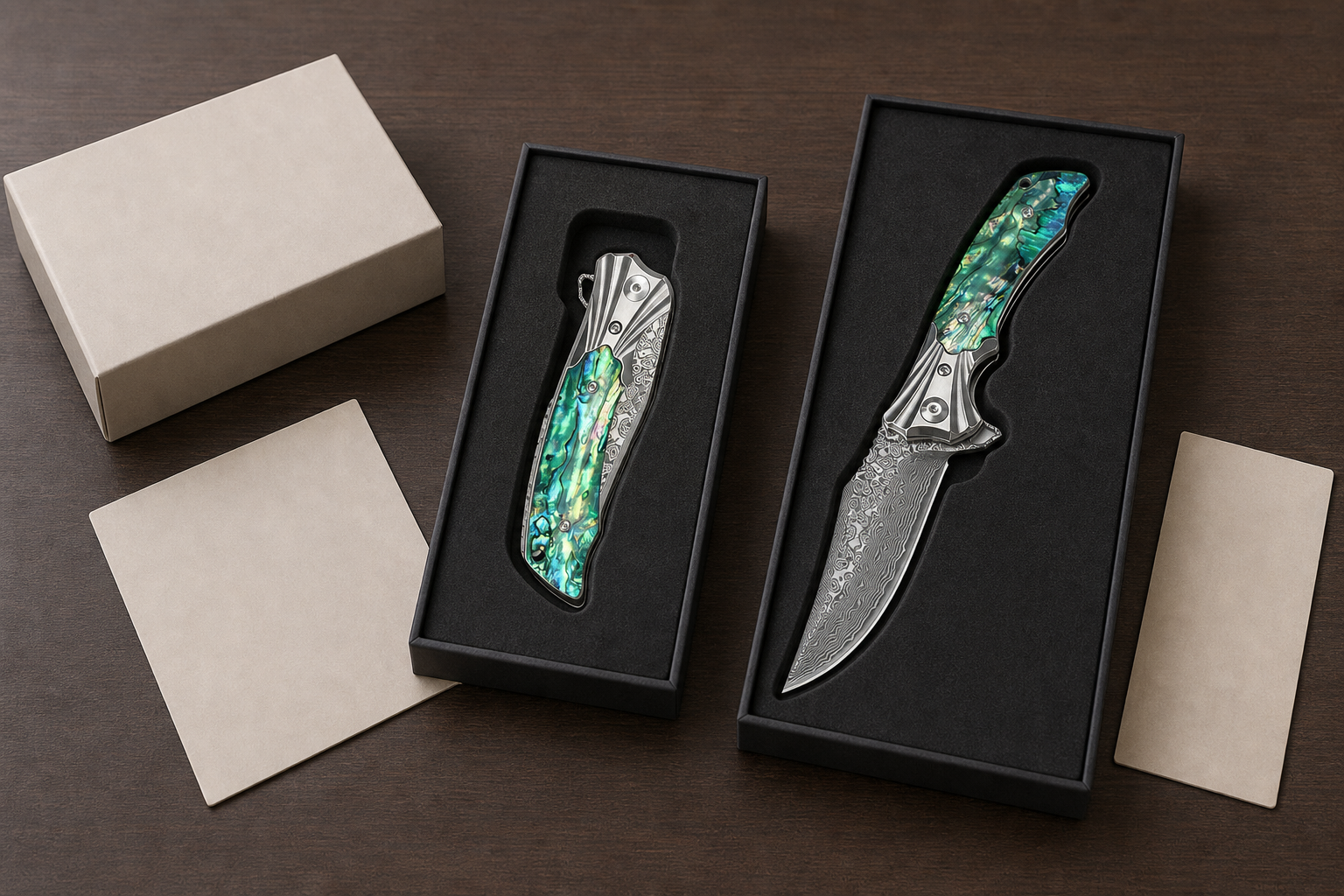
I Choose the Development Level by Business Stage
Private label is a good starting point when the buyer wants to test a market, build a line quickly, or control risk. The buyer can customize logo, packaging, color, finish, or small details while using a proven structure. This can reduce sample risk and lead time.
Semi-custom development fits buyers who want more differentiation without building a knife from zero. They may change steel, handle material, finish, clip, sheath, or packaging. This can create a more tailored product while keeping some production stability.
Full custom ODM is stronger when a buyer has a clear brand concept, enough volume, and a long-term product plan. It can create a unique blade shape, handle geometry, lock structure, multi-tool layout, or outdoor tool set. But it requires more communication, more sampling, and stronger QC planning. A buyer should not choose full custom only because it sounds premium. It should support a real business case.
| Development level | Main advantage | Main limitation |
|---|---|---|
| Private label | Faster and lower risk | Less differentiation |
| Semi-custom | Better brand fit | Some added cost and lead time |
| Full custom ODM | Unique product identity | Higher development risk |
| Hybrid approach | Balanced launch plan | Needs clear priorities |
How Should Buyers Build a Customization RFQ With Vast State?
A vague RFQ creates vague pricing. A clear RFQ helps the supplier suggest the right customization path.
Buyers should build a customization RFQ with target user, market, price range, MOQ, preferred custom level, materials, structure, finish, packaging, logo, sample plan, and QC priorities.
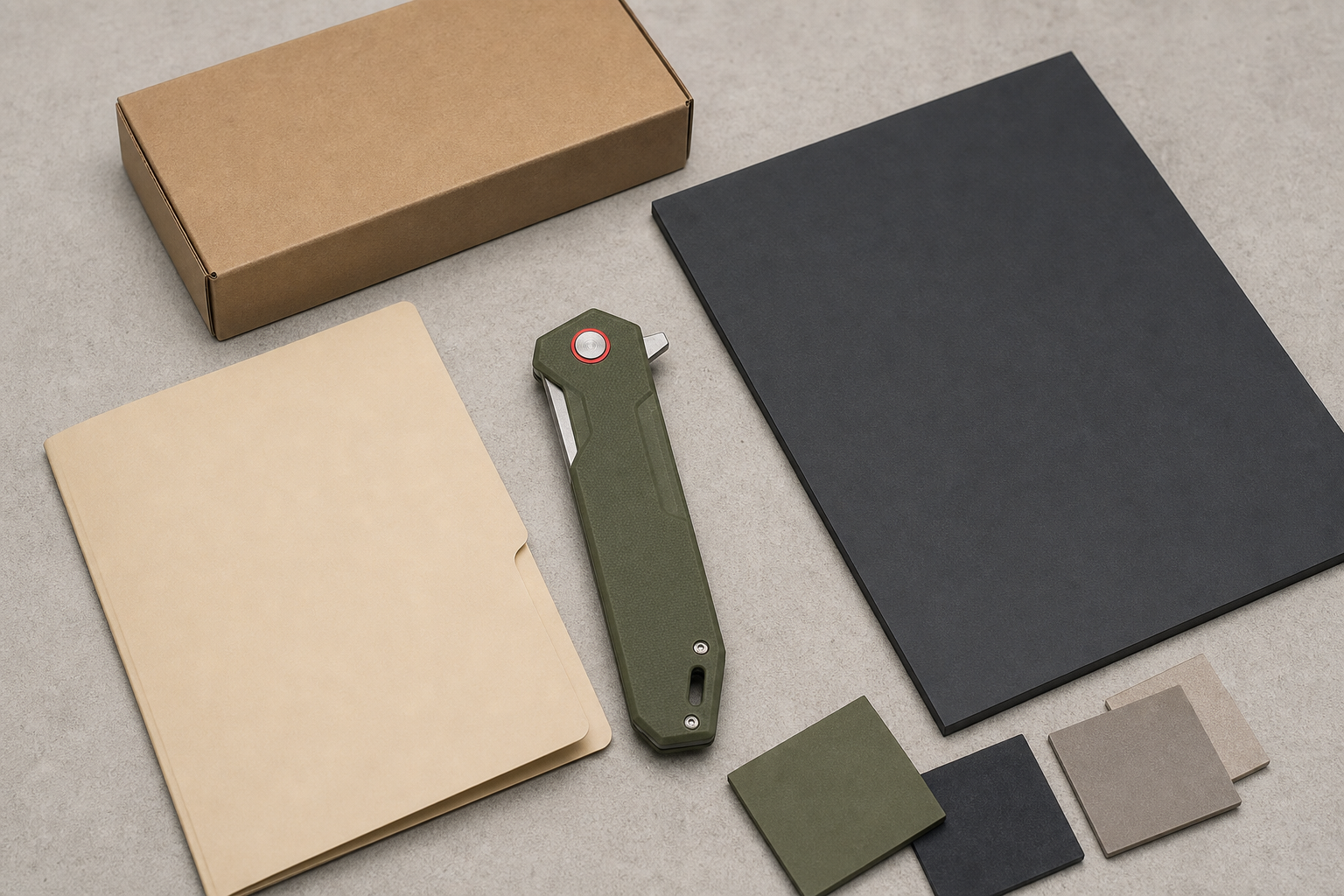
I Help Buyers Decide What to Customize First
Vast State is an OEM and ODM knife and outdoor tool manufacturer based in Yangjiang, China. We support customers from concept to production, including prototype development, material selection, finish options, lock and structure suggestions, packaging customization, and production follow-up. Our role is not only to say yes to every custom request. Our role is to help buyers choose the customization that fits their market, price range, and brand position.
If a buyer only needs a fast private label project, I may suggest a lighter customization path. If the buyer wants a strong brand line, I may suggest semi-custom material and packaging changes. If the buyer has a serious product concept and enough volume, I can help with full ODM development. In each case, I want the buyer to understand the trade-off before sampling starts.
A good RFQ should include the target user, target market, sales channel, target price, MOQ, knife type, blade length, steel preference, handle material, finish, opening or lock requirements, packaging, logo method, sample quantity, timeline, and QC priorities. The more clearly we define these details, the easier it is to control cost and avoid surprises.
| RFQ item | Why I need it | Example buyer input |
|---|---|---|
| Custom level | Sets development path | Private label, semi-custom, ODM |
| Target price | Controls material choices | Budget, mid-range, premium |
| Key custom points | Prevents over-customization | Steel, handle, finish, packaging |
| QC priority | Protects repeat production | Lockup, finish, edge, packaging |
Turn your idea into a quote-ready knife project.
Share your drawing, sample photo, target quantity, market, and packaging needs. Vast State will review manufacturability and prepare OEM/ODM options.
Conclusion
Knife customization works best when each custom feature has a business reason, a production plan, and a quality-control standard.