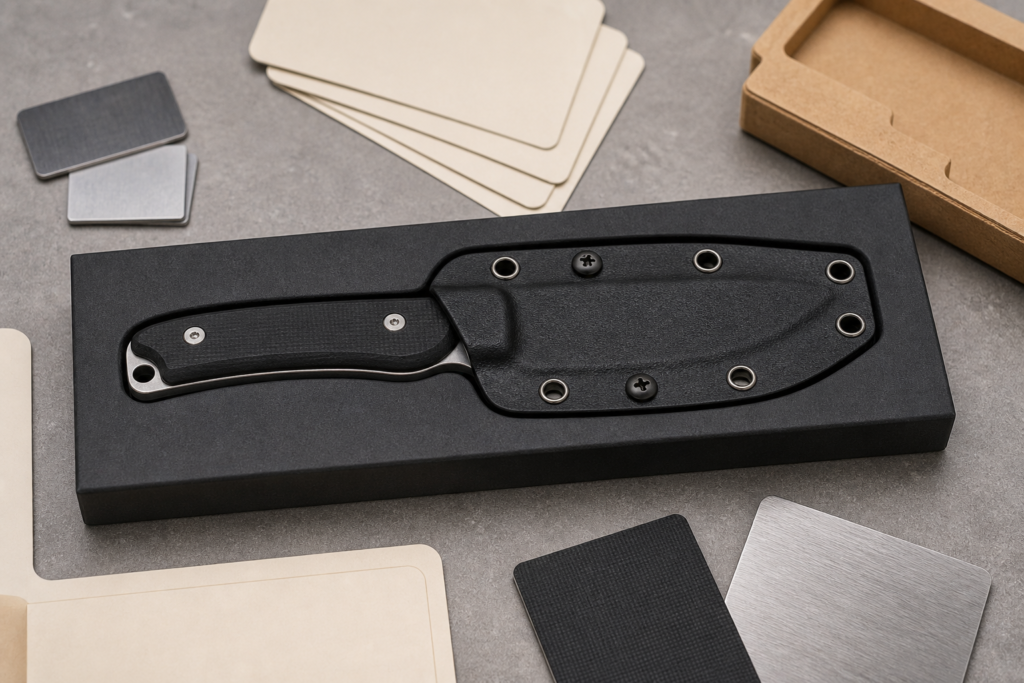
Outdoor knife skills sound like user training. For buyers, they are also product requirements that affect safety, materials, packaging, and QC.
OEM/ODM buyers should design outdoor knives around safe cutting, cordage work, food prep, gear repair, camp chores, field maintenance, controlled carry, and responsible instructions. These skills should become clear specifications, packaging guidance, and inspection standards instead of vague survival marketing.
Quick buyer brief:
- Answer: Outdoor knife skills should be translated into use cases, not copied as dramatic claims.
- Buyer context: This guide is for knife brands, outdoor brands, importers, wholesalers, distributors, private label buyers, and sourcing managers.
- Key checks: Target user, safe cutting tasks, fixed or folding format, blade geometry, handle grip, steel, finish, sheath or clip, maintenance guidance, packaging warnings, local law reminder, QC criteria, and RFQ details.
Planning a fixed blade or outdoor knife project?
Share your target use, blade size, steel preference, handle direction, sheath needs, quantity range, and packaging plan. Vast State can help turn it into a quote-ready specification.
When I review an outdoor knife project, I do not ask only what the knife looks like. I ask what the user needs to do safely. A camper may cut cord, open packaging, prepare food, trim small material, or maintain gear. A hunter may need a different hygiene, cleaning, grip, and carry plan, depending on local rules and ethical use. A hiking customer may want a compact tool for repair kits, not a heavy blade. Once I understand the skills behind the product, I can help the buyer choose a better steel, handle, sheath, lock, finish, instruction insert, and QC checklist.
Why Should Outdoor Knife Skills Become Product Requirements?
Skill lists can become vague marketing. That creates designs that look tough but do not solve real outdoor tasks.
Outdoor knife skills should become product requirements because real use decides blade size, edge geometry, grip, carry method, safety wording, maintenance needs, and inspection standards.
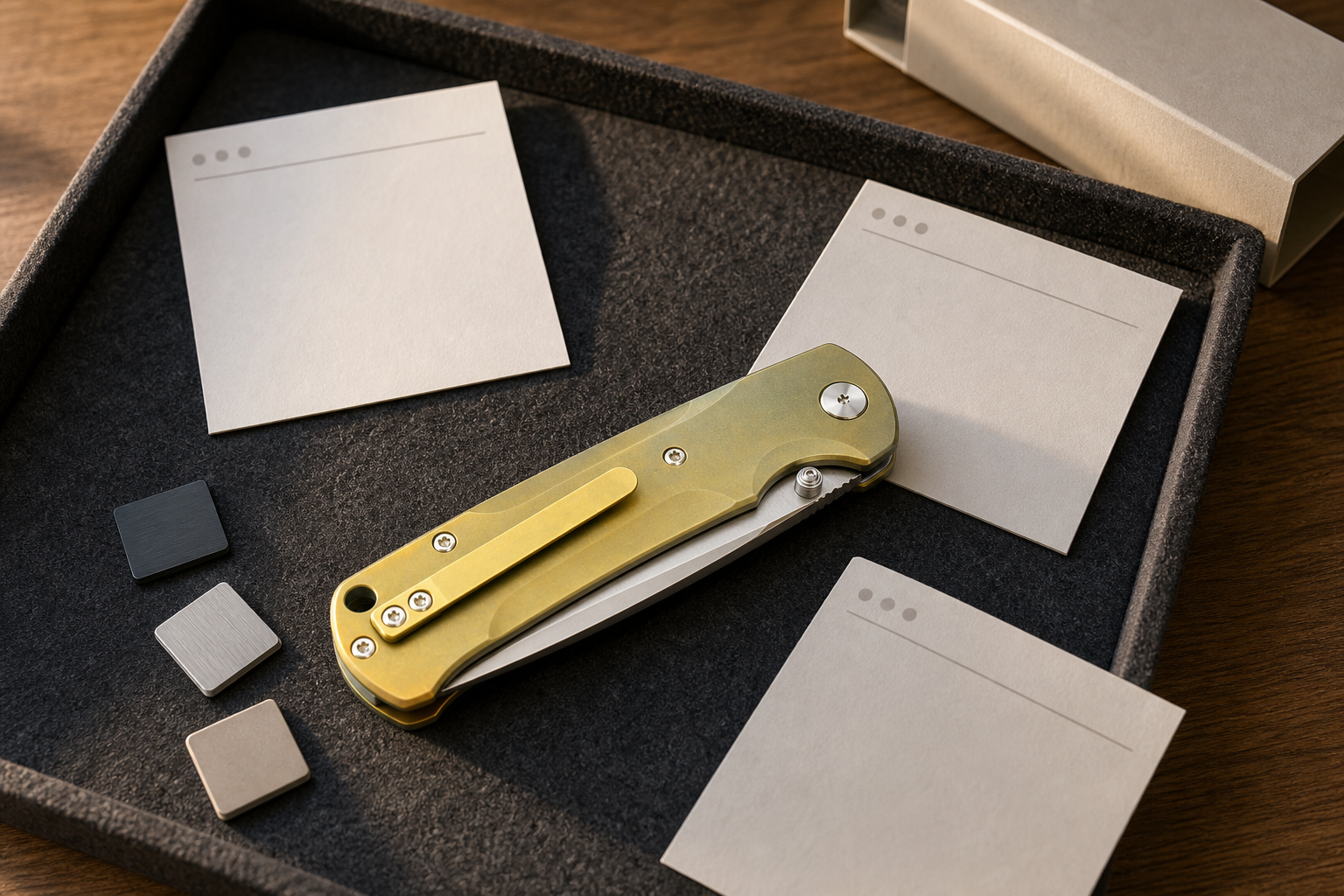
I Start With Use Cases, Not Drama
The phrase "survival knife skills" can easily push a product toward exaggerated claims. I prefer a more practical question: what safe outdoor tasks must this knife support? That question is useful for B2B buyers because it connects directly to design. If the user needs compact repair support, a folding knife or multi-tool may be better than a large fixed blade. If the user needs camp food prep and simple outdoor utility, a modest fixed blade with easy cleaning may be better. If the buyer wants a hunting-related product, the brief must handle hygiene, local rules, ethical positioning, and safe carry with extra care.
The National Park Service list of Ten Essentials includes repair items, fire, food, water, first aid, and other outdoor safety categories. I read that as a reminder that a knife is part of a broader kit. It should not be sold as a magic solution. It should fit a real outdoor system.
For OEM/ODM development, this changes the conversation. The buyer should describe tasks, users, markets, and channels before choosing a blade style. A useful outdoor knife is not the one with the loudest shape. It is the one that matches the user, price range, material plan, and repeat production standard.
| Skill scenario | Product requirement | Buyer decision |
|---|---|---|
| Cord cutting | Controlled edge and grip | Blade geometry and handle texture |
| Gear repair | Compact carry and tool access | Folder, multi-tool, or small fixed blade |
| Camp food prep | Easy cleaning and safe handling | Steel, finish, handle shape |
| Field maintenance | Sharpening and rust guidance | Steel, coating, instruction insert |
OEM/ODM RFQ Checklist
Prepare these details to help Vast State review your project and provide a more accurate quotation.
| RFQ Field | What to Prepare |
|---|---|
| Project type | OEM from drawing / ODM private label / wholesale catalog |
| Product category | Folding knife / fixed blade / multi-tool / outdoor tool |
| Design status | Idea / sketch / 2D drawing / 3D CAD / physical sample |
| Target price | Ex-factory target price or retail price range |
| MOQ expectation | 500 / 1,000 / 3,000 / 5,000+ pcs |
| Logo method | Laser engraving / etching / printing / molded logo |
| Packaging | Standard packaging / custom retail box / Amazon-ready |
| Market | USA / EU / Japan / Korea / Middle East / other |
| Compliance needs | Buyer-specified testing / documentation / labeling |
| Timeline | Sample deadline / mass production deadline |
Which Safe Cutting Tasks Should Buyers Design Around?
A knife may be sharp but still uncomfortable or risky. Cutting tasks must be matched to blade shape and grip.
Buyers should design around safe cutting tasks such as cord, packaging, food prep, soft material trimming, and light camp work. The design should avoid unsafe or weapon-style positioning.
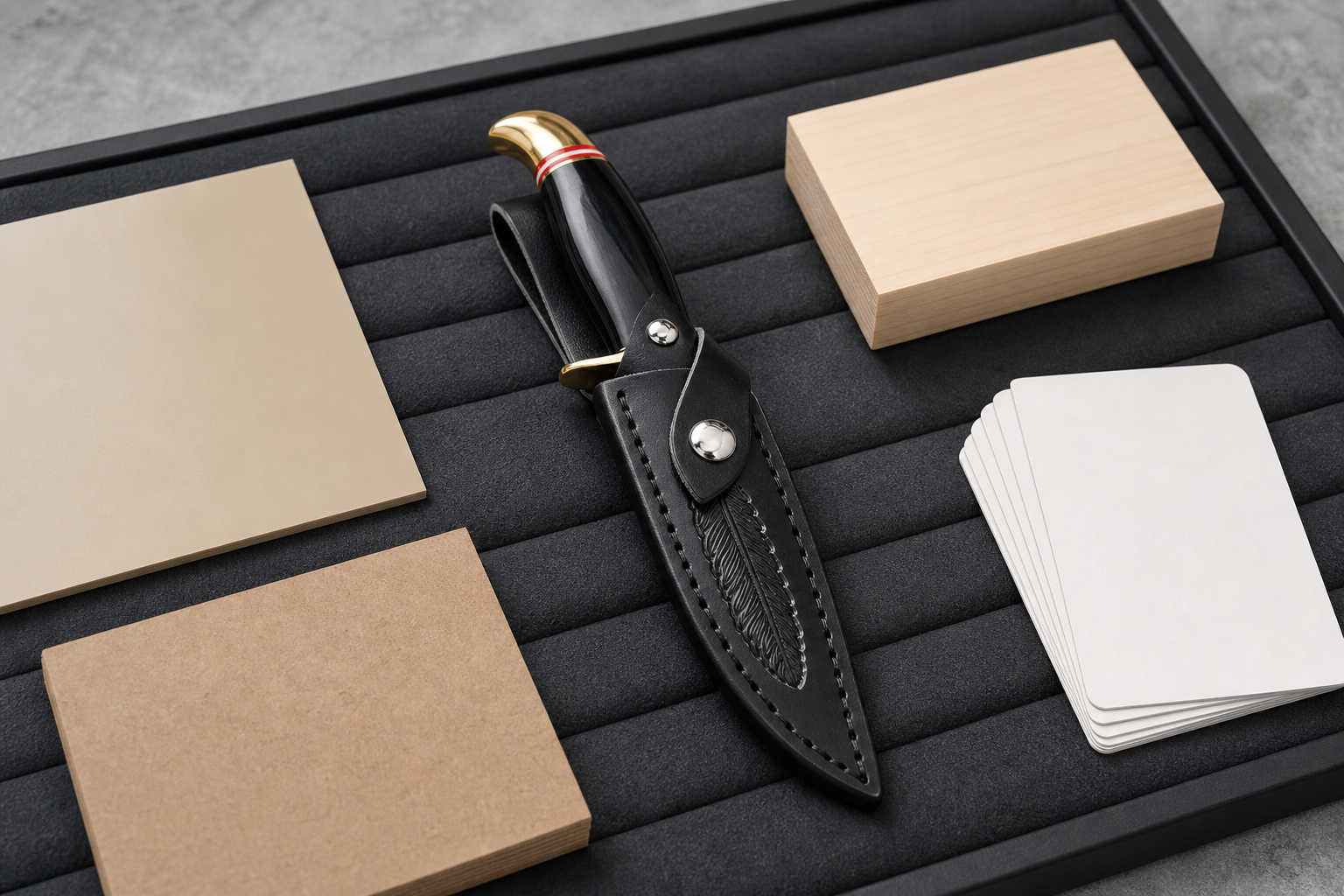
I Match Edge Geometry to Real Materials
Most outdoor utility tasks are simple. Users cut rope, cord, tape, food packaging, fabric, light plant material, cardboard, and small camp materials. These tasks do not require extreme blade shapes. They need a controlled edge, suitable thickness, enough tip control, and a handle that gives the user confidence without slipping.
The Canadian Centre for Occupational Health and Safety page on working safely with sharp blades or edges gives practical guidance such as using the right tool for the job, keeping blades sharp, and inspecting tools. This is workplace guidance, but the product lesson applies to outdoor knives. A dull edge can lead users to force a cut. A slippery handle can reduce control. A blade that is too thick may not cut common materials well. A handle with sharp corners may create fatigue.
From a buyer's view, the specification should define the real cutting task. A camping knife for food prep and cord may not need the same thickness as a heavy outdoor utility knife. A folding EDC knife may need a smoother opening and secure closed position. A small kit knife may need safe packaging more than aggressive styling.
| Cutting task | Design focus | QC check |
|---|---|---|
| Cord and rope | Edge bite and grip | Sharpness and handle texture |
| Packaging | Tip control and safe carry | Edge consistency and closed position |
| Food prep | Clean blade and easy wash | Finish, handle fit, corrosion check |
| Light camp material | Stable edge and comfort | Blade geometry and handle rounding |
How Should Cordage and Gear Repair Skills Shape the Product?
Outdoor users often need repair before they need heavy cutting. A product that ignores repair use may miss the real market.
Cordage and gear repair skills should shape blade length, edge angle, tip control, scissors or awl options, handle grip, lanyard holes, carry method, and safe storage.
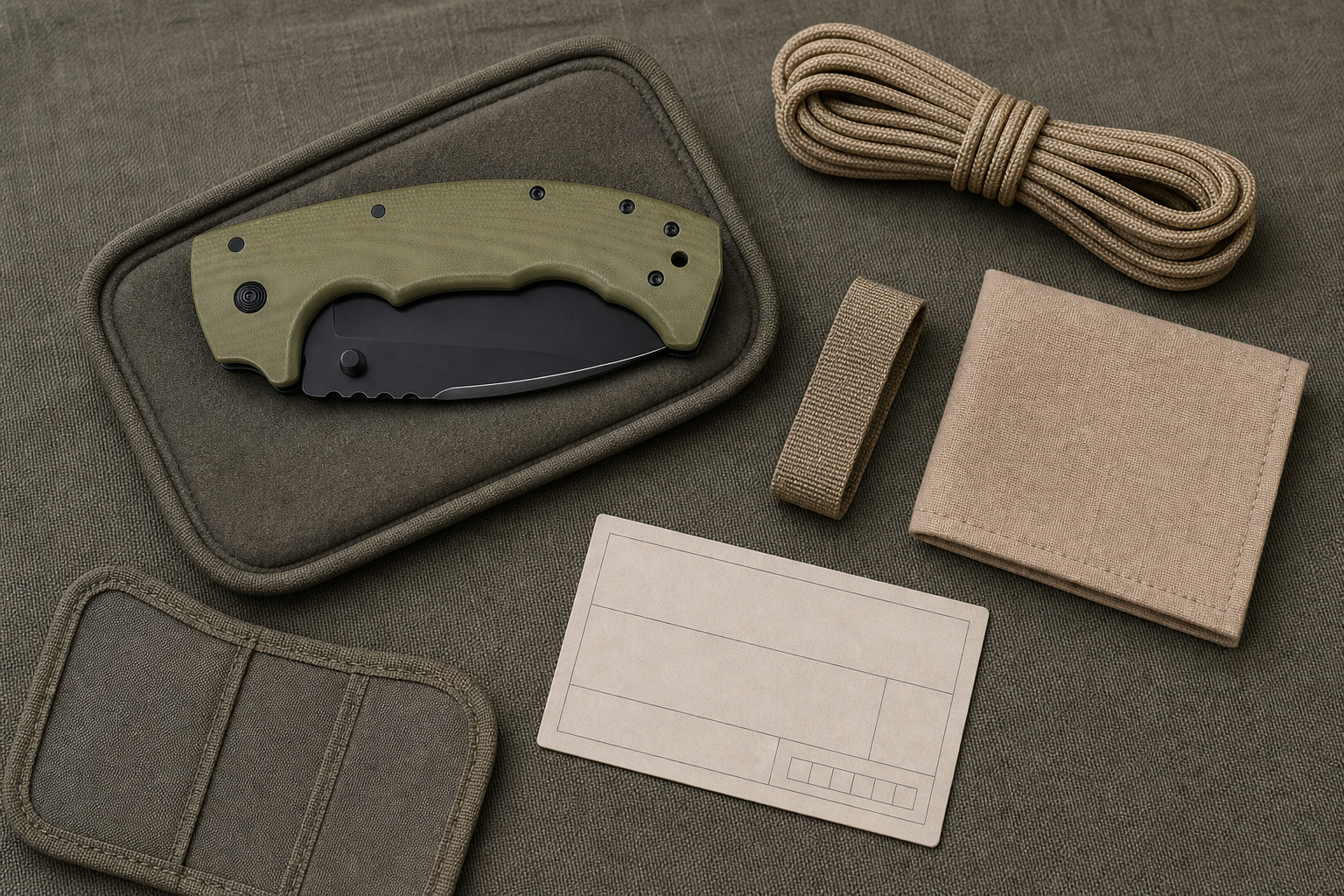
I See Repair Use as a Strong B2B Direction
Repair tasks are a strong direction for modern outdoor products. Users may need to cut cord, trim tape, open packaging, remove a tag, adjust a strap, or make a small field fix. In this context, a folding knife, compact multi-tool, or small fixed blade can be more useful than a large knife. The product should be easy to carry, easy to reach, and easy to store safely after use.
The National Park Service Ten Essentials page includes repair supplies and tools in an outdoor safety kit. That supports a practical product point: the knife belongs with repair tape, cord, spare parts, first aid, and navigation. It should be designed as part of responsible outdoor preparation, not as a stand-alone survival fantasy.
For OEM projects, this may affect function layout. A buyer may want a blade plus scissors, awl, screwdriver, bottle opener, or carabiner attachment. Each function adds cost and tolerance risk. That is why I ask whether the added tool really supports the target user. A simple knife can be better than an overloaded tool if the added functions are weak or hard to access.
| Repair need | Product option | Production concern |
|---|---|---|
| Cord cutting | Blade with good edge access | Edge consistency |
| Strap trimming | Tip control and handle comfort | Geometry and safety |
| Small fixes | Multi-tool functions | Tolerance and assembly |
| Quick access | Clip, sheath, or lanyard | Retention and carry comfort |
What Should Buyers Consider for Camp Food Prep and Daily Outdoor Chores?
Camp use is practical and repetitive. A knife that is hard to clean or uncomfortable will disappoint users quickly.
For camp food prep and daily outdoor chores, buyers should consider corrosion resistance, easy cleaning, handle comfort, edge geometry, safe storage, and clear use instructions.
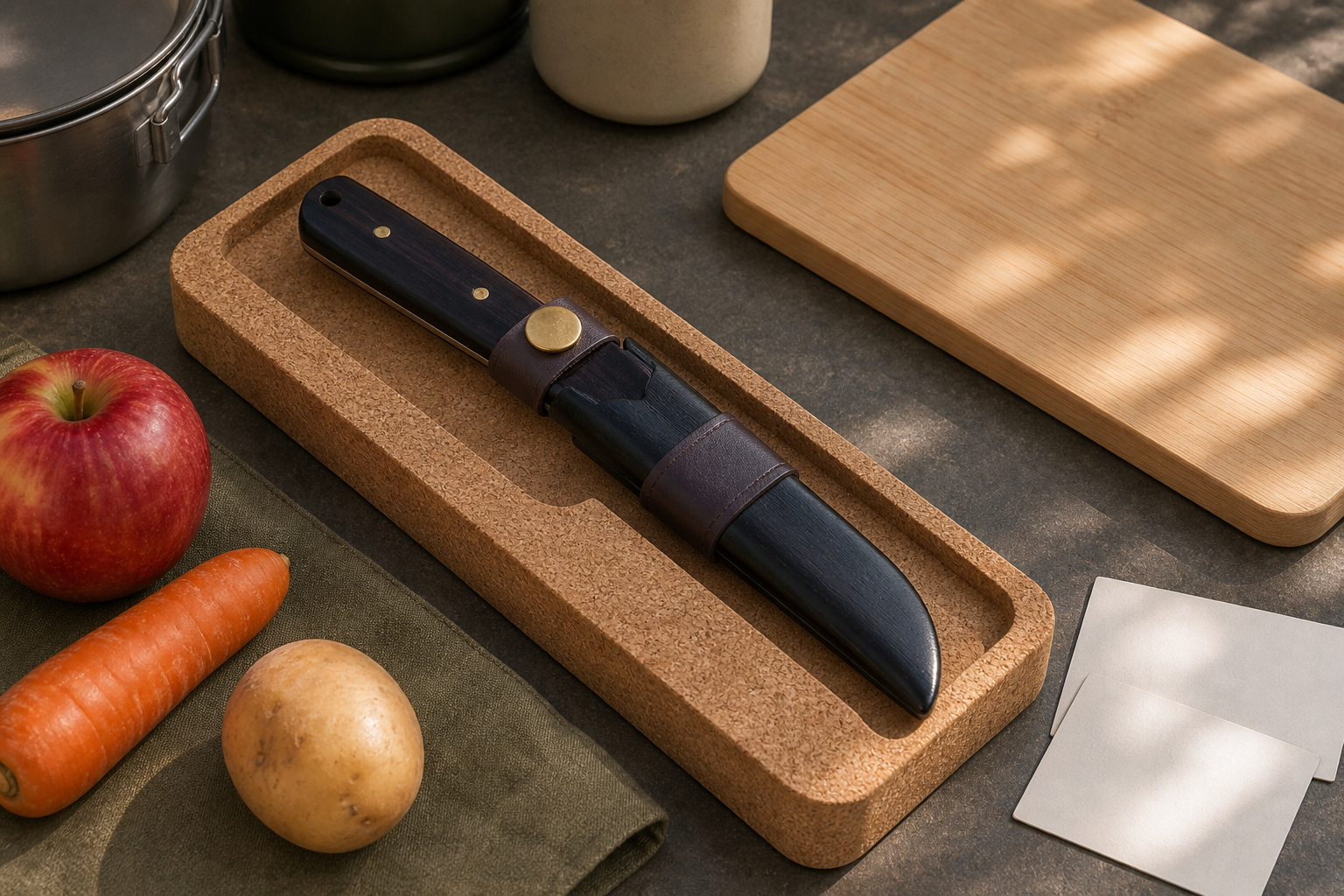
I Treat Cleaning as Part of the Design
Food prep changes the product brief. A knife used around food should be easy to clean, comfortable to hold, and resistant to moisture. The buyer should think about blade finish, handle seams, screw recesses, surface texture, and packaging instructions. A handle that traps dirt may look interesting but create cleaning problems. A finish that stains easily may not suit a camp cooking product.
This is where steel choice becomes practical. Some buyers want a steel name for marketing. I ask how the knife will be used and maintained. If the user faces water, sweat, food acids, or humid storage, corrosion resistance may matter more than a premium-sounding steel. If the user values simple sharpening, that also matters. The best steel is not always the most expensive one. It is the steel that fits the use, price, heat treatment, and repeat production plan.
Camp chores also include opening bags, trimming cord, preparing kindling in a controlled way where allowed, and handling general campsite materials. The packaging should avoid unsafe demonstrations. It should show the tool as a practical outdoor product with safety guidance. For private label buyers, this helps the product feel trustworthy instead of extreme.
| Camp use point | Product implication | Buyer question |
|---|---|---|
| Food contact | Easy cleaning | Are handle seams controlled? |
| Moisture | Corrosion resistance | Which steel and finish fit the use? |
| Repeated grip | Comfort and texture | Is the handle tiring? |
| Safe storage | Sheath or closed position | Is the edge protected? |
How Should Fire-Prep and Shelter-Prep Needs Be Framed Responsibly?
Outdoor marketing often exaggerates fire and shelter tasks. That can create unsafe expectations and poor product fit.
Fire-prep and shelter-prep needs should be framed as controlled campsite utility, local-rule awareness, and material preparation. Buyers should avoid destructive, unsafe, or exaggerated survival claims.
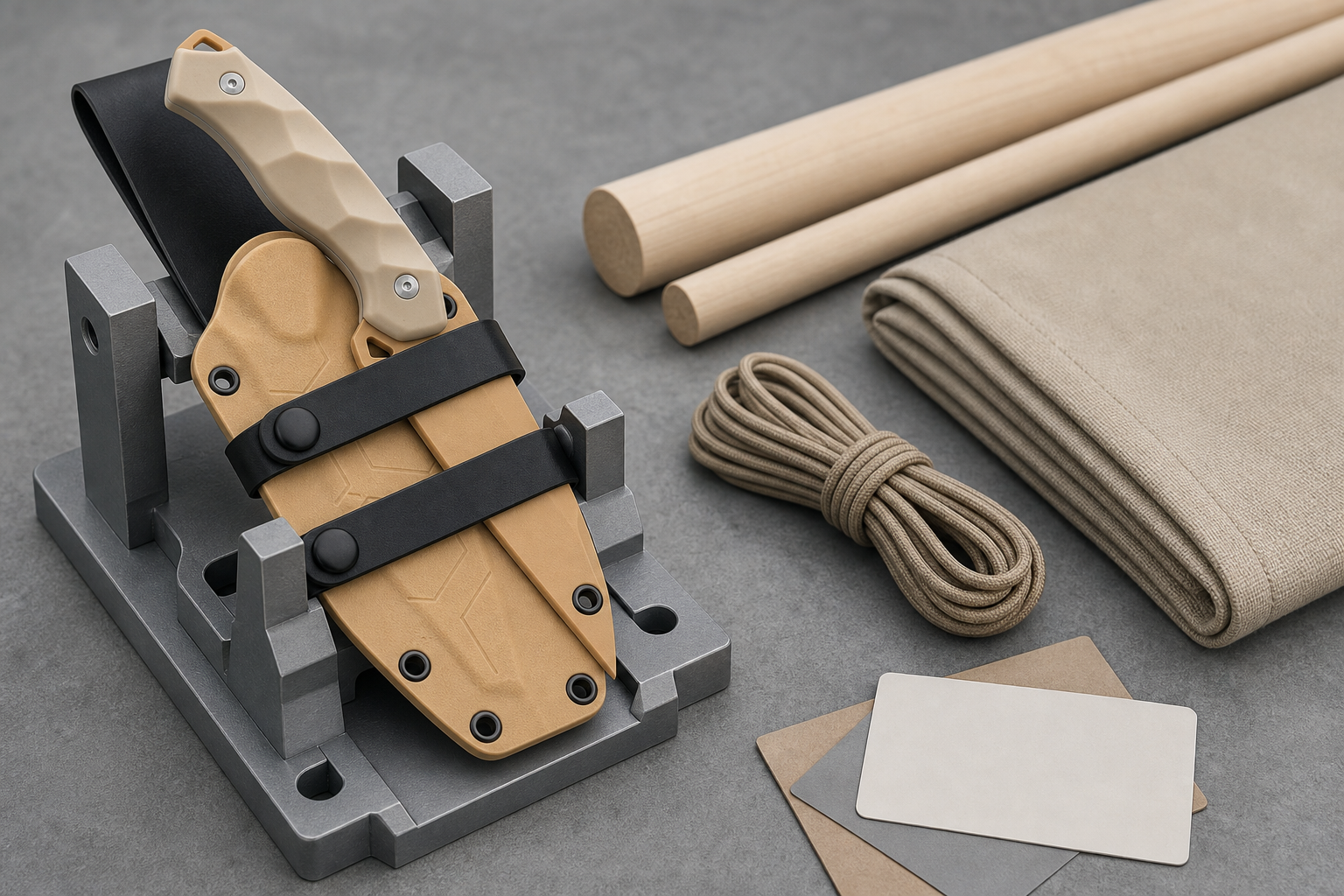
I Keep the Claims Grounded
Some outdoor knife content shows harsh survival scenes. That may attract attention, but it can be bad product strategy. Real buyers need a product that can be sold through mainstream outdoor channels and understood by ordinary users. Fire and shelter use should be framed around safe preparation, local restrictions, Leave No Trace thinking, and proper tool selection.
The Leave No Trace Seven Principles are useful here because they encourage planning ahead, minimizing campfire impacts, respecting wildlife, and leaving what you find. That reminds buyers that outdoor tools should not be marketed as permission to damage environments. The product language should support responsible outdoor behavior.
For design, controlled camp preparation may require a stronger fixed blade than simple EDC use. But the buyer still needs to define the boundary. Is the knife for light shaving of small wood where permitted? Is it for cord and tarp repair? Is it for emergency kit use? Each answer changes thickness, steel, handle shape, sheath, and packaging. I do not recommend promising that one compact knife can replace every outdoor tool.
| Use area | Responsible framing | Product control |
|---|---|---|
| Fire prep | Follow local rules and safe practices | Edge stability and grip |
| Shelter repair | Cord and fabric support | Tip control and carry |
| Camp chores | Practical utility | Moderate blade size |
| Environmental care | Minimize impact | Packaging and instructions |
Why Do Hunting-Related Buyers Need a Different Product Brief?
Hunting use is sensitive and market-specific. Generic outdoor knife language may not be enough.
Hunting-related buyers need a different brief because hygiene, cleaning, grip, sheath safety, local laws, ethical use, and packaging language require more careful review.
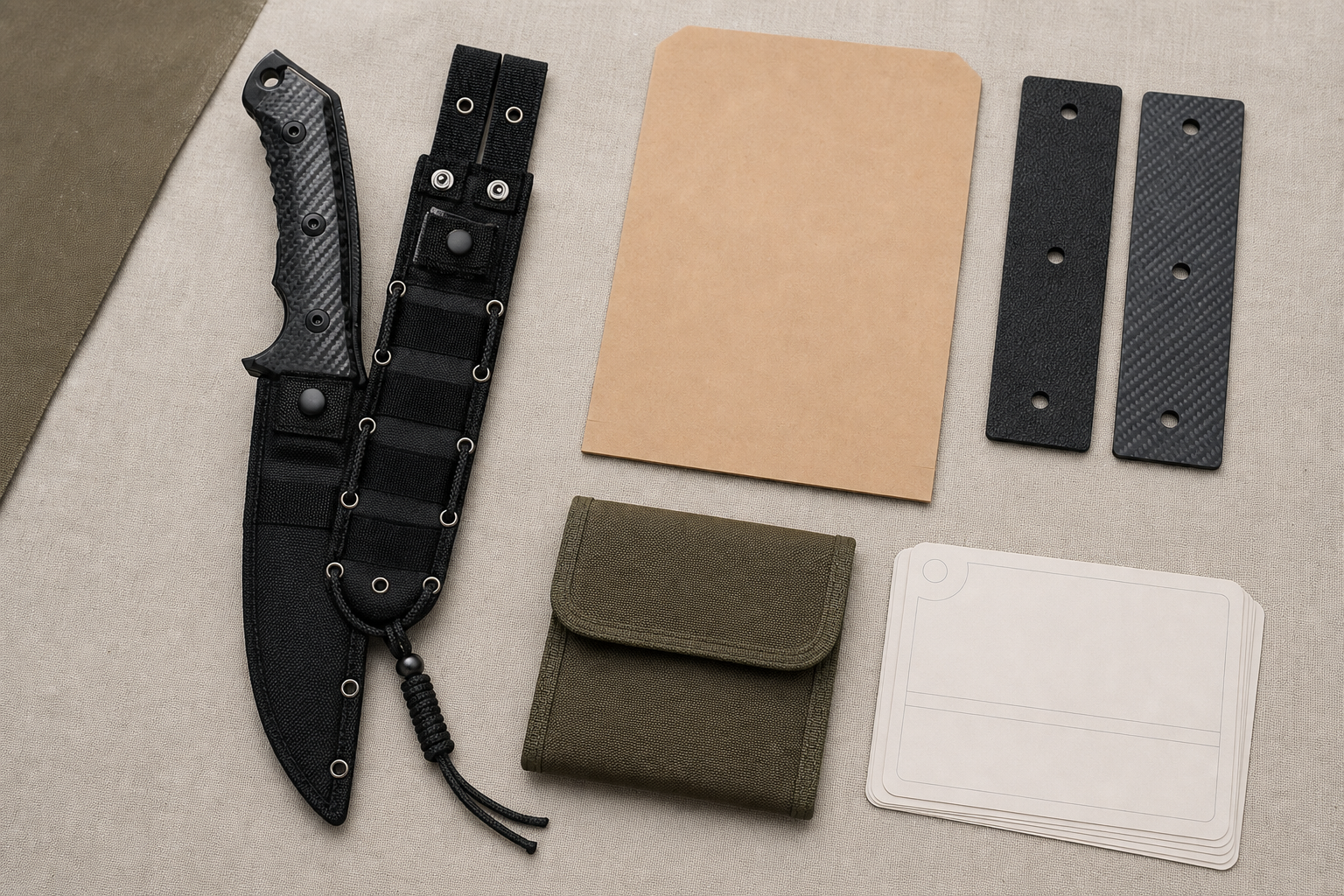
I Separate Outdoor Utility From Hunting-Specific Needs
The original market may include campers and hunters, but those buyers are not always the same. A camper may value general utility, compact carry, and easy maintenance. A hunting customer may care more about controlled grip, easy cleaning, corrosion resistance, sheath retention, hygiene, and local legal requirements. The product brief should say which user is primary.
The U.S. Fish and Wildlife Service page on hunter education presents hunter education around safety, responsibility, conservation, and ethical hunting. That is a good reminder for product development. A hunting-related knife should not be marketed with aggressive language. It should be positioned around lawful, responsible, and practical field use. It should also avoid detailed claims that the supplier or buyer cannot verify.
For OEM/ODM production, hunting-related projects may need washable handle materials, fewer dirt traps, strong sheath retention, high-visibility options, and instruction inserts about safe handling, cleaning, storage, and local-rule checking. The buyer should also confirm sales channels because some platforms treat hunting knives differently from general outdoor tools.
| Hunting-related concern | Product implication | Buyer action |
|---|---|---|
| Hygiene and cleaning | Smooth surfaces and corrosion resistance | Define cleaning expectations |
| Gloves or wet hands | Grip texture and handle size | Test sample with real use context |
| Field carry | Sheath retention and belt option | Set retention QC checks |
| Market sensitivity | Responsible wording | Avoid combat or self-defense claims |
How Should Maintenance Skills Affect Steel, Finish, and Packaging?
Outdoor knives are often exposed to moisture, dirt, food, sweat, and storage problems. Maintenance cannot be an afterthought.
Maintenance skills should affect steel choice, heat treatment, surface finish, edge geometry, sharpening guidance, cleaning instructions, packaging inserts, and after-sales expectations.
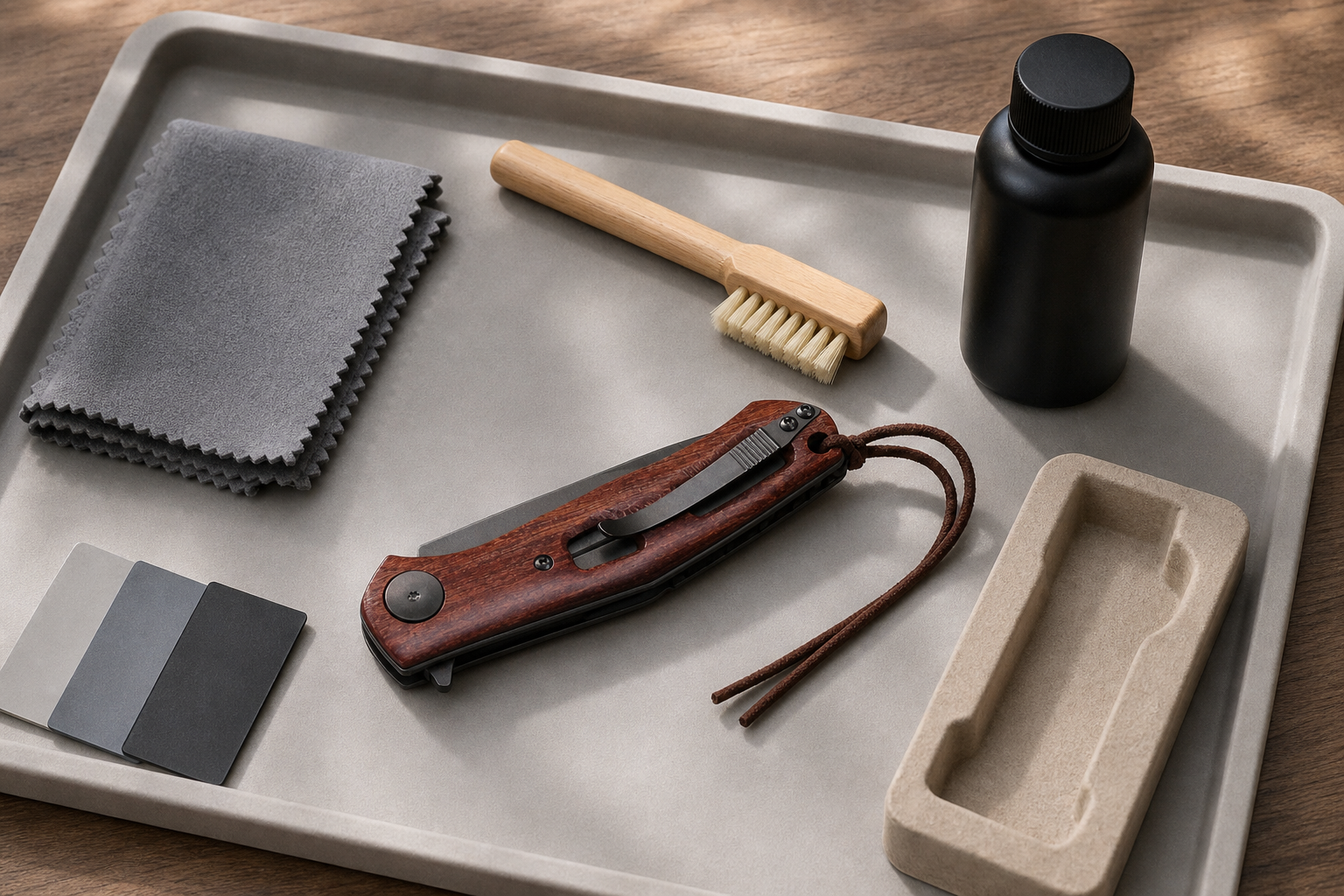
I Design the Maintenance Story Before Shipment
Many returns and complaints start with unclear maintenance expectations. A buyer may choose high-carbon steel for edge behavior and heritage appeal, but the user may not understand rust prevention. A buyer may choose a coating for appearance, but the user may not expect edge wear. A buyer may choose a stainless steel, but the user may still need drying and cleaning guidance after outdoor use.
Maintenance guidance should be realistic and simple. It can explain cleaning, drying, storage, sharpening, screw checks, lock checks, and sheath care. For folding knives, it can explain keeping the pivot area clean and avoiding dirt build-up. For fixed blades, it can explain sheath drying and edge protection. The instruction insert should not be a legal shield only. It should actually help the user care for the tool.
At the specification level, maintenance affects steel, heat treatment, finish, handle material, hardware, and packaging. If the user will not sharpen often, the edge plan should be different. If the product will be used near moisture, corrosion resistance and drainage may matter. If the knife is sold as a value product, the maintenance message should be simple and honest.
| Maintenance issue | Product choice | Instruction topic |
|---|---|---|
| Rust risk | Stainless steel or coating | Clean and dry after use |
| Edge dulling | Edge geometry and heat treatment | Sharpen safely and regularly |
| Pivot dirt | Folder structure and washers | Keep pivot clean |
| Sheath moisture | Sheath material and drainage | Dry before storage |
What Safety Guidance Should Packaging and Manuals Include?
A good knife needs good instructions. Without them, users may misunderstand the product and buyers may face avoidable complaints.
Packaging and manuals should include safe opening and closing, right-tool use, edge awareness, storage, maintenance, age or local-law reminders, and responsible outdoor-use wording.
I Use Instructions to Support the Product Promise
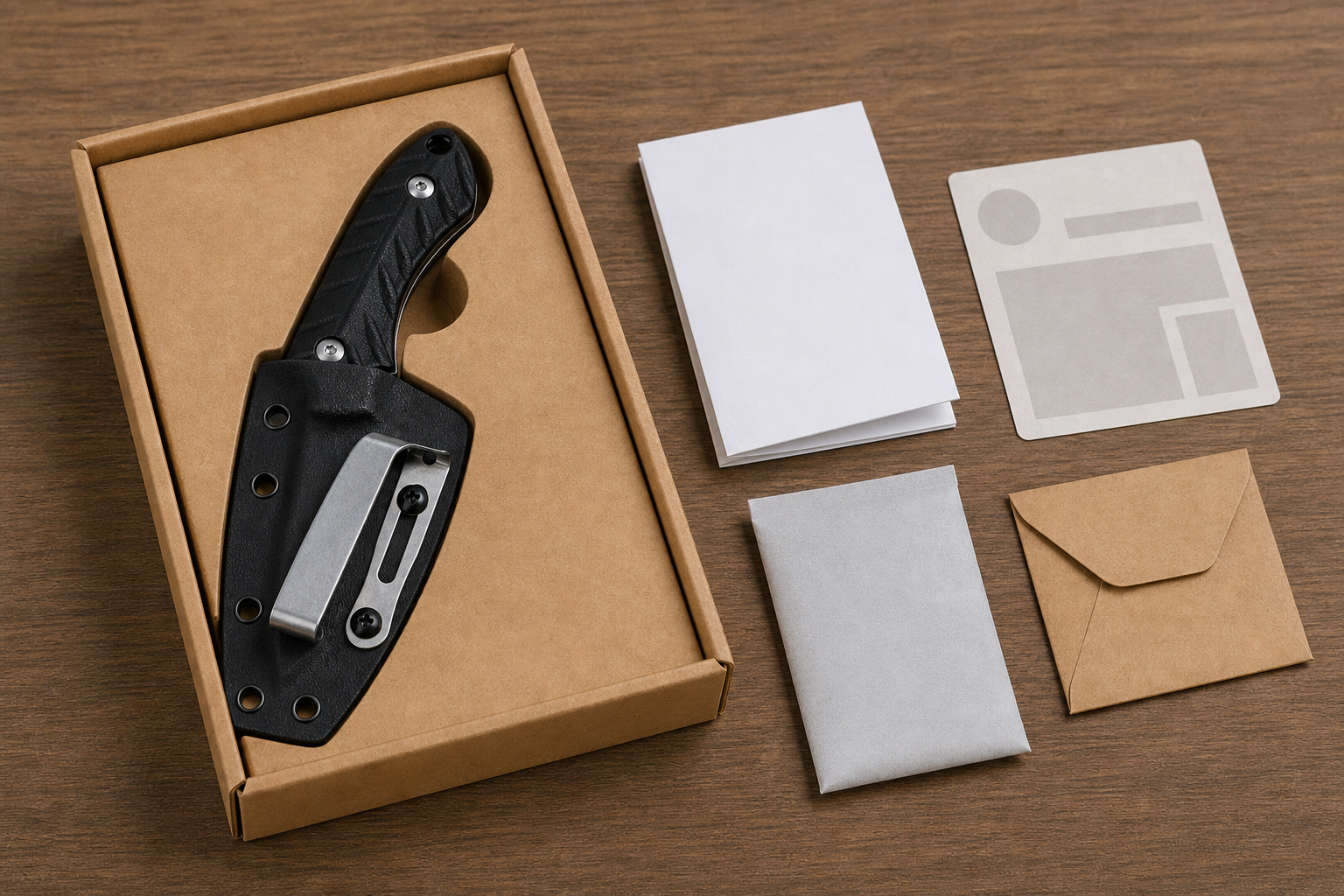
Instruction content should match the product and target market. A folding knife may need directions for safe opening and closing, lock release, cleaning, pivot care, and storage. A fixed blade may need sheath safety, edge care, cleaning, and carry guidance. A multi-tool may need safe tool access and closing guidance. If the product is sold online or in a restricted category, the buyer may also need age or local-law reminders reviewed by the sales channel.
CCOHS sharp blade safety guidance says users should not carry an open tool in a pocket and should keep tools secure when not in use. These practical safety points can inform packaging. The exact wording should be reviewed for each market, but the product should clearly tell users to store and handle the knife safely.
I also recommend keeping instructions plain. Users do not need a complicated manual. They need clear warnings, safe-use basics, maintenance steps, and a reminder to follow local laws and campsite rules. For private label buyers, this also strengthens the brand. A product that includes useful care guidance feels more professional and reduces after-sales questions.
| Manual topic | Why it matters | Product type |
|---|---|---|
| Safe opening and closing | Prevents misuse | Folding knife, multi-tool |
| Edge protection | Supports storage safety | Fixed blade, folder |
| Maintenance | Reduces corrosion and dulling complaints | All outdoor knives |
| Local-law reminder | Avoids overgeneralized claims | All markets |
How Should Buyers Turn Skills Into RFQ and QC Criteria?
If skills stay in a mood board, the factory cannot inspect them. They must become measurable requirements.
Buyers should turn skills into RFQ and QC criteria by defining user tasks, blade size, steel, edge, handle grip, carry system, packaging, instructions, sample tests, and batch inspection checks.
I Convert Use Into Inspection Points
An RFQ should not only say "survival knife" or "outdoor knife." It should explain the intended use. Is it a compact repair knife? A camp utility fixed blade? A hunting-related field knife? A lightweight hiking folder? A private label gift knife? These are different products.
Once the use case is clear, the RFQ should list blade length, steel, thickness, heat treatment target, edge geometry, handle material, sheath or clip, finish, logo, packaging, target price, MOQ, and documentation needs. The buyer should also specify what matters most in QC. For example, sheath retention may be critical for a fixed blade. Lockup and blade centering may be critical for a folding knife. Corrosion-sensitive finish may be critical for outdoor and food-adjacent use.
The ISO 9001 quality management page frames quality around customer expectations, processes, and improvement. I apply that mindset to outdoor knife orders. A good sample is not enough. The process must repeat the approved product across the batch.
| Skill-based requirement | RFQ detail | QC detail |
|---|---|---|
| Safe cord cutting | Edge geometry and blade length | Sharpness and edge consistency |
| Outdoor carry | Sheath, clip, lanyard | Retention and comfort check |
| Wet use | Steel and finish | Corrosion-sensitive inspection |
| Gear repair | Function set | Tool access and assembly check |
How Can Vast State Support Outdoor Knife Skill-Based Projects?
A buyer may know the market but still need help turning use cases into manufacturable products.
Vast State can support outdoor knife projects through concept review, prototype development, material selection, structure suggestions, packaging customization, production follow-up, and quality control.
I Help Buyers Build Practical Outdoor Tools
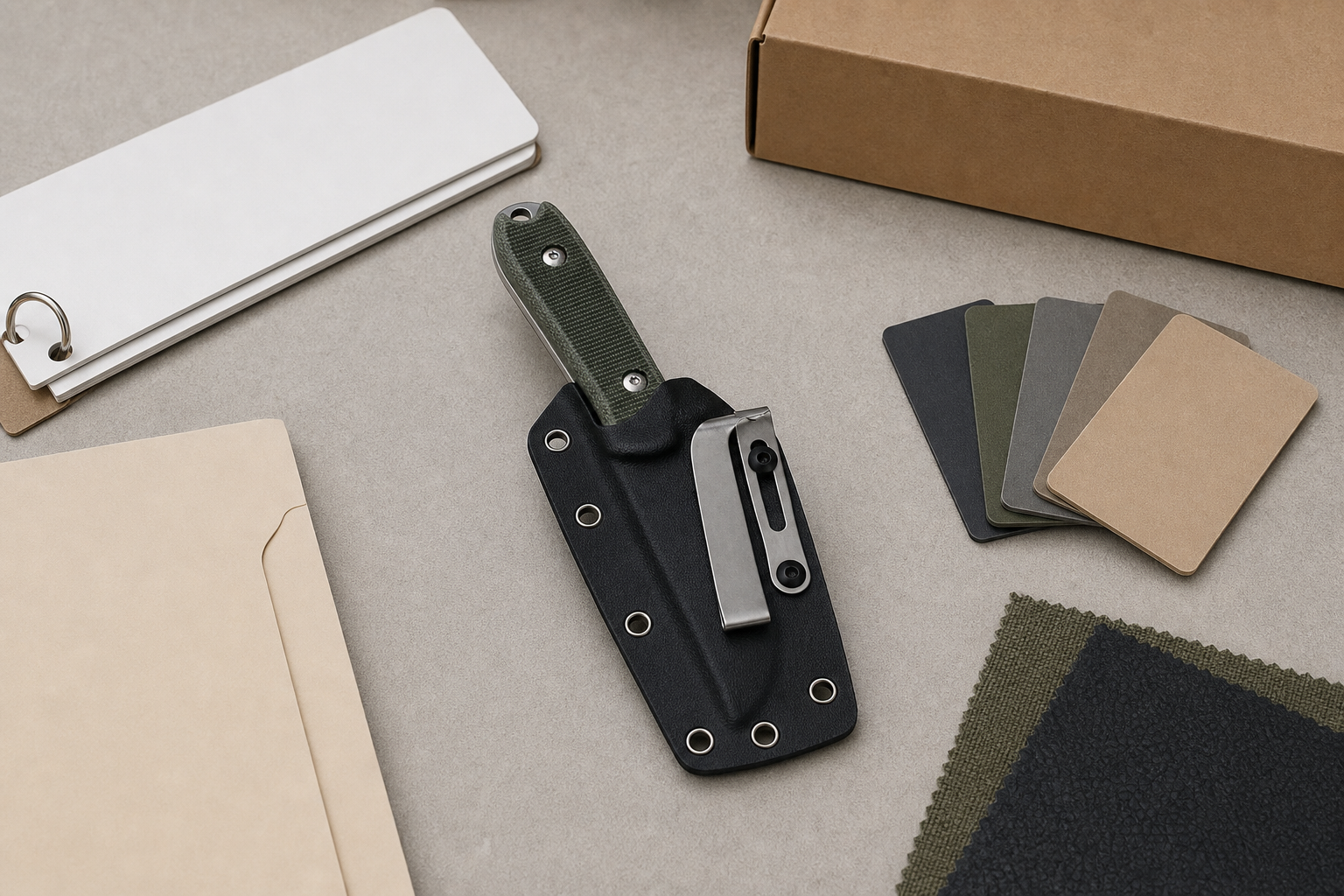
Vast State is an OEM and ODM knife and outdoor tool manufacturer based in Yangjiang, China. We support folding knives, fixed blade knives, pocket knives, camping tools, rescue tools, and multi-tools for international B2B customers. For outdoor skill-based projects, our work starts by clarifying the target user and tasks. Then we connect those tasks with structure, material, finish, packaging, and production controls.
If a buyer has a finished design, I can help review manufacturability, cost, material fit, and QC checkpoints. If a buyer only has a rough idea, I can help turn it into a practical brief. That may mean choosing a simpler blade shape, safer carry method, more suitable steel, better handle texture, or clearer instruction insert. It may also mean telling the buyer that one product cannot honestly cover every outdoor task.
I aim to be a long-term manufacturing partner, not only a sample maker. For B2B buyers, a good outdoor knife should match the target market, price range, brand position, and repeat production needs. Skill-based design helps us do that because it keeps the product grounded in real use.
| Buyer need | Vast State support | Result |
|---|---|---|
| New outdoor concept | Use-case and structure review | Clearer product direction |
| Material choice | Steel and handle suggestions | Better performance-cost balance |
| Packaging plan | Warning and care insert support | More professional launch |
| Repeat production | QC and follow-up | More stable supply |
Turn this article into a fixed blade project.
Send your target use, blade size, steel, handle direction, sheath needs, quantity, and packaging plan. Vast State can help shape it into a quote-ready project.
Conclusion
Outdoor knife skills become useful for buyers when they are translated into safe use cases, clear specifications, responsible packaging, and repeatable quality control.