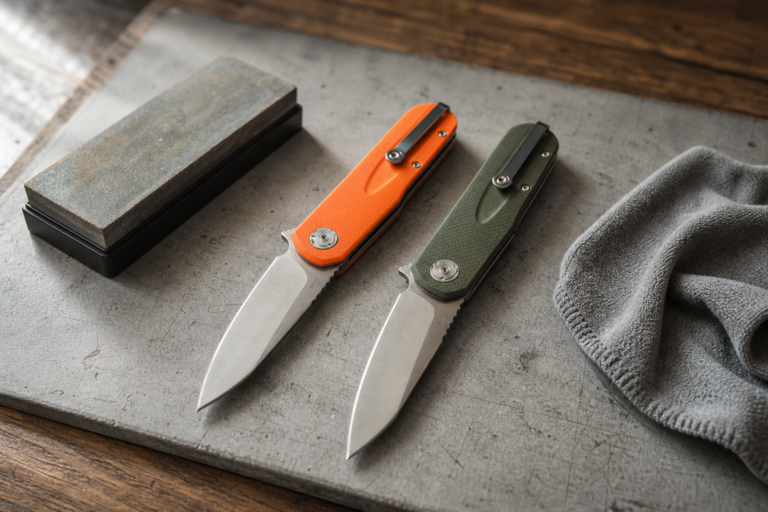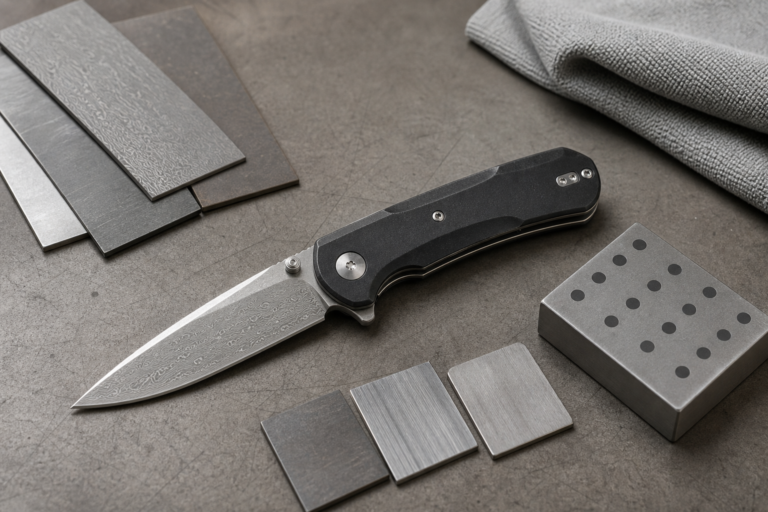
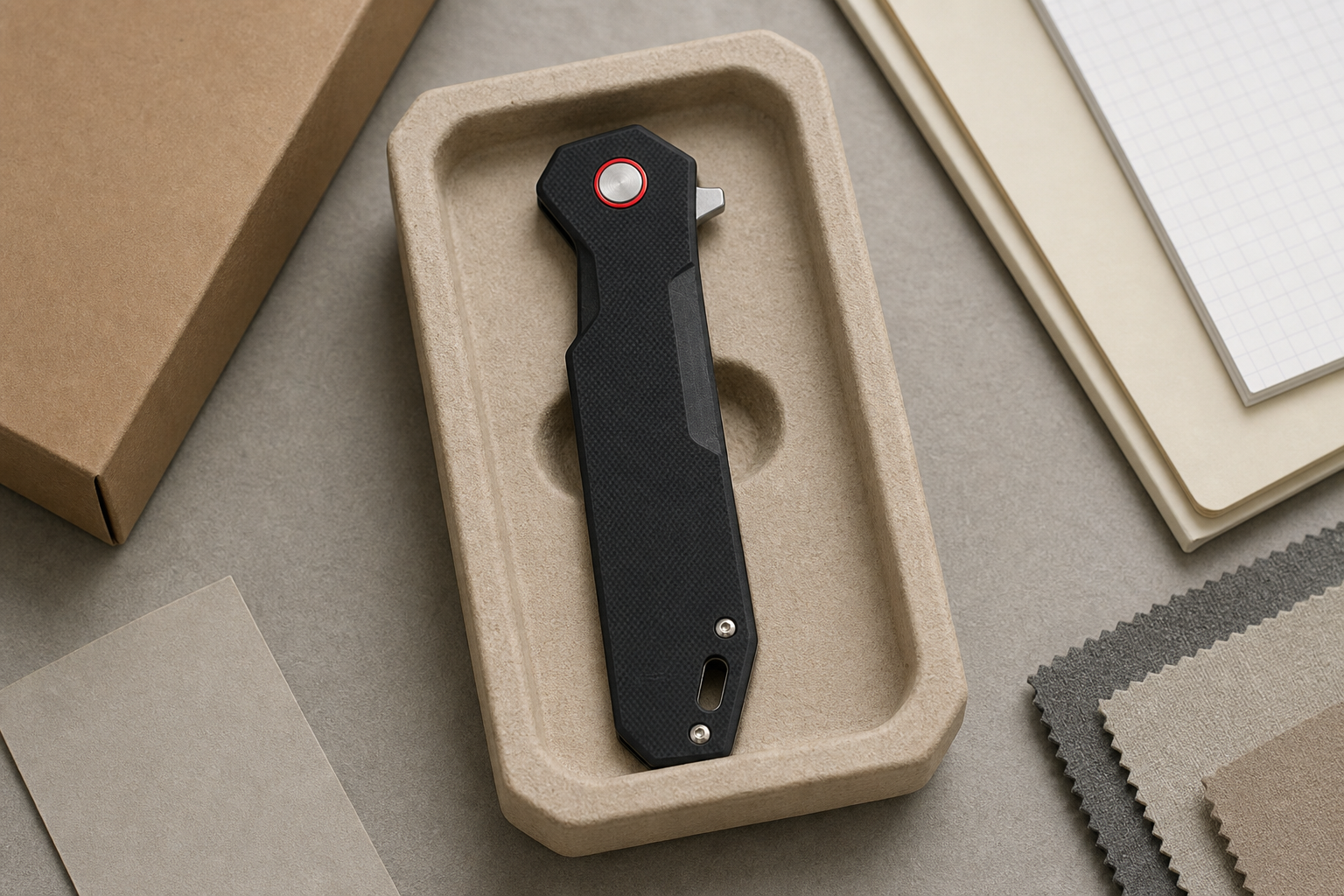
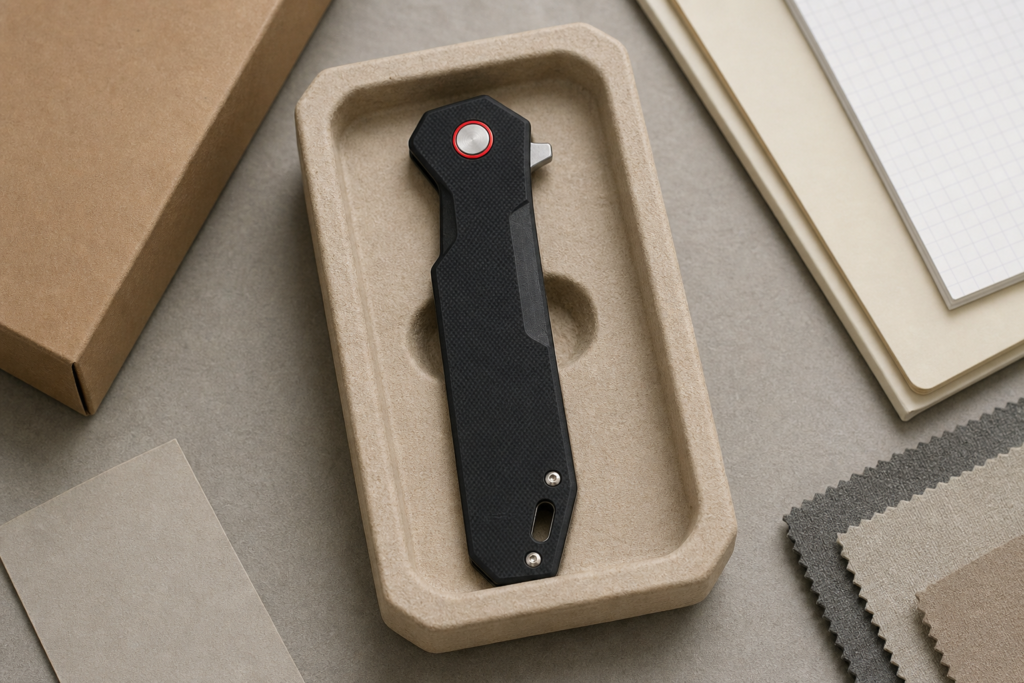
A folding pocket knife can be legal in one place and restricted in another. Checking rules after production can waste the whole order.
Buyers should verify folding pocket knife legality by target market before approving design. The review should cover import rules, blade length, lock type, opening method, age limits, online sales, delivery, packaging, safety instructions, channel policies, and local legal confirmation.
Quick buyer brief:
- Answer: There is no single global answer to whether folding pocket knives are legal. Buyers need a market-by-market checklist before production.
- Buyer context: This guide is for knife brands, outdoor gear brands, importers, distributors, wholesalers, private label buyers, and sourcing managers.
- Key checks: Import classification, blade length, locking structure, opening method, restricted designs, age verification, online marketplace rules, delivery limits, safety packaging, warnings, product documentation, and local counsel review.
Planning a private-label knife line for this market?
Use this article as an early planning reference, then prepare your target market, product category, labeling needs, and buyer-specified compliance requirements before production.
When a buyer asks me, "Is this folding pocket knife legal?", I usually answer with another question first: where will it be imported, sold, shipped, carried, and used? Those are not the same question. A knife may pass one rule layer but fail another. A product may be accepted by customs but blocked by an online marketplace. A non-locking folder may be treated differently from a locking folder. An ordinary utility knife may become harder to sell if the packaging uses aggressive wording. This article is not legal advice. It is a practical product-development checklist that helps buyers prepare the right questions before they invest in tooling, samples, packaging, and mass production.
Why Is "Is This Folding Pocket Knife Legal?" Too Simple?
A broad legal question can hide several different risks. A buyer needs separate answers before the product goes into production.
"Legal" can mean importable, sellable, deliverable, carryable, and acceptable to a sales channel. Buyers should check each layer separately for every target market.
I Break One Question Into Several Gates
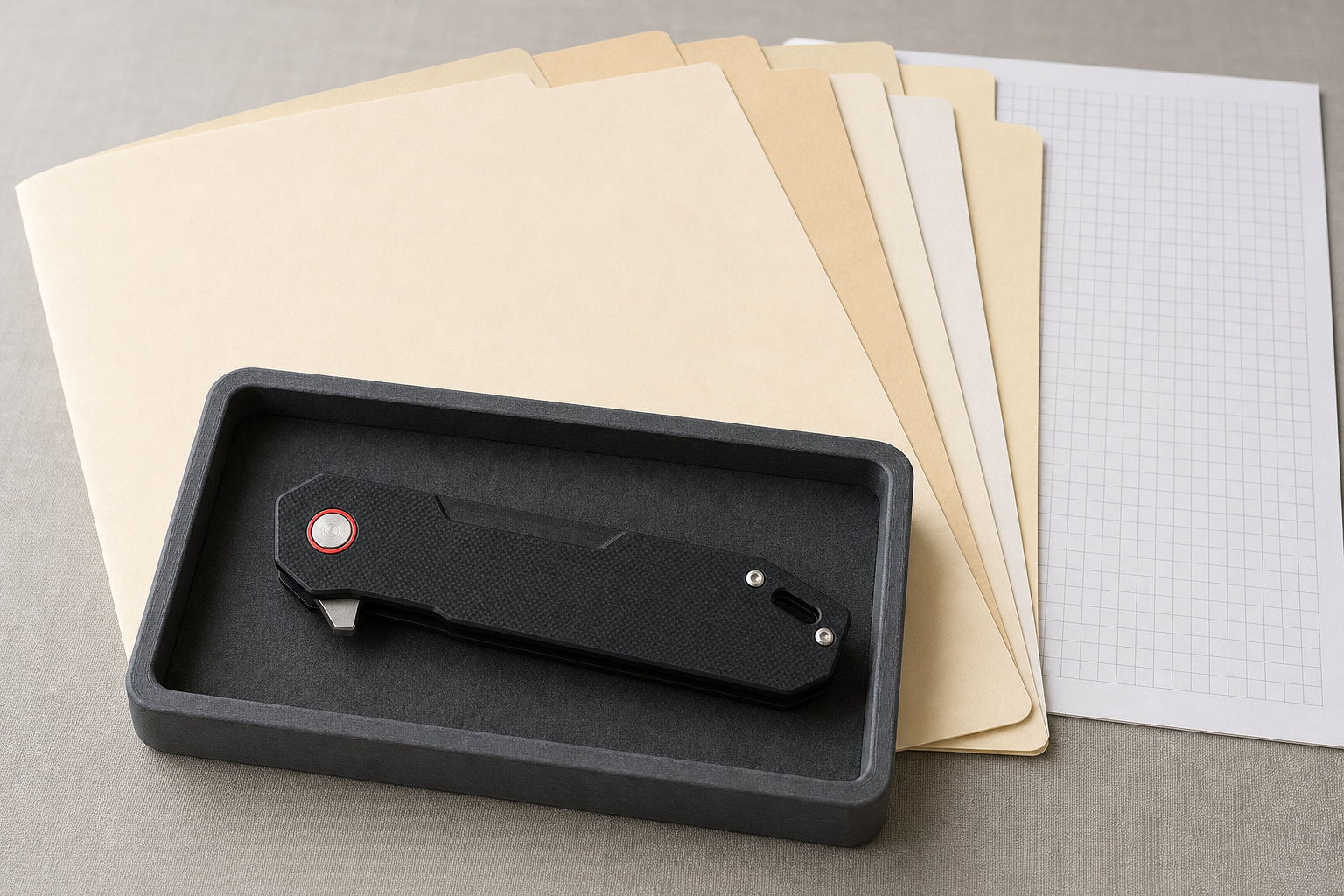
For OEM and ODM pocket knife projects, I separate the compliance question into gates. The first gate is import. Can the knife enter the country with its current mechanism, blade shape, and paperwork? The second gate is sale. Can the buyer sell it to the intended customer group? The third gate is delivery. Can it be shipped through the chosen courier, platform, or retail process? The fourth gate is possession or carry. What does the end user need to know after purchase? The fifth gate is product safety. Does the product include safe packaging, warnings, clear instructions, and traceable batch information?
This matters because buyers often mix these layers together. A product may be a normal folding knife for a responsible adult user, but the online sales channel may still ask for age checks. A country may allow some utility knives but restrict automatic or gravity-opening designs. A local city, state, province, or marketplace may add another layer. I do not want buyers to discover this after cartons are packed.
The UK government page on selling, buying and carrying knives is a useful example because it separates selling age limits, public carrying, folding pocketknives, lock knives, and banned designs. I do not copy UK rules into every market. I use it to show why the question must be specific.
| Rule layer | Buyer question | Who should confirm |
|---|---|---|
| Import | Can this design enter the country? | Importer, broker, customs adviser |
| Retail sale | Can this product be sold to this customer? | Buyer, retailer, local counsel |
| Delivery | Can this channel deliver it? | Platform, courier, distributor |
| Carry and use | What should the end user know? | Local legal adviser |
Private-label Planning Checklist
Before starting production, prepare the market and product details your importer or compliance advisor needs to review.
| RFQ Field | What to Prepare |
|---|---|
| Target market | Country, state, region, or sales channel |
| Product category | Folding knife / fixed blade / multi-tool / outdoor tool |
| Intended use | EDC / camping / kitchen / hunting / rescue / promotional |
| Buyer requirements | Testing, labeling, documentation, or packaging rules |
| Blade and lock details | Blade length, opening method, lock type, edge style |
| Packaging text | Warnings, claims, care notes, language requirements |
| Documents | Drawing, sample photo, logo file, packaging artwork |
| Review owner | Importer, legal advisor, testing lab, or internal compliance team |
Which Folding Knife Features Should Buyers Document First?
Compliance review becomes weak when the product details are vague. A supplier cannot check a "pocket knife" in general.
Buyers should document blade length, blade shape, cutting edge, lock type, opening method, spring or detent design, handle structure, clip, intended use, and packaging wording before legal review.
I Start With Measurable Product Facts
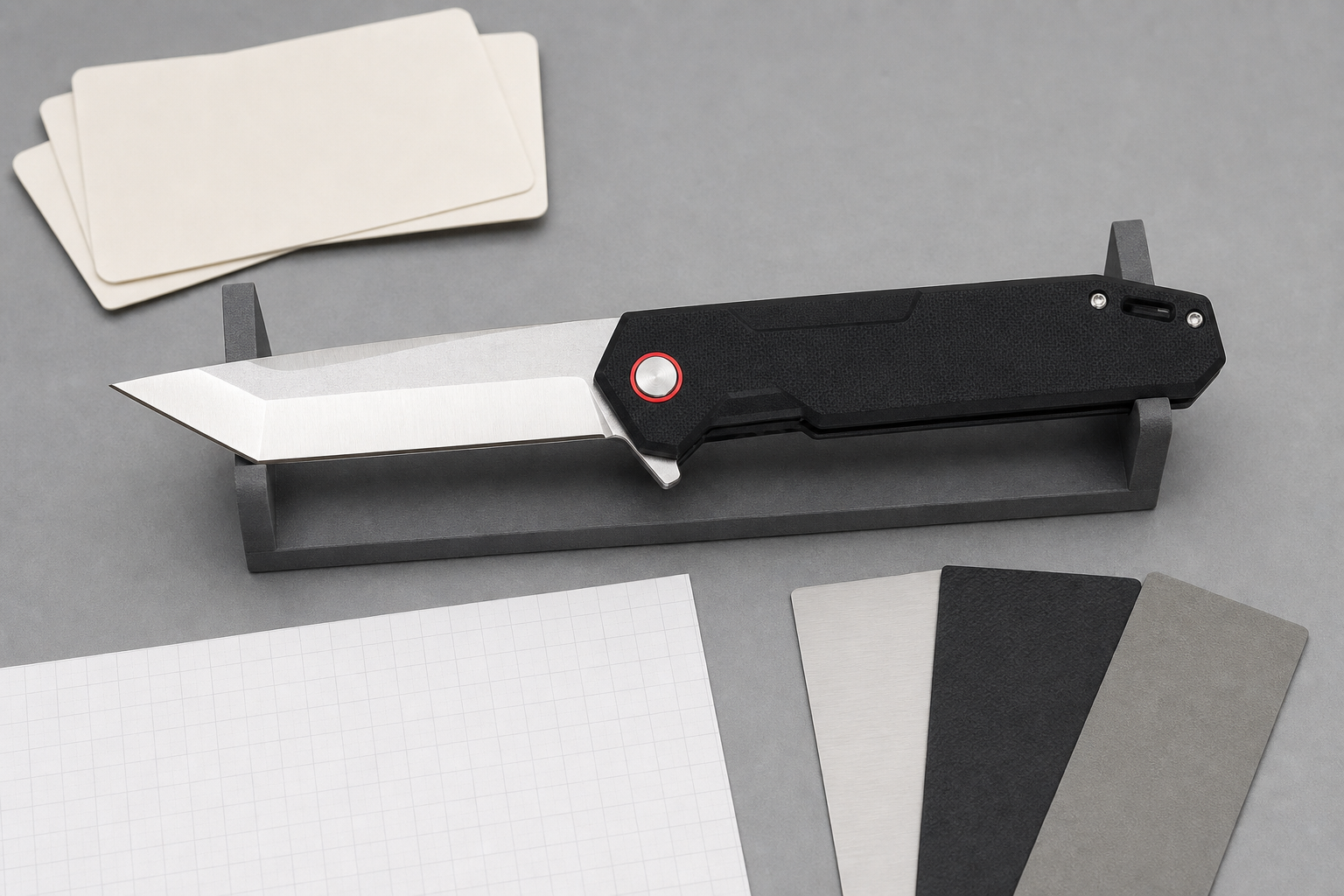
A product-specific review needs facts. The buyer should know the exact blade length and the measurement method. The buyer should know whether the knife locks. The buyer should know whether it opens manually, by thumb stud, by flipper, by assisted opening, by button, by gravity, or by inertia. The buyer should know if the product has a double edge, hidden blade, unusual handle, or extra tool functions. These details affect how a local compliance adviser or broker reviews the product.
For folding knives, the opening method often needs special attention. A design that feels smooth in the hand may still be questioned if the target market is sensitive to automatic, gravity, or centrifugal opening. A lock that is useful for safety in one market may change classification or carry guidance in another. A buyer should never approve a mechanism only because it looks good in a sample video.
I also document commercial intent. Is the knife positioned for camping, EDC utility, package opening, repair kits, outdoor gear, or general work use? The answer should match the design and packaging. If the product is a simple utility folder, the design, description, and images should all support that position.
| Feature | Why it matters | Buyer action |
|---|---|---|
| Blade length | Some markets use length thresholds | Define length and measurement method |
| Lock type | Locking folders may be treated differently | Confirm target-market rules |
| Opening method | Automatic, gravity, or centrifugal action may be restricted | Review mechanism early |
| Marketing wording | Claims can change channel risk | Use utility-focused language |
How Should Buyers Check Import Restrictions?
Import rules can stop a product before retail even starts. A small mechanism detail can become a customs issue.
Buyers should check import restrictions by comparing the exact knife design against customs rules, prohibited-goods lists, classification guidance, and broker advice before mass production.
I Treat Customs Review as a Design Step
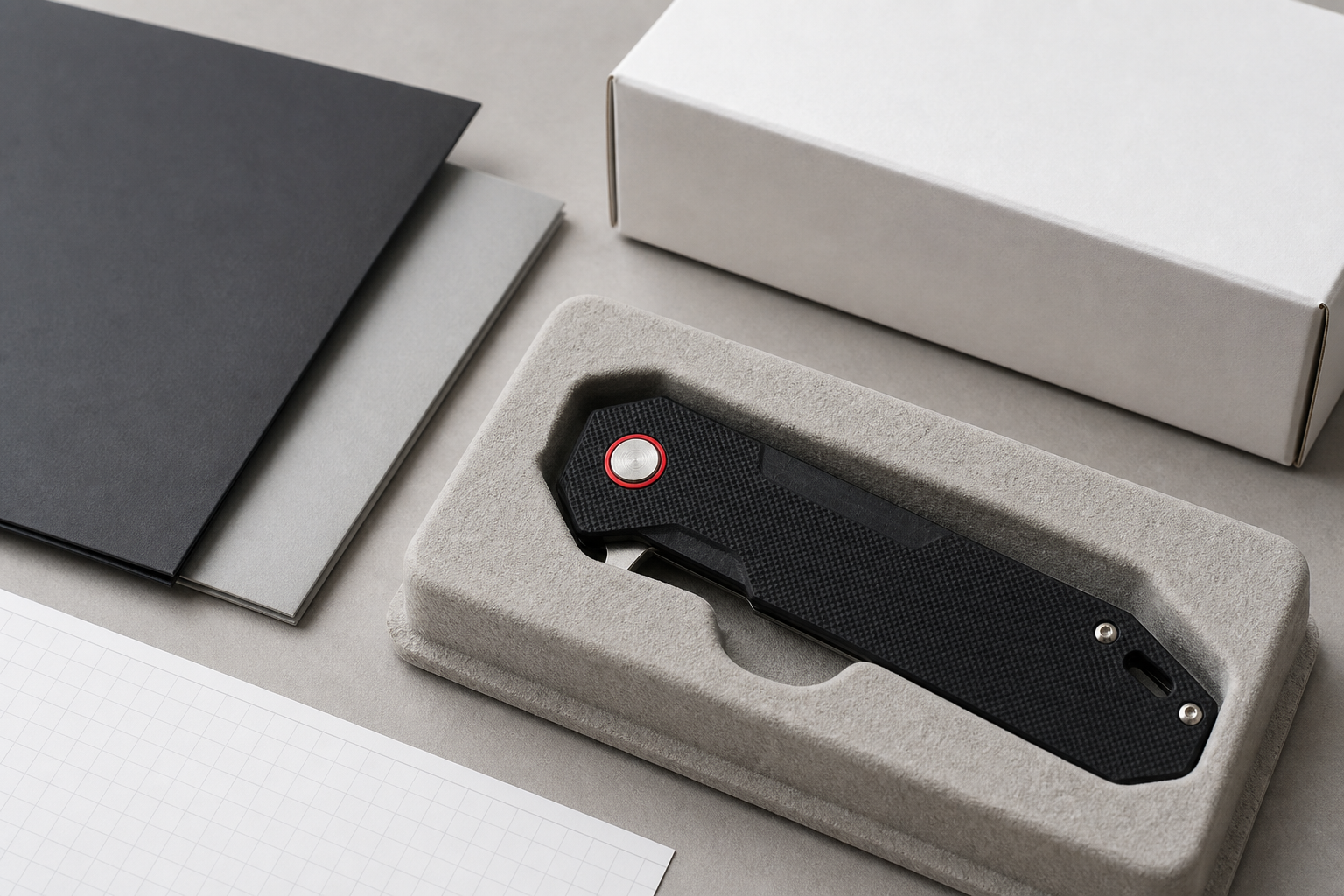
Import review should happen before tooling and packaging approval. In the United States, the CFR provisions for switchblade knives in 19 CFR Part 12 show why import rules can turn on the definition of a switchblade and on whether a knife is designed for primary utility use. For a buyer, the practical lesson is simple: mechanism and use case matter.
Canada gives another clear example. The Canada Border Services Agency memorandum on importing and exporting firearms, weapons and devices discusses prohibited weapons and includes knives opened automatically by gravity, centrifugal force, or hand pressure on a device in or attached to the handle. This is not a universal global rule, but it shows how detailed opening-method review can become.
I suggest buyers ask the importer or broker for written confirmation based on the actual sample, drawings, and specification. A photo alone may not be enough. The broker may need to know how the blade opens, how much force is required, whether it can open by wrist flick, whether a spring is involved, and how the product is described on invoices and packing lists.
| Import review item | Why it matters | Document to prepare |
|---|---|---|
| Product classification | Customs may need category detail | Specification sheet |
| Opening mechanism | Restricted designs may be refused | Mechanism description and sample |
| Intended use | Utility design may matter | Product description and packaging copy |
| Country of origin | Import documentation needs accuracy | Marking and invoice details |
What Sale, Age, and Delivery Rules Should Buyers Check?
A product can pass customs and still fail at retail. Online sales and age verification often create another gate.
Buyers should check sale age limits, online listing rules, delivery handover rules, retailer policy, distributor requirements, and marketplace restrictions before launching folding pocket knives.
I Look at the Full Buyer Journey
The sales path can include importer, warehouse, wholesaler, retailer, online marketplace, courier, and end user. Each step may have rules. In the UK, the official GOV.UK page says it is illegal to sell most knives to anyone under 18, with exceptions for certain folding pocketknives. It also distinguishes folding pocketknives with a cutting edge no longer than 3 inches and non-locking construction from other knives. That kind of detail is exactly why buyers should confirm the target-market rule before choosing blade length and lock type.
Online sale can be more complex than in-store sale. Some channels require age verification. Some couriers may restrict delivery of bladed items. Some marketplaces may prohibit certain listings even if local law allows the product. Some retail chains may have internal rules stricter than national law. A supplier may help prepare accurate product data, but the buyer must verify channel acceptance.
This is also a packaging issue. If the package is going into a retail store, the warning language, barcode area, product name, and age-control marking may need review. If the product is sold online, the product page should show the item clearly and responsibly without dramatic use scenes.
| Sales-stage question | Possible issue | Practical control |
|---|---|---|
| Age limit | Sale to minors may be restricted | Confirm age verification process |
| Online listing | Platform may block knives | Check marketplace policy early |
| Delivery | Courier may require special handling | Confirm shipping route |
| Retail display | Store rules may be stricter | Prepare channel-specific documents |
How Should Buyers Handle Local and Regional Differences?
National guidance may not be the final answer. Local rules can still affect distribution, carry, and product listings.
Buyers should handle local differences by checking country, state, province, city, retailer, and platform rules separately. One national answer is not enough for serious B2B distribution.
I Avoid One-Size-Fits-All Legal Answers
Buyers often ask for a single legal statement that covers a whole country or region. I understand why. It feels efficient. But knife products can be affected by layered rules. A country may set import rules. A state or province may add restrictions. A city may have carry rules. A marketplace may have its own prohibited items policy. A retailer may set age-control or packaging requirements. A distributor may avoid certain mechanisms even when they are technically allowed.
This is why I recommend a market matrix. The buyer can list each target market, then check import, sale, delivery, carry, product safety, labeling, and channel policy. The matrix should include the review date because rules can change. It should also include who confirmed the information. A sourcing manager should not rely only on a forum post, old blog article, or competitor listing.
For U.S. sales, for example, buyers should treat federal import guidance as only one layer. State and municipal rules may still matter after release from customs. For EU sales, broad product safety duties may apply even when a knife is not regulated as a special product category. For Canada and the UK, official guidance shows why opening method, age sale, and banned-design lists can become important.
| Review level | What to check | Why it matters |
|---|---|---|
| Country | Import and national sale rules | Controls market entry |
| State or province | Local restrictions | Controls distribution planning |
| City or venue | Carry and use limitations | Affects end-user guidance |
| Platform or retailer | Commercial acceptance | Controls where the product can sell |
What Product Safety and Packaging Controls Should Buyers Prepare?
Legal review is not the same as product safety. A legal product can still cause complaints if it is packaged or explained poorly.
Buyers should prepare safe packaging, clear instructions, warnings, traceability, product specifications, inspection records, and responsible-use guidance for folding pocket knives.
I Connect Safety Wording With Real Product Design
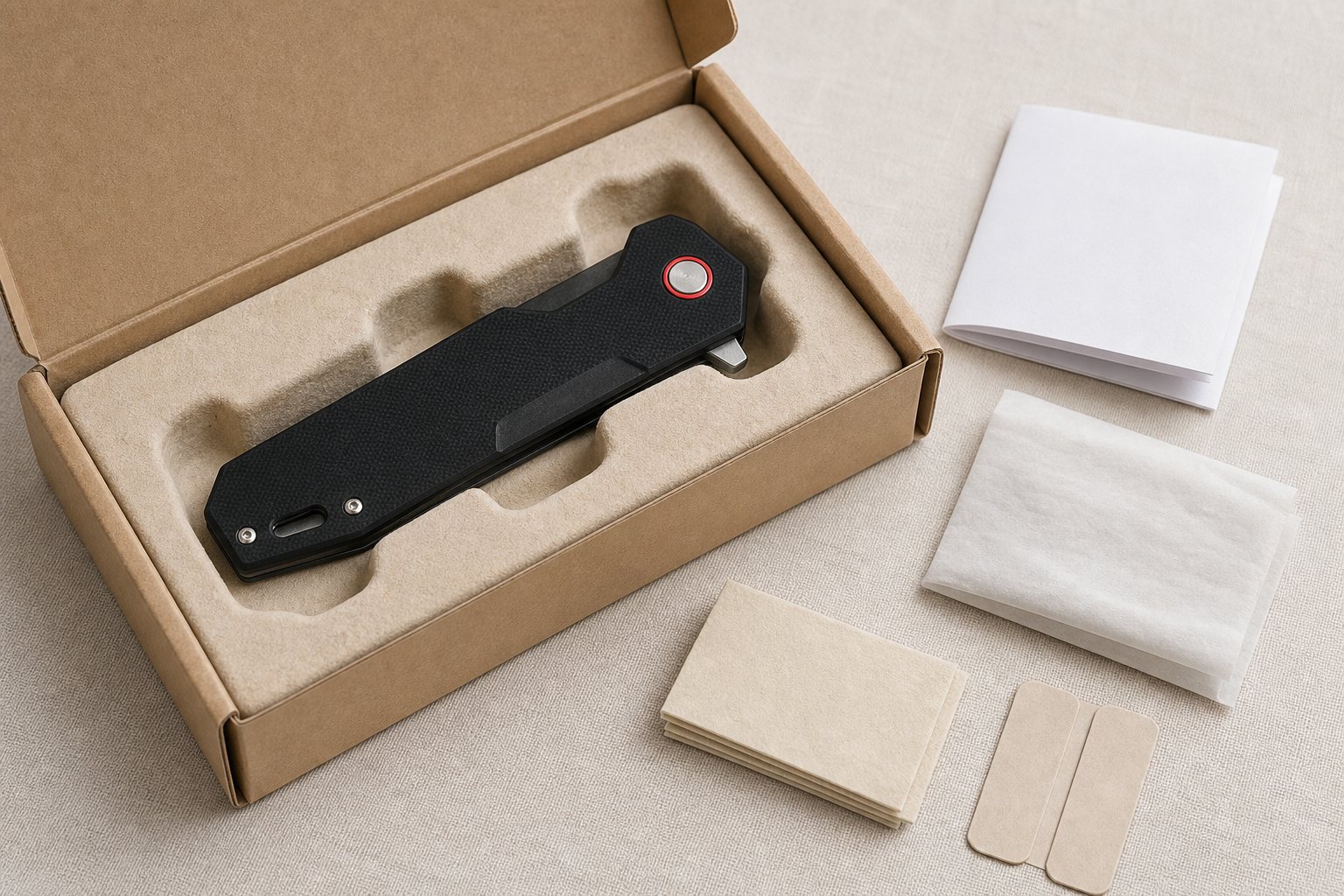
Product safety starts with the physical item. A folding knife should close securely. The edge should not be exposed in packaging. The lock, if used, should engage consistently. Screws should be secure. The clip should not have sharp burrs. The user should be able to understand how to open, close, clean, dry, store, and sharpen the knife. This is not only good service. It protects the buyer's brand.
The European Commission product safety page states that the General Product Safety Regulation is intended to ensure only safe products are available on the market. This broad principle matters for consumer knife products because buyers should think about safe packaging, traceability, warnings, and user information before shipment.
The Canadian Centre for Occupational Health and Safety page on working safely with sharp blades or edges gives practical safety ideas such as using the right tool, keeping blades sharp, inspecting tools, and avoiding open-tool pocket carry. I use these ideas to improve product inserts and safety language. The final wording still needs market review, but the product should not be silent about safe handling.
| Safety control | What to prepare | Buyer benefit |
|---|---|---|
| Secure packaging | Closed knife, protected edge, stable tray | Reduces handling risk |
| Instruction insert | Opening, closing, cleaning, storage | Supports responsible use |
| Traceability | Batch code and supplier records | Helps after-sales follow-up |
| QC records | Lock, action, edge, finish, packaging | Supports repeat production |
How Should Marketing Avoid Turning a Utility Tool Into a Higher-Risk Product?
Poor marketing can create problems even when the knife design is practical. Words and images matter.
Marketing should present folding pocket knives as utility, EDC, outdoor, camping, repair, warehouse, or general cutting tools. Buyers should avoid self-defense, combat, fear-based, or exaggerated toughness claims.
I Prefer Practical Product Language
Many B2B knife projects do not fail because the steel is bad. They fail because the product promise is unclear or too aggressive. A folding pocket knife for daily utility does not need dramatic wording. It can explain blade steel, handle material, lock type, carry clip, edge geometry, corrosion resistance, maintenance, and safe use. These are stronger commercial points for serious buyers.
Marketing should match the target sales channel. Outdoor retailers may prefer camping and utility language. Industrial buyers may prefer package opening and repair language. EDC channels may prefer compact carry, smooth action, and material detail. Gift channels may prefer finish, packaging, and perceived value. None of these require weapon-style claims.
This also affects images. I prefer clean product photos, size references, closed-position views, packaging shots, material close-ups, and function demonstrations that are safe and neutral. If a marketplace or retailer reviews the listing, this kind of content is easier to understand. It also helps end users understand what the product is for.
| Marketing area | Risky approach | Better approach |
|---|---|---|
| Product name | Aggressive weapon-style name | Utility or outdoor name |
| Sales copy | Self-defense claims | Cutting, repair, camping, EDC utility |
| Product images | Dramatic unsafe scenes | Clean product and packaging photos |
| Feature claims | Unsupported performance promises | Measurable specifications |
What Should Buyers Put in the RFQ and Compliance File?
A supplier cannot build a market-ready knife from unclear notes. The RFQ should include compliance-sensitive details from the start.
Buyers should include target market, sales channel, blade length, lock type, opening method, steel, handle material, packaging, warning needs, target price, MOQ, and required documents in the RFQ.
I Use the RFQ to Reduce Guessing
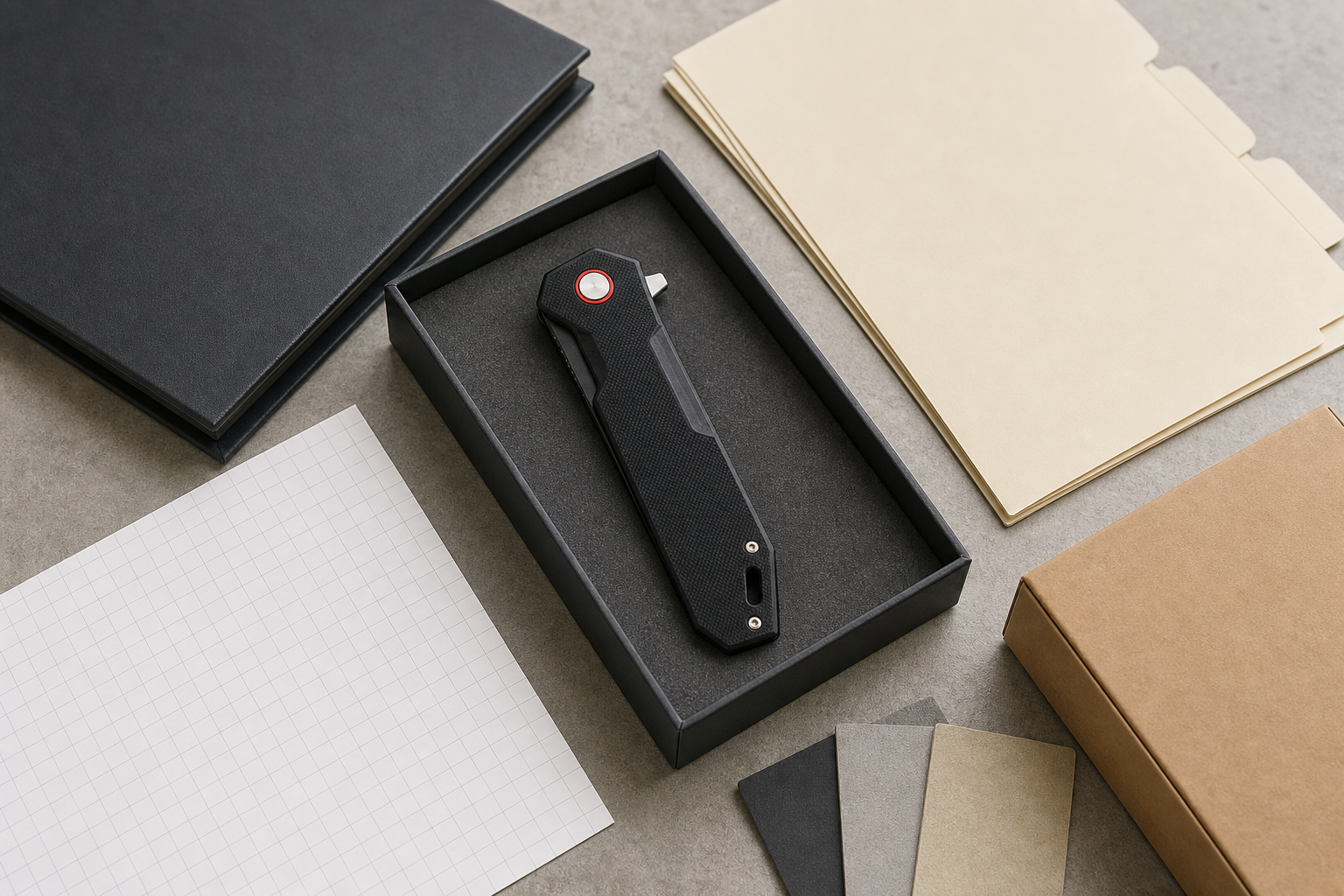
The RFQ should help the supplier understand the target market before structure is fixed. If the buyer wants a non-locking knife, say it. If the target market has a blade length limit, say it. If a marketplace does not accept assisted opening, say it. If the packaging must include specific warnings or age-control text, say it early. These details affect design, sample cost, packaging layout, and timeline.
I also suggest building a compliance file beside the RFQ. It can include product drawings, blade measurement method, mechanism description, material list, packaging artwork, safety insert, inspection checklist, importer confirmation, broker notes, and local legal review. The file should be updated when the design changes. A small blade length change or opening-method change can make old approval notes unreliable.
The ISO 9001 quality management page is useful here because it connects quality management with customer expectations, processes, and continual improvement. For a knife order, compliance-sensitive information should not live only in chat messages. It should become part of the controlled product record.
| RFQ field | Why it matters | Example input |
|---|---|---|
| Target market | Rules differ by place | UK, U.S., Canada, EU, distributor market |
| Mechanism | Classification may depend on action | Manual, non-locking, liner lock, back lock |
| Sales channel | Platform rules may differ | Retail, online, wholesale, private label |
| Required documents | Avoids launch delays | Specs, QC checklist, packaging proof |
How Can Vast State Support Folding Pocket Knife Compliance Preparation?
A manufacturer cannot replace local legal advice. But a practical supplier can help buyers avoid many preventable product mistakes.
Vast State can support buyers with product structure review, prototype development, material selection, packaging customization, documentation, QC planning, and production follow-up for folding pocket knife projects.
I Help Buyers Turn Rules Into Production Decisions
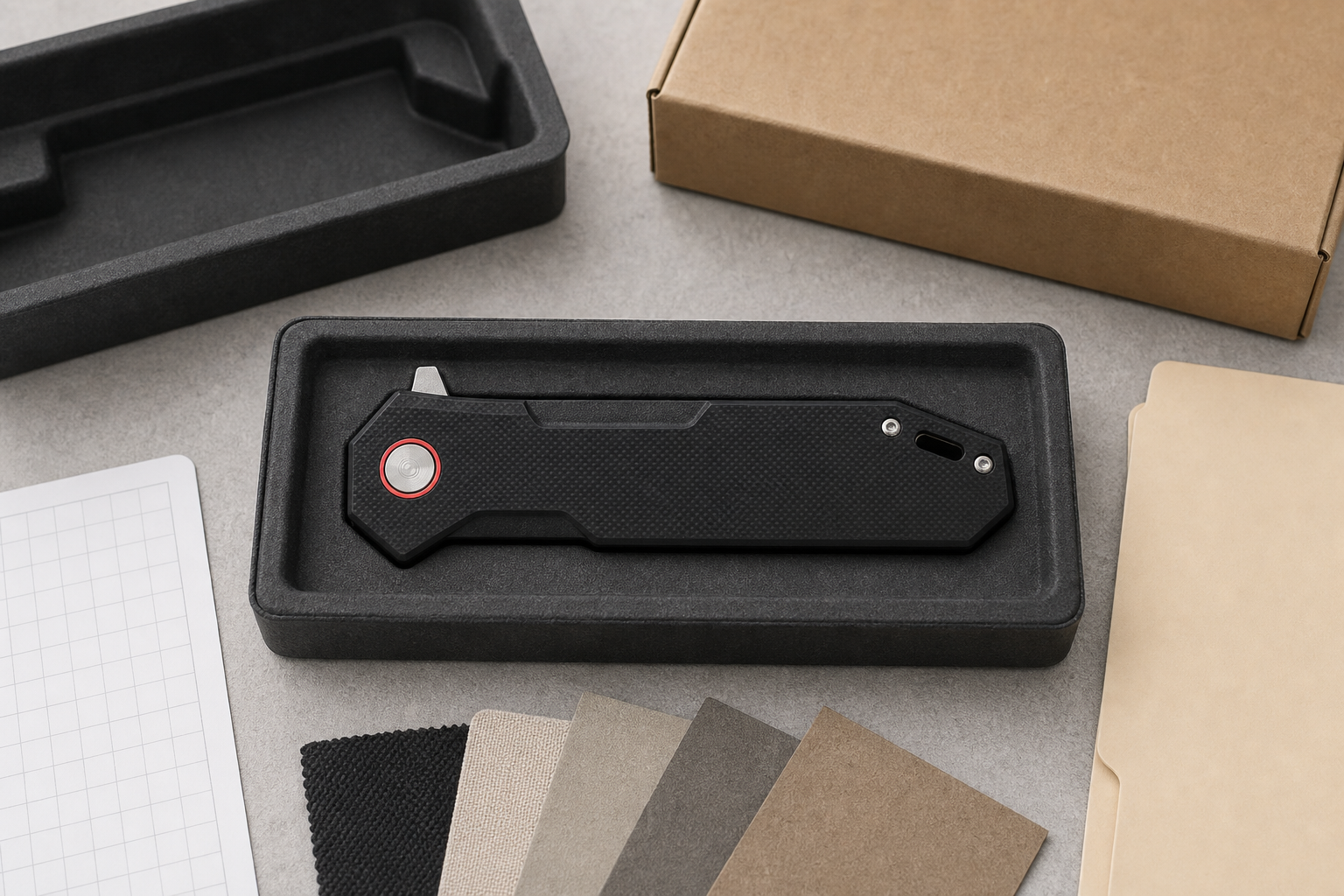
Vast State is an OEM and ODM knife and outdoor tool manufacturer based in Yangjiang, China. We support customers from concept to production, including prototype development, material selection, lock and structure suggestions, finish options, packaging customization, and production follow-up. For compliance preparation, our role is practical. We help buyers define the product clearly so their importer, broker, counsel, distributor, or platform team can review it correctly.
If a buyer already has a finished design, I can help check manufacturability and document the product details. If a buyer only has a rough idea, I can suggest a safer development direction based on target market, price range, use case, and packaging plan. I cannot tell a buyer that a knife is legal everywhere. No responsible supplier should do that. But I can help provide the accurate specifications that make local review possible.
This is especially important for folding pocket knives because small details matter. Blade length, lock type, pivot action, opening method, edge exposure, packaging, warnings, and product wording can all affect market fit. The earlier we discuss them, the easier it is to control cost, lead time, and repeat production.
| Buyer situation | Vast State support | Practical result |
|---|---|---|
| Finished design | Manufacturability and specification review | Better information for legal review |
| Rough concept | ODM direction and structure suggestions | Fewer redesign loops |
| Private label project | Logo, packaging, and QC support | More launch-ready product |
| Repeat order | Production follow-up and batch control | More stable supply |
Planning a private-label knife line for this market?
Use this article as a planning reference, then confirm local requirements with your importer or compliance advisor before OEM/ODM production.
Conclusion
I treat folding pocket knife legality as a market-specific product-development checklist, not a yes-or-no question answered after production.