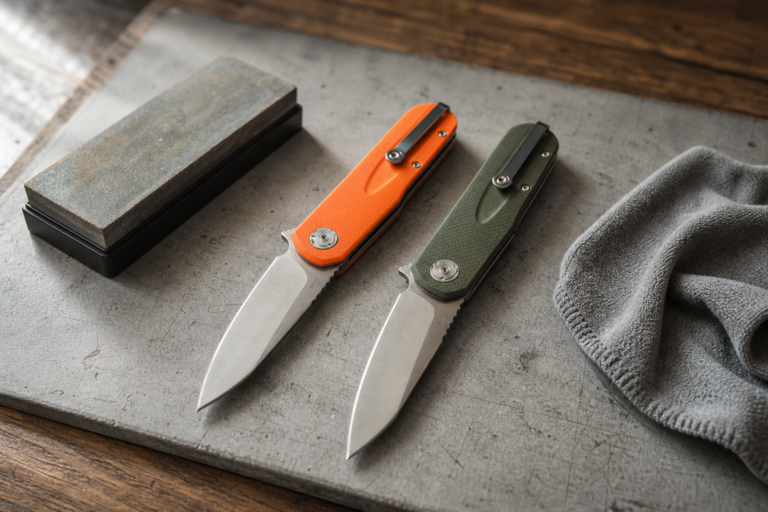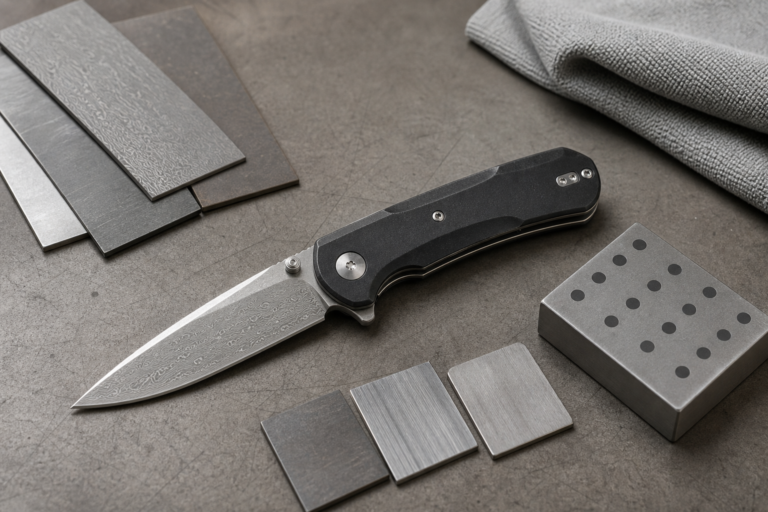
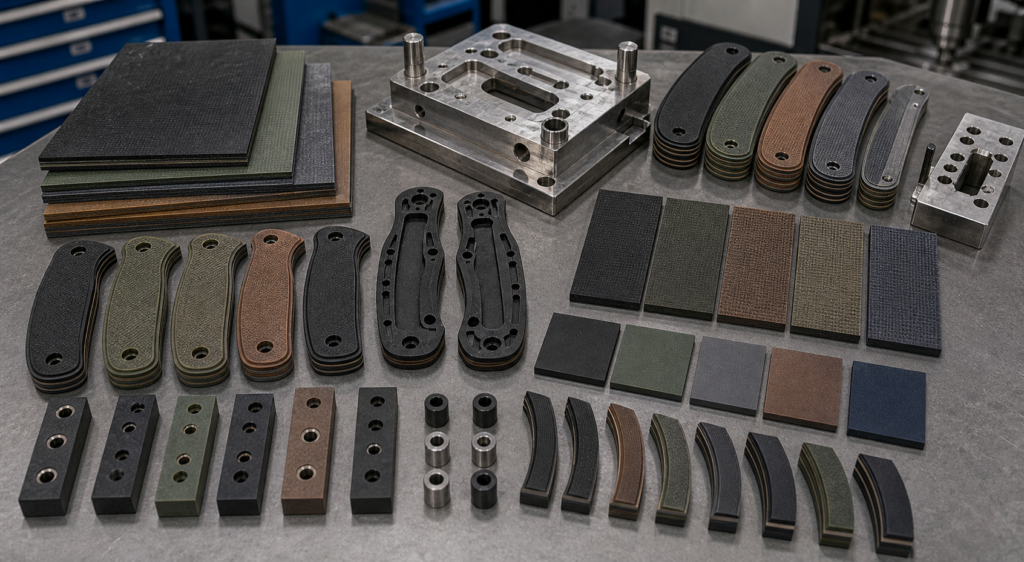
A G10 handle can feel strong but still disappoint buyers. Poor texture, rough edges, or bad fit can turn durability into complaints.
Knife buyers should specify G10 handles by grade, thickness, texture, color, machining tolerance, edge finishing, screw fit, grip comfort, dust-control expectations, and final inspection standards. This turns "durable grip" into a manufacturable OEM requirement.
Quick buyer brief:
- Answer: G10 is a strong glass-epoxy laminate, but the specification must include fit, texture, finish, and inspection details.
- Buyer context: This helps knife brands, importers, wholesalers, and private label buyers source repeatable OEM knife handles.
- Key checks: Confirm material grade, surface texture, scale thickness, hole tolerance, edge comfort, color consistency, and assembly fit.
Have a knife or multi-tool project in mind?
Send your sketch, CAD file, sample photo, or product idea. Vast State can review manufacturability, suggest materials, estimate MOQ, and prepare a quote for your OEM/ODM project.
When I discuss G10 with a buyer, I do not treat it as a magic word. I treat it as a handle system. The material matters, but the user feels the machining, texture, contour, edge break, screw fit, and balance. For B2B knife projects, G10 is often a practical choice because it can support outdoor, EDC, tactical-style, and utility products without making the design too fragile or too decorative. Still, the buyer should not only ask, "Can you make it with G10?" The better question is, "What G10 handle specification will repeat well in production and fit my target market?"
What Is G10 Handle Material and Why Do Buyers Use It?
Some buyers hear G10 and think the material solves everything. It does not. The real value appears only when the handle is specified clearly.
G10 is a glass fabric and epoxy laminate used for strong, stiff, moisture-resistant handle scales. Buyers use it because it balances durability, grip texture, machining flexibility, and cost control for many knife projects.
I Treat G10 as a Composite, Not a Marketing Label
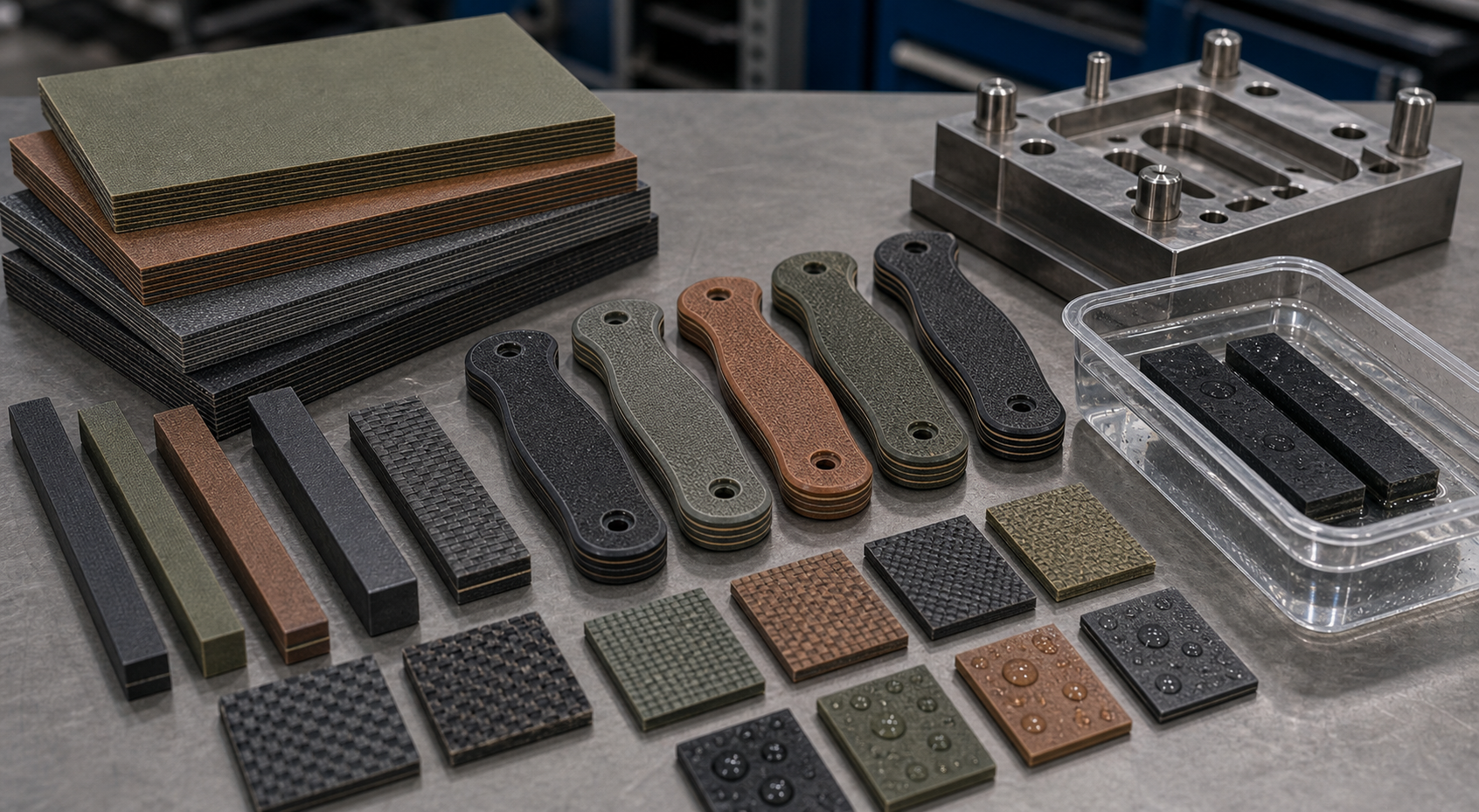
G10 is commonly described as a glass-epoxy laminate. Material suppliers such as Curbell Plastics describe G10/FR-4 as glass fabric combined with electrical-grade epoxy resin, with strength, stiffness, dimensional stability, and low thermal expansion. That matters for knife handles because a folding knife handle is not only a grip. It is also part of the structure around the pivot, screws, liners, spacers, and lock area.
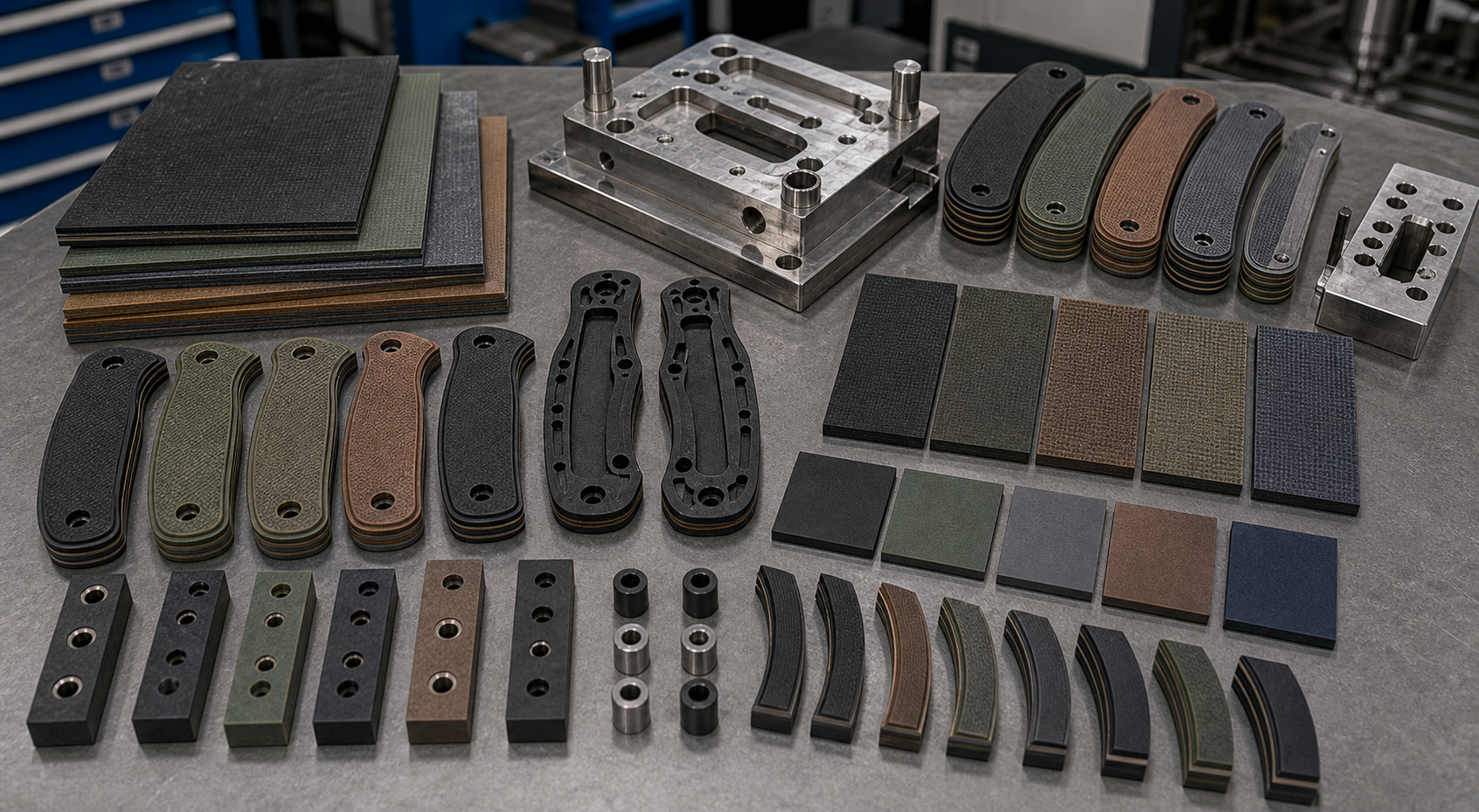
In my OEM work, I like G10 when the buyer wants a practical handle with a strong working feel. It can be machined into flat scales, contoured scales, textured surfaces, inlays, grooves, and color-layer effects. It can also support stable repeat production if the drawing is clear. But I always remind buyers that G10 is not the same as injection-molded plastic. It is machined from sheet or slab material, so the design must consider sheet thickness, cutting route, tool wear, dust control, edge finishing, and assembly tolerance. If the buyer wants a clean production result, these items must be written into the specification.
| Buyer question | Practical meaning | What I suggest checking |
|---|---|---|
| Is it real G10? | Glass-epoxy laminate, not a vague plastic name | Ask for material grade or supplier description |
| Will it feel durable? | Strength depends on thickness, support, and shape | Check scale thickness and liner structure |
| Will it grip well? | Texture controls hand feel | Approve texture sample before production |
| Will it repeat well? | Machining controls fit | Check holes, edges, and batch consistency |
OEM/ODM RFQ Checklist
Prepare these details to help Vast State review your project and provide a more accurate quotation.
| RFQ Field | What to Prepare |
|---|---|
| Project type | OEM from drawing / ODM private label / wholesale catalog |
| Product category | Folding knife / fixed blade / multi-tool / outdoor tool |
| Design status | Idea / sketch / 2D drawing / 3D CAD / physical sample |
| Target price | Ex-factory target price or retail price range |
| MOQ expectation | 500 / 1,000 / 3,000 / 5,000+ pcs |
| Logo method | Laser engraving / etching / printing / molded logo |
| Packaging | Standard packaging / custom retail box / Amazon-ready |
| Market | USA / EU / Japan / Korea / Middle East / other |
| Compliance needs | Buyer-specified testing / documentation / labeling |
| Timeline | Sample deadline / mass production deadline |
When Is G10 Better Than Basic Plastic Handles?
A lower-cost plastic handle may look acceptable in photos. But it may not fit a product that needs a stronger, more machined feel.
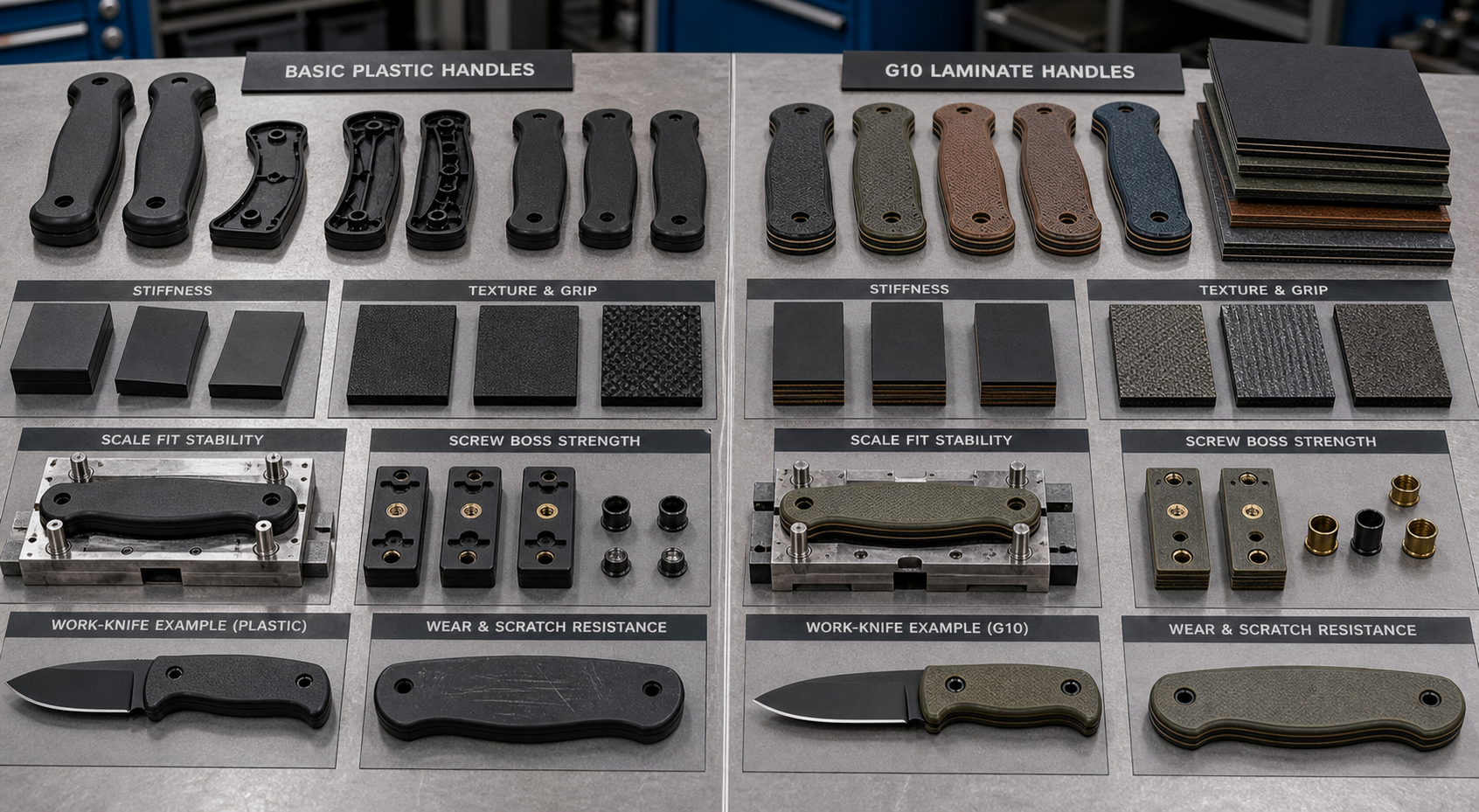
G10 is better than basic plastic when buyers need higher stiffness, better perceived durability, machined texture, stable scale fit, and a working handle feel for EDC, outdoor, and utility knives.
I Match the Handle Material to the Sales Position
Basic plastic can be right for some entry-level knives. It can reduce cost, simplify molding, and support larger volume production. But it may not give the same stiff, dense, machined feel that many buyers expect from a higher-positioned EDC or outdoor knife. G10 often works well when the customer wants a handle that feels more solid than simple plastic but does not need the visual cost of carbon fiber or the natural variation of wood or micarta.
The comparison is not only about "better" or "worse." It is about product fit. A lightweight budget pocket knife may not need G10. A working EDC knife with a liner lock, frame support, or textured grip may benefit from it. A tactical-style private label product may need aggressive texture, but an office EDC knife may need a smoother surface that does not damage pockets. I usually ask buyers about their target user first. Then I connect that user profile with thickness, texture, color, cost, and assembly structure. This avoids the common mistake of choosing G10 because it sounds premium, while the final product is either too rough, too heavy, or too expensive for the intended market.
| Handle option | Where it can work | Buyer caution |
|---|---|---|
| Basic plastic | Entry-level utility knives and price-sensitive projects | May feel less rigid or less refined |
| G10 | EDC, outdoor, tactical-style, and working knives | Needs machining and dust-control planning |
| Micarta | Outdoor knives with warmer hand feel | Color and surface may vary more |
| Carbon fiber | Higher-end visual positioning | Cost and appearance expectations are higher |
How Should Buyers Choose G10 Thickness, Texture, and Color?
G10 can look simple on a drawing. But thickness, texture, and color can change comfort, cost, pocket feel, and brand position.
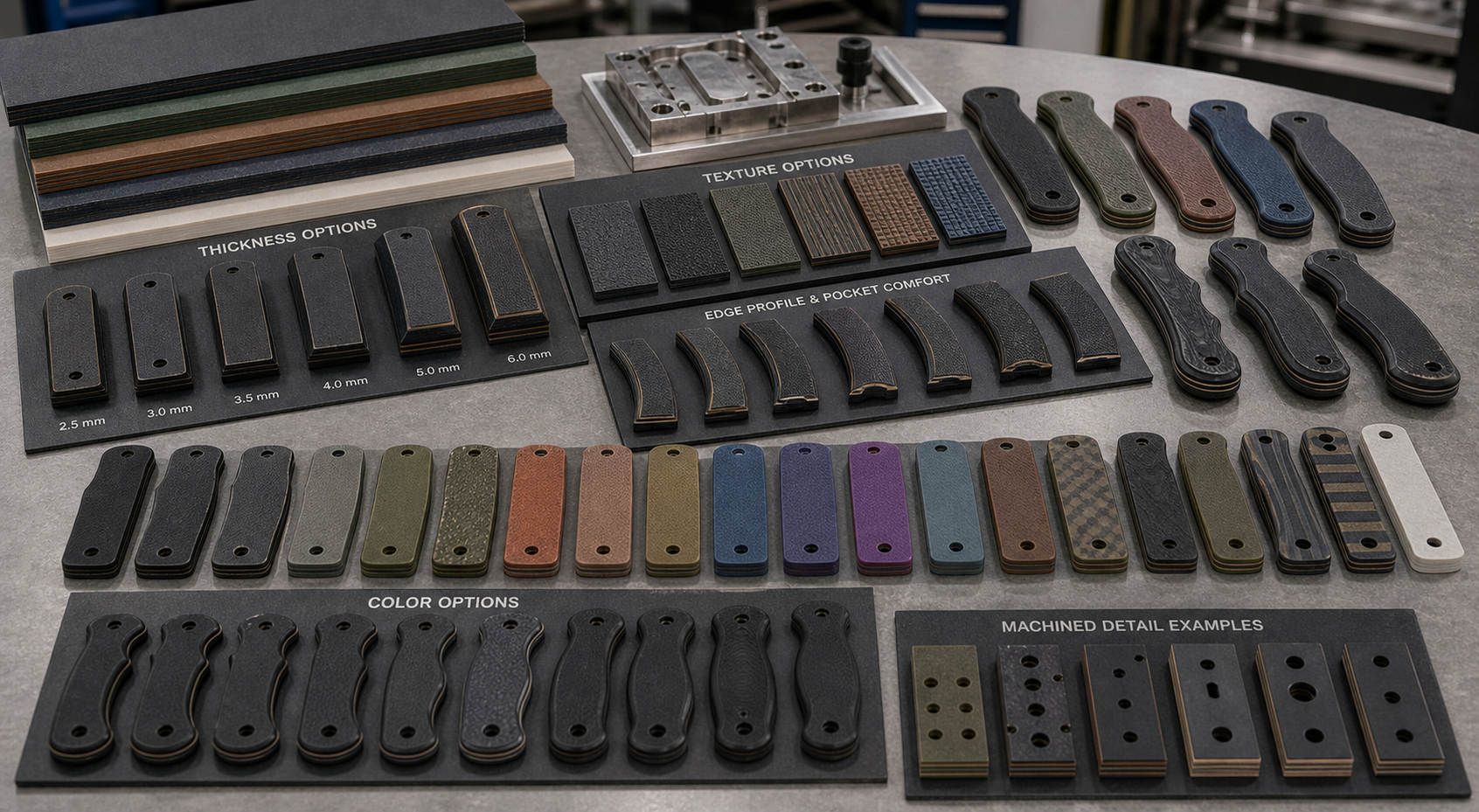
Buyers should choose G10 thickness, texture, and color based on knife size, liner structure, target grip level, carry comfort, cleaning needs, brand style, and repeatable supply.
I Approve Hand Feel Before I Approve the Color
Many buyers start with color. I prefer to start with hand feel. A handle scale that is too thin may save cost but feel weak. A handle that is too thick may feel strong but make the knife bulky. Texture works the same way. A deep milled pattern can improve grip, but it can also feel sharp, collect dirt, increase machining time, and create more pocket wear. A smoother surface can feel comfortable, but it may not satisfy an outdoor buyer who expects secure grip.
Color also needs a practical check. Black G10 is common because it is easy to match with many blade finishes and packaging styles. Green, tan, orange, gray, and layered G10 can support brand identity, but buyers should confirm availability and batch consistency. Layered G10 can create a good visual effect after contouring, but the drawing must show where the color layers should appear. Otherwise, a sample may look good while mass production looks different.
I usually suggest approving one physical reference sample for texture and one color standard for production. Photos are useful, but they are not enough. The buyer should also decide if the handle edges should be flat, chamfered, rounded, or contoured. Those details decide whether the knife feels like a rough tool or a clean retail product.
| Specification item | Why it matters | RFQ wording example |
|---|---|---|
| Thickness | Controls strength, weight, and handle size | "G10 scale thickness: 2.5 mm before contouring" |
| Texture | Controls grip and pocket comfort | "Medium texture, not aggressive pocket-tearing texture" |
| Color | Controls brand style and repeatability | "Black G10, batch color to match approved sample" |
| Edge shape | Controls comfort | "All exposed edges chamfered and hand-feel checked" |
What Machining Details Affect G10 Handle Quality?
G10 is tough, but tough material can be unforgiving. Poor routing, dull tools, or bad hole control can ruin assembly.
G10 handle quality depends on accurate CNC routing, clean screw and pivot holes, stable scale thickness, controlled edge finishing, good surface texture, and careful fit with liners, spacers, and clips.
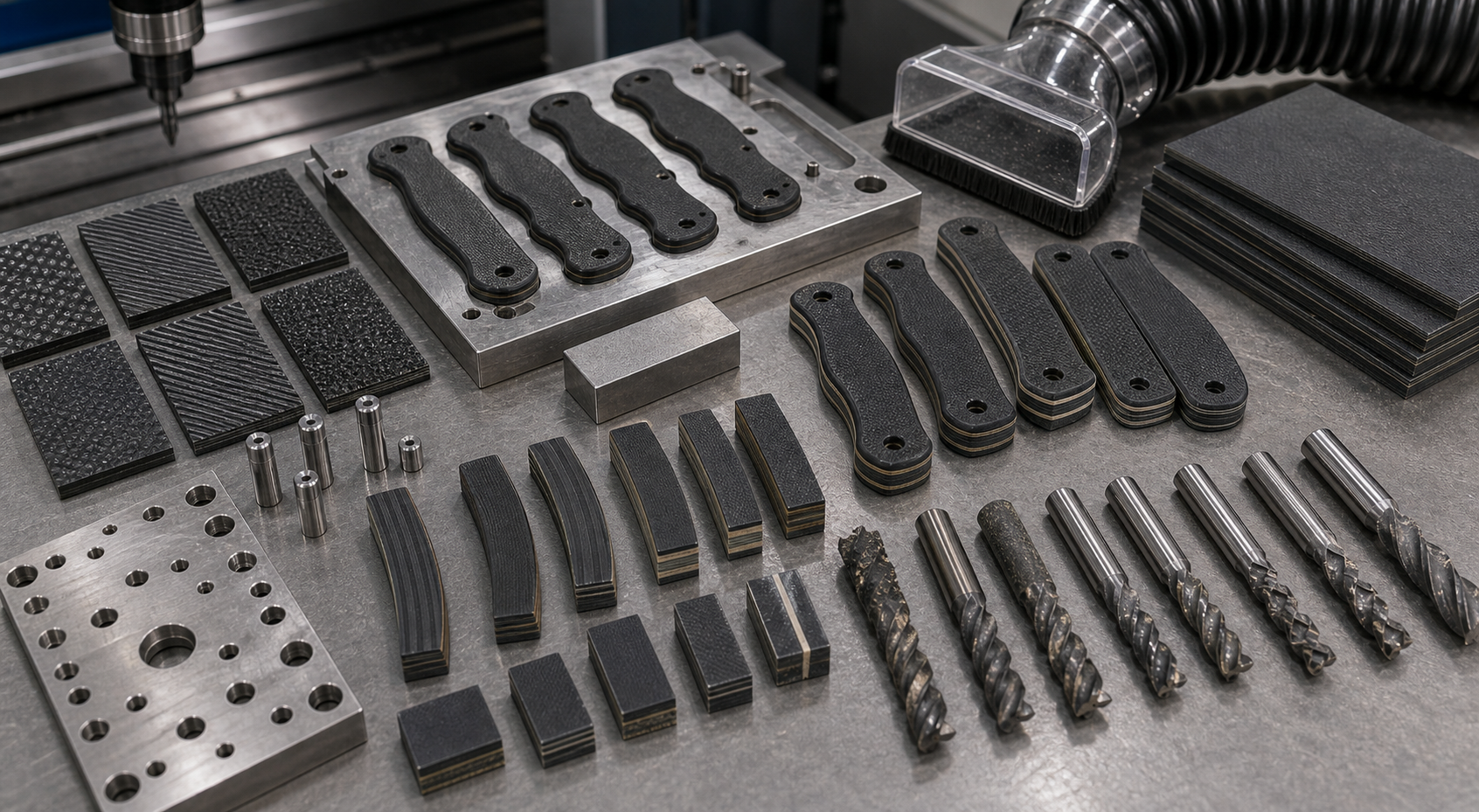
I Watch the Small Holes More Than the Big Shape
A G10 handle scale has a simple outline, but the important details are often small. Screw holes must align with liners. Pivot clearance must not interfere with action. Clip screw holes must hold the intended hardware. Chamfers must be even. If the knife has nested liners, the inside pocket must fit cleanly. If the design uses backspacers, the scale must not twist or leave gaps.
G10 also wears tools faster than softer plastics because glass fiber is abrasive. This affects edge quality and hole quality over production. A good sample made with fresh tooling does not always prove that the 2,000th piece will look the same. This is why I like in-process checks. The production team should check the first pieces, then check during the run. If the surface begins to chip, burn, fuzz, or show rough glass fiber, the problem should be corrected before assembly.
The machining plan should also respect the final handle feel. A sharp corner may pass a size check but fail in the user's hand. A milled groove may look good but collect dust or feel too aggressive. Good G10 production is a balance between accuracy, tool condition, surface quality, and final assembly feel.
| Machining detail | Risk if ignored | Practical control |
|---|---|---|
| Screw holes | Misalignment and assembly stress | Check diameter, position, and countersink |
| Outer profile | Uneven handle outline | Use fixture control and sample comparison |
| Texture milling | Rough or inconsistent grip | Approve texture depth and tool path |
| Edge finishing | Hot spots in the hand | Chamfer, radius, or polish exposed edges |
What Quality Checks Should Buyers Request for G10 Scales?
A G10 handle may pass visual inspection but still fail in use. Fit, comfort, and repeatability need their own checks.
Buyers should request G10 scale checks for material appearance, thickness, flatness, hole alignment, edge comfort, screw seating, surface texture, color consistency, assembly fit, and final knife function.
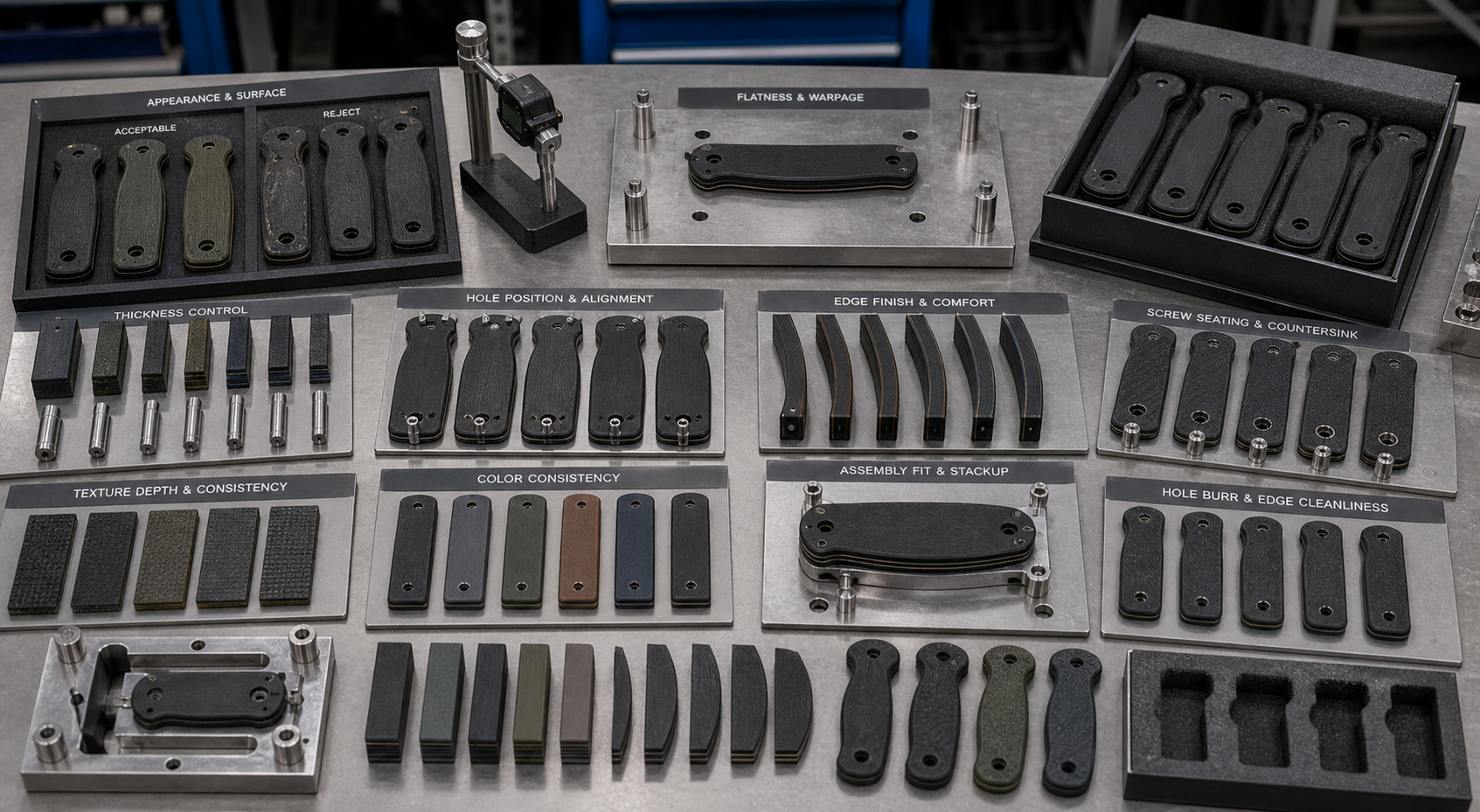
I Connect Handle Inspection With the Whole Knife
I do not inspect G10 scales as separate decorative plates only. I inspect them as parts of a full knife. The scale may look clean on the table, but it still has to fit the liner, pivot, stop area, screws, pocket clip, and spacer. If one hole is off, the assembler may force the screw. That can create stress, poor alignment, or a handle gap. If one edge is too sharp, the buyer may receive complaints even if the material is strong.
Material suppliers publish typical property data, but buyers should not treat one general sheet as a guarantee for every order. Curbell notes that values can vary by brand, and its G10/FR-4 page advises asking for specific information about an individual brand. The Atlas Fibre HPL thermoset data sheet also presents typical values under general use assumptions. For OEM sourcing, this means the buyer should request a practical quality plan, not only a material name.
My usual check list includes incoming material confirmation, sample comparison, first-article inspection, in-process size checks, surface review, assembly test, and final function check. For folding knives, I also check whether the handle supports smooth opening, proper blade centering, screw stability, and comfortable grip.
| Quality check | What to inspect | Why it matters |
|---|---|---|
| Incoming material | Color, thickness, surface, grade reference | Prevents wrong material from entering production |
| Dimensional check | Hole position, countersink, profile, thickness | Protects assembly fit |
| Hand-feel check | Edge comfort and texture level | Protects user experience |
| Final assembly check | Screws, clip, centering, gaps | Protects sellable product quality |
What Safety and Compliance Questions Matter When Machining G10?
G10 machining can create fine glass-epoxy dust. If the factory treats it casually, quality and worker safety both suffer.
Buyers should ask how the factory controls G10 dust, tool wear, surface contamination, protective equipment, waste handling, and material documentation. These controls help production stay cleaner, safer, and more consistent.
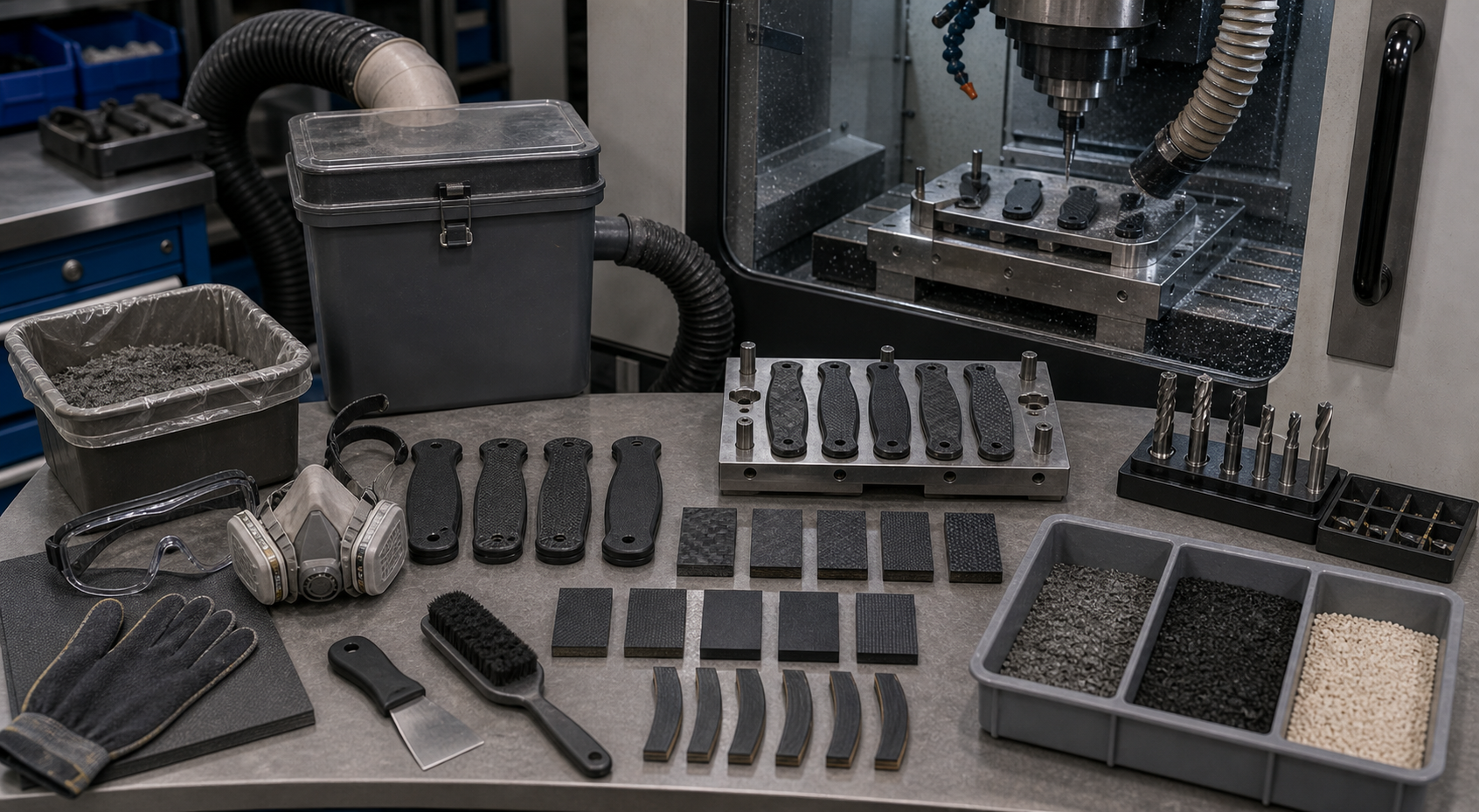
I See Dust Control as a Production Quality Issue
G10 contains glass fiber, so machining it is not the same as cutting ordinary plastic. Dust can affect the workshop, tools, surfaces, and worker comfort. Curbell lists machining dust irritation as a disadvantage of G10/FR-4. OSHA provides resources for evaluating exposure to synthetic mineral fibers, and its chemical database includes information for fibrous glass dust. NIOSH also explains that fibrous glass exposure can affect eyes, skin, and lungs, depending on dose, duration, and work activity.
For buyers, this does not mean the article should become a legal guide. It means the RFQ should ask practical factory questions. Does the machining station use dust extraction? Are operators trained to handle composite dust? Is the finished handle cleaned before assembly and packaging? Is the surface free from dust trapped in texture grooves? Are workers using suitable protective equipment according to the factory's safety process?
These questions protect both production and product appearance. G10 dust left in screw holes can affect assembly. Dust trapped in texture can make the product look unfinished. Poor tool condition can create fuzzy edges. A buyer does not need to manage the factory's safety program, but the buyer should choose a supplier that treats G10 machining as a controlled process.
| Safety or process item | Buyer question | Production reason |
|---|---|---|
| Dust extraction | How is machining dust collected? | Keeps parts and work areas cleaner |
| PPE and training | How do operators handle glass-epoxy dust? | Supports safer production practice |
| Cleaning | How are scales cleaned before assembly? | Prevents dusty texture and screw holes |
| Tool condition | How is tool wear monitored? | Reduces chipping and rough edges |
How Should Buyers Compare G10 With FR-4, Micarta, and Carbon Fiber?
Similar-looking handle materials can create different costs, risks, and customer expectations. A wrong comparison can lead to the wrong specification.
Buyers should compare G10 with FR-4, micarta, and carbon fiber by structure, flame-retardant requirement, grip feel, machining cost, appearance consistency, weight, target market, and brand positioning.
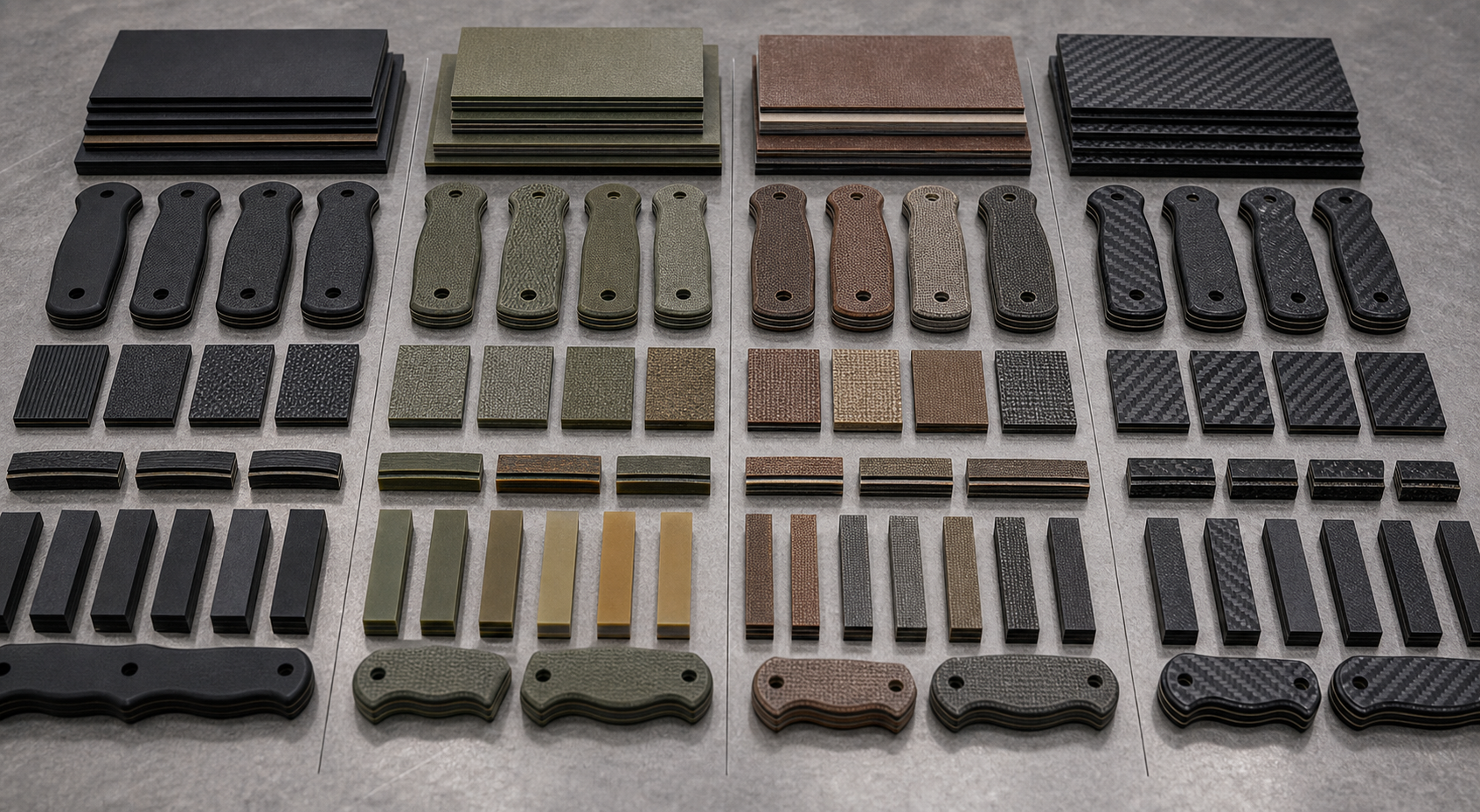
I Avoid Material Swaps Without Buyer Approval
G10 and FR-4 are often discussed together because both are glass-epoxy laminate families. However, buyers should not allow casual substitution. Piedmont Plastics explains that G10 and FR4 are both made with woven glass fabric and epoxy resin, while FR4 is flame retardant. ASTM D709 covers laminated thermosetting materials made from reinforcing layers bonded by thermosetting resin. These sources help buyers understand that material names are connected to grade, construction, and properties, not only color.
Micarta is different because it usually has a warmer, fabric-like feel and more natural-looking variation. It can be excellent for outdoor fixed blades, but it may not give the same crisp, technical look as G10. Carbon fiber is also different. It can support a higher-end visual position, but it usually raises cost and appearance expectations. Basic molded plastics can be good for entry-level volume, but they often do not give the same machined scale identity.
In procurement, I like to make a simple comparison table before sampling. This keeps the buyer from requesting one material while expecting the behavior of another. It also helps with cost discussions. If the buyer wants black G10, medium texture, and clean retail finish, I can quote that. If the buyer wants layered G10 with contour milling and custom color, the production plan changes.
| Material | Main buyer reason | Watch point |
|---|---|---|
| G10 | Strong machined grip and stable outdoor/EDC feel | Texture and edge finishing must be approved |
| FR-4 | Glass-epoxy laminate with flame-retardant context | Do not substitute without confirming requirement |
| Micarta | Warm grip and outdoor look | Color and surface variation need buyer approval |
| Carbon fiber | Higher visual positioning | Cost and cosmetic standards are stricter |
What Should Buyers Include in a G10 Handle RFQ?
A vague RFQ creates vague samples. Then the buyer spends time correcting problems that should have been defined earlier.
A G10 handle RFQ should include knife type, target market, order quantity, target price, G10 grade, thickness, color, texture, contour, screw layout, clip position, packaging, inspection points, and sample approval needs.
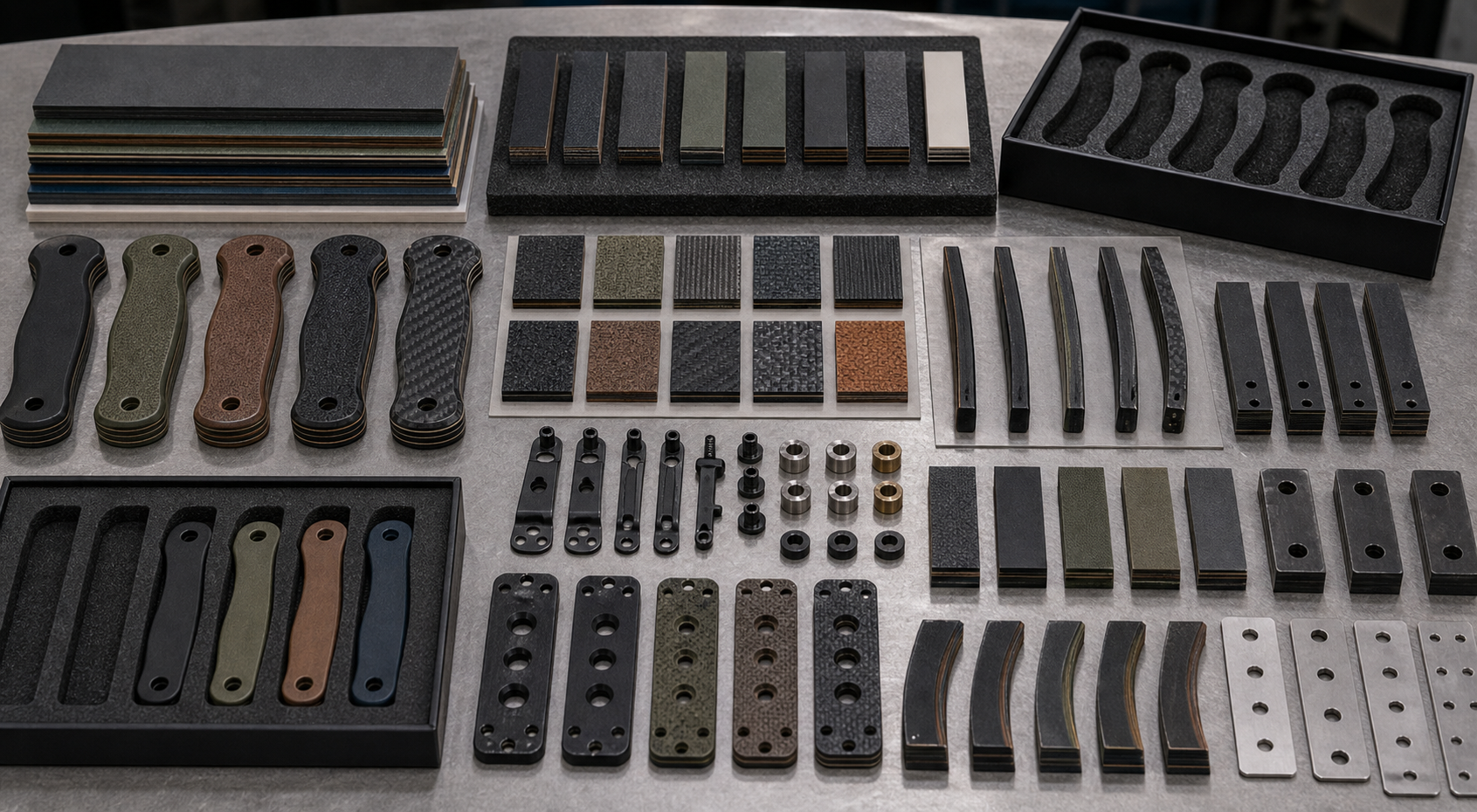
I Ask Buyers to Specify the Product, Not Only the Material
When a buyer asks me for a G10 handle knife, I still need the full product direction. Is it a folding knife, fixed blade, pocket knife, camping tool, or rescue tool? What is the target market? What blade steel is planned? What lock or structure will be used? What target price and quantity should the project fit? What packaging and branding are needed? These points decide whether the G10 handle should be simple, contoured, layered, textured, or combined with liners and spacers.
For an OEM/ODM project, the RFQ should also include drawings or reference samples when available. If the buyer has only an idea, I can help turn it into a manufacturable direction. But I still need enough information to avoid guessing. A strong RFQ should include target users, finish preferences, logo method, pocket clip requirement, screw color, edge comfort expectation, and inspection focus. If the knife is for outdoor use, grip may be more important. If it is for daily carry, pocket comfort may be more important. If it is for a private label retail line, packaging and color consistency may matter more.
The more clearly the buyer defines the G10 handle requirement, the easier it is to control cost, sample time, and repeat production. That is the real value of a good specification.
| RFQ field | What to provide | Why it helps |
|---|---|---|
| Product direction | Knife type, target user, target market | Guides structure and grip style |
| Material detail | G10 grade, color, thickness, texture | Reduces material confusion |
| Structure detail | Liners, screws, clip, spacers, contour | Protects assembly fit |
| Quality expectation | Sample approval, inspection points, packaging | Supports repeat production |
Turn your idea into a quote-ready knife project.
Share your drawing, sample photo, target quantity, market, and packaging needs. Vast State will review manufacturability and prepare OEM/ODM options.
Conclusion
I specify better G10 knife handles by connecting material, machining, texture, inspection, dust control, and RFQ details before production starts.
Source Notes
- Curbell Plastics G10/FR-4 supports the description of G10/FR-4 as glass fabric and epoxy resin with strong, stiff, dimensionally stable properties.
- ASTM D709 supports the broader laminated thermosetting material context for reinforced layers bonded by thermosetting resin.
- Atlas Fibre HPL thermoset data sheet provides typical material property context, but buyers should still confirm the actual grade used.
- OSHA synthetic mineral fibers exposure guidance, OSHA fibrous glass dust data, and NIOSH fibrous glass guidance support the need to treat G10 machining dust as a controlled workplace exposure topic.
- Piedmont Plastics G10/FR-4 provides useful context on G10/FR-4 properties and the distinction between G10 and flame-retardant FR4.