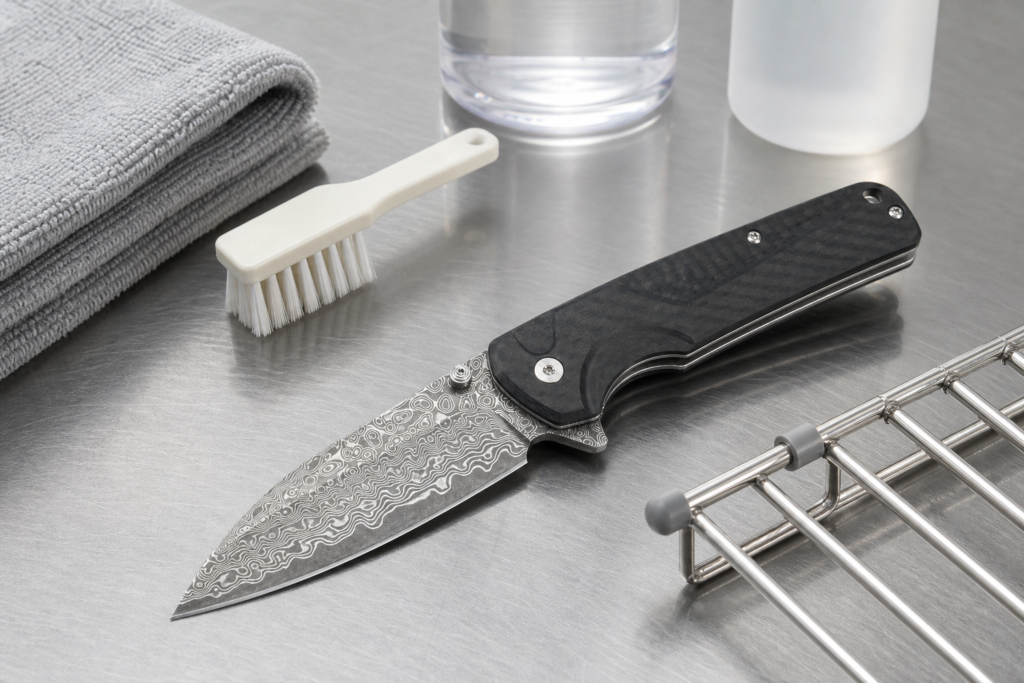
Knife cleaning guidance is easy to oversimplify. For food-contact knives, the timing matters as much as the method.
A knife must be cleaned and, when used for food-contact work, sanitized before first food use, between raw and ready-to-eat foods, after contamination, after task changes, after long continuous use, after storage or transport, after repair or sharpening, and whenever local food-safety rules require it.
Quick buyer brief:
- Answer: Buyers should explain cleaning and sanitizing as two linked steps. Cleaning removes food soil and residue. Sanitizing follows cleaning and reduces microorganisms on the food-contact surface. A dirty knife cannot be properly sanitized.
- Buyer context: This guide is for kitchen knife brands, foodservice suppliers, camping cookware brands, importers, distributors, private label buyers, marketplace sellers, and OEM/ODM sourcing managers.
- Key checks: Food-contact use, before first use, raw-to-ready food changes, allergen changes, visible soil, contamination events, continuous-use timing, storage, transport, sharpening, repair, dishwasher claims, sanitizer compatibility, label language, and QC inspection records.
Have a knife or multi-tool project in mind?
Send your sketch, CAD file, sample photo, or product idea. Vast State can review manufacturability, suggest materials, estimate MOQ, and prepare a quote for your OEM/ODM project.
This article is not a restaurant code manual or legal advice. Food-safety rules vary by country, state, city, food operation, and product category. Buyers should confirm local rules with counsel, food-safety professionals, retailers, and regulators before printing claims or instructions.
The sourcing lesson is practical: do not write vague copy like "clean after use" and stop there. A food-contact knife needs clear moments when cleaning is required, clear moments when sanitizing is required, and clear limits on what the buyer can claim.
What Is the Difference Between Cleaning and Sanitizing?
Many customer complaints start with unclear words.
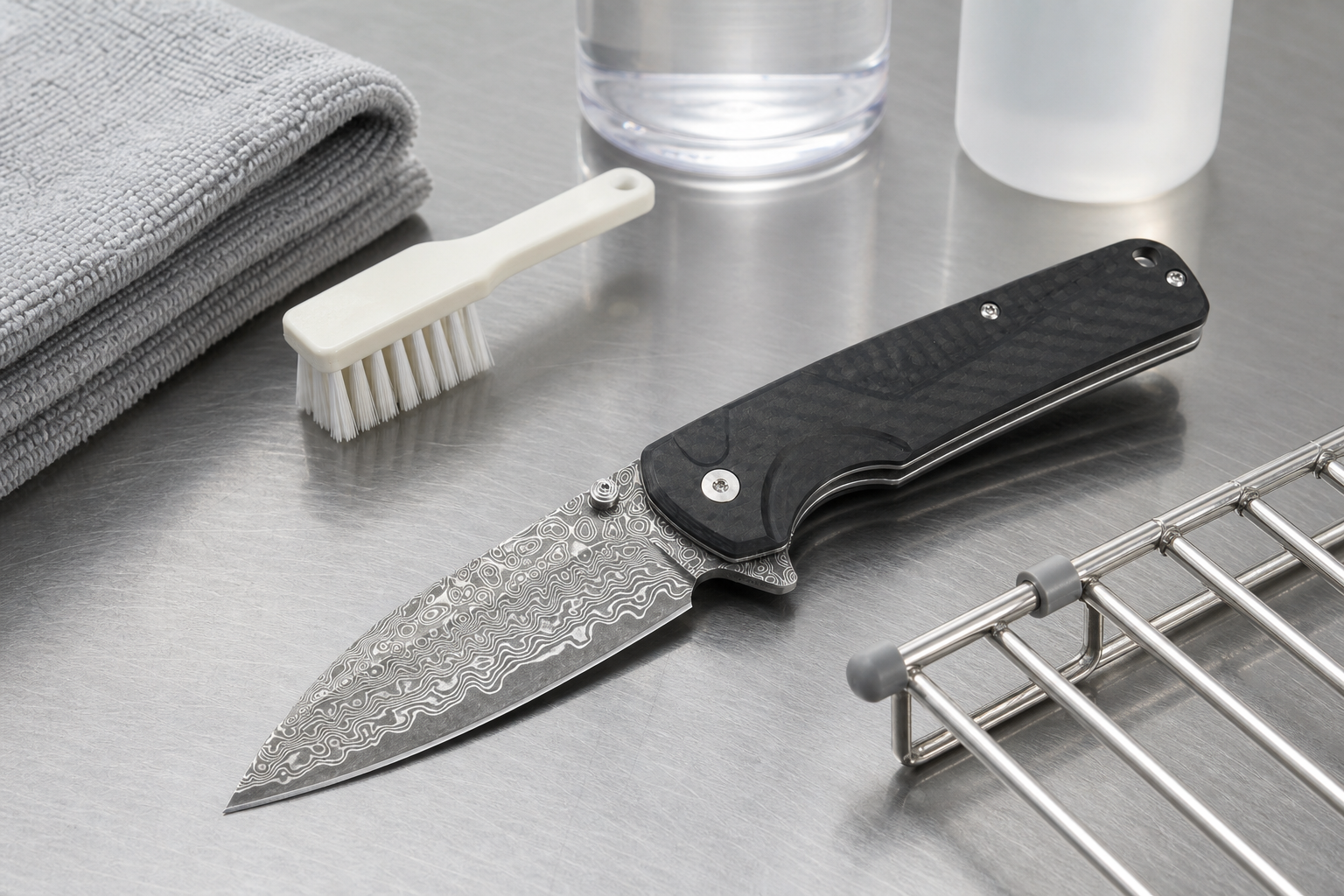
Cleaning removes food residue, grease, soil, and debris. Sanitizing is a separate step after cleaning that reduces microorganisms on the already-clean food-contact surface.
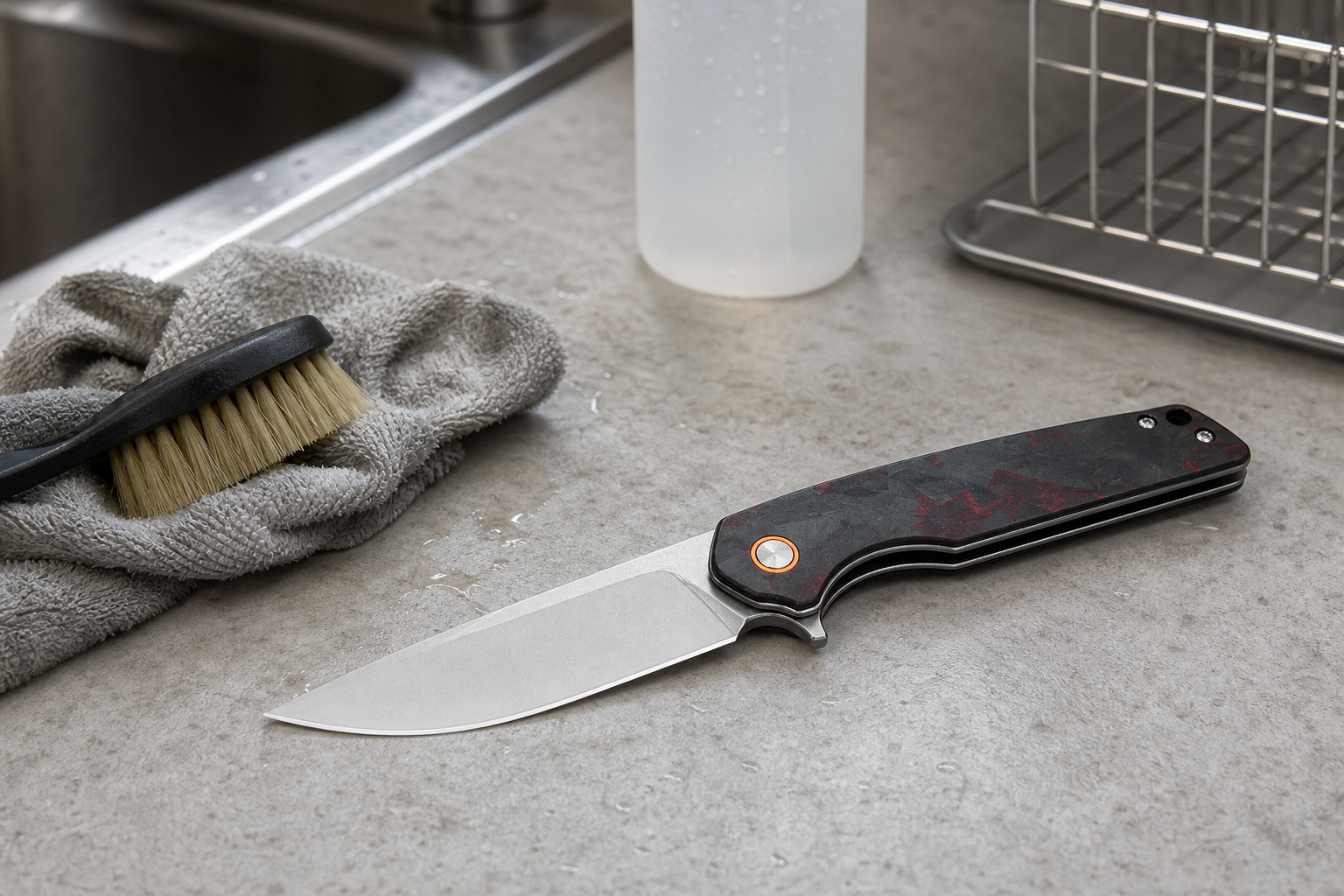
I Do Not Treat the Words as Interchangeable
A buyer should keep the language simple. Cleaning is the physical removal of food soil and residue. Sanitizing follows cleaning and reduces microorganisms to a safer level when the knife is used as a food-contact utensil. If the knife still has grease, food particles, adhesive residue, polishing compound, or visible debris, the sanitizing step is not meaningful.
The FDA Food Code separates cleaning and sanitizing duties for equipment and utensils, including food-contact surfaces. It is a useful reference for buyers because it shows that "wash it" is not always the full foodservice answer.
For packaging and instructions, I prefer plain wording:
- Clean first.
- Rinse if the cleaning method requires it.
- Sanitize only after cleaning.
- Follow the sanitizer label and local food-safety rules.
- Dry and store safely.
- Do not mix chemicals.
- Do not claim dishwasher safety or sanitizer resistance unless tested.
That last point matters for OEM/ODM sourcing. Handle materials, rivets, coatings, adhesives, markings, and packaging inserts may react differently to hot water, detergents, bleach solutions, quaternary ammonium compounds, or dishwashers. The instruction must match the product.
When Must a Knife Be Cleaned Before Food Use?
First use is not the same as first food use.
A knife should be cleaned before first food use because manufacturing, packing, shipping, retail display, and storage can leave oil, dust, residue, fingerprints, or packaging particles on the product.
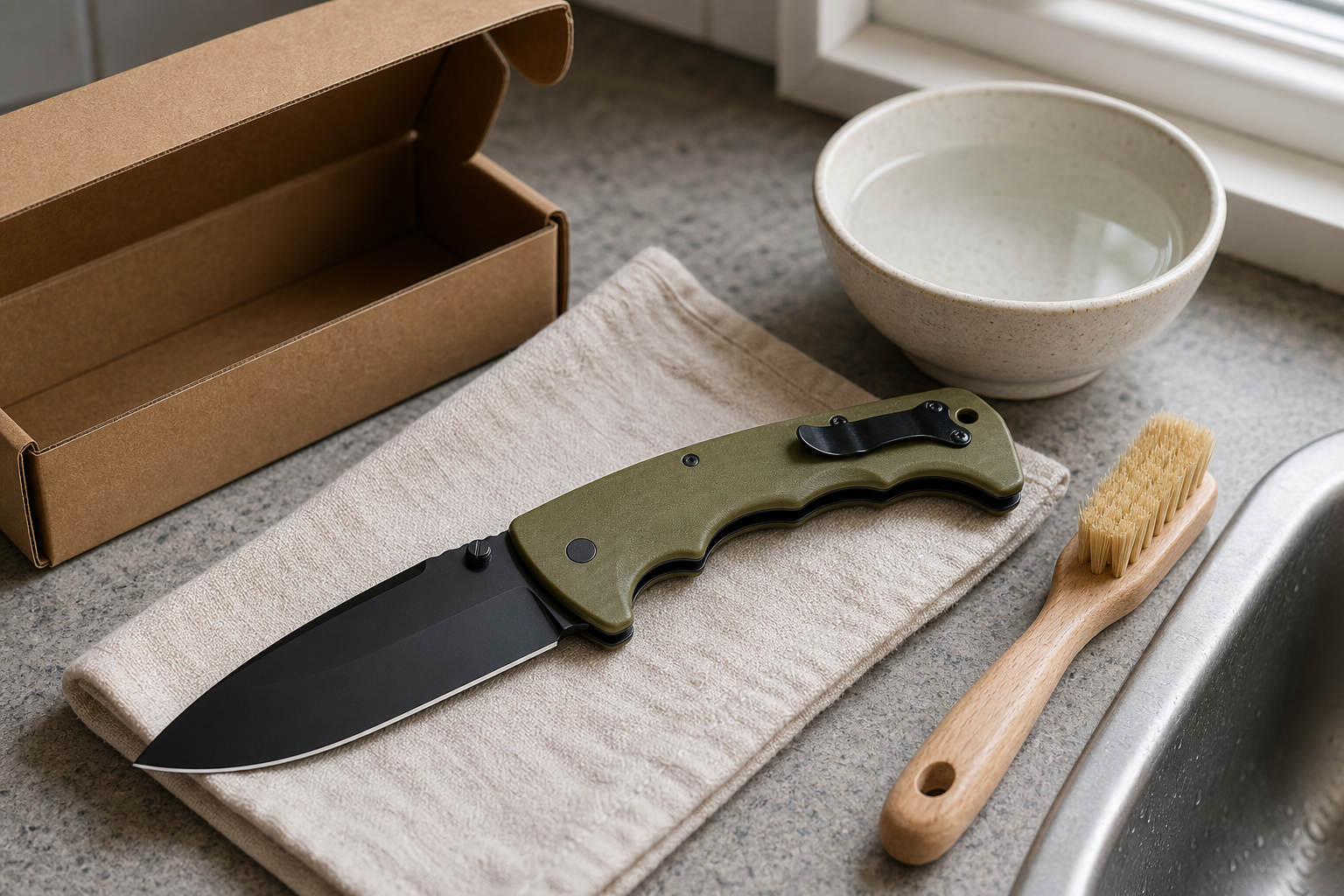
I Tell Customers to Wash Before First Use
Many buyers forget this line. A new knife may look clean, but it has passed through manufacturing, finishing, inspection, packing, shipping, and handling. The product may carry light oil, polish residue, dust, cardboard fibers, adhesive particles, or fingerprints. A food-contact product should not go straight from the package to food.
The instruction can be simple: wash before first food use. For a kitchen knife, that usually means hand washing with warm water and mild dish detergent, then drying promptly. If the product is genuinely dishwasher safe, the buyer can state that only if the material, handle construction, adhesive, finish, marking, and corrosion test support the claim.
The FDA food safety at home guidance reinforces the basic consumer message of cleaning hands, surfaces, cutting boards, and utensils as part of safe food handling. Buyers can use this type of official consumer guidance to support clear package copy.
First-use copy should cover:
- Remove all packaging before washing.
- Wash before first food use.
- Dry before storage.
- Do not leave the knife soaking unless the material supports it.
- Keep the edge covered or stored safely.
- Keep instructions for future care.
When Must a Knife Be Cleaned Between Foods?
Cross-contact is the moment buyers must explain clearly.
A knife should be cleaned and sanitized between raw animal foods and ready-to-eat foods, between allergen-sensitive foods, after cutting visibly dirty foods, and whenever residue could transfer to the next food.
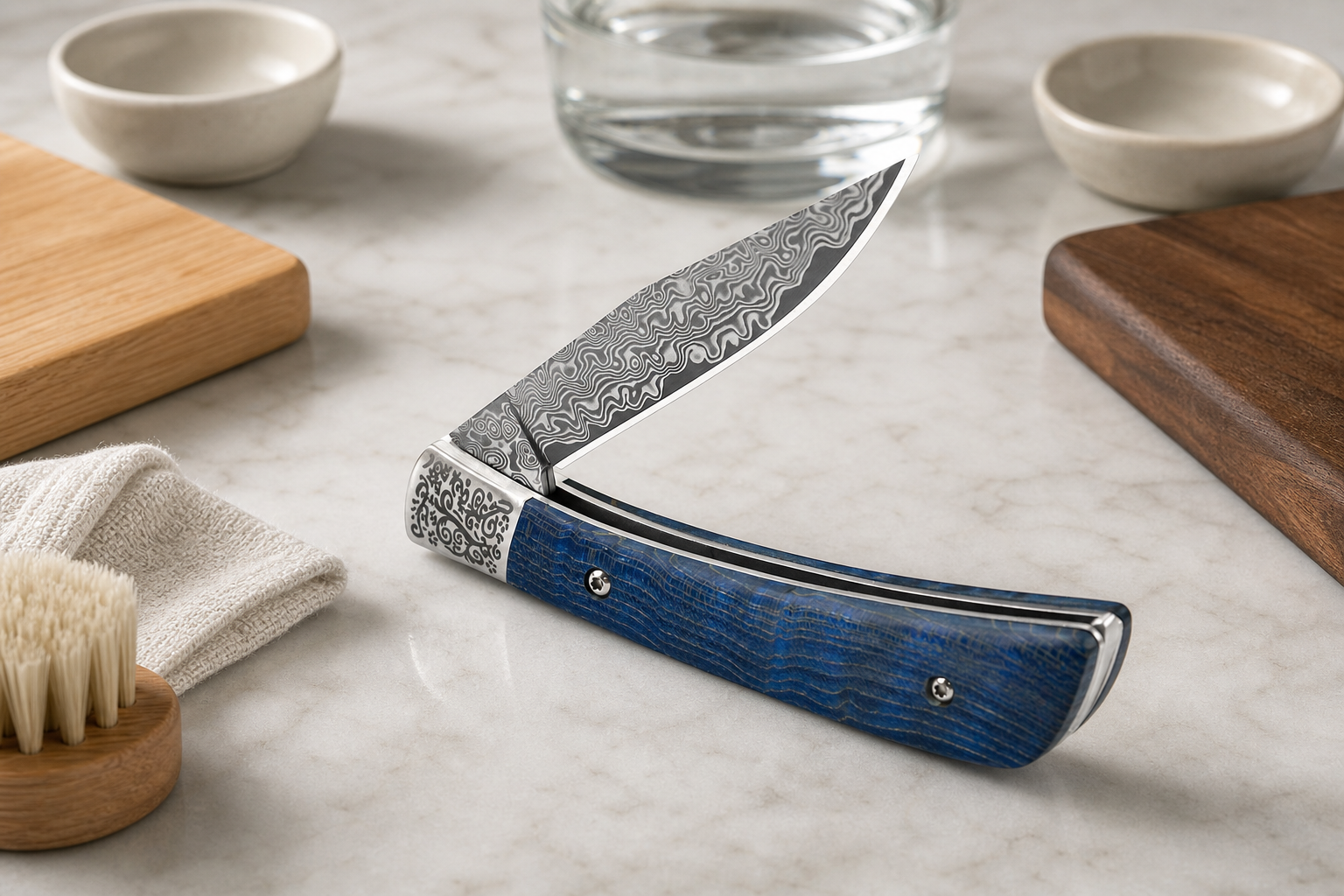
I Write for Raw-to-Ready Food Changes
This is the most important cleaning moment for many customers. A knife used on raw meat, poultry, seafood, or eggs should not be used on ready-to-eat foods without proper cleaning and sanitizing. The same principle applies when a knife moves from foods with allergen concerns to foods meant for a different customer.
The CDC food safety prevention page explains the familiar clean, separate, cook, and chill framework. The "separate" idea matters for knives because a knife can move residue from one food to another. The USDA FSIS cutting boards and food safety guidance also emphasizes cleaning cutting boards and related preparation items to reduce cross-contamination risk.
Buyer-facing instruction should avoid complicated chemistry. It should say when the customer must stop and clean:
- After raw meat, poultry, seafood, or eggs
- Before cutting cooked or ready-to-eat foods
- Between different allergen-sensitive foods
- After strong-smelling foods if odor transfer matters
- After cutting visibly dirty produce or packaging-contaminated items
- Before returning the knife to storage
For foodservice channels, the package may need to say that users should follow local food code and workplace sanitation procedures.
When Must a Knife Be Cleaned After Contamination?
The answer is immediate.
A knife must be cleaned and sanitized after it touches the floor, trash area, dirty sink, unclean cloth, packaging waste, chemicals, bodily fluids, pests, or any surface not intended for food contact.
I Make the Stop Rule Obvious
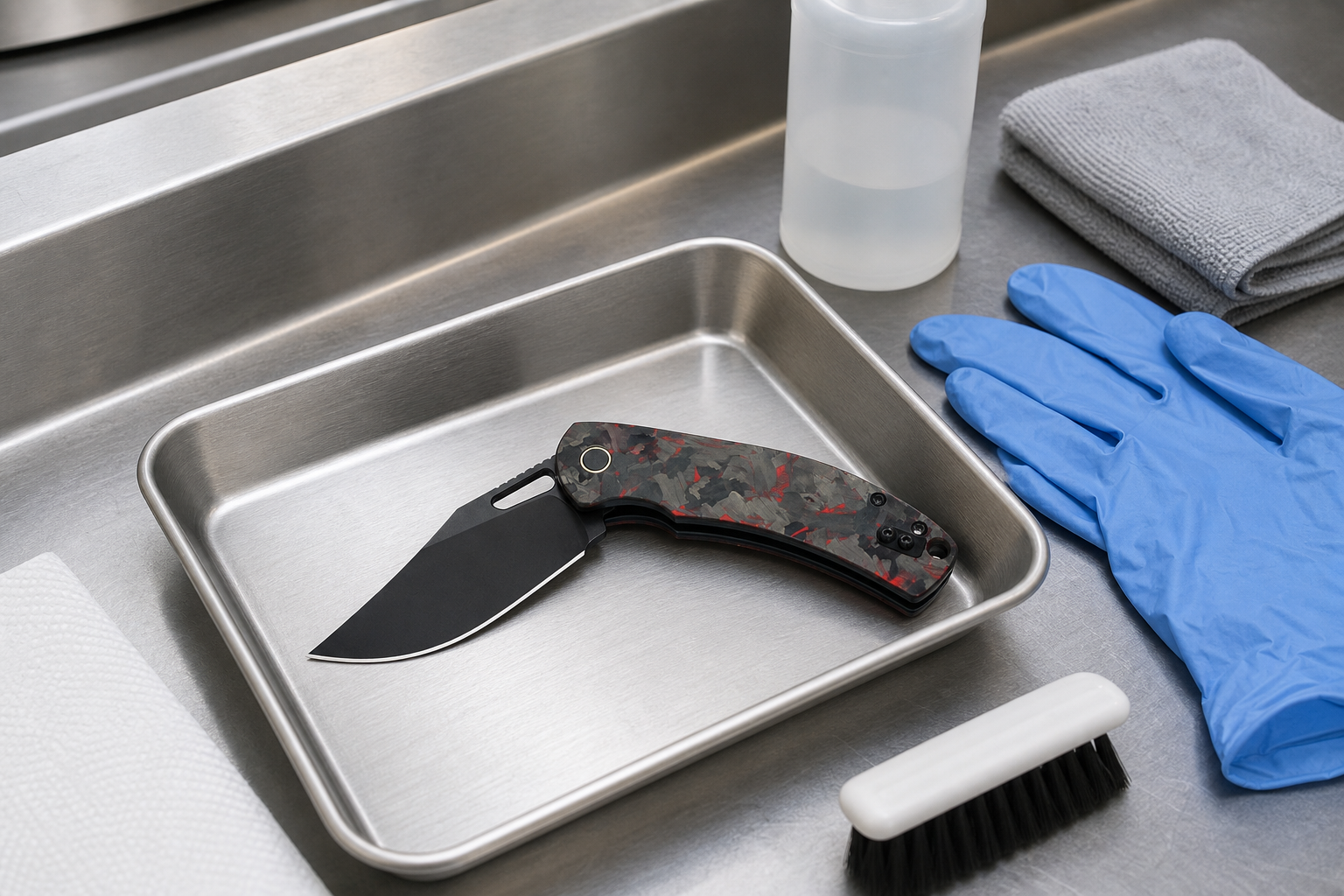
Customers should not have to guess. If the knife has touched a non-food-contact surface or contaminated material, it should be taken out of use until cleaned and sanitized. If damage is visible, such as loose handle scales, cracks, rust, broken tips, deep pitting, or a failing lock on a folding food-prep knife, the product should be removed from food use until reviewed or replaced.
This matters for buyer copy because vague language can be ignored. Stronger copy can say: "If the knife contacts the floor, trash, chemicals, dirty sink, unclean cloth, or unknown contamination, clean and sanitize before further food use."
For product design, buyers should also think about cleanability. Smooth surfaces, sealed joints, corrosion-resistant materials, and accessible edges are easier to clean than deep grooves, open seams, porous handles, and decorative cavities.
The CPSC manufacturing best practices page supports early product-safety planning, specifications, supplier records, and production controls. For knife buyers, that means cleanability should be a design and QC topic, not only a user instruction.
What Does Continuous Use Mean in Foodservice?
Commercial kitchens need timing rules, not only event rules.
In foodservice settings, knives and other utensils may need cleaning and sanitizing during continuous use at set intervals, after interruption, and whenever contamination or food change occurs.
I Avoid Printing One Universal Time Rule
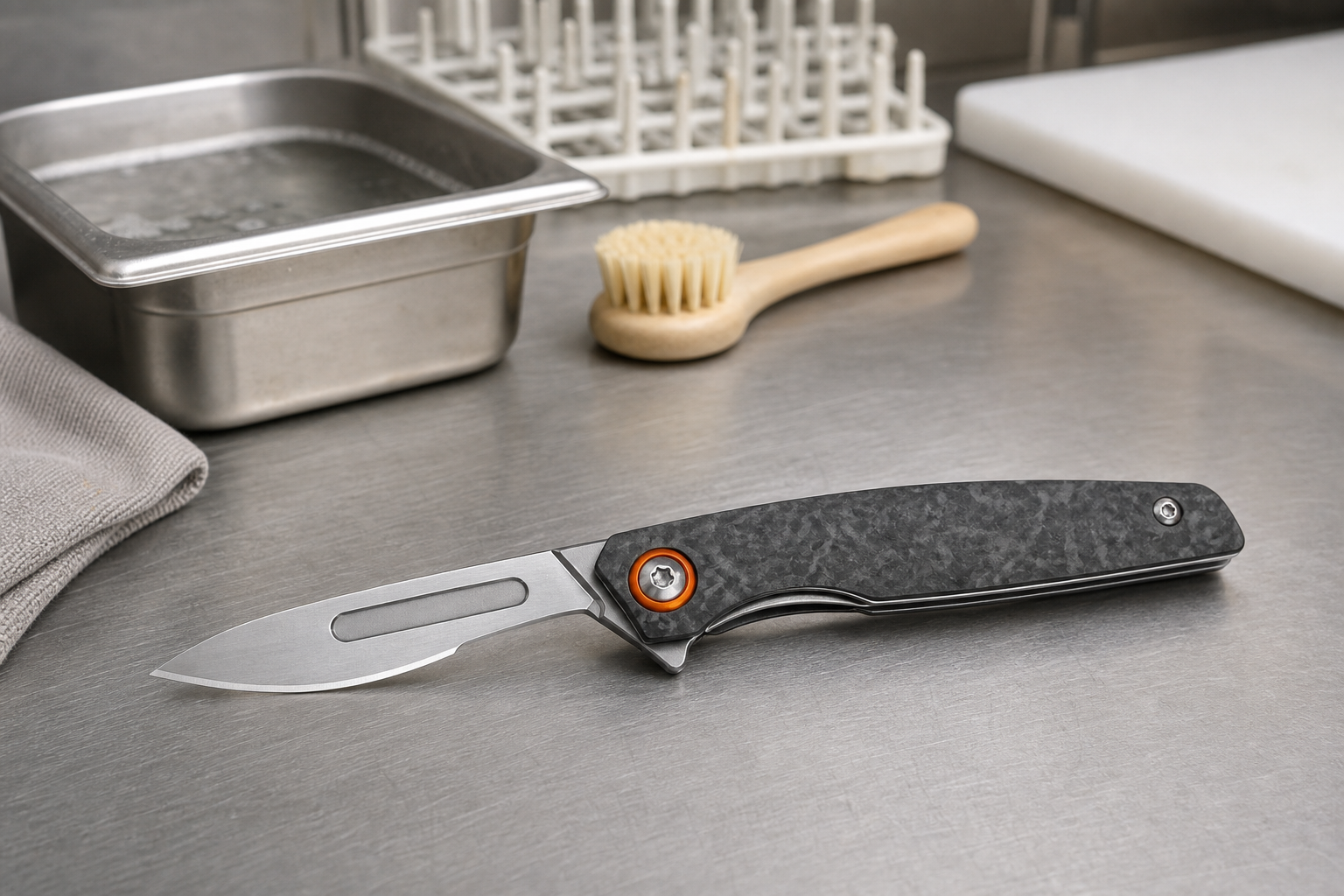
The FDA Food Code includes timing and condition-based cleaning requirements for food-contact surfaces and utensils, including when changing from raw animal food to ready-to-eat food, when changing between types of raw animal foods, when equipment may have become contaminated, and during continuous use at food-code intervals. Buyers should not turn that into a universal global rule without checking the market.
For U.S. foodservice-oriented packaging, a buyer may refer users to local food code or workplace procedures instead of printing an unsupported fixed interval. If the product is sold to home cooks, the instruction can stay simpler: clean after each use, between raw and ready-to-eat foods, after contamination, and before storage.
Continuous-use copy can say:
- Follow workplace food-safety procedures.
- Clean and sanitize at required intervals during continuous use.
- Clean and sanitize when changing foods or tasks.
- Clean and sanitize after any interruption or contamination.
- Remove damaged knives from service.
This is a case where less overconfident copy is better. Foodservice rules may differ by jurisdiction and operation.
How Should Buyers Explain Cleaning After Sharpening or Repair?
Maintenance creates residue.
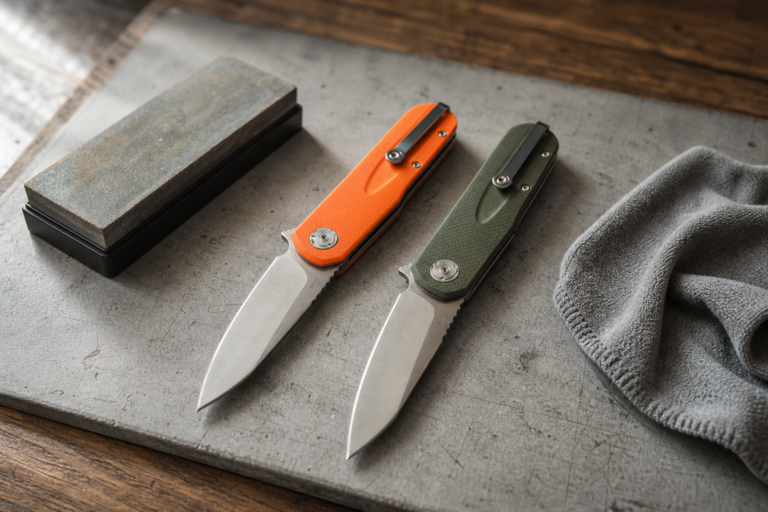
A knife should be cleaned after sharpening, honing, repair, polishing, handle service, rust removal, or oiling because abrasive dust, metal particles, oil, and debris can remain on the surface.
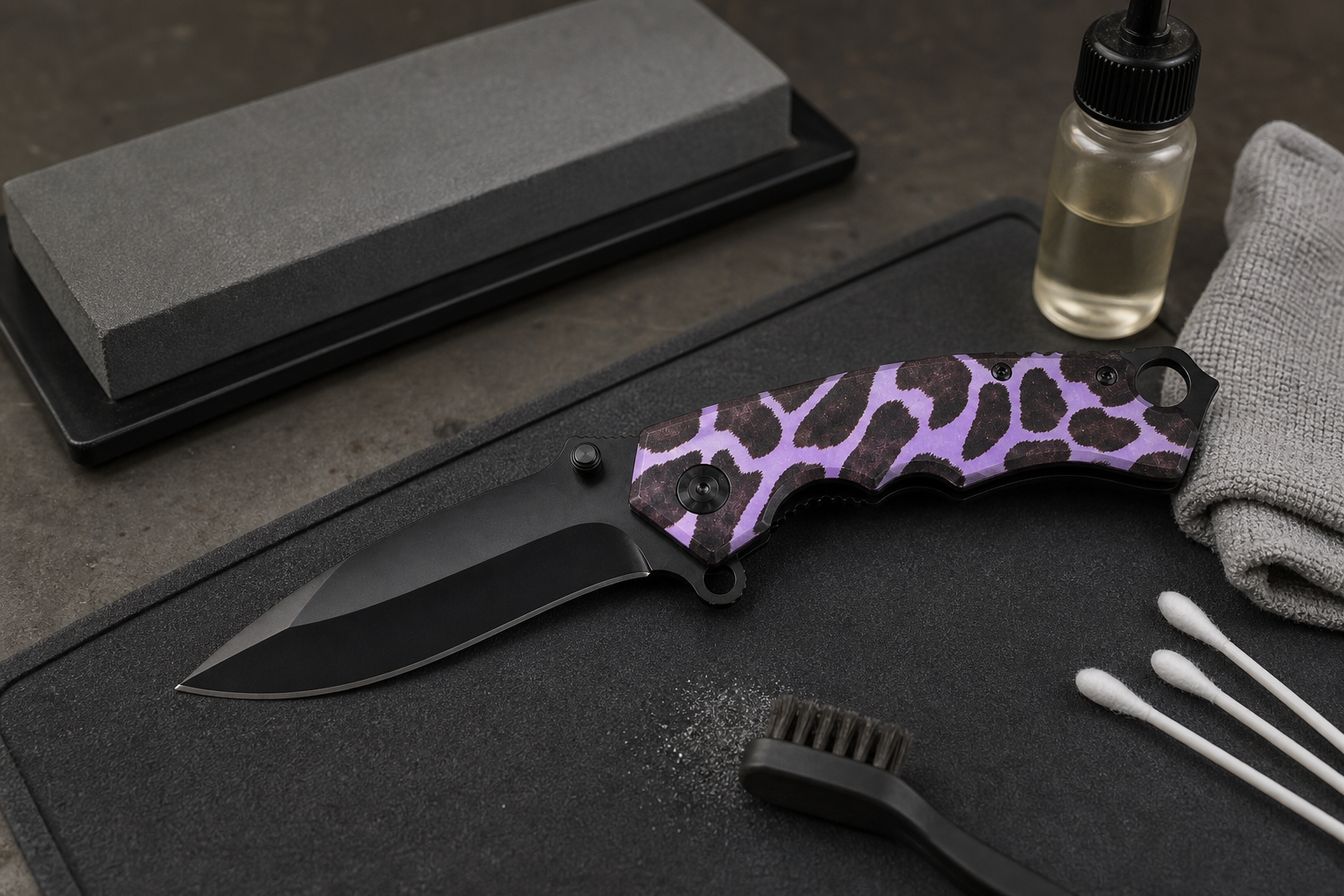
I Treat Maintenance as a Cleaning Trigger
Sharpening and honing can leave metal particles, abrasive residue, stone slurry, oil, or dust. Handle repair can leave adhesive residue, sanding dust, or loose debris. Rust removal can leave cleaning compounds. A food-contact knife should not return to food use until cleaned, inspected, and sanitized where appropriate.
This is also a good place to control claims. If a buyer says the knife is "easy to maintain," the instruction should explain what maintenance means. If the knife has a special coating, wood handle, composite handle, or decorative finish, the maintenance guidance should match the material.
The FTC advertising and marketing basics page supports the general principle that claims should be truthful, not misleading, and evidence-based. For cleaning and care copy, that means buyers should avoid unsupported claims like "dishwasher safe," "antibacterial," "rust proof," or "commercial sanitation safe" unless testing and material evidence support them.
Maintenance copy should include:
- Clean after sharpening or honing.
- Remove residue before food use.
- Dry promptly.
- Reinspect handle and edge.
- Do not use damaged or loose products for food prep.
What Product Features Make Cleaning Easier?
Cleanability starts before the instruction card is written.
Cleanable knife design should use smooth food-contact surfaces, corrosion-resistant materials, secure handle construction, limited debris traps, readable care copy, and QC checks for gaps, cracks, burrs, rust, and residue.
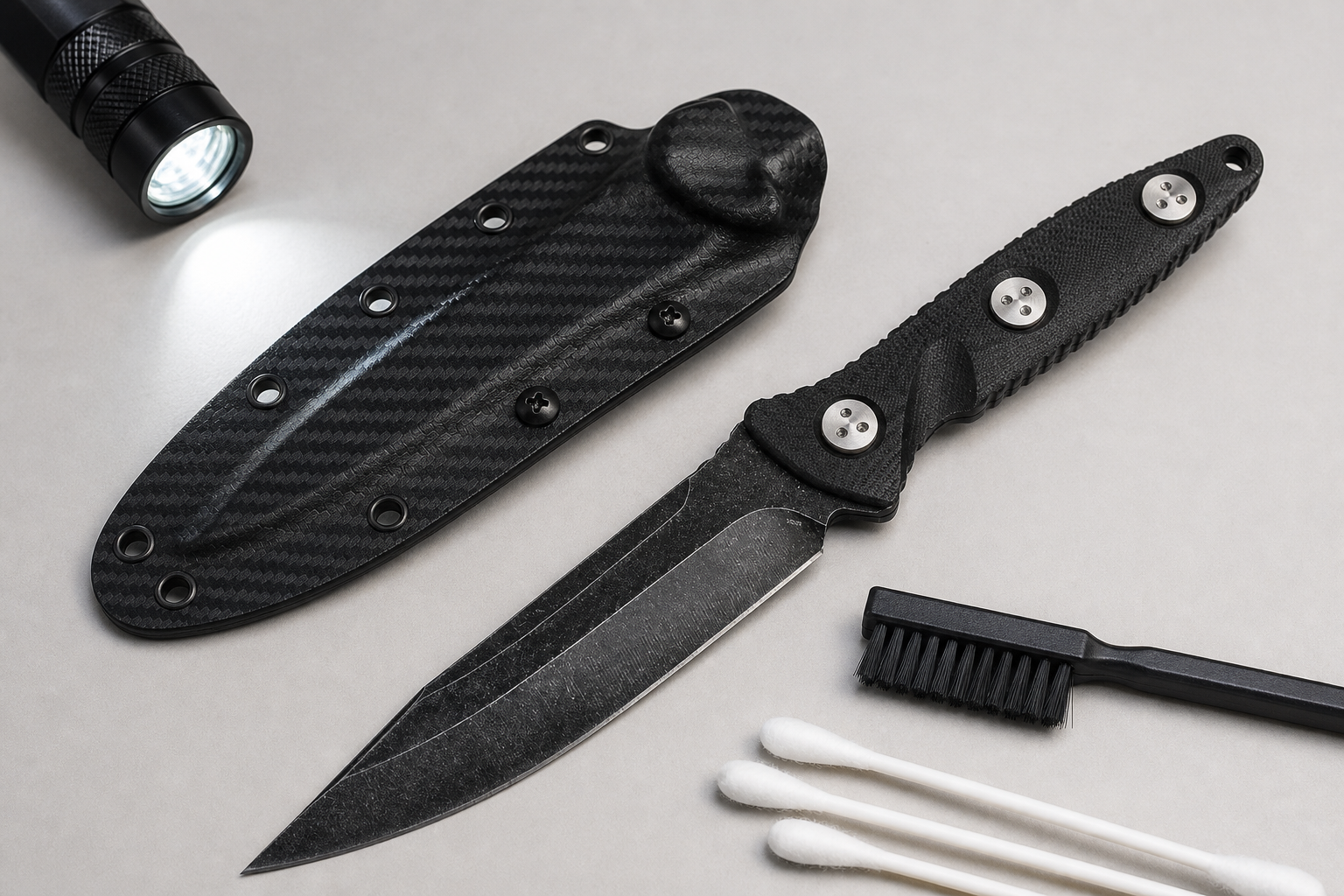
I Review Cleanability in the Sample Stage
Some knife designs are hard to clean. Deep handle grooves, open seams, rough tang transitions, decorative pits, porous materials, weak coatings, and unsealed joints can trap soil or hold moisture. That does not mean every product must look plain. It means the buyer should inspect cleanability before approving the design.
The FDA Food Code discusses food-contact surfaces in terms such as cleanability, smoothness, durability, and resistance to wear under normal use. That principle is very useful for OEM/ODM buyers. A product that cannot be cleaned well will create care problems even if the instruction card is clear.
Cleanability review should include:
- Blade and handle transition
- Rivet or fastener finish
- Handle cracks, seams, and cavities
- Surface roughness and burrs
- Coating edges
- Logo marking method
- Corrosion resistance
- Dishwasher claim support
- Sanitizer compatibility
- Drying and storage instructions
For private label buyers, this can be a small but powerful differentiator. A cleanable product is easier to explain and easier to support.
What Should Packaging, Labels, and QC Records Include?
Instructions must match the tested product.
Packaging and QC records should include before-first-use washing, raw-to-ready food warnings, contamination triggers, drying and storage notes, dishwasher limits, sanitizer compatibility, inspection criteria, and change-control records.
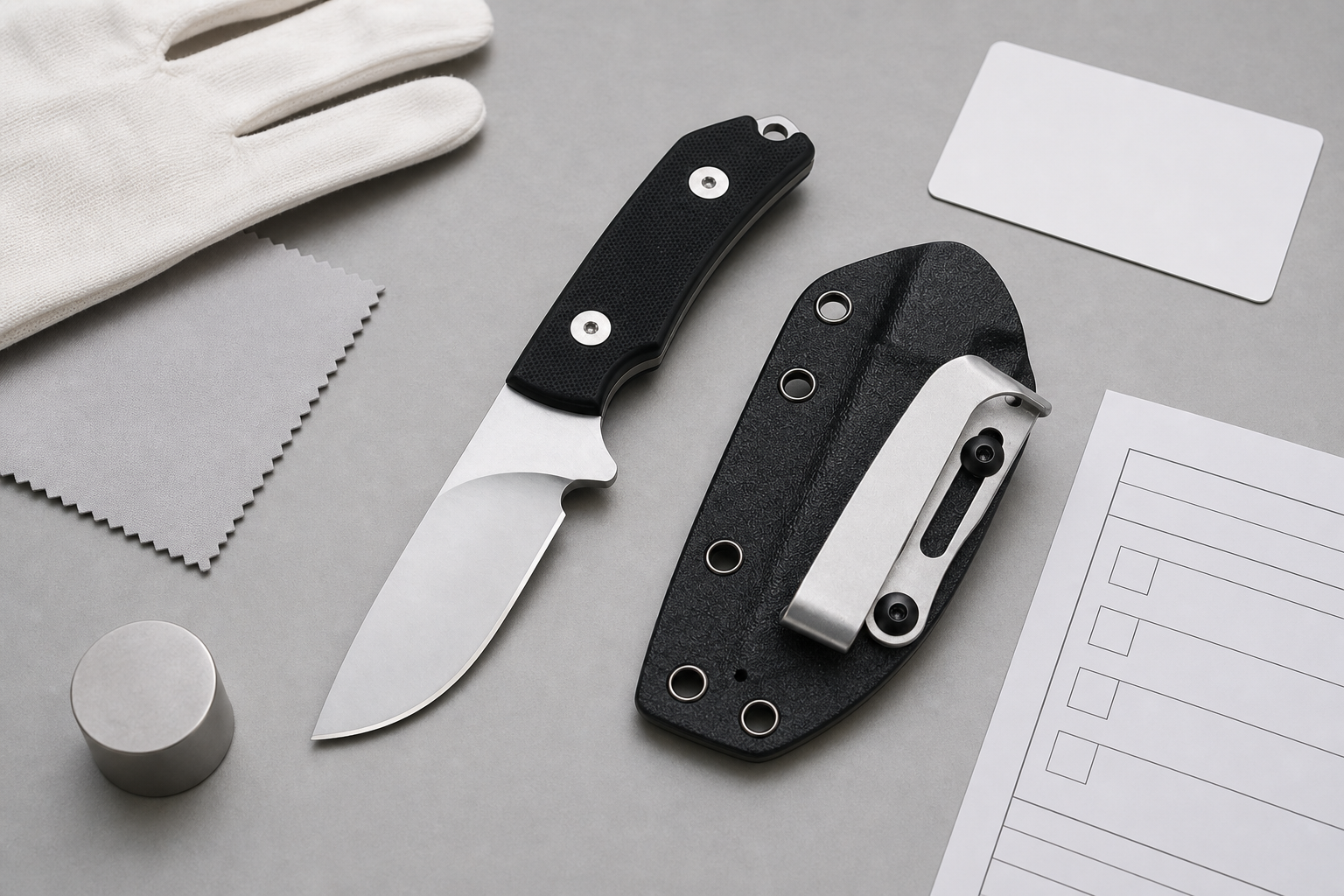
I Connect the Label to the Factory File
Cleaning and sanitizing copy is not only a marketing detail. It should be supported by the product file. If the label says dishwasher safe, the buyer should have material, construction, corrosion, marking, and handle evidence. If the label says compatible with a sanitizer, the buyer should know which sanitizer type and concentration range the supplier tested.
The CPSC labeling requirements overview is not knife-specific, but it reminds buyers that labels can depend on product type, design, components, and intended age group. For food-contact knives, the buyer should also consider food safety, material claims, and local retailer requirements.
Useful QC records include:
- Approved cleaning instruction version
- Approved packaging artwork
- Material and finish specification
- Handle gap and crack inspection
- Rust and residue inspection
- Dishwasher claim evidence if used
- Sanitizer compatibility evidence if used
- Final inspection photo record
- Change-control approval
The product should leave the factory with instructions the buyer can defend.
How Can Vast State Help Buyers Build Practical Care Guidance?
Vast State can turn cleaning rules into supplier-ready product requirements.
Vast State helps buyers prepare cleaning and sanitizing instructions, packaging notes, RFQ fields, material checks, dishwasher claim review, sanitizer compatibility questions, and QC criteria for kitchen and food-contact knife programs.
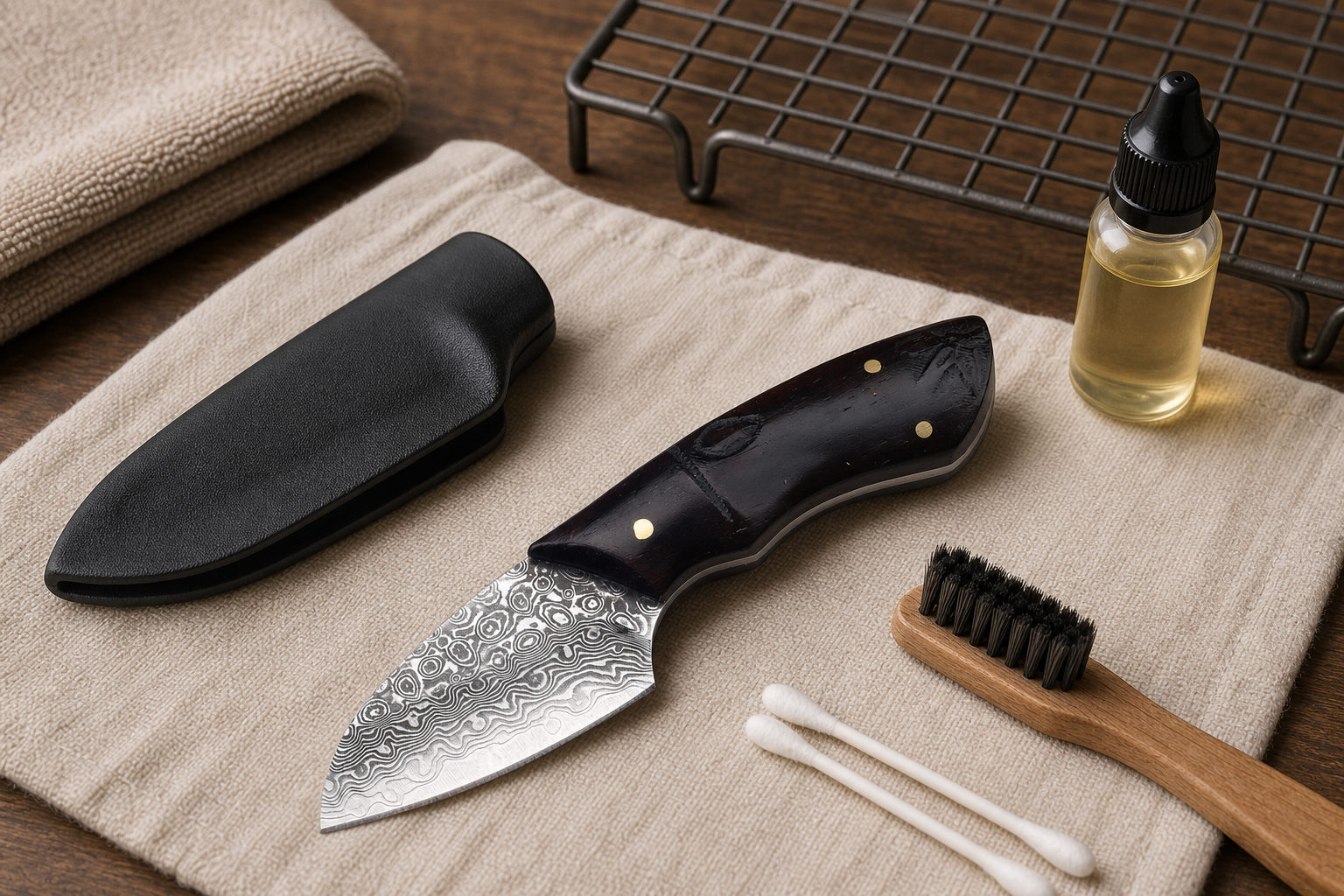
I Build the Care Copy Before Production
Care copy should not be written after production is finished. It should be part of the RFQ. Vast State can help buyers define the intended food-contact use, material system, handle construction, cleaning method, sanitizer assumptions, packaging warning, and inspection method before supplier sampling.
We can support:
- Cleaning and sanitizing instruction draft
- Before-first-use care copy
- Raw-to-ready food warning language
- Dishwasher claim review
- Sanitizer compatibility questions
- Handle cleanability review
- Packaging and label checklist
- QC criteria for gaps, cracks, rust, residue, and instruction placement
- Alternative material planning when care requirements are too demanding
The goal is simple: customers should know when to clean the knife, when sanitizing is required, and when a product should be removed from food use.
Turn your idea into a quote-ready knife project.
Share your drawing, sample photo, target quantity, market, and packaging needs. Vast State will review manufacturability and prepare OEM/ODM options.
Conclusion
A knife must be cleaned and sanitized when food safety, contamination, task changes, storage, maintenance, or local rules require it. Buyers should make that timing clear.
OEM/ODM RFQ Checklist
Prepare these details to help Vast State review your project and provide a more accurate quotation.
| RFQ Field | What to Prepare |
|---|---|
| Project type | OEM from drawing / ODM private label / wholesale catalog |
| Product category | Folding knife / fixed blade / multi-tool / outdoor tool |
| Design status | Idea / sketch / 2D drawing / 3D CAD / physical sample |
| Target price | Ex-factory target price or retail price range |
| MOQ expectation | 500 / 1,000 / 3,000 / 5,000+ pcs |
| Logo method | Laser engraving / etching / printing / molded logo |
| Packaging | Standard packaging / custom retail box / Amazon-ready |
| Market | USA / EU / Japan / Korea / Middle East / other |
| Compliance needs | Buyer-specified testing / documentation / labeling |
| Timeline | Sample deadline / mass production deadline |