Switchblade knife sourcing is not a normal feature discussion. It is a classification, import, sales-channel, and documentation risk review.
Before sourcing any product that may be called a switchblade, automatic knife, gravity knife, spring knife, assisted opener, kit, or mechanism-sensitive folder, buyers should verify the opening method, closure bias, import status, target markets, exceptions, supplier documents, packaging claims, and channel policies with qualified reviewers.
Quick buyer brief:
- Answer: A switchblade classification question depends on mechanism, jurisdiction, import condition, components, conversion risk, product claims, and sales channel. Buyers should not rely on supplier catalog names or consumer descriptions.
- Buyer context: This guide is for knife brands, importers, distributors, private label buyers, marketplace sellers, compliance teams, and OEM/ODM sourcing managers.
- Key checks: Button or handle device, automatic opening, inertia or gravity opening, bias toward closure, spring or detent design, blade length, kit components, supplier declaration, customs broker review, legal review, marketplace policy, packaging language, invoice description, QC change control, and alternative product planning.
Have a knife or multi-tool project in mind?
Send your sketch, CAD file, sample photo, or product idea. Vast State can review manufacturability, suggest materials, estimate MOQ, and prepare a quote for your OEM/ODM project.
This article is not legal advice. Knife laws and import rules can change by country, state, city, product condition, transaction type, and sales channel. Buyers should confirm the latest rules with counsel, customs brokers, marketplaces, carriers, retailers, and relevant authorities before quoting, importing, selling, or shipping any mechanism-sensitive knife product.
The practical sourcing rule is simple: if the product description includes switchblade, automatic, gravity, spring, assisted, fast-opening, button, kit, conversion, or similar language, slow down. The buyer needs a classification file before sample approval.
Why Is Switchblade Classification a Sourcing Risk?
The risk starts before the product is made.
Switchblade classification is a sourcing risk because a product name, mechanism, import condition, component set, and sales claim can all affect whether the item is restricted.
I Do Not Treat "Switchblade" as a Marketing Word
In sourcing, "switchblade" is not just a dramatic catalog word. It can be a legal and customs classification trigger. A supplier may use it loosely. A consumer blog may use it broadly. A marketplace may use it strictly. A customs reviewer may focus on mechanism and import condition.
The U.S. Code definition in 15 U.S.C. 1241 defines a switchblade knife by automatic opening through a button or other device in the handle, or by operation of inertia, gravity, or both. That definition is short, but it creates a large sourcing question: what exactly does the sample do, and how is it described?
A buyer should not approve a product because the supplier says it is "manual," "assisted," "legal," or "not a switchblade." Those labels need evidence. The buyer should ask for mechanism facts, drawings, videos for compliance review, parts lists, closure details, and market-specific legal input.
The sourcing risk usually appears in four places:
- Catalog title and product description
- Mechanism and component design
- Import condition and invoice language
- Retail listing and packaging claims
If any of those are unclear, the project needs review before production money is spent.
What Mechanism Facts Should Buyers Request?
Mechanism facts must come before price negotiation.
Buyers should request factual mechanism information about opening method, handle device, spring or detent, bias toward closure, inertia or gravity behavior, lock type, kit contents, and conversion risk.
I Ask How It Works, Not Whether It Is Legal
Suppliers often cannot answer legal questions for every buyer market. A better RFQ asks factual questions that counsel and brokers can review. The buyer should ask how the blade opens, how it stays closed, whether any spring or assist is present, whether a button or handle device operates the blade, whether inertia or gravity can open it, and whether the product can be altered easily.
The exception language in 15 U.S.C. 1244 is especially important for sourcing teams because it includes a bias-toward-closure concept for certain assisted-opening designs. Buyers should not interpret that casually. They should document the mechanism and ask counsel how the exception applies to their exact product and market.
Useful RFQ mechanism fields include:
- Opening method
- Button, switch, or handle-device presence
- Spring, detent, or assist system
- Bias toward closure
- Lock type
- Closed retention
- Blade length
- Components included in the shipment
- Conversion or alteration risk
- Supplier statement and change-control commitment
The goal is not to teach operation. The goal is to collect enough facts for classification review.
How Do Import Rules Change the Review?
Import review can be broader than a consumer definition.
Import review should consider federal statute, customs regulations, product condition as entered, components, kits, conversion risk, exceptions, declarations, and forfeiture risk.
I Separate Domestic Sales Talk From Import Status
A product may be described one way in domestic retail conversation and another way in import review. The customs file should be built around the product as entered, not around marketing preference.
The current 19 CFR Part 12 text available through govinfo includes Section 12.95 import-focused language for switchblade knives, including imported knives and components, and includes categories such as switchblade, Balisong, butterfly, gravity, and ballistic knives when certain characteristics are present. It also addresses items that can be altered or converted with insignificant preliminary preparation.
The same CFR excerpt includes 19 CFR 12.96, 12.97, and 12.98 language about unrestricted imports, importations contrary to law, and permitted exceptions. For buyers, the practical point is not to memorize exceptions. It is to involve a customs broker before samples or production shipments move.
Import review should cover:
- Product condition as entered
- Complete knife, handle, blade, spring, or kit status
- Invoice description
- HS classification review
- Broker opinion
- Exception documentation if claimed
- Samples versus production shipment
- Disposition risk if refused
If the broker cannot support the entry plan, the buyer should pause.
How Should Buyers Think About Interstate Commerce and Exceptions?
Federal review has more than one section.
Buyers should review federal definition, interstate commerce restriction, territorial rules, exceptions, and market-specific laws instead of relying on one sentence from a blog or supplier catalog.
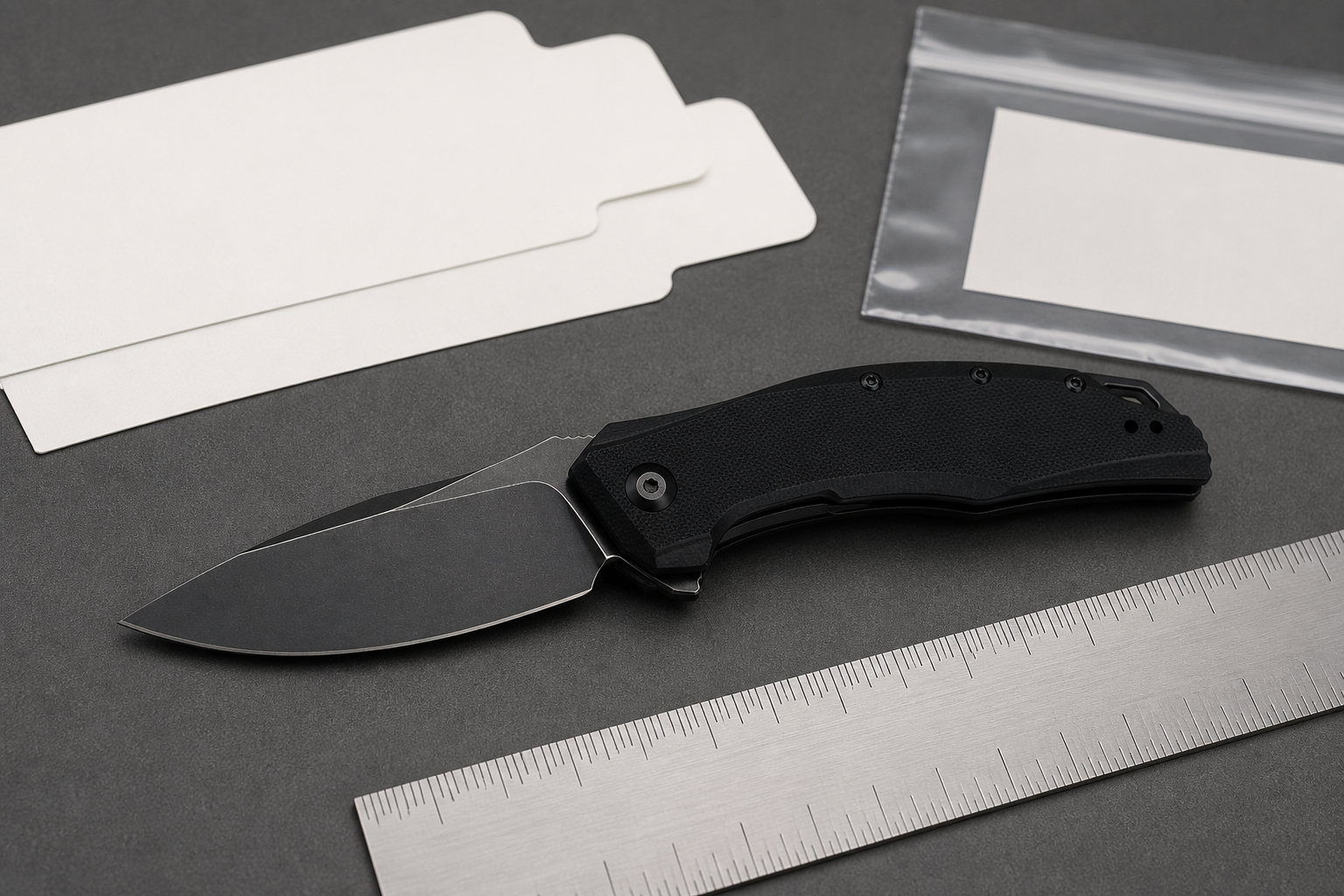
I Do Not Build a Product Line Around an Assumption
The 15 U.S.C. 1242 text addresses introduction, manufacture for introduction, transportation, or distribution in interstate commerce. The 15 U.S.C. 1244 exceptions page lists specific exceptions. A buyer should not treat any exception as a shortcut.
Exceptions may depend on transaction type, user type, product design, blade length, government contract, or mechanism details. They may also fail to solve state, city, marketplace, carrier, or payment processor issues. That is why a buyer needs a legal and channel review, not only a supplier statement.
For a commercial private-label product, the safer workflow is:
- Identify the exact mechanism.
- Identify the target market.
- Identify the sales channel.
- Identify import or domestic movement.
- Ask counsel and broker for review.
- Keep the decision in the product file.
- Avoid unsupported legality claims in marketing.
If the product only works under a narrow exception, it may not be a good broad-market item.
What Supplier Documents Should Be Collected?
Supplier documents must describe the product, not sell the product.
Buyers should collect drawings, BOM, mechanism declaration, opening and closure explanation, photos, videos for compliance review, component list, conversion-risk statement, packaging draft, and change-control agreement.
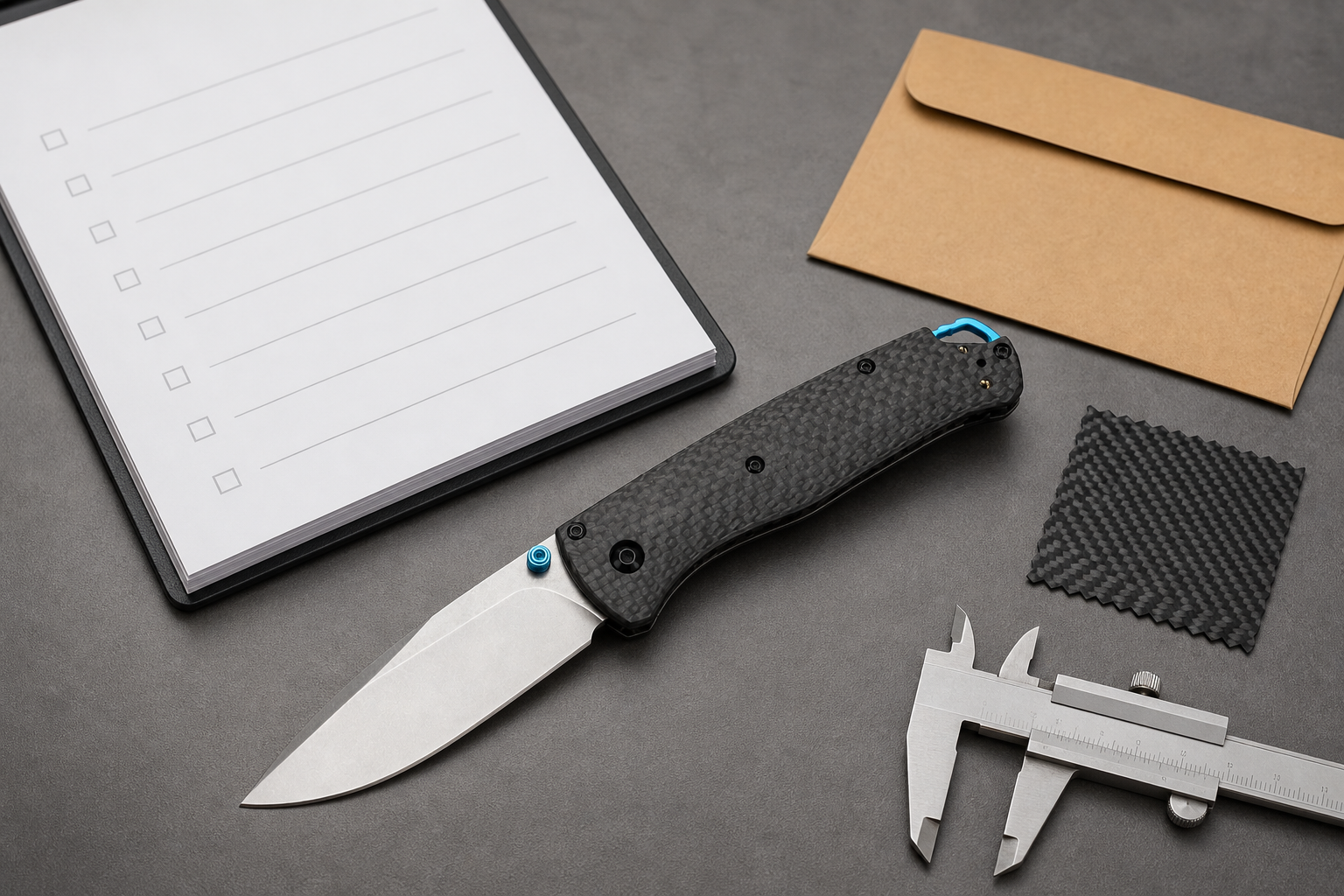
I Build the Classification File Before Tooling
The classification file should exist before tooling, packaging, or purchase orders. If the buyer waits until a shipment is ready, the project is already exposed.
The CPSC manufacturing best practices page supports the broader product-safety discipline of specifications, supplier controls, documentation, spot checks, and records. For mechanism-sensitive knives, those practices become even more important.
Useful supplier documents include:
- Technical drawing
- Exploded view
- Bill of materials
- Mechanism declaration
- Closure or detent description
- Lock description
- Component shipment list
- Sample photos
- Controlled sample video for internal review
- Packaging and label draft
- Supplier compliance statement
- Change-control commitment
The supplier should also agree not to change springs, pivots, detents, locks, blade weight, handle parts, or assembly steps without written buyer approval. A small design change can alter classification risk.
How Should Packaging and Marketing Claims Be Controlled?
Claims can create classification and channel problems.
Packaging and marketing should avoid universal legality claims, rapid-deployment language, weapon positioning, self-defense claims, school-carry implications, or any mechanism claim not supported by the product file.
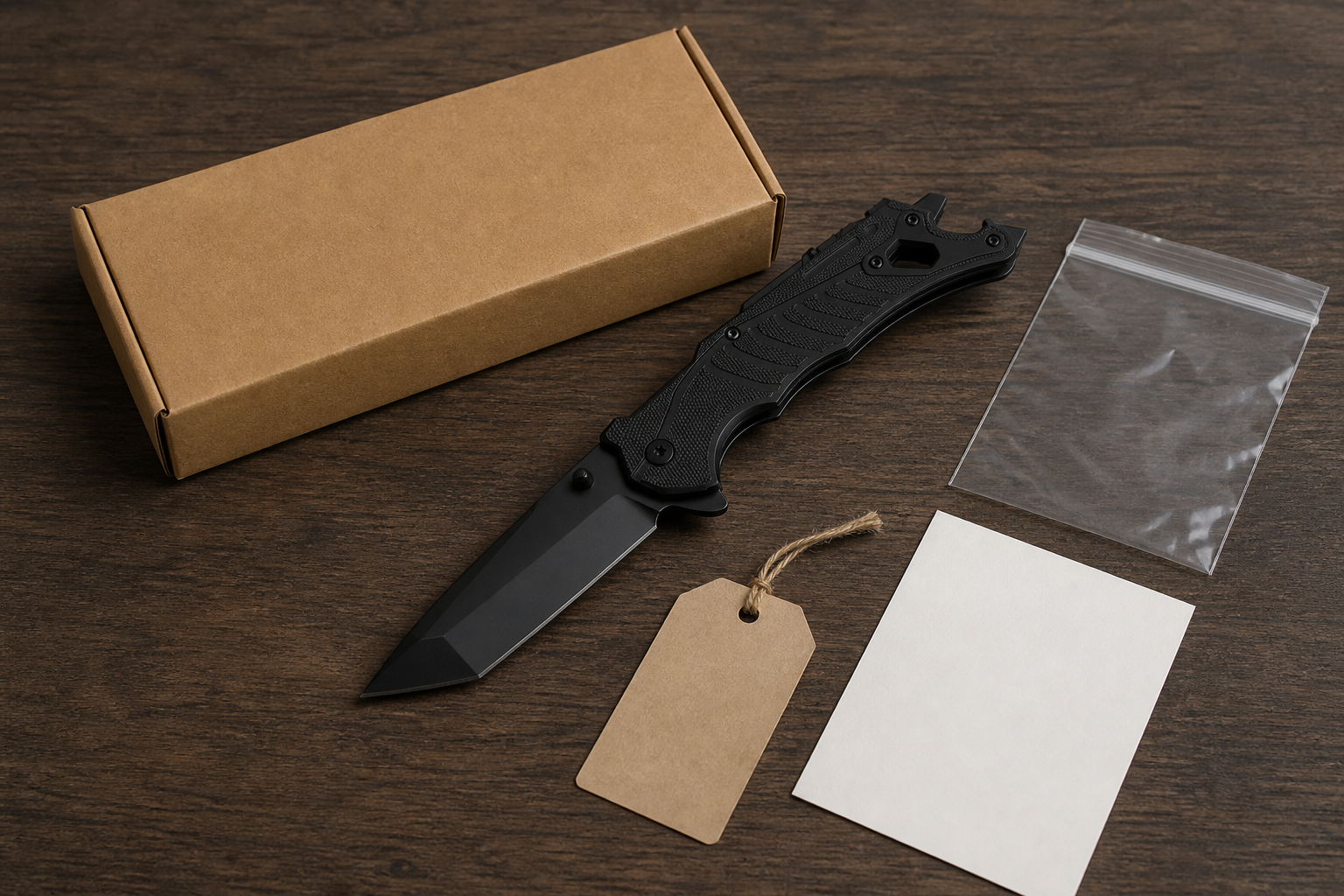
I Keep the Copy Neutral and Reviewable
Marketing teams often want strong feature words. In this category, strong words can create problems. "Automatic," "instant," "tactical," "concealed," "legal everywhere," "self-defense," or similar wording can trigger channel review or legal concern. If the product is manual or assisted, the wording must still match the actual mechanism and reviewed classification.
The FTC advertising and marketing basics page supports the broad rule that advertising should be truthful, not deceptive or unfair, and evidence-based. For switchblade-related sourcing, that means legal, safety, mechanism, and performance claims need support.
The CPSC labeling requirements overview also reminds buyers that labels depend on product type, design, components, and intended audience. A mechanism-sensitive knife should not use copied warning copy from a different product.
Better copy is conservative:
- Mechanism under review
- Lawful markets only
- Adult purchase where required
- Follow local law
- No universal legality claim
- No self-defense positioning
- No unsupported safety claim
- No channel-banned wording
What QC Checks Prevent Classification Drift?
Production changes can turn a reviewed product into a different risk.
QC should verify mechanism, opening method, closure bias, lock function, blade length, kit contents, component list, packaging copy, invoice description, and final product photos against the approved file.
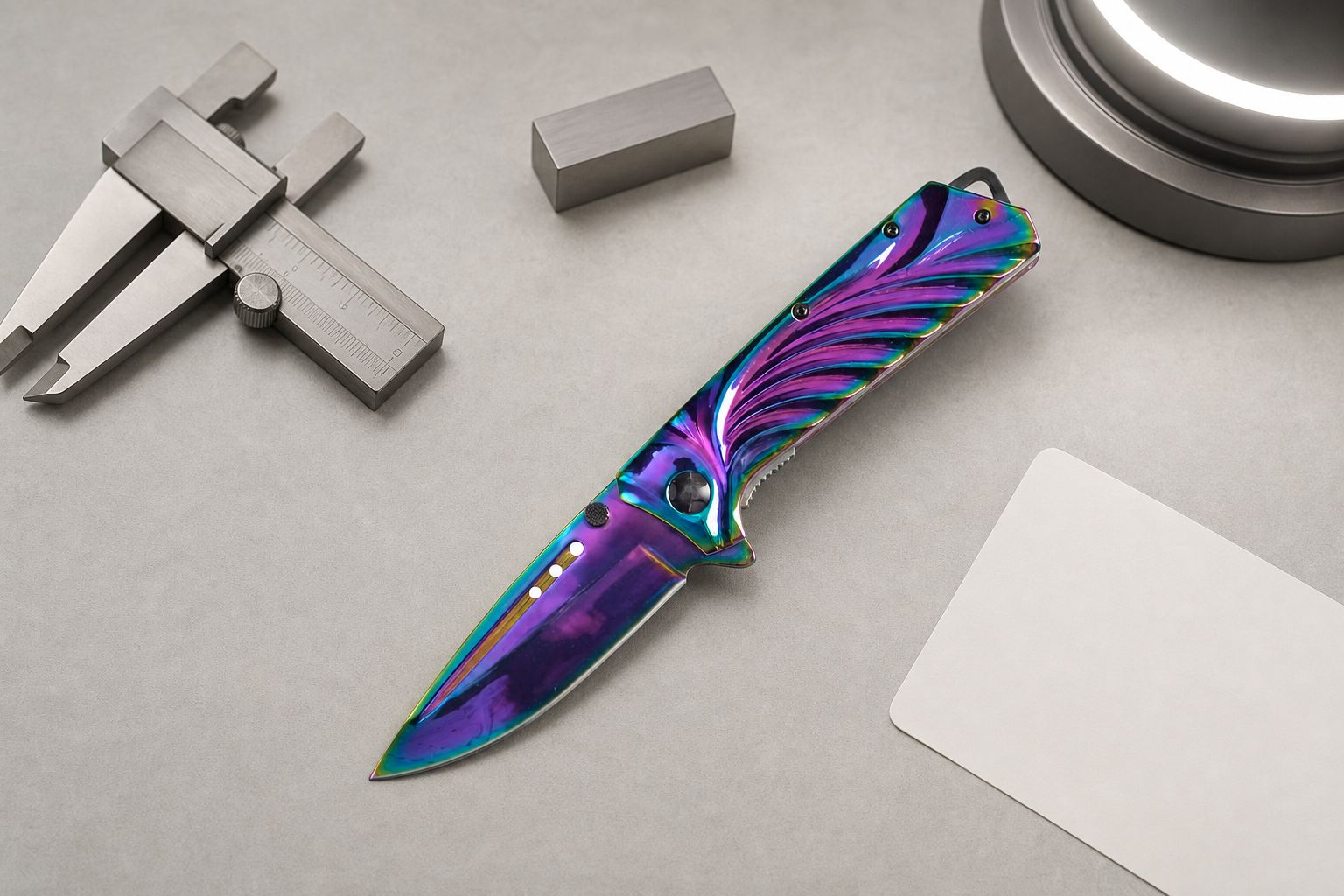
I Inspect Against the Approved Mechanism File
A product can drift during sampling or mass production. A supplier may change a spring, detent, pivot, lock face, handle cutout, blade weight, screw, or assembly step to improve feel or reduce cost. That change may look minor in a factory report, but it can matter to classification.
QC should not only check cosmetics. It should compare the product against the approved mechanism file. The buyer should also check packaging, carton wording, invoice description, and marketplace listing images. A compliant product file can be undermined by risky copy.
QC checks should include:
- Mechanism matches declaration.
- Closure bias matches approved sample.
- No unauthorized spring or button change.
- Blade length and component list match file.
- Kit contents match reviewed condition.
- Lock and closed retention match sample.
- Packaging copy matches approved version.
- Warning and lawful-use notes are present.
- Carton and invoice wording are controlled.
- Final inspection photos are saved.
The product file should be updated only through a documented change process.
When Should Buyers Choose a Different Product Instead?
Some sourcing risks are not worth solving.
Buyers should choose a different product when classification is unclear, import risk is high, channel policies are restrictive, supplier documents are weak, or legal review cannot support the planned sale.
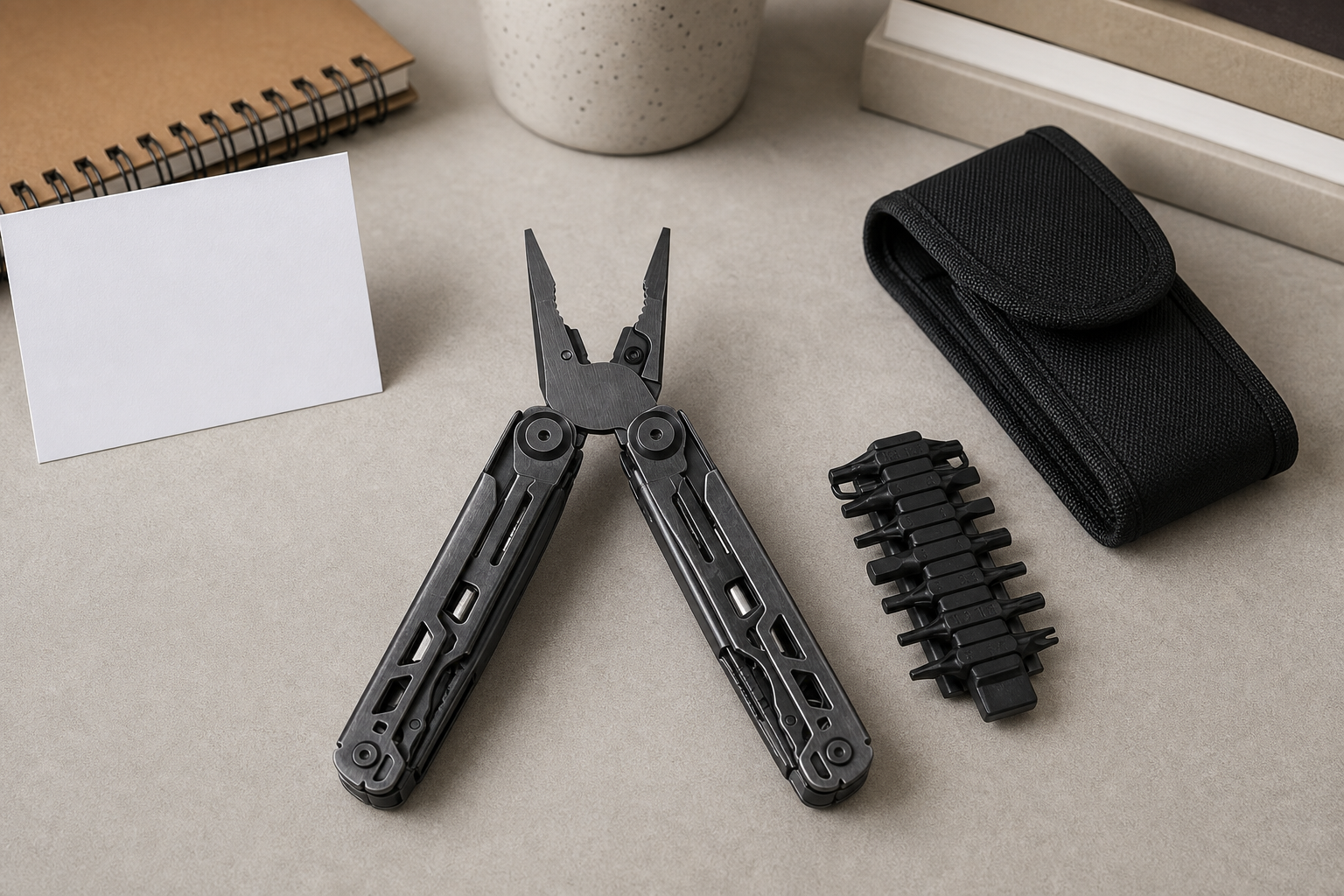
I Prefer a Clean Program Over a Risky Headline
Some buyers chase a dramatic product idea because it looks exciting in search results. That is not always good business. A product that creates customs holds, marketplace bans, payment processor concerns, retailer objections, or legal uncertainty can damage the brand more than it helps sales.
Alternative products may be easier to support:
- Manual folding knives with conservative mechanisms
- Outdoor fixed blades with clear sheath storage
- Kitchen tools
- Utility tools
- Knife accessories
- Training accessories without live blades
- Maintenance and care kits
The USITC Harmonized Tariff Information page is a useful reminder that import classification is part of sourcing. If the product description is hard to classify cleanly, the buyer should not assume the problem disappears at shipment.
Skipping a risky category is not a weak decision. It may be the professional decision.
How Can Vast State Help Buyers Review Mechanism-Sensitive Projects?
Vast State can help organize the sourcing file before money is committed.
Vast State helps buyers review mechanism-sensitive knife projects by organizing RFQ fields, supplier documents, classification questions, packaging copy, channel policy notes, QC criteria, and alternative product options.
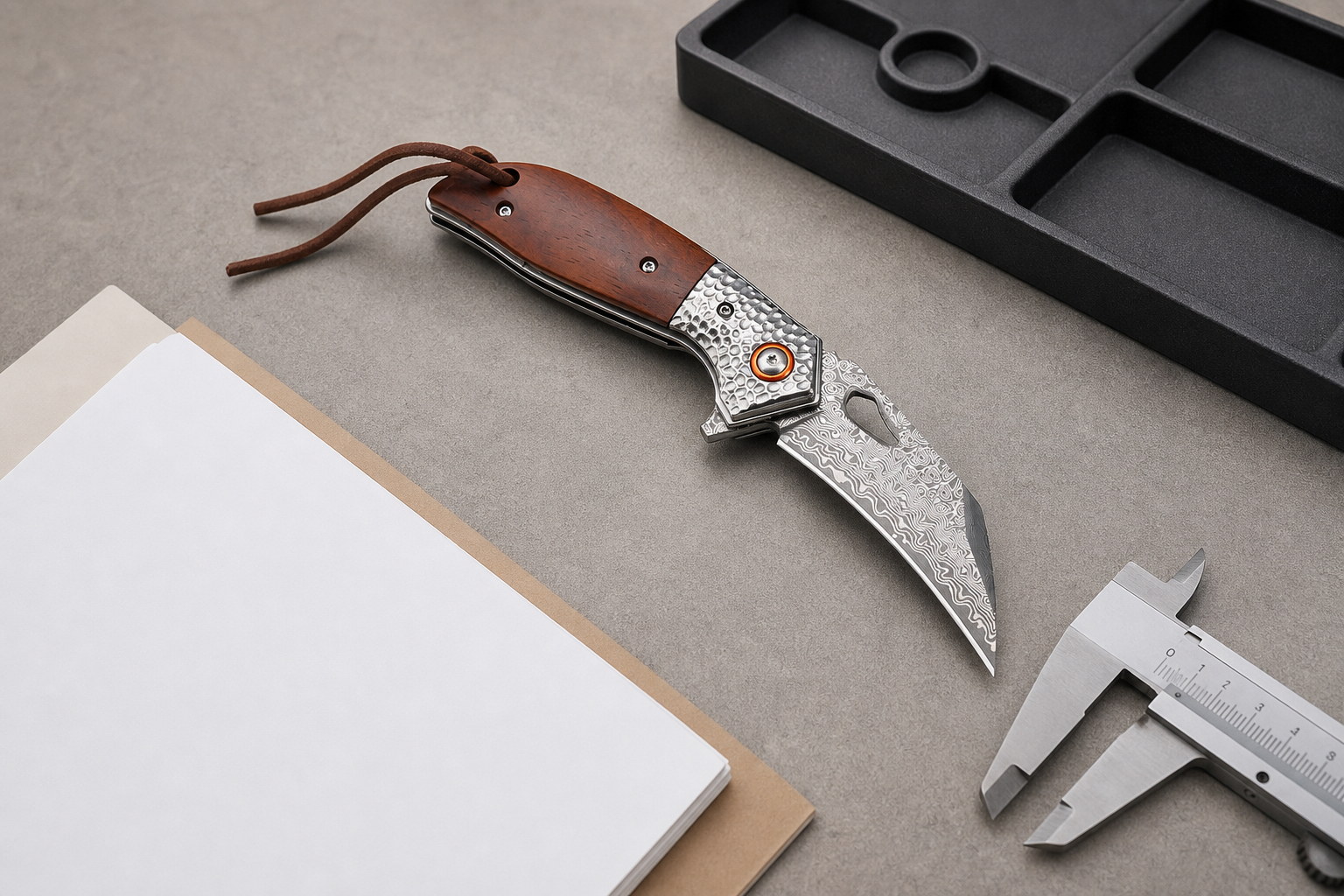
I Turn a Vague Idea Into a Reviewable Brief
Vast State does not replace legal counsel or customs brokers. We help buyers prepare the information those reviewers need. That includes mechanism description, product condition, components, drawings, photos, packaging, listing language, target market, channel, and QC plan.
We can support:
- Mechanism-sensitive RFQ templates
- Supplier document requests
- Product classification intake sheets
- Packaging and claim review notes
- Marketplace listing language preparation
- Customs broker document packages
- QC checks for mechanism consistency
- Alternative product planning
- Change-control checklists
The goal is disciplined sourcing. If a buyer chooses to continue, the file should be clear. If the review shows too much risk, the buyer should have a safer product path ready.
Turn your idea into a quote-ready knife project.
Share your drawing, sample photo, target quantity, market, and packaging needs. Vast State will review manufacturability and prepare OEM/ODM options.
Conclusion
Switchblade sourcing should begin with classification, not marketing. Buyers should verify mechanism, import status, documents, claims, channel rules, and QC before sampling.
OEM/ODM RFQ Checklist
Prepare these details to help Vast State review your project and provide a more accurate quotation.
| RFQ Field | What to Prepare |
|---|---|
| Project type | OEM from drawing / ODM private label / wholesale catalog |
| Product category | Folding knife / fixed blade / multi-tool / outdoor tool |
| Design status | Idea / sketch / 2D drawing / 3D CAD / physical sample |
| Target price | Ex-factory target price or retail price range |
| MOQ expectation | 500 / 1,000 / 3,000 / 5,000+ pcs |
| Logo method | Laser engraving / etching / printing / molded logo |
| Packaging | Standard packaging / custom retail box / Amazon-ready |
| Market | USA / EU / Japan / Korea / Middle East / other |
| Compliance needs | Buyer-specified testing / documentation / labeling |
| Timeline | Sample deadline / mass production deadline |