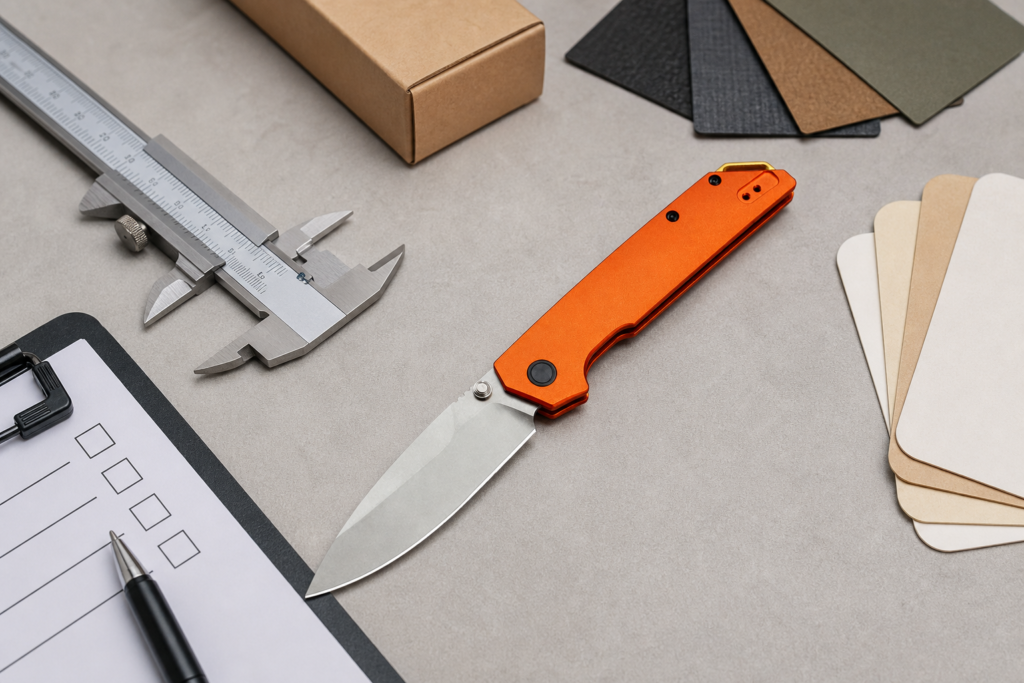
Mini automatic knives can look like a small niche product. For buyers, the word "automatic" is the real risk signal.
Before sourcing mini automatic knife categories, buyers should verify the opening mechanism, blade length, import status, target market, exception claims, supplier documents, packaging language, marketplace rules, and QC change control. Small size does not remove classification risk by itself.
Quick buyer brief:
- Answer: A mini automatic knife may still trigger switchblade, automatic-opening, import, state, marketplace, carrier, and age-positioning review. Buyers should treat the category as mechanism-sensitive and build a compliance file before sampling.
- Buyer context: This guide is for knife brands, importers, distributors, private label buyers, marketplace sellers, compliance teams, and OEM/ODM sourcing managers.
- Key checks: Button or handle device, automatic opening, spring or assist system, bias toward closure, blade length, component shipment condition, supplier declaration, legal review, customs broker review, packaging claims, listing copy, channel policy, and final inspection evidence.
Have a knife or multi-tool project in mind?
Send your sketch, CAD file, sample photo, or product idea. Vast State can review manufacturability, suggest materials, estimate MOQ, and prepare a quote for your OEM/ODM project.
This article is not legal advice, and it does not explain how to use, carry, deploy, modify, or bypass any automatic knife mechanism. It is a buyer-side sourcing and compliance framework. Rules can vary by country, state, city, product condition, sales channel, and shipment type.
The core point is simple: do not let the word "mini" make the team relaxed. If the product opens automatically or is marketed as automatic, it needs a formal review before RFQ, sample approval, packaging, import, listing, or shipment.
Why Does Mini Size Not Remove Classification Risk?
Small products can still create large compliance problems.
Mini size does not remove classification risk because automatic-opening rules often focus on mechanism, opening method, product condition, import status, and exceptions, not only overall length.
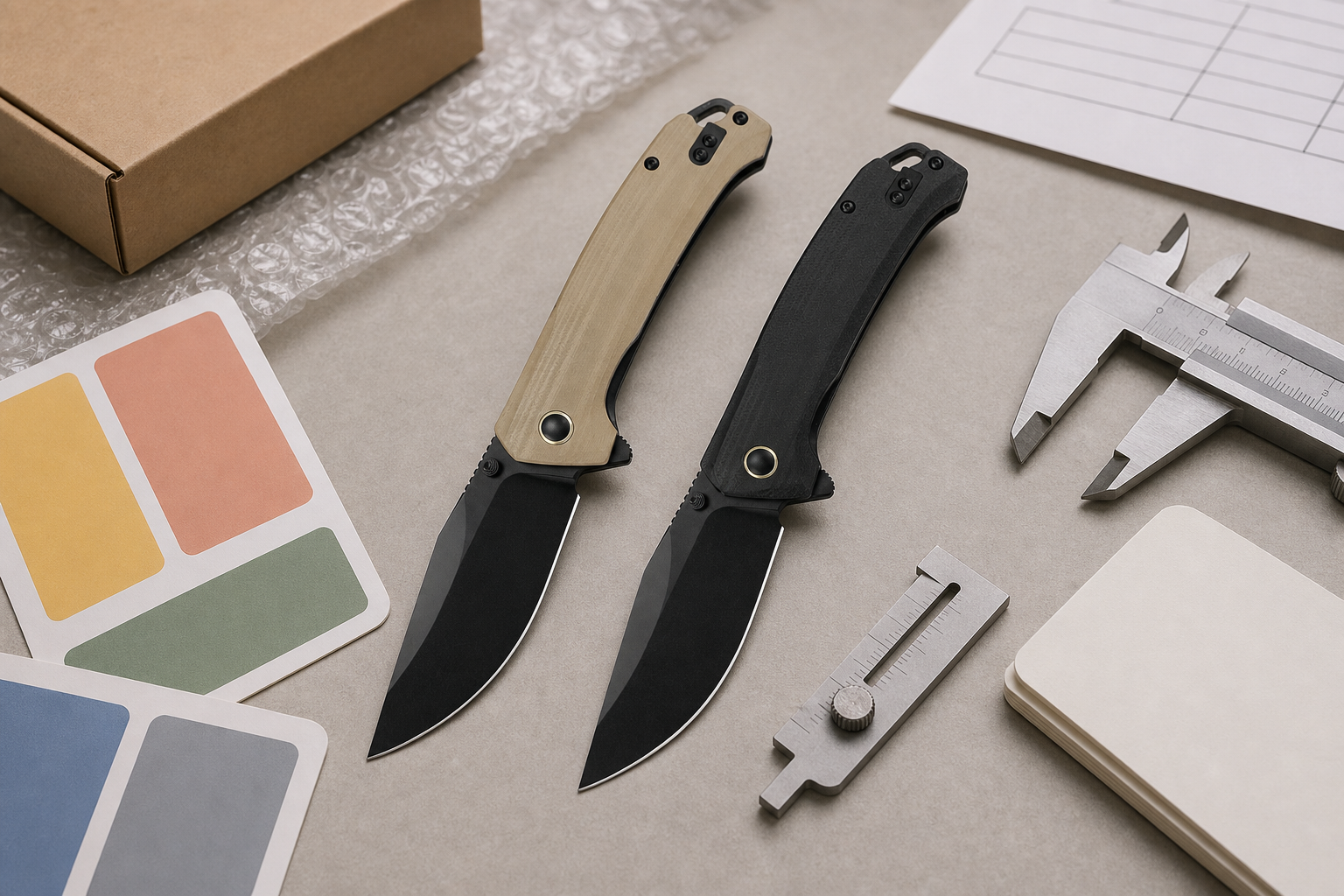
I Do Not Let "Mini" Become the Compliance Answer
In product meetings, "mini" can sound safer. It suggests smaller packaging, lower price, less steel, and a less dramatic retail image. But classification risk does not disappear because a product is compact. A small automatic-opening product can still be treated as a restricted mechanism category.
The U.S. Code definition in 15 U.S.C. 1241 focuses on automatic opening by button or other device in the handle, or by inertia, gravity, or both. Buyers should therefore start with mechanism facts. Blade size may matter for some exceptions, markets, or channel rules, but size is not the whole answer.
A buyer should verify:
- How the blade opens
- Whether a handle button or device is present
- Whether spring force is involved
- Whether inertia or gravity can open it
- Whether a bias toward closure exists
- What blade length is measured
- Whether the product is complete, partial, or a kit
- How the product is described on invoices and listings
If the team cannot answer those questions, the product is not ready for a quote.
What Mechanism Details Should the RFQ Collect?
An automatic product needs a factual mechanism file.
The RFQ should collect opening method, button or handle-device details, spring or assist components, closure bias, lock type, blade length, component list, conversion risk, and supplier change-control commitments.
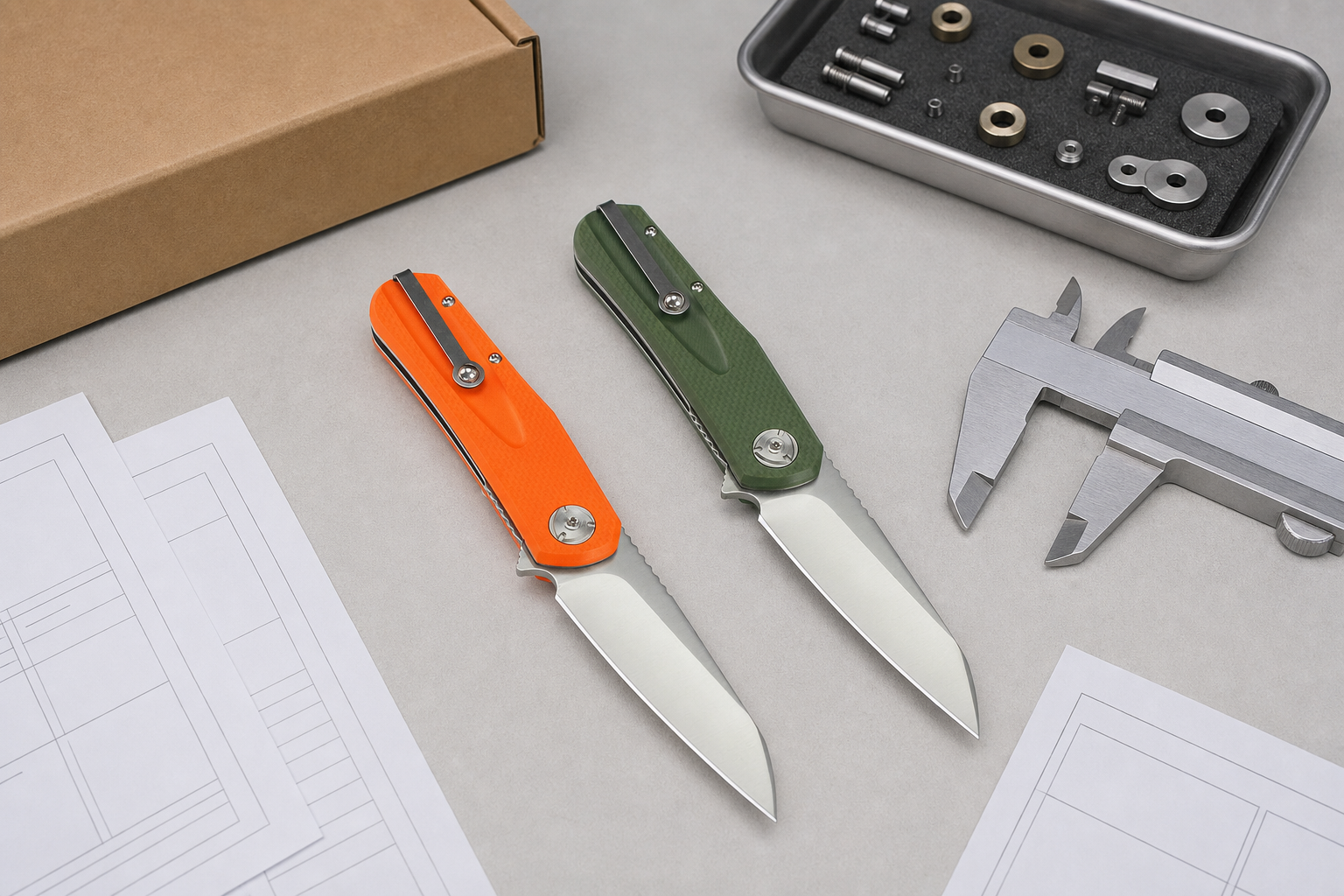
I Ask for Facts, Not a Legal Promise From the Factory
Suppliers may know manufacturing. They may not know the buyer's legal market, marketplace policy, carrier restrictions, or import requirements. Instead of asking, "Is this legal?" the RFQ should ask for factual mechanism information.
The 15 U.S.C. 1244 exceptions section includes narrow exception language, including bias-toward-closure wording for certain assisted-opening designs. Buyers should not interpret this casually. If the supplier claims an exception, the buyer should collect facts and ask counsel.
Practical RFQ questions:
- Does the product open automatically?
- Does a button, switch, or handle device release the blade?
- What spring, detent, or assist system is present?
- Is there a bias toward closure?
- What force is applied by the user, and where?
- What lock or closed-retention system is used?
- What is the exact blade length and measurement method?
- What parts are shipped together?
- Can the item be converted or altered easily?
The answer should become part of the product file.
How Should Import and Customs Review Be Handled?
Import review should happen before samples move.
Buyers should ask a customs broker to review the product condition, mechanism, components, invoice wording, tariff description, exception claim, and sample or production shipment plan before import.
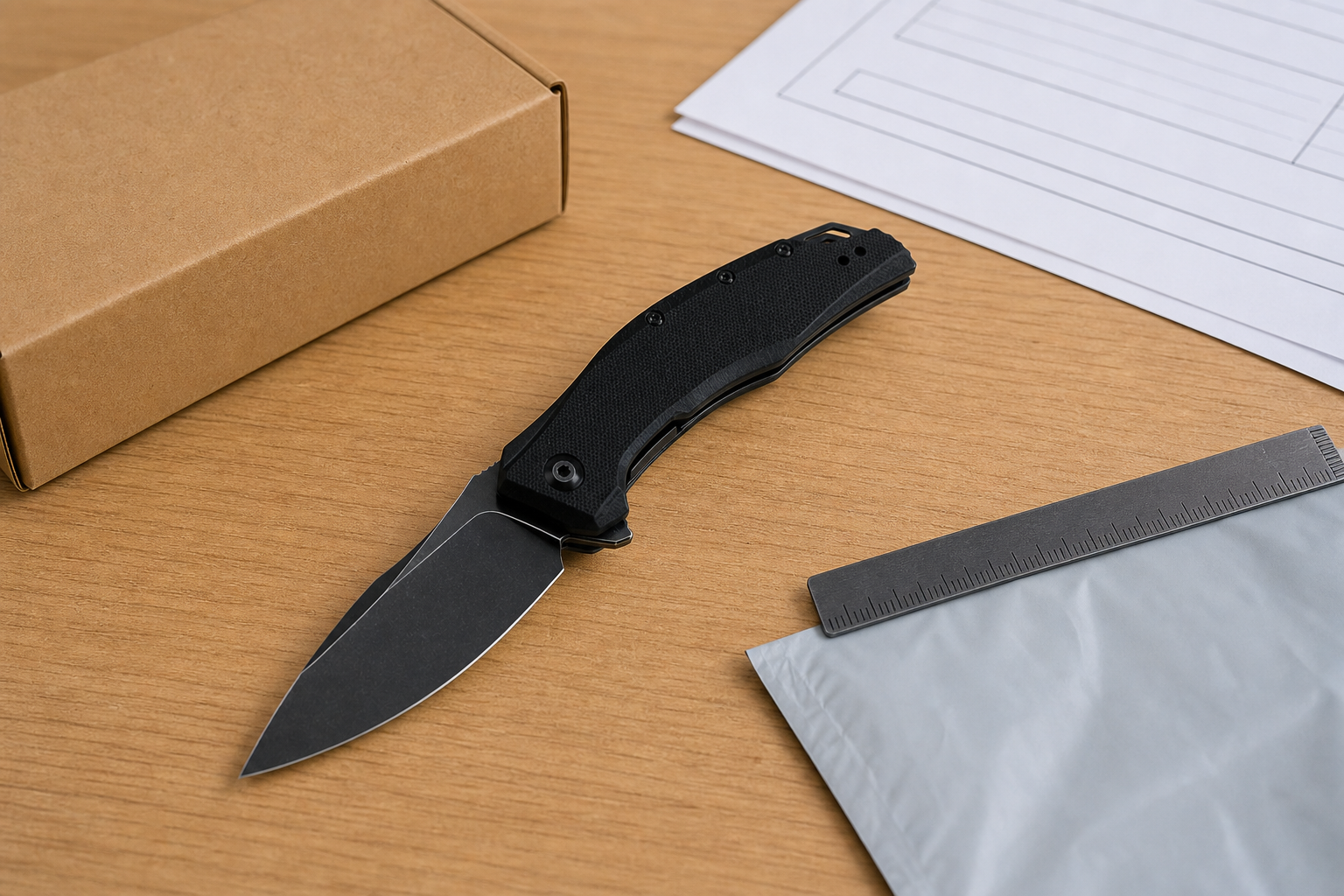
I Review the Product as It Will Enter the Market
Import review is not the same as a product photo review. The broker needs to know what is actually being shipped. A complete knife, a handle, a blade, a spring part, a kit, or a sample can create different questions. Invoice wording matters. Component lists matter. Exception claims matter.
The current 19 CFR Part 12 text available through govinfo includes Section 12.95 language for imported switchblade knives and components, as well as related sections on unrestricted imports, contrary-to-law importations, and exceptions. Buyers should use that as a trigger for broker review rather than as a casual checklist.
The USITC Harmonized Tariff Information page also reminds buyers that product descriptions and tariff classification are part of import planning. A supplier's suggested HS code is not enough for a restricted or mechanism-sensitive product.
Import review should document:
- Product condition as entered
- Components and kits
- Invoice description
- Tariff classification review
- Broker opinion
- Exception basis if claimed
- Sample shipment limits
- Production shipment plan
- Refusal or seizure contingency
If the import file is weak, the product should pause.
How Should Buyers Control Product Positioning?
Positioning can turn a small product into a big problem.
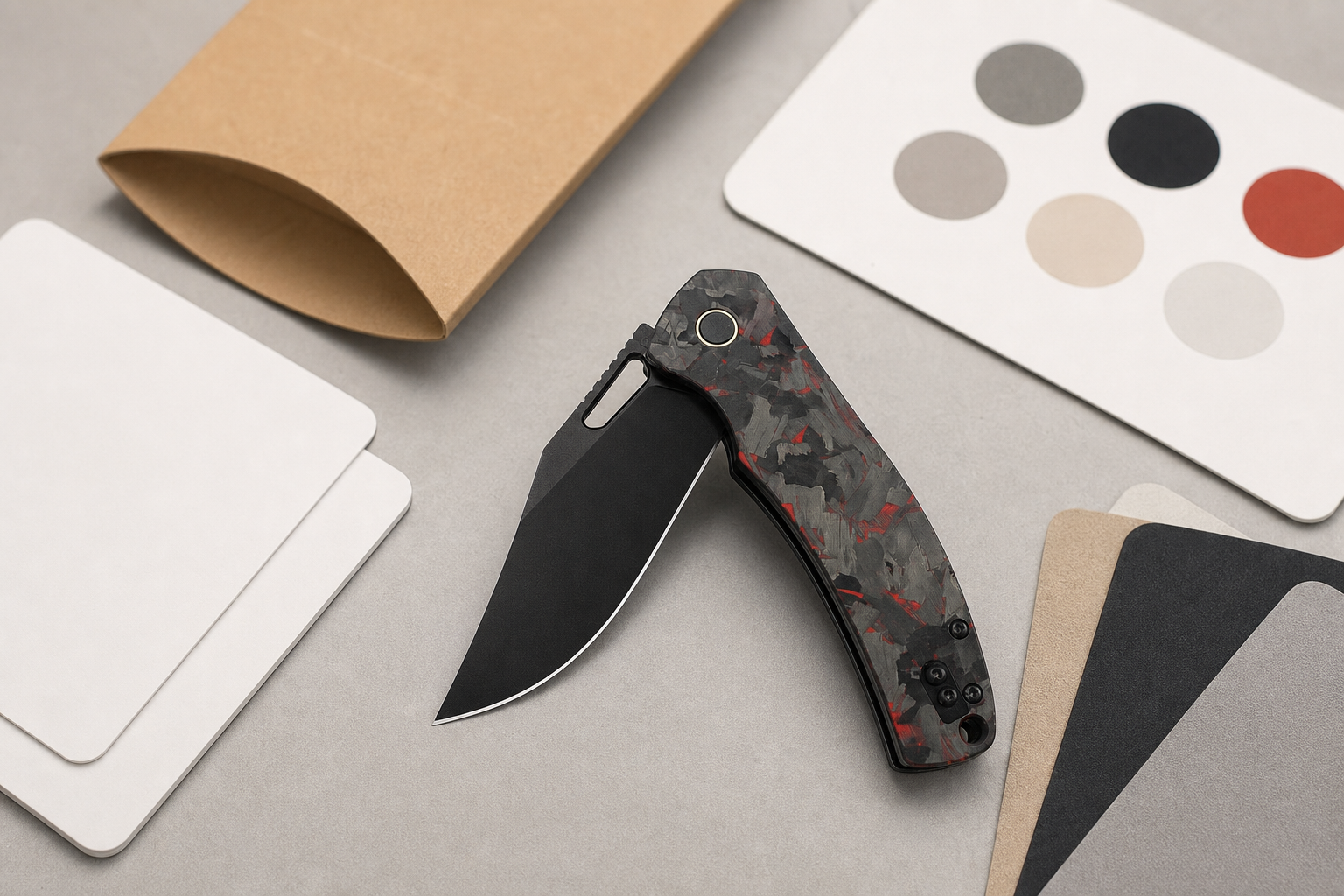
Product positioning should avoid rapid-deployment language, concealment claims, self-defense themes, youth appeal, universal legality claims, or any wording that conflicts with the reviewed mechanism file.
I Keep Marketing Neutral and Adult-Facing
Mini automatic categories can attract risky marketing language because the product is compact and mechanical. That is exactly why the buyer needs restraint. The product should not be positioned around surprise, concealment, speed, intimidation, school carry, self-defense, or novelty appeal.
The FTC advertising and marketing basics page supports the broad principle that advertising should be truthful, not deceptive or unfair, and evidence-based. For this category, legality, safety, age, mechanism, and performance claims need evidence and review.
The CPSC labeling requirements overview also matters because warnings and labels should match product type, design, components, and intended audience. A compact automatic product should not borrow care or warning copy from a normal manual folder.
Safer positioning controls include:
- Adult-facing product page
- Lawful-market wording
- No universal legality claim
- No hidden-carry claim
- No self-defense claim
- No school, prank, or youth appeal
- Neutral mechanism description
- Channel-approved category language
What Supplier Documents Should Buyers Request?
Supplier documents should make the product reviewable.
Buyers should request drawings, BOM, mechanism declaration, blade-length record, component shipment list, sample photos, controlled review video, packaging draft, invoice description draft, and change-control agreement.
I Build the File Before Tooling or Packaging
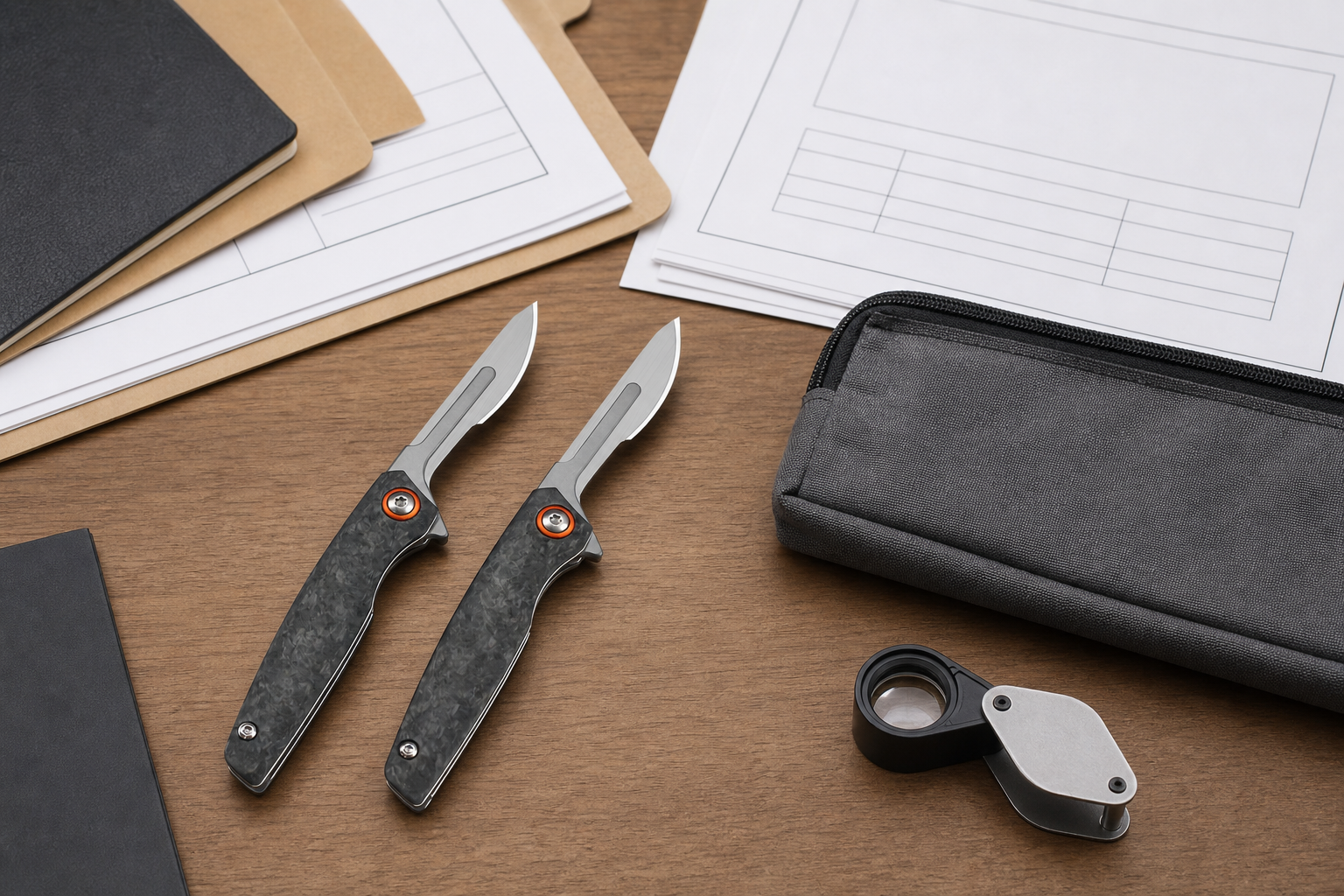
Mechanism-sensitive products need documents early. If the buyer waits until packaging is printed or production is finished, the review becomes expensive and stressful. The product file should exist before tooling, package design, listing copy, or purchase orders.
The CPSC manufacturing best practices page supports the larger discipline of specifications, supplier controls, documentation, spot checks, and records. Even though this page is not knife-specific, the sourcing logic is directly useful.
Useful documents include:
- Technical drawing
- Exploded view
- BOM
- Mechanism declaration
- Blade-length measurement note
- Component list
- Packaging draft
- Listing copy draft
- Invoice description draft
- Supplier compliance statement
- Change-control commitment
- Approved sample photos
The supplier should not change the spring, detent, button, pivot, handle, lock, blade length, or assembly process without written approval. In this category, a small change can change risk.
What QC Checks Matter for Mini Automatic Categories?
QC must protect the classification file.
QC should verify mechanism, blade length, spring or assist parts, button or handle device, closure bias, lock function, kit contents, packaging copy, invoice wording, and final sample photos against the approved file.
I Inspect Against the Reviewed Sample
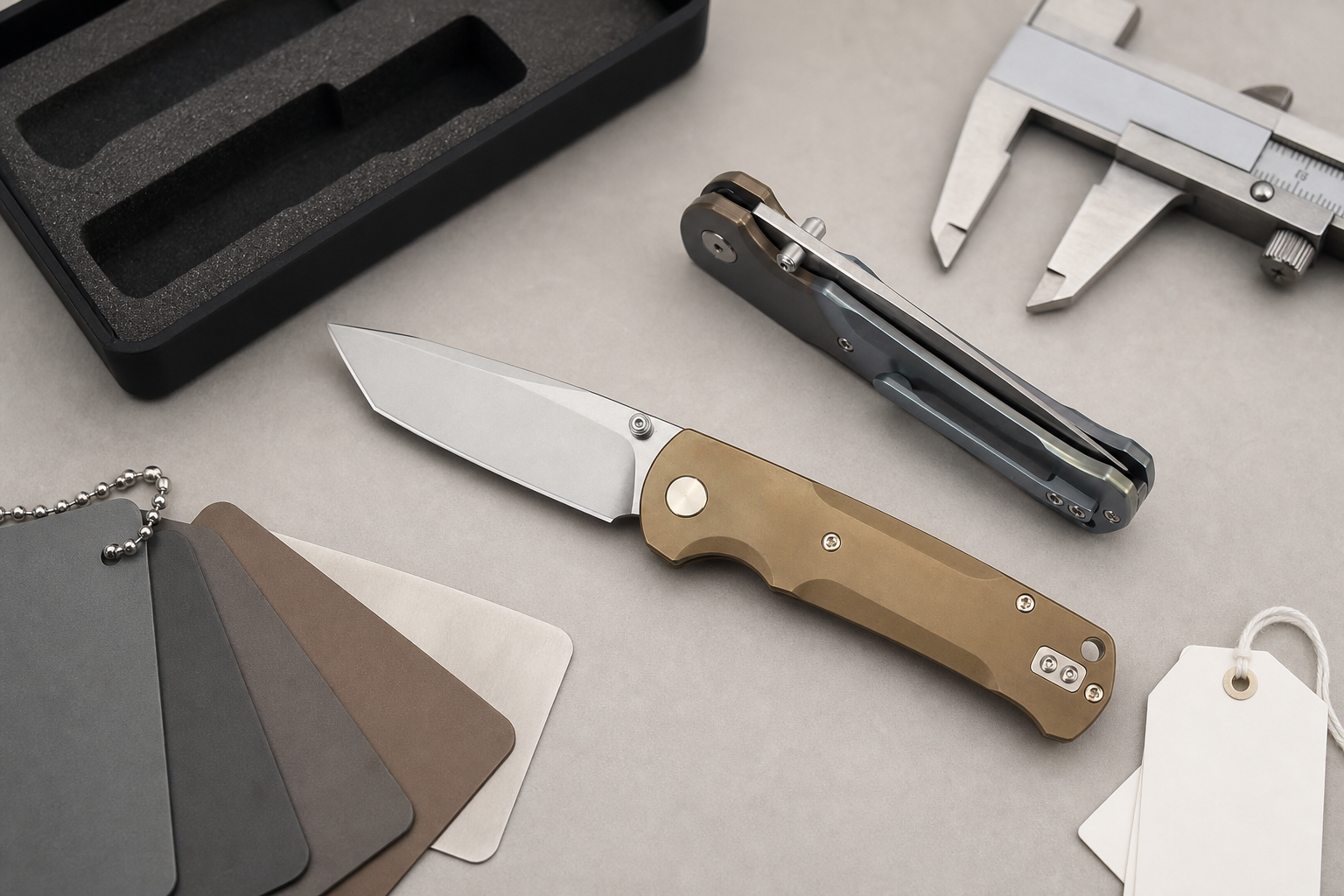
The approved sample should not be treated as a suggestion. It is the reference for the product file. The factory may try to improve action, reduce cost, change a spring, alter a detent, adjust blade weight, change a button, or update a handle part. These changes may affect classification, performance, and listing claims.
QC should include:
- Product matches approved sample.
- Blade length matches record.
- Mechanism matches supplier declaration.
- No unauthorized spring or button change.
- Closure bias matches reviewed file.
- Kit contents match approved condition.
- Packaging wording matches approved copy.
- Carton and invoice wording are controlled.
- Listing photos match product condition.
- Final inspection photos are saved.
For a mini automatic category, QC is not only about cosmetic quality. It is also about keeping the product from drifting away from the reviewed compliance file.
How Should Marketplaces, Carriers, and Retailers Be Checked?
The sales channel may reject what a factory can make.
Marketplaces, carriers, retailers, payment processors, and distributors may restrict compact automatic knives by mechanism, blade length, age positioning, shipping method, imagery, wording, or local law.
I Check the Channel Before the Purchase Order
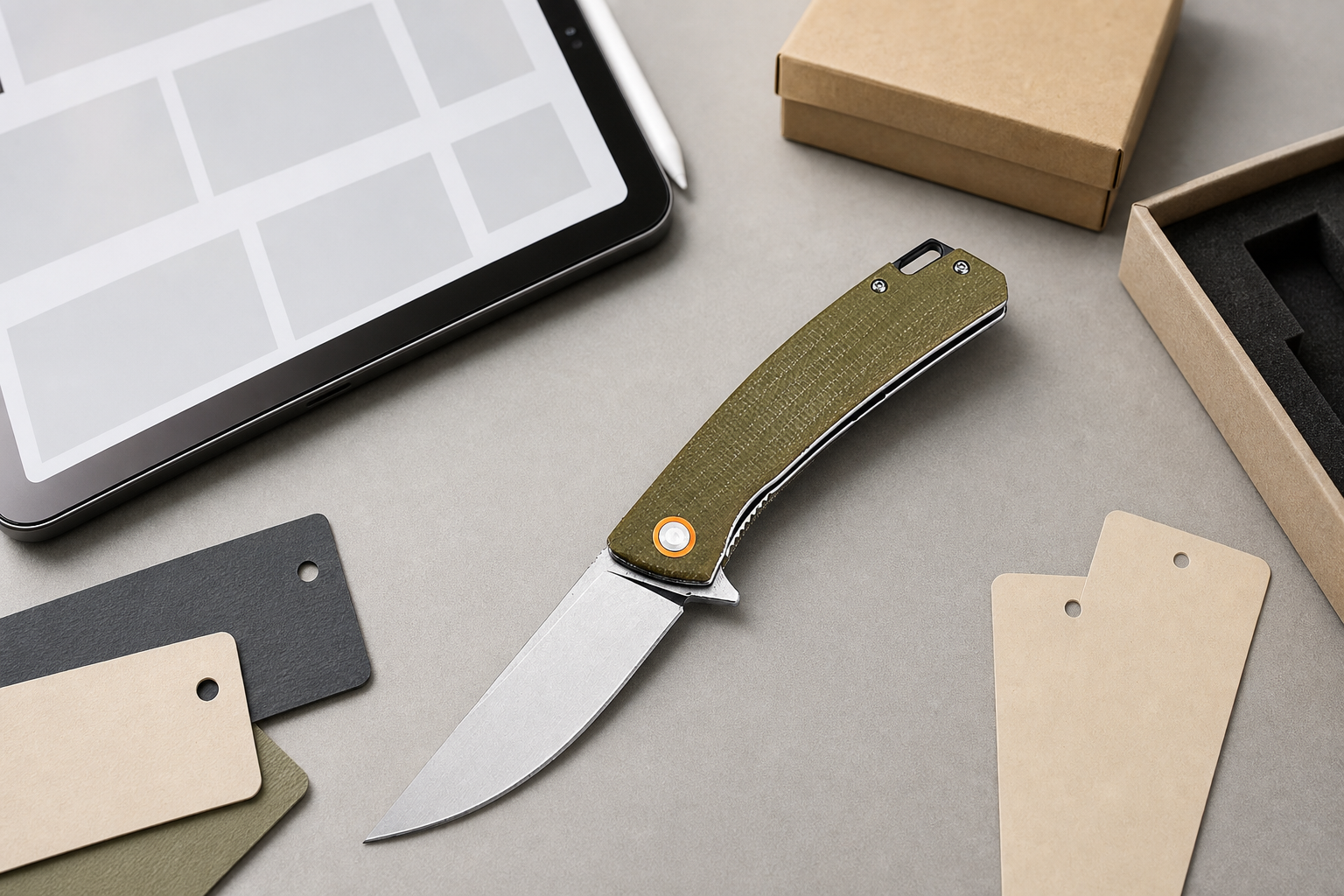
Some buyers only check legal and customs questions. That is not enough. A marketplace may ban automatic categories. A retailer may require age restrictions. A carrier may reject certain shipments. A payment provider may have restricted-product rules. A distributor may not want the category in its catalog.
Channel review should cover:
- Product title and category
- Mechanism wording
- Blade length
- Image style
- Age gate or purchase restriction
- Shipping method
- Return handling
- Customer support process
- Local-law notice
- Payment and platform policy
If the product cannot be listed, shipped, or paid for through the target channel, a good factory quote does not matter.
When Should Buyers Choose a Safer Alternative?
Some compact knife ideas are not worth the friction.
Buyers should choose a safer alternative when automatic classification is unclear, import risk is high, channel policies are restrictive, exception claims are weak, or supplier documents cannot support review.
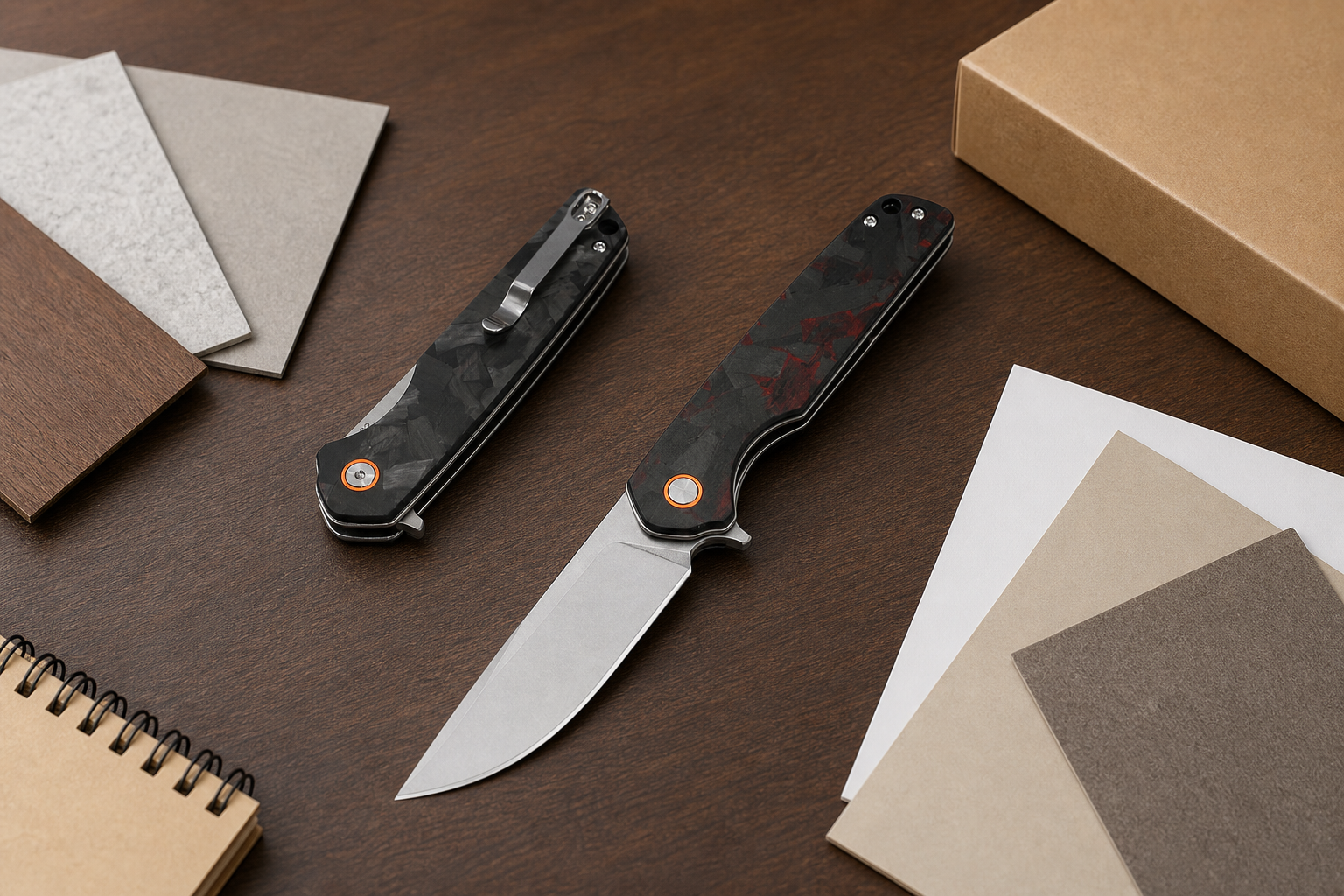
I Prefer a Sellable Product Over a Risky Mechanism
A compact automatic product may look attractive because it is small, mechanical, and eye-catching. That does not mean it is a good private-label product. If the category creates import risk, listing bans, customer confusion, or legal uncertainty, the buyer may be better served by another compact product.
Alternatives can include:
- Manual folding knives
- Slipjoint-style utility products
- Outdoor fixed blades with sheath control
- Kitchen tools
- Utility cutters for lawful channels
- Knife accessories
- Sharpening and care kits
The point is not to make the catalog boring. The point is to build a product line that can be manufactured, imported, listed, shipped, and supported without constant friction.
How Can Vast State Help Buyers Review Mini Automatic Projects?
Vast State can make the category review practical before sampling.
Vast State helps buyers organize mechanism facts, supplier documents, legal review inputs, customs broker questions, packaging copy, listing language, QC controls, and alternative product options.
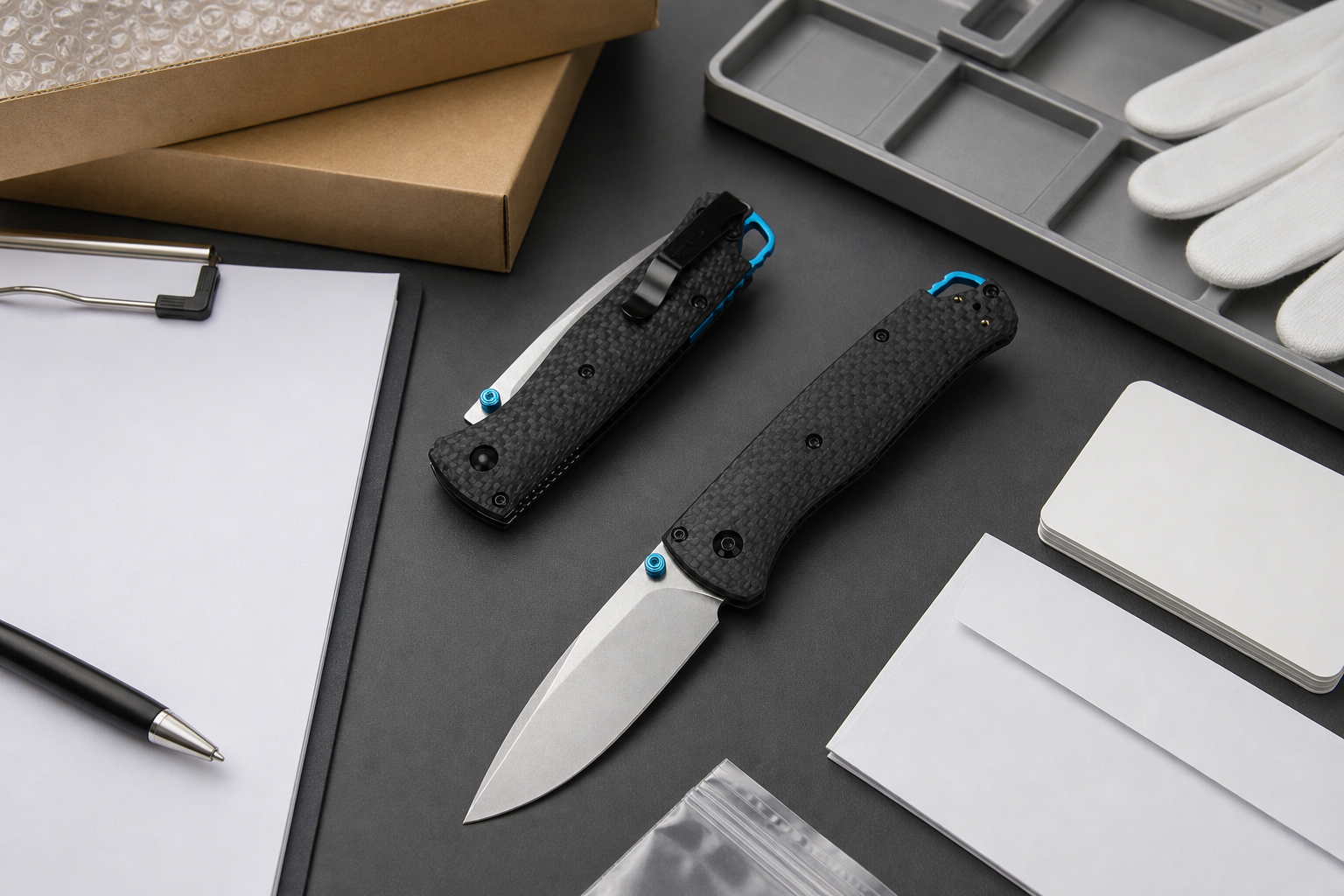
I Turn the Product Idea Into a Reviewable File
Vast State does not replace legal counsel, customs brokers, retailers, carriers, or marketplaces. We help buyers prepare the file those reviewers need. That includes mechanism description, blade length, drawings, components, product condition, packaging, listing copy, target market, channel, and QC plan.
We can support:
- Mini automatic category risk intake
- Supplier RFQ fields
- Mechanism and blade-length document requests
- Packaging and claim review notes
- Marketplace listing preparation
- Customs broker document package
- QC checklist for classification consistency
- Change-control requirements
- Alternative product planning
The goal is a sourcing decision that can survive review. If the category is too risky, the buyer should know before the purchase order.
Turn your idea into a quote-ready knife project.
Share your drawing, sample photo, target quantity, market, and packaging needs. Vast State will review manufacturability and prepare OEM/ODM options.
Conclusion
Mini automatic knife sourcing should start with mechanism and market review. Buyers should verify classification, documents, claims, channel rules, and QC before sampling.
OEM/ODM RFQ Checklist
Prepare these details to help Vast State review your project and provide a more accurate quotation.
| RFQ Field | What to Prepare |
|---|---|
| Project type | OEM from drawing / ODM private label / wholesale catalog |
| Product category | Folding knife / fixed blade / multi-tool / outdoor tool |
| Design status | Idea / sketch / 2D drawing / 3D CAD / physical sample |
| Target price | Ex-factory target price or retail price range |
| MOQ expectation | 500 / 1,000 / 3,000 / 5,000+ pcs |
| Logo method | Laser engraving / etching / printing / molded logo |
| Packaging | Standard packaging / custom retail box / Amazon-ready |
| Market | USA / EU / Japan / Korea / Middle East / other |
| Compliance needs | Buyer-specified testing / documentation / labeling |
| Timeline | Sample deadline / mass production deadline |