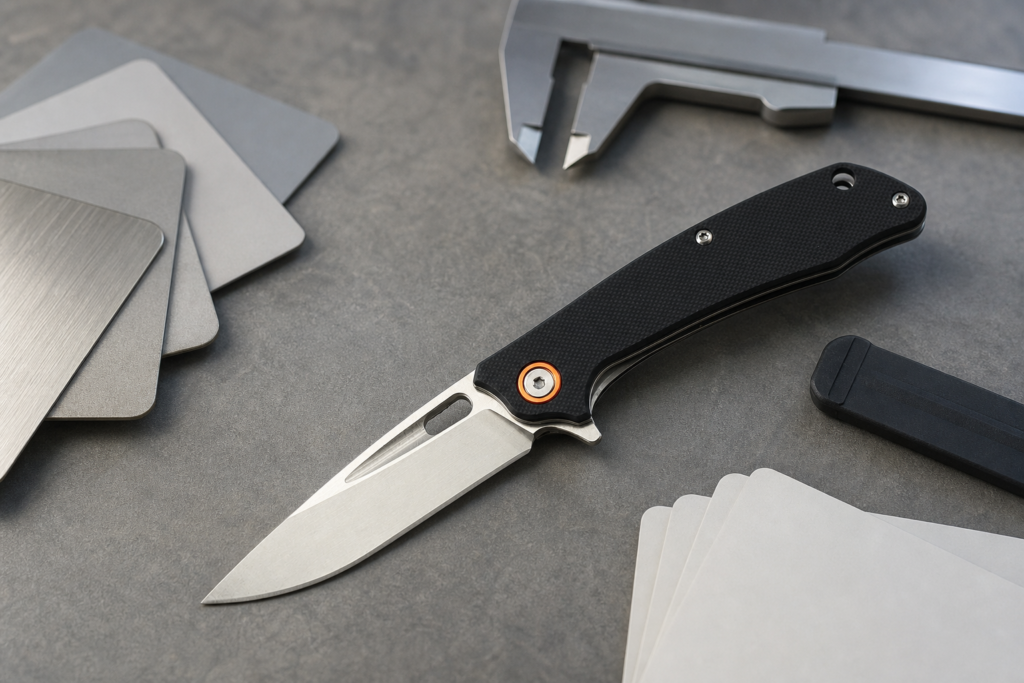
Knife edge type looks like a small detail, but it can change cutting feel, sharpening, safety copy, and factory consistency.
Buyers should specify knife edge types by matching the cutting task, user skill, steel, heat treatment, grind, edge angle, behind-edge thickness, serration style, sharpening plan, safety instructions, and QC tests before approving OEM/ODM samples.
Quick buyer brief:
- Answer: A knife edge type is not just "plain" or "serrated." It is a complete edge system that should be defined in drawings, samples, user copy, and inspection records.
- Buyer context: This guide is for knife brands, kitchenware brands, outdoor brands, EDC brands, utility-tool buyers, importers, distributors, private label buyers, and OEM/ODM sourcing teams.
- Key checks: Plain edge, serrated edge, partially serrated edge, grind type, edge angle, behind-edge thickness, burr control, sharpening access, steel and hardness range, user maintenance, packaging warning, and final inspection method.
Have a knife or multi-tool project in mind?
Send your sketch, CAD file, sample photo, or product idea. Vast State can review manufacturability, suggest materials, estimate MOQ, and prepare a quote for your OEM/ODM project.
Many buyers ask for a guide to knife edge types because they see terms like plain edge, serrated edge, hollow grind, convex edge, chisel edge, and scandi grind in product pages. The problem is that these words are often used loosely. A factory sample may look correct in photos but cut poorly, chip quickly, arrive with burrs, or be difficult for the customer to maintain.
For OEM/ODM work, edge type should be treated as a controlled specification. It should connect the task, steel, hardness, geometry, sharpening method, packaging copy, and QC checks. This is especially important when a buyer sells into multiple channels, because the same edge can be praised by one user and misunderstood by another.
Why Should Knife Edge Type Be a Specification, Not a Style Word?
Edge words become risky when the factory and buyer define them differently.
Knife edge type should be a specification because cutting performance depends on edge geometry, grind, steel, heat treatment, sharpening, burr control, and user maintenance, not on a single marketing label.
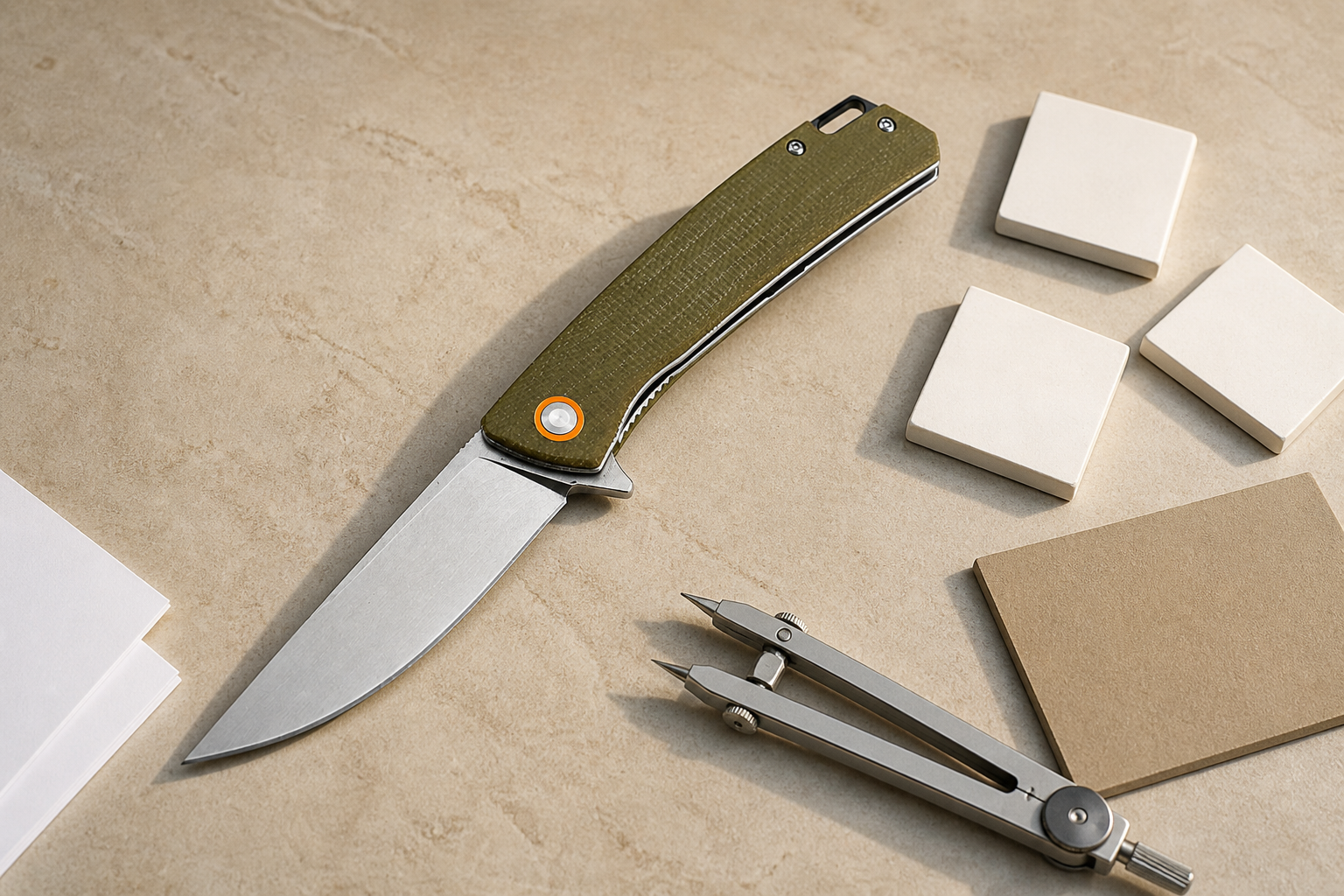
I Define the Edge Before I Approve the Sample
When a buyer writes "sharp plain edge" in an RFQ, the supplier still has many choices. The factory can choose a different edge angle, grind height, behind-edge thickness, finishing grit, deburring method, and sharpening fixture. The finished product may pass a quick paper-cutting demo but fail in normal use.
That is why I prefer to define edge type with measurable details. A buyer should name the edge category, use case, grind type, edge angle target, acceptable tolerance, edge finish, burr limit, and sharpening method. If the knife has serrations, the buyer should define serration pitch, depth, location, length, and whether the user is expected to resharpen it.
The ISO 8442-5 cutlery sharpness and edge retention standard page shows that knife sharpness and edge retention can be treated as testable qualities. Even if the buyer is not making kitchen cutlery, this source supports an important idea: edge performance should be discussed with test method and scope, not only with adjectives.
| Vague request | Better RFQ language | Why it matters |
|---|---|---|
| Very sharp edge | Edge angle, finish, and burr limit | Controls first-cut feel |
| Strong edge | Steel, hardness, geometry, task | Controls durability |
| Serrated edge | Serration pattern and length | Controls cutting behavior |
| Easy to sharpen | Edge type and user maintenance plan | Controls after-sale experience |
OEM/ODM RFQ Checklist
Prepare these details to help Vast State review your project and provide a more accurate quotation.
| RFQ Field | What to Prepare |
|---|---|
| Project type | OEM from drawing / ODM private label / wholesale catalog |
| Product category | Folding knife / fixed blade / multi-tool / outdoor tool |
| Design status | Idea / sketch / 2D drawing / 3D CAD / physical sample |
| Target price | Ex-factory target price or retail price range |
| MOQ expectation | 500 / 1,000 / 3,000 / 5,000+ pcs |
| Logo method | Laser engraving / etching / printing / molded logo |
| Packaging | Standard packaging / custom retail box / Amazon-ready |
| Market | USA / EU / Japan / Korea / Middle East / other |
| Compliance needs | Buyer-specified testing / documentation / labeling |
| Timeline | Sample deadline / mass production deadline |
When Should Buyers Choose a Plain Edge?
A plain edge is simple to explain, but it still needs geometry control.
Buyers should choose a plain edge for clean slicing, general utility, kitchen prep, woodworking-style control, packaging, and user sharpening, when the product brief values smooth cuts and easy maintenance.
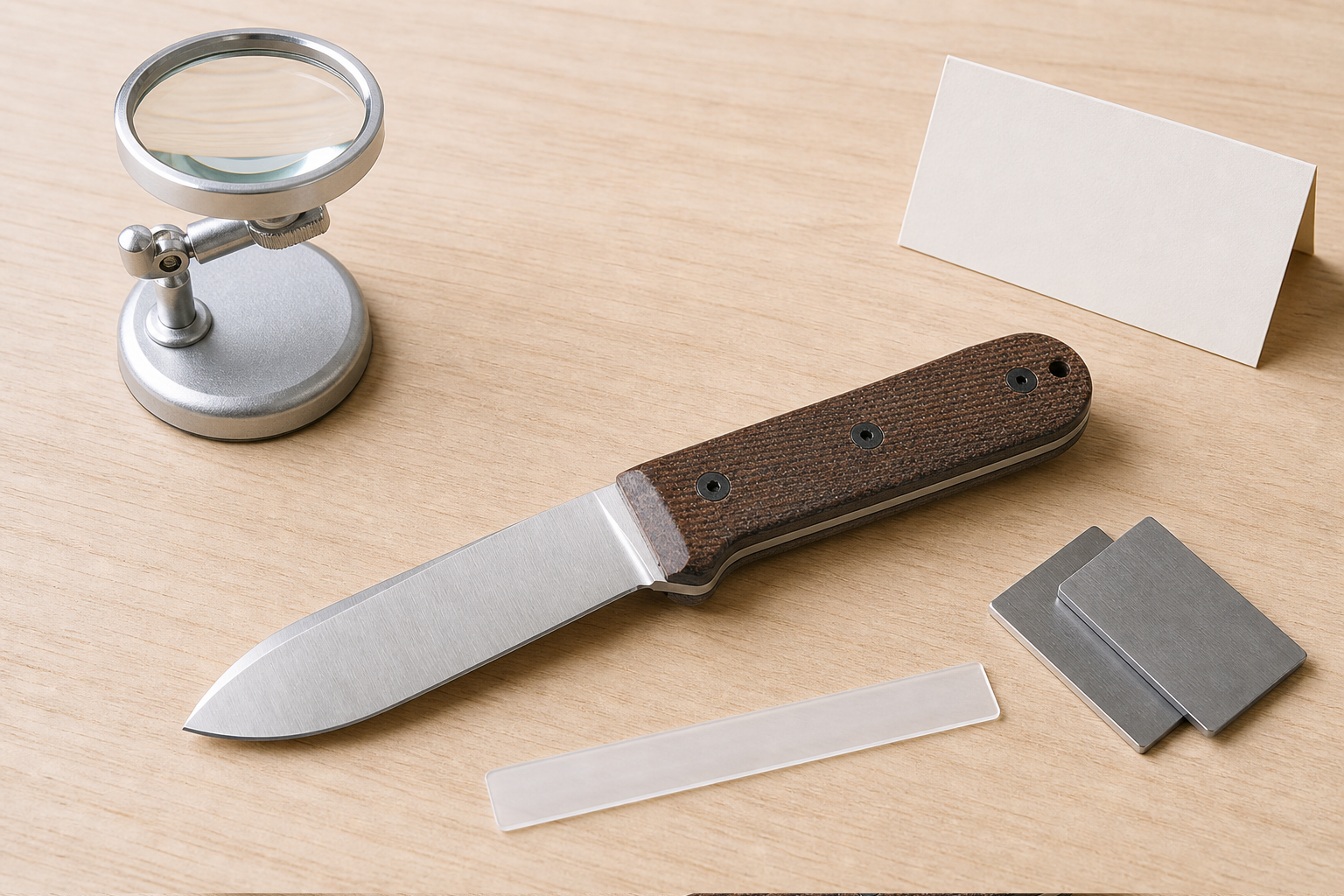
I Use Plain Edges When Control and Maintenance Matter
A plain edge has a continuous cutting edge without serrations. It usually supports smooth slicing, predictable sharpening, and simple user education. It can fit kitchen knives, outdoor knives, pocket knives, utility knives, carving tools, and many general-purpose products.
The advantage is not that plain edges are always better. The advantage is that they are easier to inspect and easier for many users to maintain. A customer can often sharpen a plain edge with common sharpening equipment if the edge angle and steel are reasonable. A plain edge can also be easier for the factory to keep consistent across production, as long as the sharpening fixture, operator training, and inspection process are controlled.
The risk is over-thinning or over-polishing the edge. A very fine edge may feel impressive at first but roll or chip if the steel, hardness, and use case do not support it. A thick plain edge may be durable but cut poorly. So the buyer should define the balance.
| Plain edge question | Buyer decision | QC check |
|---|---|---|
| What does it cut? | Food, cord, packaging, wood, or utility material | Task-based sample test |
| Who sharpens it? | User, service center, or no user sharpening | Edge angle guidance |
| How durable should it be? | Thin slicer or stronger utility edge | Behind-edge thickness |
| How clean should it look? | Finish grit and bevel symmetry | Visual and measurement check |
When Do Serrated or Partially Serrated Edges Make Sense?
Serrations can help some tasks, but they can also make maintenance harder.
Buyers should choose serrated or partially serrated edges for fibrous, rope-like, crusted, or grab-and-cut tasks only when the user understands the maintenance tradeoff and the factory can control serration shape.
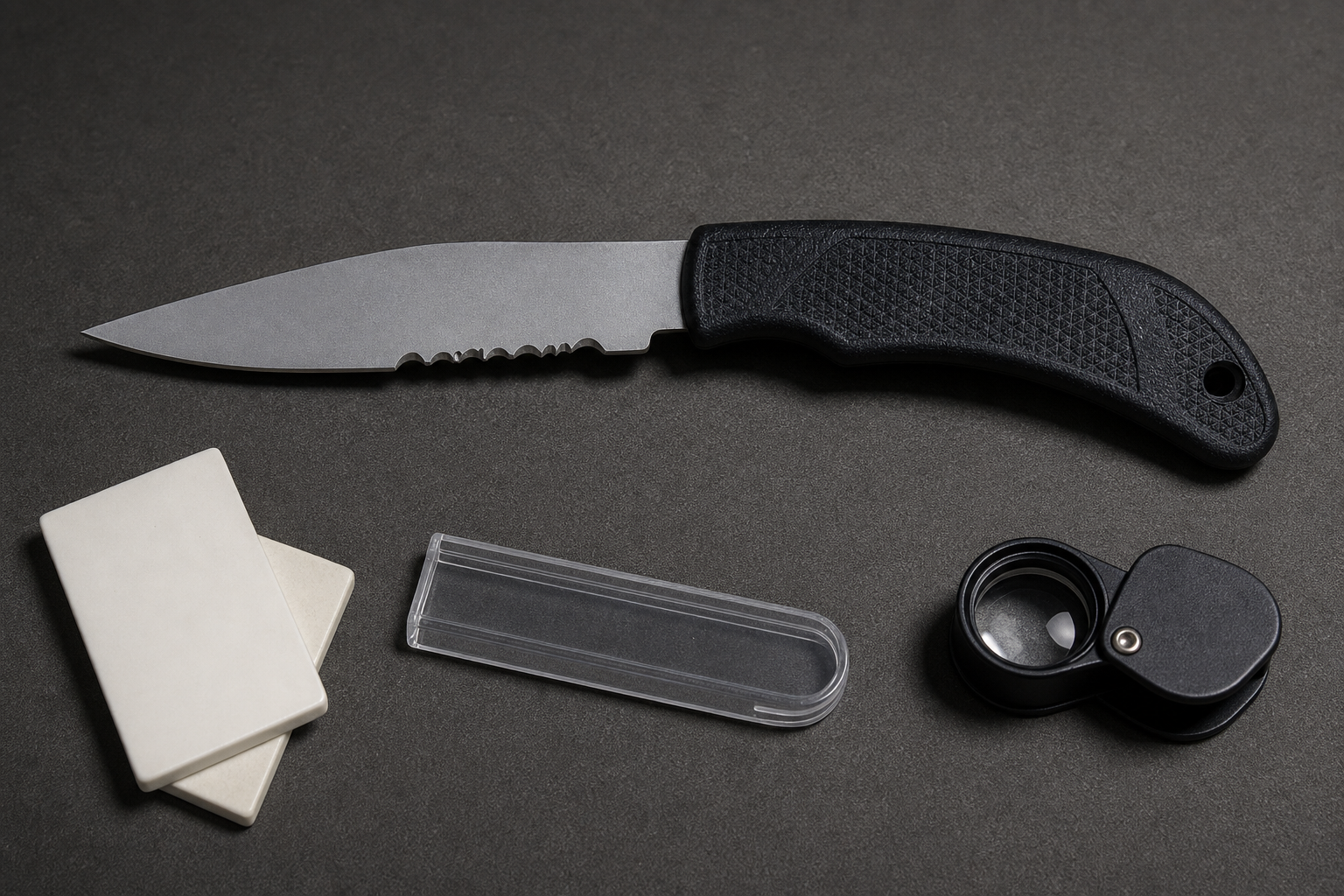
I Do Not Add Serrations Just for a Tough Look
A serrated edge has teeth or scallops that can bite into certain materials. It may help with rope, webbing, some packaging, crusty food, or fibrous materials. A partially serrated edge combines a plain section and a serrated section. That can work for some outdoor or utility lines, but it also creates a shorter plain edge and a more complex sharpening story.
Serration design should be specified. The buyer should define where the serrations start, how much of the edge they occupy, their pitch and depth, the side they are ground on, the finishing level, and whether the product includes sharpening guidance. A rough serration can tear material. A shallow serration may not provide the expected bite. A poorly deburred serration may feel cheap or catch unexpectedly.
The buyer should also consider customer support. Many users can sharpen a plain edge more easily than a serrated edge. If the brand sells to casual customers, the maintenance instructions should be clear. If the product is sold as a work or rescue-adjacent tool, the buyer should verify that all safety and claim wording is appropriate for the target market.
Serrations are useful when the task needs them. They are unnecessary when they are only decoration.
How Should Buyers Compare Flat, Hollow, Convex, Saber, Chisel, and Scandi Grinds?
Grind type shapes the blade behind the final edge.
Buyers should compare grind types by slicing ability, edge support, sharpening method, production consistency, blade thickness, material removal, cost, and the customer's expected maintenance skill.
I Separate Grind Type From Final Edge Angle
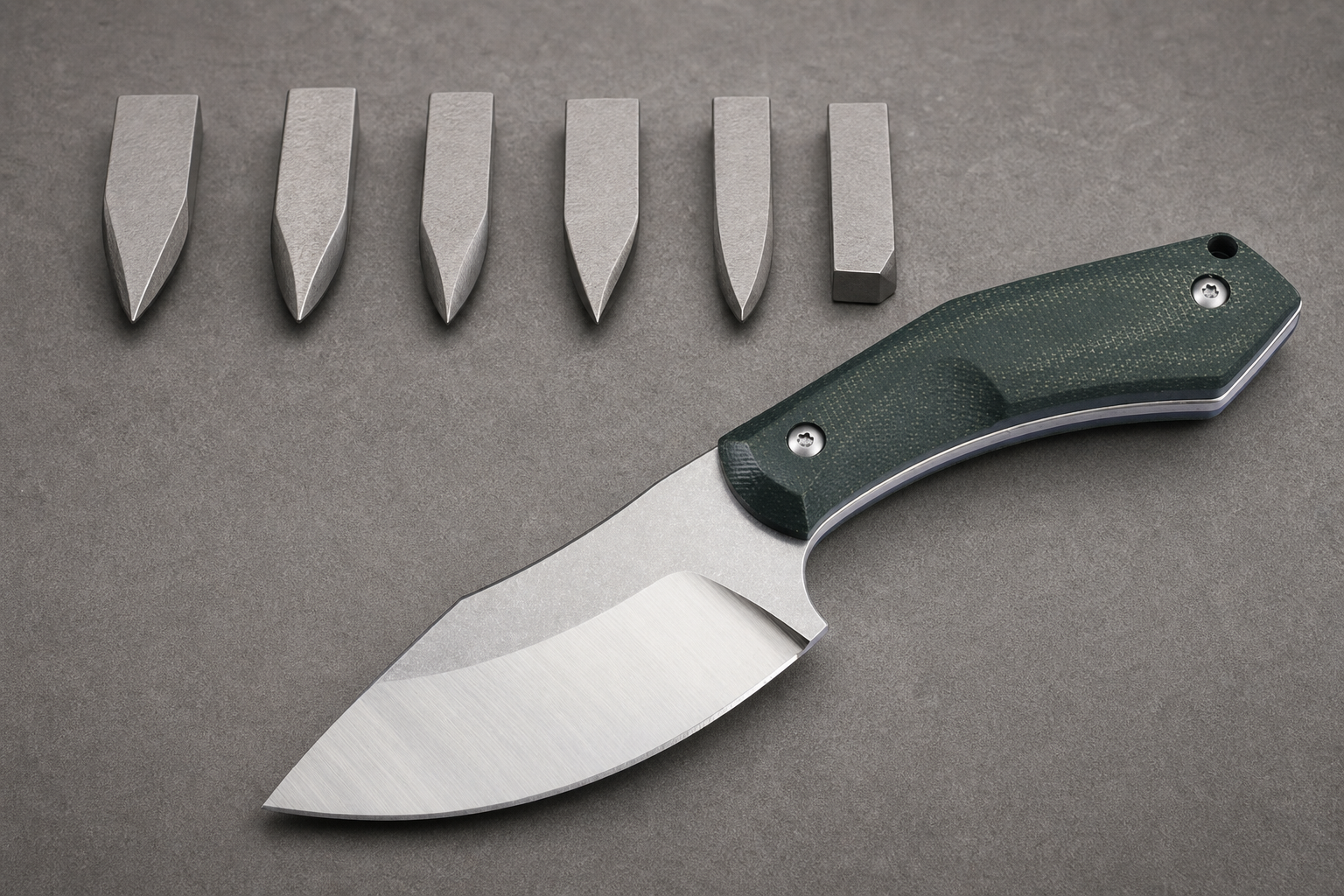
Buyers often mix up grind type and final edge. The grind is the blade geometry leading toward the edge. The final edge is the sharpened apex. A flat grind, hollow grind, convex grind, saber grind, chisel grind, or scandi grind can each be made well or poorly.
A flat grind can slice well and is common in many categories. A hollow grind can feel very sharp in light cutting, but it may not be ideal for every hard-use product. A convex edge can support durability and smooth material separation, but production and sharpening control can be more demanding. A saber grind can leave more blade thickness for strength, but it may cut less efficiently than a thinner grind. A chisel grind can simplify one-sided sharpening and specific cutting tasks, but it changes handedness and cutting feel. A scandi-style grind can appeal to woodworking and bushcraft-style markets, but users need to understand maintenance.
The buyer should avoid saying one grind is best. The right grind depends on task, steel, blade size, handle control, user maintenance, and target price.
| Grind type | Common strength | Watch point |
|---|---|---|
| Flat | Balanced slicing and production clarity | Needs thickness control |
| Hollow | Fine cutting feel in lighter tasks | Edge support can vary |
| Convex | Durable and smooth through material | Harder to measure and sharpen |
| Chisel | Simple one-side geometry | Cutting bias and handedness |
How Should Edge Angle and Behind-Edge Thickness Be Specified?
Small geometry changes can matter more than steel names.
Buyers should specify edge angle, behind-edge thickness, bevel height, bevel symmetry, tip thickness, and acceptable tolerance so the supplier can repeat the cutting feel across mass production.
I Measure Geometry Instead of Arguing About "Sharp"
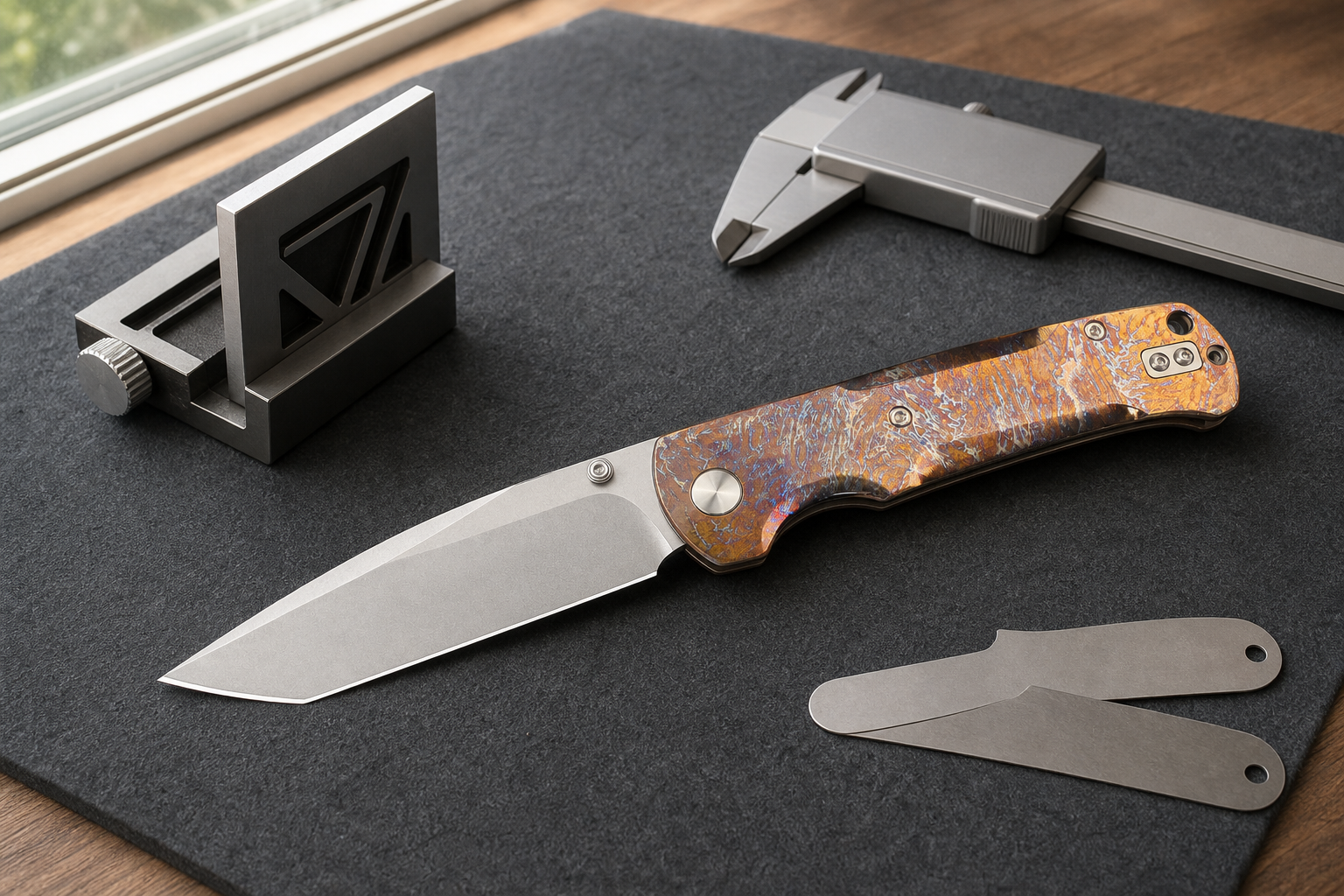
Sharpness is easy to feel but hard to control without a defined method. Edge angle and behind-edge thickness help turn the discussion into a repeatable specification. A thin edge can cut easily but may need better steel, heat treatment, and user care. A thicker edge may survive rougher tasks but can feel dull even when the apex is technically sharpened.
NIST dimensional metrology supports the role of measurement in manufacturing improvement. For knife buyers, that means calipers, gauges, optical inspection, fixture control, and sample records should be part of the edge discussion. The buyer does not need to overcomplicate every project, but the supplier should know what dimensions matter.
Useful edge geometry fields include:
- Edge angle per side or included angle
- Behind-edge thickness at a defined distance
- Bevel height
- Tip thickness
- Grind height
- Serration pitch and depth where relevant
- Burr and wire-edge acceptance
- Measurement location and method
If these details are missing, two factories can make the same "plain edge" and deliver very different products.
How Do Steel, Heat Treatment, and Hardness Affect Edge Choice?
Edge type cannot be separated from steel and heat treatment.
Buyers should match edge type with blade steel, heat-treatment route, hardness range, toughness needs, corrosion plan, and intended cutting material before approving the final geometry.
I Do Not Let Edge Geometry Fight the Steel
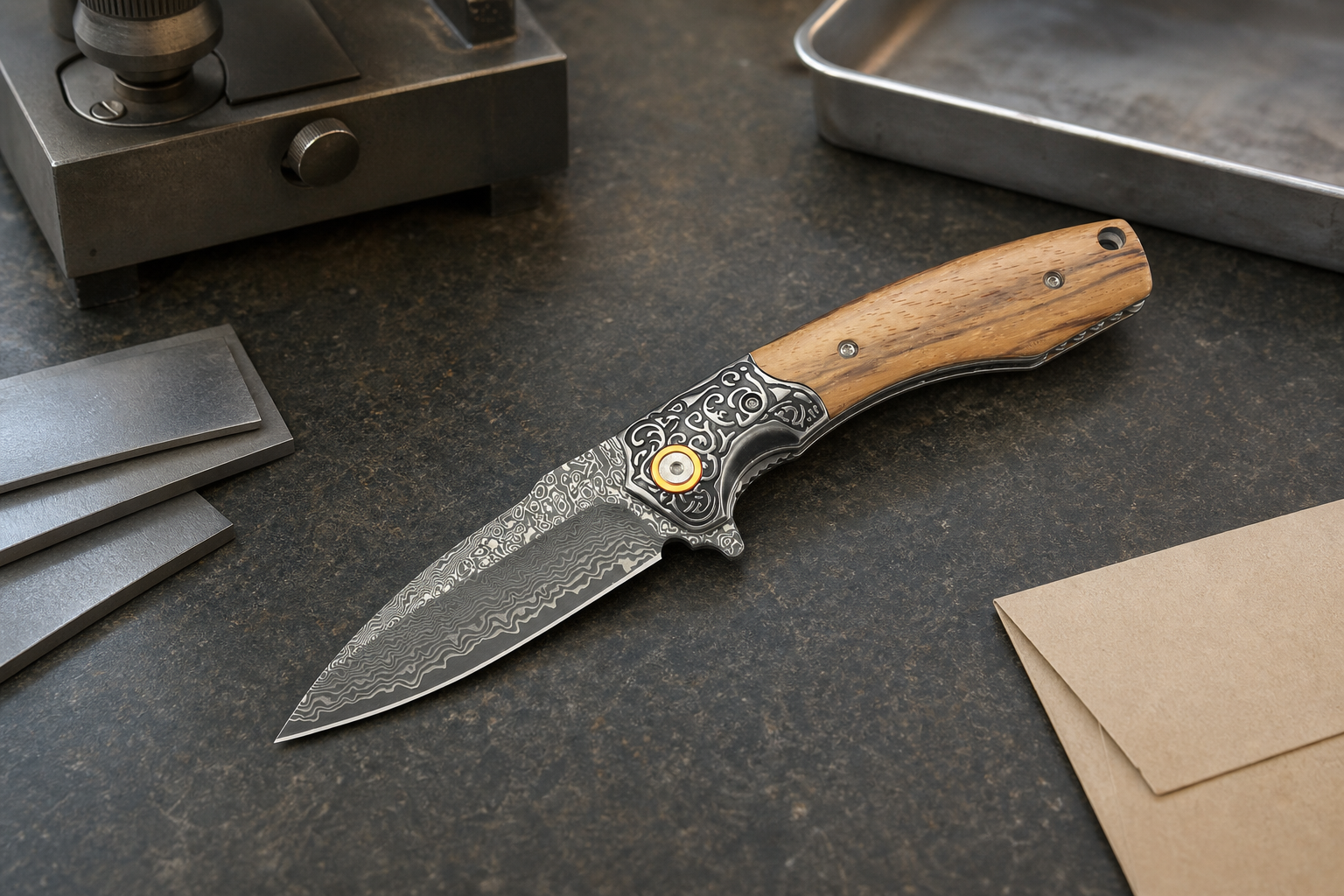
A thin edge on the wrong steel may roll, chip, or frustrate customers. A thick edge on a good steel may waste performance. A serrated edge on a steel that is difficult to maintain may create service problems. A fine polished edge on a rough-use tool may not match the user.
The NIST heat treatment reference supports the basic principle that heat treatment changes steel properties. The ISO 6508-1 Rockwell hardness test page supports using a defined hardness test method for metallic materials. Together, these sources reinforce a practical sourcing rule: edge type should be approved with heat-treatment and hardness records, not only with a photo.
For OEM/ODM buyers, the key questions are:
- What steel is used?
- What hardness range is targeted?
- How does the heat treatment balance hardness and toughness?
- Does the edge angle match the steel and use case?
- Does the product need corrosion care instructions?
- Does the buyer have sample test feedback before mass production?
If the answer is unclear, the edge type is not ready for production.
How Should Sharpening and Maintenance Be Explained?
The customer needs to know whether the edge is easy to maintain.
Buyers should explain sharpening and maintenance based on edge type, steel, serration pattern, finish, coating, user skill, and whether the brand expects customers to sharpen, hone, service, or replace the product.
I Write Maintenance Copy Before Packaging Is Final
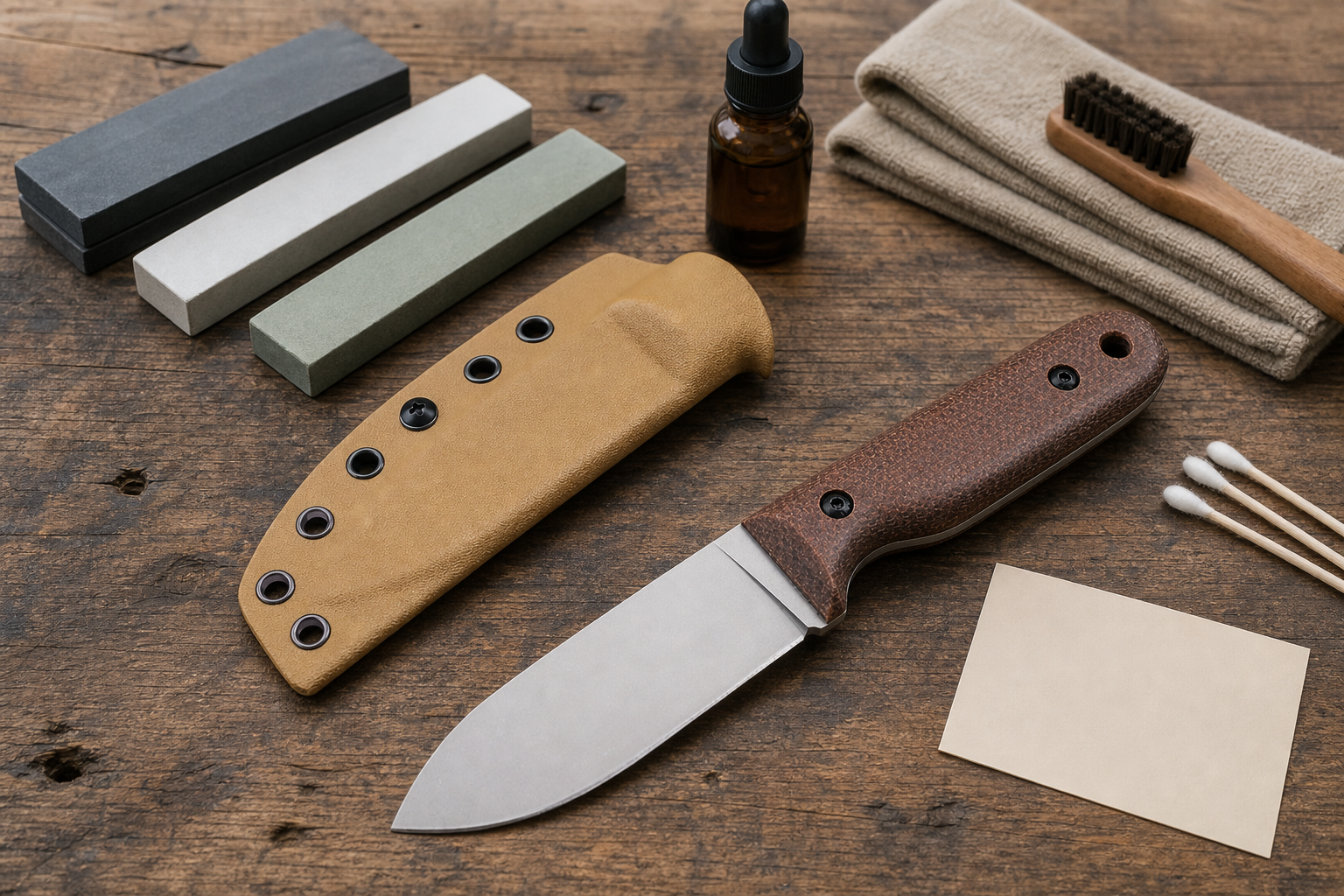
Plain edges, serrated edges, convex edges, and chisel edges can require different maintenance language. A plain edge may be sharpened with common tools. A serrated edge may need a tapered rod or service. A convex edge may need different technique. A coated blade may need coating-wear expectations. A very hard steel may need suitable abrasives.
The buyer should not promise "easy sharpening" unless the product supports that claim. Maintenance copy should explain what customers can reasonably do and when they should seek service. It should also explain that edge life depends on cutting material, technique, steel, hardness, geometry, and care.
Useful maintenance statements:
- Clean and dry after use.
- Do not cut material outside the intended use.
- Do not pry, twist, throw, or use the knife as a screwdriver.
- Sharpen with suitable equipment.
- Follow the recommended edge angle if provided.
- Serrated sections may need special tools or service.
- Coating and edge finish can wear with normal use.
This copy should appear in the manual, QR page, product page, and customer support answers.
How Should Safety and Marketing Claims Be Controlled?
Edge type can tempt brands into exaggerated claims.
Buyers should keep edge-type claims truthful, specific, and evidence-based, and avoid weapon framing, "never dull" language, unsupported edge-retention claims, and unsafe use instructions.
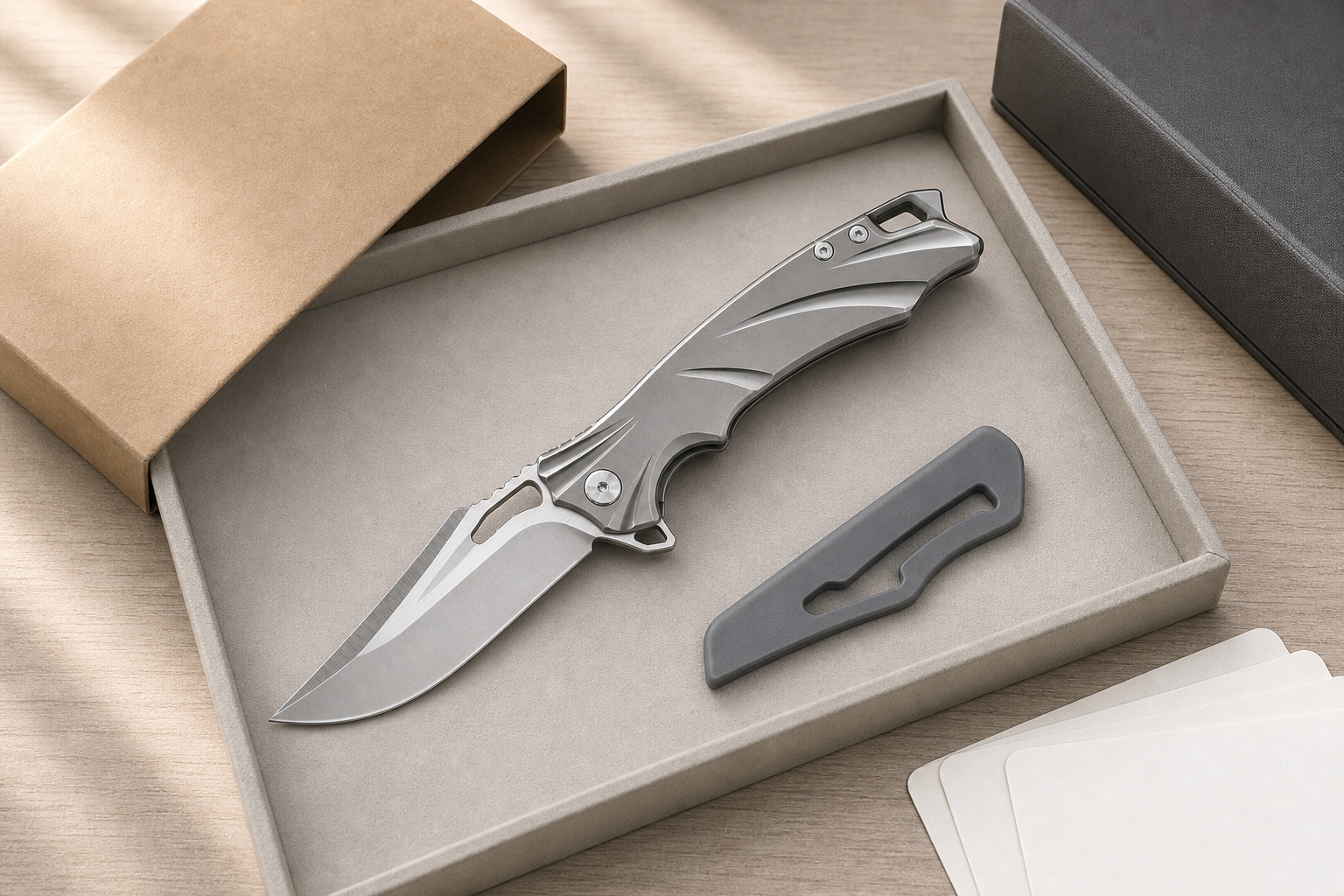
I Keep Edge Copy Practical and Defensible
The CCOHS sharp blade guidance supports practical safety points for sharp tools, such as controlled use, inspection, and storage. The OSHA hand and power tools overview also reminds buyers that hand tools can present hazards. For consumer product copy, this means the edge should be described as a functional tool feature, not as a threat.
The FTC advertising and marketing guidance supports truthful and evidence-based claims. If the brand says "long-lasting edge," it should have test data or a careful, limited context. If the brand says "cuts rope better," the buyer should define the test material and compare only within its own approved claims, not against unnamed competitors.
Avoid:
- Never dull
- Unbreakable edge
- Tactical edge for fighting
- Cuts anything
- Maintenance-free
- Legal carry everywhere
Use:
- Plain edge for smooth utility cutting
- Serrated section helps grip some fibrous materials
- Edge life depends on use and maintenance
- Use only for intended cutting tasks
- Keep closed or sheathed when not in use
What QC Records Should Buyers Require for Knife Edge Types?
Edge quality should be inspected, not trusted by appearance alone.
QC should verify edge type, grind, edge angle, behind-edge thickness, bevel symmetry, burr removal, serration consistency, hardness records, sharpness test method, packaging instructions, and final sample approval.
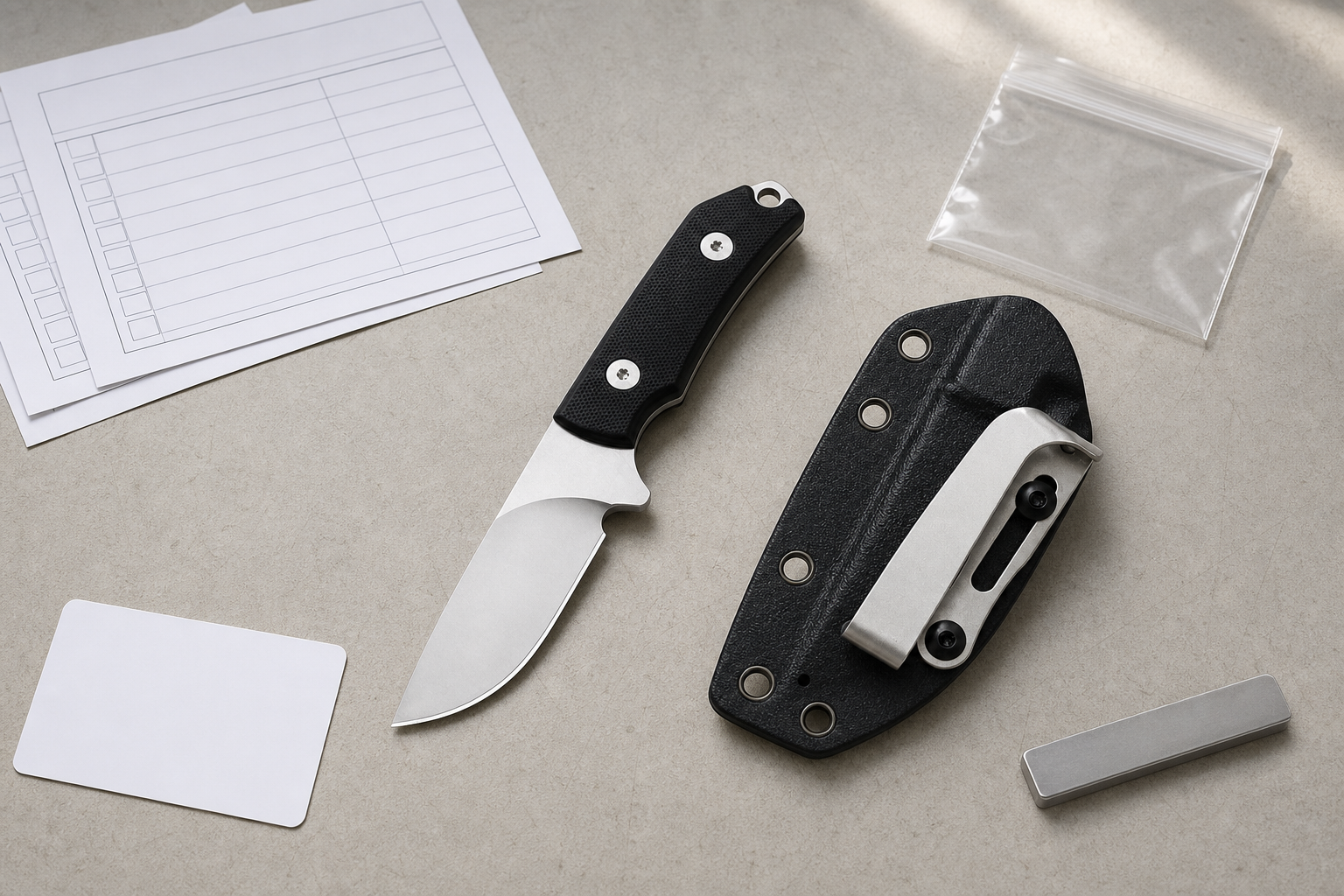
I Turn Edge Terms Into Inspection Items
ISO 9001 supports defined quality management requirements and process control. In a knife project, that means the buyer should not only approve a beautiful sample. The buyer should define how the edge will be checked again during production.
Useful QC records include:
- Approved drawing with edge type
- Boundary samples for acceptable and unacceptable edge finish
- Edge angle measurement method
- Behind-edge thickness report
- Bevel symmetry check
- Serration pitch and depth check where relevant
- Burr and wire-edge inspection
- Hardness or heat-treatment report
- Sharpness or cutting test method where required
- Packaging and maintenance instruction placement
- Final inspection report
The buyer should also define corrective action. If burrs appear in production, does the supplier rework, sort, or reject? If serration pitch varies, what is acceptable? If edge angle drifts, who approves the change? These questions are boring only until a container arrives with inconsistent edges.
How Can Vast State Help Buyers Specify Knife Edge Types?
Vast State can help turn edge language into production-ready RFQ details.
Vast State helps buyers specify knife edge types by connecting product use, edge category, grind, steel, hardness, sharpening plan, packaging copy, sample testing, QC records, and supplier communication.
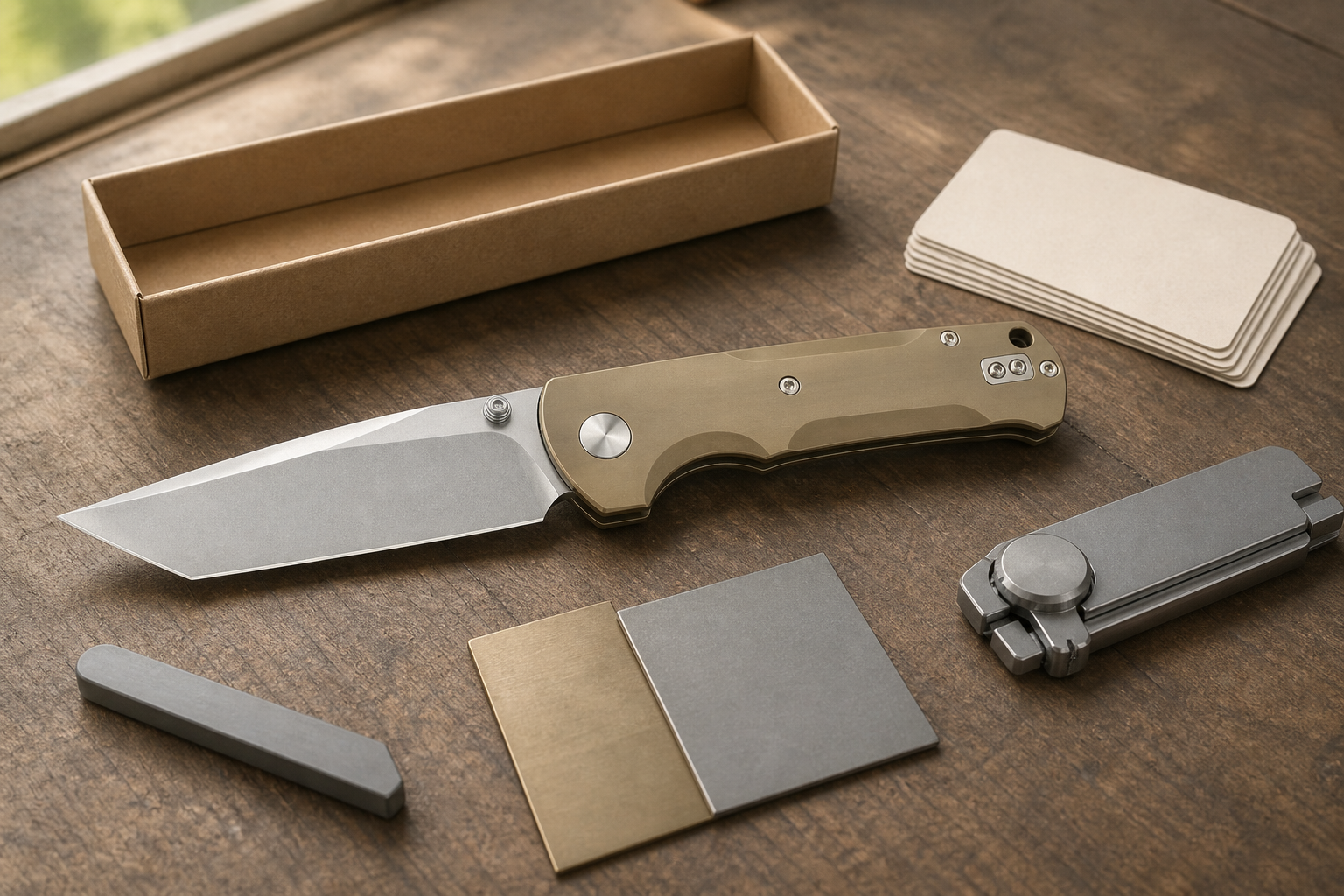
I Prefer Edge Planning Before Tooling and Mass Production
Vast State can help buyers decide whether a knife line should use a plain edge, serrated edge, partially serrated edge, or a specific grind style. The decision starts with the product task. A kitchen slicer, outdoor fixed blade, compact pocket knife, utility knife, and rescue-style tool do not need the same edge.
From there, the specification can connect design and production. We can help define edge angle targets, grind preferences, steel and hardness expectations, sharpening copy, safety language, packaging insert text, and QC records. We can also help buyers avoid claims that sound impressive but are hard to support, such as "never dull," "cuts anything," or "unbreakable edge."
Vast State can support:
- Edge type selection by task
- Grind and geometry briefing
- Steel and hardness alignment
- Sample review checklist
- Packaging and maintenance wording
- Serration specification fields
- QC inspection records
- RFQ schema for supplier communication
The result is a cleaner product brief. The supplier knows what to make. The buyer knows what to inspect. The customer gets a product whose edge matches the promise.
Turn your idea into a quote-ready knife project.
Share your drawing, sample photo, target quantity, market, and packaging needs. Vast State will review manufacturability and prepare OEM/ODM options.
Conclusion
Knife edge types should be specified through task, geometry, steel, maintenance, safety copy, and QC records, not through loose marketing labels.