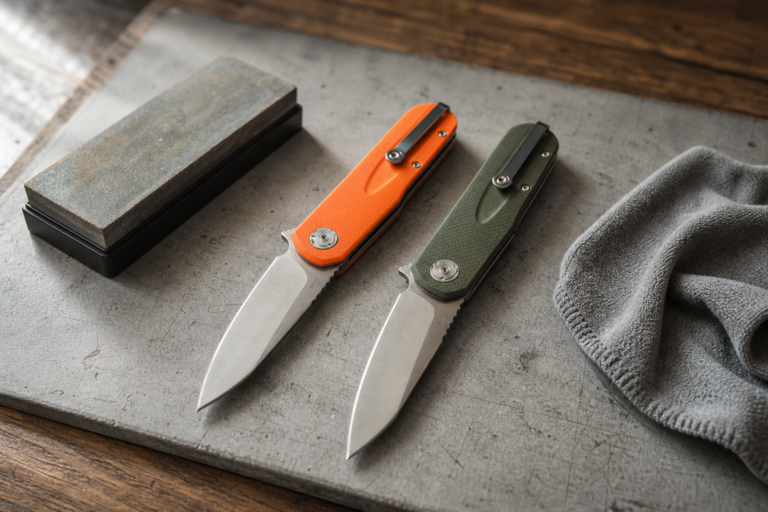
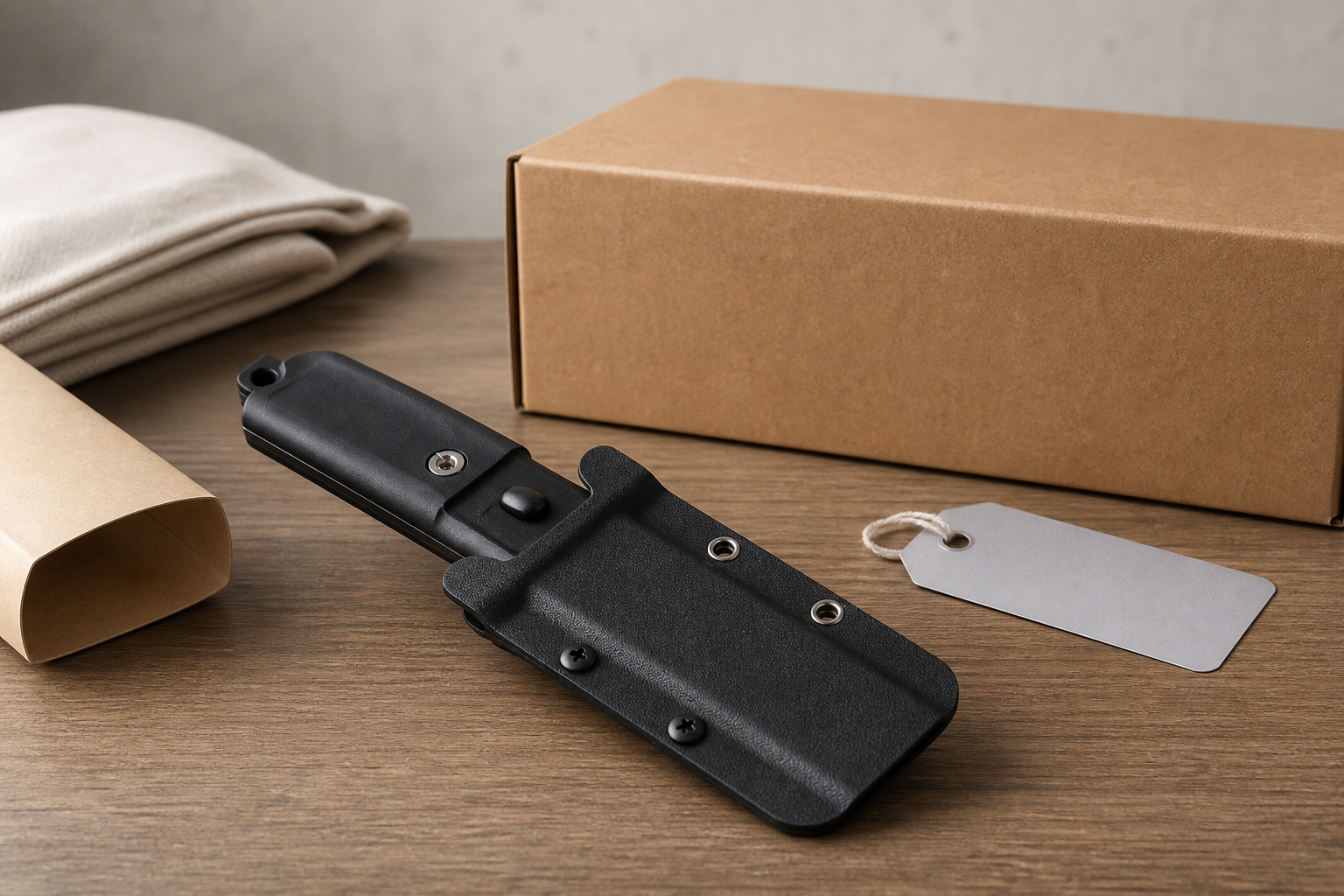
Old knives are easy to forget until someone gets cut during storage, return handling, or disposal.
Buyers should write old-knife disposal guidance that tells customers to secure the blade, separate reusable from damaged items, check local recycling or waste rules, avoid loose sharps in bins, handle returns safely, and keep all claims realistic and source-backed.
Quick buyer brief:
- Answer: Safe old-knife disposal guidance should be practical, local-rule aware, and easy to place on packaging, manuals, QR pages, and customer service scripts.
- Buyer context: This guide is for knife brands, outdoor brands, kitchenware brands, EDC brands, importers, distributors, retailers, private label buyers, and OEM/ODM sourcing teams.
- Key checks: Blade protection, closed or sheathed storage, puncture-resistant wrapping, local recycling rules, metal scrap options, donation policy, return packaging, warning labels, customer service scripts, and QC records for packaging inserts.
Have a knife or multi-tool project in mind?
Send your sketch, CAD file, sample photo, or product idea. Vast State can review manufacturability, suggest materials, estimate MOQ, and prepare a quote for your OEM/ODM project.
When buyers plan a knife line, they usually focus on the first sale. They discuss steel, handle material, packaging, edge finish, MOQ, and product photos. But a responsible knife brand should also think about the product's end of life. Customers may replace a dull knife, retire a damaged pocket knife, return a defective item, or ask whether the product can be recycled.
This topic should not be treated as a dramatic "how to throw away knives" article. It should become a short, clear, safe disposal guide that a brand can place on a QR page, instruction leaflet, or support email. The buyer does not need to solve every local waste rule. The buyer does need to give customers a safer process and remind them to follow local requirements.
Why Should Disposal Guidance Be Included in Knife Projects?
Disposal guidance protects customers, waste handlers, warehouse teams, and brand support staff.
Knife projects should include disposal guidance because sharp products can cause injury after use, especially when old blades are stored loose, returned without protection, or placed in waste containers without wrapping.
I Treat End-of-Life Instructions as Part of Product Safety
An old knife can be more dangerous than a new one. The edge may be chipped. The tip may be bent. The handle may be loose. A folding knife may not lock reliably anymore. A kitchen knife may sit in a drawer with the edge exposed. If the customer throws it into a bag, box, or bin without protection, someone else may get hurt later.
The CCOHS sharp blade safety guidance supports basic controls for sharp tools, including using appropriate tools, keeping cutting edges controlled, and storing sharp tools safely. The same thinking applies at the end of life. A knife should not become a loose sharp object just because the customer is done with it.
For buyers, disposal guidance also reduces support friction. Customer service may receive questions such as:
- Can I recycle this knife?
- Can I return a damaged knife?
- How should I pack it?
- Can I donate it?
- What should I do if the blade is broken?
If the brand already has approved answers, support teams can respond consistently.
| Risk point | What can go wrong | Buyer prevention |
|---|---|---|
| Drawer storage | Loose edge cuts user | Add storage reminder |
| Trash handling | Exposed blade cuts waste worker | Explain wrapping |
| Returns | Blade punctures package | Give return packing rules |
| Recycling | Customer assumes all metal is accepted | Tell user to check local rules |
OEM/ODM RFQ Checklist
Prepare these details to help Vast State review your project and provide a more accurate quotation.
| RFQ Field | What to Prepare |
|---|---|
| Project type | OEM from drawing / ODM private label / wholesale catalog |
| Product category | Folding knife / fixed blade / multi-tool / outdoor tool |
| Design status | Idea / sketch / 2D drawing / 3D CAD / physical sample |
| Target price | Ex-factory target price or retail price range |
| MOQ expectation | 500 / 1,000 / 3,000 / 5,000+ pcs |
| Logo method | Laser engraving / etching / printing / molded logo |
| Packaging | Standard packaging / custom retail box / Amazon-ready |
| Market | USA / EU / Japan / Korea / Middle East / other |
| Compliance needs | Buyer-specified testing / documentation / labeling |
| Timeline | Sample deadline / mass production deadline |
What Should Customers Do Before Disposing of an Old Knife?
The first step is to control the blade before deciding where it goes.
Customers should close, sheath, wrap, or otherwise secure an old knife before disposal, then decide whether it is reusable, repairable, recyclable, returnable, or ready for local waste handling.
I Start With a Simple Decision Tree
Good disposal guidance should be simple enough for a customer to follow. I like a four-step decision tree.
First, secure the blade. If it is a folding knife, close it. If it has a sheath, use the sheath. If it is a fixed blade or kitchen knife, cover the edge and point with cardboard, heavy paperboard, or another protective sleeve, then tape it so the blade cannot slip out. The brand should not encourage customers to handle a damaged blade more than necessary.
Second, check whether the item can be reused or repaired. A dull but safe knife may only need sharpening. A loose screw may need service. A damaged lock, cracked handle, broken tip, or severe corrosion may make disposal or professional handling more appropriate.
Third, check local options. Some areas may accept scrap metal at a recycling center. Some may tell residents to wrap sharp metal objects and place them in trash. Some may have special drop-off rules. The buyer cannot write one universal answer for every city.
Fourth, protect anyone who handles the item. This includes family members, store staff, warehouse workers, carrier staff, sanitation workers, and recycling staff.
| Step | Customer action | Brand wording |
|---|---|---|
| Secure | Cover edge and point | "Do not leave blade loose" |
| Assess | Reuse, repair, recycle, or discard | "Do not use damaged locks" |
| Check rules | Review local waste or recycling guidance | "Local rules vary" |
| Label | Mark package if required | "Sharp item inside" where appropriate |
How Should Buyers Explain Local Waste and Recycling Rules?
Local rules matter because waste systems do not work the same everywhere.
Buyers should tell customers to check local waste, recycling, scrap metal, or household drop-off rules before disposing of old knives, especially when blades are metal, damaged, contaminated, or packaged with other materials.
I Avoid One Universal Disposal Instruction
The EPA recycling guide for common recyclables tells people to check with local recycling programs because accepted items can vary. This is exactly the right mindset for old knives. A knife is usually a metal product, but that does not mean the local curbside bin accepts it. The blade may also be attached to plastic, wood, rubber, screws, liners, coatings, or packaging.
The EPA recycling basics page explains the broader benefits of recycling and reducing waste. That supports responsible product-end-of-life communication, but it does not give a universal knife rule. Buyers should therefore avoid saying "all old knives are recyclable" or "just put knives in recycling." That kind of claim can be unsafe and may contaminate local recycling streams.
Better wording: "If your local program accepts scrap metal, ask whether wrapped knives are accepted and how they should be prepared. If local recycling is not available, follow your local waste authority's instructions for sharp metal items."
This protects the customer, the brand, and the people who handle the item later.
How Should Customers Wrap Old Knives for Disposal?
Wrapping should protect the edge, point, and anyone who handles the package.
Customers should wrap old knives so the blade and tip cannot puncture the package, then secure the wrap with tape and follow any local label, container, or drop-off rules.
I Use Municipal Guidance as a Practical Example
Official local rules can be very specific. NYC311 recycling rules include guidance that knife blades should be wrapped with cardboard and tape and labelled "Caution - sharp" before being placed with recyclables. This is not a universal rule for every city, but it is a useful example of how clear local instructions can be.
The buyer can adapt this idea into general packaging copy without pretending it applies everywhere:
- Cover the blade and point.
- Use cardboard, heavy paperboard, or a protective sleeve.
- Tape the cover so it cannot slide off.
- Add a warning label if local rules require it.
- Do not leave loose knives in bags, bins, or return boxes.
- Follow the local waste or recycling authority's instructions.
The brand should avoid showing unsafe photos where the blade is exposed. If the product page includes an illustration, show the blade already covered or the folding knife already closed. For AI image prompts, I also prefer closed or fully covered knife samples, not active cutting or exposed sharp handling.
What Should Buyers Say About Donation, Repair, and Take-Back?
Not every old knife belongs in the trash, but not every old knife should be reused.
Buyers should separate dull-but-serviceable knives from damaged or unsafe knives, and they should only suggest donation, repair, sharpening, or take-back when the recipient, program, and local rules allow it.
I Do Not Tell Customers to Donate Unsafe Products
Some old knives are still useful. A dull kitchen knife can be sharpened. A pocket knife with normal wear may be cleaned and maintained. A knife with a worn clip may be repairable. If the buyer offers replacement parts or service, the disposal guide should mention the support channel.
But donation guidance needs care. A charity, thrift store, recycling center, school, camp, or community group may not accept knives. A damaged lock, cracked handle, broken blade, or badly corroded knife should not be donated as a usable tool. The brand should tell customers to ask the recipient before donating and to follow local rules.
Take-back programs also need planning. If the brand invites customers to send old knives back, the brand must define packaging rules, return labels, age or eligibility checks, receiving procedures, warehouse handling, and final disposition. Otherwise, the program can create risk for carrier staff and warehouse teams.
Good wording: "If the knife is still safe and useful, consider repair, sharpening, or donation only where accepted. If the knife is damaged, unsafe, or not accepted by a program, secure the blade and follow local disposal guidance."
How Should Brands Handle Customer Returns of Old or Damaged Knives?
Returns turn customer disposal into a warehouse safety issue.
Brands should provide return instructions that require knives to be closed, sheathed, wrapped, boxed securely, labelled where appropriate, and shipped only through approved methods and eligible programs.
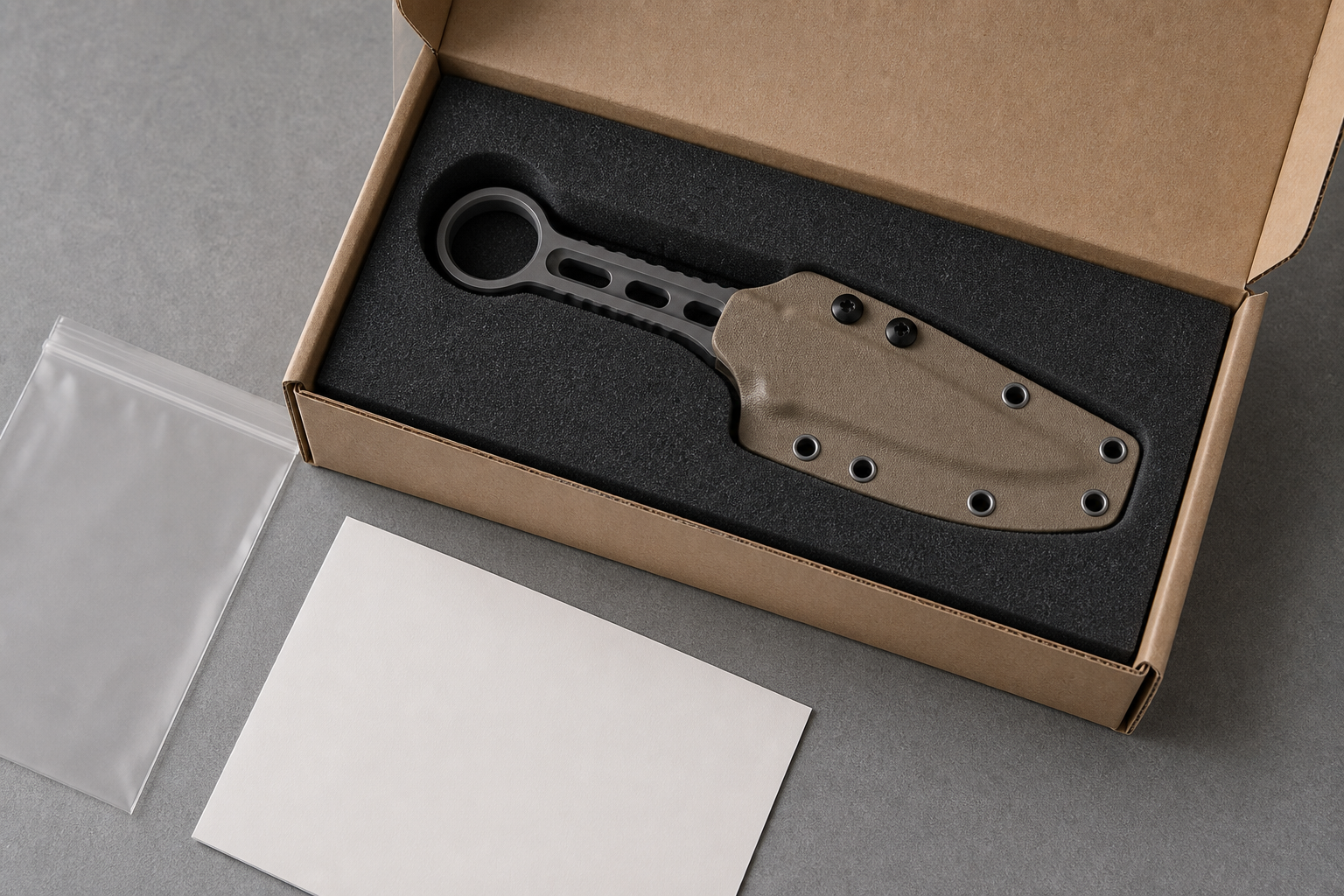
I Write Return Rules Before Offering Returns
Returns and warranty claims are where disposal guidance becomes operational. A customer may return a knife because the blade is chipped, the lock feels loose, the handle is cracked, or the product arrived damaged. If the return instructions only say "send it back," the customer may place a loose sharp item in a soft mailer. That creates risk.
The USPS Publication 52 guidance on sharp instruments states that sharp-pointed or sharp-edged instruments must be securely packaged in a strong container and wrapped so they cannot cut through the packaging. This supports a simple rule for brands: do not accept unprotected sharp returns.
A brand return policy should state:
- Close folding knives before packing.
- Use the sheath if provided.
- Cover fixed blades or kitchen blades with a rigid sleeve.
- Pack the item in a strong box.
- Add cushioning so the item cannot move.
- Do not ship loose knives in envelopes.
- Follow the carrier and brand return instructions.
Warehouse teams should also have receiving procedures. The receiving station should know how to open packages, inspect returned sharp items, quarantine unsafe items, and document damage.
How Should Buyers Avoid Confusion With Medical Sharps?
Old knives are sharp objects, but they are not the same as used medical sharps.
Buyers should avoid mixing knife disposal guidance with medical sharps guidance, while still borrowing the safety principle of puncture-resistant containment for broken, contaminated, or high-risk sharp items.
I Keep Disposal Categories Clear
Some customers search for "sharps disposal" when they mean old knives. That can create confusion. Medical sharps include items such as needles and lancets. Old kitchen knives, pocket knives, and utility knives usually follow local sharp-object, scrap-metal, recycling, or waste rules instead.
The FDA sharps disposal container guidance focuses on medical sharps and approved containers. A knife brand should not tell customers to use medical sharps rules as a universal knife-disposal answer. But the safety principle is useful: sharp items should be contained so they do not puncture packaging or injure handlers.
If a knife is contaminated with unknown material, used in a workplace, or involved in a special setting, the customer should follow local authority or workplace procedures. For normal household knives, the brand should direct customers toward local waste or recycling rules and safe blade protection.
This distinction keeps the brand from giving unclear disposal advice.
What Packaging and Manual Text Should Buyers Add?
The best disposal guidance is short enough to read and clear enough to follow.
Buyers should add end-of-life guidance to manuals, QR pages, customer service templates, and packaging inserts, with short warnings about blade protection, local rules, returns, and recycling claims.
I Prefer One Short End-of-Life Block
The CPSC labeling overview notes that labeling requirements can depend on product type, design, components, and age group, and that other federal or state requirements may apply. A knife buyer should treat disposal text as part of a broader safety and labelling review.
Example wording for a QR page or manual:
"End-of-life guidance: Before discarding, returning, recycling, or donating this knife, close or cover the blade. Wrap the blade and point so they cannot cut through packaging or injure handlers. Check local waste, recycling, or scrap-metal rules. Do not place loose knives in bags or bins. Do not ship loose knives in envelopes."
The buyer can shorten that for packaging:
"When retiring this knife, secure the blade and follow local disposal or recycling rules. Never discard or ship a loose blade."
This wording is practical and easy to translate. It does not promise local acceptance, and it does not make a universal recycling claim.
What QC Records Should Support Disposal Guidance?
Instruction quality should be checked like any other product requirement.
QC should verify that disposal text, safety warnings, QR links, return instructions, blade-protection accessories, packaging inserts, and support scripts match the final product and sales channel.
I Turn Disposal Copy Into Inspection Points
If the buyer specifies disposal guidance, it should appear in the final package, QR page, or support script. If the package includes a sheath, blade guard, or sleeve, QC should confirm the accessory is present. If the return program requires special packaging, customer service should use the approved instruction.
ISO 9001 supports the idea of defined quality management requirements and process control. NIST dimensional metrology supports measurement as part of manufacturing quality. For disposal guidance, this means the buyer should not only write instructions. The buyer should confirm the physical product and package support the instructions.
Useful records include:
- Approved disposal wording
- Packaging insert artwork
- QR page URL
- Return instruction template
- Customer service answer bank
- Blade guard or sheath BOM
- Label placement photos
- Final packaging inspection
- Supplier confirmation that no loose blade ships
These records help the buyer keep disposal guidance consistent across markets and production runs.
How Can Vast State Help Buyers Plan End-of-Life Knife Guidance?
Vast State can help buyers connect disposal copy with product design and packaging.
Vast State helps buyers plan old-knife disposal guidance by aligning safe-use wording, packaging inserts, return handling, blade protection, local-rule reminders, recycling disclaimers, and QC records before production.
I Prefer Disposal Guidance Before the First Shipment
Vast State can help buyers prepare a simple end-of-life communication system for knife products. The work starts with the product type. A kitchen knife, folding knife, fixed blade, replaceable-blade tool, or outdoor kit may need different wording. Then we connect the wording with packaging, return policy, and customer service.
For example, if a buyer sells a folding pocket knife, the guidance can focus on closing the blade, securing the product for returns, checking local rules, and avoiding loose disposal. If the buyer sells a kitchen knife set, the guidance may focus on blade covers, recycling center checks, donation caution, and safe moving or storage. If the buyer sells a utility tool with replaceable blades, blade-change and blade-disposal copy becomes more important.
Vast State can support:
- End-of-life wording for manuals and QR pages
- Packaging insert content
- Return packing instructions
- Customer service answer bank
- Recycling and disposal claim guardrails
- Supplier checklist for sheaths or blade guards
- QC records for label and insert placement
- RFQ fields for disposal and return requirements
The best disposal guidance is calm, short, and useful. It helps customers protect themselves and protect the people who handle the product after them.
Turn your idea into a quote-ready knife project.
Share your drawing, sample photo, target quantity, market, and packaging needs. Vast State will review manufacturability and prepare OEM/ODM options.
Conclusion
Safe old-knife disposal guidance should secure the blade, respect local rules, avoid universal recycling claims, and connect packaging, returns, and QC records.