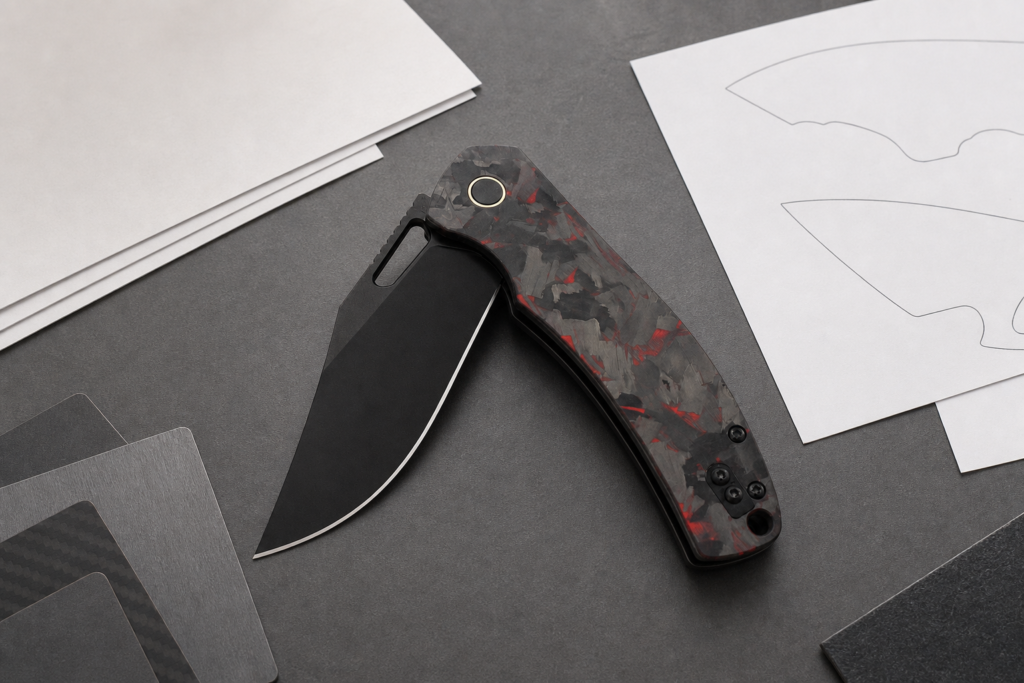
Knife size and weight look simple in a sample. In production, they affect comfort, cost, compliance, packaging, shipping, and repeat quality.
Buyers should specify knife size and weight by defining target use, blade length, overall length, closed length, handle size, thickness, balance point, carry method, material choices, packaging limits, and inspection tolerances before sampling begins.
Quick buyer brief:
- Answer: Size and weight should be treated as controlled product requirements, not as loose style preferences.
- Buyer context: This guide is for knife brands, outdoor brands, EDC brands, importers, distributors, private label buyers, promotional buyers, and OEM/ODM sourcing managers.
- Key checks: Blade length, closed length, overall length, handle thickness, blade stock, handle material, liner or tang structure, clip or sheath, target market rules, packaging size, sample weight, balance, and QC tolerance.
Have a knife or multi-tool project in mind?
Send your sketch, CAD file, sample photo, or product idea. Vast State can review manufacturability, suggest materials, estimate MOQ, and prepare a quote for your OEM/ODM project.
When I review a new knife project, I do not start with "make it bigger" or "make it lighter." I start with the user's job. A pocket knife for daily carton cutting has a different size logic from a camp knife, a hunting accessory, a compact gift tool, or a utility knife for a retail hardware channel. If the size is wrong, the product may feel awkward even when the steel, finish, and packaging look good. If the weight is wrong, the sample may feel cheap, tiring, bulky, or hard to carry. The buyer should set size and weight like any other RFQ requirement: measurable, realistic, and connected to use.
Why Should Size and Weight Be Defined Before Sampling?
Many sampling problems begin with vague words. "Medium size" and "good weight" do not give a factory enough control.
Size and weight should be defined before sampling because they guide tooling, material selection, blade geometry, handle design, packaging, cost, compliance review, and final inspection.
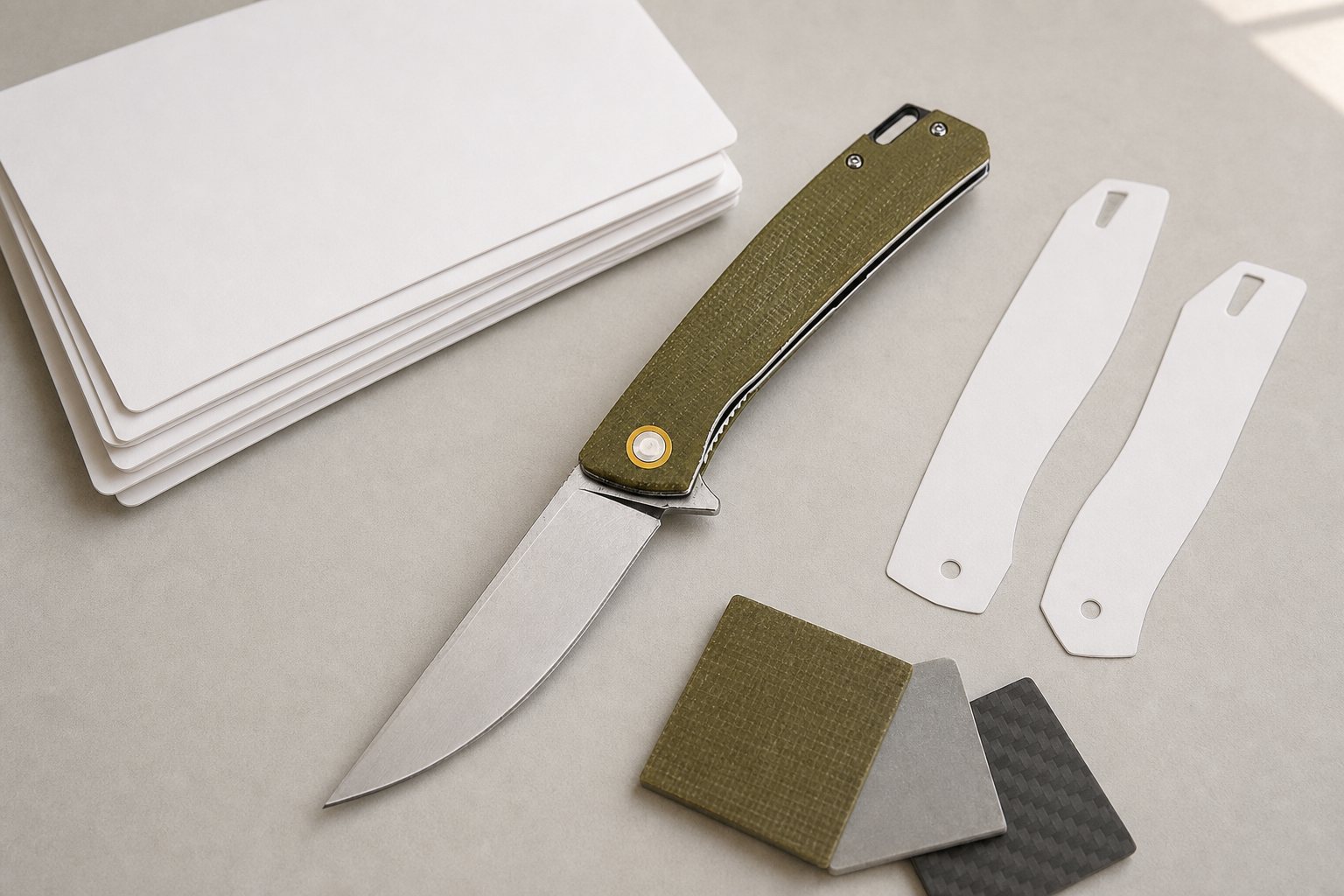
I Treat Size and Weight as Product Architecture
In an OEM/ODM project, size and weight are not final decoration. They are part of the product architecture. Blade length affects cutting reach, perceived usefulness, legal review, package size, and cost. Handle length affects grip comfort, screw placement, clip position, and how the knife feels in different hand sizes. Blade thickness affects strength perception, cutting behavior, grind time, and total weight. Handle thickness affects carry comfort and pocket bulk. Closed length affects whether a folding knife feels compact or awkward.
When a buyer waits until after sampling to decide these points, the project often slows down. The supplier may need to change blade blanks, pivot position, handle scale tooling, liner thickness, pocket clip placement, sheath dimensions, or retail packaging. That can mean new drawings, new samples, new quotation, and more approval time.
The ISO 9241-11 usability standard is helpful here because it links usability to users, goals, and context of use. I apply the same thinking to knife development. The buyer should ask who will use the knife, what task they need to complete, where they will carry it, and what size or weight helps that task. A knife that looks strong in a photo may still fail the project if it does not fit the user's context.
| Early decision | Why it matters | Buyer action |
|---|---|---|
| Target blade length | Affects use, cost, and compliance review | Define in mm and inches |
| Closed or overall length | Affects carry and packaging | Confirm from real sample |
| Target weight | Affects comfort and perceived quality | Approve a target range |
| Balance point | Affects hand feel | Test sample in use position |
OEM/ODM RFQ Checklist
Prepare these details to help Vast State review your project and provide a more accurate quotation.
| RFQ Field | What to Prepare |
|---|---|
| Project type | OEM from drawing / ODM private label / wholesale catalog |
| Product category | Folding knife / fixed blade / multi-tool / outdoor tool |
| Design status | Idea / sketch / 2D drawing / 3D CAD / physical sample |
| Target price | Ex-factory target price or retail price range |
| MOQ expectation | 500 / 1,000 / 3,000 / 5,000+ pcs |
| Logo method | Laser engraving / etching / printing / molded logo |
| Packaging | Standard packaging / custom retail box / Amazon-ready |
| Market | USA / EU / Japan / Korea / Middle East / other |
| Compliance needs | Buyer-specified testing / documentation / labeling |
| Timeline | Sample deadline / mass production deadline |
Which Dimensions Should Buyers Put in the RFQ?
A knife drawing can look complete but still miss buyer-critical dimensions. The RFQ should close those gaps.
Buyers should define blade length, cutting edge length, overall length, closed length, handle length, handle thickness, blade thickness, width, pivot or tang dimensions, clip or sheath size, and packaging limits.
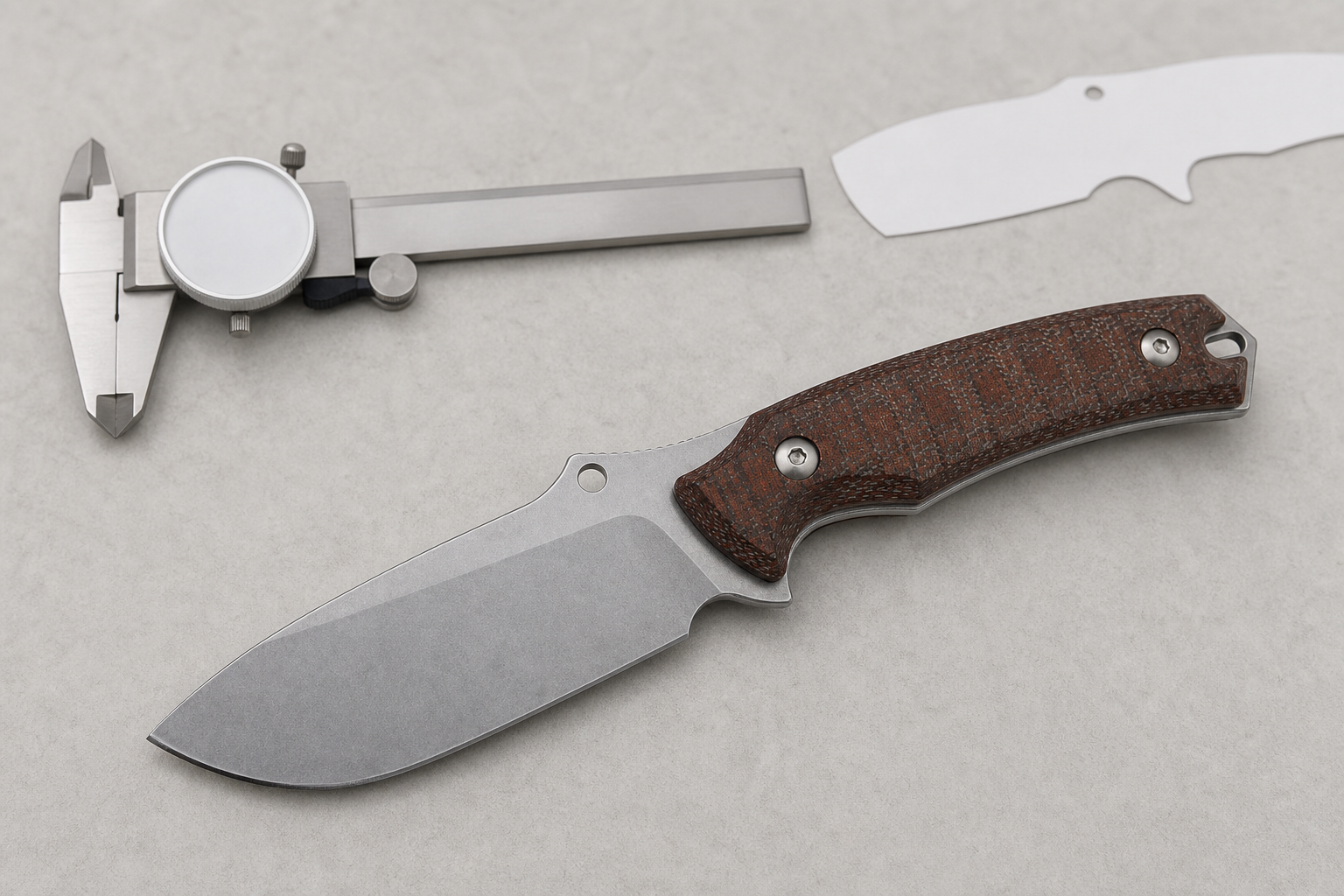
I Separate Visible Size From Functional Size
Buyers often say blade length when they mean several different things. A folding knife may have blade length, sharpened cutting edge length, handle length, closed length, and open overall length. A fixed blade may have blade length, handle length, overall length, blade thickness, tang length, and sheath length. These numbers are related, but they are not the same.
For retail and compliance review, cutting edge length may matter. For user comfort, handle length and handle thickness matter. For pocket carry, closed length, clip position, and handle thickness matter. For outdoor carry, sheath length, belt loop position, and handle exposure matter. For packaging, the box or blister size may matter more than the open knife length.
The supplier should receive a dimension table, not only a reference image. If the buyer is not sure, the RFQ can state a target and an acceptable range. For example, a buyer may define target closed length, target weight, and maximum package footprint, then ask the supplier to propose the exact blade and handle proportions. That is much better than approving a sample and discovering later that the product is too heavy for the channel.
The NIST dimensional metrology page describes dimensional measurement as a way to get detailed part information and support manufacturing process improvement. That principle applies directly to knife size control. A buyer cannot inspect "comfortable" with a caliper, but the buyer can inspect the dimensions that make comfort repeatable.
| Dimension | Applies to | Why buyers should define it |
|---|---|---|
| Blade length | Folding and fixed blade knives | Use, cost, compliance review |
| Closed length | Folding knives | Pocket carry and retail positioning |
| Handle thickness | Most knife types | Grip comfort and pocket bulk |
| Blade stock thickness | Most blade types | Weight, grind, strength perception |
| Sheath or package size | Fixed blade and retail goods | Carry, logistics, shelf fit |
How Does Weight Affect Carry Comfort and Perceived Quality?
Weight is emotional and practical. A buyer can make the same design feel premium, cheap, heavy, or convenient.
Weight affects how easy the knife is to carry, how stable it feels in hand, how buyers perceive quality, and how much fatigue users feel during repeated tasks.
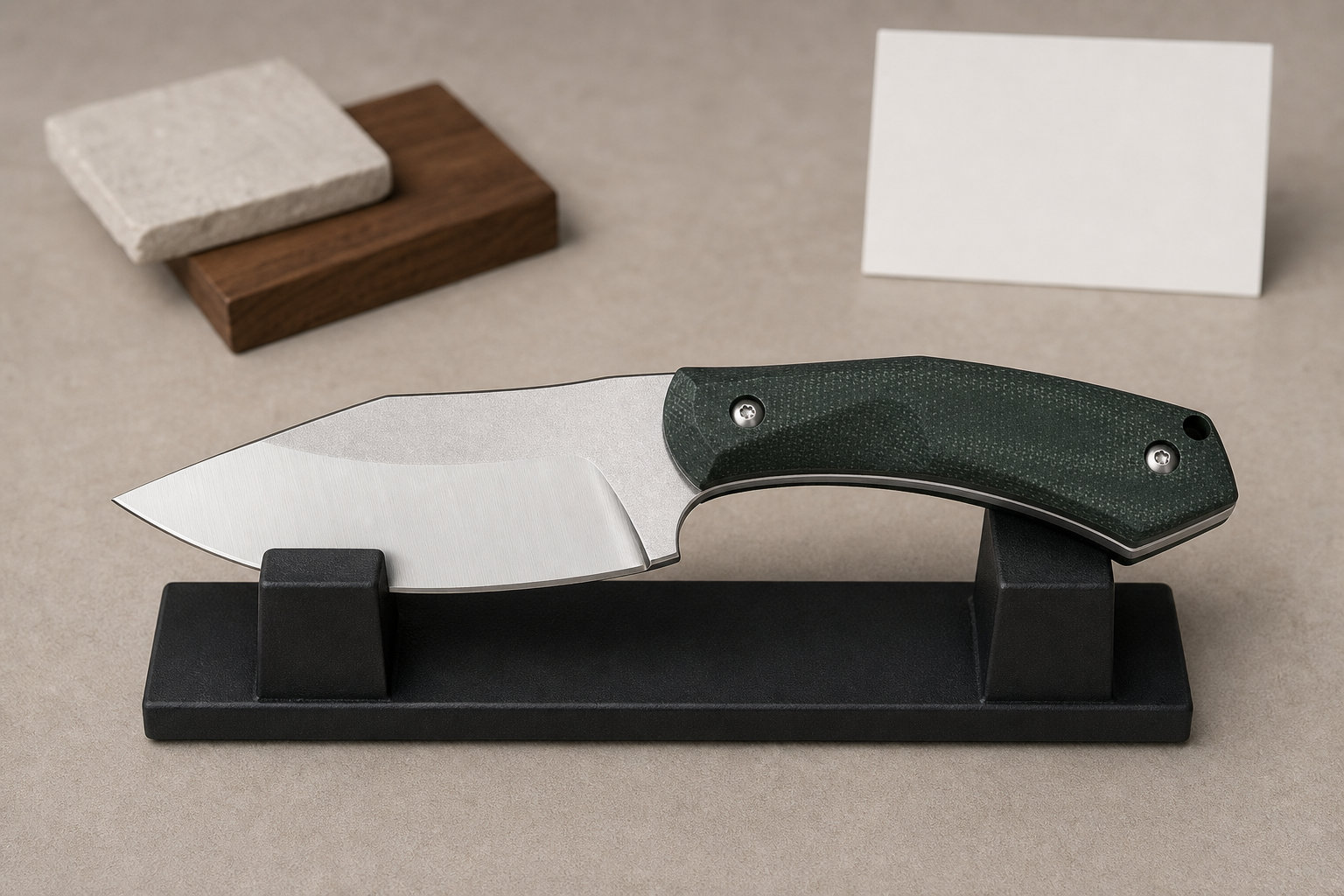
I Approve Weight by Use Case, Not by Feeling Alone
A heavier knife can feel solid when the user picks it up. That may help some outdoor, work, or gift-oriented products. But too much weight can make a pocket knife uncomfortable to carry every day. It can also increase shipping weight, make packaging feel crowded, and push the product away from the intended use.
A lighter knife can feel easier to carry. It can support EDC positioning, compact outdoor kits, or travel accessory lines where every gram matters. But a knife that becomes too light may feel thin, flexible, or less trustworthy if the handle, liner, lock area, or blade stock does not support the product story.
That is why I prefer a target weight range instead of a single number in early RFQs. The range should be tested with real samples. Buyers should compare sample weight with handle comfort, opening feel, balance point, clip position, and packaging. If the project has multiple SKUs, the range can also create a consistent family feel. A small folding knife, medium outdoor knife, and larger field knife do not need the same weight, but they should feel like they belong to the same product line.
| Weight direction | Possible benefit | Possible risk |
|---|---|---|
| Lighter | Better pocket or kit carry | Can feel thin if structure is weak |
| Heavier | More solid hand feel | Can feel bulky or tiring |
| Handle-heavy | Stable grip for some tasks | Can reduce cutting control |
| Blade-heavy | More cutting momentum | Can feel unsafe or unbalanced |
How Do Materials and Construction Drive Size and Weight?
Buyers sometimes ask for a weight target without changing materials. That can create an impossible brief.
Materials and construction drive weight through blade thickness, steel density, liners, tang style, handle material, fasteners, pocket clip, sheath, multi-tool parts, and packaging.
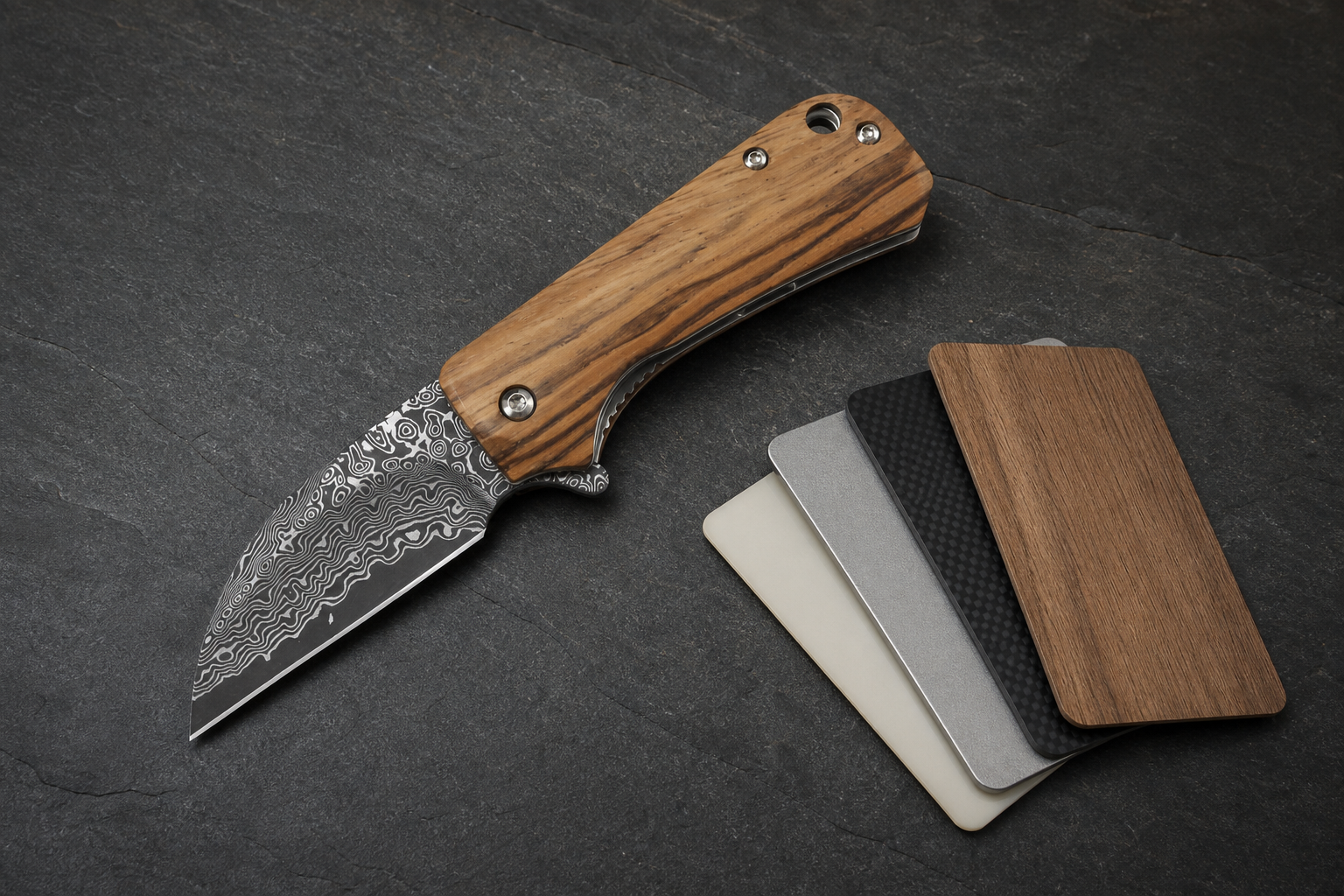
I Connect Weight Targets to the Bill of Materials
If a buyer wants a lighter folding knife, the supplier may need to review blade stock thickness, handle scale material, liner thickness, skeletonized liners, backspacer design, clip material, and hardware. If a buyer wants a stronger-feeling outdoor fixed blade, the supplier may need a thicker blade, full tang or wider tang structure, more robust handle scales, and a sheath that fits the added thickness. Each decision changes weight and cost.
Handle material is one of the most visible levers. Wood, G10, micarta, aluminum, stainless steel, titanium, polymer, rubberized materials, and composite handles all create different feel, weight, machining needs, and finish risks. A buyer should not choose a handle material only from a photograph. The same material can feel different depending on thickness, contour, texture, liner support, and screw placement.
Construction matters too. A folding knife with stainless liners may feel stronger but heavier. A linerless design may reduce weight but must still meet the project's lock, screw, and durability expectations. A fixed blade with full tang construction may build trust but can add handle weight. A skeletonized tang can reduce weight, but the supplier must finish cutouts and avoid stress points.
For outdoor product planning, the National Park Service Ten Essentials page includes tools such as a knife in repair and emergency preparedness contexts. This does not tell buyers how heavy a knife should be. It does remind buyers that outdoor knives are tools within a larger kit. Weight should match the kit role, not only the product photo.
| Weight driver | Common design lever | Buyer question |
|---|---|---|
| Blade stock | Thickness and grind | Does the task need this thickness? |
| Handle material | Density and contour | Does the hand feel match the market? |
| Liner or tang | Full, partial, skeletonized | Can strength and weight be balanced? |
| Carry system | Clip, sheath, loop, box | Does the full carried item still work? |
How Should Use Case Guide the Size and Weight Target?
The same knife can be too large for one buyer and too small for another. Use case decides the standard.
Use case should guide size and weight by defining the task, carry method, user environment, frequency of use, hand comfort, retail promise, and safety information.
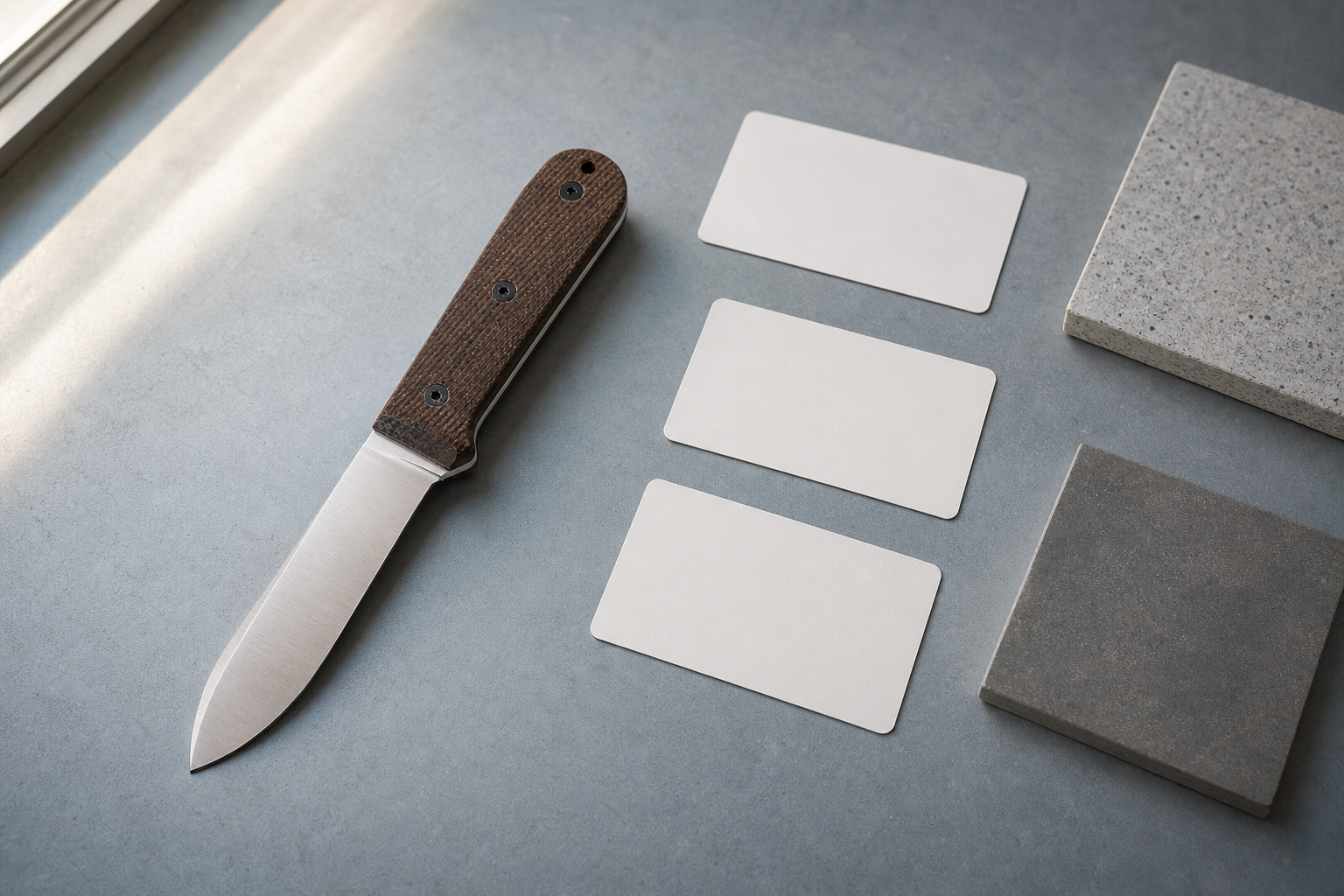
I Build the Size Brief Around Real Tasks
For an EDC folding knife, pocket comfort and one-hand handling may be more important than maximum blade size. Closed length, handle thickness, clip location, and total weight become important. For an outdoor fixed blade, handle security, blade length, sheath fit, and balance may matter more than pocket carry. For a utility knife, cutting control, safe storage, and replaceable or sharpenable edge strategy may matter more than appearance. For a gift set, presentation, comfort, and safe packaging may become more important than rough-use positioning.
The buyer should also consider how often the user handles the product. A knife used for repeated carton cutting should reduce hand fatigue. A camping knife carried in a pack should not be unnecessarily heavy. A compact pocket knife should not feel so small that users cannot grip it safely. A fixed blade should not be so large that the sheath feels unstable or the package becomes difficult for retail.
The Canadian Centre for Occupational Health and Safety page on sharp blades emphasizes safe work practices around sharp edges. It is workplace guidance, not a product design standard, but the lesson is relevant. Size, weight, handle control, storage, and user information should help safe handling. Buyers should avoid product positioning that encourages unsafe or weapon-like use.
| Use case | Size and weight focus | RFQ note |
|---|---|---|
| EDC pocket knife | Closed length, pocket bulk, clip comfort | Define carry and target weight |
| Outdoor fixed blade | Handle security, sheath fit, balance | Define task and sheath requirements |
| Utility work knife | Control, repeat use, safe storage | Define grip and safety information |
| Gift or retail set | Presentation, comfort, packaging | Define box size and copy limits |
What Compliance and Channel Checks Should Buyers Review?
Knife size can affect where a product can be sold or carried. Buyers should not leave this review until launch.
Buyers should review target market laws, marketplace rules, retailer policies, transport restrictions, age-gating needs, packaging warnings, and product copy before locking final size.
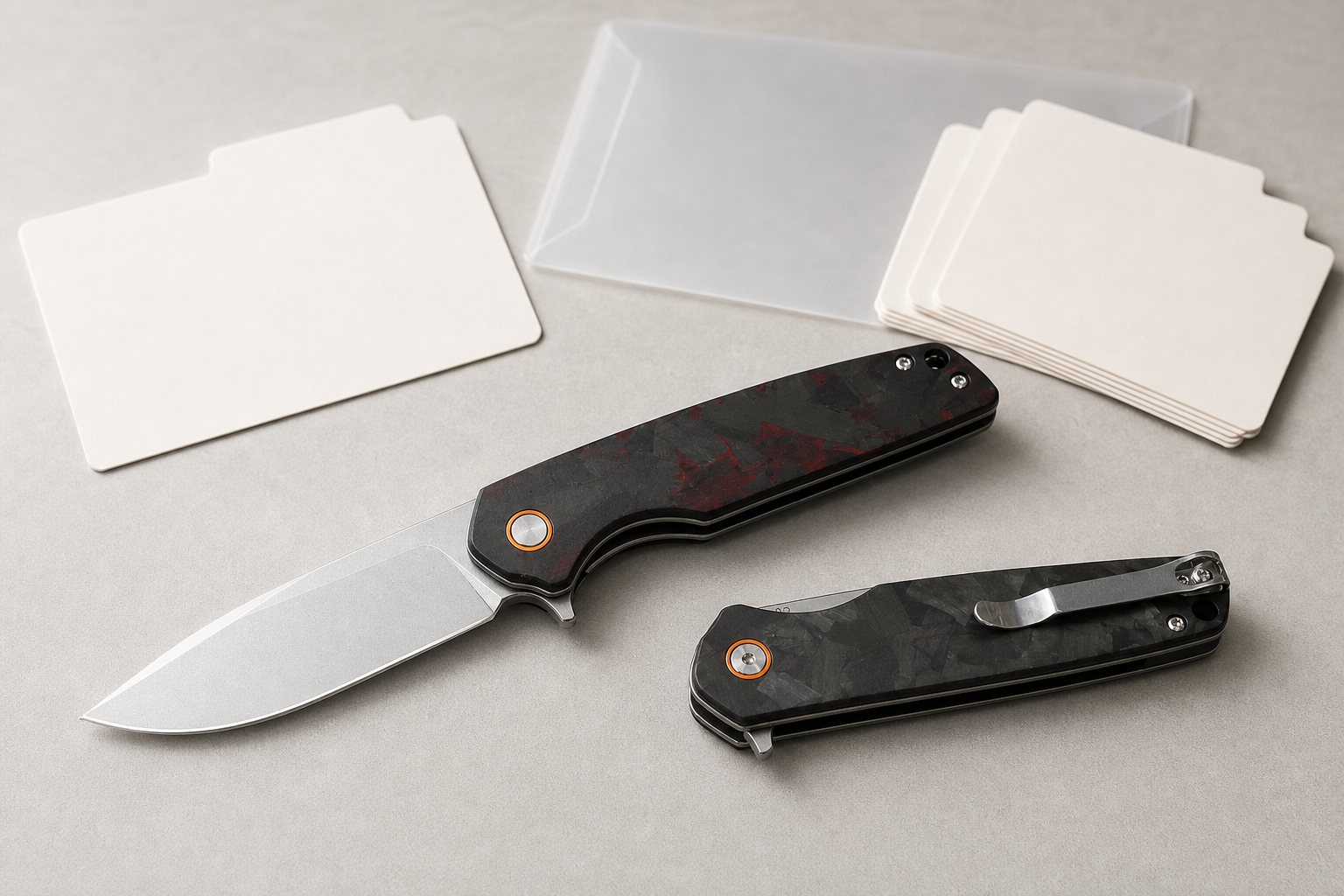
I Keep Legal Review Separate From Product Desire
Buyers may want a certain blade length because it looks better or feels more useful. But target market rules and channel rules may make that size difficult. A buyer selling in the UK, the EU, the United States, Canada, Australia, or multiple online marketplaces should not assume one product page can serve every market.
For example, GOV.UK guidance on buying and carrying knives discusses public carrying rules and includes a distinction for manual folding pocket knives with cutting edges under a stated limit. That source is not a global rule and it is not a product design instruction. It shows why buyers must review size, opening method, and product claims by market.
Transport rules also matter. The TSA knives page says knives are generally not allowed in carry-on bags, with limited exceptions, and should go in checked bags under its rules. That does not decide retail legality, but it matters for consumer information, travel-related copy, and customer expectations.
Channel rules can be stricter than law. Marketplaces, retailers, payment processors, and ad platforms may reject knife listings based on blade length, opening method, wording, imagery, or category. The buyer should check these rules before final tooling.
| Review area | Why it matters | Buyer action |
|---|---|---|
| Target market law | Affects sale, carry, and age rules | Get local compliance review |
| Marketplace policy | Affects listing approval | Review category and wording |
| Transport rules | Affects user information | Avoid travel-friendly claims without review |
| Product copy | Affects risk and trust | Avoid self-defense or weapon positioning |
How Do Packaging and Logistics Change the Size Decision?
Knife size does not end at the product. Packaging can turn a good sample into a costly launch.
Packaging and logistics affect size decisions through retail shelf space, blister or box dimensions, sheath fit, instruction card space, carton quantity, shipping weight, and damage protection.
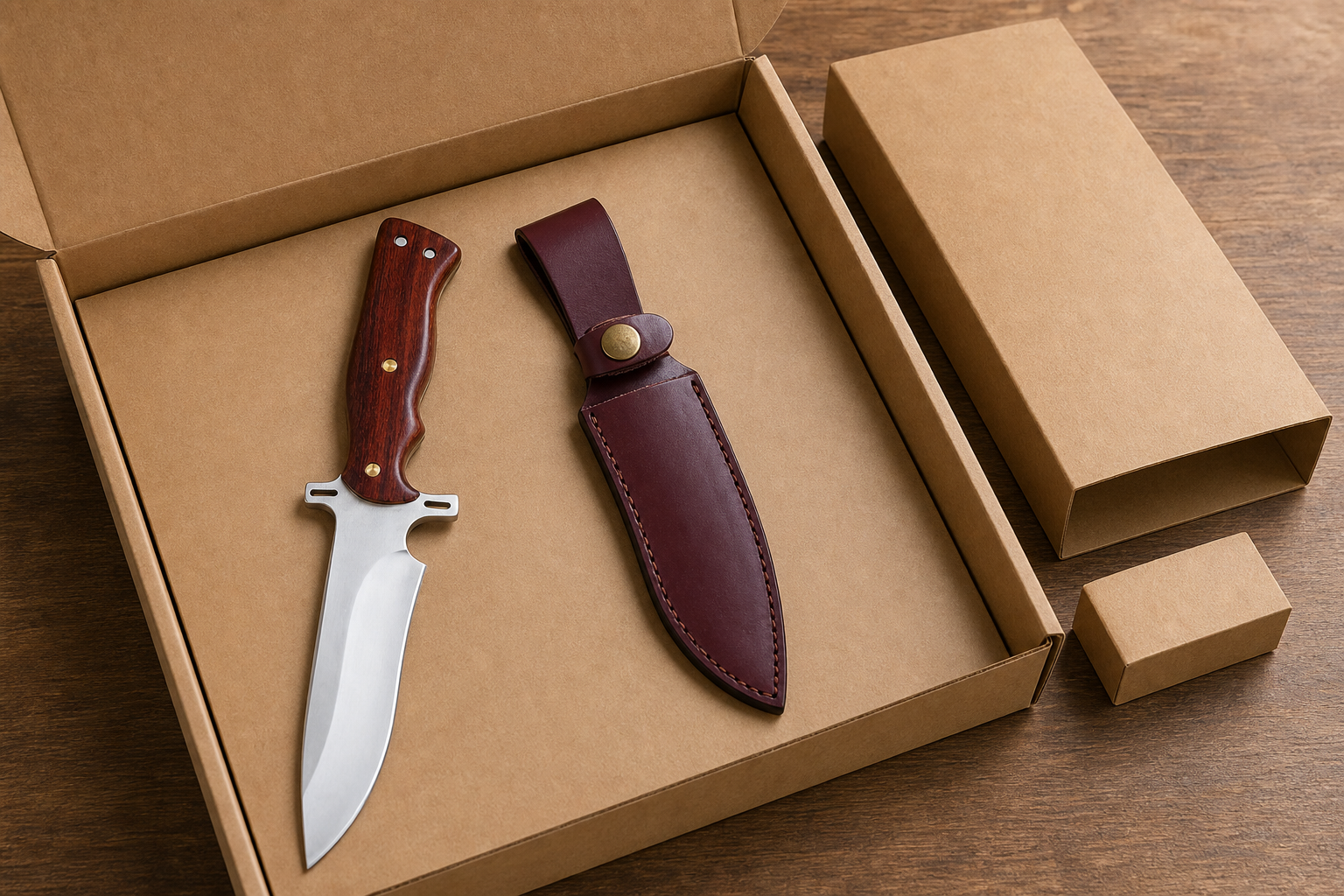
I Check the Full Packed Product, Not Only the Knife
A folding knife may fit the hand well but create a retail package that is too large for the buyer's price tier. A fixed blade may feel balanced but need a sheath that increases the total product length. A multi-tool may feel compact in closed form but require thick packaging to protect accessories. A premium knife may need more presentation space, while a value knife may need a compact box for carton efficiency.
Packaging also controls safety information. Warning cards, instruction sheets, age-related notices, storage guidance, and barcode placement need physical space. If the product is too compact, the buyer may lose room for clear information. If the package is too large, shipping cost and shelf efficiency may suffer.
The European Commission page on EU product safety and labelling is a useful reminder that product information and labelling are part of market readiness. Even when a buyer sells outside the EU, packaging should be treated as a compliance and customer-support tool, not only a design shell.
For logistics, the buyer should ask the supplier for packed unit dimensions, gross weight, carton quantity, carton size, and a drop or handling plan where suitable. The final knife size should be approved together with the packed product.
| Packaging factor | Size and weight effect | Buyer check |
|---|---|---|
| Sheath or clip | Adds total carried size | Test with product installed |
| Retail box | Controls shelf and carton fit | Approve packed sample |
| Warning card | Needs readable space | Reserve packaging area |
| Carton quantity | Affects freight economics | Check gross weight and cube |
What QC Checks Keep Size and Weight Repeatable?
One good sample does not prove mass production. The buyer needs measurable inspection standards.
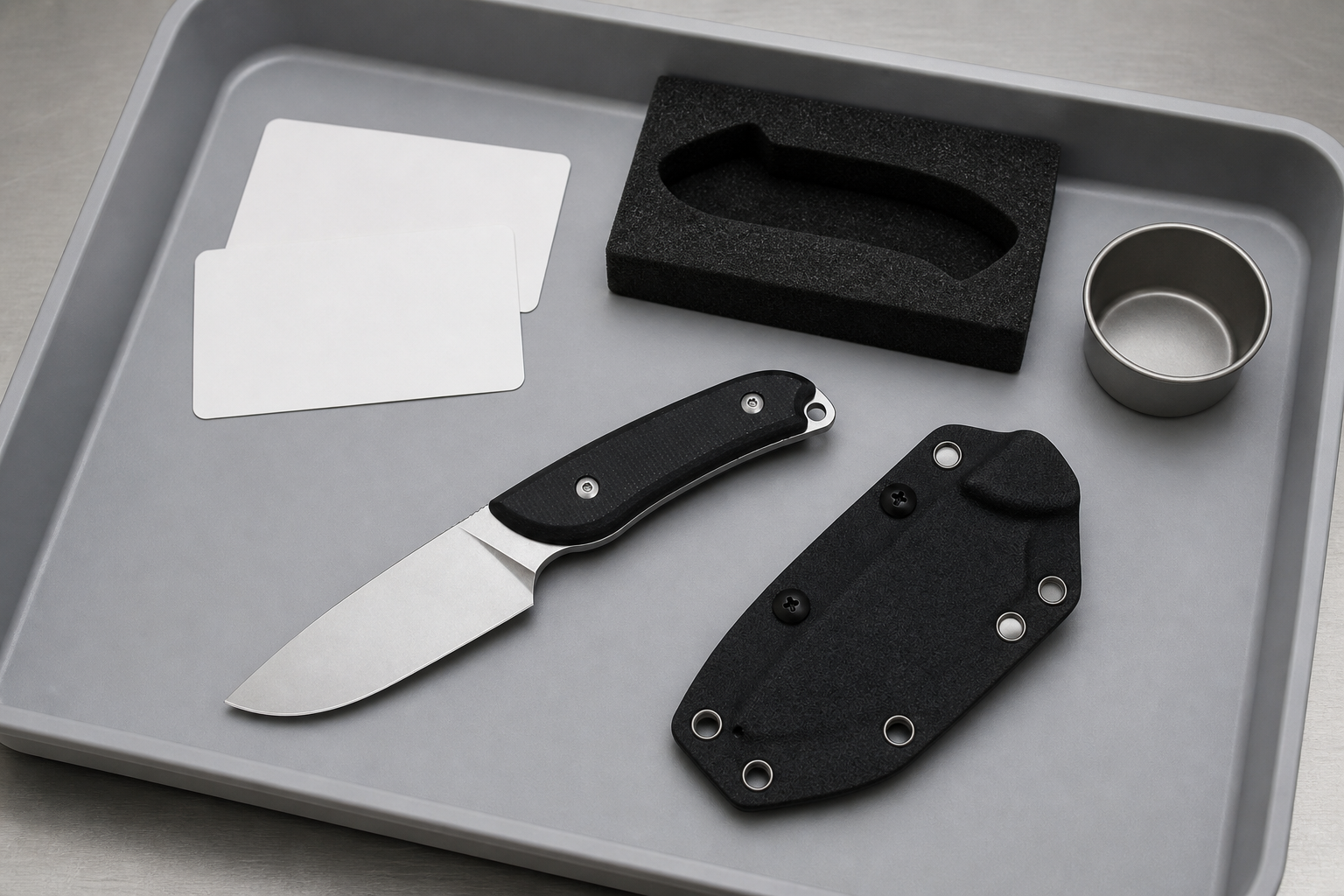
QC should verify blade length, closed length, overall length, handle thickness, blade thickness, weight range, balance point, clip or sheath fit, package size, and record control.
I Turn the Approved Sample Into Inspection Rules
After sample approval, the buyer should not rely on memory. The approved dimensions and weight should become inspection points. The supplier should define how often measurements are taken, which tools are used, what tolerance is acceptable, and what happens when a batch drifts outside the approved range.
For folding knives, I usually want checks for closed length, open length, blade centering, blade length, handle thickness, clip fit, lock function, opening feel, screw seating, and weight. For fixed blades, I want checks for blade length, overall length, handle thickness, tang or handle alignment, sheath fit, exposed edge protection, and packed product size. For both types, I want weight recorded from real samples, not guessed from a drawing.
The ISO 9001 quality management page identifies ISO 9001 as a quality management system requirements standard. In this context, that means the buyer should think beyond one final inspection. Size and weight control should be part of drawings, sample approval, incoming material checks, in-process measurement, final inspection, records, and corrective action.
The QC plan should also include boundary samples. The buyer may approve a maximum acceptable handle thickness, a minimum acceptable clip tension, or a maximum acceptable weight. These boundary samples help the factory understand the difference between acceptable variation and a product that no longer fits the brief.
| QC item | Tool or method | Why it matters |
|---|---|---|
| Length dimensions | Caliper, ruler, fixture | Controls use and compliance review |
| Weight range | Digital scale | Controls carry feel and cost |
| Balance point | Fixture or marked check | Controls hand feel |
| Packed size | Package measurement | Controls retail and logistics |
How Can Vast State Help Buyers Set the Right Size and Weight?
Buyers do not need a perfect design brief on day one. They do need a clear decision process.
Vast State helps buyers turn use case, market rules, materials, carry method, packaging, and QC expectations into practical knife size and weight specifications.
I Connect the Numbers With the Business Goal
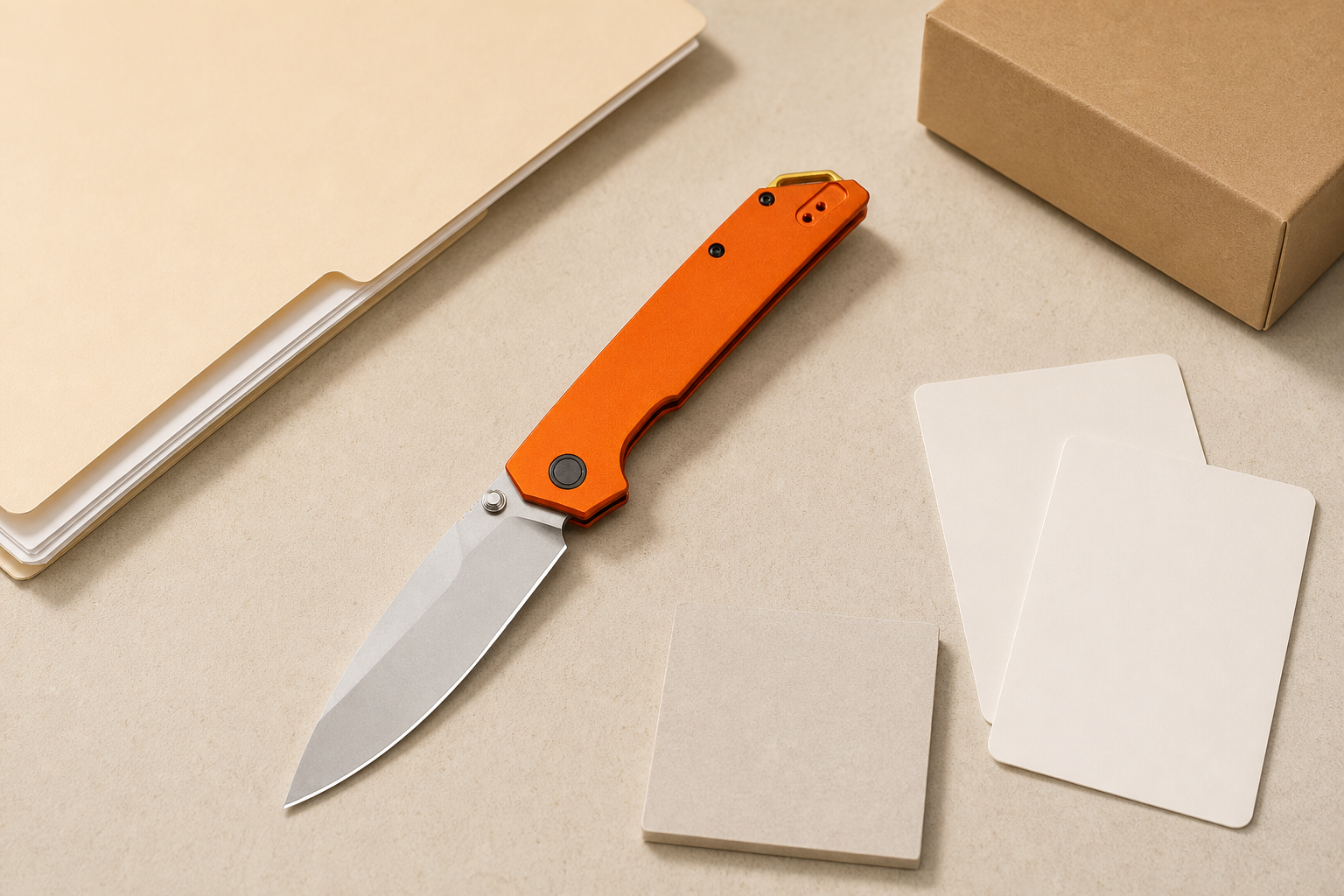
In real projects, I help buyers avoid size decisions that are only visual. A buyer may want a larger blade because it looks more impressive. After review, the better answer may be a more compact blade with better handle comfort and stronger packaging efficiency. Another buyer may want a very lightweight pocket knife. After review, the better answer may be a slightly heavier construction that feels more stable and reduces complaints.
Vast State can help define the target dimensions, compare material choices, request samples, review weight and balance, check packaging impact, and turn the approved sample into QC requirements. For private label projects, we can also help keep copy practical. The product should be positioned as a useful cutting tool for its intended task. It should not rely on exaggerated claims or unsafe messaging.
The result is a clearer RFQ and a smoother production path. The supplier knows what to build. The buyer knows what to inspect. The final customer receives a knife that feels intentional, not accidental.
| Buyer need | Vast State support | Project result |
|---|---|---|
| Define a size target | Use case and market review | Better first sample direction |
| Reduce or add weight | Material and construction review | More controlled hand feel |
| Prepare packaging | Packed product size review | Better retail and logistics fit |
| Control production | Dimension and weight QC plan | More repeatable batches |
Turn your idea into a quote-ready knife project.
Share your drawing, sample photo, target quantity, market, and packaging needs. Vast State will review manufacturability and prepare OEM/ODM options.
Conclusion
Knife size and weight should be specified as measurable sourcing requirements that connect use, comfort, compliance review, cost, packaging, and repeatable production.