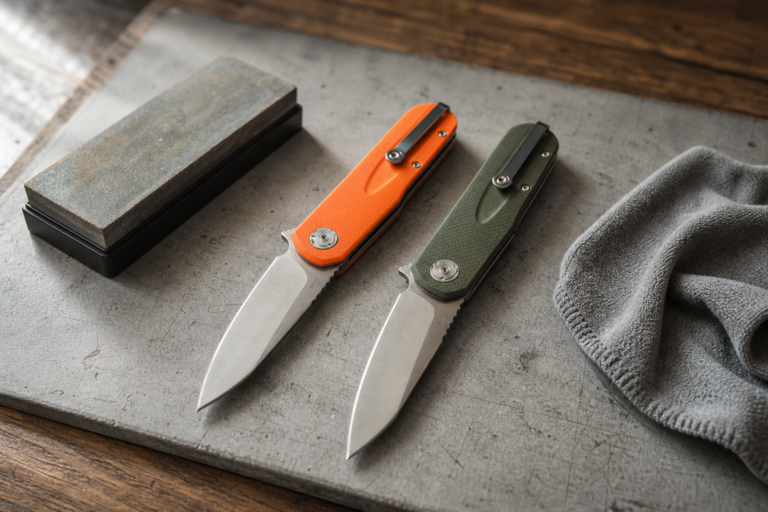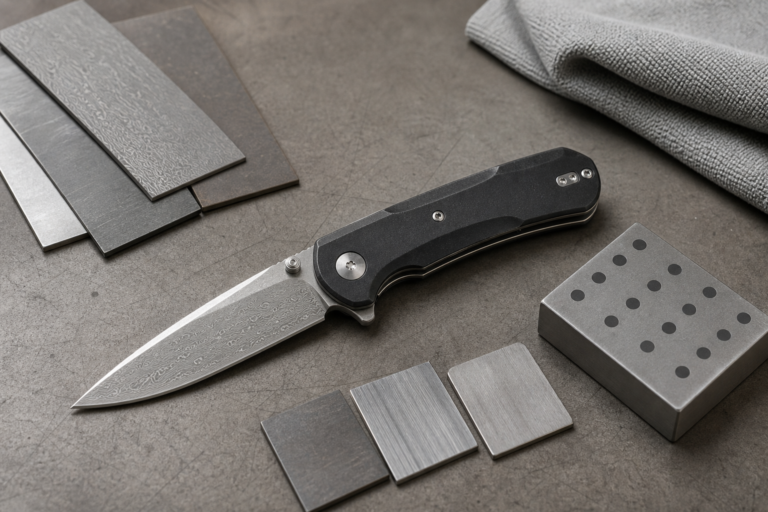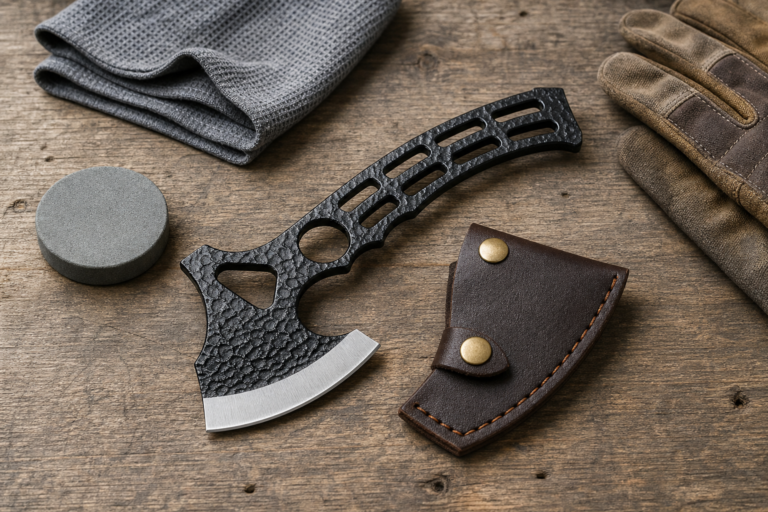
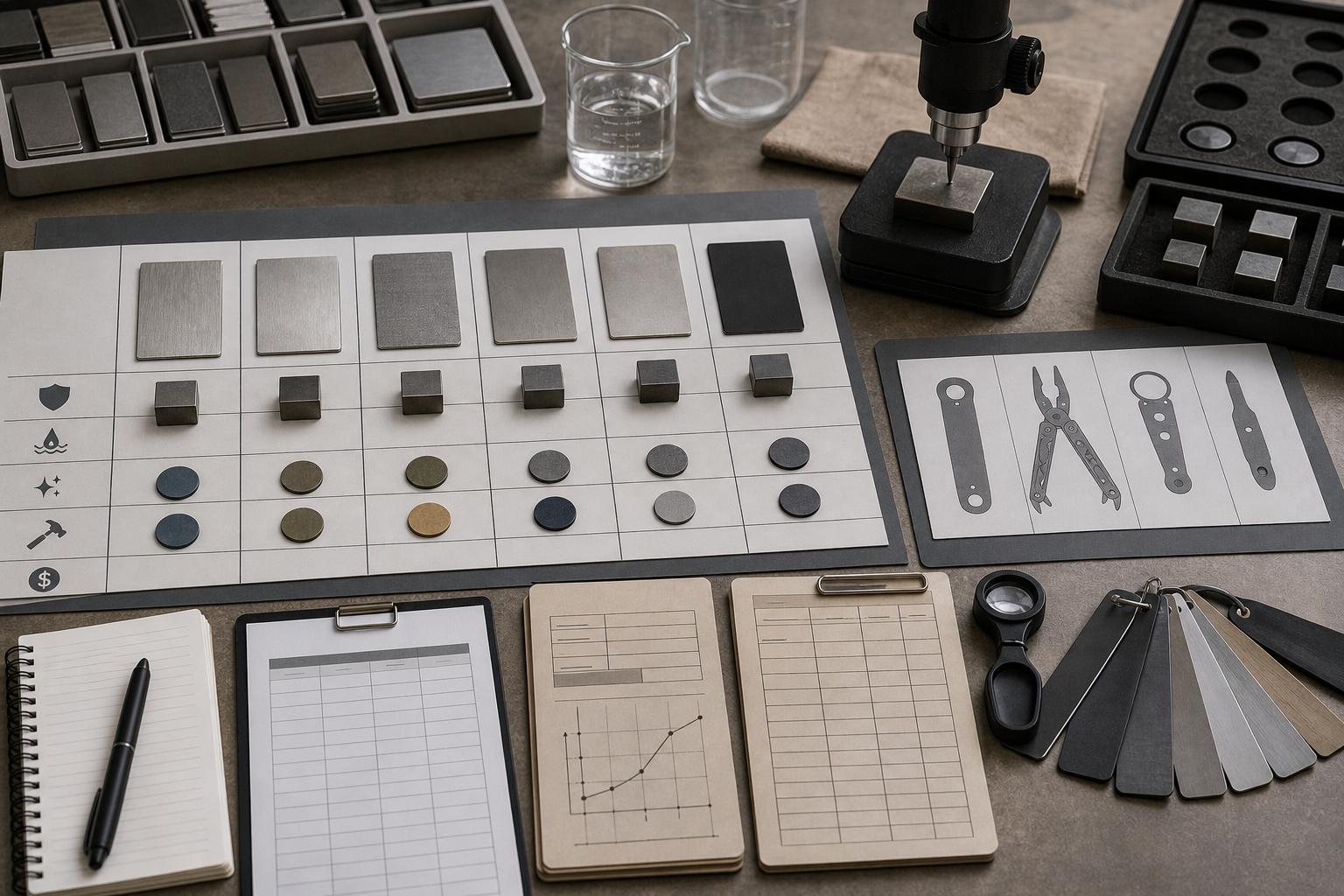
A steel name can sound weak because it is not trendy. That can push buyers into higher cost without better product fit.
Buyers should evaluate less-requested knife steels by target market, real use case, heat treatment, hardness range, corrosion need, edge geometry, supply stability, and sample testing. A less-marketed steel can work well when it matches the product level, price range, and quality controls.
Quick buyer brief:
- Answer: Judge the steel by product fit, not by popularity.
- Buyer context: This helps knife brands, importers, and private label buyers control cost and product claims.
- Key checks: Steel grade, heat treatment, hardness, corrosion need, edge geometry, supplier records, and prototype tests.
Planning a knife project with this steel?
Send us your target market, MOQ, price range, and blade type. Vast State can help you choose the right steel, HRC range, finish, handle material, and QC requirements for OEM/ODM production.
When I work with B2B knife projects, I do not ask only whether a steel is famous. I ask whether the steel can support the buyer's market position. Some steels are less requested because they are not exciting in marketing copy. Some are less requested because buyers misunderstand them. Some are truly a poor match for a specific product. The job is to separate these three cases before sampling, tooling, and mass production.
Why Should Buyers Avoid Judging Knife Steel Only by Popularity?
Popular steel names sell quickly. But a popular name can hide poor heat treatment, weak geometry, or a cost that hurts the buyer's margin.
Buyers should avoid judging steel only by popularity because steel reputation does not prove finished knife quality. The final result depends on material source, heat treatment, blade design, grinding, QC, and target user expectations.
I separate market language from manufacturing reality
I often see buyers ask for a steel because the market is talking about it. That is understandable. A known steel name can make product pages easier to write. But popularity is not the same as suitability. A high-demand steel can be too costly for an entry-level EDC knife. A simple stainless steel can be more stable for a gift knife, utility knife, or promotional private label product. A less-requested steel can also be easier to source in the right thickness and finish.
The finished knife must serve a real customer. If the customer wants easy sharpening, clean appearance, and corrosion resistance, the steel decision is different from a customer who wants long edge holding at a higher retail price. I also look at the process. A steel that needs strict heat treatment control may be fine for a small premium batch but risky for a low-price order with tight delivery. This is why I prefer a buyer checklist before any steel decision. It keeps the conversation practical.
| Popularity question | Better buyer question | Why it matters |
|---|---|---|
| Is this steel famous? | Does it fit the product level? | The buyer avoids overbuilding the knife |
| Is this steel cheap? | Can it meet the claim and use case? | The buyer avoids weak product positioning |
| Is this steel hard? | Is the hardness stable after heat treatment? | The buyer protects consistency |
| Is this steel easy to sell? | Can the supplier explain it clearly? | The buyer gets better sales material |
Quote-ready RFQ Checklist for This Steel
To get an accurate OEM/ODM quote, prepare these details before contacting a knife manufacturer.
| RFQ Field | What to Prepare |
|---|---|
| Product type | Folding knife / fixed blade / multi-tool / kitchen knife |
| Target market | US / EU / outdoor retail / promotional / tactical / EDC |
| Steel option | 4116 / 14C28N / D2 / N690 / Nitro-V |
| Target HRC | Example: 55-57 HRC, 58-60 HRC |
| Blade finish | Satin / stonewash / black coating / bead blast |
| Handle material | G10 / micarta / aluminum / stainless steel / wood |
| Lock or structure | Liner lock / frame lock / slip joint / full tang |
| Estimated quantity | 500 / 1,000 / 3,000 / 5,000+ pcs |
| Packaging | White box / color box / blister / pouch / gift box |
| Required documents | Drawing / sample photo / logo file / packaging artwork |
How Do Target Market and Price Range Change Steel Choice?
A knife can fail commercially even when the steel is good. The price, user need, and brand promise may not match the material.
Target market and price range change steel choice because each market expects a different balance of cost, corrosion resistance, edge holding, toughness, sharpening ease, and product story. Buyers should choose steel after defining the product tier.
I start with the shelf position
Before I recommend a steel, I ask where the knife will sit in the buyer's range. An entry-level pocket knife, a mid-range outdoor folder, and a brand-building product should not use the same logic. The entry-level product may need a stable stainless option, simple sharpening, and a cost that supports volume. The mid-range product may need a stronger material story and better performance balance. The higher-positioned product may justify a steel with stronger edge performance, better corrosion resistance, or more technical marketing support.
Less-requested steels can be useful when the buyer does not need a high-cost material story. For example, a basic stainless option can be right for a general utility product if the heat treatment, edge geometry, and QC are controlled. A steel such as Alleima 12C27 shows why older or quieter steel names should not be dismissed too quickly. Alleima positions it as a well-rounded knife steel with hardness, toughness, sharpness, and corrosion resistance for several knife categories. The lesson is simple. A steel can be less loud in marketing and still be useful in production.
| Product tier | Steel decision focus | Buyer risk if ignored |
|---|---|---|
| Entry-level | Cost, corrosion resistance, easy sharpening | The product becomes too expensive |
| Mid-range | Better balance and clearer steel story | The product feels generic |
| Outdoor utility | Toughness, corrosion need, edge stability | The product gets complaints |
| Brand-building SKU | Performance proof and sales clarity | The claim feels unsupported |
How Should Buyers Compare Edge Performance, Toughness, and Corrosion Resistance?
Steel comparison can become confusing fast. Buyers may chase one property and forget that knives need several properties at once.
Buyers should compare edge performance, toughness, and corrosion resistance together. A steel with better edge holding may be harder to sharpen, while a tougher or more corrosion-resistant steel may fit daily use better.
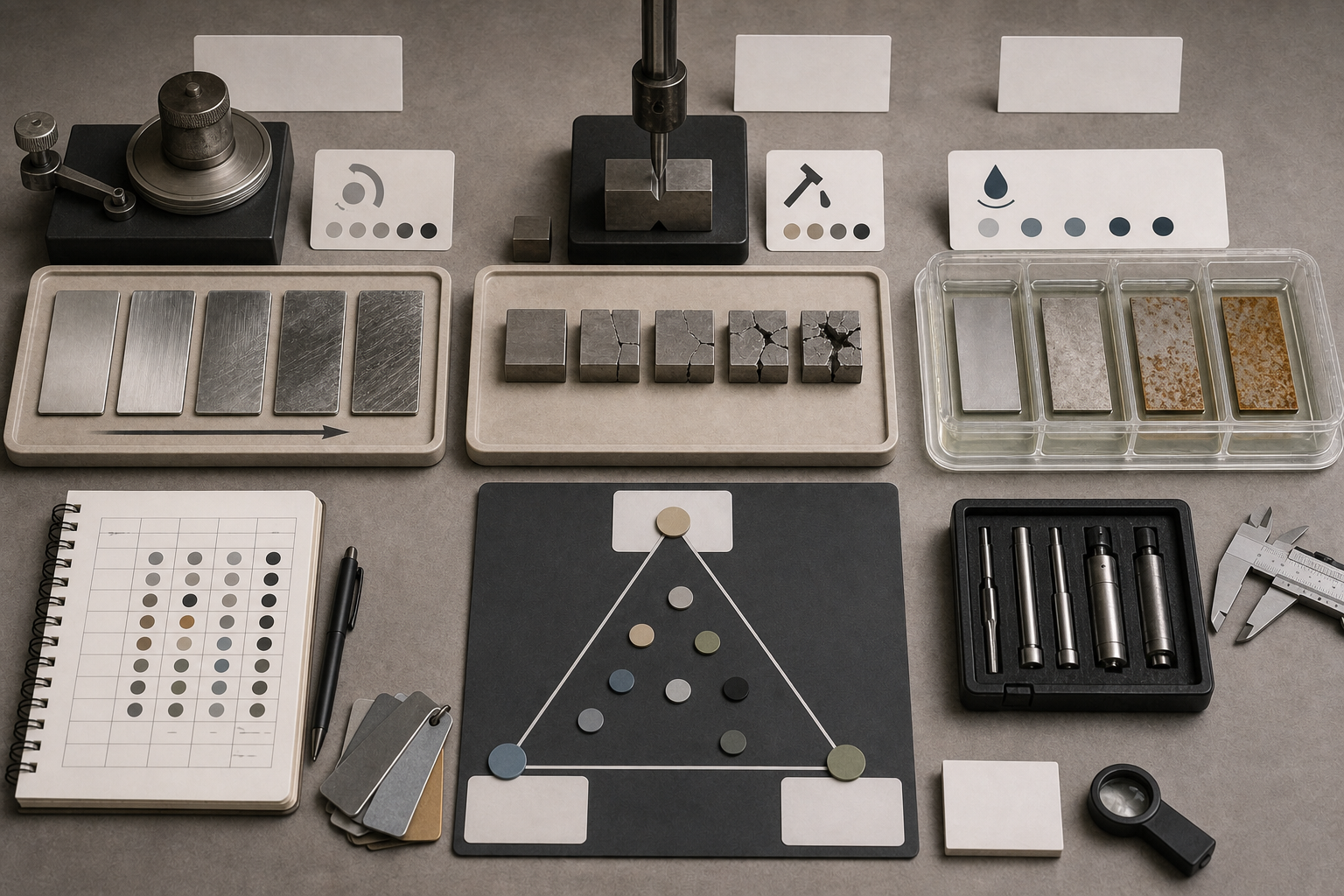
I look for balance, not a single winning number
A knife steel decision is always a trade-off. Edge performance matters, but it is not the only property. Toughness matters when the blade must resist chipping. Corrosion resistance matters for humid markets, fishing-related products, kitchen-adjacent tools, and outdoor kits. Sharpening ease also matters because many end users judge a knife by how quickly they can maintain it.
This is why I like to compare steel families by project need. Alleima 14C28N is a useful reference because the maker describes it as a knife steel designed for edge performance, hardness, corrosion resistance, and production by fine blanking. Bohler N690 gives another reference point because Bohler describes it as a corrosion-resistant martensitic chromium steel with carbon plus cobalt, molybdenum, and vanadium. These official descriptions do not mean every project needs those steels. They help buyers understand which properties are being emphasized.
When a buyer asks me about a less-requested steel, I usually build a comparison table. I do not say yes or no first. I ask what property the buyer is trying to protect.
| Property | Buyer should ask | Practical meaning |
|---|---|---|
| Edge performance | How long should the knife keep a useful edge? | Supports product satisfaction |
| Toughness | Is chipping a bigger risk than dulling? | Guides steel and heat treatment |
| Corrosion resistance | Will the knife face moisture or sweat? | Reduces after-sale complaints |
| Sharpening ease | Can the end user maintain the edge easily? | Helps general consumer products |
Why Does Heat Treatment Matter More Than the Steel Name?
A strong steel name can still produce a weak blade. Poor heat treatment can ruin the value the buyer thought they purchased.
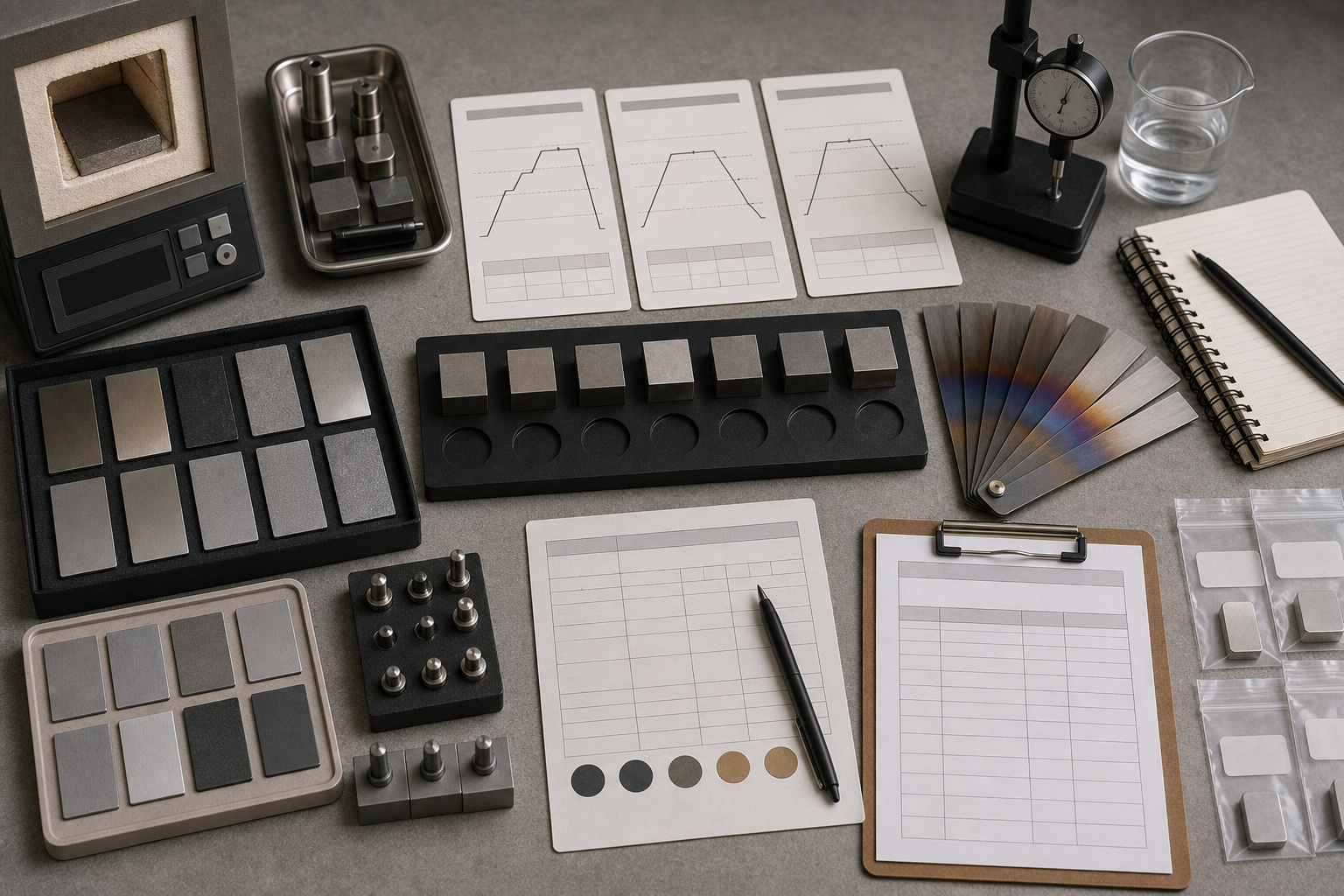
Heat treatment matters because it turns steel composition into real blade performance. Buyers should confirm hardening, quenching, tempering, hardness range, and batch testing instead of relying only on the steel name.
I treat heat treatment as the real performance gate
Steel composition is only the starting point. Heat treatment decides whether the blade reaches the intended balance. If the process is too soft, edge holding can disappoint the buyer. If the blade is too hard for the geometry and use case, the edge may become less forgiving. If the process is inconsistent, one batch may feel different from the next batch. That is a business problem, not only a technical problem.
Official steel makers also show this point. Alleima explains for 14C28N that hardening conditions affect microstructure and final properties, and its datasheet notes that hardening and tempering are needed to meet the required finish and end-user properties. This is exactly why I ask for process records, not only material names. For hardness measurement, the NIST Rockwell hardness guide is useful because it explains that Rockwell hardness testing needs good practice to reduce measurement errors.
For OEM/ODM work, I do not want one perfect sample and then unstable mass production. I want a hardness range, inspection method, and corrective action plan that can repeat.
| Heat treatment control | What I request | Why it protects the order |
|---|---|---|
| Hardness target | Agreed HRC range by steel and product | Keeps performance realistic |
| Batch record | Furnace, quench, tempering, and lot data | Supports traceability |
| Test method | Consistent hardness testing practice | Reduces false confidence |
| Sample approval | Tested samples before production | Finds risk early |
How Can Less-Marketed Steels Support Stable Mass Production?
Some buyers think less-marketed means lower value. But mass production often rewards stable supply, clean processing, and fewer surprises.
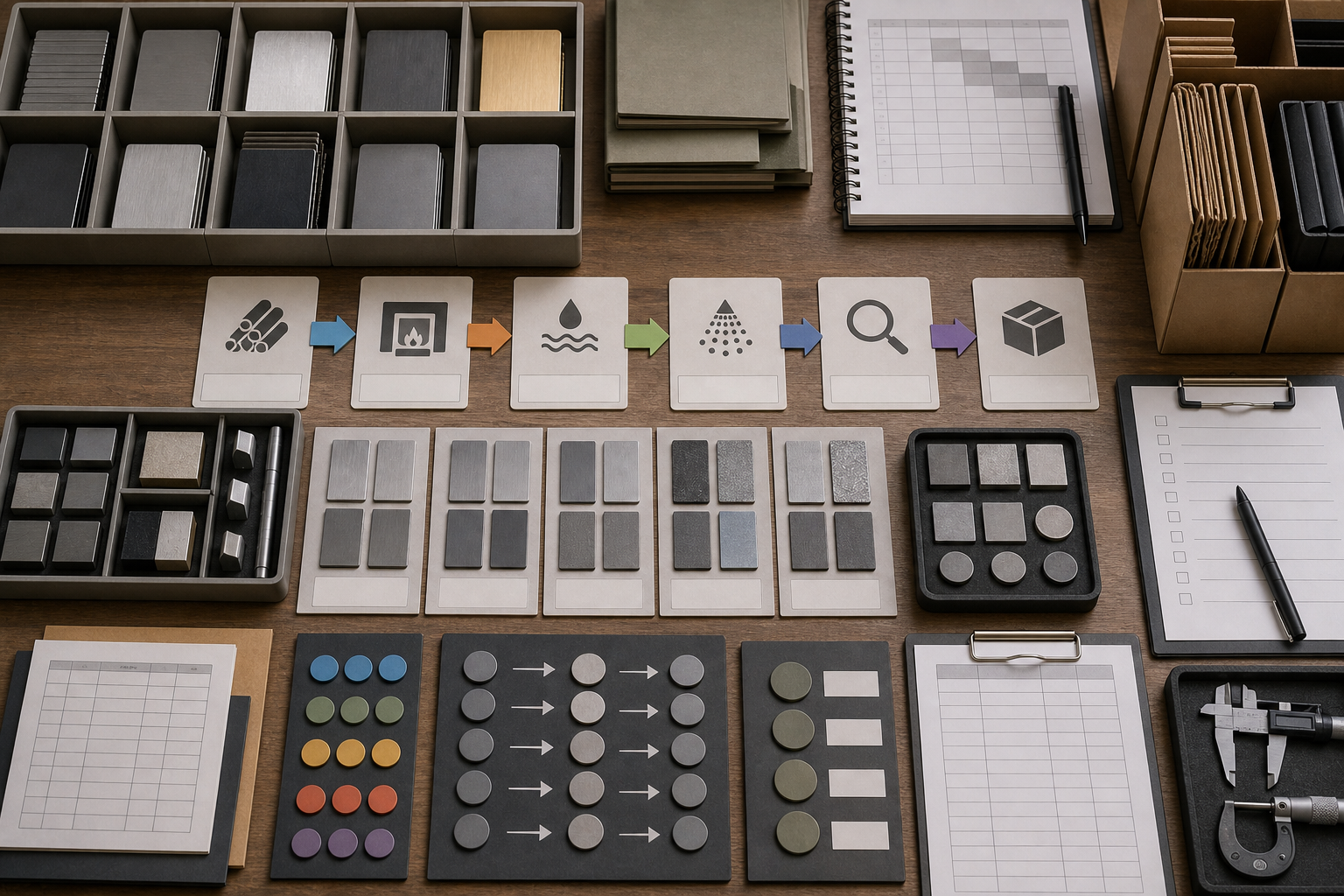
Less-marketed steels can support stable mass production when they are available, easy to process, suitable for the product claim, and supported by clear heat treatment and inspection controls.
I value repeatability as much as specification
In B2B production, a material choice has to survive more than a product meeting. It has to survive purchasing, incoming inspection, cutting, grinding, heat treatment, assembly, sharpening, final inspection, and repeat orders. A less-marketed steel may be practical if it is available in the right thickness, has stable delivery, works with the chosen cutting method, and does not require unusual processing steps.
This is one reason I ask buyers to think beyond the steel name. Can the steel be supplied in the blade thickness the design needs? Can it be cut cleanly? Does it move or warp too much during heat treatment? Does it grind efficiently? Does it create a finish that matches the approved sample? Can the supplier maintain the same source for repeat orders? These questions matter more than a short social media opinion.
The ISO 9001 supply chain guidance is useful here because it reminds buyers to specify what they want and judge supplier confidence by consistent conforming goods and services. In knife manufacturing, that means steel selection should connect to records, inspection, and clear communication.
| Production factor | Why it matters | Buyer action |
|---|---|---|
| Sheet or strip availability | Prevents material delay | Confirm thickness and source early |
| Processing behavior | Affects cost and defect rate | Test cutting and grinding before order |
| Heat treatment stability | Affects batch consistency | Require batch hardness checks |
| Finish compatibility | Affects appearance approval | Approve finish on real material |
What Should Buyers Ask For When Checking Steel Authenticity and Specifications?
Steel claims are easy to print. They are harder to prove. Buyers need records before a steel name becomes a selling point.
Buyers should ask for material grade, supplier record, composition reference, heat treatment target, hardness report, sample confirmation, and any agreed inspection method before using a steel claim in sales material.
I make steel claims traceable before marketing
If a buyer wants to print a steel name on packaging, product pages, or a blade etch, I want the claim to be controlled. The buyer should not rely on a casual message. The RFQ should list the requested steel grade, equivalent grade if any, target hardness, blade thickness, finish, and testing expectation. The supplier should confirm what can be sourced and what substitution rules apply. If substitution is not allowed, that should be written clearly.
This matters more for less-requested steels because customers may ask why the brand chose that material. The answer should be practical. Maybe the steel supports better corrosion resistance for a humid market. Maybe it supports easier sharpening for general users. Maybe it keeps the target price realistic while still passing the agreed QC. In each case, the buyer needs proof points.
I also suggest using different claim levels. A strong claim needs stronger support. "D2 tool steel" should have source and hardness control. "Stainless steel blade" still needs a grade record. "Easy to sharpen" should be based on sample testing and geometry, not only composition.
| Buyer request | What it proves | How I use it |
|---|---|---|
| Material grade confirmation | The intended steel is selected | Locks the RFQ scope |
| Source or lot record | The batch can be traced | Supports repeat orders |
| Hardness report | Heat treatment was checked | Supports performance control |
| Approved sample | Buyer and factory agree on result | Reduces mass production disputes |
How Should OEM/ODM Teams Test Prototypes Before Launch?
A sample can look correct and still miss the market. Buyers need tests that match the real claim and user expectation.
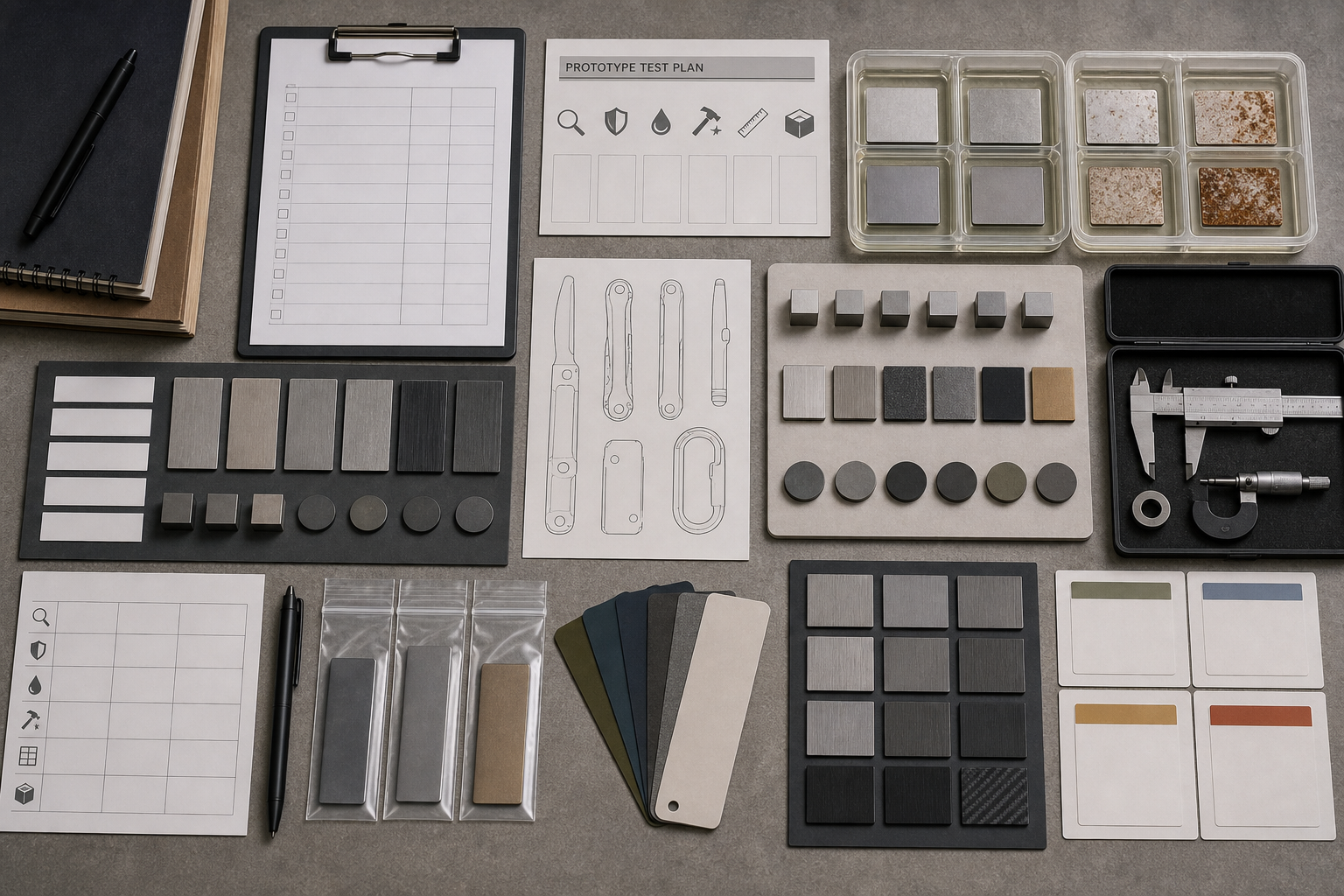
OEM/ODM teams should test prototypes by checking hardness, edge geometry, corrosion exposure, sharpening feel, assembly fit, finish consistency, and packaging claims. The test plan should match the product tier.
I test the claim, not only the sample appearance
Prototype testing should answer the buyer's business question. If the product is a budget EDC knife, I test whether the steel and process can deliver acceptable sharpness, easy maintenance, stable appearance, and cost control. If the product is an outdoor utility knife, I pay more attention to corrosion resistance, toughness, edge stability, and handle comfort. If the product is a private label line with several SKUs, I check whether the steel choice can repeat across the range.
Testing also needs to connect with packaging. A buyer should avoid stronger claims than the product can support. If the steel is less-requested, clear and honest language can be better than overpromising. For example, a product can say it is designed for practical daily cutting tasks, easy maintenance, and controlled cost. It does not need to claim extreme performance unless the sample testing proves it.
I prefer a small test plan before full production. It does not need to be expensive. It needs to be relevant, repeated, and recorded. Then the buyer can decide with evidence.
| Prototype check | What to inspect | Decision value |
|---|---|---|
| Hardness | Target range and batch variation | Confirms heat treatment |
| Edge geometry | Bevel symmetry and edge angle | Explains cutting feel |
| Corrosion check | Surface response after exposure | Tests market suitability |
| Packaging claim | Words used on box and product page | Reduces complaint risk |
When Should Buyers Choose a Better-Known Steel Instead?
Less-requested steels are not always the answer. Sometimes the market needs a known material story to support the sale.
Buyers should choose a better-known steel when the product relies on steel recognition, higher retail positioning, strong performance claims, or a market where customers compare steel names before buying.

I do not force a quiet steel into a loud market
There are times when a better-known steel is the right choice. If the buyer sells to enthusiasts, the material name may be part of the buying decision. If the product page compares specifications, the steel must support that conversation. If the brand is trying to move into a higher price range, a recognized steel can make the product easier to explain.
This does not mean the buyer should always choose the most expensive option. It means the steel should match the customer's decision path. A buyer selling through wholesalers may need simple language and stable value. A buyer selling direct to knife-focused customers may need a stronger steel story, more exact specifications, and clearer testing records. For example, Bohler K110 is a D2-related cold work steel reference with strong wear resistance language from its maker. A buyer can use such a reference to understand material positioning, but the final knife still depends on the design and process.
I usually make this decision with three checks: Can the customer understand the steel? Can the supplier produce it consistently? Can the retail price support it? If all three answers are yes, a better-known steel may be worth it.
| When to choose known steel | Reason | Buyer caution |
|---|---|---|
| Enthusiast market | Customers compare steel names | Claims must be accurate |
| Higher retail range | Material story supports price | Cost must still fit margin |
| Strong performance promise | Steel helps explain the product | Testing must support the claim |
| Competitive product page | Specifications matter | Avoid unsupported wording |
Ready to use this material in your next knife line?
Vast State can help you compare blade steels, heat treatment ranges, handle materials, finishes, packaging options, and QC requirements based on your target market and quantity.
Conclusion
I choose less-requested knife steels only when the material, process, price, and market claim all fit the buyer's product plan.
Source Notes
- Alleima 12C27 supports the point that a less-hyped steel can still be positioned as balanced for knife applications.
- Alleima 14C28N supports discussion of edge performance, hardness, corrosion resistance, and fine blanking.
- Bohler N690 supports the example of a corrosion-resistant martensitic chromium steel with added alloy elements.
- Bohler K110 supports D2-related material positioning and wear resistance context.
- NIST Rockwell hardness guide supports the need for careful hardness measurement practice.
- ISO 9001 supply chain guidance supports the buyer-side need to specify requirements and assess supplier consistency.